Article

Assessment of Mine Subsidence Using Finite Element-Based 3-D Numerical Modelling: A Case Study from an Underground Metal Mine

Department of Mining Engineering, Indian Institute of Technology (Indian School of Mines), Dhnabad 826004, India
*
Author to whom correspondence should be addressed.
Processes 2026, 14(13), 2220; https://doi.org/10.3390/pr14132220
Submission received: 23 May 2026 / Revised: 25 June 2026 / Accepted: 1 July 2026 / Published: 7 July 2026
(This article belongs to the Section Energy Systems)

Abstract

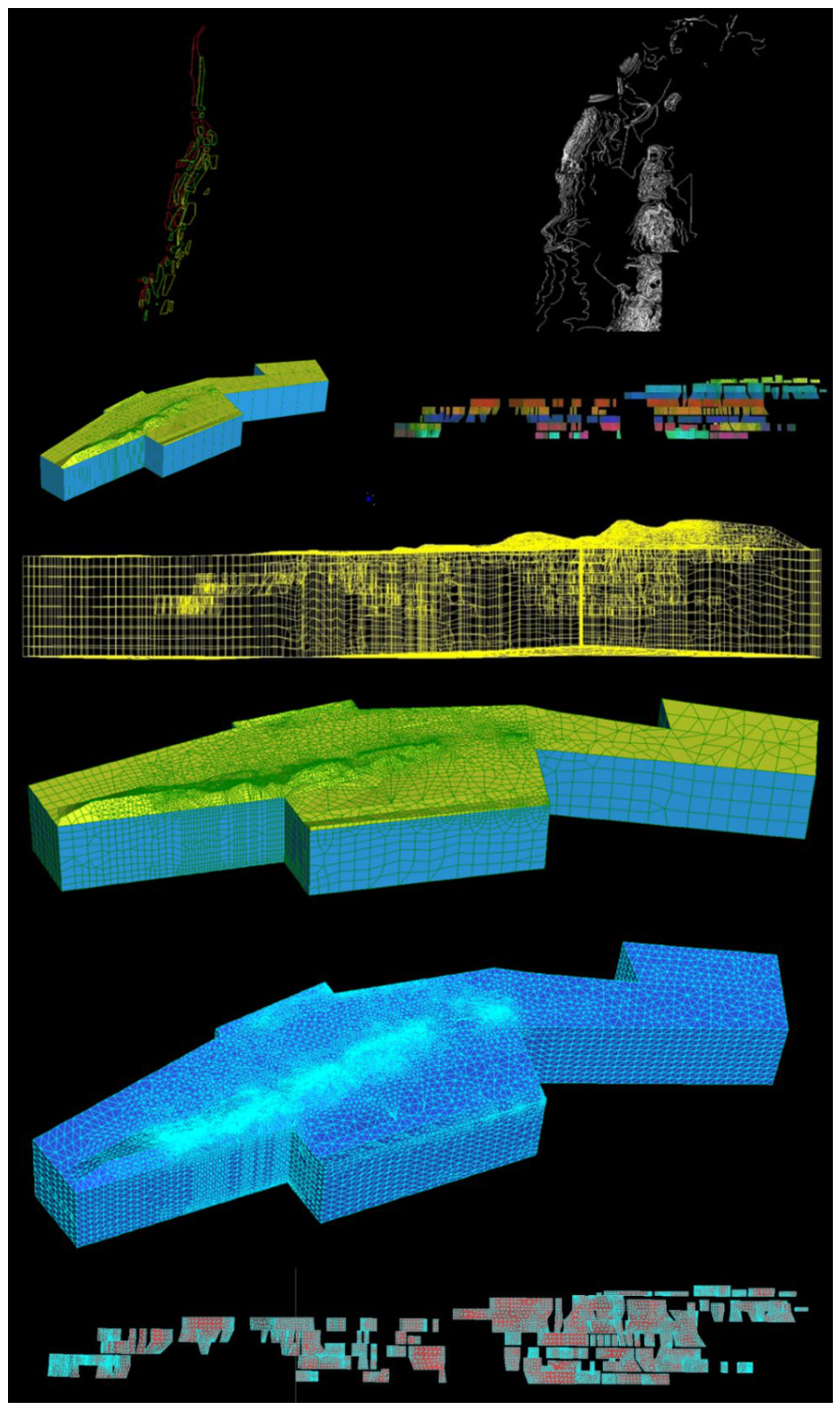
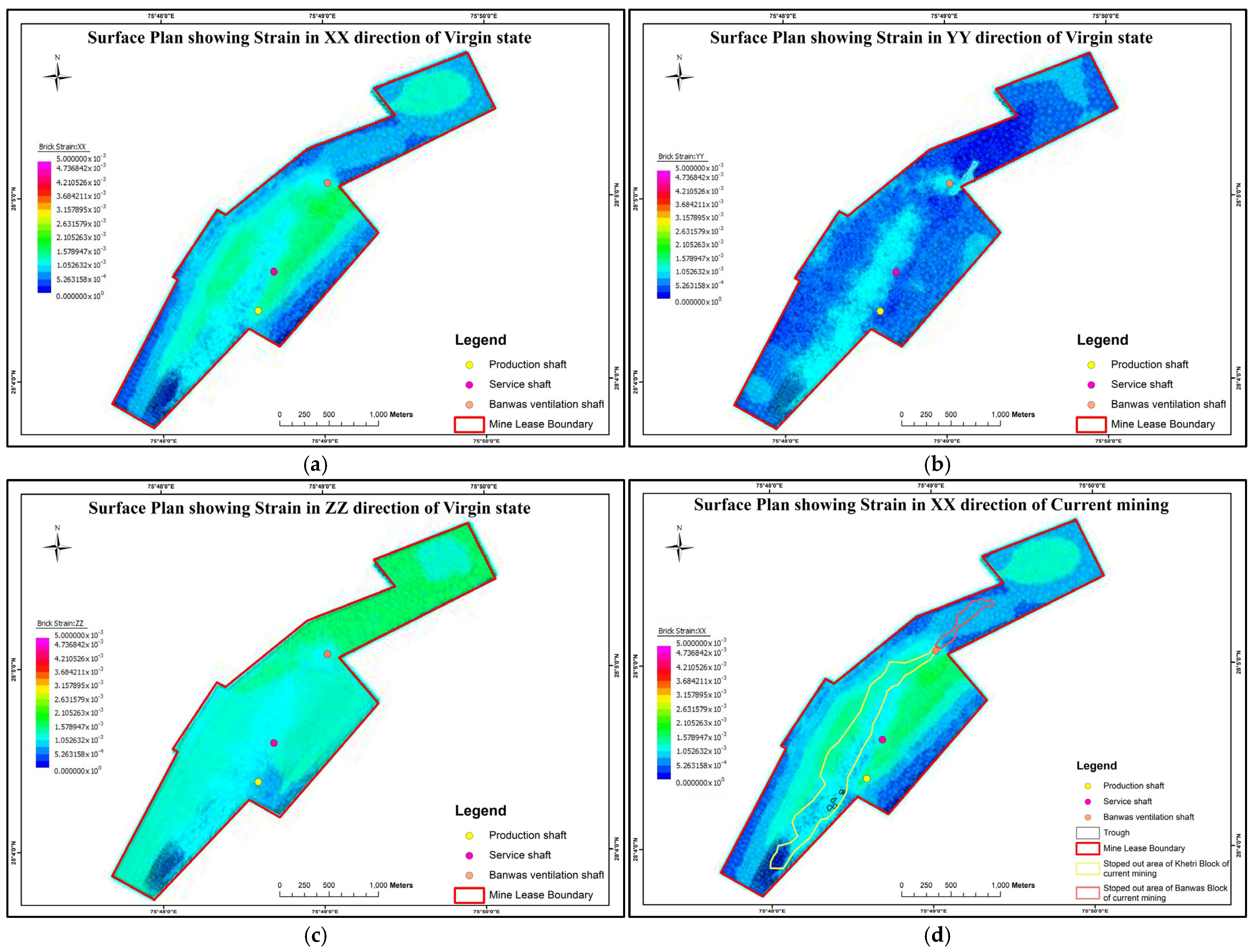
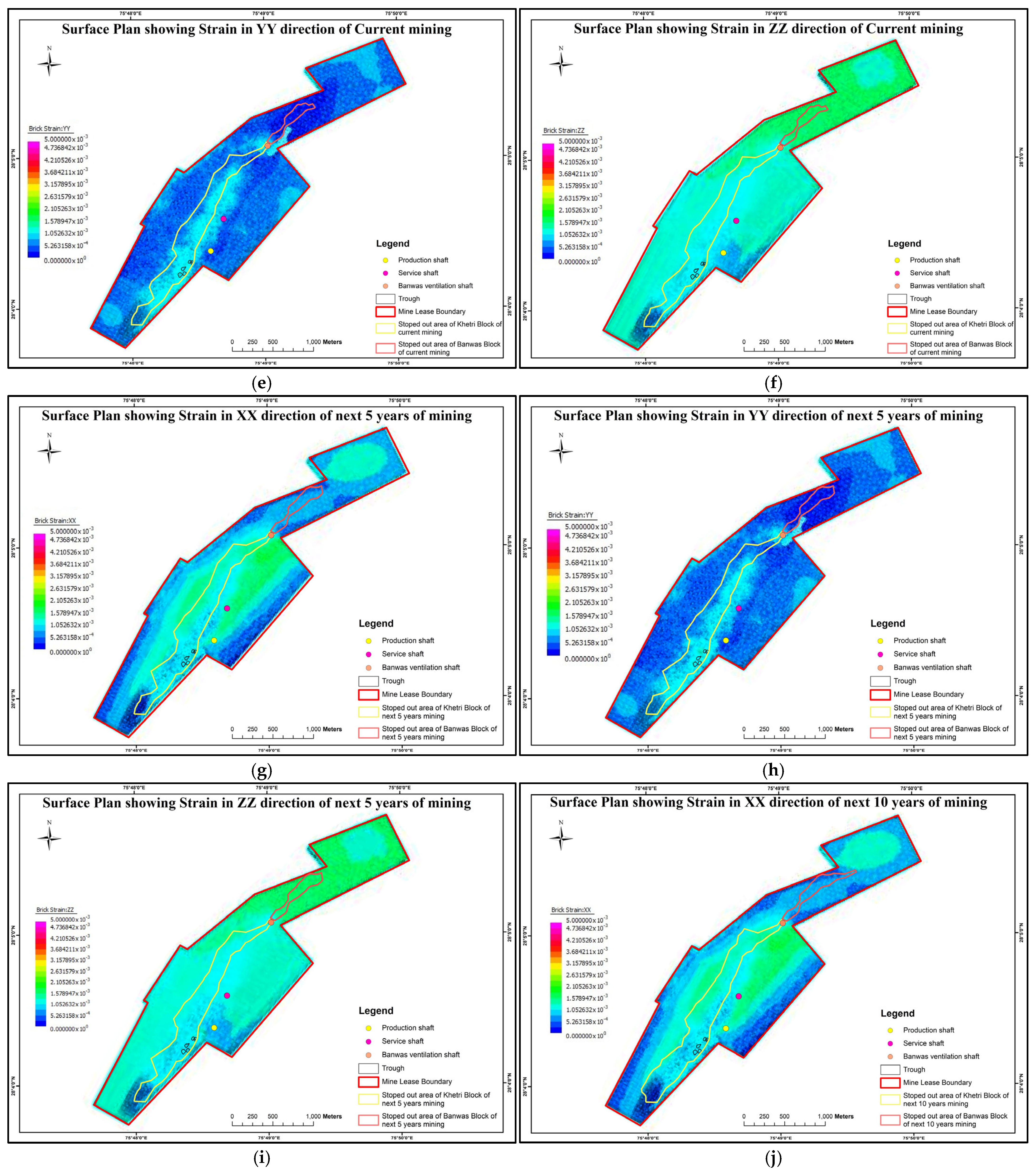
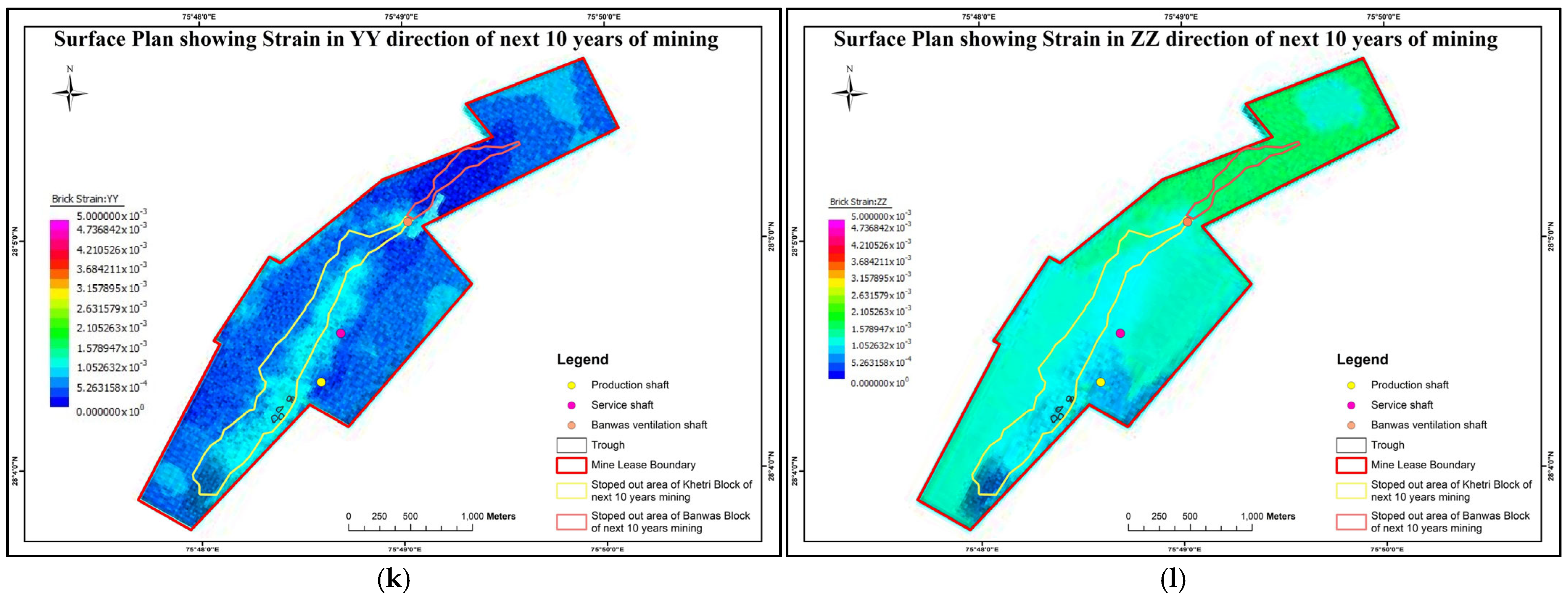
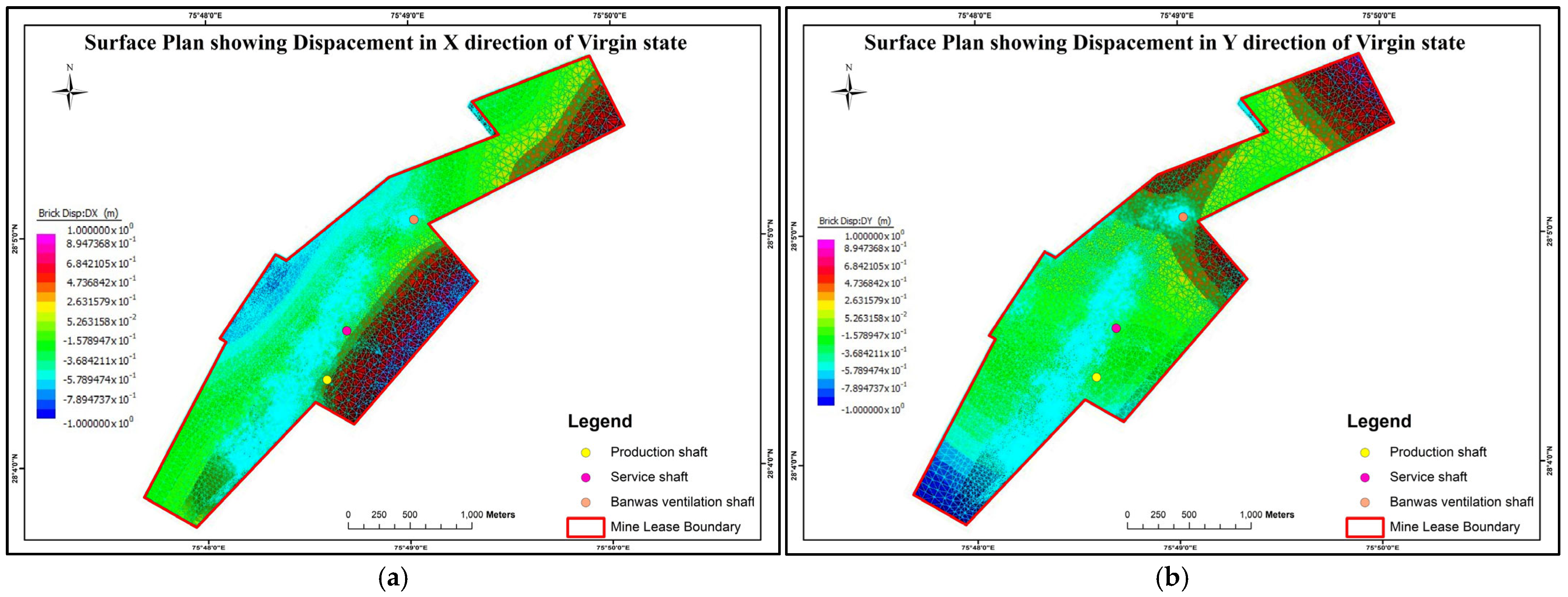
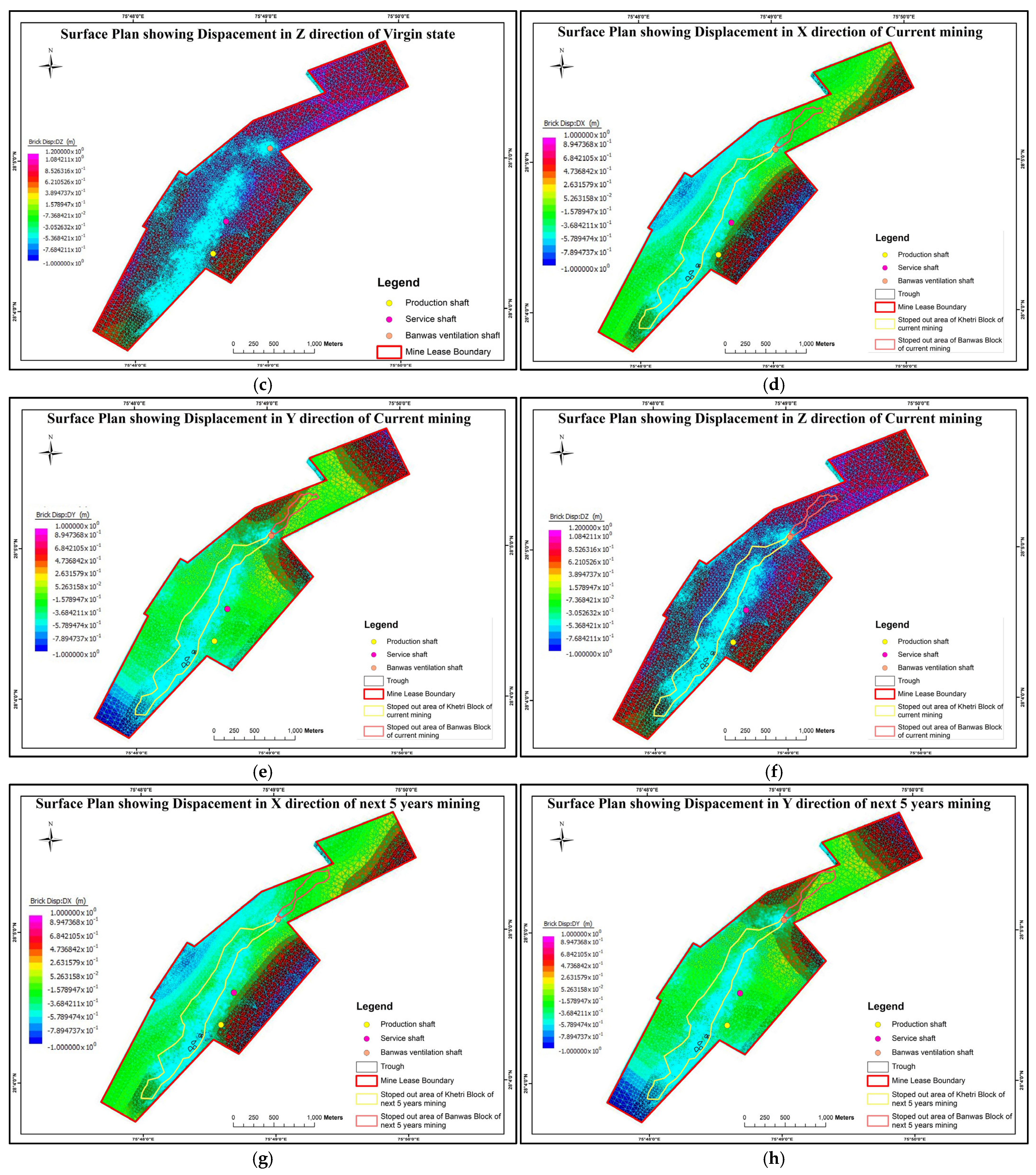
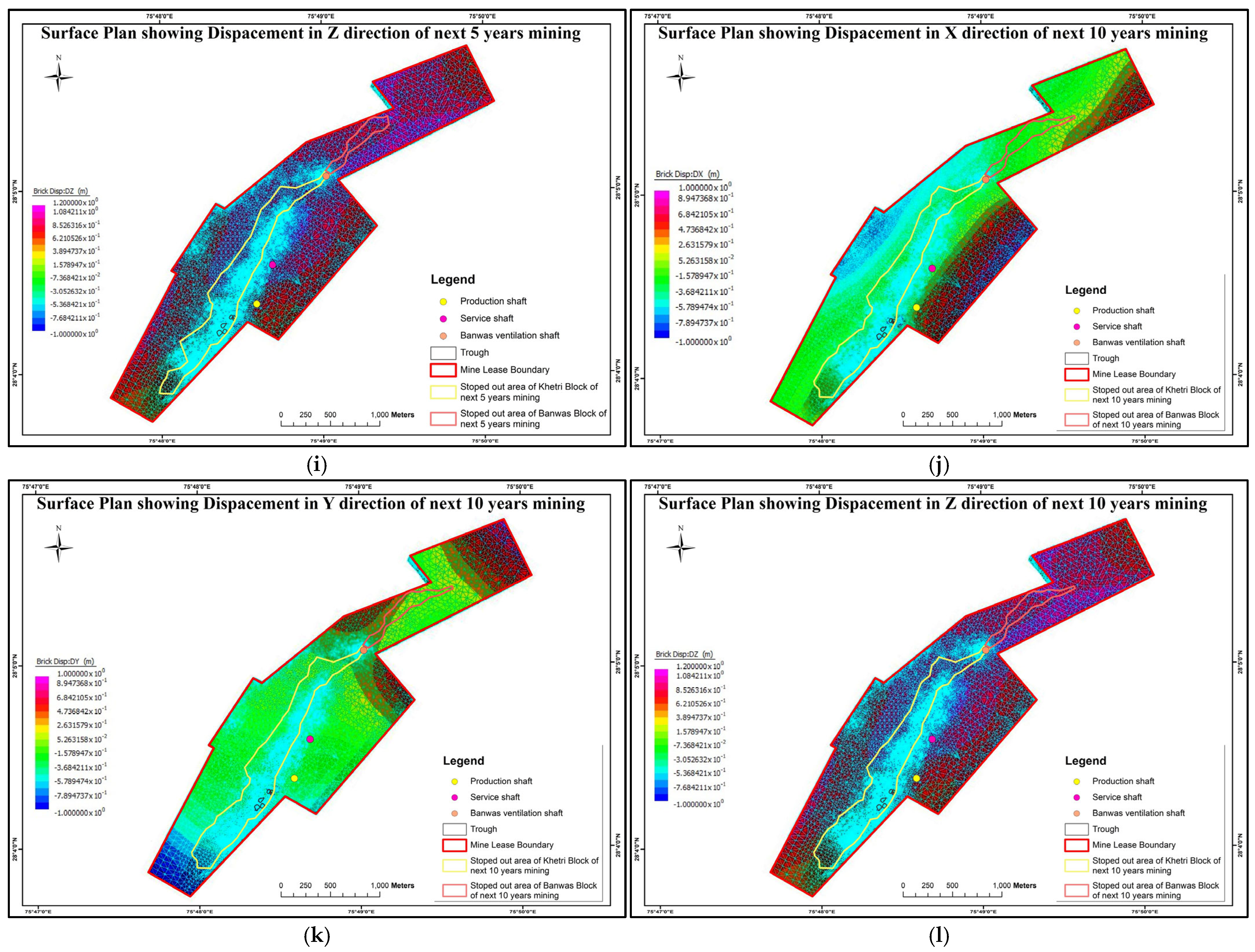
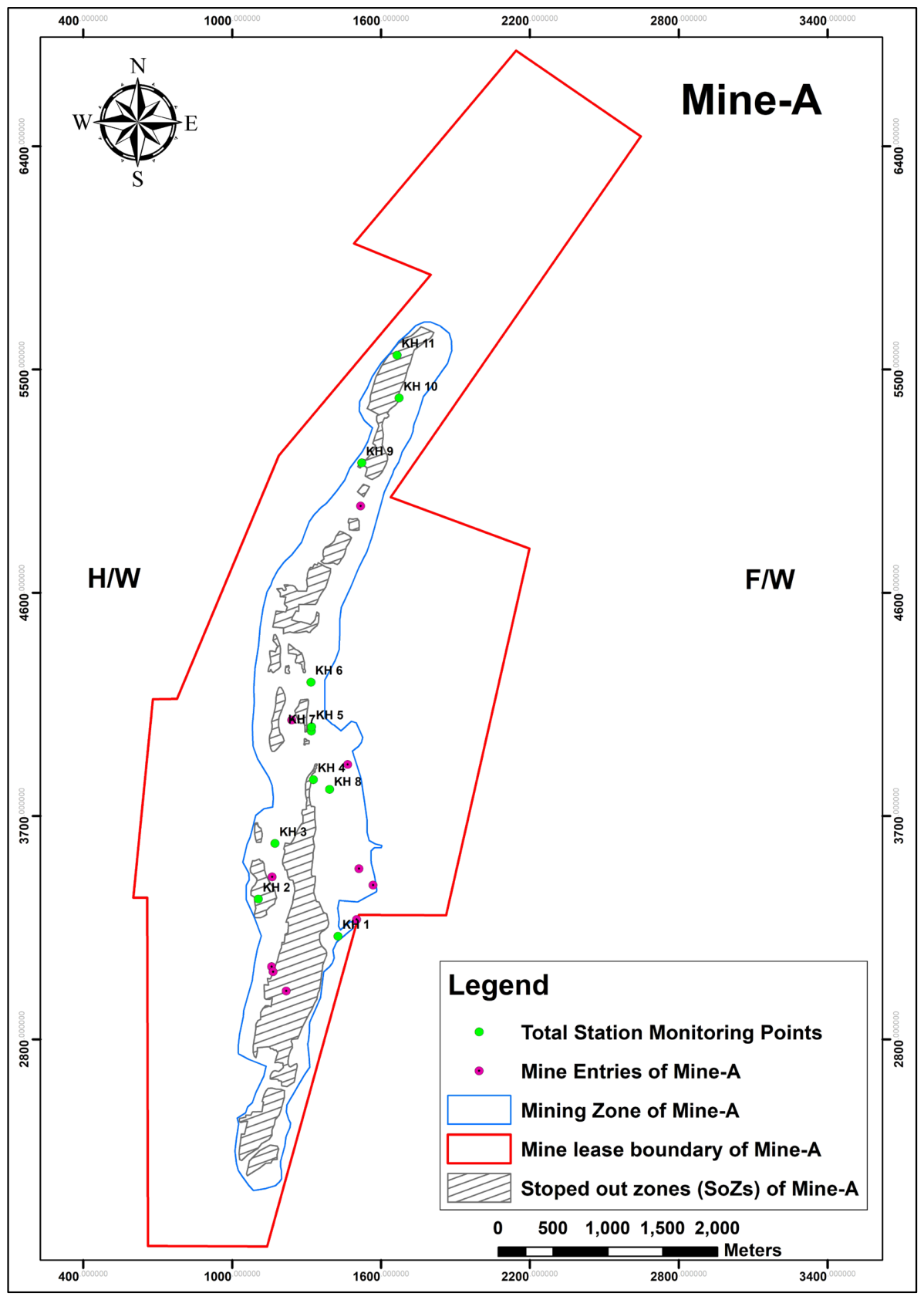
This paper assesses mining-induced surface deformation in Mine-A of the Khetri Copper Belt, India, using a three-dimensional (3-D) numerical model based on geological, geotechnical, mine layout, and in situ stress data. 3-D numerical models were developed for the virgin state, current mining state, next 5 years of mining, and next 10 years of mining, and their corresponding strain and displacement were analysed in different directions. For the mine lease boundary, the strain increment from the virgin to current mining state shows maximum surface strain of 2.41 mm/m, 1.93 mm/m, and 2.35 mm/m in the XX, YY, and ZZ directions, respectively, and the displacement increment from the virgin to current mining state shows maximum surface displacement of 0.003 m, 0.002 m, and 0.003 m in the X, Y, and Z directions, respectively. The results indicate that the model-predicted surface deformation response for the current, next 5 years, and next 10 years of mining states is mainly concentrated around already disturbed zones, while the incremental deformation outside such zones remains comparatively limited under the simulated mining sequence. The spatial concentration of deformation within the mining-influenced zone is further supported by available Total Station monitoring data. From a mine planning perspective, the validated modelling framework is useful for identifying locations requiring focused subsidence monitoring, slope stability assessment, and future model refinement.
Keywords: mine subsidence; numerical modelling; strain; displacement; validation mine subsidence; numerical modelling; strain; displacement; validation