Article

Influence of Auxiliary Emulsifier Ionic Characteristics on Interfacial Film Stability and Performance of Water-in-Oil Emulsions for Oil-Based Drilling Fluids


1
Changqing Drilling Company, CNPC Chuanqing Drilling Engineering Company Limited, Xi’an 710018, China
2
Hubei Key Laboratory of Oil and Gas Drilling and Production Engineering, Yangtze University, Wuhan 430100, China
3
School of Petroleum Engineering, China University of Petroleum (Beijing), Beijing 102249, China
*
Author to whom correspondence should be addressed.
Processes 2026, 14(13), 2213; https://doi.org/10.3390/pr14132213
Submission received: 10 June 2026 / Revised: 25 June 2026 / Accepted: 1 July 2026 / Published: 7 July 2026

Abstract

Under high-temperature and high-salinity drilling conditions, maintaining the stability of water-in-oil emulsions is critical for oil-based drilling fluids, while the roles of auxiliary emulsifiers with different ionic characteristics remain unclear. In this study, Span 80 was used as the primary emulsifier, and nonionic OP-4, anionic SDBS, zwitterionic EAB40, and cationic CTAB were introduced as auxiliary emulsifiers to construct blended emulsifier systems. The HLB value was controlled at 5.2–5.4, and the total emulsifier concentration was fixed at 6.0 wt%. The effects of auxiliary emulsifier type on interfacial tension, rheological behavior, electrical stability, droplet morphology, and thermal stability were systematically investigated. The Span80/OP-4 system exhibited the lowest interfacial tension, smallest droplet size, and best overall emulsion stability. In contrast, the Span80/SDBS system showed poor electrical stability due to weakened effective interfacial adsorption in Ca2+ brine. After aging at 120 °C, EAB40 promoted interfacial rearrangement, whereas CTAB weakened interfacial order. Further verification in 1.50 g/cm3 weighted oil-based drilling fluids showed that the Span80/OP-4 system maintained high electrical stability, low HTHP filtrate volume, and good sedimentation stability after aging at 140 °C.

1. Introduction

During the development of deep and ultra-deep oil and gas resources, downhole environments are characterized by extreme operating conditions—including high temperature, high pressure, and high salinity—that impose heightened requirements on the long-term stability of drilling fluid systems [1,2]. Under such complex conditions, drilling fluids need to maintain appropriate rheological properties and effective fluid loss control, while also exhibiting good wellbore stability and anti-settling performance [3,4,5]. However, conventional water-based drilling fluids are prone to structural instability and performance deterioration at elevated temperatures, making them inadequate for the engineering demands of deep and geologically complex formations. In contrast, oil-based drilling fluids exhibit superior adaptability in deep and ultra-deep well drilling operations due to their excellent thermal stability, lubricating properties, and intrinsic inhibition of water-sensitive formations [6,7].
Under high-temperature and high-pressure conditions, performance degradation in oil-based drilling fluids is primarily attributed to the compromised stability of their water-in-oil emulsion structure [8]. As a thermodynamically unstable system, oil-based drilling fluids are susceptible to interfacial film disruption at the oil–water interface due to elevated temperature, intense shear, and continuous emulsifier depletion; this disruption triggers droplet coalescence, phase inversion, or even complete phase separation, significantly impairing the system’s rheological and fluid loss control capabilities [9,10].
Existing studies have demonstrated that the rheological behavior of oil-based drilling fluids is predominantly governed by interdroplet interactions within the water-in-oil emulsion, where droplet size and distribution directly influence the system’s viscosity, structural mechanical strength, and resistance to sedimentation [11,12]. When emulsion stability is insufficient, droplets tend to coalesce and grow, resulting in a broadened and non-uniform size distribution; this not only induces fluctuations in rheological properties but may also lead to engineering issues such as weighting material settling and density stratification [13,14,15]. Therefore, modulating the emulsion structure—specifically by suppressing droplet coalescence while simultaneously optimizing droplet size and interfacial mechanical strength—represents a critical strategy for achieving a synergistic enhancement of low rheological viscosity and high sedimentation resistance. The significant impact of droplet structure on drilling fluid performance has been corroborated from multiple perspectives in previous research. For instance, Bhola Kumar Paswan et al. (2022) observed that soybean oil-based emulsion muds exhibit superior lubricity and pronounced shear-thinning behavior compared to diesel-based systems [16]. Liu et al. (2023) incorporated lignocellulosic nanomaterials to refine droplet size distribution, thereby endowing the drilling fluid with favorable rheological properties and effective fluid loss control [17].
The stability of water-in-oil emulsions is collectively governed by the molecular structure of emulsifiers, formulation strategies, interfacial film mechanical strength, droplet size distribution, and environmental factors such as temperature, shear stress, and salinity [18,19,20,21,22]. Low-HLB emulsifiers serve as the fundamental basis for constructing W/O emulsions; however, a single emulsifier is inadequate for sustaining interfacial film stability under elevated-temperature conditions. Maliheh Dargahi-Zaboli et al. (2017) reported that polymeric emulsifiers undergo thermal degradation and phase separation at elevated temperatures, while hydrophobic SiO2 nanoparticles significantly enhance the stability of inverse emulsions [23]. Chen Y et al. (2022) enhanced emulsion stability under elevated temperature and salinity conditions by tailoring the molecular architecture of a tertiary amine-containing copolymer emulsifier [24]. Huang et al. (2025) elucidated the close correlation between droplet size distribution and emulsion stability through interfacial rheology measurements and microscopic observations [25]. Collectively, the construction of composite interfacial films combined with the optimization of droplet size distribution represents an effective approach for enhancing emulsion thermal stability, thereby contributing to the maintenance of rheological stability and sedimentation resistance in drilling fluids.
In recent years, research addressing insufficient emulsion stability under high-temperature and high-pressure conditions has gradually shifted from single-emulsifier systems to composite emulsifier formulations. The combination of a primary emulsifier with auxiliary emulsifiers facilitates the formation of a denser and more stable interfacial film structure at the oil–water interface, thereby suppressing droplet coalescence and enhancing emulsion stability [26,27,28]. However, existing studies are largely confined to empirical formulation optimization, primarily relying on macroscopic performance evaluations. A systematic understanding is still lacking regarding the differences in interfacial adsorption behavior, composite interfacial film assembly mechanisms, and stabilization mechanisms among auxiliary emulsifiers with distinct ionic characteristics—especially under high-temperature, high-salinity, and multivalent ion conditions, where their functional mechanisms remain unclear [29,30,31,32,33,34].
Building on the aforementioned research status, this study employs the low-HLB main emulsifier Span 80 as the base component and incorporates auxiliary emulsifiers with distinct ionic types to construct a synergistic main–auxiliary emulsification system. Interfacial tension measurements are conducted to characterize the interfacial activity and adsorption behavior of individual emulsifiers at the oil–water interface; concurrently, electrical stability and droplet size distribution are systematically assessed to evaluate the emulsion’s microstructure and stabilization state. Additionally, rheological properties and kinetic stability tests are performed to quantify the macroscopic performance of the emulsion. By establishing quantitative correlations among interfacial structure, droplet dispersion state, and macroscopic performance, the underlying mechanisms through which mixed emulsifier systems govern the stability of water-in-oil emulsions are elucidated, thereby providing a scientific basis for optimizing emulsifier formulations in high-temperature oil-based drilling fluids.

2. Experimental Section

2.1. Materials

The base oil phase used in the experiments was No. 5 white oil, purchased from Dongguan Pengrunxing Lubricant Co., Ltd. (Dongguan, China). Anhydrous calcium chloride (≥96.0%, analytical reagent grade) was obtained from Sinopharm Chemical Reagent Co., Ltd. (Guangzhou, China). Span 80 (≥99.0%, nonionic, HLB = 4.3) was used as the primary emulsifier [35]. The auxiliary emulsifiers included cetyltrimethylammonium bromide (CTAB, ≥99.0%, cationic, HLB = 15.8), sodium dodecylbenzenesulfonate (SDBS, ≥99.0%, anionic, HLB = 10.6), and octylphenol ethoxylate (OP-4, ≥99.0%, nonionic, HLB = 8.6), all supplied by Macklin Biochemical Co., Ltd. (Shanghai, China). The zwitterionic auxiliary emulsifier EAB40 (≥99.0%, estimated HLB range: 7–9, adopted value: 8.0) was procured from Nuoke Chemical Co., Ltd. (Shanghai, China).

2.2. Emulsion Preparation

The water-in-oil emulsions were prepared using white oil and aqueous phase at a volume ratio of 7:3. First, white oil (224 mL) and deionized water (96 mL) were measured. Anhydrous calcium chloride was added to the aqueous phase at a concentration of 20 wt%, followed by stirring for 30 min at 10,000 rpm to obtain a homogeneous CaCl2 brine. Meanwhile, predetermined amounts of Span 80 and the corresponding auxiliary emulsifier were added to the white oil and stirred for 10 min.
The prepared aqueous phase was then slowly added dropwise into the oil phase, followed by homogenization at 10,000 rpm for 2 h to form a water-in-oil emulsion. To ensure comparability, the weighted HLB value of each Span 80/auxiliary emulsifier system was maintained within 5.2–5.4, and the total emulsifier concentration was fixed at 6.0 wt%. Because OP-4, SDBS, EAB40, and CTAB have different intrinsic HLB values, different Span80/auxiliary emulsifier ratios were required to maintain a comparable HLB range. Therefore, the formulation design aimed to compare the effect of auxiliary emulsifier ionic characteristics under similar HLB conditions, rather than to individually optimize each emulsifier ratio. The specific formulations were 5.5 wt% Span 80 + 0.5 wt% CTAB, 4.5 wt% Span 80 + 1.5 wt% OP-4, 5.0 wt% Span 80 + 1.0 wt% SDBS, and 4.5 wt% Span 80 + 1.5 wt% EAB40.

2.3. Preparation of 1.50 g/cm3 Weighted Oil-Based Drilling Fluids

To verify the applicability of the blended emulsifier systems, weighted oil-based drilling fluids with a density of 1.50 g/cm3 were prepared. No. 5 white oil was used as the continuous phase, and 20 wt% CaCl2 brine was used as the internal phase. The same Span 80/auxiliary emulsifier systems were used, including Span 80/OP-4, Span 80/SDBS, Span 80/EAB40, and Span 80/CTAB.
During preparation, Span 80 and the corresponding auxiliary emulsifier were first dissolved in the base oil. Organoclay, CaO, wetting agent, and fluid loss additive were then added and mixed uniformly. The CaCl2 brine was slowly introduced under high-speed stirring to form a water-in-oil emulsion. Finally, barite was added to adjust the density to 1.50 g/cm3.

2.4. Thermal Aging Procedure

The model emulsions were aged at 120 °C to evaluate interfacial thermal stability and compare the effects of different emulsifier combinations. The 1.50 g/cm3 weighted oil-based drilling fluids were aged at 140 °C to verify their performance under more severe and practical conditions, including filtration, rheology, and sedimentation stability. Thus, the two aging tests were designed for different purposes rather than for direct comparison.

2.5. Emulsion Characterization

2.5.1. Interfacial Tension Measurement

The oil–water interfacial tension was measured to evaluate the adsorption behavior of different auxiliary emulsifiers. The oil phase contained Span 80 and the corresponding auxiliary emulsifier, while the aqueous phase was 20 wt% CaCl2 brine. Dynamic interfacial tension was recorded until equilibrium was reached, and the equilibrium value was obtained from the stable stage of the curve.

2.5.2. Contact Angle Measurement

The contact angle of the emulsion was measured at room temperature using an OCA25 optical contact angle measuring instrument (DataPhysics Instruments GmbH, Filderstadt, Germany). Prior to measurement, the glass substrate was cleaned with anhydrous ethanol to eliminate contaminants. A 5 μL aliquot of the emulsion was then dispensed onto the cleaned glass surface. The microscope was adjusted to obtain a clear droplet image, and digital photographs were captured with the integrated high-resolution camera. Contact angle values were automatically calculated by the instrument’s software. Each sample was tested in triplicate, and the mean value and standard deviation were reported.

2.5.3. Demulsification Voltage Measurement

Demulsification voltage measurements were conducted with a FANN Model 23E emulsification voltage tester (Fann Instruments, Houston, TX, USA). During testing, the electrodes were immersed in the sample’s central region, and the automated test sequence was initiated. The breakdown voltage was automatically recorded by the instrument upon electrical failure of the emulsion. To ensure reliability, each sample was tested in triplicate.

2.5.4. Optical Microscopy and Droplet Size Distribution

The emulsion sample was stirred uniformly, and 1 mL of the sample was placed onto a glass microscope slide for observation using an optical microscope (Model BM2000, Nanjing Jingnan Novel Optics Co., Ltd., Nanjing, China). Droplet morphology was observed and recorded. Droplet size was measured using ImageJ 1.54 software, and the droplet size distribution curve was fitted using Origin 2024 software.

2.5.5. Centrifugation Stability Test

The kinetic stability of the emulsion was evaluated using a ZHENGJI HC-12A high-speed centrifuge (Jiangsu Zhengji Medical Instruments Co., Ltd., Changzhou, China). The sample was placed into a 15 mL centrifuge tube and centrifuged at 25 °C and 1000 rpm for 15 min. The phase separation height was recorded at different times, and the oil separation ratio was used to evaluate emulsion stability. A higher oil separation ratio indicates poorer kinetic stability.

2.5.6. Rheological Properties

The rheological properties of the emulsion were measured using a ZNN-D6 six-speed rotational viscometer (Rongjida Instrument Technology Co., Ltd., Shanghai, China) at 25 °C. The apparent viscosity (AV), plastic viscosity (PV), and yield point (YP) were calculated from the dial readings at 600 rpm and 300 rpm. The Herschel–Bulkley model was used to describe the relationship between shear stress and shear rate:
τ = τ y + k y n
where τ is the shear stress, τ y is the yield stress, k is the consistency coefficient, y is the shear rate, and n is the flow behavior index.

2.5.7. Oscillatory Rheology

Oscillatory rheological tests were performed to evaluate the viscoelastic behavior of the emulsions. A strain sweep was first conducted to determine the linear viscoelastic region, and a fixed strain within this region was then selected for frequency sweep testing. The storage modulus G′ and loss modulus G″ were recorded to compare the elastic and viscous responses of different emulsion systems.

2.6. Performance Evaluation of 1.50 g/cm3 Weighted Oil-Based Drilling Fluids

The 1.50 g/cm3 weighted oil-based drilling fluids were evaluated before and after thermal aging. Rheological properties were measured using a six-speed rotational viscometer at 25 °C, and electrical stability was evaluated by demulsification voltage. HTHP filtration loss was measured at 140 °C and 3.5 MPa for 30 min.
Sedimentation stability was evaluated after static aging at 140 °C for 24 h. The densities of the upper, middle, and lower layers were measured, and the sedimentation factor was calculated as follows:
S F = ρ b o t t o m / ( ρ t o p + ρ b o t t o m )
where ρ t o p and ρ b o t t o m are the densities of the upper and lower layers, respectively. An SF value closer to 0.500 indicates better sedimentation stability.

3. Results and Discussion

3.1. Rheological Behavior of Water-in-Oil Emulsions

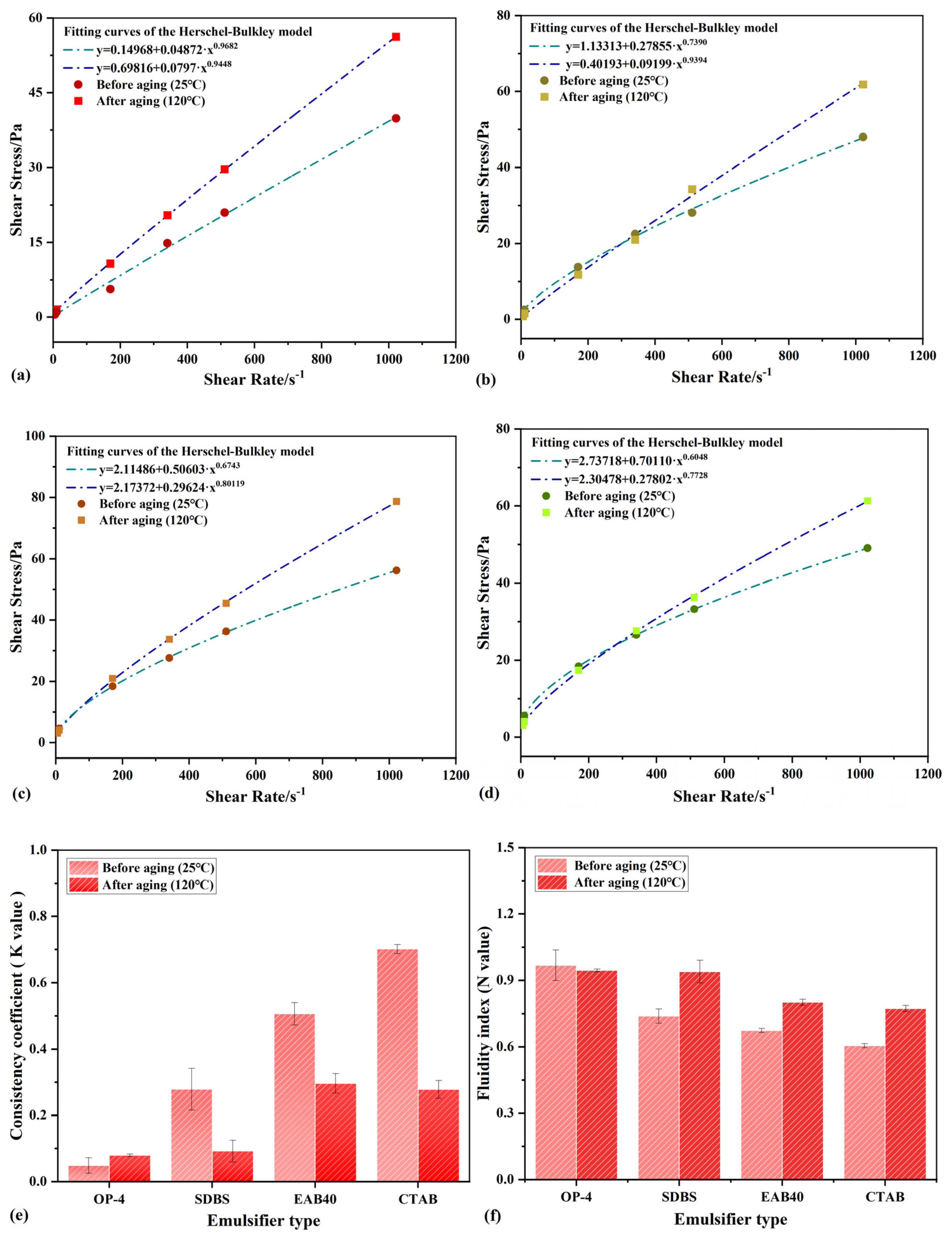
Figure 1a–d show the rheological behavior of different emulsifier-blended systems. All systems exhibited a nonlinear increase in shear stress with increasing shear rate, indicating typical shear-thinning behavior. The Herschel–Bulkley model fitted the experimental data well, and the consistency coefficient (K) and flow behavior index (n) were used to evaluate the structural evolution of the emulsions before and after thermal aging.
Before aging, the Span80/OP-4 system showed the lowest K value of 0.04872 and a high n value of 0.9682, indicating low flow resistance and good fluidity. The Span80/SDBS system exhibited moderate structural response, with K and n values of 0.27855 and 0.7390, respectively. In contrast, the Span80/EAB40 and Span80/CTAB systems had higher K values of 0.50603 and 0.70110, respectively, suggesting stronger internal structural resistance and relatively lower fluidity.
After thermal aging, the Span80/OP-4 system showed only limited changes in rheological parameters. Its K value increased from 0.04872 to 0.07970, while n slightly decreased from 0.9682 to 0.9448, indicating that the system maintained good fluidity and developed a slightly enhanced structure after aging. In contrast, the Span80/SDBS system showed a sharp decrease in K from 0.27855 to 0.09199, corresponding to a reduction of 66.9%, while n increased from 0.7390 to 0.9394 by 27.1%. This suggests severe structural weakening and a transition toward more Newtonian-like flow behavior. For the Span80/EAB40 system, K decreased by 41.5% and n increased by 18.9%, indicating partial structural rearrangement under thermal aging. Similarly, the Span80/CTAB system showed a 60.3% decrease in K and a 27.8% increase in n, reflecting weakened structural strength and enhanced flow linearization.
From an engineering perspective, K is related to the structural strength and suspension capacity of the fluid, whereas n reflects the degree of shear-thinning behavior. A suitable K value helps maintain droplet and solid suspension under low-shear conditions, while appropriate shear-thinning behavior can reduce flow resistance during high-shear circulation. Therefore, the relatively stable rheological response of the Span80/OP-4 system indicates better suspension performance and flow control potential during drilling operations.

3.2. Oscillatory Viscoelastic Behavior of Water-in-Oil Emulsions

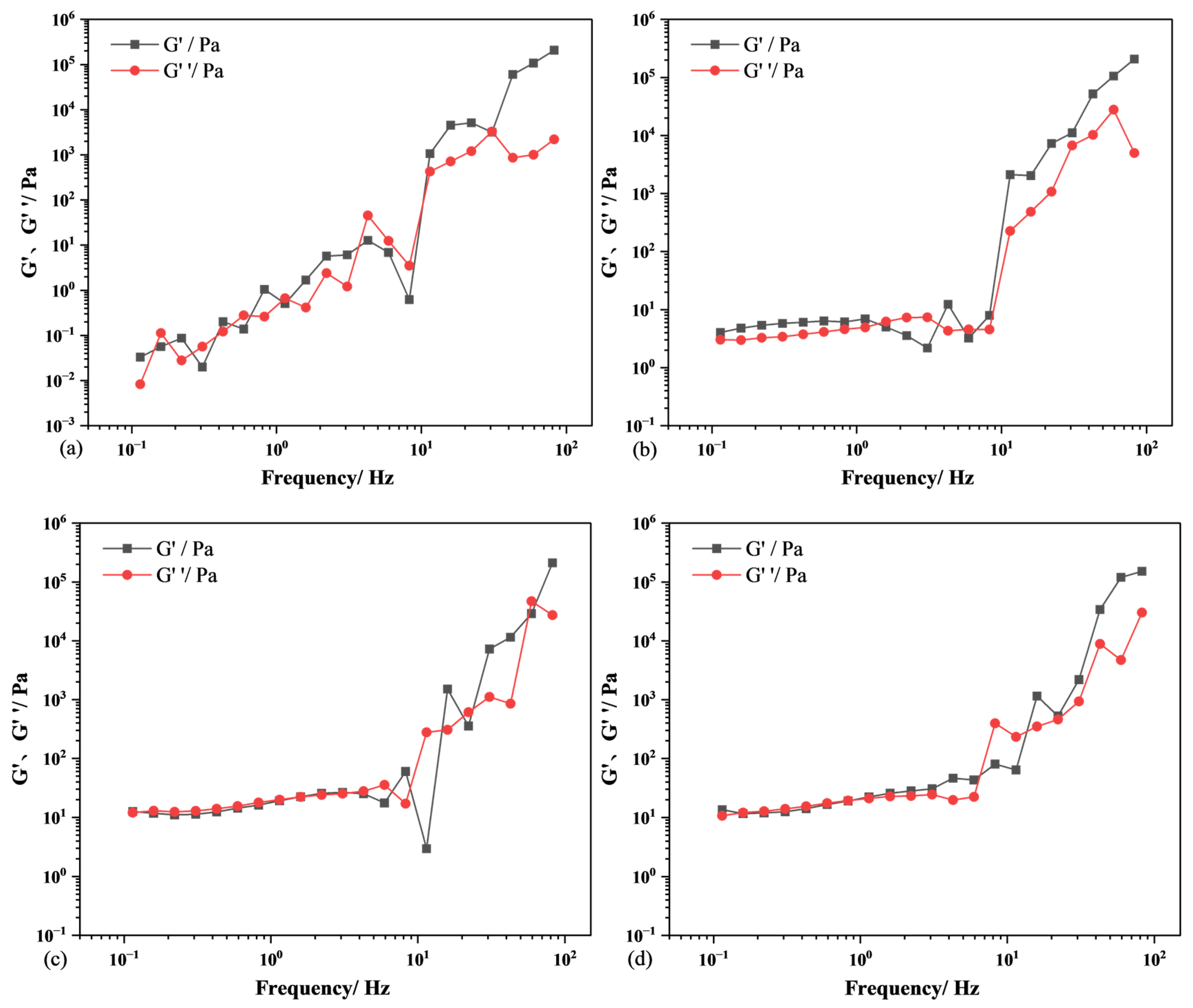
Figure 2 shows the oscillatory viscoelastic behavior of different blended emulsifier systems. In the low-to-medium frequency range below 5 Hz, the Span80/OP-4 system exhibited relatively low modulus values, with G′ mainly ranging from 0.02 to 12.73 Pa and G″ from 0.008 to 45.57 Pa, indicating weak bulk viscoelastic resistance and good flowability. For the Span80/SDBS system, G′ and G″ were maintained at 2.18–12.33 Pa and 2.99–7.37 Pa, respectively, suggesting a weak viscoelastic structure. This may be related to the interaction between SDBS and Ca2+, which reduces effective interfacial adsorption and weakens the interfacial film.
Compared with OP-4 and SDBS, the Span80/EAB40 and Span80/CTAB systems showed higher modulus values. The G′ and G″ values of the EAB40 system were 10.99–26.60 Pa and 12.03–27.82 Pa, respectively, while those of the CTAB system were 11.59–46.46 Pa and 10.68–24.47 Pa. These higher modulus values indicate stronger structural responses and more obvious interdroplet interactions. However, a higher modulus does not necessarily mean better overall stability. It may help resist droplet deformation, but excessive structural strength can also increase flow resistance and reduce flowability. Therefore, the modulus results should be evaluated together with ES, droplet size, filtration behavior, and sedimentation stability.
At higher frequencies, G′ and G″ increased sharply in all systems, indicating that the emulsions were more sensitive to rapid oscillatory deformation. Overall, the OP-4 system showed lower viscoelastic resistance and better flowability, whereas EAB40 and CTAB produced stronger structural responses.

3.3. Dynamic Interfacial Tension and Interfacial Adsorption Behavior

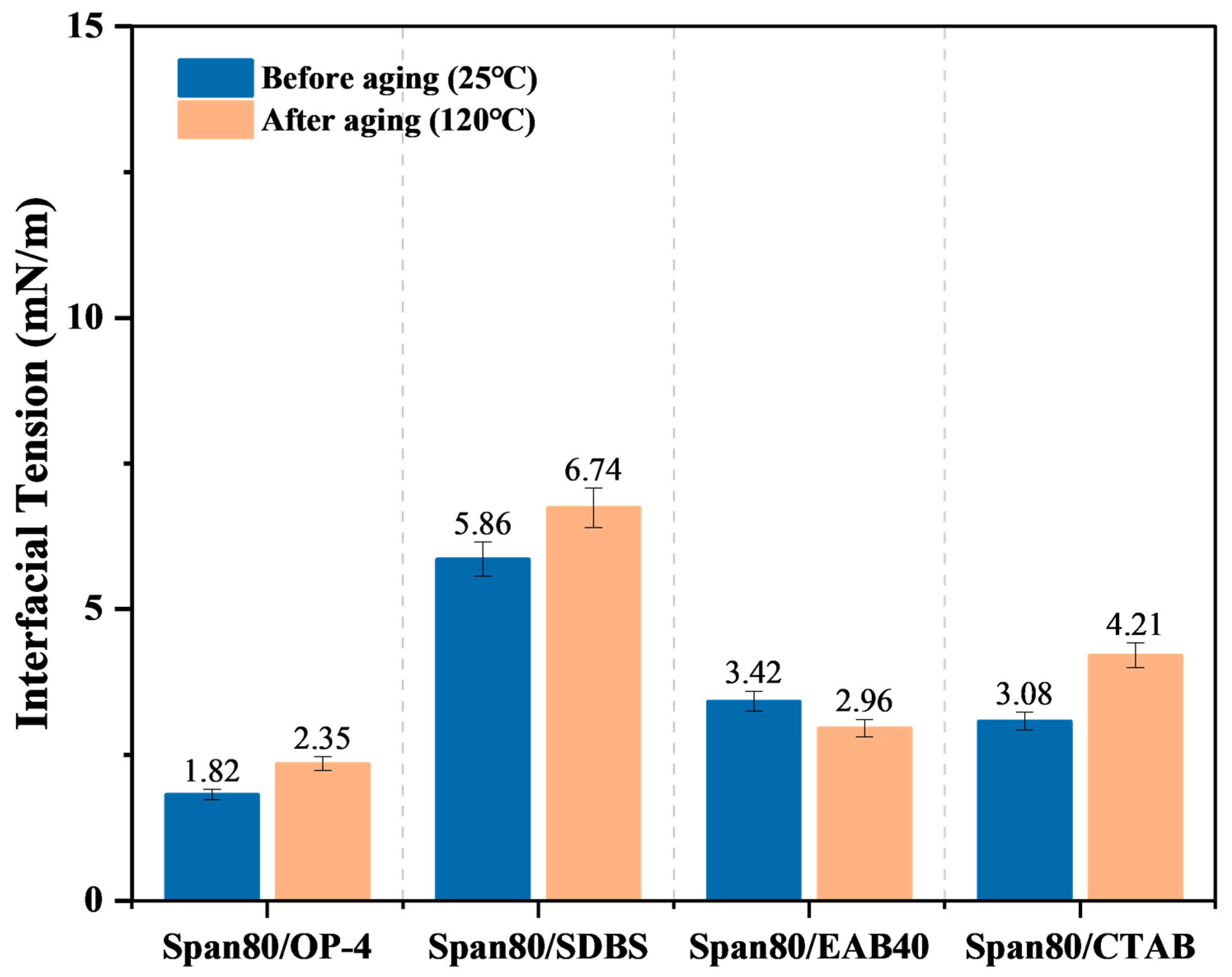
Figure 3 shows the oil–water interfacial tension of different blended emulsifier systems. The Span80/OP-4 system exhibited the lowest interfacial tension, increasing slightly from 1.82 mN/m to 2.35 mN/m after aging, indicating good interfacial adsorption and relatively stable interfacial activity. In contrast, the Span80/SDBS system showed the highest interfacial tension, increasing from 5.86 mN/m to 6.74 mN/m, suggesting weak effective adsorption at the oil–water interface. The Span80/EAB40 system decreased from 3.42 mN/m to 2.96 mN/m after aging, indicating improved interfacial arrangement. However, the Span80/CTAB system increased from 3.08 mN/m to 4.21 mN/m, suggesting weakened interfacial stability after thermal aging. Overall, the Span80/OP-4 system showed the strongest ability to reduce oil–water interfacial tension.

3.4. Kinetic Stability of Water-in-Oil Emulsions

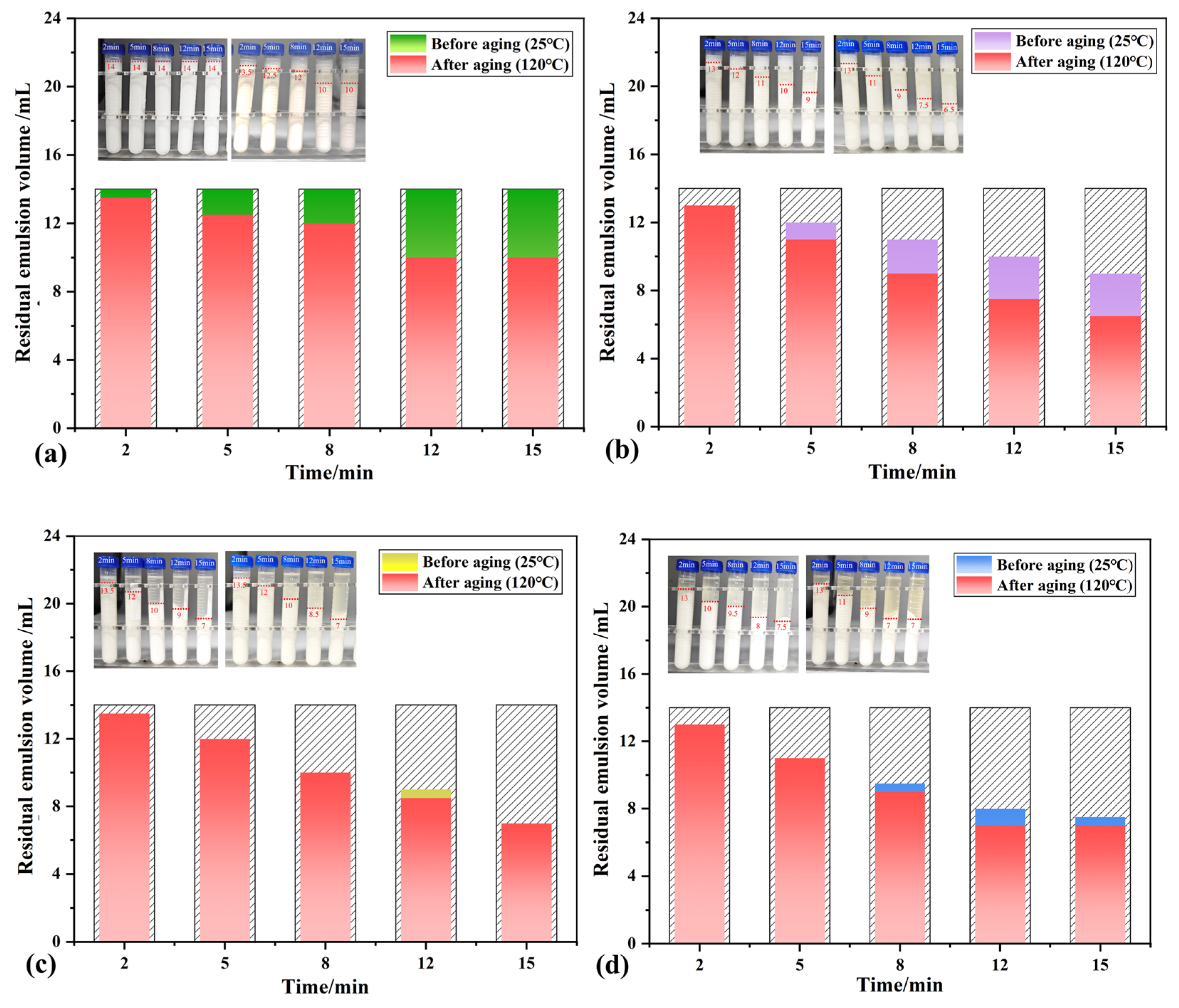
The kinetic stability of the four emulsion formulations is illustrated in Figure 4. Overall, the residual emulsion volume decreased with centrifugation time. Before thermal aging, the Span80/OP-4 blended system exhibited the best balance between emulsion stability and flowability, with an oil separation ratio of 0% within 15 min. In contrast, the oil separation ratios of the Span80/SDBS, Span80/EAB40, and Span80/CTAB systems were 14.3%, 14.3%, and 28.6% within the first 5 min, respectively, and increased by 21.4%, 35.7%, and 17.8% during the subsequent 10 min. These results indicate that the Span80/SDBS system possessed relatively better long-term stability, whereas the Span80/EAB40 and Span80/CTAB systems were more prone to progressive destabilization and droplet coalescence.
After thermal aging, the stability of all systems changed to different extents. The Span80/OP-4 system showed 10.7% oil separation within the first 5 min, followed by an additional 17.9% during the next 10 min, suggesting partial emulsifier desorption and weakened interfacial protection at high temperature. For the Span80/SDBS, Span80/EAB40, and Span80/CTAB systems, the total oil separation ratios after 15 min were 46.4%, 50.0%, and 50.0%, respectively. Compared with the unaged samples, thermal aging significantly reduced the stability of the Span80/SDBS and Span80/CTAB systems. In contrast, the Span80/EAB40 system showed relatively delayed initial destabilization after aging, which may be attributed to thermally induced rearrangement of interfacial molecules; however, prolonged centrifugation still caused phase separation.
For the Span80/OP-4 system, limited oil separation was observed at the early stage of centrifugation after thermal aging, although the system still showed low interfacial tension and relatively high ES. This apparent difference may be because interfacial tension, ES, and centrifugation reflect different aspects of emulsion stability. Thermal aging may cause partial emulsifier desorption and generate local defects in the interfacial film. Under centrifugal stress, these weak regions may lead to limited initial oil separation. Nevertheless, the Span80/OP-4 system still maintained relatively good overall stability compared with the other systems.

3.5. Electrical Stability (ES) of Water-in-Oil Emulsions

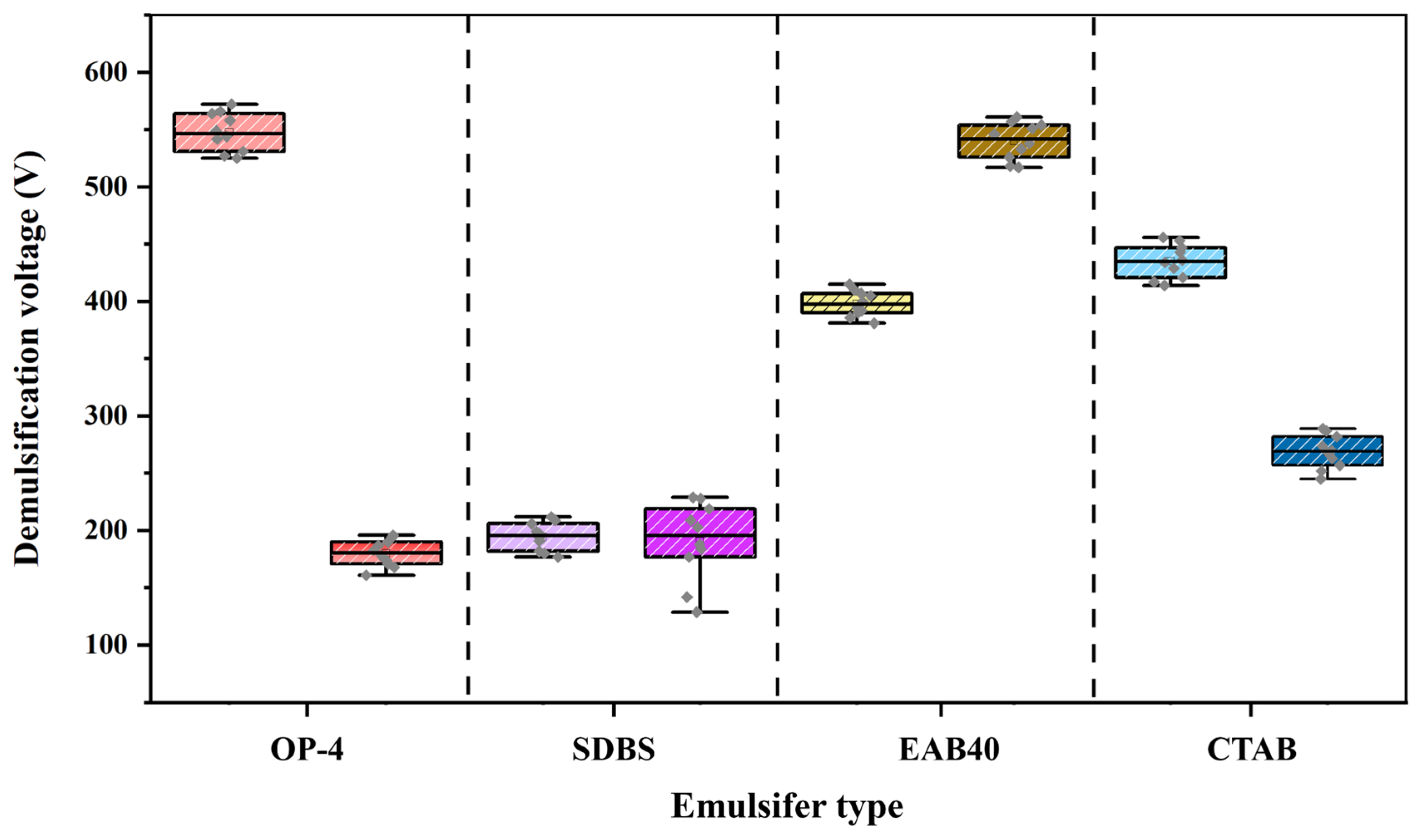
The demulsification voltage characterizes the electrical stability of emulsions and reflects the local thickness and compactness of the interfacial film [36]. As shown in Figure 5, prior to thermal aging, the Span80/OP-4 blended system exhibited the highest demulsification voltage, indicating optimal synergy between the two emulsifiers and a densely packed interfacial arrangement. In contrast, the demulsification voltage for the Span80/SDBS blended system was below 200 V, indicating strong competitive adsorption among emulsifier molecules, leading to a disordered interfacial structure. This may be related to the interaction between the anionic sulfonate groups of SDBS and Ca2+ in the brine phase, which reduces effective interfacial adsorption and increases interfacial heterogeneity. Current can easily pass through these weak regions, causing dielectric breakdown of the liquid film, resulting in the lowest electrical stability. The Span80/EAB40 and Span80/CTAB blended systems exhibit weak synergistic effects, with limited participation in interfacial film formation; however, their demulsification voltages consistently exceed 400 V, satisfying the fundamental electrical stability requirements for oil-based drilling fluid applications.
After thermal aging, the electrical stability (ES) of the Span80/OP-4 emulsion significantly decreased, indicating that high temperature induced partial desorption of the emulsifier from the interface, resulting in local defects in the interfacial film. Nevertheless, its ES value remained relatively high among the four systems, suggesting that the overall emulsion stability of the Span80/OP-4 system was still maintained after aging. For the Span80/SDBS blended system, the mean ES remained unchanged after thermal aging; however, the range of variation widened markedly, suggesting that high temperature exacerbated the heterogeneity of the interfacial film and increased disorder in its structural arrangement. For the Span80/EAB40 blended system, high temperature triggered a rearrangement of the interfacial structure, leading to denser molecular packing of the emulsifier at the interface and increased interfacial film compactness. For the Span80/CTAB blended system, although partial emulsifier desorption occurred under high temperature, the reduction in demulsification voltage remained relatively small; this may be due to the re-adsorption of CTAB molecules onto interfacial vacancies, which, despite the disordered arrangement, maintained the integrity of the interfacial structure and allowed it to withstand the effects of the electric field to some extent.

3.6. Morphology and Droplet Size Distribution

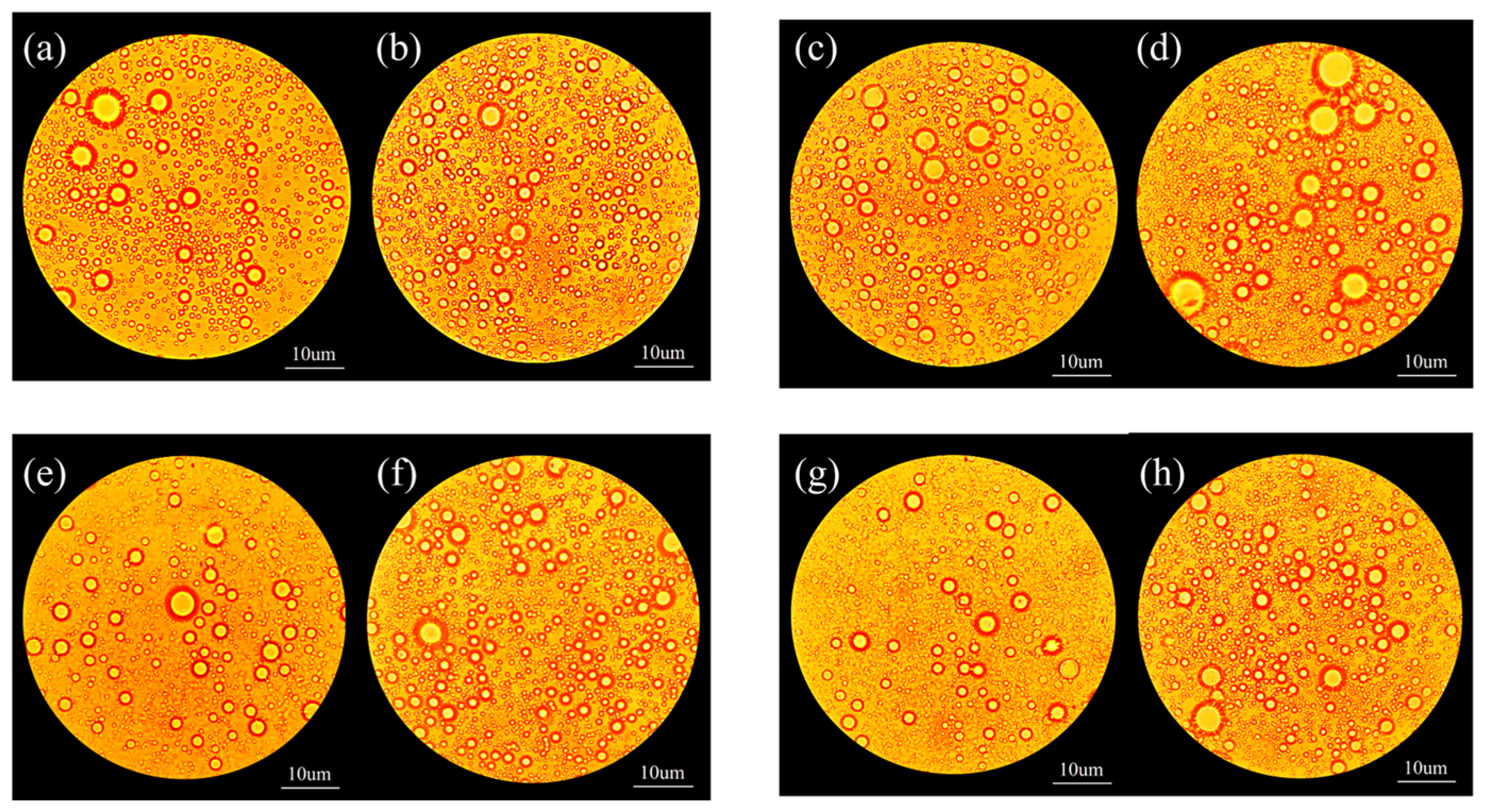
Figure 6 shows micrographs obtained through optical microscopy and processed using ImageJ, illustrating the changes in droplet morphology of the four emulsion formulations before and after thermal aging. Prior to thermal aging, droplets in Figure 6a,c,e,g appear well-dispersed with no obvious droplet coalescence. After thermal aging, pronounced Ostwald ripening is observed in Figure 6d, characterized by an overall increase in droplet size and uneven droplet size distribution; in contrast, droplet morphology changes in Figure 6b,f,h are comparatively minor. To further compare the microstructural differences among the systems, subsequent analysis will focus on droplet size statistics.
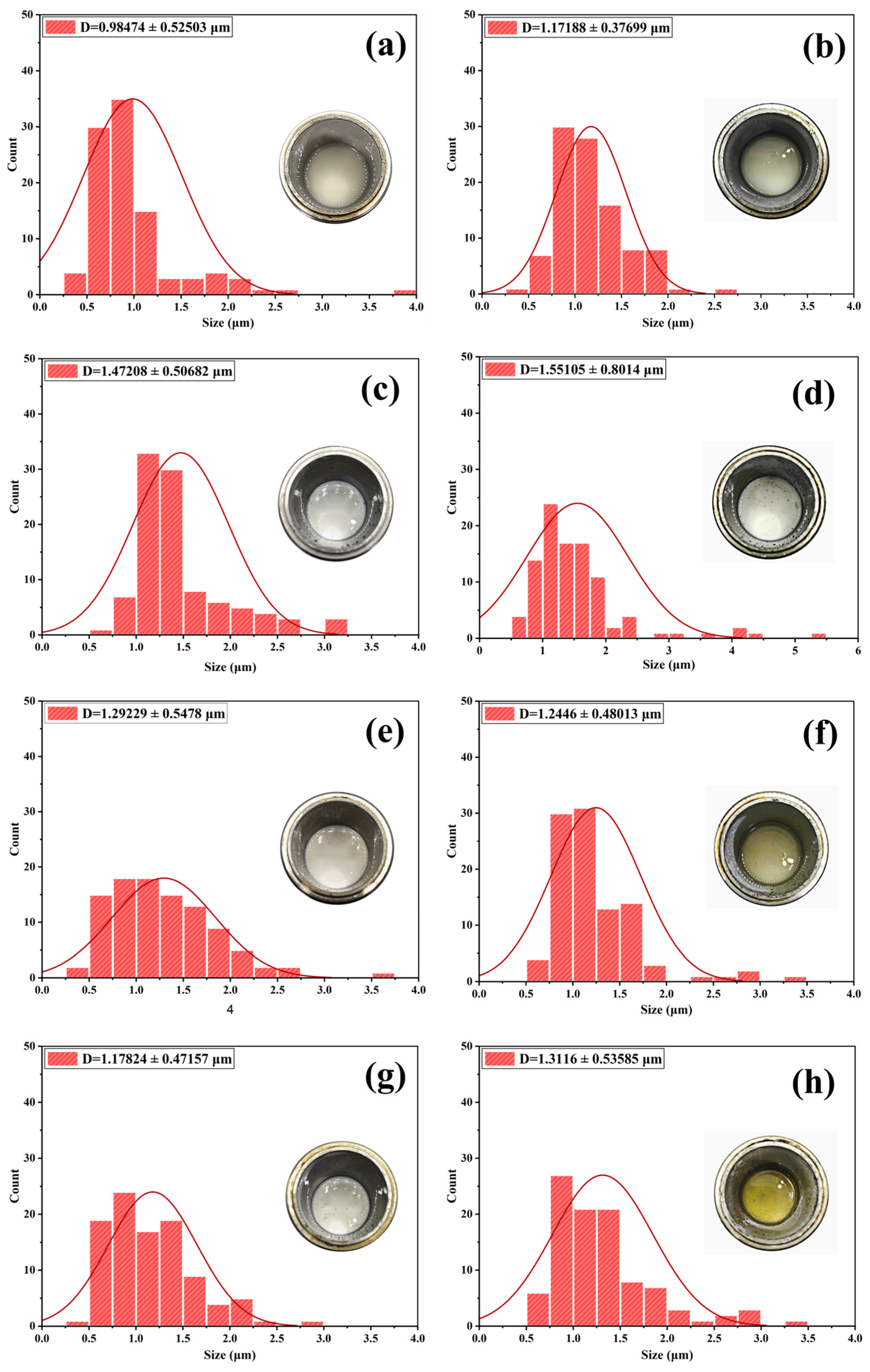
To quantitatively compare the droplet size distribution characteristics of each blended system, droplet size distribution curves were generated. Macroscopic phase separation images of the emulsions after thermal aging were utilized to assess their stability; the results are presented in Figure 7. As illustrated in Figure 7a,b, the Span80/OP-4 blended system exhibited the smallest average droplet size both before and after thermal aging. After thermal aging, the droplet size slightly increased, while the standard deviation decreased by 28.2%, indicating that only small droplets coalesced. As observed in Figure 7c,d, the Span80/SDBS blended system maintained a uniform color both before and after thermal aging, exhibiting no obvious phase separation. However, it exhibited the largest average droplet size among all systems, with a standard deviation that increased by 58.1% after thermal aging. This suggests heterogeneity in droplet size, yet the interfacial film remained effective in resisting droplet collisions. Comparing Figure 7e,f with Figure 7g,h, prior to thermal aging, both the droplet size and standard deviation of the Span80/CTAB blended system were smaller than those of the Span80/EAB40 blended system. After thermal aging, however, the trends for droplet size and standard deviation reversed, with the phase separation height of the Span80/EAB40 blended system being lower than that of the Span80/CTAB blended system. This can be attributed to differences in emulsifier rearrangement at the oil–water interface at high temperatures, affecting the macroscopic stability of the emulsions.
To further quantify the droplet size distribution, characteristic parameters including D10, D50, D90, and Span were calculated, as shown in Table 1. The Span80/OP-4 system showed the lowest D50 values before and after aging, increasing slightly from 3.42 μm to 3.86 μm, while its Span decreased from 1.59 to 1.43, indicating a relatively narrow and stable droplet size distribution. In contrast, the Span80/SDBS system exhibited the largest D50 and D90 values, especially after aging, suggesting droplet coalescence and a broader size distribution. For the Span80/EAB40 system, D50 decreased from 6.72 μm to 5.88 μm after aging, indicating improved droplet dispersion, whereas the Span80/CTAB system showed an increase in D50 and Span after aging. These results further confirm that the Span80/OP-4 system provides the most effective droplet refinement and distribution stability.

3.7. Contact Angle and Interfacial Compactness

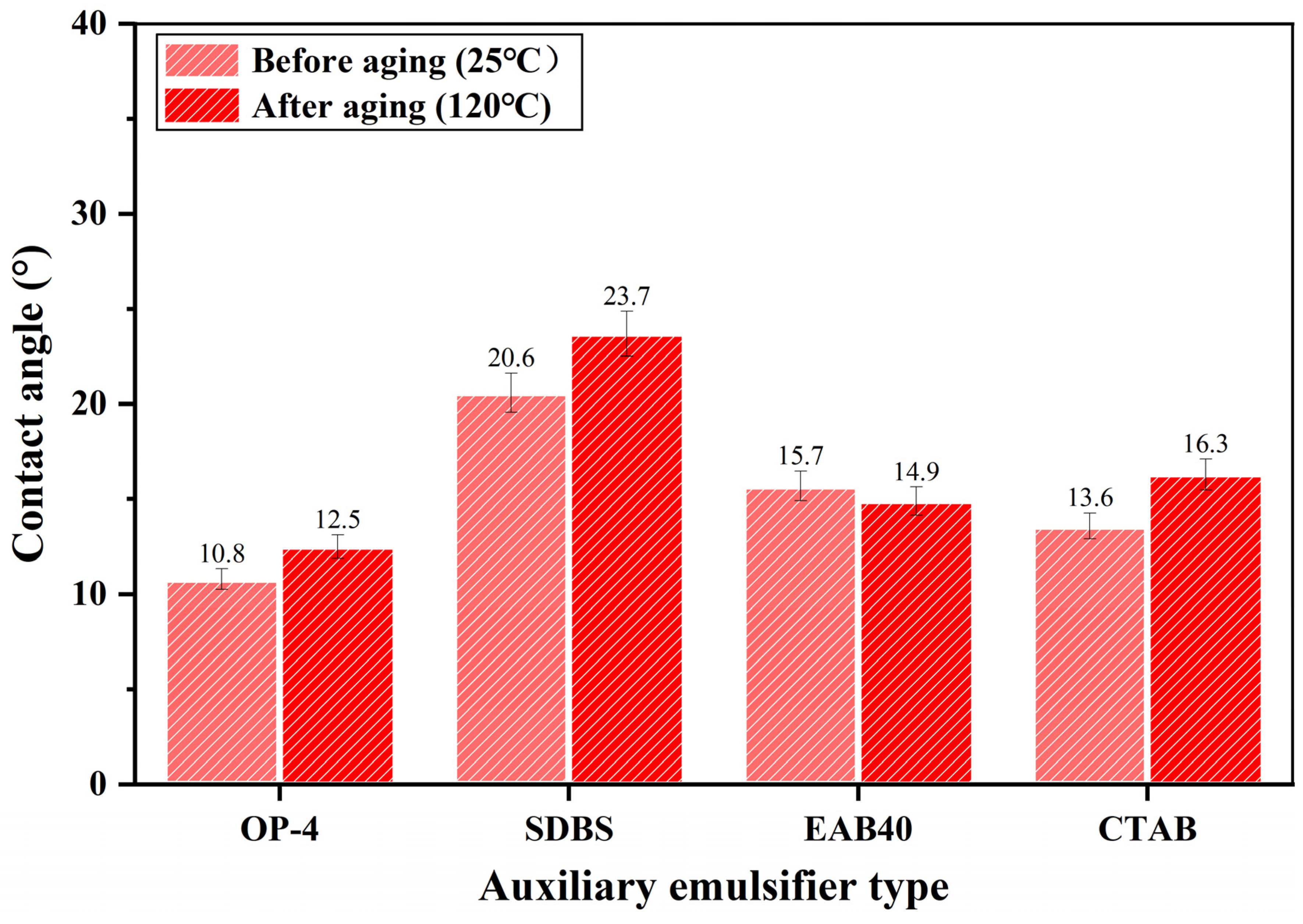
Figure 8 illustrates the contact angles of the four blended emulsifier systems before and after thermal aging, reflecting the arrangement of emulsifiers at the interface and the compactness of the interfacial film [37]. The Span80/OP-4 blended system exhibited the lowest contact angles both before and after thermal aging, suggesting the formation of a well-ordered interfacial structure with a large number of adsorbed molecules, which reduces the oil–water interfacial tension. The Span80/SDBS blended system exhibited a contact angle of 20.6° at room temperature—significantly higher than those of the other systems—indicating a disordered molecular arrangement of the emulsifier and the least compact interfacial film. After thermal aging, this contact angle increased to 23.7°, exacerbating defects in the interfacial film. For the Span80/EAB40 and Span80/CTAB blended systems, the contact angles at room temperature were 15.7° and 13.6°, respectively, indicating that the Span80/CTAB system exhibits a more compact molecular arrangement. After thermal aging, the contact angle of the Span80/EAB40 system decreased slightly by 0.8°, indicating a more compact rearranged structure; conversely, the contact angle of the Span80/CTAB blended system increased by 2.7°, revealing a more disordered arrangement.

3.8. Application Verification in 1.50 g/cm3 Weighted Oil-Based Drilling Fluids

(1)
Rheological properties of weighted oil-based drilling fluids
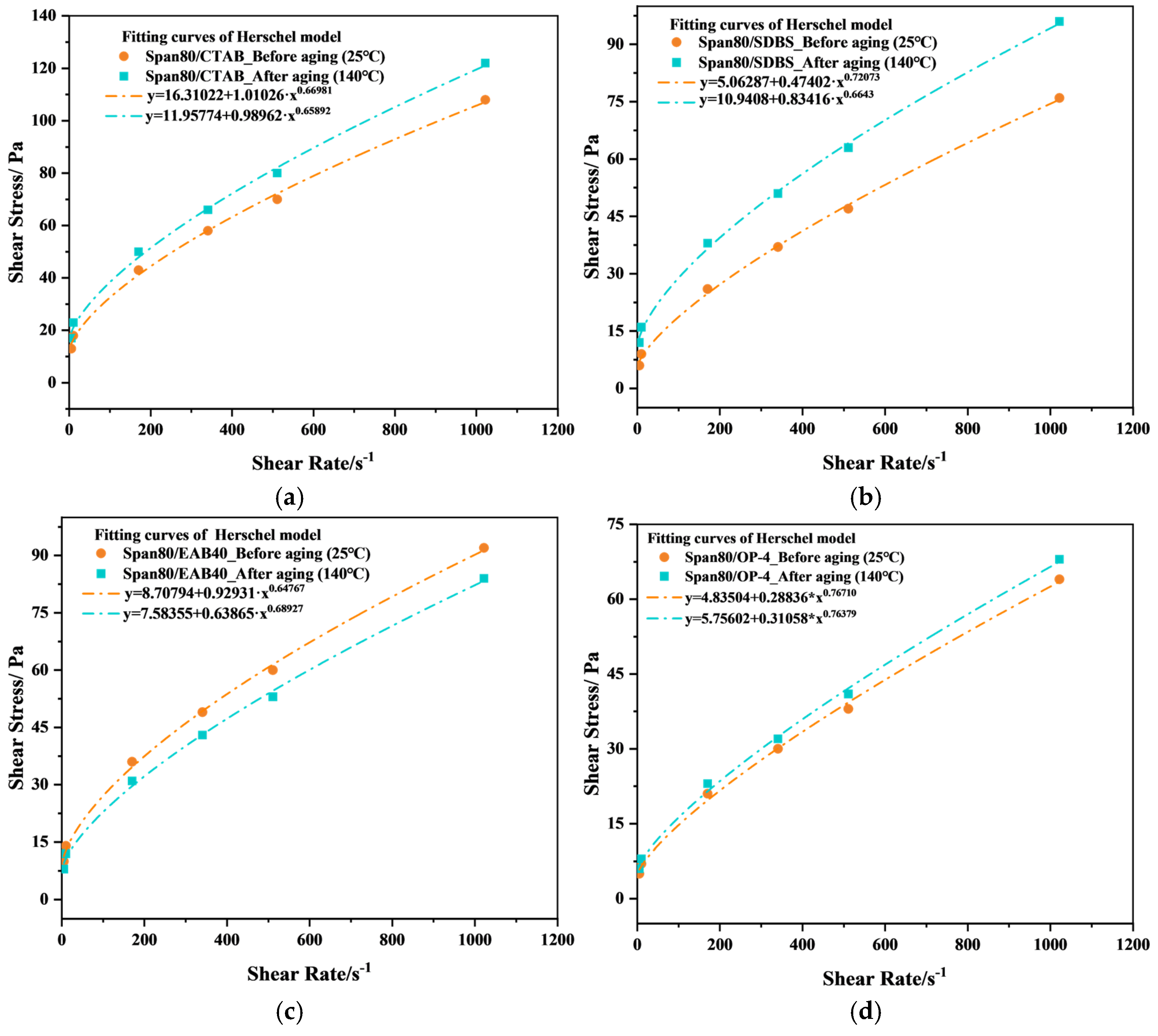
Figure 9 shows the rheological behavior of 1.50 g/cm3 weighted oil-based drilling fluids before and after aging at 140 °C. Compared with the emulsion aging condition of 120 °C, the aging temperature of the weighted drilling fluids was increased to 140 °C to further evaluate the applicability of different emulsifier systems under more severe conditions. All systems showed a nonlinear increase in shear stress with increasing shear rate, indicating typical shear-thinning behavior, and the Herschel–Bulkley model fitted the data well. After aging, the Span80/OP-4 system showed only a slight increase in rheological parameters, with AV increasing from 32.0 to 34.0 mPa·s and PV increasing from 26 to 27 mPa·s, corresponding to increases of 6.3% and 3.8%, respectively. This indicates that the OP-4 system maintained good flowability and rheological stability at 140 °C. In contrast, the Span80/SDBS system showed obvious thickening after aging, with AV increasing by 26.3% and YP increasing by 66.7%, suggesting enhanced flow resistance and structural instability. The Span80/CTAB system also showed increased AV and PV after aging, with increases of 13.0% and 10.5%, respectively. Differently, the Span80/EAB40 system showed a slight decrease in AV and YP after aging, decreasing by 8.7% and 21.4%, respectively, which may be related to thermally induced interfacial rearrangement.
Overall, the rheological results indicate that the Span80/OP-4 system maintained the best flowability under the higher aging temperature of 140 °C, while SDBS and CTAB increased the rheological resistance after aging. The EAB40 system showed improved rheological stability, consistent with its interfacial rearrangement behavior under thermal aging.
(2)
Electrical stability of weighted oil-based drilling fluids
Table 2 shows the electrical stability of 1.50 g/cm3 weighted oil-based drilling fluids before and after aging at 140 °C. For oil-based drilling fluids, an ES value above 400 V is generally considered acceptable. In many laboratory evaluations of oil-based drilling fluids, an ES value above 400 V is generally considered to indicate acceptable emulsion stability [38,39]. The Span80/OP-4 system maintained the highest ES value, decreasing slightly from 660 V to 585 V after aging, indicating good emulsion stability. The Span80/EAB40 system increased from 465 V to 555 V after aging, suggesting improved thermal stability. In contrast, the Span80/SDBS system remained below 400 V before and after aging, showing poor electrical stability. The Span80/CTAB system decreased from 515 V to 390 V after aging, falling below the acceptable level. Overall, the Span80/OP-4 system showed the best electrical stability in the weighted oil-based drilling fluid.
(4)
HTHP filtration performance
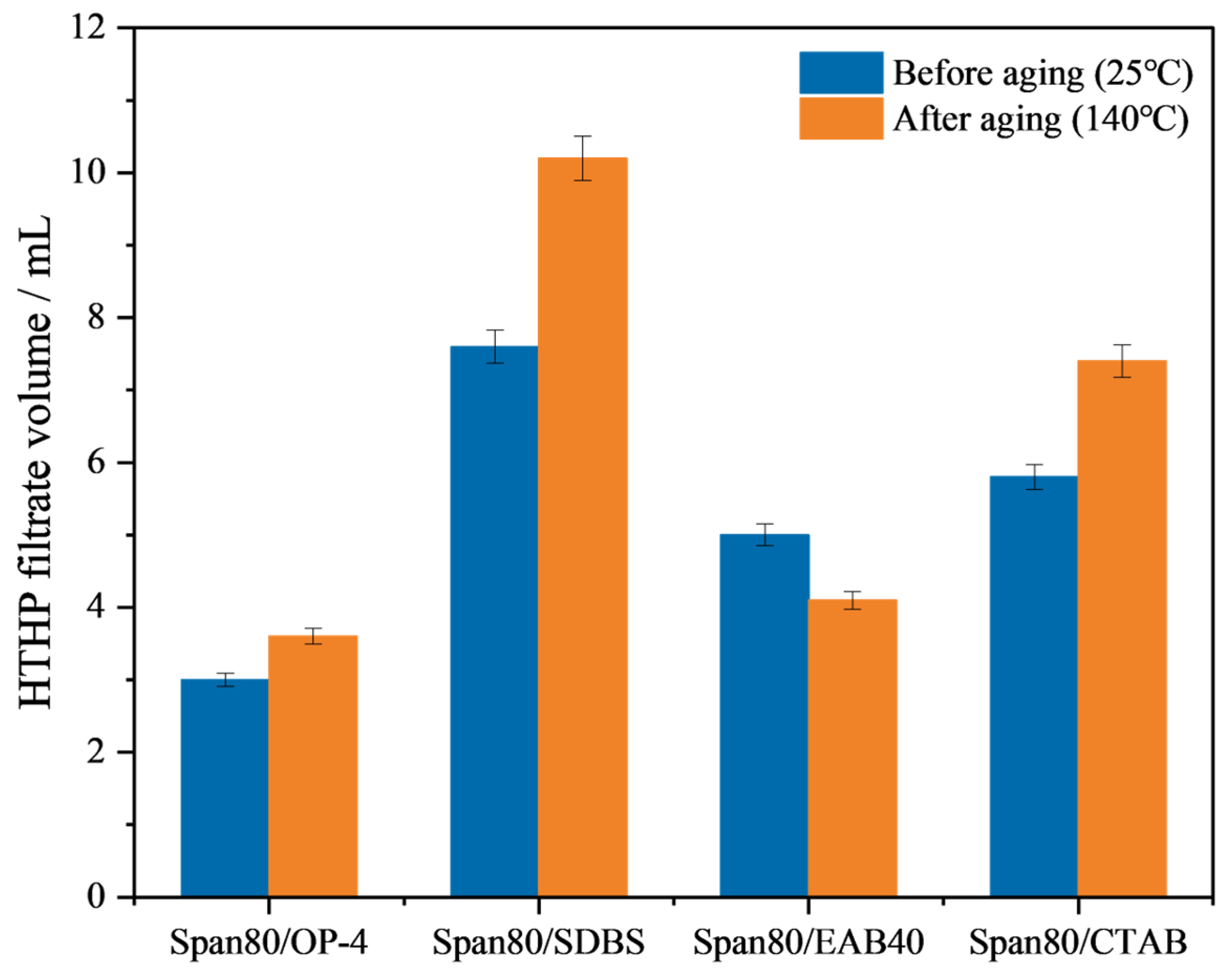
Figure 10 shows the HTHP filtrate volume of different weighted oil-based drilling fluids. After aging at 140 °C, the filtrate volume of the Span80/OP-4 system increased slightly from 3.0 mL to 3.6 mL, indicating that it still maintained good filtration control ability. The Span80/SDBS system showed the highest filtrate volume, increasing from 7.6 mL to 10.2 mL after aging, suggesting weakened filter cake quality and poor filtration control. For the Span80/EAB40 system, the filtrate volume decreased from 5.0 mL to 4.1 mL after aging, indicating improved filtration performance, which may be related to interfacial rearrangement under high temperature. The Span80/CTAB system increased from 5.8 mL to 7.4 mL, showing reduced filtration control after aging. Overall, the Span80/OP-4 system showed the lowest HTHP filtrate volume, while the Span80/SDBS system exhibited the poorest filtration performance.
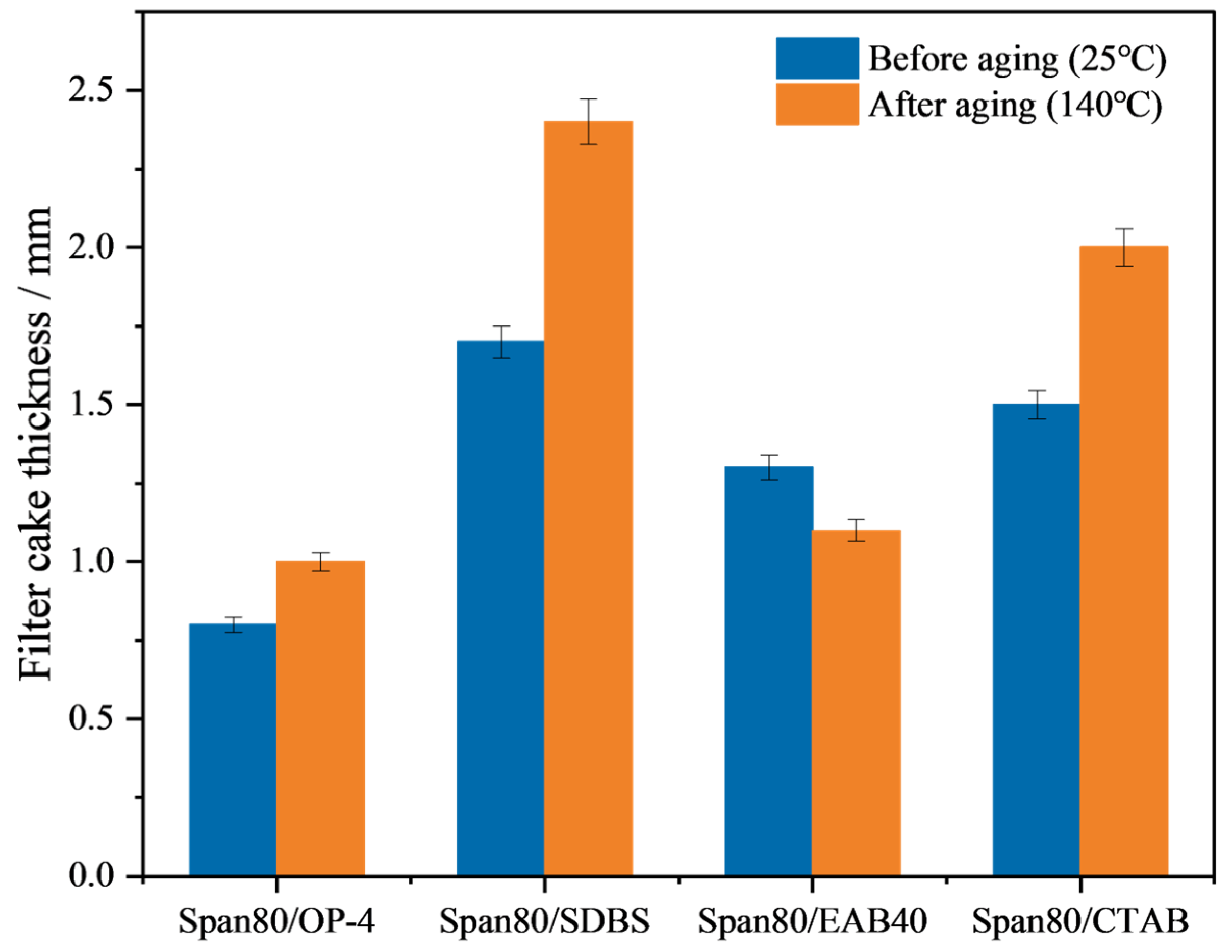
Figure 11 shows the filter cake thickness of different weighted oil-based drilling fluids. After aging at 140 °C, the filter cake thickness of the Span80/OP-4 system increased slightly from 0.8 mm to 1.0 mm, indicating that the system still maintained good filtration control ability. The Span80/SDBS system showed the largest increase, from 1.7 mm to 2.4 mm, with an increase of 41.2%, suggesting a looser filter cake structure after aging. For the Span80/EAB40 system, the filter cake thickness decreased from 1.3 mm to 1.1 mm after aging, indicating improved filter cake compactness, which may be related to interfacial rearrangement under high temperature. The Span80/CTAB system increased from 1.5 mm to 2.0 mm, showing weakened filtration control after aging. Overall, the Span80/OP-4 system formed the thinnest filter cake, while the Span80/SDBS system showed the poorest filtration performance.
(5)
Sedimentation stability
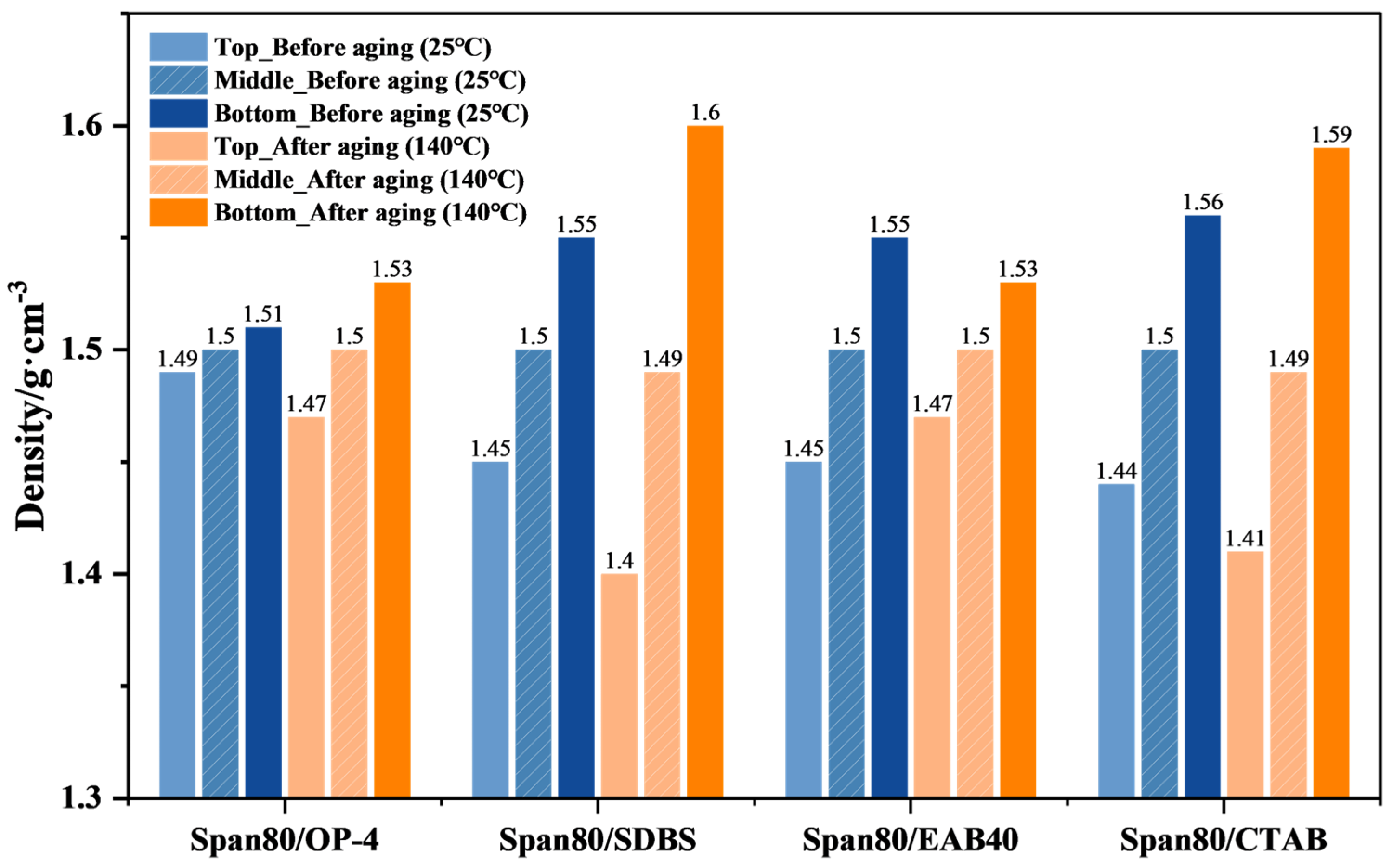
Figure 12 shows the density distribution of different weighted oil-based drilling fluids after static sedimentation. The Span80/OP-4 system showed the smallest density difference, with the top and bottom densities changing from 1.49 and 1.51 g/cm3 before aging to 1.47 and 1.53 g/cm3 after aging, indicating good sedimentation stability. For the Span80/SDBS system, the density difference increased from 0.10 to 0.20 g/cm3 after aging, suggesting serious barite settling. The Span80/EAB40 system showed improved stability after aging, with the density difference decreasing from 0.10 to 0.06 g/cm3. In contrast, the Span80/CTAB system showed increased density stratification after aging, with the density difference increasing from 0.12 to 0.18 g/cm3. Overall, the Span80/OP-4 system exhibited the best sedimentation stability, while the Span80/SDBS system showed the most severe settling after aging.
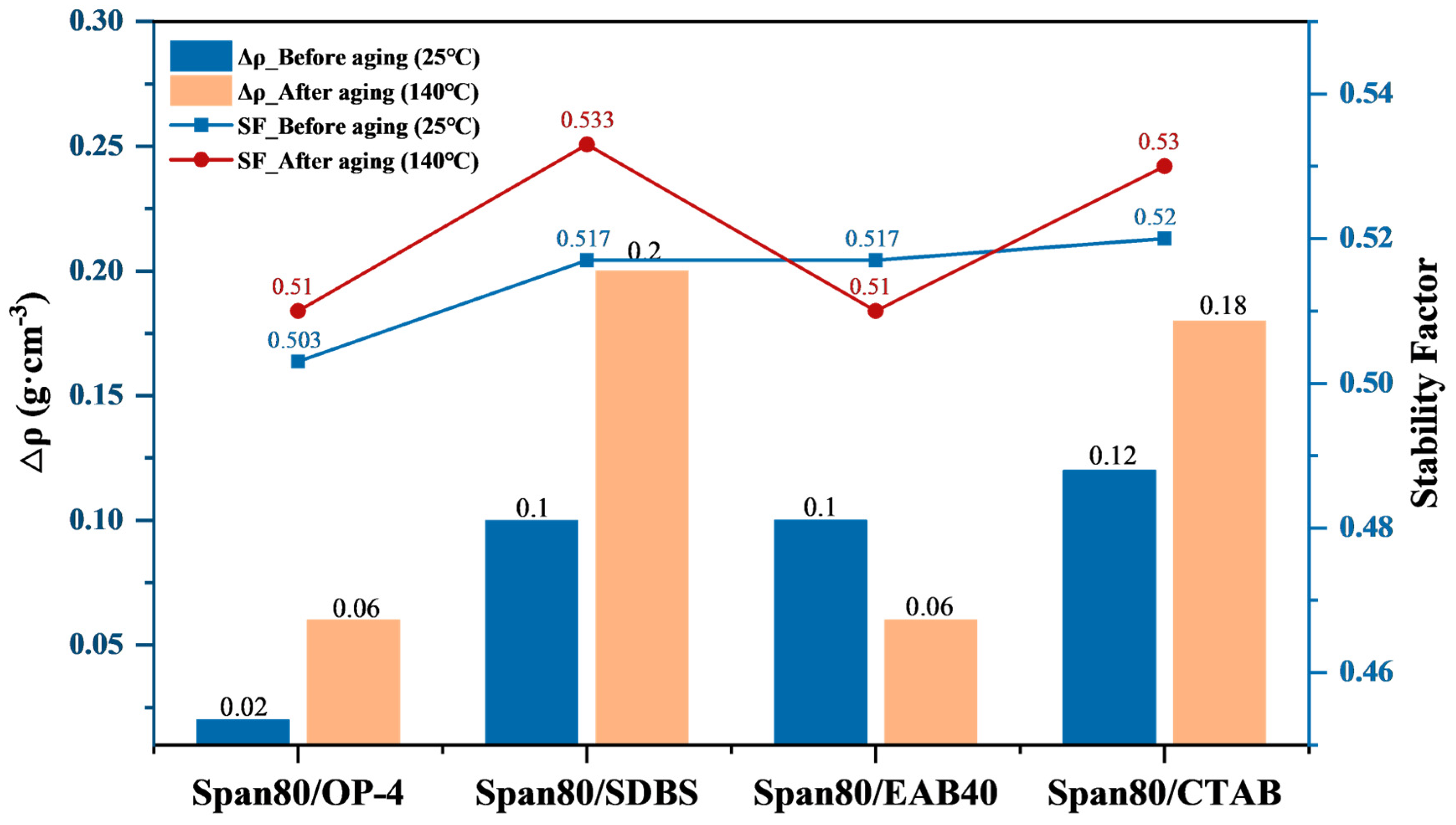
Figure 13 shows the sedimentation stability of different weighted oil-based drilling fluids. The Span80/OP-4 system showed the lowest Δρ, increasing from 0.02 to 0.06 g/cm3 after aging, and its SF only increased from 0.503 to 0.510, indicating good suspension stability. For the Span80/SDBS system, Δρ increased from 0.10 to 0.20 g/cm3 after aging, and SF increased from 0.517 to 0.533, suggesting severe barite settling. The Span80/EAB40 system showed improved stability after aging, with Δρ decreasing from 0.10 to 0.06 g/cm3 and SF decreasing from 0.517 to 0.510. For the Span80/CTAB system, Δρ increased from 0.12 to 0.18 g/cm3, and SF increased from 0.520 to 0.530, indicating aggravated sedimentation after aging. Although the present aging test was conducted at 140 °C, the results provide a useful preliminary basis for further extending the Span80/OP-4 system to HPHT wells with temperatures of 150–180 °C. Further long-term aging and performance evaluation under higher temperature and pressure conditions are still required before field application in ultra-deep wells.

3.9. Interfacial Stabilization Mechanisms of Span80/Auxiliary Emulsifier Systems

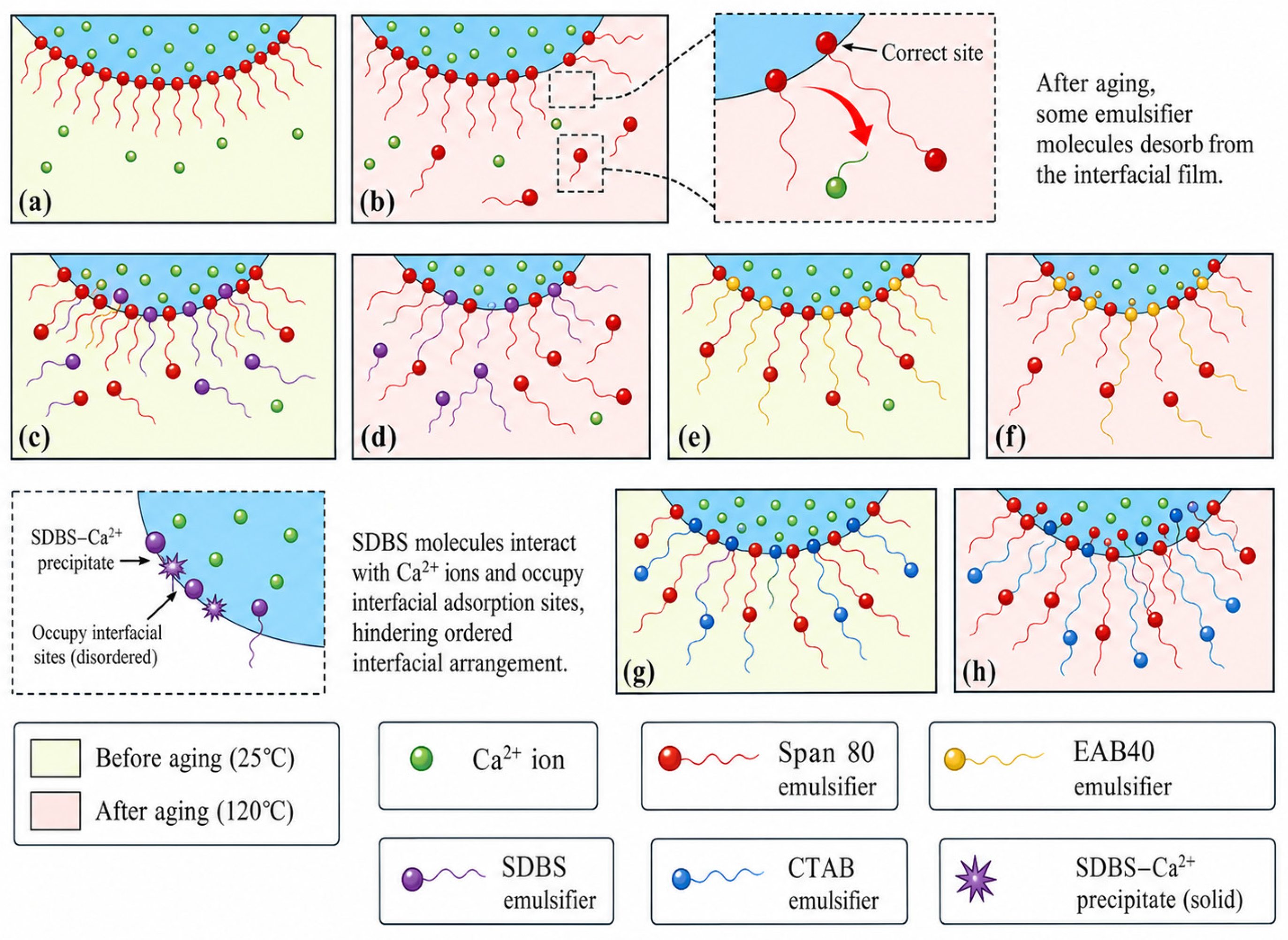
Figure 14 depicts the proposed interfacial synergistic mechanisms between Span80 and various auxiliary emulsifiers. At the oil–water interface, emulsifiers with varying polarities may show different adsorption preferences: relatively hydrophobic emulsifiers are more likely to adsorb near the oil-phase side, promoting a dense and ordered interfacial film, while more hydrophilic emulsifiers may be distributed closer to the aqueous-phase side and interfere with the ordered adsorption of Span80, thus affecting film structure and stability [40,41]. Figure 14a,b show that when Span80 is combined with the nonionic emulsifier OP-4, the two emulsifiers may adsorb cooperatively at the oil–water interface, forming a tightly packed and relatively uniform interfacial film. After thermal aging, although partial desorption introduces local defects, the overall film structure remains comparatively ordered. In an aqueous phase containing calcium ions, SDBS may interact with Ca2+ and form precipitated species near the interface, thereby occupying interfacial adsorption sites and disturbing the arrangement of Span80, resulting in a less compact and more disordered interfacial film structure. By comparing Figure 14e,f with Figure 14g,h, it can be observed that at room temperature, EAB40 and CTAB exhibit different interfacial behaviors. EAB40 may show limited compatibility with Span80 before aging, leading to a relatively loose interfacial arrangement, whereas CTAB may partially insert into the interfacial gaps between Span80 molecules, moderately affecting the interfacial film structure. After thermal aging, partial desorption of Span80 creates additional adsorption sites for EAB40 and CTAB, leading to interfacial rearrangement. In the case of EAB40, such rearrangement may improve interfacial compactness, whereas excessive occupation of interfacial or hydrophilic-side sites by CTAB may compete with Span80 adsorption and disrupt the original ordered arrangement. It should be noted that the proposed mechanisms are inferred from the combined results of interfacial tension, electrical stability, contact angle, droplet morphology, rheological behavior, and drilling fluid performance. Further direct interfacial characterization, such as zeta potential, interfacial rheology, and adsorption measurements, will be useful for verifying the molecular-level adsorption mechanisms.

4. Conclusions

In this study, water-in-oil emulsions stabilized by Span80 with auxiliary emulsifiers of different ionic characteristics were systematically investigated. The results demonstrate that the adsorption behavior and interfacial compatibility of auxiliary emulsifiers play a decisive role in regulating the oil–water interfacial film structure, thereby affecting emulsion stability, rheological behavior, and the performance of weighted oil-based drilling fluids.
The Span80/OP-4 system exhibited the most balanced overall performance among the four blended emulsifier systems, with the lowest oil–water interfacial tension, the smallest and most uniform droplet size, and no obvious phase separation during centrifugation before aging. Although thermal aging at 120 °C caused a decrease in electrical stability, the system still maintained relatively high ES, a relatively ordered interfacial structure, and favorable flowability. In contrast, the Span80/SDBS system showed poor electrical stability, which may be attributed to the interaction between SDBS and Ca2+ in the aqueous phase, reducing effective interfacial adsorption and disturbing the interfacial film structure.
The Span80/EAB40 and Span80/CTAB systems exhibited different thermal responses. After aging, EAB40 promoted interfacial rearrangement and improved interfacial compactness, whereas CTAB tended to disturb the ordered arrangement of the interfacial film, leading to reduced stability. Notably, the Span80/EAB40 system also showed a positive thermal-aging response, with improved electrical stability, filtration performance, and sedimentation stability after aging. Further verification using 1.50 g/cm3 weighted oil-based drilling fluids showed that the Span80/OP-4 system maintained high electrical stability, low HTHP filtrate volume, thin filter cake, and small density difference after aging at 140 °C. Therefore, the Span80/OP-4 blended emulsifier system provides the most favorable balance between emulsion stability, flowability, filtration control, and sedimentation stability, while Span80/EAB40 also shows potential for further optimization as a thermally responsive auxiliary emulsifier system.

Author Contributions

G.L.: Data curation, Formal analysis, Investigation, Methodology, Software, Validation, Visualization, Writing—original draft, Writing—review & editing, Project administration, Resources. L.P.: Conceptualization, Funding acquisition, Supervision, Writing—review & editing. D.L.: Investigation, Methodology, Validation, Writing—review & editing. All authors have read and agreed to the published version of the manuscript.

Funding

This research was supported by the Natural Science Foundation of the Hubei Province of China (No. 2025AFB330), the China Postdoctoral Science Foundation (No. 2024M762777), the Postdoctoral Fellowship Program of CPSF (No. GZB20250680).

Data Availability Statement

The data presented in this study are available on request from the corresponding author.

Acknowledgments

We would like to thank The Bakken Laboratory of YANGTZE University for their support.

Conflicts of Interest

Author Gang Li was employed by Changqing Drilling Company, CNPC Chuanqing Drilling Engineering Company Limited. The company had no role in the design of the study; in the collection, analyses, or interpretation of data; in the writing of the manuscript; or in the decision to publish the results. The remaining authors declare that the research was conducted in the absence of any commercial or financial relationships that could be construed as a potential conflict of interest.

Nomenclature

H L B Hydrophilic–lipophilic balance
W / O Water-in-oil emulsion
S p a n 80 Sorbitan monooleate
C T A B Cetyltrimethylammonium bromide
S D B S Sodium dodecylbenzene sulfonate
O P 4 Octylphenol polyoxyethylene ether-4
E A B 40 Erucamidopropyl betaine
C a 2 + Ca2+ ions
R o i l Oil separation ratio
V o i l The volume of separated oil
V e m The initial volume of the emulsion
h o i l The height of separated oil
h e m The total height of the emulsion
A V Apparent viscosity
P V Plastic viscosity
Y P Yield point
ψ 300 The dial readings at 300 rpm
ψ 600 The dial readings at 600 rpm
τ Shear stress
τ y Yield stress
K Consistency coefficient
γ Shear rate
n Flow behavior index
E S Electrical stability

References

  1. Sun, J.; Yang, J.; Bai, Y.; Lyu, K.; Liu, F. Research Progress and Development of Deep and Ultra-Deep Drilling Fluid Technology. Pet. Explor. Dev. 2024, 51, 1022–1034. [Google Scholar] [CrossRef]
  2. Wang, H.; Huang, H.; Bi, W.; Ji, G.; Zhou, B.; Zhuo, L. Deep and ultra-deep oil and gas well drilling technologies: Progress and prospect. Nat. Gas. Ind. B 2022, 9, 141–157. [Google Scholar] [CrossRef]
  3. Li, Q.; Li, S. Ultra-High Density Oil-Based Drilling Fluids and Its Applications in Ultra-Deep Petroleum Systems. In SPE Latin American and Caribbean Petroleum Engineering Conference; SPE: The Woodlands, TX, USA, 2020; p. D051S044R001. [Google Scholar] [CrossRef]
  4. Long, L.; Xianguang, X.; Jinzhi, Z.; Rongchao, C.; Jianhua, W.; Shuang, L.; Haijun, Y. Application of innovative high-temperature high-density oil-based drilling fluid technology in the efficient exploration and development of ultra-deep natural gas resources in West China. In International Petroleum Technology Conference; IPTC: London, UK, 2016; p. D031S053R003. [Google Scholar] [CrossRef]
  5. Yan, L.L.; Wang, J.H.; Ni, X.X.; Sun, J.S.; Wang, R.; Zhang, J.Q.; Cui, X.B. Nanoparticles Improved Sedimentation Stability of Oil-Based Completion Fluids While Drilling Ultra-Deep Wells. In Abu Dhabi International Petroleum Exhibition and Conference; SPE: Abu Dhabi, United Arab Emirates, 2023; p. D031S093R005. [Google Scholar] [CrossRef]
  6. Li, Q.; Zhu, J.; Li, S.; Zhang, S.; Hisham, N.E.D.; Ren, L.; Li, J.; Al-Mujalhem, M. Laboratory Evaluation of Weighting Materials for Ultra-High Density Oil-Based Drilling Fluids in Ultra-HPHT Wellbore Applications. In SPE Middle East Oil and Gas Show and Conference; SPE: Manama, Bahrain, 2019; p. D022S052R003. [Google Scholar] [CrossRef]
  7. Wang, F.; Tan, X.; Wang, R.; Sun, M.; Wang, L.; Liu, J. High Temperature and High Pressure Rheological Properties of High-Density Water-Based Drilling Fluids for Deep Wells. Pet. Sci. 2012, 9, 354–362. [Google Scholar] [CrossRef]
  8. Di, W.; Zhao, C.; Geng, T.; Sun, Q.; Xu, Z.; Sun, D. Probing the State of Water in Oil-Based Drilling Fluids. Colloids Surf. A Physicochem. Eng. Asp. 2022, 651, 129770. [Google Scholar] [CrossRef]
  9. Liu, L.; Pu, X.; Zhou, Y.; Zhou, J.; Luo, D.; Ren, Z. Smart Pickering Water-in-Oil Emulsion by Manipulating Interactions between Nanoparticles and Surfactant as Potential Oil-Based Drilling Fluid. Colloids Surf. A Physicochem. Eng. Asp. 2020, 586, 124246. [Google Scholar] [CrossRef]
  10. Shen, Z.; Zhang, H.; Yu, X.; Wang, M.; Gao, C.; Li, S.; Zhang, H. Experimental Optimization of High-Temperature-Resistant and Low Oil—Water Ratio High-Density Oil-Based Drilling Fluid. Processes 2023, 11, 1129. [Google Scholar] [CrossRef]
  11. Okoro, E.E.; Dosunmu, A.; Oriji, B.; Iyuke, S. Impact Of Reversible Invert Emulsion Drilling Fluid Rheology On Productivity. In SPE Nigeria Annual International Conference and Exhibition; SPE: Lagos, Nigeria, 2015; p. SPE-178308-MS. [Google Scholar] [CrossRef]
  12. Shinoda, K.; Saito, H. The Stability of O/W Type Emulsions as Functions of Temperature and the HLB of Emulsifiers: The Emulsification by PIT-Method. J. Colloid Interface Sci. 1969, 30, 258–263. [Google Scholar] [CrossRef]
  13. Dias, F.; Souza, R.; Lucas, E. Influence of Modified Starches Composition on Their Performance as Fluid Loss Additives in Invert-Emulsion Drilling Fluids. Fuel 2015, 140, 711–716. [Google Scholar] [CrossRef]
  14. Wagle, V.; AlYami, A.; Safran, A. Designing Invert Emulsion Drilling Fluids for High Temperature and High-Pressure Conditions. Sci. Rep. 2024, 14, 27748. [Google Scholar] [CrossRef] [PubMed]
  15. Fu, L.; Ma, Q.; Liao, K.; An, J.; Bai, J.; He, Y. Application of Pickering emulsion in oil drilling and production. Nanotechnol. Rev. 2021, 11, 26–39. [Google Scholar]
  16. Paswan, B.K.; Kumar, S.; Mahto, V. Evaluation of a Soybean Oil Derived Surfactant in the Development of Oil-in-Water (O/W) Emulsion Drilling Mud for Shale Formation. J. Pet. Sci. Eng. 2022, 217, 110926. [Google Scholar] [CrossRef]
  17. Liu, X.; Li, M.-C.; Liao, B.; Liu, S.; Lu, K.; Lv, K.; Sun, J.; Liu, C.; Mei, C.; Wu, Q. Wood-Derived Lignocellulose Nanomaterials as Multifunctional Agents in Eco-Friendly Pickering Emulsion-Based Drilling Fluids. Chem. Eng. J. 2023, 475, 146372. [Google Scholar] [CrossRef]
  18. Elkatatny, S. Enhancing the Stability of Invert Emulsion Drilling Fluid for Drilling in High-Pressure High-Temperature Conditions. Energies 2018, 11, 2393. [Google Scholar] [CrossRef]
  19. Celino, K.N.; Fernandes, R.d.S.; de Morais, S.C.; de Souza, E.A.; Balaban, R.d.C. Emulsion-Based Drilling Fluids: Rheological Properties Preservation Facing Changes on the Temperature, Pressure and Dispersed Phase. J. Mol. Liq. 2022, 352, 118753. [Google Scholar] [CrossRef]
  20. Khramov, D.; Barmatov, E. Fate of Emulsifier in Invert Emulsion Drilling Fluids: Hydrolysis and Adsorption on Solids. In SPE International Conference on Oilfield Chemistry; SPE: The Woodlands, TX, USA, 2021; p. D011S004R001. [Google Scholar] [CrossRef]
  21. Kuwabara, H.; Tsuchiya, K.; Arakawa, K.; Yamagata, Y.; Sakai, K.; Sakai, H. Effect of Oil Species on the Viscoelastic Behavior of a Surfactant Film Formed at the Oil/Water Interface. Langmuir 2025, 41, 12914–12921. [Google Scholar] [CrossRef] [PubMed]
  22. Cao, G.; Du, T.; Bai, Y.; Yang, T.; Zuo, J. Effects of Surfactant Molecular Structure on the Stability of Water in Oil Emulsion. J. Pet. Sci. Eng. 2021, 196, 107695. [Google Scholar] [CrossRef]
  23. Dargahi-Zaboli, M.; Sahraei, E.; Pourabbas, B. Hydrophobic Silica Nanoparticle-Stabilized Invert Emulsion as Drilling Fluid for Deep Drilling. Pet. Sci. 2017, 14, 105–115. [Google Scholar] [CrossRef]
  24. Chen, Y.; Song, Q.; Tan, Y. Synthesis, Aggregation Behavior of Alternating Copolymer Emulsifier in Oil Solution and Its Application in Oil-Based Drilling Fluids. J. Mol. Liq. 2022, 348, 118011. [Google Scholar] [CrossRef]
  25. Huang, N.; Sun, J.; Liu, J.; Lv, K.; Deng, X.; Li, Y.; Zhang, G. Influencing factors and mechanism of emulsion stability for Antarctic drilling fluid. SPE J. 2025, 30, 5367–5380. [Google Scholar] [CrossRef]
  26. Freitas, I.G.; Perles, C.E.; Guersoni, V.C.B.; Pessanha, T.M.; Bannwart, A.C. Interfacial Tension as a Parameter to Assess Demulsifier Efficiency on Heavy Crude Oil Emulsions. ACS Omega 2025, 10, 34142–34150. [Google Scholar] [CrossRef] [PubMed]
  27. Zhang, R.; Cai, Y.; Zhu, X.; Han, Q.; Zhang, T. Emulsification Properties of a Star-Shaped Anionic Surfactant in Oil-Based Drilling Fluid. J. Dispers. Sci. Technol. 2018, 39, 1684–1691. [Google Scholar] [CrossRef]
  28. Fayad, M.M.; Mohamed, D.E.; Soliman, E.; El-Fattah, M.A.; Ibrahim, S.; Dardir, M. Optimization of Invert Emulsion Oil-Based Drilling Fluids Performance through Heterocyclic Imidazoline-Based Emulsifiers. Colloids Surf. A Physicochem. Eng. Asp. 2021, 613, 126092. [Google Scholar] [CrossRef]
  29. Van Zanten, R.; Miller, J.J.; Baker, C. Improved Stability of Invert Emulsion Fluids. In IADC/SPE Drilling Conference and Exhibition; SPE: San Diego, CA, USA, 2012; p. SPE-151404-MS. [Google Scholar] [CrossRef]
  30. Kumar, A.; Li, S.; Cheng, C.-M.; Lee, D. Recent Developments in Phase Inversion Emulsification. Ind. Eng. Chem. Res. 2015, 54, 8375–8396. [Google Scholar] [CrossRef]
  31. Patel, A.; Singh, A.K.; Bidwai, N.; Indulkar, S.; Gupta, V. Innovative Surfactant Chemistry Offers the Performance Advantages to Invert Emulsion Drilling Fluids While Drilling Under Challenging Environments. In SPE International Conference on Oilfield Chemistry; SPE: The Woodlands, TX, USA, 2021; p. D011S004R005. [Google Scholar] [CrossRef]
  32. Li, W.; Zhao, X.; Ji, Y.; Peng, H.; Li, Y.; Liu, L.; Han, X. An Investigation on Environmentally Friendly Biodiesel-Based Invert Emulsion Drilling Fluid. J. Pet. Explor. Prod. Technol. 2016, 6, 505–517. [Google Scholar] [CrossRef]
  33. Sun, G.; Li, Z.; Ngai, T. Inversion of Particle-Stabilized Emulsions to Form High-Internal-Phase Emulsions. Angew. Chem. 2010, 122, 2209–2212. [Google Scholar] [CrossRef]
  34. Luo, T.; Li, J.; Xu, J.; Wang, J.; Zhang, L.; Yu, Z. The Effects of Organically Modified Lithium Magnesium Silicate on the Rheological Properties of Water-Based Drilling Fluids. Materials 2024, 17, 1564. [Google Scholar] [CrossRef] [PubMed]
  35. Özakın, B.; Gültekin, K.; Uğuz, G. Investigation of the effect of particle size on dispersion stability and viscosity in kaolin particles-doped bio-based palm nanolubricants. Arab. J. Sci. Eng. 2025, 50, 4223–4241. [Google Scholar] [CrossRef]
  36. Peng, D.; Bao, F.; Yang, D.; Pu, L.; Xu, P. Synergistic Effects of Nano-SiO2 on Emulsion Film Stability and Non-Newtonian Rheology of Offshore Oil-Based Drilling Fluids. J. Mar. Sci. Eng. 2025, 13, 1722. [Google Scholar] [CrossRef]
  37. Luo, Y.; Zhu, X.; Liu, Y.; Wang, X.; Zhang, H.; Li, B.; Peng, Y. Effect of Oil-Based Drilling Fluid on the Evolution of Friction Interface: A Reactive Molecular Dynamics Study at Different Temperatures. Tribol. Int. 2023, 188, 108820. [Google Scholar] [CrossRef]
  38. Risse, K.; Drusch, S. (Non)Linear Interfacial Rheology of Tween, Brij and Span Stabilized Oil–Water Interfaces: Impact of the Molecular Structure of the Surfactant on the Interfacial Layer Stability. Langmuir 2024, 40, 18283–18296. [Google Scholar] [CrossRef] [PubMed]
  39. Wang, Q.; Zhang, H.; Han, Y.; Cui, Y.; Han, X. Study on the Relationships between the Oil HLB Value and Emulsion Stabilization. RSC Adv. 2023, 13, 24692–24698. [Google Scholar] [CrossRef] [PubMed]
  40. Murtaza, M.; Alarifi, S.A.; Kamal, M.S.; Onaizi, S.A.; Al-Ajmi, M.; Mahmoud, M. Experimental investigation of the rheological behavior of an oil-based drilling fluid with rheology modifier and oil wetter additives. Molecules 2021, 26, 4877. [Google Scholar] [CrossRef] [PubMed]
  41. Li, J.; Li, Q.; Li, N.; Teng, X.; Ren, L.; Liu, H.; Guo, B.; Li, S.; Hisham, N.E.D.; Al-Mujalhem, M. Ultra-high density oil-based drilling fluids laboratory evaluation and applications in ultra-HPhT reservoir. In SPE Asia Pacific Oil and Gas Conference and Exhibition; SPE: The Woodlands, TX, USA, 2020; p. D032S009R010. [Google Scholar] [CrossRef]
Figure 1. Rheological curves and Herschel–Bulkley model fitting parameters of different blended emulsifier systems: (a) 4.5% Span 80 + 1.5% OP-4; (b) 5.0% Span 80 + 1.0% SDBS; (c) 4.5% Span 80 + 1.5% EAB40; (d) 5.5% Span 80 + 0.5% CTAB; (e) consistency coefficient K; (f) flow behavior index n.
Processes 14 02213 g001
Figure 2. Frequency-dependent storage modulus (G′) and loss modulus (G″) of water-in-oil emulsions stabilized by different Span 80/auxiliary emulsifier systems: (a) 4.5% Span 80 + 1.5% OP-4; (b) 5.0% Span 80 + 1.0% SDBS; (c) 4.5% Span 80 + 1.5% EAB40; and (d) 5.5% Span 80 + 0.5% CTAB.
Processes 14 02213 g002
Figure 3. Oil–water interfacial tension of different blended emulsifier systems before and after thermal aging.
Processes 14 02213 g003
Figure 4. Kinetic stability of different blended emulsifier systems before and after thermal aging: (a) 4.5% Span 80 + 1.5% OP-4; (b) 5.0% Span 80 + 1.0% SDBS; (c) 4.5% Span 80 + 1.5% EAB40; (d) 5.5% Span 80 + 0.5% CTAB.
Processes 14 02213 g004
Figure 5. Demulsification voltage of different blended emulsifier systems before and after thermal aging. For each emulsifier system, the left box represents before aging at 25 °C, and the right box represents after aging at 120 °C.
Processes 14 02213 g005
Figure 6. Microscopic morphologies of droplets in different blended emulsifier systems before and after thermal aging: (a) 4.5% Span 80 + 1.5% OP-4 before aging; (b) 4.5% Span 80 + 1.5% OP-4 after aging; (c) 5.0% Span 80 + 1.0% SDBS before aging; (d) 5.0% Span 80 + 1.0% SDBS after aging; (e) 4.5% Span 80 + 1.5% EAB40 before aging; (f) 4.5% Span 80 + 1.5% EAB40 after aging; (g) 5.5% Span 80 + 0.5% CTAB before aging; (h) 5.5% Span 80 + 0.5% CTAB after aging.
Processes 14 02213 g006
Figure 7. Droplet size distribution curves of different blended emulsifier systems before and after thermal aging: (a) 4.5% Span 80 + 1.5% OP-4 before aging; (b) 4.5% Span 80 + 1.5% OP-4 after aging; (c) 5.0% Span 80 + 1.0% SDBS before aging; (d) 5.0% Span 80 + 1.0% SDBS after aging; (e) 4.5% Span 80 + 1.5% EAB40 before aging; (f) 4.5% Span 80 + 1.5% EAB40 after aging; (g) 5.5% Span 80 + 0.5% CTAB before aging; (h) 5.5% Span 80 + 0.5% CTAB after aging.
Processes 14 02213 g007
Figure 8. Contact angle of different blended emulsifier systems before and after thermal aging.
Processes 14 02213 g008
Figure 9. Rheological curves and Herschel–Bulkley model fitting of 1.50 g/cm3 weighted oil-based drilling fluids before and after thermal aging: (a) Span80/CTAB; (b) Span80/SDBS; (c) Span80/EAB40; (d) Span80/OP-4.
Processes 14 02213 g009
Figure 10. HTHP filtrate volume of 1.50 g/cm3 weighted oil-based drilling fluids before and after aging at 140 °C.
Processes 14 02213 g010
Figure 11. Filter cake thickness of 1.50 g/cm3 weighted oil-based drilling fluids before and after aging at 140 °C.
Processes 14 02213 g011
Figure 12. Density distribution of 1.50 g/cm3 weighted oil-based drilling fluids before and after aging at 140 °C.
Processes 14 02213 g012
Figure 13. Density difference (Δρ) and sedimentation factor (SF) of 1.50 g/cm3 weighted oil-based drilling fluids before and after aging at 140 °C.
Processes 14 02213 g013
Figure 14. Proposed interfacial stabilization mechanisms of Span80/auxiliary emulsifier systems before and after thermal aging: (a,b) Span80/OP-4; (c,d) Span80/SDBS; (e,f) Span80/EAB40; and (g,h) Span80/CTAB.
Processes 14 02213 g014
Table 1. Characteristic droplet size parameters of different blended emulsifier systems before and after thermal aging.
SystemAging ConditionD10/μmD50/μmD90/μmSpan
Span80/OP-4Before aging1.353.426.801.59
Span80/OP-4After aging1.583.867.121.43
Span80/SDBSBefore aging3.267.8513.961.36
Span80/SDBSAfter aging3.159.4218.061.58
Span80/EAB40Before aging2.846.7212.841.49
Span80/EAB40After aging2.265.8810.361.38
Span80/CTABBefore aging2.525.9610.721.38
Span80/CTABAfter aging2.747.1514.181.60
Note: Span = (D90 − D10)/D50.
Table 2. Electrical stability of weighted oil-based drilling fluids.
SystemBefore Aging ES/VAfter Aging ES/V
Span80/OP-4660 ± 21585 ± 20
Span80/SDBS245 ± 18180 ± 20
Span80/EAB40465 ± 21555 ± 24
Span80/CTAB515 ± 26390 ± 23
Disclaimer/Publisher’s Note: The statements, opinions and data contained in all publications are solely those of the individual author(s) and contributor(s) and not of MDPI and/or the editor(s). MDPI and/or the editor(s) disclaim responsibility for any injury to people or property resulting from any ideas, methods, instructions or products referred to in the content.