Enhancing Electrokinetic Removal of Cu and Pb from Loess by Alleviating the Focusing Effect: Influence of Electric Field Strength, EKG Electrodes, and Catholyte pH



Abstract
1. Introduction
2. Materials and Methods
2.1. Sampling and Specimen Preparation
2.2. Electrokinetic Reactor and Experimental Design
2.3. Analytical Procedure
3. Results and Discussion
3.1. Effect of Electric Field Intensity
3.2. Effect of Electrode Materials
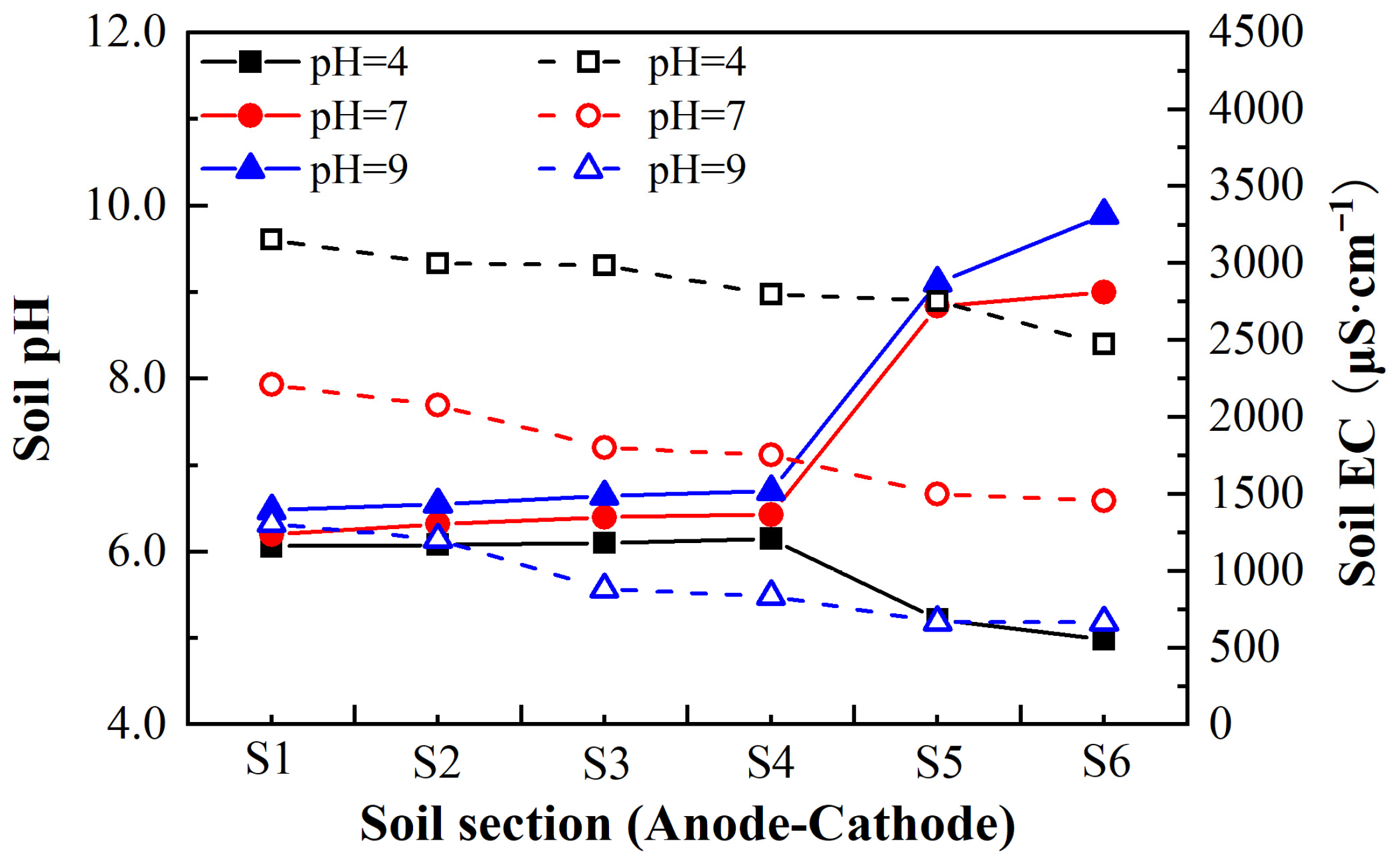
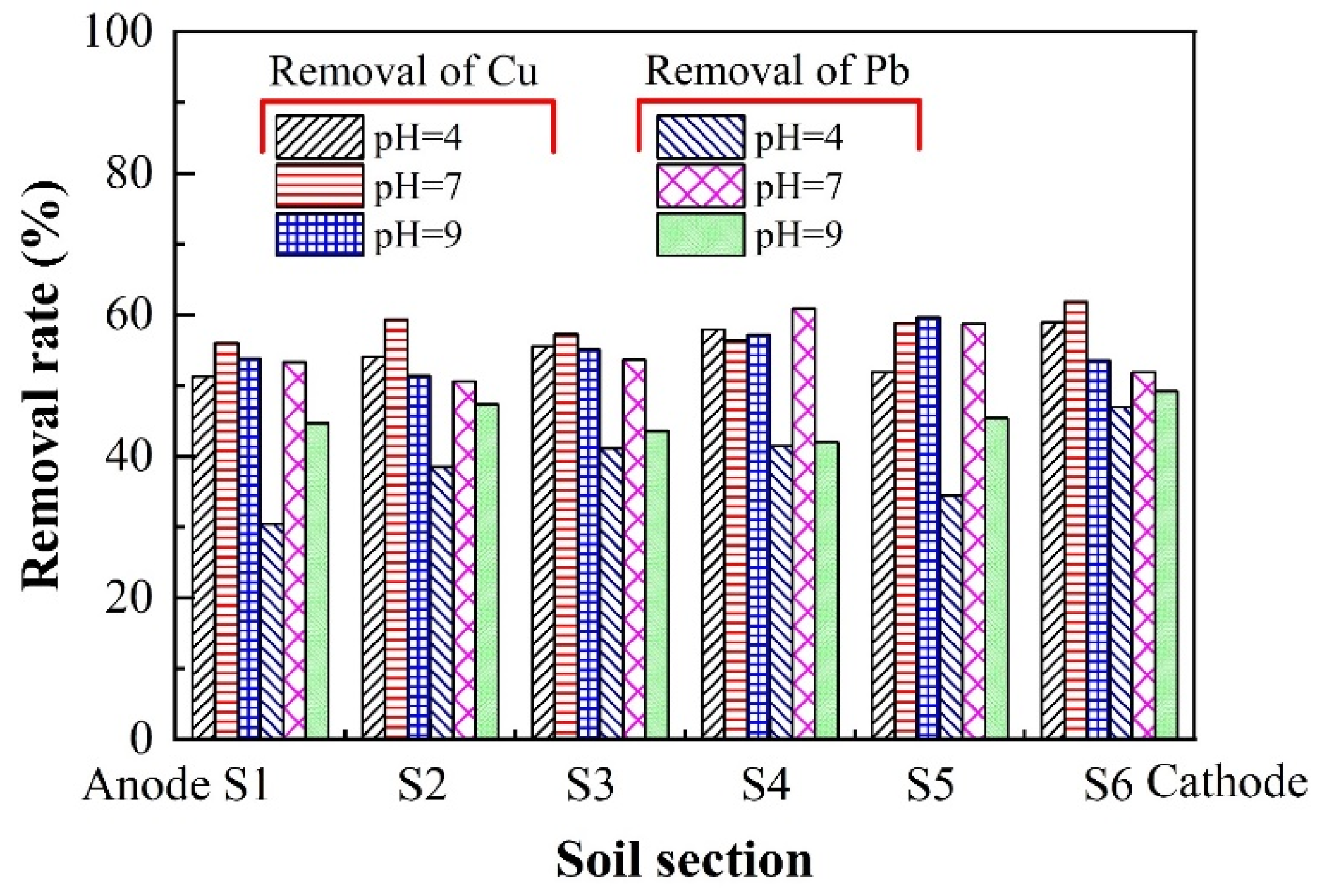
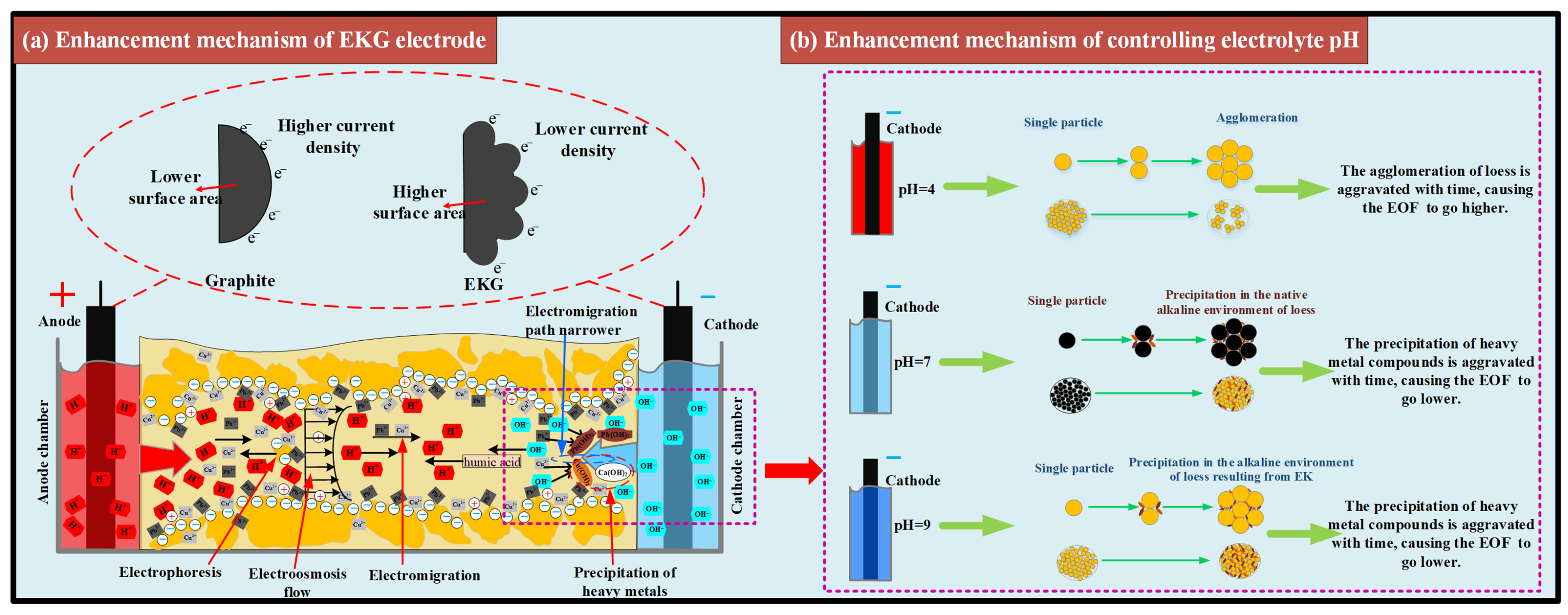
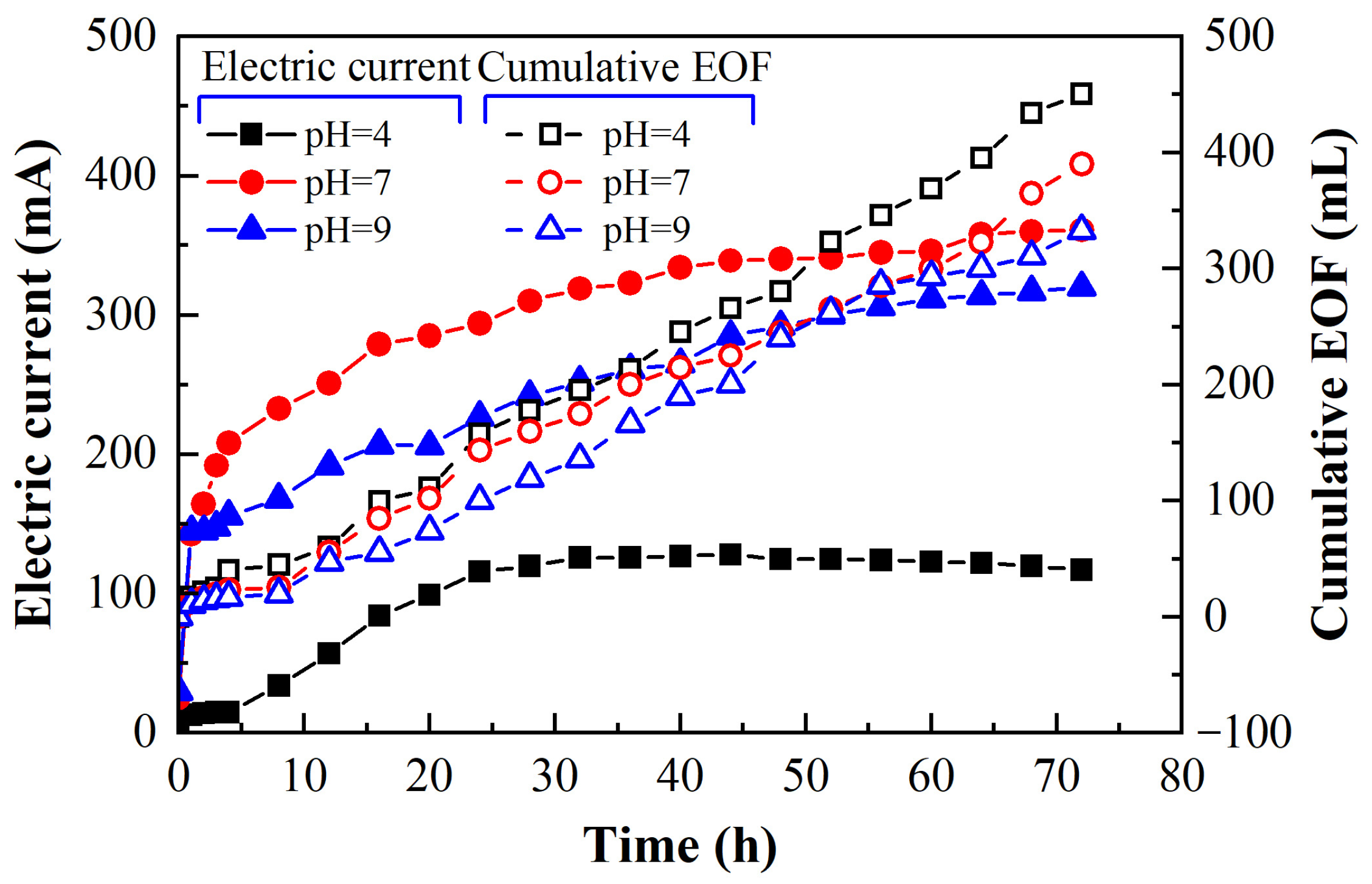
3.3. Effect of Catholyte pH
3.4. Discussion
4. Conclusions
- (a)
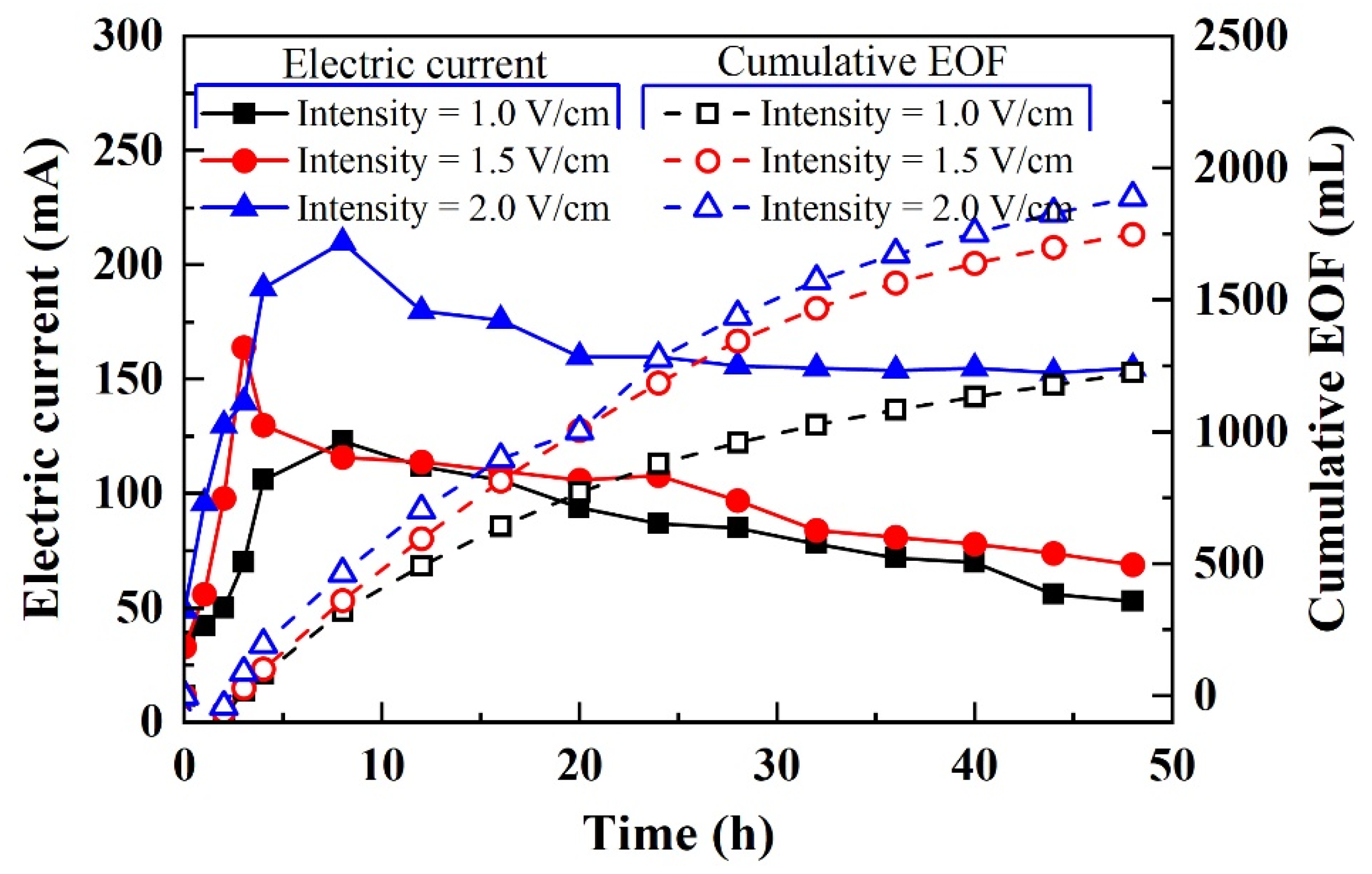
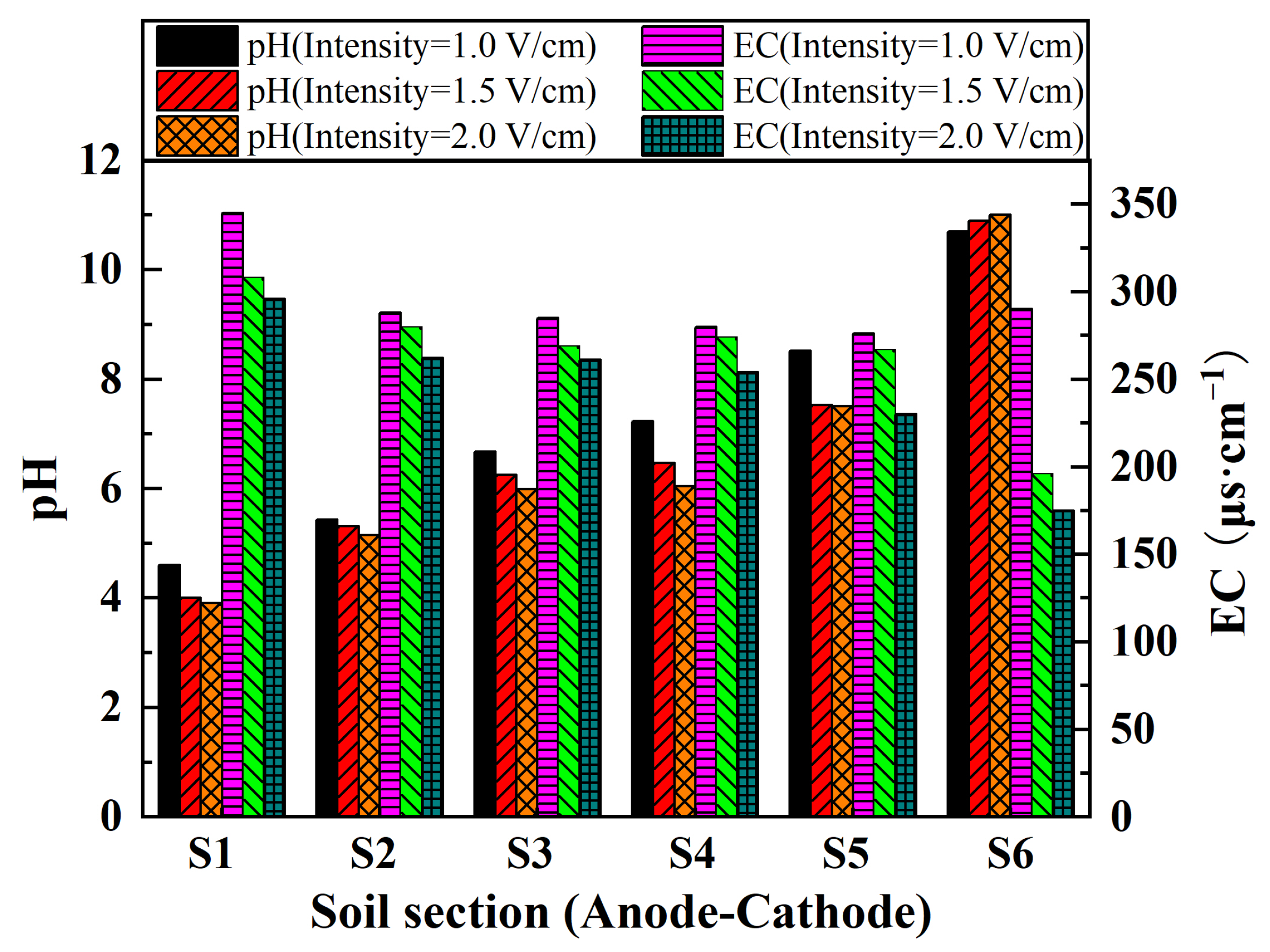
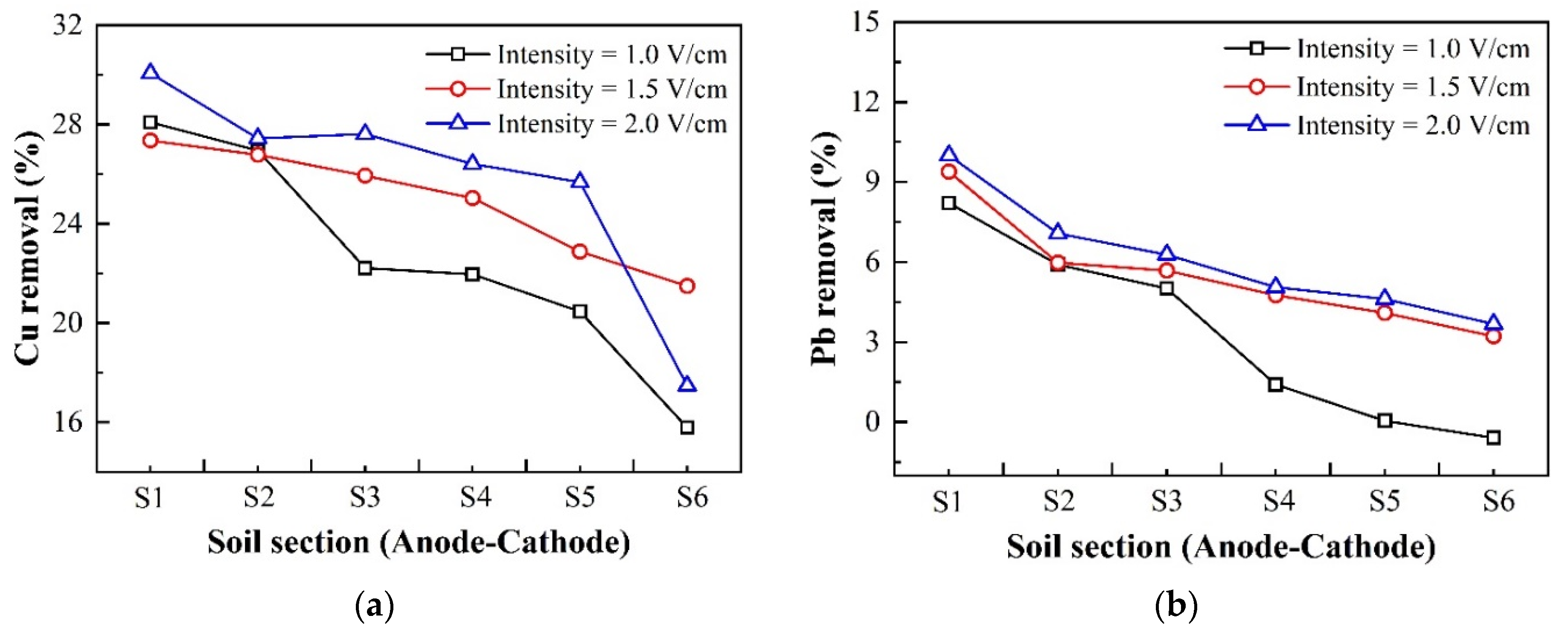
- Electric field intensity controlled the balance between metal mobilization and cathodic precipitation. A stronger electric field promoted current response, EOF development, and acid-front propagation, thereby enhancing Cu and Pb migration, especially over longer transport distances. However, excessive field intensity also accelerated OH− accumulation near the cathode and strengthened precipitation-induced focusing. Therefore, the effect of electric field intensity in loess was spatially dependent and governed by the competition between electrical driving force and cathodic immobilization.
- (b)
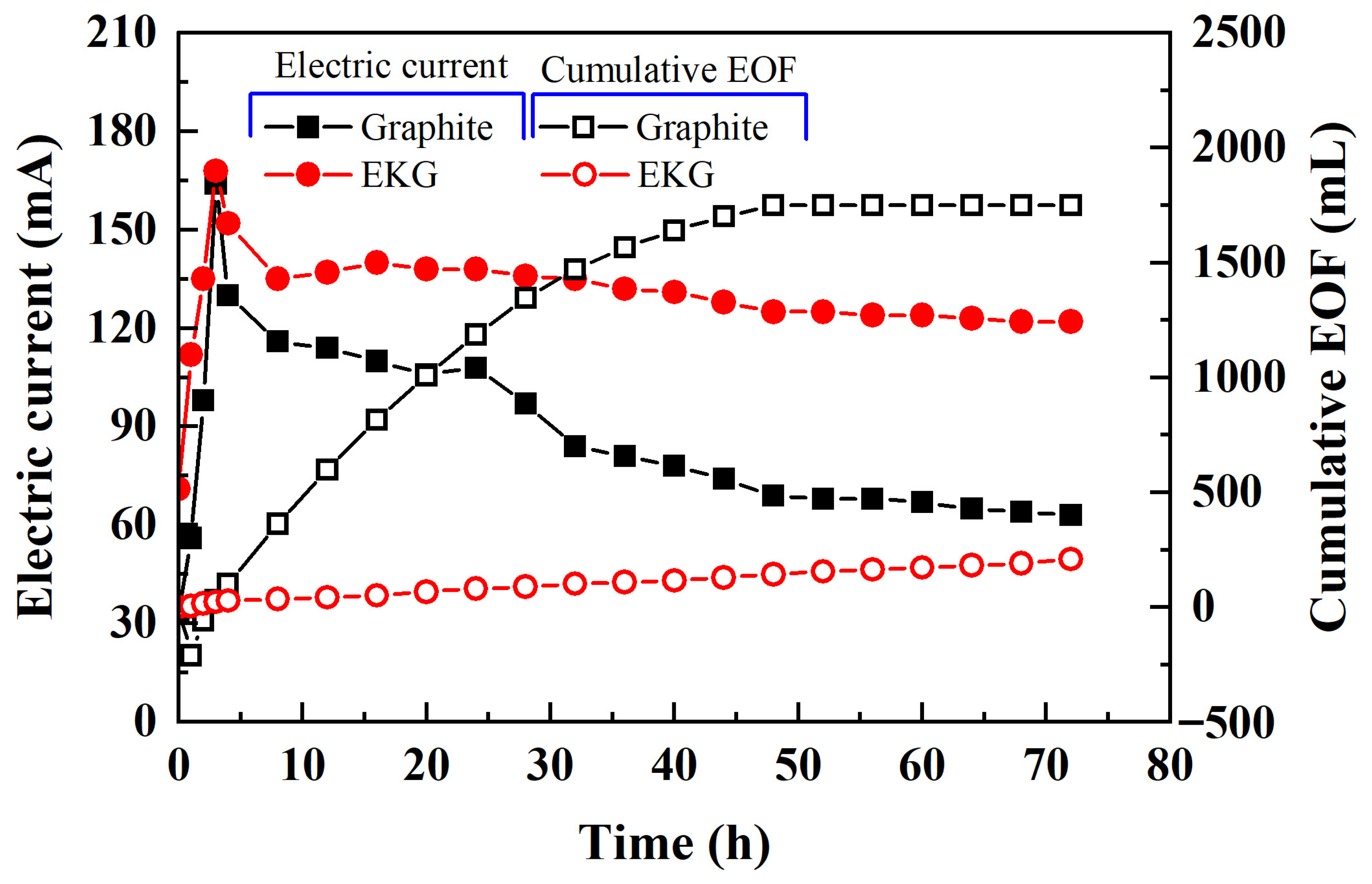
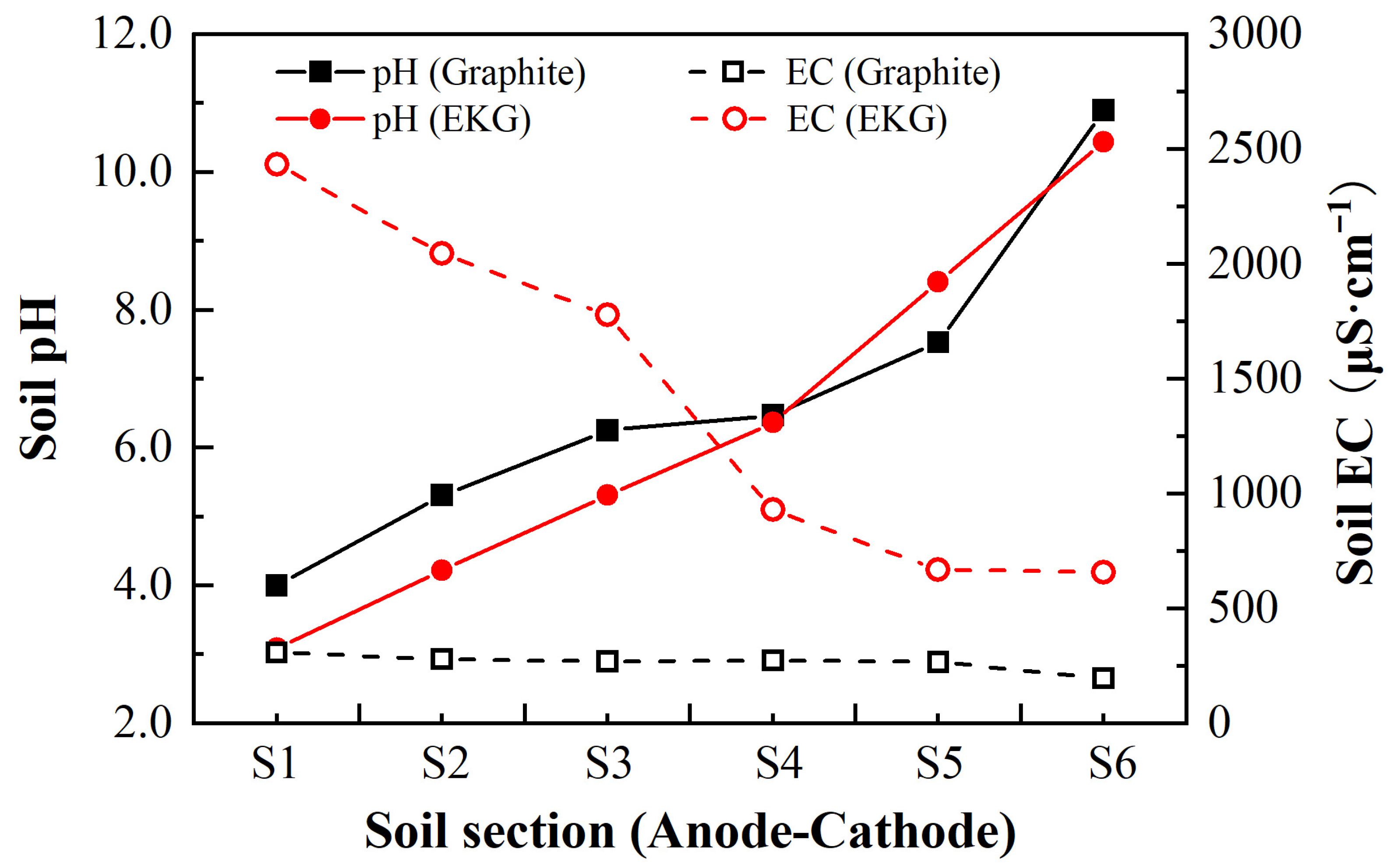
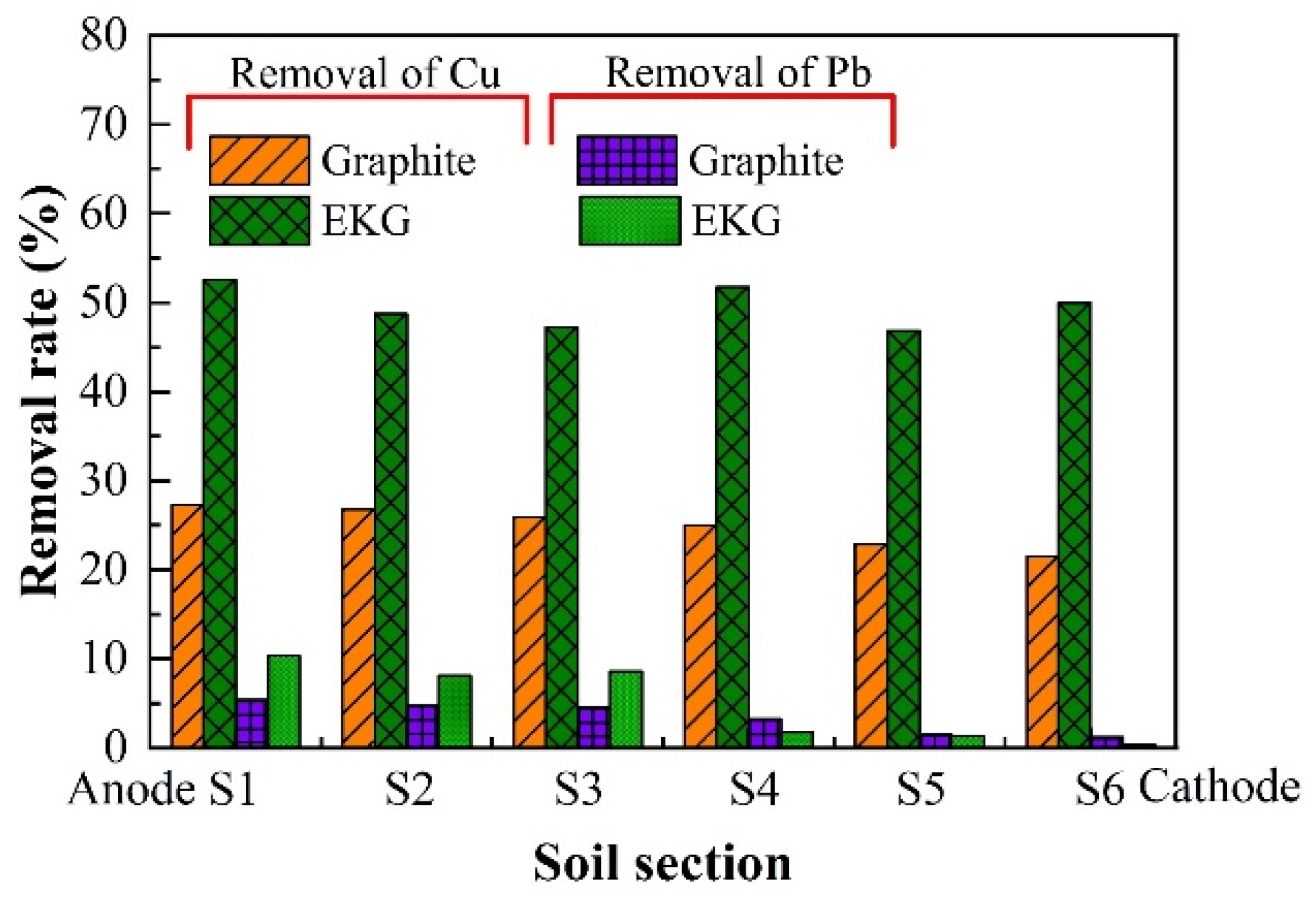
- EKG electrodes improved EK performance by reducing electrode polarization and enhancing coupled electromigration–electroosmosis transport. Compared with graphite electrodes, the larger electroactive surface area of EKG electrodes helped maintain higher current and stronger acid-front development, which promoted metal desorption and transport. Nevertheless, the improvement in Pb removal remained limited, mainly because Pb was more strongly retained by adsorption and carbonate-related precipitation in alkaline loess.
- (c)
- Catholyte pH regulation changed the balance among current-driven electromigration, EOF-driven pore-water transport, and precipitation control. Although pH 4 produced the highest EOF, its lower current limited the overall contribution of electromigration. In contrast, pH 9 intensified cathodic alkalization and secondary precipitation. Maintaining the catholyte at pH 7 provided a better compromise between current, EOF, and precipitation suppression, resulting in the most favorable soil-phase Cu and Pb removal among the tested pH conditions.
Author Contributions
Funding
Data Availability Statement
Conflicts of Interest
References
- Hu, W.L.; Cheng, W.C.; Wen, S.J.; Rahman, M.M. Effects of chemical contamination on microscale structural characteristics of intact loess and resultant macroscale mechanical properties. Catena 2021, 203, 105361. [Google Scholar] [CrossRef]
- Mai, X.R.; Tang, J.; Tang, J.X.; Zhu, X.Y.; Yang, Z.H.; Liu, X.; Zhuang, X.J.; Feng, G.; Tang, L. Research progress on the environmental risk assessment and remediation technologies of heavy metal pollution in agricultural soil. J. Environ. Sci. 2025, 149, 1–20. [Google Scholar]
- Hu, W.L.; Cheng, W.C.; Wang, L.; Xue, Z.F. Micro-structural characteristics deterioration of intact loess under acid and saline solutions and resultant macro-mechanical properties. Soil Tillage Res. 2022, 220, 105382. [Google Scholar] [CrossRef]
- Hu, W.L.; Cheng, W.C.; Wen, S.J.; Kang, N.B. Revealing underlying mechanisms affecting electrokinetic remediation of an artificially Cu- and Pb-contaminated loess using the external regulatory system with adsorbent. Front. Mater. 2022, 9, 967871. [Google Scholar] [CrossRef]
- Xu, P.P.; Zhang, Q.Y.; Qian, H.; Li, M.N.; Yang, F.X. An investigation into the relationship between saturated permeability and microstructure of remolded loess: A case study from Chinese Loess Plateau. Geoderma 2021, 382, 114774. [Google Scholar] [CrossRef]
- Xu, P.P.; Zhang, Q.Y.; Qian, H.; Hou, K. Investigation into microscopic mechanisms of anisotropic saturated permeability of undisturbed Q2 loess. Environ. Earth Sci. 2020, 79, 412. [Google Scholar] [CrossRef]
- Wang, L.Q.; Shao, S.J.; She, F.T. A new method for evaluating loess collapsibility and its application. Eng. Geol. 2020, 264, 105376. [Google Scholar] [CrossRef]
- Cánovas, M.; Valenzuela, J.; Romero, L.; González, P. Characterization of electroosmotic drainage application to mine tailings and solid residues from leaching. J. Mater. Res. Technol. 2020, 9, 2960–2968. [Google Scholar] [CrossRef]
- Liu, K.H.; Guan, X.J.; Li, C.M.; Zhao, K.Y.; Yang, X.H.; Fu, R.X.; Li, Y.; Yu, F.M. Global perspectives and future research directions for the phytoremediation of heavy metal-contaminated soil: A knowledge mapping analysis from 2001 to 2020. Front. Environ. Sci. Eng. 2022, 16, 73. [Google Scholar] [CrossRef]
- Liu, H.; Li, J.B.; Zhao, M.; Li, Y.B.; Chen, Y.M. Remediation of oil-based drill cuttings using low-temperature thermal desorption: Performance and kinetics modelling. Chemosphere 2019, 235, 1081–1088. [Google Scholar] [CrossRef] [PubMed]
- Liu, T.; Yuan, X.X.; Zhang, G.; Hu, J.; An, J.; Chen, T. Stir bar sorptive extraction and automatic two-stage thermal desorption-gas chromatography-mass spectrometry for trace analysis of the byproducts from diphenyl carbonate synthesis. Microchem. J. 2020, 153, 104341. [Google Scholar] [CrossRef]
- Wu, Y.J.; Santos, S.S.; Vestergård, M.; González, A.M.M.; Ma, L.Y.; Feng, Y.; Yang, X. A field study reveals links between hyperaccumulating Sedum plants-associated bacterial communities and Cd/Zn uptake and translocation. Sci. Total Environ. 2022, 805, 150400. [Google Scholar] [CrossRef] [PubMed]
- Ding, D.; Song, X.; Wei, C.; La, C.J. A review on the sustainability of thermal treatment for contaminated soils. Environ. Pollut. 2019, 253, 449–463. [Google Scholar] [CrossRef] [PubMed]
- Du, Y.J.; Jin, F.; Liu, S.Y.; Chen, L.; Zhang, F. Review of stabilization/solidification technique for remediation of heavy metals contaminated lands. Rock Soil Mech. 2011, 32, 116–124. [Google Scholar] [CrossRef]
- Zhou, H.D.; Liu, Z.Y.; Li, X.; Xu, J.H. Remediation of lead (II)-contaminated soil using electrokinetics assisted by permeable reactive barrier with different filling materials. J. Hazard. Mater. 2021, 408, 124885. [Google Scholar] [CrossRef] [PubMed]
- Kalantari, B.; Prasad, A. A study of the effect of various curing techniques on the strength of stabilized peat. Transp. Geotech. 2014, 1, 119–128. [Google Scholar] [CrossRef]
- Wang, F.; Shen, Z.T.; Liu, R.Q.; Zhang, Y.H.; Xu, J.; AL-Tabbaa, A. GMCs stabilized/solidified Pb/Zn contaminated soil under different curing temperature: Physical and microstructural properties. Chemosphere 2019, 239, 124738. [Google Scholar] [CrossRef] [PubMed]
- Muddanna, M.H.; Baral, S.S. A comparative study of the extraction of metals from the spent fluid catalytic cracking catalyst using chemical leaching and bioleaching by Aspergillus niger. J. Environ. Chem. Eng. 2019, 7, 103335. [Google Scholar] [CrossRef]
- Lu, Y.S.; Wang, W.B.; Wang, Q.; Xu, J.; Wang, A.Q. Effect of oxalic acid-leaching levels on structure, color and physico-chemical features of palygorskite. Appl. Clay Sci. 2019, 183, 105301. [Google Scholar] [CrossRef]
- Lu, C.; Hong, Y.; Liu, J.; Gao, Y.Z.; Ma, Z.; Yang, B.; Ling, W.T.; Waigi, M.G. A PAH-degrading bacterial community enriched with contaminated agricultural soil and its utility for microbial bioremediation. Environ. Pollut. 2019, 251, 773–782. [Google Scholar] [CrossRef] [PubMed]
- Beyrami, H. Effect of different treatments on electrokinetic remediation of Zn, Pb and Cd from a contaminated calcareous soil. Chin. J. Chem. Eng. 2020, 38, 255–265. [Google Scholar] [CrossRef]
- Cameselle, C. Enhancement of electro-Osmotic flow during the electrokinetic treatment of a contaminated soil. Electrochim. Acta 2015, 181, 31–38. [Google Scholar] [CrossRef]
- Herron, J.F.; Kim, J.Y.; Upadhye, A.A. A general framework for the assessment of solar fuel technologies. Energy Environ. Sci. 2015, 8, 126–157. [Google Scholar] [CrossRef]
- Hassana, I.; Mohamedelhassanb, E.; Yanfula, E. Solar powered electrokinetic remediation of Cu polluted soil using a novel anode configuration. Electrokinet. Acta 2015, 181, 58–67. [Google Scholar] [CrossRef]
- Jeon, E.K.; Jung, J.M.; Kim, W.S.; Ko, S.H.; Baek, K. In situ electrokinetic remediation of As-, Cu-, and Pb-contaminated paddy soil using hexagonal electrode configuration: A full scale study. Environ. Sci. Pollut. Res. 2015, 22, 711–720. [Google Scholar] [CrossRef] [PubMed]
- Jeon, E.K.; Ryu, S.R.; Baek, K. Application of solar-cells in the electrokinetic remediation of As-contaminated soil. Electrochim. Acta 2015, 181, 160–166. [Google Scholar] [CrossRef]
- Habibul, N.; Hu, Y.; Sheng, G.P. Microbial fuel cell driving electrokinetic remediation of toxic metal contaminated soils. J. Hazard. Mater. 2016, 318, 9–14. [Google Scholar] [CrossRef] [PubMed]
- Habibul, N.; Hu, Y.; Wang, Y.K.; Chen, W.; Yu, H.Q.; Sheng, G.P. Bioelectrochemical chromium(VI) removal in plant- microbial fuel cells. Environ. Sci. Technol. 2016, 50, 3882–3889. [Google Scholar] [CrossRef] [PubMed]
- Yuan, L.Z.; Xu, X.J.; Li, H.Y.; Wang, Q.Y.; Wang, N.N.; Yu, H.W. The influence of macroelements on energy consumption during periodic power electrokinetic remediation of heavy metals contaminated black soil. Electrochim. Acta 2017, 235, 604–612. [Google Scholar] [CrossRef]
- Abou-Shady, A.; Peng, C.S.; El-Araby, H.; Osman, M.A. Optimizing electrokinetic remediation for pollutant removal and electroosmosis/dewatering using lateral anode configurations. Sci. Rep. 2024, 14, 24851. [Google Scholar] [CrossRef] [PubMed]
- Hamdi, F.M.; Ganbat, N.; Altaee, A.; Samal, A.K.; Ibrar, I.; Zhou, J.L.; Sharif, A.O. Hybrid and enhanced electrokinetic system for soil remediation from heavy metals and organic matter. J. Environ. Sci. 2025, 147, 424–450. [Google Scholar] [CrossRef] [PubMed]
- Naseer, U.; Du, Z.P.; Ahmad, A.; Ali, M.; Younis, A.; Yue, T.X. Advanced electrode materials in electrokinetic technology for remediation of heavy metal-contaminated soil: Recent progress and challenges. Adv. Sustain. Syst. 2025, 9, 2500197. [Google Scholar] [CrossRef]
- Yan, K.; Chai, Z.; Li, T.; Duan, B.; Xiao, C.; Liu, X.; Liu, X. Effect of voltage gradients on EK-PRB remediation: Experimental and molecular dynamics simulations. Environ. Res. 2024, 252, 119085. [Google Scholar] [CrossRef] [PubMed]
- Yang, Z.; Tang, J.; Feng, H.; Liu, X.; Zhuang, X.; Wang, H.; Wu, Y.; Guo, Y.; Tang, L. Research progress on remediation of heavy metal contaminated soil by electrokinetic-permeable reactive barrier. Chem. Eng. J. 2024, 490, 151548. [Google Scholar] [CrossRef]
- Zheng, X.J.; Li, Q.; Wang, Z.L.; Chen, M. Remediation of heavy metals contaminated soil by enhanced electrokinetic technology: A review. Arab. J. Chem. 2024, 17, 105773. [Google Scholar] [CrossRef]
- Suzuki, T.; Kawai, K.; Moribe, M.; Niinae, M. Recovery of Cr as Cr(III) from Cr(VI)-contaminated kaolinite clay by electrokinetics coupled with a permeable reactive barrier. J. Hazard. Mater. 2014, 278, 297–303. [Google Scholar] [CrossRef] [PubMed]
- Suzuki, T.; Niinae, M.; Koga, T.; Akita, T.; Ohta, M.; Choso, T. EDDS-enhanced electrokinetic remediation of heavy metal-contaminated clay soils under neutral pH conditions. Colloids Surf. A Physicochem. Eng. Asp. 2014, 440, 145–150. [Google Scholar] [CrossRef]
- Yuan, L.Z.; Li, H.Y.; Xu, X.J.; Zhang, J.; Wang, N.N.; Yu, H.W. Electrokinetic remediation of heavy metals contaminated kaolin by a CNT-covered polyethylene terephthalate yarn cathode. Electrochim. Acta 2016, 213, 140–147. [Google Scholar] [CrossRef]
- Wang, L.S.; Huang, L.H.; Xia, H.B.; Li, H.; Li, X.T.; Liu, X.W. Application of a multi-electrode system with polyaniline auxiliary electrodes for electrokinetic remediation of chromium-contaminated soil. Sep. Purif. Technol. 2019, 224, 106–112. [Google Scholar] [CrossRef]
- Wang, Y.X.; Huang, L.H.; Wang, Z.X.; Wang, L.S.; Han, Y.F.; Liu, X.W.; Ma, T. Application of Polypyrrole flexible electrode for electrokinetic remediation of Cr(VI)-contaminated soil in a main-auxiliary electrode system. Chem. Eng. J. 2019, 373, 131–139. [Google Scholar]
- Wu, J.N.; Zhang, J.; Xiao, C.Z. Focus on factors affecting pH, flow of Cr and transformation between Cr(VI) and Cr(III) in the soil with different electrolytes. Electrochim. Acta 2016, 211, 652–662. [Google Scholar] [CrossRef]
- Fu, R.B.; Wen, D.D.; Xia, X.Q.; Zhang, W.; Gu, Y.Y. Electrokinetic remediation of chromium (Cr)-contaminated soil with citric acid (CA) and polyaspartic acid (PASP) as electrolytes. Chem. Eng. J. 2017, 316, 601–608. [Google Scholar] [CrossRef]
- Ryu, S.R.; Jeon, E.K.; Baek, K. A combination of reducing and chelating agents for electrolyte conditioning in electrokinetic remediation of As-contaminated soil. J. Taiwan Inst. Chem. Eng. 2017, 70, 252–259. [Google Scholar] [CrossRef]
- Zhu, Z.Y.; Dennell, R.; Huang, W.W.; Wu, Y.; Rao, Z.G.; Qiu, S.F.; Xie, J.B.; Liu, W.; Fu, S.Q.; Han, J.W.; et al. New dating of the Homo erectus cranium from Lantian (Gongwangling), China. J. Hum. Evol. 2015, 78, 144–157. [Google Scholar] [CrossRef] [PubMed]
- GB/T 50123-2019; Standard for Geotechnical Test Methods. Ministry of Water Resources of the People’s Republic of China: Beijing, China, 2019.
- Liu, C.; Hu, W.; Zhu, X.; Zhang, S.; Wang, W. Removal of Cu and Pb in Contaminated Loess by Electrokinetic Remediation Using Novel Hydrogel Electrodes Coupled with Focusing Position Adjustment and Exchange Electrode. Processes 2025, 13, 2915. [Google Scholar] [CrossRef]
- Valenzuela, J.; Romero, L.; Acuña, C.; Cánovas, M. Electroosmotic drainage, a pilot application for extracting trapped apillary liquid in copper leaching. Hydrometallurgy 2016, 163, 148–155. [Google Scholar] [CrossRef]
- Hsueh, Y.S.; Cheng, X.; Dai, Y.D. Comparison of Cr/Ni removal by electrokinetic (EK) and electrochemical geooxidation (ECGO) processes: Remediation performance and economic analysis in an in-situ system. J. Environ. Chem. Eng. 2022, 10, 107018. [Google Scholar] [CrossRef]
- Telepanich, A.; Marshall, T.; Gregori, S. Graphene-alginate fluids as unconventional electrodes for the electrokinetic remediation of Cr(VI). Water Air Soil Pollut. 2021, 232, 334. [Google Scholar] [CrossRef]
- Behrouzinia, S.; Ahmadi, H.; Abbasi, N. Experimental investigation on a combination of soil electrokinetic consolidation and remediation of drained water using composite nanofiber-based electrodes. Sci. Total Environ. 2022, 836, 155562. [Google Scholar] [CrossRef] [PubMed]
- Torabi, M.S.; Asadollahfardi, G.; Rezaee, M. Electrokinetic removal of Cd and Cu from mine tailing: EDTA enhancement and voltage intensity effects. J. Hazard. Toxic Radioact. Waste 2021, 25, 05020007. [Google Scholar] [CrossRef]
- Muazu, N.D.; Essa, M.H. Comparative performance evaluation of anodic materials for electro-kinetic removal of Lead (II) from contaminated clay soil. Soil Sediment Contam. 2020, 29, 69–95. [Google Scholar] [CrossRef]
- Pedersen, K.B.; Reinardy, H.C.; Jensen, P.E. The influence of Magnafloc10 on the acidic, alkaline, and electrodialytic desorption of metals from mine tailings. J. Environ. Manag. 2018, 224, 130–139. [Google Scholar] [CrossRef] [PubMed]
- Millán, M.; Bucio Rodríguez, P.Y.; Lobato, J. Strategies for powering electrokinetic soil remediation: A way to optimize performance of the environmental technology. J. Environ. Manag. 2020, 267, 110665. [Google Scholar] [CrossRef] [PubMed]
- Ouhadi, V.R.; Yong, R.N.; Shariatmadari, N. Impact of carbonate on the efficiency of heavy metal removal from kaolinite soil by the electrokinetic soil remediation method. J. Hazard. Mater. 2010, 173, 87–94. [Google Scholar] [CrossRef] [PubMed]
- Caparrós, P.G.; Ozturk, M.; Gul, A.; Batool, T.S.; Anosheh, H.P.; Unal, B.T.I.; Altay, V.; Toderich, K.N. Halophytes have potential as heavy metal phytoremediators: A comprehensive review. Environ. Exp. Bot. 2022, 193, 104666. [Google Scholar] [CrossRef]
- He, T.; Xu, Z.J.; Wang, J.F.; Wang, F.P.; Zhou, X.F.; Wang, L.L.; Li, Q.S. Improving cadmium accumulation by Solanum nigrum L. via regulating rhizobacterial community and metabolic function with phosphate-solubilizing bacteria colonization. Chemosphere 2022, 287, 132209. [Google Scholar] [CrossRef] [PubMed]
- Zhou, R.; Liu, X.C.; Luo, L.; Zhou, Y.Y.; Wei, J.H.; Chen, A.W.; Tang, L.; Wu, H.P.; Deng, Y.C.; Zhang, F.F. Remediation of Cu, Pb, Zn and Cd-contaminated agricultural soil using a combined red mud and compost amendment. Int. Biodeterior. Biodegrad. 2017, 118, 73–81. [Google Scholar] [CrossRef]
- Garcia-Sanchez, M.; Kosnar, Z.; Mercl, F.; Aranda, E.; Tlustos, P. A comparative study to evaluate natural attenuation, mycoaugmentation, phytoremediation, and microbial-assisted phytoremediation strategies for the bioremediation of an aged PAH-polluted soil. Ecotoxicol. Environ. Saf. 2018, 147, 165–174. [Google Scholar] [CrossRef] [PubMed]
- Wang, Y.C.; Li, A.; Cui, C.W. Remediation of heavy metal-contaminated soils by electrokinetic technology: Mechanisms and applicability. Chemosphere 2021, 265, 129071. [Google Scholar] [CrossRef] [PubMed]
- Guzman, V.B.; Paz Garcia, J.M.; Rodriguez Maroto, J.M. Scaling up the acid enhanced electrokinetic remediation of a real contaminated soil. Electrochim. Acta 2015, 181, 139–145. [Google Scholar] [CrossRef]





| Property | Loess |
|---|---|
| Sand (%) | 3.3 |
| Silt (%) | 87.4 |
| Clay (%) | 9.3 |
| Void ratio, e | 0.898 |
| Bulk unit weight, γ (kN/m3) | 16.2 |
| Specific gravity, Gs | 2.69 |
| Water content, ωn (%) | 16.5 |
| Liquid limit, ωL (%) | 31.6 |
| Plastic limit, ωP (%) | 19.5 |
| USCS symbol | CL |
| Permeability (m s−1) | 2.55 × 10⁻⁶ |
| Organic matter (mg g−1) | 4.1 |
| pH | 7.8 |
| Electrical conductivity (μs cm−1) | 244 |
| BET specific surface area (m2 g−1) | 24.1 |
| Composition of ions | |
| Ca2+ (mg/kg) | 126 |
| Mg2+ (mg/kg) | 40 |
| Na+ (mg/kg) | 103 |
| K+ (mg/kg) | 4.6 |
| Test | Electrode Type | Pollutant | Voltage Gradient/Vcm−1 | Pretreatment | Control Catholyte pH | Duration Time/h |
|---|---|---|---|---|---|---|
| Exp-01 | Graphite 0.125 | Cu + Pb | 1.0 | / | / | 48 |
| Exp-02 | Graphite 0.125 | Cu + Pb | 1.5 | / | / | 48 |
| Exp-03 | Graphite 0.125 | Cu + Pb | 2.0 | / | / | 48 |
| Exp-04 | Graphite | Cu + Pb | 1.5 | / | / | 72 |
| Exp-05 | EKG 0.75 | Cu + Pb | 1.5 | / | / | 72 |
| Exp-06 | EKG 0.75 | Cu + Pb | 1.5 | 0.01 M NaNO3 | 4 | 72 |
| Exp-07 | EKG 0.75 | Cu + Pb | 1.5 | 0.01 M NaNO3 | 7 | 72 |
| Exp-08 | EKG 0.75 | Cu + Pb | 1.5 | 0.01 M NaNO3 | 9 | 72 |
| Electrode | Contaminants | Initial Concentration C0 (mg/kg) | Time t (h) | Intensity (V/cm) | Soil Type | Removal Efficiency (%) | References |
|---|---|---|---|---|---|---|---|
| Aluminum electrode | Cr, Ni | 186, 132 | 72 | 0.6–1.0 | Sand | 3.1–30.1, 27.3–48.5 | Hsueh et al., 2022 [48] |
| Hydroel electrode | Cr | 200 | 0.5 | 4.8 | Sand | 70 | Telepanich et al., 2021 [49] |
| Composite electrode | Cu | 200 | 60 | 1.25 | kaolin | 17.5 | Behrouzinia et al., 2022 [50] |
| Graphite | Pb | 120 | 168 | 1.08 | Clay | 14.15 | Muazu et al., 2020 [52] |
| Graphite | Cu, Pb | 327.8 240.8 | 705 | 1.0 | Black soil | 94.84, 95.85 | Yuan et al., 2017 [29] |
| / | Cu, Cd | 248.4, 82 | 240 | 1.0 | sludge | 4.59, 30.65 | Torabi et al., 2021 [51] |
| / | Al | 16,400 | 240 | 1.0 | / | 10–60 | Ouhadi et al., 2010 [55] |
Disclaimer/Publisher’s Note: The statements, opinions and data contained in all publications are solely those of the individual author(s) and contributor(s) and not of MDPI and/or the editor(s). MDPI and/or the editor(s) disclaim responsibility for any injury to people or property resulting from any ideas, methods, instructions or products referred to in the content. |
© 2026 by the authors. Licensee MDPI, Basel, Switzerland. This article is an open access article distributed under the terms and conditions of the Creative Commons Attribution (CC BY) license.
Share and Cite
Wu, C.; Hu, W.; Luo, L.; Zhang, S. Enhancing Electrokinetic Removal of Cu and Pb from Loess by Alleviating the Focusing Effect: Influence of Electric Field Strength, EKG Electrodes, and Catholyte pH. Processes 2026, 14, 2166. https://doi.org/10.3390/pr14132166
Wu C, Hu W, Luo L, Zhang S. Enhancing Electrokinetic Removal of Cu and Pb from Loess by Alleviating the Focusing Effect: Influence of Electric Field Strength, EKG Electrodes, and Catholyte pH. Processes. 2026; 14(13):2166. https://doi.org/10.3390/pr14132166
Chicago/Turabian StyleWu, Changhang, Wenle Hu, Longping Luo, and Shixu Zhang. 2026. "Enhancing Electrokinetic Removal of Cu and Pb from Loess by Alleviating the Focusing Effect: Influence of Electric Field Strength, EKG Electrodes, and Catholyte pH" Processes 14, no. 13: 2166. https://doi.org/10.3390/pr14132166
APA StyleWu, C., Hu, W., Luo, L., & Zhang, S. (2026). Enhancing Electrokinetic Removal of Cu and Pb from Loess by Alleviating the Focusing Effect: Influence of Electric Field Strength, EKG Electrodes, and Catholyte pH. Processes, 14(13), 2166. https://doi.org/10.3390/pr14132166