Article

Effect of Biochar Reinforcement on the Wettability, Mechanical, and Thermal Properties of Extrudable Wood–Sodium Silicate Composites

1
Department of Forest, Rangeland and Fire Sciences, University of Idaho, Moscow, ID 83844, USA
2
Department of Mechanical Engineering, University of Idaho, Moscow, ID 83844, USA
*
Author to whom correspondence should be addressed.
Processes 2026, 14(13), 2094; https://doi.org/10.3390/pr14132094
Submission received: 30 May 2026 / Revised: 16 June 2026 / Accepted: 25 June 2026 / Published: 27 June 2026
(This article belongs to the Special Issue Processing and Applications of Polymer Composite Materials)

Abstract

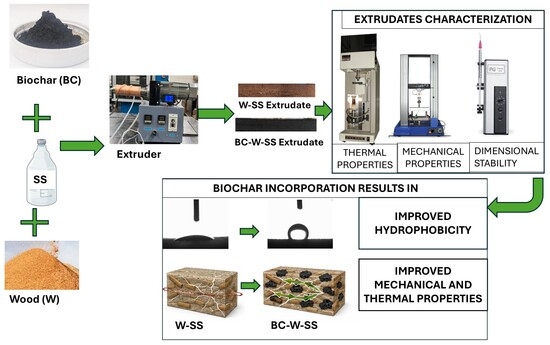
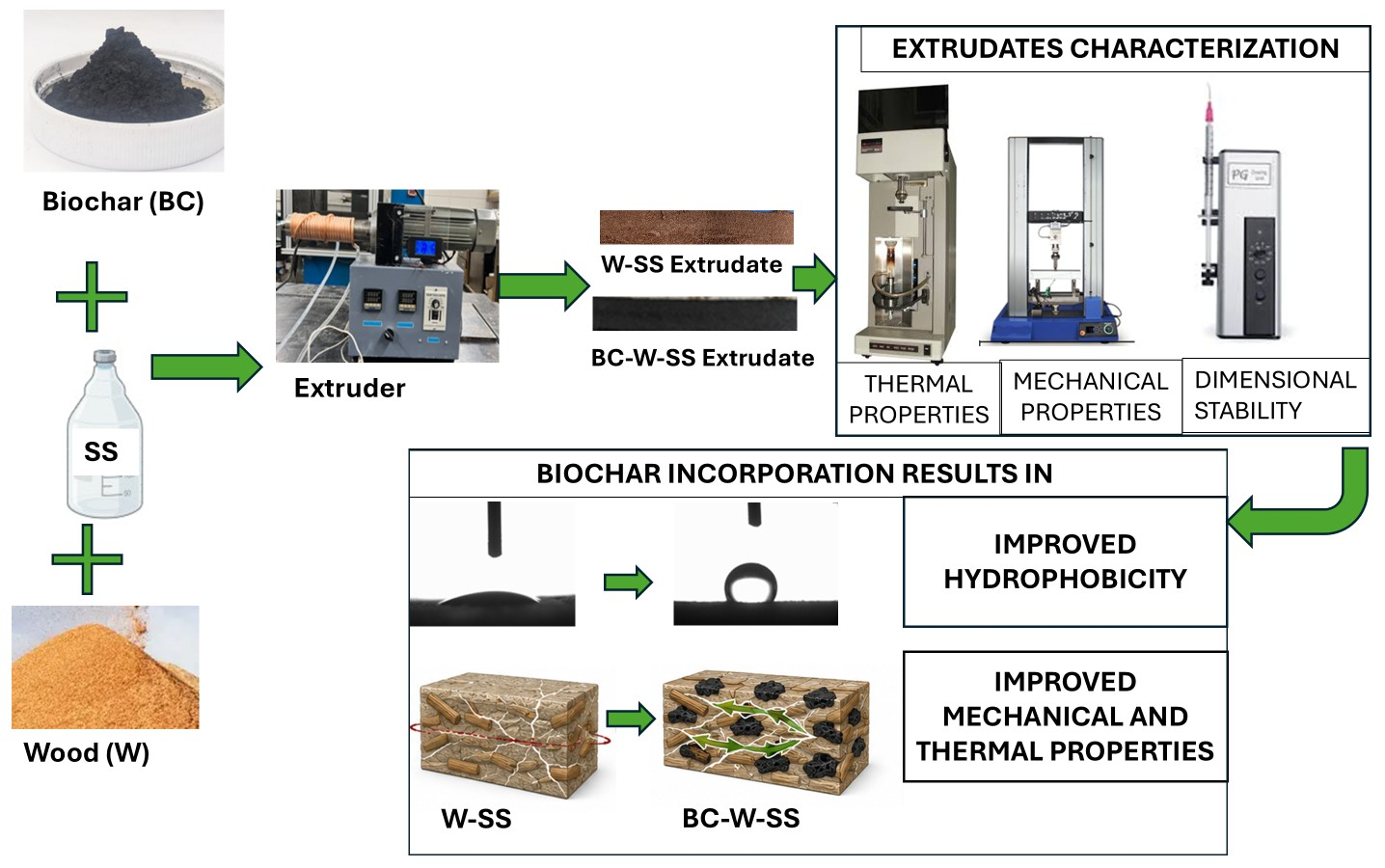
This original study investigated the effect of biochar (BC) addition, a hydrophobic reinforcing agent, to a thermosetting wood–sodium silicate (W-SS) composite prepared by extrusion for use in additive manufacturing. Commercial BC was blended (10–20% w/w) with W-SS while lowering the SS resin content to form composites. In addition, 50–70% w/w BC-SS composites were also prepared. The flow behavior of the uncured composites was determined by rheometry. The composite mixtures were extruded and cured, and then tested for their flexural, water soak, and thermal properties. Replacing SS content with 10% BC significantly improved the mechanical properties of W-SS while potentially reducing cost and biodegradability; however, 20% w/w BC replacement led to reduced strength. Incorporating BC improved the thermal and dimensional stability of W-SS composites. BC-SS showed improved thermal, hydrophobicity, and flow properties compared to W-SS composites, but lower mechanical properties. It was found that the composite containing 50% W, 10% BC, and 40% SS had an optimum flexural strength of 29 MPa, with thermal property values improving by 29 °C and the dimensional stability improving by 10% compared to 50% W-50% SS (w/w). This implies that BC could help improve the hydrophobicity properties of W-SS while also enhancing mechanical properties, biodegradability, and reducing SS content. 3D printing of the 50% BC-50% SS was demonstrated to showcase the industrial feasibility of printing BC-SS composites. This study demonstrates that BC is an effective additive for enhancing the properties of W-SS composites.

Graphical Abstract

1. Introduction

The need to reduce reliance on fossil-based resources and increasing sustainability concerns have led to a growing interest in biobased composites as alternatives to conventional materials [1,2]. The global bio-composite market has grown at a compound annual growth rate of 11.8% from 2016 to 2024, and the fabrication of materials from biobased feedstock is projected to rise from 5% in 2004 to about 25% in 2030 [3,4]. Research on better methods and materials for use in bio-composite manufacturing for diverse applications is constantly evolving [5]. This has sparked interest in developing new processes for construction, such as additive manufacturing (AM) for utilizing natural fibers such as wood in bio-composites.
AM or 3D printing is the layer-by-layer deposition process to make a desired shape from a 3D computer model. Extrusion-based AM has been demonstrated for printing natural fiber composites for high-performance applications [6]. 3D-printed bio-composites are renewable and often recyclable, with excellent properties produced through a process with reduced waste and environmental impact [7]. The printability of natural fiber composites using AM is dependent on their flow properties as determined by rheometry, such as shear-thinning non-Newtonian behavior [8,9].
Bio-composites utilizing wood residues and other natural fibers have been used widely in construction materials (particleboard, wood plastic composites, etc.), but a major issue is due to their ability to absorb water, thus becoming dimensionally unstable [10]. For example, wood–sodium silicate (W-SS) composites are extrudable [11] and printable [12] by AM and have good thermal and mechanical properties; however, these W-SS composites have poor water resistance due to the hygroscopic nature of SS and the polar hydroxyl groups in wood [13,14,15,16]. SS solution (or water glass) readily adheres to wood fibers and hardens to a glassy material with the removal of water to form silica gel [11]. Hydrophilicity of the binder and wood or natural fibers makes biobased composites not only susceptible to biological damage over time, but also reduces their strength by weakening the interfacial bonding [3,17,18]. Several chemical modifications, such as acetylation, silane treatment, mercerization, and benzoylation, have been reported in the literature but may have adverse effects on the environment [19]. Hence the need for sustainable, hydrophobic, reinforcing fillers that could help improve water resistance and long-term durability of bio-composites [20,21].
A promising filler in bio-composites is biochar (BC), a carbonaceous, hydrophobic, and renewable material produced by a thermochemical conversion process, such as pyrolysis of biomass in an oxygen-limited environment [22]. BC use in bio-composites can provide thermal stability and good resistance to biological and weathering degradation [23]. The comparatively lower density of BC (due to its porous structures) is another key advantage that makes it suitable for lightweight materials with potentially high strength because it maximizes the filler content in composites without drastically increasing the weight of the final product [24]. BC has also been used in concrete to improve its mechanical properties and lower its carbon footprint with impressive results [25,26]. The incorporation of 1% BC sodium silicate geopolymer concrete improved mechanical properties in terms compressive strength by 54% [27]. There has been extensive research on the effective use of BC as a sustainable filler in composites, but there is a need to apply BC in other non-concrete geopolymer matrix composites, such as W-SS, to improve its water resistance and use in AM.
The aims of this study were to, firstly, investigate the effect of the addition of biochar to W-SS composites while reducing SS content. Secondly, wood was substituted with BC to improve the water absorption properties of the bio-composites. Thirdly, we investigate the flow behavior, extrudability, and mechanical properties of the BC-SS and BC-WSS composites. Finally, we demonstrate 3D printing of the BC-SS composite and compare its fire resistance to that of 3D-printed W-SS.

2. Materials and Methods

2.1. Materials

Wood fibers (WFs) were obtained from Plummer Forest Products (Post Falls, ID, USA) and then screened to pass through a standard 40 mesh screen. Commercial SS solution (37% solids content, pH 12.5, and density of 1.39 g/cm3) was purchased from ThermoFisher Scientific (Waltham, MA, USA). Commercial BC was obtained from Hempitecture (Jerome, ID, USA), milled in a Waring food blender (model 700B, Stamford, CT, USA) for 2 min, and screened to pass through a 100-mesh standard screen. BC and WFs were dried at 105 °C for 24 h before use.

2.2. Fiber Characterization Methods

The moisture content of wood fibers was determined, in duplicate, using a Mettler Toledo HB43-S halogen moisture analyzer (Columbus, OH, USA). The density of wood fibers and BC was determined using a Quantachrome ultra-pycnometer 1000 (Boynton Beach, FL, USA) in nitrogen. The specific surface area analysis was determined, in duplicate, on a Micromeritics Flowsorb 2300 (Norcross, GA, USA) instrument according to ASTM D6556 [28]. Particle size analysis was determined, in triplicate, using a Bettersizer-2600 instrument in water (Costa Mesa, CA, USA). Elemental analysis (C and N) was performed at the Analytical Sciences Laboratory (University of Idaho, Moscow, ID, USA). Raman spectroscopy of BC was performed on a ThermoNicolet DXR3 Flex spectrometer (Madison, WI, USA) at 532 nm of excitation, with 2 s of acquisition time and 16 scans, with 5 replicates. The spectra were averaged and baseline-corrected. The ratio of disordered (D, 1360 cm−1)/graphitic (G, 1550 cm−1) band intensities (ID/IG) was calculated.

2.3. Composite Formulations

Various formulations of BC, wood, and SS were prepared, with code names given; the formulations are listed in Table 1. The batch size of the formulations for rheological testing and extrusion were 2 g and 50 g, respectively. The formulations were measured on a dry weight basis.

2.4. Rheological Testing

The formulations were prepared in 2 g batches according to Table 1 and mixed using an Aliotech electric herb grinder (Quebec, QC, Canada) for 1 min. The blend was then cold-pressed in a pellet die (25 mm Ø) to a thickness of 2 mm. These discs were analyzed by rheometry on a DHR2 rheometer (TA instruments, New Caste, DE, USA) equipped with an extended temperature unit using 25 mm Ø serrated plates and a 2 mm gap, in triplicate. Serrated plates were used to prevent slippage. Flow properties against temperature were collected from 30 to 150 °C at a heating rate of 2 °C/min with 0.1% strain and a frequency of 1 Hz. Flow curves (complex viscosity, η*) against frequency (shear rate) were performed at 25 °C with 0.1% strain and frequency from 0.01 to 100 Hz. Flow data were analyzed using the TRIOS software v5.1.1 (TA instruments, New Caste, DE, USA). The results were successfully modelled using the power law given in equation 1 below, where η* is the complex viscosity, ω is the angular velocity, K is the consistency coefficient, and n is the flow behavior or non-Newtonian index.
|η*(ω)| = K(ω)n−1

2.5. Composite Fabrication

The formulations were prepared in a 50 g batch according to Table 1 and mixed using a coffee grinder (Pinlo, Shenzhen, China, 200 W) for 1 min. The blend was then fed into a 20 mm Ø × 200 mm length barrel single-screw extruder with no-screw compression and 11 mm flights (RobotDigg, Shanghai, China) equipped with a 300 W motor. The extruder operated at 17 RPM and extruded through a 9 mm Ø die. The run time per formulation was about 15 min. To prevent precuring, the barrel was cooled (5–12 °C) using a tightly wrapped coil of 6.2 mm Ø copper tubing with ice water pumped (380 L/h) through the coil. After extrusion, the rods were pressed at room temperature under 5-ton pressure for 10 min in a PHI hydraulic press (City of Industry, CA, USA) to 3.2 mm stops between aluminum plates (300 mm × 300 mm), and then post-cured at 105 °C.

2.6. Characterization of Composites

Flexural three-point bending tests were performed on cured machined composite samples (3 mm × 13.5 mm × 60 mm) with six replicates using a Mecmesin Multi-dV 2.5 test machine (Sterling, VA, USA), with a support span of 48 mm and a crosshead speed of 1.1 mm/min according to ASTM D790 [29]. Data were acquired and analyzed using the Vector Pro v6.11 software.
Thermogravimetric analysis (TGA) on milled samples (5–6 mg) was performed on a Perkin Elmer TGA-7 instrument (Shelton, CT, USA) from 30 to 900 °C at 20 °C/min under nitrogen in triplicate. Data was analyzed using the Pyris v13.3.1 software.
The viscoelastic properties of the composite samples (2 mm × 4 mm × 20 mm), in triplicate, were determined by dynamic mechanical analysis (DMA) in 3-point bending mode (15 mm span) at 1 Hz from −50 to 300 °C at a heating rate of 3 °C/min using a Perkin Elmer DMA 7 instrument (Shelton, CT, USA). The results were analyzed using the Pyris v13.1 software.
Cured composites (13.5 mm × 13.5 mm × 3 mm) were investigated for their dimensional stability by submerging five replicates in water at room temperature for 2 h, after which the weight gain and thickness swell were recorded. The wettability of the composites was determined by water sessile drop contact angle measurements (5 replicates), using a PG-2 Pocket Goniometer (Thwing-Albert, West Berlin, NJ, USA), and the data were analyzed using the Pocket Goniometer software, V3.3.

2.7. 3D Printing Demonstration

A formulation of 50% BC and 50% SS was prepared (3 kg batch) and mixed in a 10 L commercial food processor (1100 W, VEVOR, Shanghai, China) for 2–3 min. The mixture was introduced into a single-screw extruder (35 mm Ø × 420 mm, 2.2 kW motor, RobotDigg, Shanghai, China) and operated at 40 RPM. The extruder barrel and die were jacketed and cooled with circulating ice water to prevent precuring. The extruder die was coupled to the printer nozzle with a Teflon-lined flexible stainless-steel braided hose (22 mm Ø × 1220 mm). The nozzle was connected to a custom-built 3D printer (950 mm × 650 mm × 600 mm) and NEMA stepper motors controlled by SmoothieBoard 5X (Banggood, Hong Kong, China), and then computer-interfaced with Pronterface, as described in detail by [12]. Full fill was used in the printer and the printer bed was at ambient temperature. A three-row two-layered test print was performed and cured at ambient conditions for 2 weeks. The 3D-printed formulations were tested for their fire resistance by exposing the samples to the tip of a Bunsen burner flame (1000–1100 °C), and then monitored for 5 min for sample changes. The weight loss of the samples was recorded.

3. Results

3.1. Fiber Characterization

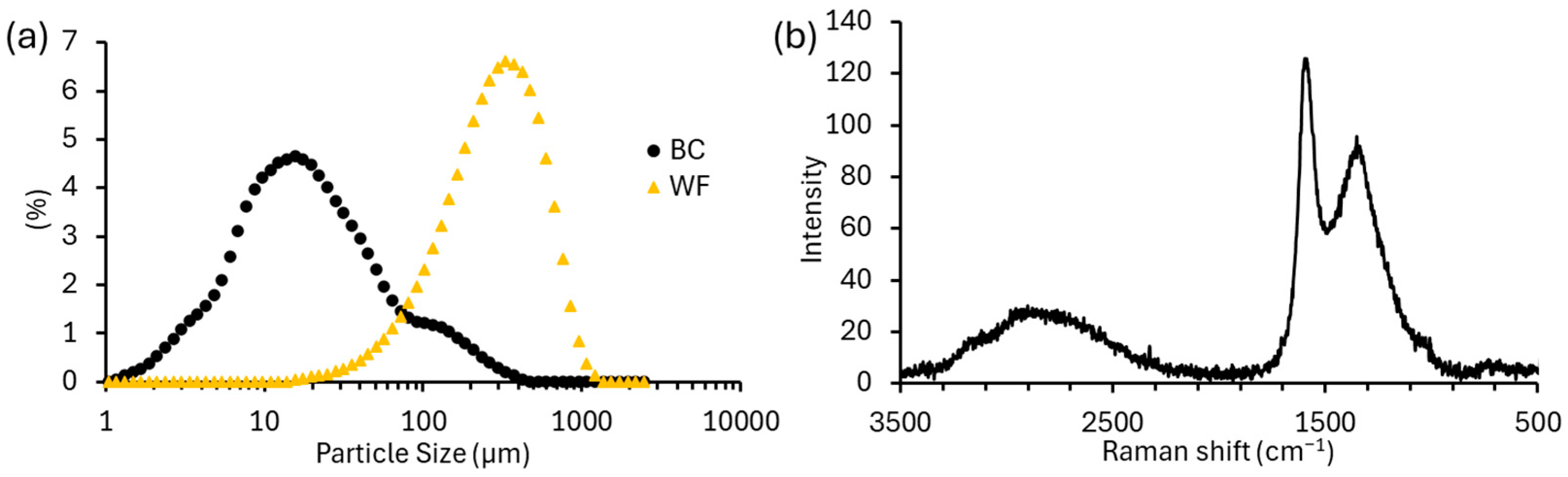
The properties of the wood fiber and BC were determined, and the results are given in Table 2. The wood fiber and BC were comprised of 50% C and 78% C, respectively, and with low levels of N (<0.5%). These C content values are typical for wood and BC [30,31]. The particle size distribution of the BC and wood fiber are shown in Figure 1. The BC had a smaller average size (38 μm) than the wood fiber (284 μm), which is likely due to attrition of the brittle BC particles. The Raman spectra of the BC showed both disordered (D) and graphitic (G) carbon by the presence of bands at 1370 cm−1 and 1598 cm−1, respectively. The intensity ratio, ID/IG, was 1.19, indicating a relatively high level of amorphous disordered carbon [32,33,34]. An additional broad band (2500–3200 cm−1) was observed and assigned to the 2D band and D + G overtone and associated with disordered carbon materials with a low extent of graphitization. The presence of these Raman bands is consistent with the literature for BC [33,35,36,37].

3.2. Rheological Properties of the Wet Formulations

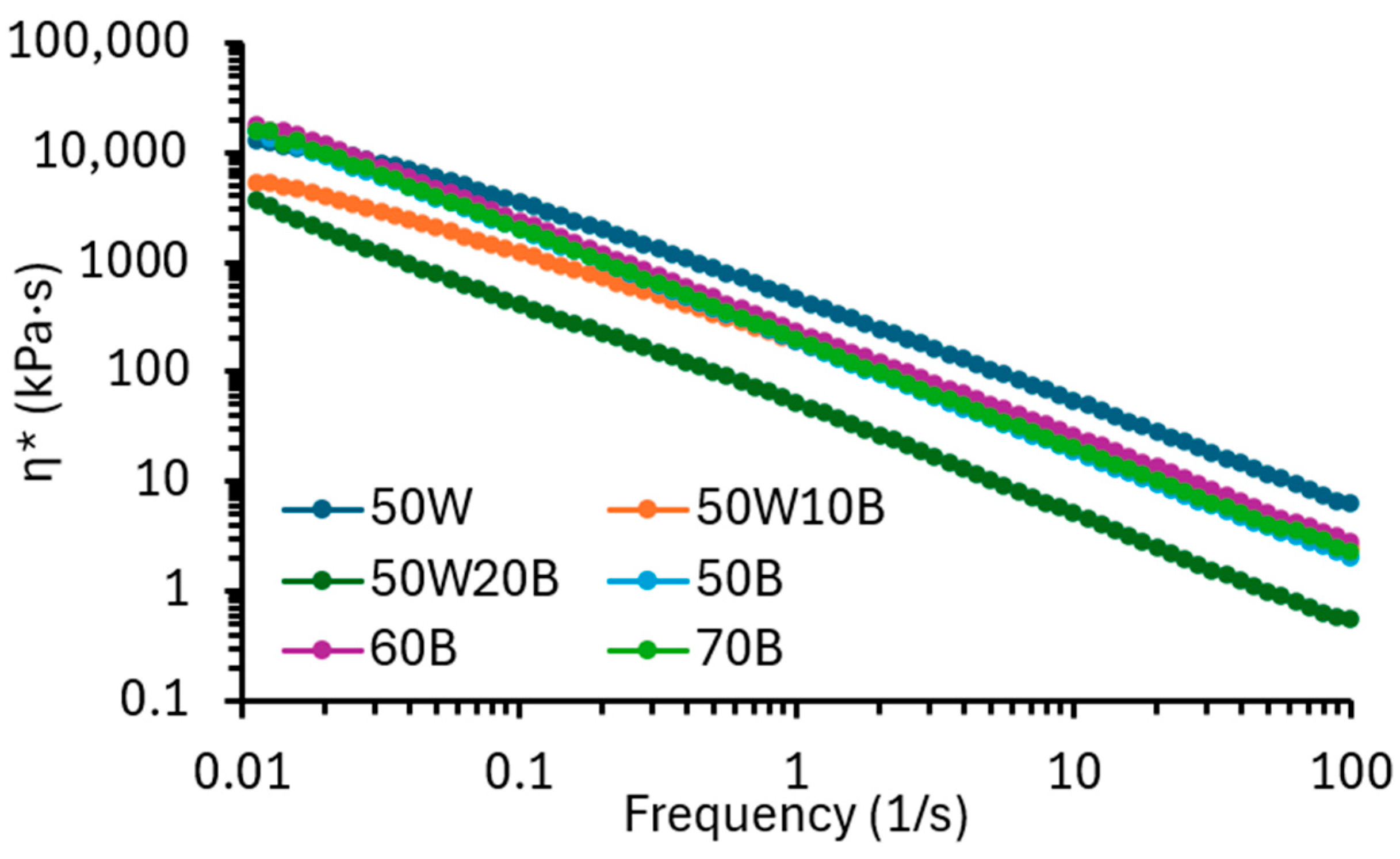
The flow curves (complex viscosity (η*) vs. the frequency (shear rate)) of the various composite formulations at 25 °C were assessed by dynamic rheometry (Figure 2). All composite formulations showed shear-thinning behavior characteristic of non-Newtonian fluids, which are suitable for extrusion [38,39]. For comparison between formulations, the η* at 1 Hz is given in Table 3. Formulations containing BC recorded lower η* compared to 50W (464 kPa·s) due to their smaller particle size [40,41]. Ref. [42] reported the same value of η* for a 50W composite formulation, showing confidence in the rheological measurements. Adding 10 and 20% BC to WSS progressively decreased the η* of the formulations down to 52 kPa·s, even as the binder content decreased to 30%, causing reduced polymer chain entanglement [43,44]. Furthermore, for 3D-printable resins with high filler contents, low matrix interconnectivity has been observed, resulting in poor structural integrity of the extrudate [45]. The BC-only formulations (50B–70B) had a relatively consistent η* of 190–236 kPa·s, with 60B being the highest. This observation was because BC is a porous material with high surface area, which promotes particle–particle and particle–matrix interactions, resulting in the formation of an interconnected network in the composite that restricts flow and exhibits resistance to deformation [46,47]. This increased as the BC content increased from 50B to 60B; however, at 70B, the SS was insufficient, hence the reduction in η* [48,49].
The flow curves for the formulations showed linear relationships (on log–log plots) and were successfully modeled using the power law equation. The lower law model parameters (non-Newtonian or flow behavior index (n), consistency coefficient (K), and coefficient of determination (R2)) are given in Table 2. The plots of all formulations show a good fit with R2 ≥ 0.95. For the 50W formulation, n was 0.124 and was comparable to wood and hemp fiber thermoset composite formulations [35]. The addition of 20% BC to 50W lowered n to 0.035, and this phenomenon is consistent with the literature on n decreasing with filler content in composites [50]. The BC-only formulations (50B to 70B) had very low n values (0.002–0.02), showing that these behaved as a highly pseudoplastic (non-Newtonian) system. This parameter n is critical for 3D printing formulations because lower values indicate more significant shear-thinning behavior, corresponding to rapid recovery of high viscosity after shear stress is removed. This allows printed layers to retain their shape and support subsequent layers [51,52,53,54].

3.3. Cured Composite Properties

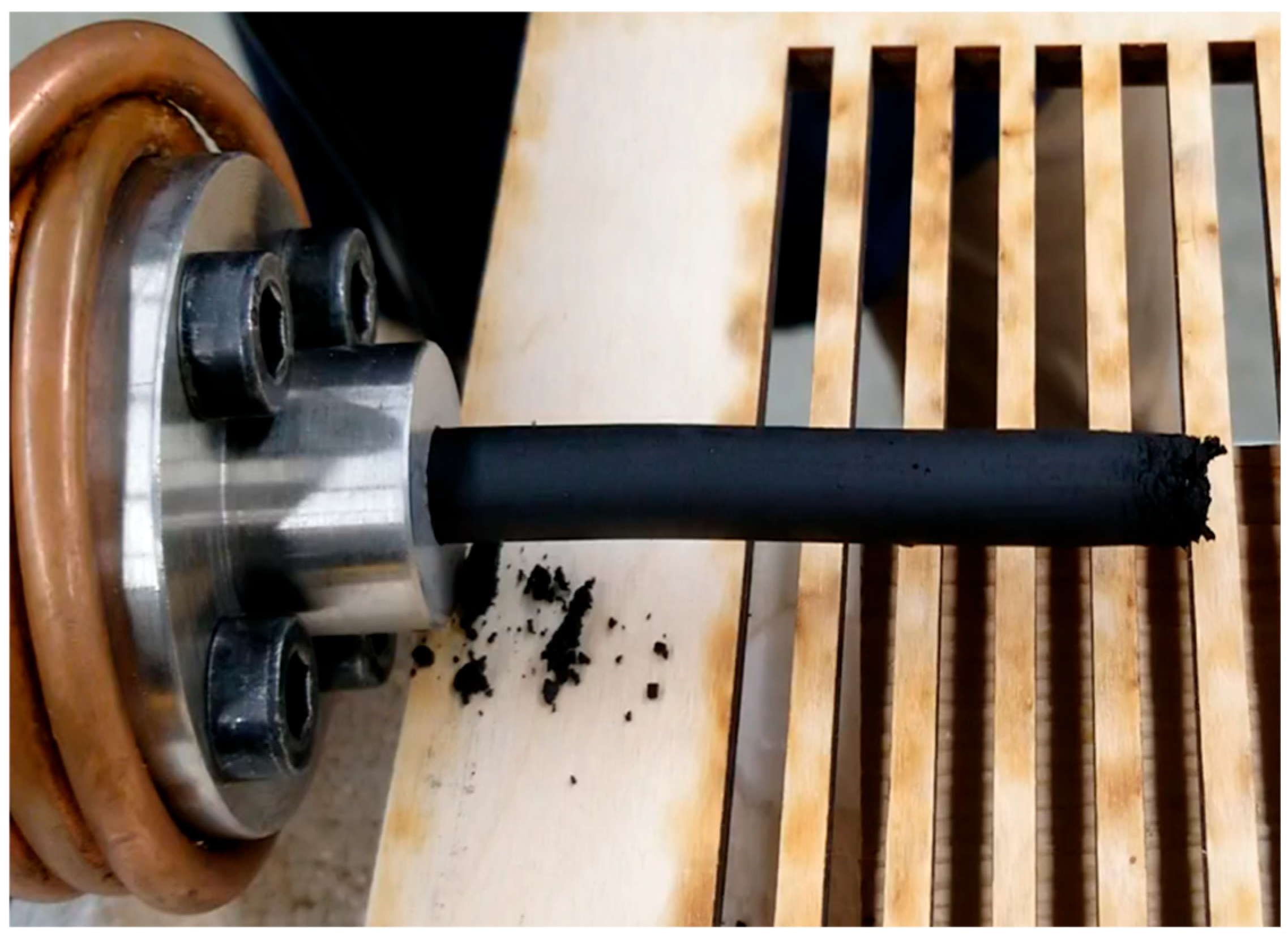
The composite formulations were high-shear blended prior to extrusion and then extruded into a pliable rod. Upon visual inspection, the extruded rods were homogeneous (Figure 3), which is consistent with previous work [11,12,13], with even the blends containing both WFs and BC. The rods were cold-pressed to obtain flat ribbons, cured, and then prepared into test coupons for testing.
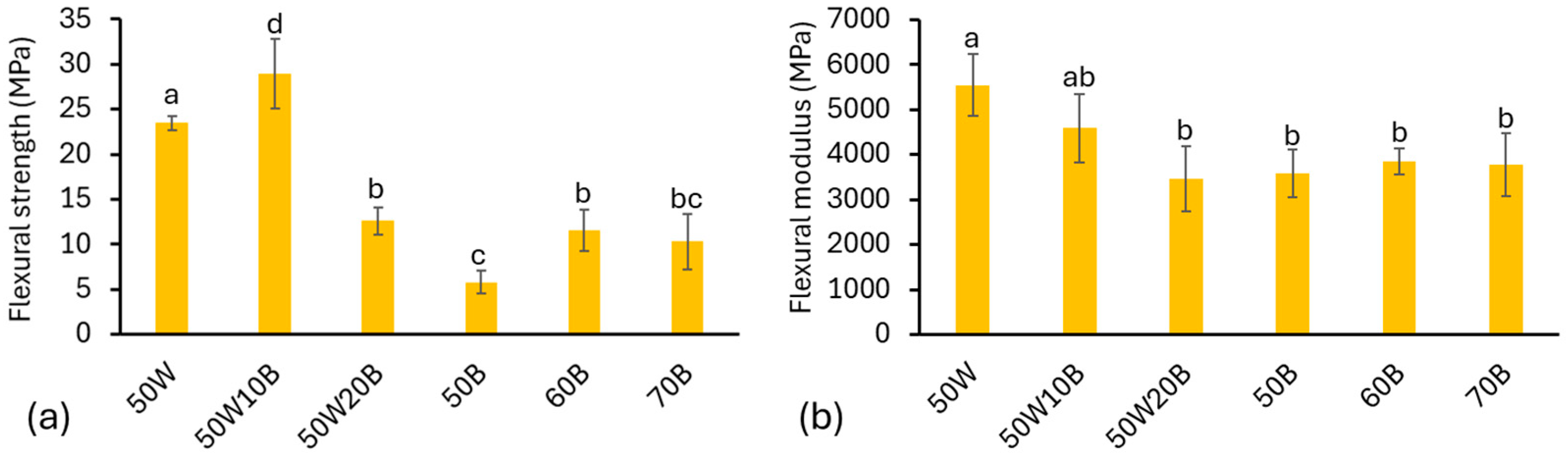
The flexural strengths of the composites are reported in Figure 4a. The 50W had a flexural strength of 23 MPa, and with the addition of 10% BC in 50W10B, it increased to 29 MPa, showing a 26% increase in strength while using 10% less SS resin. The composite formulations 50W20B, 50B, 60B, and 70B were shown to have FS values of 12.6, 5.8, 11.6, and 10.3 MPa, respectively. Increasing the BC content to 20% resulted in a 53% reduction in strength. This shows that replacing 10% of the weight of the SS resin with BC significantly improved the flexural strength while increasing the biobased content of the composite and potentially reducing cost; however, 20% BC (50W20B) replacement showed reduced strength due to too-low resin content [55,56]. The ability of the porous BC to improve strength is due to its ability to fill in the interstitial voids in the matrix up to its maximum capacity; this mechanism is called the micro-filler effect [57,58]. The BC-only composites had low flexural strengths (6–12 MPa), and the lowest was 50B. Adding too much BC to the composites can result in a loss of structural integrity, especially without wood, because biochar acts as a particle filler while wood acts as a fiber reinforcement [59,60,61].
The flexural modulus values (Figure 4b) of 50W and 50W10B were 4.5–5.5 GPa (statistically insignificant), while the other formulations (50W20B, 50–70B) had lower values (3.5–3.8 GPa). The moduli are in the range of 3.0–4.6 GPa for other natural fiber–SS composites [11,42].
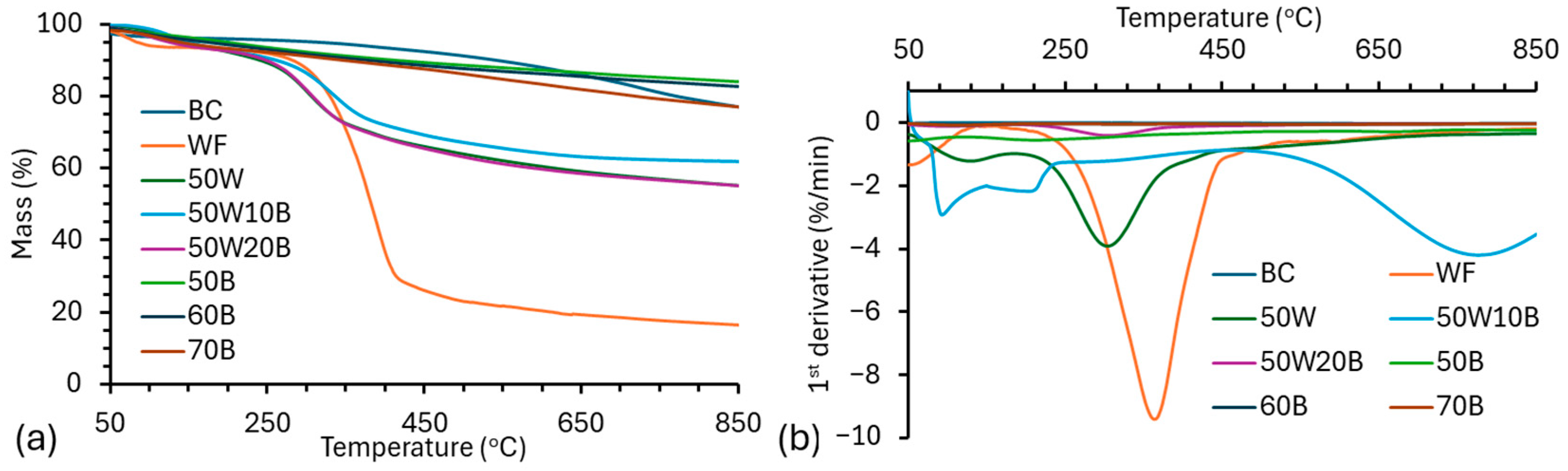
The TGA and DTG thermograms of BC, wood fiber, and composites are shown in Figure 5. The degradation onset temperature (Tonset) and residual mass at 500 and 850 °C are given in Table 4. WFs and WF composites had a small decrease in mass below 200 °C that was associated with moisture loss. Wood fiber had a Tonset of 258 °C and was associated with hemicellulose and cellulose degradation [23]. The WF composites (50W, 50W10B, and 50W20B) had Tonsets between 260 and 291 °C, which was associated with wood polymer degradation. BC was shown to be very thermally stable, as expected, with a Tonset of 506 °C and had a residual mass of 77% at 850 °C compared to wood at 16%. A consistent increase in Tonset was observed with increasing the BC addition from 260 °C for 50W to 287 °C for 50W10B and 50W20B because BC serves as a thermal shielding insulative barrier hindering the degradation of volatile components since it consists of highly stable carbon that can withstand higher temperatures [21]. The BC composites (50B–70B) were more thermally stable with Tonsets of 361–373 °C, as well as a degradation rate (DTG) comparable to the WF composites in this study [62,63]. The DTG peak for WF was at 365 °C and is associated with wood polymer degradation, while for 50W and 50W20B, the DTG peak was at 306 °C. The decrease in the DTG peak for the composites relative to the WF could be associated with alkaline degradation of wood polymers with SS. The residual mass for the 50W composite was 55% at 850 °C, and this was attributed to some char and mainly sodium silicate, while the BC composites had a higher residual mass of 77–84%. These results clearly show that BC helps improve the thermal stability of the composites.
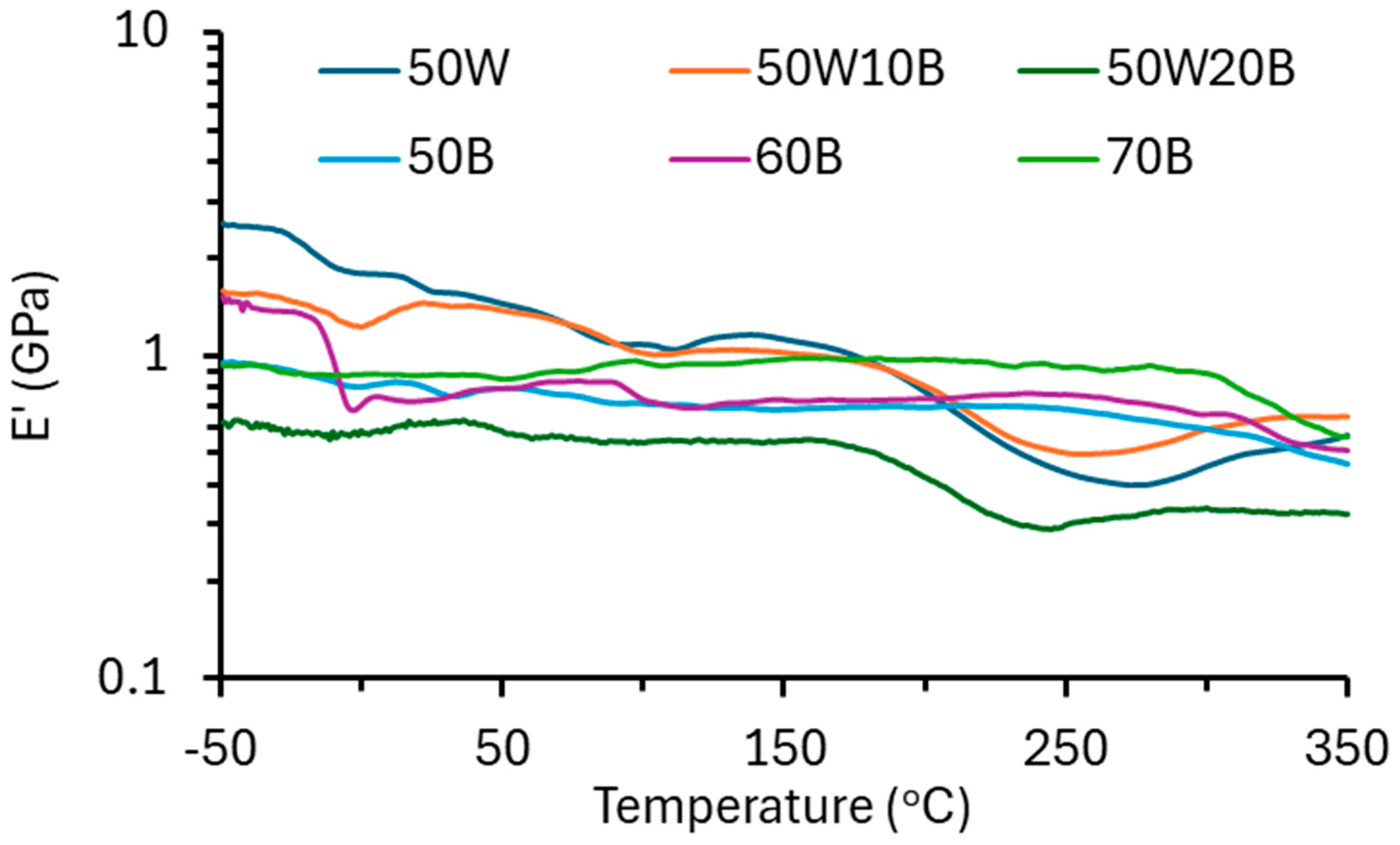
The storage modulus (E’) with respect to temperature was determined using DMA to show any thermal transitions (Figure 6). A transition was observed around −16 to 0 °C for some samples (50W, 50W10B, 50B, and 60B), and this could be associated with the presence of water (that melts) in the sample. A Tg was observed for the wood–SS composites (50W, 50W10B, and 50W20B) around 210 °C, which is likely associated with amorphous wood polymers such as lignin [64]. BC-SS composites (50B, 60B, and 70B) had Tg’s around 340 °C, which may be attributed to tars and other amorphous components present in the BC [65,66,67]. Generally, the E’ for BC composites did not decrease much with increasing temperature due to their higher thermal stability compared to WF composites [68]. The 50W composite had the highest E’ at 20 °C (1.67 GPa) and decreased progressively with the addition of BC (1.44, 0.061, 0.82, 0.10, and 0.09 GPa for 50W10B, 50W20B, 50B, 60B, and 70B composites, respectively), and this observation is consistent with the flexural modulus results [37,69].
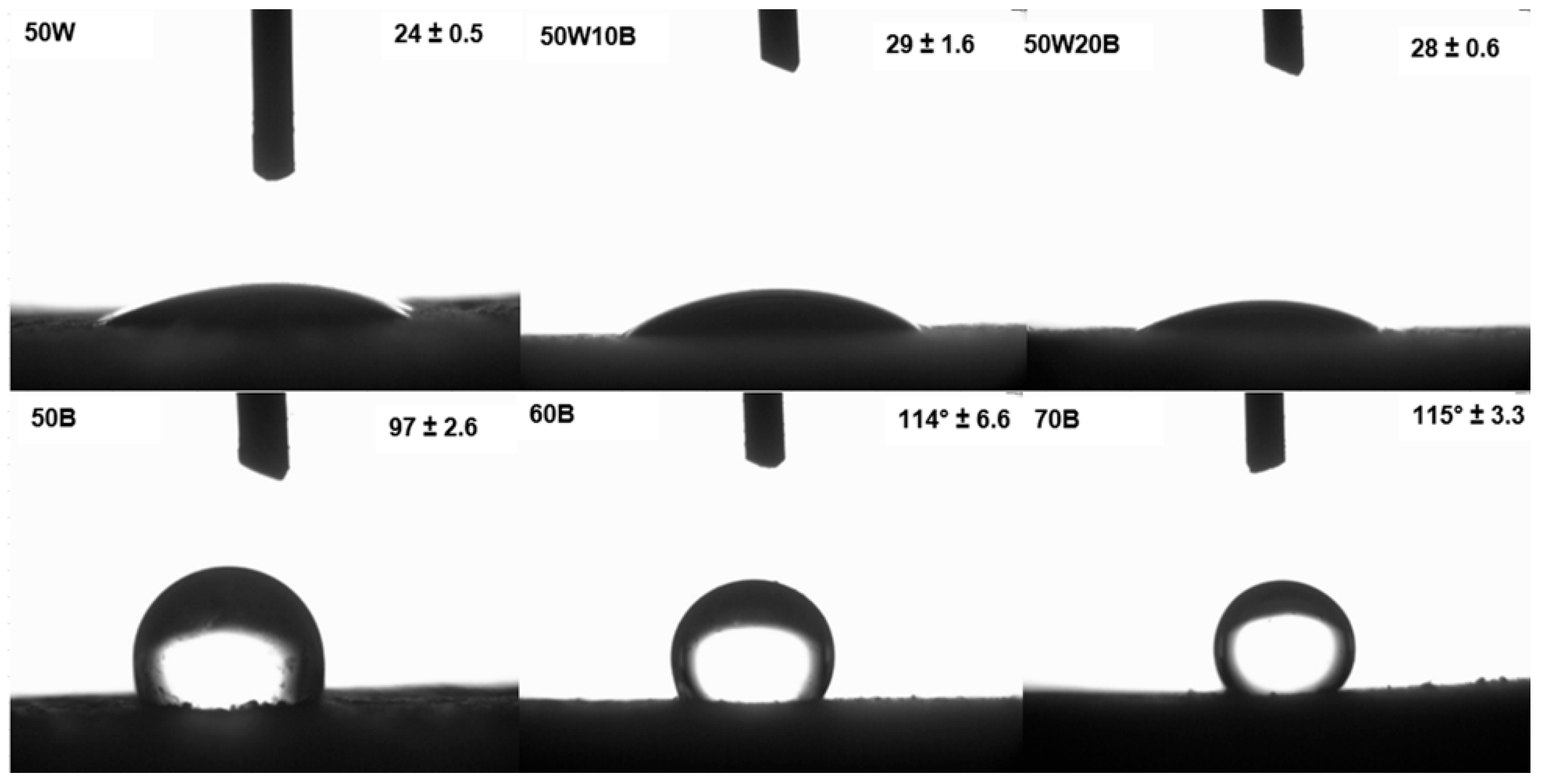
The water drop contact angle of the composite surfaces was measured to determine their surface wettability (Figure 7). Wood-containing composites showed lower contact angle values (50W (24°), 50W10B (29°), and 50W20B (28°)) than BC-SS composites (50B (97°), 60B (114°), and 70B (115°)), indicating that biochar incorporation improves hydrophobicity. Increasing the addition of BC increased the contact angle, as expected. Water contact angle >90° signifies a hydrophobic surface, and thus the material is not readily wettable. This will inhibit water absorption to some extent, thus making the composite more resistant to biological degradation, and potentially more durable over time [70,71].
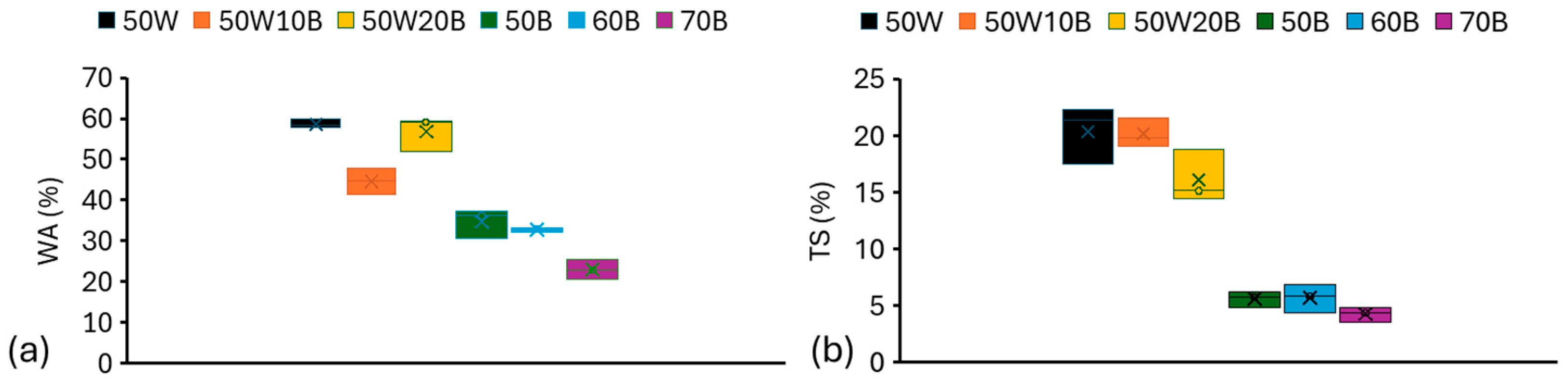
Water soak tests were performed on the wood–BC-SS composites. The results of the water absorption (WA) and thickness swell (TS) tests after 2 h of immersion are shown in Figure 8. WA values for wood-containing composites 50W, 50W10B, and 50W20B were 59%, 45%, and 58%, respectively. Moreover, these composites were shown to have lower WA values than particleboard made with rubberwood and biobased binder (87–91%) [72], and were comparable to coir–urea formaldehyde particleboard (45–76%) [73]. The 50B, 60 B, and 70B composites had lower WA values of 28%, 31%, and 23%, respectively. The wood–SS composites (50W, 50W10B, and 50W20B) had TS values of 15–22%, which were higher than wood–phenol-formaldehyde particleboard at 5% [74], while the BC composites had lower TS values (~5%) and were comparable to particleboard. These water soak tests clearly show that BC impedes water ingress into the composites due to its hydrophobic nature, as seen in the contact angle measurements [75,76,77,78].

3.4. 3D Printing Demonstration and Fire Testing

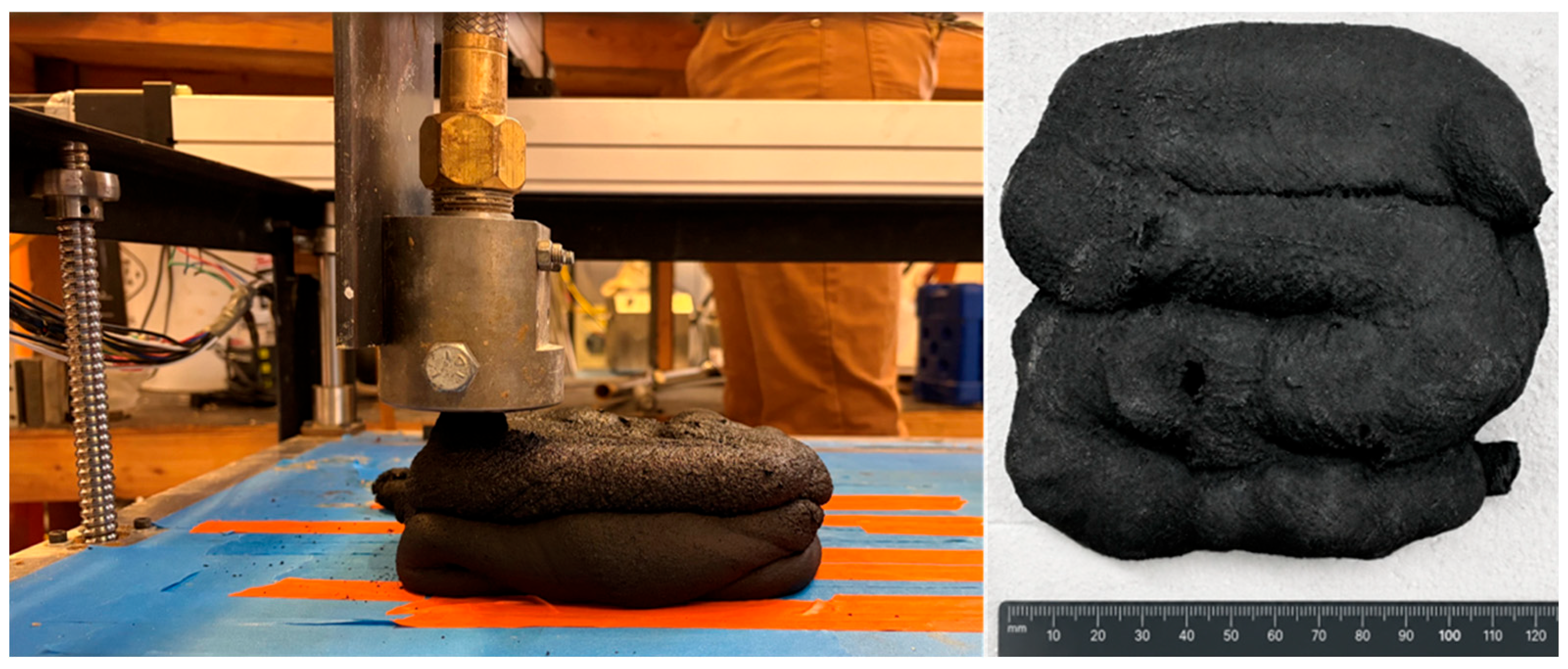
In a previous study, the 50W was successfully printed into a test piece [12]. Using the same setup, the 50B formulation was 3D-printed to demonstrate the feasibility of producing these composites on a larger length scale (Figure 9). The formulation was not optimal and showed some sagging initially, and then stopped once the formulation started to cure, but multiple layers were printed. The print fully cured at ambient conditions over a 2-week period.
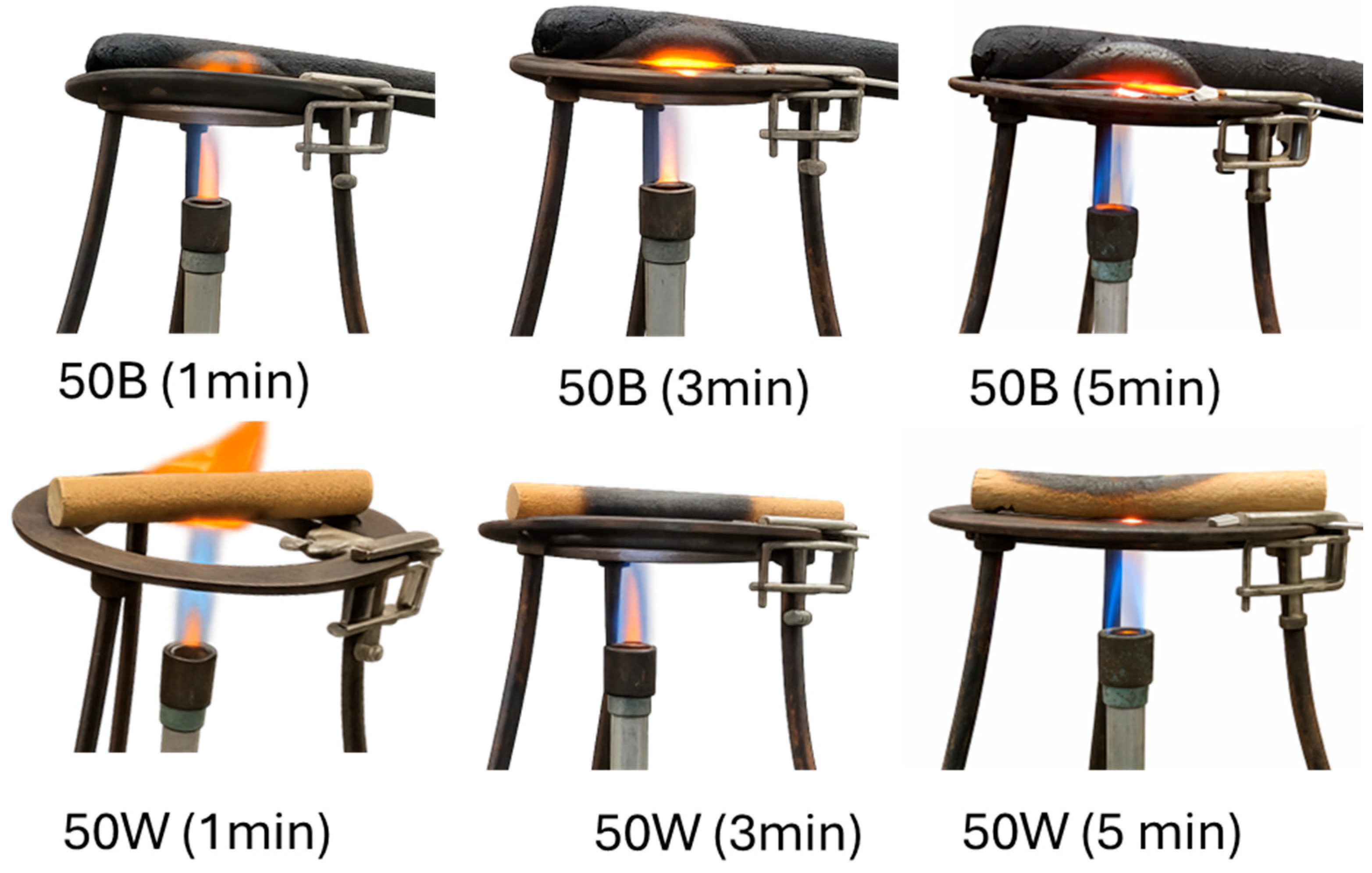
The extruded 50B and 50W composite filament rod was subjected to a Bunsen burner flame (Figure 10) over a 5 min period as described by [11]. The 50B and 50W composites showed good fire resistance, as evidenced by the photographs shown. A mass loss of 5% was recorded after the flame test for 50B compared to 18% for 50W. The mass loss for the 50W sample is likely attributable to wood combustion and moisture loss in the outer layer of the composite, while the 50B composite was found to be less combustable. Other studies on BC composites showed improved fire resistance [79,80].

4. Conclusions

This study successfully produced W-SS, BC-W-SS, and BC-SS extrudable composites. BC was shown to be a hydrophobic filler compared to wood. The addition of 10% BC to 50W improved its flexural strength by 26% to 29 MPa, the thermal stability by 29 °C to 287 °C, the dimensional stability by 10%, and the water absorption by 45%. These improvements were due to the ability of the BC to improve bonding within the W-SS system and thereby enhance stress transfer, mechanical strength, and stability. The addition of more BC (20%) had a negative effect on W-SS composites. The BC-SS composites were shown to have the highest dimensional (4.2–5.7% TS) and thermal stability (Tonset 361–373 °C) compared with the W-SS composites. The W-SS composites were shown to have better mechanical properties than the BC-SS composites. 3D printing of the cold-setting BC-SS formulation was successfully demonstrated; however, further research is required to improve the formulation in order to minimize sagging.

Author Contributions

Conceptualization, M.R.M. and A.G.M.; methodology, A.G.M., D.W., and S.B.Y.; validation, M.R.M. and A.G.M.; formal analysis, S.B.Y.; investigation, S.B.Y. and D.W.; resources, A.G.M.; data curation, A.G.M.; writing—original draft preparation, S.B.Y.; writing—review and editing, M.R.M. and A.G.M.; supervision, A.G.M.; project administration, A.G.M. All authors have read and agreed to the published version of the manuscript.

Funding

This research was funded by (i) the National Science Foundation (NSF) Track II, award number 2119809, (ii) the University of Idaho P3-R1 grant matching program, and (iii) the Idaho State Board of Education IGEM award 20-002 for supporting the acquisition of the rheometer.

Data Availability Statement

The original contributions presented in this study are included in the article. Further inquiries can be directed to the corresponding author.

Conflicts of Interest

The authors declare no conflicts of interest.

References

  1. Santos, F.; Rodrigues, P.; Vargas, P.; Massano, A.; Oliveira, L.M.; Batista, C.; Cruz, V.; Mateus, A.; Mitchell, G.R.; Sobral, A.J.F.N.; et al. A Novel Fully Biobased Material Composite for Cosmetic Packaging Applications. Sci. Rep. 2025, 15, 26882. [Google Scholar] [CrossRef] [Scilit] [PubMed]
  2. Pokharel, A.; Falua, K.J.; Babaei-Ghazvini, A.; Acharya, B. Biobased Polymer Composites: A Review. J. Compos. Sci. 2022, 6, 255. [Google Scholar] [CrossRef] [Scilit]
  3. Gurunathan, T.; Mohanty, S.; Nayak, S.K. A Review of the Recent Developments in Biocomposites Based on Natural Fibres and Their Application Perspectives. Compos. Part A Appl. Sci. Manuf. 2015, 77, 1–25. [Google Scholar] [CrossRef] [Scilit]
  4. Andrew, J.J.; Dhakal, H.N. Sustainable Biobased Composites for Advanced Applications: Recent Trends and Future Opportunities—A Critical Review. Compos. Part C Open Access 2022, 7, 100220. [Google Scholar] [CrossRef] [Scilit]
  5. Tang, Y.; Zhan, Z.; De, S.; Marathe, U.; Tekinalp, H.; Ozcan, S.; Dong, W.; Jin, Q.; Zhao, X.; Li, Y. Sustainable Biobased Composites: From Raw Materials to Recycling. Compos. Part B Eng. 2025, 311, 113188. [Google Scholar] [CrossRef] [Scilit]
  6. Adjei–Yeboah, J.; Jahan, M.P. Additive Manufacturing of Natural Fiber Reinforced Polymer Composites—A Review. J. Thermoplast. Compos. Mater. 2026, 08927057261415828. [Google Scholar] [CrossRef] [Scilit]
  7. Moorthy, J.S.N.; Chandran, M.S. A Comprehensive Review on the Influence of Surface Treatment and 3D Printing of Natural Fiber Composites. Compos. Interfaces 2026, 33, 399–434. [Google Scholar] [CrossRef] [Scilit]
  8. Ahmad, M.N.; Ishak, M.R.; Taha, M.M.; Mustapha, F.; Leman, Z. Rheological Properties of Natural Fiber Reinforced Thermoplastic Composite for Fused Deposition Modeling (FDM): A Short Review. J. Adv. Res. Fluid Mech. Therm. Sci. 2022, 98, 157–164. [Google Scholar] [CrossRef] [Scilit]
  9. Gyawali, B.; Haghnazar, R.; Akula, P.; Alba, K.; Nasir, V. A Review on 3D Printing with Clay and Sawdust/Natural Fibers: Printability, Rheology, Properties, and Applications. Results Eng. 2024, 24, 103024. [Google Scholar] [CrossRef] [Scilit]
  10. Mohammed, M.; Jawad, A.J.A.M.; Mohammed, A.M.; Oleiwi, J.K.; Adam, T.; Osman, A.F.; Dahham, O.S.; Betar, B.O.; Gopinath, S.C.B.; Jaafar, M. Challenges and Advancement in Water Absorption of Natural Fiber-Reinforced Polymer Composites. Polym. Test. 2023, 124, 108083. [Google Scholar] [CrossRef] [Scilit]
  11. Orji, B.O.; Thie, C.; Baker, K.; Maughan, M.R.; McDonald, A.G. Wood Fiber—Sodium Silicate Mixtures for Additive Manufacturing of Composite Materials. Eur. J. Wood Wood Prod. 2023, 81, 45–58. [Google Scholar] [CrossRef] [Scilit]
  12. Carne, R.H.R.; Alade, A.A.; Orji, B.O.; Ibrahim, A.; McDonald, A.G.; Maughan, M.R. A Screw Extrusion-Based System for Additive Manufacturing of Wood: Sodium Silicate Thermoset Composites. Adv. Mech. Eng. 2023, 15, 16878132231210373. [Google Scholar] [CrossRef] [Scilit]
  13. Alade, A.A.; Hematabadi, H.; Carne, R.H.R.; Kukal, J.; Fu, A.Q.; McDonald, A.G.; Maughan, M.R.; Ibrahim, A.A.; Robertson, D.J. Effects of Postmanufacture Conditioning on the Mechanical and Hygroscopic Properties of Extrusion Printed Wood–Sodium Silicate Composites. For. Prod. J. 2024, 74, 278–288. [Google Scholar] [CrossRef] [Scilit]
  14. Xuan, L.; Fu, Y.; Liu, Z.; Wei, P.; Wu, L. Hydrophobicity and Photocatalytic Activity of a Wood Surface Coated with a Fe3+-Doped SiO2/TiO2 Film. Materials 2018, 11, 2594. [Google Scholar] [CrossRef] [Scilit] [PubMed]
  15. Kairytė, A.; Makowska, S.; Vaitkus, S.; Kremensas, A.; Vėjelis, S.; Balčiūnas, G. Impact of Tung Oil and Sodium Silicate-Coated Wood Chips on the Performance of Cement-Based Thermal Insulation Composites. J. Mater. Res. Technol. 2025, 35, 6123–6136. [Google Scholar] [CrossRef] [Scilit]
  16. Liu, H.; Zhou, T.; Sun, X.; Zong, G. Organosilane-Modified Wood Materials: A Review of Research and Applications. BioResources 2023, 18, 6561–6582. [Google Scholar] [CrossRef] [Scilit]
  17. Dhakal, H.N.; Zhang, Z.Y.; Richardson, M.O.W. Effect of Water Absorption on the Mechanical Properties of Hemp Fibre Reinforced Unsaturated Polyester Composites. Compos. Sci. Technol. 2007, 67, 1674–1683. [Google Scholar] [CrossRef] [Scilit]
  18. Chang, B.P.; Mohanty, A.K.; Misra, M. Studies on Durability of Sustainable Biobased Composites: A Review. RSC Adv. 2020, 10, 17955–17999. [Google Scholar] [CrossRef] [Scilit] [PubMed]
  19. Islam, T.; Chaion, M.H.; Jalil, M.A.; Rafi, A.S.; Mushtari, F.; Dhar, A.K.; Hossain, S. Advancements and Challenges in Natural Fiber-Reinforced Hybrid Composites: A Comprehensive Review. SPE Polym. 2024, 5, 481–506. [Google Scholar] [CrossRef] [Scilit]
  20. Saha, M.; Singh, H.; Singh, M.K.; Rangappa, S.M.; Siengchin, S. Advancements in Natural Fiber Composites: Market Insights, Surface Modifications, Advanced Fabrication Techniques and Applications. Sustain. Chem. Clim. Action 2025, 6, 100081. [Google Scholar] [CrossRef] [Scilit]
  21. Mohammed, M.; Rahman, R.; Mohammed, A.M.; Adam, T.; Betar, B.O.; Osman, A.F.; Dahham, O.S. Surface Treatment to Improve Water Repellence and Compatibility of Natural Fiber with Polymer Matrix: Recent Advancement. Polym. Test. 2022, 115, 107707. [Google Scholar] [CrossRef] [Scilit]
  22. Bartoli, M.; Arrigo, R.; Malucelli, G.; Tagliaferro, A.; Duraccio, D. Recent Advances in Biochar Polymer Composites. Polymers 2022, 14, 2506. [Google Scholar] [CrossRef] [Scilit] [PubMed]
  23. Wang, X.; Sotoudehniakarani, F.; Yu, Z.; Morrell, J.J.; Cappellazzi, J.; McDonald, A.G. Evaluation of Corrugated Cardboard Biochar as Reinforcing Fiber on Properties, Biodegradability and Weatherability of Wood-Plastic Composites. Polym. Degrad. Stab. 2019, 168, 108955. [Google Scholar] [CrossRef] [Scilit]
  24. Tengku Yasim-Anuar, T.A.; Yee-Foong, L.N.; Lawal, A.A.; Ahmad Farid, M.A.; Mohd Yusuf, M.Z.; Hassan, M.A.; Ariffin, H. Emerging Application of Biochar as a Renewable and Superior Filler in Polymer Composites. RSC Adv. 2022, 12, 13938–13949. [Google Scholar] [CrossRef] [Scilit] [PubMed]
  25. Patel, R.; Stobbs, J.; Acharya, B. Study of Biochar in Cementitious Materials for Developing Green Concrete Composites. Sci. Rep. 2025, 15, 22192. [Google Scholar] [CrossRef] [Scilit] [PubMed]
  26. Barbhuiya, S.; Bhusan Das, B.; Kanavaris, F. Biochar-Concrete: A Comprehensive Review of Properties, Production and Sustainability. Case Stud. Constr. Mater. 2024, 20, e02859. [Google Scholar] [CrossRef] [Scilit]
  27. Lazarus, R.R.; Johnson Alengaram, U.; Wan Jaafar, W.Z.; Lai, S.H.; Ibrahim, M.S.I.B.; Srinivas, M.K. Exploring the use of in-house sodium silicate from agro-industrial by-products in pervious geopolymer concrete. J. Civ. Eng. Manag. 2025, 31, 670–686. [Google Scholar] [CrossRef] [Scilit]
  28. ASTM Standards D6556-21; ASTM Test Method for Carbon BlackTotal and External Surface Area by Nitrogen Adsorption. ASTM International: West Conshohocken, PA, USA, 2021.
  29. ASTM D790-17; Test Methods for Flexural Properties of Unreinforced and Reinforced Plastics and Electrical Insulating Materials. ASTM International: West Conshohocken, PA, USA, 2017.
  30. Adhikari, S.; Moon, E.; Paz-Ferreiro, J.; Timms, W. Comparative Analysis of Biochar Carbon Stability Methods and Implications for Carbon Credits. Sci. Total. Environ. 2024, 914, 169607. [Google Scholar] [CrossRef] [Scilit] [PubMed]
  31. Duruaku, J.I.; Ajiwe, V.I.E.; Okoye, N.H.; Arinze, R.U. An Evaluation of the Calorific Values of the Branches and Stems of 11 Tropical Trees. J. Sustain. Bioenergy Syst. 2016, 06, 44–54. [Google Scholar] [CrossRef]
  32. Kataya, G.; Issa, M.; El Charif, Z.; Cornu, D.; Taleb, B.; Bechelany, M.; Hijazi, A. Enhanced Copper Adsorption with Sustainable Biochar Derived from Kitchen Waste. Water 2025, 17, 1887. [Google Scholar] [CrossRef] [Scilit]
  33. Yang, C.; Liu, Z.; Liu, W.; Qiu, Y.; Zhang, S.; Zhang, X.; Wang, M.; Wu, H.; Lyu, H.; Huang, J.; et al. Graphitized Biochar Derived from Agricultural Wastes Enhances Methanogenesis via Conductivity-Driven Direct Interspecies Electron Transfer. Adv. Sci. 2025, 12, e08739. [Google Scholar] [CrossRef] [Scilit] [PubMed]
  34. Mondal, A.K.; Hinkley, C.; Krishnan, L.; Ravi, N.; Akter, F.; Ralph, P.; Kuzhiumparambil, U. Macroalgae-Based Biochar: Preparation and Characterization of Physicochemical Properties for Potential Applications. RSC Sustain. 2024, 2, 1828–1836. [Google Scholar] [CrossRef] [Scilit]
  35. Perumal, R.S.; Muralidharan, B. Activated Biochar Derived from Ricinus Communis Outer Shell: Influence of KOH Impregnation Ratio on Physicochemical Properties and EMI Shielding Effectiveness. Results Eng. 2025, 25, 104362. [Google Scholar] [CrossRef] [Scilit]
  36. Bengtsson, A.; Hecht, P.; Sommertune, J.; Ek, M.; Sedin, M.; Sjöholm, E. Carbon Fibers from Lignin–Cellulose Precursors: Effect of Carbonization Conditions. ACS Sustain. Chem. Eng. 2020, 8, 6826–6833. [Google Scholar] [CrossRef] [Scilit]
  37. Yusuf, S.B.; Maughan, M.R.; McDonald, A.G. Carbonized Hemp Fiber for Use in Composites. Materials 2025, 18, 2509. [Google Scholar] [CrossRef] [Scilit] [PubMed]
  38. Yusuf, S.B.; Maughan, M.R.; McDonald, A.G. Valorization of Waste Hemp Hurd as Reinforcement in Extruded Thermoset Composites. Clean Technol. 2026, 8, 18. [Google Scholar] [CrossRef] [Scilit]
  39. Tian, S.-Q.; Zhao, R.-Y.; Chen, Z.-C. Review of the Pretreatment and Bioconversion of Lignocellulosic Biomass from Wheat Straw Materials. Renew. Sustain. Energy Rev. 2018, 91, 483–489. [Google Scholar] [CrossRef] [Scilit]
  40. Elbishari, H.; Satterthwaite, J.; Silikas, N. Effect of Filler Size and Temperature on Packing Stress and Viscosity of Resin-Composites. Int. J. Mol. Sci. 2011, 12, 5330–5338. [Google Scholar] [CrossRef] [Scilit] [PubMed]
  41. Hanemann, T. Influence of Particle Properties on the Viscosity of Polymer–Alumina Composites. Ceram. Int. 2008, 34, 2099–2105. [Google Scholar] [CrossRef] [Scilit]
  42. Lehman-Chong, A.M.; Setters, J.L.; McDonald, A.G.; Maughan, M.R. Influence of Metakaolin and Acetic Acid on Sodium Silicate-Based Inorganic Bonded Wood Composites for Additive Manufacturing. Results Mater. 2025, 26, 100708. [Google Scholar] [CrossRef] [Scilit]
  43. Khazaee, S.; Bitar-Nehme, E.; Boukhili, R.; Kostenov, J.; Regnaud, W.; Martin, E. A Low-Viscosity, Recyclable Polymer-Based Binder Strategy for Metal FDM: Toward High Powder Loading, Sustainable Processing, and Comprehensive Characterization of 17-4PH Stainless Steel Parts. Polymers 2025, 17, 2575. [Google Scholar] [CrossRef] [Scilit] [PubMed]
  44. Ilyin, S.O. Structural Rheology in the Development and Study of Complex Polymer Materials. Polymers 2024, 16, 2458. [Google Scholar] [CrossRef] [Scilit] [PubMed]
  45. Wei, P.; Cipriani, C.; Hsieh, C.-M.; Kamani, K.; Rogers, S.; Pentzer, E. Go with the Flow: Rheological Requirements for Direct Ink Write Printability. J. Appl. Phys. 2023, 134, 100701. [Google Scholar] [CrossRef] [Scilit]
  46. Das, C.; Tamrakar, S.; Kiziltas, A.; Xie, X. Incorporation of Biochar to Improve Mechanical, Thermal and Electrical Properties of Polymer Composites. Polymers 2021, 13, 2663. [Google Scholar] [CrossRef] [Scilit] [PubMed]
  47. Barnes, H.; Hutton, J.; Walters, K. An Introduction to Rheology; Walters, K., Ed.; Elsevier Science: Cham, The Netherlands, 1989. [Google Scholar]
  48. Arrigo, R.; Bartoli, M.; Malucelli, G. Poly(lactic Acid)–Biochar Biocomposites: Effect of Processing and Filler Content on Rheological, Thermal, and Mechanical Properties. Polymers 2020, 12, 892. [Google Scholar] [CrossRef] [Scilit] [PubMed]
  49. George, J.; Gaidukovs, S.; Bhattacharyya, D. Pinewood Biochar Antistatic Polymer Composites: An Investigation of Electrical, Mechanical, Rheological and Thermal Properties. Int. J. Smart Nano Mater. 2024, 15, 767–785. [Google Scholar] [CrossRef] [Scilit]
  50. Rueda, M.M.; Auscher, M.-C.; Fulchiron, R.; Périé, T.; Martin, G.; Sonntag, P.; Cassagnau, P. Rheology and Applications of Highly Filled Polymers: A Review of Current Understanding. Prog. Polym. Sci. 2017, 66, 22–53. [Google Scholar] [CrossRef] [Scilit]
  51. Liu, Q.; Zhang, N.; Wei, W.; Hu, X.; Tan, Y.; Yu, Y.; Deng, Y.; Bi, C.; Zhang, L.; Zhang, H. Assessing the Dynamic Extrusion-Based 3D Printing Process for Power-Law Fluid Using Numerical Simulation. J. Food Eng. 2020, 275, 109861. [Google Scholar] [CrossRef] [Scilit]
  52. Sánchez-Sánchez, R.; Rodríguez-Rego, J.M.; Macías-García, A.; Mendoza-Cerezo, L.; Díaz-Parralejo, A. Relationship between Shear-Thinning Rheological Properties of Bioinks and Bioprinting Parameters. Int. J. Bioprinting 2023, 9, 422–431. [Google Scholar] [CrossRef] [Scilit] [PubMed]
  53. Zhang, J.; Han, Y.; Wang, Z. Accelerating Effects of Flow Behavior Index n on Breakup Dynamics for Droplet Evolution in Non-Newtonian Fluids. Materials 2022, 15, 4392. [Google Scholar] [CrossRef] [Scilit] [PubMed]
  54. Sourov, M.A.; Emu, S.I.; Thakur, M.S.H.; Ikram, M.M.; Morshed, A.K.M.M.; Rahman, M.M. A General Simulation-Based Study on Printability of Inks in Direct Ink Writing. Sci. Rep. 2025, 15, 9842. [Google Scholar] [CrossRef] [Scilit] [PubMed]
  55. Rajendran, S.; Palani, G.; Veerasimman, A.; Shanmugam, V.; Marimuthu, U.; Korniejenko, K.; Trilaksana, H.; Majumder, A.; Stochino, F. Enhancing Carbon Fiber Composites with Fish Scale Biochar for Superior Strength and Environmental Sustainability. Clean. Eng. Technol. 2025, 27, 100996. [Google Scholar] [CrossRef] [Scilit]
  56. Ling, Y.; Wu, X.; Tan, K.; Zou, Z. Effect of Biochar Dosage and Fineness on the Mechanical Properties and Durability of Concrete. Materials 2023, 16, 2809. [Google Scholar] [CrossRef] [Scilit] [PubMed]
  57. Wu, F.; Zhang, Q.; Dong, S.; Cai, Y.; Yang, S.; Xu, F.; Luo, P.; Jiang, J. Biochar Modification Enhances Mechanical and Durability Properties of Cement-Based Materials. Sci. Rep. 2025, 15, 22174. [Google Scholar] [CrossRef] [Scilit] [PubMed]
  58. Qing, L.; Zhang, H.; Zhang, Z. Effect of Biochar on Compressive Strength and Fracture Performance of Concrete. J. Build. Eng. 2023, 78, 107587. [Google Scholar] [CrossRef] [Scilit]
  59. Pudełko, A.; Postawa, P.; Stachowiak, T.; Malińska, K.; Dróżdż, D. Waste Derived Biochar as an Alternative Filler in Biocomposites—Mechanical, Thermal and Morphological Properties of Biochar Added Biocomposites. J. Clean. Prod. 2021, 278, 123850. [Google Scholar] [CrossRef] [Scilit]
  60. Aboughaly, M.; Babaei-Ghazvini, A.; Dhar, P.; Patel, R.; Acharya, B. Enhancing the Potential of Polymer Composites Using Biochar as a Filler: A Review. Polymers 2023, 15, 3981. [Google Scholar] [CrossRef] [Scilit] [PubMed]
  61. Hoang, P.; Zhang, Z.; Ren, J.; Peng, Y.; Cao, J. Versatile Biochar for Wood-Plastic Composites: Improving Mechanical Properties, Dimensional and Thermal Stability. Polym. Compos. 2024, 45, 10349–10364. [Google Scholar] [CrossRef] [Scilit]
  62. Ahmetli, G.; Kocaman, S.; Ozaytekin, I.; Bozkurt, P. Epoxy Composites Based on Inexpensive Char Filler Obtained from Plastic Waste and Natural Resources. Polym. Compos. 2013, 34, 500–509. [Google Scholar] [CrossRef] [Scilit]
  63. Panizio, R.; Castro, C.; Pacheco, N.; Assis, A.C.; Longo, A.; Vilarinho, C.; Teixeira, J.C.; Brito, P.; Gonçalves, M.; Nobre, C. Investigation of Biochars Derived from Waste Lignocellulosic Biomass and Insulation Electric Cables: A Comprehensive TGA and Macro-TGA Analysis. Heliyon 2024, 10, e37882. [Google Scholar] [CrossRef] [Scilit] [PubMed]
  64. Börcsök, Z.; Pásztory, Z. The Role of Lignin in Wood Working Processes Using Elevated Temperatures: An Abbreviated Literature Survey. Eur. J. Wood Wood Prod. 2021, 79, 511–526. [Google Scholar] [CrossRef] [Scilit]
  65. Li, A.; Liu, H.-L.; Wang, H.; Xu, H.-B.; Jin, L.-F.; Liu, J.-L.; Hu, J.-H. Effects of Temperature and Heating Rate on the Characteristics of Molded Bio-Char. BioResources 2016, 11, 3259–3274. [Google Scholar] [CrossRef] [Scilit]
  66. Johnson, R.L.; Castillo, K.; Castillo, C.; Bach, Q.-V.; Hihara, C.; Wang, L.; Skreiberg, Ø.; Turn, S.Q. Biocarbon Production via Plasticized Biochar: Roles of Feedstock, Water Content, Catalysts, and Reaction Time. Energy Fuels 2023, 37, 15808–15821. [Google Scholar] [CrossRef] [Scilit]
  67. Uskoković, V. A Historical Review of Glassy Carbon: Synthesis, Structure, Properties and Applications. Carbon Trends 2021, 5, 100116. [Google Scholar] [CrossRef] [Scilit]
  68. Khan, A.A.; Khan, M.A.; Domada, R.V.V.; Huang, X.; Usmani, A.; Bakhtiyari, S.; Ashtiani, M.J.; Garivani, S.; Aghakouchak, A.A. Enhancing the Thermal Stability and Fire Retardancy of Bio-Based Building Materials through Pre-Biochar System. Constr. Build. Mater. 2023, 409, 134099. [Google Scholar] [CrossRef] [Scilit]
  69. Dahal, R.K.; Acharya, B.; Saha, G.; Bissessur, R.; Dutta, A.; Farooque, A. Biochar as a Filler in Glassfiber Reinforced Composites: Experimental Study of Thermal and Mechanical Properties. Compos. Part B Eng. 2019, 175, 107169. [Google Scholar] [CrossRef] [Scilit]
  70. Law, K.-Y. Definitions for Hydrophilicity, Hydrophobicity, and Superhydrophobicity: Getting the Basics Right. J. Phys. Chem. Lett. 2014, 5, 686–688. [Google Scholar] [CrossRef] [Scilit] [PubMed]
  71. Li, K.; Zhou, A.; Liu, T.; Zou, D.; Yu, Z. Long-Term Performance and Deterioration Mechanism of Novel Hydrophobic Coated Fiber Reinforced Composite in Marine Environment. Compos. Part A Appl. Sci. Manuf. 2025, 190, 108716. [Google Scholar] [CrossRef] [Scilit]
  72. Amini, M.H.M.; Hashim, R.; Hiziroglu, S.; Sulaiman, N.S.; Sulaiman, O. Properties of Particleboard Made from Rubberwood Using Modified Starch as Binder. Compos. Part B Eng. 2013, 50, 259–264. [Google Scholar] [CrossRef] [Scilit]
  73. Viswanathan, R.; Gothandapani, L.; Kailappan, R. Water Absorption and Swelling Characteristics of Coir Pith Particle Board. Bioresour. Technol. 2000, 71, 93–94. [Google Scholar] [CrossRef] [Scilit]
  74. Korai, H.; Saotome, H.; Ohmi, M. Effects of Water Soaking and Outdoor Exposure on Modulus of Rupture and Internal Bond Strength of Particleboard. J. Wood Sci. 2014, 60, 127–133. [Google Scholar] [CrossRef] [Scilit]
  75. Dra, R.E.; Mahida, B.; Medjahdi, M.; Mechab, B.; Ramdani, N.; Baillis, D. Super-Hydrophobic Polyurethane/Activated Biochar Composites with Polydimethylsiloxane Coating for High-Efficiency Organic Liquid Uptake. Materials 2026, 19, 415. [Google Scholar] [CrossRef] [Scilit] [PubMed]
  76. Mao, J.; Zhang, K.; Chen, B. Linking Hydrophobicity of Biochar to the Water Repellency and Water Holding Capacity of Biochar-amended Soil. Environ. Pollut. 2019, 253, 779–789. [Google Scholar] [CrossRef] [Scilit] [PubMed]
  77. Duan, H.; Lyu, H.; Shen, B.; Tian, J.; Pu, X.; Wang, F.; Wang, X. Superhydrophobic-Superoleophilic Biochar-Based Foam for High-Efficiency and Repeatable Oil-Water Separation. Sci. Total. Environ. 2021, 780, 146517. [Google Scholar] [CrossRef] [Scilit] [PubMed]
  78. Wang, X.; Yu, Z.; McDonald, A.G. Effect of Different Reinforcing Fillers on Properties, Interfacial Compatibility and Weatherability of Wood-Plastic Composites. J. Bionic Eng. 2019, 16, 337–353. [Google Scholar] [CrossRef] [Scilit]
  79. Das, O.; Mensah, R.A.; George, G.; Jiang, L.; Xu, Q.; Neisiany, R.E.; Umeki, K.; Phounglamcheik, A.; Hedenqvist, M.S.; Restás, Á.; et al. Flammability and Mechanical Properties of Biochars Made in Different Pyrolysis Reactors. Biomass Bioenergy 2021, 152, 106197. [Google Scholar] [CrossRef] [Scilit]
  80. Kaynak, E.; Shanmugam, V.; Johansson, J.; Sykam, K.; Gawusu, S.; Osvaldová, L.M.; Mensah, R.A.; Jiang, L.; Uraz, E.; Lin, C.F.; et al. Understanding the Reaction-to-Fire Properties of Biomass and Their Respective Biochars. ACS Omega 2025, 10, 44895–44902. [Google Scholar] [CrossRef] [Scilit] [PubMed]
Figure 1. (a) Particle size analysis of the wood fiber and BC and (b) the Raman spectrum of BC.
Processes 14 02094 g001
Figure 2. Flow curves (complex viscosity (η*) versus frequency) of various wood fiber/BC/SS formulations.
Processes 14 02094 g002
Figure 3. Photograph showing the extrusion of the 70B (70% BC and 30% SS) formulation.
Processes 14 02094 g003
Figure 4. Flexural strength (a) and flexural modulus (b) of the cured wood–BC-SS composite formulations. Statistical differences between samples were determined (p-value < 0.05) and the differences are shown by letters.
Processes 14 02094 g004
Figure 5. (a) TGA thermograms and (b) DTG thermograms of wood–BC-SS composite formulations.
Processes 14 02094 g005
Figure 6. Storage elastic (E’) thermogram of the wood–BC-SS composites.
Processes 14 02094 g006
Figure 7. Contact angle measurements on the wood–BC-SS composites at 5 s.
Processes 14 02094 g007
Figure 8. Box and whisker plots (showing average (×) and standard deviation (box)) of (a) water absorption and (b) thickness swelling of the various W–BC-SS composites.
Processes 14 02094 g008
Figure 9. Photographs of the 3D-printed 50B formulation.
Processes 14 02094 g009
Figure 10. Photographs of the Bunsen burner flame test of the 50B and 50W composites at 1, 3, and 5 min.
Processes 14 02094 g010
Table 1. Composite formulations and sample codes.
Sample CodeWood (% w/w)Sodium Silicate (% w/w)Biochar (% w/w)
50W50500
50W10B504010
50W20B503020
50B05050
60B04060
70B03070
Table 2. Properties of the wood fiber and BC.
PropertyWoodBiochar
C (%)5078
N (%)0.250.49
Particle size average (µm)284 (±21)38
Surface area (m2/g)2.00 (±0.21)78 (±1)
Density (g/cm3)1.43 (±0.02)0.63 (±0.01)
Table 3. Dynamic viscosity values at 1 Hz, the power law flow behavior index (n), and the consistency coefficient (K) of the wood fiber/BC/SS formulations.
η* at 1 Hz (kPa·s)K (kPa·s)nR2
50W464 (±37)4120.1240.954
50W10B189 (±11)1610.1360.985
50W20B52.4 (±13)46.90.0350.998
50B190 (±15)1910.0020.998
60B236 (±7)2450.0210.995
70B196 (±7)2010.0090.995
Table 4. Thermal stability of composites showing the onset of degradation.
Composite SampleTonset (°C)Residual Mass (%) at 500 °CResidual Mass (%) at 850 °C
WF258 (±2)2316
50W260 (±5)6755
50W10B287 (±2)6462
50W20B291 (±11)6355
50B373 (±7)8984
60B368 (±5)8883
70B361 (±4)8677
BC506 (±6)9177
Disclaimer/Publisher’s Note: The statements, opinions and data contained in all publications are solely those of the individual author(s) and contributor(s) and not of MDPI and/or the editor(s). MDPI and/or the editor(s) disclaim responsibility for any injury to people or property resulting from any ideas, methods, instructions or products referred to in the content.