Article

Mechanical Enhancement of Silt for Subgrade Filler Using Non-Fat Milk Powder-Assisted Enzyme-Induced Calcium Carbonate Precipitation


1
College of Smart City Engineering, Shangqiu Normal University, Shangqiu 476000, China
2
School of Civil Engineering and Architecture, Henan University, Kaifeng 475000, China
3
Laboratory of Ancient City Conservation and Bioconstruction Regeneration, Suzhou University of Science and Technology, Suzhou 215011, China
4
Laboratory of Ministry of Education for Geomechanics and Embankment Engineering, Hohai University, Nanjing 210098, China
5
School of Civil Engineering, Suzhou University of Science and Technology, Suzhou 215011, China
*
Author to whom correspondence should be addressed.
Processes 2026, 14(12), 2018; https://doi.org/10.3390/pr14122018
Submission received: 11 May 2026 / Revised: 10 June 2026 / Accepted: 16 June 2026 / Published: 22 June 2026
(This article belongs to the Section Environmental and Green Processes)

Abstract

Silts are generally unsuitable for direct use as subgrade fill material due to their low shear strength and deformation resistance. In this study, a novel technique for strengthening silt using enzyme-induced calcium carbonate precipitation (EICP) with the addition of non-fat milk powder is proposed to improve the mechanical properties of silt for use as subgrade fill material. The effect of EICP on the mechanical properties of silt, in terms of internal friction angle and shear strength, was examined through consolidated undrained (CU) triaxial shear tests. The results showed that, with the EICP technique involving non-fat milk powder, the mechanical behaviors of silts were significantly enhanced due to the improved bonding ability of the silt particles. Furthermore, an optimum content of non-fat milk powder of 6 g/L is proposed to increase the mechanical properties. Compared with EICP treatment alone, under the optimum condition of 6 g/L non-fat milk powder and 14 days of curing, the shear strength, cohesion, and internal friction angle increased by 44.1%, 51.86%, and 31.4%, respectively. Finally, microstructural analyses were conducted using Scanning Electron Microscopy (SEM) and X-ray Diffraction (XRD) to provide insight into the mechanisms underlying the improvement of silt. The findings of this study can provide guidance for the application of silt improvement through the EICP technique involving non-fat milk powder.

1. Introduction

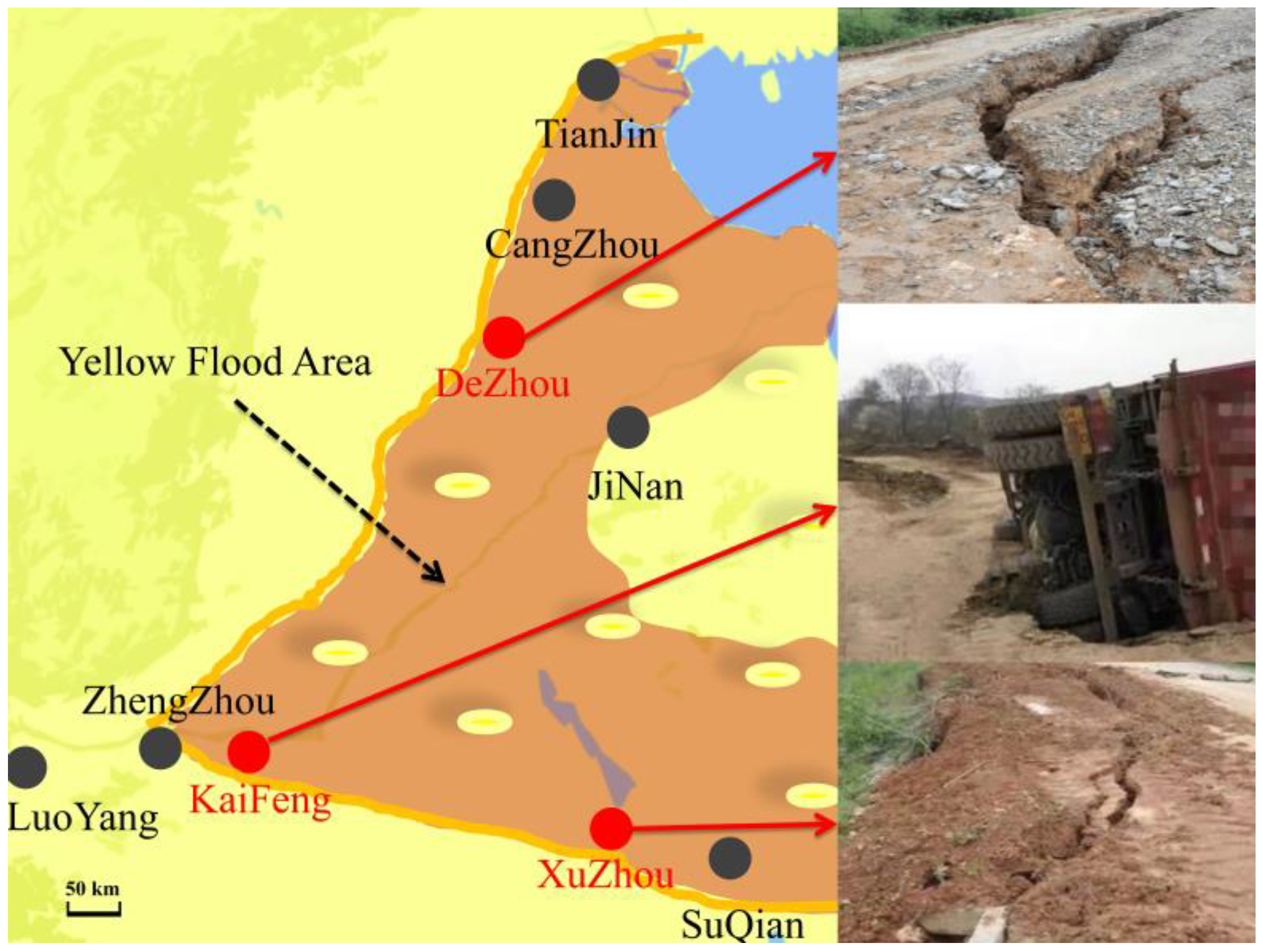
The silts in the Yellow Flood Area have bad gradation and low strength. The saturated silt loses strength easily under a vibration load. Thus, it will lead to the engineering problem, i.e., subgrade instability and collapse [1,2], as shown in Figure 1. Therefore, improving the mechanical properties of this type of silt is essential for meeting the construction requirements of subgrade engineering. Existing soil reinforcement techniques mainly include physical treatment, chemical stabilization, and biological reinforcement methods [3,4,5,6]. Compared with conventional physical and chemical approaches, biological reinforcement is generally considered more environmentally friendly. Accordingly, related techniques, particularly microbially induced calcite precipitation (MICP), have attracted increasing attention in both academic research and engineering practice [7,8,9,10]. MICP has been applied in cultural relic restoration [11,12], cement-based material improvement [13], and contaminated soil treatment, with notable progress reported in these fields [14,15].
In recent years, soil improvement using free urease derived from agricultural sources has been referred to as enzyme-induced calcium carbonate precipitation (EICP) [16,17]. Relative to MICP, EICP has several advantages. The urease used in EICP has nanoscale dimensions and good water solubility, which facilitates its transport in fine-grained soils. In addition, EICP avoids the complex procedures associated with microbial cultivation [18]. The basic principle of EICP is that plant-derived urease catalyzes urea hydrolysis and induces calcium carbonate precipitation within the pores between soil particles. The precipitated calcium carbonate bonds adjacent particles and thereby enhances soil strength. This method is also characterized by simple operation, durable cementation products, and relatively low environmental impact. Accordingly, EICP has received considerable attention in recent studies [19,20].
Compared with MICP, EICP generally exhibits better penetration characteristics in fine-grained soils [19,20]. However, the strength improvement achieved by EICP is often lower than that obtained through MICP treatment. This limitation is mainly associated with the formation of amorphous crystals during the initial mineralization process and the relatively unstable activity of urease [21,22]. These factors may restrict the aggregation of calcium carbonate precipitates, leading to brittle cementation products that may not fully satisfy the strength requirements for soil reinforcement. Regulating the aggregation and growth of calcium carbonate crystals is therefore important for improving the reinforcement performance of EICP-treated soils.
Proteins provide a potential approach for improving the EICP-induced mineralization process. They can stabilize urease, provide nucleation sites for carbonate precipitation, and regulate the precipitation rate, which helps control the morphology of calcium carbonate. Previous studies have investigated the regulation of calcium carbonate crystallization using protein-based additives, including collagen fibers [23,24], casein [25,26,27], and casein phosphopeptide [28,29,30]. The phosphate and carboxyl groups in casein can bind with calcium ions and regulate the mineralization process in EICP. Casein can also influence crystal growth by regulating ion migration and modifying the micromorphology of calcium carbonate [31]. Casein is commonly present in milk in the form of micelles, which are colloidal aggregates of casein molecules. Casein precipitation can occur through calcium binding or salting-out effects, and the resulting precipitates may serve as nucleation centers for calcium carbonate formation. Non-fat (NF) milk powder is an inexpensive dairy product with abundant casein, and its casein content is comparable to that of whole milk powder. Compared with purified protein additives such as collagen, casein, and casein phosphopeptide, NF milk powder is more readily available and less expensive, while still providing casein components that may participate in calcium carbonate nucleation and morphology regulation. Incorporating NF milk powder into EICP treatment is therefore a feasible strategy for improving the calcium carbonate precipitation process and enhancing the reinforcement effect of EICP-treated silt. Non-fat (NF) milk powder is an inexpensive dairy product with abundant casein, and its casein content is comparable to that of whole milk powder. Compared with purified protein additives such as collagen, casein, and casein phosphopeptide, NF milk powder is more readily available and less expensive, while still providing casein components that may participate in calcium carbonate nucleation and morphology regulation. Incorporating NF milk powder into EICP treatment is therefore a feasible strategy for improving the calcium carbonate precipitation process and enhancing the reinforcement effect of EICP-treated silt.
Based on the above considerations, this study introduces non-fat milk powder into the EICP treatment solution to improve the reinforcement effect of EICP-treated silt. Consolidated undrained (CU) triaxial shear tests were conducted to evaluate the variations in cohesion and internal friction angle of silt under different non-fat milk powder contents and curing ages. Microscopic tests were further performed to examine the morphology of calcium carbonate crystals and clarify the corresponding improvement mechanism. Based on the obtained results, suitable ranges of non-fat milk powder content and curing age were determined to provide a reference for the practical application of this method in subgrade engineering.

2. Silt Samples and Experiments

2.1. Sample Characterization

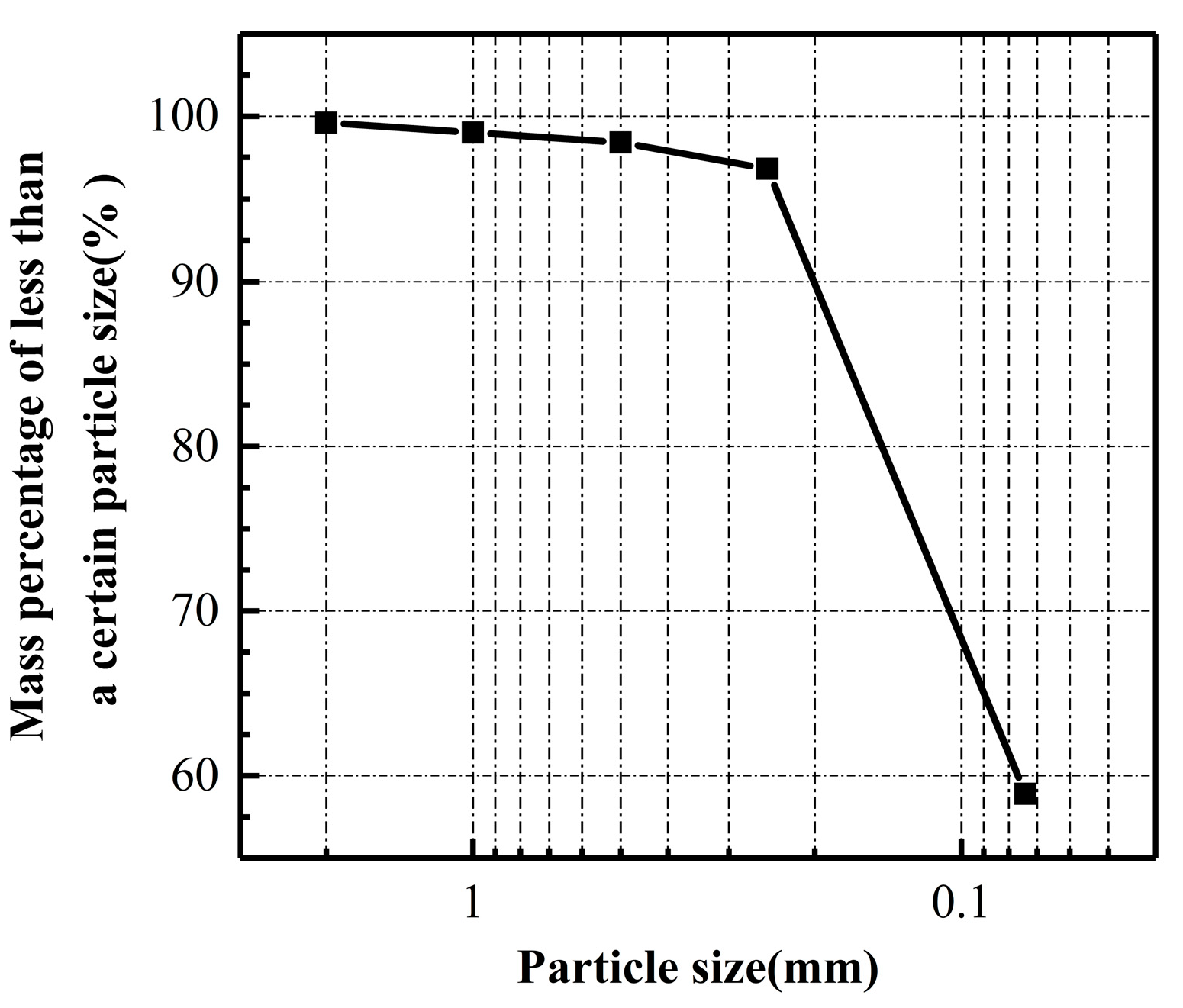
The silt used in this study was sampled from the Yellow Flood Area of Kaifeng, Henan Province, and the silt sample was dried using a blower. The physical and mechanical properties of the silt are presented in Figure 2 and Table 1.
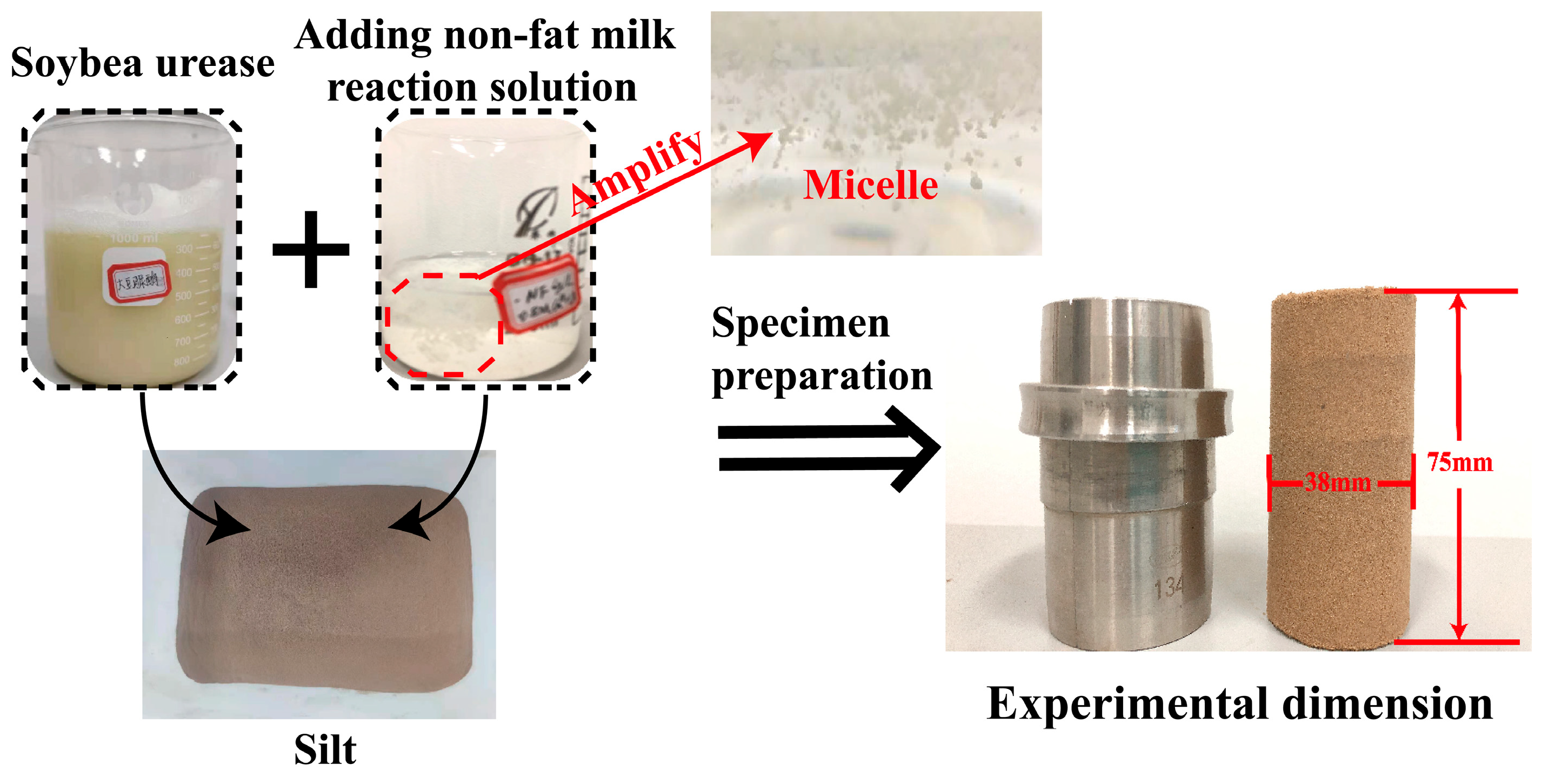
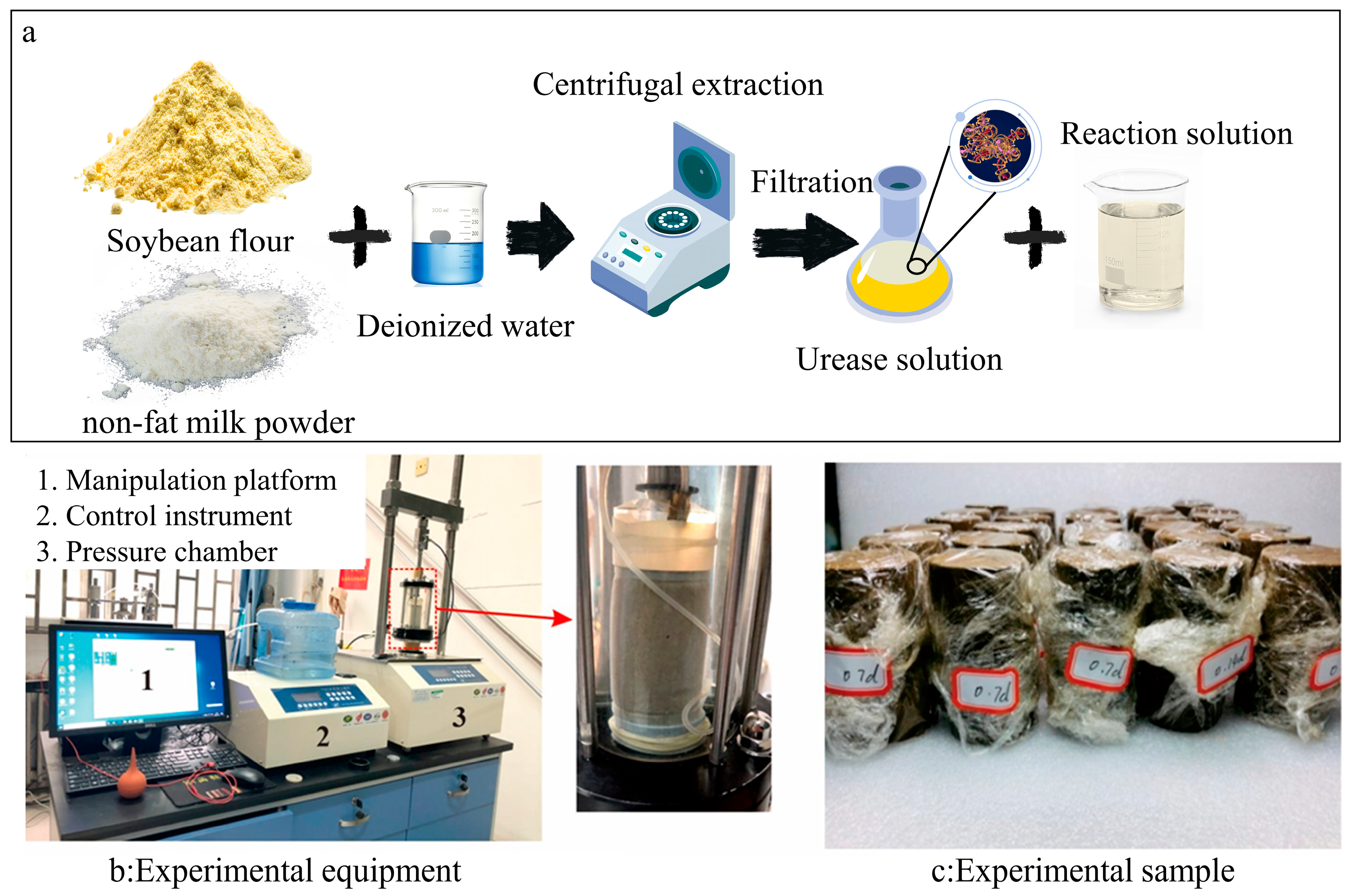
The sample was collected in strict accordance with the Standard for Soil Test Method [32]. For each testing condition, three parallel specimens were prepared and tested, and the reported results represent the average values. The diameter of the triaxial specimen was 38 mm, and the height was 75 mm. The samples were prepared according to the optimum moisture content. Then, the EICP solution containing non-fat milk powder was used as the mixing liquid and completely replaced the mixing water during specimen preparation. The amount of solution added was determined according to the optimum moisture content of the silt (15.6%), ensuring identical initial moisture conditions for all specimens. The sample preparation process is shown in Figure 3.

2.2. Test Procedures

2.2.1. Extraction of Urease Enzyme

The enzyme used throughout the study was soybean-extracted urease. First, the soybeans were put into the blower. The temperature of the blower was adjusted to 40 °C. The soybeans were dried for 6 h so that the test error caused by excessive moisture in soybeans could be avoided. Then, the soybeans were crushed into powder by using a crusher. The soybeans were dispersed into deionized water (the solid–liquid ratio was 1:10) and stirred for 30 min. After the reaction, the mixture was centrifuged at 3500 r/min for 15 min at 4 °C. Then, the supernatant was used as the soybean urease solution [33].

2.2.2. Prepare Reaction Solution

During the mineralization process of the EICP technology, the EICP reaction solution was prepared by mixing calcium acetate and urea in the ratio of 1:1 [34]. Previous studies have indicated that a concentration between 0.5 mol/L and 1.0 mol/L, along with a weakly alkaline condition (pH 7–9), is favorable for the EICP process. Accordingly, a concentration of 0.8 mol/L was adopted in this study [34]. Non-fat milk powder was a kind of cheap dairy product that contained casein. When the non-fat milk powder was mixed into the EICP reaction solution, the casein easily formed micelles with the calcium ions. As a result, the EICP reaction solution needed to be prepared only when it was required.

2.2.3. Sample Treatment and Curing

The CU tests were carried out on the improved silt using a triaxial apparatus. The test instruments and silt samples are shown in Figure 4. The CU tests were conducted in accordance with the Standard for Soil Test Methods, with effective confining pressures of 30 kPa, 60 kPa, and 90 kPa. During shearing, the test was continued beyond 5% axial strain until the peak deviator stress was reached. When no clear peak was observed, the test was continued to an axial strain of 15–20%. In the present tests, shearing was stopped at an axial strain of 16%. For each testing condition, three replicate specimens were prepared and tested, and the reported results are the average values of the three measurements.
The contents of non-fat milk powder used in this study were 0 g/L, 2 g/L, 4 g/L, 6 g/L, 8 g/L, and 10 g/L, respectively. These tests were carried out according to the working conditions in Table 2. The mixtures of silt, soybean solution, and urea–calcium acetate solution were placed into a cylindrical mold with a 38 mm diameter and 75 mm height and tamped lightly. This procedure was repeated for 3 layers to achieve homogeneity. A degree of compaction of 95% was adopted for all specimens because it is widely used as a representative compaction requirement for highway and subgrade engineering practice. Maintaining a constant degree of compaction also allowed the effects of non-fat milk powder content and curing age on the mechanical behavior of EICP-treated silt to be evaluated without interference from density variations. Then, the samples were cured in a constant temperature and humidity chamber. For measuring the pore water pressure of silt under the triaxial shear test more accurately, the initial matrix suction of silt was eliminated. The prepared triaxial silt samples were vacuumed and saturated for 8 h with the aid of a vacuum saturation device.

2.2.4. Detection of Calcium Carbonate Content

After the CU tests, the content of calcium carbonate in the sample was detected in strict accordance with the specific steps of the National Standard Water Quality Determination of Calcium EDTA Titration Method. The specific steps follow: (1) the sample was placed into a blower and dried at 60 °C for 24 h; (2) the upper, middle, and lower parts of the dried silt sample were measured at 10 g. Firstly, the samples were washed with deionized water several times, and then filtered with a Buchner funnel while stirring, so that the soluble salt in the silt sample was completely filtered; (3) dilute hydrochloric acid was added until there were no bubbles; (4) the Ethylene Diamine Tetraacetic Acid (EDTA) titration experiment was carried out on the filtered liquid of hydrochloric acid. The upper, middle, and lower parts were used to calculate the calcium carbonate content. The ratio of calcium carbonate mass to silt mass was equal to the proportion of calcium carbonate.

3. Results and Analysis

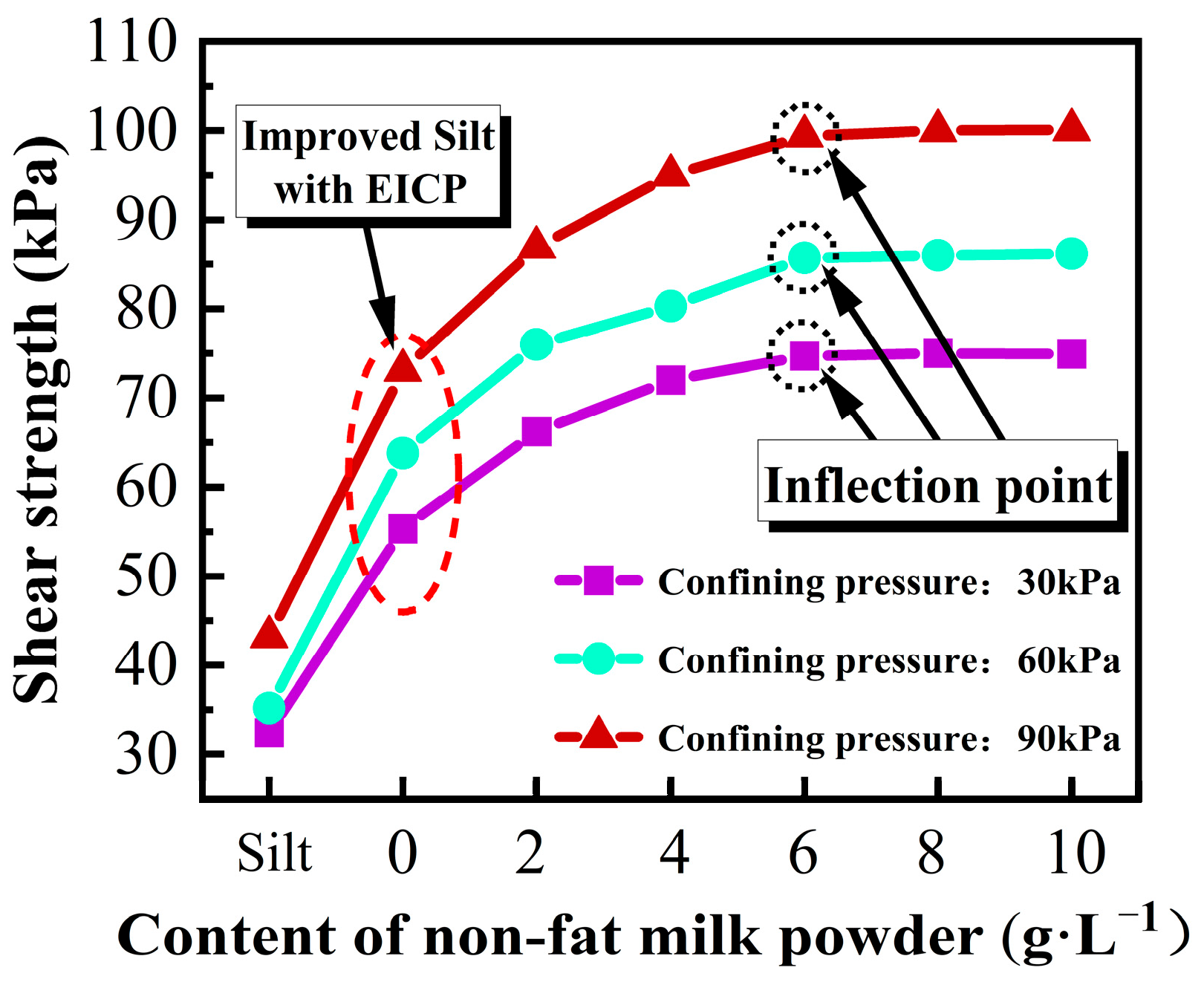
Figure 5 shows the relationship between the confining pressure and the shear strength of EICP-improved silt. Through the CU test results, when the concentration of soybean powder was 100 g/L, the concentration of the reaction solution was 0.8 mol/L, compared with silt, the shear strength of EICP-improved silt could be improved to a certain extent. The shear strength at different curing ages increased first and then tended to be gentle when the non-fat milk powder content increased. Taking the 7-day curing age as an example, the shear strength increased when the content of non-fat milk powder increased from 0 g/L to 6 g/L. When the content of non-fat milk powder was more than 6 g/L, the shear strength basically would not increase. Therefore, 6 g/L can be regarded as the favorable non-fat milk powder concentration for improving the shear strength of EICP-treated silt under the present test conditions. Further increasing the concentration produced only limited additional strength improvement. From the perspective of subgrade soil treatment, excessive addition of non-fat milk powder may not be necessary, since it would increase material consumption without a proportional increase in shear strength.
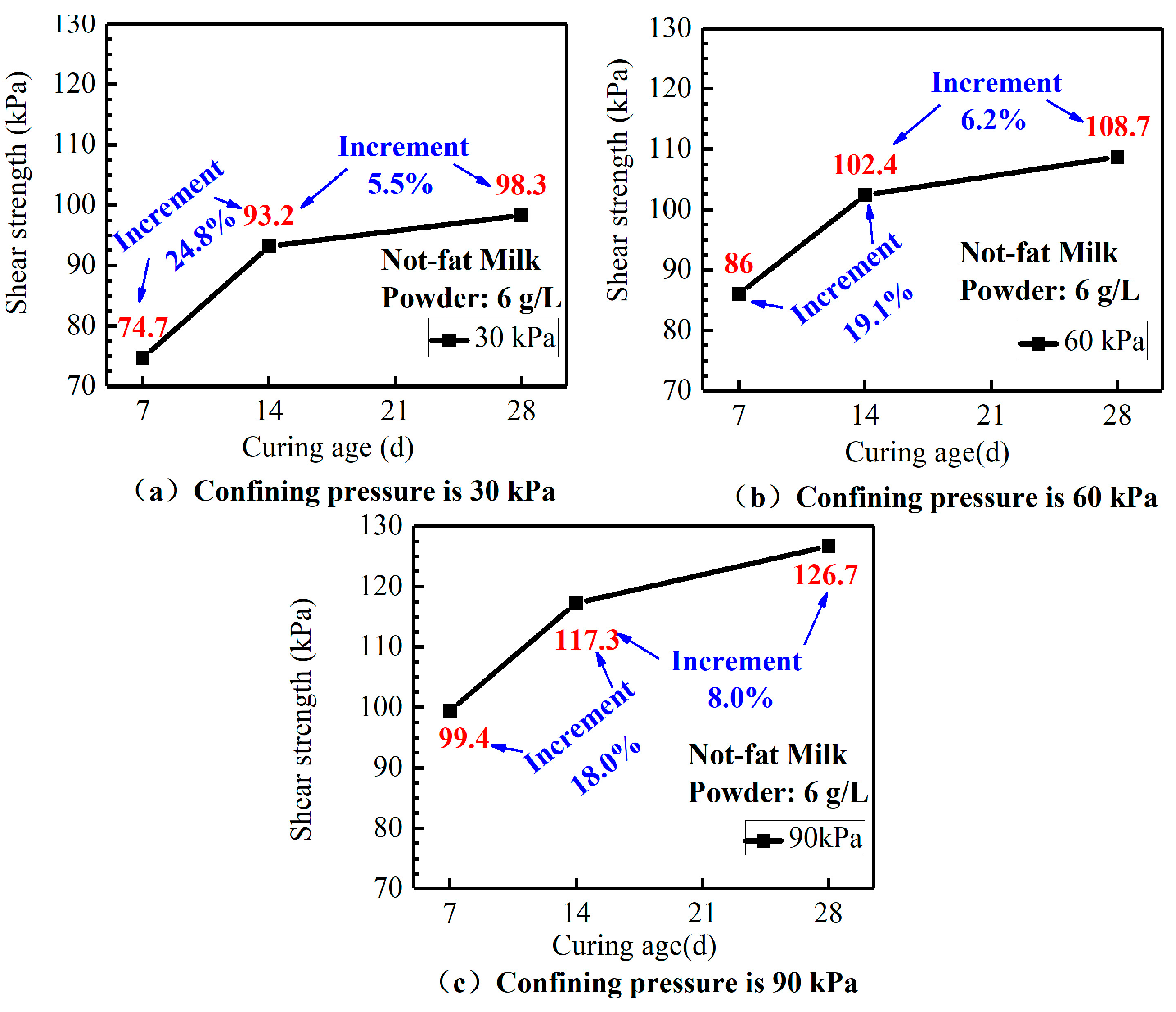
Based on the above results, the specimens treated with 6 g/L non-fat milk powder were selected to further examine the influence of curing age on shear strength. It can be seen from Figure 6 that under different confining pressures, the shear strength of the improved silt increases first and then increases gently with the increment of curing age.
It is worth noting that when the curing age increases from 7 days to 14 days, the increased rate of shear strength is 24.8% at most. However, when the curing age increases from 14 days to 28 days, the shear strength can only increase by 8% at most. This result indicates that most of the shear strength improvement developed within the first 14 days. For subgrade engineering applications, a curing age of 14 days may provide a reasonable balance between strength improvement and curing duration under the present laboratory conditions, although field-scale verification is still required. Generally, the changes in the silt macroscopic properties are caused by the changes in the internal microstructure of silt. To further analyze variation in the shear strength of improved silt, the next step is microanalysis. XRD and SEM were performed for evaluating calcium carbonate powder and improved silt samples to analyze the changes in the silt microstructure before and after adding non-fat milk powder in the next step.

4. Discussion

4.1. Micro Analysis

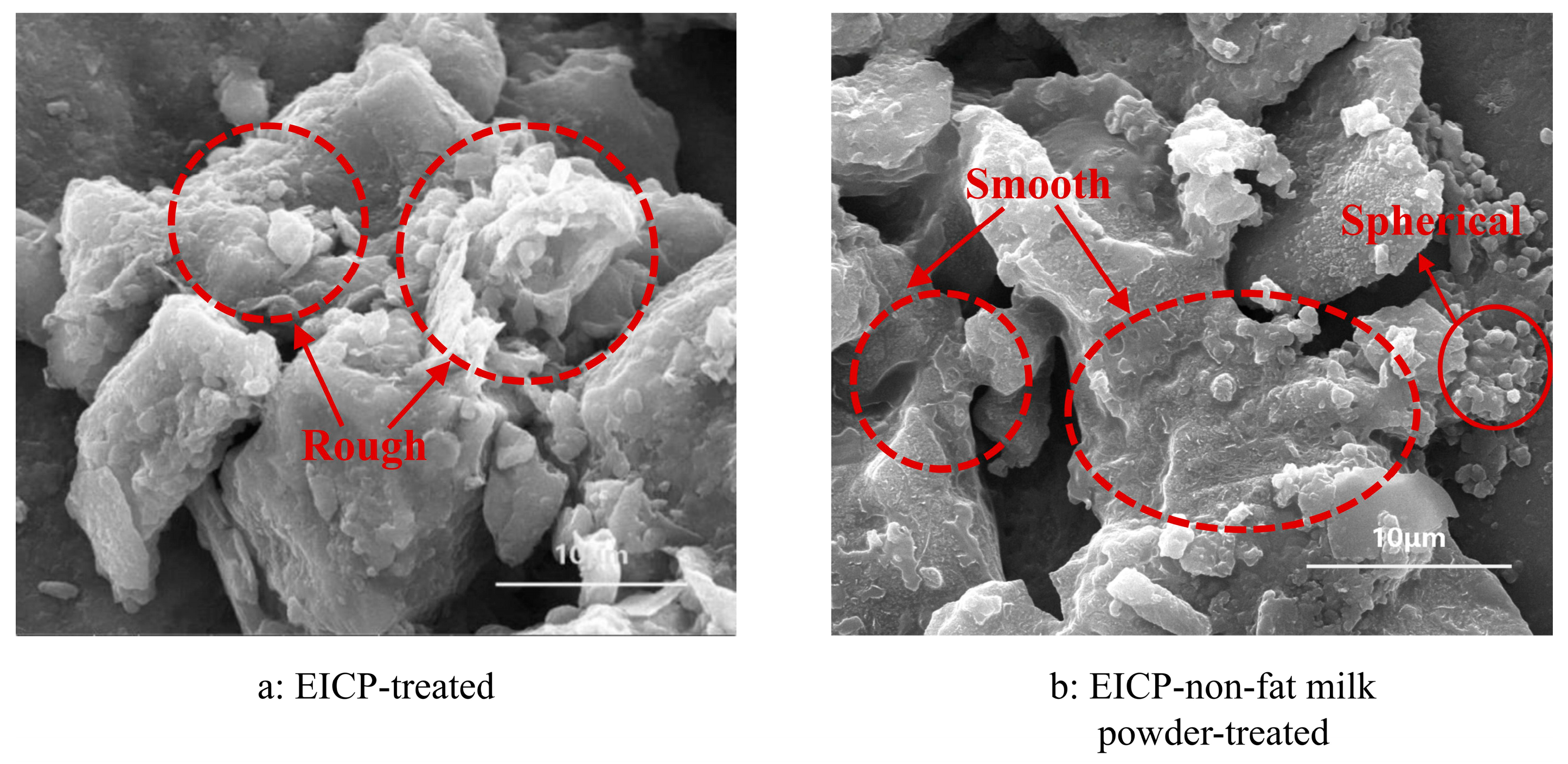
Calcium carbonate is the main factor that could influence the effect of silt reinforcement. The improved silt was tested microscopically to analyze the aggregation mode of calcium carbonate. The SEM analysis of the sample was performed for 4 g/L non-fat milk powder after 28 days of curing. Figure 7a is the micrograph of the sample treated by only EICP technology, and Figure 7b is the micrograph of the sample that was treated with non-fat milk powder in the EICP technology. The precipitates generated in Figure 7b were smoother than those in Figure 7a. In addition, there was no apparent pore between the gel blocks formed by the calcium carbonate crystals. As described from the red marks in Figure 7b, the calcium carbonate precipitates generated were spherical in form. The spherical crystals were linked together to form an abundant colloid, which could firmly bond two or more silt particles, such as glue, to enhance the cohesion between the silt particles.
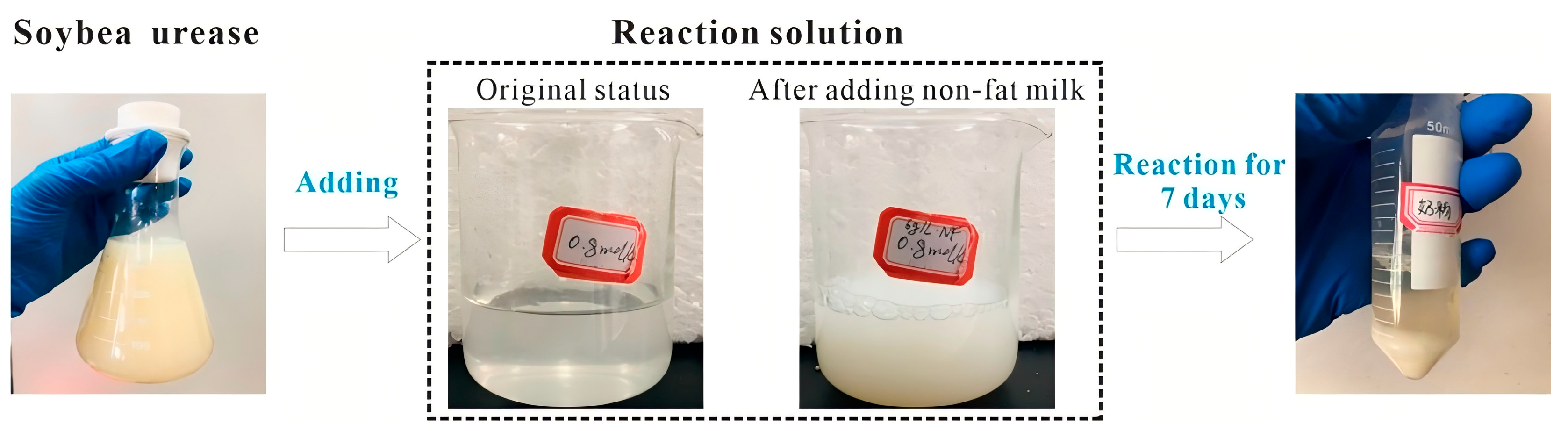
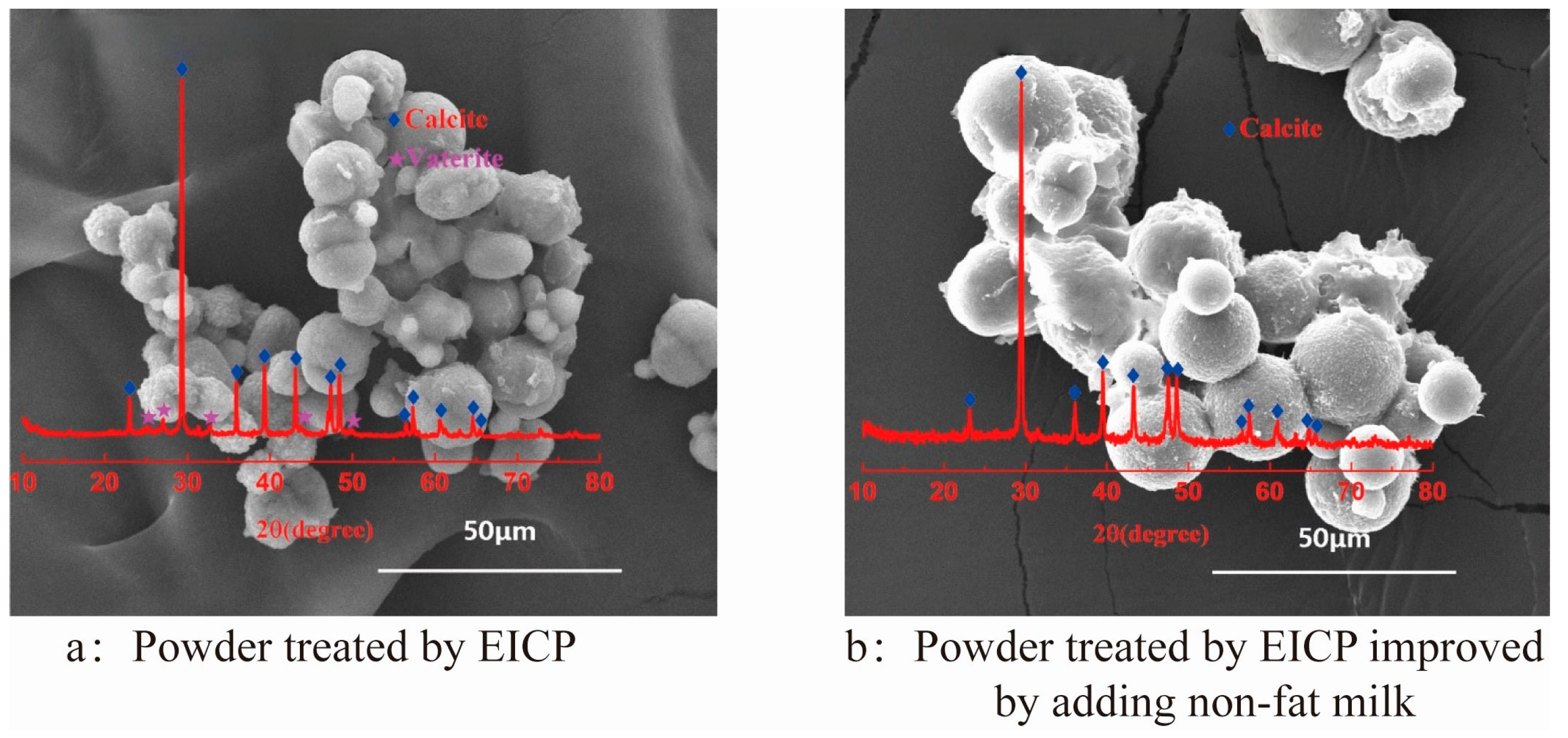
To further verify the crystal morphology of the calcium carbonate, the calcium carbonate powder was microscopically tested after reaction according to the test steps in Figure 8. As mentioned in Figure 9a, some interesting phenomena could be seen from the morphology of the calcium carbonate. The morphology of calcium carbonate was mostly hamburger-shaped or ellipsoidal, rather than having a few edges and corners, without the influence of the casein in the non-fat milk powder. In previous studies, the shape of the calcium carbonate detected was mostly prismatic, possibly because the protein contained in soybeans changed the crystal morphology of the calcium carbonate. Moreover, the morphology was different.
Figure 9a shows that the crystal surface was relatively rough. Nevertheless, from Figure 9b, after adding non-fat milk powder, the crystal morphology of calcium carbonate changed to spherical. The surface was smoother because of the influence of casein, showing that the morphology of calcium carbonate could be changed by adding additives [17]. To further detect the crystal form of calcium carbonate, the crystal form of calcium carbonate was analyzed by XRD. There are three crystal forms of calcium carbonate under natural conditions, namely calcite, aragonite, and vaterite. Among them, calcite has the best thermodynamic stability, and vaterite is the worst. According to XRD analysis, it is found that the crystal forms of calcium carbonate without non-fat milk powder are calcite and a small amount of vaterite. However, adding non-fat milk powder into EICP technology can make the crystal forms of calcium carbonate calcite. In other words, the non-fat milk powder can make the calcium carbonate more stable.

4.2. Cohesion

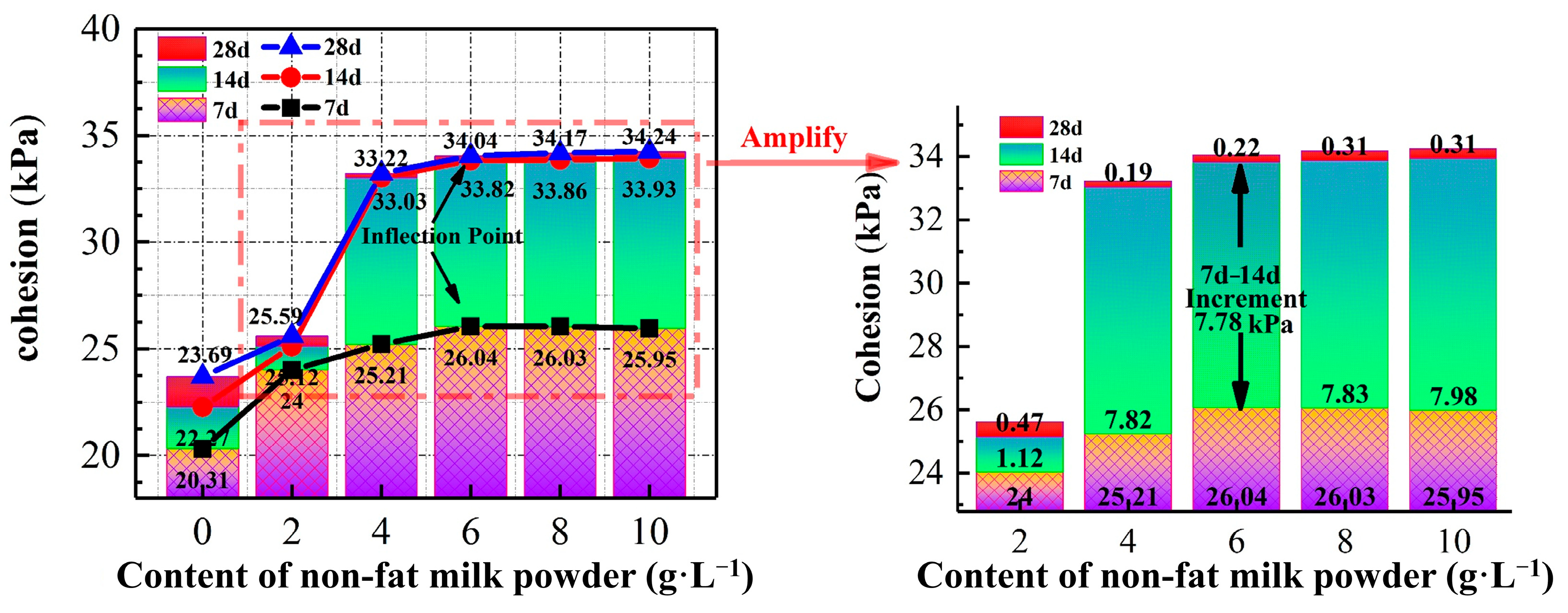
According to the CU tests and the Mohr strength envelope, the relationship between the content of non-fat milk powder and cohesion was obtained. As shown in Figure 10, the calcium carbonate produced in the EICP technology cemented the silt particles together. Thus, the cohesion of improved silt could also represent the direct cementation ability of the silt particles. The cohesion of the improved silt first increased and then stabilized with the increment in the content of non-fat milk powder in the EICP technology. The cohesion of the improved silt showed a continuously increasing trend with the content of non-fat milk powder ranging from 0 g/L to 6 g/L. Once the content of non-fat milk powder exceeded 6 g/L, the cohesion of the improved silt was basically unchanged. When the content of non-fat milk powder was 6 g/L, the cohesion was 26.04 kPa, 33.82 kPa, and 34.04 kPa after 7 days, 14 days, and 28 days of curing time, respectively, which were 28.21%, 51.86%, and 43.69% higher than the cohesion of EICP alone. These results indicate that the addition of non-fat milk powder enhanced the interparticle cementation of the EICP-treated silt. The increase in cohesion was mainly associated with the formation of cemented contacts among silt particles due to calcium carbonate precipitation. When the non-fat milk powder content exceeded 6 g/L, the increase in cohesion became limited. Therefore, 6 g/L was regarded as the favorable content under the present test conditions.
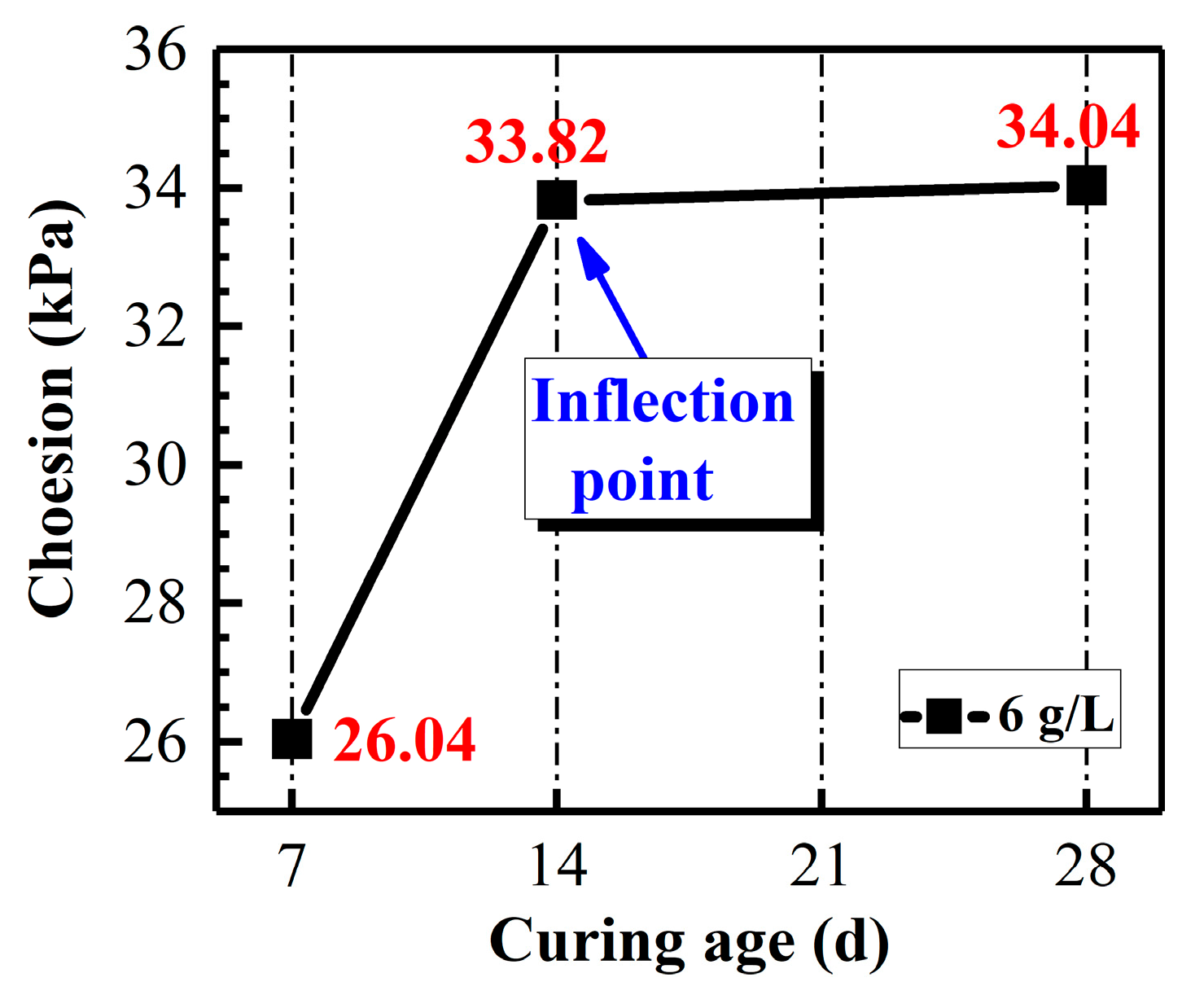
The effect of curing age on cohesion was further discussed by selecting the optimal content of non-fat milk powder, 6 g/L. Figure 11 shows the relationship between the curing age and the cohesion of EICP-improved silt. It could be seen that without the non-fat milk powder, the cohesion of the improved silt would continue to improve with the increase in curing time. However, the growth rate increased first and then decreased. This result suggests that, without non-fat milk powder, the cementation process required a longer curing period to develop effective bonding among silt particles. The cohesion of the improved silt with non-fat milk powder increased from 7 days to 14 days and did not change basically from 14 days to 28 days, which indicated that the addition of non-fat milk powder in EICP technology could have a good cementation effect between silt particles. For the EICP-treated silt with non-fat milk powder, the cohesion increased evidently from 7 days to 14 days and then changed only slightly from 14 days to 28 days. This indicates that the cementation effect mainly developed within the first 14 days under the present test conditions.
In recent years, some scholars have performed relevant research about the cohesion improvement of silt. Table 3 shows the percentage of increase in cohesion of fiber- or cement-improved silt compared with untreated undisturbed silt at the curing age of 28 days [35,36]. The increase in cohesion indicated that the cementation ability between undisturbed silt particles could be enhanced by adding a curing agent or filler. In this experiment, the initial cohesion of undisturbed silt was low, and the cohesion of silt treated by the EICP technology increased by 97.6% at the curing age of 28 days [37]. After adding non-fat milk powder to the EICP treatment, the cohesion increase reached 177.1%, which was higher than that of the EICP-treated soil. This comparison further indicates that non-fat milk powder improved the effectiveness of calcium carbonate cementation between silt particles.

4.3. Internal Friction Angle

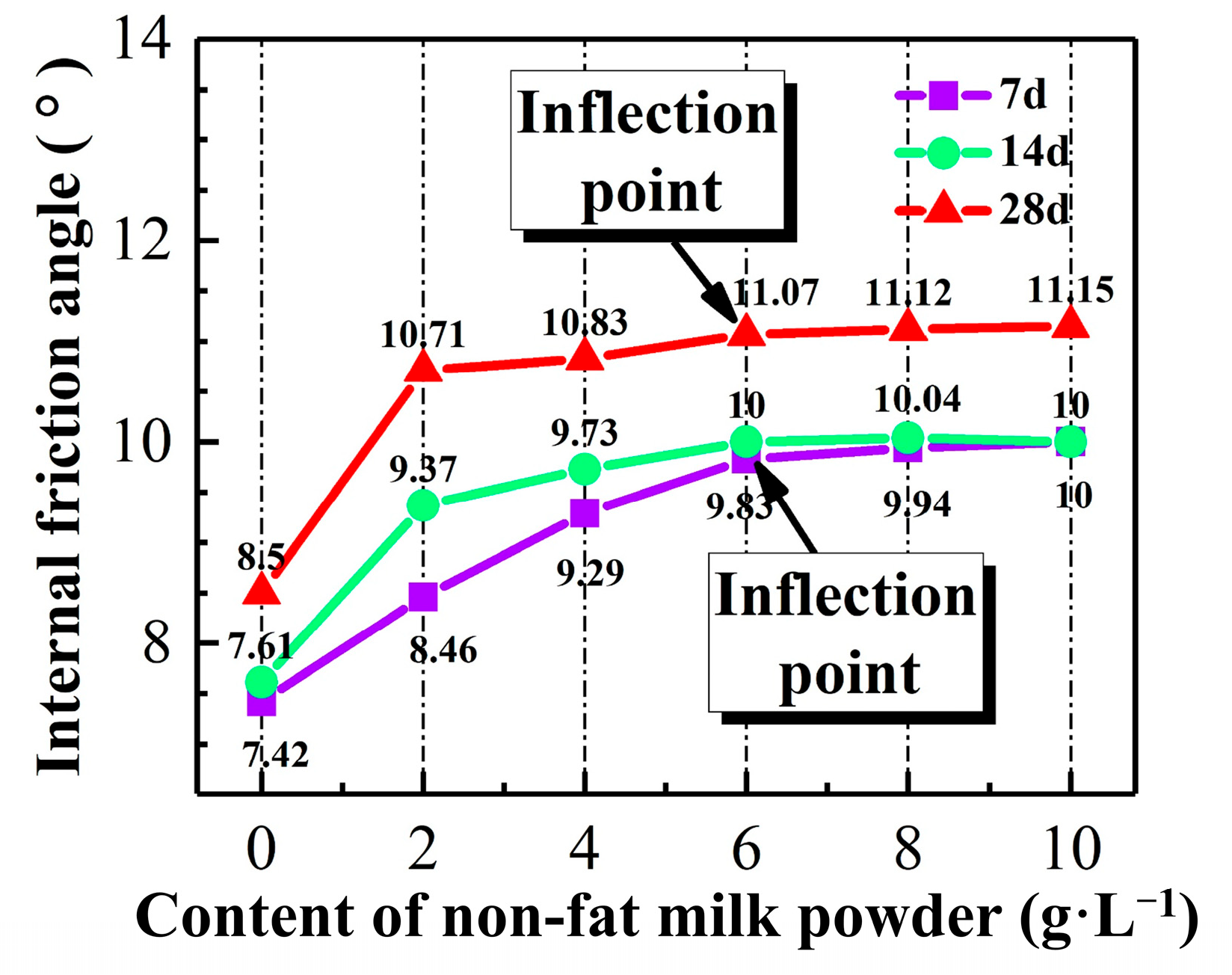
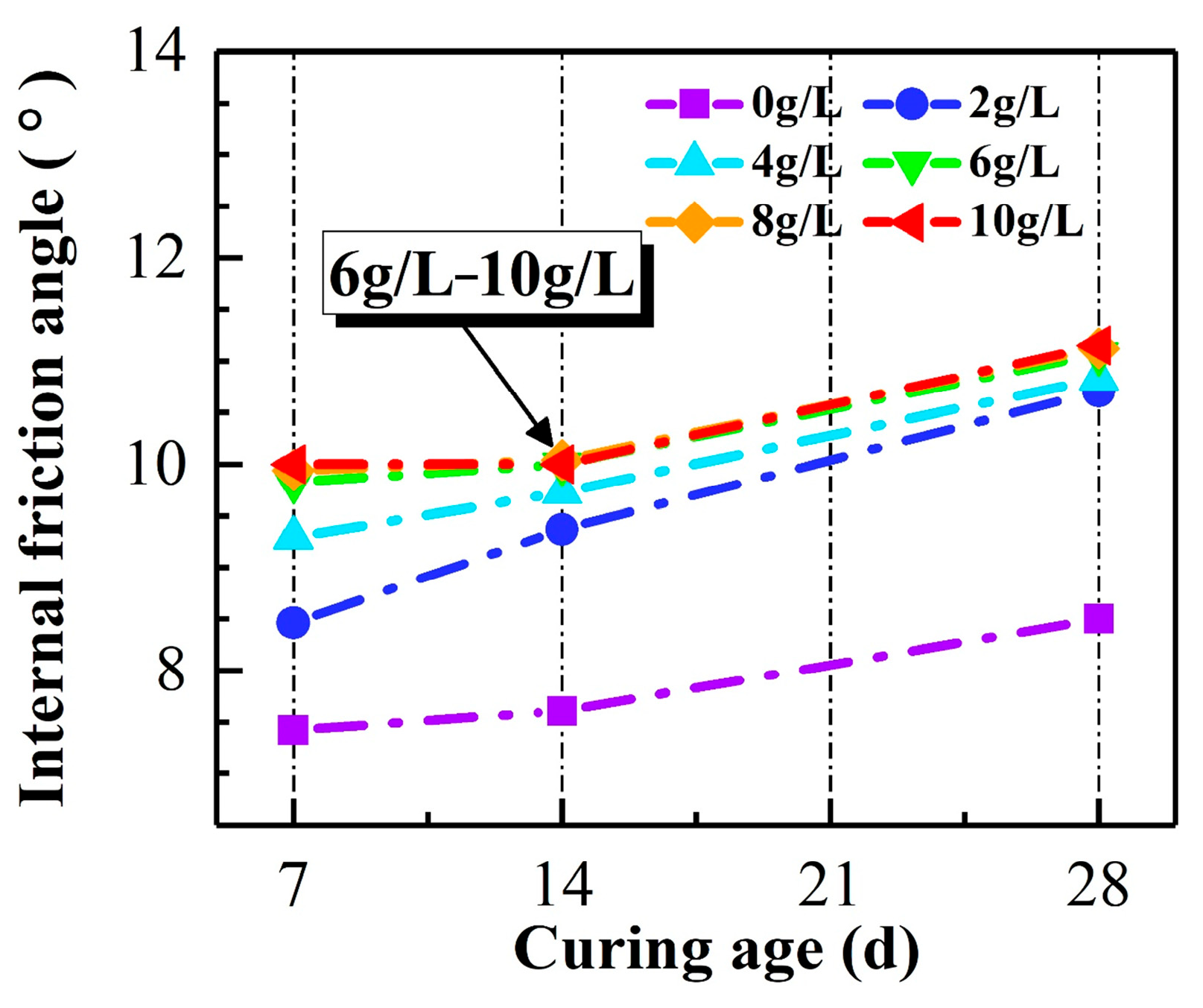
Figure 12 shows the relationship between the content of non-fat milk powder and the internal friction angle. The internal friction angle reflects the frictional resistance and interlocking effect between silt particles. During EICP treatment, calcium carbonate precipitation can fill part of the pore space and change the contact state between particles. The addition of non-fat milk powder further affected the morphology and aggregation pattern of calcium carbonate, which contributed to the improvement of particle contact and frictional resistance. With the increase in non-fat milk powder, the internal friction angle of the improved silt continued to increase. However, the growth rate decreased. When the curing age was 28 days, the increase in internal friction angle became limited once the non-fat milk powder content exceeded 6 g/L. This result suggests that the effect of additive content on the internal friction angle gradually weakened under the tested conditions. The influence of curing age on the internal friction angle is further discussed in Figure 13.
Figure 13 shows that the internal friction angle of the silt sample increased continuously with the curing age from 7 days to 28 days. The increase in internal friction angle with curing age indicates that the contact condition between silt particles was gradually improved during curing. This improvement may be related to the filling effect of calcium carbonate precipitation and the formation of a more stable contact between particles. When the non-fat milk powder content exceeded 6 g/L, the increase in internal friction angle became limited. Therefore, 6 g/L was regarded as the favorable content for improving the internal friction angle under the present test conditions.
Furthermore, Table 4 shows the determination of calcium carbonate content in the samples. Calcium carbonate was detected in all improved silt samples. As shown in Table 4, the calcium carbonate content ranged from 0.71% to 0.82%, indicating that the addition of non-fat milk powder did not lead to a marked increase in the total amount of calcium carbonate. Almajed et al. [17] studied the casein in non-fat milk powder, changing the free urease into a stable enzyme, which could provide nucleation sites for calcium carbonate formation and enhance its aggregation ability. Therefore, the increases in cohesion and internal friction angle cannot be explained simply by the total amount of calcium carbonate. Combined with the SEM and XRD results, the improvement in strength parameters was more closely related to the morphology, crystal form, and aggregation pattern of calcium carbonate. The addition of non-fat milk powder provided nucleation sites for calcium carbonate formation and improved the aggregation pattern of calcium carbonate particles in the silt. This change enhanced interparticle bonding and improved the contact condition between silt particles.
These results indicate that EICP has the potential to improve the shear strength parameters of silt. The addition of non-fat milk powder mainly affected the morphology and aggregation pattern of calcium carbonate, thereby enhancing interparticle bonding and particle contact resistance. However, the present tests were conducted under laboratory conditions. In field applications, the improvement effect of EICP-treated silt may be affected by soil heterogeneity, solution transport, curing environment, and construction method. Therefore, further research is needed to evaluate the field applicability of the proposed treatment method.

5. Conclusions

In this study, a non-fat milk powder-assisted EICP treatment method was proposed for silt improvement, and its reinforcement effect was evaluated through laboratory tests. The main conclusions are as follows:
(1)
The addition of non-fat milk powder improved the reinforcement effect of EICP-treated silt. Compared with EICP treatment alone, under the favorable condition of 6 g/L non-fat milk powder and 14 days of curing, the shear strength, cohesion, and internal friction angle increased by 44.1%, 51.86%, and 31.4%, respectively.
(2)
SEM observations showed that the calcium carbonate formed by EICP treatment was mainly hamburger-shaped or ellipsoidal, with some angular particles. After adding non-fat milk powder, the calcium carbonate crystals became more spherical and had smoother surfaces. XRD results qualitatively indicated that calcite became the dominant crystalline phase after adding non-fat milk powder, while the vaterite-related peaks became less evident.
(3)
The shear strength, cohesion, and internal friction angle increased evidently within the first 14 days of curing. After 14 days, the increase became limited. When the non-fat milk powder content exceeded 6 g/L, no clear further improvement in shear strength, cohesion, or internal friction angle was observed. Therefore, 6 g/L non-fat milk powder and 14 days of curing were regarded as the favorable treatment condition under the present laboratory conditions.
This study was based on laboratory mixing tests, and the results mainly reflect the reinforcement effect under controlled curing conditions. Follow-up studies could conduct quantitative image analysis, crystal size measurement, and pore structure characterization to further verify the reinforcement mechanism. The applicability of the proposed method to field-scale subgrade treatment still requires further verification, especially in terms of construction feasibility and long-term performance.

Author Contributions

Conceptualization, D.L., B.L., J.H., Y.H., R.C., Y.C. and F.L.; methodology, Y.H.; software, R.C.; validation, D.L., B.L. and Y.H.; formal analysis, D.L. and Y.H.; investigation, B.L.; data curation, B.L. and R.C.; writing—original draft preparation, D.L. and Y.H.; writing—review and editing, D.L., J.H., Y.H., R.C., B.L., Y.C., F.L. and S.S.; visualization, Y.H.; funding acquisition, R.C. and F.L. All authors have read and agreed to the published version of the manuscript.

Funding

This research was funded by the Natural Science Foundation of Henan (Grant No. 262300421993) and the Key Laboratory of Ministry of Education for Geomechanics and Embankment Engineering, Hohai University (Grant No. 2025006).

Data Availability Statement

The original contributions presented in this study are included in the article. Further inquiries can be directed to the corresponding author.

Acknowledgments

All authors thank the anonymous reviewers and the editor for the constructive comments on the earlier version of the manuscript.

Conflicts of Interest

The authors declare no conflicts of interest.

References

  1. Zhang, Y.; Feng, X.; Ding, C.; Liu, Y.; Tao, L. Study of Cone Penetration Rate Effects in the Yellow River Delta Silty Soils with Different Clay Contents and State Parameters. Ocean Eng. 2022, 250, 110982. [Google Scholar] [CrossRef] [Scilit]
  2. Zhang, J.; Han, Y.; Wang, X.; Bian, H. Experimental Investigation of the Dynamic Characteristics of Treated Silt Using Lignin: Case Study of Yellow River Flood Basin. Int. J. Geomech. 2021, 21, 04021056. [Google Scholar] [CrossRef] [Scilit]
  3. Zhang, J.; Wang, X.; Shi, L.; Yin, Y. Enzyme-Induced Carbonate Precipitation (EICP) Combined with Lignin to Solidify Silt in the Yellow River Flood Area. Constr. Build. Mater. 2022, 339, 127792. [Google Scholar] [CrossRef] [Scilit]
  4. Wang, Y.; Jiang, R.; Wang, G.; Jiao, M. Study on Mechanical Properties of Yellow River Silt Solidified by MICP. Geomech. Eng. 2023, 32, 347–359. [Google Scholar]
  5. Gao, Q.; Ge, J.; Zhang, J.; Ren, Z.; Wu, D.; Cheng, G.; Zhang, K. Experimental Study on the Engineering Characteristics of Modified Silt in the Yellow River Alluvial Plain. Constr. Build. Mater. 2023, 398, 132491. [Google Scholar] [CrossRef] [Scilit]
  6. Kunchariyakun, K.; Sukmak, P.; Sukmak, G.; Phunpeng, V.; Arulrajah, A.; Zhou, A. Mechanical and Microstructural Properties of Cement-Stabilized Soft Clay Improved by Sand Replacement and Biochar Additive for Subgrade Applications. Dev. Built Environ. 2024, 20, 100552. [Google Scholar] [CrossRef] [Scilit]
  7. Li, J.; Hou, Q.; Zhang, X.; Zhang, X. Microbial-Induced Mineral Carbonation: A Promising Approach for Improving Carbon Sequestration and Performance of Steel Slag for Its Engineering Utilization. Dev. Built Environ. 2025, 21, 100615. [Google Scholar] [CrossRef] [Scilit]
  8. Chen, Y.; Han, Y.; Zhang, X.; Sarajpoor, S.; Zhang, S.; Yao, X. Experimental Study on Permeability and Strength Characteristics of MICP-Treated Calcareous Sand. Biogeotechnics 2023, 1, 100034. [Google Scholar] [CrossRef] [Scilit]
  9. Ma, G.; Yin, Z.; Zhang, Z. Effects of Permeability, Bacterial Adsorption, and Soil Layering on Entire MICP Grouting Process. Acta Geotech. 2026, 1–23. [Google Scholar] [CrossRef] [Scilit]
  10. Xiao, Y.; Zhao, C.; Sun, Y.; Wang, S.; Wu, H.; Chen, H.; Liu, H. Compression Behavior of MICP-Treated Sand with Various Gradations. Acta Geotech. 2021, 16, 1391–1400. [Google Scholar] [CrossRef] [Scilit]
  11. Yang, Y.; Zhang, H.; Cheng, L.; Ye, L.; Liu, Y.; Shi, J.; Zhang, J.; Xiao, Y.; Liu, H. A New Bioslurry-Induced Restoration Method via Biomineralization for Fragmented Ceramic Cultural Relics. Biogeotechnics 2024, 2, 100082. [Google Scholar] [CrossRef] [Scilit]
  12. Gao, Y.; Zhu, M.; Li, C.; Li, S.; Wang, M. Study on the Mechanisms of Wind Erosion Resistance and Restoration for Rammed Earthen Sites via MICP Modified with Bio-Based Additives. Constr. Build. Mater. 2026, 520, 145943. [Google Scholar] [CrossRef] [Scilit]
  13. Sidhu, N.; Goyal, S.; Reddy, M.S. Biomineralization of cyanobacteria Synechocystis pevalekii improves the durability properties of cement mortar. AMB Express 2022, 12, 59. [Google Scholar] [CrossRef] [Scilit] [PubMed]
  14. Zhang, Z.; Zhang, Q.; García, J.; Wu, Z.; Meng, D.; Xia, L. Synergistic Effects of Peat and MICP for Copper Tailings Remediation: Metal Immobilization, Nutrient Retention, and Microbial Regulation. J. Hazard. Mater. 2026, 502, 141028. [Google Scholar] [CrossRef] [Scilit] [PubMed]
  15. Wang, X.; Zhang, S.; Chen, K. Enhanced Biogeochemical Remediation of Pb-Contaminated Loess via MICP Integrated with Graphene Nanomaterials. RSC Adv. 2025, 15, 29063–29076. [Google Scholar] [CrossRef] [Scilit] [PubMed]
  16. Zhang, L.; Dai, Y.; Xia, Z.; Wu, J.; Zhu, Z.; Rao, Y.; Shi, H.; Kang, C.; Xiang, R.; Guo, H. Phosphogypsum Coupled Enzyme-Induced Calcium Carbonate Precipitation for Soil Stabilization: Mechanical Performance and Sustainable Application. J. Environ. Manag. 2026, 404, 129553. [Google Scholar] [CrossRef] [Scilit] [PubMed]
  17. Almajed, A.; Khodadadi, H. Baseline Investigation on Enzyme-Induced Calcium Carbonate Precipitation. J. Geotech. Geoenviron. Eng. 2018, 144, 04018081. [Google Scholar] [CrossRef] [Scilit]
  18. Hamdan, N.; Kavazanjian, E. Enzyme-Induced Carbonate Mineral Precipitation for Fugitive Dust Control. Géotechnique 2016, 66, 546–555. [Google Scholar] [CrossRef] [Scilit]
  19. Liu, K.; Jiang, N.; Qin, J.; Wang, Y.; Tang, C.; Han, X. An Experimental Study of Mitigating Coastal Sand Dune Erosion by Microbial-and Enzymatic-Induced Carbonate Precipitation. Acta Geotech. 2021, 16, 467–480. [Google Scholar] [CrossRef] [Scilit]
  20. Jiang, Q.; Huang, M.; Cui, M.; Zhang, X.; Jin, G.; Yan, S.; Cheng, J. Prediction of Permeability of Sands Treated by Enzyme-Induced Calcium Precipitation (EICP): Mathematical Model. J. Rock. Mech. Geotech. Eng. 2025, 18, 2339–2351. [Google Scholar] [CrossRef] [Scilit]
  21. Yin, J.; Zhang, L.; Zhang, K.; Zhang, C.; Yang, Y.; Shahin, M.; Cheng, L. Efficacy of Milk Powder Additive in Biocementation Technique for Soil Stabilization. Biogeotechnics 2025, 3, 100111. [Google Scholar] [CrossRef] [Scilit]
  22. Almajed, A.; Abbas, H.; Arab, M.; Alsabhan, A.; Hamid, W.; Al-Salloum, Y. Enzyme-Induced Carbonate Precipitation (EICP)-Based Methods for Ecofriendly Stabilization of Different Types of Natural Sands. J. Clean. Prod. 2020, 274, 122627. [Google Scholar] [CrossRef] [Scilit]
  23. Yuan, H.; Ren, G.; Liu, K.; Zhao, Z. Effect of Incorporating Polyvinyl Alcohol Fiber on the Mechanical Properties of EICP-Treated Sand. Materials 2021, 14, 2765. [Google Scholar] [CrossRef] [Scilit] [PubMed]
  24. Zhang, S.; WU, C.; Li, Z.; Song, Z.; Liu, Z.; Zhang, S. Experimental Investigation on the Failure Behavior of EICP Combined with Sisal Fiber-Reinforced Sandy Soil Subjected to Plasma Blasting. Acta Geotech. 2025, 21, 767–789. [Google Scholar] [CrossRef] [Scilit]
  25. Zhang, A.; Xie, H.; Liu, N.; CHEN, B.; Ping, H.; Fu, Z.; Su, B. Crystallization of Calcium Carbonate under the Influences of Casein and Magnesium Ions. RSC Adv. 2016, 6, 110362–110366. [Google Scholar] [CrossRef] [Scilit]
  26. Liu, L.; Gong, L.; Jin, Y.; Shi, M.; Hu, Z.; Zhu, S.; Liu, S.; Hao, T.; Guo, X. Experimental Study on the Mechanical Behavior of EICP-Casein-Treated Calcareous Sand. Mar. Georesour. Geotechnol. 2024, 42, 1348–1367. [Google Scholar] [CrossRef] [Scilit]
  27. Miyake, M.; Kim, D.; Hata, T. Casein-Assisted Enhancement of the Compressive Strength of Biocemented Sand. Sci. Rep. 2022, 12, 12754. [Google Scholar] [CrossRef] [Scilit] [PubMed]
  28. Memarpour, M.; Fakhraei, E.; Dadaein, S.; Vossoughi, M. Efficacy of Fluoride Varnish and Casein Phosphopeptide-Amorphous Calcium Phosphate for Remineralization of Primary Teeth: A Randomized Clinical Trial. Med. Princ. Pract. 2015, 24, 231–237. [Google Scholar] [CrossRef] [Scilit] [PubMed]
  29. Mihai, M.; Bunia, I.; Doroftei, F.; Varganici, C.; Simionescu, B. Highly Efficient Copper(II) Ion Sorbents Obtained by Calcium Carbonate Mineralization on Functionalized Cross-Linked Copolymers. Chem. Eur. J. 2015, 21, 5220–5230. [Google Scholar] [CrossRef] [Scilit] [PubMed]
  30. Xu, Z.; Liang, G.; Xing, C.; Sun, Y.; Jiang, Q.; Zhang, Z. Casein Phosphopeptides–Vaterite Calcium Carbonate Enhance Cytocompatibility and Osteoinductivity of Poly(l-Lactic Acid). Polym. Compos. 2015, 36, 1213–1223. [Google Scholar] [CrossRef] [Scilit]
  31. Liu, Y.; Cui, Y.; Mao, H.; Guo, R. Calcium Carbonate Crystallization in the Presence of Casein. Cryst. Growth Des. 2012, 12, 4720–4726. [Google Scholar] [CrossRef] [Scilit]
  32. ASTMD2166/D2166M-16; Standard Test Method for Unconfined Compressive Strength of Cohesive Soil. ASTM: West Conshohocken, PA, USA, 2016.
  33. Miao, L.; Wu, L.; Sun, X. Enzyme-Catalysed Mineralisation Experiment Study to Solidify Desert Sands. Sci. Rep. 2020, 10, 10611. [Google Scholar] [CrossRef] [Scilit] [PubMed]
  34. Chen, Y.; Bian, Y.; Zhan, L.; Wang, Y.; Gao, Y.; Wang, L. Effects of Multi-Source Plant-Derived Urease Enzyme on the Morphology, Growth, Size, and Distribution Behavior of Calcium Carbonate through Enzyme-Induced Carbonate Precipitation Method: A Microfluidic Chip Experiment. Acta Geotech. 2025, 20, 3745–3771. [Google Scholar] [CrossRef] [Scilit]
  35. Tang, C.; Shi, B.; Zhao, L. Interfacial Shear Strength of Fiber Reinforced Soil. Geotext. Geomembr. 2010, 28, 54–62. [Google Scholar] [CrossRef] [Scilit]
  36. Mujah, D.; Ahmad, F.; Hazarika, H.; Safari, A. Evaluation of the Mechanical Properties of Recycled Glass Fibers-Derived Three Dimensional Geomaterial for Ground Improvement. J. Clean. Prod. 2013, 52, 495–503. [Google Scholar] [CrossRef] [Scilit]
  37. Gao, Y.; Yan, B.; He, J.; Hang, L.; Wang, L. Resistance of Soybean-Urease-Induced Carbonate Precipitation-Treated Aeolian Sand under Combined Rainfall and Wind Erosions. Acta Geotech. 2025, 21, 1323–1336. [Google Scholar] [CrossRef] [Scilit]
Figure 1. Distribution of silt in the Yellow Flood Area.
Processes 14 02018 g001
Figure 2. Grain grading curve of silt.
Processes 14 02018 g002
Figure 3. Experimental sample preparation process.
Processes 14 02018 g003
Figure 4. Silt samples and automatic triaxial instruments.
Processes 14 02018 g004
Figure 5. The effective stress failure envelope of EICP–non-fat milk powder improved silt.
Processes 14 02018 g005
Figure 6. Relationship between the curing age and shear strength of EICP-improved silt.
Processes 14 02018 g006
Figure 7. SEM images of EICP-improved silt: (a) EICP-treated silt; (b) non-fat milk powder-assisted EICP-treated silt.
Processes 14 02018 g007
Figure 8. Formation steps of calcium carbonate.
Processes 14 02018 g008
Figure 9. SEM and XRD results of calcium carbonate precipitates: (a) EICP treatment; (b) non-fat milk powder-assisted EICP treatment.
Processes 14 02018 g009
Figure 10. Relationship between the content of non-fat milk powder and the cohesion of improved silt.
Processes 14 02018 g010
Figure 11. Relationship between the curing age and the cohesion of improved silt.
Processes 14 02018 g011
Figure 12. Relationship between the content of non-fat milk powder and the internal friction angle of improved silt.
Processes 14 02018 g012
Figure 13. Relationship between the curing age and the internal friction angle of improved silt.
Processes 14 02018 g013
Table 1. Physical and mechanical properties of silt.
Soil TypeLiquid Limit (%)Plastic Limit (%)Plasticity IndexMaximum Dry Density (g/cm3)Optimum Moisture Content (%)Cohesion (kPa)Internal Friction Angle (°)
silt26.516.89.71.6715.611.994.76°
Table 2. Influence of non-fat milk powder content on shear strength of EICP-improved silt under different working conditions.
Serial NumberNon-Fat Milk Powder Concentration (g/L)Curing Age (d)Confining Pressure (kPa)Degree of Compaction (%)
107; 14; 2830; 60; 9095
227; 14; 2830; 60; 9095
347; 14; 2830; 60; 9095
467; 14; 2830; 60; 9095
587; 14; 2830; 60; 9095
6107; 14; 2830; 60; 9095
Table 3. Percentage increase in cohesion of different improved soils.
AuthorStrengthening MethodPercentage Increase (%)
Tang et al. [35]Fiber-reinforced soil53.11%
Cement-reinforced soil128%
Fiber and cement reinforced soil167%
This StudyNon-fat milk powder-EICP177.1%
This StudyEICP-treated soil97.6%
Mujah et al. [36]0.5% Natural fiber42.9%
0.25% coated fiber28.6%
0.5% coated fiber52.6%
Table 4. The formation amount of calcium carbonate.
NF (g/L)CaCO3 (%)NF (g/L)CaCO3 (%)
00.7320.78
40.7160.82
80.76100.79
Disclaimer/Publisher’s Note: The statements, opinions and data contained in all publications are solely those of the individual author(s) and contributor(s) and not of MDPI and/or the editor(s). MDPI and/or the editor(s) disclaim responsibility for any injury to people or property resulting from any ideas, methods, instructions or products referred to in the content.