Article

Allium ampeloprasum Propagation Organ (Japanese Garlic): Polyphenol Profiling Under Different Drying and Extraction Conditions

by
Ana Montserrat Corona-España
1,
Orfil González-Reynoso
2,
Mario Alberto Garcia-Ramirez
3,
Jorge Iván Delgado-Saucedo
4 and
Ingrid Mayanin Rodriguez-Buenfil
5,*
1
Department of Chemistry, University Center of Applied Sciences and Engineering, University of Guadalajara, Guadalajara 44430, Jalisco, Mexico
2
Metabolic Engineering and Bioinformatics Laboratory, Department of Chemical Engineering, University Center of Applied Sciences and Engineering, University of Guadalajara, Guadalajara 44430, Jalisco, Mexico
3
Department of Electro-Photonic Engineering, University Center of Applied Sciences and Engineering, University of Guadalajara, Guadalajara 44430, Jalisco, Mexico
4
Department of Pharmacobiology, University Center of Applied Sciences and Engineering, University of Guadalajara, Guadalajara 44430, Jalisco, Mexico
5
Center for Research and Assistance in Technology and Design of the State of Jalisco, A.C Southeast Sub-Headquarters, Mérida 97302, Yucatán, Mexico
*
Author to whom correspondence should be addressed.
Processes 2026, 14(12), 2017; https://doi.org/10.3390/pr14122017
Submission received: 21 May 2026 / Revised: 16 June 2026 / Accepted: 17 June 2026 / Published: 22 June 2026
(This article belongs to the Special Issue Analysis and Processes of Bioactive Components in Natural Products)

Abstract

The genus Allium comprises more than 1100 species, where Allium ampeloprasum can be found. It is a species that, until now, has remained relatively unexplored, as well as its propagation organ known as Japanese garlic, even though it is increasingly cultivated in Mexico. The aim of this study was to evaluate phenolic profiles using Ultra-High-Performance Liquid Chromatography (UHPLC), as well as to conduct an exploratory study of total polyphenol content by Folin–Ciocalteu assay and antioxidant capacity by DPPH inhibition in husks, peeled and whole propagation organs subjected to different drying methods and extraction solvents. In order to observe the influence of these factors on polyphenol extraction using green extraction technologies, such as natural eutectic solvents (NADESs), it was observed that the drying method is crucial for the extraction of flavonoid-type polyphenols, while NADESs allowed for the selective extraction of antioxidant and anti-inflammatory compounds. The highest total polyphenol content was obtained in freeze-dried husks extracted with 60% hydrated NADES (384.81 ± 15.38 mg GAE/100 g). The greatest DPPH radical inhibition was observed in freeze-dried husks with 68% hydrated NADES (93.08 ± 0.58%), where polyphenols such as catechin, chlorogenic acid, rutin, quercetin + luteolin, kaempferol, and hesperidin stood out. This highlights the potential of the propagation organ of A. ampeloprasum, especially its husks, as a source of phenolic compounds, supporting the valorization of agro-industrial waste from garlic, since the results obtained exceed those previously reported for the Allium sativum variety.

1. Introduction

The genus Allium comprises more than 1100 species, among which Allium sativum (Italian garlic) stands out for its nutritional and medicinal relevance. Allium ampeloprasum is a relatively underexplored species in the scientific literature, despite its increasing agricultural and ethnobotanical relevance, as well as its recent promotion as a substitute for common garlic due to its similar flavor, better digestibility, and less unpleasant breath effects [1,2,3]. Commonly known as elephant garlic, this species possesses, within its natural anatomy and morphology, a vegetative propagation structure known as the propagation organ or propagule, locally referred to as “Japanese garlic,” which constitutes the focus of this study. Importantly, this propagation organ functions in a manner similar to a seed, although it is not a true seed, representing a biologically relevant but poorly characterized reproductive structure. To date, both the main bulb (elephant garlic) and its propagation organ (Japanese garlic) remain scarcely described in the scientific literature, and comprehensive studies addressing their phytochemical and functional properties are limited [3,4]. Allium species belong to the Liliaceae family and the Allioideae subfamily, which are widely distributed as well as consumed worldwide, and Mexico occupies the fifth place as a producer [5,6].
In Mexico, the cultivation of this species has been increasing, as local farmers and producers report agronomic benefits, including improvements in soil conditions, as well as rising consumer demand driven by its perceived therapeutic properties, which are rooted in traditional Mexican medicinal knowledge [3].
The interest in these species is growing due to their high nutritional value, as well as the therapeutic properties they offer, such as antioxidant, antiseptic, and anti-inflammatory properties, to name a few. These therapeutic properties are attributed to the bioactive compounds they contain, such as flavonoids, steroids, glycosides, tannins, saponins, alkaloids, and terpenoids, but mainly to their high content of phenolic compounds, as well as sulfur compounds [7,8].
Polyphenols are a diverse group of plant secondary metabolites which are also considered highly essential in functional foods as well as our daily diet. They are one of the most studied in recent years, due to their widespread occurrence in nature as they are present in different foods, such as: chocolate, fruits and vegetables, including garlic [9,10]. Allium sativum is one of the most studied species of garlic and is characterized by the presence of several secondary metabolites of great importance to the food and pharmaceutical industries; these compounds include thiosulfinates and polysulfides, polyphenols, and vitamins (A, B1, B2, B6, C, E, and K) [6,11,12,13,14].
As far as we know there are only three studies that sought to investigate either the polyphenol profile or antioxidant capacity. However, the results were not entirely conclusive. A 2013 study by the National Council for Scientific and Technological Research of Argentina reported finding chlorogenic acid, catechin, epicatechin, epigallocatechin, kaempferol, quercetin, naringenin, and rutin in the Italian garlic variety (Allium sativum). Meanwhile, a 2014 study by Ceylan found only gallic acid, while Skoczylas in 2023 reported no rutin in the garlic bulb samples analyzed. It is worth noting that these studies are inconsistent, despite using the same garlic variety. Although the propagation organ of Allium ampeloprasum, which was the focus of this study, is a different specimen, it is the only point of comparison, as there is no other literature available for this plant [11,15,16].
One of the main sources of these compounds is food, particularly fruits and vegetables. As one of the world’s largest industries, the food industry will lead to a significant increase in food production, estimated at around 132 kg per capita, representing 46% of the food supply chain. However, this increase will also bring with it a rise in agro-industrial waste. To align with sustainable food production and consumption, it is expected that food waste in the processing and manufacturing sector will be reduced to 10% by 2030. Therefore, one of the biggest challenges is not only finding natural sources rich in these phytochemicals that can lead to the production of functional foods with health benefits for consumers, but also mitigating the loss of by-products [17]. However, the industry generates large volumes of by-products, such as garlic peels and husks, which represent up to 30% of total production and constitute a potential source of bioactive compounds [18]. Therefore, exploring the distribution of molecules such as polyphenols in the propagating organ of Allium ampeloprasum, as well as its by-products, is relevant, since there are no reports to date on this topic.
The first step in the use of phytochemicals is the extraction of bioactive compounds for use in the preparation of dietary or nutraceutical supplements, food ingredients, pharmaceuticals, and cosmetics. Polyphenols can be extracted from fresh, frozen, or dried plant samples. Generally, freeze-drying preserves higher levels of phenolic content in plant samples than air drying due to the absence of thermal and oxidative degradation associated with conventional drying processes [19].
Nowadays, there is an urgent need for a circular economy where the aim is to use zero-waste green technology over waste materials for their revaluation [20,21]. Traditional extraction techniques often involve environmental and health risks, due to the organic solvents used; for that reason, Natural Deep Eutectic Solvents have emerged as promising green alternatives for phytochemical extraction, offering notorious benefits such as: low toxicity, simplicity, biodegradability, energy efficiency, and the ability to dissolve a wide range of biomolecules [22]. These properties can be affected by the drying method. Comparative studies of freeze-drying and convection drying on the phytochemical content and antioxidant activity in broccoli by-products have shown that the profiles of phenolic compounds, glucosinolates, and other phytochemicals vary significantly depending on the drying method. Freeze-dried samples better retain the original phytochemical content, even being comparable to the fresh sample [23].
The aim of this study was to evaluate phenolic profiles using Ultra-High-Performance Liquid Chromatography, as well as to conduct an exploratory study of total polyphenol content by Folin–Ciocalteu assay and antioxidant capacity by 2,2,1-diphenyl-1-picrylhydrazyl (DPPH) inhibition in husks, and peeled and whole propagation organs subjected to different drying methods and extraction solvents. Since it is a plant matrix that has not been studied, it is unknown how the extract will react to different analysis conditions, such as the interaction between the drying method and the extraction solvent, and how this affects the yield and extraction of polyphenols.

2. Materials and Methods

2.1. Plant Material and Sample Processing

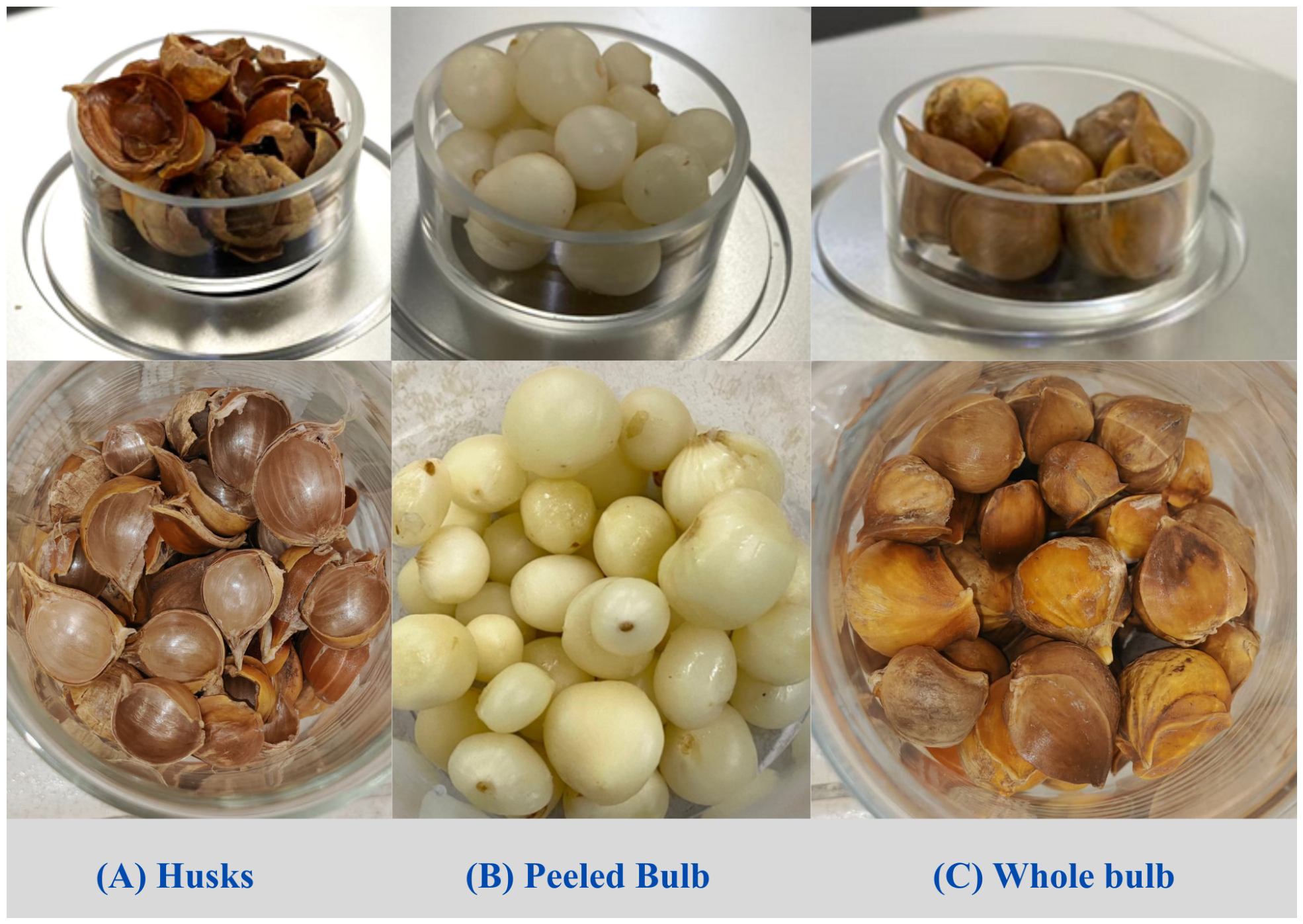
Allium ampeloprasum propagation organs (Japanese garlic) were obtained from a local distributor and producer in Guadalajara, Jalisco, Mexico. Some of them were peeled, obtaining the raw materials corresponding to the husks and bulbs, while others remained intact, obtaining the sample called whole as shown in Figure 1.
The Allium ampeloprasum propagation organ raw material was peeled and weighed for subsequent measurement by triplicate of the initial % humidity in an OHAUS 25 thermobalance. Subsequently, it was placed in trays and taken to the convection oven for drying at 40 ° C for 72 h or to the freeze-drier at 0.039 nbar at −51 °C for 96 h. The humidity % was sampled at 24 h, 48 h and 72 h, seeking to obtain a humidity percentage less than 5% for grinding and sifting with a #35 sieve with a particle size of 500 microns, for subsequent weighing and storage in the desiccator.

2.2. Chemicals and Reagents

Choline chloride, fructose, sodium carbonate, Folin–Ciocalteu reagent, DPPH, gallic acid, protocatechuic acid, catechin, chlorogenic acid, p-coumaric acid, cinnamic acid, rutin, quercetin, luteolin, kaempferol, vanillin, hesperidin, neohesperidin, naringenin, apigenin, and diosmetin were purchased from Sigma-Aldrich (St. Louis, MO, USA). Methanol, acetonitrile, and acetic acid of HPLC grade were obtained from Merck/Supelco (Darmstadt, Germany) through Sigma-Aldrich (Darmstadt, Germany).

2.3. Extraction with Natural Deep Eutectic Solvent (NADES)

Two formulations of NADES, choline chloride and glucose with 60 and 68% hydration, were mixed in a molar ratio of 0.8:1. Subsequently, with each of the formulations, 10 mL of NADES were added in a v/v ratio to 1 g of sample and placed in light-protected tubes. This was followed by an Ultrasound-assisted extraction performed in a BRANSON ultrasonic bath operating at 42 kHz for 30 min and centrifuged at 4700 rpm at a temperature of 4 °C for 30 min. The supernatant was filtered with a 0.2 microns nylon regenerated cellulose micropore and deposited in chromatographic vials.

2.4. Extraction with Methanol (CH3OH)

Methanol (CH3OH): 2.5 mL were added to 0.5 g of sample and placed in light-protected tubes, in order to be sonicated at 42 kHz for 30 min and centrifuged at 4700 rpm at a temperature of 4 °C for 30 min. The supernatant was filtered with a 0.2 microns nylon micropore and deposited in chromatographic vials.

2.5. Total Polyphenol Content

Total polyphenols were quantified using the Folin–Ciocalteu colorimetric method reported by Singleton et al. in 1999 [24] with some modifications. First, 25 μL of propagation organ raw materials extract was mixed with 25 μL of water, followed by the addition of 3 mL of deionized water and 250 μL of Folin–Ciocalteu reagent. The mixture was allowed to stand for 5 min. Then, 750 μL of 20% Na2CO3 and 950 μL of deionized water were added, stirred and left to rest for 30 min at room temperature. After 30 min, the absorbance was measured at 765 nm in a UV-Vis spectrophotometer (GENESYS 180, Thermo Fisher Scientific, Waltham, MA, USA). Gallic acid at different concentrations (5–100 μg ml−1) was used as a standard to determine the total polyphenols in Allium ampeloprasum propagation organ samples. Finally, the results were expressed as mg of gallic acid in 100 g of dried propagation organ.

2.6. Antioxidant Capacity

The antioxidant activity was determined by DPPH radical scavenging method according to Brand-Williams et al. from 1995 [25] with some modifications. The DPPH solution was prepared in methanol (MeOH) and diluted to a concentration with an absorbance of 0.7 ± 0.002 at 515 nm. Then, 100 μL of Japanese garlic extract obtained with MeOH:H2O (80:20 v/v) was added to 3.9 mL of the DPPH solution with adjusted absorbance (0.7 Abs); the mixture was stirred and allowed to stand for 30 min for its subsequent reading in the UV-Vis spectrophotometer (Thermo Fisher Scientific, Waltham, MA, USA) at 515 nm. The percentage of DPPH was calculated using the following formula:
%   D P P H   i n h i b i t i o n = A c o n t r o l A s a m p l e A c o n t r o l × 100
where AControl is the absorbance of the control (0.7 Abs) and ASample is the absorbance of the sample.

2.7. Individual Polyphenols Quantification

Quantification of polyphenols was conducted with a UHPLC Acquity H Class (Waters, Milford, MA, USA) with diode array detector (DAD). The column was an Acquity UPLC HSS C18 (100 A°, 1.8 mm, 2.1 × 50 mm) (Waters, Milford, MA, USA). Chromatographic conditions were a flow speed of 0.5 mL min−1 with a column temperature set at 45 °C and injection volume of 2 μL. The mobile phases were acetic acid (0.2%) as solvent A and acetonitrile with acetic acid (0.1%) as solvent B. The elution gradient was as follows: 0–10 min from 1% B to 30% B; 10–12 min 30% B; 12–15 min from 30% B to 1% B. The polyphenol peaks measured correspond to the DAD signals at 280 nm.
The calibration curve was prepared with 16 polyphenol standards (gallic acid, protocatechuic acid, catechine, chlorogenic acid, coumaric acid, cinnamic acid, rutin, luteolin, quercetin, kaempferol, diosmin, hesperidin, neohesperidin, naringenin, apigenin and diosmetin), purchased from Sigma-Aldrich® (St. Louis, MO, USA). A stock solution 1 mg mL−1 concentration was prepared from all standards; then, the calibration curve was prepared in the range of 1–75 μg mL−1. The polyphenols were identified in the samples with the comparison of the retention time of the standards. Quercetin and luteolin were quantified together because, under the chromatographic conditions employed, both compounds had a very close retention time and could not be resolved as individual peaks, due to the structural similarities between these flavonoids.

2.8. Experimental Design and Statistical Analysis

In order to evaluate the Allium ampeloprasum propagation organ extract’s effect over the total polyphenol content, polyphenol profile, and antioxidant capacity, a 2 × 32 factorial design, in random order, was employed. The three-level factors were: Drying method (freeze-drying = −1, convective-drying = 1), raw material (whole propagation organ= −1, peeled propagation organ = 0, propagation organ husks = 1) and extraction solvent (Deep Natural Eutectic Solvent (NADES) of chlorine chloride/glucose 0.8:1 molar ratio hydrated in a 60% = −1, MeOH:H2O (80:20 v/v) = 0, Deep Natural Eutectic Solvent (NADES) of chlorine chloride/glucose 0.8:1 molar ratio hydrated in a 68% = 1). Response variables included were total polyphenol content (TPC), antioxidant capacity (DPPH Inhibition %), as well as the polyphenol profile (gallic acid, protocatechuic acid, catechine, chlorogenic acid, coumaric acid, cinnamic acid, rutin, luteolin, quercetin, kaempferol, diosmin, hesperidin, neohesperidin, naringenin, apigenin and diosmetin). This experimental design is summarized in Table 1.
Experimental procedures were conducted in random order using a 2 × 32 factorial design. For each sample derived from the experimental setup, triplicate analytical measurements were conducted to determine total polyphenol content and antioxidant capacity by DPPH, and duplicated for the individual polyphenol profiles. Finally, results are reported as mean values with their corresponding standard deviations, performing a multivariate analysis of variance (ANOVA) using the Statgraphics Centurion XVII. II X64 software (Statgraphics Technologies Inc., Warrenton, VA, USA). Fisher’s Least Significant Difference (LSD) test was applied to the experimental results to evaluate significant differences between means with a significance level of p < 0.05, where different superscript letters indicate statistically significant differences.

3. Results

3.1. Total Polyphenol Content (TPC) and Antioxidant Capacity by DPPH (Ax)

In this section, we address the results obtained for total polyphenol content by the Folin–Ciocalteu method and antioxidant capacity by 2,2-diphenyl-1-picrylhydrazyl (DPPH) of choline chloride/glucose (0.8:1 molar ratio) hydrated to 60% and 68% hydrophilic natural eutectic extracts obtained from different Allium ampeloprasum propagation organ raw materials (husks, peeled, whole), which were subjected to different drying processes (freeze-dried and convective-dried). Methanol was used as a solvent control, MeOH:H2O (80:20 v/v), to compare the extraction efficiency against a conventional solvent, as well as to analyze the drying method on the yield and composition effect over the extracts. Both the total polyphenol content and the antioxidant capacity of the analyzed raw materials are presented in Table 2.
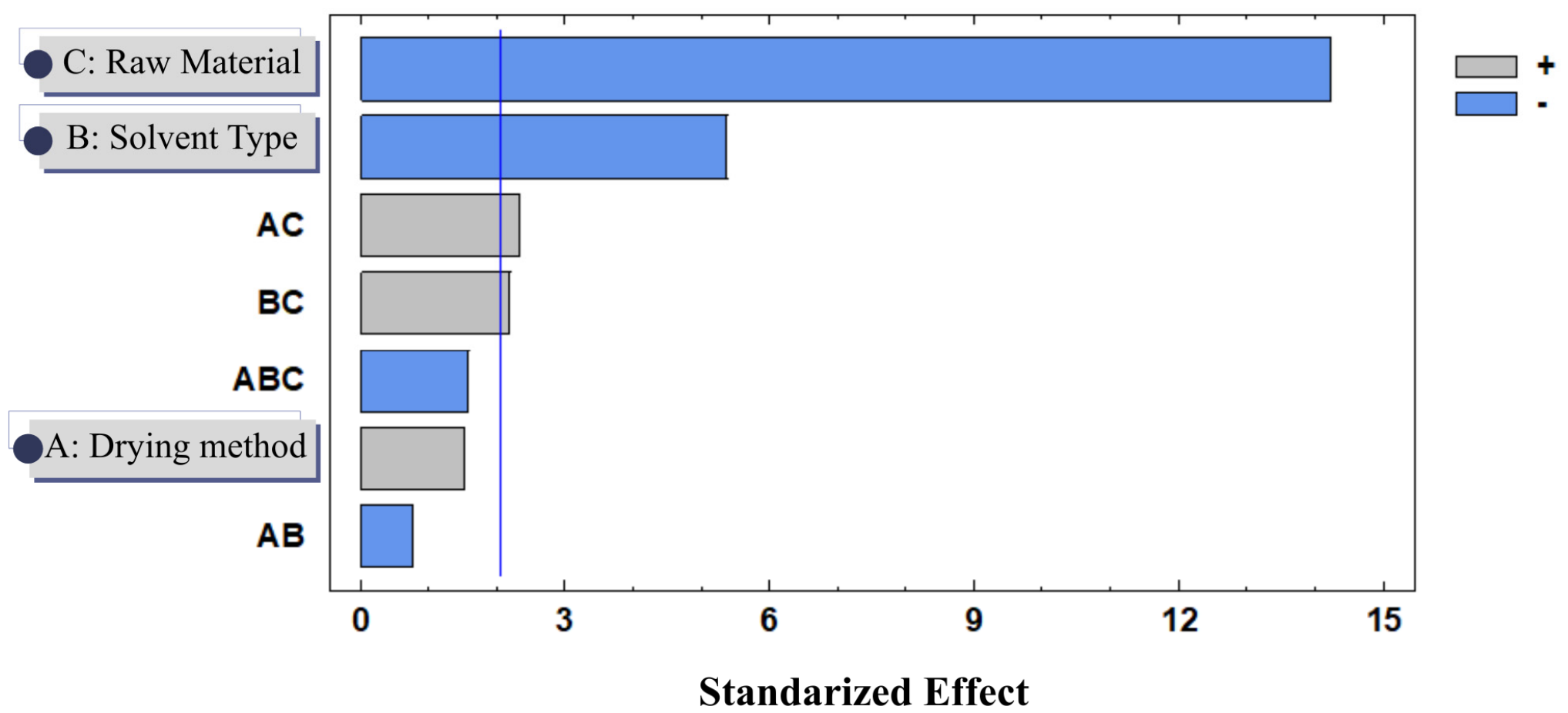
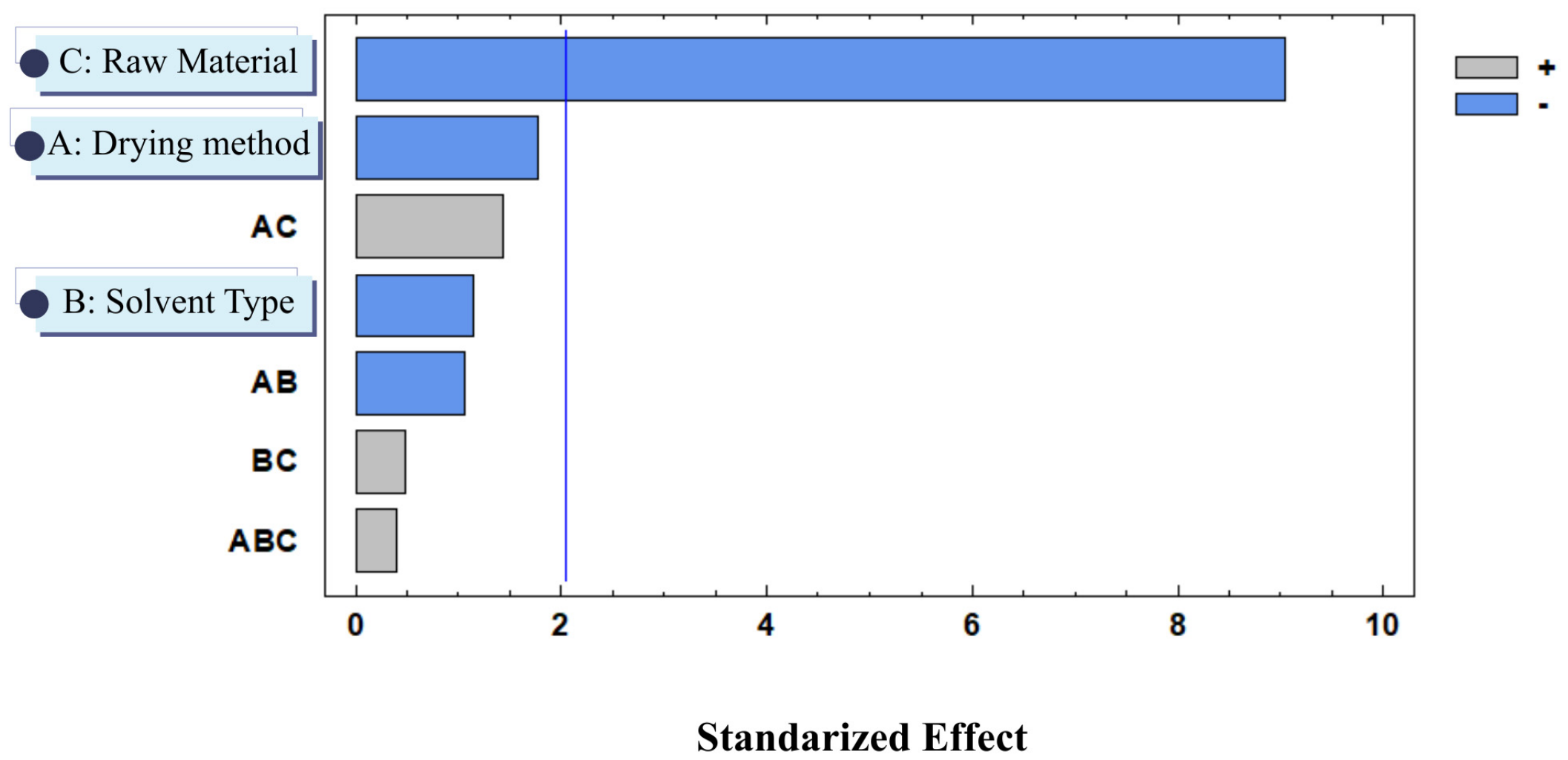
The evaluated raw materials showed appreciable levels of both total polyphenols and measurable antioxidant capacity in each assay. A multivariate analysis of variance was performed with three fixed factors: solvent type (hydrophilic choline chloride/glucose 0.8:1 molar ratio hydrated to 60%, 68%, and methanol), sample type (husks, peeled and whole), and drying process (freeze-drying and convective-drying) to evaluate the effects on antioxidant capacity as well as total polyphenol content. The analysis was based on 18 triplicate extracts. Statistically significant differences were observed between the solvent type, drying method, and raw material type, regarding the total polyphenol content and antioxidant capacity, with a p-value less than 0.05, indicating that they are significantly different from 0 with a 95% confidence level. As shown in Figure 2, the total polyphenol’s content Pareto chart shows that raw material (C) has the greatest impact, with the largest bar well above the significance threshold. The second largest bar represents solvent type (B), also showing a statistically significant effect. Finally, drying method (A) has a minor effect and does not exceed the significance threshold. Two two-way interactions were observed between drying method/raw material (AC) and solvent type/raw material (BC), highlighting the importance of raw material (C) in these interactions. Figure 3 shows the antioxidant capacity Pareto chart, where as in Figure 2, the raw material factor is well above the significance threshold. Only one interaction between drying method and raw material (AC) is observed. However, it is close to the significance threshold, which suggests it may have a slight but not significant effect.
It was determined that the best treatment for the quantification of total polyphenols was lyophilized peel with hydrophilic natural eutectic solvents choline chloride/glucose at a 0.8:1 molar ratio, hydrated to 60%, yielding a content of 384.81 ± 15.38 mg GAE/100 g of dry sample and a DPPH inhibition capacity of 90.80 ± 0.79% mg GAE/100 g of dry sample. Secondly, convective-dried, 60% hydrated skin shell was found to contain 302.68 ± 6.75 mg GAE/100 g of dry sample, with an antioxidant capacity of 73.78 ± 4.01%. The sample exhibiting the highest percentage of DPPH inhibition was the 68% hydrated freeze-dried peel, with 93.08 ± 0.58%, followed by the whole propagation organ with NADES, 68% hydrated, with an inhibition percentage of 91.51 ± 1.12% (Table 2).

3.2. Individual Polyphenol Profile

Among the 16 polyphenols examined in each treatment of the factorial design presented in Table 1, it was not possible to detect all of them. Therefore, Table 3 presents only those compounds that were most representative in the majority of the treatment. It is important to highlight that the polyphenols extracted (Table 3) are mainly flavonoid compounds as well as phenolic acids. One of the most evident results is that the husk extracts presented the highest concentrations of the most representative polyphenols shown in Table 3. In particular, the combination of lyophilized husks and using 80% methanol as the extraction solvent allowed the best yields (catechin = 488.165 ± 3.671 mg/100 g DM, chlorogenic acid = 183.015 ± 2.086 mg/100 g DM, rutin = 29,160.086 ± 73.016 mg/100 g DM, quercetin + luteolin = 574.560 ± 18.012 mg/100 g DM, kaempferol = 353.900 ± 12.758 mg/100 g DM, hesperidin = 324.323 ±0.993 mg/100 g DM and neohesperidin = 176.501 ± 1.990 mg/100 g DM), demonstrating that the husks are rich in polyphenols, unlike the peeled propagation organ, which has very low or undetectable amounts. However, for this raw material, the best drying method was lyophilization and hydrophilic NADES at 60% hydration as extraction solvent (81.811 ± 0.532 mg/100 g DM). Meanwhile, the whole propagation organ showed a midpoint between the two raw materials described elsewhere in regard to the recovery of this type of molecule.
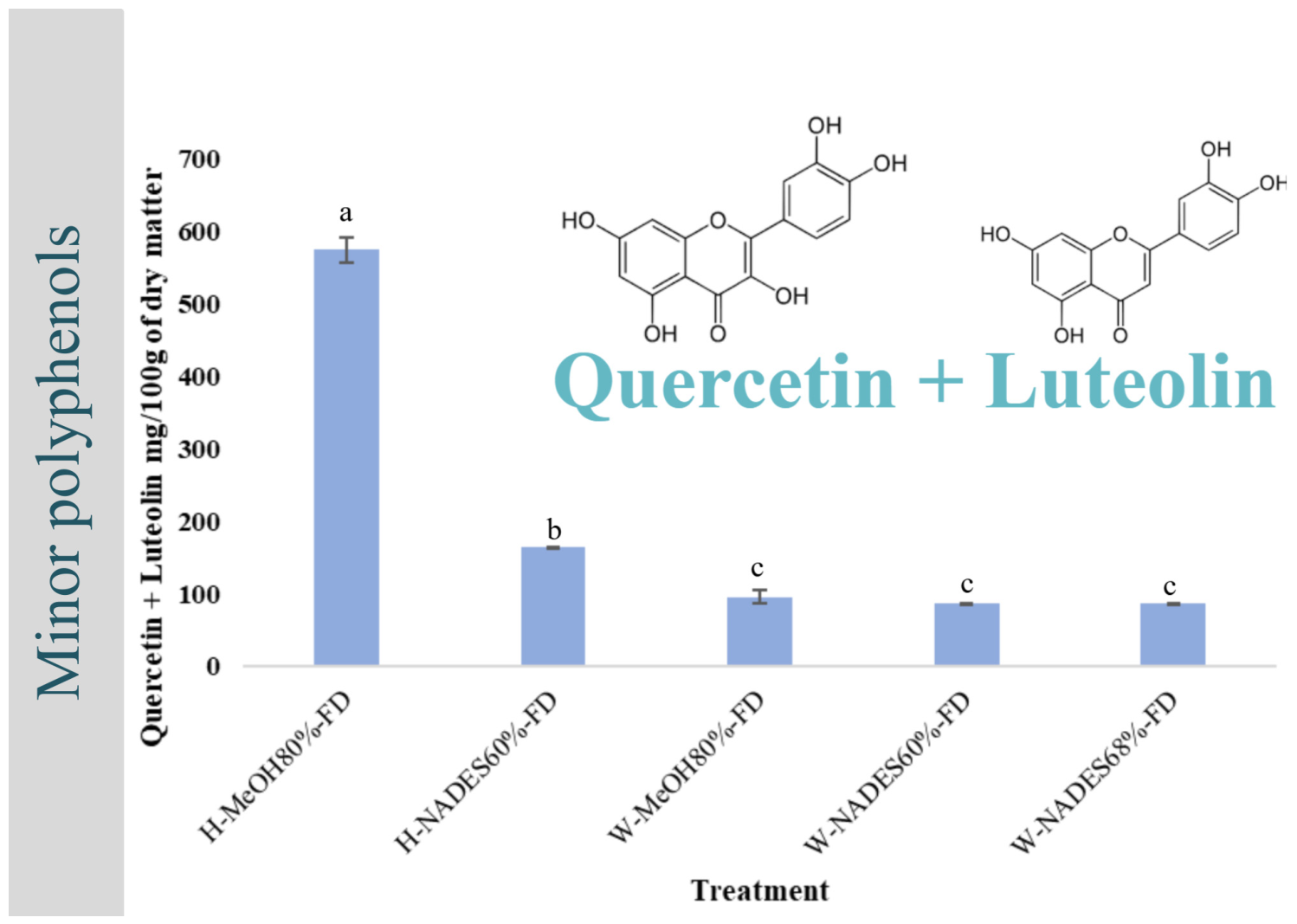
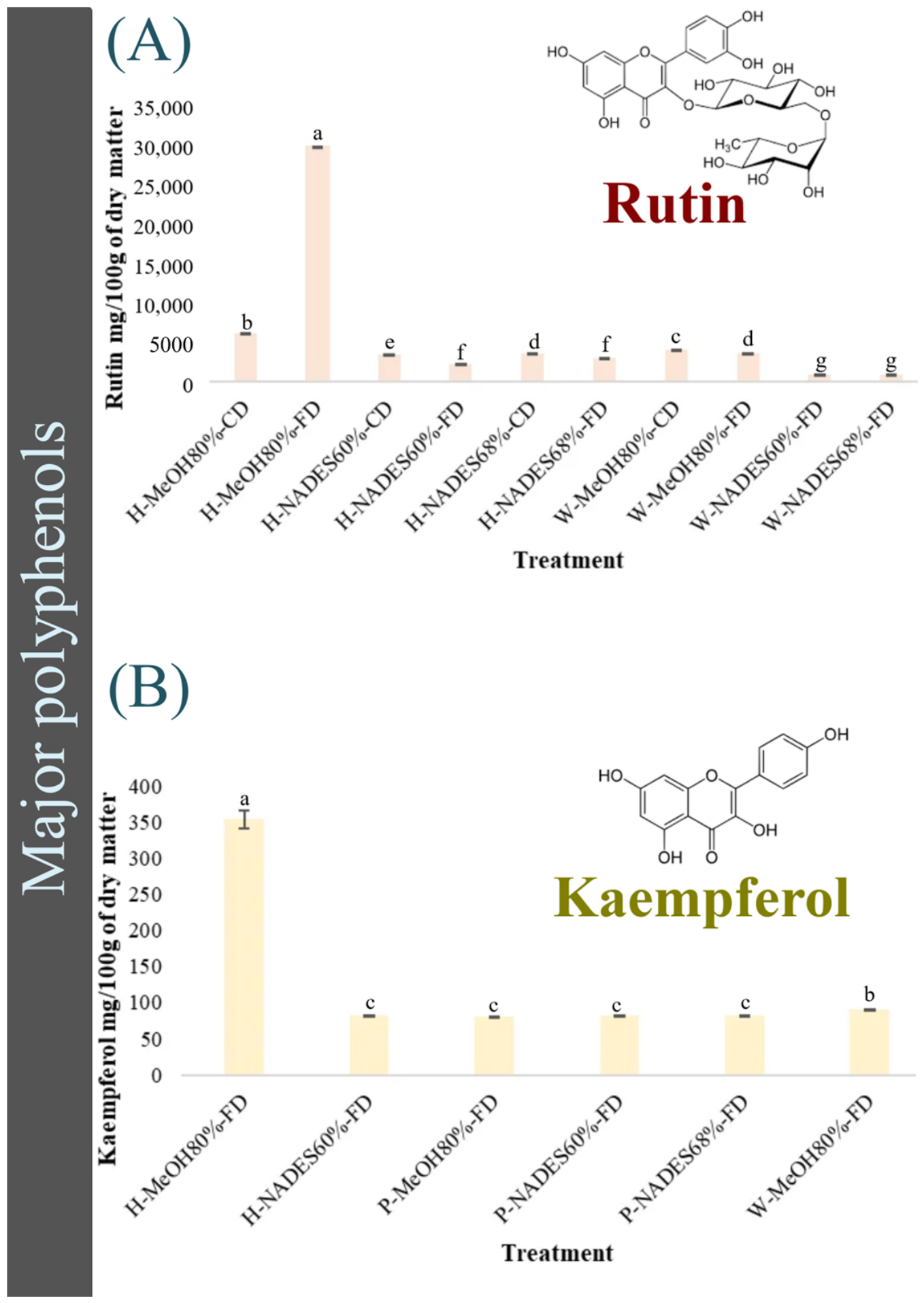
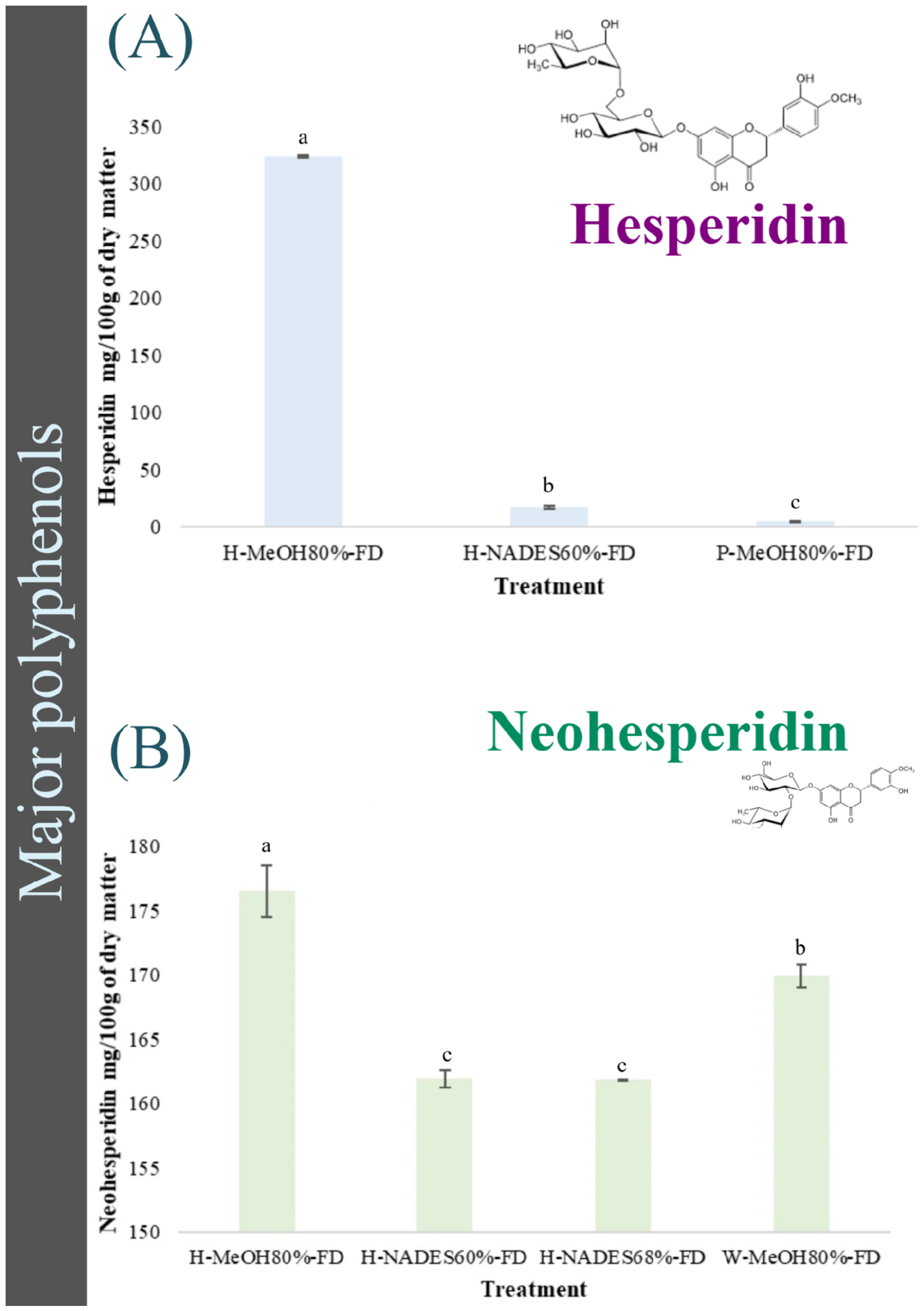
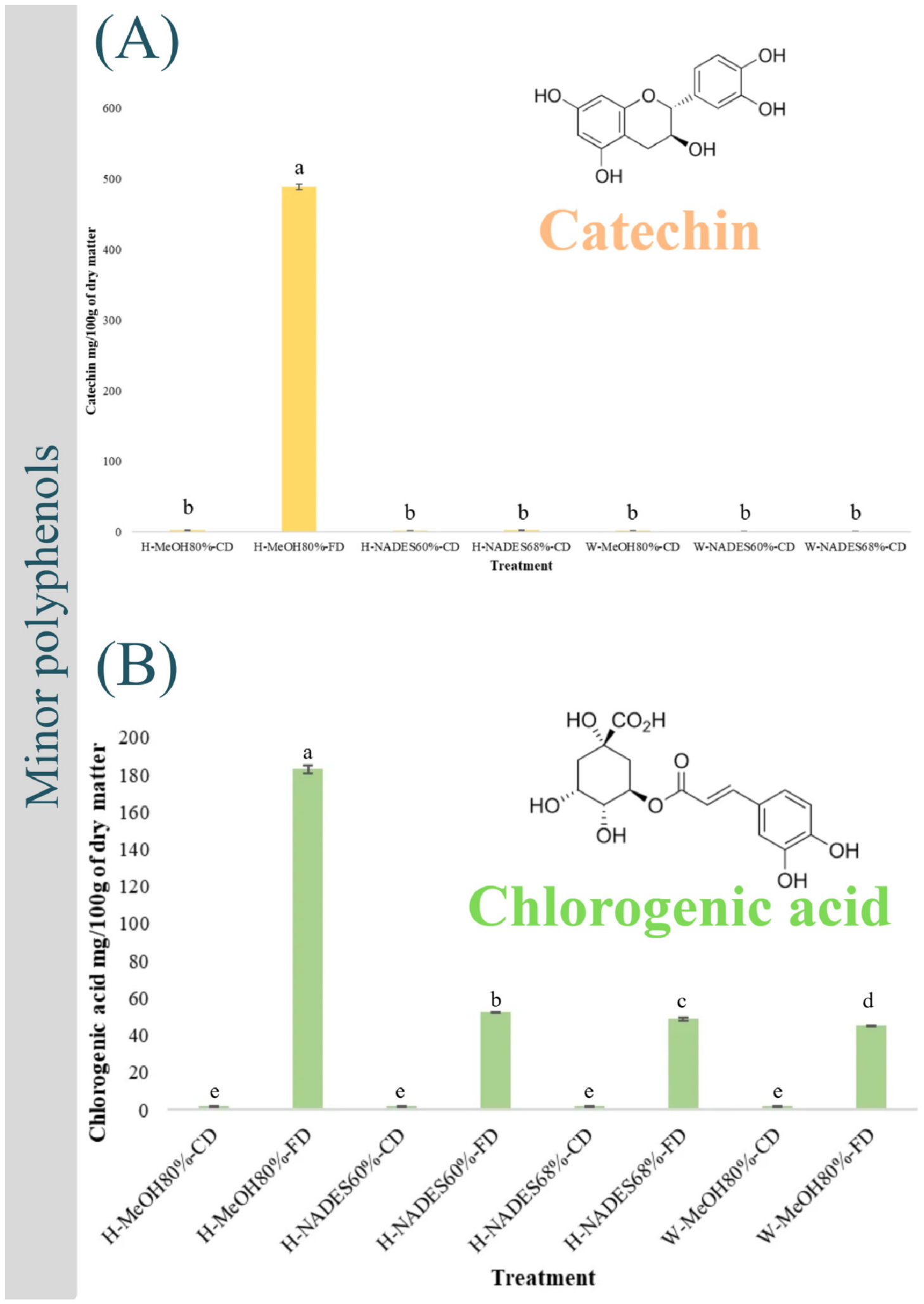
According to the results obtained and reported in Table 3, the analyzed compounds were categorized into two groups. Rutin, kaempferol, hesperidin, as well as neohesperidin were considered major components in the extracts (Figure 4 and Figure 5) due to their high concentrations, while those detected in lower concentrations, such as catechin, chlorogenic acid, and quercetin + luteolin, were considered minor components (Figure 6 and Figure 7). Figure 4 graphically presents the rutin (A) and kaempferol (B) content obtained in the different treatments. Statistically significant differences were observed for both polyphenols in the treatment of freeze-dried husks using 80% MeOH as the extraction solvent, making it the best option for recovering these compounds. The other treatments showed considerably lower rutin (A) concentrations and slightly different concentrations for kaempferol (B). The cases of hesperidin and neohesperidin are shown in Figure 5 as A and B, respectively. It can be highlighted again that freeze-dried husks with 80% methanol were the best treatment, as was the case for the minor compounds in Figure 6 and Figure 7, where the concentrations of catechin (Figure 6A), chlorogenic acid (Figure 6B), and quercetin + luteolin (Figure 7) were clearly higher than the others. Extraction systems based on hydrophilic NADESs at any of their hydration percentages (60 and 68%) were definitely the least efficient for extracting these compounds.
Polyphenols such as gallic acid and protocatechuic acid were not detected in any of the raw materials or extracts. After performing a multifactorial analysis of variance, statistically significant effects were observed on catechin content within the raw material used (p = 0.0096), the dehydration process (p = 0.0357), and the extraction solvent used (p = 0.0099). Furthermore, statistically significant interactions were observed among all factors, including the three-way interaction (p = 0.0021). Since these p-values are <0.05, they are significantly different from zero at a 95% significance. A positive interaction was observed between the type of solvent used, the drying method, and the raw material as shown in Table 4. Methanol continues to be the best extraction solvent with the best yields. However, environmental degradation and the search for new extraction technologies that are environmentally friendly and user-friendly, just as competitive as traditional extraction techniques, are driving the adoption of new technologies such as NADES. This study showed that extraction with 68% hydrated NADES using convective-dried husks is a viable option for catechin extraction, yielding 2.488 ± 0.452 mg/100 g of dry matter.
For chlorogenic acid, a multifactorial analysis of variance was performed, demonstrating statistically significant differences between the raw material and the drying process, with p-values less than 0.05, specifically 0.0018 and 0.009, respectively, at a 95% confidence level. Furthermore, considerable interactions were observed between raw material and dehydration process (p = 0.0024), and raw material and solvent (p = 0.0286); and finally, a three-way interaction among the three factors: raw material, drying process, and solvent (p = 0.0255) (Table 4). The highest yields of this phenolic acid polyphenol were obtained using peel material dehydrated by freeze-drying with 80% (v/v) methanol as the extraction solvent: 183 ± 2.086 mg/100 g of dry matter, as shown in Table 3. Although 80% (v/v) methanol remains the preferred extraction solvent, the second option with a good yield was NADES 60%, recovering 52.387 ± 0.057 mg/100 g of dry matter. Chlorogenic acid was not detectable in the peeled Japanese garlic raw material, while in whole Japanese garlic, it was only possible to extract it from samples dried by convection. However, the yields were considerably lower compared to freeze-dried husks. A very similar scenario was observed for coumaric acid, where the best yield was obtained using freeze-dried husks with 80% (v/v) methanol as the extraction solvent: 488.165 ± 3.671 mg/100 g of dry matter.
On the other hand, one of the major compounds extracted was rutin; the highest concentrations were obtained from the lyophilized husks with methanol 80% (v/v) as the extraction solvent (29,160.086 ± 73.016 mg/100 g of dry matter) followed by the husks dehydrated by convective-drying (3446.213 ± 32.670 mg/100 g dry matter). The raw material with the lowest concentration recovered was the peeled garlic, where in most of the extracts, the rutin could not be detected or a very low yield of 1.75 mg/100 g of dry matter was obtained in methanolic extracts. A multifactorial ANOVA was performed, which determined that there are statistically significant differences between the raw material and solvent with p-values of 0.0028 and 0.0047, respectively. An interaction was also found between the raw material and the solvent (p = 0.0241), as well as a three-way interaction of the factors (p = 0.0214) with a 95% confidence (Table 3).
Kaempferol extraction was possible at a concentration of 353.900 ± 12.758 mg/100 g of dry matter using freeze-dried husks and 80% (v/v) methanol as the extraction solvent. With the freeze-dried whole raw material and 80% (v/v) methanol as the extraction solvent, 90.327 ± 0.260 mg/100 g of dry matter were recovered. This was followed by samples of husks and freeze-dried Allium ampeloprasum (Japanese garlic) peeled propagation organ, obtaining very similar kaempferol contents, around 81 mg/100 g of dry matter, as shown in Table 3. This was achieved using either NADES 60% or NADES 68% hydration. The multifactorial ANOVA highlighted that factors such as raw material, drying method, and solvent influenced the results. The extractions presented p-values of 0.0020, 0.0001, and 0.0001, respectively, demonstrating statistically significant differences with a 95% confidence level, which in turn presented interactions between factors with p-values < 0.05.
In contrast, the highest concentration of hesperidin was obtained from husks freeze-dried with 80% (v/v) methanol (324.323 ± 0.993 mg/100 g dry matter), followed by husks freeze-dried with 60% NADES as the solvent, obtaining a concentration of 16.911 ± 1.163 mg/100 g dry matter, as shown in Table 4. It was observed that it was possible to extract hesperidin from the peeled and whole propagation organ, dried by convective oven. Although the concentrations recovered were low, this result is noteworthy because it was present in the peeled bulb, from which few polyphenols were recovered, given its nature, in which its high content of sulfur compounds is well known in this type of species from the genus Allium. Multifactorial analysis of variance revealed interactions among the factors, including a three-way interaction between raw material (p = 0.0050), drying process (0.0231), and extraction solvent (0.0068), yielding p-values < 0.05. This demonstrates statistically significant differences with a 95% confidence level.
Finally, another major polyphenol was neohesperidin; the raw material factors (p = 0.0082) and drying process (p = 0.002) showed statistically significant differences, as did the interaction between these factors (p = 0.0109), having a p-value < 0.05 with a 95% confidence level. The highest yields were obtained with both the husks (176.501 ± 1.990 mg/100 g dry matter) and the whole propagating organs (169.945 ± 0.889 mg/100 g dry matter) using 80% (v/v) methanol, followed by freeze-dried husks with 60% NADES (161.914 ± 0.667 mg/100 g dry matter) and 68% NADES (161.879 ± 0.005 mg/100 g dry matter) as the extraction solvent (Table 3).

3.3. Pearson Correlation

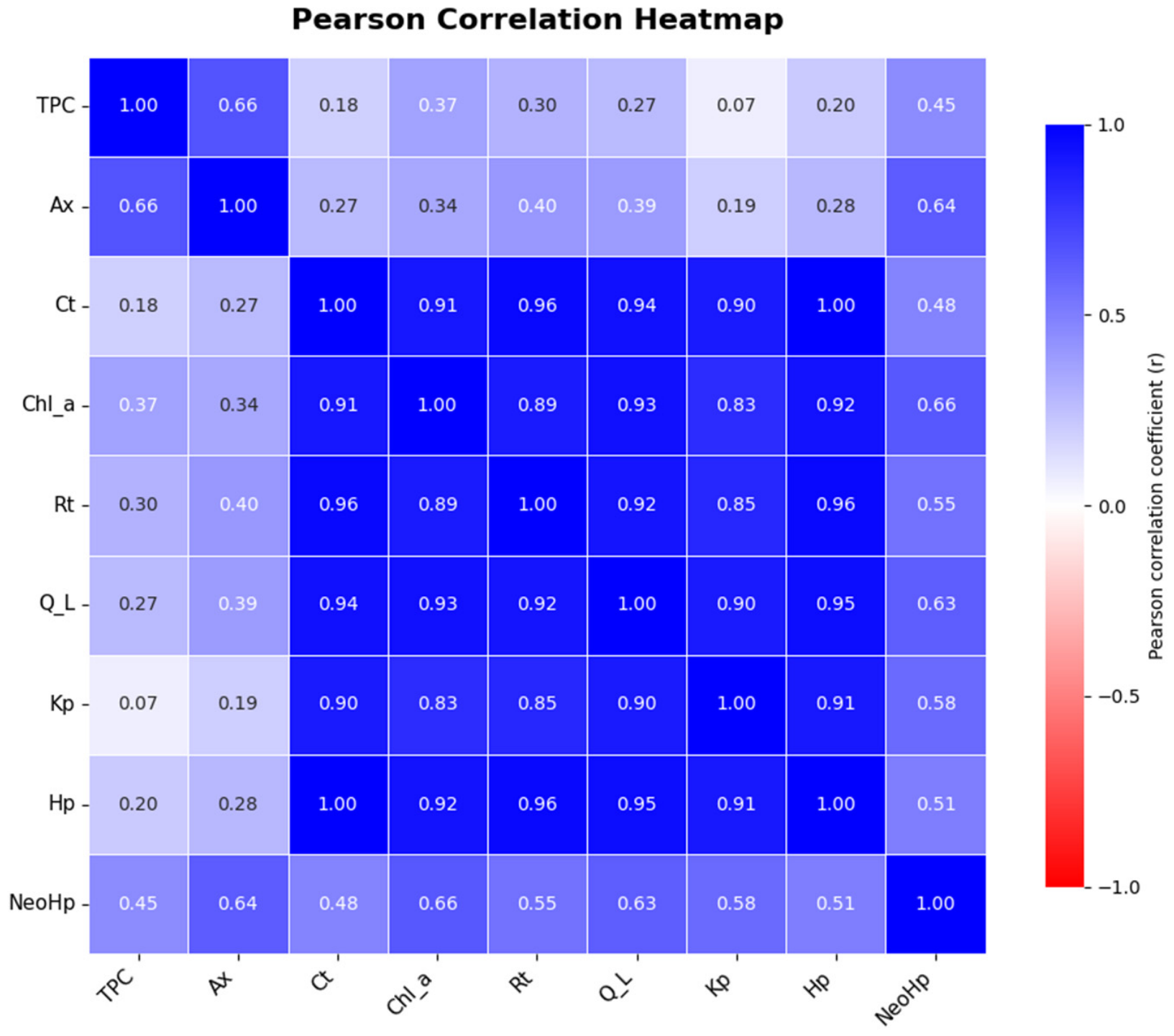
The Pearson correlation coefficient is a statistical measure that quantifies the strength and direction of the relationship between two quantitative variables. Figure 8 presents the heatmap of Pearson correlations obtained from all response variables in the 2 × 3 × 3 experimental design.
Pearson correlation analysis showed a moderate positive relationship between total polyphenol content and antioxidant activity (r = 0.66), indicating phenolic compounds’ important contribution to the antioxidant potential of the extracts.
A highly correlated polyphenolic group was identified, consisting of catechin, chlorogenic acid, rutin, quercetin + luteolin, kaempferol, and hesperidin (r = 0.83–0.96), from the husk samples. Among the quantified compounds, neohesperidin showed the strongest association with antioxidant activity (r = 0.64), suggesting a significant contribution to the overall free radical scavenging capacity of these extracts. The high total phenolic content and antioxidant activity observed in the peel extracts indicate that this by-product constitutes the main reservoir of bioactive phenols in the propagation organs of Allium ampeloprasum.
However, total phenolic concentration showed low to moderate correlations with the individual phenolic compounds, with neohesperidin (r = 0.45) and chlorogenic acid (r = 0.37) showing the strongest associations. The correlations between TPC and individual polyphenols such as catechin, rutin, quercetin + luteolin, kaempferol, and hesperidin were less than r = 0.30. The correlation values between TPC, Ax, and individual phenolic compounds in the peeled material were the lowest compared to the whole material and the peels.

4. Discussion

The results showed two complementary behaviors. On the one hand, it is noteworthy that the husks are the raw material with the highest phenolic compound concentration as well as antioxidant capacity, considering 80% methanol as the best extraction solvent for individual and major polyphenols, as shown in Table 3. However, the hydrophilic NADES, particularly the 60% hydrated one, showed a higher total polyphenol content and antioxidant capacity, achieving a yield of 384.81 ± 15.38 mg of gallic acid (GAE)/100 g of dry sample, with a 90.80 ± 0.79% DPPH inhibition. Freeze-dried husks using hydrophilic NADES hydrated at 68% showed a lower yield of total polyphenol content with 257.18 ± 3.99 mg GAE/100 g of dry sample but with a higher percentage of DPPH inhibition with 93.05 ± 0.58%. The results obtained in this study were consistent with the total polyphenolic quantification previously reported for Allium species. For example, Beato et al. in 2011 [26] reported a total polyphenol content in Chinese Allium sativum clove samples that were freeze-dried and extracted using 80% methanol, obtaining around 3.4 to 10.8 mg GAE/100 g DM. On the other hand, studies performed in 2023 on Allium sativum crops in China found higher concentrations, from 797.11 to 1183.98 mg GAE/100 g DM, in extracts with 50 g of garlic and 80% methanol as the extraction system [26]. Some other previous theoretical studies, published in 2013, reported intermediate values ranging from 21.23 to 33.96 mg GAE/100 g DM in methanolic extracts of Allium sativum specimens. Even though the garlic species used in these studies is different from the Allium ampeloprasum propagation used in this experiment, the results obtained were comparable as well as a promising option for good polyphenol yields. These findings suggest a potential application of this species in the food and pharmaceutical industries for the valorization of garlic-derived products [27,28].
The type of raw material used was the factor with the greatest influence on the content of phenolic compounds and the antioxidant capacity. In particular, samples from husks presented the highest values of total phenolic content and antioxidant activity, which agrees with the quantification of flavonoids and phenolic acids carried out by UHPLC analysis. This suggests that the husks constitute the main reservoir of bioactive compounds in Allium ampeloprasum, and although there are no previous studies with this variety of garlic, the results are consistent with previous studies that report a higher concentration of polyphenols in external tissues of different plant varieties due to their protective function against environmental and oxidative stress [29,30].
Pearson correlation analysis confirmed the existence of a highly correlated group of phenolic compounds, including catechin, chlorogenic acid, rutin, quercetin + luteolin, kaempferol and hesperidin (r = 0.83–0.96). This strong correlation suggests a possible coordinated accumulation pattern and possibly a common localization in the plant tissue, particularly in the husk’s fractions. This type of behavior has been described in plant matrices where flavonoids and phenolic acids tend to accumulate in order to function as antioxidant defense systems of the plant [30].
In relation to the extraction solvent, the results showed that NADESs tended to produce higher TPC values compared to methanol, especially in the husk samples. This result is consistent with the literature, where NADESs improved the extraction of polyphenols due to their ability to form extensive hydrogen bond networks with phenolic compounds, increasing their solubility and stability [30,31]. Furthermore, their adjustable polarity allows the simultaneous extraction of compounds of different chemical nature, which explains the higher overall TPC values observed in these extracts.
However, speaking of individual compounds determined by UHPLC, extracts with 80% methanol showed significantly higher concentrations of several specific flavonoids, such as catechin, rutin, quercetin + luteolin, kaempferol and hesperidin. However, it is observed that the Folin–Ciocalteu assay used for TPC does not only reflect the individually quantified compounds, but rather a broader set of reducing molecules that are present in the extract. Which, in turn, would explain the moderate correlation between TPC and the individual compounds (r = 0.07–0.45) presented in the Pearson model. On the other hand, the Pearson analysis for antioxidant activity showed a clearer relationship with TPC (r = 0.66), which could suggest that the antioxidant effect is the result of a synergy between a complex matrix of compounds rather than isolated molecules.
Speaking of drying method, the results indicate that freeze-drying allowed better preservation of individual phenolic compounds compared to convective-drying. This behavior is attributed to the low-temperature conditions of the freeze-drying process, which minimize thermal degradation, oxidation and enzymatic reactions that affect polyphenols [31]. On the contrary, convective-drying can induce chemical transformations because of the exposure to heat. A relevant aspect is that, even though convective-drying reduced the content of individual flavonoids in some cases, the antioxidant activity did not decrease in the same proportion. This phenomenon could be because of the possible antioxidant compound formation derived from the Maillard reaction. During heating, the reducing sugars can react with amino acids, forming intermediate and final products like melanoidins, which showed significant antioxidant activity [32,33,34].
Polyphenols such as gallic acid and protocatechuic acid were not detected in any of the raw materials, unlike the Allium sativum species, where several studies report a higher content of these polyphenols [6,11,12].
Other compounds, like catechin, chlorogenic acid, and quercetin + luteolin, were recovered in smaller proportions, as shown in Figure 5. Studies by Sonmez et al. in 2025 [35] on Allium sativum species reported that the amounts of phenolic compounds such as catechin and chlorogenic acid in fresh samples (between 158.77 and 174.99 mg/100 g dry matter (DM), respectively) are considerably lower than those obtained in this study. Specifically, significant increases were observed in the freeze-drying and 80% methanol treatments applied to husks, reaching up to 488.165 mg/100 g DM of catechin, 183.015 mg/100 g DM of chlorogenic acid, and 574.560 mg/100 g DM of quercetin + luteolin. These differences demonstrate the determining effect of processing, sample type, and solvent on polyphenol recovery, highlighting husks as a particularly rich fraction and freeze-drying as an effective strategy for preserving and maximizing these bioactive compounds.
In this study, the use of NADES was not the most efficient option for polyphenol extraction, as the yields obtained were considerably lower than those achieved with methanolic extracts and those reported in the literature for Allium sativum species. Specifically, the values obtained with NADESs ranged from 0.912 to 2.667 mg/100 g of dry matter, which contrasts with the significantly higher concentrations achieved by methanol extraction in the same experiment. These results indicate that, under the evaluated conditions, hydrophilic NADESs exhibit a lower capacity for solubilizing and recovering phenolic compounds, and therefore do not constitute the most optimal alternative to conventional extraction methods. However, NADESs are indeed capable of extracting these polyphenols in a minor proportion.
For the peeled propagation organ methanolic extracts, no polyphenols could be detected in the freeze-dried samples, unlike the oven-dried sample where 1.078 mg/100 g of dry matter of rutin was recovered. Rutin is a potent anti-inflammatory capable of decreasing gene expression levels and inducible nitric oxide synthase (iNOS) proteins [36]. However, the whole propagation organ methanolic extracts that were freeze-dried yielded rutin as well as quercetin and luteolin, while the oven-dried samples also yielded catechin and chlorogenic acid as well. According to the National Scientific and Technical Research Council of Argentina (CNICTA) and Soto in 2013, polyphenols present in garlic species such as Allium sativum (Italian garlic) were reported, highlighting the presence of chlorogenic acid, catechin, epicatechin, epigallocatechin, kaempferol, quercetin, naringenin, and rutin [15]. This is consistent with the results obtained, considering both the species and the plant part studied. However, these studies are not the only ones. In 2023, Joanna Skoczylas reported that rutin could not be detected in the garlic bulb, but it was present in the plant’s leaves [16]. In the present study, rutin was detected abundantly, but only in the propagation organ husks. In general, the extracts showed an abundance of flavonoid-type polyphenols, such as rutin, kaempferol, hesperidin, and neohesperidin.
Kaempferol was detected mainly in husks and under freeze-drying conditions, reaching its maximum concentration with 80% methanol (353.9 mg/100 g DM), highlighting the high efficiency of this solvent in extracting this compound. In contrast, with the NADES, the values were lower, reaching around 81 mg/100 g DM with freeze-drying or even becoming undetectable, while under conventional drying, the concentrations decreased even more drastically to 1–2.4 mg/100 g DM. According to the literature, it has been possible to recover kaempferol from Allium sativum species. This is important considering that kaempferol is a polyphenol found in fruits and vegetables, with beneficial effects such as antioxidant defense against free radicals, cellular signal transduction pathways linked to apoptosis, angiogenesis, metastasis, and inflammation by decreasing IL-6 levels [37].
Hesperidin, on the other hand, has recently gained attention for its pharmacological activities, especially its antioxidant properties and anti-inflammatory effects, inhibiting pro-inflammatory cytokines as well as enzymes. Another important hesperidin property is its contribution to cardiovascular health by reducing blood pressure and enhancing endothelial function [37]. However, the hesperidin presence in the extract from the Allium ampeloprasum propagation organ was limited and inconsistent, as it was only detected in moderate amounts in freeze-dried skin shells (16.9 mg/100 g DM with 60% hydrated NADES and up to 324.3 mg/100 g DM with methanol). In most treatments, it was either undetectable or present in very low quantities, especially with NADES and in convective-drying.
Neohesperidin is also a flavonoid-type polyphenol, mainly found in citrus plants, that has been reported to exhibit anti-inflammatory and antioxidant activities. In recent studies, neohesperidin downregulated COX-2 expression and upregulated HO-1 (Heme oxygenase-1) in asthma patient lung tissues. It also inhibited the release of inflammatory cytokines, as well as reactive oxygen species production, and decreased monocyte adhesion. Taken together, these findings suggest that neohesperidin possesses immunomodulatory and antioxidant properties that contribute to the attenuation of airway inflammation and remodeling in allergic asthma. These results indicate that neohesperidin is a promising natural compound with therapeutic potential for asthma treatment [38].
Therefore, in the present study of Allium ampeloprasum propagation organ extracts, neohesperidin showed more stable behavior than hesperidin, being detected mainly in husks, with relatively high values in both freeze-dried samples (161–176 mg/100 g DM) and in some convective-dried treatments (around 8 mg/100 g DM). Again, there was lower efficiency in the samples that used NADES as the extraction solvent compared to those that used methanol. It is important to highlight that it is unconventional to have managed to extract hesperidin and neohesperidin in this garlic type (Japanese garlic) since these polyphenols are normally associated with citrus fruits, and yet they were found in low concentrations in the peeled propagation organ, which, in general, was the one that presented a more limited polyphenolic profile [39,40].
During this experiment, it was observed that methanolic extractions continue to stand out as the method par excellence, since these extracts yield a great extracted compound diversity. Specifically, it was possible to extract catechin, chlorogenic acid, rutin, quercetin + luteolin, kaempferol, hesperidin and neohesperidin, obtaining higher yields than the extracts where NADESs were used. However, NADESs offer a more environmentally friendly extraction option, in addition to being biocompatible and selective. Unlike methanolic extracts, extracts using NADESs showed a more selective profile, making it possible to extract molecules characterized by their high anti-inflammatory and antioxidant properties, such as catechin, chlorogenic acid, rutin, quercetin and luteolin, kaempferol, hesperidin, and neohesperidin. Rutin, in particular, stood out due to its high yields. Husks proved to be the best option for extracting these compounds, adding value by repurposing these food industry by-products. The choice of the best natural eutectic solvent (NADES) will depend on the desired outcome. However, a good option is freeze-dried propagation organ with choline chloride/glucose (0.8:1 molar ratio) hydrated to 60%.
Studies conducted with the species Allium sativum demonstrate that flavonoid-type polyphenols such as myricetin, quercetin, kaempferol, and apigenin were not detected in any of the garlic samples. However, phenolic acids such as caffeic acid and ferulic acid were the main compounds extracted, with average values of 2.9 mg/1000 g of dry matter and 2.6 mg/1000 g of dry matter, respectively. Vanillic, p-hydroxybenzoic, and p-coumaric acids were also quantified, with comparable values of 0.4–0.8 mg/1000 g of dry matter [26]. Even though the yields obtained with the natural eutectic solvents with chloride/glucose (0.8:1 molar ratio) hydrated to 60% and 68% were much lower than those obtained with methanol, the results are still superior to those obtained by Beato et al. in 2011 [26]. It is quite interesting to note the differences between the polyphenolic profile of Italian garlic, also known as common garlic (Allium sativum), and these varieties that are increasingly gaining popularity, such as the propagation organ of Allium ampeloprasum (Japanese garlic).

5. Conclusions

The Allium ampeloprasum propagation organ (Japanese garlic) is a garlic species that is gaining popularity due to its organoleptic characteristics and numerous benefits, most notably its antioxidant properties, directly related to its polyphenolic profile. The raw material as well as the type of solvent are determining factors for the polyphenol proportion. It was observed that the best treatment for the quantification of total polyphenols was the freeze-dried husks with hydrophilic natural eutectic solvents (NADESs) choline chloride/glucose in a molar ratio of 0.8:1, hydrated to 60%, with a content of 384.81 ± 15.38 mg GAE/100 g of dry sample, while for the DPPH inhibition percentage test, the sample with the highest percentage of inhibition was the freeze-dried peel with NADES hydrated to 68%, with 93.08 ± 0.58%. Although the highest content was obtained using methanol 80% (v/v), this study highlights the fact that extracts using NADES showed a more selective profile, making it possible to extract molecules characterized by their high anti-inflammatory and antioxidant properties, such as catechin, chlorogenic acid, rutin, quercetin and luteolin, cinnamic acid, kaempferol, hesperidin, and neohesperidin. Rutin, in particular, stood out due to its high yields. Husks proved to be the best option for extracting these compounds, adding value by repurposing these food industry by-products.

Author Contributions

Conceptualization, I.M.R.-B. and A.M.C.-E.; methodology, I.M.R.-B. and A.M.C.-E.; validation, I.M.R.-B. and A.M.C.-E.; formal analysis, A.M.C.-E.; investigation, A.M.C.-E.; resources, I.M.R.-B. and O.G.-R.; data curation, A.M.C.-E.; writing—original draft preparation, A.M.C.-E.; writing—review and editing, A.M.C.-E., I.M.R.-B., O.G.-R., M.A.G.-R. and J.I.D.-S.; visualization, I.M.R.-B., O.G.-R., M.A.G.-R. and J.I.D.-S.; supervision, I.M.R.-B. and O.G.-R.; project administration, I.M.R.-B.; funding acquisition, I.M.R.-B. All authors have read and agreed to the published version of the manuscript.

Funding

Center for Research and Assistance in Technology and Design of the State of Jalisco. A.C Southeast Sub-Headquarters and the scholarship 1309991 for Ana Montserrat Corona-España, financed by the Secretariat of Science, Humanities, Technology and Innovation (SECIHTI).

Data Availability Statement

The original contributions presented in this study are included in the article. Further inquiries can be directed to the corresponding author(s).

Acknowledgments

To my supervisors for all their support. To the Center for Research and Assistance in Technology and Design of the State of Jalisco. A.C Southeast Sub-Headquarters. To Francisco Misael Gómez-Villegas and Kevin Alejandro Avilés-Betanzos for all their help and assistance during this investigation. Finally, to the Secretariat of Science, Humanities, Technology and Innovation (SECIHTI) scholarship support for Ana Montserrat Corona-España with the number 1309991.

Conflicts of Interest

All authors declare no conflicts of interest.

Abbreviations

The following abbreviations are used in this manuscript:
ANOVAanalysis of variance
AXantioxidant capacity
CNICTANational Scientific and Technical Research Council of Argentina
COX-2Cyclooxygenase
CDconvective-drying
DADdiode array detector
DMdry matter
DPPH2,2-diphenyl-1-picrylhydrazyl
FDfreeze-drying
HETEsHydroxyeicosatetraenoic acids
Hpropagation organ husks
HO-1Heme oxygenase-1
HpETEsHydroperoxyeicosatetraenoic acids
iNOSinducible nitric oxide synthase
LOXLipoxygenase
LSDFisher’s Least Significant Difference
NADESDeep Natural Eutectic Solvent
NF-kBNuclear factor-kappa B
PGsProstaglandins
PI 3-kinasePhosphoinositide 3-kinase
PPARyPeroxisome proliferator- activated gamma receptor
Ppeeled propagation organ
ROSreactive oxygen species
TPCtotal polyphenol content
UHPLCUltra-High-Performance Liquid Chromatography
Wwhole propagation organ

References

  1. Kurnia, D.; Ajiati, D.; Heliawati, L.; Sumiarsa, D. Potential of flavonol and sulfur compounds from Allium leaves as an antioxidant and xanthine oxidase inhibition in silico study. Food Chem. Adv. 2023, 3, 100383. [Google Scholar] [CrossRef] [Scilit]
  2. Zhu, M.; Xu, H.; Deng, Z.; Hou, M.; Liu, L.; Wang, Y. Identification of S-1-propenyl-L-cysteine as the catalytic product of AfGGT1 and a key intermediate in isoalliin biosynthesis in Allium fistulosum. L. Food Chem. Mol. Sci. 2025, 10, 100255. [Google Scholar] [CrossRef] [Scilit] [PubMed]
  3. Tomás, B. En Atlangatepec Producen ajo Japonés con Parcela de Riego. El Sol de Tlaxcala, 7 May 2022. Available online: https://www.elsoldetlaxcala.com.mx/local/municipios/en-atlangatepec-producen-ajo-japones-con-parcela-de-riego-8249949.html (accessed on 16 February 2026).
  4. Alondra, C.S.M. Anatomía del Desarrollo y Producción de Bulbillos Medicinales de Ajo Elefante (Allium ampeloprasum L.); Institución de Enseñanza e Investigación en Ciencias Agrícolas Campus Montecillo: Estado de México, Mexico, 2022; pp. 1–89. [Google Scholar]
  5. Martínez-Cortés, D.M.; Vera-Pérez, J.; Valencia-del-Toro, G.; Franco-Hernández, M.O.; Yolanda, G.-G. RP-UHPLC method development and validation for the rapid determination of phenolic antioxidants from Allium cepa and Allium sativum extracts. J. Pharm. Biomed. Anal. 2025, 257, 116698. [Google Scholar] [CrossRef] [Scilit] [PubMed]
  6. Ramírez-Concepción, R.H.; Castro-Velasco, L.N.; Martínez-Santiago, E. Artículos de Revisión Efectos Terapéuticos del Ajo (Allium Sativum). 2016. Revista UNSIS. Available online: https://revista.unsis.edu.mx/saludyadmon/es/article/view/45 (accessed on 16 February 2026).
  7. Jafari, F.; Khalilzadeh, S.; Nejatbakhsh, F.; Naderi, M. Therapeutic effects of garlic (Allium sativum) on female reproductive system: A systematic review. Heliyon 2023, 9, e22555. [Google Scholar] [CrossRef] [Scilit] [PubMed]
  8. Corona-España, A.M.; García-Ramírez, M.A.; Rodríguez-Buenfil, I.M.; Delgado-Saucedo, J.I.; González-Reynoso, O. Synthesis Mechanism and Therapeutic Effects of Thiosulfinates and Polysulfides of Different Species of Garlic from the Allium Genus. Pharmaceutics 2025, 17, 437. [Google Scholar] [CrossRef] [Scilit] [PubMed]
  9. Rana, A.; Samtiya, M.; Dhewa, T.; Mishra, V.; Aluko, R.E. Health benefits of polyphenols: A concise review. J. Food Biochem. 2022, 46, e14264. [Google Scholar] [CrossRef] [Scilit] [PubMed]
  10. Ciupei, D.; Colişar, A.; Leopold, L.; Stănilă, A.; Diaconeasa, Z.M. Polyphenols: From Classification to Therapeutic Potential and Bioavailability. Foods 2024, 13, 4131. [Google Scholar] [CrossRef] [Scilit] [PubMed]
  11. Ceylan, O. Antibiofilm, Mutagenic and Antimutagenic Activity of Allium sphaerocephalon. J. Pure Appl. Microbiol. 2014, 8, 2879–2885. [Google Scholar]
  12. Milenys, G.M.; Greta, G.I.; Carolina, M.H.; Aliena, C.D. Revisión bibliográfica sobre el uso terapéutico del ajo Bibliografic review about the therapeutic use of garlic. Rev. Cuba. Med. Física Rehabil. 2014, 6, 61–71. Available online: https://www.medigraphic.com/pdfs/revcubmedfisreah/cfr-2014/cfr141g.pdf (accessed on 16 February 2026).
  13. Oney-Montalvo, J.E.; Avilés-Betanzos, K.A.; Ramírez-Rivera Ede, J.; Ramírez-Sucre, M.O.; Rodríguez-Buenfil, I.M. Contenido de polifenoles en frutos de Capsicum chinense en diferentes épocas de cosecha y su correlación con la actividad antioxidante. Plants 2020, 9, 1394. [Google Scholar] [CrossRef] [Scilit] [PubMed]
  14. Corona-España, A.M.A.G.-R.M.; Romo-Gonzalez, R.; Mayanin Rodriguez-Buenfil, I.; González Reynoso, O. Phytochemicals from Secondary Metabolism and Their Role as Antioxidant and Anti-Inflammatory Molecules. In Recent Advances in Phytochemical Research; Khan, M.K., Ed.; IntechOpen: London, UK, 2024; Chapter 5. [Google Scholar] [CrossRef] [Scilit]
  15. Soto, V.C.; Galmarini Romulo, C. 100 Temas Sobre Producción de Ajo: Fitoquímicos y Minerales en Ajo, Implicancias en la Cadena Agro Alimentaria: Polifenoles en Ajo y su Relación con la Actividad Antioxidante. 2013. Available online: https://bicyt.conicet.gov.ar/fichas/produccion/1895869 (accessed on 16 February 2026).
  16. Skoczylas, J.; Jędrszczyk, E.; Dziadek, K.; Dacewicz, E.; Kopeć, A. Basic Chemical Composition, Antioxidant Activity and Selected Polyphenolic Compounds Profile in Garlic Leaves and Bulbs Collected at Various Stages of Development. Molecules 2023, 28, 6653. [Google Scholar] [CrossRef] [Scilit] [PubMed]
  17. Díaz-de-Cerio, E.; Trigueros, E. Evaluating the Sustainability of Emerging Extraction Technologies for Valorization of Food Waste: Microwave, Ultrasound, Enzyme-Assisted, and Supercritical Fluid Extraction. Agriculture 2025, 15, 2100. [Google Scholar] [CrossRef] [Scilit]
  18. Hitlamani, V.; Inamdar, A.A. Valorization and the potential use of garlic (Allium sativum L.) skin in food industries. Food Humanit. 2024, 3, 100437. [Google Scholar] [CrossRef] [Scilit]
  19. Dai, J.; Mumper, R.J. Plant Phenolics: Extraction, Analysis and Their Antioxidant and Anticancer Properties. Molecules 2010, 15, 7313–7352. [Google Scholar] [CrossRef] [Scilit] [PubMed]
  20. Ristivojević, P.; Krstić Ristivojević, M.; Stanković, D.; Cvijetić, I. Advances in Extracting Bioactive Compounds from Food and Agricultural Waste and By-Products Using Natural Deep Eutectic Solvents: A Circular Economy Perspective. Molecules 2024, 29, 4717. [Google Scholar] [CrossRef] [Scilit] [PubMed]
  21. Ligarda-Samanez, C.A.; Huamán-Carrión, M.L.; Calsina-Ponce, W.C.; la Cruz, G.D.; Calderón Huamaní, D.F.; Cabel-Moscoso, D.J.; Garcia-Espinoza, A.J.; Sucari-León, R.; Aroquipa-Durán, Y.; Muñoz-Saenz, J.C.; et al. Technological Innovations and Circular Economy in the Valorization of Agri-Food By-Products: Advances, Challenges and Perspectives. Foods 2025, 14, 1950. [Google Scholar] [CrossRef] [Scilit] [PubMed]
  22. Jiménez-Ortega, L.A.; Marques, M.; Quiñonez-Angulo, M.P.; Paiva, A.; Heredia, J.B.; Duarte, A.R.C.; Mota-Morales, J.D. Sustainable extraction of phytochemicals from agricultural and food by-products using eutectic solvents and their integration into functional materials. RSC Sustain. 2026, 4, 687–719. [Google Scholar] [CrossRef] [Scilit]
  23. Zhao, Y.; Zhang, L.; Wang, A.; Zhou, D. Biosensor Technology: Advances and Applications in Livestock Infectious Disease Diagnosis. Vet. Sci. 2025, 12, 23. [Google Scholar] [CrossRef] [Scilit] [PubMed]
  24. Singleton, V.L.; Orthofer, R.; Lamuela-Raventós, R.M. Analysis of total phenols and other oxidation substrates and antioxidants by means of folin-ciocalteu reagent. Methods Enzymol. 1999, 299, 152–178. [Google Scholar] [CrossRef] [Scilit]
  25. Brand-Williams, W.; Cuvelier, M.E.; Berset, C. Use of a free radical method to evaluate antioxidant activity. LWT Food Sci. Technol. 1995, 28, 25–30. [Google Scholar] [CrossRef] [Scilit]
  26. Beato, V.M.; Orgaz, F.; Mansilla, F.; Montaño, A. Changes in Phenolic Compounds in Garlic (Allium sativum L.) Owing to the Cultivar and Location of Growth. Plant Foods Hum. Nutr. 2011, 66, 218–223. [Google Scholar] [CrossRef] [Scilit] [PubMed]
  27. Čeryová, N.; Lidiková, J.; Pintér, E.; Šnirc, M.; Franková, H.; Ňorbová, M.; Fedorková, S. Total Polyphenol Content, Total Flavonoid Content, and Antioxidant Activity of Garlic (Allium sativum L.) Cultivars. J. Microbiol. Biotechnol. Food Sci. 2023, 13, e9668. [Google Scholar] [CrossRef] [Scilit]
  28. Chen, A.Y.; Chen, Y.C. A review of the dietary flavonoid, kaempferol on human health and cancer chemoprevention. Food Chem. 2013, 138, 2099–2107. [Google Scholar] [CrossRef] [Scilit] [PubMed]
  29. Redha, A. Review on Extraction of Phenolic Compounds from Natural Sources Using Green Deep Eutectic Solvents. J. Agric. Food Chem. 2021, 69, 878–912. [Google Scholar] [CrossRef] [Scilit] [PubMed]
  30. Skarpalezos, D.; Detsi, A. Deep Eutectic Solvents as Extraction Media for Valuable Flavonoids from Natural Sources. Appl. Sci. 2019, 9, 4169. [Google Scholar] [CrossRef] [Scilit]
  31. Zhou, M.; Fakayode, O.A.; Li, H. Green Extraction of Polyphenols via Deep Eutectic Solvents and Assisted Technologies from Agri-Food By-Products. Molecules 2023, 28, 6852. [Google Scholar] [CrossRef] [Scilit] [PubMed]
  32. Morales, F.J.; Jiménez-Pérez, S. Free radical scavenging capacity of Maillard reaction products as related to colour and fluorescence. Food Chem. 2001, 72, 119–125. [Google Scholar] [CrossRef] [Scilit]
  33. Martins, S.I.F.S.; Jongen, W.M.F.; van Boekel, M.A.J.S. A review of Maillard reaction in food and implications to kinetic modelling. Trends Food Sci. Technol. 2000, 11, 364–373. [Google Scholar] [CrossRef] [Scilit]
  34. Zhang, X.; Diao, Z.; Amraii, S.A.; Sillanpää, M.; Toushmalani, R. Formulation and evaluation of anti-rheumatoid arthritis effects of Ag nanoparticles containing Allium sativum L. Leaf extract. Inorg. Chem. Commun. 2025, 172, 113688. [Google Scholar] [CrossRef] [Scilit]
  35. Sönmez, İ.; Sarpkaya, K. Phenolic, Organic Acid and Sugar Content of Garlic (Allium sativum L.) Genotypes Grown in Different Regions of Türkiye. Hortic. Stud. 2025, 42, 1–8. [Google Scholar] [CrossRef] [Scilit]
  36. Tian, C.; Liu, X.; Chang, Y.; Wang, R.; Yang, M.; Liu, M. Rutin prevents inflammation induced by lipopolysaccharide in RAW 264.7 cells via conquering the TLR4-MyD88-TRAF6-NF-κB signalling pathway. J. Pharm. Pharmacol. 2021, 73, 110–117. [Google Scholar] [CrossRef] [Scilit] [PubMed]
  37. Ogunro, O.B. An updated and comprehensive review of the health benefits and pharmacological activities of hesperidin. Biochem. Biophys. Res. Commun. 2025, 772, 151974. [Google Scholar] [CrossRef] [Scilit] [PubMed]
  38. Cheng, S.-C.; Liou, C.-J.; Chen, Y.-L.; Fang, L.-W.; Huang, T.-H.; Huang, W.-C. Neohesperidin ameliorates airway remodeling through suppressed airway inflammation and oxidative stress in ovalbumin-sensitized mice. Mol. Immunol. 2025, 188, 27–37. [Google Scholar] [CrossRef] [Scilit] [PubMed]
  39. Pyrzynska, K. Hesperidin: A Review on Extraction Methods, Stability and Biological Activities. Nutrients 2022, 14, 2387. [Google Scholar] [CrossRef] [Scilit] [PubMed]
  40. Ortiz, A.d.C.; Fideles, S.O.M.; Reis, C.H.B.; Bellini, M.Z.; Pereira Ede, S.B.M.; Pilon, J.P.G.; de Marchi, M.Â.; Detregiachi, C.R.P.; Flato, U.A.P.; Trazzi BFde, M.; et al. Therapeutic Effects of Citrus Flavonoids Neohesperidin, Hesperidin and Its Aglycone, Hesperetin on Bone Health. Biomolecules 2022, 12, 626. [Google Scholar] [CrossRef] [Scilit] [PubMed]
Figure 1. Raw materials used where (A) is Allium ampeloprasum propagation organ husks, (B) peeled propagation organ and (C) whole propagation organ.
Processes 14 02017 g001
Figure 2. Total Polyphenols Content Pareto diagram from the performed ANOVA with three fixed factors: solvent type (hydrophilic choline chloride/glucose 0.8:1 molar ratio hydrated to 60, 68%, and methanol), sample type (Allium ampeloprasum propagation organ husks, peeled propagation organ and whole propagation organ), and drying process (freeze-drying and convective-drying) to evaluate their effects over total polyphenol content. The analysis was based on replicate means with a 95% of significance. The vertical line represents the statistical significance limit. Bars crossing this line correspond to significant effects.
Processes 14 02017 g002
Figure 3. Antioxidant capacity by DPPH inhibition % Pareto diagram from the performed ANOVA with three fixed factors: solvent type (hydrophilic NADES of choline chloride/glucose 0.8:1 molar ratio hydrated to 60%, 68%, and methanol), sample type (Allium ampeloprasum propagation organ husks, peeled and whole propagation organ), and drying process (freeze-drying and convective-drying) to evaluate their effects over its antioxidant capacity. The analysis was based on replicate means with a 95% of significance. The vertical line represents the statistical significance limit. Bars crossing this line correspond to significant effects.
Processes 14 02017 g003
Figure 4. Major polyphenol content in extracts obtained from Allium ampeloprasum propagation organ: husks (H), peeled (P) and whole (W) using hydrophilic Natural Deep Eutectic Solvents (NADESs) composed of choline chloride and glucose (0.8:1 molar ratio) with two hydration levels (60% and 68%) as well as methanol 80% (v/v) (MeOH80%) as extraction solvents and subjected to convective-drying (CD) and freeze-drying (FD). Where (A) corresponds to the rutin’s content and (B) kaempferol’s content, expressed as mg/100 g of dry matter. Different superscript letters (a–g) in the same row indicate statistically significant differences.
Processes 14 02017 g004
Figure 5. Major polyphenol content in extracts obtained from Allium ampeloprasum propagation organ: husks (H), peeled (P) and whole (W) using hydrophilic NADES composed of choline chloride and glucose (0.8:1 molar ratio) with two hydration levels (60% and 68%) as well as methanol 80% (v/v) (MeOH80%) as extraction solvents and subjected to convective-drying (CD) and freeze-drying (FD). Where (A) corresponds to the hesperidin’s content and (B) neohesperidin’s content, expressed as mg/100 g of dry matter. Different superscript letters (a–c) in the same row indicate statistically significant differences.
Processes 14 02017 g005
Figure 6. Minor polyphenol content in extracts obtained from Allium ampeloprasum propagation organ: husks (H), peeled (P) and whole (W) using hydrophilic Natural Deep Eutectic Solvents (NADESs) composed of choline chloride and glucose (0.8:1 molar ratio) with two hydration levels (60% and 68%) as well as methanol 80% (v/v) (MeOH80%) as extraction solvents and subjected to convective-drying (CD) and freeze-drying (FD). Where (A) corresponds to the catechin’s content, (B) chlorogenic acid content. Different superscript letters (a–e) in the same row indicate statistically significant differences.
Processes 14 02017 g006
Figure 7. Quercetin + luteolin content expressed as mg/100 g of dry matter as minor polyphenol content in extracts obtained from Allium ampeloprasum propagation organ: husks (H), peeled (P) and whole (W) using hydrophilic Natural Deep Eutectic Solvents (NADESs) composed of choline chloride and glucose (0.8:1 molar ratio) with two hydration levels (60% and 68%) as well as methanol 80% (v/v) (MeOH80%) as extraction solvents and subjected to convective-drying (CD) and freeze-drying (FD). Different superscript letters (a–c) in the same row indicate statistically significant differences.
Processes 14 02017 g007
Figure 8. Pearson correlation heatmap of the 2 × 3 × 3 experimental design for the evaluation of polyphenol extraction from Allium ampeloprasum propagation organ by-products using different NADESs and drying methods. TPC = total polyphenol content; Ax = antioxidant capacity; Ct = catechin; Chl_a = chlorogenic Acid; Rt = rutin; Q_L = quercetin + luteolin; Kp = kaempferol; Hp = hesperidin and NeoHp = neohesperidin.
Processes 14 02017 g008
Table 1. Allium ampeloprasum propagation organ extract’s factorial design 2 × 32 of the total polyphenol content effect evaluation, antioxidant capacity (DPPH inhibition %), as well as the polyphenol profile.
Experiment #Main FactorsVariables Response
Drying MethodRaw MaterialSolvent Type
1−1−1−1TPC, Ax, Polyphenol profile
21−1−1
3−10−1
410−1
5−11−1
611−1
7−1−10
81−10
9−100
10100
11−110
12110
13−1−11
141−11
15−101
16101
17−111
18111
Abbreviations: TPC = total polyphenol content (mg gallic acid equivalent/100 g of dry matter); Ax = antioxidant capacity (DPPH inhibition %); freeze-drying method = −1; convective-drying method = 1; Allium ampeloprasum whole propagation organ = −1; peeled propagation organ = 0; propagation organ Husks = 1; Deep Natural Eutectic Solvent (NADES) of chlorine chloride/glucose 0.8:1 molar ratio hydrated in a 60% (NADES 60%) = −1, MeOH:H2O 80:20 (MeOH 80%) = 0, Deep Natural Eutectic Solvent (NADES) of chlorine chloride/glucose 0.8:1 molar ratio hydrated in a 68% (NADES 68%) = 1.
Table 2. Total polyphenols by Folin–Ciocalteu and antioxidant capacity by DPPH inhibition % of the Allium ampeloprasum propagation organ extracts from 3 raw materials subjected to different drying methods as well as extraction methods. Different superscript letters (a–k) in the same row indicate statistically significant differences, with a 95% of confidence level.
Experiment #Drying TypeSolvent TypeRaw Material TypeTPCAx
1Freeze-driedNADES 60%Whole90.46 ± 2.25 ef17.62 ± 0.14a
2Convective-driedNADES 60%Whole170.94 ± 16.79 g77.58 ± 0.07 fg
3Freeze-driedNADES 60%Peeled24.88 ± 3.36 a19.34 ± 0.65 a
4Convective-driedNADES 60%Peeled94.64 ± 20.57 f26.00 ± 0.79 ab
5Freeze-driedNADES 60%Husks384.81 ± 15.38 k90.80 ± 0.79 h
6Convective-driedNADES 60%Husks302.68 ± 6.75 j73.78 ± 4.01 ef
7Freeze-driedMethanol 80%Whole57.25 ± 0.57 bc91.49 ± 0.67 h
8Convective-driedMethanol 80%Whole62.55 ± 4.53 cd66.48 ± 1.43 cd
9Freeze-driedMethanol 80%Peeled7.01 ± 0.35 a18.03 ± 0.75 a
10Convective-driedMethanol 80%Peeled 9.02 ± 0.15 a17.62 ± 0.14 a
11Freeze-driedMethanol 80%Husks221.12 ± 5.08 h89.27 ± 0.91 gh
12Convective-driedMethanol 80%Husks192.39 ± 7.56 g60.53 ± 0.70 c
13Freeze-driedNADES 68%Whole91.66 ± 4.38 f91.51 ± 1.12 h
14Convective-driedNADES 68%Whole165.30 ± 4.34 g63.90 ± 1.43 c
15Freeze-driedNADES 68%Peeled26.19 ± 5.62 ab21.81 ± 0.39 ab
16Convective-driedNADES 68%Peeled89.31 ± 50.09 de28.65 ± 0.10 b
17Freeze-driedNADES 68%Husks257.18 ± 3.99 i93.05 ± 0.58 h
18Convective-driedNADES 68%Husks286.83 ± 8.40 ij69.70 ± 4.51 de
Note: TPC = total polyphenol content in mg gallic acid (GAE)/100 g of dry sample DPPH = DPPH inhibition %, NADES 60% = choline chloride/glucose (0.8:1 molar ratio) hydrated to 60%, NADES 68% = choline chloride/glucose (0.8:1 molar ratio) hydrated to 60% (n = 3). Different superscript letters (a–k) in the same row indicate statistically significant differences, with a 95% of confidence level.
Table 3. Polyphenol profile quantification of Allium ampeloprasum propagation organ (husks, peeled organ as well as whole organ) extracts using hydrophilic NADES (choline chloride/glucose) with two hydration percentages (60% and 68%) treated with convective-drying and freeze-drying at a 0.8:1 molar ratio. Different superscript letters (a–i) in the same row indicate statistically significant differences and ND means Not Detected.
Raw MaterialDrying MethodSolventCtChl. aRtQ + LKpHpNeoHp
WholeFDNADES 60%ND45.144 ± 0.214 d898.862 ± 3.413 h87.685 ± 0.853 cNDNDND
PeeledFDNADES 60%NDNDNDND81.490 ± 0.042 cNDND
HusksFDNADES 60%ND52.387 ± 0.057 b2170.874 ± 74.759 g164.831 ± 0.112 b81.811 ± 0.532 c16.911 ± 1.163 b161.914 ± 0.667 c
WholeFDNADES 68%NDND876.250 ± 9.936 h87.546 ± 0.682 cNDNDND
PeeledFDNADES 68%NDNDNDND81.878 ± 0.035 cNDND
HusksFDNADES 68%ND48.761 ± 1.012 c2860.218 ± 12.854 fNDNDND161.879 ± 0.005 c
WholeFDMeOH 80%NDND3466.709 ± 9.758 d96.646 ± 8.775 c90.327 ± 0.260 bND169.945 ± 0.889 b
PeeledFDMeOH 80%NDNDNDND80.537 ± 0.083 cNDND
HusksFDMeOH 80%488.165 ± 3.671 ª183.015 ± 2.086 a29,160.086 ± 73.016 a574.560 ± 18.012 a353.900 ± 12.758 ª324.323 ±0.993 a176.501 ± 1.990 a
WholeCDNADES 60%1.286 ± 0.012 bND40.217 ± 0.008 i1.170 ± 0.040 eNDNDND
PeeledCDNADES 60%NDNDNDNDND0.052 ± 0.031 dND
HusksCDNADES 60%1.850 ± 0.152 b1.87 ± 0.043 e3291.340 ± 13.453 e5.555 ± 1.068 de1.801 ± 0.001 dND8.008 ± 0.023 d
WholeCDNADES 68%0.912 ± 0.025 bND57.455 ± 0.471 i1.309 ± 0.008 eND0.518 ± 0.091 d8.211 ± 0.235 d
PeeledCDNADES 68%NDNDND0.335 ± 0.112 eND0.335 ± 0.112 d8.233 ± 0.018 d
HusksCDNADES 68%2.488 ± 0.452 b1.938 ± 0.002 e3446.213 ± 32.670 d3.613 ± 0.314 eND0.725 ± 0.007 d8.007 ± 0.026 d
WholeCDMeOH 80%1.531 ± 0.023 b1.864 ± 0.045 e3925.554 ± 32.890 c5.110 ± 0.112 de1.857 ± 0.048 d0.055 ± 0.003 d8.389 ± 0.011 d
PeeledCDMeOH 80%NDND1.078 ± 0.009 iNDND4.582 ± 0.085 cND
HusksCDMeOH 80%2.667 ± 0.106 b2.203 ± 0.006 e5967.337 ± 15.205 b14.553 ± 0.225 d2.432 ± 0.006 dND8.081 ± 0.041 d
Abbreviations: NADES 60% = Natural Eutectic Solvent of choline chloride/glucose at a 0.8:1 molar ratio with 60% hydration, NADES 68% = Natural Eutectic Solvent of choline chloride/glucose at a 0.8:1 molar ratio with 68% hydration, Ct = catechin, Chl. a = chlorogenic acid, Rt = rutin, Q + L = quercetin + luteolin, Kp = kaempferol, Hp = hesperidin, Nhp = neohesperidin and ND = Not Detected. Values are means ± SD (n = 2). Different superscript letters (a–i) in the same row indicate statistically significant differences, with a 95% of confidence level.
Table 4. Main factor and interaction p-values, influencing the polyphenol profile in Allium ampeloprasum propagation organ by-product extracts.
Individual PolyphenolMain Factors and Interactions
A
Raw Material
B
Drying Process
C
Solvent
ABACBCABC
Catechin0.00960.03570.00990.01050.00210.01010.0021
Chlorogenic acid0.00180.00090.06320.00240.02860.07100.0255
Rutin0.00280.11760.00470.08840.02410.06000.0124
Quercetin + Luteolin0.02380.00050.00630.03390.00170.00890.0022
Kaempferol0.00200.00010.00010.00220.00360.00020.0037
Hesperidin0.00500.02130.00680.00510.00140.00780.0014
Neohesperidin0.00820.00020.14640.01090.12040.11620.1188
Note: A = Raw material, B = Thermic process, C = Solvent. Bold values indicate significant effects (p < 0.05) of main factors and/or their interactions on the concentration of individual polyphenols.
Disclaimer/Publisher’s Note: The statements, opinions and data contained in all publications are solely those of the individual author(s) and contributor(s) and not of MDPI and/or the editor(s). MDPI and/or the editor(s) disclaim responsibility for any injury to people or property resulting from any ideas, methods, instructions or products referred to in the content.