1. Introduction
The industrial sector stands as the main driver of global energy consumption and a major contributor to greenhouse gas emissions. In 2010, it accounted for 52% of global energy consumption, and its energy demand is expected to continue increasing in the coming decades [
1,
2]. In China, industrial parks play an important role in this context, accounting for around 60% of industrial production and consuming nearly 70% of industrial energy [
3]. Industrial parks function as spatially concentrated clusters equipped with centralized infrastructure and shared utility systems. Due to their high concentration of energy-intensive activities and centralized infrastructure, industrial parks have become key targets for improving energy efficiency and facilitating the transition toward low-carbon development [
4,
5].
With the rapid development of distributed energy resources (DER) such as PV and WT, modern industrial parks are evolving toward integrated multi-carrier energy systems. They integrate renewable energy sources (RES), combined cooling, heating, and power (CCHP) systems, waste heat recovery devices such as waste heat boilers (WHB), and energy storage systems (ESS) for electrical, heating, and cooling energy. However, the optimal operation of such systems remains challenging due to the intermittency of RES, market uncertainties, system complexity, and multi-sector demand diversity. The energy hub (EH) concept has emerged as an effective framework for modeling and optimizing integrated energy systems (IES) for economic and environmental goals. By integrating electricity, heating, and cooling networks within a unified optimization framework, the EH approach enables a comprehensive representation of multi-carrier energy flows, thereby providing a systematic pathway to enhance renewable energy integration and improve operational flexibility. However, most existing EH studies have predominantly focused on single-sector settings, particularly residential systems, or model industrial parks as aggregated single-node systems. In practice, industrial parks consist of multiple sectors, including industrial, commercial, residential, and administrative areas, each exhibiting distinct and time-varying load characteristics [
6,
7]. The temporal diversity and complementarity of sectoral demands provide an opportunity for coordinated operation, including peak shaving, valley filling, and enhanced renewable energy integration [
8]. Nevertheless, many existing studies neglect this heterogeneity and fail to fully capture the benefits of inter-sector energy exchange.
Many studies have investigated optimal scheduling strategies for industrial park energy systems to improve both economic and environmental performance. Existing studies have primarily focused on deterministic, stochastic, or multi-objective optimization frameworks under an aggregated industrial park configuration. For example, the EH-based management framework developed in [
9] integrates water and energy management in an agro-industrial park, demonstrating the benefits of resource scheduling for enhanced operational efficiency. Similarly, the industrial EH framework proposed in [
10] combines production scheduling with energy management for a chipboard manufacturing plant, highlighting the importance of coordinated operation between industrial processes and energy systems. In [
11], an economic-environmental optimization model for industrial energy parks integrated with CCHP units, WT, and multi-energy storage is developed under a hybrid IGDT-stochastic framework, thereby reducing operational costs and CO
2 emissions under uncertainty. The day-ahead scheduling framework proposed in [
12] further incorporates hybrid energy storage operation in industrial park energy systems to improve operational flexibility and economic performance while accounting for thermal losses. In addition, the regional integrated energy management strategy developed in [
13] considers stepped energy utilization to minimize operational costs and improve overall system efficiency, while incorporating CO
2 emission rates from conventional power plants into the objective function. These studies demonstrate the effectiveness of advanced optimization methods for improving energy management in industrial parks, integrating renewable energy, and optimizing storage utilization under different operating conditions.
Beyond single-system optimization, increasing attention has been given to coordinated operation among multiple IES or energy hubs. The coordinated scheduling framework proposed in [
14] integrates network modeling, PV uncertainty reduction through scenario generation, and demand response, demonstrating that coordinated operation among multiple energy stations improves both economic performance and system reliability compared with isolated dispatch. In [
15], a cooperative stochastic energy management framework for networked energy hubs is introduced, where uncertainty modeling, energy storage, and demand response are combined with clustering-based cooperation and fair cost allocation, enabling effective coordination of electricity and heat exchange while reducing operational costs and emissions. These studies highlight the advantages of coordinated operation, energy exchanges through interconnected networks, and integrated multi-energy management.
Some studies in the literature have considered temporal load diversity and coordinated operation among different functional areas. For example, the coordinated dispatch framework developed in [
16] explicitly considers industrial, residential, commercial, and office sectors, showing that coordinated scheduling via electricity tie-lines improves renewable energy accommodation and operational flexibility. Heating and cooling loads are balanced primarily within each functional area. The IES studied in [
17] connects the commercial, office, and residential sectors through a heating network, while electricity interactions are coordinated through a power distribution network. This coordinated operation reduces redundant energy supply and improves multi-energy complementarity among different consumption zones. In [
18], a node-flow industrial park energy model is developed, where industrial enterprises and energy supply devices are represented as interconnected nodes exchanging electricity, heat, and gas flows. Coordinated operation is achieved through an edge-cloud collaborative framework that enables distributed optimization of energy flow allocation and operational decisions among industrial production nodes and energy supply equipment.
Despite these advances, many existing studies still model industrial parks using aggregated loads or simplified single-node formulations, where the entire park is represented by a centralized equivalent load or a unified energy hub, which do not fully capture the diverse load and time-varying characteristics across different sectors in modern industrial parks. As a result, the operational benefits associated with sectoral load complementarity, coordinated inter-sector electricity interaction, and heating-network interaction, especially with the integration of electrical and thermal storage, are not fully exploited. In addition, emission cost modeling in most studies is limited to CO
2 and typically based on fuel consumption [
19,
20], where emissions are calculated directly from fuel consumption rather than the actual energy output. Emissions of SO
2 and NO
x are often neglected, despite their importance for industrial pollution control and regulatory compliance. Therefore, a comprehensive sector-coupled industrial park energy hub framework considering coordinated electricity and heat exchange remains necessary for industrial park applications.
To address the above limitations, this paper proposes a coordinated optimal scheduling model for a multi-sector IPEH. The proposed framework adopts a sector-aware scheduling structure that explicitly considers the demand characteristics of the industrial, commercial, residential, and administrative sectors, interconnected through electricity tie-lines and a heating network. Coordinated electricity and heat exchange among sectors are enabled under TOU electricity pricing to exploit load complementarity and inter-sector energy sharing while minimizing total operating cost. The optimization problem is formulated as a mixed-integer linear programming (MILP) model to achieve cost-optimal scheduling while accounting for operational constraints across energy conversion units, storage systems, and network interactions. To comprehensively evaluate the proposed cooperative scheduling model and quantify the benefits of inter-sector energy sharing in the IPEH, three simulation scenarios are designed. Scenario 1 considers independent sector operation without inter-sector energy exchange. Scenario 2 enables coordinated electricity exchange via tie lines, while heating systems remain locally operated. Scenario 3 further enables coordinated electricity and heat exchange through both electricity tie-lines and the heating network. These progressive scenarios allow evaluation of the benefits of electricity and heat coordination in terms of operating costs, renewable energy penetration, and emission reductions.
The main contributions of this work include the development of a multi-sector scheduling framework for an IPEH that considers complementary sectoral load characteristics and coordinated electricity-heat interactions among sectors, providing a more realistic representation of industrial park operation. The model incorporates the physical constraints of electricity tie-lines and the heating network to realize coordinated inter-sector electricity and heat exchange, allowing the evaluation of operational flexibility, renewable energy utilization, and overall system efficiency. In addition, an output-based environmental cost model is adopted, accounting for CO
2, SO
2, and NO
x emissions, enabling a more comprehensive assessment of environmental impacts under practical industrial park operating conditions. A summary comparison of the surveyed studies is presented in
Table 1 to highlight the contribution of this work.
2. Industrial Park Energy Hub (IPEH) Structure
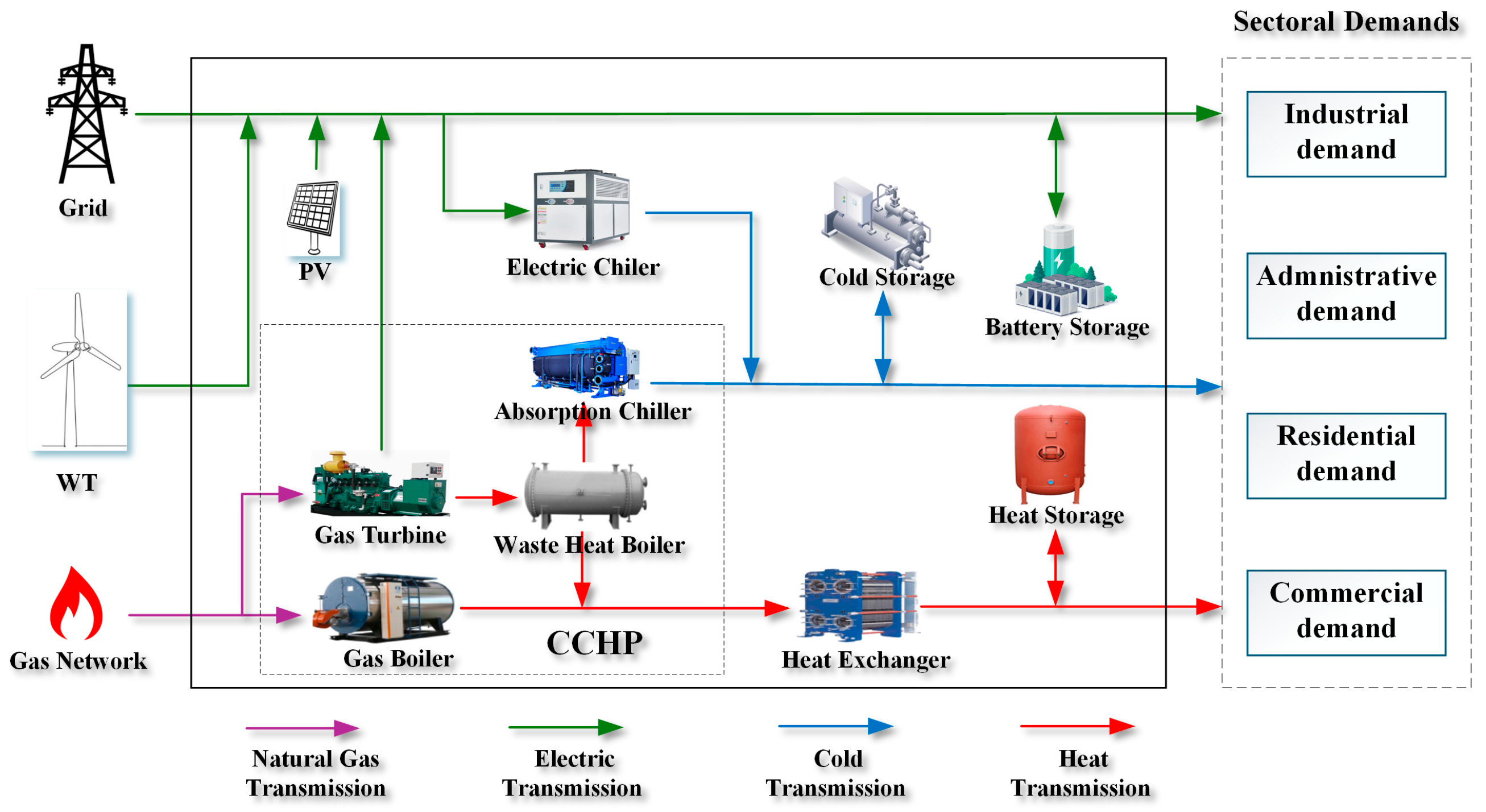
The overall energy flow structure of the IPEH is illustrated in
Figure 1. Electricity demand of the IPEH is supplied by the upstream grid, supplemented by onsite rooftop PV and WT from nearby wind farms, while the gas network provides natural gas. The CCHP system consists of energy conversion units, including a gas turbine (GT), a gas boiler (GB), and a WHB, which recovers exhaust heat from the GT. An absorption chiller (AC) consumes heat and supplies cooling energy. An electric chiller (EC) provides additional cooling energy. The system is equipped with multi-energy storage, including battery energy storage (BS), heat storage (HS) tank, and cold storage (CS). The units are interconnected through electricity, heating, and gas transmissions.
The studied IPEH features multi-energy demands distributed across different sectors, including industrial, commercial, residential, and administrative sectors, with distinct electricity, heating, and cooling characteristics.
The IPEH integrates electricity and heating networks to enable energy exchange among sectors. Cooling energy is assumed to be locally supplied within each sector due to its low distribution efficiency over long distances, which is effective only within 1 km [
16].
2.1. Heat Network
The heating network serves as the physical medium for thermal energy transfer among different sectors of the industrial park. It plays a critical role in achieving the coordinated multi-energy operation.
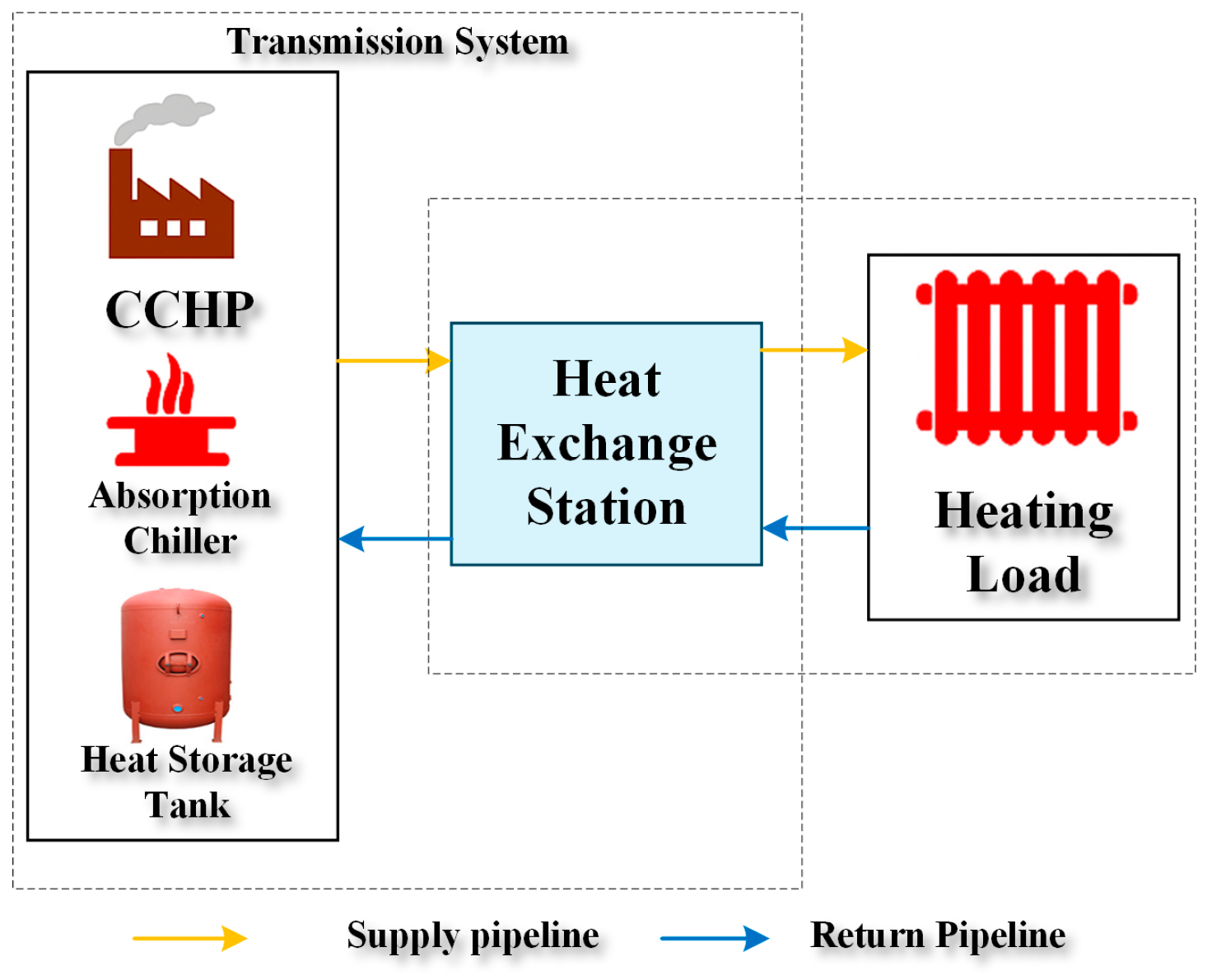
It consists of supply and returns pipelines, forming a circulation system, as illustrated in
Figure 2. The overall heating system can be divided into a transmission system and a distribution system, physically separated by heat-change stations [
21].
The transmission system is associated with each sector and includes local heat generation and conversion units. The distribution system corresponds to the heating network that enables thermal energy exchange among end-users across different sectors.
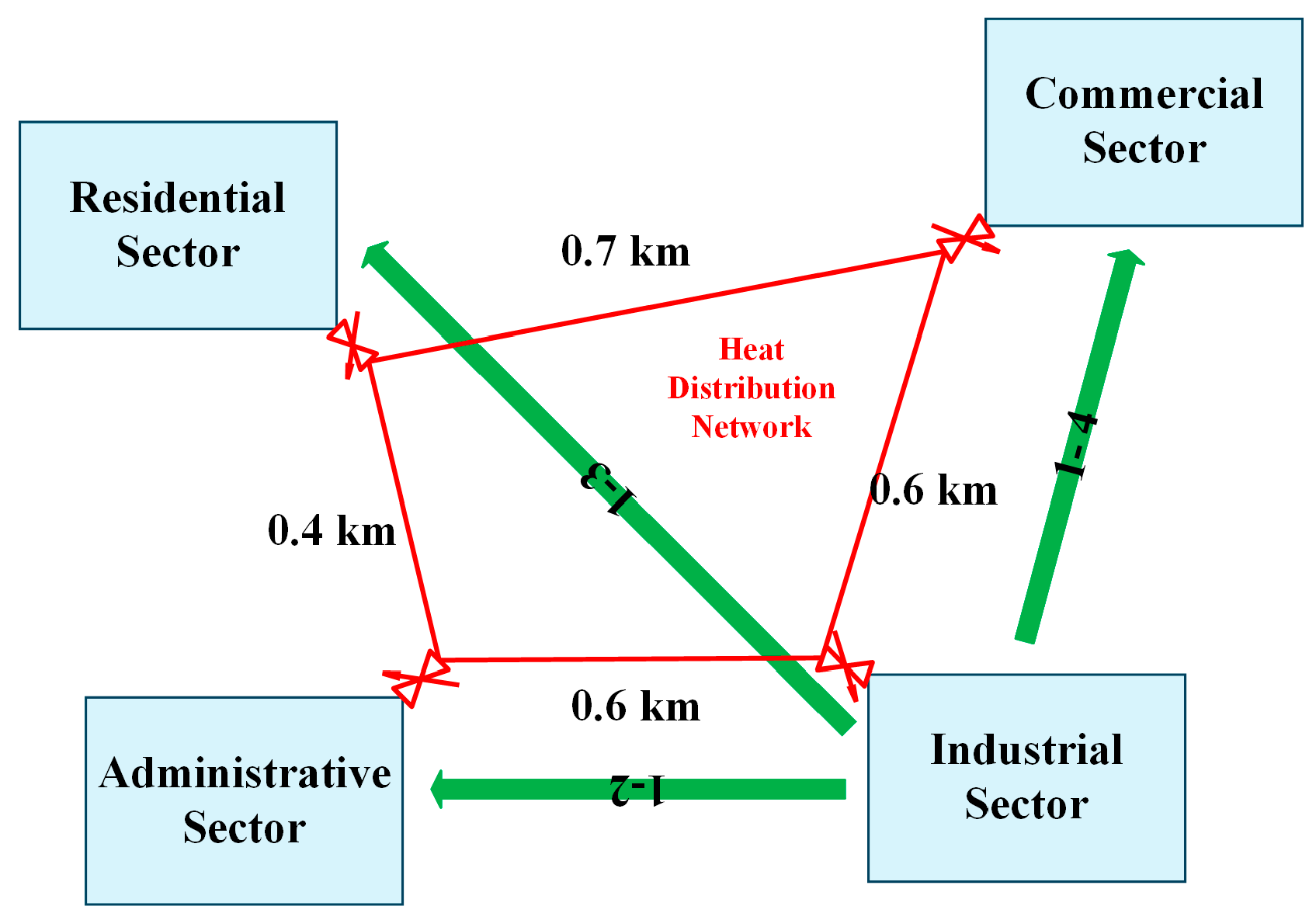
The heating distribution network adopts a looped topology, with the different sectors arranged according to a multi-sector IES for a district in Zhejiang, as shown in
Figure 3. The looped configuration allows pipeline sections to be isolated by gate valves for maintenance without interrupting the overall heat supply. The inter-sector heating network distances are derived from a park-level IES [
17].
A simplified linearized thermal network model is adopted based on nodal energy conservation. Heat exchange between sectors is represented through inter-sector heat flows, while detailed hydraulic and temperature dynamics are neglected. The heat balance at each node is determined by incoming and outgoing heat flows together with the local thermal demand. Since the industrial park covers a relatively small area with short transmission distances, the heating network is modeled under steady-state conditions with constant supply and return temperatures.
Heat losses are assumed to be proportional to the pipeline length, while no heat loss is assumed at the network nodes. These losses are incorporated into the heat flow balance through a distance-dependent loss coefficient. This simplified formulation preserves MILP tractability and computational efficiency for day-ahead scheduling, which is essential for the proposed coordinated optimization framework. The adopted assumptions prioritize the analysis of inter-sector energy coordination over detailed thermo-hydraulic transient behavior. Consequently, these assumptions are not expected to significantly affect the comparative evaluation of the three coordination scenarios, whose primary objective is to quantify the economic and environmental benefits of electricity and heat sharing.
Let
denote sectoral nodes, and
the scheduling interval. The heat flow transmitted from node
to node
is denoted by
. The heat loss along pipeline
is modeled as:
where
is the length of the pipeline between nodes
and
(km), and
is the heat loss coefficient per unit length (kW/km).
Accordingly, the effective heat received at node
is expressed as:
The nodal heat balance for each sector is then given by:
where
represents the net heat exchanged between sector
and the heating network (MW), and
denotes the set of nodes connected to node
.
represents the heat transferred from node
to node
, while
represents the heat transferred from node
to node
(MW).
The heat flow in each pipeline is constrained by its transmission capacity:
where
denotes the heat flow through the pipeline connecting nodes
and
at time interval
, and
is the maximum heat transmission capacity (MW). A positive value of
indicates heat flow from node
to node
, while a negative value indicates heat flow from node
to node
.
2.2. Electricity Network
The electricity network is responsible for distributing electric power among the industrial park’s sectors via tie-lines, enabling inter-sector power exchange.
In the considered IPEH structure, every sector can purchase electricity from the upstream grid. However, in the internal network, the industrial sector serves as the reference node. The administrative, residential, and commercial sectors are connected to the industrial sector via electricity tie lines 1–2, 1–3, and 1–4, respectively, as illustrated in
Figure 3. This configuration reflects a typical radial distribution structure within industrial parks.
Given the relatively short physical distances between sectoral nodes (less than 5 km), internal electrical transmission losses are neglected. They are not expected to significantly affect the comparative evaluation of the simulation scenarios. The power flow through each tie-line is constrained by its transmission capacity and is expressed as:
where
denotes the power flow through the tie-line
at time interval
, and
is the maximum transmission capacity of the tie-line
(MW).
A positive value of indicates power flow from the industrial reference node to the connected sector, while a negative value represents reverse power flow from that sector toward the industrial node.
4. Simulation Results and Discussion
4.1. Simulation Scenarios
To study the effectiveness and performance of the proposed cooperative scheduling model, three scenarios are considered. These scenarios are designed progressively to isolate and quantify the impacts of different levels of inter-sector energy sharing.
Scenario 1: Each sector operates independently without inter-sector energy exchanges. Electricity, heating, and cooling demands are satisfied locally. Accordingly, inter-sector power exchange through tie-lines and heat flow are set to zero. This scenario is considered the base scenario.
Scenario 2: Inter-sector electricity exchange is enabled through the tie-lines between different sectors, allowing electricity sharing. However, thermal systems remain locally operated, that is, the inter-sector heat flow is set to zero.
Scenario 3: Both electricity and heat exchanges are enabled among sectors and their respective networks, allowing fully coordinated operation across the IPEH.
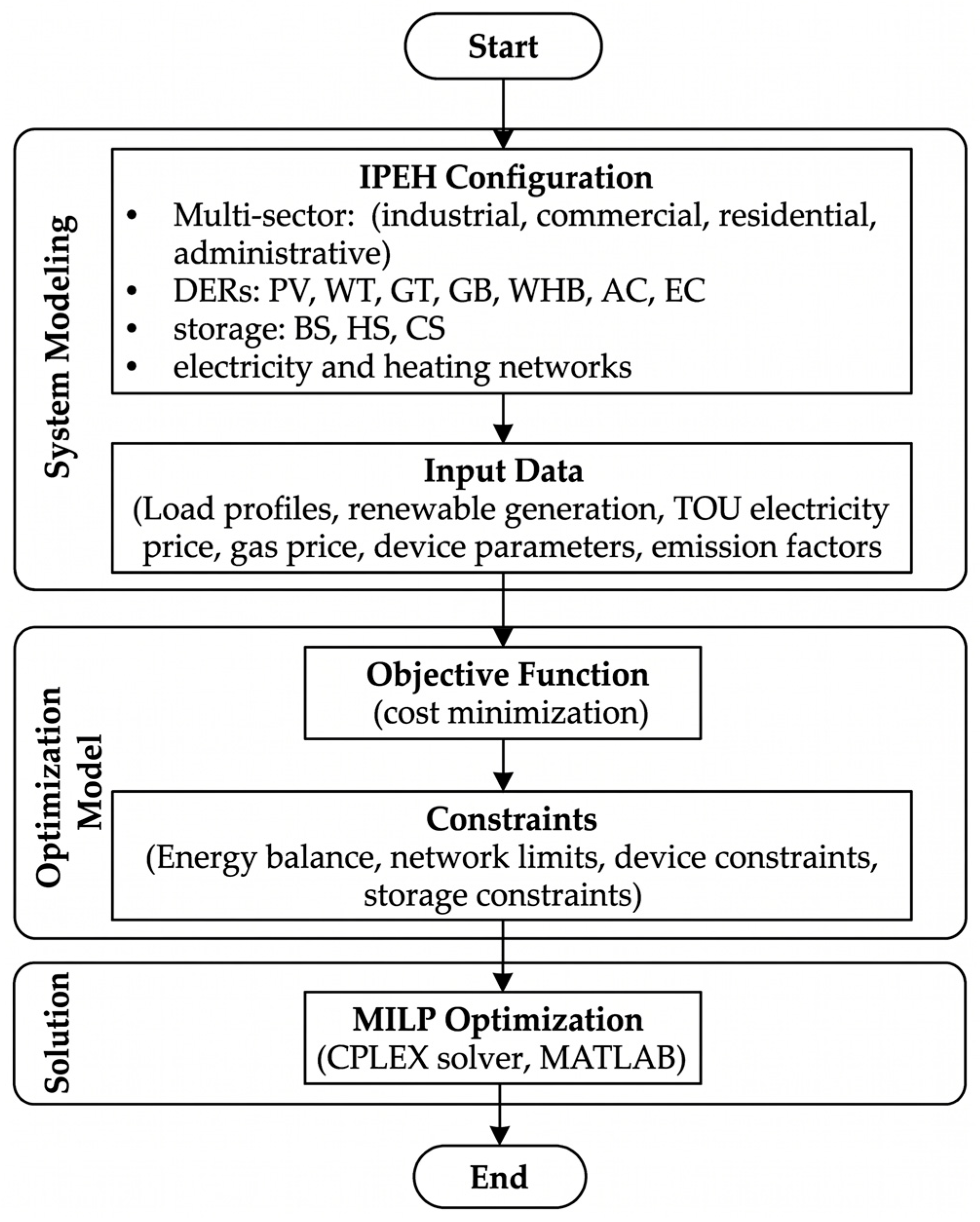
The MILP model is implemented in MATLAB 2018a and solved using CPLEX 12.9. Simulations are conducted to evaluate scheduling results, operating cost, emissions, and renewable curtailment. The proposed model is illustrated in
Figure 5.
4.2. Parameter Settings
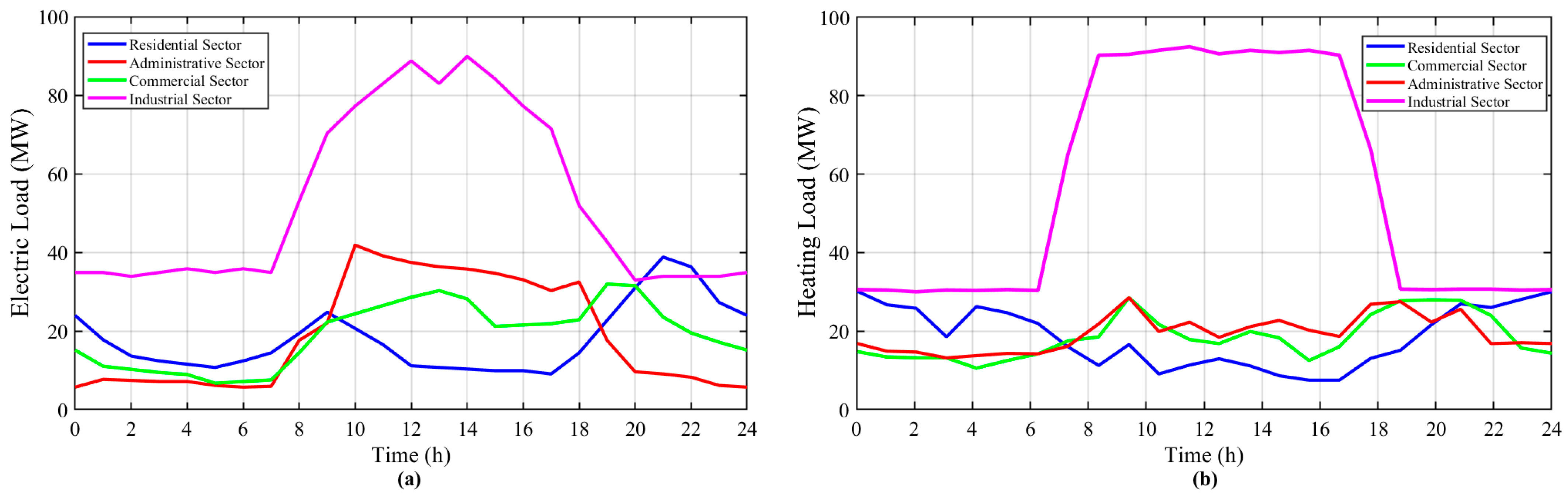
A revised multi-sector IES of a district in Zhejiang is adopted to verify the proposed scheduling model. The system consists of four sectors: industrial, administrative, residential, and commercial, as shown in
Figure 4. The configuration and device capacities for each sector are listed in
Table A1 and
Table A2, respectively. The parameters of the energy storage devices are summarized in
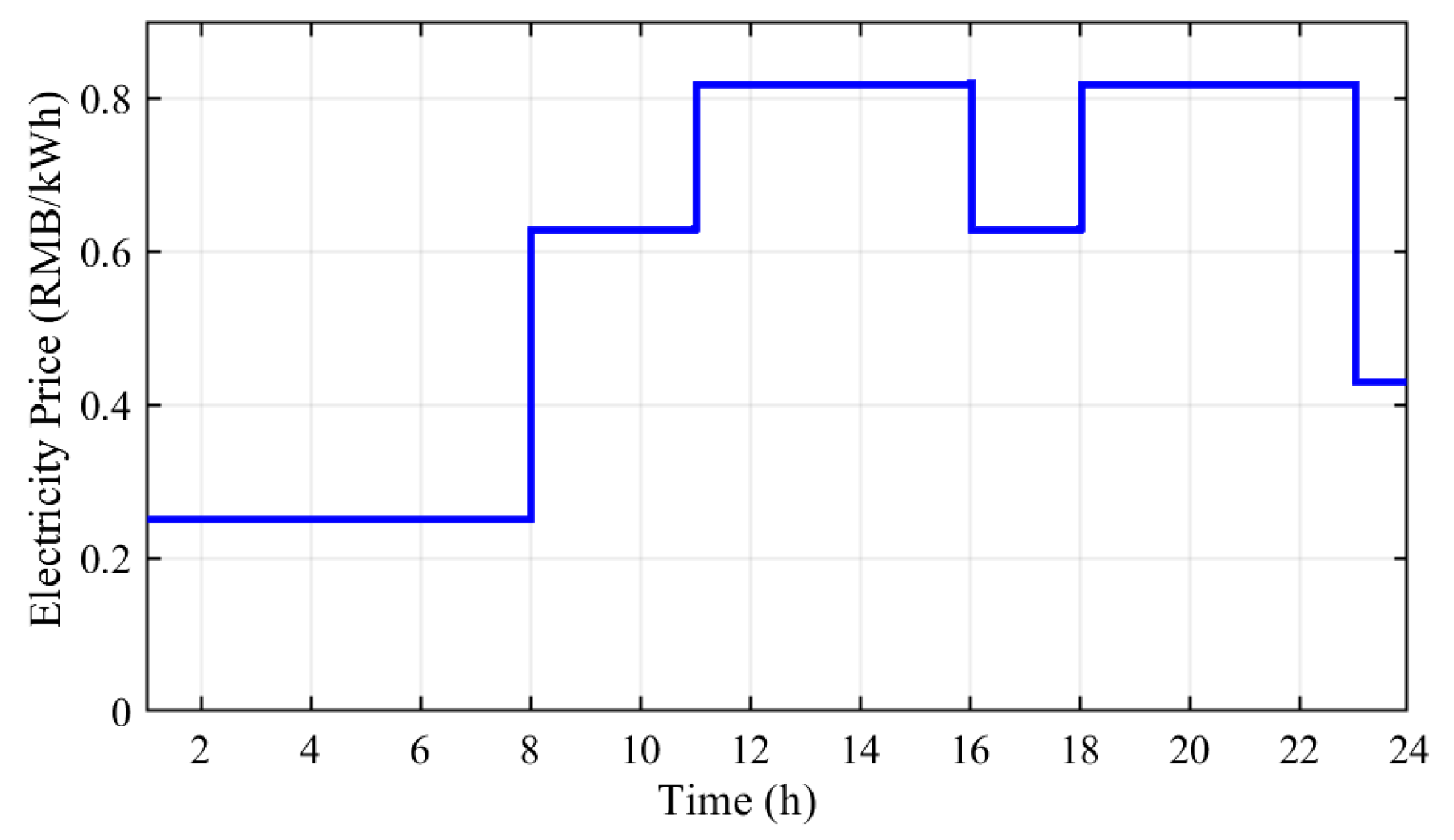
Table A3. The adopted TOU electricity pricing corresponds to the region’s winter tariff structure, as shown in
Figure 6 [
26]. The natural gas price is set to 3.23 RMB/m
3 with a calorific value of 9.78 kWh/m
3. Emission factors and penalty coefficients for GHG emissions are listed in
Table A4 [
20,
23,
27]. Other essential simulation parameters are presented in
Table A5 [
14,
15,
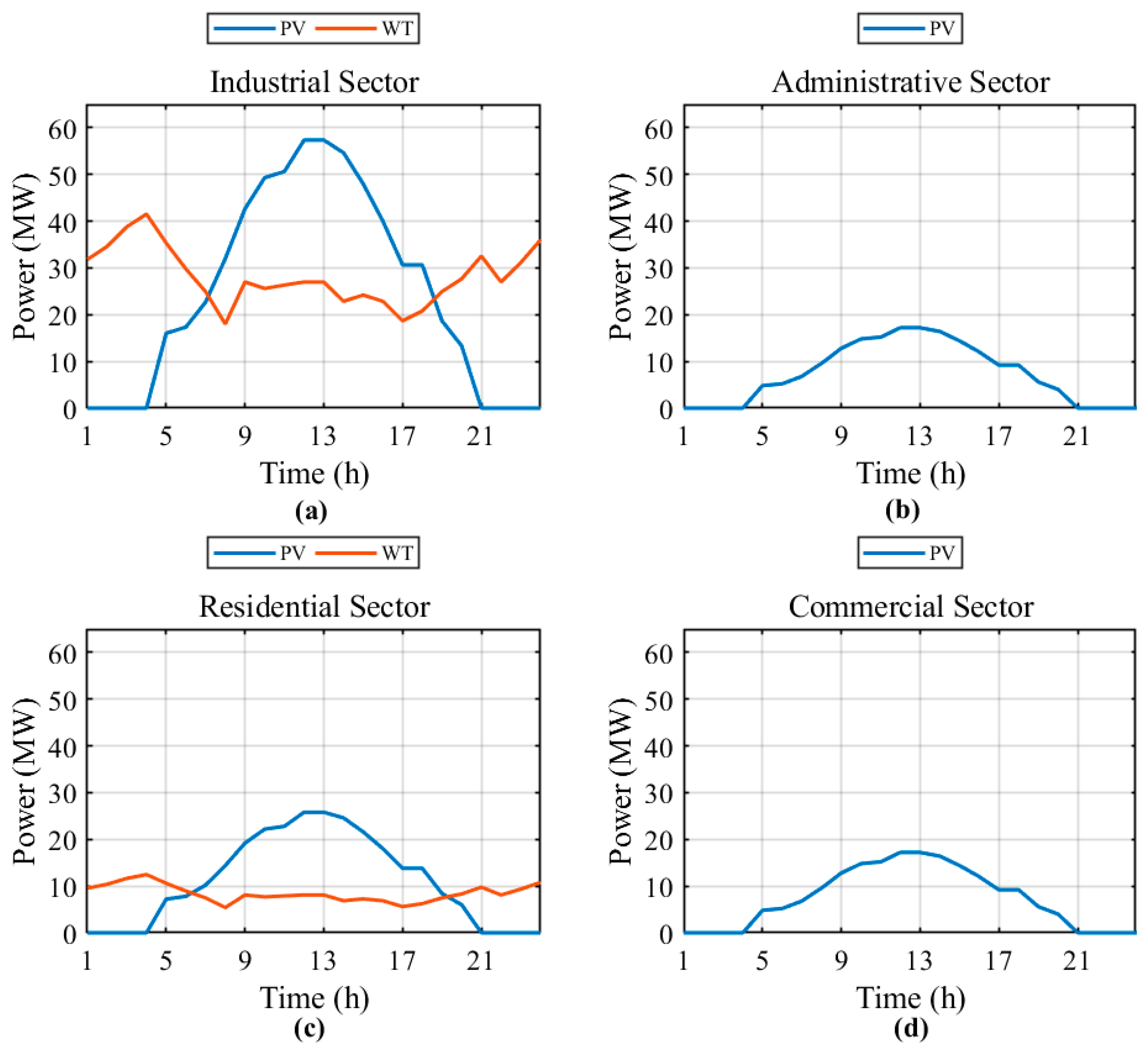
24]. Representative scaled winter PV and WT generation profiles are adopted for each sector, as shown in
Figure 7, based on operational data sourced from [
16] under typical winter conditions. The average capacity factors of PV and WT in Zhejiang is 17.64% and 16.07%, respectively [
28,
29].
4.3. Optimal Operation Results Analysis
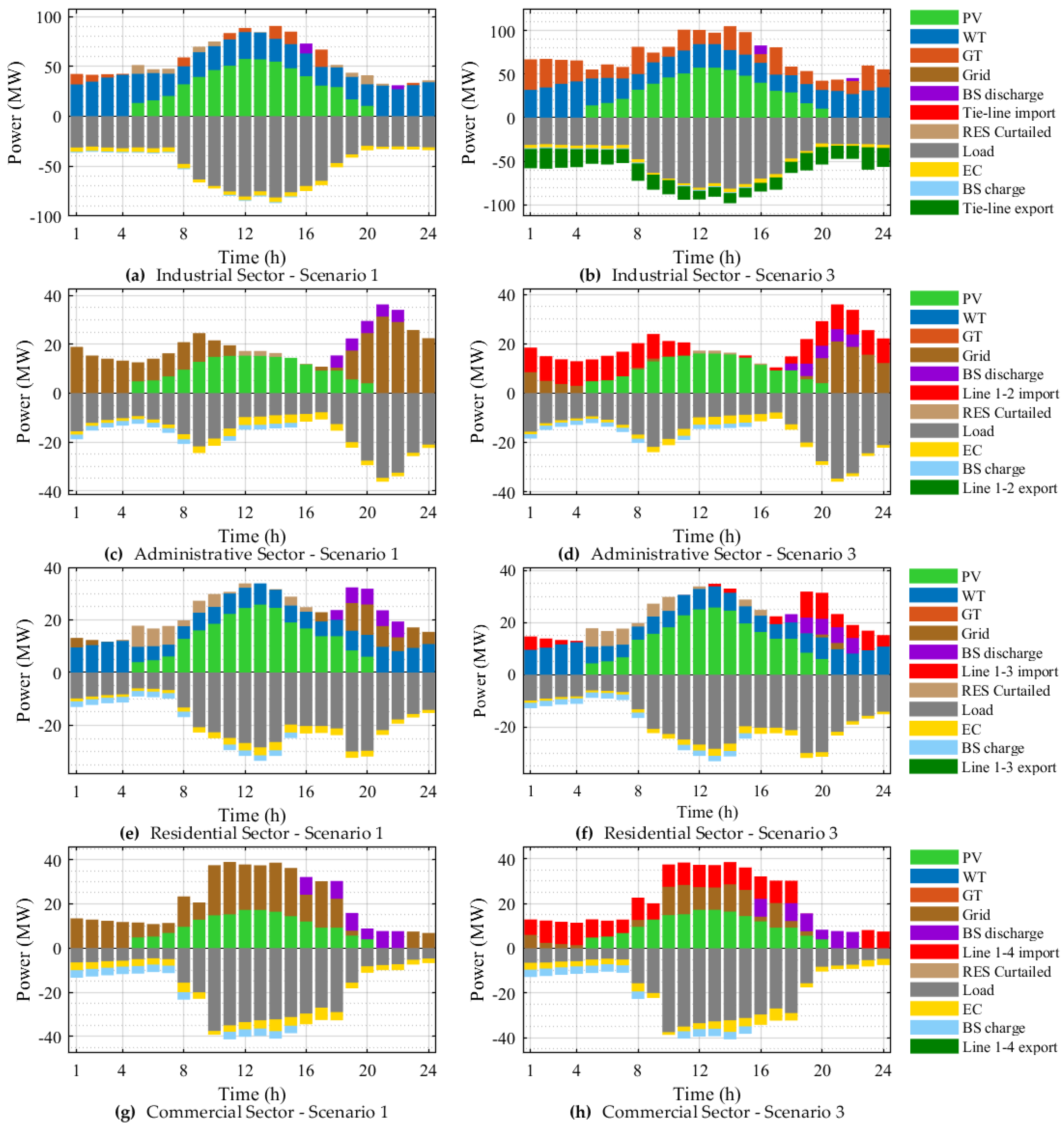
Figure 8 presents the 24 h electricity dispatch of the four sectors under Scenarios 1 and 3, while Scenario 2 follows the same electricity tie-line exchange pattern as Scenario 3. In Scenario 1, the industrial sector experiences significant WT curtailment of approximately 9 MW during nighttime valley periods from 05:00 to 07:00, with additional curtailment around 09:00–10:00 and again during evening hours at 19:00 and 24:00, when industrial electricity demand is relatively low due to reduced production activity. During these periods, battery storage mainly charges from 01:00 to 08:00 and again from 11:00 to 15:00 to absorb excess RES generation, and discharges mainly during peak-price periods (16:00 and 22:00), supporting evening electricity demand and reducing grid dependence. The administrative sector relies heavily on grid purchases during evening peak demand because PV generation is unavailable during this period and serves as the main local renewable source. PV curtailment occurs around midday (11:00–14:00), when solar generation reaches its peak. Grid electricity is mainly purchased during the valley price (01:00–08:00) to reduce operating costs. The residential and commercial sectors show similar patterns, with renewable surplus during low-load periods and strong reliance on grid imports during daytime and evening peak demand periods.
When electricity and heat exchanges are enabled in scenario 3, significant spatial redistribution of RES becomes possible. The industrial sector becomes the main electricity exporter and absorbs the total RES curtailed power in independent mode, supplying surplus its WT power and excess electricity generated by GT. Administrative and commercial sectors absorb most of the daytime exported electricity, while the residential sector mainly receives support during evening peak demand periods. BS operation becomes more coordinated, with charging concentrated during renewable surplus periods and discharging aligned with evening peak loads.
As a result, the total grid purchase cost decreases from 338,380 RMB to 130,620 RMB, as the GT also generates more electricity. RES curtailment decreases from 95.72 MWh to 40.02 MWh, corresponding to a 58.19% reduction.
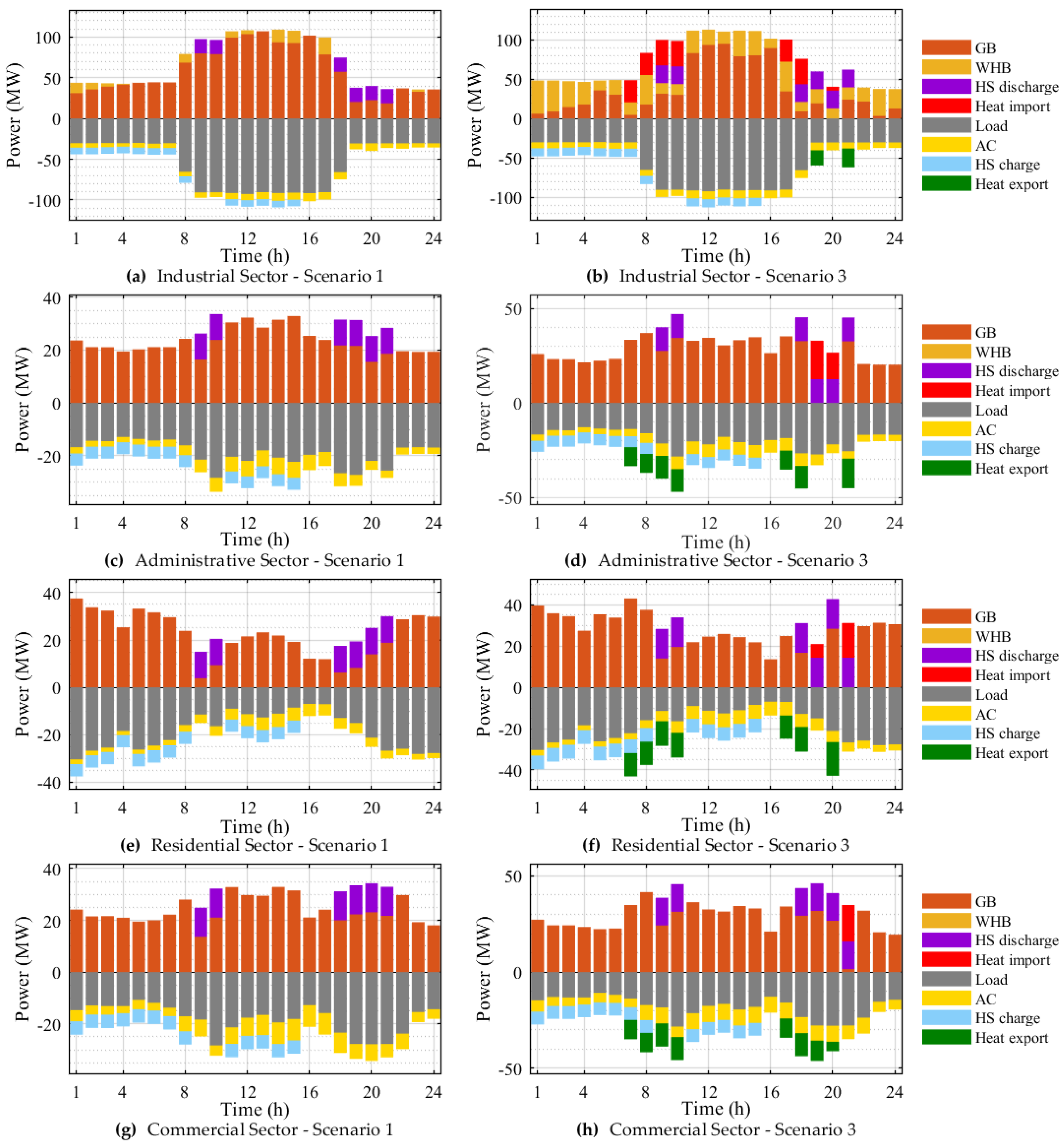
As shown in the heating dispatch results in
Figure 9, each sector meets its heating demand mainly through local GB, while HS provides limited intra-sector shifting under independent IPEH operation. HS mainly charges during low-demand periods from 02:00 to 08:00 and discharges during short heating peaks, especially in the morning and evening. In independent operation, each sector depends primarily on local gas consumption, leading to high gas boiler use, particularly in the industrial sector, which has the highest heat demand during operating hours.
The possibility of having inter-sector heat exchanges in scenario 3 significantly changes the heating supply structure of the IPEH. Industrial GT electricity output increases substantially, driving a strong increase in WHB heat generation. Heating supply is therefore jointly supported by the WHB local GB in the industrial sector. During morning heating peaks from 07:00 to 10:00, the industrial sector imports heat from other sectors, helping reduce GB’s dependence. Additional heat transfer occurs during evening periods from 17:00 to 21:00.
HS charges during nighttime periods (02:00–08:00) and discharges during morning and evening heating peaks to support both local heating demand and inter-sector heat transfer. It is observed that the WHB recovered heat increases from 103.74 MWh in scenario 1 to 568.40 MWh in scenario 3. In comparison, system-wide GB output decreases significantly from 3053.59 MWh to 2450.52 MWh, thereby improving WHB utilization in a CCHP configuration.
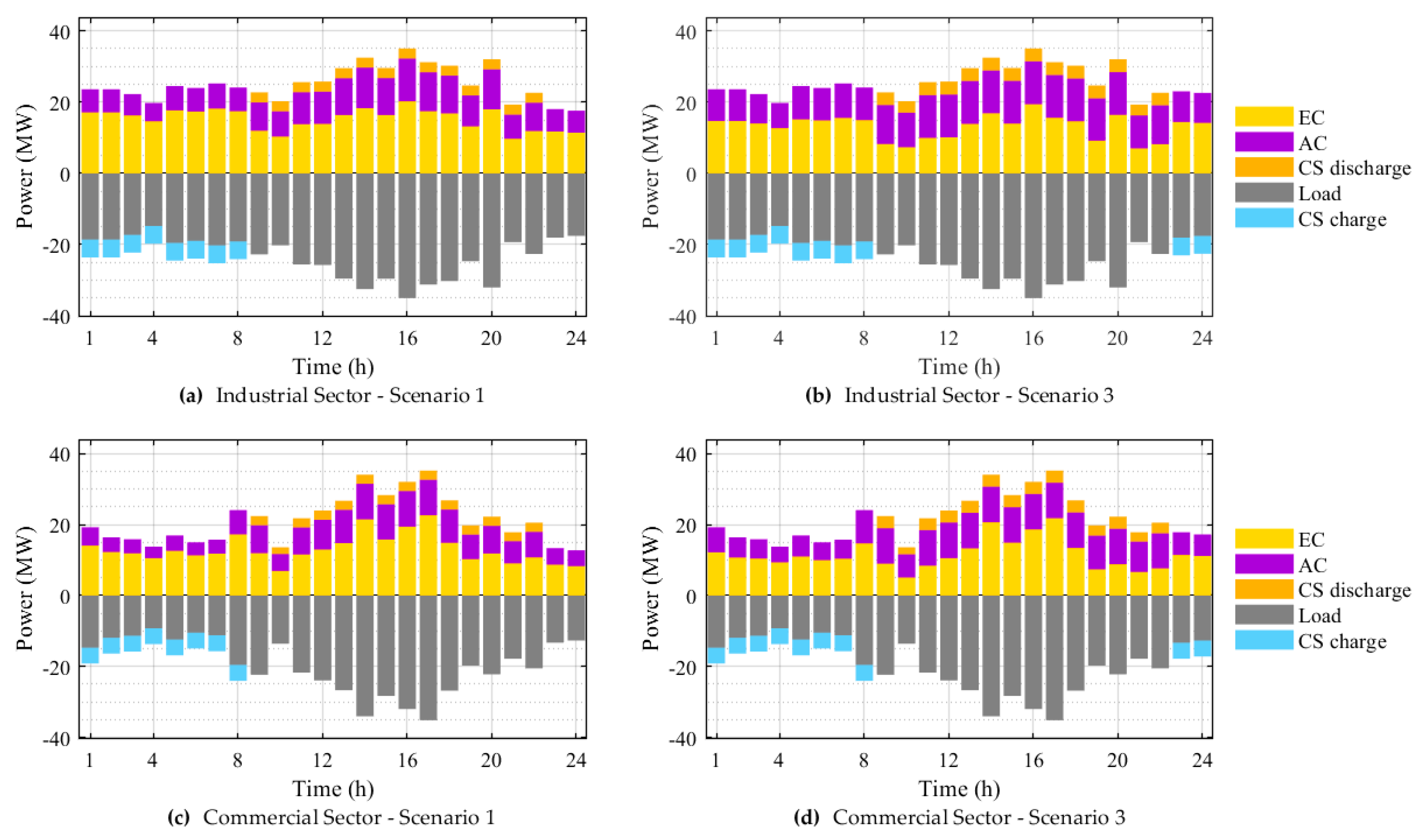
Since cooling energy cannot be transferred among sectors, cooling demand is satisfied locally by AC, EC, and CS, as shown in
Figure 10. The CS system is only installed in the industrial and commercial sectors, and
Figure 10 presents their respective cooling dispatch under Scenarios 1 and 3. In both scenarios, the AC output reaches its highest level during daytime hours when WHB is at its maximum, reducing dependence on EC operation and grid electricity consumption. CS charges during low-price valley periods (01:00–08:00) and discharges during afternoon cooling peaks (13:00–18:00), particularly in the commercial sector where cooling demand is highly concentrated during business hours.
Under coordinated operation (scenario 3), the role of AC becomes more significant because increased GT operation enhances WHB heat generation, providing more thermal energy for AC cooling production, especially in the industrial sector. Although direct cooling exchange does not occur in IPEH, coordinated electricity and heating operations indirectly improve cooling performance by increasing AC utilization and reducing cooling electricity consumption.
The overall economic performance of the IPEH scheduling model is presented in
Table 2, under the three scenarios. The total operating cost reaches 1,880,270 RMB in Scenario 1, representing the highest economic cost due to independent sector operation, high grid dependence, and significant RES curtailment. Electricity coordination through tie-line exchange in scenario 2 reduces the grid purchase cost from 338,380 RMB to 203,340 RMB. It decreases RES curtailment penalties from 55,940 RMB to 23,390 RMB, resulting in a 3.22% reduction in total operating cost. However, because heat-network coordination is unavailable, gas costs increase slightly due to greater GT operation required to support electricity exchange. In Scenario 3, coordinated electricity and heat exchange further improve system performance. Lower grid and environmental costs, along with reduced GB operations and improved WHB usage, result in the lowest total operating cost, corresponding to a 6.95% reduction compared with Scenario 1.
Regarding environmental performance,
Table 3 summarizes the results. In scenario 2, electricity coordination improves renewable energy utilization and reduces external electricity purchases, leading to emission reductions of 7.42% for CO
2, 4.89% for SO
2, and 19.59% for NO
x, compared with scenario 1. Renewable energy curtailment decreases from 95.72 MWh to 40.02 MWh, corresponding to a 58.19% reduction. In Scenario 3, more significant environmental benefits are achieved. CO
2 emissions decrease from 2,153,230 kg to 1,763,180 kg, corresponding to an 18.11% reduction, while SO
2 and NO
x emissions decrease by 23.80% and 38.42%, respectively. These improvements are mainly attributed to reduced GB operation, enhanced WHB heat recovery, and higher renewable energy penetration. The results indicate that electricity coordination primarily increases the share of renewable energy, while heating coordination further enhances fuel efficiency and overall environmental performance.
4.4. Sensitivity Analysis
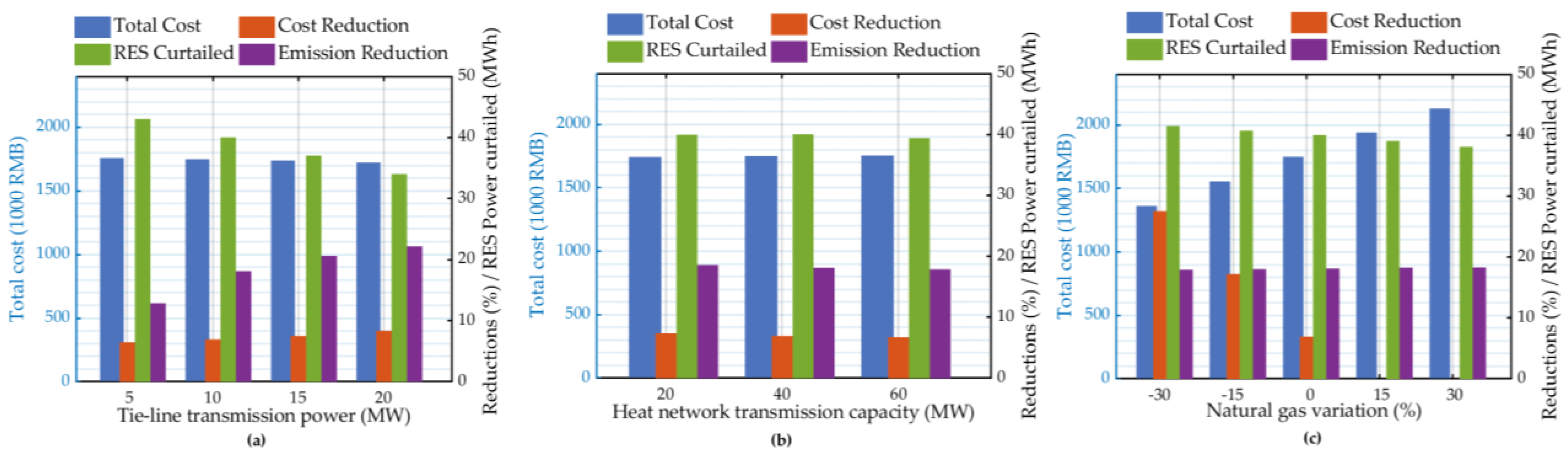
To evaluate the influence of key network and economic parameters on the coordinated operation of the sector-coupled IPEH, a sensitivity analysis is conducted based on scenario 3. The electricity tie-line capacity ranges from 5 MW to 20 MW, the heat network transfer capacity ranges from 20 MW to 60 MW, and the natural gas price is within −30% to +30% of the base price. The results are shown in
Figure 11.
The strongest observed influence is on electricity tie-line capacity. As tie-line capacity increases, total operating costs decrease, while cost reduction, renewable energy utilization, and emission reductions improve significantly. This confirms that stronger electricity transmission enhances the sharing of renewable energy across sectors and reduces grid dependence. In contrast, heat network transfer capacity shows weak sensitivity. Increasing heat transfer capacity causes only minor changes in cost and environmental performance, indicating that the baseline capacity is already sufficient for effective inter-sector heat sharing.
For the natural gas price, the main impact is on economic performance. As gas prices rise, total operating costs increase, and the economic benefit of coordination decreases. However, renewable curtailment and emission reductions remain relatively stable, indicating that gas prices mainly affect costs rather than renewable energy penetration.
5. Discussion
The results demonstrate that coordinated multi-sector operation enhances both the economic and environmental performance of the proposed IPEH. While the reduction in operating costs is moderate compared to independent operation, these gains are achieved solely through operational coordination, without requiring additional generation capacity. For high-consumption industrial parks, even minor percentage savings yield significant long-term financial and environmental benefits.
Key operational trade-offs emerge across the scenarios. In Scenario 2, inter-sector electricity exchange boosts GT utilization to support sharing between sectors with complementary loads, reducing grid dependence and renewable curtailment at the expense of higher natural gas consumption. However, incorporating coordinated heat exchange in Scenario 3 mitigates this drawback; the recovered waste heat from the GT is more effectively utilized through the WHB and the heating network, reducing redundant GB operation. Consequently, the increase in GT operation does not lead to higher overall emissions; instead, coordinated thermal recovery reduces CO2, SO2, and NOx emissions. These outcomes underscore the operational value of sectoral load complementarity. Nevertheless, reliance on increased GT operation (and thus on natural gas) introduces potential vulnerabilities to gas price volatility and to long-term decarbonization targets.
The stable electricity demand and high renewable availability in the industrial sector effectively balance the evening peaking residential demand and daytime-concentrated commercial loads. Coordinated exchange allows local surpluses to be transferred to sectors with deficits, demonstrating that explicitly modeling sectoral heterogeneity yields richer operational insights than aggregated single-node formulations.
The framework’s value extends beyond cost reduction. It maximizes renewable utilization, leverages flexibility via multi-carrier storage (BS, HS, CS), and strengthens waste heat recovery. Sensitivity analysis indicates that electricity tie-line capacity is the dominant driver of system performance. In contrast, heat network capacity shows limited sensitivity, suggesting that the assumed baseline capacity is already adequate for effective inter-sector heat sharing. This emphasizes that robust inter-sector electrical connectivity is vital to unlocking these synergies, while heat network sizing offers lower marginal returns in this context.
The adopted simplifications, including linearized network models and constant conversion efficiencies, preserve computational tractability while maintaining sufficient modeling fidelity for day-ahead coordinated scheduling. For larger industrial parks with higher sectoral density or finer temporal resolution, advanced solution strategies, including decomposition techniques, metaheuristic approaches, and learning-based algorithms, could be explored to enhance computational scalability.
6. Conclusions
Given the significant share of industrial energy consumption in China and its environmental impacts, improving energy efficiency in industrial parks is a strategic priority for achieving the national goals of carbon peaking and carbon neutrality. This paper proposed a coordinated optimal scheduling model formulated as a MILP for a multi-sector IPEH, capturing the inherent differences in the demand characteristics of its industrial, administrative, residential, and commercial sectors. Coordinated electricity and heat exchange is enabled through tie-lines for electricity and a looped heat network for heating, while the cooling operation remains local. This work extends conventional single-node IPEH formulations, considering sectoral demand heterogeneity and coordinated inter-sector electricity and heat exchange among industrial, commercial, residential, and administrative sectors. The objective function minimizes total operating cost, including electricity purchase from the utility grid, natural gas consumption, operation and maintenance, environmental penalties for CO2, SO2, and NOx emissions, and renewable energy generation curtailment. The optimization is subject to physical operational constraints of energy conversion units, multi-energy storage systems, and power and heating networks. The optimization problem is solved using CPLEX in MATLAB.
Simulation results for a case study in Zhejiang demonstrate the effectiveness of the proposed optimal scheduling framework. Compared with independent operation, coordinated electricity and heat inter-sector exchanges improve system performance, achieving a total cost reduction of 6.95%, 18.11% reduction in CO2 emissions, 23.80% reduction in SO2 emissions, 38.42% reduction in NOx emissions, and 58.19% reduction in renewable energy curtailment. Sensitivity analysis demonstrates the robustness of the proposed framework. Electricity tie-line capacity has the strongest influence on system performance, while heat network capacity shows limited sensitivity. Natural gas prices mainly affect total operating costs, with a limited impact on renewable energy penetration and emission reductions.
While this study focuses on deterministic day-ahead scheduling of a sector-coupled IPEH, several directions remain for future research. Uncertainties associated with renewable generation, multi-energy demands, and volatile market prices can be addressed through stochastic or robust optimization approaches. The proposed framework can also be extended to intra-day scheduling, internal electricity trading among sectors, and external grid-market interaction under different seasonal operating conditions. In addition, future work may investigate optimal sizing and planning of inter-sector infrastructure and energy conversion units to balance investment cost against long-term operational benefits.