1. Introduction
Carbon capture, utilization, and storage (CCUS) technology is a critical pathway for promoting low-carbon transformation of fossil energy and achieving large-scale greenhouse gas emission reductions, holding significant strategic importance for fulfilling the worldwide goals of carbon dioxide capture and safe storage [
1,
2,
3,
4,
5]. However, during geological CO
2 storage, leakage may occur due to wellbore integrity failure, severely restricting the safe application and large-scale deployment of this technology [
6,
7]. Among the various factors, the corrosion and degradation of the cement sheath in the acidic CO
2–formation water environment is a primary cause of the formation of micro-annuli and microcracks, which serve as leakage pathways [
8,
9,
10,
11]. Therefore, the development of functional materials that can adapt to acidic environments and achieve efficient and intelligent plugging of leakage channels has become an urgent requirement for ensuring the long-term safety of CCUS.
Current technologies aimed at enhancing wellbore integrity primarily focus on the improvement of anti-corrosion cement systems or cement re-injection; however, these methods have limitations in terms of injectability, adaptability, and long-term effectiveness [
12]. In recent years, CO
2-responsive gels have shown significant potential in the field of CCUS leakage prevention and control due to their unique environmental responsiveness, excellent injectability, and tailorable plugging performance [
12]. CO
2-responsive gels can undergo controlled swelling in response to changes in formation conditions (primarily pH), forming self-adaptive physicochemical barriers within cement microcracks and pores, thereby effectively plugging leakage pathways. Nevertheless, existing gel systems still face severe challenges in maintaining mechanical strength and chemical stability in long-term acidic storage environments. Consequently, the development of polymer gel systems that can maintain high strength and stability in CO
2-rich acidic environments has become a research focus.
Kang et al. prepared a polymer gel system (acid-responsive preformed particle gels, AR-PPGs) resistant to acidic CO
2 environments via free radical polymerization and systematically investigated its structure, swelling performance, shear resistance, and rheological properties. Experimental results showed that the swelling ratio of AR-PPGs in acidic environments was significantly higher than that of conventional polymer gel systems, while also exhibiting excellent shear resistance and rheological characteristics. Further studies confirmed that the plugging efficiency of AR-PPGs in low-permeability microfractured cores reached 70.8%, demonstrating great potential for CO
2 channeling prevention [
13]. Dai et al. developed a CO
2-responsive in situ gel system using the surfactant erucic amide propyl dimethylamine (EAPD) and sodium salicylate (NaSal). Prior to CO
2 exposure, the system exhibited low viscosity for easy injection. Upon CO
2 contact, spherical micelles transformed into wormlike micelles within 150 s, forming a high-strength three-dimensional network that achieved effective CO
2 plugging with over 97% efficiency [
14]. Hou et al. designed a CO
2-responsive nanocellulose gel by mixing nanocellulose aqueous solution with ethylenediamine. CO
2 injection induced protonation of ethylenediamine, increasing the ionic strength of the solution and promoting nanocellulose aggregation to form a gel. Further experiments demonstrated that this gel effectively inhibited CO
2 channeling [
15]. Although these studies have made significant progress in addressing CO
2 leakage issues in CCUS, the acidic environment induced by CO
2 still poses a substantial challenge to the strength and stability of polymer gel systems. Thus, how to maintain high strength and long-term stability under acidic conditions remains a key research direction.
In this study, to address the plugging requirements of microcracks, micro-annuli, and preferential flow channels in the cement sheath during CCUS geological storage, a multi-crosslinked CO2-responsive gel particle system (MCCR-PPGs) was successfully constructed. Vinyl silica nanoparticles (VSNPs) were employed as nano-crosslinkers and reinforcing agents, combined with the natural macromolecule sodium alginate (SA), CO2-responsive monomers (N,N-dimethylacrylamide (DMAA), N-vinylimidazole (VIM), and N-vinylpyrrolidone (NVP)), an organic crosslinker (N,N′-methylenebisacrylamide, MBA), and an ionic crosslinker (CaCl2). The optimal formulation was determined through single-factor optimization experiments, and the stability and plugging performance of MCCR-PPGs in acidic environments were verified through systematic characterization. This study provides a critical material solution for wellbore integrity in CCUS and holds significant engineering application value for preventing CO2 leakage and ensuring storage safety.
3. Results and Discussion
3.1. Design Strategy
To enhance the stability and mechanical strength of preformed particle gels in CO2 acidic environments, this study successfully constructed a nanoparticle-reinforced multi-crosslinked CO2-responsive gel system from three perspectives: selection of functional monomers, nanomaterial reinforcement, and optimization of crosslinking structure. The specific design strategy is below.
- (1)
Introduction of CO2-Responsive Monomers
Three monomers with excellent CO
2 responsiveness (DMAA, VIM, and NVP) were selected to obtain P(DMAA-VIM-NVP) polymer chains rich in high-density CO
2-responsive groups via free radical polymerization [
20,
21,
22]. The molecular structures of DMAA, VIM, and NVP all contain tertiary amine groups (-NR
3) with CO
2-responsive characteristics. In a CO
2 acidic environment, these tertiary amine groups undergo protonation to form R
3NH
+, thereby increasing the electrostatic repulsion between polymer chains and inducing additional swelling of the polymer, thus achieving CO
2 responsiveness.
- (2)
Crosslinking and Reinforcement with Nanomaterials
Traditional PPGs are prone to strength degradation or even structural degradation in CO
2 acidic environments. To address this issue, vinyl silica nanoparticles (VSNPs) were introduced as crosslinkers and reinforcing agents. The surfaces of VSNPs are modified with vinyl functional groups, enabling copolymerization with monomers to form stable nano-crosslinking points. In addition, leveraging their nanoscale size effects and interfacial effects [
23,
24], VSNPs significantly enhance the mechanical strength and structural stability of PPGs, enabling excellent performance in CO
2 acidic environments.
- (3)
Construction of Multi-Crosslinking Structure
The crosslinking structure plays a critical role in the strength and stability of PPGs in CO
2 acidic environments [
25]. To this end, a quadruple crosslinking structure was constructed in the PPG system, as detailed below:
Organic crosslinking by MBA: The introduction of the organic crosslinker N,N′-methylenebisacrylamide (MBA) enabled chemical crosslinking of the P(DMAA-VIM-NVP) polymer chains, thereby enhancing the mechanical strength of the gel.
Nano-crosslinking by VSNPs: Vinyl-functionalized silica nanoparticles (VSNPs) copolymerized with the polymer chains to form nano-crosslinking points, further improving the mechanical properties of the gel.
Self-crosslinking of DMAA: In addition to its CO
2-responsive properties, DMAA also possesses self-crosslinking capability. During copolymerization with other monomers, DMAA forms additional self-crosslinking points [
26], increasing the crosslinking density of the system.
Ionic crosslinking by SA and Ca
2+: By introducing the biopolymer sodium alginate (SA) and the metal crosslinking ion Ca
2+, ionic crosslinking points were constructed through the coordination interaction between the abundant carboxylic acid groups in SA and Ca
2+ [
27].
3.2. Optimization of Synthesis Conditions
In this experiment, the total mass of the system was fixed at 30 g. The content of the macromolecular SA was found to have a significant impact on the system performance. Excessive SA content led to difficulties in dissolution and excessively high viscosity, while insufficient SA content made it difficult to achieve the desired reinforcement effect. Accordingly, the SA dosage was determined to be 0.2% (0.6 g) of the total system mass. On this basis, the effects of parameters such as monomer mass ratio, MBA dosage, APS dosage, CaCl2 concentration, and VSNP concentration on the performance of MCCR-PPGs were further investigated. The optimal formulation of the system was ultimately determined through single-factor experiments.
3.2.1. Monomer Molar Ratio
This section investigates the effect mechanism of the monomer molar ratio (DMAA:VIM:NVP) on the performance of MCCR-PPGs. With a total system mass of 30 g, the total monomer amount was fixed at 0.075 mol, which ensures adequate mechanical strength of the PPGs while maintaining suitable swelling performance. Under the conditions of fixed crosslinker MBA dosage (0.5% of the total monomer molar amount), initiator APS dosage (0.5% of the total monomer molar amount), CaCl
2 concentration (0.1 mol/L), and VSNP concentration (1%), six formulations with different monomer molar ratios were designed for comparative experiments. The results are shown in
Table 2.
Analysis of the experimental results in
Table 2 shows that all six prepared PPG samples exhibited CO
2 responsiveness (
> 1), specifically manifested as higher swelling ratios in H
2CO
3 compared to deionized water. Analyzing different monomer ratios revealed that when the DMAA:VIM:NVP ratio was 3:1:1, the swelling ratios of the system in both water and H
2CO
3 were relatively low, and the gel showed significant brittleness. This phenomenon can be attributed to the excessively high content of the self-crosslinking monomer DMAA, leading to increased crosslinking density, which reduces swelling and increases brittleness. When the ratio was adjusted to 1:3:1, the system’s
increased significantly. This is due to the increased content of VIM monomers, whose molecular structure contains two N atoms responsive to CO
2, thus imparting stronger CO
2 responsiveness to the system. In contrast to DMAA, the VIM molecule contains a rigid five-membered ring structure, which increases the brittleness of the system, making it unfavorable for the practical application of PPGs. When the monomer ratio was 1:1:3, the NVP content in the system was high. Similar to VIM, the NVP molecule also contains a five-membered ring structure, and compared to the flexible chain structure of DMAA, this ring structure also leads to increased gel brittleness, which is not conducive to practical application.
Further optimization to a monomer ratio of 2:2:1 resulted in the system exhibiting the best overall performance. Under this ratio, the crosslinking density and the number of CO2-responsive groups in the system reached an ideal balance, not only providing a relatively high but also endowing the gel with excellent mechanical strength, combining good strength and toughness. In contrast, with a monomer ratio of 2:1:2, although the gel showed good strength and toughness, the was relatively low, indicating insufficient CO2 responsiveness. When the ratio was adjusted to 1:2:2, the reduction in self-crosslinking points and the increase in rigid five-membered rings within the system resulted in a gel exhibiting weak and brittle characteristics.
Therefore, based on the analysis of the above experimental results, considering the CO2 responsiveness and mechanical strength of the final PPGs comprehensively, the optimal monomer ratio of DMAA:VIM:NVP was determined to be 2:2:1. This ratio ensures the PPGs’ CO2 responsiveness while guaranteeing good mechanical properties, providing a reliable material foundation for practical applications.
3.2.2. MBA Dosage
Under the conditions of a fixed monomer molar ratio (DMAA:VIM:NVP = 2:2:1), initiator APS dosage (0.5% of the total monomer molar amount), CaCl
2 concentration (0.1 mol/L), and VSNP concentration (1%), five PPG samples with different MBA dosages were prepared. The optimal MBA dosage was determined by systematically evaluating the swelling ratios of the samples in deionized water and H
2CO
3 solution, as well as the gel strength. The test results are shown in
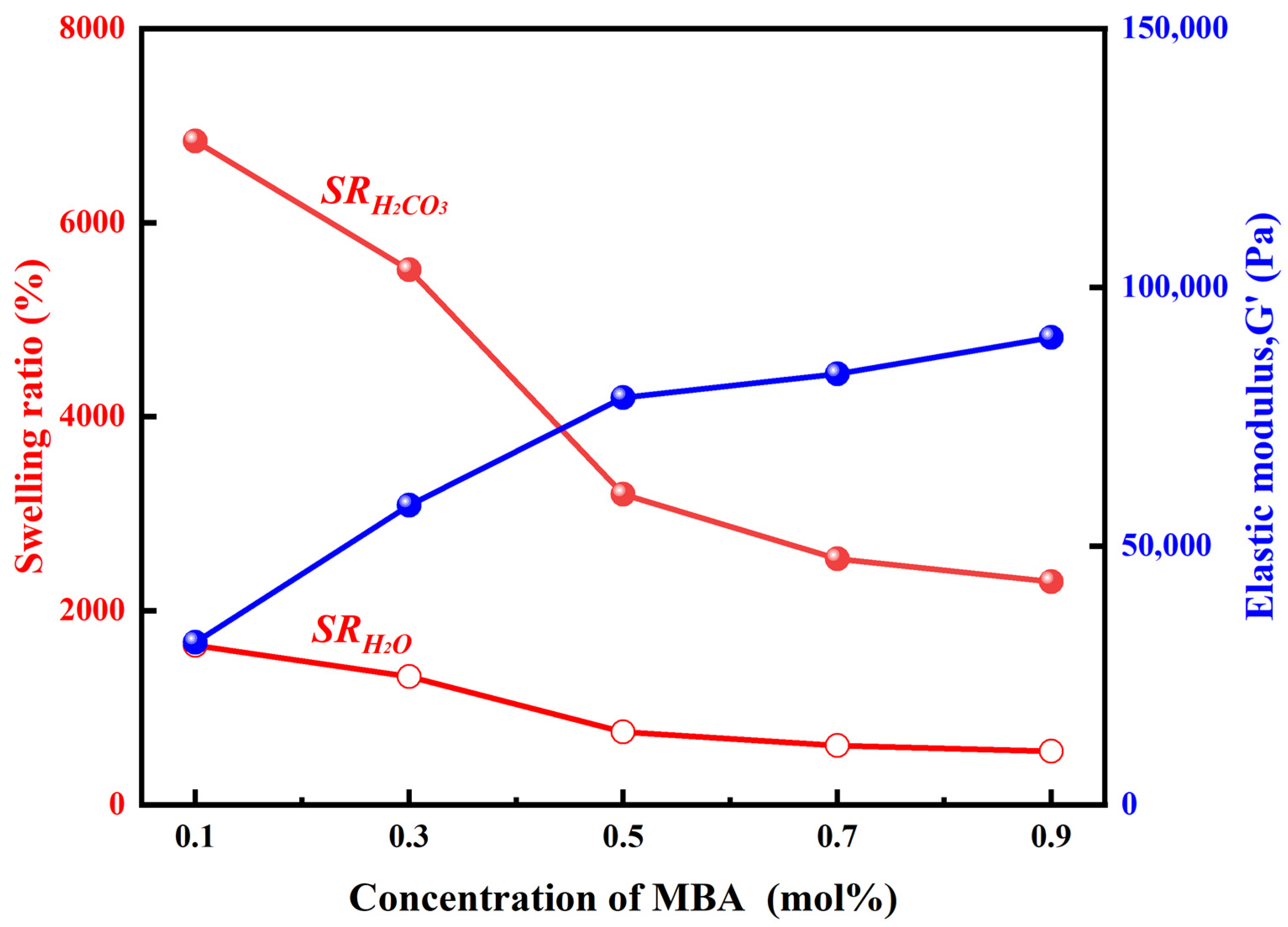
Figure 3.
The experimental results indicate that as the MBA concentration increased, the swelling ratios of MCCR-PPGs in deionized water and saturated H2CO3 solution decreased proportionally. This phenomenon suggests that while changes in MBA concentration lead to a decrease in the swelling ratio of MCCR-PPGs, they do not significantly affect their value. Concurrently, the elastic modulus of MCCR-PPGs showed a positive correlation with MBA concentration. This is because an increase in MBA dosage leads to a higher crosslinking density in the system, making the polymer network structure denser, which manifests as a decreased swelling ratio and increased gel strength. Further investigation revealed that when the MBA concentration reached 0.5%, continuing to increase it had a diminishing effect on both swelling ratio and gel strength, with changes becoming less significant. Moreover, at an MBA concentration of 0.5%, both the swelling ratio and gel strength of MCCR-PPGs were within the desired ranges. Therefore, based on a comprehensive consideration of swelling properties and mechanical performance, the optimal MBA dosage was determined to be 0.5 mol% relative to the total amount of monomers.
3.2.3. APS Dosage
With the monomer ratio fixed (DMAA:VIM:NVP = 2:2:1), as well as crosslinker MBA dosage (0.5 mol% relative to total monomers), CaCl
2 concentration (0.1 mol/L), and VSNP concentration (1%) constant, four groups of MCCR-PPG samples with different APS dosages were prepared. The optimal APS dosage was determined by testing the swelling ratios of the samples in deionized water and H
2CO
3 solution, as well as gel strength. The test results are shown in
Figure 4.
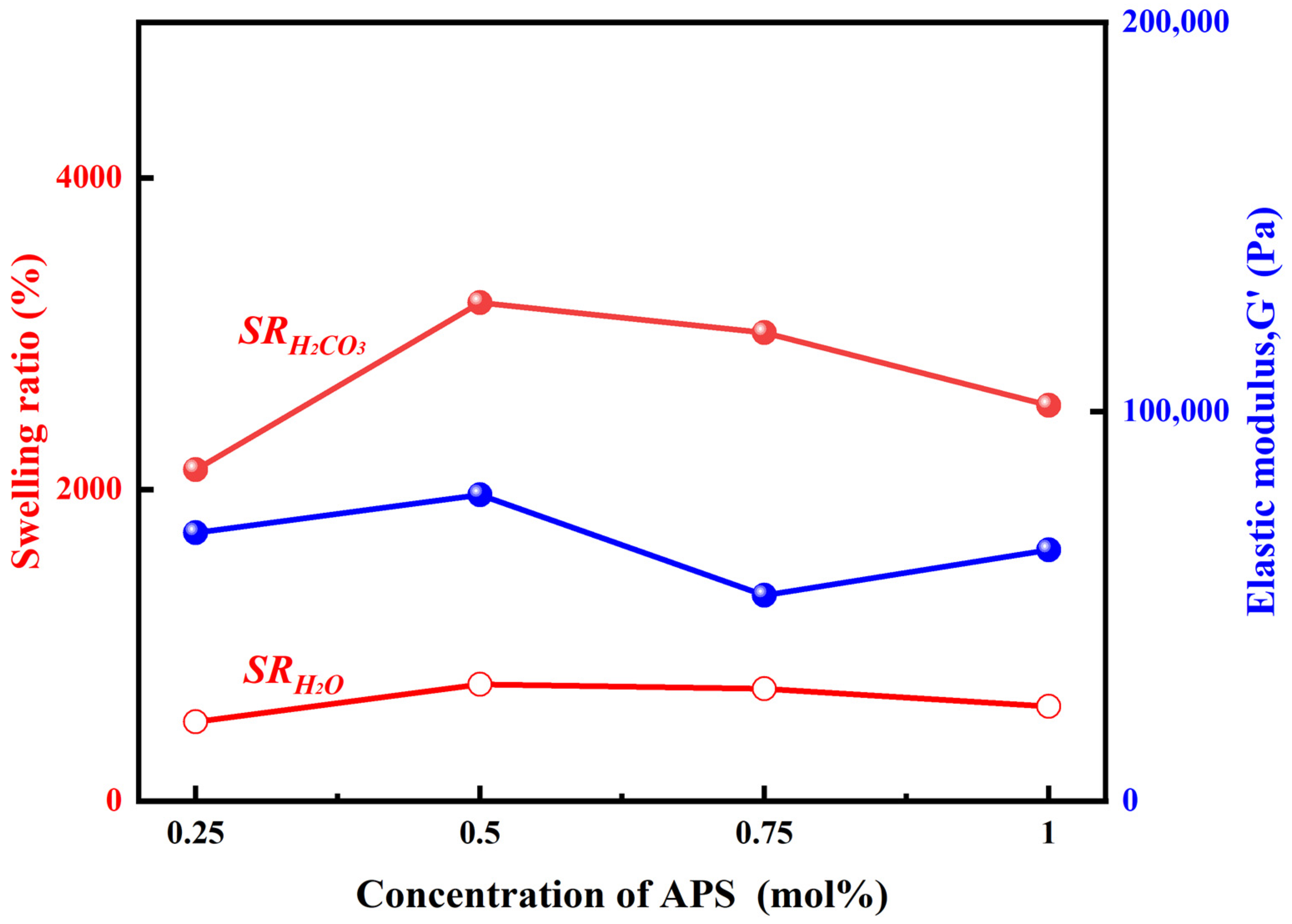
According to the analysis of results in
Figure 4, the swelling ratio of MCCR-PPGs in deionized water and H
2CO
3 first increased and then decreased with increasing APS concentration. Notably, the
value remained constant throughout this process, indicating that APS concentration has no significant effect on CO
2 responsiveness. When the APS concentration was 0.5%, both the swelling ratio and elastic modulus of MCCR-PPGs reached their maximum values. Further analysis suggests that when APS dosage was below 0.5%, the number of free radicals in the system was insufficient, leading to reduced polymerization efficiency and the formation of shorter polymer chains, making it difficult to form a dense network structure, thus causing a decline in swelling properties and mechanical performance. Conversely, when APS dosage exceeded 0.5%, an excessively high free radical concentration limited the growth of molecular chains, also weakening the integrity of the network structure and leading to performance degradation [
28]. Based on these experimental results, it can be concluded that at an APS concentration of 0.5%, the free radical concentration in the system reaches an optimal balance, at which point the swelling ratio and gel strength of MCCR-PPGs are optimized. Therefore, 0.5% was determined as the optimal APS dosage.
3.2.4. CaCl2 Concentration
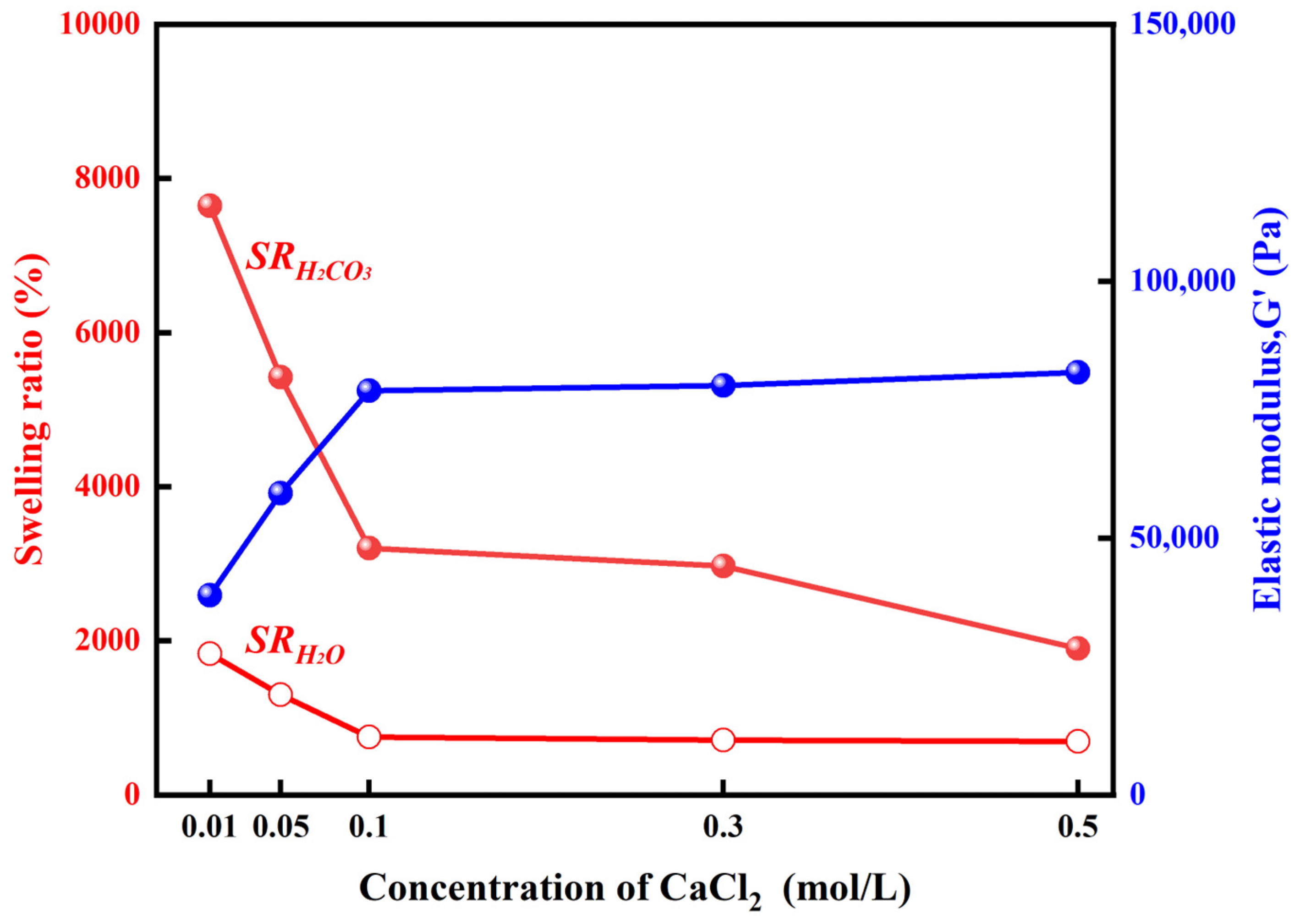
With the monomer ratio fixed (DMAA:VIM:NVP = 2:2:1), as well as crosslinker MBA dosage (0.5 mol% relative to total monomers), initiator APS dosage (0.5 mol% relative to total monomers), and VSNP concentration (1%) constant, five groups of MCCR-PPG samples with different CaCl
2 concentrations were prepared. The optimal CaCl
2 concentration was determined by testing the swelling ratios of the samples in deionized water and H
2CO
3 solution, as well as gel strength. The test results are shown in
Figure 5.
Analysis of the experimental results in
Figure 5 shows that as the CaCl
2 concentration increased, the swelling ratios of MCCR-PPGs in deionized water and H
2CO
3 decreased, while the elastic modulus of the gel increased significantly. Notably, the
value of the system remained constant across different CaCl
2 concentrations, indicating that changes in CaCl
2 concentration do not affect the CO
2 responsiveness of MCCR-PPGs. When the CaCl
2 concentration increased to 0.1 mol/L, the changes in swelling ratio and modulus of MCCR-PPGs tended to stabilize, suggesting that the Ca
2+ concentration in the system was sufficient for adequate crosslinking with COO
− groups. Therefore, based on these experimental results, the optimal CaCl
2 concentration was determined to be 0.1 mol/L.
3.2.5. VSNP Dosage
With the monomer ratio fixed (DMAA:VIM:NVP = 2:2:1), as well as crosslinker MBA dosage (0.5 mol% relative to total monomers), initiator APS dosage (0.5 mol% relative to total monomers), and CaCl
2 concentration (0.1 mol/L) constant, five groups of MCCR-PPG samples with different VSNP dosages were prepared. The optimal VSNP dosage was determined by testing the swelling ratios of the samples in deionized water and H
2CO
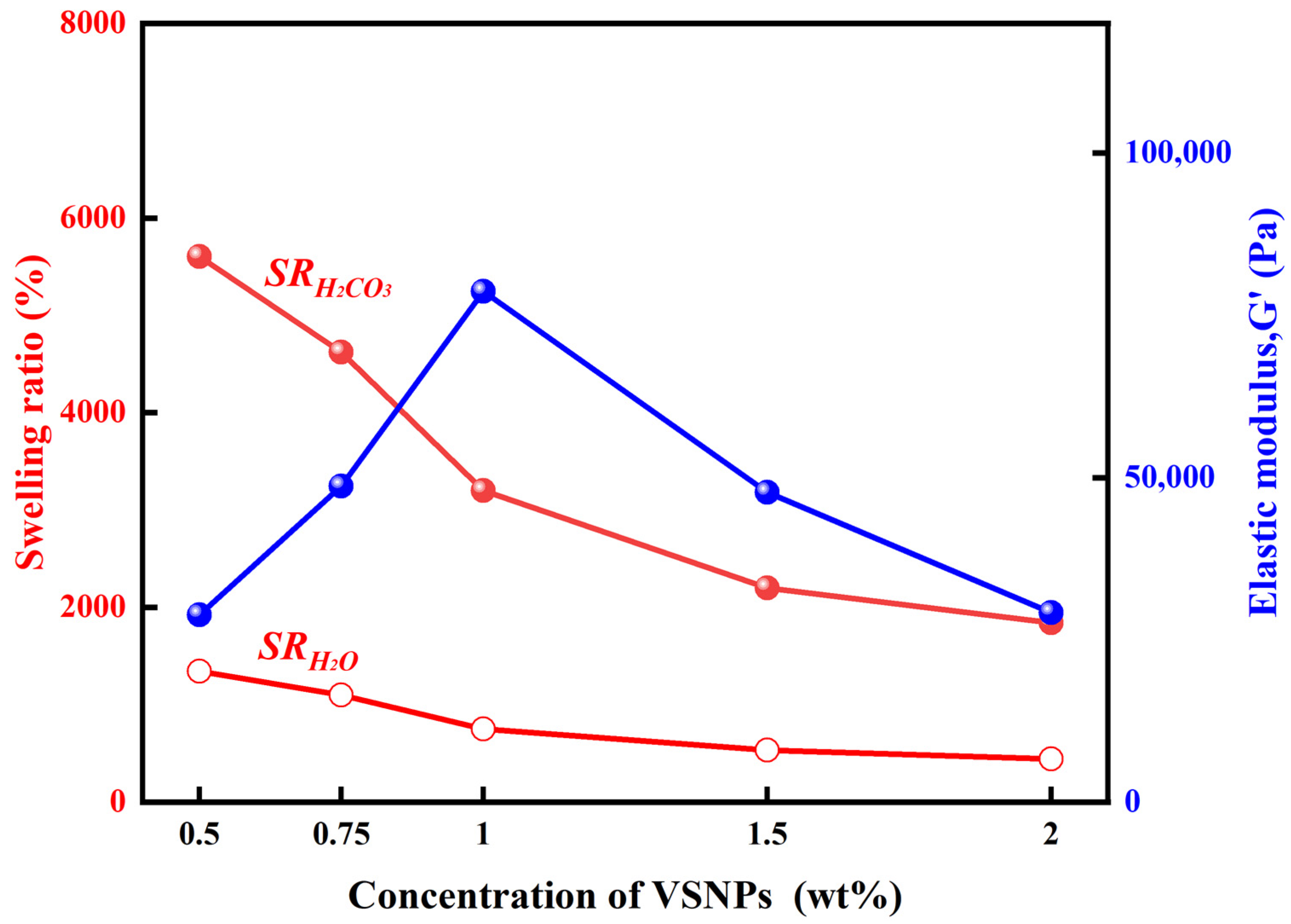
3 solution, as well as gel strength. The test results are shown in
Figure 6.
The results presented in
Figure 6 indicate that the VSNP dosage significantly governs the swelling characteristics and mechanical strength of MCCR-PPGs. A monotonic decrease in the swelling ratio was observed with increasing VSNP dosage, whereas the elastic modulus showed a unimodal response, increasing to a maximum before decreasing. It is worth noting that throughout the range of VSNP dosage variation, the CO
2 responsiveness of MCCR-PPGs remained stable and was not significantly affected. The analysis suggests that when the VSNP dosage is below 1%, increasing the VSNP concentration effectively increases the number of nano-crosslinking points in the system, thereby enhancing gel strength and reducing the swelling ratio. However, when the VSNP dosage exceeds 1%, excess VSNPs tend to agglomerate due to interfacial effects, leading to poor dispersion. Additionally, excessive VSNPs may act as reaction centers, consuming free radicals, reducing polymerization efficiency, and generating shorter molecular chains, which adversely affect the swelling capacity and mechanical strength of MCCR-PPGs [
29,
30]. Based on the above analysis, considering the dispersibility, crosslinking effect, and reinforcement capability of VSNPs comprehensively, 1% was determined as the optimal VSNP dosage. Under this optimal formulation, the prepared MCCR-PPGs exhibited a gel strength far exceeding that of previously reported gel systems of the same type [
13,
18,
31,
32], with an elastic modulus as high as 68,690 Pa.
3.3. CO2 Responsiveness Test of PPGs
3.3.1. CO2-Responsive Behavior of MCCR-PPGs
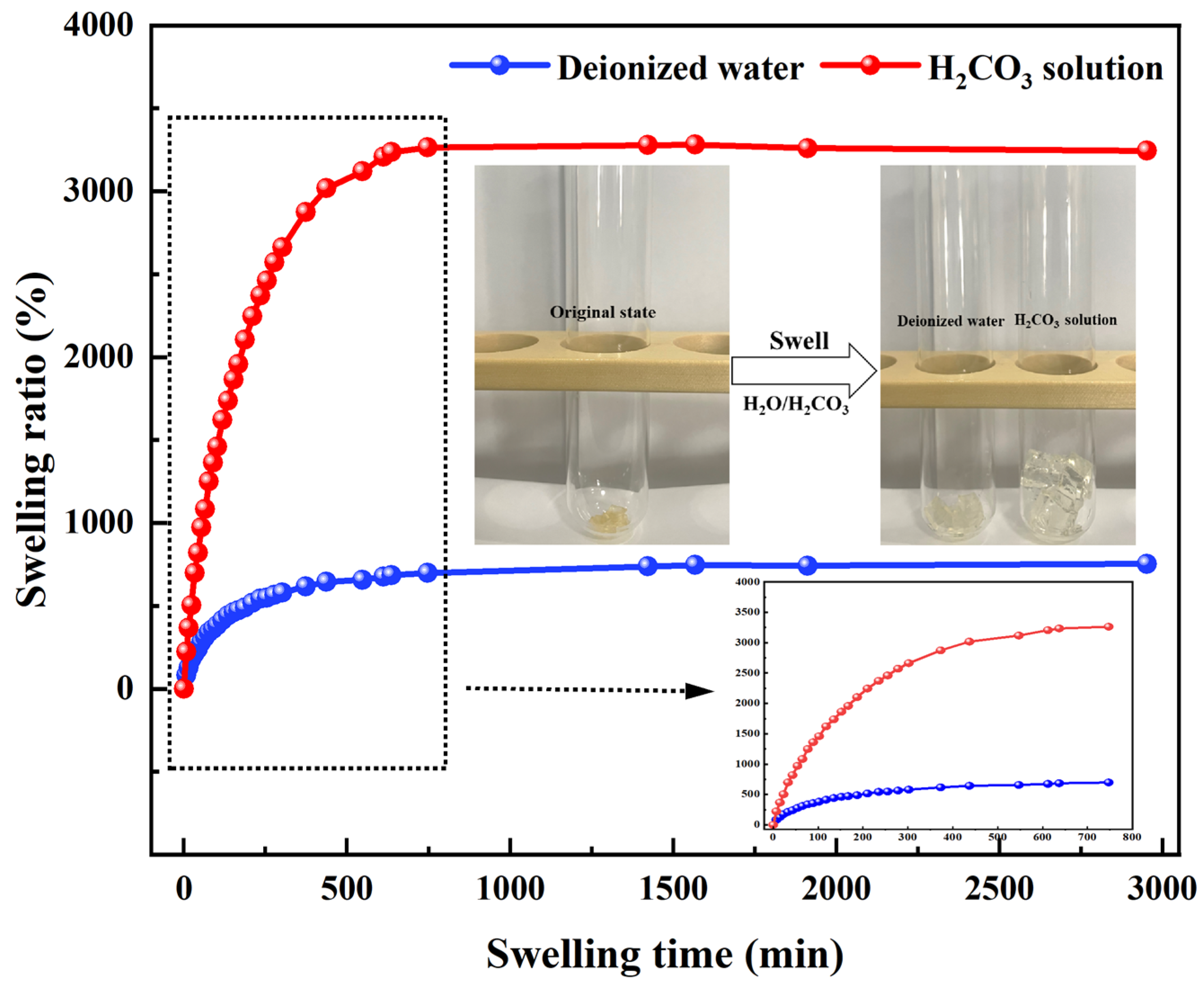
Figure 7 shows the swelling curves of MCCR-PPGs in two media. The results indicate that the time required for MCCR-PPGs to reach swelling equilibrium in deionized water and saturated H
2CO
3 solution was essentially the same, approximately 750 min. However, there was a significant difference in the equilibrium swelling ratio (ESR) between the two media: in deionized water, the ESR of MCCR-PPGs was about 750%, while in saturated carbonic acid solution, the ESR of MCCR-PPGs increased significantly to 3200%, which is 4.27 times that in deionized water. This significant difference in swelling ratio fully confirms the excellent CO
2-responsive characteristics of MCCR-PPGs.
3.3.2. CO2-Responsive Mechanism of MCCR-PPGs
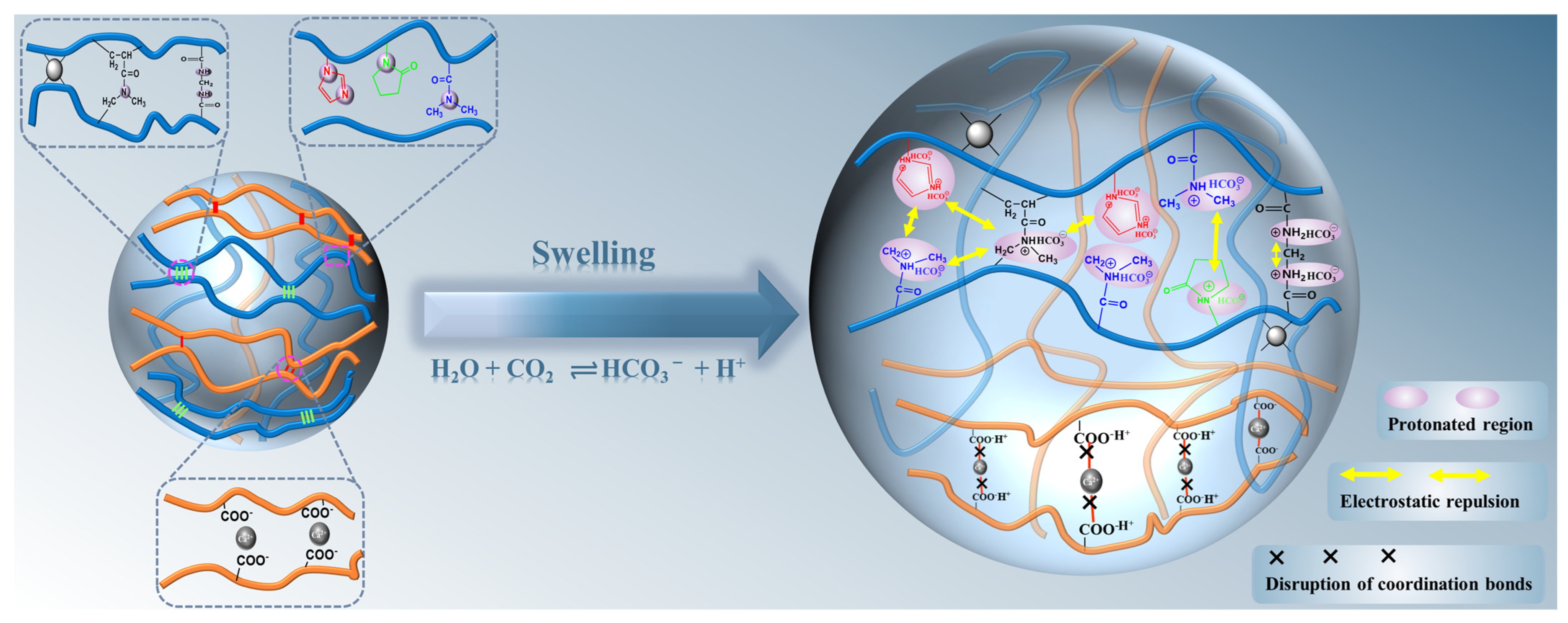
In this study, three monomers with CO
2-responsive characteristics (DMAA, VIM, and NVP) were introduced for copolymerization. The common feature of these monomers is the presence of typical CO
2-responsive groups—tertiary amine groups (-NR
3)—in their molecular structures. After polymerization, the polymer chains of MCCR-PPGs possess a high density of tertiary amine groups. When MCCR-PPGs are in the acidic environment formed by CO
2, the tertiary amine groups on the polymer chains undergo protonation to form amine salts, significantly enhancing the electrostatic repulsion between molecular chains, thereby exhibiting a higher swelling ratio compared to that in deionized water. Additionally, the secondary amine (-NH
2) groups on the organic crosslinker
N,
N′-methylenebisacrylamide (MBA) also undergo protonation to generate NH
3+ in the acidic CO
2 environment, further enhancing the electrostatic repulsion between molecular chains and thus increasing the swelling ratio of MCCR-PPGs in the H
2CO
3 solution [
20,
33,
34]. Besides this, the reduction in ionic crosslinking density within MCCR-PPGs also enhances their CO
2 responsiveness. When CO
2 is bubbled into deionized water, the H
+ concentration increases significantly. These H
+ ions partially protonate the -COO
− groups of sodium alginate (SA) into -COOH, which reduces the ionic crosslinking density between -COO
− and Ca
2+ and consequently increases the swelling ratio of MCCR-PPGs in the H
2CO
3 solution [
35,
36].
Figure 8 details the CO
2 response mechanism of MCCR-PPGs.
3.4. Fracture Plugging Capacity Test
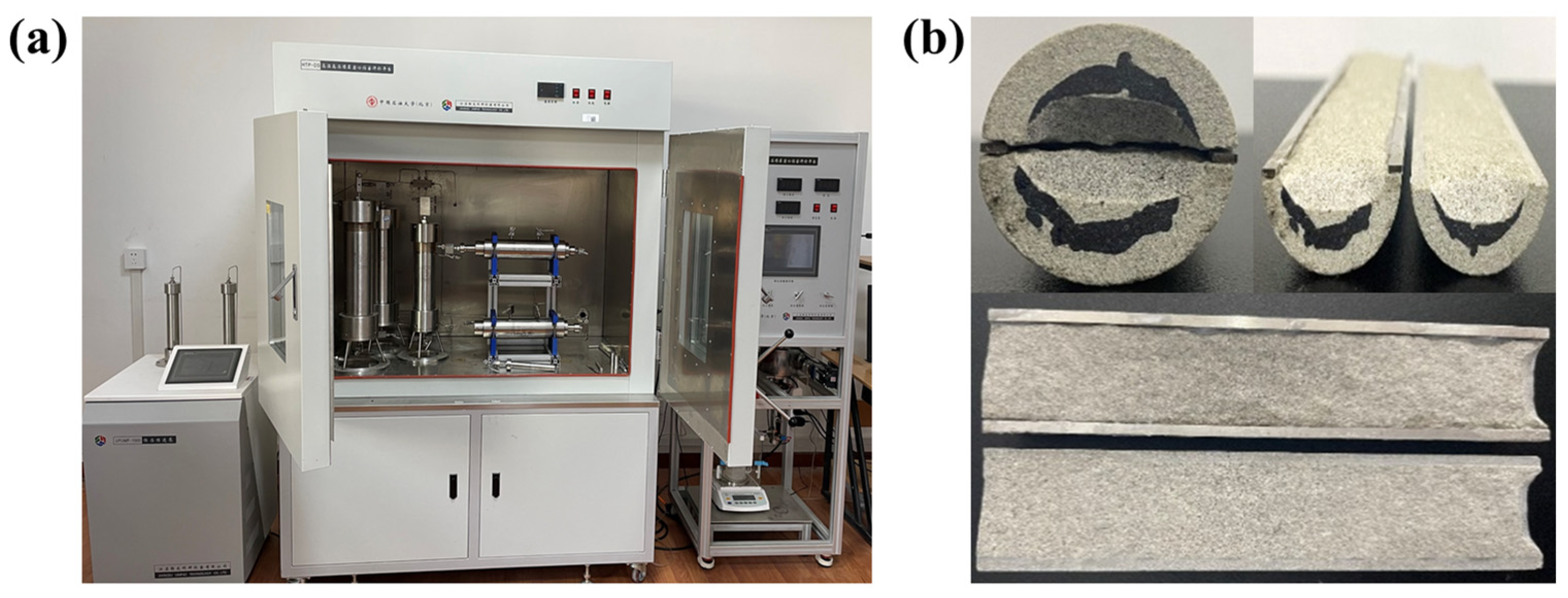
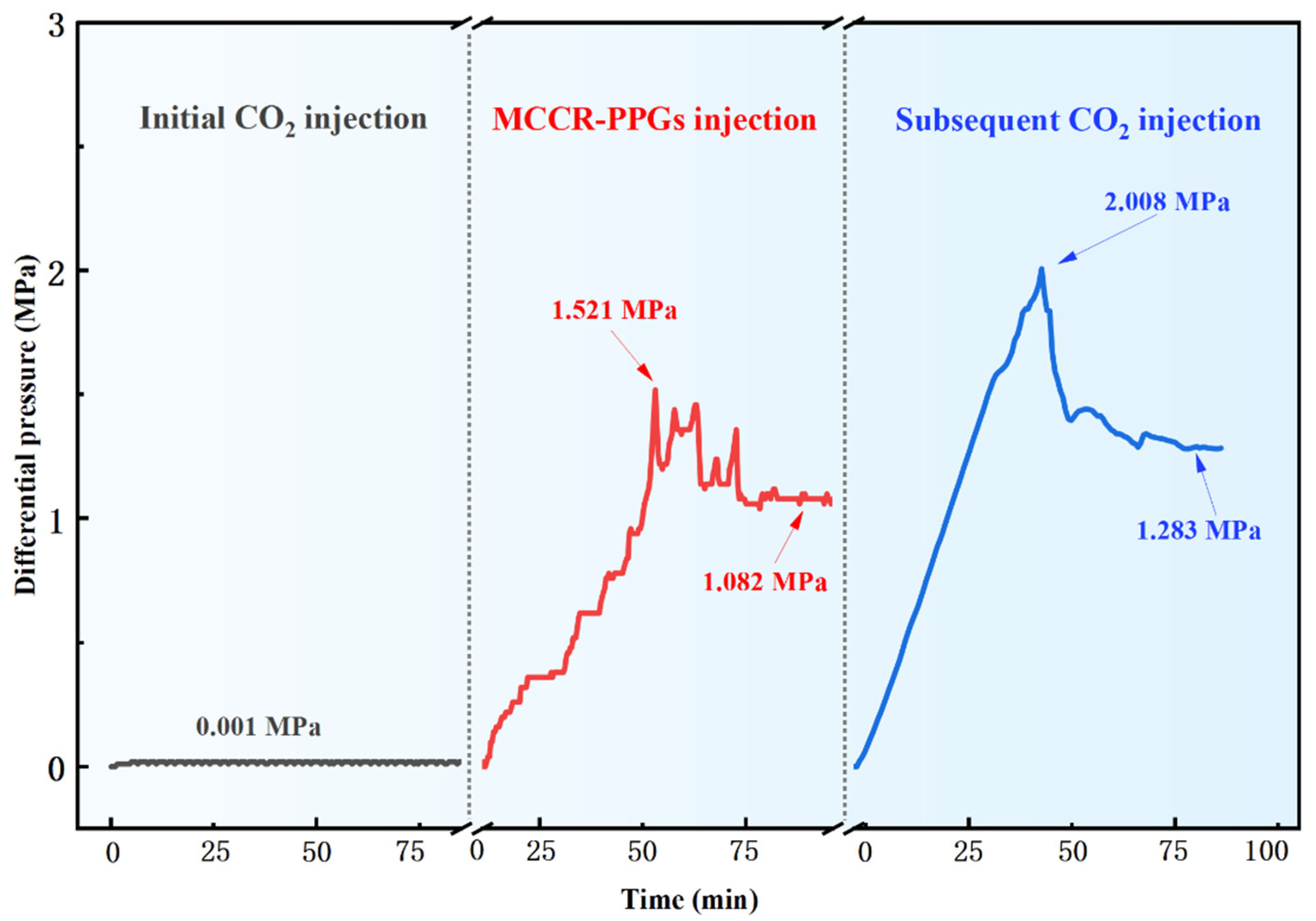
In this experiment, the plugging capability of MCCR-PPGs on formation fractures under a CO
2 acidic environment was tested using a core flooding apparatus, and the injection time and pressure difference variations at each stage were recorded in detail. The results are shown in
Figure 9. During the initial CO
2 displacement, due to the presence of leakage fractures in the core, the flow resistance of CO
2 was low, and the pressure difference remained at 0.001 MPa. Subsequently, upon injection of MCCR-PPGs, the pressure difference curve first increased rapidly, then exhibited fluctuations, and finally stabilized at 1.082 MPa. The rapid increase in pressure difference reflected the initial accumulation and compression of MCCR-PPGs, while the subsequent pressure fluctuations corresponded to the dynamic migration process of MCCR-PPGs within the fractures, involving complex behaviors such as particle compression, deformation, migration, and re-deformation, until the fractures were fully filled with MCCR-PPGs and the pressure stabilized.
After the injection of MCCR-PPGs, the system was aged in a CO2 acidic environment for 24 h to induce volumetric swelling, forming a denser plugging structure that effectively plugged the CO2 channeling fractures. The differential pressure curve during the subsequent CO2 displacement exhibited typical characteristics of “rapid increase–peak breakthrough–fluctuation and stabilization.” The initial rapid increase in the curve reflected the initial resistance of the plug to CO2 injection. Subsequently, the pressure difference reached a breakthrough peak of 2.008 MPa, then fluctuated and decreased, and ultimately stabilized at 1.283 MPa. These experimental results provide important experimental evidence for the application of MCCR-PPGs in controlling gas channeling during CO2 storage.
4. Conclusions
In this study, aiming to meet the intelligent plugging requirements for leakage channels such as microcracks and micro-annuli in the cement sheath during CCUS geological storage, a multi-crosslinked CO2-responsive preformed particle gel (MCCR-PPG) system was successfully designed and prepared. Through systematic formulation optimization and performance evaluation, the following conclusions were drawn:
(1) Using vinyl silica nanoparticles (VSNPs) as the nano-crosslinking and reinforcing core, combined with the natural macromolecule sodium alginate (SA), CO2-responsive monomers (DMAA, VIM, and NVP), an organic crosslinker (MBA), and an ionic crosslinker (CaCl2), a quadruple network structure comprising “chemical crosslinking–nano-crosslinking–self-crosslinking–ionic crosslinking” was constructed. This structural design laid the foundation for achieving high strength and long-term stability of the material in acidic environments.
(2) The optimal formulation of MCCR-PPGs was determined through single-factor experiments. The optimal formulation parameters were as follows: a monomer molar ratio of DMAA:VIM:NVP = 2:2:1; dosages of MBA and APS each accounting for 0.5% of the total monomer molar amount; a CaCl2 concentration of 0.1 mol/L; and the VSNP content of 1%. Under this formulation, MCCR-PPGs exhibited an excellent CO2 responsiveness while maintaining desirable swelling performance and mechanical strength.
(3) The prepared MCCR-PPGs demonstrated outstanding CO2 responsiveness and swelling properties. In a saturated H2CO3 solution, the equilibrium swelling ratio of MCCR-PPGs reached 3200%, which was 4.27 times that in deionized water (750%). The underlying response mechanism was mainly attributed to the protonation of tertiary amine groups on the polymer chains in the acidic environment, as well as the dynamic reduction in ionic crosslinking density.
(4) The Fracture Plugging Capacity Test confirmed the effective plugging potential of MCCR-PPGs for fracture channels. In fractured cores simulating CO2 channeling, MCCR-PPGs were able to effectively fill the fractures and form initial plugs after injection. After aging and swelling in the CO2 acidic environment, the resulting dense plug exhibited significant resistance to subsequent CO2 displacement, achieving a breakthrough pressure difference of 2.008 MPa and maintaining a stable pressure difference of 1.283 MPa. These results demonstrate the clear engineering application prospects of MCCR-PPGs for controlling CO2 channeling.
(5) Overall, the optimized MCCR-PPG formulation exhibits excellent comprehensive performance, including high gel strength, fast CO
2-responsive swelling, long-term stability, and effective plugging under high-pressure CO
2 conditions. Detailed quantitative data and practical engineering implications can be found in our previous work [
19].