1. Introduction
Socio-political dynamics are rapidly evolving worldwide, intensifying global trade interactions and contributing to rising fuel and energy prices, which significantly impact quality of life. In this context, advancing research on alternative and renewable energy sources has become increasingly necessary, particularly those derived from waste materials such as biomass, in alignment with the circular economy approach established by the European Directive 2018/851 that classifies waste and promote its valorization [
1]. Within this framework, biomethane production via anaerobic digestion (AD) represents a versatile and sustainable strategy for waste-to-energy conversion. However, hydrolysis is widely recognized as the rate-limiting step, especially for treating complex organic substrates such as organic fractions of municipal solid wastes (OFMSW), animal manure, sewage sludge and lignocellulosic agricultural wastes [
2,
3].
Among these residues,
Brassica napus biomass is an oilseed crop commonly used for environmental applications, particularly in phytoremediation and biosorption of heavy metals [
4]. After application of these technologies, this biomass converts generated toxic byproducts that must be properly managed. In this context, the present study evaluates, as a first step, the feasibility of using non-contaminated
B. napus biomass as a substrate for anaerobic digestion following electrohydrolysis pretreatment. Future work will extend this approach to heavy-metal-contaminated biomass, with the aim of developing an integrated valorization route that reduces reliance on costly disposal treatments while enabling energy recovery through anaerobic digestion and simplifying final waste management [
5].
However, its recalcitrant lignocellulosic structure requires the use of pretreatment processes to enhance the hydrolysis step before being degraded by anaerobic organisms. In recent years, common pretreatments of anaerobic feedstock have been widely explored to overcome hydrolysis limitations. Among them are physical methods (thermal, ultrasound, microwave), chemical treatments (acid, alkaline, oxidative), physicochemical processes (steam explosion, thermal-alkaline), and biological methods (microbial consortia or enzymatic hydrolysis) [
6,
7]. More recently, electrochemical systems for pretreatment have emerged as a competitive alternative due to their capacity to induce targeted surface oxidation, enhance the accessibility of reactive sites, and generate oxidizing species in situ under relatively mild conditions, thereby reducing chemical consumption and improving process control compared to conventional methods [
8].
In electrochemical systems, electrode materials play a decisive role, as their physicochemical properties strongly influence reaction selectivity, efficiency, and long-term stability. Both metal-based anodes and carbon-based cathodes have been extensively investigated to tailor electrochemical performance and enable the integration of electrochemical functionalities into biological processes.
Mixed metal oxides (MMOs) electrodes are widely recognized for their robustness, selectivity and catalytic efficiency in environmental electrochemical applications. In particular, Ir-Ta MMO anodes exhibit excellent corrosion resistance, electrochemical stability, and long operational lifetimes, making them suitable for coupling with advanced cathodic reactions under demanding conditions [
9,
10]. Other MMOs such as Ru-Ir are less stable for oxygen evolution reaction, and Pt-Ti has higher overpotential for oxygen evolution. Thus, in this work, an Ir-Ta MMO anode was employed to ensure stable and reproducible anodic behavior [
11,
12].
On the cathodic side, carbon-based materials have gained significant attention due to their high electrical conductivity, chemical stability, low cost, and tunable surface chemistry. Among them, carbon felt electrodes are especially attractive because of their three-dimensional porous structure, high specific surface area, and suitability for gas–liquid–solid electrochemical reactions [
13,
14]. Recent research has focused on enhancing the selectivity of carbon materials toward the two-electron oxygen reduction reaction (2e
− ORR), which enables the in situ electrochemical generation of hydrogen peroxide (H
2O
2) under mild operating conditions [
15].
Furthermore, biomass-derived carbons obtained via hydrothermal carbonization (HTC), as well as HTC-derived carbons further activated with alkaline agents such as KOH, exhibit enhanced electrocatalytic activity toward H
2O
2 production. These improvements have been attributed to increased surface area, optimized pore structure and defects, and the presence of oxygen-containing functional groups that favor the 2e
− ORR pathway in carbon materials [
16,
17]. In particular, although MMOs are expected to produce anodic oxidants, KOH-activated hydrochar develops a better porous carbon structure and incorporates additional oxygen-containing functional groups, which enhance oxygen adsorption and intermediate stabilization, thereby selectively favoring low overpotential and good energy efficiency.
The valorization of residual and invasive biomass into functional carbon cathodes represents a promising strategy within a circular economy framework, enabling the conversion of low-value feedstocks into high-performance electrode materials for electrochemical applications [
18,
19]. When integrated into electro-assisted AD systems, these biomass-derived carbon cathodes enable controlled in situ generation of H
2O
2, opening new opportunities for process intensification.
Results with sustainable carbon cathodes and MMO anodes are expected to enhance the availability of organic matter in complex substances, promoting the breakdown of polymeric compounds in other biomass feedstock (
Brassica napus waste), thereby increasing substrate availability for fermentative and methanogenic microorganisms [
19,
20]. Accordingly, the aim of this work is to evaluate the electrochemical performance of this setup, modifying the cathodic electrodes with a catalytic carbon ink using an Ir-Ta MMO anode and biomass-derived carbon cathodes modified with different catalytic inks. The study also assesses the effect of applied energy input on methane production from
Brassica napus residues, comparing energy consumption with biomethane yield and fitting kinetic data to a modified Gompertz model. This electro-assisted approach contributes to increased methane yields, improved process stability, and sustainable energy recovery, aligning with current objectives in waste valorization and circular bioenergy systems, thus supporting circular economy principles through the conversion of biomass waste into value-added energy products.
3. Results and Discussion
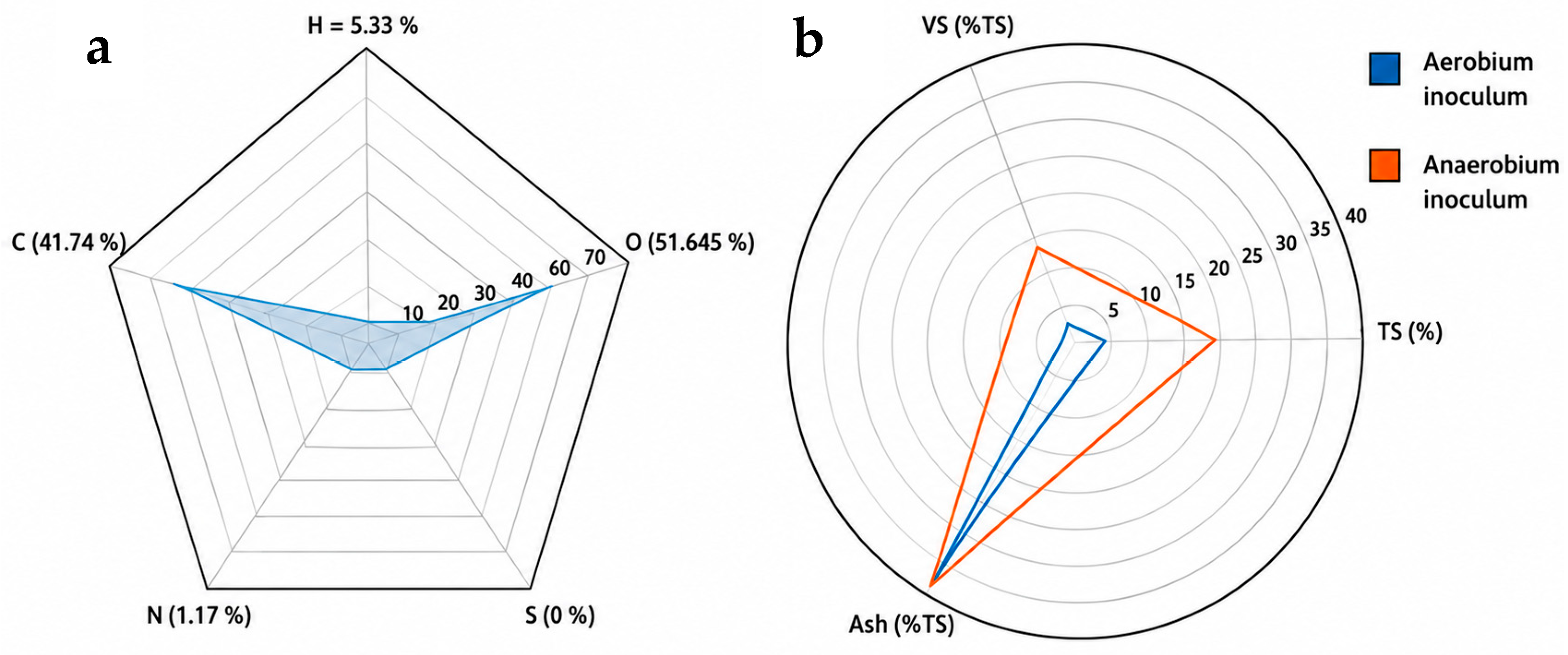
The suitability of the
Brassica napus substrate as feedstock for biological conversion was initially assessed through a basic physicochemical characterization, presented in
Figure 2. The analysis of the main substrate parameters, complemented by the proximate characterization of both aerobic and anaerobic inoculum, provides a basis for evaluating their biological activity through the VS/TS ratio and for analyzing the outcomes of subsequent biological assays, including BOD
5 and BMP. The results indicate a low degree of biomass carbonization, with total solids (TS) content below 20% in both cases, suggesting a diluted organic matrix that may restrict microbial substrate availability. In addition, the considerable presence of inorganic matter accounting for 29.5% and 38.5% of ash content in the aerobic and anaerobic inoculum, respectively, likely reduces the biodegradable fraction of the material, potentially impairing the efficiency and kinetics of the biological processes.
Bn substrate exhibited a moderate volatile solids content (VS = 75% TS), within the lower range reported for lignocellulosic agricultural residues such as rapeseed or wheat straw [
25,
26]. In contrast, the relatively low inorganic fraction of the raw biomass suggests favorable conditions for enhanced product yields across the different stages of anaerobic digestion. Based on the low total solids (TS) content, a substrate-to-inoculum ratio of 1:2 (on a mass basis) was selected to minimize lag phases during the onset of methane production by reducing the adaptation period required for methanogenic microorganisms. In addition, elemental analysis revealed a relatively high oxygen content, reflected in a high O/C atomic ratio of 0.93. This parameter is widely used as a general indicator of the oxidation state and chemical functionality of carbon-based materials. In lignocellulosic biomass, the relevance of this value is related to the increase in hydrophilicity and the enhancement of chemical reactivity which is linked to improved hydrolysis stage and microbial degradation during anaerobic digestion. These trends are consistent with previous studies on carbonaceous materials, including biochar systems, where O/C ratio has been used as an indicator of reactivity and structural functionality [
27].
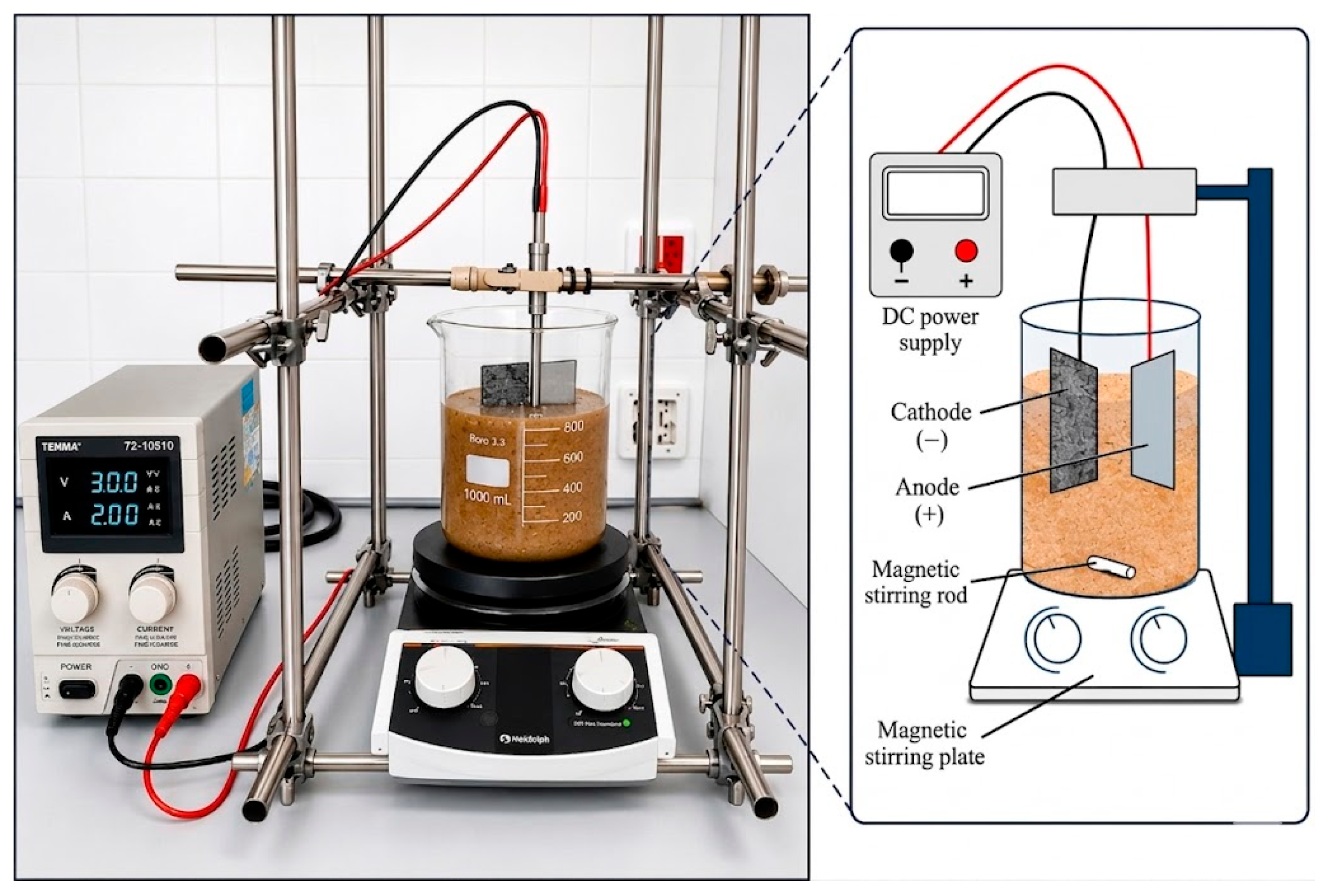
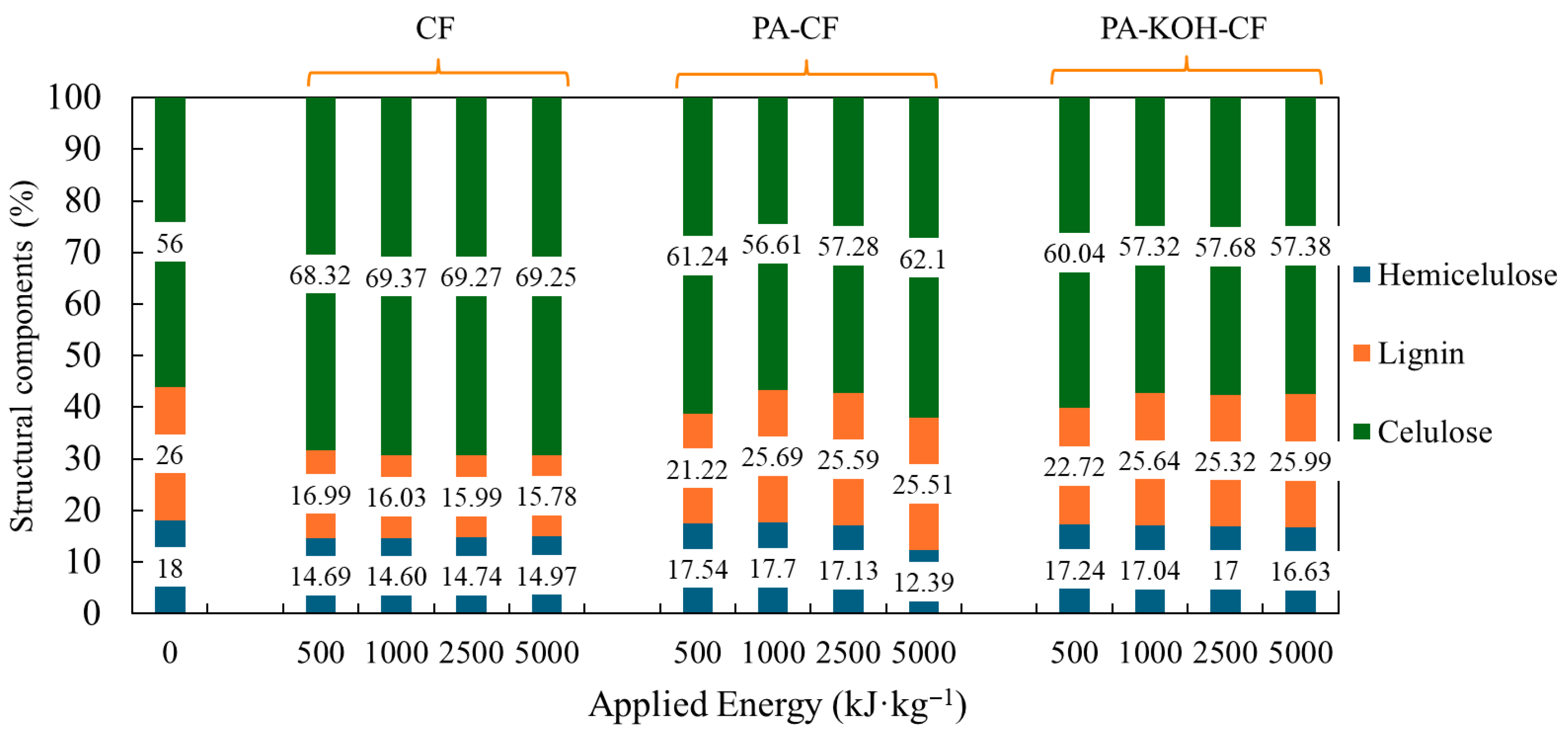
To further elucidate the effects of electrohydrolysis proposed with different cathodic electrodes and energy doses on biomass accessibility, the structural composition of
Bn before and after electrochemical treatment was examined by quantifying the relative proportions of hemicellulose, cellulose and lignin, and their results are shown in
Figure 3.
The raw
Bn exhibited a composition of approximately 18% hemicellulose, 56% cellulose, and 26% lignin that initially suggested a marked recalcitrance toward anaerobic biodegradation because lignin acts as a physical and chemical barrier due to their amorphous, highly branched and aromatic biopolymer structure. Then, after applying electrohydrolysis with different electrodes and energies, the degradation of lignin was negligible, although localized surface modifications of lignin-rich structures may occur at lower energy inputs due to reactive oxygen species (ROS) activity, which was the case for cellulose, which decreased across all cathodic materials and energy levels. Cellulose was the component that showed the most pronounced reduction (down to 12–17%) with the highest energies applied with CF and PA-CF electrodes. These trends indicate that electrohydrolysis preferentially solubilizes polysaccharides [
28], likely through the cleavage of glycosidic bonds, thereby enhancing the release of soluble carbohydrates available for subsequent microbial conversion. Meanwhile, data indicate that across all treatments, cellulose is the predominant component, followed by lignin and hemicellulose, consistent with typical oilseed biomass composition [
29]. Notably, the cellulose fraction increases slightly at lower applied energy, likely due to the more efficient synthesis of reactive oxygen species (ROS) at shorter times. Under these conditions, mass transfer limitations within the electrohydrolysis cell are not yet significant, thereby enhancing oxidative interactions with the biomass matrix. This trend is more pronounced with the PA-CF cathode, pointing out the effect of hydrochar catalytic ink toward lignin degradation while preserving the cellulose backbone. Conversely, excessive applied energy can partially degrade cellulose, slightly reducing its relative content, in agreement with observations in similar electrochemical pretreatment studies [
30].
In CF cathodes, the cellulose reduction in electrohydrolysis across all applied energies suggests a more generalized degradation without powerful oxidants, potentially enhancing cell wall accessibility for microbial digestion. Overall, the observed compositional shifts confirm that electrochemical pretreatment can effectively modify the Bn structure, improving its suitability for anaerobic digestion and potentially increasing biogas yields.
Other physicochemical parameters that are likely to modulate ROS activity are pH and conductivity, and their evolution in electrohydrolysis tests is listed in
Table 1. This synergy creates optimized conditions for microbial digestion, reinforcing the mechanistic link between electrohydrolysis intensity and biomass valorization.
The data reveals a clear electrochemical response that depends both on the specific applied energy and on the type of cathode used. Across all three materials, CF, PA-CF, and PA-KOH-CF, a consistent pattern emerges: increasing the applied energy leads to a systematic decrease in pH, indicating that the system becomes progressively more acidic as the treatment intensifies. This acidification aligns with the expected behavior of electrochemical processes, where water electrolysis and the oxidation of organic constituents generate protons and acidic species that accumulate in the medium. Because the initial pH values are nearly identical in all experiments, the observed changes can be attributed solely to electrochemical treatment rather than to initial variability.
Although the three cathodes follow the same general trend, the acidification of pH highlights important differences in their behavior. CF exhibits the most pronounced reductions, reaching up to 36% at the highest energy level, suggesting a higher efficiency in promoting oxidative reactions or facilitating electron transfer. In contrast, PA-CF and PA-KOH-CF show slightly more moderate but still progressive decreases, indicating that all materials are electrochemically active, though not to the same extent. These differences may stem from variations in microstructure, surface roughness, or the distribution of catalytic phases that might not be so selective towards the oxygen reduction pathway, all of which influence the density of active sites and the kinetics of redox reactions.
From a mechanistic standpoint, when the 4e
− ORR pathway is favored, oxygen is directly reduced to water through complete O-O bond cleavage, which suppresses the accumulation of partially reduced oxygen species. Under such conditions, reactive intermediates such as H
2O
2, HO•, or secondary oxidants derived from peroxide activation (e.g., SO
4•
− in sulfate media) are not significantly formed because they are either not generated or are rapidly further reduced to H
2O [
31].
The behavior of electrical conductivity is more complex and does not follow a universal pattern like pH. In CF, conductivity tends to increase at higher energy inputs, suggesting slight changes in the ionic environment of the medium, likely due to the oxidation of organic compounds or the partial dissolution of salts associated with the treated matrix. In contrast, PA-CF shows very small and predominantly negative variations, indicating a more stable ionic balance. PA-KOH-CF displays intermediate behavior, with slight fluctuations that do not indicate a significant net change. This diversity demonstrates that conductivity is influenced not only by proton generation but also by a dynamic balance between the formation, consumption, precipitation, and mobility of charged species.
The combination of clear acidification and moderate conductivity changes suggests that the dominant processes are oxidative reactions that release protons but do not necessarily produce large changes in the overall ionic strength of the medium. In some cases, the formation of acidic species may be accompanied by the precipitation of other ions or by recombination reactions that buffer conductivity changes. The fact that CF shows the largest variations in both parameters reinforces the idea that this cathode promotes more intense or extensive reactions, likely due to higher electrocatalytic activity.
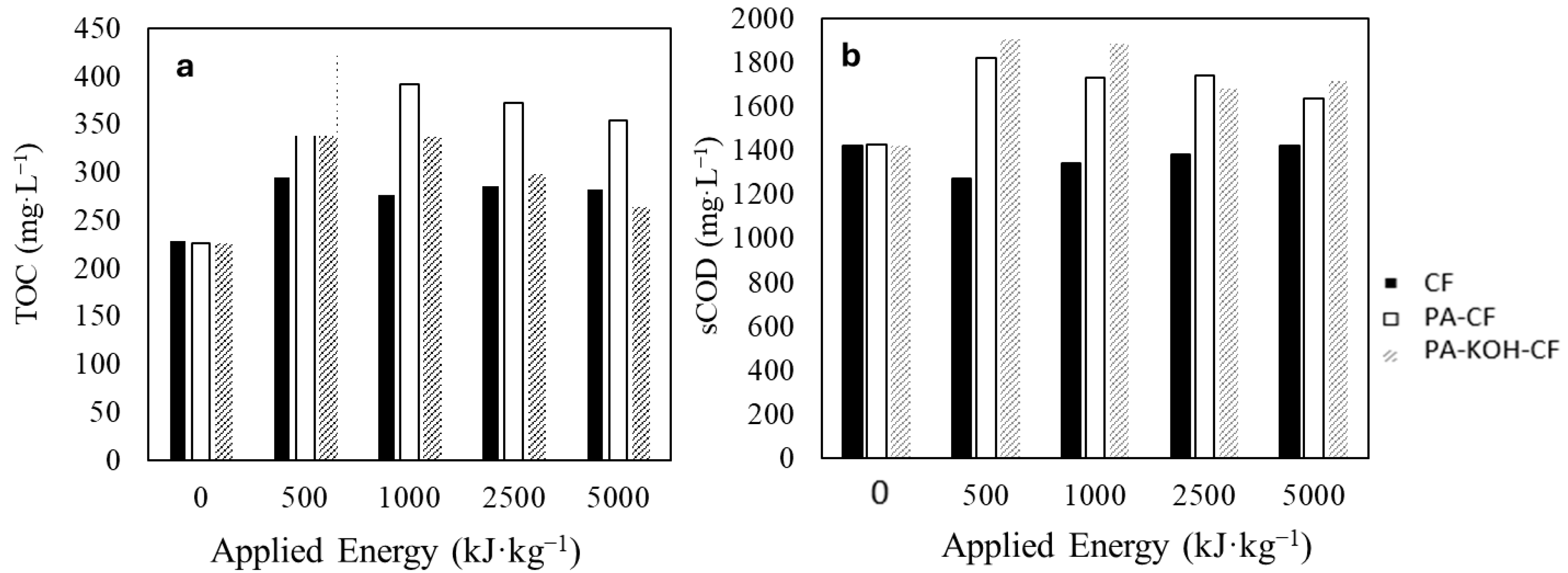
Overall, the results indicate that applied energy is the primary factor driving acidification, while the type of cathode modulates the intensity and nature of electrochemical reactions. The coherence between the decrease in pH and the variation in conductivity supports the interpretation that the redox processes induced by the treatment generate a more reactive chemical environment, whose evolution depends on the catalytic efficiency of each material. Evolution of these parameters, specifically the reduction in pH, favors the disruption of complex organic structures and the release of soluble compounds. This acidification does not explain the trends by itself, but it helps clarify why TOC and COD respond so strongly to the applied energy, as shown in
Figure 4.
The soluble TOC and COD shown in
Figure 4 clearly demonstrate that electrohydrolysis induces a progressive and energy-dependent increase in the solubilization of organic matter. Across all energy levels, the three cathodes, CF, PA-CF and PA-KOH-CF, show a consistent upward trend in COD, indicating that the application of electrical energy enhances the release of organic compounds into the liquid phase.
In the case of TOC, the increase is evident from the lowest energy input and becomes slower as the treatment intensifies. The CF cathode consistently produces the highest TOC values, suggesting a superior ability to disrupt the organic matrix and liberate carbon-rich soluble fractions. PA-CF and PA-KOH-CF also contribute to solubilization, but their responses are more moderate because the promotion of oxidants by the oxidative reactions in the anode are limited at higher applied energies, due to the electrode degradation due to partial pore collapse and surface planarization and the promotion of the oxygen evolution reaction (OER) instead of soluble oxidants (S
2O
82− and C
2O
62−) [
32].
The overall pattern indicates that electrohydrolysis primarily promotes fragmentation and solubilization, as expected, rather than complete oxidation, as TOC accumulates rather than decreases.
The COD results reinforce this interpretation. As energy input increases, soluble COD rises sharply, with CF again showing the strongest response. This parallel behavior between TOC and COD confirms that the organic matter released into solution is not only carbon-rich but also chemically reactive and oxygen-demanding. The increase in COD suggests that the solubilized compounds include partially oxidized intermediates with high oxygen demand, which is characteristic of electrochemical breakdown processes that generate smaller but still reactive molecules.
The differences observed between cathodes, particularly the consistently higher values obtained with CF, underscore the importance of electrocatalytic properties in determining the extent of partial organic solubilization. However, it is important to note that higher TOC and COD values reflect greater release of soluble organic matter, but do not guarantee higher methane production, as methanogenesis ultimately depends on the biodegradability of the solubilized fraction and the metabolic activity of the microbial community. To assess whether these structural modifications are positive to biomass degradation, biochemical oxygen demand (BOD
5) was also measured with this experimental setup to evaluate the further promotion of anaerobic digestion, and the results are presented in
Figure 5.
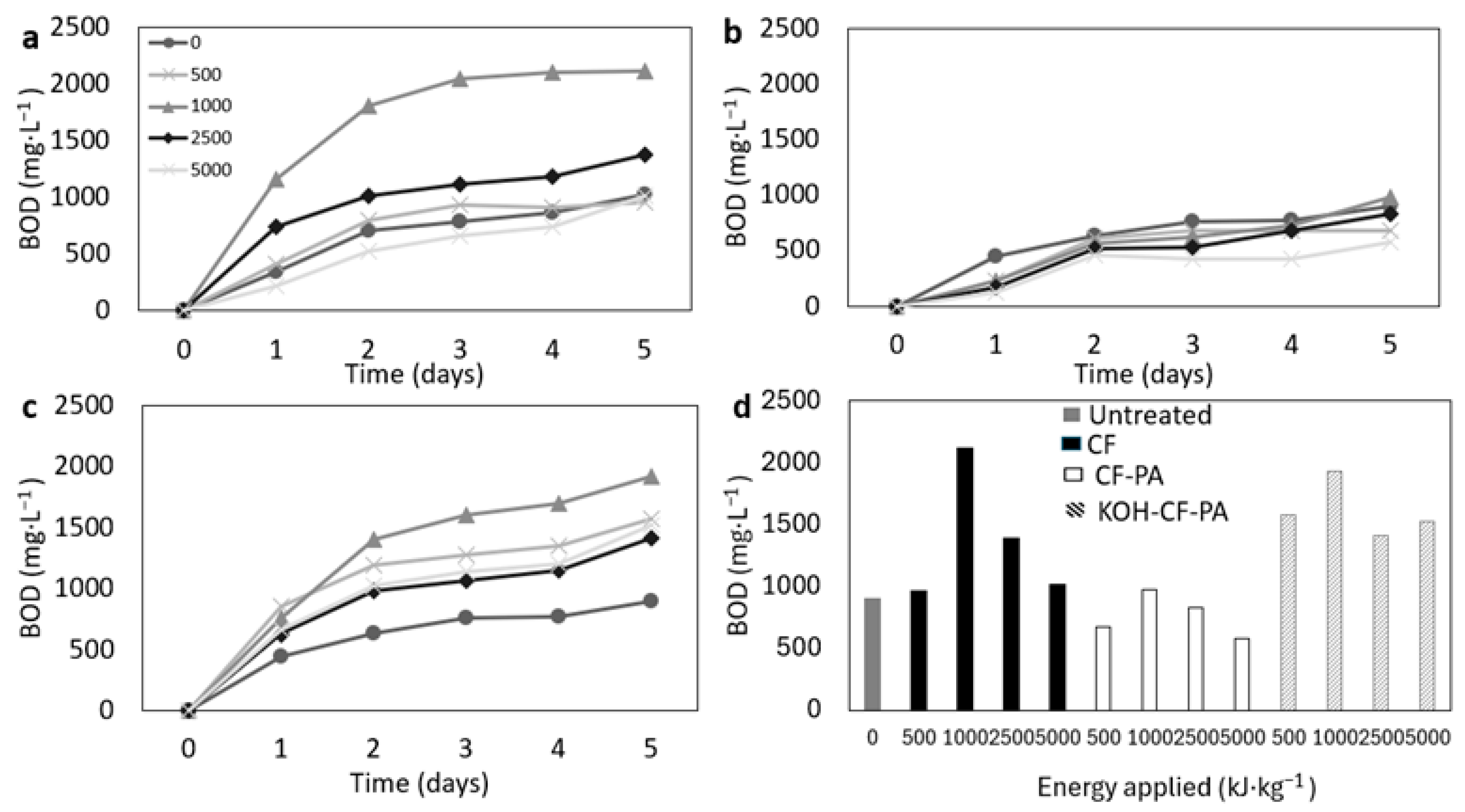
Figure 5 shows the evolution of biochemical oxygen demand (BOD
5) during the incubation period for the three pretreatment configurations evaluated: CF, PA-CF and PA-KOH-CF. The results indicate that both the pretreatment strategy and the applied energy influence the final BOD
5 of the treated substrate.
For the CF configuration (
Figure 5a), a rapid increase in BOD
5 was observed during the first days of incubation for all the energy levels tested. The highest values were obtained at an energy input of approximately 1000 kJ·kg
−1 VS, reaching values close to 2100 mg·L
−1 at the end of the experimental period. This behavior suggests that moderate energy inputs promote the partial disruption of complex organic structures, facilitating the release of soluble organic compounds that can be readily metabolized by microorganisms during the biodegradation process. In contrast, higher energy inputs did not produce a further increase in oxygen demand, indicating that excessive treatment intensity does not necessarily enhance microbial substrate availability. This phenomenon is often attributed to the “over-degradation” of the lignocellulosic matrix. Excessive electrochemical energy can break down solubilized sugars into toxic fermentation inhibitors, specifically furans and phenolic monomers, which suppress microbial activity during the BOD
5 assay [
33]. It should be noted that, although these compounds were not directly quantified in this study, their possible formation at high energy inputs has been widely reported in the electrochemical pretreatment of lignocellulosic biomass, particularly due to lignin and carbohydrate degradation pathways. This may further contribute to the observed decrease in BOD
5 at energy levels above 1000 kJ·kg
−1 VS [
34,
35]. Furthermore, at high current densities, the direct oxidation at the anode surface promotes the mineralization of labile carbon into CO
2, effectively reducing the mixture of bioavailable nutrients for the aerobic consortium [
12].
For the PA-CF pretreatment (
Figure 5b), BOD
5 values increased progressively throughout the incubation period, although the overall oxygen demand remained lower than that observed for the CF configuration. In addition, the differences between applied energy inputs were relatively limited. This behavior may indicate that the CF-PA treatment produces a lower degree of organic matter solubilization, reducing the amount of readily biodegradable substrates available for microbial respiration. The lower efficiency in this configuration may be explained by the theory of “Electrode Passivation”. During the treatment of oil-rich biomass like
Brassica napus, the cathode can be coated by a recalcitrant layer of polymerized organic matter or insoluble carbonates. This “fouling” effect creates a physical barrier that increases interfacial resistance, drastically reducing the efficiency of the electric field in disrupting the plant cell walls [
36].
In contrast, the PA-KOH-CF configuration (
Figure 5c) showed a more pronounced increase in BOD
5 during incubation. Similarly to the CF treatment, the highest oxygen demand was observed at an energy input of around 1000 kJ·kg
−1 VS. Under these conditions, the combined pretreatment likely promotes a more effective disruption of particulate organic matter, enhancing the release of soluble intermediates that stimulate microbial oxidation and increase oxygen consumption during the biological degradation process. The optimal efficiency at intermediate energies is a result of the trade-off between substrate solubilization and microbial toxicity. At maximum energy levels, the electrochemical system generates high concentrations of persistent reactive oxygen species (ROS). These radicals induce oxidative stress, which damages the phospholipid bilayers of the aerobic bacteria’s cell membranes and inhibits key metabolic enzymes, such as dehydrogenases, required for the oxidation of organic matter [
37,
38]. Therefore, the energy optimum (1000 kJ·kg
−1 VS) represents the point where maximum cell wall disruption occurs without reaching the threshold of microbial inhibition.
Finally,
Figure 5d summarizes the final BOD
5 values obtained for the three pretreatment configurations. The comparison shows that the CF treatment produced the highest oxygen demand at the optimal energy level, followed by the PA-KOH-CF system, whereas the PA-CF configuration resulted in comparatively lower values. These differences highlight the influence of the pretreatment conditions on the extent of organic matter solubilization and the subsequent microbial oxidation of the released compounds.
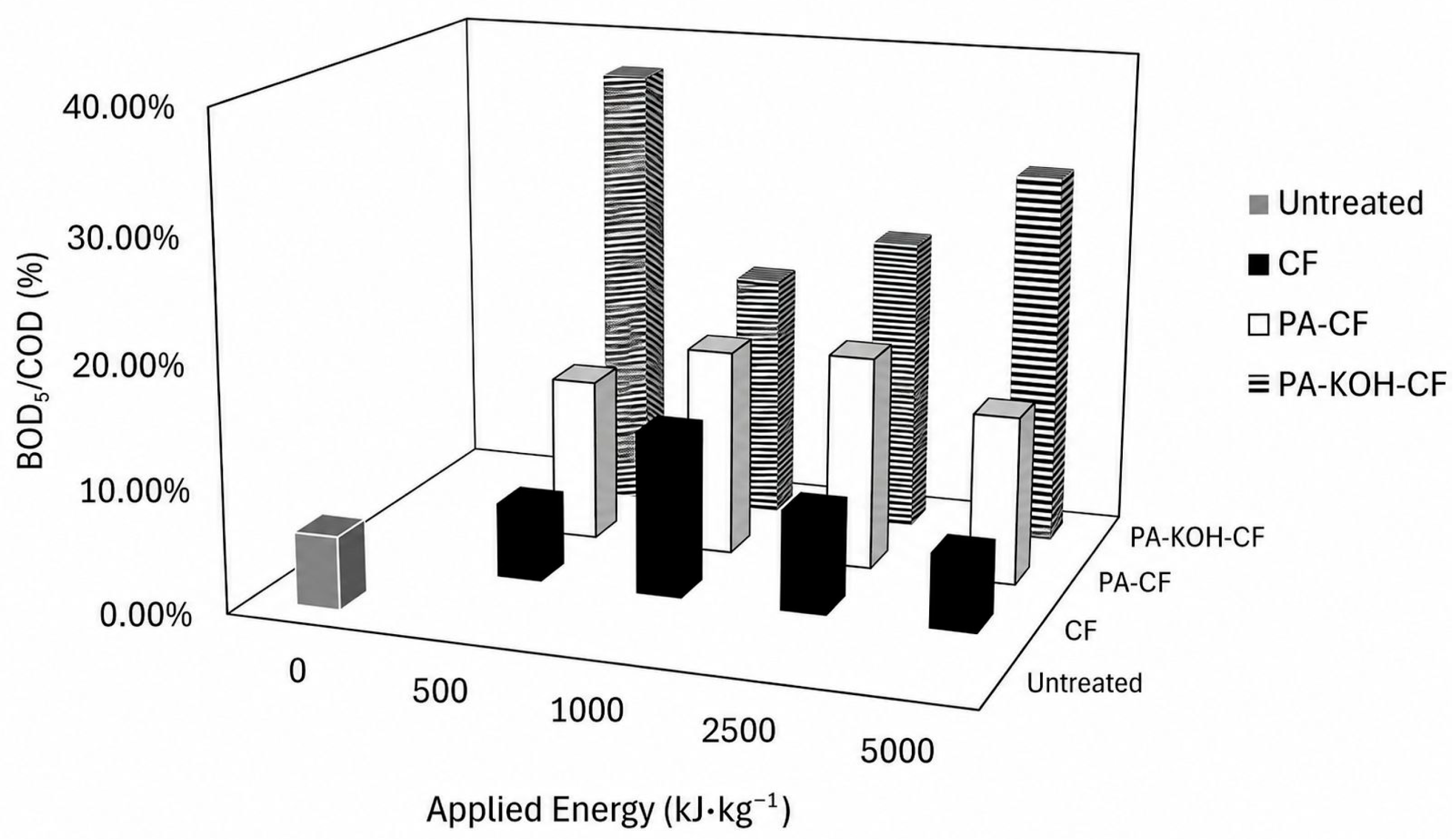
To further assess the impact of the different pretreatment configurations on substrate accessibility, the biodegradability index (BOD
5/COD) was evaluated (
Figure 6). This parameter provides an indirect indication of the fraction of organic matter that can be readily oxidized by microorganisms. In general, BOD
5/COD values below 20% are typically associated with substrates containing a high proportion of refractory organic compounds. In the present study, most of the evaluated conditions remained within or close to this range, suggesting that the organic matrix largely retained its recalcitrant character despite the applied pretreatments.
For the CF configuration, the BOD5/COD ratio remained consistently low across the tested energy inputs, with values generally below 15%. This behavior indicates that the treatment produced only limited changes in the nature of the organic matter, resulting in a relatively small fraction of compounds susceptible to rapid microbial oxidation.
Slightly higher values were obtained for the PA-CF, particularly at intermediate energy inputs around 1000–2500 kJ·kg−1 VS, where the ratio approached approximately 17–18%. This increase may be attributed to a moderate disruption of particulate organic matter, promoting the release of soluble intermediates and partially improving microbial accessibility.
The most significant improvement was observed for PA-KOH-CF, which exhibited the highest BOD5/COD ratios among the evaluated treatments. At the lowest energy input (500 kJ·kg−1 VS), the ratio reached values close to 37%, indicating a substantial increase in the fraction of biologically reactive compounds. The incorporation of alkaline conditions likely promotes the disruption of complex organic matrices and the solubilization of macromolecular structures, facilitating the formation of smaller intermediates that are more susceptible to microbial oxidation. Although the ratio decreased slightly at higher energy inputs, the values remained clearly above those obtained for the other pretreatments.
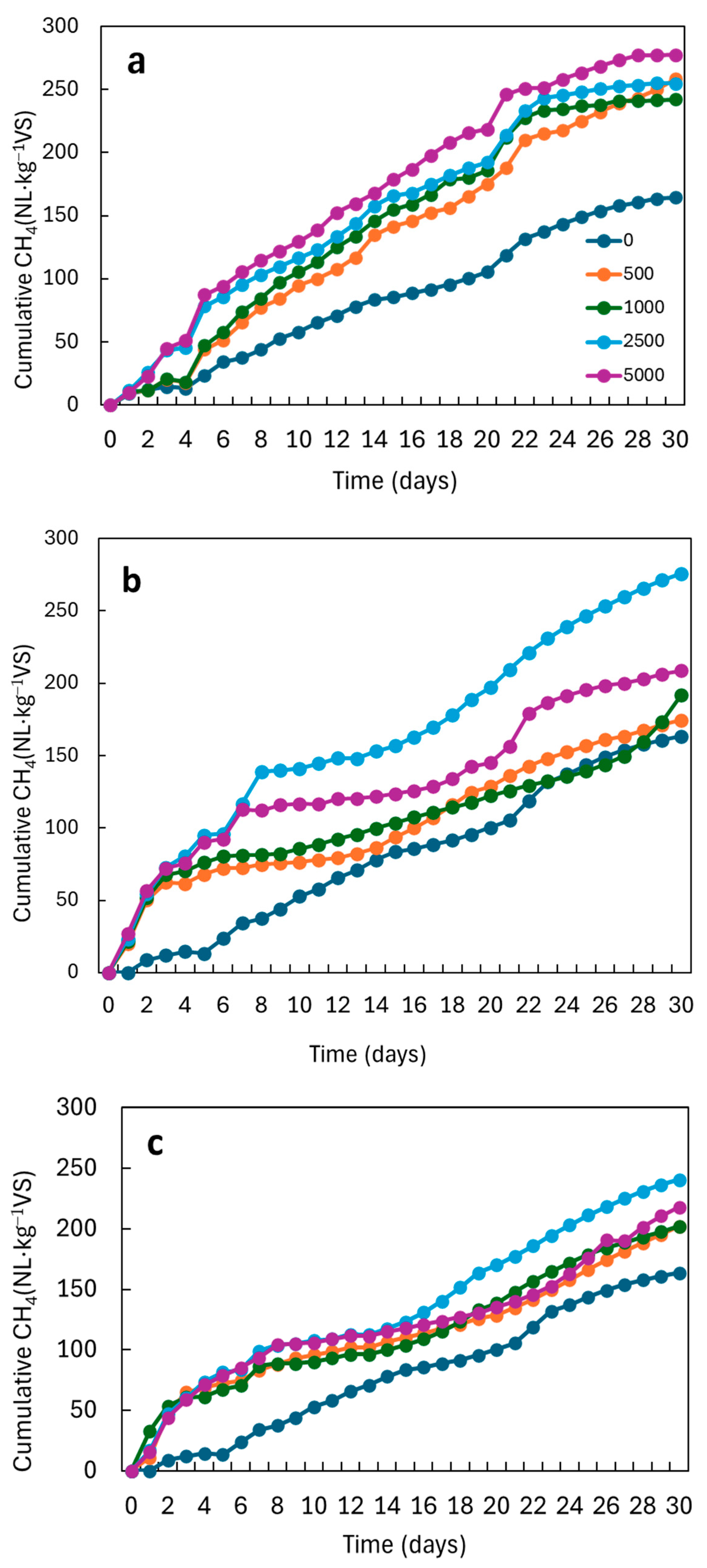
Overall, these results suggest that the combined PA-KOH-CF configuration enhances the solubilization of the organic matrix and increases the fraction of compounds that can be rapidly metabolized by microorganisms, highlighting the importance of pretreatment conditions in modifying substrate accessibility. Among the other experiments that were performed was the anaerobic digestion of the substrate to obtain biochemical methane production in order to further energetically valorize this waste. Then, unpretreated and EH pretreated samples with four applied energies were evaluated with CF, PA-CF and PA-KOH-CF cathodes, as shown in
Figure 7.
Results reveal a clear influence of both the electrode modification and the applied energies on the biomethane production performance. In general, the untreated substrate exhibited lower methane production compared to the electrohydrolysis-assisted systems, indicating that the electrochemical pretreatment promoted a higher substrate biodegradability.
For the CF electrode (
Figure 7a), methane production increased progressively with higher applied energy. Although moderate improvements were observed at intermediate energies, the highest methane yield was obtained at 2500 kJ·kg
−1 TS, reaching values close to the maximum methane production observed in the experiment. These results suggest that the application of higher electrochemical energy enhanced the activity of methanogenic bacteria and the solubilization of organic compounds, facilitating their subsequent conversion into methane during anaerobic digestion. No significant inhibition effects were detected with CF electrode.
In the case of the PA-CF electrode (
Figure 7b), a different trend was observed. The methane production increased significantly at 1000 kJ·kg
−1 TS, where the highest methane yield was achieved, while both lower and higher energies resulted in slightly reduced methane production. This behavior suggests that moderate energy inputs may be sufficient to activate the electrochemical effect of the phosphoric-acid-modified carbon surface. The presence of oxygenated functional groups introduced during the acidic treatment likely improved the surface wettability, porosity and microbial attachment, enhancing substrate conversion. However, at higher energies, a slight decrease in methane production was observed, which may be related to the inefficiency of oxidants generated due to the electron-transfer limits promoted by the surface degradation observed at higher applied energies.
For the PA-KOH CF electrode (
Figure 7c), methane production showed a more stable behavior across the different energy levels. In this system, relatively high methane yields were obtained even at low applied energies, suggesting that alkaline activation with KOH improved the intrinsic electrochemical properties of the carbon felt. The increased surface area and porosity generated during KOH activation likely enhanced the accessibility of microorganisms and promoted more efficient electron transfer processes. As a result, methane production remained relatively stable, with the highest values observed around 1000 kJ·kg
−1 TS, although differences among energies were less pronounced compared to the other electrodes.
It should be noted that the methane production values shown in
Figure 7a–c correspond to the experimentally measured cumulative methane production, whereas the Experimental Methane Yield (EMY) values reported in the text are derived parameters obtained by fitting the experimental data to the modified Gompertz model. This model estimates the maximum methane production potential and the kinetic parameters of the process, and therefore the EMY values may differ slightly from the raw experimental measurements shown in the figures, as they represent the asymptotic maximum predicted by the model rather than a directly measured value.
The methane yields obtained in the present study are consistent with values reported in the literature for the anaerobic digestion of colza (
Brassica napus), where a biomethane production of 259.2 NL·kg
−1 VS (range 244.2–276.3) has been reported [
39], confirming the suitability of this substrate for biomethane recovery and the competitiveness of the electrohydrolysis pretreatment applied.
Related to the evaluation of the influence of applied energy, electrodes and biomethane yield, a short statistical analysis was carried out. In this datasheet, Spearman rank correlation analysis was performed to evaluate the relationship between electrohydrolysis (EH) pretreatment energy and biomethane production in each setup, and the corresponding p-values are reported to assess statistical significance. Then, a moderate positive correlation was observed between EH energy input using a bare CF electrode and biogas yield (Spearman ρ = 0.70), although this relationship was not statistically significant (p ≈ 0.19, n = 5), likely due to the limited number of experimental points. This correlation is more positive with PA-CF and PA-KOH-CF cathodes (Spearman ρ = 0.8 and 0.85 respectively), and although it cannot confirm that is statistically significant (p ≈ 0.11 and 0.08 respectively), a strong positive monotonic trend was observed between these parameters. This consistency across independent datasets suggests a robust directional relationship, despite the limited statistical power inherent to the small number of experimental levels.
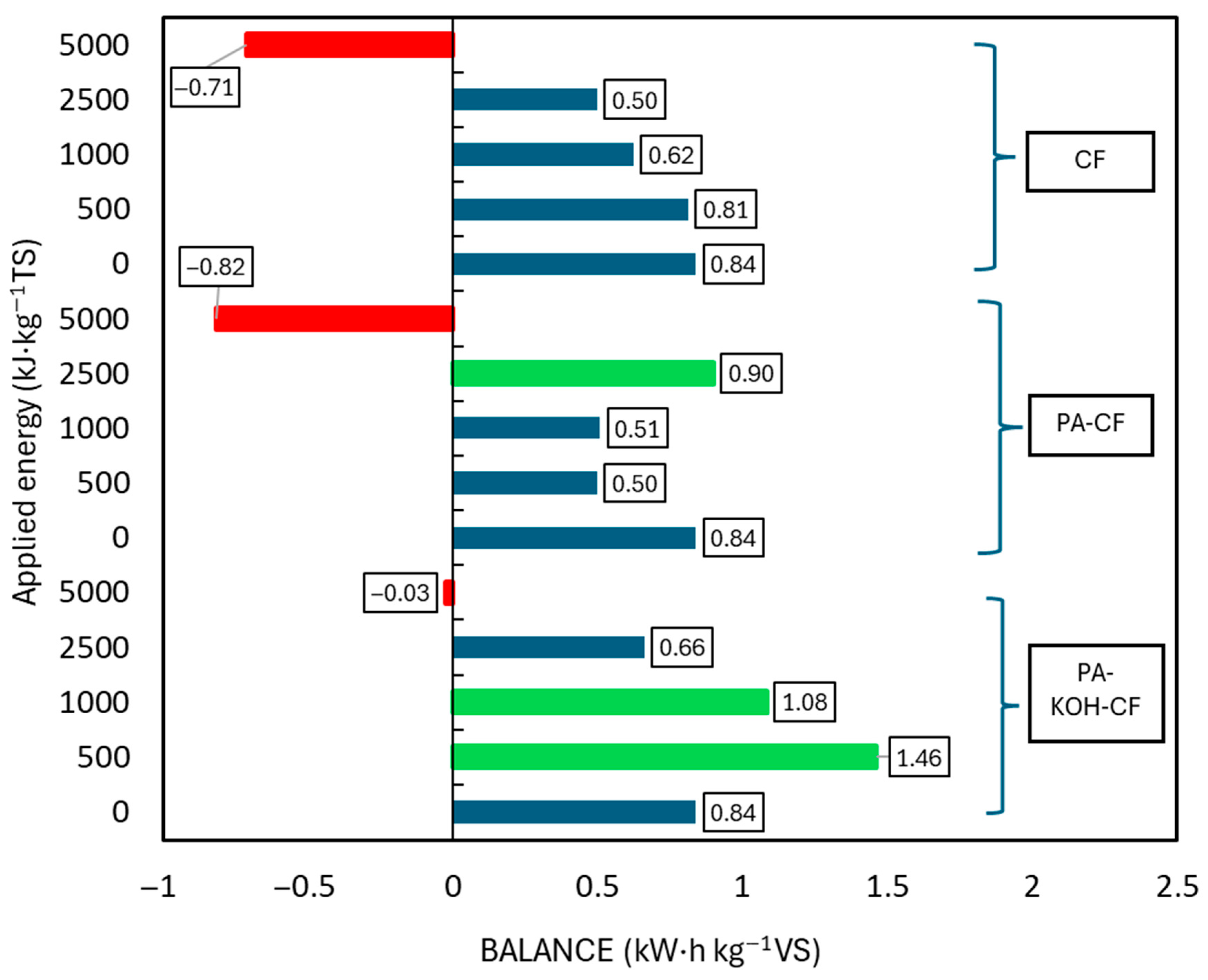
Based on the BMP results, an energy balance was calculated to assess the energetic efficiency of each treatment, as can be seen in
Figure 8. The CF system exhibited a positive energy balance at low to intermediate energy inputs (0–500 kJ·kg
−1 TS), followed by a progressive decline as the applied energy increased. At 5000 kJ·kg
−1 TS, the balance became negative, indicating that the energy supplied exceeded the recoverable energy from methane production. This behavior reflects the limited catalytic and electroactive properties of the unmodified electrode, which restrict effective energy recovery under intensified electrohydrolysis conditions.
In contrast, the PA-CF configuration showed improved performance, particularly at an intermediate input of 2500 kJ·kg−1 TS, where the maximum energy balance was achieved. Nevertheless, energy efficiency decreased at both lower and higher inputs, indicating operational instability. Although the incorporation of raw Phragmites australis enhances surface functionality, it does not ensure sustained electron transfer and substrate conversion over a broad range of operating conditions.
The most remarkable performance is achieved with the PA-KOH-CF electrode, which consistently delivers the highest energy balances across the tested conditions. Notably, a maximum value is observed at 500 kJ·kg
−1 TS, indicating that moderate energy input optimizes the trade-off between energy supply and methane yield. Even at 1000 kJ·kg
−1 TS, the system maintains a highly favorable balance, outperforming both CF and PA-CF configurations. The superior performance can be attributed to the enhanced porosity, specific surface area, and functional group availability introduced by KOH activation, which promote more efficient microbial colonization, electron transfer, and substrate accessibility [
40].
Importantly, the decline in energy balance at excessive energy input (5000 kJ·kg−1 TS), even for PA-KOH-CF, highlights the existence of an operational threshold beyond which additional energy does not translate into proportional gains in methane production. In this context, energy balance refers to the net relationship between the energy input applied to the electrochemical cell and the energy recovered as methane based on its lower heating value (LHV). Therefore, a negative energy balance indicates that the electrical energy input exceeds the chemical energy recovered from methane combustion. This reinforces the concept that process optimization must carefully balance electrochemical input with biological conversion efficiency.
Overall, energy balance demonstrates that electrode functionalization, particularly KOH activation, is an important factor for improving the net energy performance of electro-assisted anaerobic digestion systems. The PA-KOH-CF configuration not only maximizes methane recovery but also ensures a superior and more stable energy balance, making it the most promising candidate for scalable and energy-efficient biomass pretreatment.
To sum up and quantify the different impact of each pretreatment on methane generation, the experimental cumulative biomethane yield was fitted using a modified Gompertz model. The resulting kinetic parameters, along with their associated standard deviations, are summarized in
Table 2.
The kinetic parameters derived from the modified Gompertz model revealed a good fitting, in line with the results obtained from biomethane production shown in
Figure 7. In line with energetic balance, the highest EMY values of PA-CF and PA-KOH-CF are both from experiments with 2500 kJ·kg
−1 TS. Slight variations in the lag phase (λ) and maximum methane production rate (R
max), indicate that all experiments follow the same kinetics during the whole biomethanation process.
The CF electrode exhibited different kinetic behavior. Although methane production was observed to increase under all tested energy inputs, the maximum production was obtained at the highest energy and not at 2500 kJ·kg−1 TS, which supports the thesis that the degradation of modified electrode surfaces at higher energies can be the main reason for the decrease in BMP production. In addition, slightly longer Rmax and shorter lag phases were observed with unmodified carbon felt, which indicate that the modified electrodes promote stress or synthesis of more complex soluble compounds that slightly reduce the adaptability of the methanogenic consortium during the initial stages of digestion.
In contrast, PA-KOH-CF exhibited a nearly stable response in kinetic behavior with respect to energy input, with R
max and EMY showing limited sensitivity to increasing EH energy, suggesting a plateau in the electrochemical response. This indicates that additional energy input does not further enhance rate-limiting processes, in agreement with the moderate but significant correlations observed. This behavior may be attributed to the rearrangement of oxygen-containing functional groups during the hydrothermal treatment of PA biomass [
41].
Among the evaluated materials, the PA-KOH-CF electrode exhibited the most favorable kinetic profile. This configuration consistently produced the highest methane yields across the tested conditions, with peak EMY values exceeding those obtained with the other electrodes. Despite the higher methane potential, the short delay in lag phase was very important, suggesting that microbial communities were able to adapt efficiently to the electrochemically pretreated substrate, and the Rmax values were in the range of previous experiments.
These results suggest that electrode surface properties play a more critical role in biomethane production than the specific energy input applied during electrohydrolysis. The alkaline activation performed with KOH likely increased the surface area and porosity of the carbon felt, thereby improving microbial colonization and facilitating electron transfer processes within the anaerobic digestion system.
Thus, the experimental methane yields fit with the predicted values, and these parameters agree with previously evaluated physicochemical and biological parameters. This indicates that the modified electrodes, with electrochemical pretreatment, promoted aerobic and anaerobic biodegradability improvements of 37% and 52%, respectively, compared with the untreated system.




 ,
,