Article

Chia Seed Gel Powder as a Clean-Label Enhancer of Texture, Physicochemical Quality, Antioxidant Activity, and Prebiotic Function in Probiotic Low-Fat Yogurt


1
Dairy Science Department, Faculty of Agriculture, Assiut University, Assiut 71515, Egypt
2
Dairy and Food Science Department, South Dakota State University, Brookings, SD 57007, USA
3
Food Science and Technology Department, Faculty of Agriculture, Assiut University, Assiut 71515, Egypt
4
Idaho Milk Products, Jerome, ID 83338, USA
5
Department of Animal Sciences and Industry, Kansas State University, Manhattan, KS 66506, USA
6
Nutrition, Dietetics and Food Sciences (NDFS) Department, Utah State University, Logan, UT 84322, USA
*
Author to whom correspondence should be addressed.
Processes 2026, 14(1), 145; https://doi.org/10.3390/pr14010145
Submission received: 28 November 2025 / Revised: 18 December 2025 / Accepted: 29 December 2025 / Published: 31 December 2025

Abstract

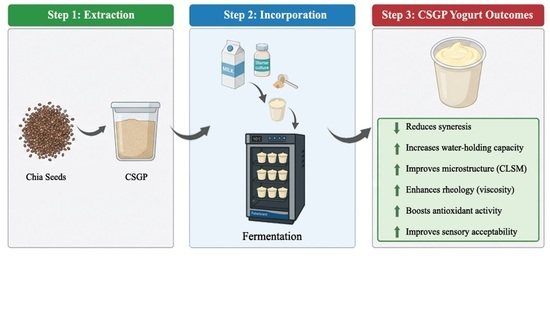
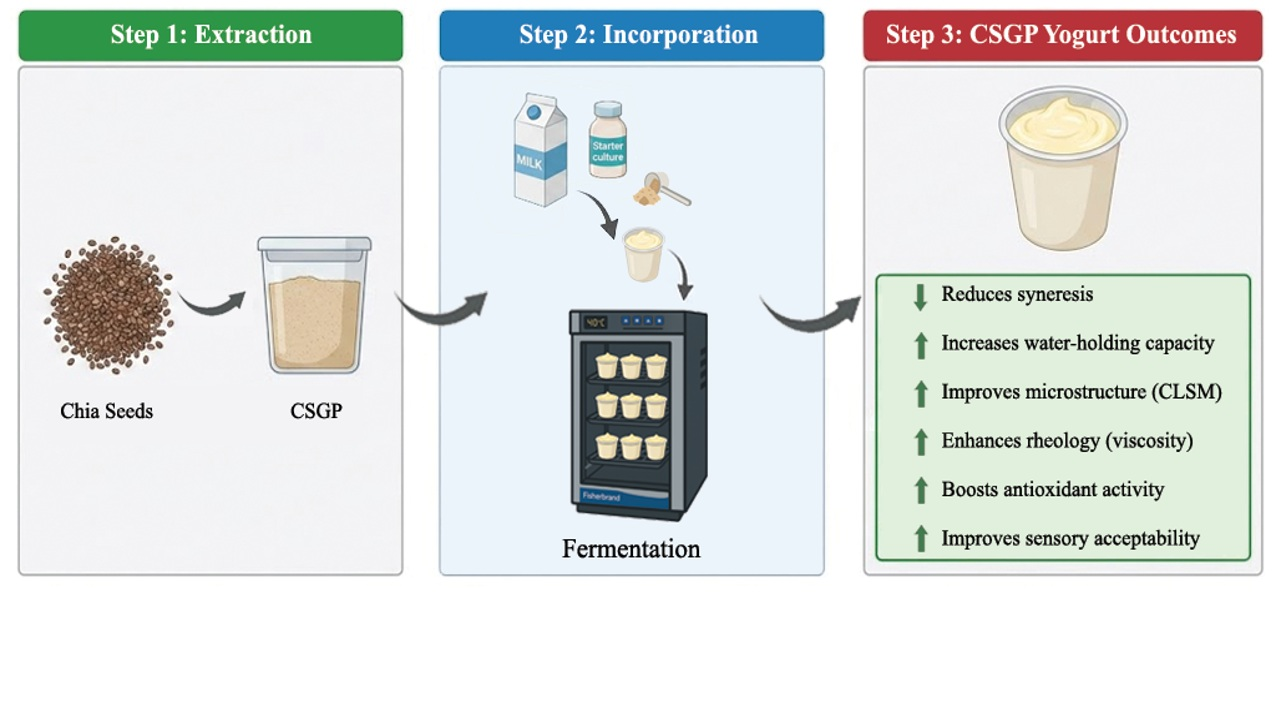
This study evaluated the effect of incorporating chia seed gel powder (CSGP) as a natural, clean-label stabilizer on the physicochemical, functional, microbiological, microstructural, antioxidant, and sensory properties of probiotic low-fat yogurt (PLFY) during 21 days of refrigerated storage. Six formulations were prepared using 0–2.5% CSGP, including Control (0% CSGP), YOG1 (0.5% CSGP), YOG2 (1.0% CSGP), YOG3 (1.5% CSGP), YOG4 (2.0% CSGP), and YOG5 (2.5% CSGP). Results showed that increasing CSGP levels noticeably enhanced the total solids, protein content, viscosity, hardness, and water-holding capacity of the PLFY (p < 0.05), while consistently reducing syneresis. Antioxidant activity also rose with higher CSGP concentrations, with YOG5 exhibiting the greatest DPPH scavenging activity (35.12%). Confocal laser scanning microscopy revealed a denser and more uniform protein network in PLFY fortified with CSGP, consistent with rheological measurements showing increased storage (G′) and loss (G″) moduli. Probiotic viability significantly increased (p < 0.05) in CSGP-added samples, indicating a potential prebiotic effect of CSGP. Sensory results demonstrated that although higher CSGP levels slightly darkened the yogurt color, body, texture, flavor, and total sensory scores improved markedly, with YOG5 gaining the highest total score (81.77). The results demonstrate that CSGP acts as a highly effective, multifunctional ingredient that enhances texture, stability, probiotic viability, and antioxidant capacity, making it a strong clean-label candidate for developing high-quality, functional probiotic low-fat yogurt.

Graphical Abstract

1. Introduction

In recent years, consumer interest in health-promoting foods has expanded rapidly, driving demand for products that are not only nutritious but also natural, minimally processed, and free from synthetic additives [1]. This trend has accelerated the development of clean-label foods, particularly in the dairy industry, where consumers increasingly prefer products formulated with familiar, plant-based, and functional ingredients. Yogurt, one of the most widely consumed fermented dairy products, represents an ideal platform for integrating such natural components due to its established health benefits, versatile composition, and favorable matrix for probiotic delivery [2]. However, formulating low-fat probiotic yogurts remains challenging, as fat reduction weakens the gel structure, decreases viscosity, increases syneresis, and negatively affects sensory quality [3]. To address these challenges, numerous studies [4,5] have explored the incorporation of natural hydrocolloids and plant-derived fibers as clean-label stabilizers capable of mimicking the textural functionality of fat. Hydrocolloids such as guar gum [4], β-glucan [5], and xanthan gum [6] have been shown to improve firmness, water-holding capacity, and viscosity in low-fat yogurts while reducing whey separation and enhancing consumer acceptability. In addition, stabilizers can create a more supportive microenvironment for probiotic bacteria, helping maintain viable counts throughout storage. Despite their effectiveness, many hydrocolloids used in yogurt manufacturing are chemically modified or perceived as artificial by consumers, underscoring the need for natural, clean-label alternatives with multifunctional benefits [7,8,9].
Chia seed (Salvia hispanica L.) has recently gained attention as a promising natural ingredient that aligns with clean-label expectations. Chia is rich in soluble dietary fiber, mucilage, omega-3 fatty acids, protein, minerals, and antioxidant components that contribute both nutritional and technological advantages [10]. When hydrated, chia produces a viscous gel composed primarily of polysaccharides and minor protein fractions, characterized by excellent water-binding, thickening, emulsifying, and stabilizing properties [11]. These attributes have supported its successful application in various food systems. A recent study showed that chia seed gum extracted through high-speed shearing exhibits strong thickening, stabilizing, and water-holding properties comparable to commercial hydrocolloids like xanthan gum [12]. Chia gel has been used as an emulsifier in cupcakes, improving texture and moisture retention while slightly altering color due to its natural pigmentation [13]. In dairy systems, several studies demonstrate the potential of chia mucilage to enhance yogurt quality. Atik et al., 2020 found that adding chia seed mucilage to set-type yogurt resulted in improved viscosity, firmer texture, reduced syneresis, and a more compact microstructure [14], as confirmed by confocal microscopy. Also, a study demonstrated that cold-pressed chia seed oil by-products can serve as an effective natural stabilizer and fat replacer in low-fat ice cream [15]. Additional study by [7] on functional yogurts has shown that fiber-rich, plant-derived hydrocolloids can also improve probiotic viability, textural properties, and antioxidant potential, further supporting the relevance of chia as a functional dairy ingredient. Beyond its technological advantages, chia aligns strongly with clean-label trends, as it requires minimal processing and is recognized by consumers as a natural, wholesome ingredient. Its high soluble fiber content, antioxidant compounds, and prebiotic-like effects make chia suitable not only for enhancing product stability but also for improving nutritional value in functional and probiotic yogurts. Chia seed gel powder (CSGP) represents a stable, concentrated, and easy-to-use form of chia mucilage that could offer manufacturers a practical, clean-label stabilizer with multifunctional benefits.
Although several studies have looked at whole chia seeds, chia flour, or chia mucilage in yogurt and other dairy products [13,14,15], none have examined CSGP as a clean-label ingredient in probiotic low-fat yogurt (PLFY). Unlike studies using whole seeds, flour, or fresh mucilage, our work focuses on dried CSGP, produced by extracting the gel and drying it to create a stable, concentrated form ideal for standardized use. Drying enhances its functional polysaccharides, improves storage stability, and strengthens its technological and prebiotic potential. Most of the available research focuses only on basic composition or simple texture measurements, leaving many important aspects unexplored. No studies have evaluated how CSGP influences yogurt’s microstructure, detailed rheology, antioxidant activity, or its possible prebiotic effect on probiotic cultures, nor how these changes impact sensory quality during storage. This means that the potential of CSGP as a natural, multifunctional stabilizer with antioxidant and prebiotic benefits remains largely unknown, creating a clear need for further investigation. This study was therefore designed to investigate the impact of incorporating various concentrations of CSGP into PLFY on its physicochemical properties, texture, microstructure, antioxidant capacity, probiotic viability, and sensory acceptability during 21 days of refrigerated storage. By addressing this research gap, the present work aims to evaluate whether CSGP can serve as a clean-label, natural stabilizer capable of improving both functional and technological quality in PLFY.

2. Materials and Methods

2.1. Gel Extraction

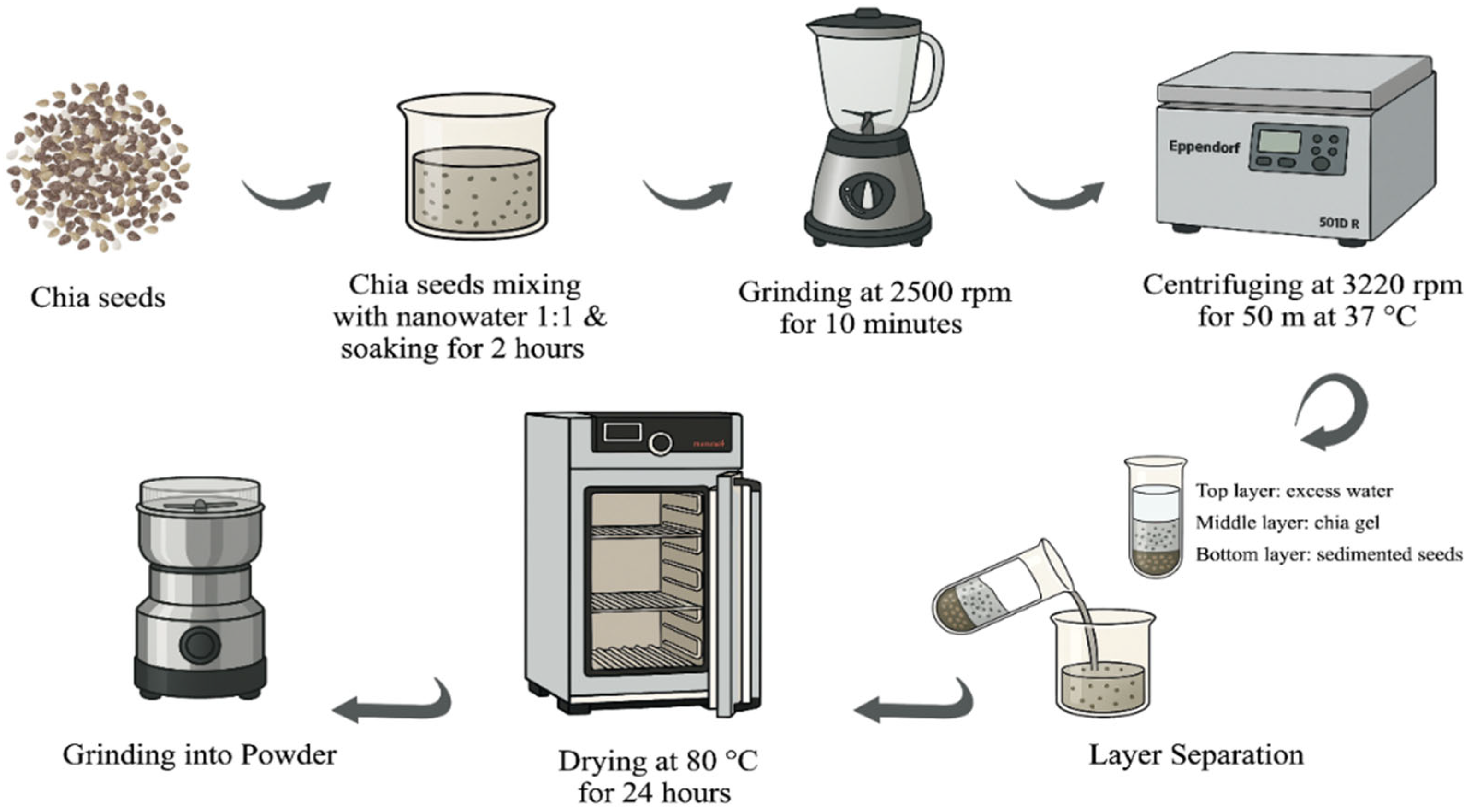
Gel extraction was performed following the method described by Chavan et al., (2017) [13], with slight modifications as shown in Figure 1. Whole grain Chia seeds were procured (Organic Nation, Cairo, Egypt) and mixed with water at a ratio of 1:1 (distilled deionized water: chia seeds) for gel extraction. The seeds were soaked in water for 2 h, then ground using an overhead mixer at 2500 rpm for 10 min. The resulting mixture was centrifuged in an Eppendorf 5810R centrifuge (Eppendorf, SE, Hamburg, Germany) at 3220 rpm for 50 min at 37 °C to separate the gel. After centrifugation, three distinct layers were formed: the upper layer (excess water), the middle layer (chia gel), and the bottom layer (sedimented seeds). The middle gel layer was carefully collected, dried at 80 °C for 24 h, and then ground into a fine powder using a mixer. The resulting CSGP was stored in airtight containers at room temperature until further use.

2.2. Experimental Design

The present study was designed to evaluate the influence of CSGP incorporation on the physicochemical and quality attributes of PLFY during refrigerated storage at 4 °C for 21 days. The experimental design was employed, consisting of six treatments: a control sample (without CSGP) and five yogurt formulations containing 0.5%, 1.0%, 1.5%, 2.0%, and 2.5% CSGP, designated as YOG1, YOG2, YOG3, YOG4, and YOG5, respectively (Table 1). These CSGP levels (0.5–2.5%) were selected based on preliminary trials and previous reports using chia mucilage as a stabilizer, which showed that concentrations within this range improve yogurt texture without causing excessive thickening or flavor masking. Samples were analyzed on days 0, 7, 14, and 21 to determine the effects of CSGP concentration and storage time on key yogurt quality parameters, including texture, water-holding capacity, and overall stability. The primary objective of this research was to investigate the potential application of CSGP as a natural hydrocolloid for improving the physicochemical, rheological, and storage properties of PLFY. Additionally, the study aimed to assess the effect of CSGP on the viability of probiotic bacteria and the enhancement of antioxidant activity throughout the storage period.

2.3. Probiotic Low-Fat Yogurt Manufacturing

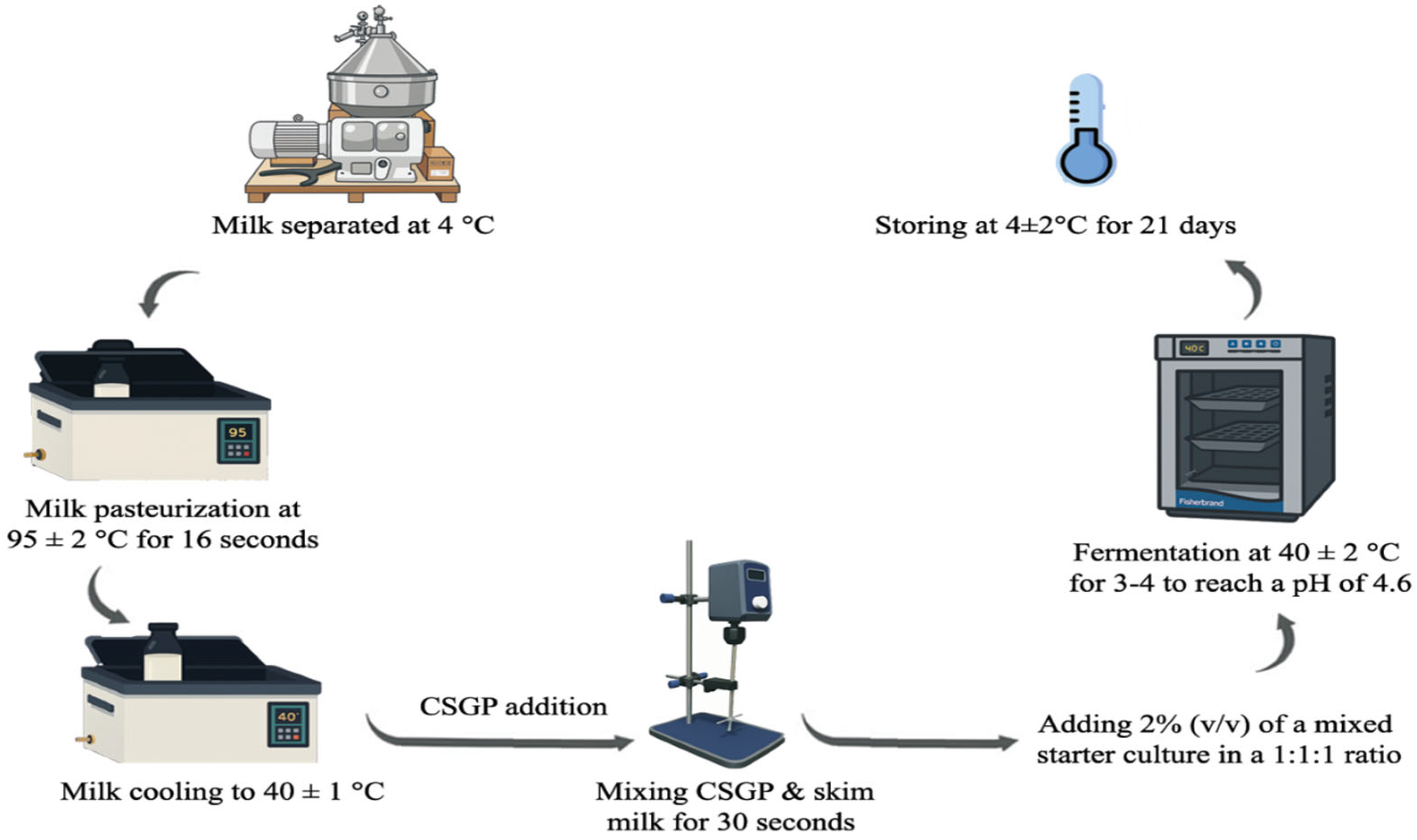
Low-fat yogurt was produced according to the method described by Elderwy et al. (2025), with slight modifications [4]. Fresh cow’s milk, sourced from the farm of the Faculty of Agriculture, Assiut University (Egypt) and transported in clean milk cans, was first separated at 4 °C to obtain skim milk. The skimmed milk was pasteurized by heating to 95 ± 2 °C for 16 s to ensure microbial safety and improve protein functionality, followed by rapid cooling to 40 ± 1 °C to reach the fermentation temperature (Figure 2). To evaluate the influence of CSGP on PLFY, pasteurized milk was divided into six treatment groups, as detailed above. Different concentrations of CSGP were incorporated into the skim milk and mixed for 30 s using a blender to achieve uniform dispersion. A mixed starter culture comprising Lactobacillus delbrueckii subsp. bulgaricus, Streptococcus thermophilus, and Bifidobacterium bifidum (obtained from the Egyptian Microbial Culture Collection, EMCC, Cairo MIRCEN, Faculty of Agriculture, Ain Shams University, Cairo, Egypt) was then added at a rate of 2% (v/v) in a 1:1:1 ratio. These strains meet the internationally accepted definition of probiotics, being well-characterized and safe, and they maintained viable counts above 106–107 CFU/g throughout storage, which exceeds the recommended threshold for probiotic efficacy. After inoculation, the milk mixtures were immediately dispensed into 100 mL sterile plastic cups with an internal diameter of approximately 80 mm, which served as the individual containers used for yogurt gel formation. Fermentation was carried out at 40 ± 2 °C for approximately 3–4 h until the yogurt reached a pH of 4.6. For each treatment, three independent batches were prepared, with each batch consisting of 1 L of yogurt mix. The obtained PLFY samples were subsequently stored at 4 ± 2 °C for 21 days for further physicochemical, microbiological, and textural analyses.

2.4. Analysis

2.4.1. Proximate Composition

All analytical-grade chemicals used in this study were obtained from BDH (Mumbai, India), Sigma (New Delhi, India), and Prolab Chemicals (Mumbai, India). The proximate composition of low-fat yogurt (LFY) and extracted chia seeds gel powder was examined according to Official Methods described by AOAC (2000) [16]. The pH of the yogurt samples was measured using a calibrated digital pH meter (Hanna Instruments, Inc., Woonsocket, RI, USA). All analyses were performed at four storage intervals 0, 7, 14, and 21 days to evaluate changes in the chemical composition of the yogurt during refrigerated storage.

2.4.2. Determination of DPPH Radical Scavenging Activity of PLFY

The DPPH Radical Scavenging Activity of PLFY samples was evaluated using the DPPH radical scavenging assay. Sample extraction was performed following the method described by Zielinska et al. (2008) [17]. The DPPH assay was conducted according to the procedure of Lee et al. (2003), with minor modifications [18]. A stock DPPH solution (10−3 M) was prepared by dissolving 22 mg of 2,2-diphenyl-1-picrylhydrazyl (DPPH) in 50 mL of methanol and stored at −20 °C until use. The working solution (6 × 10⁻⁵ M) was obtained by diluting 6 mL of the stock solution with 100 mL of methanol to achieve an absorbance of 0.80 ± 0.02 at 515 nm, as measured using a spectrophotometer. For the assay, 0.1 mL of the sample extract was mixed with 3.9 mL of the DPPH working solution and vortexed for 30 s. The mixture was then allowed to react in the dark for 30 min at room temperature. After incubation, the absorbance was measured at 515 nm. A control sample containing methanol instead of the extract was also analyzed under the same conditions. The antioxidant activity of PLFY was performed at four storage intervals: 0, 7, 14, and 21 days.
The DPPH scavenging activity was quantified by calculating the percentage inhibition based on the reduction in absorbance at 515 nm using the following formula:
DPPH scavenging activity (%) = [(Acontrol − Asample)/Acontrol] × 100

2.4.3. Functional Characteristics

Hardness Measurement
The hardness of PLFY samples was determined using a texture analyzer (Stable Micro Systems, Godalming, Surrey, UK) fitted with a back-extrusion plate probe (P/75, 75 mm diameter), following the procedure described by Gharibzahedi et al., (2019) [19]. The instrument was operated with Texture Exponent 32 software. Samples were analyzed directly in their containers at a test speed of 0.5 mm/s, with a holding time of 2 s and a data acquisition rate of 200 points per second. The hardness value was recorded as the maximum force (N) required during compression. Measurements were performed at four storage intervals: 0, 7, 14, and 21 days to evaluate changes in yogurt firmness during refrigerated storage.
Viscosity Determination
The viscosity of PLFY samples was determined using a Brookfield LVDVE-230 viscometer (Cole-Parmer Scientific Experts, East Bunker Ct, Vernon Hills, IL, USA). Before measurement, each sample was gently stirred for 40 s to ensure uniform consistency. Viscosity was measured at 15 ± 1 °C using spindle number 4 operating at 10 rpm, and results were expressed in centipoise (CP). Measurements were taken at four storage intervals (0, 7, 14, and 21 days) to evaluate the influence of CSGP addition and storage time on the yogurt’s flow properties.
Syneresis
Syneresis of PLFY samples was determined according to the method described by Elderwy et al. [4]. Approximately 30 g of yogurt was placed in centrifuge tubes and centrifuged at 230× g for 15 min at 4 °C using a ST Plus Series centrifuge (Thermo Fisher, Bremen, Germany). After centrifugation, the clear supernatant was carefully collected and weighed. The extent of syneresis was expressed as the percentage of whey separated relative to the initial weight of the yogurt sample. Syneresis measurements were performed at four storage intervals (0, 7, 14, and 21 days).
Color Characteristics
The color attributes of PLFY samples were evaluated according to the method described by Guler [20], using a Hunter colorimeter equipped with an optical sensor (Momcolor Inc., Columbus, OH, USA). Color measurements were expressed in terms of the CIE L*, a*, and b* color space. The L* value represents lightness, ranging from 0 (black) to 100 (white). The a* value indicates the position on the red-green axis, where positive values correspond to redness and negative values to greenness. The b* value represents the yellow-blue axis, with positive values indicating yellowness and negative values indicating blueness. Color characteristics measurements were performed at four storage intervals (0, 7, 14, and 21 days).
Rheological Characteristics
The rheological properties of PLFY samples were determined using an Anton Paar rheometer (Anton Paar, Graz, Austria) equipped with a concentric cylinder geometry consisting of a cup (inner diameter 42.01 mm) and a bob (outer diameter 38.69 mm; effective length 60.02 mm; active length 143.8 mm; positioning length 72.50 mm), following the method described by Hamouda & Salunke, (2024) with slight modifications [21]. For these measurements, the inoculated milk was dispensed directly into the 60 mL rheometer cup and incubated until gelation, ensuring that the yogurt gel formed in situ without any transfer or disturbance of the structure. Then the yoghurt samples were maintained at 25 °C prior to testing. The viscoelastic parameters, including the storage modulus (G′) representing the elastic or “solid-like” behavior, and the loss modulus (G″) representing the viscous or “liquid-like” behavior, were measured at 25 °C. The analyses were conducted at an applied shear strain of 0.5% over an angular frequency range of 0–115 rad/s, with data recorded at 5 rad/s intervals. Rheological measurements were performed only on freshly prepared yogurt samples (day 0) to evaluate the initial structural and flow characteristics of the formulations.
Confocal Scanning Laser Microscopy (CSLM) Analysis
Confocal scanning laser microscopy (CSLM) was used to examine the microstructure of PLFY samples containing varying concentrations of CSGP, following the procedure described by Zhao et al., (2016) with slight modifications [22]. Because the yogurt formulation was low in fat, only Rhodamine B (Sigma, 10 mg/mL) was employed to stain the protein network. For each treatment (control, YOG1–YOG5), Rhodamine B and the starter culture were added to 100 g of milk base containing the designated level of CSGP. The mixture was stirred magnetically for approximately 5 min to ensure uniform distribution of the dye and starter. A few drops of the prepared mixture were transferred onto a concavity slide, covered with a coverslip, and incubated at 42 °C until the pH reached 4.6 to allow complete gel formation. The formed yogurt was observed using a Leica TCS 4D confocal laser scanning microscope (Leica Lasertechnik GmbH, Wetzlar, Germany) equipped with a 60× oil-immersion objective (numerical aperture = 1.4). The excitation wavelength for Rhodamine B was set at 568 nm, and images were captured at a resolution of 1428 × 1428 pixels to visualize the protein microstructure and assess the influence of CSGP concentration on the yogurt gel network.

2.4.4. Microbiological Analysis

The microbiological probiotic viability of the PLFY samples was evaluated throughout the storage period. One gram of each yogurt sample was aseptically transferred into a sterile jar containing 9 mL of sterile phosphate buffer to obtain an initial 1:10 dilution. The mixture was thoroughly homogenized, and serial dilutions were prepared following the procedure described by Harrigan and McCance [23]. Counting of Lactobacillus delbrueckii subsp. bulgaricus was performed using de Man, Rogosa, and Sharpe (MRS) agar [24], with plates incubated anaerobically at 37 °C for 48 h. Streptococcus thermophilus counts were determined on M17 agar medium under aerobic incubation at 37 °C for 48 h [4]. Bifidobacterium bifidum was enumerated using modified MRS agar (m-MRS) supplemented with 0.05% L-cysteine HCl and 0.3% lithium chloride, following the method described by Brewer et al. [25]; plates were incubated anaerobically at 37 °C for 48 h. After incubation, characteristic small white colonies were counted, and results were expressed as colony-forming units (CFU) per gram of sample. Microbiological assessments were carried out on days 0, 7, 14, and 21 to monitor the survival of the starter and probiotic cultures during refrigerated storage.

2.4.5. Sensory Evaluation

The sensory properties of PLFY samples were evaluated by a trained panel consisting of 10–15 members from the Dairy Science Department, Assiut University. The assessment was conducted according to the method described by [7], with minor modifications. Panelists evaluated each sample based on three main attributes: color and appearance (15 points), flavor (50 points), and body and texture (35 points), for a total possible score of 100 points. In the sensory evaluation, panelists evaluated the color and appearance with a scale, 1–6—disliked extremely to disliked slightly, 7–9—neither liked nor disliked, 10–15—liked slightly to liked extremely. For flavor, it was evaluated by the panelists following, 1–20—disliked extremely to disliked slightly, 20–30—neither liked nor disliked, 30–50—liked slightly to liked extremely. Similarly, body and texture were evaluated by 1–13—disliked extremely to disliked slightly, 14–21—neither liked nor disliked, 22–35—liked slightly to liked extremely. Sensory evaluations were carried out when the samples were freshly prepared and subsequently after 14 and 21 days of refrigerated storage to assess the effect of CSGP addition and storage duration on the overall sensory attributes of the yogurt.

2.4.6. Statistical Analysis

All experimental data were statistically analyzed using CoStat version 6.303 software [26]. A two-way analysis of variance (ANOVA) was performed within the framework of a general linear model (GLM) to evaluate the main effects of CSGP concentration, storage period, and interaction on the physicochemical, functional, and quality attributes of PLFY. When significant differences were observed (p < 0.05), mean comparisons were carried out using the least significant difference (LSD) test. Although letter superscripts were not used in the tables, the significance level (p < 0.05) is indicated, and the LSD-based differences are described directly in the Section 3.

3. Results

3.1. Proximate Composition

Table 2 shows that CSGP had a high total solids content (94.17%) and was mainly composed of dietary fiber (54.08%), giving it strong water-binding and thickening abilities. It also contained moderate levels of protein (10.72%), carbohydrates (13.57%), and ash (6.15%), with a relatively low-fat content (2.96%). These results agree with those reported by Chavan et al. (2017) [13]. Overall, the composition highlights that CSGP is a fiber- and protein-rich ingredient with good functional properties, making it valuable for improving the texture and nutritional quality of dairy and plant-based products.
The proximate composition of PLFY fortified with varying concentrations of CSGP during 21 days of refrigerated storage is presented in Table 3. Statistical analysis revealed that the effect of CSGP concentration was significant (p < 0.05) on pH, total solids (TS), and protein content, whereas storage time significantly affected only pH (p < 0.05) but not total solids or protein content (p > 0.05). Additionally, the interaction between CSGP level and storage period was significant (p < 0.05) for pH but not for total solids or protein percentage, indicating that acidity development during storage was influenced by both the amount of CSGP and storage duration, while the overall solids and protein composition remained relatively stable over time. At day 0, the pH values ranged from 4.62 in the control to 4.60 in CSGP-added samples, showing no marked initial differences among treatments. However, as storage progressed, a continuous decline in pH was observed across all samples, with the greatest decrease occurring in yogurts containing higher CSGP levels, particularly YOG4 (2.0%) and YOG5 (2.5%), which reached pH values of 2.95 and 2.88, respectively, after 21 days. This accelerated acidification could be attributed to the prebiotic potential of chia seed polysaccharides, which may have promoted probiotic bacterial activity and organic acid production during fermentation and storage [27]. The increased buffering capacity and water-holding ability of chia mucilage could also enhance microbial metabolism by maintaining a more favorable microenvironment for probiotic growth [6]. The total solids content of the yogurts increased significantly (p < 0.05) with increasing CSGP concentration, ranging from 11.35% in the control to 13.81% in YOG5. The addition of CSGP led to this increase primarily due to its high content of dietary fiber, polysaccharides, and soluble solids, which directly contributed to the overall dry matter of the yogurt matrix. Total solids remained stable across treatments and storage because refrigerated set-yogurt typically loses minimal moisture under proper sealed conditions. These findings agreed with those reported by Elderwy et al. (2025), who observed that the addition of guar gum effectively maintained the moisture content of low-fat yogurt during storage by improving its water-holding ability [4].
Similarly, the protein content was significantly influenced by the CSGP level (p < 0.05) but remained unaffected by storage. Protein concentration increased steadily from 4.41% in the control to 5.61% in YOG5. This increase can be attributed to the intrinsic protein content of CSGP (10.72%, as shown in Table 2), which contributed additional protein to the yogurt formulation and enhanced its overall nutritional value. These results agree with the findings of (Chavan et al., 2017), who reported that incorporating chia seed gel into cupcake formulations led to a significant increase in protein content [13]. Overall, the results demonstrate that CSGP fortification enhanced the nutritional density and compositional stability of PLFY, with higher concentrations contributing to greater total solids and protein contents, alongside a more pronounced acidification trend during storage.

3.2. DPPH Radical Scavenging Activity

The DPPH Radical Scavenging Activity of PLFY fortified with different concentrations of CSGP during 21 days of storage is shown in Table 4. Statistical analysis indicated that CSGP concentration had a significant effect (p < 0.05) on the antioxidant activity of yogurt, while storage time and the interaction between CSGP level and storage duration were not significant (p > 0.05). This indicates that the antioxidant potential of PLFY was primarily impacted by the amount of CSGP incorporated rather than by storage duration. At day 0 of storage, the antioxidant activity of the control sample was 10.03%, while the activity increased markedly with higher levels of CSGP, reaching 35.12% in YOG5 (2.5% CSGP). The progressive enhancement in antioxidant activity with increasing CSGP levels can be attributed to the rich content of phenolic compounds, flavonoids, and other bioactive molecules present in chia seeds, which are known for their strong free radical scavenging capacity [28]. The chia mucilage also contains polysaccharides and minor protein fractions capable of chelating metal ions and inhibiting lipid oxidation, contributing further to the observed antioxidant improvement [29,30]. Similarly, (Rao & Poonia, 2023) reported that chia seed proteins, particularly the albumin and globulin fractions, exhibit strong antiradical activity and ferrous ion–chelating capacity, thereby enhancing oxidative stability in food systems [31]. During storage, antioxidant values remained relatively stable with no significant (p < 0.05) changes across storage time, which indicated that the bioactive compounds in CSGP maintained their functionality under refrigerated conditions. The observed enhancement in antioxidant capacity resulting from CSGP addition is consistent with previous findings indicating that the incorporation of plant-derived hydrocolloids can enrich dairy products with natural antioxidants and improve their functional properties. This result agrees with [4,6,7,32], who reported that the addition of natural hydrocolloids such as guar gum, xanthan gum, cassava, corn, and potato starches significantly enhanced the antioxidant properties of yogurt by increasing its free radical scavenging activity and overall functional quality. These results confirm that CSGP serves not only as a natural stabilizer but also as a functional ingredient that boosts the antioxidant potential of PLFY while maintaining its stability during storage.

3.3. Functional Characteristics

3.3.1. Hardness

The effect of different concentrations of CSGP on the hardness of PLFY during 21 days of refrigerated storage is presented in Table 5. Statistical analysis indicated that CSGP concentration, storage period, and their interaction were all significant (p < 0.05), indicating that both the level of CSGP incorporation and storage duration influenced yogurt hardness. At day 0, the control sample recorded the lowest hardness value (15.21 g), while hardness boosted progressively with higher CSGP concentrations, reaching 50.05 g in YOG5 (2.5% CSGP). This significant increase can be attributed to the hydrocolloidal and water-binding properties of CSGP, which enhance gel strength by forming a more compact and cohesive protein–polysaccharide network. The high fiber and polysaccharide content of CSGP likely interacted with milk proteins through hydrogen bonding, resulting in a denser microstructure and improved firmness. These results agreed with (Bahrami et al., 2013), who reported that the addition of hydrocolloids to probiotic yogurt increased gel strength and created a denser gel network [33]. On the other hand, [4,6,34] reported that the addition of hydrocolloids to low-fat yogurt significantly increases its hardness by enhancing the gel structure and improving textural integrity. Similarly, Feizi et al., (2021), mention that the addition of chia seed mucilage as a stabilizer in ice cream manufacturing led to hardness increasing [35]. During storage, all PLFY samples showed a gradual decrease (p < 0.05) in hardness, which is typical for fermented dairy products due to ongoing post-acidification and structural relaxation of the gel matrix [36]. However, PLFY samples containing higher CSGP levels (especially YOG4 and YOG5) maintained significantly higher hardness values compared to the control during the storage period, demonstrating the stabilizing effect of CSGP on texture. Taken together, these results indicated that CSGP plays an important role in building a stronger yogurt structure and maintaining its firmness and stability during storage.

3.3.2. Viscosity

The impact of different concentrations of CSGP on the viscosity of PLFY during 21 days of refrigerated storage is shown in Table 5. Statistical analysis revealed that CSGP concentration, storage period, and their interaction between them have significant (p < 0.05) effects, indicating that both the level of CSGP incorporation and storage duration had a measurable effect on yogurt viscosity. On day 0, the viscosity of the PLFY samples increased steadily from 2223.48 cp in the control to 3921.46 cp in YOG5 (2.5% CSGP). This noticeable rise in viscosity with increasing CSGP levels can be explained by the strong hydrocolloidal and water-binding properties of CSGP, which help form a more connected and stable gel network [13]. The high content of soluble fiber and polysaccharides in CSGP interacts with milk proteins, trapping water within the matrix and reducing its movement. As a result, the yogurt becomes thicker and more consistent, reflecting the combined effects of enhanced water retention and a denser protein–polysaccharide structure. The high levels of soluble fiber and polysaccharides present in CSGP interact with milk proteins to form a cohesive and stable network that effectively traps water within the yogurt matrix. This interaction limits water mobility, leading to a thicker and more uniform texture. Consequently, the incorporation of CSGP improves water retention and contributes to the development of a denser protein–polysaccharide structure, which improves the overall body and consistency of the yogurt. These findings are in the same direction as those obtained by Campos et al. (2016); Chavan et al. (2017); Coorey et al. (2014); and Feizi et al. (2021) [13,35,37,38]. During storage time, viscosity values showed a slight but consistent increase in all PLFY samples, which may be due to continued rearrangement of the protein–polysaccharide network [6,7,33,39]. PLFY samples containing higher CSGP concentrations maintained significantly higher viscosity values compared to the control at all storage periods, which confirms the stabilizing and thickening impact of CSGP.

3.3.3. Syneresis

The impact of different concentrations of CSGP on the syneresis of PLFY during 21 days of refrigerated storage is shown in Table 5. Statistical analysis revealed that CSGP concentration, storage time, and their interaction between them were all significant (p < 0.05), indicating that both the concentration of CSGP and the length of storage significantly affected whey separation in the yogurt samples. At the beginning of storage, the control yogurt showed the highest level of whey separation (38.14%), whereas YOG5 (2.5% CSGP) had the lowest (16.86%). The gradual decline in syneresis with increasing CSGP concentration reflects the remarkable ability of CSGP to retain moisture and strengthen the yogurt network. This effect can be attributed to the hydrophilic nature of the CSGP, which is rich in soluble fiber and polysaccharides capable of binding water molecules and integrating them into the protein matrix [40]. These results agreed with Atik (2020), who stated that yogurts enriched with chia seed mucilage showed significantly lower syneresis values compared to control samples after cold storage [14]. They explained that this reduction in whey separation was due to the high water-binding and gel-forming capacity of chia mucilage, which contains protein- and fiber-rich polysaccharides that effectively retain moisture and enhance the structural integrity of the yogurt matrix. During storage, a slight increase in syneresis was observed across all samples, which is typical in yogurt due to the continued activity of lactic acid bacteria. As fermentation progresses, bacterial growth leads to higher acidity and a gradual drop in pH, causing the curd network to contract and expel some whey [41,42]. However, PLFY containing higher levels of CSGP showed much lower whey separation than the control, indicating that the CSGP helped counteract this effect by reinforcing the gel structure and enhancing its water-holding capacity throughout storage.

3.3.4. Color Parameters

Table 5 presents the effect of different concentrations of CSGP on the color parameters (L*, a*, and b*) of PLFY during 21 days of refrigerated storage. Statistical analysis showed that CSGP concentration had a significant effect (p < 0.05) on all color parameters, whereas storage time and the interaction between CSGP level and storage were not significant (p > 0.05). This indicates that differences in color among samples were mainly due to CSGP incorporation levels rather than storage duration. The lightness (L) values* decreased markedly with increasing CSGP concentration from 92.05 in the control to 75.45 in YOG5, resulting in a darker appearance in yogurts containing higher levels of CSGP. This decline in L* reflects the influence of CSGP pigments and natural brownish tones that intensify the color of the PLFY as the proportion of CSGP increases. In the same direction, both redness (a) and yellowness (b) values** decreased significantly (p < 0.05) with higher levels of CSGP. The a* value dropped from 22.55 in the control to 9.14 in YOG5, while the b* value declined from 27.51 to 13.21 across the same range. The reduction in these color parameters suggests that the addition of CSGP produced a more muted, natural color tone, possibly due to color dilution and pigment interactions between CSGP components and milk proteins. These findings are consistent with Atik et al. (2020), who stated that chia seed mucilage addition significantly affected the color attributes of yogurt, particularly by slightly darkening its appearance and decreasing of the a* and b* values due to the natural pigments and phenolic compounds present in chia seeds [14]. Similarly, Ürkek, (2021) reported that the addition of chia seed powder to ice cream formulations resulted in a decrease in L*, a*, and b* values [43].
Throughout storage, no significant changes were observed in L*, a*, or b* values, indicating good color stability during refrigeration. Overall, incorporating CSGP gave the yogurt a slightly darker, more natural color without adversely affecting its visual quality or stability over time.

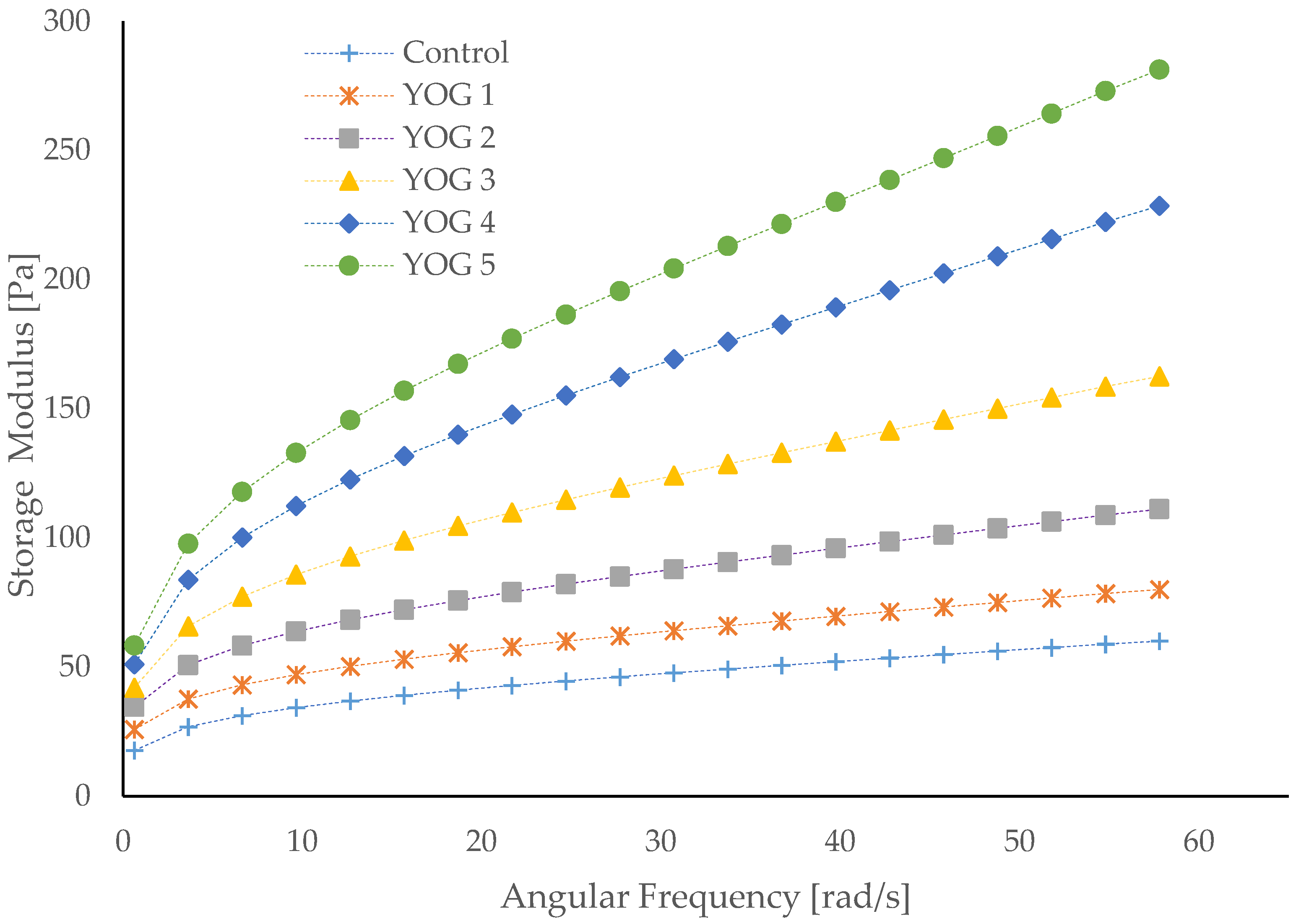
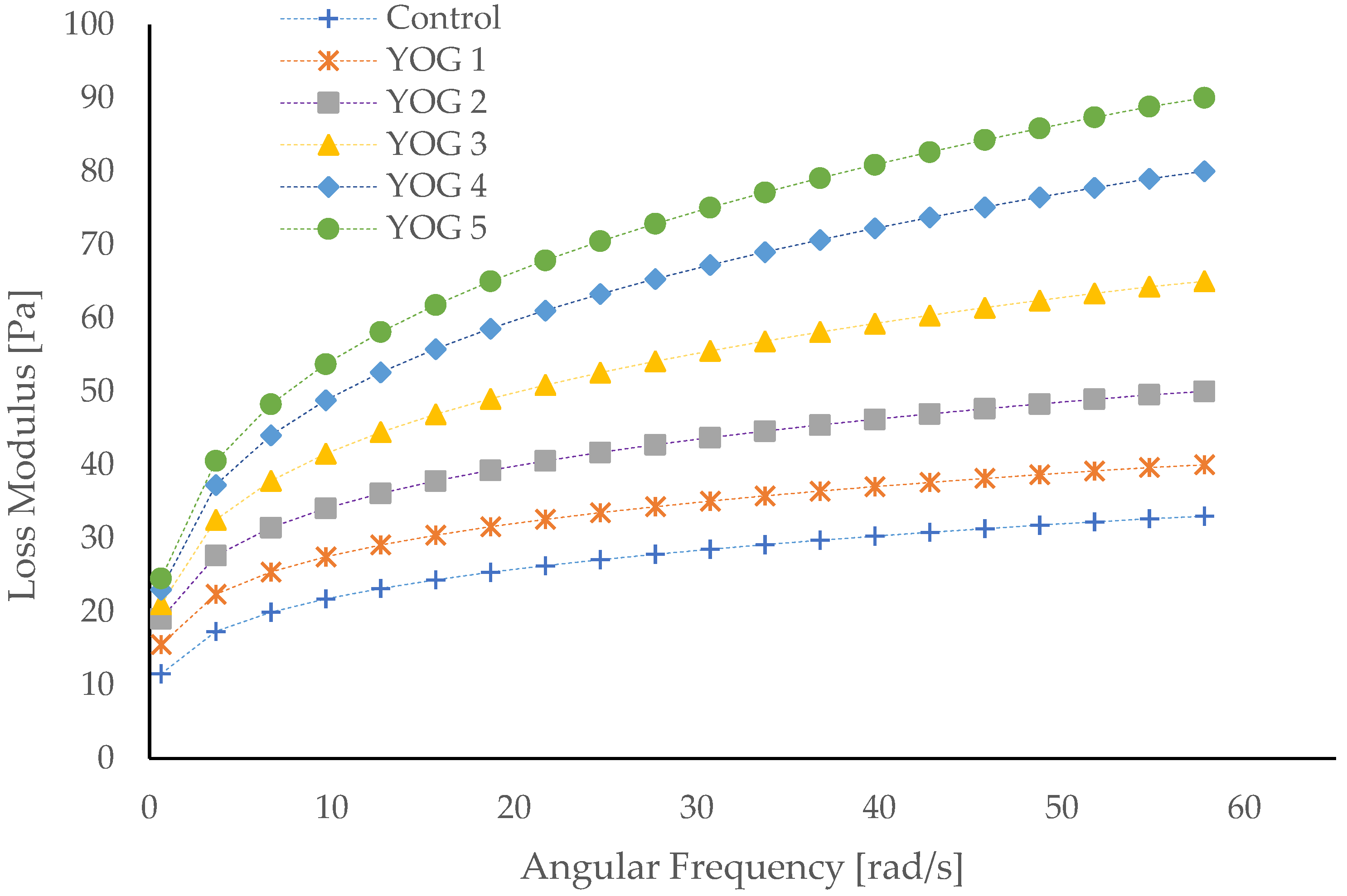
3.3.5. Rheology

The viscoelastic behavior of PLFY samples, including the storage modulus (G′) representing the elastic or “solid-like” behavior, and the loss modulus (G″) representing the viscous or “liquid-like” behavior, is shown in Figure 3 and Figure 4. The rheological behavior of PLFY with varying levels of CSGP is illustrated in Figure 3 and Figure 4, which show the storage modulus (G′) and loss modulus (G″) as functions of angular frequency. Both G′ and G″ increased significantly with rising CSGP concentrations, indicating that CSGP enhanced the viscoelastic properties of PLFY. The highest values of both moduli were recorded for YOG5 (2.5% CSGP), while the control exhibited the lowest. This improvement could be attributed to the hydrocolloidal and gel-forming properties of CSGP, which promote stronger protein–polysaccharide interactions and create a more cohesive gel network. The increase in G′ (elastic component) reflects a firmer, more solid-like texture, while the higher G″ (viscous component) suggests improved energy dissipation during deformation. These rheological enhancements confirm that CSGP acts as a natural stabilizer, reinforcing the yogurt structure and improving its mechanical strength. Similar trends were observed by Atik et al. (2020); Elderwy et al. (2025), who reported that the addition of plant-based hydrocolloids or chia seed mucilage into dairy systems enhanced gel elasticity and reduced structural breakdown, supporting the current results [4,14].

3.3.6. Confocal Laser Scanning Microscopy

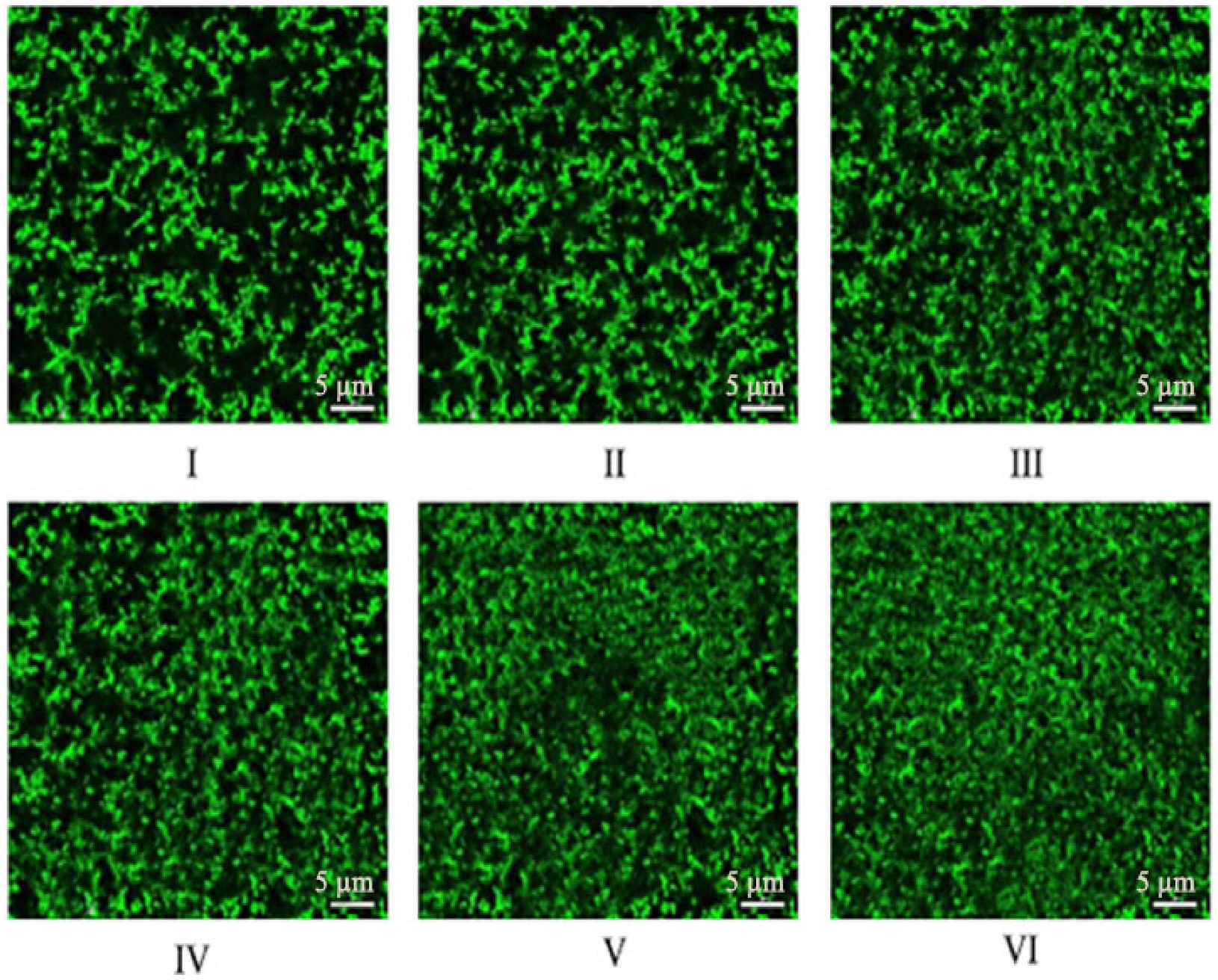
Figure 5 presents confocal laser scanning microscopy (CSLM) images of PLFY containing different concentrations of CSGP. The protein network, stained in green with Rhodamine B, clearly demonstrates the structural evolution of the PLFY matrix with increasing CSGP levels. The control sample (I) displayed a relatively loose and irregular protein structure with larger pores, indicating weaker gel formation. As the concentration of CSGP increased from YOG1 to YOG5 (II–VI), the microstructure became progressively denser and more homogeneous, with fewer voids and tighter protein linkages. This improvement in gel uniformity and compactness could be attributed to the hydrocolloidal and water-binding capacity of CSGP, which promotes stronger protein–polysaccharide interactions and enhances network formation. The high fiber and polysaccharide content of CSGP likely filled gaps within the protein matrix, leading to better water entrapment and reduced syneresis [40]. These microstructural observations are consistent with the rheological results, where higher CSGP concentrations resulted in increased storage modulus (G′) and firmness, confirming the formation of a more elastic and stable gel network. These microscopic observations are further supported by the findings of Atik et al. (2020), who reported that incorporating chia seed mucilage into yogurt formulations produced a noticeably denser and more cohesive protein network when examined under CLSM [14]. Also, Attalla & Hussieny, (2017) reported that the inclusion of chia-based ingredients leads to a denser and more uniform gel network when examined microscopically [44].

3.4. Microbiological Profile

Table 6 shows the effect of different CSGP on the microbiological profile of PLFY during 21 days of refrigerated storage. Statistical analysis revealed significant effects of CSGP level, storage time, and their interaction (p < 0.05) on all three microorganisms. Across all treatments, the counts of Lactobacillus delbrueckii ssp. bulgaricus, Streptococcus thermophilus, and Bifidobacterium bifidum showed a steady increase during storage, which is typical of ongoing post-acidification and sustained probiotic metabolic activity [6,45,46]. The addition of CSGP markedly enhanced microbial growth, with higher counts observed in PLFY containing increasing CSGP levels compared to the control. The reasons behind this improvement were the prebiotic components of chia, particularly soluble fiber and mucilage, which provide a favorable substrate that stimulates probiotic metabolism and survival [47,48]. Notably, the highest CSGP concentration (YOG5) recorded the greatest microbial counts by day 21, confirming the supportive effect of CSGP on probiotic viability. Overall, these results indicate that CSGP not only improves the physicochemical properties of yogurt but also enhances the growth and stability of probiotic microorganisms during refrigerated storage.

3.5. Sensory Analysis

Table 7 summarizes the effect of different levels of CSGP on the sensory attributes of PLFY. Statistical analysis showed that CSGP concentration had a significant effect (p < 0.05) on all sensory parameters, whereas storage time had no significant impact on color and appearance but significantly affected body & texture, flavor, and total sensory scores (p < 0.05). As CSGP concentration increased, slight reductions in color and appearance scores were observed, likely due to the natural darker pigmentation of CSGP [49]. However, this minor color change did not negatively impact overall acceptance. These results agreed with the findings obtained by (Chavan et al., 2017), who reported that increasing the level of chia seed gel in cupcake formulations as an emulsifier led to a significant decrease in color and appearance scores due to the natural dark color of the gel [13].
In contrast, higher CSGP levels markedly improved body and texture, with the highest score recorded for YOG5 (2.5% CSGP), reflecting the stabilizing and thickening effect of CSGP on the yogurt gel. Flavor scores also improved with increasing CSGP levels, which may be attributed to the mild nutty, cooked cereal-like taste of chia that many consumers find appealing [46]. These results are in harmony with the findings of Atik et al. (2020) [14], who reported that adding 1% chia seed mucilage increased taste scores by approximately 26.89% compared to the control. Total sensory scores showed a clear upward trend with increasing CSGP concentration, with YOG5 achieving the highest overall score.

4. Conclusions

Overall, the study demonstrated that incorporating CSGP can substantially improve the technological and functional quality of probiotic low-fat yogurt. CSGP contributed to a stronger and more stable gel structure, enhanced water retention, and improved textural attributes, as supported by microstructural and rheological observations. It also enriched the yogurt’s functional value by increasing antioxidant capacity and supporting probiotic viability, suggesting a potential prebiotic role. Sensory evaluation further indicated that CSGP improved overall sensorial attributes, particularly at higher inclusion levels. Collectively, these findings highlight CSGP as a promising clean-label stabilizer capable of enhancing both the quality and nutritional appeal of probiotic dairy products. Future research may explore its application in other dairy and non-dairy matrices, optimize production methods for industrial scalability, and further investigate its prebiotic mechanisms and consumer acceptance in commercial formulations.

5. Future Studies

Future research should extend the application of CSGP to other food systems that rely on stabilizers to enhance structure and quality. Its potential functionality in processed cheese products, ice cream, and other dairy matrices warrants investigation, given its strong thickening and water-binding properties. Additionally, evaluating CSGP in gluten-free and plant-based formulations, which often require natural ingredients to enhance texture and reduce dryness, could further clarify its versatility as a clean-label stabilizer. Such studies would provide a broader understanding of how CSGP performs across diverse food products and support its use in next-generation functional and clean-label formulations.

Author Contributions

Conceptualization, M.E.A.H. and Y.E.; methodology, M.E.A.H. and Y.E.; software, M.E.A.H. and R.K.; validation, M.E.A.H. and Y.E.; formal analysis, Y.E., O.A.A.A. and R.K.; investigation, M.E.A.H. and Y.E.; resources, M.E.A.H. and A.K.A., data curation, M.E.A.H. and Y.E.; writing—original draft preparation, Y.E., R.K., M.E.A.H., A.K.A., P.C., P.U.D., A.V. and O.A.A.A.; writing—review and editing, R.K., P.C., A.K.A., P.U.D., A.V. and O.A.A.A.; supervision, M.E.A.H. and Y.E.; project administration, M.E.A.H. and Y.E. All authors have read and agreed to the published version of the manuscript.

Funding

This research received no external funding.

Data Availability Statement

The original contributions presented in this study are included in the article. Further inquiries can be directed to the corresponding author.

Conflicts of Interest

The authors declare no conflicts of interest. Author Pratibha Chaudhary was employed by the company Darigold. Author Pramith U. Don was employed by the company, Idaho Milk Products. The remaining authors declare that the research was conducted in the absence of any commercial or financial relationships that could be construed as a potential conflict of interest. The companies had no role in the design of the study; in the collection, analyses, or interpretation of data; in the writing of the manuscript, or in the decision to publish the results.

Abbreviations

The following abbreviations are used in this manuscript:
CSGPChia Seed Gel Powder
PLFYProbiotic Low-Fat Yogurt
EMCCEgyptian Microbial Culture Collection
LFYLow-fat yogurt
TSTotal Solids
CPCentipoise
MRSde Man, Rogosa, and Sharpe
CFUColony Forming Unit
ANOVAAnalysis of variance
GLMGeneral Linear Model
LSDLeast Significant Difference
CSLMConfocal scanning laser microscopy
DPPHdiphenyl-1-picrylhydrazyl
G″Loss Modulus
G′Storage Modulus

References

  1. Mena, B.; Sîrbu, A.; Eze, C.C. Global Consumer Perception Towards Healthy Foods: Influencing Factors and Current Trends. In Consumer Perceptions and Food; Bogueva, D., Ed.; Springer: Singapore, 2024. [Google Scholar] [CrossRef] [Scilit]
  2. Kok, C.R.; Hutkins, R. Yogurt and other fermented foods as sources of health-promoting bacteria. Nutr. Rev. 2018, 76, 4–15. [Google Scholar] [CrossRef] [Scilit]
  3. Ramchandran, L. Physico-Chemical and Therapeutic Properties of Low-Fat Yogurt as Influenced by Fat Replacers, Exopolysaccharides and Probiotics. Ph.D. Dissertation, Victoria University, Ahmedabad, Gujarat, 2009. Available online: https://vuir.vu.edu.au/id/eprint/15511 (accessed on 28 December 2025).
  4. Elderwy, Y.; Kalita, R.; Hamouda, M.E.A.; Chaudhary, P.; Elfaruk, M.S.; Don, P.U.; Abdelsater, O.A.A. Influence of Guar Gum and Xanthan Gum on the Rheological Behavior, Texture, and Microstructure of Probiotic Low-Fat Yogurt. Processes 2025, 13, 3301. [Google Scholar] [CrossRef] [Scilit]
  5. Vyrova, D.V.; Selezneva, I.S. Isolation of beta-glucan from yeast and its use as a dietary supplement for low-fat yoghurt manufacturing. AIP Conf. Proc. 2019, 2174, 20266. Available online: https://www.researchgate.net/publication/337816280_Isolation_of_beta-glucan_from_yeast_and_its_use_as_a_dietary_supplement_for_low-fat_yoghurt_manufacturing (accessed on 15 November 2025).
  6. Alsaleem, K.A.; Hamouda, M.E.A. Enhancing Low-Fat Probiotic Yogurt: The Role of Xanthan Gum in Functionality and Microbiological Quality. Processes 2024, 12, 990. [Google Scholar] [CrossRef] [Scilit]
  7. Alsaleem, K.A.; Hamouda, M.E.A. Optimizing Probiotic Low-Fat Yogurt: The Benefits of Incorporating Defatted Rice Bran for Enhanced Quality and Functionality. Food Sci. Nutr. 2024, 12, 10242–10254. [Google Scholar] [CrossRef] [Scilit] [PubMed]
  8. Alsaleem, K.A.; Musa, K.H.; Hamouda, M.E.A.; Hamad, E.M. Assessing Quality Attributes and Antioxidant Effects in Chocolate Milk Formulated with Gum Arabic and Desert Truffle. Processes 2024, 12, 1714. [Google Scholar] [CrossRef] [Scilit]
  9. Ahmed, M.E.; Hammam, A.R.A.; Ali, A.E.; Alsaleem, K.A.; Elfaruk, M.S.; Kamel, D.G.; Moneeb, A.H.M. Measurement of carbohydrates and organic acids in varieties of cheese using high-performance liquid chromatography. Food Sci. Nutr. 2023, 11, 2081–2085. [Google Scholar] [CrossRef] [Scilit]
  10. Agarwal, A.; Rizwana Tripathi, A.D.; Kumar, T.; Sharma, K.P.; Patel, S.K.S. Nutritional and Functional New Perspectives and Potential Health Benefits of Quinoa and Chia Seeds. Antioxidants 2023, 12, 1413. [Google Scholar] [CrossRef] [Scilit] [PubMed]
  11. Goh, K.K.; Matia-Merino, L.; Chiang, J.H.; Quek, R.; Soh, S.J.; Lentle, R.G. The physico-chemical properties of chia seed polysaccharide and its microgel dispersion rheology. Carbohydr. Polym. 2016, 149, 297–307. [Google Scholar] [CrossRef] [Scilit]
  12. Li, L.; Yan, J.-N.; Lai, B.; Wang, C.; Sun, J.-J.; Wu, H.-T. Rheological properties of chia seed gum extracted by high-speed shearing and its comparison with commercial polysaccharides. Food Hydrocoll. 2023, 144, 108936. [Google Scholar] [CrossRef] [Scilit]
  13. Chavan, V.R.; Gadhe, K.S.; Kale, R.V. Studies on extraction and utilization of chia seed gel in cupcake as an emulsifier. Trends Biosci. 2017, 10, 3986–3989. Available online: https://www.researchgate.net/profile/Ravindra-Kale-5/publication/347558943_Studies_on_Extraction_and_Utilization_of_Chia_Seed_Gel_in_Cupcake_as_an_Emulsifier/links/5fe1d464a6fdccdcb8efdbeb/Studies-on-Extraction-and-Utilization-of-Chia-Seed-Gel-in-Cupcake-as-an-Emulsifier.pdf (accessed on 13 November 2025).
  14. Atik, D.S.; Demirci, T.; Öztürk, H.İ.; Demirci, S.; Sert, D.; Akın, N. Chia seed mucilage versus guar gum: Effects on microstructural, textural, and antioxidative properties of set-type yoghurts. Braz. Arch. Biol. Technol. 2020, 63, e20190702. [Google Scholar] [CrossRef] [Scilit]
  15. Atik, I.; Tekin Cakmak, Z.H.; Avcı, E.; Karasu, S. The Effect of Cold Press Chia Seed Oil By-Products on the Rheological, Microstructural, Thermal, and Sensory Properties of Low-Fat Ice Cream. Foods 2021, 10, 2302. [Google Scholar] [CrossRef] [Scilit] [PubMed]
  16. AOAC. Official Methods of Analysis. The Association of Official Analytical Chemists, 17th ed.; AOAC: Gaithersburg, MD, USA, 2000; Methods 925.10, 65.17, 974.24, 992.16. [Google Scholar]
  17. Zielinska, D.; Frias, J.; Piskuła, M.K.; Kozłowska, H.; Zielinski, H.; Vidal-Valverde, C. Evaluation of the antioxidant capacity of lupin sprouts germinated in the presence of selenium. Eur. Food Res. Technol. 2008, 227, 1711–1720. [Google Scholar] [CrossRef] [Scilit]
  18. Lee, K.W.; Kim, Y.J.; Kim, D.O.; Lee, H.J.; Lee, C.Y. Major phenolics in apple and their contribution to the total antioxidant capacity. J. Agric. Food Chem. 2003, 51, 6516–6520. [Google Scholar] [CrossRef] [Scilit]
  19. Gharibzahedi, S.M.T.; Emam-Djomeh, Z.; Razavi, S.H.; Jafari, S.M. Mechanical Behavior of Lentil Seeds in Relation to their Physicochemical and Microstructural Characteristics. Int. J. Food Prop. 2014, 17, 545–558. [Google Scholar] [CrossRef] [Scilit]
  20. Güler, Z.; Park, Y.W. Evaluation of chemical and color index characteristics of goat milk, its yoghurt and salted yoghurt. Trop. Subt. Agroecosystems 2009, 11, 37–39. Available online: https://www.redalyc.org/pdf/939/93913000009.pdf (accessed on 15 November 2025).
  21. Hamouda, M.E.A.; Salunke, P. Changes in Milk Protein Functionality at Low Temperatures and Rennet Concentrations. Foods 2024, 13, 447. [Google Scholar] [CrossRef] [Scilit]
  22. Zhao, L.L.; Wang, X.L.; Tian, Q.; Mao, X.Y. Effect of casein to whey protein ratios on the protein interactions and coagulation properties of low-fat yogurt. J. Dairy Sci. 2016, 99, 7768–7775. [Google Scholar] [CrossRef] [Scilit] [PubMed]
  23. Wehr, H.M.; Frank, J.F.; Wehr, H.M.; Frank, J.F.; Wehr, H.M.; Frank, J.F. Standard Methods for the Examination of Dairy Products; Ignatius Press: San Francisco, CA, USA, 2004. [Google Scholar] [CrossRef] [Scilit]
  24. De Man, J.C.; Rogosa, M.; Sharpe, M.E. A medium for the cultivation of lactobacilli. J. Appl. Bacteriol. 1960, 23, 130–135. [Google Scholar] [CrossRef] [Scilit]
  25. Hamdy, A.M.; Ahmed, M.E.; Mehta, D.; Elfaruk, M.S.; Hammam, A.R.A.; El-Derwy, Y.M.A. Enhancement of low-fat Feta cheese characteristics using probiotic bacteria. Food Sci. Nutr. 2020, 9, 62–70. [Google Scholar] [CrossRef] [Scilit] [PubMed]
  26. Gomez, K.A.; Gomez, A.A. Statistical Procedures for Agricultural Research; John Wiley & Sons: Hoboken, NJ, USA, 1984. [Google Scholar]
  27. Mihai, E.; Negreanu-Pirjol, B.-S.; Craciunescu, O.; Ciucan, T.; Iosageanu, A.; Seciu-Grama, A.-M.; Prelipcean, A.-M.; Utoiu, E.; Coroiu, V.; Ghenea, A.-M.; et al. In Vitro Hypoglycemic Potential, Antioxidant and Prebiotic Activity after Simulated Digestion of Combined Blueberry Pomace and Chia Seed Extracts. Processes 2023, 11, 1025. [Google Scholar] [CrossRef] [Scilit]
  28. Scapin, G.; Schmidt, M.M.; Prestes, R.C.; Rosa, C.S. Phenolics compounds, flavonoids and antioxidant activity of chia seed extracts (Salvia hispanica) obtained by different extraction conditions. Int. Food Res. J. 2016, 23, 2341–2346. Available online: http://www.ifrj.upm.edu.my/23%20(06)%202016/(5).pdf (accessed on 20 November 2025).
  29. Chen, J.; Ge, W.; Wang, P.; Lv, W.; Wang, H. Comparison of extraction process, physicochemical properties, and in vitro digestion characteristics of chia seed mucilage polysaccharide. Int. J. Biol. Macromol. 2024, 283, 137739. [Google Scholar] [CrossRef] [Scilit]
  30. Santos, F.S.D.; Figueirêdo, R.M.F.; Queiroz, A.J.M.; Paiva, Y.F.; Moura, H.V.; Silva, E.T.V.; Ferreira, J.P.L.; Melo, B.A.; Carvalho, A.J.B.A.; Lima, M.D.S.; et al. Influence of Dehydration Temperature on Obtaining Chia and Okra Powder Mucilage. Foods 2023, 12, 569. [Google Scholar] [CrossRef] [Scilit] [PubMed]
  31. Rao, V.; Poonia, A. Protein characteristics, amino acid profile, health benefits and methods of extraction and isolation of proteins from some pseudocereals—A review. Food Prod. Process. Nutr. 2023, 5, 37. [Google Scholar] [CrossRef] [Scilit]
  32. Ibhaze, G.A.; Olatunji, D.; Onibi, G. Comparative study on different local hydrocolloids on quality of set-type yoghurt made from bovine milk. J. Environ. Sci. Toxicol. Food Technol. 2023, 17, 41–48. [Google Scholar] [CrossRef]
  33. Bahrami, M.; Ahmadi, D.; Alizadeh, M.; Hosseini, F. Physicochemical and sensorial properties of probiotic yogurt as affected by additions of different types of hydrocolloid. Food Sci. Anim. Resour. 2013, 33, 363–368. [Google Scholar] [CrossRef] [Scilit]
  34. Moneeb, A.H.M.; Hammam, A.R.A.; Ahmed, A.K.A.; Ahmed, M.E.; Alsaleem, K.A. Effect of fat extraction methods on the fatty acids composition of bovine milk using gas chromatography. Food Sci. Nutr. 2021, 9, 2936–2942. [Google Scholar] [CrossRef] [Scilit]
  35. Feizi, R.; Goh, K.K.T.; Mutukumira, A.N. Effect of chia seed mucilage as stabiliser in ice cream. Int. Dairy J. 2021, 120, 105087. [Google Scholar] [CrossRef] [Scilit]
  36. Ahmed, M.E.; Rathnakumar, K.; Awasti, N.; Elfaruk, M.S.; Hammam, A.R.A. Influence of probiotic adjunct cultures on the characteristics of low-fat Feta cheese. Food Sci. Nutr. 2021, 9, 1512–1520. [Google Scholar] [CrossRef] [Scilit]
  37. Campos, B.E.; Ruivo, T.D.; da Silva Scapim, M.R.; Madrona, G.S.; Bergamasco Rde, C. Optimization of the mucilage extraction process from chia seeds and application in ice cream as a stabilizer and emulsifier. Lwt 2016, 65, 874–883. [Google Scholar] [CrossRef] [Scilit]
  38. Coorey, R.; Tjoe, A.; Jayasena, V. Gelling properties of chia seed and flour. J. Food Sci. 2014, 79, E859–E866. [Google Scholar] [CrossRef] [Scilit]
  39. Yu, Y. Potential of Using Chia Seed gel Extracted from Chia Seed as Stabiliser in Ice Cream: A Thesis Presented in Partial Fulfilment of the Requirements for the Degree of Master in Food Technology, Massey University. Ph.D. Dissertation, Massey University, Auckland, New Zealand, 2024. Available online: https://mro.massey.ac.nz/server/api/core/bitstreams/bbb49001-67a7-45b5-92fc-540a0366f1ee/content (accessed on 20 November 2025).
  40. Garcia e Silva, L.L.; Alves Bastos, R.; Souza Lima, G.V.; de Souza Soares, L.; Selia dos Reis Coimbra, J.; Aredes Martins, M.; de Castro Santana, R. Stabilizing properties of chia seed mucilage on dispersions and emulsions at different pHs. Food Biophys. 2022, 17, 568–574. [Google Scholar] [CrossRef] [Scilit]
  41. Alsaleem, K.A.; Hamouda, M.E.A.; Alayouni, R.R.; Elfaruk, M.S.; Hammam, A.R.A. Effect of Skim Milk Powder and Whey Protein Concentrate Addition on the Manufacture of Probiotic Mozzarella Cheese. Fermentation 2023, 9, 948. [Google Scholar] [CrossRef] [Scilit]
  42. ME, A.; Hamdy, A.M.; El-Derway, Y.M.A.; El-Gazzar, F.E.; Abo El-Naga, I.G. Impact of Probiotic Bacteria on the Chemical Characteristics of Low-fat Soft White Cheese. Assiut J. Agric. Sci. 2020, 51, 116361. [Google Scholar] [CrossRef] [Scilit]
  43. Ürkek, B. Effect of using chia seed powder on physicochemical, rheological, thermal, and texture properties of ice cream. J. Food Process. Preserv. 2021, 45, e15418. [Google Scholar] [CrossRef] [Scilit]
  44. Attalla, N.R.; Hussieny, E.A.E.l. Characteristics of Nutraceutical Yoghurt Mousse Fortified with Chia Seeds. Int. J. Environ. Agric. Biotechnol. 2017, 2010, 2033–2046. [Google Scholar] [CrossRef] [Scilit]
  45. Ahmed, M.E.; Hamdy, A.M.; Hammam, A.R.A. Therapeutic Benefits and Applications of Whey Protein. Int. J. Curr. Microbiol. App. Sci. 2020, 9, 337–345. [Google Scholar] [CrossRef] [Scilit]
  46. Hammam, A.R.A.; Elfaruk, M.S.; Ahmed, M.E.; Sunkesula, V. Characteristics and technological aspects of the Egyptian cheeses. Int. J. Curr. Microbiol. Appl. Sci. 2020, 9, 3338–3354. [Google Scholar] [CrossRef] [Scilit]
  47. Prangdimurti, E.; Rahmawati, M.A.; Adawiyah, D.R. Potential prebiotic effect of hydrated basil seeds (Ocimum basilicum L.) and hydrated chia seeds (Salvia hispanica L.) after in vitro gastrointestinal digestion. Emir. J. Food Agric. 2025, 37, 1–8. [Google Scholar] [CrossRef] [Scilit]
  48. Singh, V.; Mahra, K.; Klingaite, J.; Shin, J.-H. Seeds for gut health: Prebiotic potential of seed mucilages from Chia, Fenugreek, Basil, Mustard, and Flaxseed and their impact on adult and toddler’s gut microbiome. Future Foods 2025, 11, 100628. [Google Scholar] [CrossRef] [Scilit]
  49. Tan, Q.Y.; Solanki, D.; Badin, R.; Prakash, S. Comparing conventional and novel extraction methods for chia seed mucilage as a sustainable vegan thickening agent. Sustain. Food Technol. 2025, 3, 456–469. [Google Scholar] [CrossRef] [Scilit]
Figure 1. Schematic representation of the chia seed gel extraction and powder preparation process.
Processes 14 00145 g001
Figure 2. A Schematic of Probiotic Low-Fat Yogurt Manufacturing.
Processes 14 00145 g002
Figure 3. Storage modulus (Pa) of PLFY Samples at fresh time.
Processes 14 00145 g003
Figure 4. Loss modulus (Pa) of PLFY Samples at fresh time.
Processes 14 00145 g004
Figure 5. Confocal laser scanning microscopy (CSLM) images of probiotic low-fat yogurts containing different concentrations of chia seed gel powder (CSGP): (I) Control (0% CSGP), (II) YOG1 (0.5% CSGP), (III) YOG2 (1.0% CSGP), (IV) YOG3 (1.5% CSGP), (V) YOG4 (2.0% CSGP), and (VI) YOG5 (2.5% CSGP). Scale bar = 5 μm.
Processes 14 00145 g005
Table 1. Experimental design for low-fat yogurt formulations with varying levels of chia seed gel powder (CSGP).
TreatmentsCSGP %
Control0
YOG 10.5
YOG 21
YOG 31.5
YOG 42
YOG 52.5
Table 2. Chemical compositions of chia seed gel powder.
Chemical Constituent (%)Value %
Total solids94.17 ± 1.02
Protein10.72 ± 0.34
Fat2.96 ± 0.15
Ash6.15 ± 0.72
Carbohydrates13.57 ± 1.34
Fiber54.08 + 2.09
Table 3. Impact of different concentrations of chia seed gel powder (CSGP) on the proximate chemical composition. (n = 3) of probiotic low-fat yogurt (PLFY) during 21 days of storage at 4 °C.
Treatments 1Storage 3pHTS%Protein%
Control04.62 ± 0.0111.35 ± 0.124.41 ± 0.15
74.41 ± 0.0311.25 ± 0.114.35 ± 0.18
144.25 ± 0.0111.19 ± 0.054.28 ± 0.06
214.10 ± 0.0011.31 ± 0.044.55 ± 0.09
YOG 104.60 ± 0.0311.81 ± 0.124.66 ± 0.12
74.39 ± 0.0111.77 ± 0.114.73 ± 0.05
144.21 ± 0.0111.64 ± 0.154.61 ± 0.13
213.89 ± 0.0212.01 ± 0.214.72 ± 0.06
YOG 204.60 ± 0.0012.33 ± 0.224.92 ± 0.25
74.37 ± 0.0112.29 ± 0.034.87 ± 0.01
144.17 ± 0.0312.23 ± 0.154.82 ± 0.09
213.55 ± 0.0212.36 ± 0.254.93 ± 0.12
YOG 304.60 ± 0.0112.92 ± 0.075.02 ± 0.02
74.34 ± 0.0112.85 ± 0.134.96 ± 0.03
144.09 ± 0.0212.78 ± 0.095.06 ± 0.01
213.42 ± 0.0312.93 ± 0.074.97 ± 0.21
YOG 404.60 ± 0.0113.36 ± 0.115.31 ± 0.05
74.23 ± 0.0113.25 ± 0.065.25 ± 009
143.51 ± 0.0113.46 ± 0.175.32 ± 0.02
212.95 ± 0.0313.17 ± 0.165.28 ± 0.01
YOG 504.60 ± 0.0213.81 ± 0.225.61 ± 0.03
74.18 ± 0.0213.92 ± 0.155.42 ± 0.07
143.43 ± 0.0013.85 ± 0.335.52 ± 0.01
212.88 ± 0.0113.79 ± 0.215.59 ± 0.08
2 CSGP % (<0.05) *(<0.05) *(<0.05) *
3 Storage (<0.05) *NSNS
(CSGP% × Storage) (<0.05) *NSNS
1 Treatments: Control = PLFY without CSGP; YOG1 = PLFY with 0.5% CSGP; YOG2 = PLFY with 1.0% CSGP; YOG3 = PLFY with 1.5% CSGP; YOG4 = PLFY with 2.0% CSGP; YOG5 = PLFY with 2.5% CSGP. 2 CSGP: Chia seed gel powder (% addition). 3 Storage: Samples were analyzed on days 0, 7, 14, and 21 during refrigerated storage at 4 °C. CSGP% = effect of chia seed gel powder concentration; Storage = effect of storage time; CSGP% × Storage = interaction effect. “*” indicates a significant effect at p < 0.05; NS = not significant. Values of p < 0.05 represent significant effects.
Table 4. Impact of different concentrations of chia seed gel powder (CSGP) on the Antioxidant activity% (n = 3) of probiotic low-fat yogurt (PLFY) during 21 days of storage at 4 °C.
Treatments 1Storage 3DPPH Radical Scavenging Activity%
Control010.03 ± 0.06
79.15 ± 0.56
1411.61 ± 0.63
218.23 ± 0.32
YOG 1015.13 ± 0.12
716.56 ± 0.21
1415.11 ± 0.05
2115.18 ± 0.32
YOG 2018.03 ± 0.09
720.26 ± 0.71
1421.53 ± 0.29
2117.13 ± 0.36
YOG 3025.54 ± 0.09
727.14 ± 0.18
1425.23 ± 0.05
2125.13 ± 0.19
YOG 4029.12 ± 0.32
732.16 ± 0.65
1430.48 ± 0.21
2129.08 ± 0.25
YOG 5035.12 ± 0.32
734.16 ± 0.65
1436.48 ± 0.21
2133.08 ± 0.25
2 CSGP % (<0.05) *
3 Storage NS
(CSGP% × Storage) NS
1 Treatments: Control = PLFY without CSGP; YOG1 = PLFY with 0.5% CSGP; YOG2 = PLFY with 1.0% CSGP; YOG3 = PLFY with 1.5% CSGP; YOG4 = PLFY with 2.0% CSGP; YOG5 = PLFY with 2.5% CSGP. 2 CSGP: Chia seed gel powder (% addition). 3 Storage: Samples were analyzed on days 0, 7, 14, and 21 during refrigerated storage at 4 °C. CSGP% = effect of chia seed gel powder concentration; Storage = effect of storage time; CSGP% × Storage = interaction effect. “*” indicates a significant effect at p < 0.05; NS = not significant. Values of p < 0.05 represent significant effects.
Table 5. Impact of different concentrations of chia seed gel powder (CSGP) on the texture, viscosity, syneresis and color parameters (L*, a*, b*) of probiotic low-fat yogurt (PLFY).
Treatments 1Storage 3Hardness (g)Viscosity (cp)Syneresis%L*b*a*
Control015.21 ± 0.012223.48 ± 5.1238.14 ± 0.0692.05 ± 0.1527.51 ± 0.2322.55 ± 0.56
714.08 ± 0.092259.20 ± 2.2542.09 ± 0.1191.23 ± 0.2529.41 ± 0.2123.59 ± 0.22
1413.54 ± 0.032306.21 ± 4.7847.08 ± 0.0591.65 ± 0.1128.09 ± 0.9522.82 ± 0.38
2111.48 ± 0.052400.21 ± 6.2154.13 ± 0.0992.19 ± 0.1327.05 ± 0.4524.87 ± 0.75
YOG 1015.61 ± 0.072654.02 ± 8.2534.14 ± 0.0485.25 ± 0.0923.58 ± 0.3620.25 ± 0.63
714.60 ± 0.142733.58 ± 7.0138.16 ± 0.1586.67 ± 0.1526.06 ± 0.6819.58 ± 0.52
1413.87 ± 0.102776.46 ± 8.0542.12 ± 0.0686.07 ± 0.0622.36 ± 0.9719.07 ± 0.28
2111.92 ± 0.062803.36 ± 5.0246.16 ± 0.1585.23 ± 0.3323.02 ± 0.8520.36 ± 0.59
YOG 2020.65 ± 0.012827.74 ± 11.2533.21 ± 0.1582.31± 0.1621.22 ± 0.0517.52 ± 0.45
719.25 ± 0.042851.28 ± 5.6535.08 ± 0.2780.58 ± 0.3220.16 ± 0.0818.05 ± 0.53
1419.01 ± 0.082862.71 ± 6.3238.52 ± 0.1481.91 ± 0.5519.38 ± 0.1917.85 ± 0.71
2118.18 ± 0.022905.67 ± 7.2543.26 ± 0.1680.98 ± 0.0921.25 ± 0.0417.95 ± 0.52
YOG 3022.54 ± 0.123045.06 ± 7.8931.82 ± 0.2477.25 ± 0.5217.25 ± 0.0915.25 ± 0.32
722.52 ± 0.123096.79 ± 5.7833.78 ± 0.2178.15 ± 0.4616.97 ± 0.5115.88 ± 1.06
1422.09 ± 0.013124.66 ± 7.1135.61 ± 0.1479.06 ± 0.5816.92 ± 0.5915.72 ± 0.54
2120.65 ± 0.033160.70 ± 4.5640.45 ± 0.2577.09 ± 0.4117.03 ± 0.1815.08 ± 0.12
YOG 4040.25 ± 0.013254.24 ± 3.9826.78 ± 0.1675.45 ± 0.1415.07 ± 0.1212.98 ± 0.21
740.15 ± 0.053330.37 ±15.0128.41 ± 0.1175.59 ± 0.5614.42 ± 0.0913.54 ± 0.29
1440.01 ± 0.033357.10 ± 11.7431.91 ± 0.3276.08 ± 0.3815.82 ± 0.1713.09 ± 0.12
2137.81 ± 0.013421.95 ± 9.5833.87 ± 0.1275.56 ± 0.5115.06 ± 0.0613.16 ± 0.24
YOG 5050.05 ± 0.043921.46 ± 4.5716.86 ± 0.1575.45 ± 0.1413.21 ± 0.159.14 ± 0.06
749.55 ± 0.023989.36 ±7.8118.93 ± 0.2475.59 ± 0.5612.08 ± 0.319.08 ± 0.31
1448.15 ± 0.014066.61 ± 8.0521.75 ± 0.0576.08 ± 0.3813.62 ± 0.4210.01 ± 0.25
2147.72 ± 0.124223.08 ± 9.5723.93 ± 0.1775.56 ± 0.5113.02± 0.119.72 ± 0.02
2 CSGP % (<0.05) *(<0.05) *(<0.05) *(<0.05) *(<0.05) *(<0.05) *
3 Storage (<0.05) *(<0.05) *(<0.05) *NSNSNS
(CSGP% × Storage) (<0.05) *(<0.05) *(<0.05) *NSNSNS
1 Treatments: Control = PLFY without CSGP; YOG1 = PLFY with 0.5% CSGP; YOG2 = PLFY with 1.0% CSGP; YOG3 = PLFY with 1.5% CSGP; YOG4 = PLFY with 2.0% CSGP; YOG5 = PLFY with 2.5% CSGP. 2 CSGP: Chia seed gel powder (% addition). 3 Storage: Samples were analyzed on days 0, 7, 14, and 21 during refrigerated storage at 4 °C. CSGP% = effect of chia seed gel powder concentration; Storage = effect of storage time; CSGP% × Storage = interaction effect. “*” indicates a significant effect at p < 0.05; NS = not significant. Values of p < 0.05 represent significant effects.
Table 6. Impact of different concentrations of chia seed gel powder (CSGP) on Microbiological Analysis of probiotic low-fat yogurt (PLFY).
Treatments 1Storage 3Lactobacillus dlebreuckii ssp. Bulgaricus (log CFU/g)Streptococcus thermophilus Counts (log CFU)Bifidobacterium bifidum Counts (log CFU)
Control05.30 ± 0.056.60 ± 0.043.64 ± 0.05
75.59 ± 0.066.72 ± 0.053.72 ± 0.06
145.81 ± 0.046.91 ± 0.043.93 ± 0.05
216.02 ± 0.057.04 ± 0.054.09 ± 0.04
YOG 107.90 ± 0.048.00 ± 0.035.70 ± 0.04
78.22 ± 0.058.39 ± 0.056.00 ± 0.05
148.44 ± 0.038.57 ± 0.046.21 ± 0.04
218.59 ± 0.038.68 ± 0.036.33 ± 0.03
YOG 208.30 ± 0.048.30 ± 0.046.81 ± 0.03
78.53 ± 0.048.53 ± 0.047.08 ± 0.01
148.66 ± 0.038.79 ± 0.037.33 ± 0.07
218.74 ± 0.038.88 ± 0.037.59 ± 0.09
YOG 308.51 ± 0.038.49 ± 0.037.52 ± 0.03
78.65 ± 0.078.67 ± 0.037.77 ± 0.03
148.87 ± 0.088.84 ± 0.037.89 ± 0.02
218.97 ± 0.038.93 ± 0.038.09 ± 0.02
YOG 408.61 ± 0.048.71 ± 0.057.09 ± 0.03
78.81 ± 0.038.98 ± 0.067.33 ± 0.03
148.97 ± 0.039.10 ± 0.087.64 ± 0.02
219.19 ± 0.039.26 ± 0.097.87 ± 0.02
YOG 508.66 ± 0.048.77 ± 0.097.01 ± 0.03
78.86 ± 0.039.10 ± 0.027.33 ± 0.08
149.07 ± 0.039.28 ± 0.007.64 ± 0.02
219.31 ± 0.039.39 ± 0.037.95 ± 0.02
2 CSGP % (<0.05) *(<0.05) *(<0.05) *
3 Storage (<0.05) *(<0.05) *(<0.05) *
(CSGP % × Storage) (<0.05) *(<0.05) *(<0.05) *
1 Treatments: Control = PLFY without CSGP; YOG1 = PLFY with 0.5% CSGP; YOG2 = PLFY with 1.0% CSGP; YOG3 = PLFY with 1.5% CSGP; YOG4 = PLFY with 2.0% CSGP; YOG5 = PLFY with 2.5% CSGP. 2 CSGP: Chia seed gel powder (% addition). 3 Storage: Samples were analyzed on days 0, 7, 14, and 21 during refrigerated storage at 4 °C. CSGP% = effect of chia seed gel powder concentration; Storage = effect of storage time; CSGP% × Storage = interaction effect. “*” indicates a significant effect at p < 0.05; Values of p < 0.05 represent significant effects.
Table 7. Impact of different concentrations of chia seed gel powder (CSGP) on the Sensory parameters of probiotic low-fat yogurt (PLFY).
Treatments 1Storage 3Color and Appearance (15)Boady and Texture (35)Flavor (50)Total (100)
Control013.0718.2125.3856.66
1414.0817.5522.5954.22
2113.6715.6420.5549.86
YOG 1010.2619.4730.2659.98
1410.5619.3229.6159.49
2110.1617.3528.0255.52
YOG 208.5524.4634.8967.90
148.6522.7033.6965.04
218.6520.7833.4962.92
YOG 306.5428.7536.4371.71
147.6428.5535.1871.38
216.1326.6834.6467.45
YOG 404.5230.7738.1773.46
144.8330.5237.5772.92
214.3230.2136.7371.26
YOG 503.9234.8043.0581.77
143.7734.3040.8178.88
214.2233.8539.7177.78
2 CSGP % (<0.05) *(<0.05) *(<0.05) *(<0.05) *
3 Storage (>0.05) (<0.05) *(<0.05) *(<0.05) *
(CSGP % × Storage) (>0.05) (<0.05) *(<0.05) *(<0.05) *
1 Treatments: Control = PLFY without CSGP; YOG1 = PLFY with 0.5% CSGP; YOG2 = PLFY with 1.0% CSGP; YOG3 = PLFY with 1.5% CSGP; YOG4 = PLFY with 2.0% CSGP; YOG5 = PLFY with 2.5% CSGP. 2 CSGP: Chia seed gel powder (% addition). 3 Storage: Samples were analyzed on days 0, 7, 14, and 21 during refrigerated storage at 4 °C. CSGP% = effect of chia seed gel powder concentration; Storage = effect of storage time; CSGP% × Storage = interaction effect. “*” indicates a significant effect at p < 0.05; Values of p < 0.05 represent significant effects.
Disclaimer/Publisher’s Note: The statements, opinions and data contained in all publications are solely those of the individual author(s) and contributor(s) and not of MDPI and/or the editor(s). MDPI and/or the editor(s) disclaim responsibility for any injury to people or property resulting from any ideas, methods, instructions or products referred to in the content.