Article

Singular Perturbation Decoupling and Composite Control Scheme for Hydraulically Driven Flexible Robotic Arms
1
School of Mechanical and Electrical Engineering, Quzhou College of Technology, Quzhou 324000, China
2
College of Communication Engineering, Jilin University, Changchun 130022, China
*
Author to whom correspondence should be addressed.
Processes 2025, 13(6), 1805; https://doi.org/10.3390/pr13061805
Submission received: 12 May 2025 / Revised: 26 May 2025 / Accepted: 5 June 2025 / Published: 6 June 2025
(This article belongs to the Special Issue Modelling and Optimizing Process in Industry 4.0)

Abstract

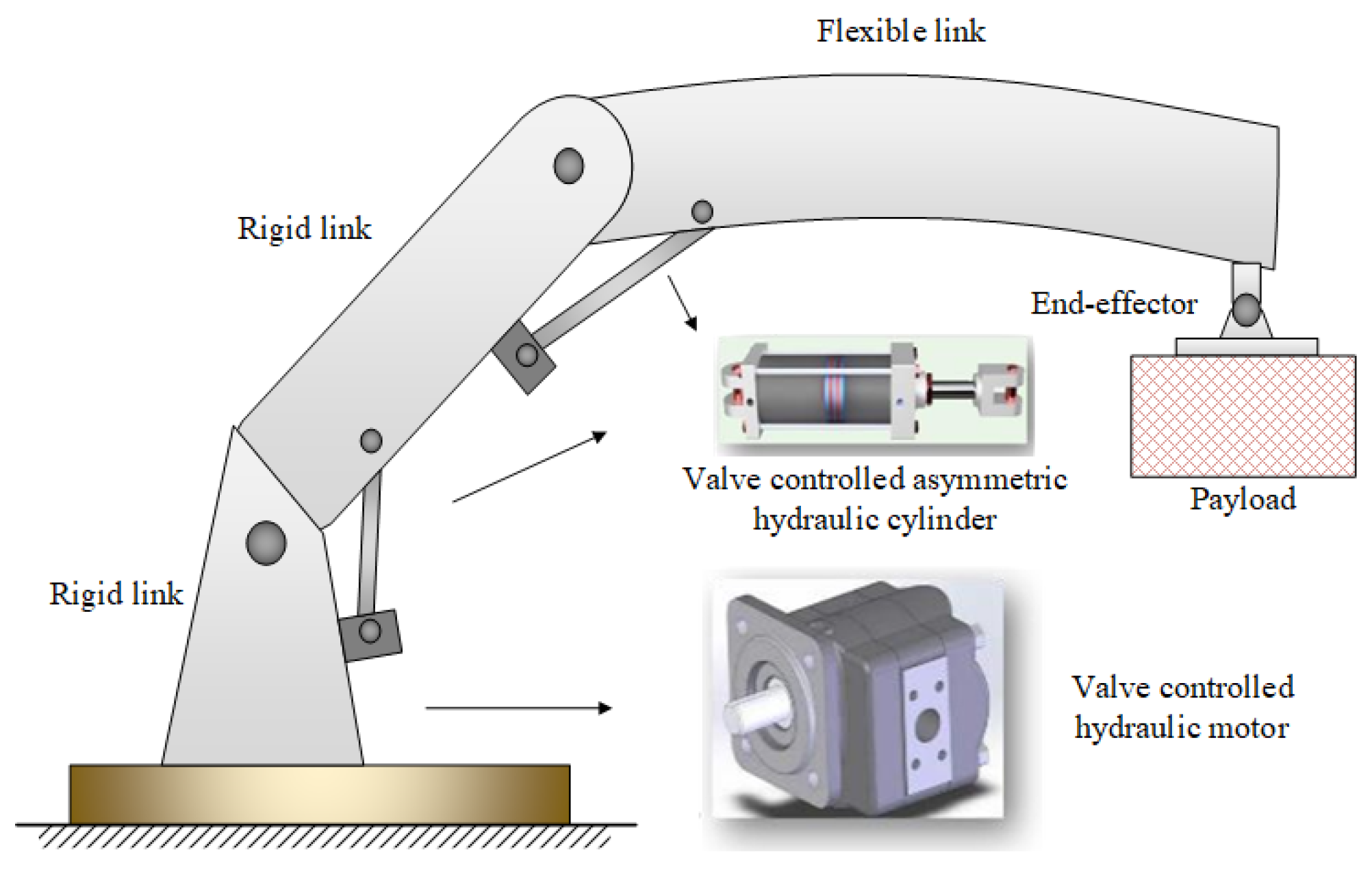
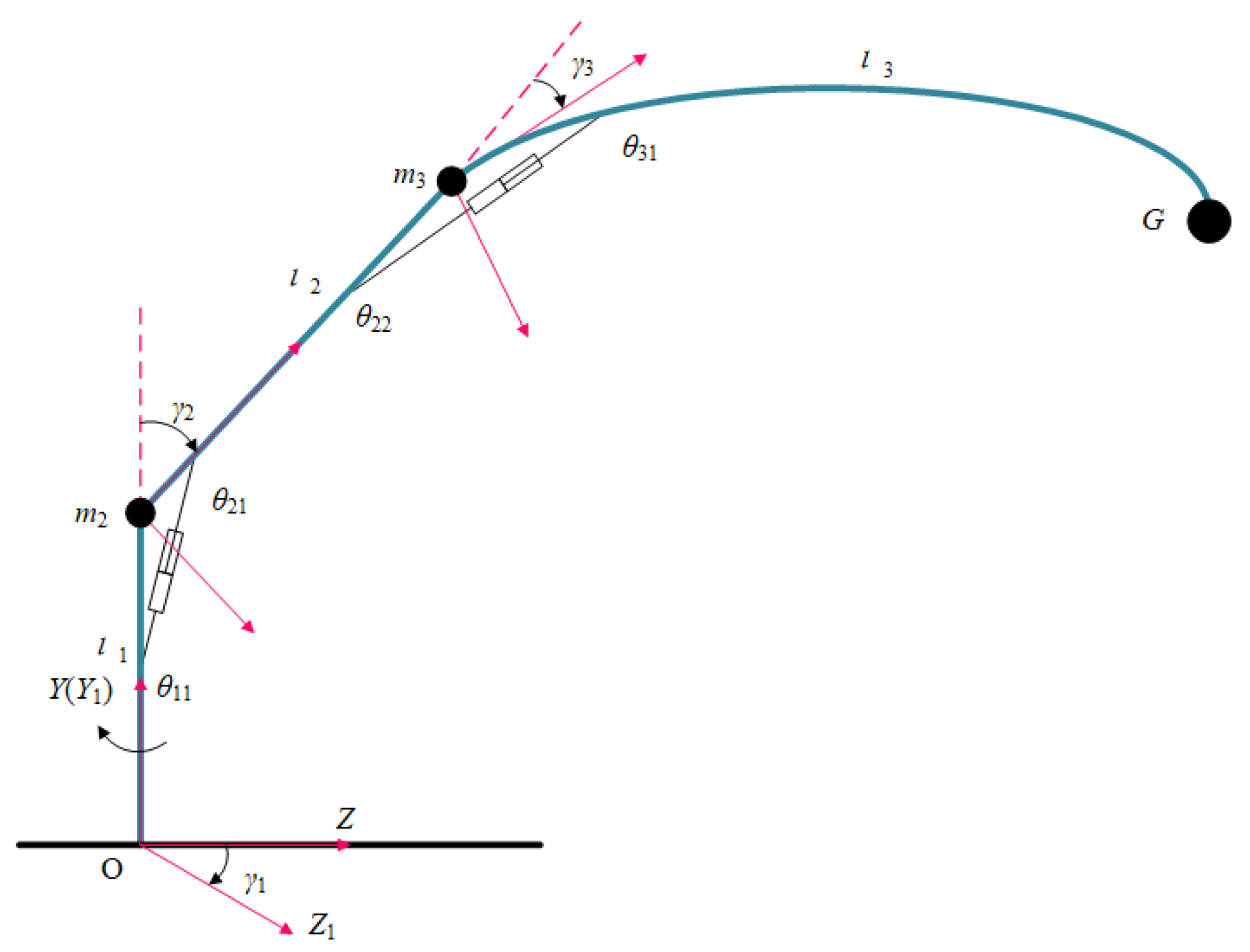
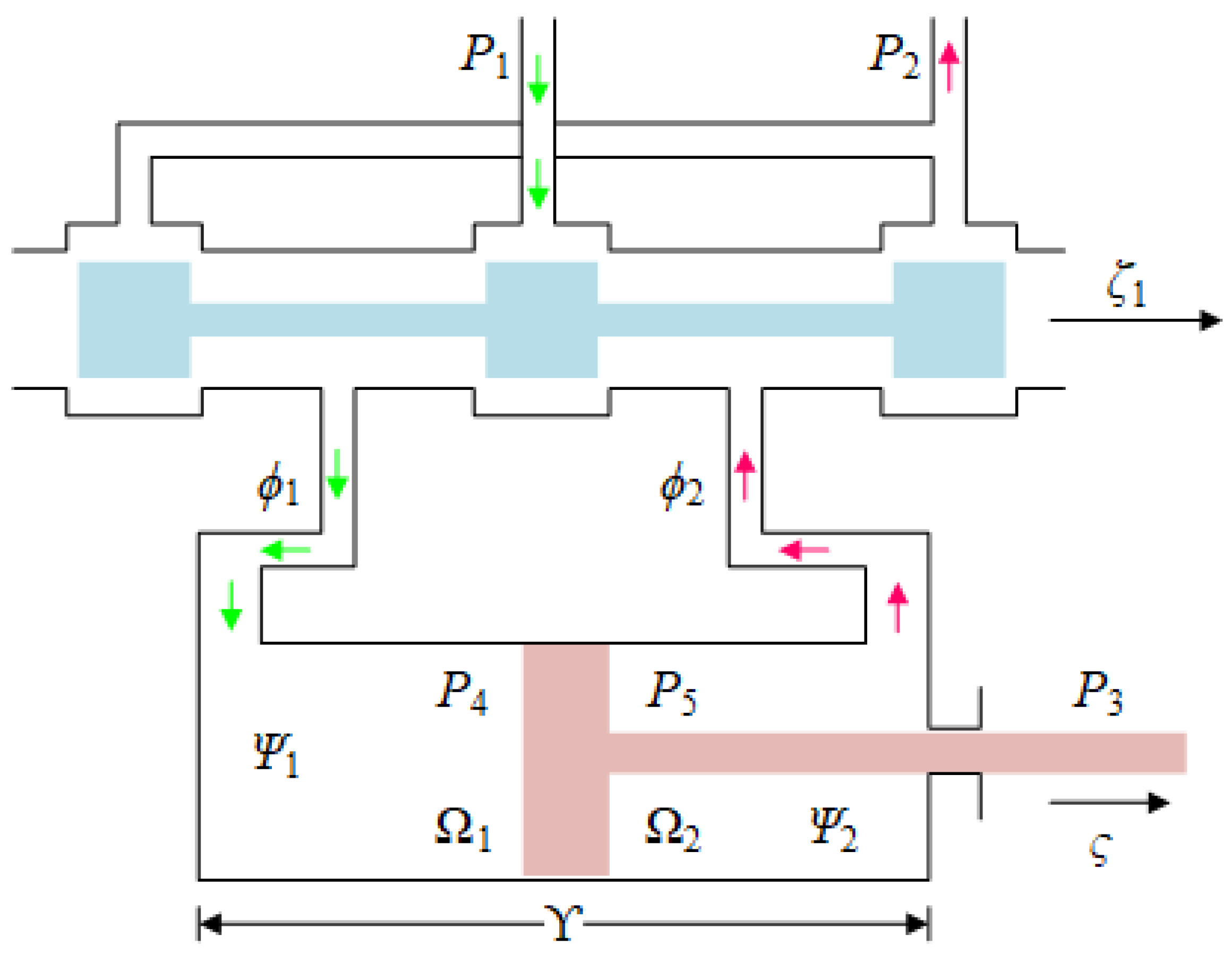
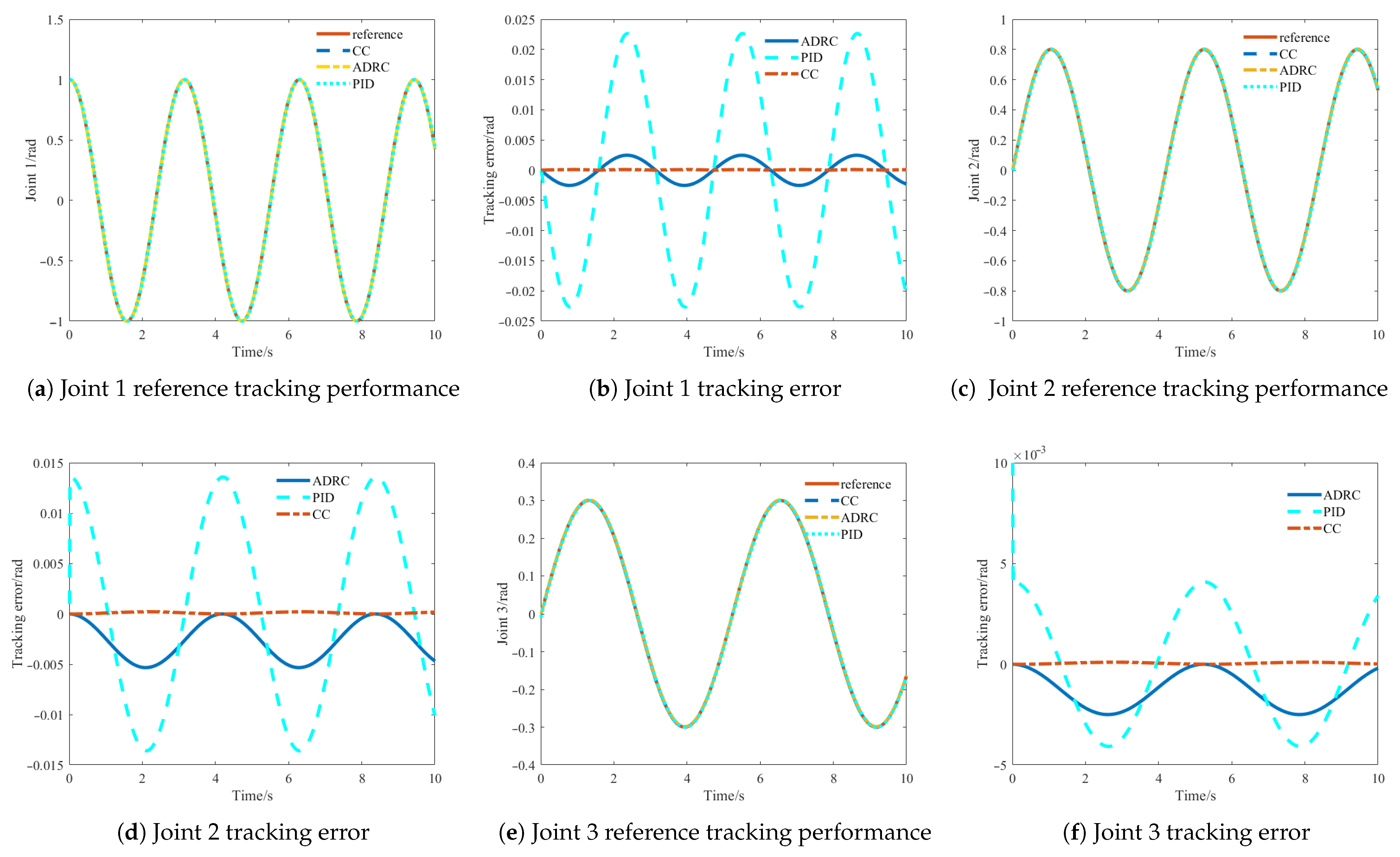
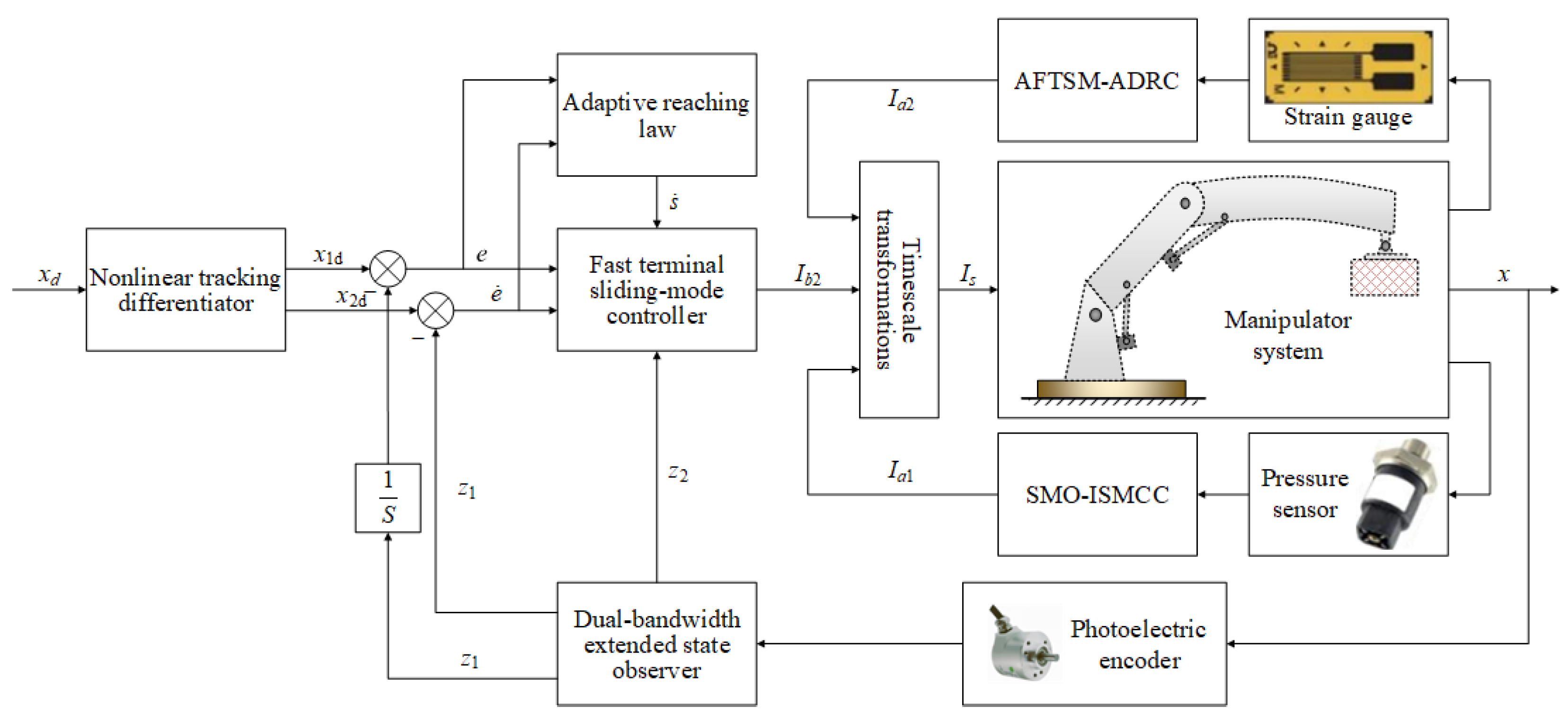
Hydraulically driven flexible robotic arms (HDFRAs) play an indispensable role in industrial precision operations such as aerospace assembly and nuclear waste handling, owing to their high power density and adaptability to complex environments. However, inherent mechanical flexibility-induced vibrations, hydraulic nonlinear dynamics, and electromechanical coupling effects lead to multi-timescale control challenges, severely limiting high-precision trajectory tracking performance. The present study introduces a novel hierarchical control framework employing dual-timescale perturbation analysis, which effectively addresses the constraints inherent in conventional single-timescale control approaches. First, the system is decoupled into three subsystems via dual perturbation parameters: a second-order rigid-body motion subsystem (SRS), a second-order flexible vibration subsystem (SFS), and a first-order hydraulic dynamic subsystem (FHS). For SRS/SFS, an adaptive fast terminal sliding mode active disturbance rejection controller (AFTSM-ADRC) is designed, featuring a dual-bandwidth extended state observer (BESO) to estimate parameter perturbations and unmodeled dynamics in real time. A novel reaching law with power-rate hybrid characteristics is developed to suppress sliding mode chattering while ensuring rapid convergence. For FHS, a sliding mode observer-integrated sliding mode coordinated controller (SMO-ISMCC) is proposed, achieving high-precision suppression of hydraulic pressure fluctuations through feedforward compensation of disturbance estimation and feedback integration of tracking errors. The globally asymptotically stable property of the composite system has been formally verified through systematic Lyapunov-based analysis. Through comprehensive simulations, the developed methodology demonstrates significant improvements over conventional ADRC and PID controllers, including (1) joint tracking precision reaching 104 rad level under nominal conditions and (2) over 40% attenuation of current oscillations when subjected to stochastic disturbances. These results validate its superiority in dynamic decoupling and strong disturbance rejection.
Keywords: hydraulically driven flexible robotic arms; singular perturbation theory; adaptive fast terminal sliding mode control; active disturbance rejection control; hydraulic servo control; sliding mode observer hydraulically driven flexible robotic arms; singular perturbation theory; adaptive fast terminal sliding mode control; active disturbance rejection control; hydraulic servo control; sliding mode observer