Next Article in Journal
Optimization and Engineering Application of In-Seam Borehole Predrainage Technology for Coalbed Methane Based on Response Surface Methodology
Next Article in Special Issue
Process Optimization of Ultrasonic-Assisted Extraction and Resin Purification of Flavonoids from Eucommia ulmoides Leaves and Their Antioxidant Properties In Vitro
Previous Article in Journal
Multi-Layer Filter Material with a Superoleophobic Pore Size Gradient for the Coalescence Separation of Surfactant-Stabilized Oil-in-Water Emulsions
 
 
Correction published on 21 July 2026, see Processes 2026, 14(14), 2349.
Article

Effects of Different Cooking Parameters on Various Quality Criteria, Lipid Oxidation, Mineral Composition, and Free Amino Acid Profile of Chicken Breast

Hazelnut Specialisation Coordination Office, Giresun of University, 28000 Giresun, Türkiye
Processes 2025, 13(5), 1602; https://doi.org/10.3390/pr13051602
Submission received: 22 April 2025 / Revised: 13 May 2025 / Accepted: 14 May 2025 / Published: 21 May 2025 / Corrected: 21 July 2026

Abstract

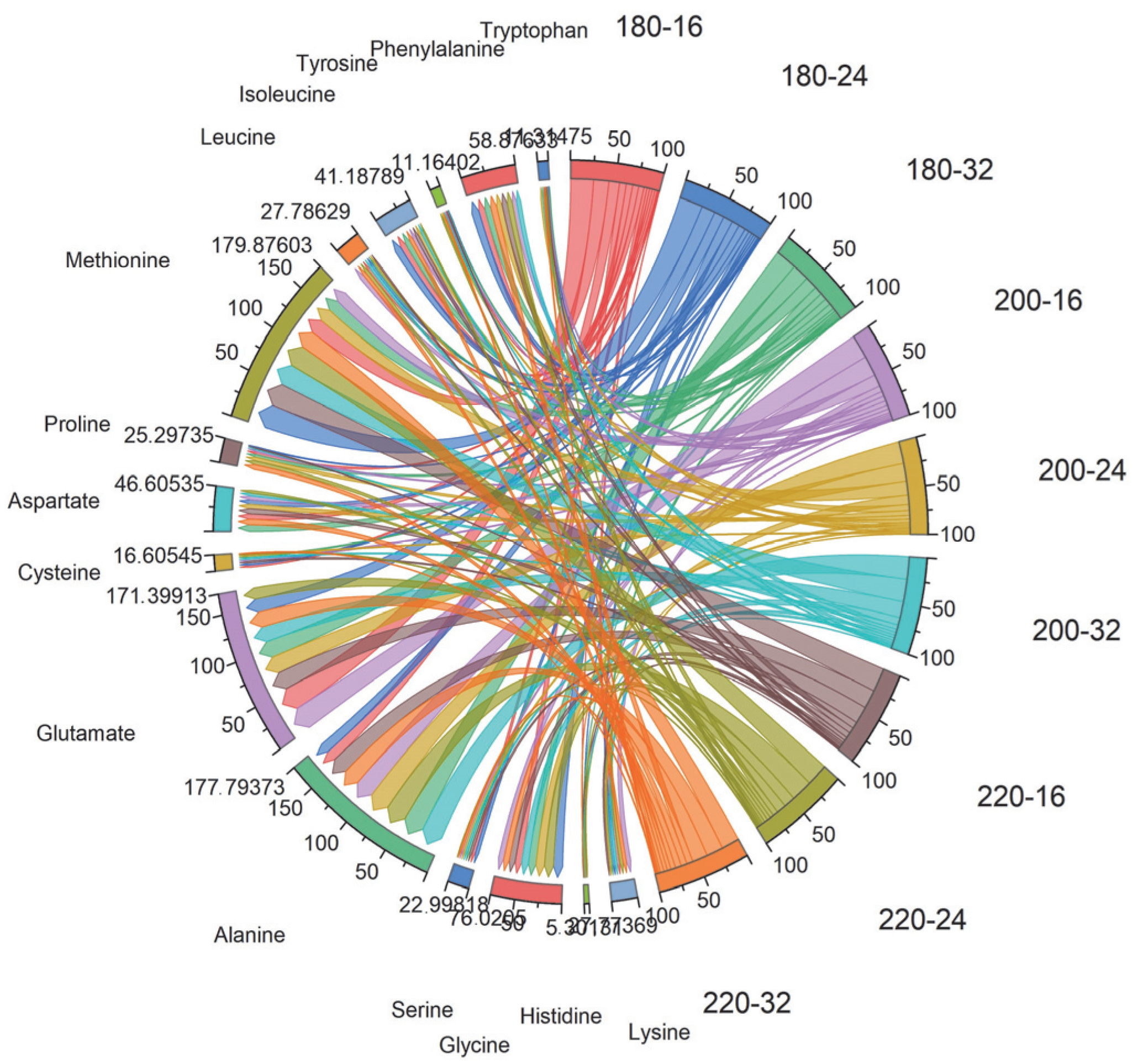
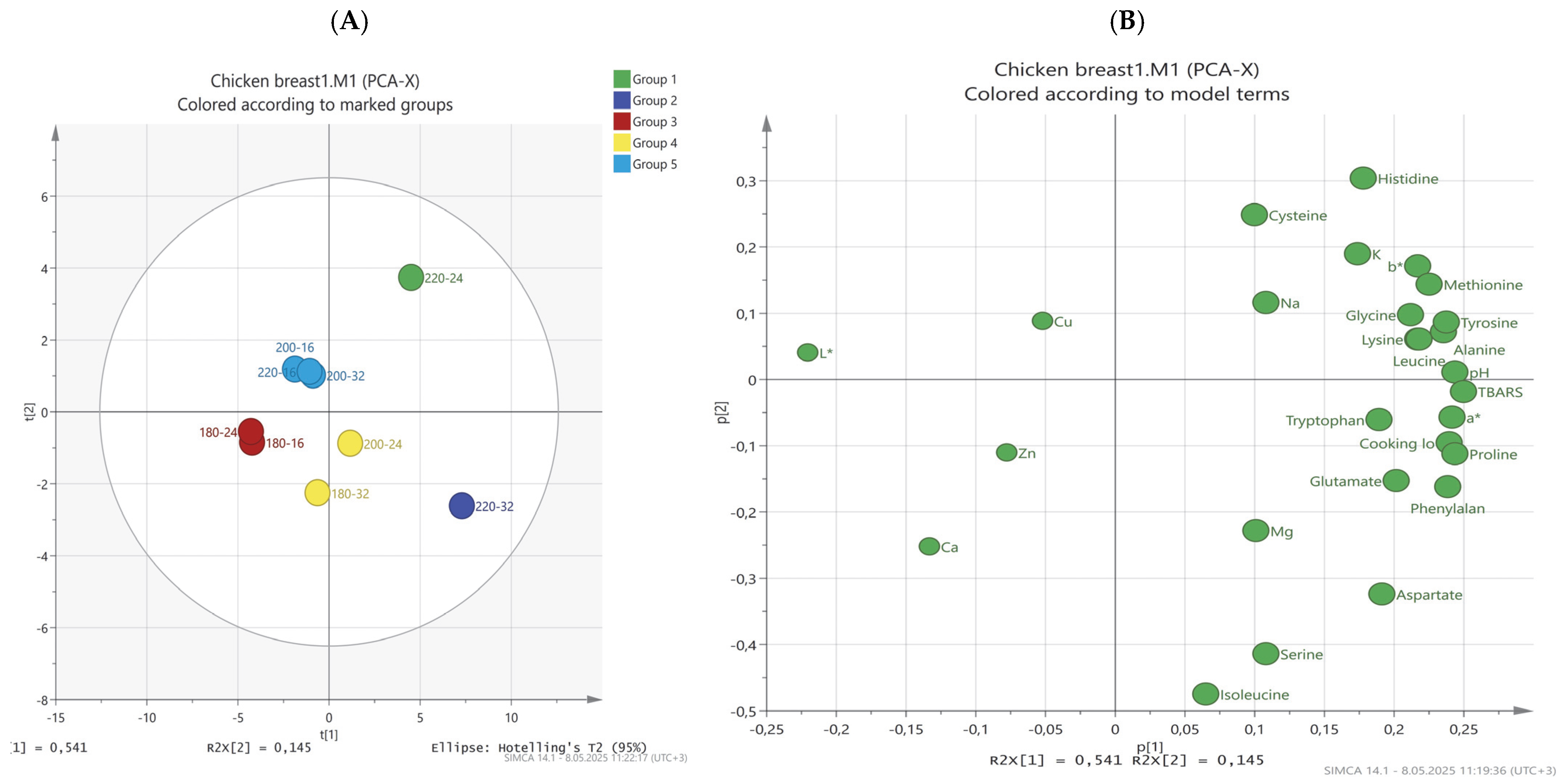
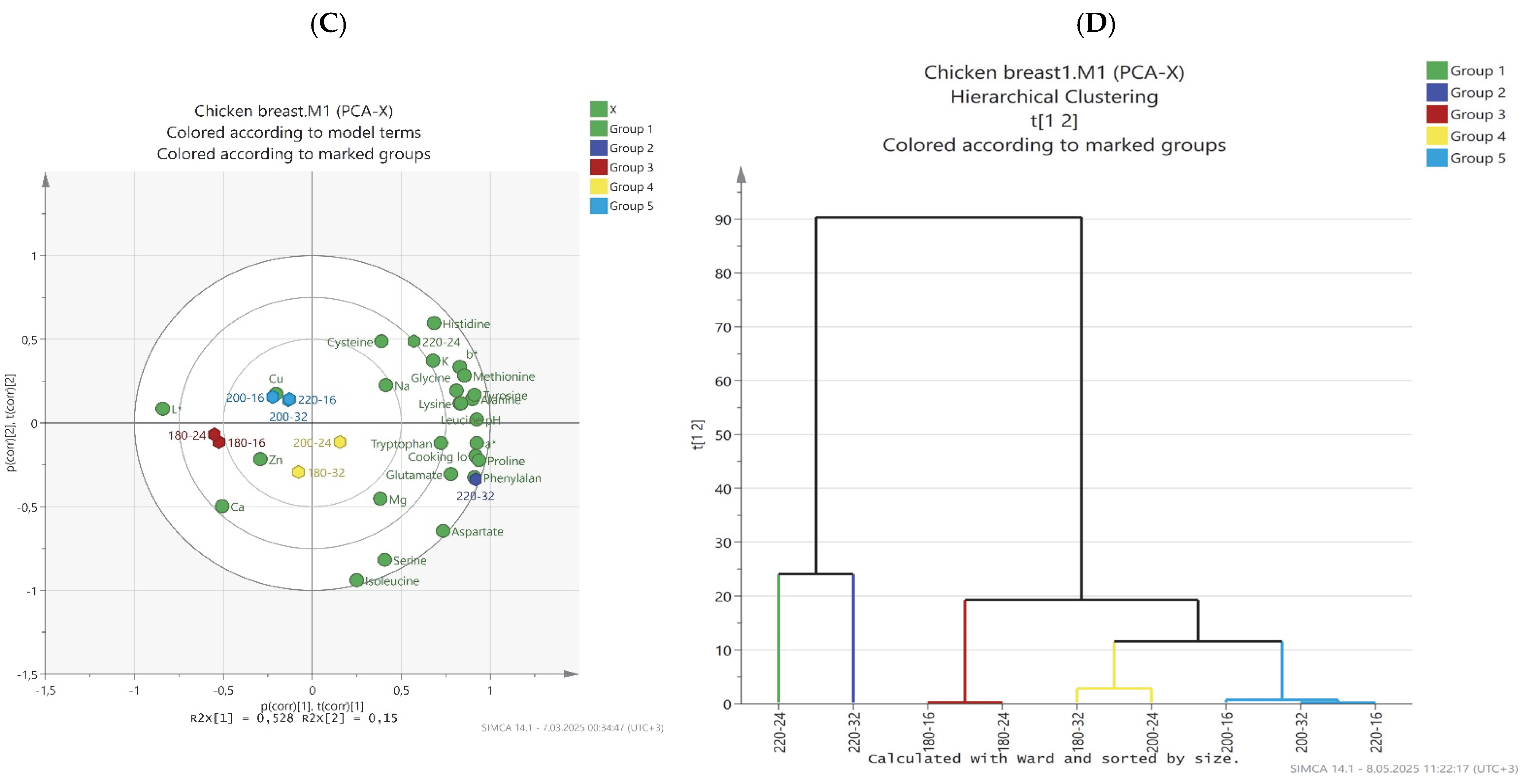
In this study, the effects of chicken breast meat samples cooked in the oven at different temperatures (180, 200, and 220 °C) and times (16, 24, and 32 min) on various quality parameters, lipid oxidation, free amino acid profile, and mineral contents were investigated. Chicken breast samples were also analyzed in terms of several qualitative properties (pH, TBARS, cooking loss, lightness, redness, and yellowness). Both cooking temperature and cooking time affected the qualitative properties. It was determined that the mineral contents of the samples were affected by cooking time and temperature. The mineral content of the samples varied between 1.47 mg kg−1 and 1700.46 mg kg−1. In addition, the analysis of mineral content revealed that the order of mineral abundance in chicken samples was K > Na > Ca > Mg > Zn > Cu. In terms of free amino acid profile, it was determined that essential amino acids methionine (70.71–156.67 mg 100 g−1) and phenylalanine (29.41–44.41 mg 100 g−1), and non-essential amino acids alanine (66.29–141.11 mg 100 g−1), glutamate (76.64–104.39 mg 100 g−1), and glycine (35.03–56.18 mg 100 g−1) contents were the highest. It was determined that the free amino acid content of the samples varied between 1.71 and 156.67 mg 100 g−1. In addition, it was found that the pH, TBARS, cooking loss, lightness, redness, and yellowness parameters were significantly affected (p < 0.01). Consequently, it was found that the cooking temperature and duration significantly influenced the nutritional composition of chicken breast meat. Cooking at 180 °C for 16 min was identified as the optimal condition for minimizing lipid oxidation and maximizing mineral content.
Keywords: chicken breast meat; free amino acid profile; mineral content; color; PCA chicken breast meat; free amino acid profile; mineral content; color; PCA