Article

Catalytic Cracking of Non-Hydrotreated, Hydrotreated and Sulfuric Acid-Treated Vacuum Gas Oils

1
LUKOIL Neftohim Burgas, 8104 Burgas, Bulgaria
2
Institute of Biophysics and Biomedical Engineering, Bulgarian Academy of Sciences, Georgi Bonchev 105, 1113 Sofia, Bulgaria
Processes 2025, 13(5), 1351; https://doi.org/10.3390/pr13051351
Submission received: 1 April 2025 / Revised: 22 April 2025 / Accepted: 25 April 2025 / Published: 28 April 2025

Abstract

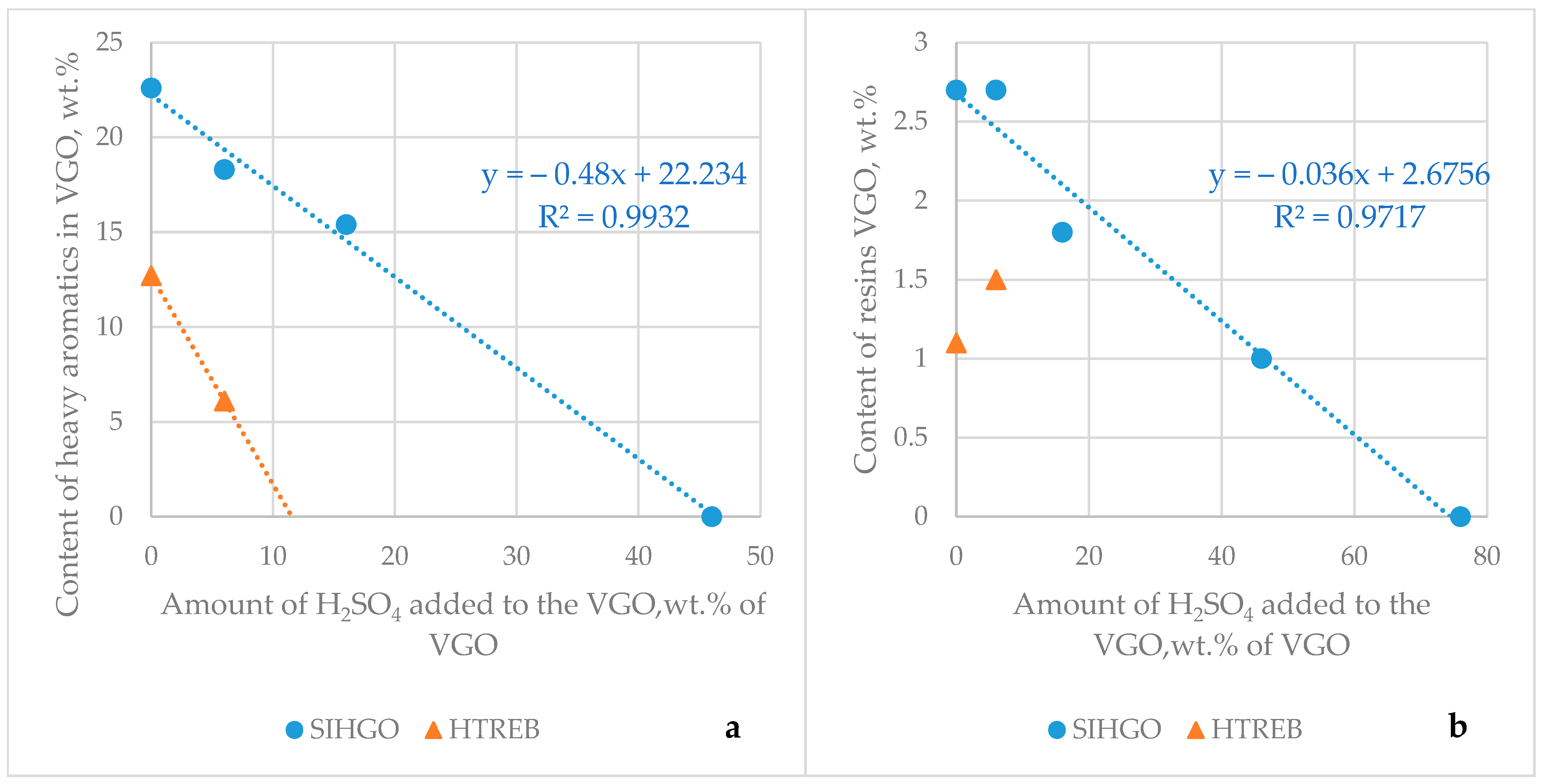
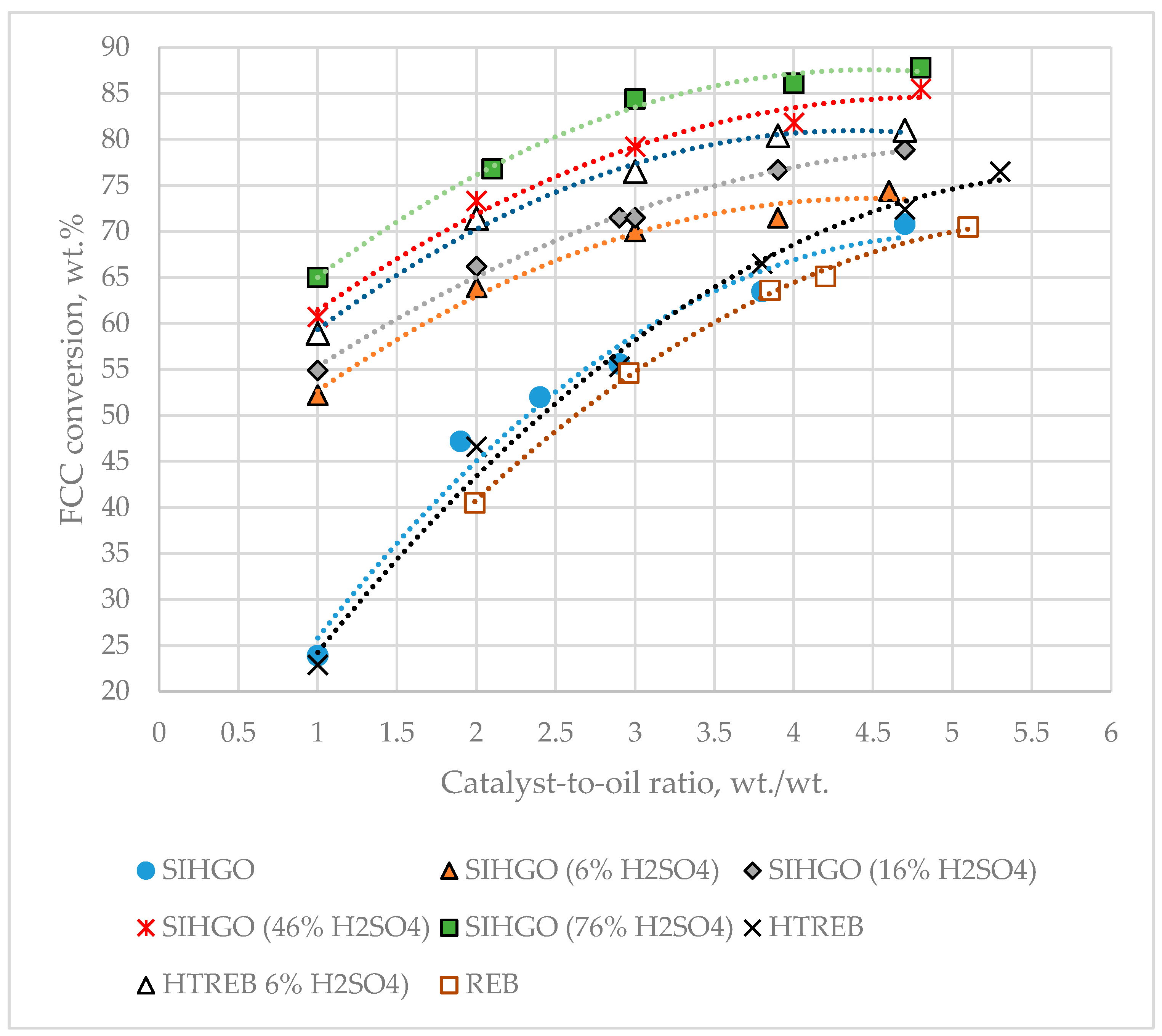
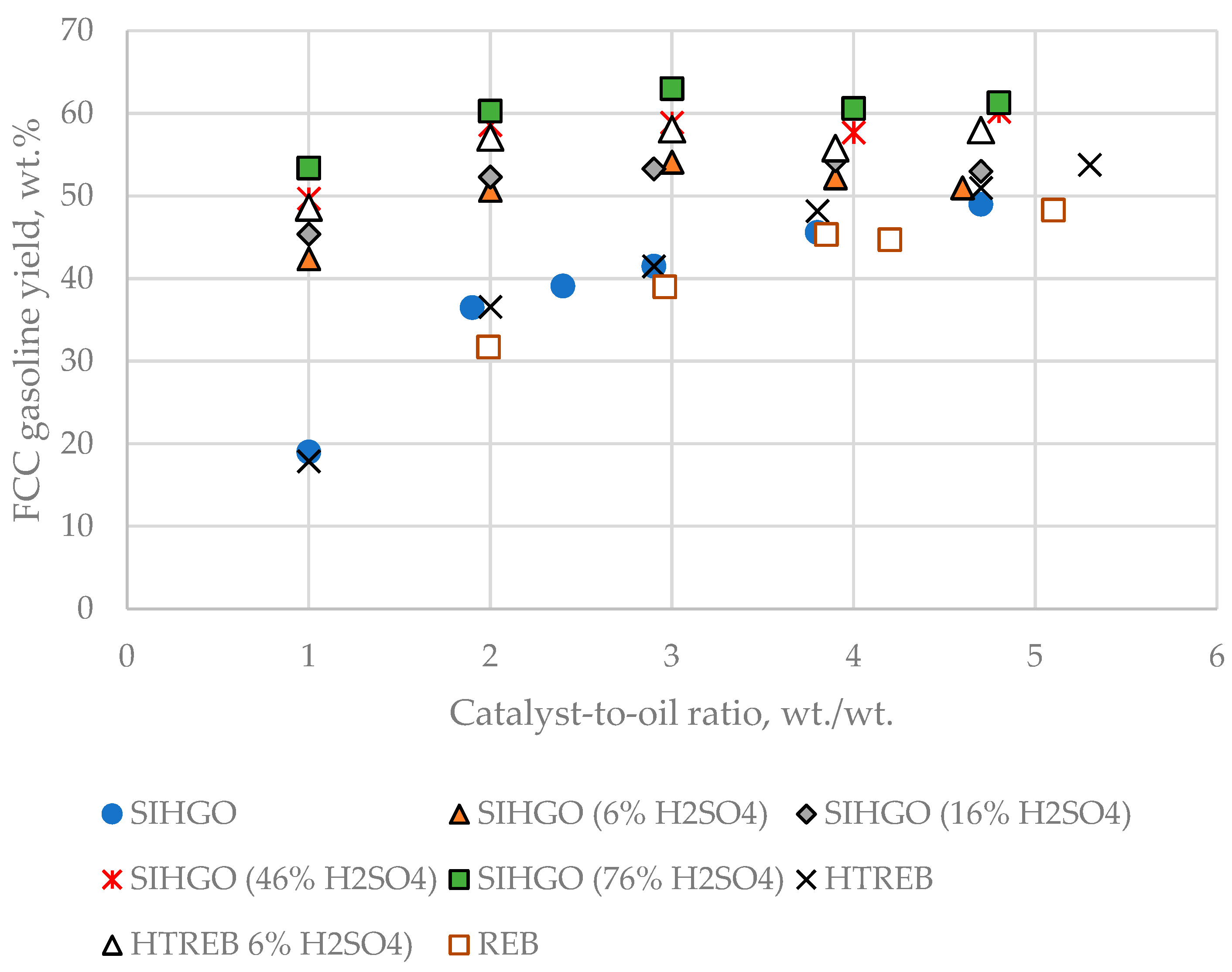
The quality of the catalytic cracking feed can affect the conversion by 35%, while the activity of the catalyst can influence the conversion by 11% and the reaction temperature by 15%. The pivotal role of feed quality justifies the investigations directed to better understanding which components of the feed impinge the conversion, yields, selectivity and properties of the catalytic cracking products. In this research, two virgin vacuum gas oils, a hydrotreated vacuum gas oil and five sulfuric acid-treated vacuum gas oils were cracked on a commercial equilibrium catalyst (Nova DAO) in a micro-activity (MAT) unit at different catalyst-to-oil ratios to obtain the conversion, yields, and selectivities at the point of maximum gasoline yield. The treatment of one of the virgin and the hydrotreated vacuum gas oils with sulfuric acid decreased the heavy aromatics from 22.6 to 0.0 wt.% and resins from 2.7 to 0.0 wt.%. Intercriteria analysis of the experimental cracking data revealed that the reduction and removal of the heavy aromatic compounds from the vacuum gas oil had a profound effect on conversion, yields, and gasoline quality. It led to conversion enhancement from 70.8 to 86.1 wt.% and a reduction of gasoline research octane number by two points. The conversion at the maximum gasoline yield was confirmed to be very well predicted by a correlation that includes the empirical parameters aromatic carbon and hydrogen contents with %AAD of 0.7 wt.% and maximum absolute deviation of 2.3 wt.%.
Keywords: catalytic cracking; vacuum gas oil; conversion; gasoline octane; inter-criteria analysis catalytic cracking; vacuum gas oil; conversion; gasoline octane; inter-criteria analysis