


Abstract
With a complex molecular structure, oxytetracycline (OTC) has characteristics such as bioaccumulation and poor degradability. As a result, if it accumulates in the environment, it can cause bacteria to develop drug resistance, thereby affecting human health. There is a considerable cultivation area for macadamia nuts in southwestern China. This study mainly focuses on macadamia nut shells, preparing macadamia nut shell biochar (MBC) and cobalt-modified macadamia nut shell biochar (Co-MBC) for activating permonosulphate (PMS) to remove OTC in the water. To determine the optimal preparation conditions for the biochar, the effects of the pyrolysis temperature and the mass ratio of biomass to cobalt sulfate heptahydrate were investigated. The study shows that after modification, the surface roughness of the material increased, transforming into a micro-pore structure; thus, the specific surface area increases significantly and new functional groups appear on the surface. The optimal pyrolysis temperature for the biochar was determined to be 600 °C, and the optimal mass ratio of biomass to cobalt sulfate heptahydrate was 15:1. Under such conditions, the removal rate of OTC by a Co15-MBC600/PMS system in 20 min can reach 95.53%. The reaction mechanism involves pathways of the free radical (SO4−) and non-free radical (1O2), and the Co2+/Co3+ cycle can promote the activation of PMS. Finally, the OTC can be mineralized into CO2 and H2O by reactions such as demethylation and decarboxylation. Co-MBC is highly effective and green and can be reused; therefore, it has good prospects for the removal of OTC in waste water.
1. Introduction
Antibiotics are extensively utilized in human medicine for disease treatment and in animal husbandry for disease prevention and growth promotion [1,2]. Among them, oxytetracycline (OTC) is one of the most widely applied. As a broad-spectrum antimicrobial agent, OTC is commonly used in veterinary medicine and as a feed additive [3]. However, due to its potential carcinogenicity and endocrine-disrupting effects, OTC’s persistence in the environment poses a serious threat to ecosystems and human health [4]. Furthermore, wastewater containing OTC is challenging to treat because of the antibiotic’s stable chemical structure and poor biodegradability, making it difficult to meet discharge standards using conventional biological processes [5]. Therefore, developing efficient technologies for degrading OTC in aquatic environments is of paramount importance.
The principle of advanced oxidation based on permonosulphate is to use active substances such as sulfate radicals and singlet oxygen to oxidize antibiotic pollutants in water [6]. This technique is effective, stable, simple, and low cost; therefore, it is widely used in processing refractory antibiotic waste water, such as aquaculture waste water and pharmaceutical waste water [7,8]. Peroxymonosulfate needs to be approximately activated to cut the O-O chemical bonds and produce active materials [9]. Compared with other catalytic materials, carbon-based materials have a high specific surface area, good pore structure, and electrical conductivity, and can serve as carriers to support transition metals [10,11].
The annual output of macadamia nuts in China is about 65 thousand tons, ranking first in the world [12]. Currently, there is relatively little research on modified macadamia nut shell biochar, and no relevant studies have been conducted in the field of activating peroxymonosulfate (PMS) to degrade antibiotics in water. During processing, a large amount of nut waste is produced. If not properly disposed of, it will impose a significant environmental burden. Preparing biochar from these nut shells to activate peroxymonosulfate for antibiotic degradation can provide new ideas for their resource utilization [13,14]. Therefore, this study produces cobalt-modified macadamia nut shell biochar using macadamia nut shells as raw materials. It also studies the differences in the physical and chemical properties of biochar before and after modification, explores the optimal conditions in the degradation system, and analyzes the catalyst degradation mechanism. The reusability of the catalyst was evaluated through stability experiments, which provide theoretical foundations for the practical applications of the reaction system in processing antibiotic waste water.
2. Materials and Methods
2.1. Experimental Reagents and Instruments
The macadamia nut shells used in the experiment were collected from a farmer in Yunnan Province. After washing the net shells several times with tap water to remove the residual pulp on the surface, they were crushed by a crusher, and then the nut shell powder was screened to a uniform particle size by a 80-mesh sieve, which was stored for later use.
The main reagents used in the experiment include OTC, PMS, CoSO4·xH2O, MeOH, EtOH, HCl, TBA, p-BQ, L-His, NaOH, NaCl, NaNO3, NaHCO3, and NaH2PO4. All the reagents used in this study are of analytical grade, and the water used in the experiments is ultrapure water. The basic properties of OTC are shown in Table 1.

Table 1.
Physical and chemical properties of OTC.
Experimental instruments include: UV-Vis spectrophotometer (WFZUV-4802H, Unico Instruments Co., Ltd., Shanghai, China), constant temperature shaking incubator (BS-2E, Changzhou Jintan Liangyou Instrument Co., Ltd. Jiangsu, China), tube furnace (BEQ-1200C, Anhui Beiyike Equipment Technology Co., Ltd., Anhui, China), electrothermal blast drying oven (101-3AB, Tianjin Test Instrument Co., Ltd., Tianjin, China), desktop low-speed centrifuge (TD-420, Sichuan Shuke Instrument Co., Ltd., Sichuan, China), flame atomic absorption spectrophotometer (SP-2520AA, Shanghai Spectrum Instrument Co., Ltd., Shanghai, China), Uupu ultra-pure water instrument (UPHW-IV-90T, Beijing UPT Ultra-Pure Technology Co., Ltd., Beijing, China), analytical balance (FA2004B, Shanghai Youke Instrument & Meter Co., Ltd., Shanghai, China), high-speed multifunctional grinder (SS-1002, Wuyi Haina Electric Appliance Co., Ltd., Zhejiang, China), scanning electron microscope (Sigma 360, Carl Zeiss AG, Oberkochen, Germany), specific surface area analyzer (ASAP 260, Micromeritics Instrument Corporation, GA, USA), Fourier transform infrared spectrometer (Thermo Scientific Nicolet 6700, Thermo Fisher Scientific Inc., MA, USA), X-ray photoelectron spectrometer (Thermo Scientific K-Alpha, Thermo Fisher Scientific Inc., Waltham, MA, USA), X-ray diffractometer (Rigaku SmartLab SE, Rigaku Corporation, Tokyo, Japan), electron paramagnetic resonance spectrometer (EMXplus-6/1, Bruker Corporation, Bremen, Germany), liquid chromatography-mass spectrometer (Agilent 1290-6550, Agilent Technologies Inc., Santa Clara, CA, USA).
2.2. Preparation of Catalyst
Macadamia nut shells were used as the raw material. After being washed to remove residual pulp from the surface, they were crushed, and the resulting powder was sieved through an 80-mesh sieve to obtain nut shell powder with a uniform particle size. An approximate amount of this shell powder was mixed with CoSO4·xH2O in deionized water, according to different mass ratios of dry biomass to cobalt sulfate heptahydrate (5:1, 15:1, and 25:1). The mixture was then magnetically stirred for 24 h. After being dried to a constant weight, the mixture was placed in a tube furnace for pyrolysis. The target pyrolysis temperature was set (400, 600, or 800 °C) with a heating rate of 8 °C/min and a nitrogen flow rate of 50 mL/min, and the constant temperature was maintained for 120 min. After pyrolysis, the sample was cooled to room temperature and then removed. The resulting biochar was immersed in HCl solution for acid washing to remove unstable cobalt species, and this operation was repeated three times. Subsequently, the biochar material was alternately washed with deionized water and absolute ethyl alcohol until the pH value was neutral. The biochar was then centrifuged and dried. The dried sample was ground and sieved through an 80-mesh sieve to obtain the cobalt-modified macadamia nut shell biochar (marked as Cox-MBCy, where x represents the mass ratio of dry biomass to cobalt sulfate heptahydrate, and y represents the pyrolysis temperature).
In this study, a total of six biochar samples were prepared: MBC600, Co15-MBC400, Co15-MBC600, Co15-MBC800, Co5-MBC600, and Co25-MBC600. They were synthesized for comparing the differences in physicochemical properties before and after modification and for exploring the optimal preparation conditions.
2.3. Experimental Methods
A certain amount of PMS (0.1–0.6 g/L) and biochar (0.2–0.8 g/L) was added to a conical flask containing 200 mL of OTC solution at a specific concentration (10–30 mg/L). The conical flask was then placed in a shaker at 180 rpm and a set temperature (15–35 °C) for 20 min. At specific time points, 2 mL samples were taken, passed through a 0.45 μm filter membrane, and mixed with 2 mL of ethanol for quenching prior to analytical testing. To investigate the influence of solution pH on the activation effect, the pH was adjusted using 1 mol/L NaOH or HCl. When exploring the effect of common anions (Cl−, HCO3−, NO3−, and H2PO4−) in the water on the OTC removal rate, the concentration levels of each background ion were adjusted by adding the corresponding sodium salt. To evaluate the stability of the catalyst, the biochar was collected, immersed in absolute ethyl alcohol for 10 min, rinsed with ultrapure water three times, and then dried in an oven at 85 °C until a constant mass was achieved. Recycling tests were subsequently conducted. Methanol, tert-butanol, p-benzoquinone, and L-histidine were used as quenchers to scavenge free radicals and non-free radicals in the reaction. All experiments in this study were conducted in triplicate, and the results were averaged.
2.4. Analysis Method
The absorbance was tested by a UV-Vis spectrophotometer (WFZUV-4802H, Unico Instruments Co., Ltd., Shanghai, China). The degradation products were tested by an Agilent 1290–6550 liquid chromatography-mass spectrometry instrument. The surface characteristics and microstructure of the macadamia nut shell biochar before and after modification were analyzed by a German ZEISS Sigma SEM 360 scanning electron microscope. The N2 adsorption–desorption isotherm curve of the biochar was measured and analyzed by using a fully automatic specific surface area and porosity analyzer (Micromeritics ASAP 260, Norcross, GA, USA). The infrared interference spectrum of the samples was recorded by a Thermo Scientific Nicolet 6700 Fourier transform infrared spectrometer. The crystal structure and crystallinity of the biochar were characterized by a Japanese Rigaku SmartLab SE X-ray diffractometer. The elemental composition and chemical state of the materials were determined by a Thermo Scientific K-Alpha X-ray photoelectron spectrometer. The active free radicals generated during the degradation process of OTC were identified by electron paramagnetic resonance spectroscopy analysis technology.
3. Results and Discussion
3.1. Preparation Conditions
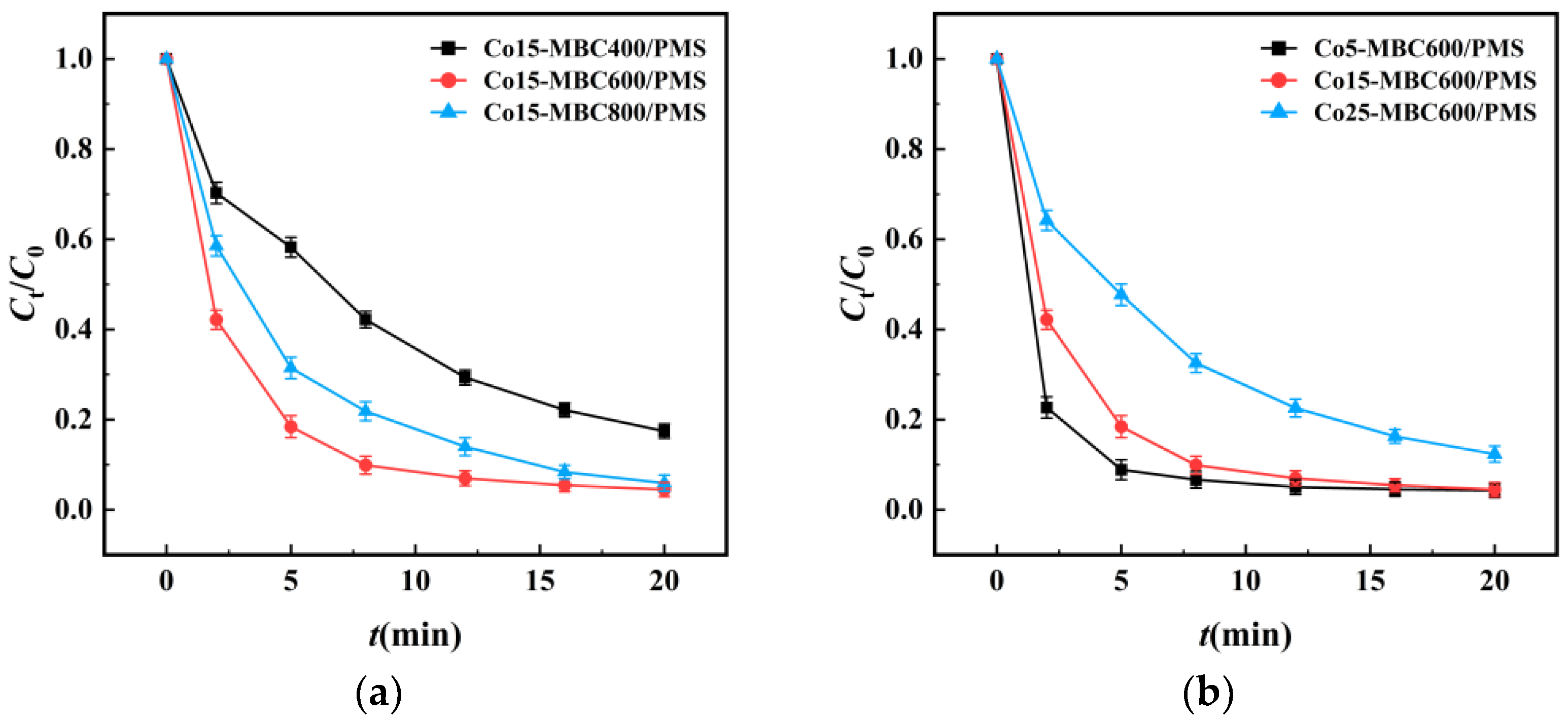
This study selects the pyrolysis temperature and the mass ratio of biomass to cobalt sulfate as the key factors that influence the preparation effect [15]. Possibly because the biochar produced at 600 °C has a higher degree of graphitization than that produced at 800 °C, enabling faster electron transfer on its surface, it results in an overall faster degradation rate. The results are shown in Figure 1. The biochar prepared by pyrolysis at 600 °C shows the optimal catalyst performance. At a mass ratio of 5:1 (dry biomass to cobalt sulfate heptahydrate), the cobalt leaching concentration was measured at 1.23 mg/L. This value undesirably surpasses the maximum permissible level of 1.0 mg/L, posing a potential environmental concern.. However, in the biochar reaction solution with a composite ratio of 15:1, the cobalt ion leaching concentration was only 0.57 mg/L, which meets the requirements, while the removal rate of OTC remained very high. Therefore, the optimal composite ratio for the biochar is 15:1.
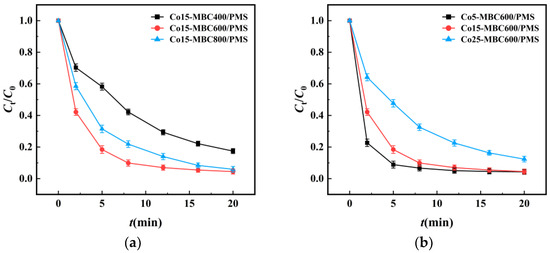
Figure 1.
Preparation conditions. (a) Pyrolysis temperature; (b) composite ratio.
3.2. Physical Properties and Characteristics of Biochar
3.2.1. SEM-EDS Analysis
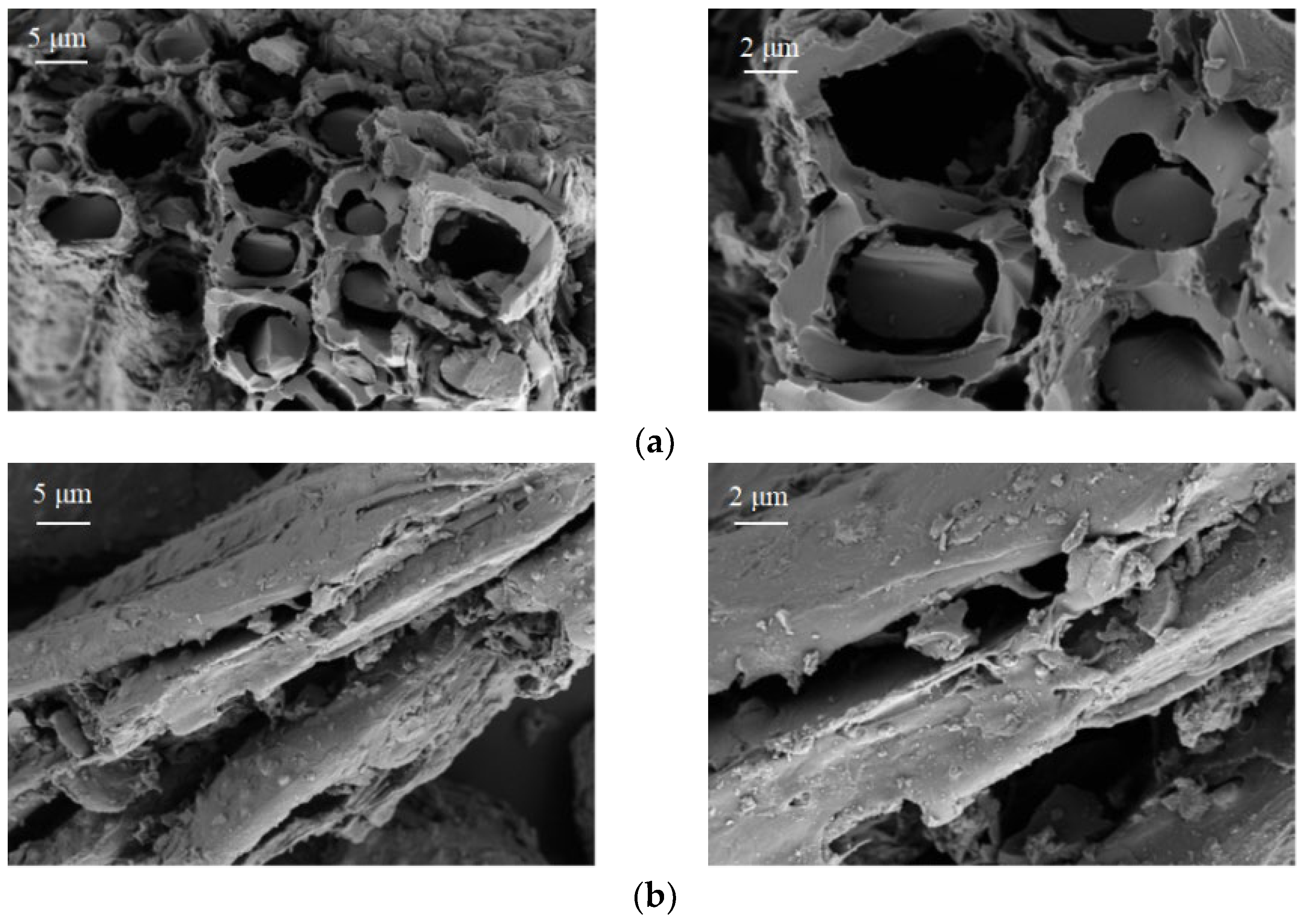
The SEM results are shown in Figure 2. After high-temperature calcination of a macadamia nut shell, the surface morphology of the obtained biochar undergoes an etching-like change, presenting an irregularly curly structure. There are many pore structures, and this contributes to increasing the specific surface area of the material and enhancing the overall structure. It also provides a large number of sites for carrying the cobalt metal. The surface of the Co15-MBC600 materials is uniformly coated with cobalt metal compound particles. Pyrolysis can significantly reduce the aggregation of cobalt metal oxides on the biochar surface and increase the accessibility of active sites on the catalyst surface.
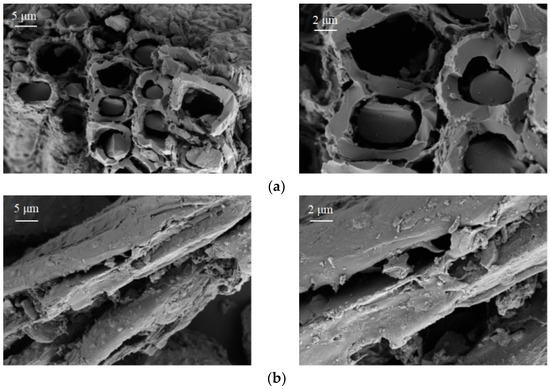
Figure 2.
SEM images of biochar before and after modification. (a) MBC600; (b) Co15-MBC600.
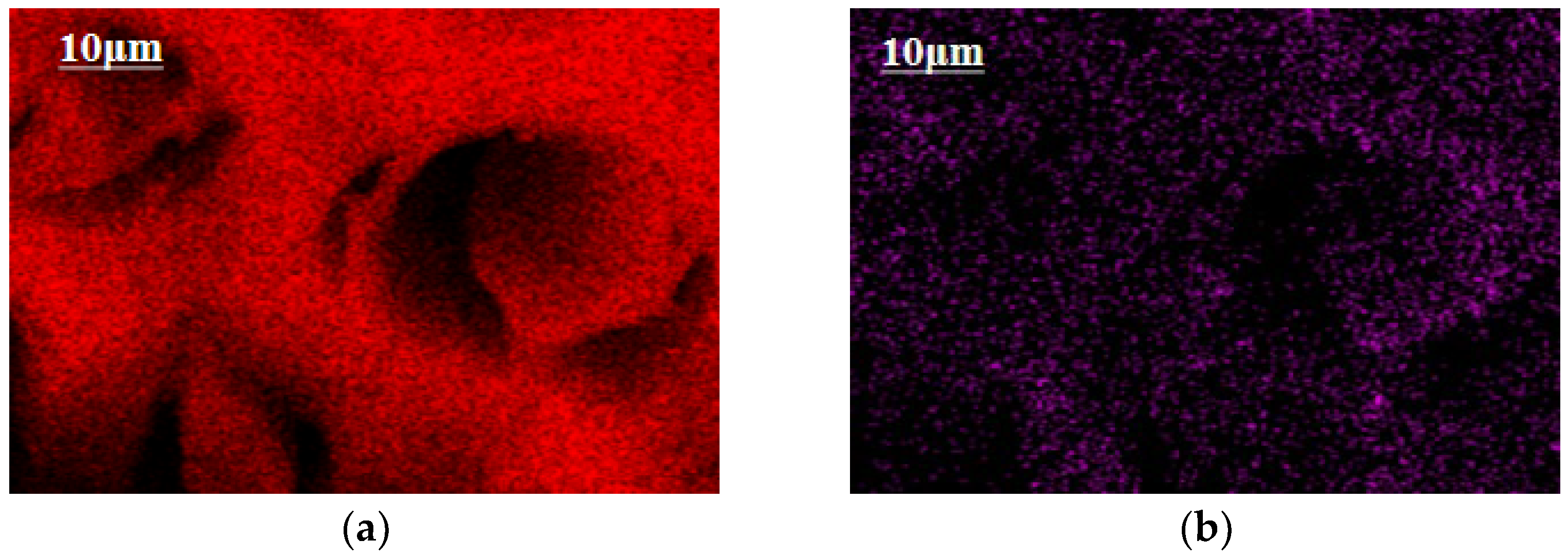
As can be seen from the EDS mapping of Co15-MBC in Figure 3, the biochar synthesis method used in this study can enable the uniform diffusion of cobalt on the surface of biochar.
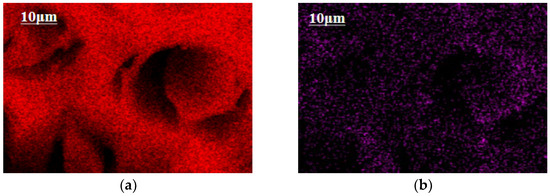
Figure 3.
EDS mapping images of Co15-MBC600. (a) Distribution of C; (b) distribution of Co.
3.2.2. BET Analysis
The results of BET analysis are shown in Table 2. Compared with MBC600, the specific surface area significantly increases to 308.832 m2/g, and the overall pore volume increases to 1.682 × 10⁻¹ cm3/g, while the average aperture decreases to 1.98 nm. After modification, the surface morphology of the material has been significantly improved, and the porous structures have increased significantly. When the pyrolysis temperature increases from 400 °C to 600 °C, the specific surface area and the total pore volume both are significantly enhanced. When the pyrolysis temperature increases from 600 °C to 800 °C, the range of changes is relatively small. With the pyrolysis temperature rising, the number of micro-pores in biochar increases significantly, the pore structures become more open, and the surface morphology of the material shows obvious wrinkled characteristics and pore development, thereby significantly improving its specific surface area and overall pore volume [16].
Table 2.
Test results of surface characteristics of biochar.
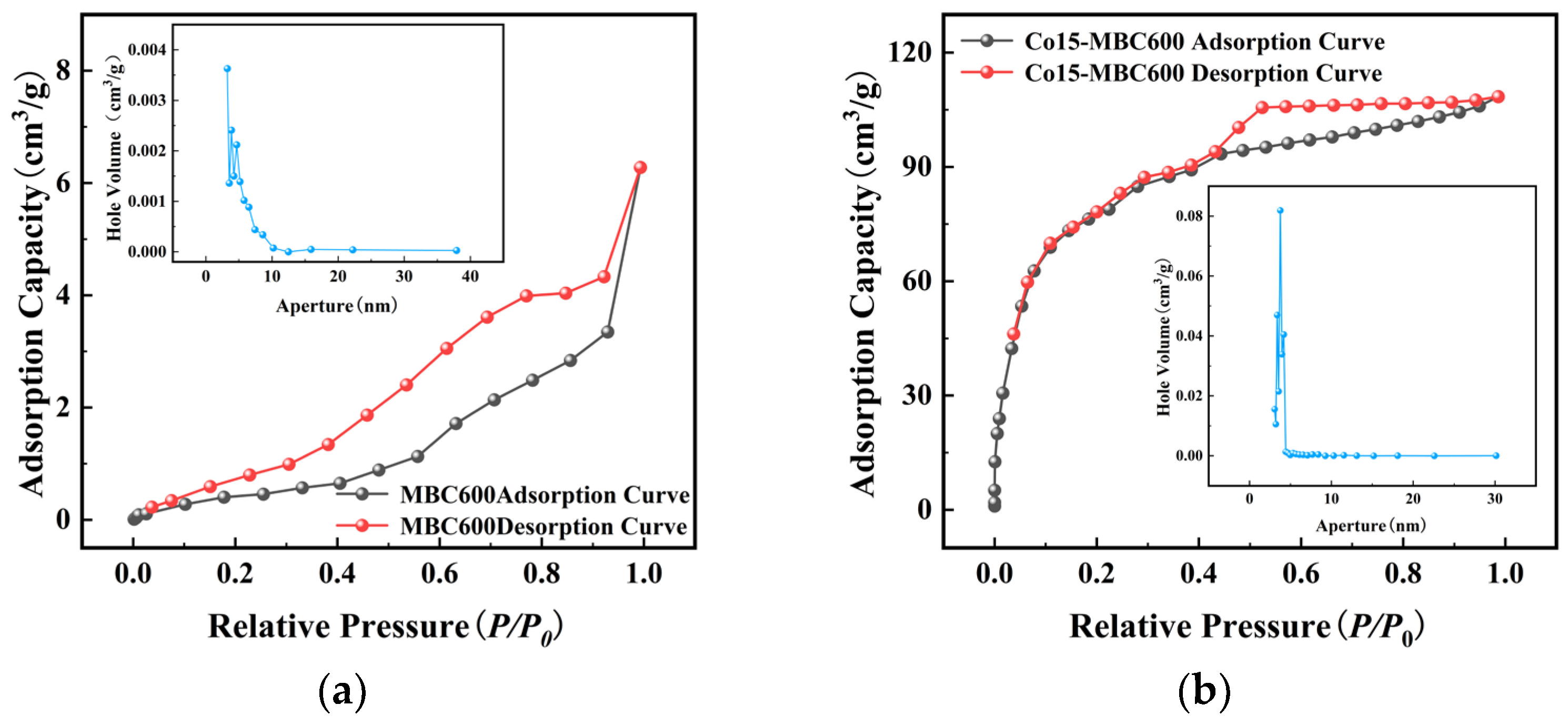
As can be seen from Figure 4, the isothermal curve of MBC600 shows type IV, with capillary condensation accompanied by hysteresis, and MBC600 is a mesopetic material. Its characteristic is that the adsorption capacity of N2 rises sharply in the relatively high adsorption pressure range (P/P0 > 0.8) [17]. The isothermal curve of Co15-MBC600 shows type II. When the pressure P/P0 > 0.4, there are parallel lines and wide knee lines on the curve, indicating the presence of type H4 hysteresis loops. This result indicates that the adsorption of Co15-MBC600 is related to the filling of micro-pores. Considering that the average pore diameters of the two are 1.98 nm and 1.80 nm, respectively, it can be determined that it belongs to a microporous material [18]. The characteristic apertures of MBC600 and Co15-MBC600 are 3.238 nm and 3.754 nm, respectively.
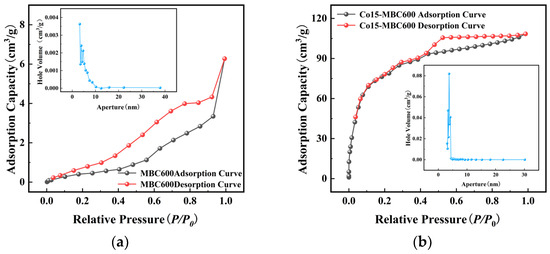
Figure 4.
N2 adsorption–desorption curve and pore size distribution curve (a) MBC600; (b) Co15-MBC600.
3.2.3. FT-IR Analysis
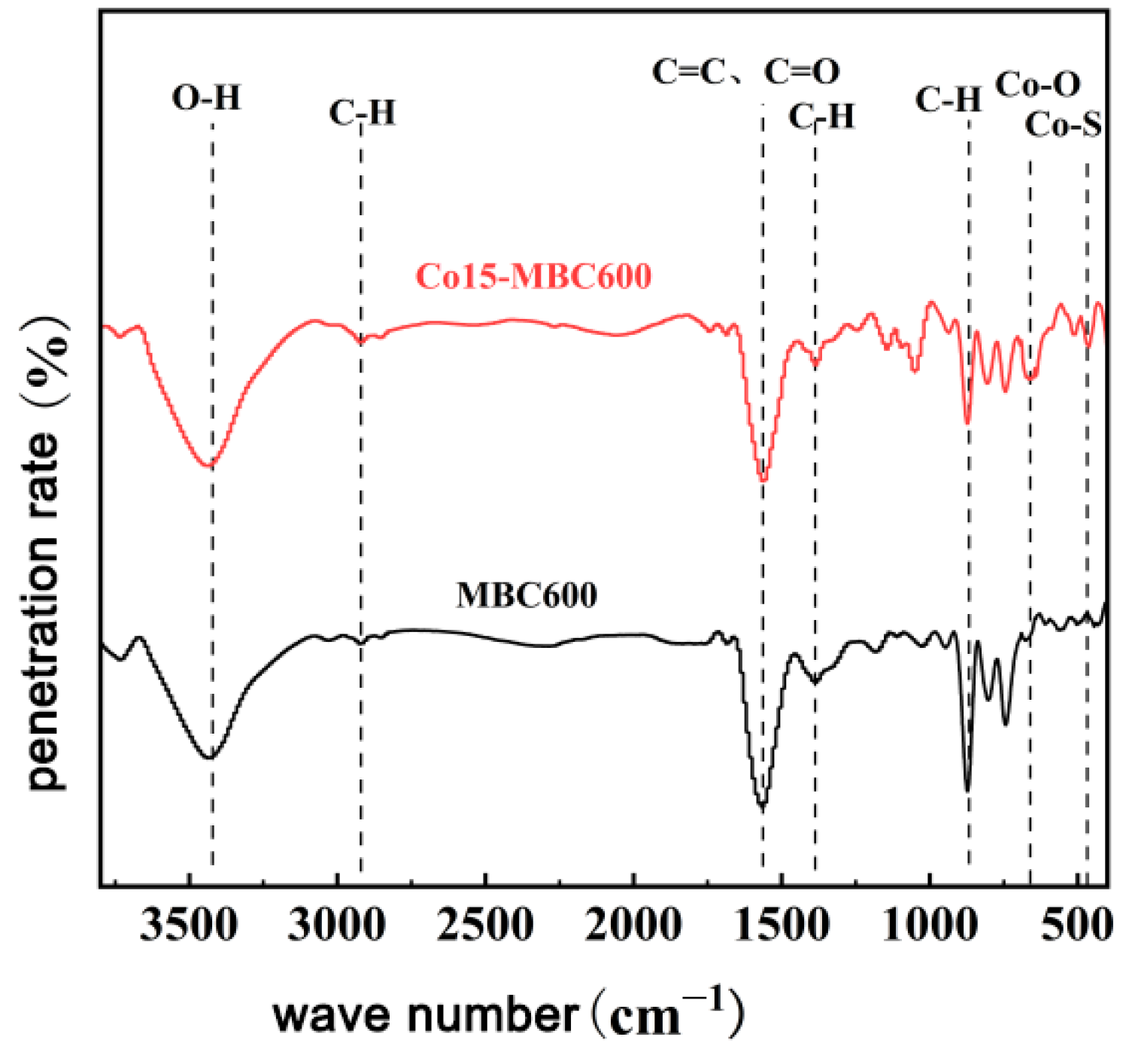
The results of FT-IR are shown in Figure 5. Broad peaks of biochar before and after modification were both detected at 3430 cm−1, mainly due to the stretching vibration of the O-H chemical bond caused by the crystalline water or hydroxyl groups in the biochar [19]. The stretching peak near 2920 cm−1 is caused by the stretching vibration of the C-H chemical bond [20], and the peak near 1560 cm−1 is attributed to C=C or C=O resulting from the transformation of the aromatic rings into the abundant lignocellulose of the macadamia nut shells [21]. There is a small but sharp stretching peak near 1380 cm−1, which is an absorption peak due to the deformation vibration of the aromatic C-H chemical bond. The absorption peak at 872 cm−1 is caused by the out-of-plane bending vibration of the aromatic C-H bond [22]. The absorption peak of Co15-MBC600 at 661 cm−1 is due to the lattice vibration of metal oxygen, which is the characteristic peak of Co-O.
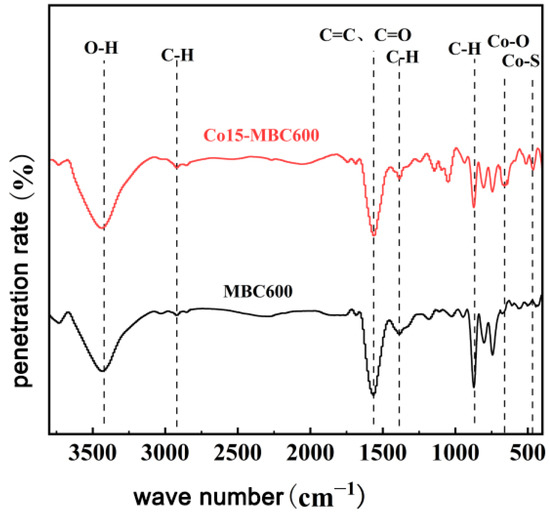
Figure 5.
FT-IR spectra of MBC600 and Co15-MBC600.
3.2.4. XRD Analysis
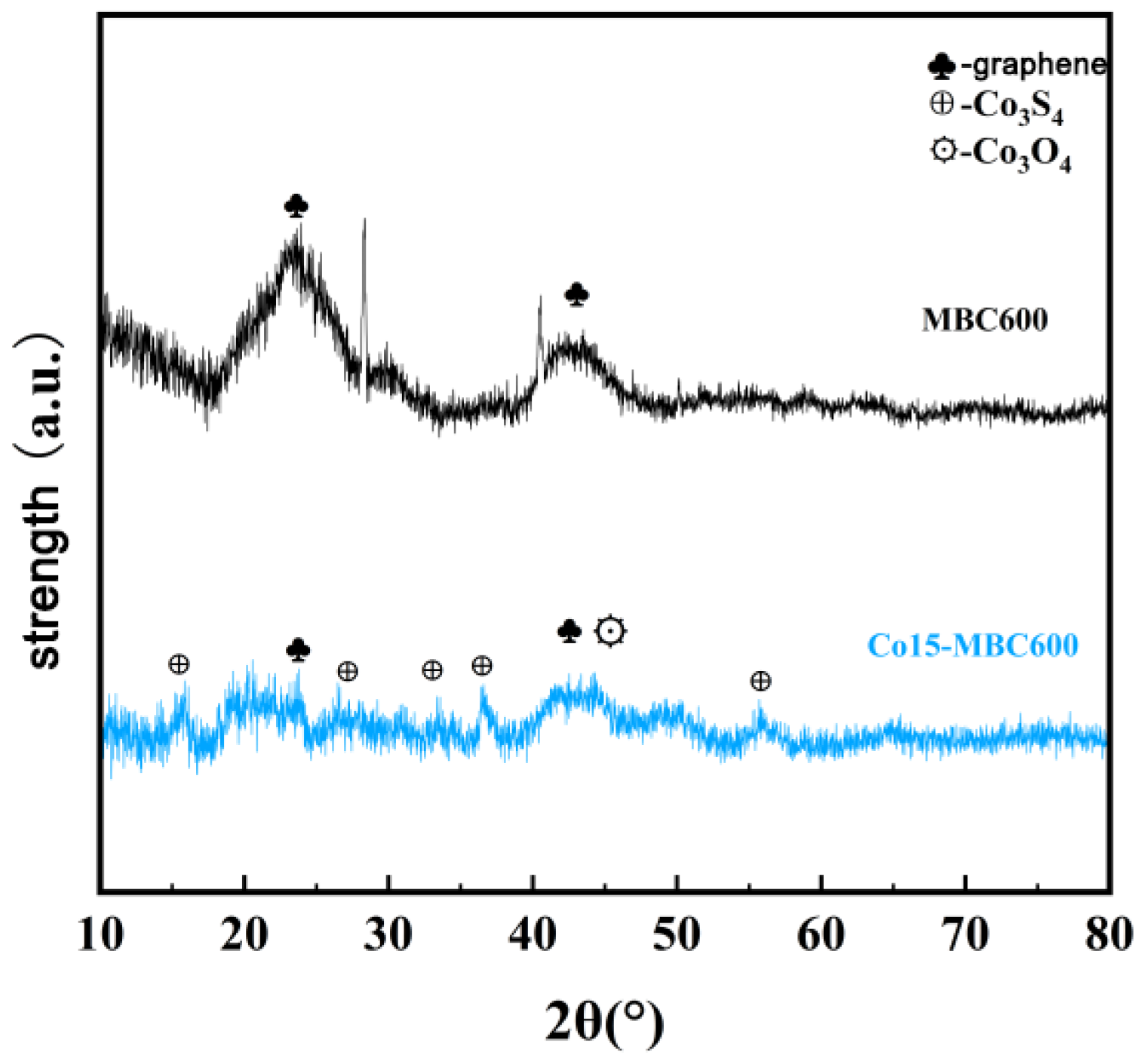
The results of XRD analysis are shown in Figure 6. The diffraction peaks of MBC600 at 23.5° and 44° correspond to the (002) and (101) crystal planes of graphitic carbon, which are the typical characteristic peaks in biomass-derived carbon. And there are obvious diffraction peaks when 2θ = 15.58°, 26.68°, 31.41°, 38.34°, and 55.94°, which, respectively, match with the (111), (220), (311), (222), (400), and (440) crystal planes of Co3S4 in the standard card PDF#47-1738. According to PDF#76-1802, Co15-MBC600 also shows a weak diffraction peak of Co3O4, which indicates that cobalt has been successfully loaded on the surface of biochar.
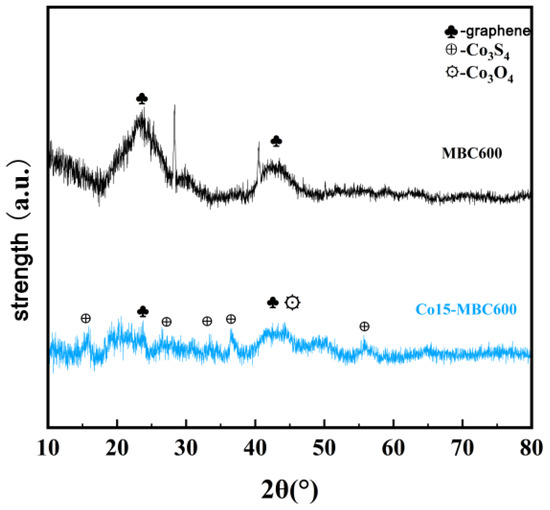
Figure 6.
XRD spectra of MBC600 and Co15-MBC600.
3.3. Study on the Influencing Factors of OTC Degradation by PMS Activated by Co15-MBC600
3.3.1. Effect Comparison of OTC Degradation in Different Systems
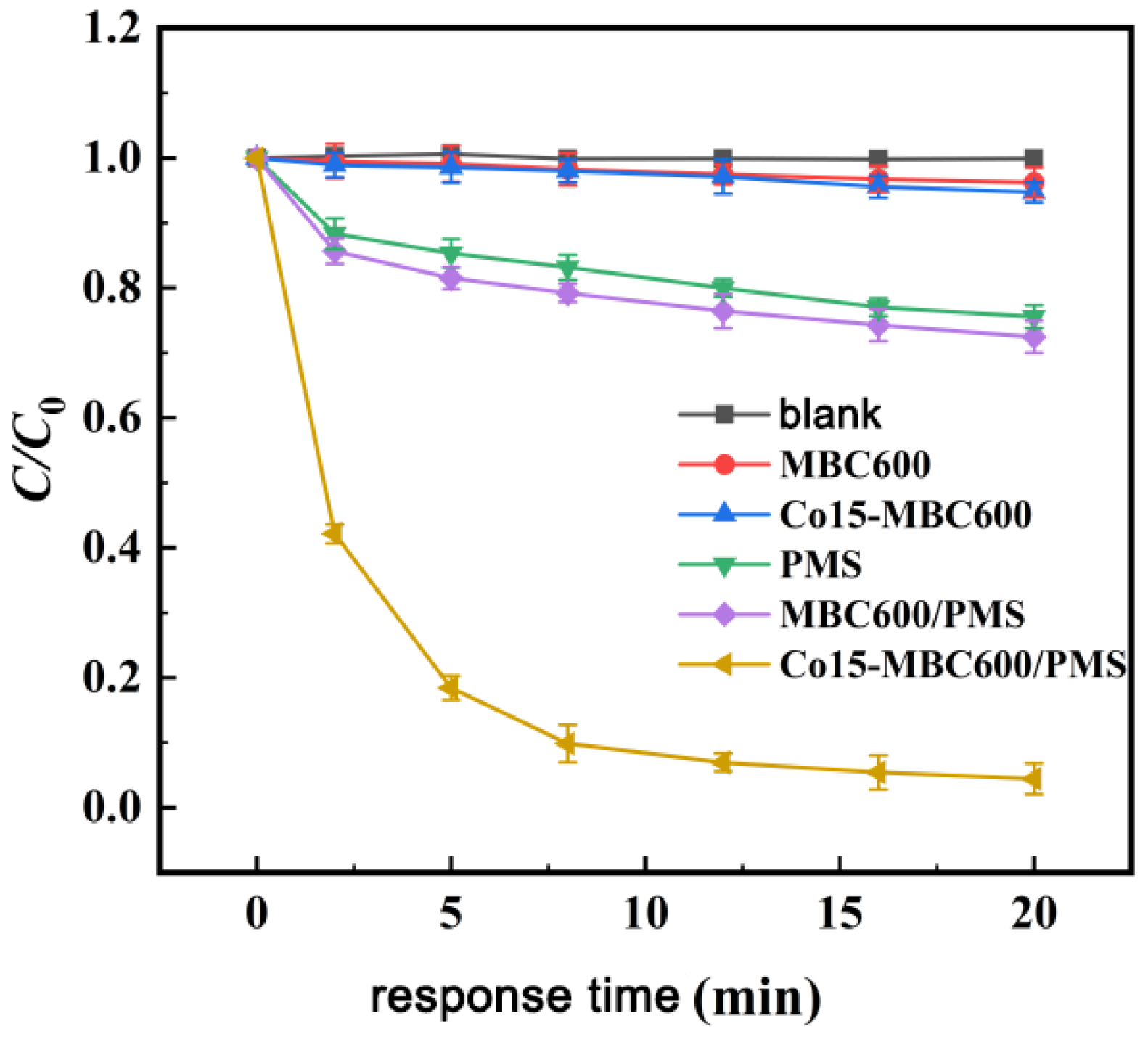
The performance of OTC degradation in different reaction systems is shown in Figure 7. In the systems with only MBC600 and Co15-MBC600, the removal rates of OTC are 3.7% and 5.29%, respectively, with only slight removal. In the system with MBC600/PMS, the degradation efficiency is only 27.54%, while the degradation efficiency of OTC in Co15-MBC600/PMS can reach 95.53%. These data indicate that Co15-MBC600 can act as a potential catalyst that can activate PMS. The degradation rate constant of the Co15-MBC600/PMS system is 3.47 times that of the MBC600/PMS system. The electrons of phenolic compounds in modified biomass will transfer to cobalt ions attached to biochar, accompanied by the formation of a large number of active sites, which contribute to promoting the catalyst degradation reaction.
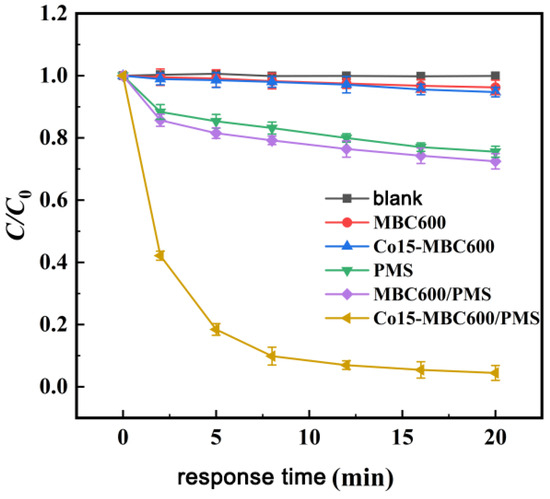
Figure 7.
Comparison chart of the removal effects of OTC by different systems.
According to the existing studies on the degradation of oxytetracycline (OTC) in water via peroxymonosulfate F(PMS) activation by biochar, as summarized in Table 3 (with all reaction times ≥20 min), it can be observed that compared to these biomass-derived biochars, Co15-MBC600 has a high degradation performance for OTC and is highly competitive.
Table 3.
Comparison of the performance of biochar activated PMS for pollutant degradation prepared from different raw materials.
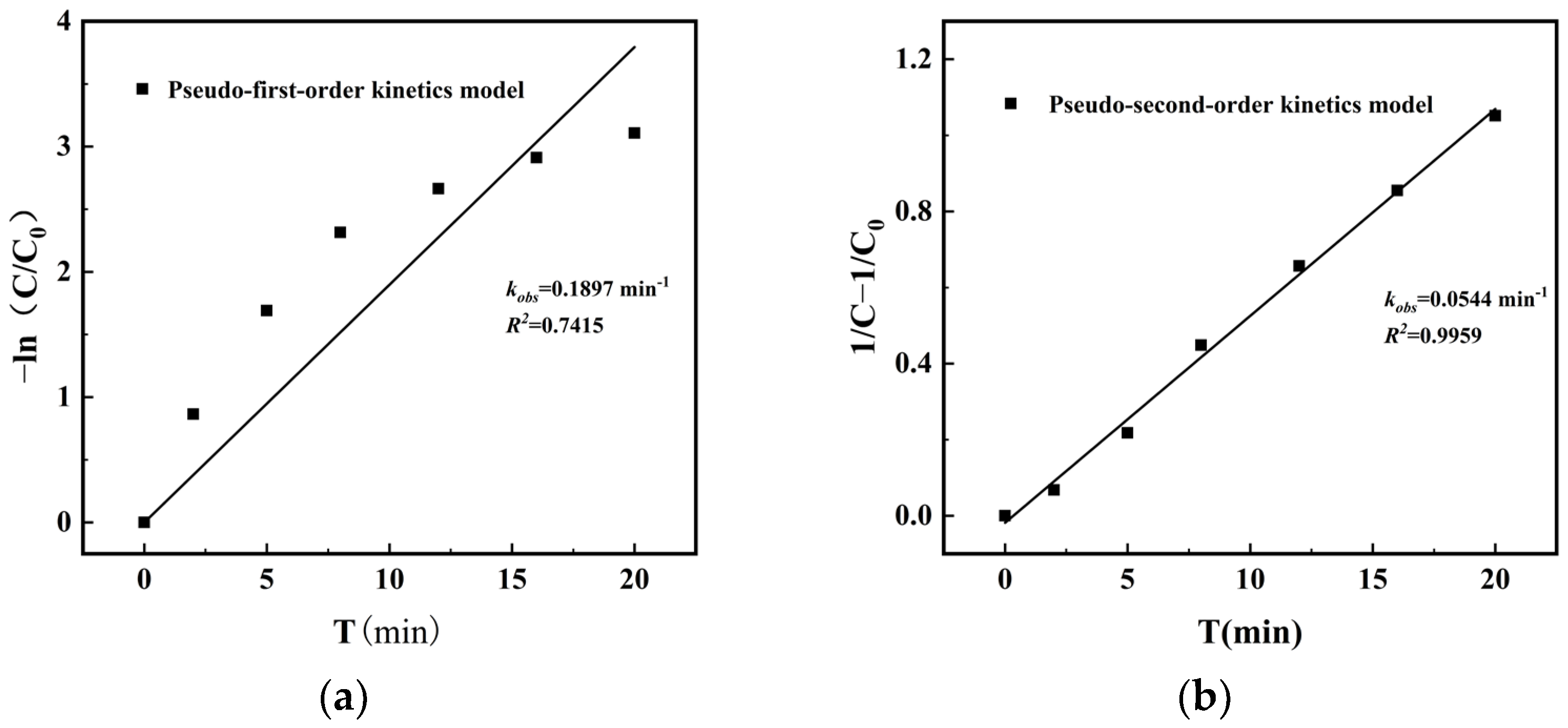
To clarify the reaction kinetics characteristics of oxytetracycline degradation by the Co15-MBC600/PMS system, this study used quasi-first-order and quasi-second-order kinetic models to conduct nonlinear regression analysis on the experimental data, as shown in Figure 8.
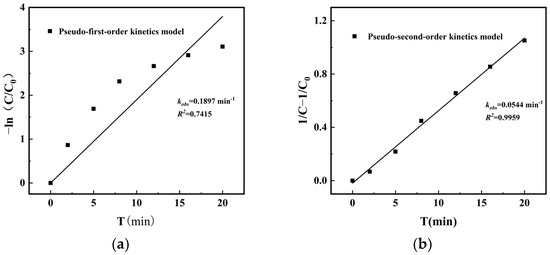
Figure 8.
Kinetic model of OTC degradation by the Co15-MBC600/PMS system.
From the above fitting results, it can be seen that the quasi-first-order kinetic correlation coefficient R2 of the Co15-MBC600/PMS system for the degradation of OTC reaction process is 0.7415, and the quasi-second-order kinetic model correlation coefficient R2 is 0.9959. Thus, it can be seen that the R2 of the quasi-second-order kinetic model is closer to 1. It is indicated that the proposed second-order kinetic model is closer to the actual reaction situation in this study. To deeply analyze the mechanism of biochar activation of persulfate for the degradation of oxytetracycline and optimize the process parameters, this study selected the Co15-MBC600/PMS catalytic system with the best performance to conduct a systematic experimental study.
3.3.2. Influence of Co15-MBC600 and PMS Dosages
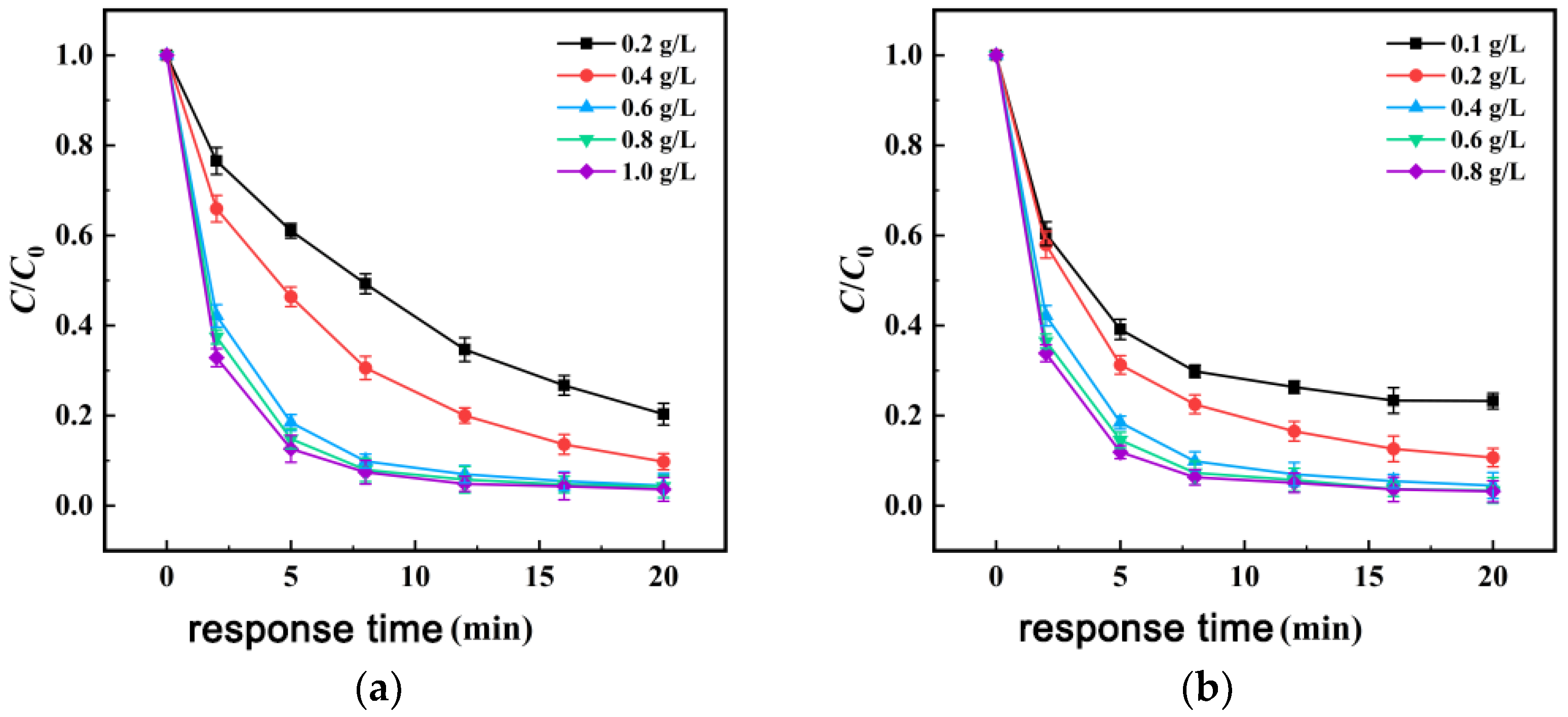
The influence of Co15-MBC600 dosages on OTC removal efficiency is shown in Figure 9a. When the amount of Co15-MBC600 dosage increases from 0.2 g/L to 0.6 g/L, the removal efficiency significantly increases from 79.69% to 95.53%. Fitting the reaction system with the pseudo-second-order kinetics, it is found that the reaction rate constant kobs increases from 0.0089 min−1 to 0.0544 min−1. The results indicate that there is a positive relationship between the biochar dosages and OTC degradation efficiency. When the dosage of biochar further increases to 1.0 g/L, although the kobs increases to 0.0708, there is no significant increase in OTC degradation efficiency. When PMS dosage is constant, the number of free radicals and non-free radicals in the reaction system is limited, so when adding excessive biochar catalyst, the surface active sites of the catalyst reach a saturated state, resulting in under-utilization [28]. Under such conditions, continuously increasing the catalyst dosage contributes little to the improvement of the OTC removal efficiency. Huong et al. reached a similar conclusion in a study on the degradation of organic pollutants in waste water by activating PMS with rice husk biochar. In order to achieve optimal utilization of the catalyst, this study determines 0.6 g/L as the optimal dosage concentration.
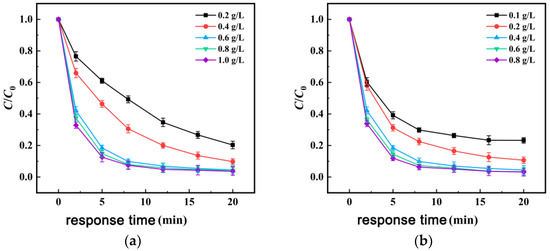
Figure 9.
Influence of the dosage of Co15-MBC600 and PMS on the removal effect of OTC. (a) Investigation of the effect of Co15-MBC600 dosage on OTC degradation behavior; (b) investigation of the effect of PMS dosage on OTC degradation behavior.
As shown in Figure 9b, when the dosage of PMS is 0.1~0.4 g/L, the degradation efficiency gradually increases, and kobs becomes 5.4 times higher. With the increase in PMS concentration, the active materials in the system continuously increase, increasing the opportunities for contact with the active sites on the biochar. When the dosage increases from 0.4 g/L to 0.8 g/L, there is no significant difference in degradation efficiency. When the biochar dosage is constant, the number of surface active sites is limited. After the active sites are used, the catalyst effect decreases, and it is difficult to efficiently activate the excessive PMS [29]. In terms of economic efficiency, the optimal dosage of PMS is 0.4 g/L.
3.3.3. Influence of Temperature
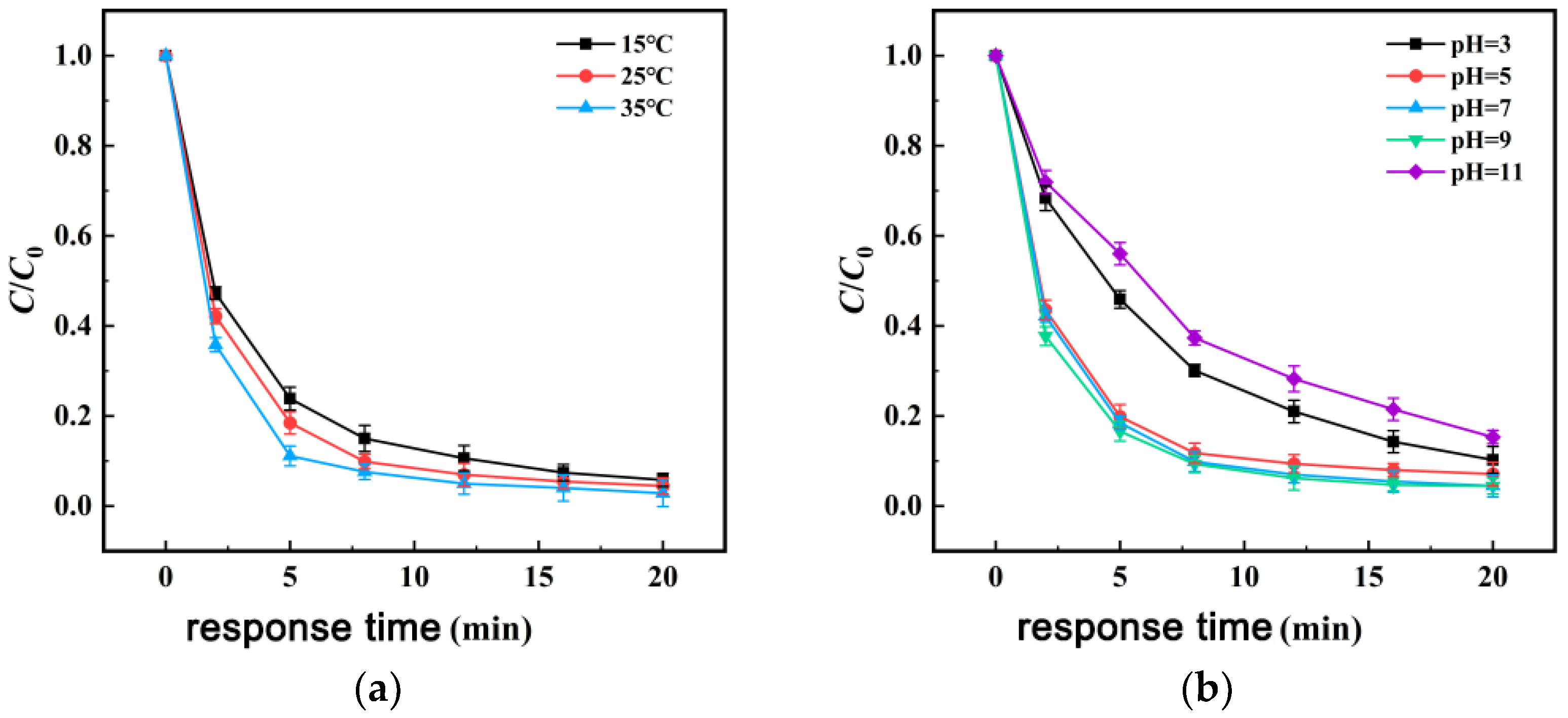
According to Figure 10a, under the reaction condition of 35 °C, the removal efficiency of the system for OTC is the highest. Compared with that of 15 °C, it only increases by 3.16 percentage points. This result shows that the influence of temperature changes on ultimate degradation efficiency is limited, and at room temperature, this system can achieve high-efficiency degradation of OTC (the removal rate can be higher than 94%). However, in the early stage, temperature has a certain impact on the reaction rate, mainly because increasing the temperature accelerates the transferring of biochar toward PMS ions and provides more energy for the reaction system to overcome its activation barriers [30,31]. On the other hand, thermal energy facilitates the decomposition of PMS, thereby promoting the generation of free radicals.
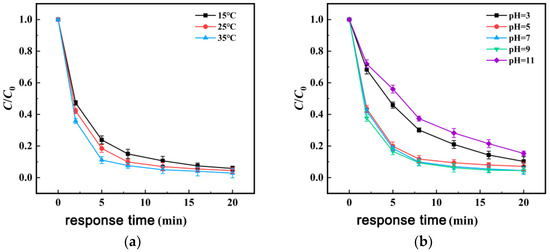
Figure 10.
Influence of reaction temperature and solution pH on the removal effect. (a) Reaction temperature; (b) pH.
3.3.4. Influence of Solution pH
It can be seen from Figure 10b that there is no linear relationship between degradation efficiency and pH value. When pH = 9, the optimal treatment efficiency can be obtained, and its removal rate can reach 95.57%. When the pH value is 11, the removal rate and kobs are both the lowest values. This phenomenon is closely related to the stability of the active component of PMS, HSO5−, and HSO5− can remain stable in the pH range of 3.75–9.44. In addition, under higher pH conditions, cobalt hydroxide precipitates may form, thereby affecting the degradation rate of OTC. Under acidic conditions, by exhibiting the dissociation of HSO5−, H+ reduces the generation efficiency of free radicals. In the pH range of 3.57–9.44, the deprotonated OTC molecules are more easily degraded by PMS. When the pH value is lower than 3.57, H+ will compete with OTC for HSO5− active sites, which will exhibit the degradation reaction. However, because the actual pH of antibiotic waste water is usually weakly acidic to weakly alkaline (pH 5.0–9.0), the reaction system shows excellent degradation performance in this pH range and has good pH adaptability.
3.3.5. Influence of Inorganic Anions
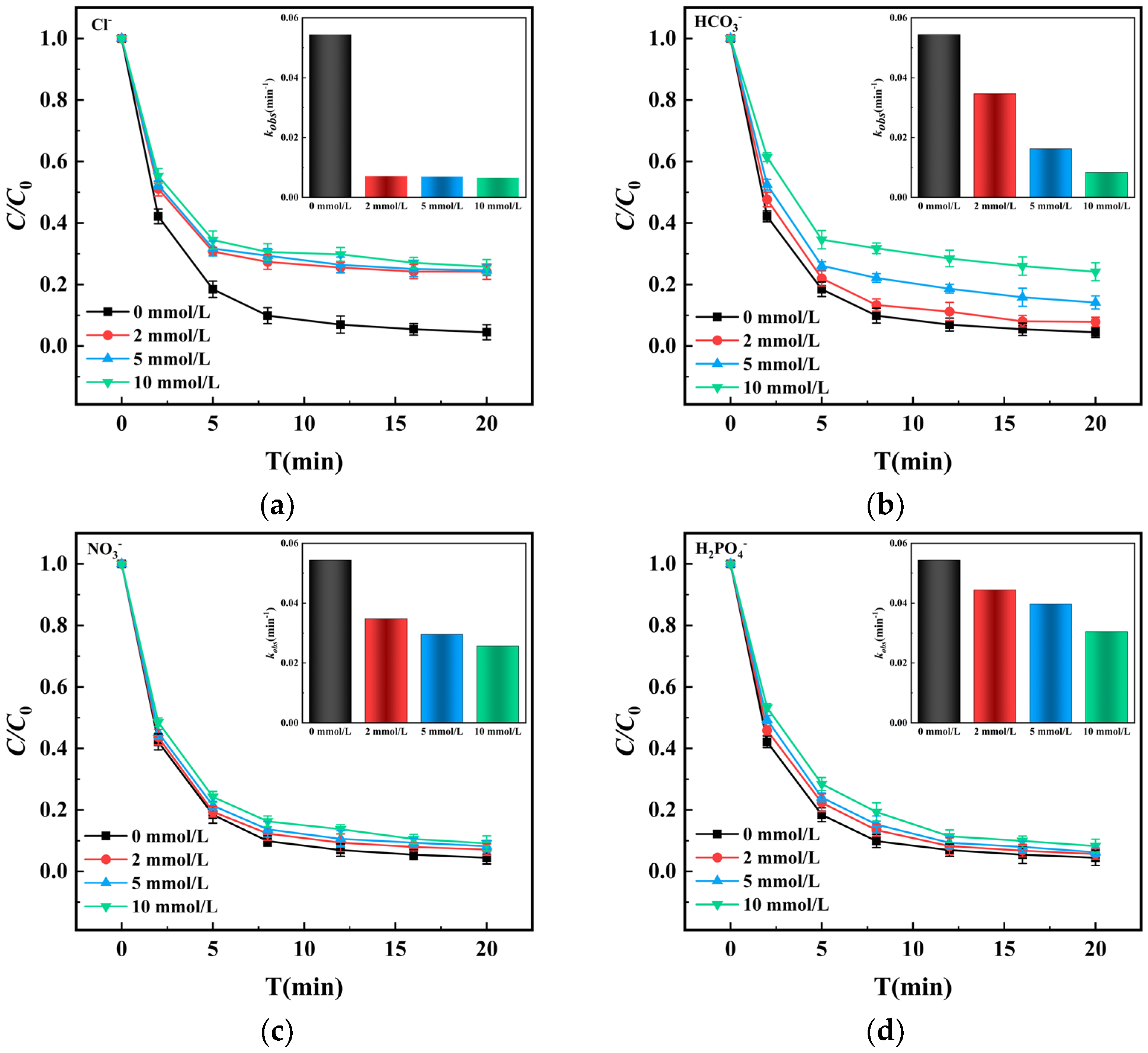
The effect of chloride ions on the catalytic degradation efficiency exhibits concentration dependence and is closely related to the molecular characteristics of the target pollutant. As shown in Figure 11a, when the Cl− concentration increased from 0 mmol/L to 10 mmol/L, the OTC removal rate decreased from 95.53% to 74.20%, while the reaction rate constant significantly dropped from an initial value of 0.0544 min−1 to 0.0065 min−1, representing a reduction of 88.1%. This phenomenon may be attributed to the reaction of chloride ions with sulfate radicals and hydroxyl radicals, generating chlorine radicals (Cl·) with relatively lower oxidation potentials, which exhibit weaker oxidation capability toward OTC.
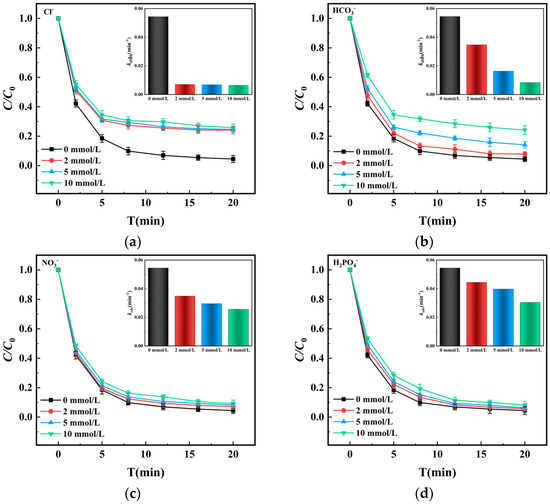
Figure 11.
Influence of inorganic anions on the removal effect. (a) Cl−; (b) HCO3−; (c) NO3−; (d) H2PO4−.
As shown in Figure 11b, bicarbonate ions significantly inhibit the degradation process of oxytetracycline. As the HCO3− concentration increased from 0 mmol/L to 10 mmol/L, the removal efficiency of OTC decreased markedly from 95.53% to 75.85%, representing a reduction of 19.68 percentage points. The observed reaction rate constant (kobs) also decreased from 0.0554 min−1 to 0.0083 min−1. This indicates that the presence of HCO3− has a pronounced inhibitory effect on the reaction system. HCO3− can quench sulfate radicals and hydroxyl radicals, generating bicarbonate radicals with weaker oxidizing capacity. Furthermore, the alkaline environment resulting from the addition of HCO3− to the solution system also affects OTC removal efficiency. The hydrolysis of HCO3− causes the system pH to rise to a strongly alkaline range of 10.5–11.0. According to previous experimental results on the influence of pH, under such alkaline conditions, the electrostatic repulsion between OTC molecules and the surface of Co15-MBC600 is enhanced, significantly impeding the efficiency of electron transfer among them [32,33].
It can be known from Figure 11c that when the concentration of NO3− increased from 0 mmol/L to 10 mmol/L, the removal rate of OTC decreased from 95.53% to 90.85%, with a decrease of only 4.68%. The reaction rate constant kobs decreased from 0.0554 min−1 to 0.0256 min−1, and the degradation of OTC was not significantly inhibited. The reason for this phenomenon might be that low concentrations of NO3− do not react with free radicals in the system and can exist stably. When the concentration of NO3− in the system is relatively high, it will react with SO4− to produce NO3 with lower activity. The REDOX potential of NO3 is lower than that of ·OH and SO4−, which leads to a decrease in the degradation rate of OTC. However, the reaction rates of NO3− and SO4− are relatively low, so the effect of NO3− at different concentrations on the degradation of OTC is very small and can be ignored.
It can be known from Figure 11d that when the concentration of H2PO4− increases from 0 mmol/L to 10 mmol/L, the removal rate of OTC by the catalytic reaction system decreases from 95.53% to 91.75%. The reaction rate constant kobs decreased from 0.0554 min−1 to 0.0304 min−1, with a relatively small decrease. The inhibitory effect of H2PO4− on OTC can be ignored.
3.4. Study on the Stability of Materials
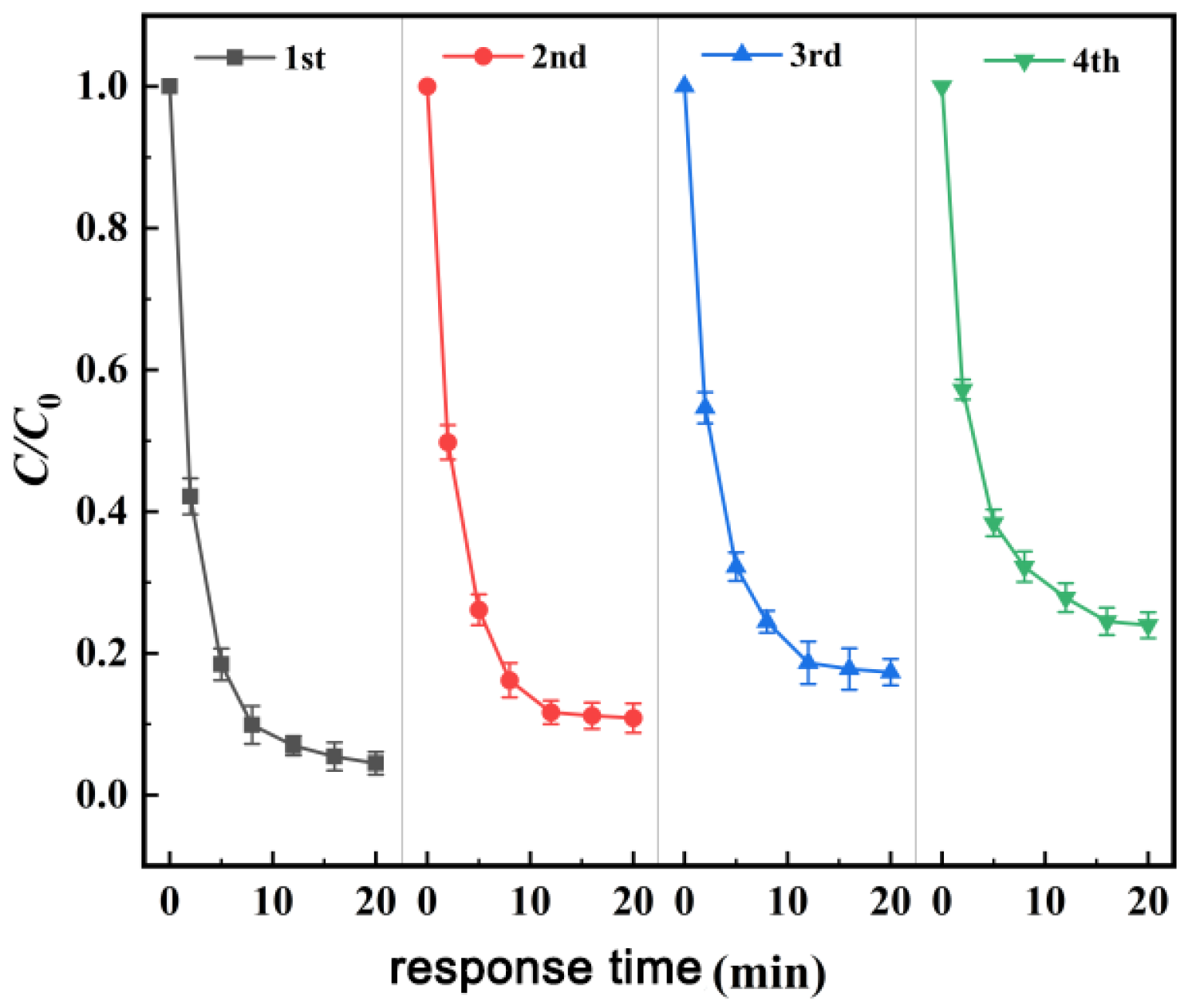
The test of material stability is shown in Figure 12. After 4 cycles, the degradation rate only declines by 19.5 percentage points. This result fully verifies that the material has excellent reusable performance, showing good practical potential. It is attributed to 2 factors: the first one is the physical loss in the recycle process, and the second one is the coverage of reaction intermediate products at the active sites. And there is a small amount of cobalt ions leaching out during the recycling process [34].
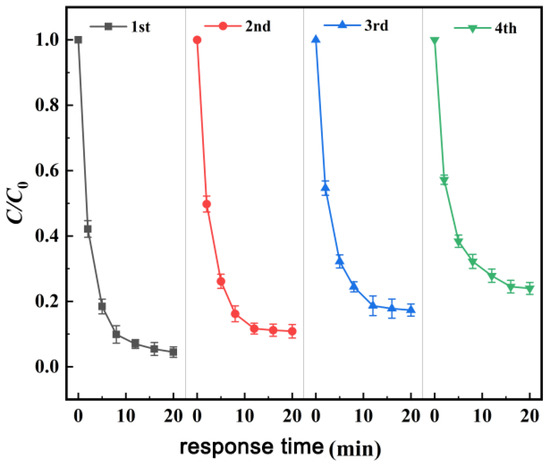
Figure 12.
Cycling stability of Co15-MBC600.
3.5. Detection of Reactive Species
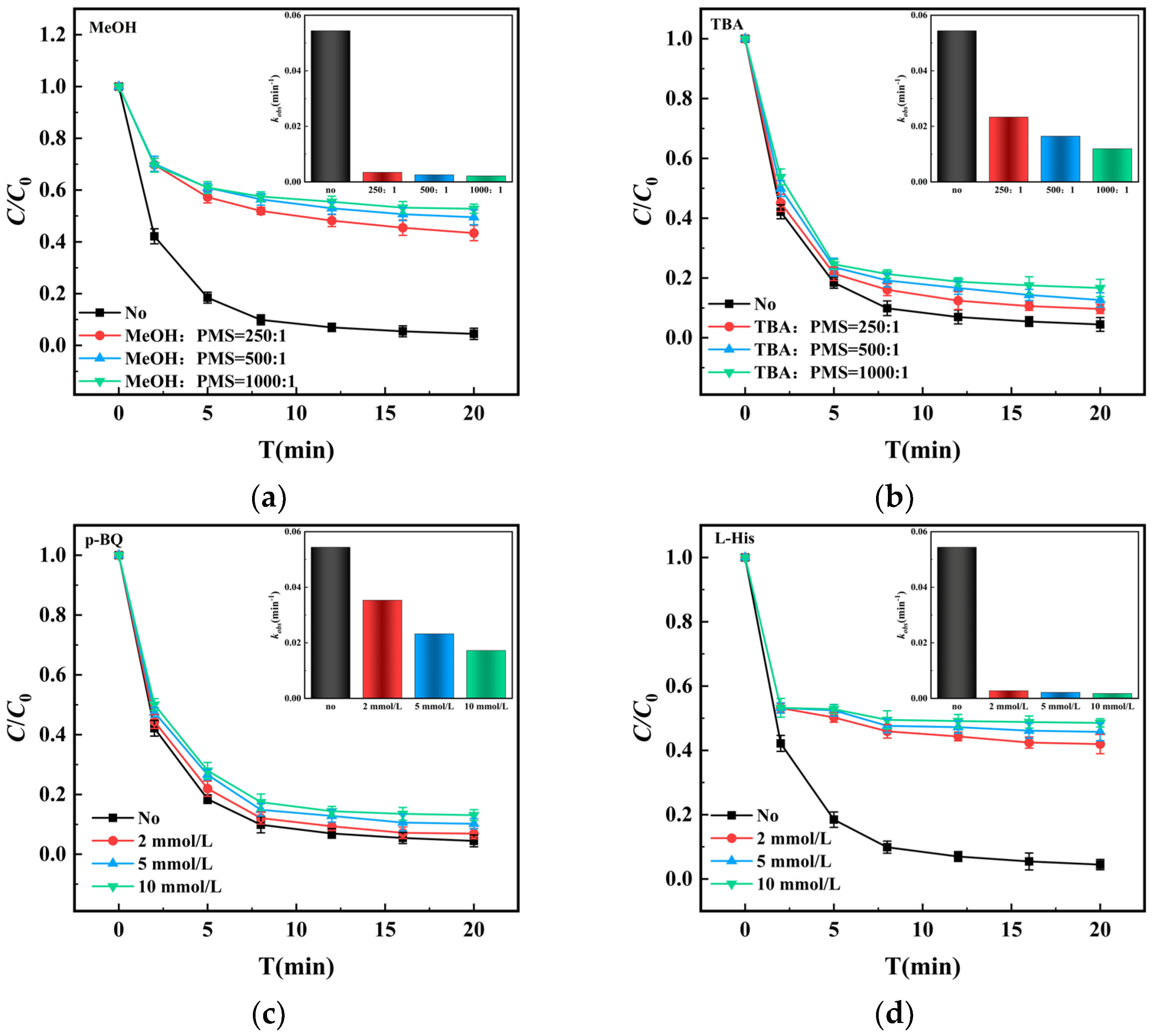
The quenching experiment shows the influence rule of different quenchers on the degradation process. Among them, L-histidine (L-His) specifically captures the singlet oxygen (1O2); methanol (MeOH) scavenges SO4− and ·OH; p-benzoquinone (PBQ) captures O2−; and tert-butanol (TBA) can capture ·OH [35]. As shown in Figure 13a, when the molar ratio of methanol to PMS increases to 1000:1, the degradation efficiency declines from 95.53% to 47.19%. In contrast, the inhibition effect of tert-butyl alcohol on degradation is relatively weaker. The statistics show that SO4− plays a dominant role in the reaction. As shown in Figure 13c, as the concentration of p-benzoquinone increases from 0 to 10mmol/L, the degradation efficiency only declines by 8.63%. This verifies that the contribution rate of O2− is limited, and thus it is not the main active species. As shown in Figure 13d, when the concentration of L-histidine increases from 0 to 10 mmol/L, the degradation efficiency decreases by 44.07%. This strong inhibiting effect confirms that a large amount of 1O2 is generated in the reaction system and plays a key role in the degradation [36,37].
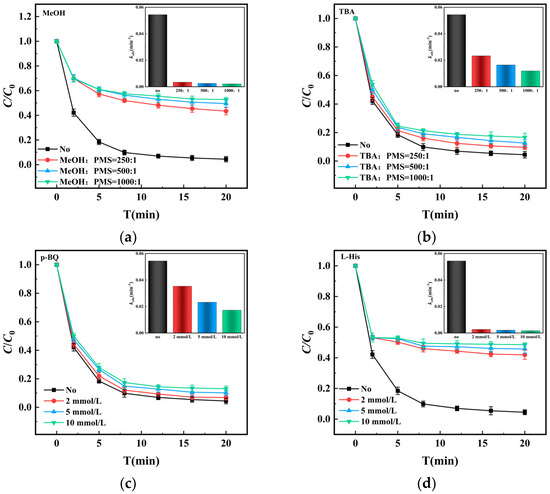
Figure 13.
Influence of quenchers on the removal effect. (a) MeOH; (b) TBA; (c) p-BQ; (d) L-His.
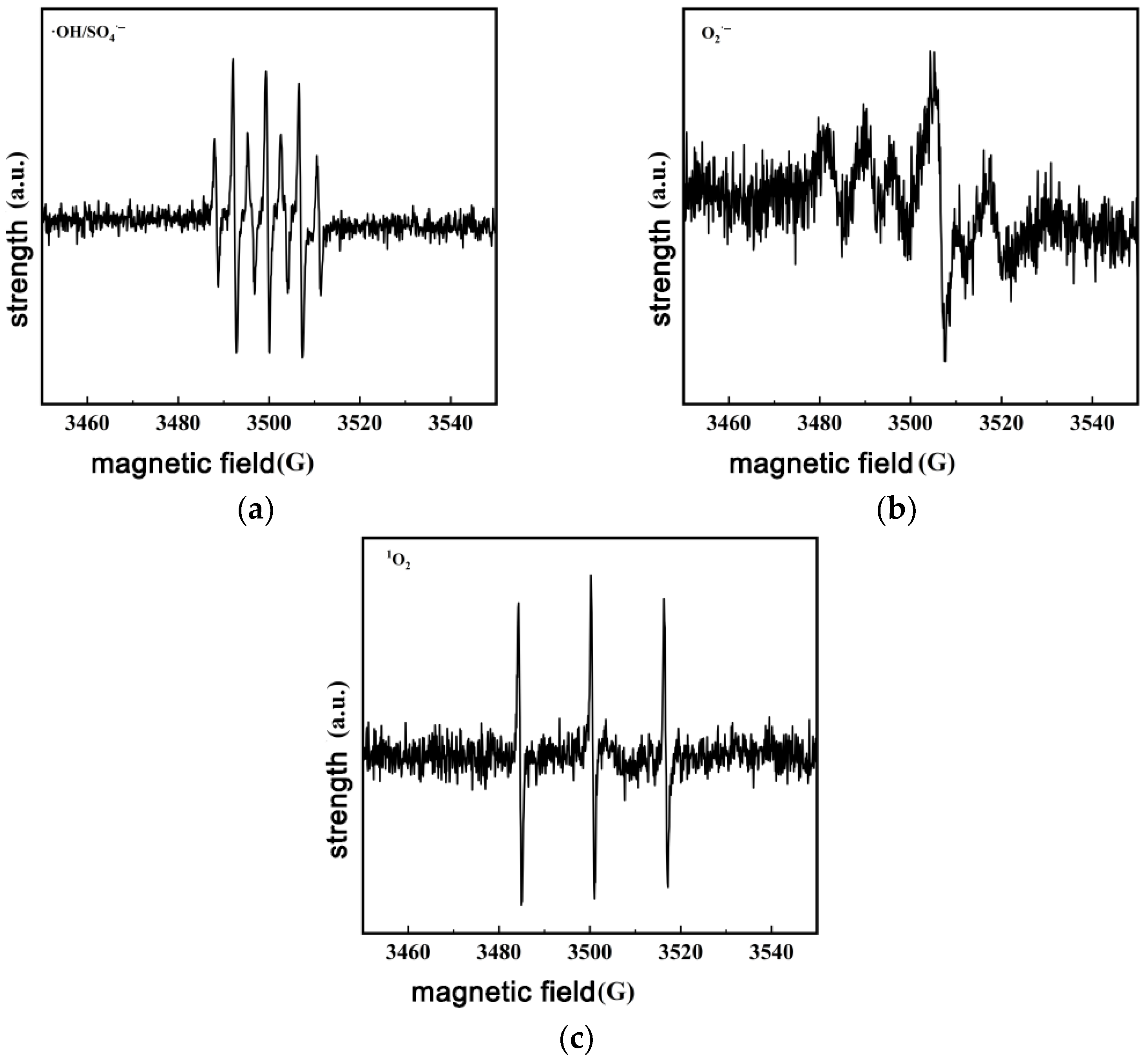
In order to further determine the types of active species, DMPO is used as the spin trapping agent for free radicals such as SO4−, O2−, and ·OH, while TEMP is used as the spin trapping agent for non-free radical 1O2.
As shown in Figure 14a, in an aqueous solution using DMPO as a trapping agent, a distinct seven-peak signal of DMPOX was detected in the Co15-MBC600/PMS system. The appearance of DMPOX may be caused by the secondary oxidation of DMPO by SO4− and ·OH generated in the system. From Figure 14b, it can be observed that the characteristic signal of the DMPO-O2− adduct was detected when DMPO was used as a specific trapping agent, but its signal intensity was relatively low, indicating a limited concentration of superoxide radicals generated in the reaction system. This phenomenon is consistent with the quenching experimental results, confirming that O2− contributes minimally to the catalytic degradation process. As shown in Figure 14c, when TEMP was used to trap 1O2, a signal peak of the TEMP adduct (TEMP-1O2) with an intensity ratio of 1:1:1 was observed in the figure, indicating the generation of 1O2 in the Co15-MBC600/PMS system. This aligns with the aforementioned quenching experimental results, suggesting the involvement of 1O2 in the degradation process of OTC. Existing studies have confirmed that peroxymonosulfate can generate singlet oxygen through self-decomposition under specific conditions, which may be one of the important sources of 1O2 in the catalytic system. Related mechanistic studies indicate that PMS molecules undergo O-O bond cleavage under thermal or alkaline conditions, subsequently generating 1O2 via an energy transfer pathway [38,39]. However, the reaction kinetics of 1O2 generation through PMS self-decomposition are relatively slow. Notably, the presence of the Co15-MBC600 catalyst significantly enhances the efficiency of 1O2 generation, as confirmed by the distinct 1O2 characteristic signal in the EPR tests. The experimental results demonstrate that in the catalytic system, 1O2 is primarily generated through the transition metal cobalt-mediated PMS activation pathway, rather than relying solely on PMS self-decomposition, which is consistent with the findings of Wei et al. [40].
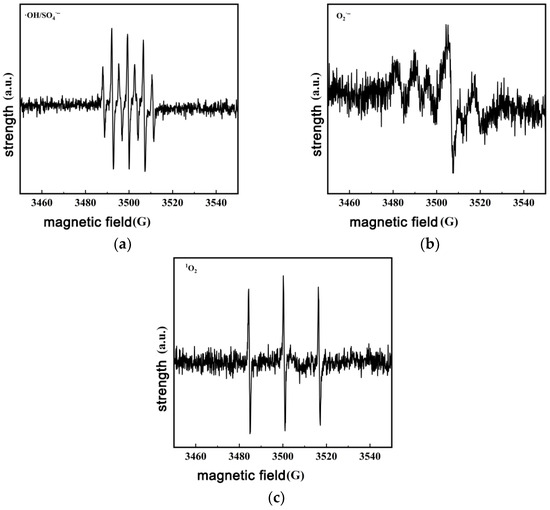
Figure 14.
EPR spectrum of the active substance. (a) ·OH/SO4−; (b) O2−; (c) 1O2.
The results showed that the spin-trapping adducts of SO4−, O2−, ·OH, and 1O2 were observed. The EPR test results are aligned with the quenching experiment. As shown in Figure 13, the active species mainly include SO4−, O2−, ·OH, and 1O2, among which, SO4− and 1O2 are the main active species that contribute most of the oxidability.
3.6. Study on OTC Degradation Mechanism
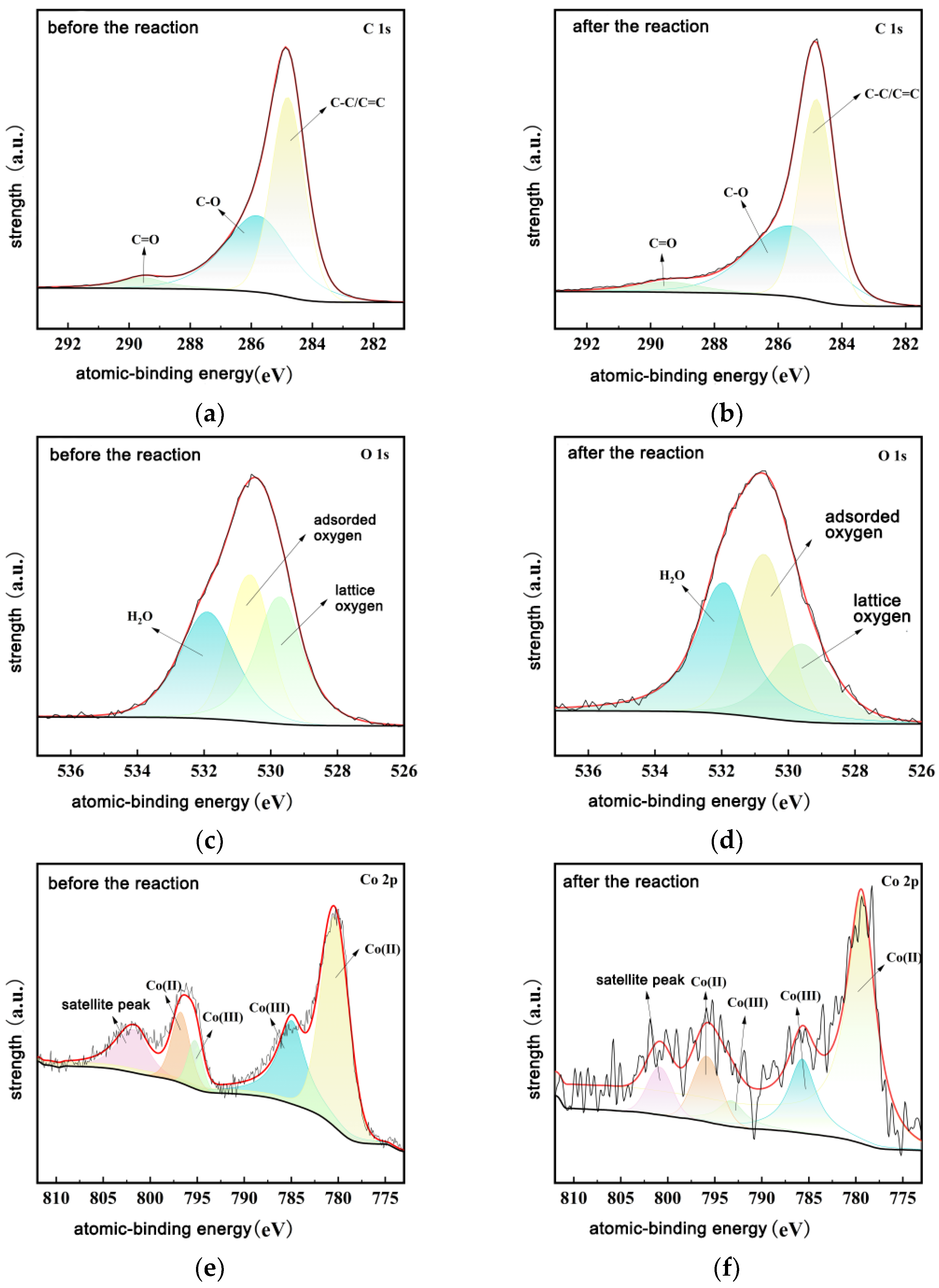
This study compares the characteristic spectra lines of C 1s, O 1s, and Co 2p before and after the reaction, and it is observed that there are no significant changes in the chemical state of the catalyst surface. The analysis results of the C 1s fine spectrum are shown in Figure 15a,b. According to these two figures, it can be found that the relative content of the C-O group increases significantly, while the relative content of C-C/C=C and C=O decreases from 42.14% and 22.33% to 38.89% and 15.13%, respectively. This kind of change rule shows that part of the graphitic carbon and carbonyl carbon on the material surface is converted into hydroxyl/ether-bond carbon (C-O) in the catalytic reactions.
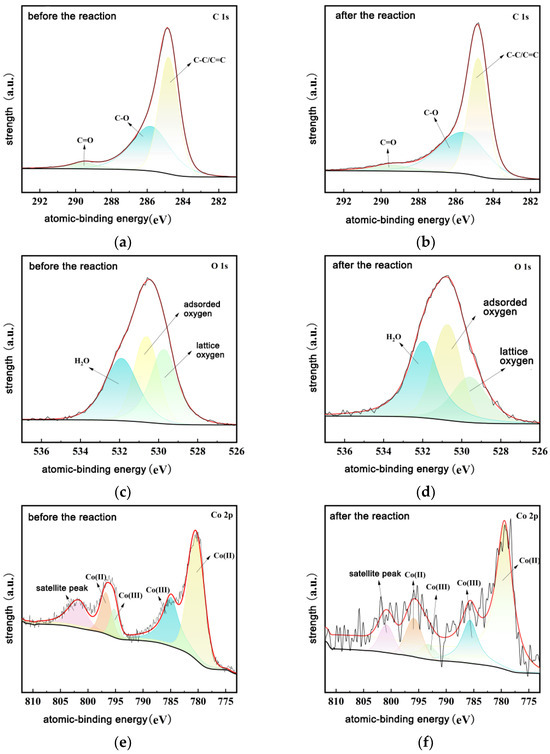
Figure 15.
XPS spectra of Co15-MBC600 before and after reaction. (a) C 1s fine spectrum before reaction; (b) C 1s fine spectrum after reaction; (c) O 1s fine spectrum before reaction; (d) O 1s fine spectrum after reaction; (e) Co 2p fine spectrum before reaction; (f) Co 2p fine spectrum after reaction.
The O 1s fine spectrum analysis in Figure 15c and Figure 15d shows that after the reaction, the relative content of surface-absorbed oxygen at 530.6 eV and absorbed water at 531.9 eV increase from 35% and 28% to 46% and 35%, respectively, while the content of lattice oxygen at 529.8 eV decreases significantly from 37% to 19%. In addition, the Co 2p fine spectrum analysis results in Figure 15e,f indicate that after the reaction, the molar ratio of Co2+/Co3+ in the material significantly increases. This phenomenon may be attributed to the electron transfer process between the biochar carrier and the cobalt active center: the electron-rich groups on the biochar surface transfer electrons to Co3+, promoting its reduction to Co2+ and accelerating the oxidation-reduction cycle of Co2+/Co3+. Apart from that, the biochar carrier not only provides highly dispersed cobalt active sites, but also enhances the activation of PMS by participating in electron transfer through surface functional groups.
The key to elucidating the mechanism of catalytic degradation lies in identifying the intermediate products generated during the reaction process. In this study, LC-MS technology was employed to analyze the degradation of OTC by the Co15-MBC600/PMS system. By comparing the mass spectrometry data of samples before and after the reaction, examining spectral changes over different time intervals, and interpreting mass-to-charge ratio information, the primary intermediates likely formed during degradation were identified. This approach provided critical evidence for clarifying the catalytic degradation pathway. Prior to the reaction, the mass spectrum of the pure OTC solution exhibited a distinct characteristic peak at m/z 461, confirming the validity of the analytical method.
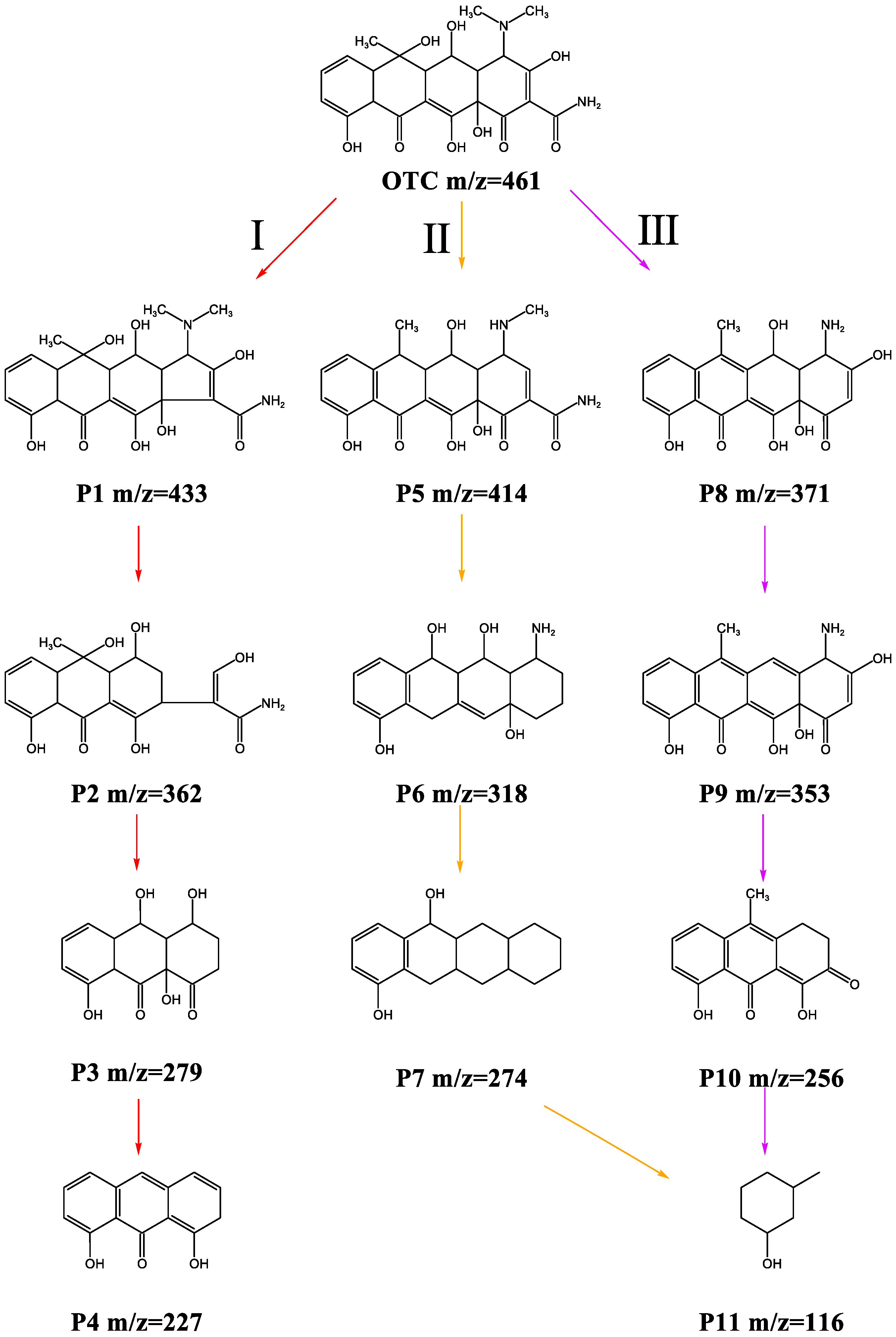
Based on the LC-MS analysis results, this study proposes three potential reaction pathways for OTC degradation. These pathways primarily involve reactions such as demethylation, decarboxylation, dehydration, and ring opening, ultimately leading to the effective degradation of OTC. The specific degradation pathways are illustrated in Figure 16.
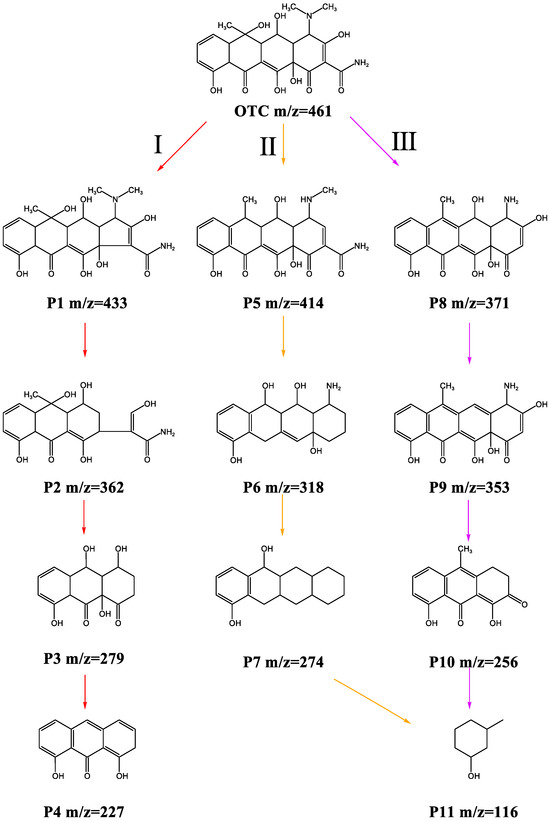
Figure 16.
The possible degradation path diagram of OTC.
Pathway 1: OTC first undergoes decarbonylation under the action of sulfate radicals and singlet oxygen, forming the intermediate product P1 (m/z = 433). Subsequently, P1 undergoes a ring-opening reaction accompanied by the elimination of an N-methyl group, converting to P2 (m/z = 362). This intermediate further undergoes demethylation, decarboxylation, and deamination reactions, yielding the structurally simpler P3 (m/z = 279). Finally, P3 is progressively degraded under continuous attack by reactive species, forming the aliphatic small molecule P4 (m/z = 227), indicating complete fragmentation of the molecular skeleton.
Pathway 2: The two hydroxyl groups in the OTC molecule are preferentially oxidatively removed by sulfate radicals and singlet oxygen, generating P5 (m/z = 414). Subsequently, P5 sequentially undergoes demethylation, decarboxylation, and deamination processes, gradually transforming into P6 (m/z = 318) and P7 (m/z = 274).
Pathway 3: This pathway involves the sequential removal of a hydroxyl group and an N-methyl group (generating P8, m/z = 371), a dehydration reaction (generating P9, m/z = 353), and a decarboxylation process (generating P10, m/z = 256). Notably, both P7 and P10 are further oxidized in the system to a common intermediate, P11 (m/z = 256), which is ultimately mineralized into inorganic compounds such as CO2 and H2O.
The intermediate products (P1-P11) detected by LC-MS and their evolution patterns confirm that the Co15-MBC600/PMS system can effectively degrade OTC through various reaction mechanisms, such as functional group removal, ring opening, and oxidation. It is hypothesized that sulfate radicals and singlet oxygen preferentially attack the electron-rich sites in OTC (such as amino groups, hydroxyl groups, or the aromatic ring), thereby initiating the subsequent stepwise degradation. This finding provides experimental evidence for understanding the molecular mechanisms of antibiotic degradation via heterogeneous catalysis.
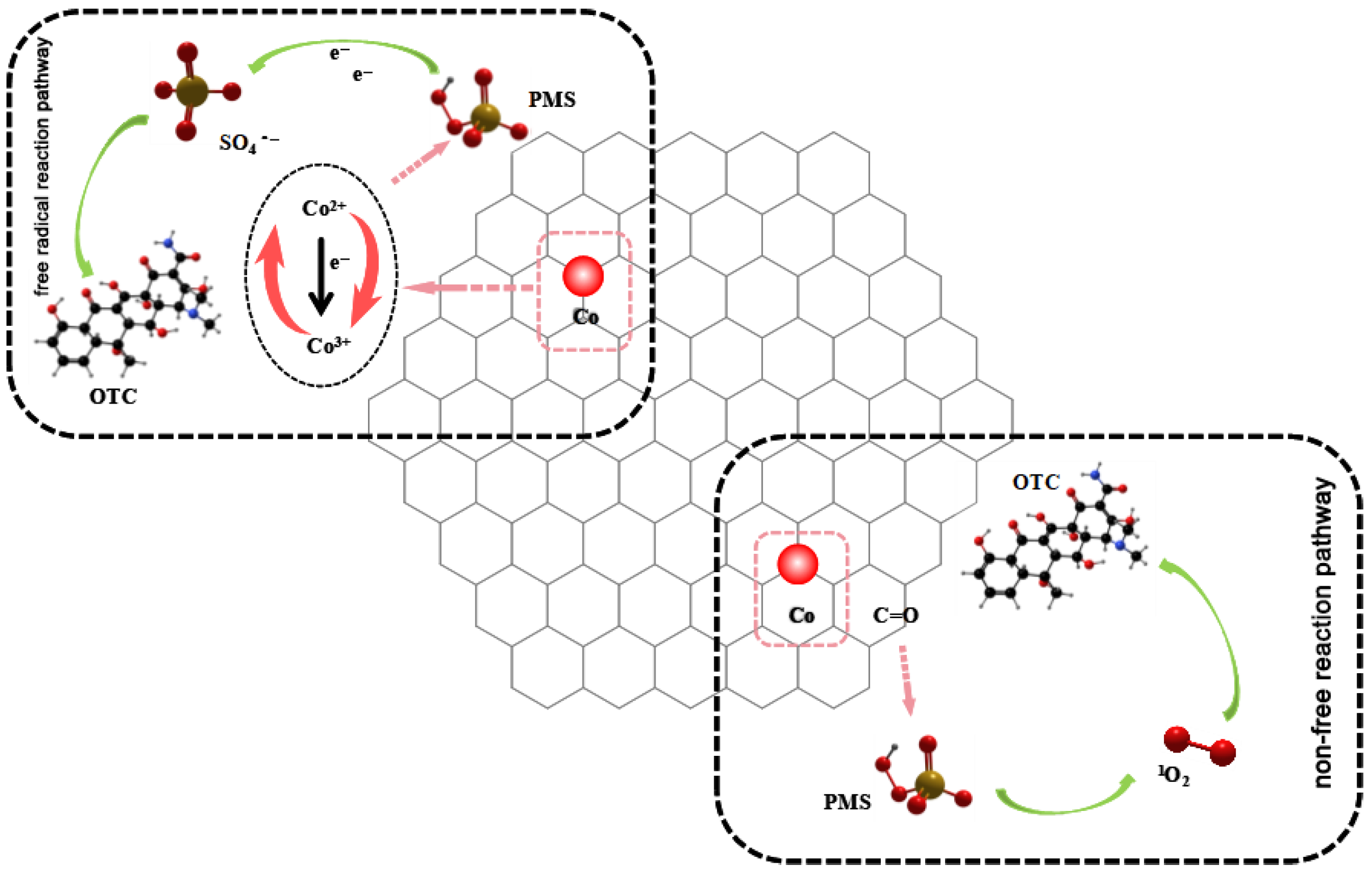
The reaction mechanism of Co15-MBC600 activating the PMS system to remove OTC in the water is shown in Figure 17. The effect of the compound system on OTC degradation is achieved through a dual-channel mechanism. In the free radical reaction pathway, Co2+ generates a large amount of SO4− and Co3+ by attacking the O-O chemical bond, and Co3+ can react with HSO5− and generate Co2+ by electron transfer, achieving redox between Co2+ and Co3+. In addition, PMS can generate SO4− by electron transfer. In the degradation pathway of non-free radicals, 1O2 plays a dominant role. The generation of 1O2 mainly comes from the spontaneous decomposition process of PMS and the activation of PMS by C=O functional groups on the biochar surface. Under the combined action of free radicals and non-free radicals, the Co15-MBC600/PMS system can degrade OTC through a series of complex reactions such as demethylation, decarboxylation, deoxygenation and ring-opening. Finally, the oxidation products are mineralized into inorganic substances such as CO2 and H2O.
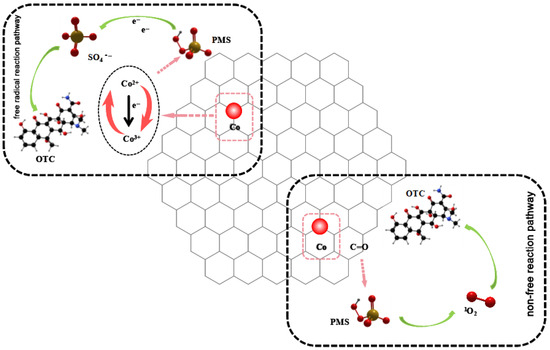
Figure 17.
Mechanism diagram of OTC degradation by the Co15-MBC600/PMS system.
4. Conclusions
After modification, the specific surface area and total pore volume of biochar have significantly improved compared with those before modification. The optimal pyrolysis temperature is 600 °C and the optimal mass ratio of dry biomass to cobalt sulfate heptahydrate is 15:1. Co15-MBC600 prepared under such conditions has the best effect on activating PMS to degrade OTC. The Co15-MBC600/PMS synergistic system is less influenced by temperature. In the range of pH 3~11, OTC can be degraded effectively, and the inhibition effects of Cl− and HCO3− are relatively significant, while those of NO3− and H2PO4− are relatively weak. The optimal dosages of biochar and PMS are 0.6g/L and 0.4g/L, respectively. After 4 cycles, the degradation efficiency of the reaction system can remain over 70%, which shows that the material has excellent reusable capacity. The reaction mechanism includes a free radical pathway dominated by SO4− and a non-free radical pathway dominated by 1O2. Under the action of active materials, OTC can be degraded through reactions such as demethylation, decarboxylation, deoxygenation and ring-opening, and finally mineralized into inorganic substances such as CO2 and H2O.
Although the study employed liquid chromatography-mass spectrometry to analyze the degradation intermediates of OTC in the Co15-MBC600/PMS system, it did not evaluate the toxicity of the intermediates generated during the reaction. Subsequent research could assess the ecological risks of these degradation products using methods such as luminescent bacteria or zebrafish embryo acute toxicity tests. Additionally, the reusability of the material is crucial for practical applications. After four cycles, the catalytic performance of Co15-MBC600 decreased by 19.5 percentage points, indicating room for improvement in its stability. Further studies should explore the potential for enhancing the material’s reusability to better support engineering applications. Moreover, practical considerations such as the control of material preparation conditions, production costs, and energy consumption need to be thoroughly investigated in subsequent research.
Author Contributions
Conceptualization, S.L.; Methodology, S.L.; Software, L.G.; Validation, L.G.; Formal analysis, Y.W.; Investigation, Y.W. and G.L.; Resources, G.L.; Data curation, A.W. and G.L.; Writing – original draft, A.W.; Writing – review & editing, A.W.; Visualization, G.L.; Supervision, Y.L.; Project administration, Y.L.; Funding acquisition, Y.L. All authors have read and agreed to the published version of the manuscript.
Funding
This research was funded by the Open Fund of the Sichuan Province Engineering Technology Research Center of Emerging Contaminants Treatment and Environmental Health (Grant No. 2024ECEH-3) and the Open Fund of the State Environmental Protection Key Laboratory of Synergetic Control and Joint Remediation for Soil & Water Pollution (Grant No. GHBK-2024-12).
Data Availability Statement
The original contributions presented in this study are included in the article. Further inquiries can be directed to the corresponding author.
Conflicts of Interest
The authors declare no conflict of interest.
References
- Li, D.; Yang, M.; Hu, J.; Ren, L.; Zhang, Y.; Li, K. Determination and Fate of Oxytetracycline and Related Compounds in Oxytetracycline Production Wastewater and the Receiving river. Environ. Toxicol. Chem. 2008, 27, 80–86. [Google Scholar] [CrossRef]
- Mandal, D. Various Antibiotic Contamination in Natural Sources: Effects on Environment Including Animals and Humans (A-Review). Orient. J. Chem. 2024, 40, 342–354. [Google Scholar] [CrossRef]
- Yao, F.; Ebrahim, S.; Jian, L. Degradation mechanisms of oxytetracycline in the environment. J. Integr. Agric. 2019, 18, 1953–1960. [Google Scholar] [CrossRef]
- Shao, S.; Hu, Y.; Cheng, J.; Chen, Y. Degradation of Oxytetracycline (OTC) and Nitrogen Conversion Characteristics Using A Novel Strain. Chem. Eng. J. 2018, 354, 758–766. [Google Scholar] [CrossRef]
- Hou, J.; Wang, C.; Mao, D.; Luo, Y. The Occurrence and Fate of Tetracyclines in Two Pharmaceutical Wastewater Treatment Plants of Northern China. Environ. Sci. Pollut. Res. 2016, 23, 1722–1731. [Google Scholar] [CrossRef] [PubMed]
- Ma, D.; Yi, H.; Lai, C.; Liu, X.; Huo, X.; An, Z.; Li, L.; Fu, Y.; Li, B.; Zhang, M.; et al. Critical Review of Advanced Oxidation Processes in Organic Wastewater Treatment. Chemosphere 2021, 275, 130–141. [Google Scholar] [CrossRef] [PubMed]
- Li, Z.; Liu, D.; Huang, W.; Wei, X.; Huang, W. Biochar Supported CuO Composites Used as An Efficient Peroxymonosulfate Activator for Highly Saline Organic Wastewater Treatment. Sci. Total Environ. 2020, 721, 137–186. [Google Scholar] [CrossRef]
- Hu, P.; Long, M. Cobalt-Catalyzed Sulfate Radical-Based Advanced Oxidation: A Review on Heterogeneous Catalysts and Applications. Appl. Catal. B Environ. 2016, 181, 103–117. [Google Scholar] [CrossRef]
- Milh, H.; Cabooter, D.; Dewil, R. Role of Process Parameters in the Degradation of Sulfamethoxazole by Heat-Activated Peroxymonosulfate Oxidation: Radical Identification and Elucidation of the Degradation Mechanism. Chem. Eng. J. 2021, 422, 450–457. [Google Scholar] [CrossRef]
- Fang, G.; Gao, J.; Liu, C.; Dionysiou, D.D.; Wang, Y.; Zhou, D. Key Role of Persistent Free Radicals in Hydrogen Peroxide Activation by Biochar: Implications to Organic Contaminant Degradation. Environ. Sci. Technol. 2014, 48, 1902–1910. [Google Scholar] [CrossRef]
- Fang, G.; Liu, C.; Gao, J.; Dionysiou, D.D.; Zhou, D. Manipulation of Persistent Free Radicals in Biochar to Activate Persulfate for Contaminant Degradation. Environ. Sci. Technol. 2015, 49, 5645–5653. [Google Scholar] [CrossRef]
- Duan, M.; Zhang, B.; Yang, F.; Li, X.; Shi, W.; Yan, S.; Tang, S.; Zhao, J.; Zhou, X. Analysis of Fatty Acid Composition and Concentration in the Kernel of Seven Main Macadamia Cultivars from Yunnan. J. Fruit Sci. 2025, 41, 828–839. [Google Scholar]
- Shabalala, M.; Toucher, M.; Clulow, A. The Macadamia bloom—What are the hydrological implications. Sci. Hortic. 2022, 292, 110628. [Google Scholar] [CrossRef]
- Kang, Z.; Guo, G.; He, F.; Zeng, H.; Tu, X.; Wang, W. An Analysis of the Main Nutrient Components of the Fruits of Different Macadamia (Macadamia integrifolia) Cultivars in Rocky Desertification Areas and a Comprehensive Evaluation of the Mineral Element Contents. Horticulturae 2024, 10, 468. [Google Scholar] [CrossRef]
- Kim, D.G.; Ko, S.O. Effects of Thermal Modification of A Biochar on Persulfate Activation and Mechanisms of Catalytic Degradation of A Pharmaceutical. Chem. Eng. J. 2020, 399, 365–377. [Google Scholar] [CrossRef]
- Wang, Y.; Zhao, H.; Zhao, G. Iron-Copper Bimetallic Nanoparticles Embedded Within Ordered Mesoporous Carbon as Effective and Stable Heterogeneous Fenton Catalyst for the Degradation of Organic Contaminants. Appl. Catal. B Environ. 2015, 164, 396–406. [Google Scholar] [CrossRef]
- Sang, Q.-Q.; Wang, F.J.; Zhao, Y.-T.; Zhou, Q. Application of Iron and Sulfate-Modified Biochar in Phosphorus Removal from Water. Environ. Sci. 2021, 42, 2313–2323. [Google Scholar]
- Huang, W.; Zhang, X.P.; Zhang, J.Q.; Tang, Y.X.; Luo, Z. Preparation of ZVI-biochar derived from magnetically modified sheep manure and its activation of peroxymonosulfate to degrade AO7. Acta Sci. Circumstantiae 2022, 42, 196–208. [Google Scholar]
- Yin, R.; Guo, W.; Wang, H.; Du, J.; Wu, Q.; Chang, J.-S.; Ren, N. Singlet Oxygen-Dominated Peroxydisulfate Activation by Sludge-Derived Biochar for Sulfamethoxazole Degradation Through A Nonradical Oxidation Pathway: Performance and Mechanism. Chem. Eng. J. 2019, 357, 589–599. [Google Scholar] [CrossRef]
- Luo, J.; Bo, S.; Qin, Y.; An, Q.; Xiao, Z.; Zhai, S. Transforming Goat Manure Into Surface-Loaded Cobalt/Biochar as PMS Activator for Highly Efficient Ciprofloxacin Degradation. Chem. Eng. J. 2020, 395, 125–133. [Google Scholar] [CrossRef]
- Liu, H.; Liu, Y.; Tang, L.; Wang, J.; Yu, J.; Zhang, H.; Yu, M.; Zou, J.; Xie, Q. Egg Shell Biochar-Based Green Catalysts for the Removal of Organic Pollutants by Activating Persulfate. Sci. Total Environ. 2020, 745, 141–155. [Google Scholar] [CrossRef]
- Ouyang, D.; Chen, Y.; Yan, J.; Qian, L.; Han, L.; Chen, M. Activation Mechanism of Peroxymonosulfate by Biochar for Catalytic Degradation of 1, 4-Dioxane: Important Role of Biochar Defect Structures. Chem. Eng. J. 2019, 370, 614–624. [Google Scholar] [CrossRef]
- Duan, X.; Su, C.; Miao, J.; Zhong, Y.; Shao, Z.; Wang, S.; Sun, H. Insights Into Perovskite-Catalyzed Peroxymonosulfate Activation: Maneuverable Cobalt Sites for Promoted Evolution of Sulfate Radicals. Appl. Catal. B Environ. 2018, 220, 626–634. [Google Scholar] [CrossRef]
- Wang, G.; Yang, Y.; Xu, X.; Zhang, S.; Yang, Z.; Cheng, Z.; Xian, J.; Li, T.; Pu, Y.; Zhou, W.; et al. Rape Straw Supported FeS Nanoparticles with Encapsulated Structure as Peroxymonosulfate and Hydrogen Peroxide Activators for Enhanced Oxytetracycline Degradation. Molecules 2023, 28, 271–279. [Google Scholar] [CrossRef]
- Pan, G.; Wei, J.; Xu, M.; Li, J.; Wang, L.; Li, Y.; Cui, N.; Li, J.; Wang, Z. Insight Into Boron-Doped Biochar as Efficient Metal-Free Catalyst for Peroxymonosulfate Activation: Important Role of-OBO-Moieties. J. Hazard. Mater. 2023, 445, 130–141. [Google Scholar] [CrossRef] [PubMed]
- Liao, X.; Zhu, C.; Chou, Y.; Zhong, M.; Zhou, B.; Zhang, Q. Persulfate Activation Via Nanoscale Zero-Valent Iron Based Biochar for Oxytetracycline Degradation. Environ. Eng. 2022, 40, 118–124. [Google Scholar]
- Zhong, M.; Li, M.; Zhang, Q.; Abodif, A.M.; Peng, H.; Xia, Z.; Zhang, Y.; Ding, Y. Exploration of Oxytetracycline Degradation Via Co/Fe Composites: Advantages of Bimetal for the Contribution Deviation of Reactive Oxygen Species and the Corresponding Lifetime Extension. J. Clean. Prod. 2023, 382, 135–144. [Google Scholar] [CrossRef]
- Zheng, H.; Bao, J.; Huang, Y.; Xiang, L.; Faheem; Ren, B.; Du, J.; Nadagouda, M.N.; Dionysiou, D.D. Efficient Degradation of Atrazine with Porous Sulfurized Fe2O3 as Catalyst for Peroxymonosulfate Activation. Appl. Catal. B Environ. 2019, 259, 118–126. [Google Scholar] [CrossRef]
- Liu, B.; Guo, W.; Wang, H.; Si, Q.; Zhao, Q.; Luo, H.; Ren, N. Activation of Peroxymonosulfate by Cobalt-Impregnated Biochar for Atrazine Degradation: The Pivotal Roles of Persistent Free Radicals and Ecotoxicity Assessment. J. Hazard. Mater. 2020, 398, 756–768. [Google Scholar] [CrossRef]
- Huong, P.T.; Jitae, K.; Al Tahtamouni, T.; Tri, N.L.M.; Kim, H.-H.; Cho, K.H.; Lee, C. Novel Activation of Peroxymonosulfate by Biochar Derived from Rice Husk Toward Oxidation of Organic Contaminants in Wastewater. J. Water Process Eng. 2020, 33, 101–107. [Google Scholar] [CrossRef]
- Zhou, X.; Chen, S.; Zhou, M.; Li, M.; Lan, S.; Feng, T. Highly Efficient Cobalt-Based Amorphous Catalyst for Peroxymonosulfate Activation Toward Wastewater Remediation. Rare Met. 2023, 42, 1160–1174. [Google Scholar] [CrossRef]
- Han, Q.; Dong, W.; Wang, H.; Ma, H.; Liu, P.; Gu, Y.; Fan, H.; Song, X. Degradation of Tetrabromobisphenol A by Ozonation: Performance, Products, Mechanism and Toxicity. Chemosphere 2019, 235, 701–712. [Google Scholar] [CrossRef]
- Chen, X.; Qian, S.; Ma, Y.; Zhu, J.; Shen, S.; Tang, J.; Ding, Y.; Zhi, S.; Zhang, K.; Yang, L.; et al. Efficient Degradation of Sulfamethoxazole in Various Waters with Peroxymonosulfate Activated by Magnetic-Modified Sludge Biochar: Surface-Bound Radical Mechanism. Environ. Pollut. 2023, 319, 121–131. [Google Scholar] [CrossRef]
- He, J.; Xiao, Y.; Tang, J.; Chen, H.; Sun, H. Persulfate Activation with Sawdust Biochar in Aqueous Solution by Enhanced Electron Donor-Transfer Effect. Sci. Total Environ. 2019, 690, 768–777. [Google Scholar] [CrossRef]
- Xiao, R.; Guo, Q.; Liu, X.; Zheng, J.; Zhang, W.; Tang, S.; Lee, H.K. Interlayer Nanoconfinement Enhanced Peroxymonosulfate Activation for Nanozyme-Mediated Colorimetric Detection. Anal. Chem. 2025, 97, 14666–14674. [Google Scholar] [CrossRef]
- Xu, Y.; Wang, Y.; Wan, J.; Ma, Y. Reduced Graphene Oxide-Supported Metal Organic Framework as A Synergistic Catalyst for Enhanced Performance on Persulfate Induced Degradation of Trichlorophenol. Chemosphere 2020, 240, 124–133. [Google Scholar] [CrossRef]
- Xu, S.; Wen, L.; Yu, C.; Li, S.; Tang, J. Activation of Peroxymonosulfate by MnFe2O4@BC Composite for Bisphenol A Degradation: The Coexisting of Free-Radical and Non-Radical Pathways. Chem. Eng. J. 2022, 442, 236–250. [Google Scholar] [CrossRef]
- Song, B.; Wang, G.; Tan, M.; Yuan, J. A Europium (III) Complex as An Efficient Singlet Oxygen Luminescence Probe. J. Am. Chem. Soc. 2006, 128, 13442–13450. [Google Scholar] [CrossRef] [PubMed]
- Yang, F.; Huang, Y.; Fang, C.; Xue, Y.; Ai, L.; Liu, J.; Wang, Z. Peroxymonosulfate/Base Process in Saline Wastewater Treatment: The Fight Between Alkalinity and Chloride Ions. Chemosphere 2018, 199, 84–88. [Google Scholar] [CrossRef] [PubMed]
- Zhou, Y.; Jiang, J.; Gao, Y.; Ma, J.; Pang, S.-Y.; Li, J.; Lu, X.-T.; Yuan, L.-P. Activation of Peroxymonosulfate by Benzoquinone: A Novel Nonradical Oxidation Process. Environ. Sci. Technol. 2015, 49, 12941–12950. [Google Scholar] [CrossRef]
Disclaimer/Publisher’s Note: The statements, opinions and data contained in all publications are solely those of the individual author(s) and contributor(s) and not of MDPI and/or the editor(s). MDPI and/or the editor(s) disclaim responsibility for any injury to people or property resulting from any ideas, methods, instructions or products referred to in the content. |
© 2025 by the authors. Licensee MDPI, Basel, Switzerland. This article is an open access article distributed under the terms and conditions of the Creative Commons Attribution (CC BY) license (https://creativecommons.org/licenses/by/4.0/).