Article

Novel Process Configuration of Photobioreactor and Supercritical Water Oxidation for Energy Production from Microalgae

1
Engineering Department, University of Palermo, Viale Delle Scienze ed. 6, 90128 Palermo, Italy
2
National Biodiversity Future Center (NBFC), Piazza Marina 61, 90133 Palermo, Italy
*
Author to whom correspondence should be addressed.
Processes 2025, 13(12), 3860; https://doi.org/10.3390/pr13123860 (registering DOI)
Submission received: 2 November 2025 / Revised: 24 November 2025 / Accepted: 27 November 2025 / Published: 29 November 2025

Abstract

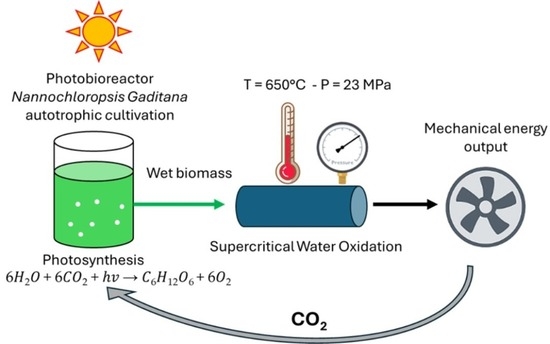
This study presents the first comprehensive investigation of direct supercritical water oxidation (SCWO) of microalgae biomass integrated with photobioreactor oxygen recovery for sustainable energy production. Laboratory-scale experiments were conducted on Nannochloropsis gaditana at optimized conditions (650 °C, 24 MPa, 1 min residence time), achieving extraordinary conversion efficiency of 99.99% at biomass concentrations as low as 0.5 wt%. Process simulation using Aspen Plus demonstrated that this integrated photobioreactor-SCWO system can recover oxygen produced during photosynthesis, reducing compressor energy demands by 10–15% compared to conventional air-fed systems. The coupled system achieved net thermal power outputs of 47–66 kW from a 1 kg/min microalgae feed at 5–10 wt% biomass concentration, corresponding to an overall system thermal efficiency of approximately 18%. CO2 recovery via mono-ethanolamine absorption enabled 70–80% carbon cycle closure, while simultaneous nutrient recycling through the aqueous phase supports sustainable circular economy principles. This coupled photobioreactor-SCWO process represents an efficient pathway for energy recovery from wet microalgae biomass, eliminating the energy-intensive drying requirement (typically 60–70% of conventional processing energy) and achieving complete mineralization of organic compounds. The system demonstrates technical and energetic viability for scaling to pilot demonstration scale.

1. Introduction

Recent policies aimed at tackling Earth’s global warming, as well as at preserving its resources, stimulate the development of new technologies based on renewable energy sources. Microalgae could become one of Earth’s renewable fuels, provided that suitable technologies are developed for efficient use of their energy content. These microorganisms are widely regarded as a key feedstock for third-generation biofuels and bioenergy. Their high photosynthetic efficiency, exceptionally rapid growth rates, often up to an order of magnitude faster than terrestrial plants, and capacity to grow on non-arable land without competing with food production make them a highly promising alternative energy resource [1,2,3]. These microorganisms can be cultivated across variable climates, on marginal non-arable lands, and even in contaminated waters. They possess several distinctive characteristics that make them strong candidates for biofuel production. Many photosynthetic microalgal species exhibit exceptionally high lipid accumulation, with some achieving lipid content exceeding 50% of their dry weight. Their capacity to grow in diverse environments, including wastewater, polluted waters, and low-quality land, provides considerable operational flexibility. Furthermore, recent studies have demonstrated that microalgae can efficiently capture CO2 while simultaneously contributing to wastewater treatment, offering a dual environmental benefit [4,5].
Energy production from microalgae can be achieved through several processing routes, including: (i) biochemical conversion, which produces alcohols through fermentation or methane and hydrogen through anaerobic digestion; (ii) thermochemical conversion, aimed at generating fuel gas via microalgae gasification; (iii) bio-oil production through pyrolysis or hydrothermal liquefaction; (iv) chemical conversion for biodiesel production via lipid transesterification; and (v) direct combustion, used to generate electricity through conventional power-generation cycles [6]. Recent advances have shown that integrated biogas production from both intact algal biomass and lipid-depleted residues can achieve substantial energy recovery, with some processes achieving 98.2% fatty acid methyl ester (FAME) content meeting EU biodiesel standards [7]. In this sense, revolutionary advances in genetic engineering, particularly CRISPR-Cas9 technology, have transformed microalgae biofuel production. Recent developments include CRISPR-modified strains optimized for enhanced lipid yields, with some engineered strains achieving up to 85% reduction in non-productive metabolic pathways. The development of comprehensive genome engineering toolboxes for species like Nannochloropsis oceanica has enabled multiplexed genome editing, targeting three sites simultaneously in a single transformation. These genetic modifications have successfully enhanced lipid accumulation, optimized photosynthetic efficiency, and improved stress tolerance in cyanobacteria and microalgae [8,9]. Despite substantial progress in strain improvement, cultivation strategies, and conversion technologies in recent years, current assessments continue to identify production cost as the primary barrier to commercial deployment. Algal fuels generally remain more expensive than fossil diesel when evaluated without substantial co-product revenues or policy incentives. Representative techno-economic analyses estimate modeled algal biodiesel costs at approximately 2–3 USD per liter for both integrated and standalone production systems, which remains above conventional diesel price benchmarks under recent market conditions [10,11]. The conventional pathway for microalgae energy conversion, involving cultivation, harvesting, drying, and thermochemical conversion, incurs substantial capital and operational costs dominated by the energy-intensive drying step, which typically consumes 60–70% of the total processing energy [12,13]. This economic burden has historically limited the commercial viability of microalgae biofuels. At this moment, in fact, no commercial microalgae-based biofuel production exists at present, but only activity largely confined to pilots, demonstrations, and R&D programs rather than established fuel markets [14].
Microalgae are typically produced as a wet biomass with water contents of up to 99.5%, necessitating substantial improvements in current harvesting, dewatering, and oil-extraction technologies. Processing such wet feedstock, containing between 80% and more than 99% water, requires highly efficient harvesting methods [15,16] and energy-intensive drying prior to thermal conversion, two steps that can consume 30–50% of the total energy input [17,18,19]. In contrast, direct combustion is feasible only for biomasses with moisture contents below 50% [20]. Most common harvesting methods include (quite costly) sedimentation (sometimes eased by an additional flocculation step), centrifugation, and filtration [21]. Dehydration of biomass can be performed by spray-drying, drum-drying, freeze-drying, or sun drying [22]. Because of the high-water content of algal biomass, sun-drying is unsuitable, while spray-drying is economically impractical for low-value products. Consequently, the dilute nature of harvested microalgae significantly increases dewatering costs, further undermining the economic viability of microalgae-based fuels [1]. To mitigate the penalty imposed by high moisture content, hydrothermal liquefaction has been advanced as a wet-processing route that converts algal slurries directly to biocrude and thereby circumvents energy-intensive thermal drying [23,24]. Without entering into the merit of a detailed comparison between different processes, Table 1 reports some of the technologies proposed in recent literature.
In this context, Supercritical Water Gasification (SCWG) could be a plausible technology for microalgae conversion to produce high heating value product gases [33]. Stucki et al. [34] proposed catalytic conversion of spirulina to methane-rich gas, using a ruthenium catalyst. Haiduc et al. [35] proposed a closed-loop system for the production of bio-methane via catalytic hydrothermal gasification of microalgae, where nutrients, water, and CO2 are recycled. Their results show that a significant limitation of catalytic gasification is the need to remove algal biomass heteroatoms prior to gasification, in order to avoid catalyst poisoning. Brown et al. [36] in their study, proposed the liquefaction of microalgae biomass at low temperatures, aimed at producing bio-oil, which was investigated. Guan et al. [37] investigated the gasification of Nannochloropsis sp. at higher temperatures (up to 550 °C) in the absence of catalysts, while Caputo et al. [38] studied continuous mode gasification of Nannochloropsis gaditana at 660 °C, with or without alkali catalysts. Chakinala et al. [39] gasified Chlorella vulgaris in quartz capillaries with or without catalysts to assess the effects of reaction time and temperature. Nurdiawati et al. [40] proposed a novel system that produces H2 from microalgae SCWG, followed by conversion to a liquid organic hydrogen carrier. Another integrated process proposed by Aziz [41] consists of supercritical water gasification SCWG of microalgae, followed by combustion of the produced syngas in a combined cycle for power generation.
Another well-known hydrothermal process is Supercritical Water Oxidation (SCWO) [23]. In SCWO, an oxidant (typically air or pure O2) is introduced to the reaction medium to achieve complete oxidation of dissolved organic matter, converting it to carbon dioxide, water, and inorganic salts [42]. In SCWO, an oxidant (typically air, pure O2, or hydrogen peroxide) is introduced into the reaction medium to achieve complete oxidation of dissolved organic matter. Other product gas is constituted by nitrogen, in case air is employed, and excess O2 [43]. In those conditions, a distinctive advantage of SCWO, compared to conventional combustion, is its low operating temperature (T < 800 °C, typically 600–650 °C), which prevents the formation of nitrogen oxides (NOx) and dioxins that are characteristic byproducts of high-temperature incineration [44,45]. Acid substances such as HCl, H2SO3, and H3PO4 remain dissolved in the liquid water that forms when the supercritical mixture exiting the reactor is cooled down, and therefore do not pollute the remaining effluent gas [23]. Moreover, in these conditions, phosphorus-containing compounds typically precipitate as inorganic phosphates, which can be recovered as solid byproducts [33]. SCWO achieves extraordinary oxidation efficiency, converting organic matter with removal rates of 99.9% or greater, even exceeding 99.99% in some applications [42,46] whilst operating at remarkably short residence times typically ranging from 30 to 180 s. This rapid reaction kinetics is enabled by the elevated temperature and complete homogeneous phase conditions, eliminating mass transfer limitations inherent to multiphase systems [42]. The process is strongly exothermic, and careful heat integration design can recover a substantial fraction of the reaction heat for feed preheating and power generation [47,48]. Recent studies have tested SCWO on diverse high-moisture biomass feedstocks, including sewage biosolids, food processing waste, and agricultural residues, achieving a practically complete mineralization even of the most resistant organic pollutants, such as per- and polyfluoroalkyl substances (PFAS) [49,50]. When oxygen recovery systems are integrated, total treatment costs can be reduced by approximately 18.8% through exploitation of the differential solubility of oxygen and carbon dioxide in high-pressure water [51]. Li et al. in 2024 [52] demonstrate that fractional oxygen injection, auxiliary fuel co-oxidation, and hydrothermal flame-assisted degradation can achieve removal rates exceeding 99% at 550 °C with just 1 min residence time and 100% oxidation coefficient. These characteristics position SCWO as a particularly attractive technology for treating concentrated aqueous organic wastes, including biosolids, industrial wastewater, and hazardous chemical solutions that are otherwise difficult or costly to process by conventional methods.
While the SCWG of microalgae is well-established in the literature, the SCWO of microalgae, by contrast, is substantially less documented in the scientific literature, and applications specifically targeting complete oxidation of microalgae biomass for integrated energy recovery remain largely unexplored in the peer-reviewed literature. In this work, the direct oxidation of microalgae in supercritical water is proposed as a possible route for thermal energy recovery. Lab-scale experiments were performed by changing microalgae concentration in order to demonstrate microalgae SCWO feasibility. On the basis of the encouraging experimental results obtained, a novel, reliable process scheme is proposed that integrates an upstream microalgae photobioreactor with downstream SCWO and energy recovery via a steam turbine. A conceptual design for the new process is proposed, and the SCWO process is simulated by means of AspenPlus® for process development and energetic self-sustainability assessment. The proposed integration of wet-state processing via supercritical water oxidation, combined with photosynthetic oxygen recovery and CO2 recycling, addresses these cost drivers through process intensification and resource closure.

2. Materials and Methods

Microalgae Nannochloropsis Gaditana was purchased in powder form from Algaspring BV. The algae composition provided by the supplier and confirmed by elemental analysis performed by us is reported in Table 2.
The lower heating value of 21.7 MJ/kg was adopted for process simulations. Experiments were carried out by means of the custom-built continuous lab-scale plant shown in Figure 1.
The main components of the process were a pump and compressor, a down-flow reactor, a cooling bath, a back-pressure valve, and a liquid/gas separator. The down-flow reactor consists of a straight tubular pipe made of Inconel 625 with I.D. = 35 mm, L = 520 mm, and V = 500 mL (Separex S.A.S, Champigneulles, France). Heating was provided through large electric band heaters wrapped around the reactor outer wall, and the reactor was insulated in a rock wool chamber. Temperature was measured by means of two thermocouples, one located in the middle of the reactor and the other at the reactor outlet. To obtain the operating pressure (25 MPa), pure water was continuously pumped (diaphragm pump Milton Roy Europe, Pont-Saint-Pierre, France) while regulating the back pressure (back pressure valve, 0.1–414 bar, Pressure-tech, Glossop, England) and heating the system to 650 ± 0.3 °C. Once both temperature and pressure had achieved the desired values, air started being fed to the reactor through a micro metering valve. Air flow rate was measured through a gas flow meter (Bronkhors EL-FLOW Select, Veenendaal, The Nederland) connected to a PC for monitoring its dynamics. The average air flow introduced in the reactor was in excess by 5.0 ± 2.5% with respect to the stoichiometric amount required for oxidation. When pressure and temperature were stabilized, the water fed to the system was replaced by microalgae slurry, while the outlet gas flow rate and composition were monitored at regular time intervals (10 measurements per second). The microalgae slurries at mass concentration in the range 0.057–1 wt% were carefully prepared by weighing the amounts of dry microalgae powder and pure water. Slurry was fed by means of a volumetric pump that sucked from a stirred vessel, agitated by a high-speed impeller that ensured microalgae suspension and slurry homogeneity throughout the vessel. After leaving the reactor, the supercritical water mixture was immediately cooled by means of a cold bath and an air cooler and then expanded to atmospheric pressure into a glass separator through the back pressure valve. The exiting gas flow rate was measured by a gas flow meter, and its composition was monitored by means of an on-line fast-response electronic combustion analyzer (DE.CO.STA S.R.L, detection limits: O2 = 0.1–20.9% volume, CO = 0–4000 ppm, CO2 > 0.1% volume). The flow rate was regulated through a pneumatic needle valve with downstream pressure regulation (Pneumadyne, Inc., Plymouth, MN, USA). Liquid residue was intermittently collected from the separator bottom and analyzed by means of a Total Organic Carbon Analyzer (Shimadzu, Kyoto, Japan, TOC-L CSH/CSN, detection limit: 4 μg/L) and an Agilent (Santa Clara, CA, USA) Cary 60 UV-Vis spectrophotometer (room temperature, 1.5 nm fixed spectral bandwidth). The main parameter monitored was total organic carbon (TOC). The efficiency of the oxidation process was expressed in terms of TOC removal, which is defined by Equation (1).
T O C   r e m o v a l   % = 1 T O C T O C 0   · 100
where TOC0 and TOC (mg/L) are the total carbon concentrations in the feed and effluent streams, respectively.

3. Results

3.1. Experimental Results

As no data on microalgae oxidation were available in the open literature, before simulating the new process scheme, oxidation of microalgae SCWO experiments were performed in the lab-scale reactor, with the aim of verifying oxidation feasibility and assessing the effects of slurry concentration and residence time on TOC conversion. Experiments were performed at different microalgae concentrations, ranging from 0.057 to 1 wt%, and repeated twice. It was not possible to process slurries with higher concentrations due to the onset of flow instabilities, which were caused by the small diameter of the inner section of the tubing. A typical oxidation run lasted 10 h, including heating up the reactor and washing at the end of the experiment. This relatively long run time allowed verifying the reliability of the plant for continuous operation. Residence time was varied in the range 1–5 min by changing the total flow rates (slurry and air) fed to the reactor. Reactor pressure and temperature were set at 25 MPa and 650 °C on the basis of preliminary tests and the literature data [53], showing that under such conditions, SCWO efficiency is already high. Results are summarized in Table 3, where the effects of microalgae concentration and residence time on TOC removal are reported. As can be observed, oxidation is already effective at a microalgae concentration of 0.5 wt%, with a TOC removal efficiency higher than 99.9% at all residence times. Efficiency increases to values exceeding 99.99% when the slurry concentration is 1 wt%. Efficiency increases above 1 min residence time, but the efficiency difference between 3 and 5 min is small. When microalgae concentration is too low, as in the case of 0.057 wt%, oxidation efficiency drastically falls. The reduction in efficiency at low concentrations is likely due to the slowdown of oxidation kinetics due to the lower temperatures within the reactor. In such conditions, a residence time increase from 1 to 5 min only improves efficiency from 94 to 97%. Microalgae concentration at the exit of the photo-bioreactor is thus a limiting factor of the SCWO. SCWO can be effective starting from a microalgae concentration of about 0.5 wt%, which is, however, a value frequently achieved in production plants [15]. For photo-bioreactors working at lower concentrations, direct oxidation is not efficient. In these cases, a mild harvesting step, aimed at increasing the biomass concentration, would be required prior to oxidation.

3.2. Process Simulation Results

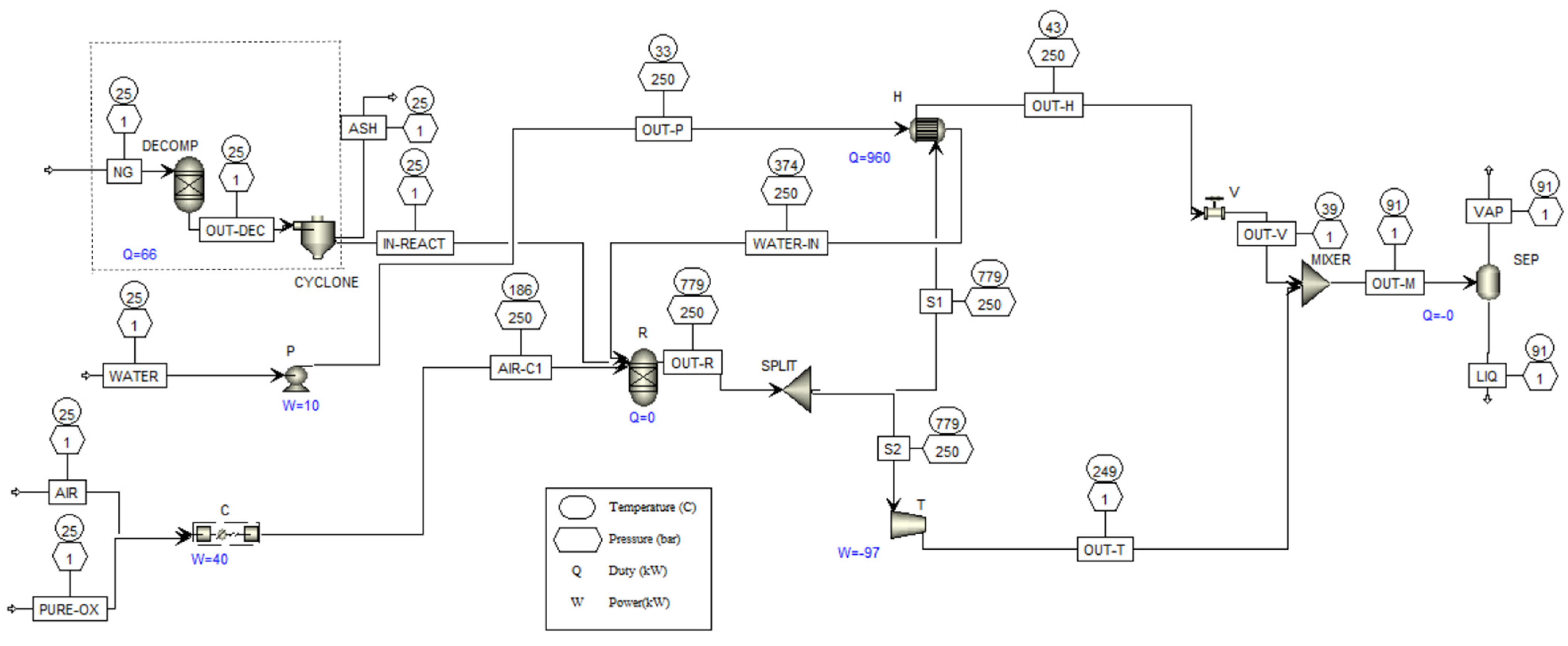
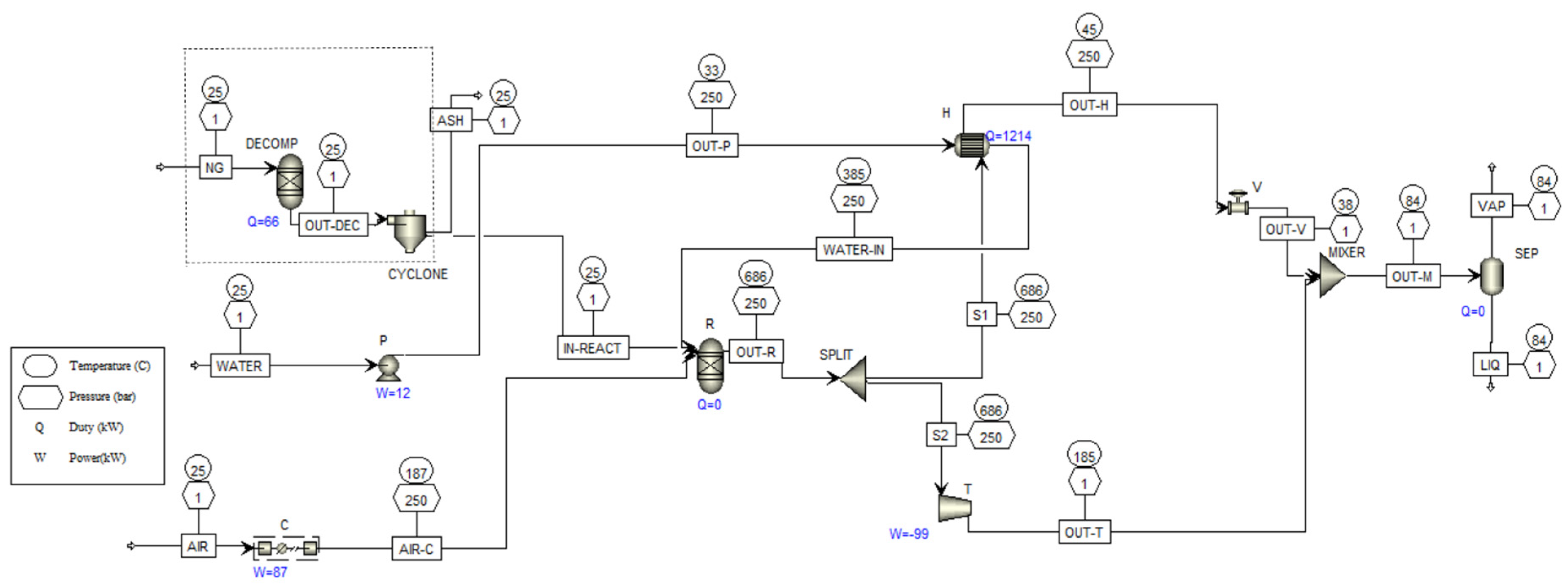
After performing the experimental tests, the oxidation process was simulated by using the commercial software Aspen Plus version 8.8. The Peng-Robinson equation of state was selected for thermodynamics calculations, as it is a proven method in the range of temperatures and pressures of interest here [15]. The feed streams, water, and air were modeled using conventional components, whose thermophysical data are stored in the Aspen Plus database. Other components added to the simulation were all those compounds that we expect to be formed in the combustion reactions. To preliminarily validate the simulation scheme, the first case analyzed involved the supercritical water oxidation (SCWO) of a water stream containing 2 wt% hexane, as previously investigated by Cocero et al. [47]. Their work focused on the energy balance of the process, demonstrating that the excess heat generated during SCWO could be efficiently recovered through turbine integration. The good agreement obtained between our simulation results and those reported by Cocero et al. confirmed the reliability of the developed model and encouraged its application to the treatment of a microalgae suspension as feedstock. The process flow diagram of the simulated system is presented in Figure 2.
The input is made of three streams: a stream (NG) of Nannochloropsis Gaditana of 1 kg/min (dry basis), a stream of pure water (WATER), and a stream of air (AIR), whose flow rate is determined by combustion stoichiometry plus 5% in excess. Nannochloropsis Gaditana stream was modeled using solid non-conventional components that are considered heterogeneous solids. Preliminarily, the biomass flow (NG) passes through a decomposer unit (DECOMP), which is a fictitious unit that has the function to split up the algae into their constituent elements (N2, S, H2, O2, C, Cl2, water, and ash) in order to allow the simulator to manage the oxidation reaction. The physical properties needed to represent these components in terms of a set of identifiable constituents were taken from Sanchez-Silva et al. [54]. After decomposition, the NG stream flows through a CYCLONE, used to separate the ashes (ASH) from the main current (IN-REACT) that will react in the reactor. In this manner, in the simulation, the oxidation reactor operates with clean streams in the absence of solids. It must be pointed out that the decomposer and the associated cyclone are fictitious units that are not present in the real process. For this reason, in Figure 2, these are reported as enclosed in a dotted square. The stream WATER is pumped to an operating pressure of 25 MPa. Then, this aqueous stream passes through a pre-heater to reach a temperature close to 375 °C. Air is compressed to 25 MPa in a multistage compressor (C) with intercooling. Cooling is avoided at the last stage, in order to have a hot air stream at the reactor entrance. A polytropic efficiency of 0.9 and a mechanical efficiency of 0.8 were assumed for the air compressor. The SCWO reactor (R) is an equilibrium reactor modeled on the basis of the minimization of Gibbs free energy. This method has been shown to be reliable by various authors [47,54]. Based on a user-defined list, the reactor block calculates the chemical species that are present at equilibrium for the given temperature and pressure, by minimizing the Gibbs free energy. The first simulation was performed by considering the reactor as being adiabatic and working at a pressure of 25 MPa and a temperature of 686 °C. This last value was chosen considering the experimental results and the literature data and represents an optimal compromise point where (1) outlet gas enthalpy is maximized for efficient steam cycle coupling, (2) organic conversion remains >99.9% (validated by experimental data at 650 °C), and (3) material stress remains within acceptable limits. Reactor outlet (OUT-R), a supercritical mixture made of water and oxidation products (mainly CO2 and N2), is divided into two streams: S1, which accounts for 77% of OUT-R, is sent to the heat recovery section. This is simulated by a heat exchanger (H) that preheats the water stream prior to sending it to the reactor (WATER-IN). The remaining portion (S2) is expanded into a turbine (T) from the pressure of 25 MPa to 0.1 MPa. An isoentropic efficiency of 0.72 and a mechanical efficiency of 0.9 were assumed for the turbine. The OUT-H stream is expanded in a valve from 25 MPa to 0.1 MPa. Once mixed with the output stream coming from the turbine (OUT-T), it is sent to a gas–liquid separator, operated at a pressure of 0.1 MPa and 84 °C. In the simulated flow sheet, the power involved in the various process units is reported (as kW) along with the pressure and temperature conditions of the various streams. Pumping and compression work is considered positive, and the work extracted from the turbine is considered negative. The reactor has zero heat duty because it is considered to be adiabatic. The power required by the DECOMP block is not taken into consideration in the power balance, because it has been inserted in the process scheme only to allow the process simulator to manage the microalgae stream. Net power (Wnet) that can be gained from the process is expressed by:
W n e t =   W p +   W c + W t o t
where Wtot is the total power at the turbine shaft < 0; Wc is the power absorbed by the air compressor > 0; and Wp > 0 is the power absorbed by the water pump > 0.
On the basis of a low heating value (LHV) of 20 MJ/kg of NG, it was found that 4 wt% is the minimum concentration needed to obtain zero net work. Indeed, at this concentration the net power produced by the turbine equals the power required for pumping and compression, according to the balance:
W n e t =   W p +   W c + W t o t = 12 + 87 99 = 0   k W
In Table 4, the operating conditions and the compositions of the simulated streams are reported. According to the simulation results, the gas stream at the exit of the process (VAP) contains mainly CO2, N2, O2, and water. Although the simulator predicts the presence of a small amount of HCl in the gas outlet, it has been experimentally proven that HCl is separated in the liquid [23] and therefore exits with the LIQ stream. In addition, the practical absence of CO in the VAP stream shows that the oxidation reaction should be complete and clean. The outlet stream from the reactor (OUT-R) contains noxious SO2 and SO3, which will be found, after the gas–liquid separation, in the form of acids, which are oxidation products of the reaction. After separation, sulfuric products are, however, obtained in a liquid state in the form of water dissolved acids in the stream LIQ, whereas the gas phase is substantially free from SO2 and SO3.

4. Discussion

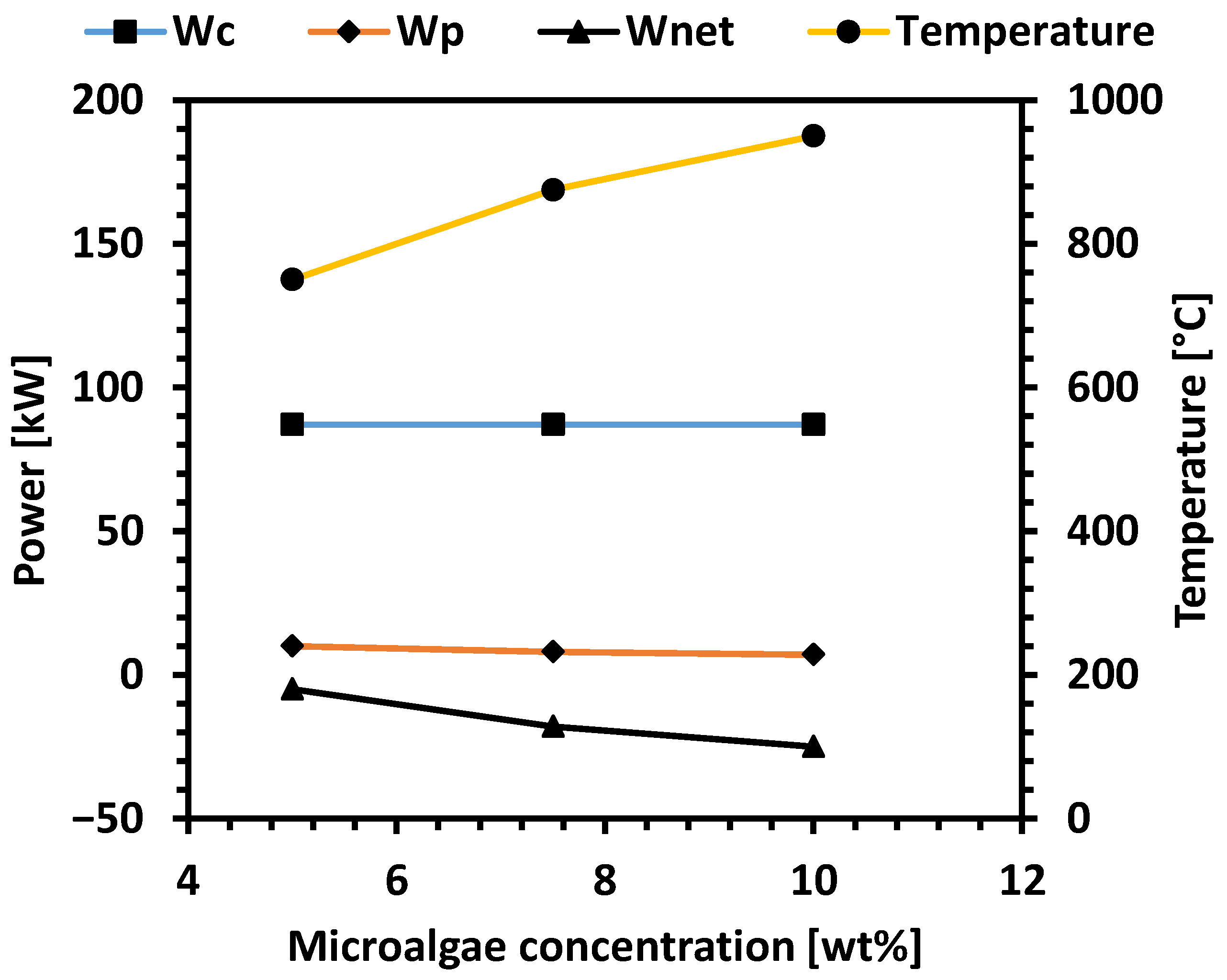
In order to analyze the oxidation process energy balance, simulations were performed for a fixed microalgae flow rate of 1 kg/min (dry basis), by varying the algal biomass concentration in the range 5–10% by weight. In Figure 3, the power associated with the flow sheet of Figure 2 and the net power of the process are reported as a function of algae concentration. As expected, the net power recovered in the process increases its absolute value while increasing algae concentration in the feed stream. Indeed, as the algae concentration increases, higher temperatures of the OUT-R stream are achieved, which leads to a larger power recovery in the turbine.
As reported in Figure 3, temperatures at the turbine entrance increase from 738 to 945 °C. In addition, compression work is constant because the stoichiometric air flow does not change, due to the fixed biomass inlet rate, and moreover, there is a lower energy demand from the pump, as the water flow decreases while increasing algae concentration. It is therefore possible to obtain a net power of 23 kW by processing 1 kg/min microalgae at a concentration of 10 wt%. This concentration should be considered as the highest value for process viability for two reasons: (i) larger slurry concentrations would entail practical difficulties for pumping, and (ii) temperatures higher than 1000 °C would be reached, which are hardly compatible with material resistance and cost. For these reasons, processing microalgae at 10 wt%, seems an optimal choice from an application viewpoint. However, this relatively high microalgae concentration is not achieved in present autotrophic photobioreactors, in which the outlet biomass concentration is typically in the range 0.4–4 wt% [55]. As a consequence, in order to apply the proposed SCWO, a mild harvesting step, aimed at increasing broth culture concentration to 10%, is required. In order to skip the separation of water from microalgae before SCWO, high-cell-density cultures (HCD) operating either in photoautotrophic or heterotrophic conditions could be considered. In fed-batch heterotrophic cultures, the achievable concentration has been proven to reach 10–15 wt%. Fed-batch crops are the most effective techniques to achieve high biomass concentrations in a short time and in a controlled manner. One study on the heterotrophic cultivation of Chlorella vulgaris in aerated fed-batch fermenters in the presence of urea, nitrogen, and glucose as carbon source and energy, reports cell densities up to 11.7 wt% [56]. Although the high microalgae concentrations that can be achieved by cultivation in heterotrophic systems are compatible with direct post-treatment with SCWO in a regime of relatively high-power generation, photoautotrophic reactors offer some features in terms of sustainability and process integration that can be exploited in order to increase the efficiency of SCWO. The main feature of photoautotrophic systems is the production of pure oxygen during the photosynthesis process of biomass. According to the photosynthesis reaction:
6H2O + 6CO2 + h𝑣 → C6H12O6 + 6O2
where six moles of oxygen are generated per mole of biomass, corresponding to nearly 1 kg of oxygen per kilogram of biomass. A practical integration strategy for SCWO involves recovering the oxygen produced in the photobioreactor, thereby supplying a portion of the oxidant needed for microalgae oxidation directly from the photosynthesis process. This approach reduces the energy demand of the compressor, as the volumetric flow rate of gas to be treated is lower than in the baseline air-fed case. Additionally, the reduced nitrogen content in the oxidant stream leads to higher reaction temperatures.
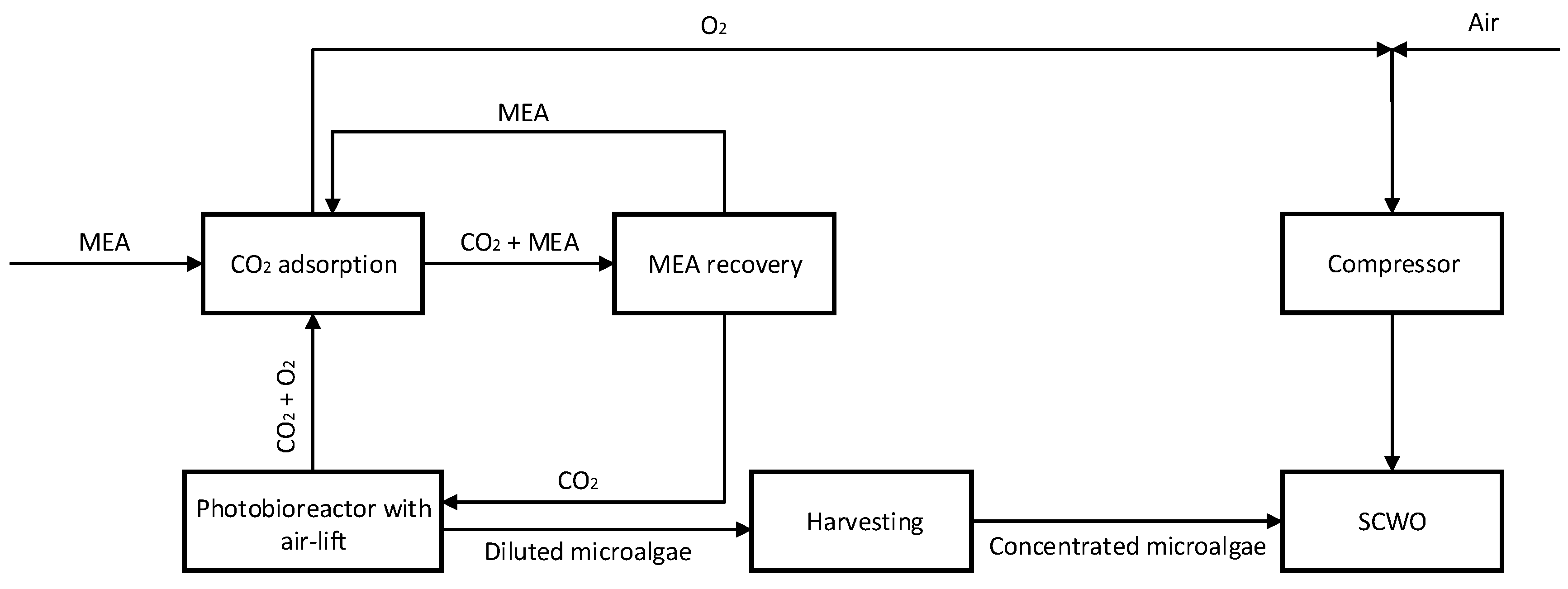
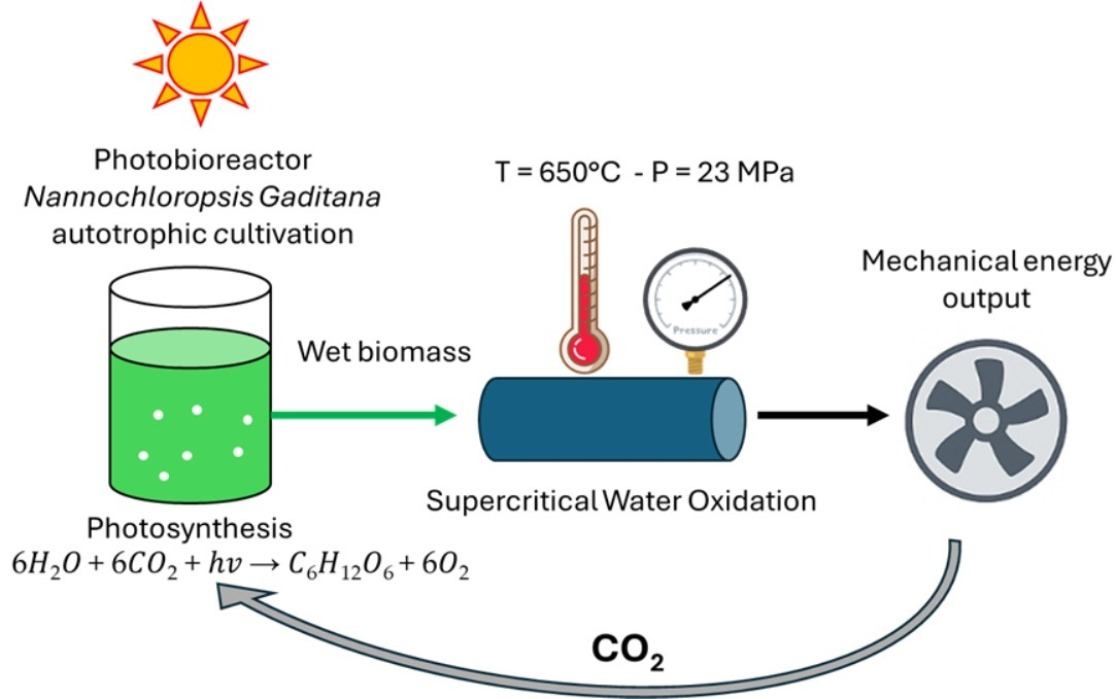
This approach has been implemented in a process configuration that integrates SCWO with a photobioreactor featuring two key innovations compared with conventional microalgae cultivation systems: a top-evacuated air-lift design and a CO2 recovery/recycling section based on a monoethanolamine (MEA) absorption–desorption cycle. The photobioreactor is described in detail by Marotta et al. [57]. The proposed combined SCWO/photobioreactor scheme is represented in Figure 4, where the oxygen produced in the photo-bioreactor has been included in the process along with the CO2 absorption unit and MEA recovery unit. The practical significance of this coupled system lies in the recycling of both energy carriers and nutrient inputs: oxygen recovered from photosynthesis reduces oxidant costs, while CO2 recovered from SCWO oxidation closes the carbon cycle, together minimizing external resource requirements and improving overall system economics. The photobioreactor section may be summarized as follows:
-
External loop air-lift section: In the riser, the liquid stream exiting the photobioreactor ascends together with a CO2 gas flow introduced through an appropriate sparger. Gas–liquid separation occurs in the degasser, after which the gas-free liquid descends through the downcomer and is recirculated to the photobioreactor tubes.
-
CO2 recovery/recycle section: The low-pressure gas stream exiting the air-lift degasser consists primarily of CO2, O2, and water vapor. This stream is introduced at the bottom of a packed absorption tower, while an MEA–water solution is fed from the top. Oxygen passes through the column and is withdrawn at the top using a vacuum pump. The CO2-rich solvent is then directed to solar thermal panels, where it is heated to approximately 100 °C; at this temperature, the absorbed CO2 is released at a pressure adequate for recycling back to the air-lift after cooling. The regenerated hot MEA-H2O solution is subsequently cooled and returned to the CO2 absorption tower.
-
O2-rich stream: an almost pure oxygen stream is recovered at the outlet of the vacuum pump. This oxygen can be considered a valuable co-product of microalgae cultivation, with production rates on the order of 1 kg O2 per kilogram of algal biomass. The purified oxygen stream can then be directed to the compressor for use in the SCWO process.
The production of algal biomass can be described as a series of process units comprising cultivation in which the algal biomass is grown to a dilute concentration of 0.1–0.26 wt% and a series of harvesting and dewatering steps. In our case, primary harvesting, also called thickening, in which the concentration is increased up to 10 wt% is sufficient to reach the goal of our process. A review of various harvesting processes and their energy consumption is presented by Weschler et al. [58]. Tangential flow filtration (TFF) seems capable of reaching the desired concentration of 10 wt% with reasonably low energy consumption. Indeed, as reported by Weschler et al. [58], TFF has a specific consumption of 0.2 KWh/m3. On this basis, we have calculated that reaching a concentration of 10 wt% for a slurry of 3520 kg/h consumes 39.2 MJ/h, which is equal to 3.2% of the heating value of the microalgae treated in one hour. In Figure 5, the new flowsheet adopted for the ASPEN simulation of the SCWO with enriched air is reported. With respect to the previous case, the air flow was decreased by a quantity equal to the oxygen produced by microalgae in the photobioreactor. In this way, the compressor input is divided into two streams: one is made of pure oxygen (1 kg/min produced in the microalgae production process), and one is air. The flow rate is regulated in order to have a 5% O2 excess with respect to stoichiometric requirements. The simulation was performed for the three algae concentrations as in the previous case (5, 7.5, and 10% by weight), in order to assess the net power obtained while increasing biomass concentration.
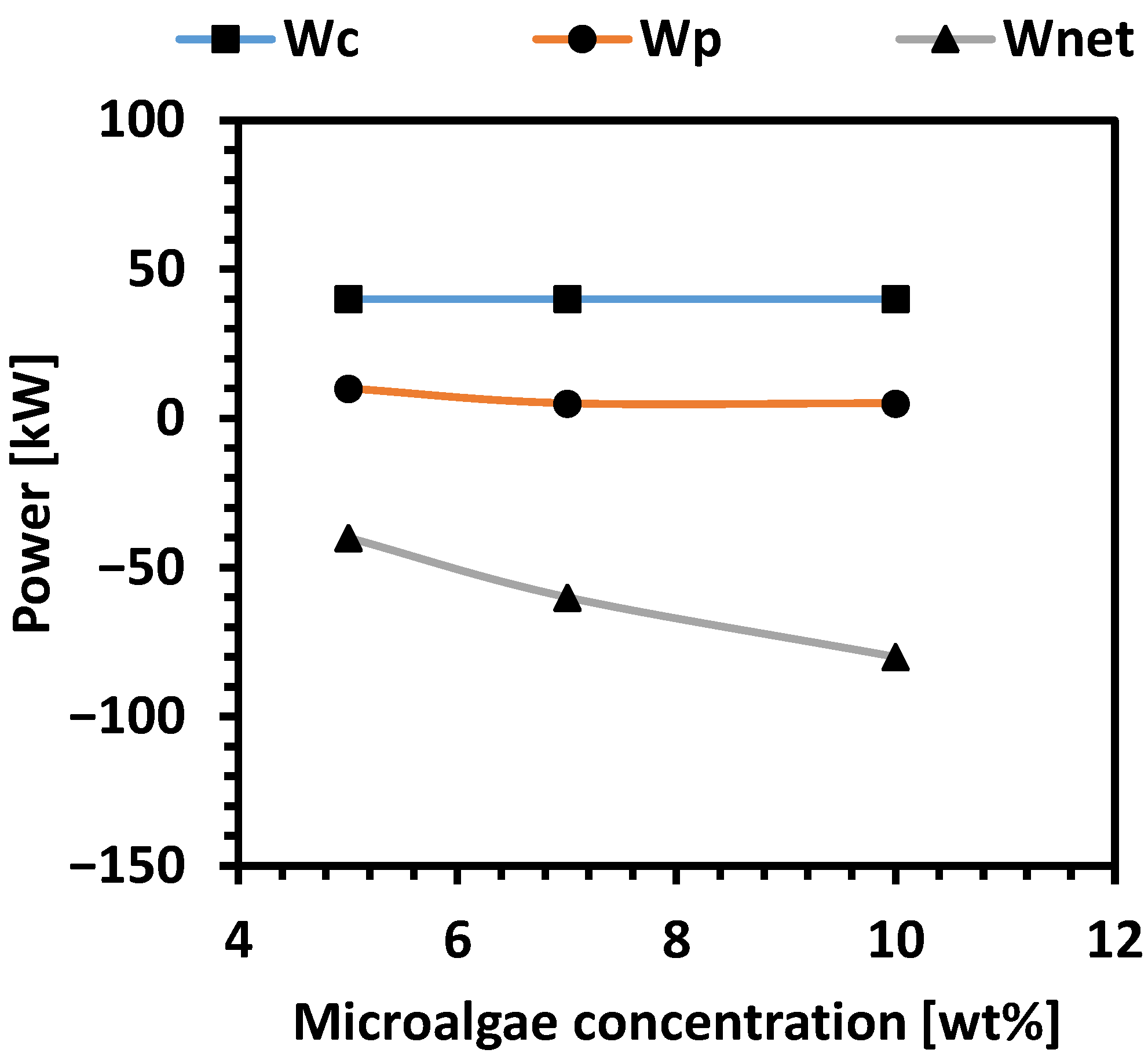
In Figure 6, the power associated with the various process units of the flow sheet in Figure 5 and the total and net power of the process are reported as a function of algae concentration.
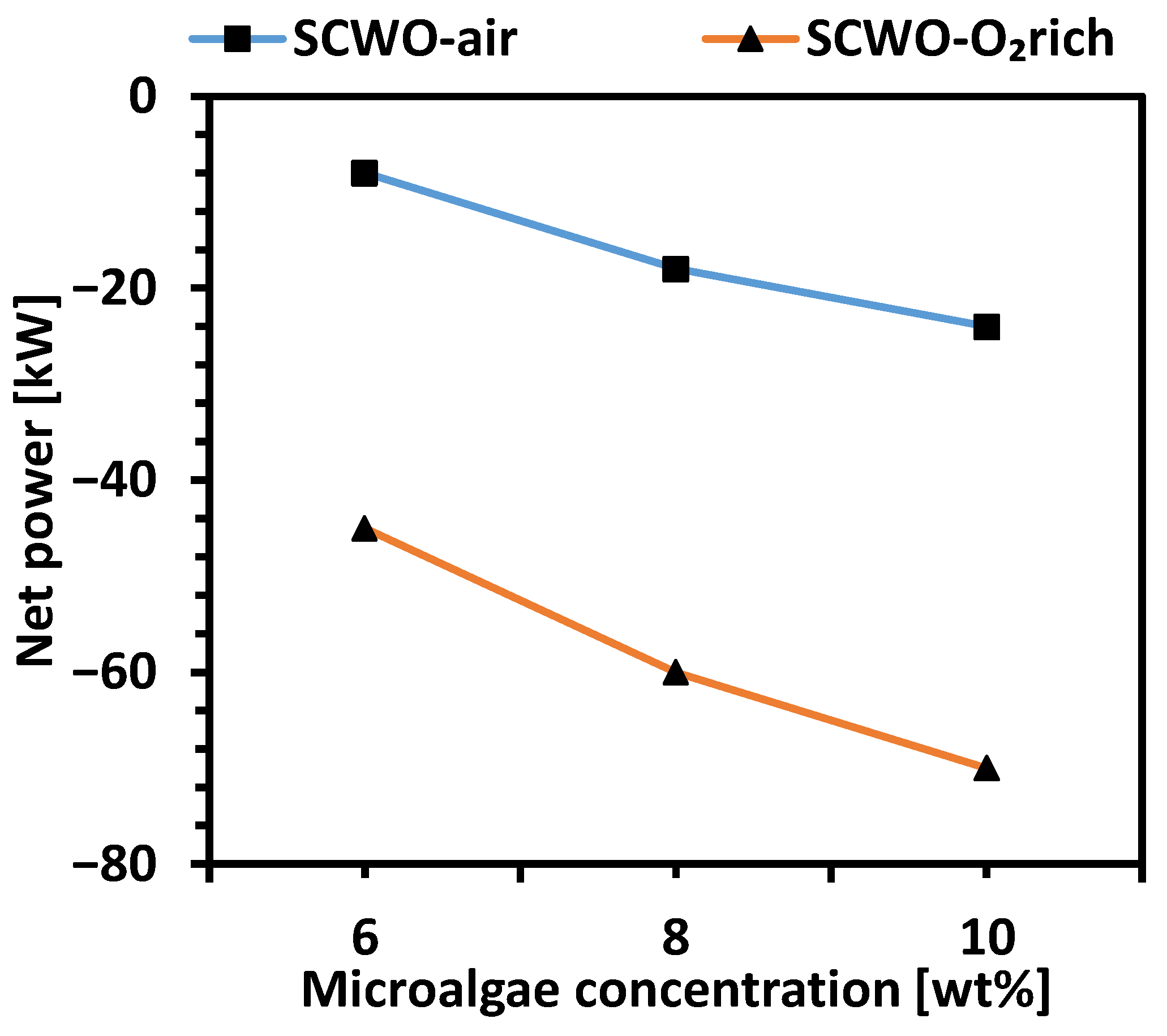
In Figure 7, the power that can be obtained performing algae SCWO with air is plotted together with that obtainable with enriched air. As can be seen, employing enriched air is always advantageous at all algae concentrations, with energy productions ranging from 47 to 66 kW for an NG stream of 1 kg/min. This improvement is due to a decrease in the compression work, which in the second case is only 40 kW versus 87 kW in the first scheme, and to the temperature increase in the OUT-R stream.
Apart from net power, thermal efficiency is another important parameter necessary to evaluate the process. The efficiency of the process has been calculated as the ratio between the power that enters the reactor and the net power obtained at the turbine shaft. Particularly, the net efficiency of the process can be expressed according to the formula:
E f f i c i e n c y   % =   W n e t L H V   · m a s s   f l o w   r a t e   · 100
where
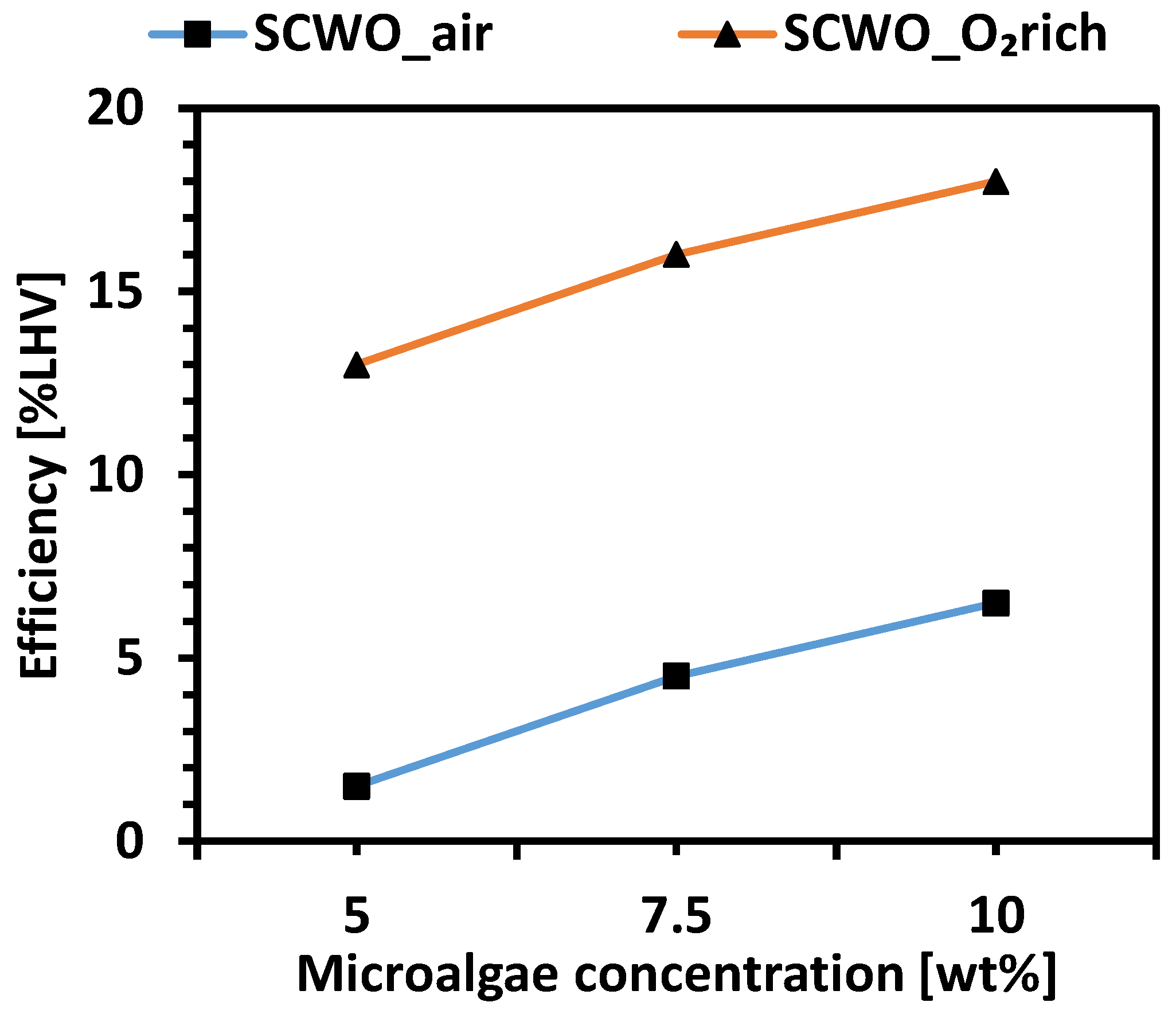
Wnet is the net power, and LHV is the low heating value of NG. Assuming a LHV of 20 MJ/kg and 1 kg/min as the flow rate of microalgae, the power that enters the system is equal to 362 kW at all concentrations, while the efficiency increases as shown in Figure 8, due to the increase in net power.
These efficiency values have been estimated on the basis of the process simulation shown in Figure 4 and do not take into account the energy consumption related to photobioreactor operation. Higher efficiencies could be reached if the operation were carried out at microalgae concentrations higher than 10% by weight. In this case, however, an efficient and reliable pumping method for microalgae slurry would need to be developed.

5. Conclusions

This study introduces, to the best of the author’s knowledge, for the first time, the direct oxidation of microalgae in supercritical water as an efficient pathway for energy recovery. Laboratory tests confirm that complete oxidation of microalgal biomass can be achieved at 650 °C and 25 MPa with a residence time as short as one minute, a regime representing rapid and near-total conversion. Complementary process simulations indicate that integrating a supercritical water oxidation (SCWO) system with an advanced photobioreactor and oxygen recovery loop enables the conversion of microalgal energy to turbine-grade mechanical power at an overall efficiency of approximately 18%. This benchmark is competitive with other renewable energy conversion systems and highlights the technological promise of SCWO for valorizing wet algal biomass while utilizing closed-loop oxygen cycles to enhance sustainability and resource utilization. Recent studies suggest that supercritical water pathways are well-suited for wet feedstocks like microalgae, eliminating costly drying stages and promoting efficient, high-rate energy conversion. A comprehensive techno-economic analysis comparing capital costs, operating expenses, energy integration potential, and lifecycle environmental impacts with conventional microalgae conversion technologies could represent an interesting follow-up study, since the technical foundation provided by this work creates a strong starting point for such economic modeling.

Author Contributions

Conceptualization, G.C. and A.C.; methodology, G.C. and A.C.; software, G.C., A.C. and F.G.; validation, G.C., A.C. and S.L.; formal analysis, A.C., G.C., S.L. and F.G.; investigation, G.C., S.L. and A.C.; resources, G.C.; data curation, F.S. and F.G.; writing—original draft preparation, G.C. and A.C.; writing—review and editing, G.C., A.C. and F.S.; visualization, A.C., S.L. and F.G.; supervision, G.C. and F.S.; project administration, G.C.; funding acquisition, G.C. All authors have read and agreed to the published version of the manuscript.

Funding

The present work was carried out within the framework of the project “SUNGAS”, Regione Siciliana, Azione 1.1.1, Program POC 2014-2020 project n. 082711000423-CUP G98I18000550007 and under the National Recovery and Resilience Plan (NRRP), Mission 4 Component 2 Investment 1.4—Call for tender No. 3138 of 16 December 2021, rectified by Decree n.3175 of 18 December 2021 of Italian Ministry of University and Research funded by the European Union—NextGenerationEU; Award Number: Project code CN_00000033, Concession Decree No. 1034 of 17 June 2022 adopted by the Italian Ministry of University and Research, CUP UNIPA B73C22000790001, Project title “National Biodiversity Future Center—NBFC”.

Data Availability Statement

The original contributions presented in this study are included in the article. Further inquiries can be directed to the corresponding author.

Conflicts of Interest

The authors declare no conflicts of interest.

Abbreviations

The following abbreviations are used in this manuscript:
SCWOSupercritical Water Oxidation
FAMEFatty Acid Methyl Ester
SCWGSupercritical Water Gasification
TOCTotal Organic Carbon
LHVLow Heating Value
HCDHigh Cell Density
MEAMono-Ethanolamine
TFFTangential Flow Filtration

References

  1. Gouveia, L. Microalgae as a Feedstock for Biofuels; Springer: Berlin/Heidelberg, Germany, 2011; ISBN 978-3-642-17996-9. [Google Scholar]
  2. Morillas-España, A.; Pérez-Crespo, R.; Villaró-Cos, S.; Rodríguez-Chikri, L.; Lafarga, T. Integrating Microalgae-Based Wastewater Treatment, Biostimulant Production, and Hydroponic Cultivation: A Sustainable Approach to Water Management and Crop Production. Front. Bioeng. Biotechnol. 2024, 12, 1364490. [Google Scholar] [CrossRef]
  3. Lutzu, G.A.; Usai, L.; Ciurli, A.; Chiellini, C.; Di Caprio, F.; Pagnanelli, F.; Parsaeimehr, A.; Malina, I.; Malins, K.; Cosenza, B.; et al. Bio-Jet Fuels from Photosynthetic Microorganisms: A Focus on Downstream Processes. Biomass Bioenergy 2025, 201, 107833. [Google Scholar] [CrossRef]
  4. Khan, S.; Das, P.; Abdul Quadir, M.; Thaher, M.I.; Mahata, C.; Sayadi, S.; Al-Jabri, H. Microalgal Feedstock for Biofuel Production: Recent Advances, Challenges, and Future Perspective. Fermentation 2023, 9, 281. [Google Scholar] [CrossRef]
  5. Moioli, E.; Schildhauer, T. Negative CO2 Emissions from Flexible Biofuel Synthesis: Concepts, Potentials, Technologies. Renew. Sustain. Energy Rev. 2022, 158, 112120. [Google Scholar] [CrossRef]
  6. Stephy, G.M.; Surendarnath, S.; Flora, G.; Amesho, K.T.T. Microalgae for Sustainable Biofuel Generation: Innovations, Bottlenecks, and Future Directions. Environ. Qual. Manag. 2025, 34, e70019. [Google Scholar] [CrossRef]
  7. Zheng, Q.; Ning, R.; Zhang, M.; Deng, X. Biofuel Production as a Promising Way to Utilize Microalgae Biomass Derived from Wastewater: Progress, Technical Barriers, and Potential Solutions. Front. Bioeng. Biotechnol. 2023, 11, 1250407. [Google Scholar] [CrossRef]
  8. Dhokane, D.; Shaikh, A.; Yadav, A.; Giri, N.; Bandyopadhyay, A.; Dasgupta, S.; Bhadra, B. CRISPR-Based Bioengineering in Microalgae for Production of Industrially Important Biomolecules. Front. Bioeng. Biotechnol. 2023, 11, 1267826. [Google Scholar] [CrossRef]
  9. Naduthodi, M.I.S.; Südfeld, C.; Avitzigiannis, E.K.; Trevisan, N.; van Lith, E.; Alcaide Sancho, J.; D’Adamo, S.; Barbosa, M.; van der Oost, J. Comprehensive Genome Engineering Toolbox for Microalgae Nannochloropsis Oceanica Based on CRISPR-Cas Systems. ACS Synth. Biol. 2021, 10, 3369–3378. [Google Scholar] [CrossRef]
  10. Sharma, A.K.; Jaryal, S.; Sharma, S.; Dhyani, A.; Tewari, B.S.; Mahato, N. Biofuels from Microalgae: A Review on Microalgae Cultivation, Biodiesel Production Techniques and Storage Stability. Processes 2025, 13, 488. [Google Scholar] [CrossRef]
  11. Chakraborty, S.; Dunford, N.T. Algae: Nature’s Renewable Resource for Fuels and Chemicals. Biomass 2024, 4, 329–348. [Google Scholar] [CrossRef]
  12. Derakhshandeh, M. Microalgae as a Source for Bioenergy: A Search for an Energy-Efficient Process. Bioenergy Res. 2023, 16, 1065–1072. [Google Scholar] [CrossRef]
  13. Martinez-Guerra, E.; Gnaneswar Gude, V. Energy Aspects of Microalgal Biodiesel Production. AIMS Energy 2016, 4, 347–362. [Google Scholar] [CrossRef]
  14. Falfushynska, H. Advancements and Prospects in Algal Biofuel Production: A Comprehensive Review. Phycology 2024, 4, 548–575. [Google Scholar] [CrossRef]
  15. Molina Grima, E.; Belarbi, E.-H.; Acién Fernández, F.G.; Robles Medina, A.; Chisti, Y. Recovery of Microalgal Biomass and Metabolites: Process Options and Economics. Biotechnol. Adv. 2003, 20, 491–515. [Google Scholar] [CrossRef]
  16. Jeevanandam, J.; Harun, M.R.; Lau, S.Y.; Sewu, D.D.; Danquah, M.K. Microalgal Biomass Generation via Electroflotation: A Cost-Effective Dewatering Technology. Appl. Sci. 2020, 10, 1–24. [Google Scholar] [CrossRef]
  17. Qian, L.; Wang, S.; Wang, S.; Zhao, S.; Zhang, B. Supercritical Water Gasification and Partial Oxidation of Municipal Sewage Sludge: An Experimental and Thermodynamic Study. Int. J. Hydrogen Energy 2021, 46, 89–99. [Google Scholar] [CrossRef]
  18. Zhang, D.; Niu, Q.; Ma, L.; Derese, S.; Verliefde, A.; Ronsse, F. Complete Oxidation of Organic Waste under Mild Supercritical Water Oxidation by Combining Effluent Recirculation and Membrane Filtration. Sci. Total Environ. 2020, 736, 139731. [Google Scholar] [CrossRef]
  19. Hosseinizand, H.; Lim, C.J.; Webb, E.; Sokhansanj, S. Economic Analysis of Drying Microalgae Chlorella in a Conveyor Belt Dryer with Recycled Heat from a Power Plant. Appl. Therm. Eng. 2017, 124, 525–532. [Google Scholar] [CrossRef]
  20. Wang, B.; Li, Y.; Wu, N.; Lan, C.Q. CO2 Bio-Mitigation Using Microalgae. Appl. Microbiol. Biotechnol. 2008, 79, 707–718. [Google Scholar] [CrossRef] [PubMed]
  21. Cosenza, A.; Lima, S.; Gurreri, L.; Mancini, G.; Scargiali, F. Microalgae in the Mediterranean Area: A Geographical Survey Outlining the Diversity and Technological Potential. Algal. Res. 2024, 82, 103669. [Google Scholar] [CrossRef]
  22. Handbook of Microalgal Culture; Richmond, A., Ed.; Wiley: Hoboken, NJ, USA, 2003; ISBN 9780632059539. [Google Scholar]
  23. Brunner, G. Near Critical and Supercritical Water. Part I. Hydrolytic and Hydrothermal Processes. J. Supercrit. Fluids 2009, 47, 373–381. [Google Scholar] [CrossRef]
  24. Kelechi, F.M.; Aribisala, A.A. Thermochemical Conversion of Microalgae: Challenges and Prospective of HTL Pathway for Algae Biorefinery. In Proceedings of the SPE Nigeria Annual International Conference and Exhibition, Lagos, Nigeria, 3–5 August 2024. [Google Scholar]
  25. Bagchi, S.K.; Patnaik, R.; Prasad, R. Feasibility of Utilizing Wastewaters for Large-Scale Microalgal Cultivation and Biofuel Productions Using Hydrothermal Liquefaction Technique: A Comprehensive Review. Front. Bioeng. Biotechnol. 2021, 9, 651138. [Google Scholar] [CrossRef]
  26. Cheng, F.; Cui, Z.; Mallick, K.; Nirmalakhandan, N.; Brewer, C.E. Hydrothermal Liquefaction of High- and Low-Lipid Algae: Mass and Energy Balances. Bioresour. Technol. 2018, 258, 158–167. [Google Scholar] [CrossRef] [PubMed]
  27. Chen, P.H.; Quinn, J.C. Microalgae to Biofuels through Hydrothermal Liquefaction: Open-Source Techno-Economic Analysis and Life Cycle Assessment. Appl. Energy 2021, 289, 116613. [Google Scholar] [CrossRef]
  28. Hasan, M.M.; Mofijur, M.; Uddin, M.N.; Kabir, Z.; Badruddin, I.A.; Khan, T.M.Y. Insights into Anaerobic Digestion of Microalgal Biomass for Enhanced Energy Recovery. Front. Energy Res. 2024, 12, 1355686. [Google Scholar] [CrossRef]
  29. Magdalena, J.A.; Ballesteros, M.; González-Fernandez, C. Efficient Anaerobic Digestion of Microalgae Biomass: Proteins as a Key Macromolecule. Molecules 2018, 23, 1098. [Google Scholar] [CrossRef]
  30. Murphy, J.D.; Drosg, B.; Allen, E.; Jerney, J.; Xia, A.; Herrmann, C. A Perspective on Algal Biogas; IEA Bioenergy: Paris, France, 2015; ISBN 9781910154182. [Google Scholar]
  31. Xu, J.; Zhao, F.; Su, X. Direct Extraction of Lipids from Wet Microalgae Slurries by Super-High Hydrostatic Pressure. Algal. Res. 2021, 58, 102412. [Google Scholar] [CrossRef]
  32. Azizi, K.; Keshavarz Moraveji, M.; Abedini Najafabadi, H. A Review on Bio-Fuel Production from Microalgal Biomass by Using Pyrolysis Method. Renew. Sustain. Energy Rev. 2018, 82, 3046–3059. [Google Scholar] [CrossRef]
  33. Heeley, K.; Orozco, R.L.; Macaskie, L.E.; Love, J.; Al-Duri, B. Supercritical Water Gasification of Microalgal Biomass for Hydrogen Production—A Review. Int. J. Hydrogen Energy 2024, 49, 310–336. [Google Scholar] [CrossRef]
  34. Stucki, S.; Vogel, F.; Ludwig, C.; Haiduc, A.G.; Brandenberger, M. Catalytic Gasification of Algae in Supercritical Water for Biofuel Production and Carbon Capture. Energy Environ. Sci. 2009, 2, 535. [Google Scholar] [CrossRef]
  35. Haiduc, A.G.; Brandenberger, M.; Suquet, S.; Vogel, F.; Bernier-Latmani, R.; Ludwig, C. SunCHem: An Integrated Process for the Hydrothermal Production of Methane from Microalgae and CO2 Mitigation. J. Appl. Phycol. 2009, 21, 529–541. [Google Scholar] [CrossRef]
  36. Brown, T.M.; Duan, P.; Savage, P.E. Hydrothermal Liquefaction and Gasification of Nannochloropsis sp. Energy Fuels 2010, 24, 3639–3646. [Google Scholar] [CrossRef]
  37. Guan, Q.; Savage, P.E.; Wei, C. Gasification of Alga Nannochloropsis sp. in Supercritical Water. J. Supercrit. Fluids 2012, 61, 139–145. [Google Scholar] [CrossRef]
  38. Caputo, G.; Dispenza, M.; Rubio, P.; Scargiali, F.; Marotta, G.; Brucato, A. Supercritical Water Gasification of Microalgae and Their Constituents in a Continuous Reactor. J. Supercrit. Fluids 2016, 118, 163–170. [Google Scholar] [CrossRef]
  39. Chakinala, A.G.; Brilman, D.W.F. (Wim); van Swaaij, W.P.M.; Kersten, S.R.A. Catalytic and Non-Catalytic Supercritical Water Gasification of Microalgae and Glycerol. Ind. Eng. Chem. Res. 2010, 49, 1113–1122. [Google Scholar] [CrossRef]
  40. Nurdiawati, A.; Zaini, I.N.; Irhamna, A.R.; Sasongko, D.; Aziz, M. Novel Configuration of Supercritical Water Gasification and Chemical Looping for Highly-Efficient Hydrogen Production from Microalgae. Renew. Sustain. Energy Rev. 2019, 112, 369–381. [Google Scholar] [CrossRef]
  41. Aziz, M. Integrated Supercritical Water Gasification and a Combined Cycle for Microalgal Utilization. Energy Convers. Manag. 2015, 91, 140–148. [Google Scholar] [CrossRef]
  42. Adar, E.; Ince, M.; Bilgili, M.S. Evaluation of Development in Supercritical Water Oxidation Technology. Desalination Water Treat 2019, 161, 243–253. [Google Scholar] [CrossRef]
  43. Bermejo, M.D.; Cocero, M.J. Destruction of an Industrial Wastewater by Supercritical Water Oxidation in a Transpiring Wall Reactor. J. Hazard. Mater. 2006, 137, 965–971. [Google Scholar] [CrossRef]
  44. Killilea, W.R.; Swallow, K.C.; Hong, G.T. The Fate of Nitrogen in Supercritical-Water Oxidation. J. Supercrit. Fluids 1992, 5, 72–78. [Google Scholar] [CrossRef]
  45. Stanmore, B.R. The Formation of Dioxins in Combustion Systems. Combust. Flame 2004, 136, 398–427. [Google Scholar] [CrossRef]
  46. Affolter, J.; Brunner, T.; Hagger, N.; Vogel, F. A Prototype System for the Hydrothermal Oxidation of Feces. Water Res. X 2022, 17, 100160. [Google Scholar] [CrossRef]
  47. Cocero, M.J.; Alonso, E.; Sanz, M.T.; Fdz-Polanco, F. Supercritical Water Oxidation Process under Energetically Self-Sufficient Operation. J. Supercrit. Fluids 2002, 24, 37–46. [Google Scholar] [CrossRef]
  48. García-Rodríguez, Y.; Mato, F.A.; Martín, A.; Bermejo, M.D.; Cocero, M.J. Energy Recovery from Effluents of Supercritical Water Oxidation Reactors. J. Supercrit. Fluids 2015, 104, 1–9. [Google Scholar] [CrossRef]
  49. Tshangana, C.S.; Nhlengethwa, S.T.; Glass, S.; Denison, S.; Kuvarega, A.T.; Nkambule, T.T.I.; Mamba, B.B.; Alvarez, P.J.J.; Muleja, A.A. Technology Status to Treat PFAS-Contaminated Water and Limiting Factors for Their Effective Full-Scale Application. NPJ Clean Water 2025, 8, 41. [Google Scholar] [CrossRef]
  50. Krause, M.J.; Thoma, E.; Sahle-Damesessie, E.; Crone, B.; Whitehill, A.; Shields, E.; Gullett, B. Supercritical Water Oxidation as an Innovative Technology for PFAS Destruction. J. Environ. Eng. 2022, 148, 05021006. [Google Scholar] [CrossRef] [PubMed]
  51. Zhang, F.; Chen, J.; Su, C.; Ma, C. Energy Consumption and Economic Analyses of a Supercritical Water Oxidation System with Oxygen Recovery. Processes 2018, 6, 224. [Google Scholar] [CrossRef]
  52. Li, Y.; Duan, Y.; Wang, S.; Zhang, F.; Li, J.; Dai, Z.; Li, Z.; Zhang, Y.; Wang, Y. Supercritical Water Oxidation for the Treatment and Utilization of Organic Wastes: Factor Effects, Reaction Enhancement, and Novel Process. Environ. Res. 2024, 251, 118571. [Google Scholar] [CrossRef]
  53. Bermejo, M.D.; Cocero, M.J. Supercritical Water Oxidation: A Technical Review. AIChE J. 2006, 52, 3933–3951. [Google Scholar] [CrossRef]
  54. Sanchez-Silva, L.; López-González, D.; Garcia-Minguillan, A.M.; Valverde, J.L. Pyrolysis, Combustion and Gasification Characteristics of Nannochloropsis Gaditana Microalgae. Bioresour. Technol. 2013, 130, 321–331. [Google Scholar] [CrossRef]
  55. McKendry, P. Energy Production from Biomass (Part 2): Conversion Technologies. Bioresour. Technol. 2002, 83, 47–54. [Google Scholar] [CrossRef] [PubMed]
  56. Varfolomeev, S.D.; Wasserman, L.A. Microalgae as Source of Biofuel, Food, Fodder, and Medicines. Appl. Biochem. Microbiol. 2011, 47, 789–807. [Google Scholar] [CrossRef]
  57. Marotta, G.; Scargiali, F.; Lima, S.; Caputo, G.; Grisafi, F.; Brucato, A. Vacuum Air-Lift Bioreactor for Microalgae Production. Chem. Eng. Trans. 2017, 57, 925–930. [Google Scholar] [CrossRef]
  58. Weschler, M.K.; Barr, W.J.; Harper, W.F.; Landis, A.E. Process Energy Comparison for the Production and Harvesting of Algal Biomass as a Biofuel Feedstock. Bioresour. Technol. 2014, 153, 108–115. [Google Scholar] [CrossRef]
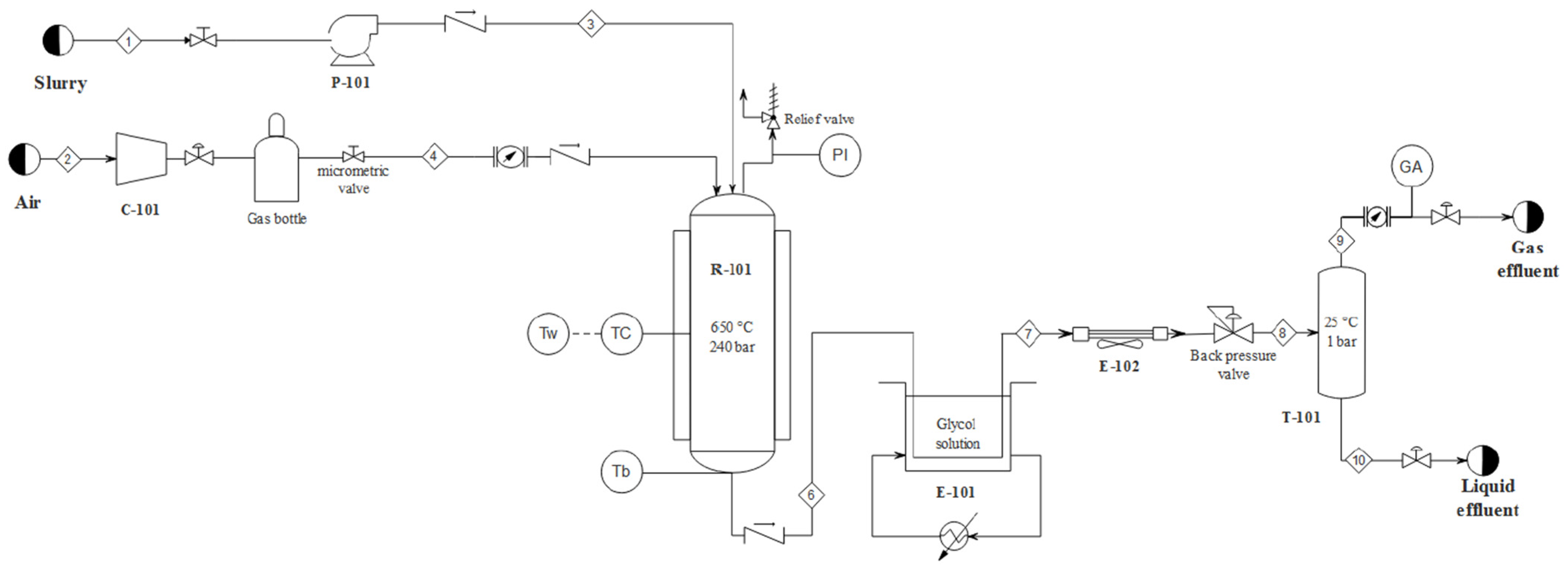
Figure 1. Schematic illustration of a lab-scale supercritical water oxidation system. C-101 = air compressor, P-101 = slurry membrane pump, R-101 = SCWO reactor, E-101 = cooling bath, E-102 = air cooler, T-101 = gas/liquid separator.
Processes 13 03860 g001
Figure 2. Flowsheet of the simulated SCWO plant for the treatment of 4 wt% Nannochloropsis Gaditana suspension.
Processes 13 03860 g002
Figure 3. Power and maximum temperature obtained in the simulation of the NG SCWO as a function of feed stream microalgae concentration. NG flow rate = 1 kg/min. Wc = air compression power; Wp = water pumping power; Wnet = net power of the process.
Processes 13 03860 g003
Figure 4. Schematic representation of the combined photobioreactor/SCWO process for the direct oxidation of microalgae with oxygen produced by photosynthesis.
Processes 13 03860 g004
Figure 5. Flowsheet of SCWO enriched air with O2 partly produced by microalgae. Base case with 5 wt% NG concentration and dry biomass flow rate of 1 kg/min.
Processes 13 03860 g005
Figure 6. Power that can be obtained by SCWO, fed with air enriched by a photobioreactor produced O2, of NG at various concentrations. NG flow rate = 1 kg/min. Wc = air compression power; Wp = water pumping power; Wnet = net power of the process.
Processes 13 03860 g006
Figure 7. Net power that can be obtained by performing SCWO of NG at various concentrations with air or air enriched with O2 produced by photosynthesis. NG flow rate = 1 kg/min.
Processes 13 03860 g007
Figure 8. Efficiency of the SCWO process as a function of microalgae concentration in the feed. NG flow rate = 1 kg/min. The base case with air and with enriched air are represented.
Processes 13 03860 g008
Table 1. Comparison between proposed technologies for the energy conversion of microalgae biomass.
TechnologyOperating
Conditions
EfficiencyAdvantagesDisadvantagesRef.
Hydrothermal Liquefaction (HTL)280–350 °C, 10–20 MPaVariable
(35–60% with energy recovery)
Low temperature, low corrosion, handles wet biomassLower conversion rates, produces aqueous byproducts, and complex downstream processing[25,26,27]
Anaerobic
Digestion (AD)
35–40 °C,
ambient pressure
~25–35%
(Biogas
efficiency)
Low temperature, simple technology, biosolids recoverySlow kinetics (30–60 days retention), lower energy density output, and methane emissions[28,29,30]
Lipid
Extraction
+ Biodiesel
25–100 °C,
ambient pressure
~25–35%
(Biodiesel
efficiency)
Established technology, food-grade glycerol byproductRequires drying (68% of energy cost), low lipid content in many species, and only works for lipid-rich strains[31]
Direct
Combustion
850–1000 °C,
ambient pressure
~30%
(Thermal
efficiency)
Simple technology, immediate energy recoveryHigh moisture content (70–90%), low energy density requiring drying, and dust generation[32]
Classic
Gasification
700–900 °C,
ambient pressure
~35–40%
(Syngas
efficiency)
Produces syngas for flexible use, with lower drying requirementsIncomplete conversion, tar formation, and complex gas cleanup systems[32]
Table 2. Nannochloropsis Gaditana main characteristics and composition.
Main Characteristics
Dry mass, wt%95
Key componentC9H16NO4
Cells average diameter2–3 μm (sphere shaped)
Lower heating value, LHV [MJ/kg]20
Composition, wt%
Proteins38
Lipids32
Carbohydrates12
Ash 114
1 Obtained by elemental analysis. Ashes are made of K, Ca, P, Fe, Mg, Na, Zn, and S.
Table 3. Microalgae supercritical water oxidation results at 25 MPa and 650 °C.
Microalgae Slurry
Concentration
Residence Time [min]Slurry Flow Rate [mL/min]Air Flow Rate [g/min]TOC
Removal, %
wt%TOC [mg/L]
1.0463356.10.4899.996 ± 0.083
1.04633310.20.8099.995 ± 0.083
1.04633130.72.4099.990 ± 0.061
0.5231656.30.2599.982 ± 0.087
0.52316310.50.4199.986 ± 0.087
0.52316131.51.2499.955 ± 0.061
0.05726456.50.0397.100 ± 0.042
0.057264310.80.0595.500 ± 0.041
0.057264132.40.1594.400 ± 0.038
Table 4. Operating conditions and stream compositions of the SCWO of NG at 4 wt%, simulated according to the scheme reported in Figure 2.
NGAIR-CWATER-INOUT-DECIN-REACTOUT-RS1S2OUT-MVAPLIQ
Mass Flow (kg/min)16.3323.4710.9330.7323.766.9830.7311.1419.59
Mass Enthalpy (kW)11817497652−51501038731137633412405094
N2 (kg/min)04.8500.060.064.913.791.124.914.900.01
WATER (kg/min)0023.470.20.224.218.715.4924.24.6519.50
O2 (kg/min)01.4700.190.190.130.10.030.130.130
S (kg/min)0000.010.01000000
H2 (kg/min)0000.060.06000000
Cl2 (kg/min)0000.020.02000000
HCl (kg/min)0000.030.020.010.020.010.030.030
CO2 (kg/min)000001.451.120.331.451.430.02
Sulf. Acid (kg/min)0000.010.010.010.0100.0100.01
ASH (kg/min)0000.070000000
Mass vapor fraction-100.350.381110.3610
Mass solid fraction1000.460.42000000
T (°C)25187.3385252568668668668683.683.6
P (bar)12502501125025025025011
Disclaimer/Publisher’s Note: The statements, opinions and data contained in all publications are solely those of the individual author(s) and contributor(s) and not of MDPI and/or the editor(s). MDPI and/or the editor(s) disclaim responsibility for any injury to people or property resulting from any ideas, methods, instructions or products referred to in the content.