


Abstract
Wave soldering is a technological process that allows for the simultaneous soldering of multiple locations on the same circuit board. Its major defects, such as tin bridging and insufficient tin filling, continue to challenge manufacturers, resulting in increased rework, labor, and operational costs. Therefore, reducing errors in wave soldering is crucial to ensure the best quality for customers and achieve cost savings for the company. This study aims to enhance wave soldering performance by using an integrated approach that combines Teoriya Resheniya Izobreatatelskikh Zadatch (TRIZ) and Design of Experiment (DOE) for empirical improvement in an Original Equipment Manufacturer (OEM) factory, a subsidiary of a global OEM company. The results are sound: we eliminated tin till bridge defects by 88%, achieved a 33% reduction in manpower, and increased production volumes by 6%. This proposed framework can be utilized in other electronics manufacturing factories and related industries.
1. Introduction
The global electrical and electronics market is projected to grow from USD 3.95 trillion in 2024 to USD 4.26 trillion in 2025 at a CAGR of 7.9%, and to reach USD 5.58 trillion by 2029, driven by IoT, AI, and smart manufacturing innovations [1].
This rapid expansion places increasing pressure on manufacturers to ensure high-reliability and defect-free assembly processes. Among these, wave soldering remains one of the most critical yet defect-prone stages in electronic assembly, where defects such as tin bridging and insufficient solder filling can compromise product reliability, increase rework, and raise operational costs.
Although the microelectronics industry has widely adopted surface-mount technology (SMT), through-hole technology (THT) continues to play an essential role in products that demand high current capacity and mechanical strength. In such assemblies, wave soldering remains indispensable for ensuring reliable connections in power-related and hybrid boards. However, process optimization in wave soldering is complex, as multiple interdependent parameters—such as conveyor speed, solder temperature, flux flow, and preheating conditions—must be balanced simultaneously under real production constraints.
Conventional Design of Experiment (DOE) methods effectively identify factor effects and statistical significance, but mainly focus on parameter tuning within fixed boundaries. They are limited in addressing multi-objective conflicts or interdependent process contradictions in complex systems [2]. In contrast, TRIZ provides a structured approach for resolving technical contradictions. Integrating TRIZ with DOE enables a systematic innovation-to-validation framework that combines inventive problem-solving with empirical verification [3]. This study addresses the lack of a unified methodological framework that systematically links TRIZ-driven contradiction resolution with DOE-based empirical optimization under actual production constraints.
A case implementation was carried out in a globally leading OEM/EMS enterprise, which serves as a benchmark manufacturer in electronic assembly with diverse product lines and high production volume. The company’s extensive use of wave soldering in power-related and communication devices makes it an appropriate and representative environment for empirical validation. However, prior studies combining TRIZ and DOE have predominantly focused on design optimization or surface-mount assembly, with limited empirical validation in complex through-hole (THT) wave soldering processes where multiple heat–mass transfer parameters interact under production constraints.
The results demonstrate substantial reductions in defect rates and improvements in process stability, confirming that the proposed TRIZ–DOE framework is not limited to a single operational setting, but can serve as a transferable and generalizable optimization model for electronics manufacturing and other process-intensive industries.
2. Literature Review
2.1. The Role of Technology in Enhancing Production Efficiency
The manufacturing process of electronic circuits is crucial to modern industry, as it is essential for producing a range of products, from machinery to food processing. Industry 4.0 advancements have improved efficiency by replacing large, suboptimal equipment with smaller, more efficient circuit boards. However, issues such as slow production, poor quality, and increased costs due to mechanical, human, and external factors persist, resulting in products that fail to meet customer requirements. The TRIZ tool helps companies identify and resolve these issues quickly. Additionally, Design of Experiments (DOE) is vital in R&D for process definition, optimization, and product improvement, reducing development time and costs while enhancing productivity and quality. While TRIZ focuses on resolving technical contradictions to streamline production, DOE complements this by providing statistical validation of the optimized parameters, as evidenced in various case studies. For instance, Huang et al. [4] proposed a two-tiered optimization strategy for numerical control (NC) machining processes involving complex geometries, demonstrating how parameter-level adjustments and process sequencing can jointly improve manufacturing efficiency. This paper focuses on common manufacturing errors that increase costs and affect customers’ perceptions of production capabilities.
2.2. Literature Review on Applying TRIZ
TRIZ (Teoriya Resheniya Izobreatatelskikh Zadatch) is the Russian abbreviation for Creative Problem-Solving Theory, developed by Genrich Altshuller (1926–1998). Based on research of over 200,000 technical patents, TRIZ identifies fundamental rules for solving technical problems and generating innovations [5,6]. Since its inception in 1946, TRIZ has been widely used in various fields, including manufacturing and electronic circuit production. This paper discusses TRIZ applications in different sectors and its role in addressing specific problems. Table 1 illustrates a comparison of TRIZ applications.
Table 1.
TRIZ Applications comparison.
Recent TRIZ studies have extended its application toward sustainable and efficiency-driven design. Müller et al. [15] proposed an advanced TRIZ method for lightweight design that integrates environmental and economic factors with innovation principles, illustrating the method’s evolution as a practical tool for modern manufacturing challenges.
In summary, TRIZ significantly improves production efficiency, reduces costs, and enhances product quality, making it an effective tool for corporate innovation and problem-solving. However, previous TRIZ applications in manufacturing primarily focused on conceptual design or conflict resolution, with limited integration into data-driven or statistical validation frameworks such as DOE. This limitation motivates the methodological integration explored in the present study.
2.3. Literature Review on Applying the Design of Experiment (DOE)
Design of Experiments (DOE) is a statistical method for conducting controlled experiments to gather information, where variations are minimized to increase the reliability of the results. This method is widely used across various fields, including engineering, environmental science, energy, and medicine, to find optimal solutions efficiently and cost-effectively. Table 2 illustrates key applications for DOE.
Table 2.
Key applications of DOE.
In electronics assembly, Barbini et al. (2010) [19] applied DOE to optimize parameters in lead-free wave soldering, identifying temperature and conveyor speed as critical factors affecting hole penetration and process reliability. This demonstrates DOE’s effectiveness in parameter-level optimization within THT contexts.
However, while DOE effectively quantifies factor significance, it does not address technical contradictions or multi-objective trade-offs that commonly occur in complex processes such as wave soldering. In contrast, TRIZ provides structured tools for contradiction analysis and systematic problem-solving. Integrating these two approaches therefore offers a complementary path-linking structured problem analysis with empirical parameter validation-to achieve more robust process optimization under real manufacturing conditions.
In summary, while both TRIZ and DOE have been widely applied to improve manufacturing performance, their integration in electronics assembly processes remains limited. Existing DOE-based studies, such as Barbini et al. (2010) [19], focus on factor-level optimization in wave soldering, whereas TRIZ research (e.g., Müller et al., 2024 [15]; Spreafico, 2022 [10]) emphasizes contradiction analysis and innovation principles. Building upon these foundations, this study integrates TRIZ and DOE into a unified, systematic framework for optimizing wave soldering (THT) under real OEM/EMS production constraints. The proposed approach links structured problem analysis with empirical validation, contributing both methodological rigor and industrial applicability to process optimization research.
Recently, manufacturing optimization has increasingly adopted AI-powered and intelligent optimization approaches. For instance, Basar et al. (2025) [22] developed an AI-powered hybrid metaheuristic optimization framework for predicting surface roughness and kerf width in CO2 laser cutting of 3D-printed PLA-CF composites, while Ren et al. (2023) [23] modeled and optimized laser cutting parameters using an artificial neural network (ANN) integrated with an intelligent optimization algorithm [22,23]. These studies highlight the growing trend toward data-driven and algorithm-based optimization in advanced manufacturing.
3. Methodology
3.1. Use of Generative Artificial Intelligence Tools
During the preparation of this manuscript, the authors used ChatGPT (OpenAI, GPT-5 model, 2025 version) to assist in the summarization of the relevant literature, refinement of technical descriptions, and improvement of language clarity. The tool was not used for data generation, analysis, or interpretation of experimental results. All outputs produced by the AI tool were reviewed and edited by the authors to ensure accuracy, validity, and compliance with MDPI’s publication ethics policy.
3.2. Methodology
Contradictions are the basis for implementing the 40 principles of invention structured by the contradiction matrix. The matrix is designed based on 39 general characteristics of the systems. The characteristics are placed along the longitudinal and transverse axes, forming a 39 × 39 matrix. During the system analysis, parameters that need improvement are identified, and their characteristics will simultaneously deteriorate. The intersection of a given column and row indicates a conflict between those parameters. Matrix provides information on which patent principles can be applied to eliminate identified contradictions [24]. The 39 engineering parameters describe the maximum values of technical systems, including mass, speed, temperature, cloth loss, size precision, and production quality [25]. They help standardize technological contradictions. Based on a statistical evaluation of over one hundred thousand patents, the Matrix recommends imaginative principles that may resolve the desired standardized technical contradiction. In full cases, the answer ideas do not offer ready-made solutions to issues. They do, however, direct the user’s wandering to the suitable path. Using a mixture of principles can usually yield higher results.
A common set of 39 specifications enables an engineering contradiction approach that is based entirely on the 39 most important characteristics of the engineering system. Linear regression and ANOVA are the statistical methods used in DOE data analysis. They will help to understand the DOE more specifically.
A general linear model or a multiple regression model is
where Y is the response. It is also referred to as output dependent on variables. Xi is the predictor, also called the input or independent variable. ε is the random error or noise, which is assumed to be normally distributed with mean 0 and variance ε2, usually noted as ε~N(0, σ2). Because ε is usually distributed, then for a given value of X, Y is also normally distributed, and Var(Y) = σ2.
Analysis of variance (ANOVA) is a basic statistical technique to determine the influence of the model and the error on the dependent variable, respectively. The following concepts are the basics of analysis of variance:
Total sum of squares (SST): measures the total variability of the dependent variable
where is the i-th observed value and is the mean of all the observations.
Sum of squares of regression (SSR): measures the part of the variation in the dependent variable that is explained by the independent variable in the estimated model.
where is the predicted value for the i-th test. For tests with the same X values, the predicted values are the same.
Sum of squared errors (SSE): measures the variation in the dependent variable that is not explained by the independent variable of the model.
Because SST is affected by the number of observations, to eliminate this effect, another metric called mean squares is used to measure the normalized variability of Y, it is MST.
Similarly to Equation (5), the mean squares of regression and the mean squares of error are calculated by
The mean squares of regression MSR are used to measure between-run variance caused by predictor Xs. The mean squares of error MSE represent the within-run variance caused by noise. By comparing these two values, this study examines whether the variance contributed by Xs is significantly greater than the variance caused by noise.
ANOVA is the method used for statistical comparison. The following ratio
is used to test the following two hypotheses:
Hypothesis 0 (H0):
There is no difference between the induced variance by Xs and the variance due to noise.
Hypothesis 1 (H1):
The variance caused by Xs is larger than the variance caused by noise.
In ANOVA data analysis, the smaller the p-value, the larger the difference between the corresponding source variance and the noise-induced variance. Typically, the significance level α is chosen as 0.05 or 0.1, used to compare with p-values. If the p-value is less than α, the corresponding source is said to be significant at the α level of significance.
DOE is not only a collection of statistical techniques that enable an engineer to conduct better experiments and analyze data efficiently. Table 3 shows the summary of the Experimental Design and Procedure.
Table 3.
Summary of experimental design and procedure.
Analyze the data: Statistical techniques such as regression analysis and analysis of variance (ANOVA) are tools for data analysis. Engineering knowledge must be integrated into the analytical process. Draw Conclusions and Make Recommendations: Once the data have been analyzed, practical conclusions and recommendations should be drawn. Conclusion diagrams are often used to give the reader the most intuitive view of the results presented.
4. Case Study
4.1. Introduction of the Case Company
Company F was established in 1974 in Taiwan, with its primary focus on the processing of electronic circuit boards. With vigorous development, Company F has become the most prominent electronic circuit processing company globally, with numerous branches in China, India, Brazil, Vietnam, and Europe. Company F manufactures electronic products for major companies in the US, Canada, China, Finland, and Japan, including phones, computers, Wi-Fi transmitters, and various meters. It is estimated that 40% of electronic products in use worldwide are manufactured by Company F.
Company F has two main types of production: Original Equipment Manufacturer (OEM) and Contract Electronics Manufacturer (CEM). In OEM, Company F is based on customer requirements and is designed accordingly. When the customer is satisfied with this design, Company F will manufacture and deliver the product to the customer. CEM is the customer who will provide all the data and create the product, and Company F will manufacture it according to the customer’s plan and deliver it to the customer. Company F has been ranked among the most prominent electronic OEM service companies globally and boasts professional technical expertise in High Mixed Manufacturing. Company F optimizes and improves quality to maintain its position as the world’s largest contract manufacturer.
4.2. Defining the Problem
This case study focuses on a single product family manufactured on one dedicated wave soldering line. Company F’s factory in Vietnam is primarily responsible for the contract manufacturing of electronic meter circuit boards for the European market. These boards incorporate large capacitors, resistors, and transformers, making wave soldering a critical step in the production process due to their complex through-hole configurations.
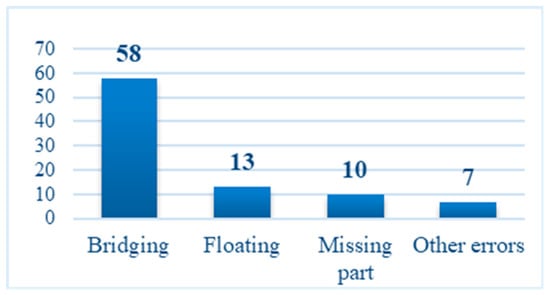
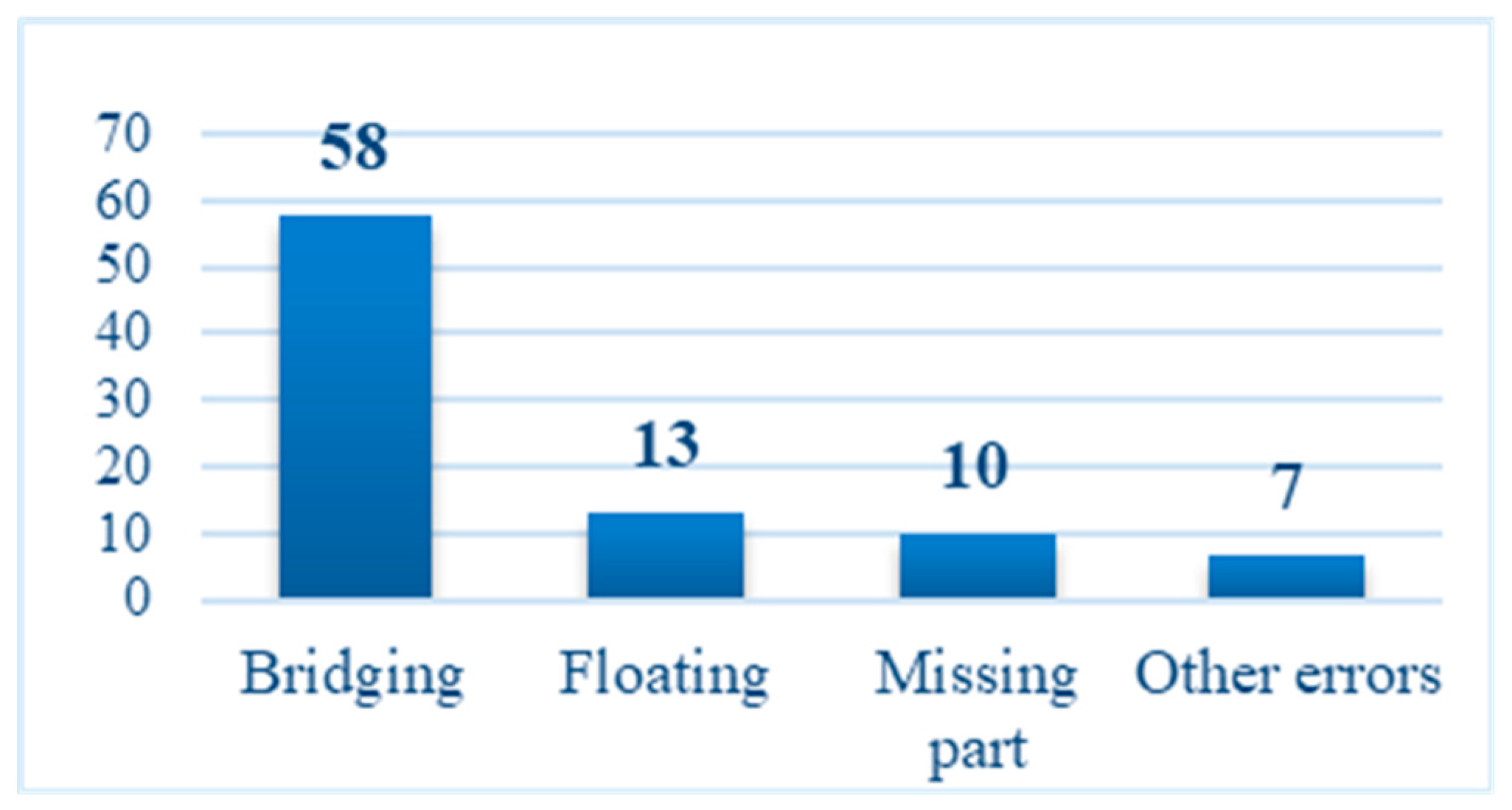
Given the complexity and number of components, the failure rate at this stage is higher than that of other products manufactured in the factory. Common faults include bridging pins, floating components, and missing solder components. See Figure 1.
Figure 1.
Number of major failures per K unit.
4.3. Problem Analysis
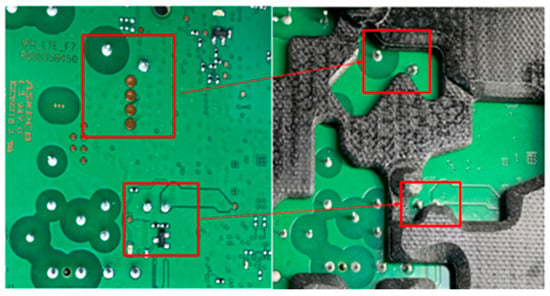
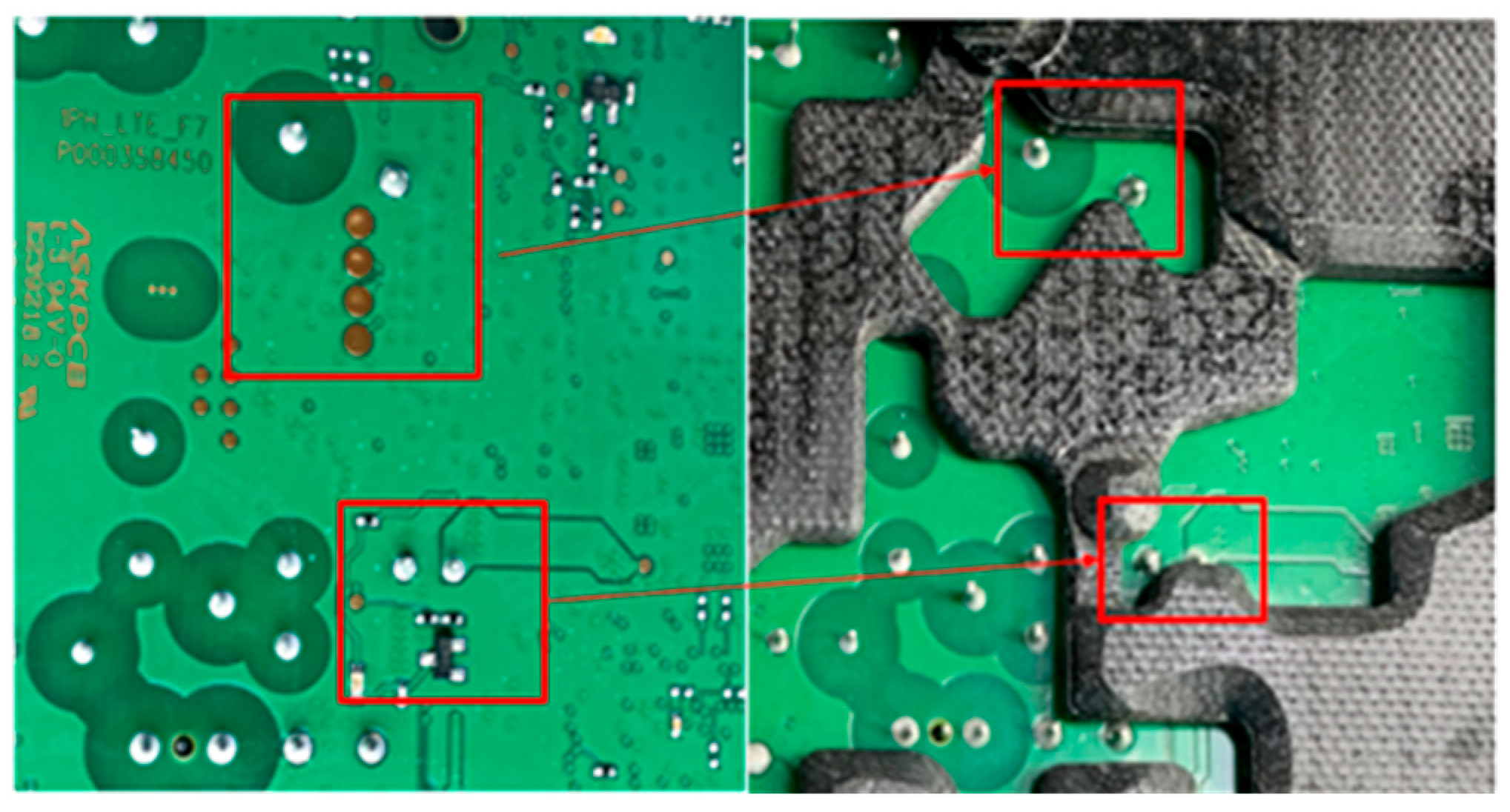
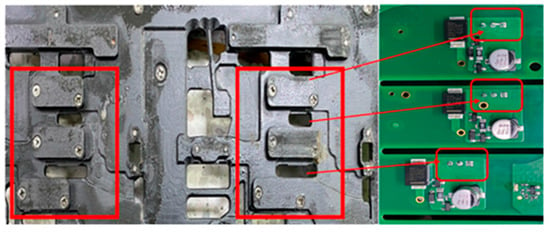
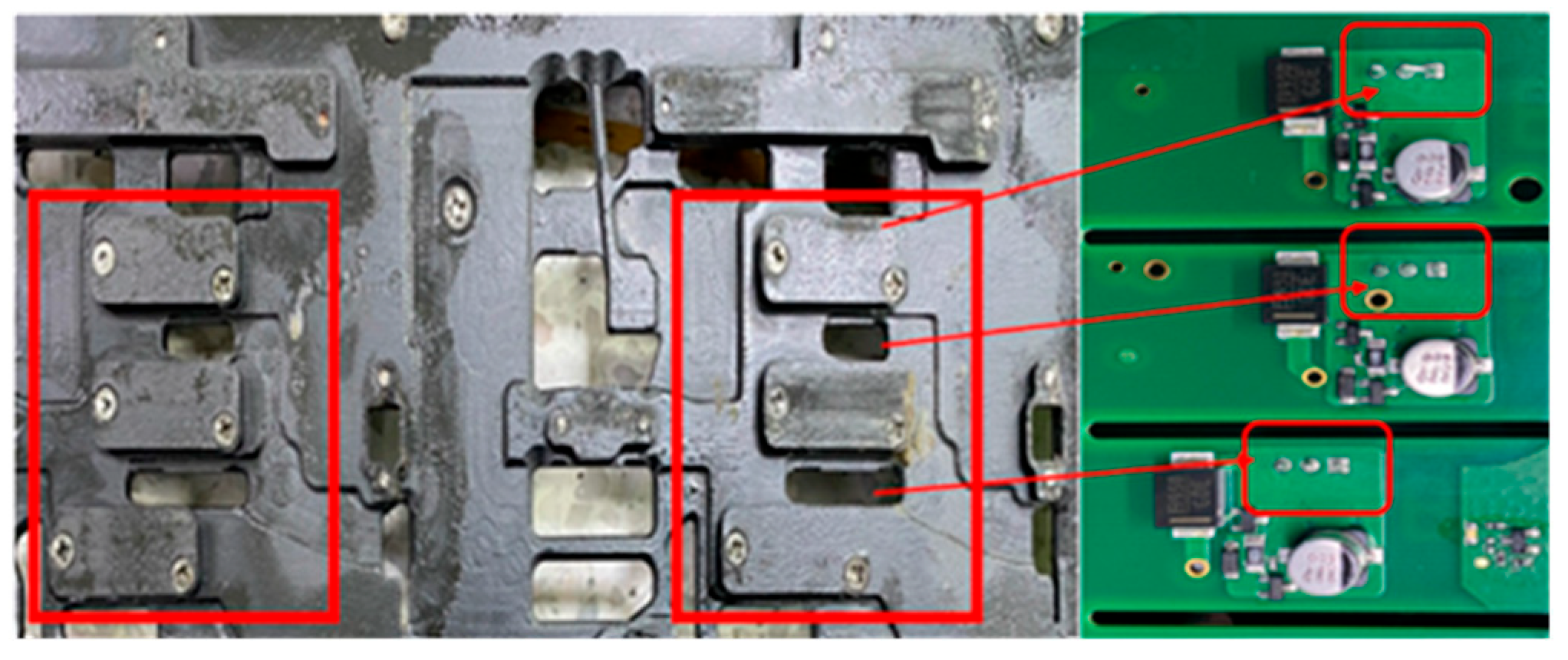
After receiving customer complaints. The research team checked the wave pallet and found a tiny opening area at the two locations where the above error occurs, which is very close to the baffle of the wave pallet. Therefore, the soldering process at these two positions becomes more difficult than in other locations on the circuit board.
Check the wave pallet; there is a tiny opening area at the two locations where the above error occurs, which is very close to the baffle of the wave pallet. Therefore, the soldering process at these two positions becomes more difficult than in other locations on the circuit board.
Because the position of the first capacitor is located close to the test point, and the second capacitor is too close to the surrounding SMT component, the design of the wave solder die cannot be more comprehensive. The departments discussed and determined how to solve this problem. See Figure 2.
Figure 2.
Positions of two soldering points on the wave pallet.
Additionally, because the position of the wave solder components is too close to the edge of the die, the tin exit angle at these locations becomes difficult, resulting in a tin bridge error at this location. See Figure 3.
Figure 3.
Positions bridging point on the wave pallet.
4.3.1. Triz Problem Solving—39 Contradiction Matrix, 40 Theory of Innovation
The leading cause of tin bridges and tin shortages is that the design of the positions on the circuit board is not optimized; solder positions are too close to the areas that need to be covered during the passage of molten tin. Therefore, this study utilizes TRIZ’s contradiction matrix to determine the optimal solution.
Table 4 selects the desired Improvement parameters and deterioration parameters. Improvement parameters are 29. Manufacturing precision. This is the requirement to improve the condition of the tin bridge, ensuring it no longer has an insufficient tin condition after passing through the wave soldering machine. The deterioration parameter is 23—loss of substance. Because the costs in the production process affect the factory’s profit, when improving, it will limit the costs incurred too much, leading to an improvement in this problem, but a new cost problem arises.
Table 4.
Contradiction matrix.
From the contradiction matrix between improvement parameter 29 and innovation parameter 23, our team derived the principles of the innovative invention:
- Principle 10: Preliminary Actions: Apply a beneficial action to the production process in small steps to determine its necessity before implementing it across the entire line.
- Principle 24: Intermediates: Introduce a good tool that acts as an intermediary between two other parties. The intermediary tool is responsible for the interaction between the other two objects.
- Principle 31: Porous Materials: Utilize porous, lightweight materials to reduce weight, soundproof, and absorb moisture in production systems.
- Principle 35: Parameter changes: Change an object’s physical state (e.g., to a gas, liquid, or solid), Change concentration or consistency, Change the degree of flexibility, Change the temperature, Change the pressure.
According to the invention and innovation, Principle 10 (Preliminary action) and Principle 35 (Parameter changes) have the potential to improve the issue. For the principle of preliminary actions, the research team plans to recheck the standard operating procedure (SOP) to identify areas for improvement. For the principle of parameter changes, changing the parameter is the most optimal approach to improve it. Therefore, this study was designed to use a DOE to find better parameters.
4.3.2. Design of Experiments
The wave solder machine in Factory X is used to assemble electronic boards. It features a conveyor system that delivers the circuit boards through a flux injection system, preheating zones, and a soldering iron injection system. The solder tin is pushed into component holes by adjusting the frequency, forming solder links. After soldering, the boards are cooled by heatsink fans before testing.
Parameter settings for each subsystem were controlled as per the test design. All systems were calibrated to ensure comparable outputs, adjusting flux delivery and solder temperature based on conveyor speed.
The study aimed to determine the impact of various parameters on defect formation and validate an optimized process. The selection of the five input factors—conveyor speed, flux quantity, solder temperature, wave height, and preheat temperature—was based on preliminary process screening, engineering experience, and analysis of historical defect data. These variables were identified as the most influential parameters affecting solder joint quality, particularly tin bridging and insufficient hole filling, in previous production runs. Five internal parameters at two levels were tested, listed in Table 5. Following this, 12 experimental runs were conducted, including one central point for the flux factor, as shown in Table 6.
Table 5.
Level of input factors.
Table 6.
Response of input factors.
The experimental design followed a two-level full factorial structure with one additional center point for the flux factor. This configuration enabled the analysis of both main effects and two-factor interactions while maintaining experimental feasibility under actual production conditions. Such a design provides a balanced approach between analytical completeness and the practical constraints of industrial testing.
To ensure the reliability of the results, the sequence of the experimental runs was arranged in a randomized order to minimize potential systematic or environmental bias. Although each condition was executed once, prior process trials were conducted under similar settings to confirm the repeatability of the measurement results. This approach aligns with the practical constraints of production-scale testing while maintaining the validity of the DOE analysis.
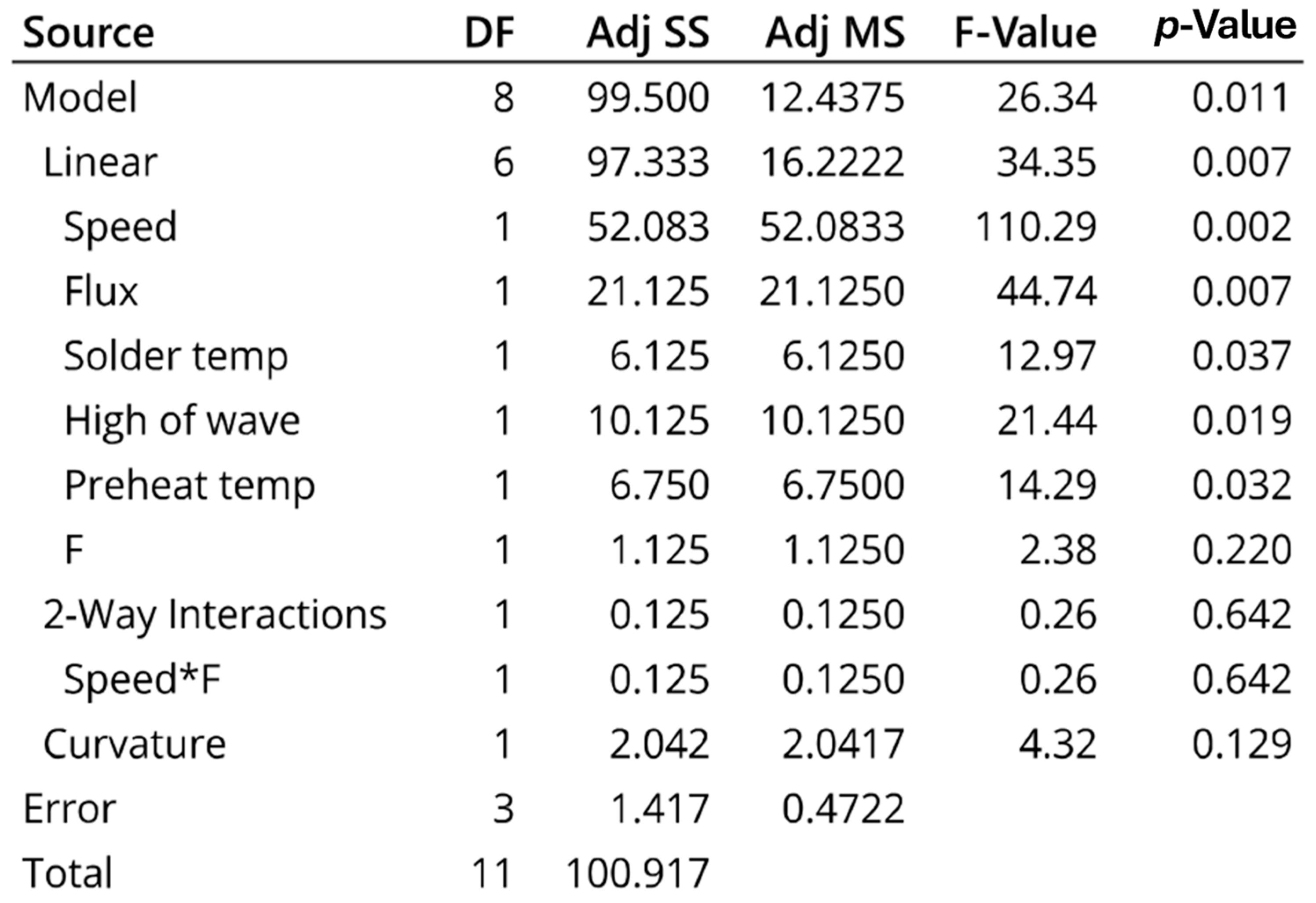
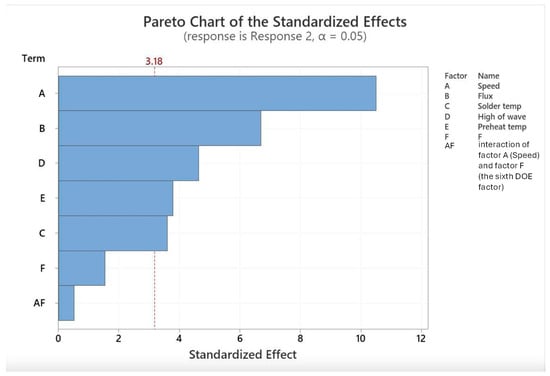
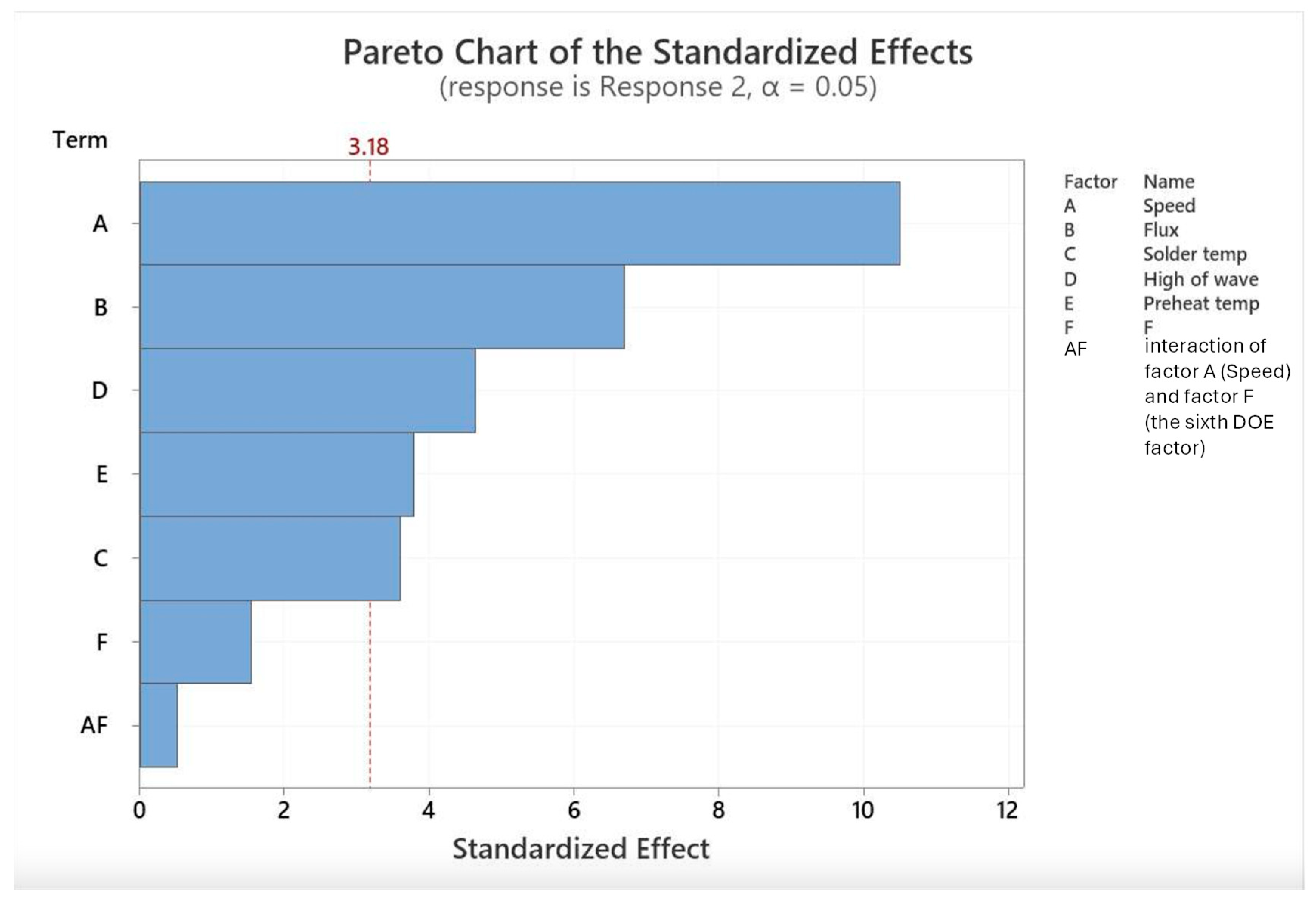
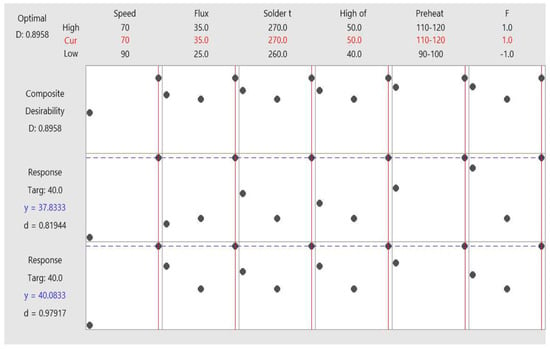
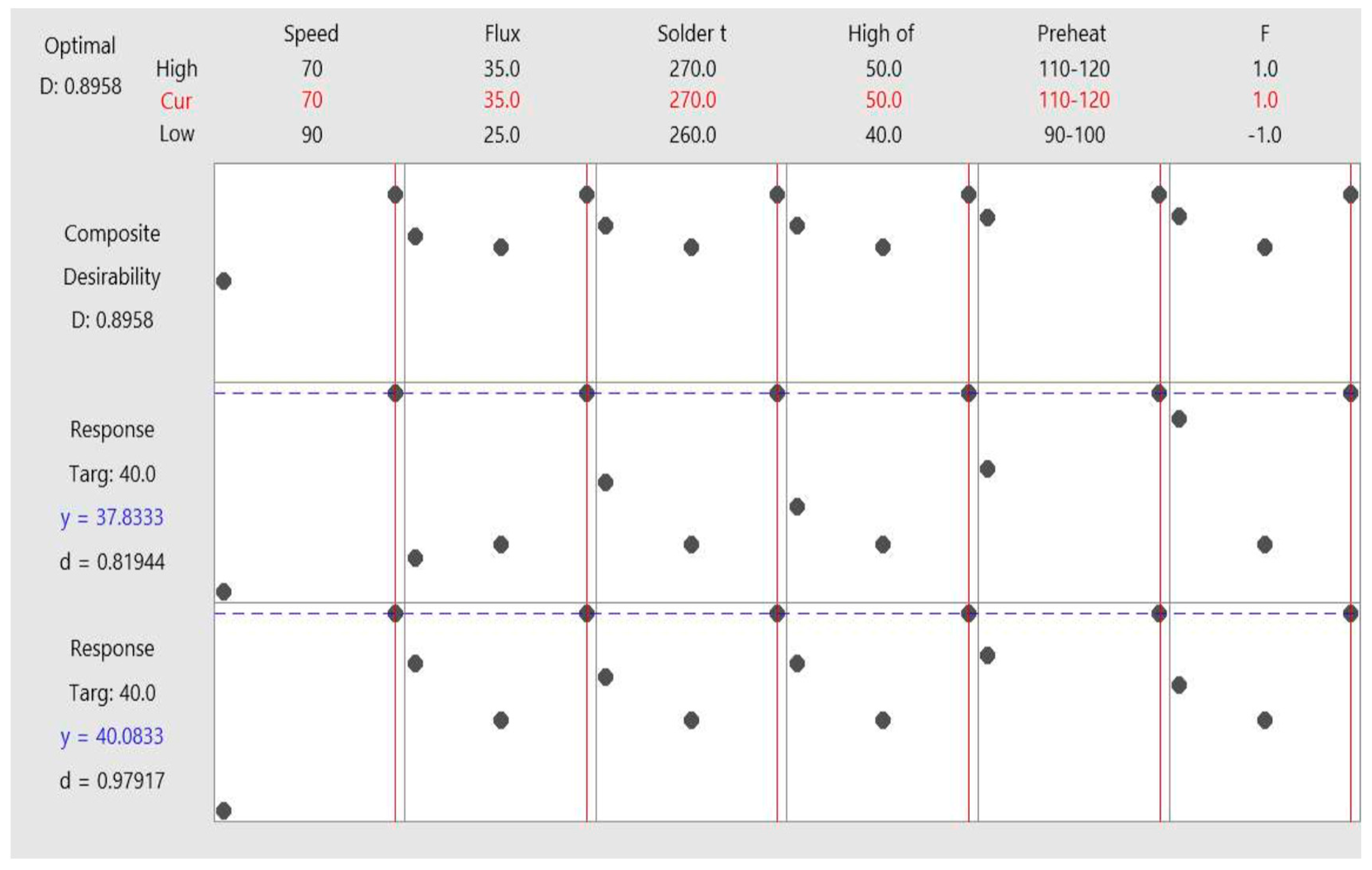
Data from the response were analyzed using Minitab software (version 21.4.1). Factors affecting soldering errors were evaluated, with conveyor speed and solder temperature identified as the most significant. Interactions between speed and flux flow were also examined, as illustrated in Figure 4, Figure 5 and Figure 6.
Figure 4.
The analysis of response data.
Figure 5.
Pareto chart of the standardized effects–bridging error.
Figure 6.
Optimal parameters after analysis.
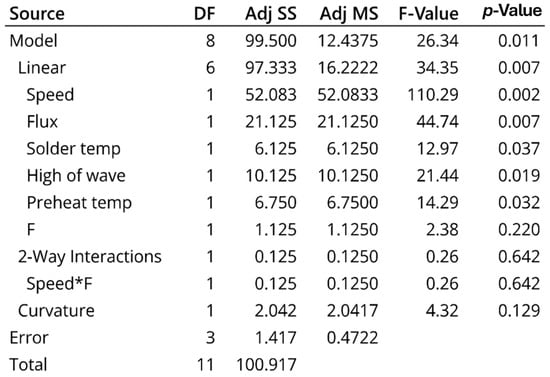
Figure 4 illustrates the factors that affect the bridge error, encompassing all the elements involved in the experiment. The p-value is determined with the initial confidence of α = 0.05. All factors have p-values less than the alpha value, indicating that all factors have an effect. The smaller the p-value, the more significant the impact of that factor. In this case, the most significant factors are the speed factor and the welding temperature factor.
The lowest p-value is the speed, followed by the traffic value. The third is the height of the solder wave, and then the temperature of the heat sink and the solder temperature, respectively. Details of the factors affecting the welding process are shown in Figure 5.
The analysis revealed that the most crucial factors influencing bridging errors are conveyor speed, flux flow, wave height, and the temperatures of the heatsink and soldering zones. Optimal parameters for the wave soldering process were determined, as shown in Figure 6.
The design of the experiment gave a final parameter that was consistent with the previous requirement, which was to improve tin poverty and tin bridge error after the circuit board passed through the wave solder. The parameters are shown in Table 7.
Table 7.
The parameter after improving.
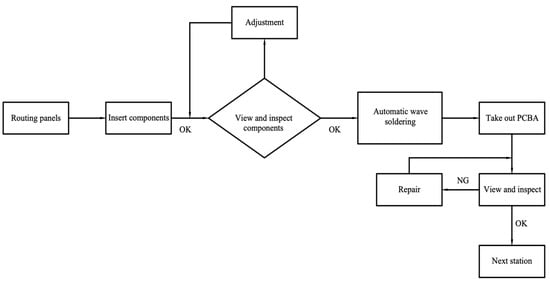
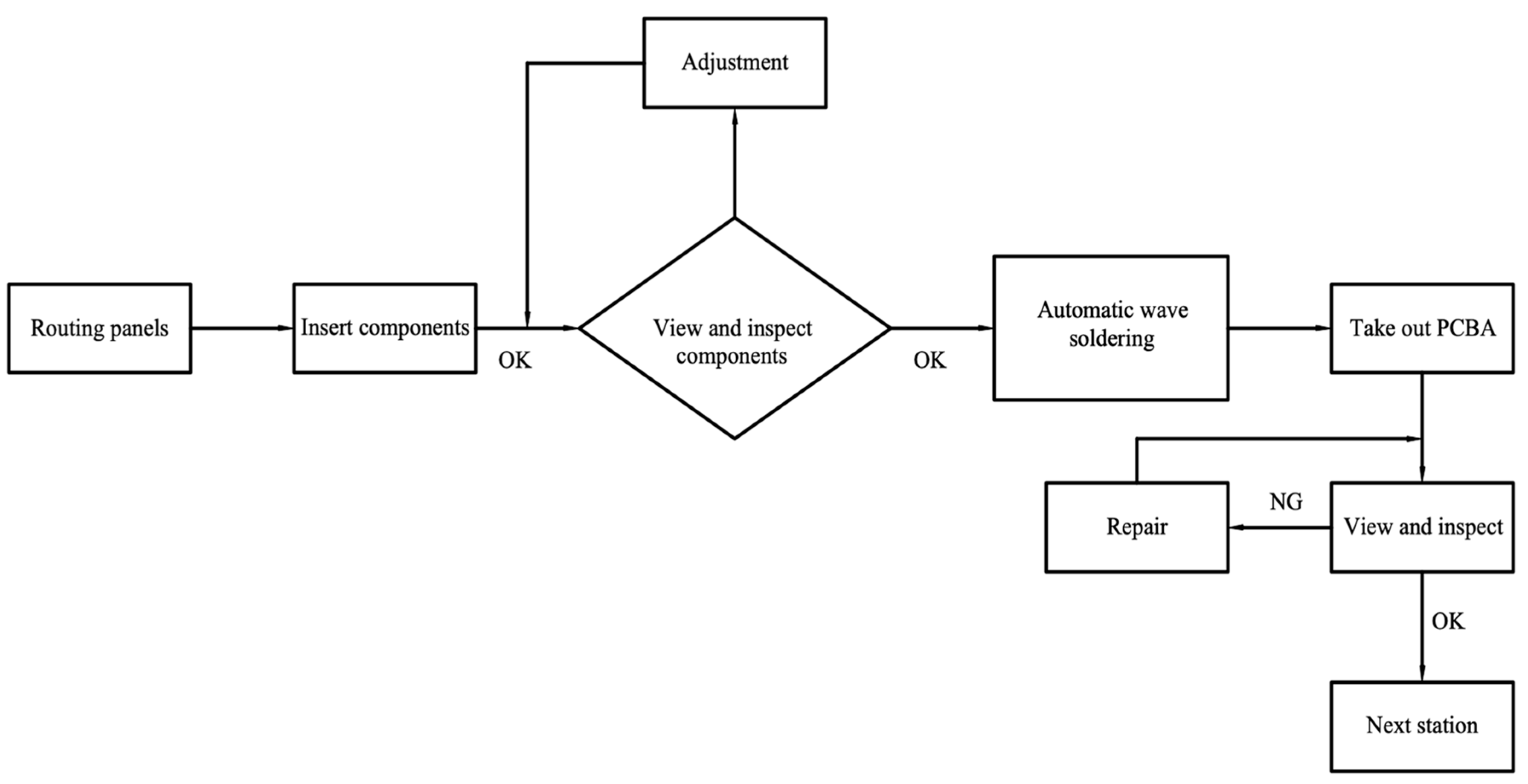
Optimum parameters were set on the wave solder and run with the remaining 600 boards in the final test command. After running, all these boards are 100% X-ray inspected before being sent to customers. The tin bridge error at the first test run was 5.8%. But after setting new parameters and running 600 boards of the last examination, the error rate is only 0.7%. The error rate for the final mass production order is 0.7% as well.
Moreover, before the improvement, to proceed with production, forty workers would plug the components into their designated positions on the board and verify that they were ready for the soldering iron. After going through the welding furnace, thirty workers, of whom two will be selected, will be prevented from appearing. If the board is in good condition and shows no signs of damage, it is placed in the tray to prepare for the next stage. Another worker is responsible for repairing the tin bridge fault because the error rate occurs frequently; if not repaired on the line, it will cause traffic congestion. See Figure 7.
Figure 7.
Standard operating procedure before improving.
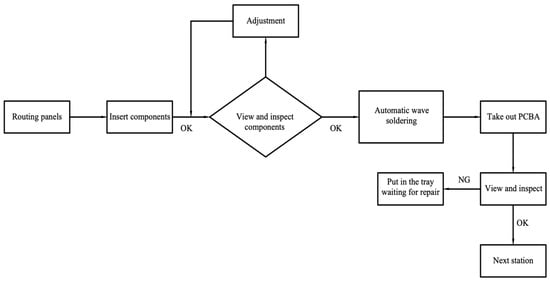
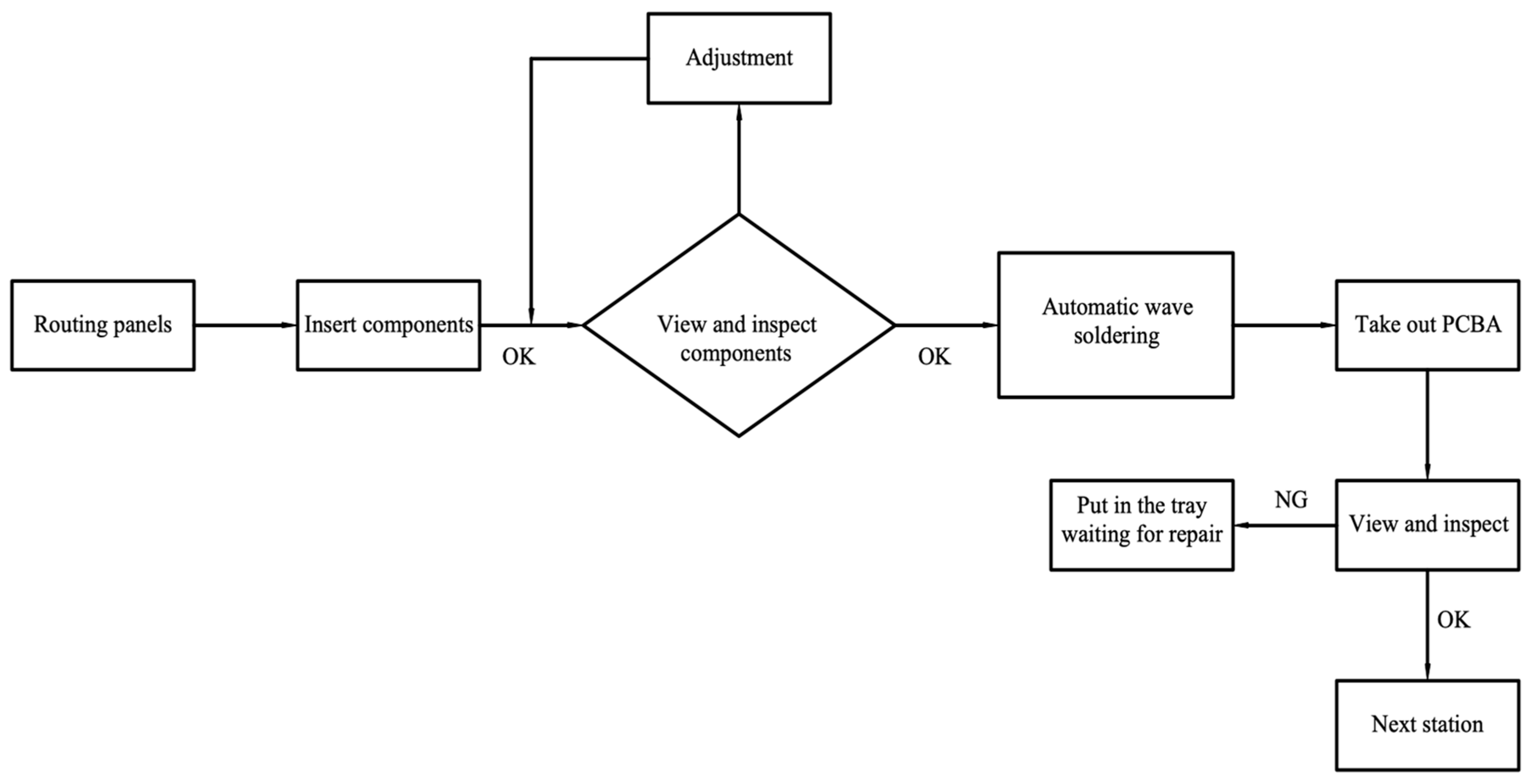
After improvement, the occurrence rate of this error has decreased to 0.7%. Therefore, the error will be placed in the NG tray and transferred to the repair area at a frequency of 2 h/time. Following the improvement, the number of workers behind the welding machine has been reduced to twenty people per shift. See Figure 8.
Figure 8.
Standard operating procedure after improving.
4.3.3. Problem Improvement
After applying the TRIZ methodology and optimizing the wave soldering parameters, several key benefits were realized.
Before optimization, the factory’s standard operating parameters (conveyor speed = 1.0 m/min, solder temperature = 260 °C, flux flow = 12 mL/min) resulted in average defect rates of 5.8% for tin bridging and 45% for insufficient hole filling. After applying the TRIZ–DOE optimized settings, these defect rates decreased to 0.7% and 0%, respectively, meeting both internal quality targets and industry acceptance levels.
Drastic Reduction in Defects. The rate of tin fill defects was reduced from 45% to 0%, as verified by X-ray inspections. In subsequent mass production runs, 100% of the inspected boards met the required fill rate of over 75%. Additionally, the tin bridging error rate decreased from 5.8% to 0.7% after adjusting key process parameters, including conveyor speed, flux quantity, and solder temperature.
Interaction Effects and Real-Time Control. The interaction analysis revealed that the relationship between conveyor speed and flux quantity plays a critical role in controlling solder joint formation. As conveyor speed increases, a proportional increase in flux flow rate is required to maintain sufficient wetting and prevent tin bridging. This finding supports the implementation of an adaptive control approach in production, where real-time sensor feedback can automatically adjust flux delivery based on conveyor speed fluctuations, thereby stabilizing solder quality and minimizing manual adjustments.
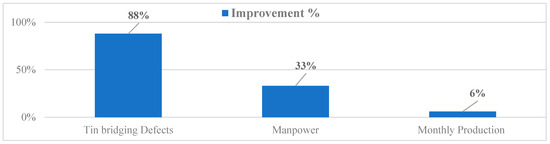
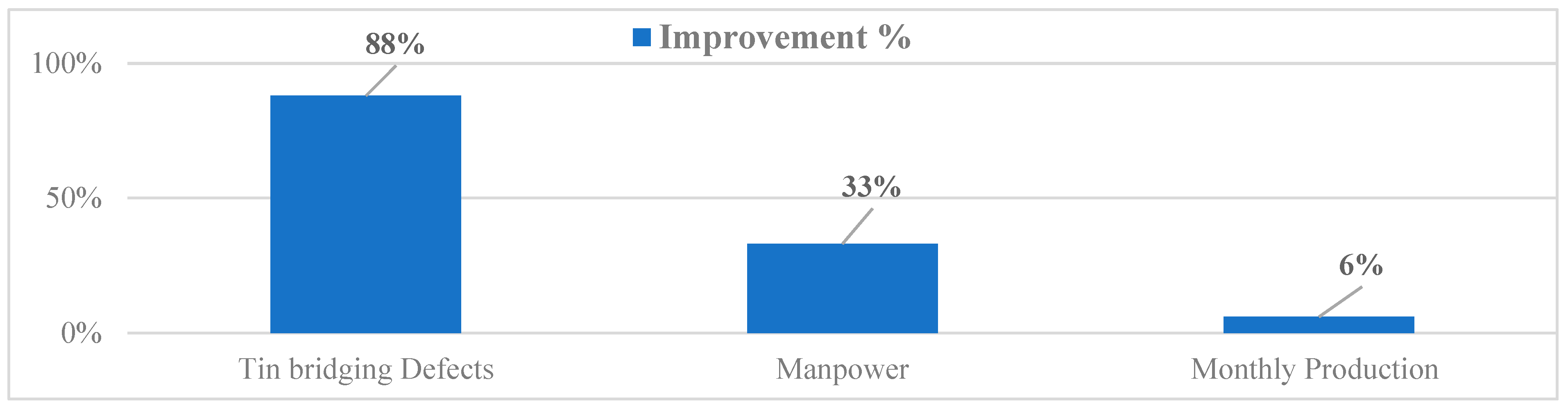
Labor Efficiency. Post-improvement, the workforce required behind the wave soldering machine was reduced from 3 to 2 (33% improvement) workers per shift, due to fewer defects and a more streamlined repair process. The need for constant repairs was minimized, and defects could now be handled in batches rather than continuously, enhancing productivity.
Improved Customer Satisfaction. With the defect rate significantly reduced, customer satisfaction improved. This helped secure larger orders, with production volumes increasing to over 300,000 boards per month, which represents an additional 6% more than before. The reduction in defects also mitigated the risk of losing future contracts, ensuring long-term business continuity. Recent studies have also emphasized the importance of electrical and thermal reliability in electronic component manufacturing, such as lifetime enhancement of multilayer ceramic capacitors through bipolar voltage cycling to mitigate degradation under high-stress environments [26]. This aligns with the objective of improving process stability and long-term performance in wave soldering applications. The summary results are in Table 8 and Figure 9.
Table 8.
Improvement summary.
Figure 9.
Summary of improvement results after applying the TRIZ–DOE-optimized parameters in the wave soldering process, showing reductions in tin bridging defects and manpower, and an increase in monthly production (data summarized in Table 8).
The number of tin bridging defects and monthly production are depicted by Average (confidence interval with 5% alpha, standard deviation)
The experimental improvements yielded significant operational and financial benefits for Company F. The reduction in defects not only lowered labor costs, but also improved production efficiency and customer satisfaction. These enhancements strengthened the company’s competitive advantage, enabling it to maintain its reputation as a global leader in electronic circuit board manufacturing.
Similarly to recent developments in digital twin–driven manufacturing systems that integrate semantic and dynamic associations for real-time optimization [27], the proposed adaptive control approach in this study contributes to the practical realization of smart process control in wave soldering.
5. Conclusions
This study validates the effectiveness of an integrated TRIZ–DOE framework for optimizing the wave soldering process in electronic assembly. The framework combines TRIZ’s inventive problem-solving principles with DOE’s empirical validation, providing a structured methodology for parameter identification and optimization under actual production conditions.
Implementation in a globally leading OEM/EMS enterprise confirmed the framework’s practical applicability. By optimizing key parameters such as conveyor speed, soldering temperature, and flux flow, defect rates were significantly reduced and process stability improved. These outcomes demonstrate the framework’s capability as a generalizable tool for process optimization and quality improvement in electronics manufacturing.
Beyond its practical results, this research contributes to the methodological development of process optimization by showing how a TRIZ–DOE integration can overcome the limitations of conventional DOE, which focuses primarily on parameter-level tuning within fixed boundaries. The framework establishes a replicable foundation linking systematic problem-solving with empirical validation, offering a balanced and academically grounded approach for improving complex manufacturing systems.
Furthermore, to ensure the reliability and repeatability of the defect evaluation, the bridging criterion was defined in accordance with IPC-A-610E standards [28], and defects were verified using a combination of AOI and visual inspection under magnification, with X-ray inspection applied for confirmation when needed. Cross-verification among inspectors confirmed the consistency of defect identification. Although a formal Gage R&R study was not conducted in this stage, repeated inspections under identical conditions produced stable and reproducible results, ensuring that the DOE analysis and resulting conclusions were based on reliable and consistent defect data.
Future Research Direction
Future studies may extend the TRIZ–DOE framework to other manufacturing contexts such as selective or double-wave soldering and surface-mount technology (SMT). Further investigation is also needed to explore its adaptability in high-mix low-volume production and to incorporate adaptive or predictive control mechanisms for real-time parameter adjustment. Future studies may also include detailed residual diagnostics to evaluate normality, homoscedasticity, and independence, further validating the robustness of the TRIZ–DOE framework.
Additionally, integrating this framework with digital twin technologies or data-driven decision models could enhance its potential for smart and sustainable process optimization across the electronics manufacturing industry.
Author Contributions
Conceptualization, C.-N.W.; Data curation, N.-C.S.; Formal analysis, N.-C.S. and V.-T.P.; Funding acquisition, C.-N.W. and N.-C.S.; Investigation, N.-C.S.; Methodology, C.-N.W.; Project administration, C.-N.W.; Resources, C.-N.W., N.-C.S. and D.-Q.H.; Software, V.-T.P.; Supervision, C.-N.W.; Validation, N.-C.S. and D.-Q.H.; Visualization, V.-T.P.; Writing—original draft, N.-C.S. and D.-Q.H.; Writing—review and editing, C.-N.W. All authors have read and agreed to the published version of the manuscript.
Funding
This research is partially supported by the project of NSTC 114-2637-E-992-010 from the National Science and Technology Council, Taiwan.
Data Availability Statement
The data were obtained from a real electronics manufacturing company in Vietnam. Some of the details were unavailable due to the company’s privacy policy. The data supporting the findings of this study are partially available from the corresponding author upon reasonable request.
Acknowledgments
During the preparation of this manuscript, the authors used ChatGPT (OpenAI, GPT-5, 2025 version) for the purposes of summarizing and refining Section 2, improving the grammar, coherence, and formatting, and enhancing the overall readability of the manuscript. The authors have reviewed and edited the output and take full responsibility for the content of this publication.
Conflicts of Interest
Author Dang-Quy Hong was employed by the company Foxconn Technology Group. The remaining authors declare that the research was conducted in the absence of any commercial or financial relationships that could be construed as a potential conflict of interest. The company in affiliation and Funding Role had no role in the design of the study; in the collection, analyses, or interpretation of data; in the writing of the manuscript, or in the decision to publish the results.
Appendix A. Experimental Design Pseudocode
The following pseudo-code illustrates the setup and analysis logic of the design of experiments (DOE) conducted in this study. Due to confidentiality restrictions, the complete Minitab project and raw data are not disclosed; however, this pseudo-code provides full transparency of the experimental structure and analysis procedure.
BEGIN
# Step 1. Define factors and levels
FACTORS = [
“Speed (cm/min)”,
“Flux (ml/min)”,
“Solder Temp (°C)”,
“High of Wave (Hz)”,
“Preheat Temp (°C)”
]
LEVELS = {
“Speed (cm/min)”: [70, 90],
“Flux (ml/min)”: [25, 35],
“Solder Temp (°C)”: [260, 270],
“High of Wave (Hz)”: [40, 50],
“Preheat Temp (°C)”: [“90–100”, “110–120”]
}
# Step 2. Set up the experiment tables
EXPERIMENTS = [
{RunOrder: 1, Speed: 90, Flux: 30, SolderTemp: 265, HighWave: 45, Preheat: “90–100”},
{RunOrder: 2, Speed: 70, Flux: 25, SolderTemp: 260, HighWave: 40, Preheat: “90–100”},
...
{RunOrder: 12, Speed: 90, Flux: 25, SolderTemp: 270, HighWave: 50, Preheat: “90–100”}
]
# Step 3. Execute experiments
FOR each experiment IN EXPERIMENTS:
RUN_SOLDER_PROCESS(
speed = experiment.Speed,
flux = experiment.Flux,
solder_temp = experiment.SolderTemp,
wave_high = experiment.HighWave,
preheat = experiment.Preheat
)
RECORD defect_rate
# Step 4. Statistical analysis
ANALYZE_RESULTS(FACTORS, EXPERIMENTS, OUTPUT=“defect_rate”)
END
References
- Research and Markets. Electrical and Electronics Market Report 2025; Research and Markets: Dublin, Ireland, 2025; Available online: https://www.researchandmarkets.com/reports/5781043/electrical-electronics-market-report (accessed on 1 July 2025).
- Antony, J.; Cahyono, S.T. Design of Experiments for Engineers and Scientists, 2nd ed.; Elsevier Ltd.: Oxford, UK, 2022; ISBN 978-0-08099417-8. [Google Scholar]
- Sojka, V.; Lepšík, P. Use of TRIZ, and TRIZ with Other Tools for Process Improvement: A Literature Review. Emerg. Sci. J. 2020, 4, 319–335. [Google Scholar] [CrossRef] [Scilit]
- Huang, B.; Zhang, S.; Huang, R.; Li, X.; Zhang, Y.; Liang, J. An Effective Numerical Control Machining Process Optimization Approach of Part with Complex Pockets for Numerical Control Process Reuse. IEEE Access 2019, 7, 45146–45165. [Google Scholar] [CrossRef] [Scilit]
- Wang, C.N.; Lin, M.H.; Huang, C.J.; Huang, C.C.; Liao, R.Y. Using TRIZ to Improve the Procurement Process of Spare Parts in the Taiwan Navy. Sustainability 2017, 9, 1908. [Google Scholar] [CrossRef] [Scilit]
- Wang, C.N.; Nhieu, N.L.; Viet, T.-A.P. Enhancing Efficiency in PCB Assembly for the Leading Global Electronics Manufacturing Services Firm: A TRIZ and Ant Colony Optimization Approach. Int. J. Adv. Manuf. Technol. 2024, 133, 5529–5552. [Google Scholar] [CrossRef] [Scilit]
- Mariappan, R.C.S.; Veerabathiran, A.; Paranitharan, K.P.; Vimal, K.E.K. Intelligent VSM Model: A Way to Adopt Industry 4.0 Technologies in Manufacturing Industry. Int. J. Adv. Manuf. Technol. 2023, 129, 2195–2214. [Google Scholar] [CrossRef] [Scilit]
- Ke, C.; Jiang, Z.; Zhu, S.; Wang, Y. An Integrated Design Method for Remanufacturing Process Based on Performance Demand. Int. J. Adv. Manuf. Technol. 2022, 118, 849–863. [Google Scholar] [CrossRef] [Scilit]
- Vysotskaya, M.V. Improve the Integrity Testing Process Based on QFD, FMEA, and TRIZ. IOP Conf. Ser. Mater. Sci. Eng. 2020, 986, 012051. [Google Scholar] [CrossRef] [Scilit]
- Spreafico, C. Can TRIZ (Theory of Inventive Problem Solving) Strategies Improve Material Substitution in Eco-Design? Sustain. Prod. Consum. 2022, 30, 889–915. [Google Scholar] [CrossRef] [Scilit]
- Butdee, S.; Vignat, F. TRIZ Method for Light Weight Bus Body Structure Design. J. Achiev. Mater. Manuf. Eng. 2008, 31, 456–462. [Google Scholar]
- Hammer, J.; Kiesel, M. A TRIZ and Lean-Based Approach for Improving Development Processes. In Advances in Systematic Creativity; Springer: Cham, Switzerland, 2018; pp. 101–114. [Google Scholar] [CrossRef] [Scilit]
- Blackburn, T.D.; Mazzuchi, T.A.; Sarkani, S. Using a TRIZ Framework for Systems Engineering Trade Studies. Syst. Eng. 2012, 15, 355–367. [Google Scholar] [CrossRef] [Scilit]
- Zhong, J.; Hu, X.; Yüksel, S.; Dinçer, H.; Ubay, G.G. Analyzing the Investments Strategies for Renewable Energies Based on Multi-Criteria Decision Model. IEEE Access 2020, 8, 118818–118840. [Google Scholar] [CrossRef] [Scilit]
- König, K.; Kaspar, J.; Scholz, J.; Fleischer, J.; Vielhaber, M. The Advanced TRIZ Method for a Sustainable Lightweight Design. Procedia CIRP 2025, 136, 444–449. [Google Scholar] [CrossRef] [Scilit]
- Mitra, A.C.; Kiranchand, G.; Soni, T.; Banerjee, N. Design of Experiments for Optimization of Automotive Suspension System Using Quarter Car Test Rig. Procedia Eng. 2016, 144, 1102–1109. [Google Scholar] [CrossRef] [Scilit]
- Huehnlein, K.; Tschirpke, K.; Hellmann, R. Optimization of Laser Cutting Processes Using Design of Experiments. Phys. Procedia 2010, 5 Pt B, 243–252. [Google Scholar] [CrossRef] [Scilit]
- Golkarnarenji, G.; Naebe, M.; Badii, K.; Milani, A.S.; Jamali, A.; Bab-Hadiashar, A.; Jazar, R.N.; Khayyam, H. Multi-Objective Optimization of Manufacturing Process in Carbon Fiber Industry Using Artificial Intelligence Techniques. IEEE Access 2019, 7, 67576–67588. [Google Scholar] [CrossRef] [Scilit]
- Barbini, D.; Wang, P.; Biocca, P. Lead-Free Wave Soldering: Process Optimization for Simple to Highly Complex Boards. SMTnet Library. 2010. Available online: https://smtnet.com/library/files/upload/process-optimization.pdf (accessed on 20 July 2025).
- Tripathi, V.; Chattopadhyaya, S.; Mukhopadhyay, A.K.; Sharma, S.; Li, C.; Singh, S.; Saleem, W.; Salah, B.; Mohamed, A. Recent Progression Developments on Process Optimization Approach for Inherent Issues in Production Shop Floor Management for Industry 4.0. Processes 2022, 10, 1587. [Google Scholar] [CrossRef] [Scilit]
- Li, X.; Xie, L.; Li, X.; Su, H. A Retrofit Hierarchical Architecture for Real-Time Optimization and Control Integration. Processes 2020, 8, 181. [Google Scholar] [CrossRef] [Scilit]
- Basar, G.; Der, O.; Guvenc, M.A. AI-Powered Hybrid Metaheuristic Optimization for Predicting Surface Roughness and Kerf Width in CO2 Laser Cutting of 3D-Printed PLA-CF Composites. J. Thermoplast. Compos. Mater. 2025, 38, 2688–2717. [Google Scholar] [CrossRef] [Scilit]
- Ren, X.; Fan, J.; Pan, R.; Sun, K. Modeling and Process Parameter Optimization of Laser Cutting Based on Artificial Neural Network and Intelligent Optimization Algorithm. Int. J. Adv. Manuf. Technol. 2023, 127, 1177–1188. [Google Scholar] [CrossRef] [Scilit]
- Pokhrel, C.; Cruz, C.; Ramirez, Y.; Kraslawski, A. Adaptation of TRIZ Contradiction Matrix for Solving Problems in Process Engineering. Chem. Eng. Res. Des. 2015, 103, 3–10. [Google Scholar] [CrossRef] [Scilit]
- Chao, J.H.; Peng, C.Y. High-Efficiency Solar Electricity of Umbrella by TRIZ Analysis. Energy Power Eng. 2016, 8, 51–61. [Google Scholar] [CrossRef]
- Wu, B.; Jiang, Z.; Zhu, S.; Zhang, H.; Wang, Y. A Customized Design Method for Upgrade Remanufacturing of Used Products Driven by Individual Demands and Failure Characteristics. J. Manuf. Syst. 2023, 68, 258–269. [Google Scholar] [CrossRef] [Scilit]
- Chuong, K.Y.; Bock, J.A.; Patterson, E.A.; Brown-Shaklee, H.J.; Graber, L.; Garten, L.M. Increasing Multilayer Ceramic Capacitor Lifetime with Bipolar Voltage Cycling. IEEE Trans. Compon. Packag. Manuf. Technol. 2025, 15, 272–280. [Google Scholar] [CrossRef] [Scilit]
- IPC-A-610E; Acceptability of Electronic Assemblies. IPC: Bannockburn, IL, USA, 2010.

Disclaimer/Publisher’s Note: The statements, opinions and data contained in all publications are solely those of the individual author(s) and contributor(s) and not of MDPI and/or the editor(s). MDPI and/or the editor(s) disclaim responsibility for any injury to people or property resulting from any ideas, methods, instructions or products referred to in the content. |
© 2025 by the authors. Licensee MDPI, Basel, Switzerland. This article is an open access article distributed under the terms and conditions of the Creative Commons Attribution (CC BY) license (https://creativecommons.org/licenses/by/4.0/).