


Abstract
This study investigates the impact of expanding and reducing deformation ratios on the performance of L360 straight-seam welded pipes formed by the JCO process for offshore oil and gas transportation. The Split Hopkinson Pressure Bar (SHPB) experimental technique was used to examine the stress/strain relationships, yield strength, and compressive strength of the pipe materials subjected to high strain rates. The results indicated that the impact performance of the pipes significantly improves with both expansion and reduction processes, demonstrating an enhancement effect of deformation. The impact of yield strength and compressive strength increases with higher expansion ratios, reaching maximum values of 1009 MPa and 847 MPa, respectively, at an expansion ratio of 1.2%. At a reduction ratio of 0.8%, the impact yield strength increased by 64% and the compressive strength by 14%. These findings not only provide theoretical support for optimizing the expansion and reduction processes and their associated equipment but also have direct and significant practical implications for enhancing the performance and safety of offshore oil and gas transmission pipelines, thereby contributing to the advancement of the field.
1. Introduction
Offshore oil and gas transmission pipelines face severe environmental challenges, including high pressure at the seabed and seawater corrosion, as well as impacts from ocean waves, sea currents, seabed sediments, underwater landslides, earthquakes, and objects falling due to third-party activities such as explosions. These factors significantly impact the safe operation of offshore pipelines during their service life [1,2]. Straight-seam welded pipes are the primary pipeline type used in offshore oil and gas transportation. In processes like bending, welding, and expansion, plastic deformation steps such as expansion or reduction are implemented to improve the geometric accuracy of the pipes, reduce residual stresses, and enhance service performance [3].
The influence of the straight-seam welded pipe formation process on service performance has long been a critical area of study. Cai examined the impact of large-diameter submerged arc welding on the mechanical properties of blank sheets, demonstrating that plastic deformation in pipeline steel changes material strength characteristics [4]. Mandal’s study demonstrates that the yield strength and tensile strength of the pipe increased due to the increase in dislocation density during the U-forming process (plate-to-pipe forming); even at lower test temperatures, the impact toughness in both the inner and outer walls is uniformly improved compared to the base plate [5]. Al-Abri compared the mechanical properties of LSX-80 expandable tubular before and after expansion, the toughness of the tubular is inversely proportional to the expansion ratio; at a lower expansion ratio (16%), the fracture of impact-loaded specimens is dominated by ductile fracture, while at a higher expansion ratio (24%), brittle fracture becomes the primary failure mode [6]. Shinohara [7] investigated the influence of microstructure on the mechanical properties of pipes. It was found that pipes with a dual-phase microstructure, consisting of bainite and fine polygonal ferrite, exhibit better deformability and toughness than those with a single bainite microstructure. Peng et al. [8] investigated the influence of deformation ratio on the electrochemical corrosion behavior of steel tubes. The tube-reducing process enhances the corrosion resistance of the steel tubes, but the corrosion resistance does not increase linearly with the deformation ratio of the tubes. Sun et al. [9] investigated the bagging effect of X65MO submarine pipeline steel, showing that pre-compression deformation from 0 to 0.85% dominates the bagging effect, reducing yield strength compared to the base steel, whereas the deformation strengthening effect prevails for the range of 0.85–1.50%, resulting in higher yield strength than the base steel. Zou et al. [10] investigated the evolution of tensile yield strength during the UOE forming process of high-strength pipeline steel. For pipes with a lower thickness-to-diameter ratio, the Bauschinger effect dominates, resulting in a yield strength of the pipe lower than that of the steel plate. Li Weiwei and others studied the impact of expansion ratio on the tensile properties of straight-seam submerged arc welded pipes. They found that deformation strengthening is especially significant for X80 high-strength pipeline steel. Yield strength increases proportionally with the expansion ratio, where a 1% deformation significantly increases yield strength, although there is minimal effect on tensile strength [11]. Wang Bin et al. performed an expansion test on spiral-seam submerged arc-welded pipe sections, indicating no significant change in the material’s impact toughness after expansion [12]. Wang et al. [13] identified the bagging effect in metals under dynamic loading conditions using the electromagnetic Hopkinson bar experimental technique. Zheng et al. [14] examined the dynamic behavior of Q235B straight-seam welded pipes under impact loading using both theoretical and experimental approaches. Overall, research on the impacts of forming processes on the service performance of straight-seam welded pipes has primarily focused on conventional expansion processes, with limited investigation into reduction processes. Most studies have focused on the static mechanical properties of pipe materials, whereas the impacts of dynamic loading on the yield strength and compressive strength of these materials remain under-researched.
With the expansion of offshore oil and gas resource development into deeper seas, the operating environments for transmission pipelines have become more complex and variable, requiring the integration of geometric precision and service performance for straight-seam welded pipes. Thus, understanding the impact of expansion and reduction on plastic deformation processes on the impact performance of materials in JCOE-formed welded pipes for offshore oil and gas transportation is highly significant. This study focuses on L360 grade straight-seam welded pipes formed by the JCO process, applying the Split Hopkinson Pressure Bar (SHPB) experimental technique to obtain the stress/strain relationships, yield strength, and compressive strength of the pipe materials under high strain rates. The present research explores the effects of expansion and reduction deformation ratios on the impact performance of the pipes. It provides theoretical support for optimizing the expansion process and equipment, and developing the reduction process and associated equipment.
2. Sample Preparation and Experimental Methods
2.1. Sample Preparation
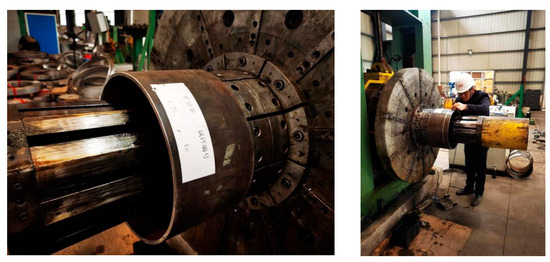
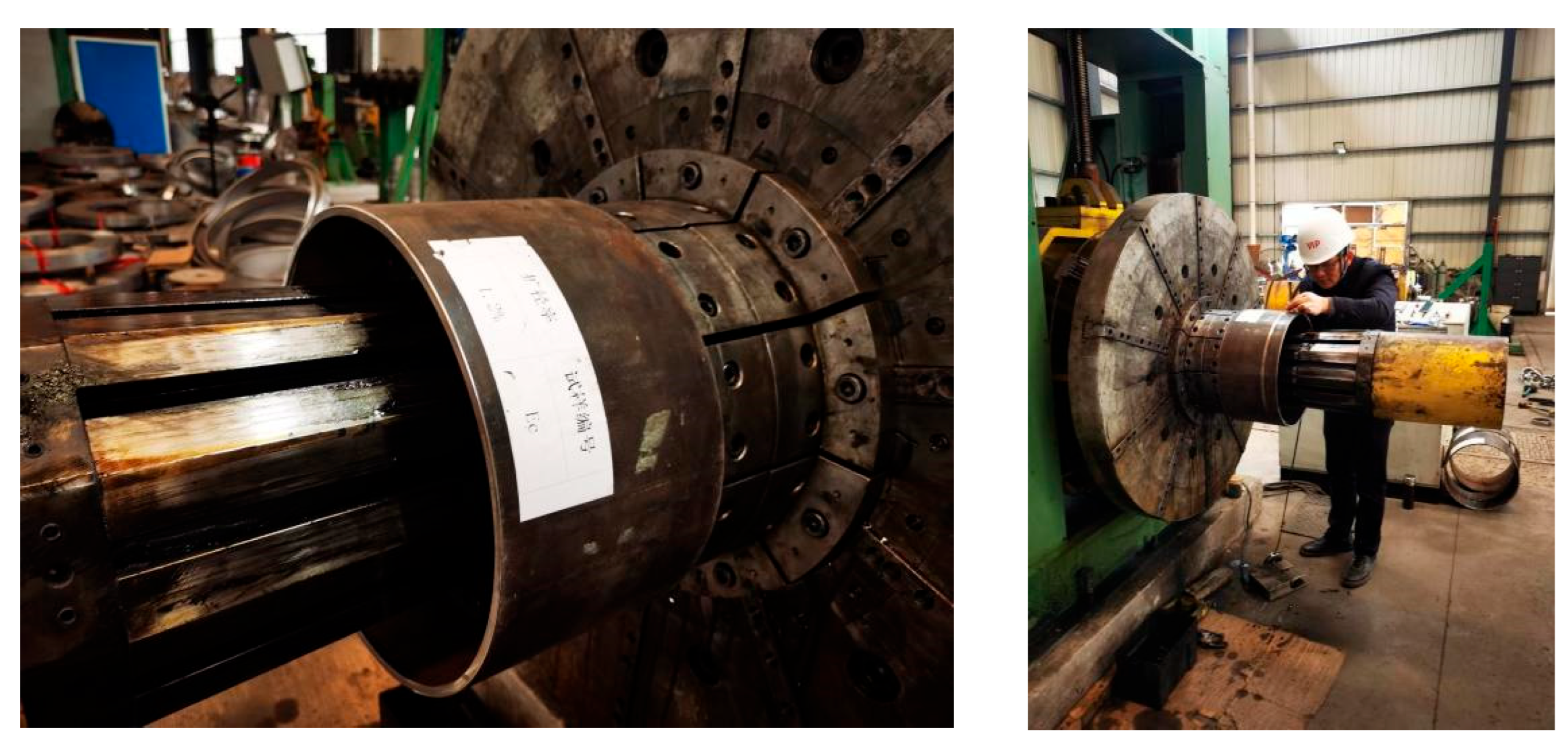
The initial pipe blanks were obtained from L360 grade JCO-formed pipes with a nominal diameter of 406 mm and a wall thickness of 8 mm. These pipe blanks underwent expansion and reduction processing. The expansion ratios were set to 0.4%, 0.8%, and 1.2% using a tube-end expanding machine with eight-segment molds, as illustrated in Figure 1.
Figure 1.
Tube end expanding machine and mold.
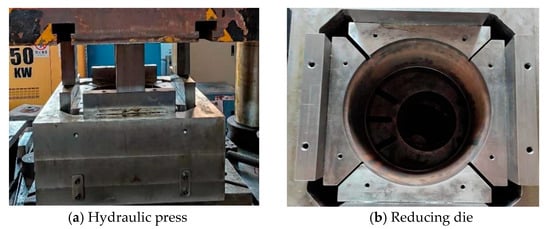
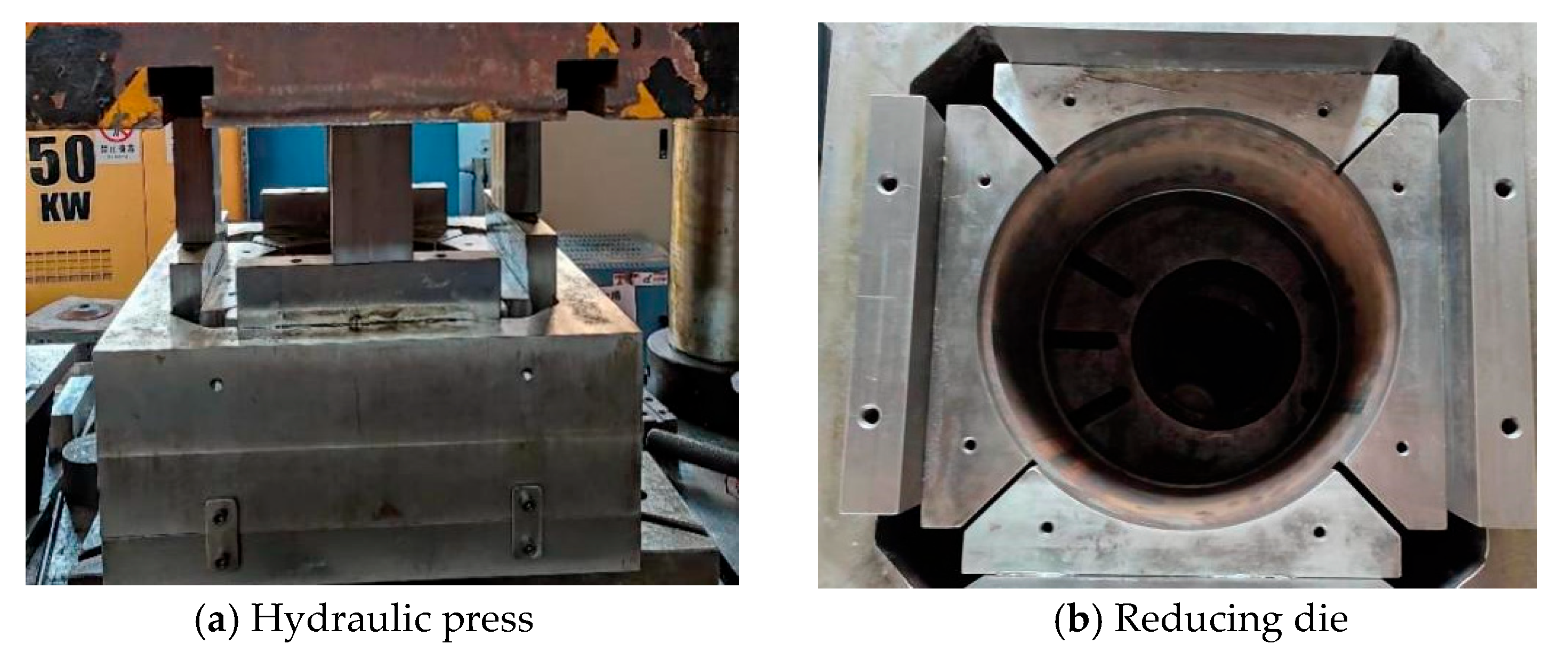
The reduction ratios were also set at 0.4%, 0.8%, and 1.2%, using a 500-ton hydraulic press and a four-lobed reduction die, as depicted in Figure 2.
Figure 2.
Reducing press and die.
2.2. Static Mechanical Properties of Expansion/Reduction Specimens
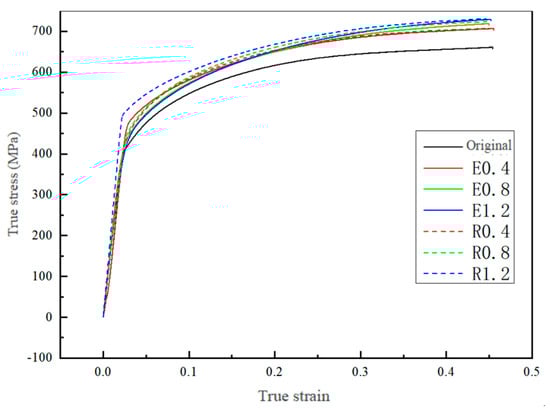
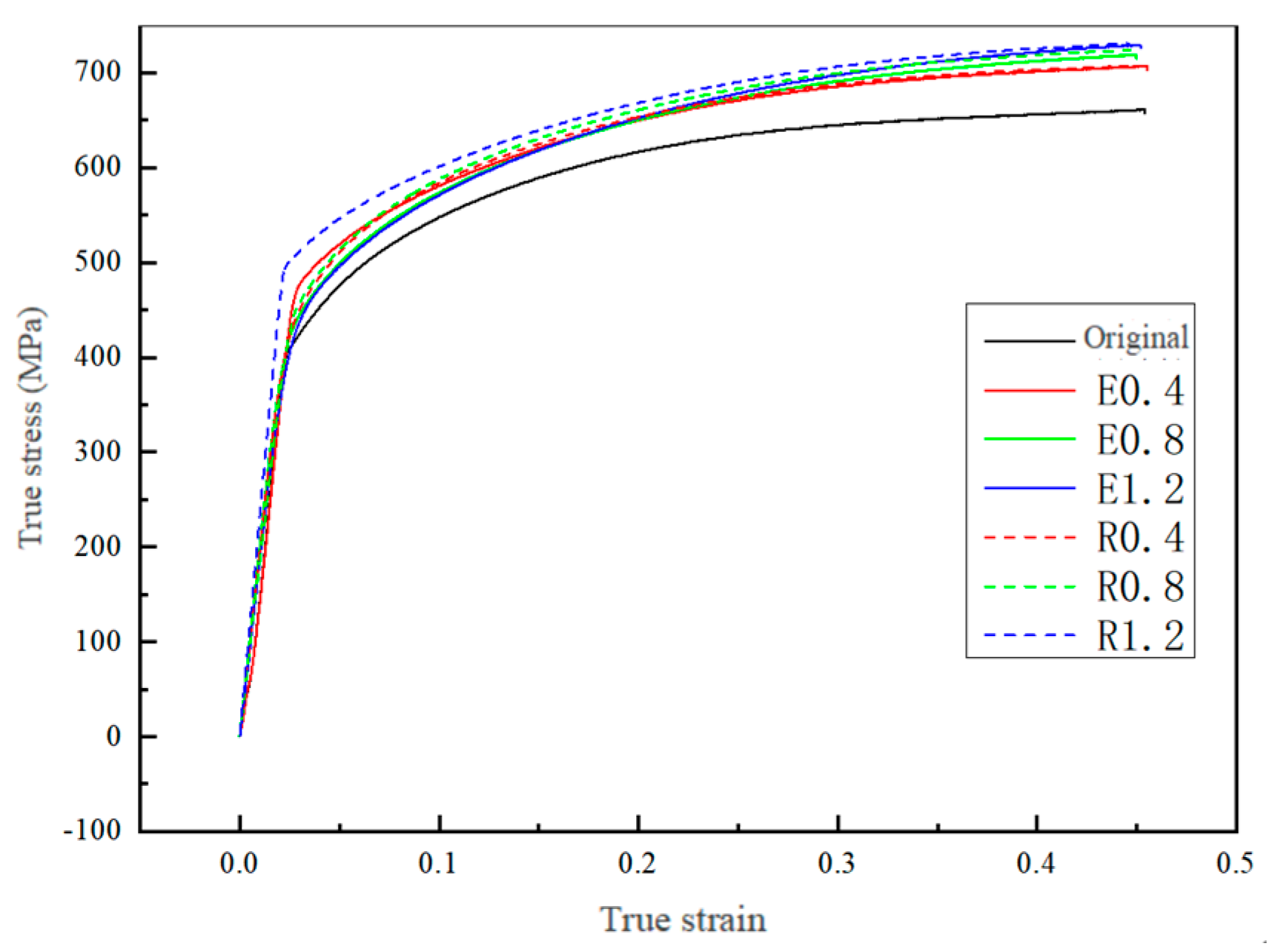
The initial pipe blanks were fabricated from L360 grade JCO-formed pipes, possessing a yield strength of 445 MPa, compressive strength of 607 MPa, an elastic modulus of 203,086 MPa, and a plastic modulus of 1129 MPa, thereby conforming to the L360 grade material specifications. To examine the static mechanical properties of the fabricated pipes, compression samples were extracted circumferentially from pipes with expansion ratios of 0.4%, 0.8%, and 1.2%, and reduction ratios of 0.4%, 0.8%, and 1.2%, along with original pipes (without roundness correction). Seven types of compression specimens were obtained, and their stress/strain curves are illustrated in Figure 3. The results indicated that both expansion and reduction treatments improve the mechanical properties compared to the original pipes. Specifically, as the expansion ratio increases, the yield strength slightly decreases. Conversely, the yield strength increases significantly with higher reduction ratios. The compressive strength of the reduction specimens is slightly higher than the expansion specimens.
Figure 3.
Stress/strain relationship curve of pipe fitting sample (E is diameter expansion, R is diameter reduction, and the numbers after are diameter expansion/diameter reduction ratio).
2.3. Split Hopkinson Pressure Bar (SHPB) Experimental Method
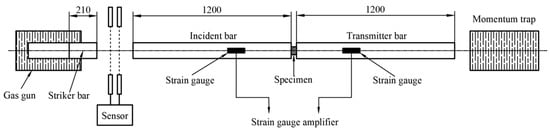
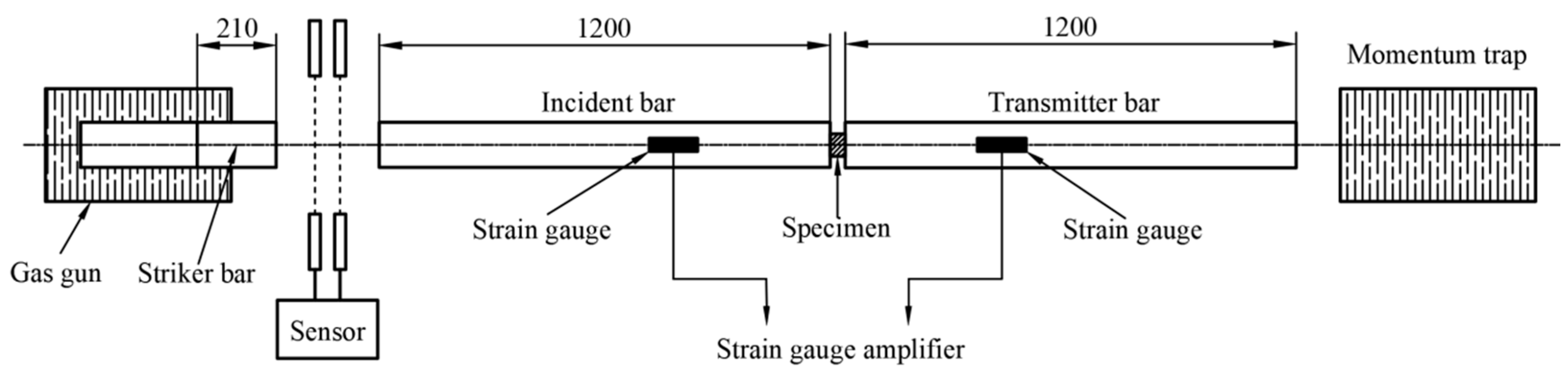
The mechanical behavior of materials subjected to high-strain-rate impact loading is typically examined using the Split Hopkinson Pressure Bar (SHPB) technique. This method is widely used to obtain stress/strain relationships for materials at high strain rates (ranging from 102 to 104 s−1) [15], as illustrated in the schematic diagram of the SHPB experimental setup in Figure 4.
Figure 4.
SHPB’s experimental setup.
The SHPB system consists of three main components: the bar system, the measurement system, and the data acquisition and processing system. The bar system includes the impact, incident, transmission, and absorption bars. The measurement system is primarily composed of strain sensors on the bars. The strain gauges are bonded to specific locations on the bars and connected via a Wheatstone bridge to an ultra-dynamic strain measurement instrument, allowing the strain in the bars to be measured. The bars are made from homogeneous steel with an elastic modulus of 210 GPa, the impact bar having a length of 210 mm and a diameter of 16 mm, with the incident and transmission bars being 1200 mm long and a diameter of 16 mm. The specimens are made into cylindrical shapes with a diameter of 4 mm and a length of 3 mm, ensuring the parallelism of the ends adheres to a tolerance of 0.02 mm and satisfies surface flatness criteria. Both ends of the specimens are polished to reduce friction effects during testing. During the experiments, petroleum jelly was applied to both ends of the specimens to reduce friction further. The specimens are then placed between the two bars of the SHPB device, ensuring that the specimen’s axis is aligned with the axis of the bars.
When the impact bar collides with the incident bar, pressure pulses are produced and propagate toward the ends of the respective bars, forming an incident wave. The waveform of the incident wave is captured as it passes through the strain gauges. When the stress pulse from the incident bar reaches the specimen’s contact surface, part of the pulse is reflected due to wave impedance mismatch, forming a reflected wave in the incident bar. The remaining portion of the pulse transmits through the specimen into the transmission bar, creating a transmitted wave. The transmitted wave is measured by strain gauges. The strain signals from the strain gauges are collected and converted into digital data, which are processed and analyzed using computer software to obtain the stress/strain curve and determine properties such as yield strength and compressive strength.
2.4. Transmission Electron Microscopy (TEM) Observation
The cross-sectional specimens along the axial and circumferential directions were machined from the as-received pipes. Prior to microstructural observation, the samples were mechanically ground and polished to a final thickness of approximately 50 μm using a series of SiC abrasive papers. Subsequently, thin foils suitable for transmission electron microscopy (TEM) observation were prepared by twin-jet electropolishing. The dislocation structures were examined using a field-emission transmission electron microscope (FEI Talos F200X, Thermo Fisher Scientific, Waltham, MA, USA), operated at an accelerating voltage of 200 kV.
3. Impact Test Results and Analysis of JCO Pipe Fittings
3.1. Impact Test Results
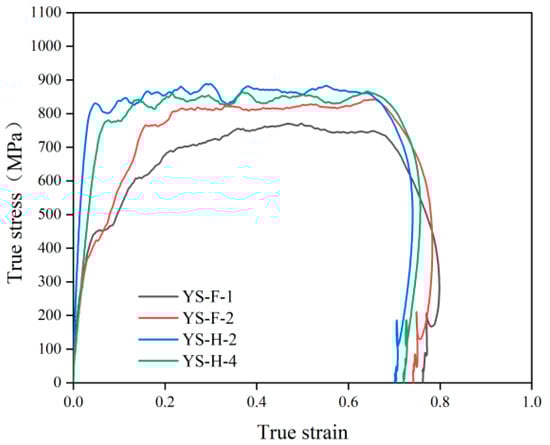
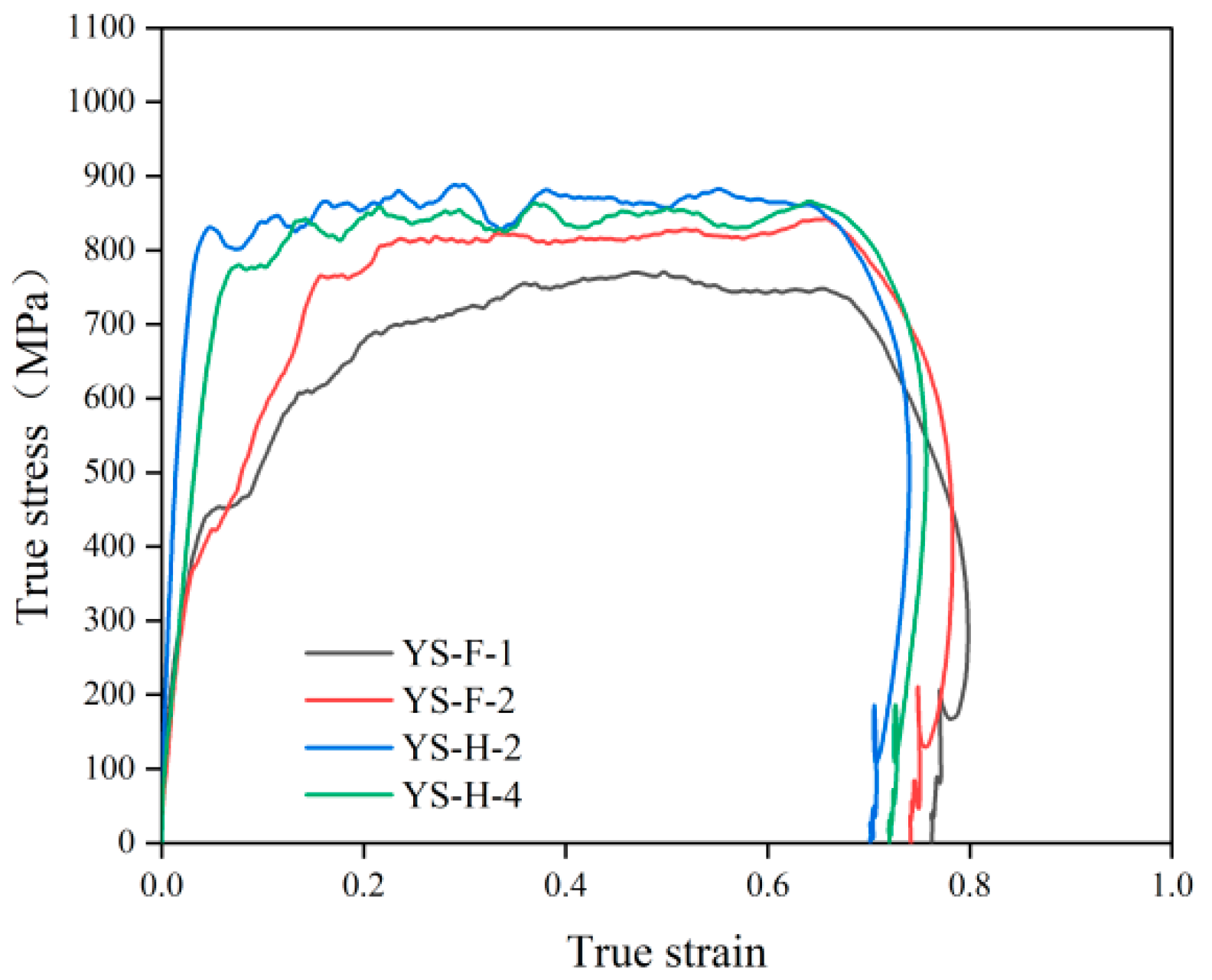
Impact tests were performed on pipe fittings with three different expansion/reduction ratios, and stress/strain curves, along with performance parameters such as impact yield strength and compressive strength, were obtained for different regions of the pipe fittings, as summarized in Table 1. For each type of specimen, three replicate tests were conducted. Figure 5 depicts the stress/strain curve for the original pipe specimen. The curve illustrates three distinct stages under high-strain-rate conditions: the initial elastic stage, characterized by a nearly linear relationship between strain and stress, with the slope of this linear portion corresponding to the material’s dynamic elastic modulus. The plastic stage, characterized by a significant increase in strain following the dynamic yield point, exhibits a slight or nearly constant increase in stress, approaching ideal elastoplastic behavior, and the final unloading stage, during which stress decreases rapidly. Comparison with static compression test stress/strain curves indicates a notable increase in impact yield strength and elastic modulus, highlighting the pronounced strain-rate strengthening effect. The average yield strength and compressive strength of the original JCO-formed pipe fittings were 462 MPa and 865 MPa, respectively, both of which are significantly higher than the static yield strength of 445 MPa and static compressive strength of 607 MPa of the base material.
Table 1.
The yield strength and compressive strength of the sample.
Figure 5.
Stress/strain curve of pipe fitting sample (sample of original pipe fitting).
3.2. Influence of Sample Orientation on Test Results
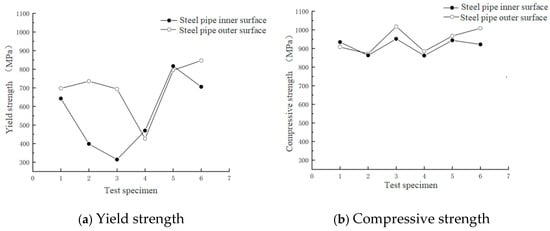
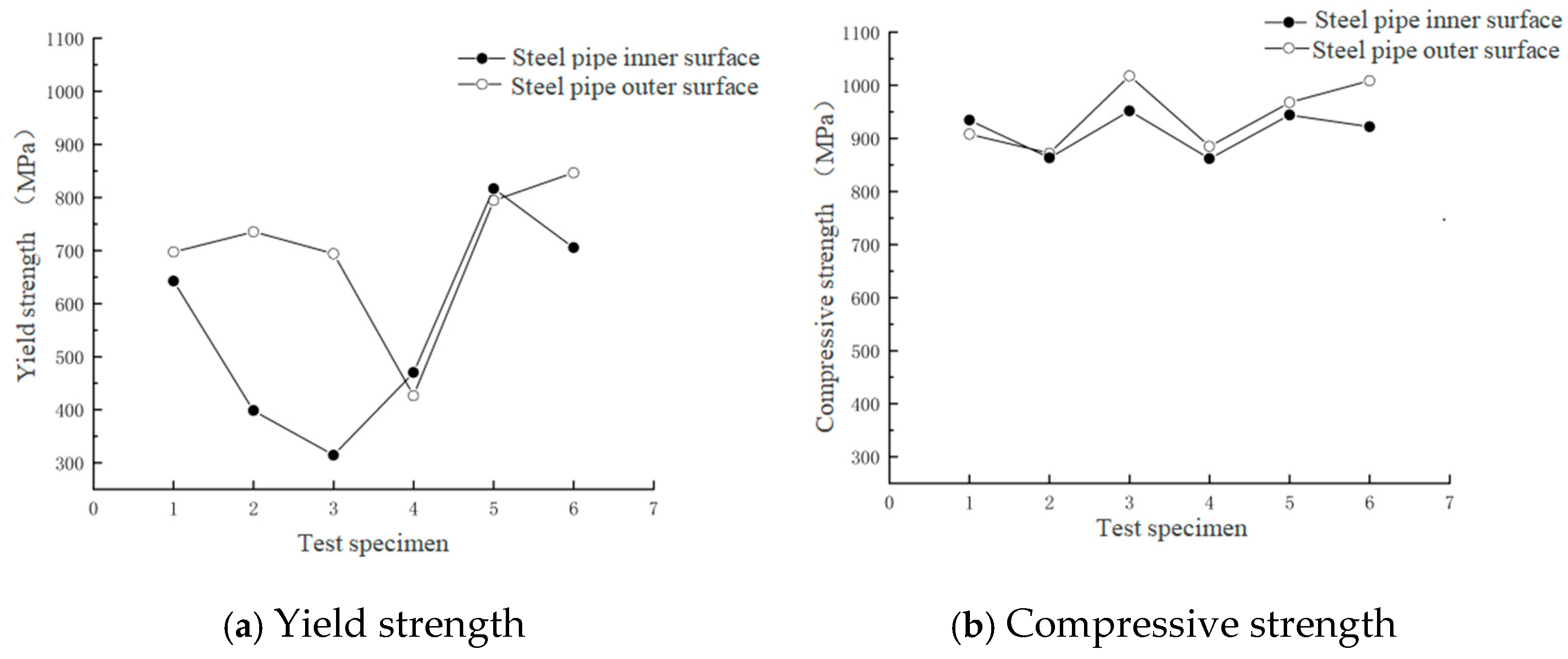
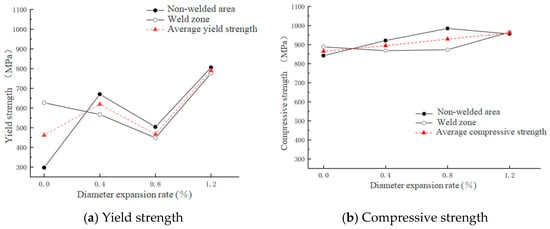
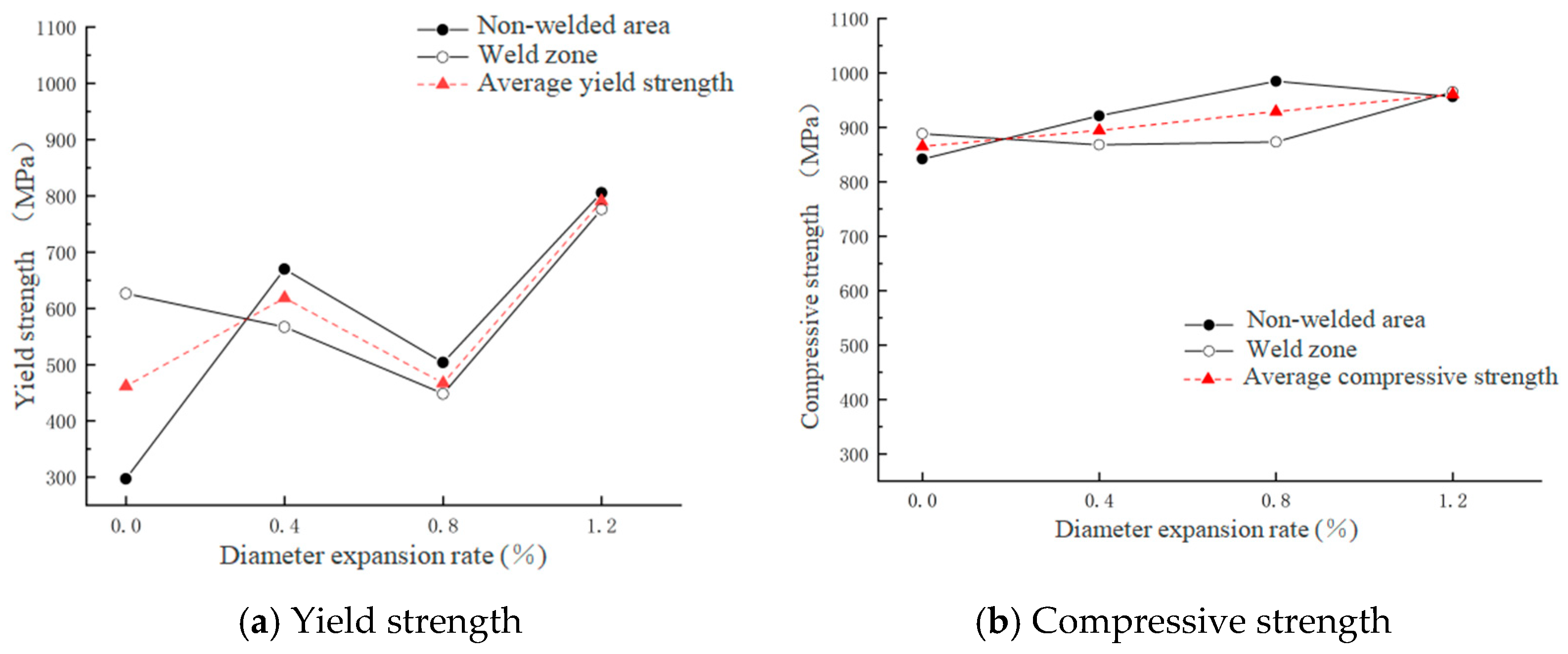
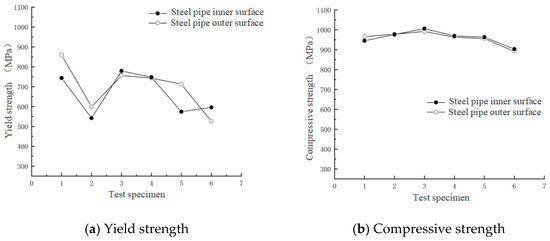
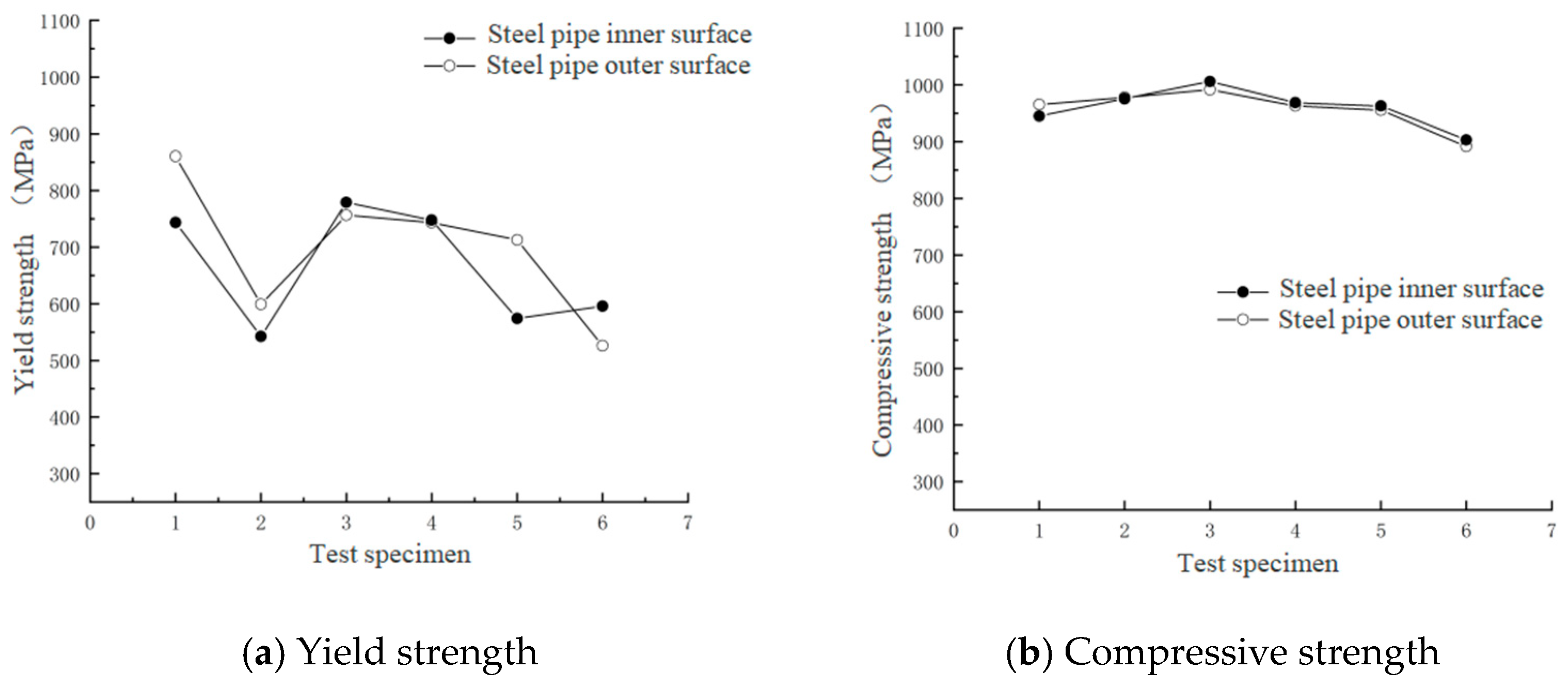
The sample orientation significantly affected the impact yield and compressive strength for the expansion specimens. Specimens with external wall orientation exhibited higher values than those with internal wall orientation. The six test specimens showed an average yield strength of 558 MPa for the internal wall and 669 MPa for the external wall, while the average compressive strength was 913 MPa for the internal wall and 960 MPa for the external wall, as depicted in Figure 6. Regarding the sampling region, the specimens from the non-welded region showed slightly higher impact yield strength and compressive strength than the welded region. The average yield strength for the six test specimens was 660 MPa in the non-welded region and 597 MPa in the welded region. The average dynamic compressive strength was 954 MPa in the non-welded region and 902 MPa in the welded region, as shown in Figure 7. Concerning the expansion ratio, with the original pipe designated as having a 0% expansion ratio, the impact yield strength demonstrated a wave-like increase with the expansion ratio, whereas the impact compressive strength exhibited a linear increase, as illustrated by the red line representing the average values in Figure 7.
Figure 6.
Comparison of orientation of expanding sample of pipe fittings.
Figure 7.
Regional comparison of pipe fittings expanding sample.
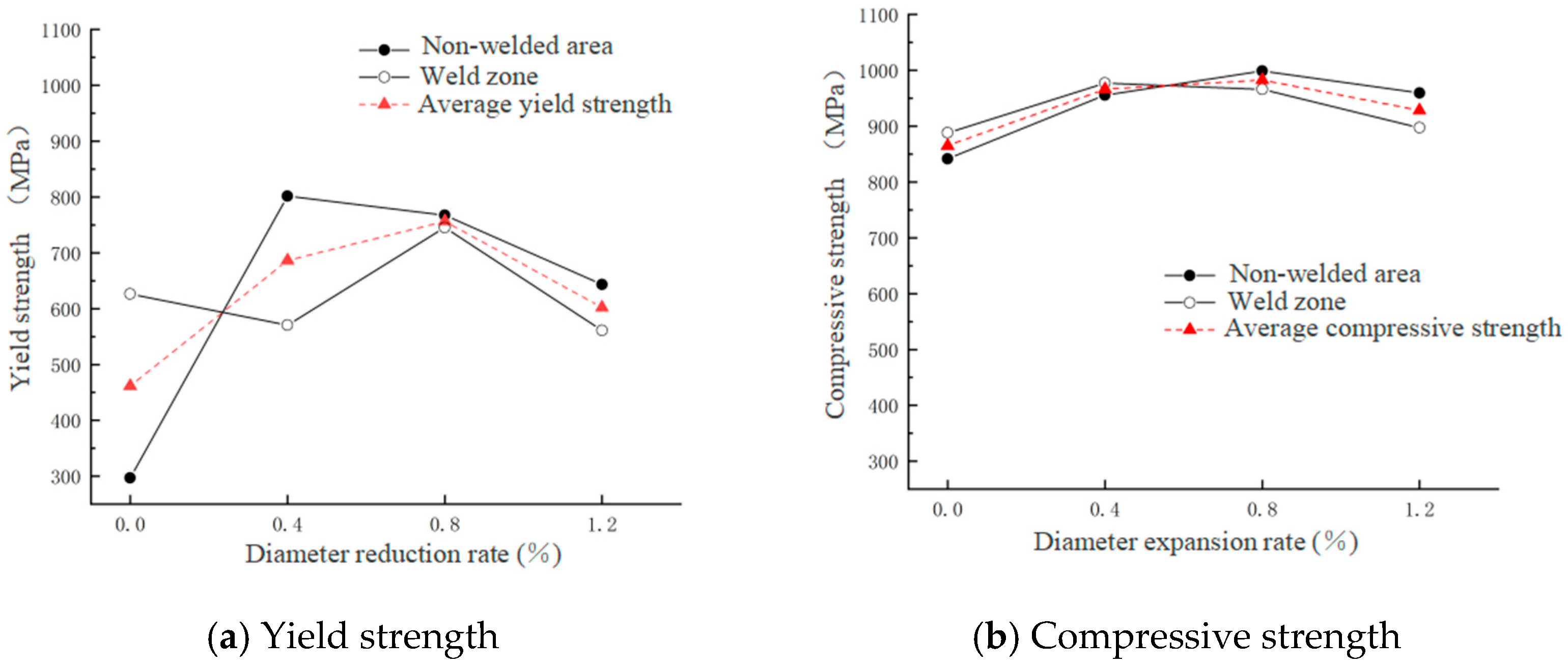
The difference in impact yield strength and compressive strength between internal and external wall orientations was minimal for the reduction specimens. The six test specimens showed an average yield strength of 664 MPa for the internal wall and 700 MPa for the external wall, with an average compressive strength of 960 MPa for the internal wall and 958 MPa for the external wall, as depicted in Figure 8. Regarding the sampling region, the impact yield strength of specimens for the non-welded region was slightly higher than that from the welded region, whereas the impact compressive strength showed no significant difference between the two regions. The average yield strength for the six test specimens was 738 MPa in the non-welded region and 626 MPa in the welded region. The average compressive strength in the non-welded region was 971 MPa, whereas in the welded region, it was 947 MPa, as illustrated in Figure 9. Regarding the reduction ratio, with the original pipe designated as having a 0% reduction ratio, both dynamic yield strength and dynamic compressive strength initially exhibited a linear increase with the reduction ratio; however, when the reduction ratio exceeded 0.8% and reached 1.2%, both values started to decrease, as depicted by the red line representing the average values in Figure 9.
Figure 8.
Comparison of orientation of pipe fittings reduced specimen.
Figure 9.
Regional comparison of pipe fittings reducing sample.
3.3. Influence of Expansion and Reduction Deformation Ratios on Impact Performance
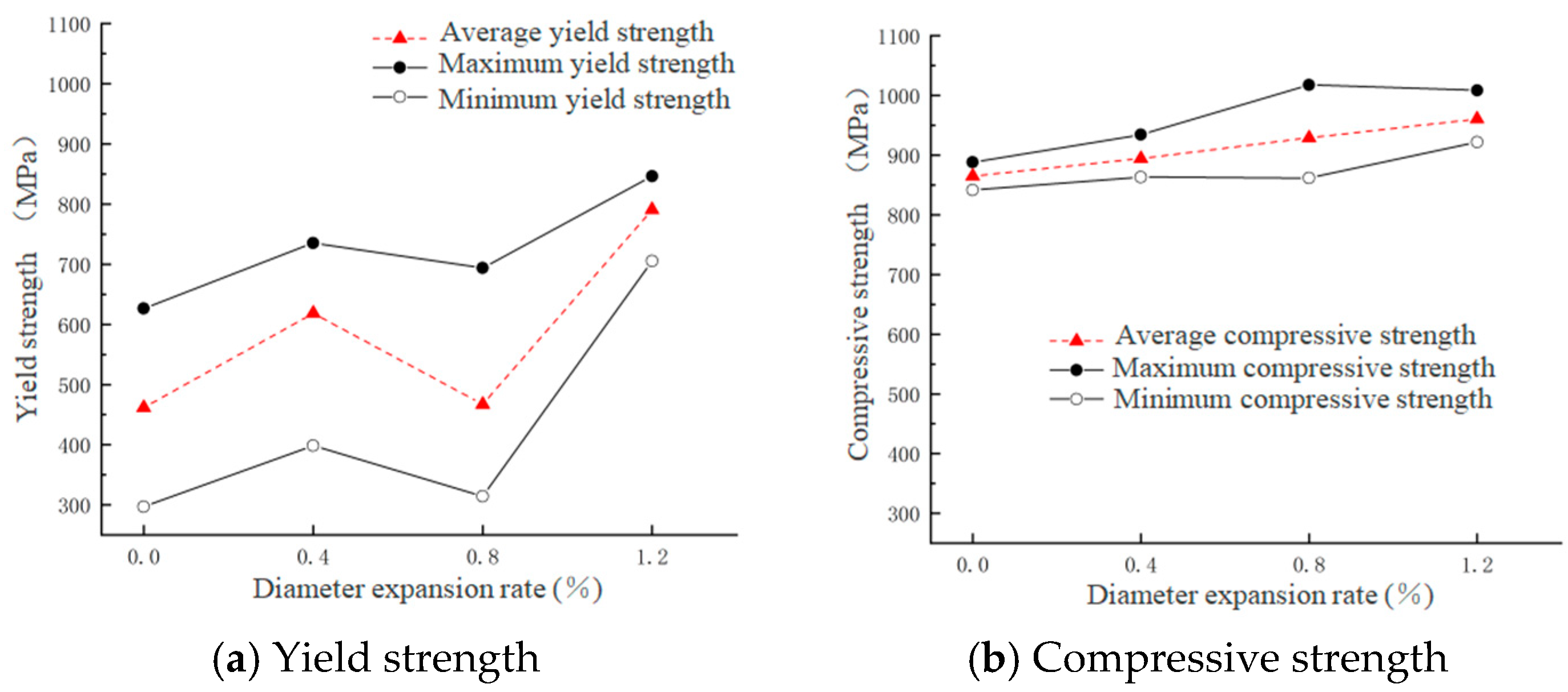
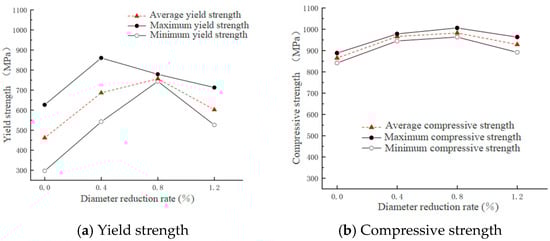
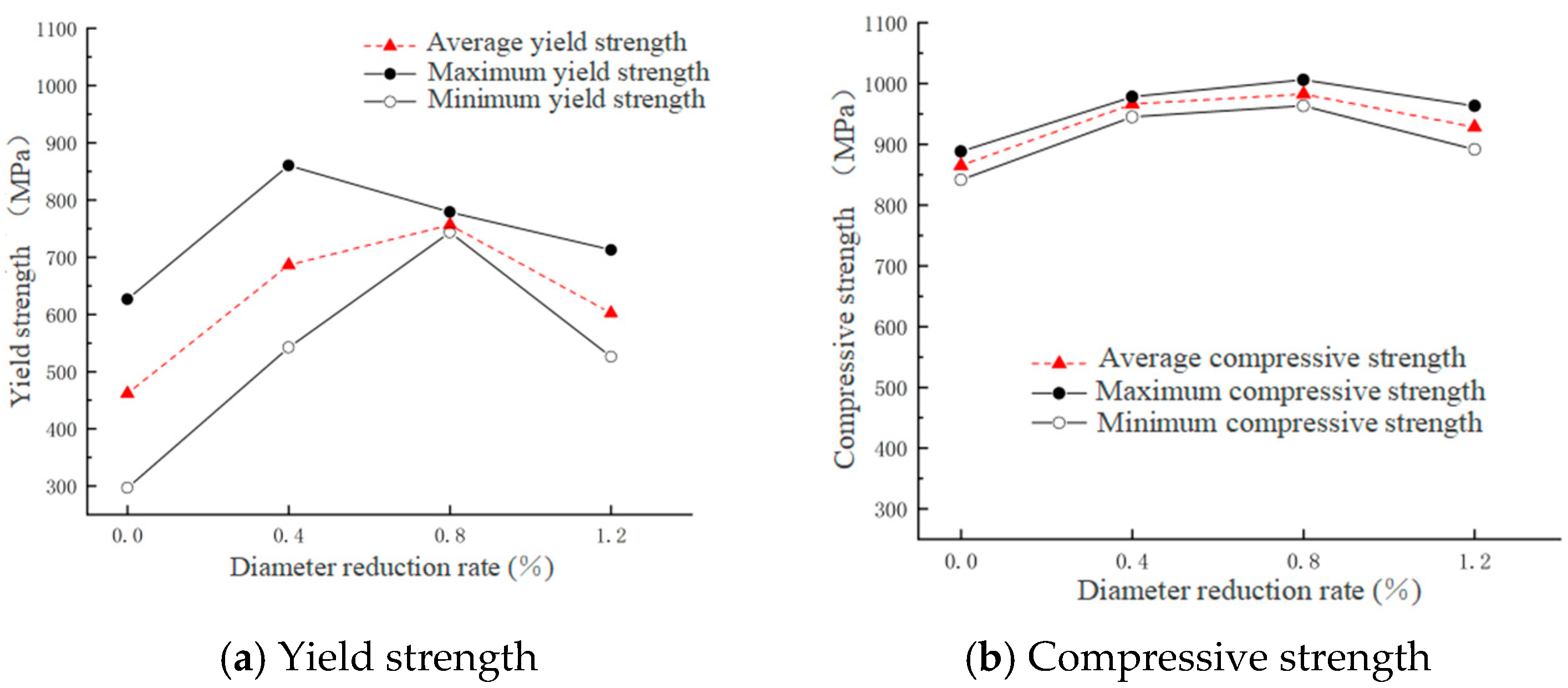
To assess the overall impact resistance of the pipe fittings, the maximum, minimum, and average values of impact yield strength and compressive strength corresponding to each expansion ratio were extracted, as illustrated in Figure 10 and Figure 11. The average values represent the overall performance level, the maximum values indicate the potential for improvement, and the minimum values represent the possible weaknesses. Due to the inhomogeneity and randomness of pipe material properties, the overall performance of the pipe often depends on the weakest region, i.e., the minimum strength.
Figure 10.
Expansion ratio of pipe fittings and impact properties of sample.
Figure 11.
Reduction ratio of pipe fittings and impact properties of sample.
As the expansion ratio increases, both the average impact yield strength and compressive strength show a linear increase. The minimum values of impact yield strength and compressive strength show a wave-like increase, with the maximum yield strength and tensile strength appearing at the external wall of the welded region for the 1.2% expansion ratio, reaching 1009 MPa and 847 MPa, respectively. In the case of a pipe with a 1.2% expansion ratio, compared to the original pipe, the maximum impact yield strength and compressive strength increased by 35% and 14%, respectively, whereas the average impact yield strength and compressive strength increased by 71% and 11%. The minimum impact yield strength and compressive strength increased by 137% and 10%, respectively. The increase in impact yield strength was evident, as shown in Figure 10. With an increasing expansion ratio, both impact yield strength and compressive strength exhibit significant improvement. This finding contradicts the conclusions in the literature [11], which observed an increase in yield strength with expansion ratio, while the effect on tensile strength was minimal.
As the reduction ratio increases, both the average and minimum impact yield strength and compressive strength exhibit a linear increase. However, when the reduction ratio exceeds 0.8% and reaches 1.2%, impact yield strength and compressive strength start to decrease, as illustrated in Figure 11. In the case of a pipe with a 0.8% reduction ratio, the maximum impact yield strength and compressive strength increased by 24% and 13%, respectively, compared to the original pipe, while the average impact yield strength and compressive strength increased by 64% and 14%. The minimum impact yield strength and compressive strength increased by 152% and 14%, respectively, with the increase in impact yield strength being particularly significant. The maximum tensile strength of 1006 MPa was observed in the external wall of the non-welded region for the 0.8% reduction ratio pipe, whereas the maximum yield strength of 860 MPa was found in the internal wall of the non-welded region for the 0.4% expansion ratio pipe. These results suggest that the optimal reduction ratio may be below 0.8% and that the reduction process with a smaller reduction ratio can achieve dynamic yield strength and compressive strength levels compared to those of pipes with higher expansion ratios.
3.4. Influence of Expanding and Reducing Process on Microstructure
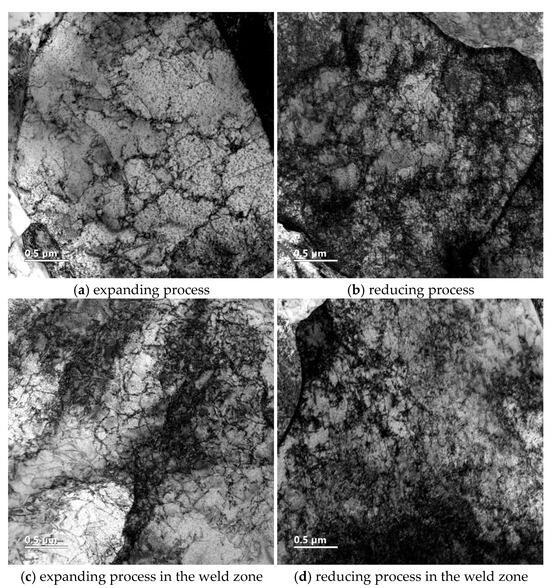
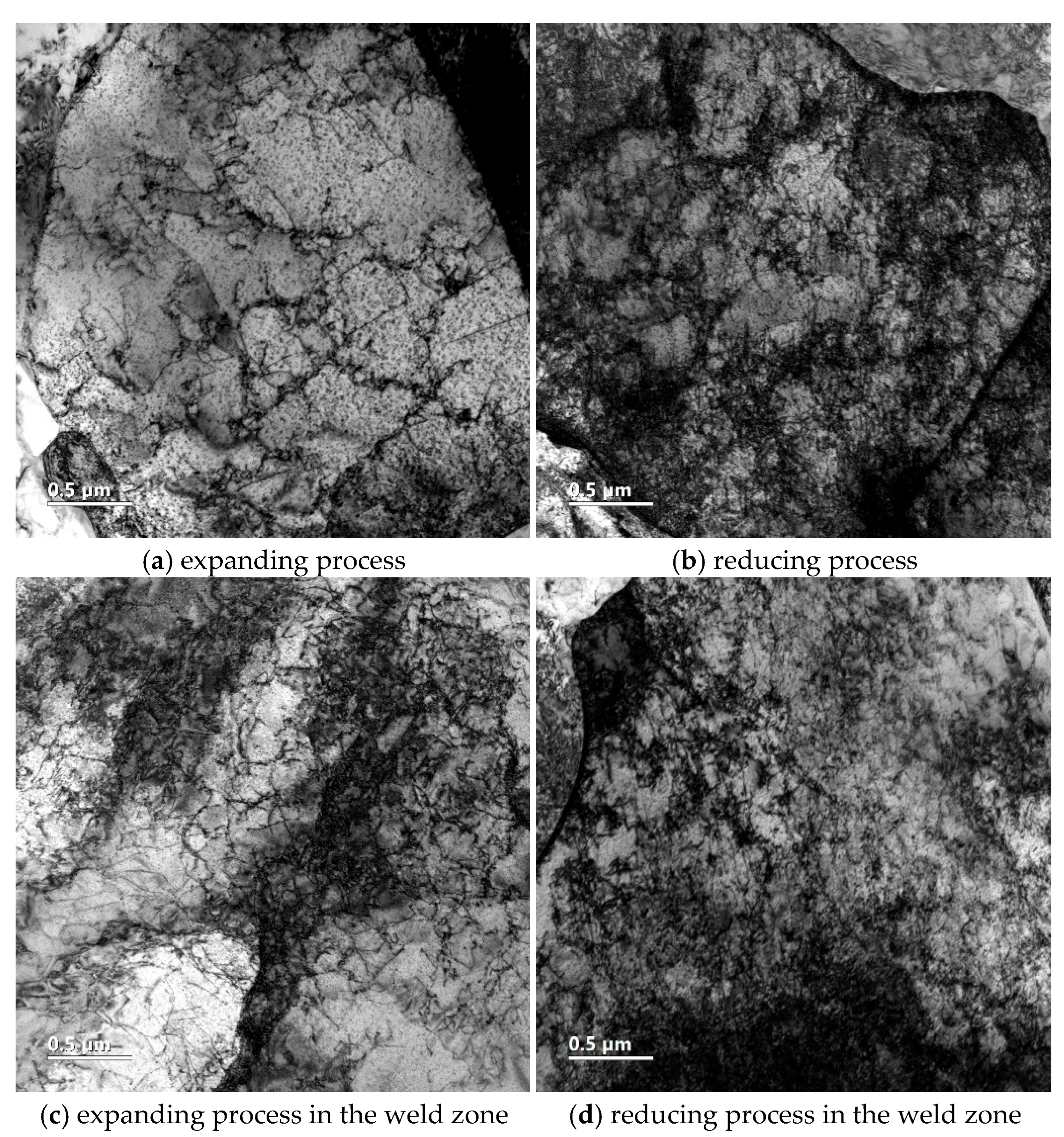
The behavior of dislocations under different processing conditions plays a critical role in determining the mechanical performance of materials. Figure 12 presents transmission electron microscopy (TEM) images of the material subjected to both expansion and reduction processes, highlighting pronounced variations in dislocation density and distribution.
Figure 12.
Transmission electron microscopy (TEM) images under different processing conditions.
Figure 12a,b shows the transmission electron microscopy (TEM) images of the material subjected to the expanding and reducing processes, respectively. As observed in Figure 12a, a large number of dislocation networks are observed during the expanding process, with their distribution appearing highly non-uniform. This phenomenon is attributed to the significant residual tensile stress introduced during the expansion process, in which localized stress concentration promotes dislocation interlocking and tangling [16]. In contrast, as shown in Figure 12b, under the reducing process, the dislocation density remains at a relatively high level and exhibits a more uniform distribution. This can be attributed to the residual compressive stress induced during the reducing process, which suppresses dislocation slipping and disentanglement; dislocations interact within a smaller region, leading to the stabilization of dislocation structure [17].
Figure 12c,d presents the TEM images of the weld zone under expanding and reducing processes, respectively. As illustrated in Figure 12c, the weld zone of the expanded tube specimens exhibits a more heterogeneous dislocation distribution compared with the non-weld zone, and local dislocation-dense bands are formed in the regions of stress concentration area, indicating a strong plastic inhomogeneity. In contrast, as shown in Figure 12d, for reducing pipes, the dislocation distribution in the weld zone is more uniform and stable than that in the non-welded zone. This difference can be explained by the superposition effect of tensile stresses from the expanding and welding processes, further aggravating dislocation intersection and tangling. However, the compressive stresses generated during the reducing process can offset a portion of tensile stresses produced during the welding process, reducing the instability of dislocation motion and resulting in a more uniform and stable dislocation distribution. It can be seen that both in the weld zone and non-weld zone, the dislocation distribution of reducing pipe is more uniform and stable. During deformation, enhanced interactions between dislocations can effectively suppress dislocation slip, resulting in higher yield strength [18].
4. Conclusions
This study evaluated the impact performance of L360 straight-seam welded pipes subjected to expansion and reduction processes. Significant improvements in mechanical properties, particularly impact yield strength and compressive strength, were observed with increasing expansion and reduction ratios. The results provided valuable insights into the influence of deformation processes on pipe performance and the variations observed in different orientations and regions of the pipe.
(1) Inhomogeneity in Impact Resistance: The impact resistance of the straight-seam welded pipes demonstrated inhomogeneity across different regions. Specifically, the welded region exhibited higher impact yield strength and compressive strength than the non-welded region. Moreover, specimens with an internal wall orientation had lower values than those with an external one. For expansion specimens, the average yield strength was 558 MPa (internal wall) and 669 MPa (external wall), with corresponding compressive strengths of 913 MPa and 960 MPa. Similarly, for reduction specimens, the internal wall yield strength averaged 664 MPa, and the external wall strength was 700 MPa, with compressive strengths of 960 MPa and 958 MPa, respectively.
(2) Deformation Strengthening Effects: Both expansion and reduction processes exhibited significant deformation strengthening effects, improving the impact performance of the pipes. Particularly, for pipes with a 1.2% expansion ratio, the impact yield strength increased by 35% and compressive strength by 14% compared to the original pipe. For pipes with a 0.8% reduction ratio, the average impact yield strength increased by 64% and compressive strength by 14%. Thus, the reduction process showed a more pronounced impact on enhancing impact performance than the expansion process.
(3) Strain-Rate Strengthening and Further Investigation: Both the bagging effect and work hardening phenomena were observed during the forming process, and under impact loading, the material demonstrated significant strain-rate strengthening. The influence of the expansion ratio on impact performance, particularly in macroscopic mechanical properties and microstructural behavior, requires further investigation. The reduction process, an emerging technique, requires further exploration to optimize its impact on pipe performance, especially in complex environments such as deep-sea applications.
(4) Whether in the weld zone or non-weld zone, the dislocation distribution of expanded pipes is more uneven compared to the reducing process. This is attributed to the significant residual tensile stress introduced by the expansion process, which leads to more severe dislocation interlocking and tangling. In contrast, dislocation slip can be effectively suppressed by the residual compressive stress imposed by the reducing process, which reduces the instability of dislocation motion and promotes the formation of a more uniform and stable dislocation structure.
Author Contributions
D.P.: Writing—original draft preparation. G.W. and J.Y.: Experiment performing and software. Y.J. and X.L.: Data analysis. D.P. and B.W.: Experiment designing. All authors have read and agreed to the published version of the manuscript.
Funding
The National Key Research and Development Program of China (Grant No. 2022YFC2805904), the National Natural Science Foundation of China (Grant No. 52275106), the Hunan Innovation Province Project (Grant No. 2020GK1021), and the Natural Science Foundation of Hunan Province (Grant Number 2023JJ30252) are gratefully acknowledged for the financial support of this research.
Data Availability Statement
The original contributions presented in this study are included in the article. Further inquiries can be directed to the corresponding author.
Conflicts of Interest
Author Deping Peng was employed by the company Xiangtan Huajin Heavy Equipment Technology Co., Ltd. The remaining authors declare that the research was conducted in the absence of any commercial or financial relationships that could be construed as a potential conflict of interest.
References
- Jiang, F.; Dong, S. A review on the damage mechanism analysis and risk assessment for offshore pipelines subjected to impact loads from third-party activities. Ocean Eng. 2023, 41, 187–199. [Google Scholar] [CrossRef]
- Chen, Q.; Zhang, Y.; Long, T.; Xing, J.; Huang, L. Risk analysis of Chinese overseas oil supply. Geol. Explor. 2018, 54, 1091–1098. [Google Scholar] [CrossRef]
- Wang, L.; Lu, S.; Wei, S.; Jiang, J. Development and Application of Straight Welded Line pipes for Deep Ocean Gas Pipeline Project. Welded Pipe Tube 2014, 43, 22–30. [Google Scholar] [CrossRef]
- Cai, X. Influence of Forming Process of Large Diameter Straight Seam Submerged Arc Welding Pipe on Mechanical Properties of Blank Sheet. Ph.D. Thesis, Yanshan University, Qinhuangdao, China, 2014. [Google Scholar]
- Mandal, A.; Syed, B.; Bhandari, K.K.; Bhattacharya, B.; Deb, A.; Singh, S.B.; Chakrabarti, D. Cold-bending of line pipe steel plate to pipe, detrimental or beneficial? Mater. Sci. Eng. A-Struct. Mater. Prop. Microstruct. Process. 2019, 746, 58–72. [Google Scholar] [CrossRef] [Scilit]
- Al-Abri, O.S.; Pervez, T.; Al-Maharbi, M.H.; Khan, R. Microstructure evolution of ultra-fine grain low-carbon steel tubular undergoing radial expansion process. Mater. Sci. Eng. A-Struct. Mater. Prop. Microstruct. Process. 2016, 654, 94–106. [Google Scholar] [CrossRef] [Scilit]
- Shinohara, Y.; Hara, T.; Tsuru, E.; Asahi, H. Development of A High Strength Steel Line Pipe for Strain-based Design Applications. In Proceedings of the 17th International Offshore and Polar Engineering Conference, Lisbon, Portugal, 1–6 July 2007. [Google Scholar]
- Peng, D.; Yang, J.; Wang, G.; Jing, Y.; Chen, J.; Liu, H. Impact of roundness deformation ratio on electrochemical corrosion behavior of JCO welded pipe. Welded Pipe 2025, 48, 18–23. [Google Scholar] [CrossRef]
- Sun, Z.; Hu, X.; Zhang, Y.; Yang, S.; Yu, X.; Fang, Z. Research on Bauschinger effect of X65MO submarine pipeline steel. Teel Roll. 2020, 37, 33–36. [Google Scholar] [CrossRef]
- Zou, T.X.; Li, D.Y.; Wu, G.H.; Peng, Y.H. Yield strength development from high strength steel plate to UOE pipe. Mater. Des. 2016, 89, 1107–1122. [Google Scholar] [CrossRef] [Scilit]
- Li, W.; Zhao, Y.; Ji, L. Effect of Expansion Rate on Tensile Performance of Longitudinal Submerged Are Welded Pipe. Weld Pipe 2016, 39, 42–45. [Google Scholar] [CrossRef]
- Wang, B.; Boli, R.; Hou, G.Y.; Chen, Q.; Zheng, H.; Gu, H.; Wang, Y. Experiment and Research on Expansion of HSAW Pipe Body. Steel Pipe 2022, 51, 22–28. [Google Scholar] [CrossRef]
- Wang, W.; Suo, T.; Guo, Y.; Li, Y.; Nie, H.; Liu, H.; Jin, K.; Du, B.; Jiang, B. Experimental technique and research progress of electromagnetic Hopkinson bar. Adv. Mech. 2021, 51, 729–754. [Google Scholar] [CrossRef]
- Zheng, Y.; Zhu, X.; Dong, X.; Ma, Z. Theoretical and experimental studies on the axial impact behavior of Q235B longitudinally welded tubes. J. Vib. Shock. 2016, 35, 98–103. [Google Scholar] [CrossRef]
- Meng, H.; Li, Q. Correlation between the accuracy of a SHPB test and the stress uniformity based on numerical experiments. Int. J. Impact Eng. 2003, 28, 537–555. [Google Scholar] [CrossRef] [Scilit]
- Li, Y.Z.; Zhao, S.L.; He, S.H.; Huang, C.P.; Huang, M.X. Enhancing yield stress and uniform elongation in an ultrathin packaging steel via controlling dislocation density. Int. J. Plast. 2022, 155, 103334. [Google Scholar] [CrossRef] [Scilit]
- Hoffmann, B.; Vöhringer, O.; Macherauch, E. Effect of compressive plastic deformation on mean lattice strains, dislocation densities and flow stresses of martensitically hardened steels. Mater. Sci. Eng. A 2001, 319–322, 299–303. [Google Scholar] [CrossRef] [Scilit]
- Liu, J.; Jin, Y.; Fang, X.; Chen, C.; Feng, Q.; Liu, X.; Chen, Y.; Suo, T.; Zhao, F.; Huang, T.; et al. Dislocation Strengthening without Ductility Trade-off in Metastable Austenitic Steels. Sci. Rep. 2016, 6, 35345. [Google Scholar] [CrossRef] [Scilit] [PubMed]

Disclaimer/Publisher’s Note: The statements, opinions and data contained in all publications are solely those of the individual author(s) and contributor(s) and not of MDPI and/or the editor(s). MDPI and/or the editor(s) disclaim responsibility for any injury to people or property resulting from any ideas, methods, instructions or products referred to in the content. |
© 2025 by the authors. Licensee MDPI, Basel, Switzerland. This article is an open access article distributed under the terms and conditions of the Creative Commons Attribution (CC BY) license (https://creativecommons.org/licenses/by/4.0/).