Article

Thermal, Lighting and IAQ Control System for Energy Saving and Comfort Management

by
Silvia Maria Zanoli
* and
Crescenzo Pepe
Dipartimento di Ingegneria dell’Informazione, Università Politecnica delle Marche, Via Brecce Bianche 12, 60131 Ancona, Italy
*
Author to whom correspondence should be addressed.
Processes 2023, 11(1), 222; https://doi.org/10.3390/pr11010222
Submission received: 4 December 2022 / Revised: 31 December 2022 / Accepted: 3 January 2023 / Published: 10 January 2023
(This article belongs to the Special Issue Advances in Renewable Energy Systems)

Abstract

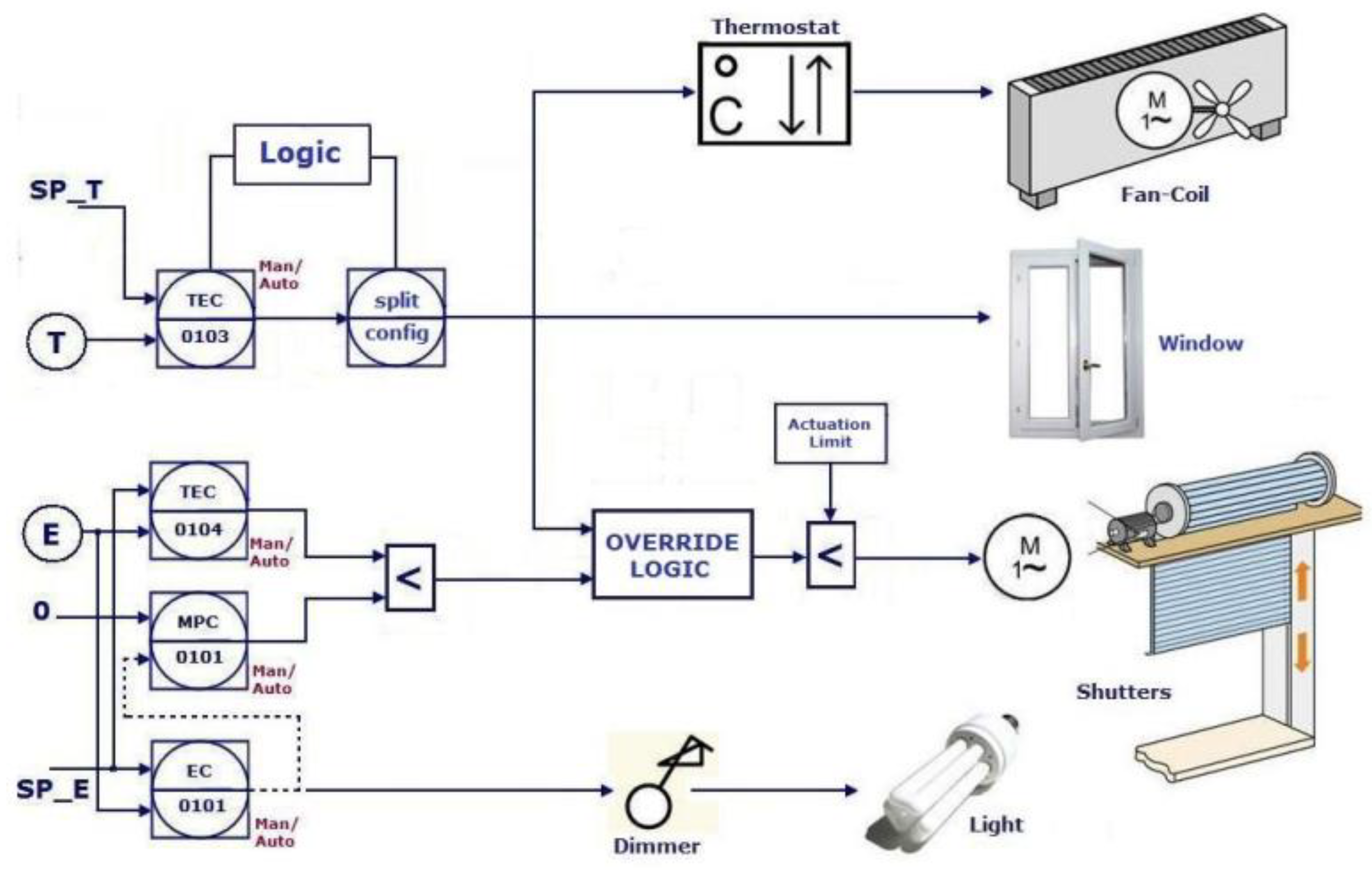
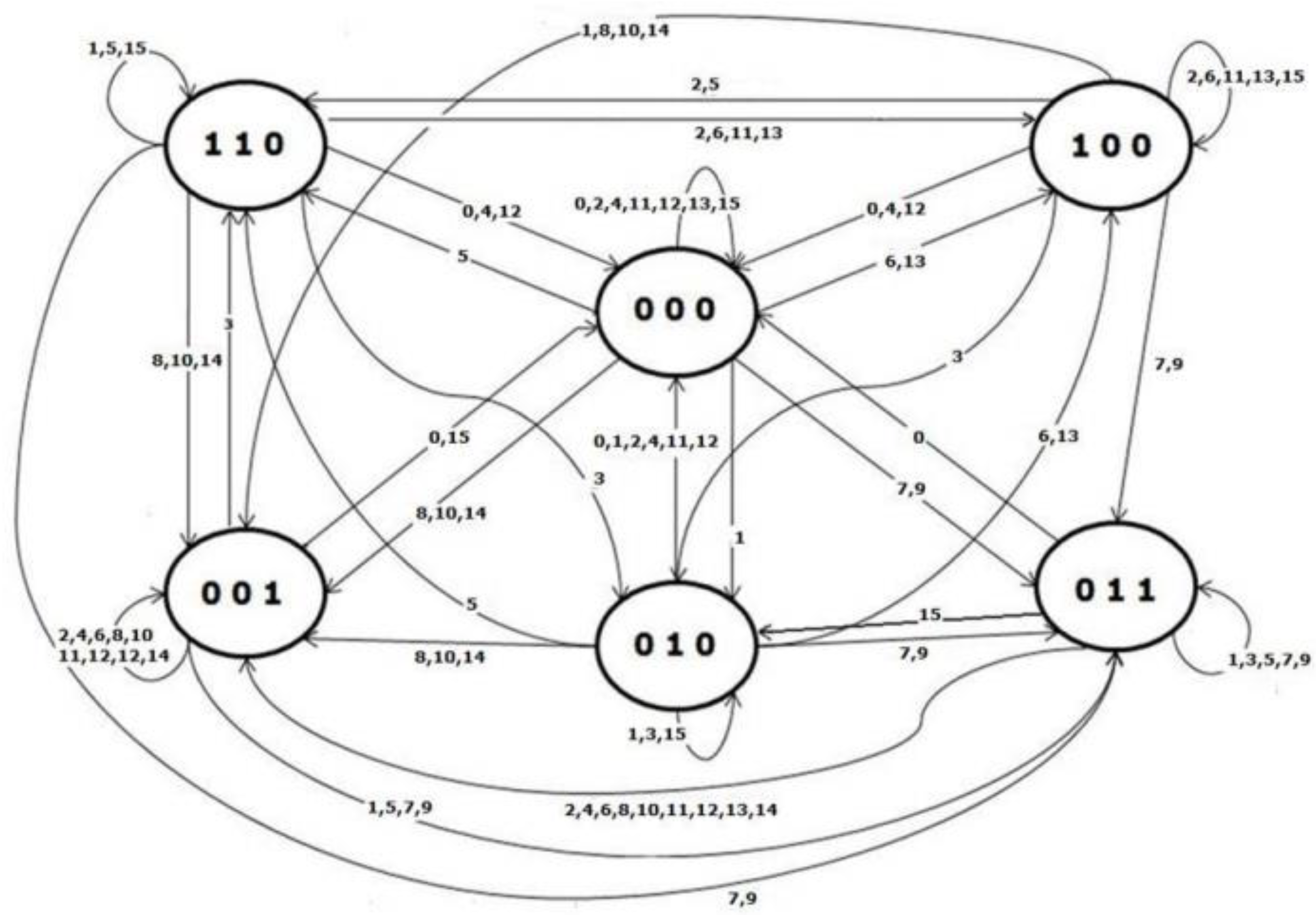
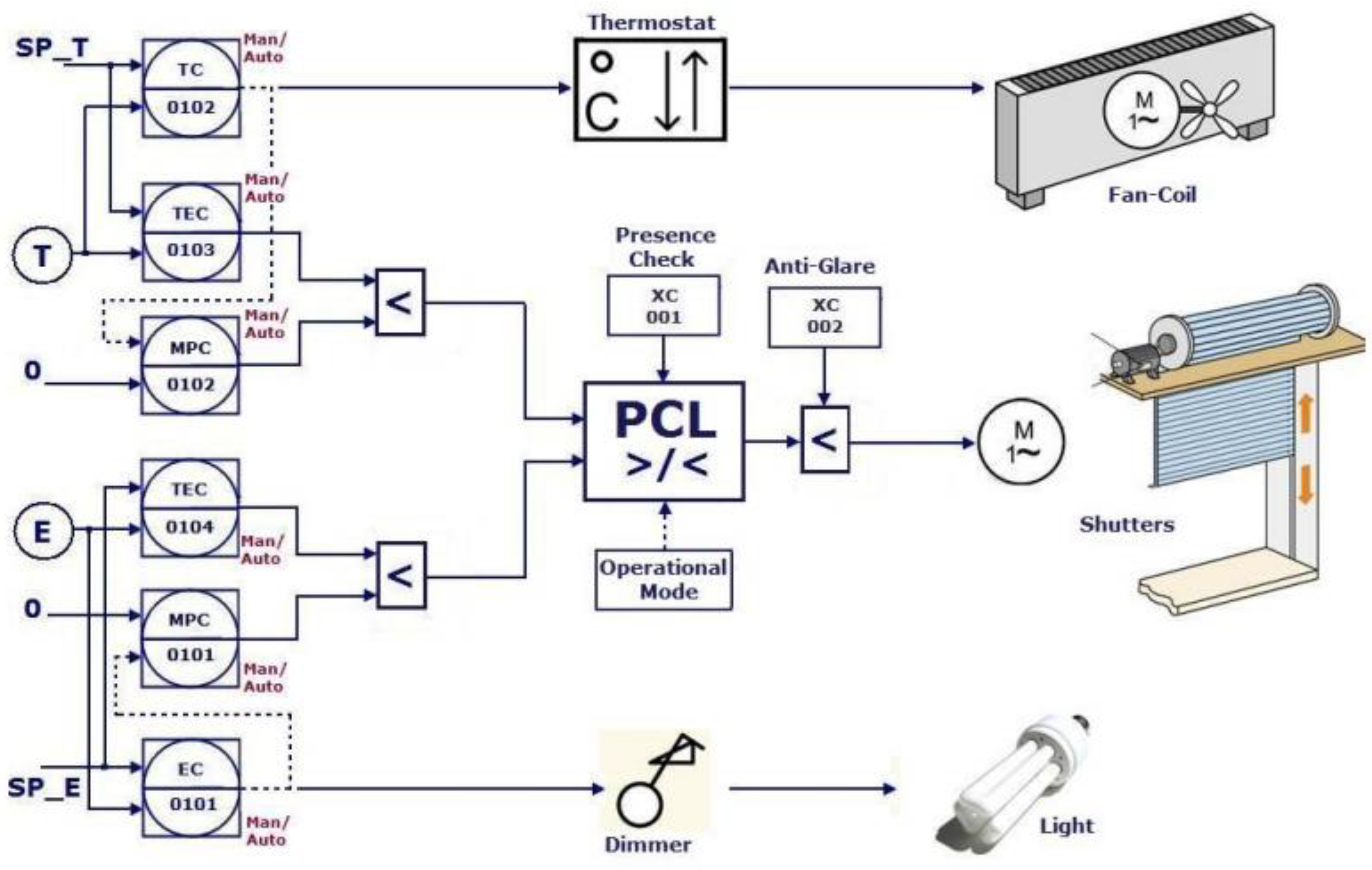
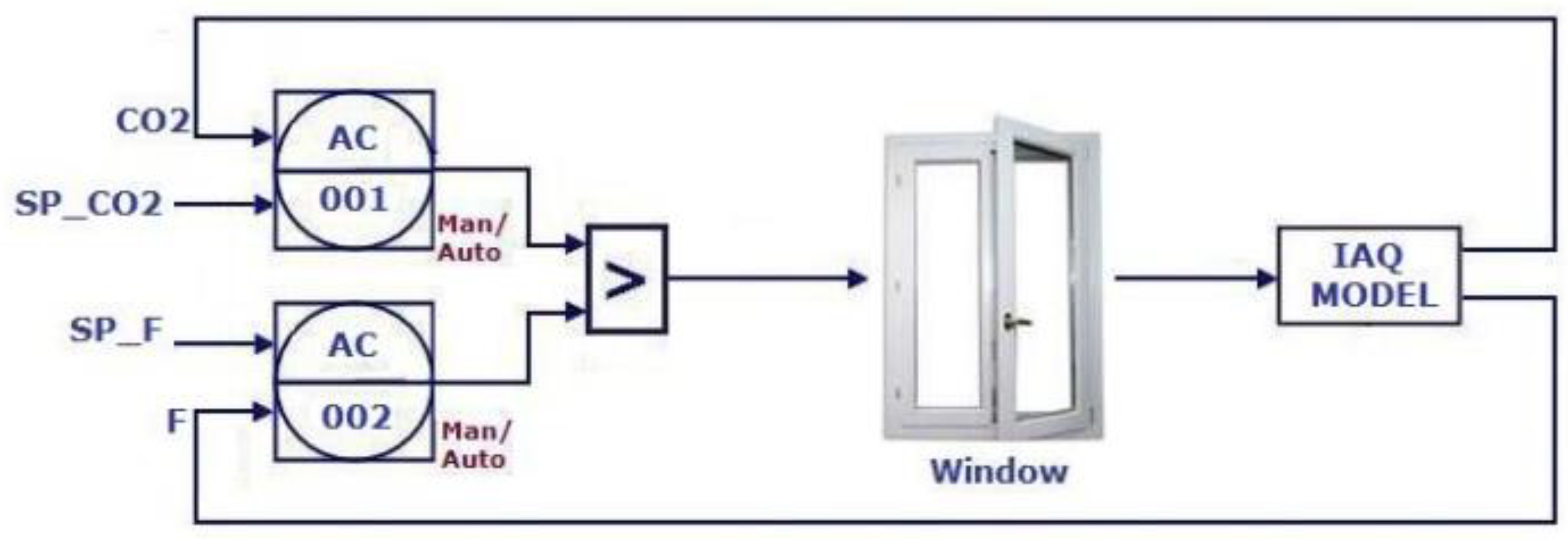
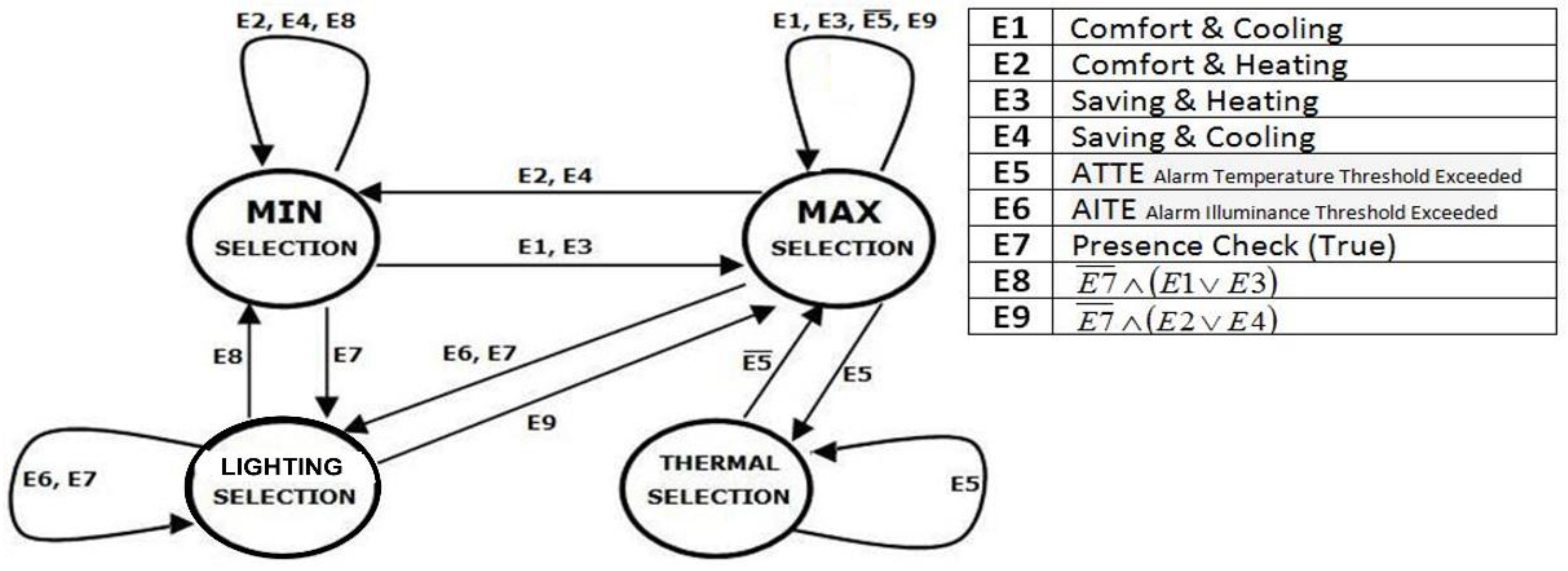
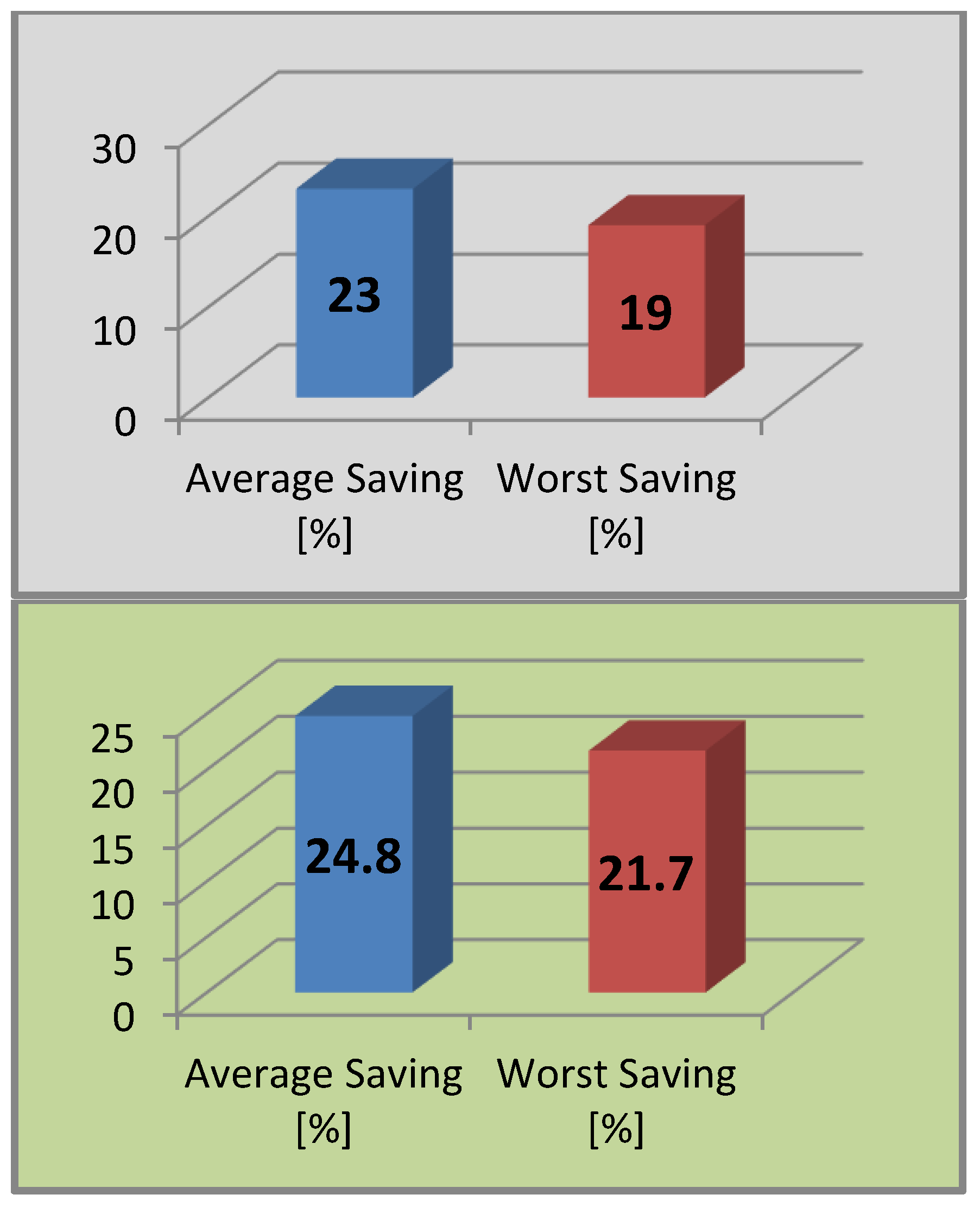
The present work proposes a simulation and control framework for home and building automation, focusing on heating, ventilating, and air conditioning processes. Control systems based on different advanced control architectures and different control policies are simulated and compared, highlighting control performances, and energy-saving results in terms of CO2 emissions reduction. Heat, lighting, and natural ventilation phenomena were modelized through first-principles and empirical equations, obtaining a reliable and flexible simulation framework. Energy-consuming and green energy-supplying renewable sources were integrated into the framework, e.g., heat pumps, artificial lights, fresh air flow, and natural illuminance. Different control schemes are proposed, based on proportional–integral–derivative advanced control architectures and discrete event dynamic systems-based supervisors; different control specifications are included, resulting in a multi-mode control system. The specifications refer to energy savings and comfort management, while minimizing overall costs. Comfort specifications include thermal comfort, lighting comfort, and a good level of indoor air quality. Simulations on different scenarios considering various control schemes and specifications show the reliability and soundness of the simulation and control framework. The simulated control and energy performances show the potential of the proposed approach, which can provide energy-saving results greater or equal to 6 [%] (in each season) and 19 [%] (in one year) with respect to more standard approaches.
Keywords: home and building automation; control system; renewable resources; energy saving; comfort management; indoor air quality; proportional–integral–derivative; discrete event dynamic systems home and building automation; control system; renewable resources; energy saving; comfort management; indoor air quality; proportional–integral–derivative; discrete event dynamic systems