Article

Decision Tree Modeling for Osteoporosis Screening in Postmenopausal Thai Women

by
Bunjira Makond
1,
Pornsarp Pornsawad
2 and
Kittisak Thawnashom
3,*
1
Faculty of Commerce and Management, Prince of Songkla University, Trang 92000, Thailand
2
Department of Mathematics, Faculty of Science, Silpakorn University, Nakorn Pathom 73000, Thailand
3
Department of Medical Technology, Faculty of Allied Health Sciences, Naresuan University, Phitsanulok 65000, Thailand
*
Author to whom correspondence should be addressed.
Informatics 2022, 9(4), 83; https://doi.org/10.3390/informatics9040083

Submission received: 7 September 2022 / Revised: 12 October 2022 / Accepted: 14 October 2022 / Published: 19 October 2022
(This article belongs to the Section Health Informatics)

Abstract

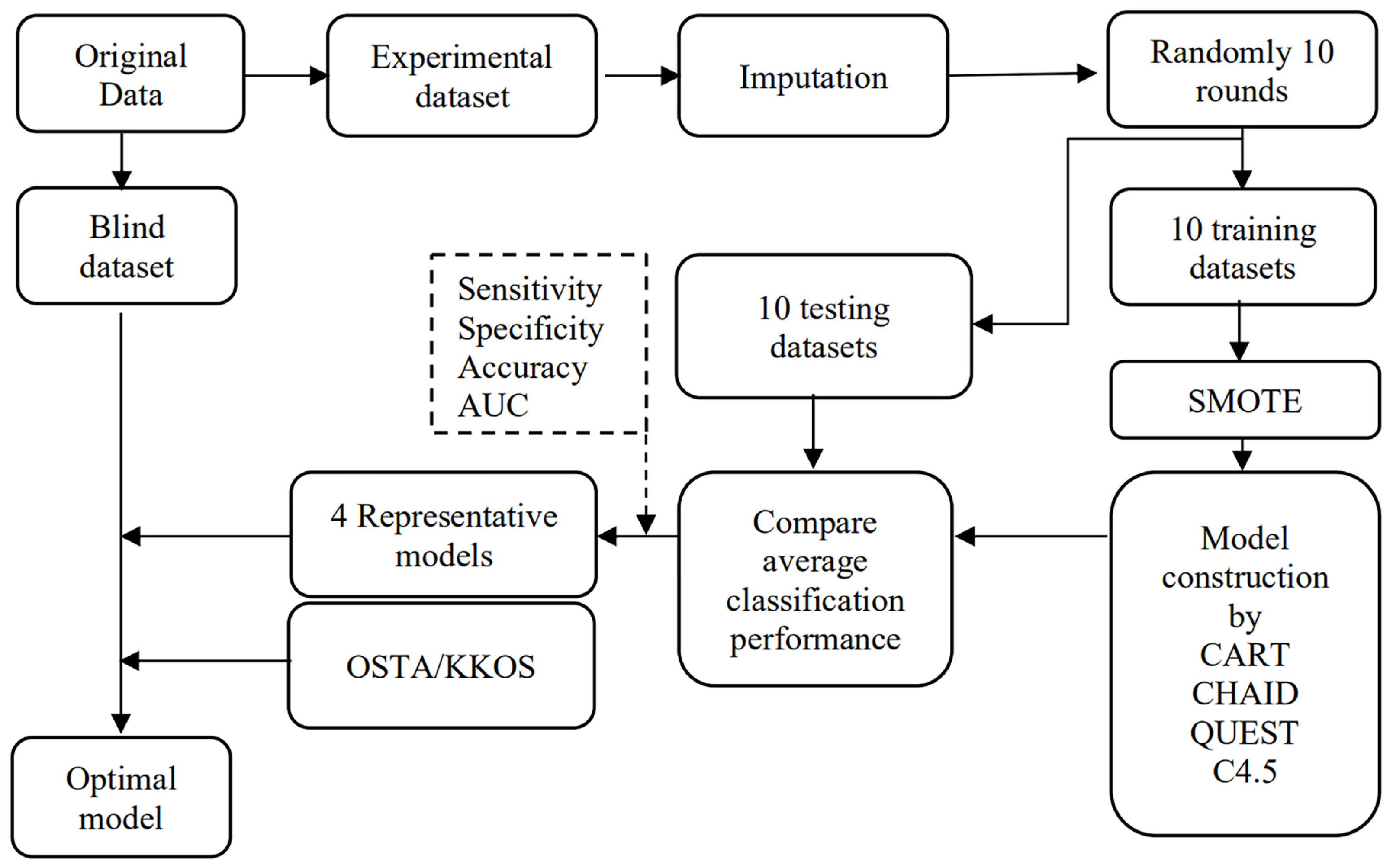
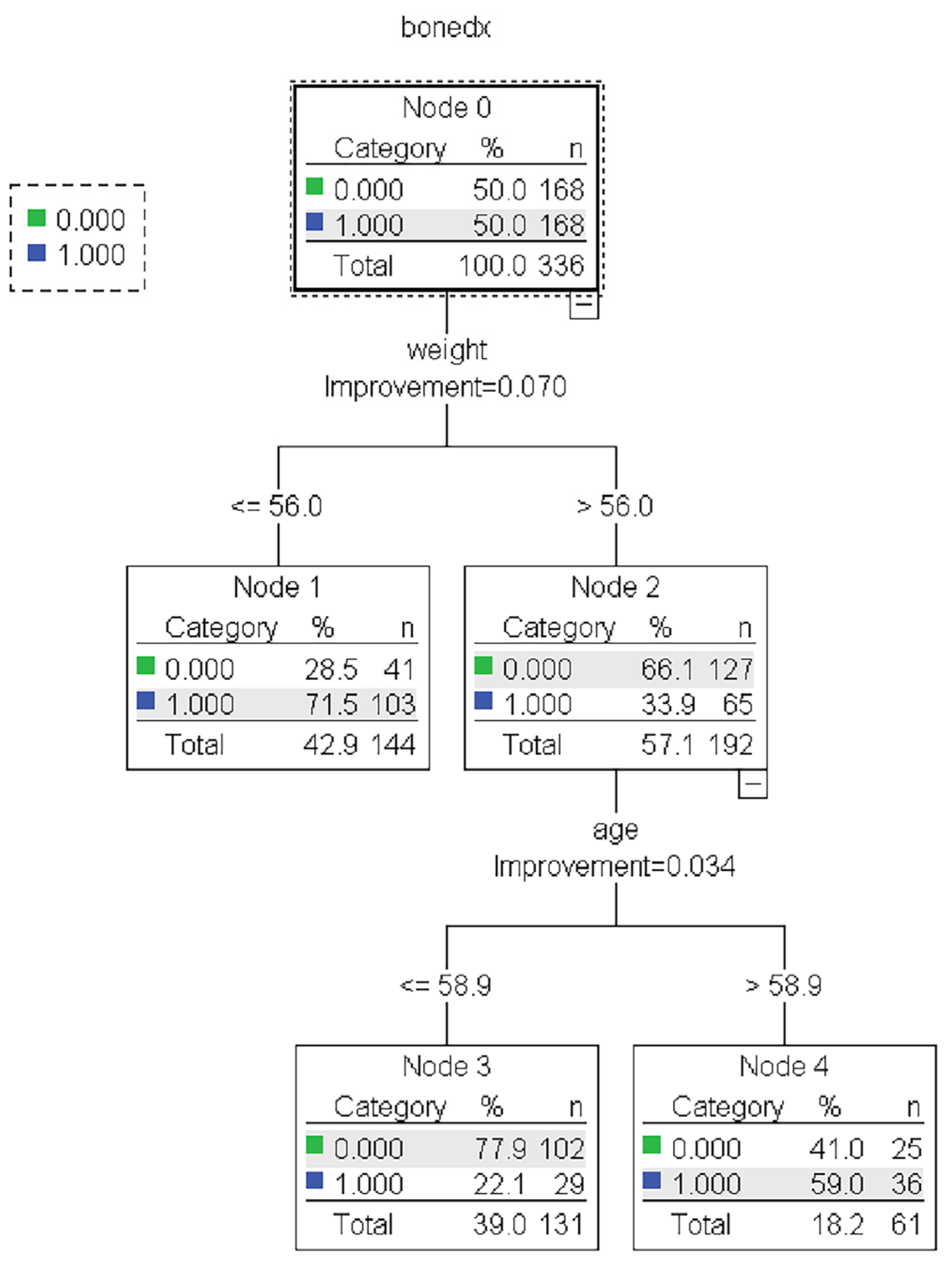
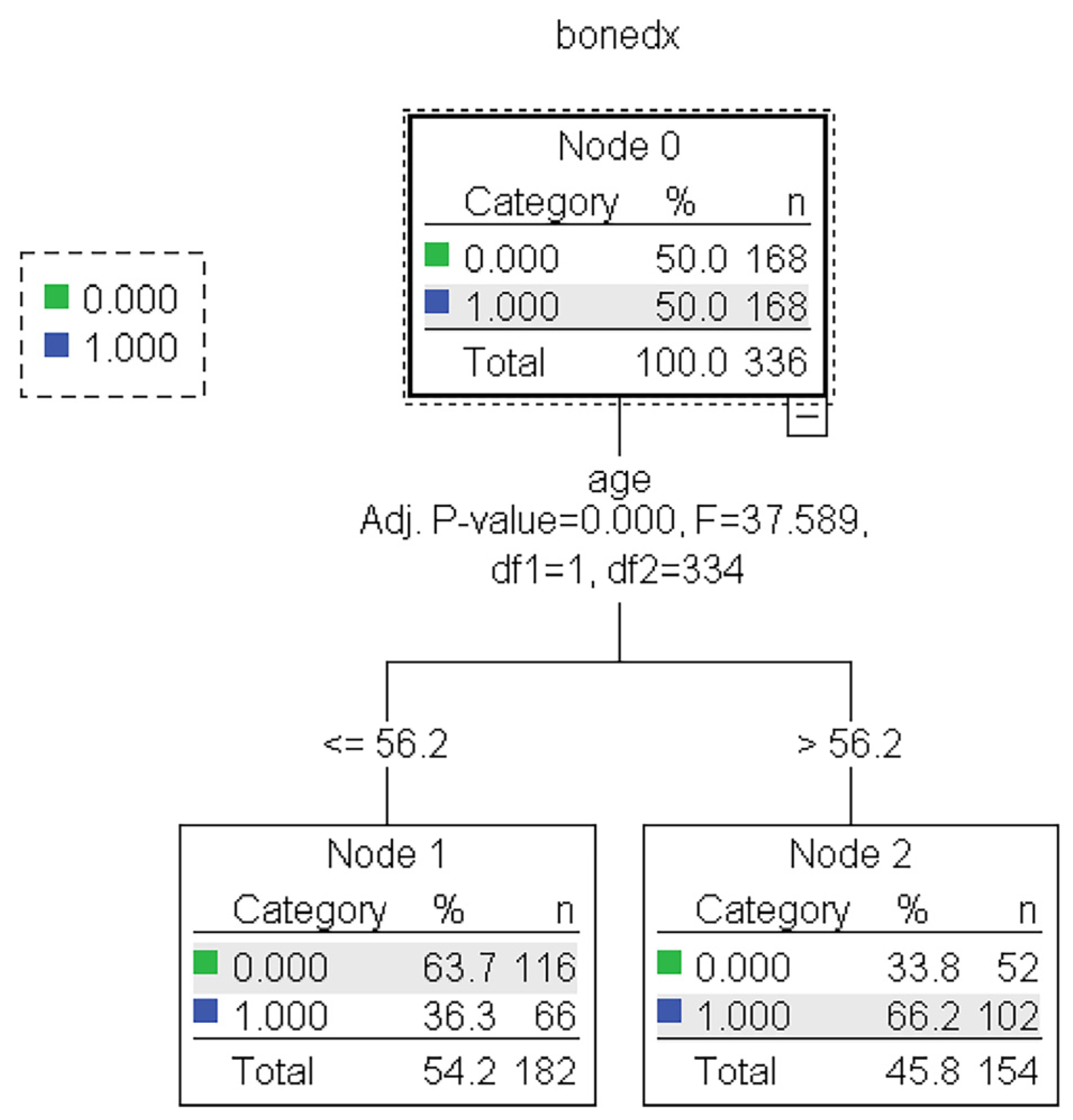
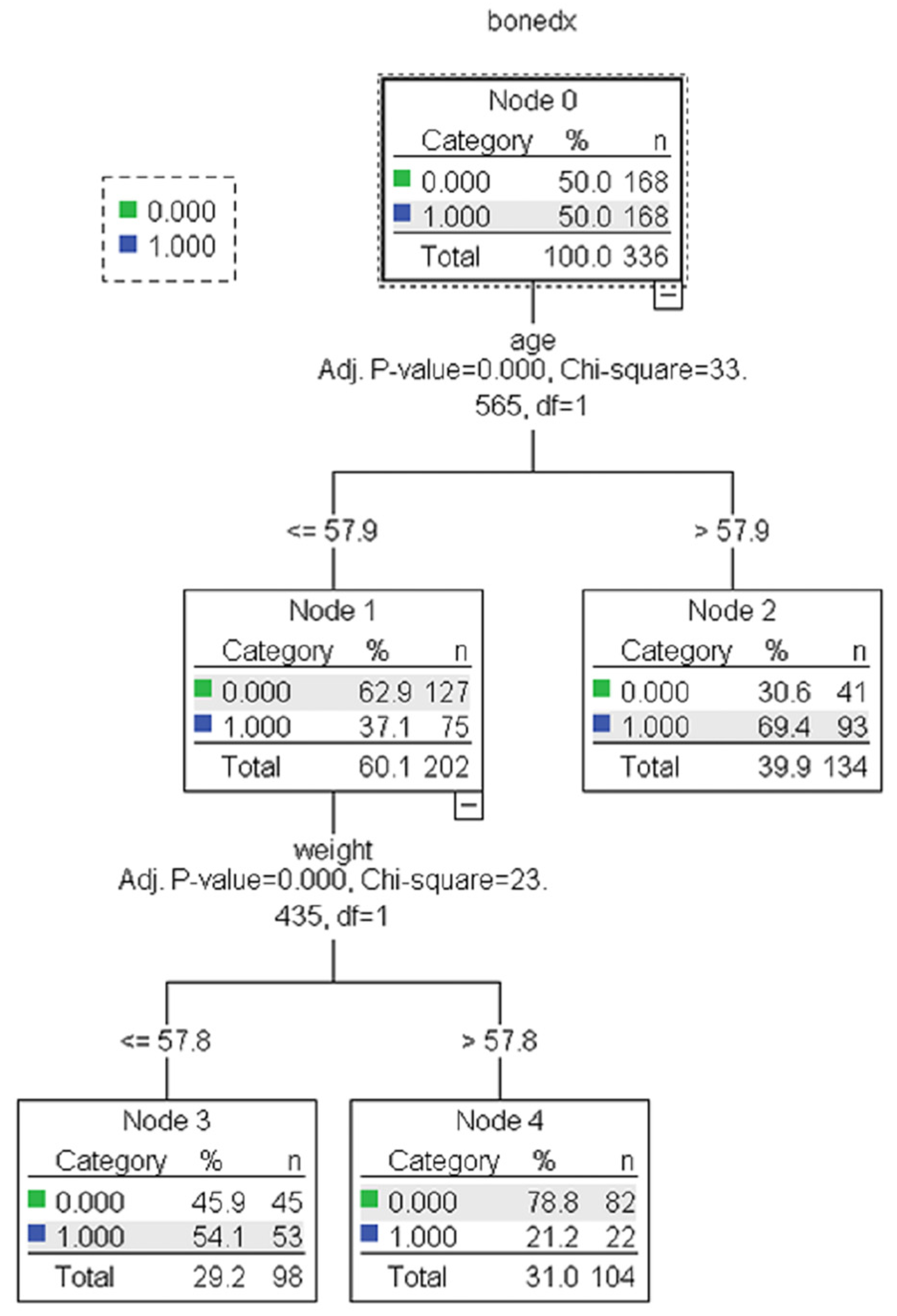
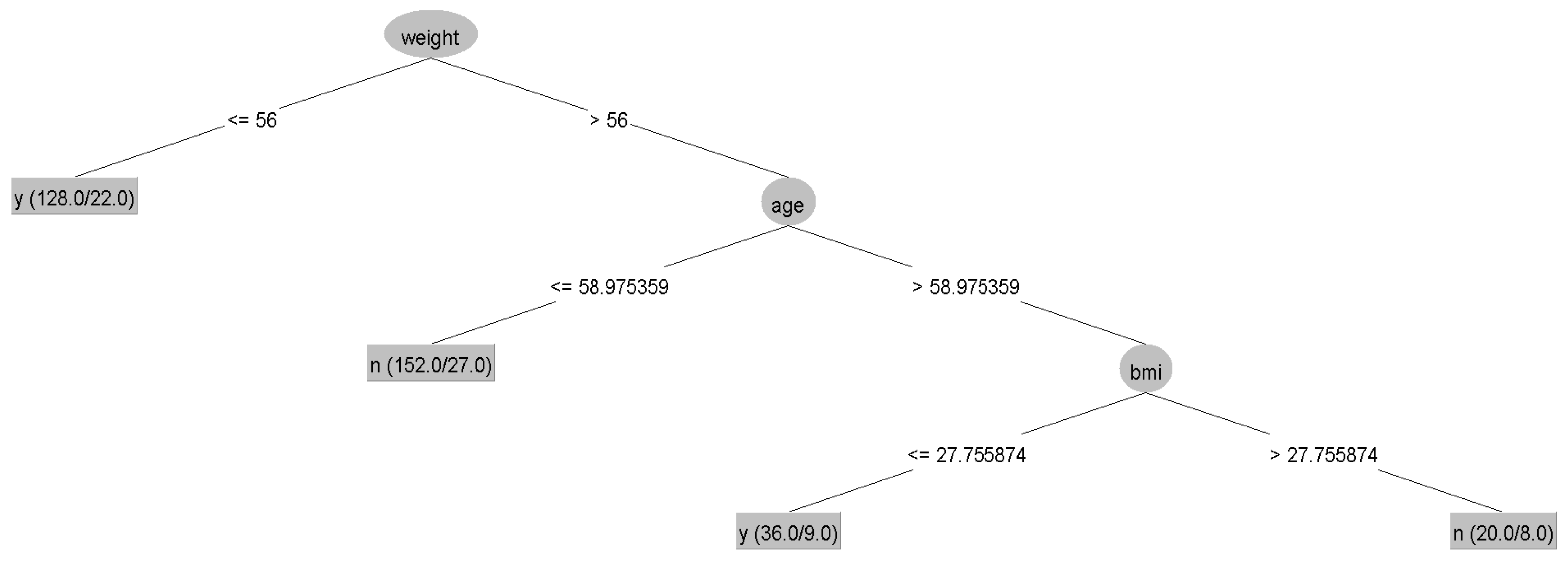
Osteoporosis is still a serious public health issue in Thailand, particularly in postmenopausal women; meanwhile, new effective screening tools are required for rapid diagnosis. This study constructs and confirms an osteoporosis screening tool-based decision tree (DT) model. Four DT algorithms, namely, classification and regression tree; chi-squared automatic interaction detection (CHAID); quick, unbiased, efficient statistical tree; and C4.5, were implemented on 356 patients, of whom 266 were abnormal and 90 normal. The investigation revealed that the DT algorithms have insignificantly different performances regarding the accuracy, sensitivity, specificity, and area under the curve. Each algorithm possesses its characteristic performance. The optimal model is selected according to the performance of blind data testing and compared with traditional screening tools: Osteoporosis Self-Assessment for Asians and the Khon Kaen Osteoporosis Study. The Decision Tree for Postmenopausal Osteoporosis Screening (DTPOS) tool was developed from the best performance of CHAID’s algorithms. The age of 58 years and weight at a cutoff of 57.8 kg were the essential predictors of our tool. DTPOS provides a sensitivity of 92.3% and a positive predictive value of 82.8%, which might be used to rule in subjects at risk of osteopenia and osteoporosis in a community-based screening as it is simple to conduct.
Keywords: decision tree; machine learning; osteoporosis; postmenopausal women decision tree; machine learning; osteoporosis; postmenopausal women