
Article

Distribution of Cognitive Load and Related Debates in Students Interacting with an Augmented Reality Application for History Learning


by
Santiago Criollo-C
1,*,
Oswaldo Moscoso-Zea
2,
Yunifa Miftachul Arif
3 and
Sergio Luján-Mora
4
1
Facultad de Ingeniería y Ciencias Aplicadas, Ingeniería en Ciberseguridad, Group: SI2LAB, Universidad de Las Américas (UDLA), Quito 170124, Ecuador
2
Facultad de Ciencias de la Ingeniería e Industrias, Grupo: GRIAGCIE, Universidad UTE, Quito 170129, Ecuador
3
Department of Informatics Engineering, Universitas Islam Negeri Maulana Malik Ibrahim Malang, Malang 65144, Indonesia
4
Department of Software and Computing Systems, University of Alicante, 03690 Alicante, Spain
*
Author to whom correspondence should be addressed.
Informatics 2026, 13(8), 126; https://doi.org/10.3390/informatics13080126
Submission received: 29 May 2026 / Revised: 29 July 2026 / Accepted: 1 August 2026 / Published: 7 August 2026

Abstract

The growing adoption of Augmented Reality (AR) in education raises challenges related to the cognitive load that students experience during learning. Inadequate management of this load can negatively affect information processing during learning activities. Although previous studies have explored AR applications, most have focused on usability and learning outcomes, leaving aside the detailed analysis of Cognitive Load Theory (CLT), particularly its dimensions: intrinsic cognitive load (ICL), extraneous cognitive load (ECL) and germane cognitive load (GCL). To address this gap, this study evaluates cognitive load using the HistARium application, designed to support history learning with interactive experiences. A total of 60 students participated and completed a structured questionnaire to measure ICL, ECL, and GCL after using the application. The results show a positive distribution: moderate intrinsic load, low extraneous load, and high germane load. These findings indicate that the HistARium application balances content complexity, reduces unnecessary effort, and promotes cognitive processes associated with information organization and schema education construction. Furthermore, the results suggest that integrating CLT principles into AR applications supports cognitive processing during learning, while also opening new opportunities for the development of immersive and adaptive learning environments.

1. Introduction

In recent years, teachers have largely retained traditional teaching methods in which digital educational resources accompany lectures. This approach can, however, hinder student learning by reducing motivation, participation and attention, which underscores the need for innovative instructional designs [1]. Several studies [1,2,3] have shown that, when developing educational materials using technology, the learner’s cognitive load must be considered to ensure effective learning. Cognitive load can be defined as the pressure that the student’s cognitive system undergoes when carrying out specific activities [4]. The continuous development of digital technologies has reshaped teaching and learning processes, highlighting the role of emerging tools such as Augmented Reality (AR), Virtual Reality (VR), and, more recently, Artificial Intelligence (AI) in education [5,6,7]. AR is a technology that allows the user to visualize specific content that is generated in the form of graphics, images, video, and sound, which enriches objects or environments of the real world [8,9]. In educational contexts, particularly in areas such as history, where traditional approaches focused on the use of texts still predominate, AR represents an innovative alternative that makes it possible to visualize abstract concepts and recreate historical events through immersive and dynamic environments [10,11]. AR is considered a variant of virtual environments and is characterized by three properties: real-time interaction, the combination of the real and the virtual, and 3D registration [12]. Learning that uses digital resources has proven to be effective by integrating multiple formats of information, such as text, images and animations, allowing students to construct more coherent cognitive representations [8,13].
In this sense, Cognitive Load Theory (CLT) states that learning depends on the balance between three types of cognitive load: intrinsic (ICL), extraneous (ECL) and germane (GCL) [14,15]. Poor management of these loads can overload students and negatively affect learning [2,14,16]. Several studies have reported that AR can improve academic performance, motivation and engagement [9,17,18,19]. While some works show that AR reduces ECL through intuitive visualisations, others suggest that it can increase ECL because of stimulus overload [15]. Moreover, most studies focus on usability or learning outcomes, without analyzing the CLT dimensions in depth.
Despite the growth of research on educational AR, important gaps remain. Cognitive load studies have largely been carried out in domains such as the natural sciences, medicine, and engineering, while history education is still under-explored. Many works focus solely on academic performance and overlook variables such as cognitive load, usability and the quality of the immersive experience. The study we present in this paper addresses that gap by analyzing the three CLT dimensions through HistARium, an AR application designed to deliver immersive history-learning experiences.
We conducted a study with 60 undergraduate students who used HistARium and then completed a structured CLT-based questionnaire measuring ICL, ECL and GCL. This design made it possible to examine how instructional design and interactive elements influence students’ cognitive processing and overall learning experience. In this context, the following research questions aim to analyze the levels of cognitive load perceived by students and evaluate the distribution and balance of its dimensions to determine whether they facilitate the efficient processing of educational information.
RQ1. How are the three CLT dimensions distributed while students interact with HistARium, and what does this distribution suggest about the cognitive processing promoted by the instructional design?
RQ2. How are the three CLT dimensions distributed and balanced in students using an AR application, and to what extent does this distribution reflect a balanced cognitive processing of educational information?

2. Literature Review

2.1. Augmented Reality in History Education

The incorporation of emerging technologies in education has significantly transformed traditional teaching methods, especially in disciplines that require the contextualization and understanding of complex processes in a theoretical manner, such as history [20,21]. In this context, AR has emerged as an innovative tool that makes it possible to superimpose digital information on the real environment, generating interactive and immersive learning experiences. Traditionally, the teaching of history has been based on expository methods, textbooks and static images, which limit the capacity of students to understand historical events from a dynamic and contextualized perspective [22]. This limitation has been widely documented in the literature, where it is pointed out that students tend to perceive history as a theoretical, abstract and unattractive subject [23,24,25]. In contrast, AR makes it possible to represent historical events through 3D and interactive reconstructions, facilitating a learning experience closer to reality [26].
One of the main benefits of AR in history education is its impact on conceptual understanding. Recent studies have shown that AR-based applications allow students to visualize complex historical structures, scenarios, and events, improving the retention of knowledge and the understanding of causal relationships [22,26,27,28]. Likewise, experimental research has shown that the use of AR improves the capacity of students to remember information and recognize historical events in comparison with traditional methods [24,25,26,27].
In this same context, AR contributes significantly to the increase in motivation and engagement of students [29,30]. According to recent systematic reviews, the use of interactive environments based on AR fosters critical thinking, active participation and autonomous learning [21,31]. This effect is explained in part by the capacity of AR to create immersive experiences that connect the educational contents with the real environment of the student, generating a greater perceived relevance of learning [32].

2.2. Cognitive Load Theory

In recent years, CLT has acquired significant relevance in contemporary educational research due to its focus on students and on how they process information during their learning [16]. CLT was initially proposed by John Sweller and holds that working memory has a limited capacity; therefore, the instructional design must minimize unnecessary cognitive load to optimize learning [14]. Currently, the growth in the use of immersive technologies, such as AR and VR, has driven new research aimed at analyzing how these tools affect the cognitive load of students in different educational contexts [2,3].
In history education, the versatility of AR technology has been used to reconstruct historical scenarios, visualize cultural heritage and represent complex historical events through 3D models [23,25]. Several studies have shown that these experiences favor contextual understanding, since they allow students to actively interact with contents that were traditionally presented in an abstract, theoretical or textual manner [27,33].
One of the main benefits identified in the literature is that AR can reduce extraneous cognitive load by facilitating the visualization of complex concepts [31]. Recent research indicates that the incorporation of visual and interactive elements helps students to process information more efficiently, reducing the mental effort required to understand spatial and temporal relationships [31]. A recent meta-analysis on AR and cognitive load concluded that this technology presents a moderate effect in the reduction of the cognitive load of students, especially when the activities are correctly designed from the pedagogical point of view [34].
In the field of historical education, cognitive load is particularly important because students must simultaneously process chronological, geographical, political and cultural information [23,25,35]. AR offers advantages by allowing historical events to be represented through contextualized experiences, reducing the abstraction of the content. Studies focused on heritage education and history teaching have shown that students display higher levels of understanding and retention when they interact with immersive historical reconstructions [36].
However, the literature also warns that AR can generate cognitive overload when the design of the experience incorporates too many visual stimuli, complex interactions or simultaneous information [37,38]. Recent systematic reviews [39] indicate that one of the main challenges of educational AR is designing learning environments that effectively manage cognitive demands while supporting efficient information processing. In this context, the quality of instructional design is essential to minimize unnecessary cognitive processing, prevent learners from allocating attention to irrelevant interface elements, and facilitate the organization and integration of information relevant to the learning objectives.
The recent scientific literature suggests that AR has a high potential to improve the teaching of history by facilitating immersive and contextualized experiences that promote conceptual understanding and student motivation [40]. Nevertheless, its effectiveness depends to a large extent on the pedagogical design and the adequate management of cognitive load. Although AR can reduce mental effort by simplifying the visualization of complex contents, there is also the risk of generating cognitive overload when the experiences are not correctly designed.

2.3. Integrating Cognitive Load Theory and the Cognitive Theory of Multimedia Learning into Augmented Reality

Although CLT is one of the most widely used frameworks for explaining how instructional design influences information processing, recent research suggests that its application in immersive educational environments must be complemented by theories that explain the cognitive mechanisms through which students process multimedia information [38]. In this context, the Cognitive Theory of Multimedia Learning (CTML) proposed by Mayer [41] represents a complementary framework that explains how students select, organize, and integrate verbal and visual information to construct mental representations. Rather than independent theories, CLT and CTML offer complementary perspectives: while the former analyzes the demands a task places on working memory, the latter explains how multimedia material should be designed to promoted cognitive processes associated with meaningful learning [42].
In AR applications, CTML provides an explanation of the mechanisms through which this technology can facilitate learning. For example, one of the most relevant principles is that of spatial contiguity, which states that learning improves when related visual and textual elements are presented close to one another [41]. AR allows digital information to be superimposed directly onto real objects or scenes, reducing the need for students to divide their attention among multiple sources of information. However, recent scientific evidence also cautions that immersion, by itself, does not guarantee learning [4]. AR is a technological tool capable of increasing students’ sense of presence, attention, and motivation, but these benefits do not automatically translate into improved educational outcomes [42]. Under these conditions, the technology may increase rather than reduce cognitive load, negatively affecting content comprehension. Therefore, the educational impact of AR depends fundamentally on the quality of instructional design and not solely on the degree of immersion offered by the technology [4]. From this perspective, the present study adopts the CLT as the primary framework for analyzing the distribution of the cognitive load perceived by students while using the HIstARium application.

3. Materials and Methods

3.1. Mobile Augmented Reality Application Design

HistARium was developed following the Scrum agile framework with weekly iterations. The goal was to transform traditional pedagogical activities into immersive AR experiences using the Meta Quest 3 headset, with hand tracking as the primary means of interaction.
The prototype was built in Unity 2022.3.10f1 (version LTS) with Android support and ETC2/LZ4 graphics compression. The official Meta XR SDK (version 62.0) modules (Interaction, Passthrough, Scene Understanding, MR Utility Kit, Audio and Haptics) were integrated to ensure fluid, realistic interaction in AR environments.
The 3D resources were modeled and optimized in Blender 4.0.2, applying polygon reduction, retopology and light texturing, in order to maintain performance and avoid motion sickness in the user. Likewise, a dynamic system of object activation and script optimization was implemented. The main screen can be observed in Figure 1, the 3D objects of HistARium ready to interact with them. Three historical learning scenarios were implemented:
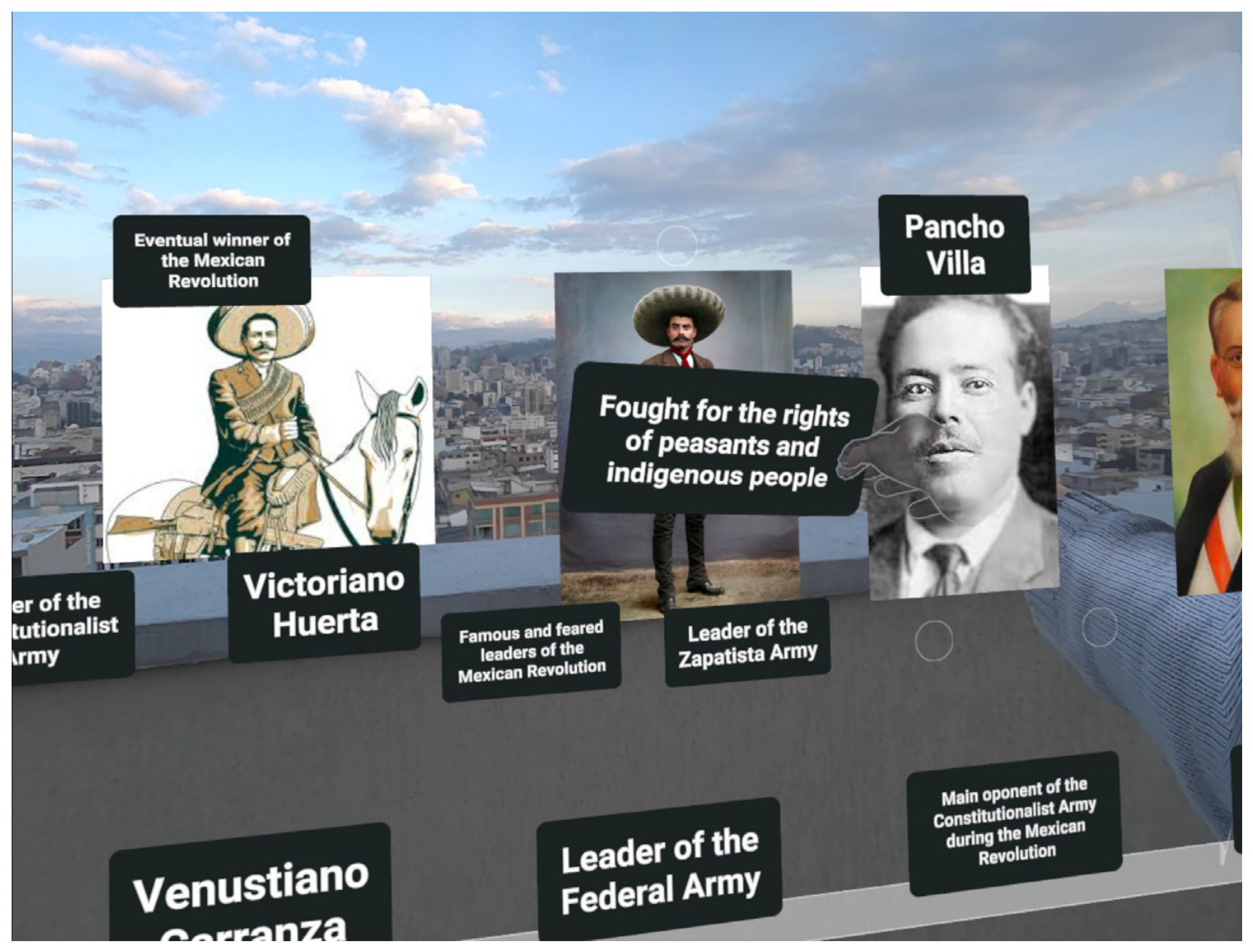
Mexican Revolution (Figure 2): Students analyzed the historical role of each character, compared historical descriptions with visual representations, identified the correct correspondence between events and historical figures, and justified each selection through contextual information provided by the application.
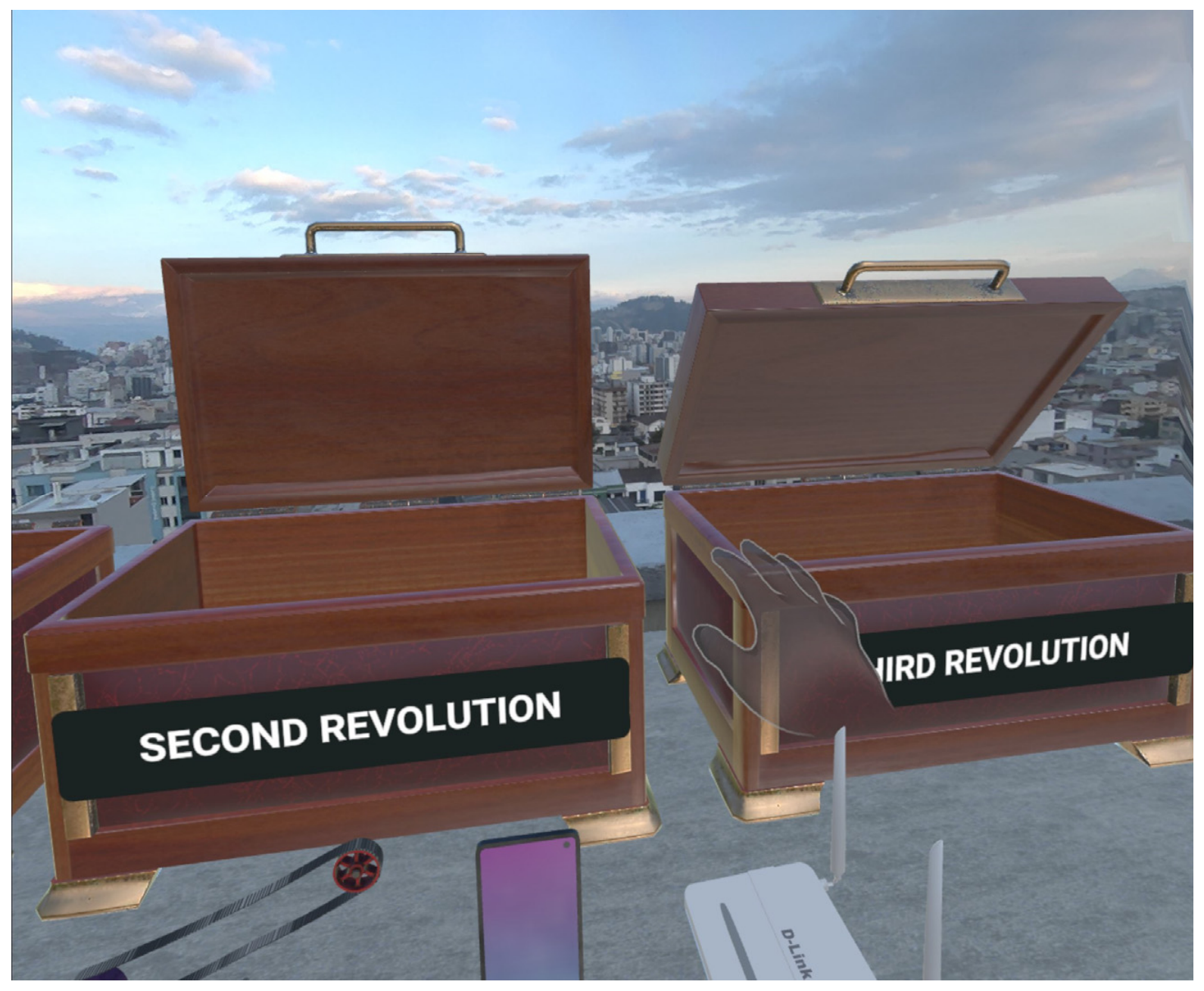
Industrial Revolution (Figure 3): Students examined the technological characteristics of each artifact, identified the historical period in which it emerged, compared similarities between industrial revolutions, and categorized each object according to chronological and technological criteria.
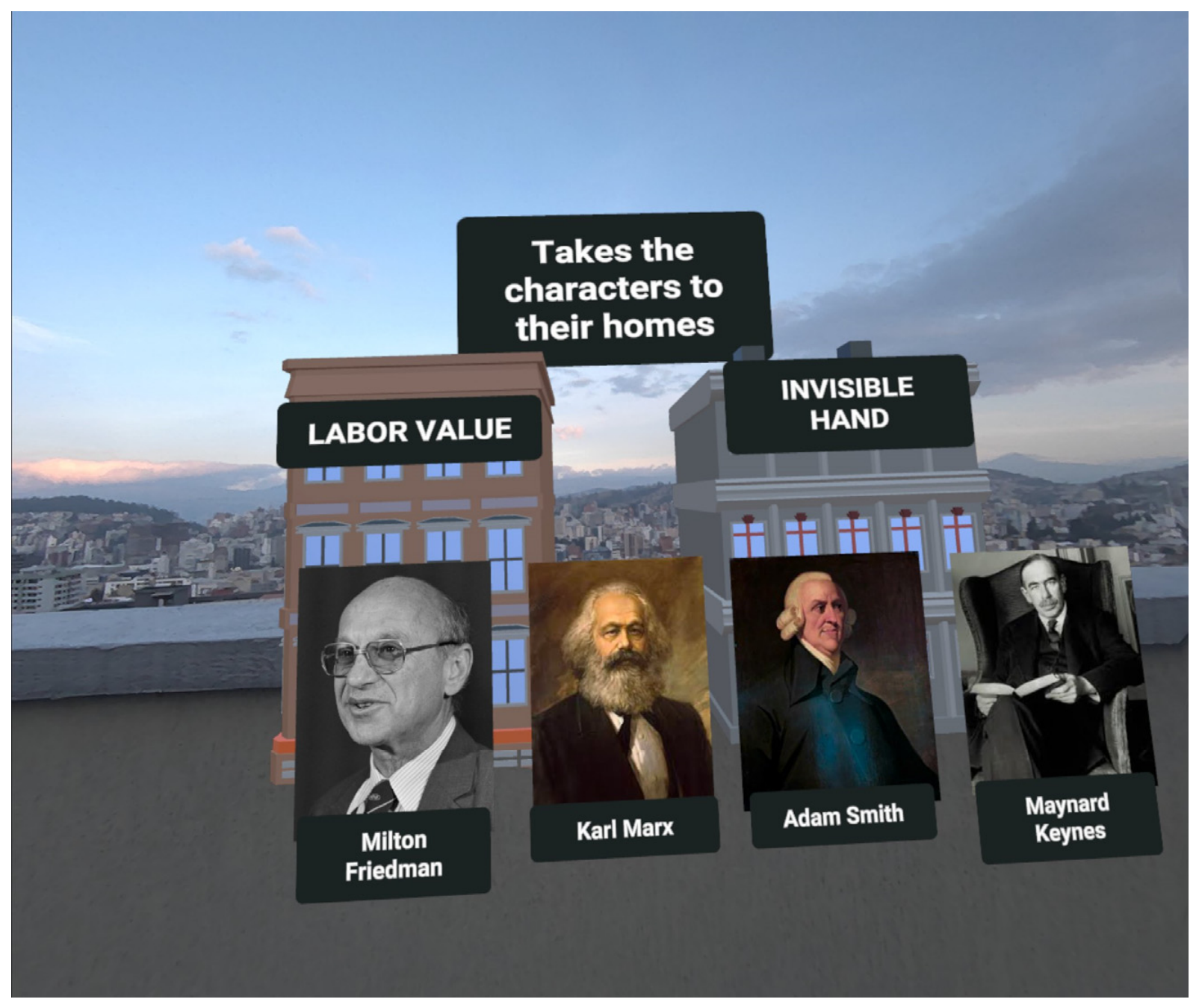
Economic Schools (Figure 4): Students interpreted the main ideas of each economic school, compared the characteristics of different doctrines, associated historical thinkers with their theoretical contributions, and evaluated whether each association was conceptually correct based on immediate feedback.
Each interaction includes immediate feedback through sound and visual effects that reinforce learning. HistARium supports direct manipulation of 3D objects with the hands, as immersion is known to enhance motivation and attention during educational activities [17]. Running HistARium on a Meta Quest 3 device allows traditional didactic strategies to be rethought by translating 2D activities into immersive 3D experiences. The combination of technology, pedagogy and user-centered design constitutes a model applicable to other subjects of higher education.
The instructional design of HistARium was guided by the principles of CLT, aiming to optimize the use of working memory resources while facilitating schema construction during the learning process. Table 1 shows that, rather than incorporating AR solely as an immersive technology, the application was intentionally designed to reduce unnecessary cognitive processing, maintain the inherent complexity of the learning tasks at manageable levels, and promote meaningful cognitive engagement through active interaction with historical content.

3.2. Experiment

To reduce the possible novelty effect associated with the use of AR glasses, a previous familiarization phase was incorporated before the experimental activity. During this phase, students interacted with the Meta Quest 3 glasses through a neutral activity, unrelated to the historical content evaluated in the study, to freely explore, manipulate objects, make decisions, receive feedback, correct errors, and continue. This procedure allowed the participants to become comfortable with hand tracking, the manipulation of virtual objects and the basic navigation within the immersive environment before using the HistARium application.
The study followed a structured three-stage protocol designed to assess the cognitive load perceived by students while using HistARium in an AR environment for history teaching:
  • Induction phase (10 min): In the first stage the participants received an explanation on the general purpose of the research and the dynamics of interaction within the HistARium application. Likewise, instructions related to the manipulation of virtual objects and the navigation through the different historical scenarios implemented in the system were provided. Before starting the experience, all the students read and signed an informed consent form detailing the voluntary nature of their participation, the confidentiality of the data, and their right to withdraw from the study at any time without academic consequences.
  • Phase of interaction with the HistARium environment (35 min): Subsequently, each participant individually used the Meta Quest 3 glasses to interact with the different historical modules developed in HistARium. During this stage, the students explored contents related to the Mexican Revolution, the Industrial Revolution and the Economic Schools, carrying out activities involving the association, classification and identification of historical characters and relevant events. While participants were completing the activities, the researcher observed aspects related to user interaction, adaptation time to the immersive environment and difficulties encountered during the manipulation of virtual objects. Additionally, spontaneous student comments regarding the comprehension of the activities, the clarity of the visual information and the ease of use of the system were recorded.
  • Cognitive load evaluation phase (5 min): At the end of the immersive experience, the participants completed a questionnaire designed to measure the cognitive load perceived during their interaction with HistARium. The instrument was developed based on the principles of CLT, with the objective of analyzing the cognitive load experienced by the students throughout the learning process in the AR environment.
The questionnaire was applied in digital format and structured through a Likert scale of 10 points, where 1 represented “totally disagree” and 10 represented “totally agree”. The results obtained were analyzed using descriptive statistics to identify trends related to the perceived complexity of the tasks, the mental effort required, the clarity of the information and the organization of the learning within the immersive experience.
The objective of the study was not to compare cognitive load across historical topics but to evaluate the overall cognitive experience produced by the instructional design of HistARium. Since all three modules shared identical interaction mechanics, interface structure, feedback strategy and instructional sequence, cognitive load was analyzed globally rather than by content.
Although cognitive efficiency has traditionally been calculated by combining learning performance and perceived mental effort, the present study adopts a descriptive interpretation based on the distribution of the three cognitive load dimensions because objective learning performance was outside the scope of this research.

3.3. Participants

A stratified random sampling design was used, taking the available academic sections as strata. Participants were then selected proportionally from each stratum until a sample of 60 students was reached. This procedure reduced selection bias and yielded a more balanced sample. All participants had basic experience with digital devices, but most had no prior significant exposure to immersive educational applications based on augmented or mixed reality.
The sample comprised 60 university students enrolled in technology and engineering degrees and programs. With respect to gender, 78.3% (47 students) self-identified as men and 21.7% (13 students) as women. Most participants were between 18 and 21 years old, with a mean age of 19.15 years.
Before the study, students were informed about the objectives of the research, the confidentiality of collected data and the voluntary nature of their participation. Likewise, the anonymity of the collected information and the right to withdraw at any time without consequences were guaranteed.
Although the instructional activities included matching and classification tasks, these activities were intentionally designed to promote higher-order cognitive processes. Students compared historical events, interpreted contextual information, analyzed similarities and differences between historical concepts, evaluated alternative responses, and established conceptual relationships before making decisions. Therefore, object manipulation functioned as a means to support historical reasoning rather than as an end in itself.

3.4. Experimental Tasks

In this study, interaction refers to the set of cognitive and motor actions performed by students while manipulating virtual historical objects within the AR environment. These actions included selecting, dragging, rotating, classifying, associating, and positioning historical elements according to the instructional objectives of each activity. Every interaction required participants to interpret historical information, compare alternatives, make decisions, and receive immediate feedback from the system.
During the experimental session, the students interacted with the HistARium application through activities organized in three thematic modules related to specific historical contents. In each module, the participants had to carry out the following actions:
  • Explore the historical elements present in the AR environment.
  • Manipulate virtual objects using hand tracking to activate contextual information.
  • Relate characters, events and historical elements within each interactive scenario.
  • Complete the cognitive load questionnaire at the end of the experience.
The activities were designed to promote processes of analysis, comprehension and association of historical contents through direct interaction with 3D objects. Each student individual session lasted approximately 50 min and was supervised by a facilitator. Analysis was operationalized as the comparison and differentiation of historical events and characters before selecting an answer. Comprehension referred to interpreting the historical meaning of visual and textual information presented during each activity. Association consisted of linking historical characters, technological artifacts or economic schools according to their historical context.
Before beginning each activity, the students had previously received training on the corresponding historical content within their regular courses. Consequently, HistARium was not conceived as a resource for introducing new content, but as a tool for consolidating and applying previously acquired knowledge.

3.5. Cognitive Load Questionnaire

Cognitive load perceived during the use of HistARium was measured with a CLT-based questionnaire. The instrument was designed to capture the three dimensions of cognitive processing experienced by students during the AR-based learning activity [43].
The questionnaire comprised ten items addressing task complexity, required mental effort, clarity of the presented information and the pedagogical support afforded by the application’s design. Items also captured the extent to which the environment facilitated conceptual understanding, the connection with prior knowledge and the consolidation of learning.
The items used in the instrument were the following:
Intrinsic Cognitive Load (ICL)
  • The content addressed in the activity was complex.
  • The task carried out was difficult to develop.
  • Understanding the information demanded a high mental effort.
Extraneous Cognitive Load (ECL)
  • The presentation of the content generated confusion.
  • The interface distracted the attention from the main learning.
  • The design of the activity hindered the concentration on the important elements.
Germane Cognitive Load (GCL)
  • The structure of the activity facilitated the comprehension of the main concepts.
  • The activities helped to relate the content with previous knowledge.
  • The experience promoted reflection on the practical application of what was learned.
  • The organization of the task contributed to consolidate the learning.
Each item was evaluated through a ten-point scale, with values between 1 = “totally disagree” and 10 = “totally agree”. Subsequently, the results were analyzed using descriptive statistics with the objective of identifying levels of cognitive load associated with the use of HistARium in AR-based history educational scenarios.
The questionnaire consisted of 10 observed items distributed across three latent dimensions (ICL = 3 items, ECL = 3 items and GCL = 4 items). The remaining variables correspond to demographic variables and derived statistical variables used during data analysis.

4. Results

In this study, the cognitive processing index was used as an exploratory indicator to describe the distribution of the perceived cognitive load dimensions during students’ interaction with HistARium. The present index provides an exploratory characterization of how students perceived the allocation of their cognitive resources among intrinsic cognitive load, extraneous cognitive load, and learning-oriented cognitive processing during the instructional activity. Table 2 presents the demographic data and the variables analyzed in the study.
To determine the levels of the different cognitive loads it is necessary to calculate the mean of each dimension. In Table 3 this value can be observed for, ICL, ECL and GCL. Additionally, the value of the Cronbach’s Alpha must be considered, which is described in Table 4, this value indicates that the reliability for the research study is acceptable. Although Cronbach’s alpha values were slightly below the conventional threshold of 0.70, several authors indicate that values between 0.60 and 0.70 are considered acceptable for exploratory studies involving psychological and educational constructs [44].
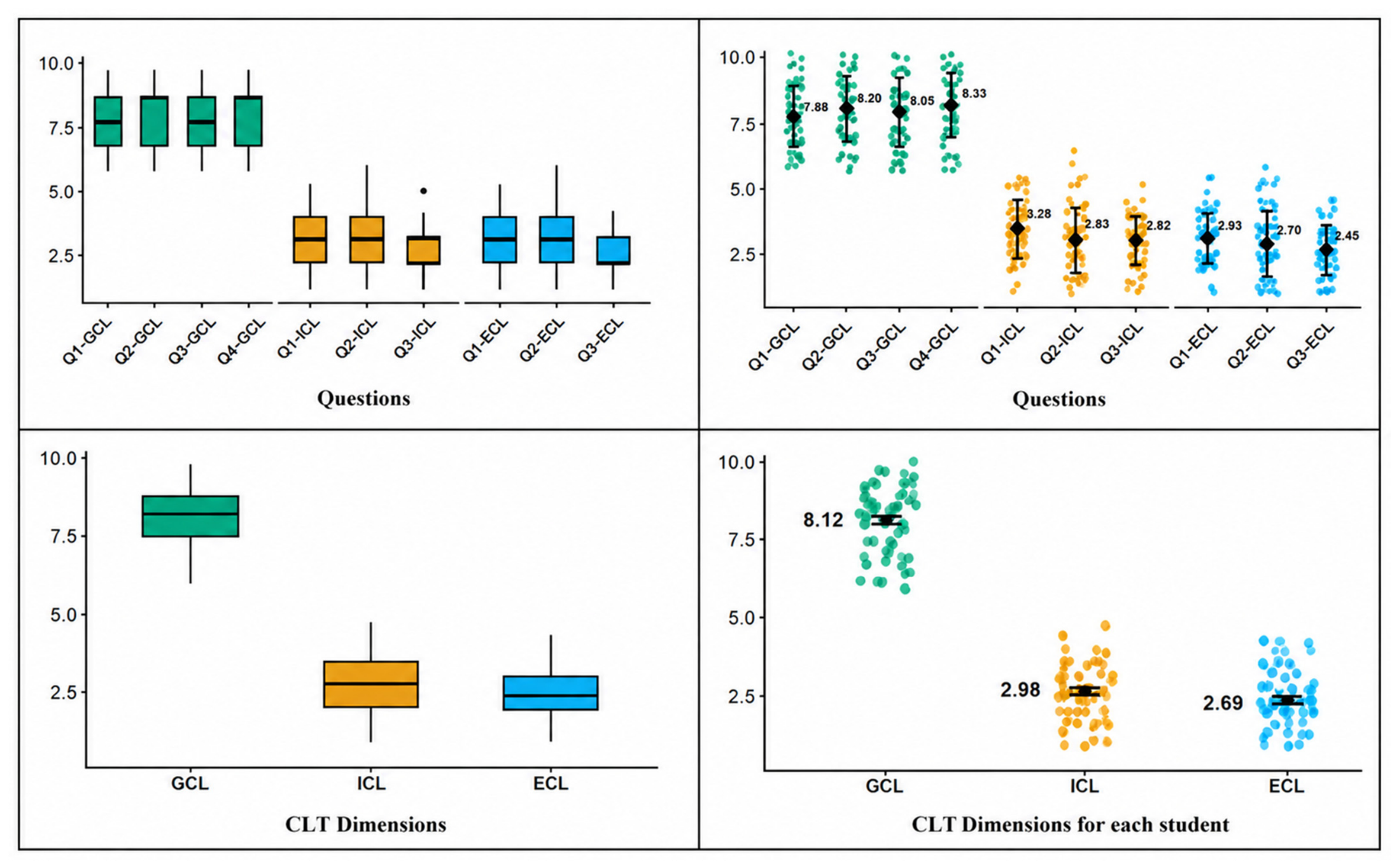
Figure 5 displays the distribution of responses across the three CLT dimensions. GCL shows the highest mean (M = 8.12), indicating that students invested in cognitive ef-fort, which was oriented towards the organization of information and schema construction. The ICL reaches a mean value (M = 2.98), which suggests that the historical content was perceived as challenging, but manageable. Finally, the ECL presents the lowest mean (M = 2.69), although it is the lowest value, it is close to the ICL value, indicating that the design of the HistARium application introduces an excessive load but controlled workload. In addition, it can be observed that the means follow the trend GCL > ICL > ECL, which indicates a functional balance between the dimensions. These results indicate that students allocated cognitive effort toward processing the instructional content.
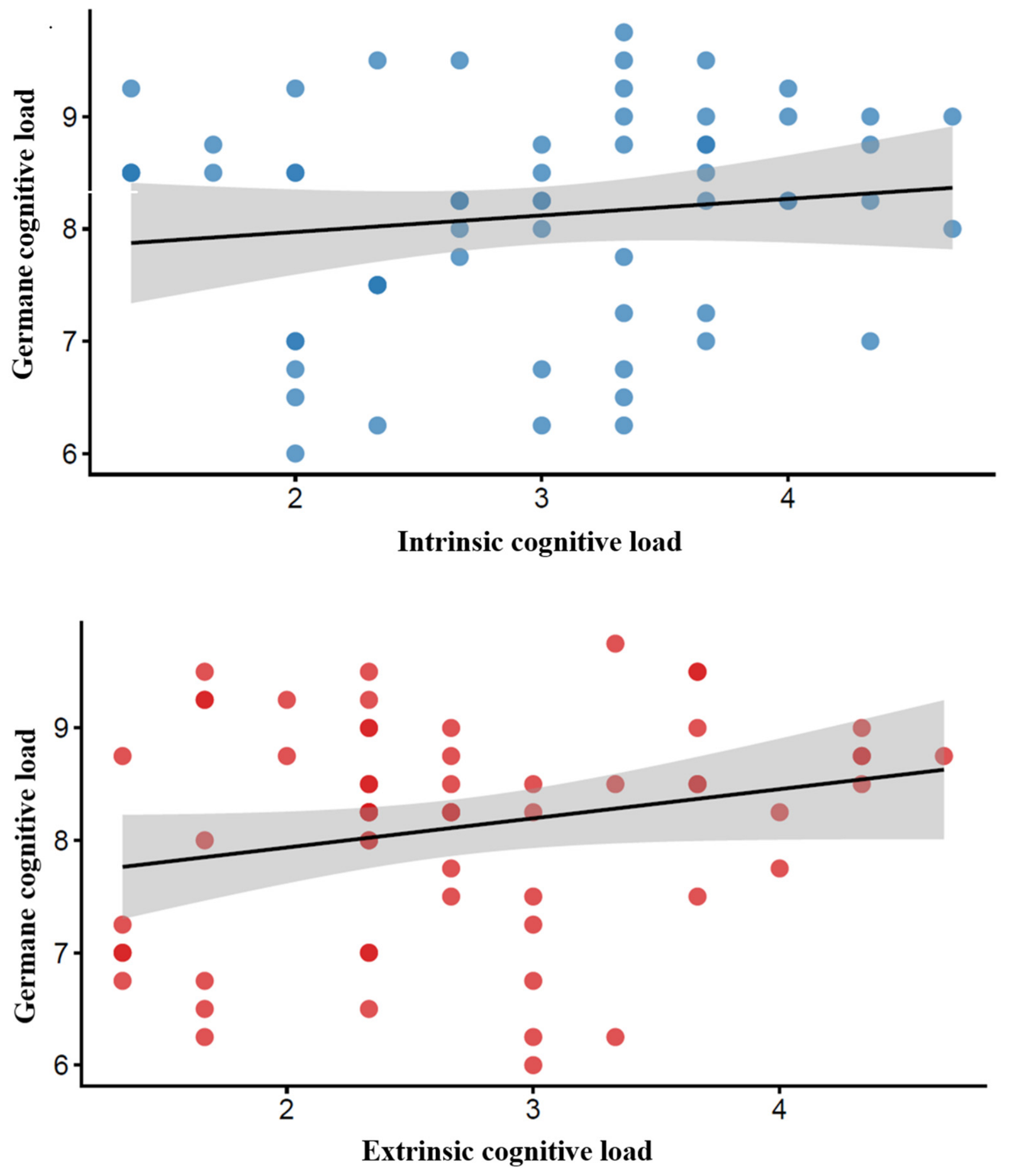
In both figures (Figure 6). a slight positive trend between the ICL and the GCL is observed. This trend indicates that, as the inherent complexity of the task or the cognitive effort directed toward processing the instructional content also slightly increases. However, the dispersion of the data around the regression line evidence that this relationship is not strong, since the points are not grouped in a compact manner around the estimated trend. These results suggest that the complexity of the content contributes partially to stimulate deeper cognitive processing, although it does not constitute the main factor that drives the germane cognitive processing. In other words, the difficulty of the task did not appear to interfere with students’ cognitive processing, but instead generated a moderate cognitive activation oriented to comprehension.
The relationship between ECL and GCL was moderate and positive, with a relatively wide dispersion of the data. Despite this variability, there was no evidence of negative interference: germane load did not systematically decrease as extraneous load increased. This indicates that elements related to the design and interface of the application did not consume critical cognitive resources or divert students’ attention toward irrelevant processes. Participants were therefore able to continue allocating cognitive resources to learning, in line with CLT, and the application’s design did not produce cognitive overload that would negatively affect the processes of information organization and schema construction of learning.
In Figure 6, the grey band around the regression line represents the 95% confidence interval. The relatively stable width of this band suggests that the observed trend is consistent and free from extreme variations, and it remains positively oriented across the data, supporting the stability of the relationship between the variables analyzed. In general, cognitive processes associated with schema construction were promoted in the students even when ICL and ECL reached moderate levels.
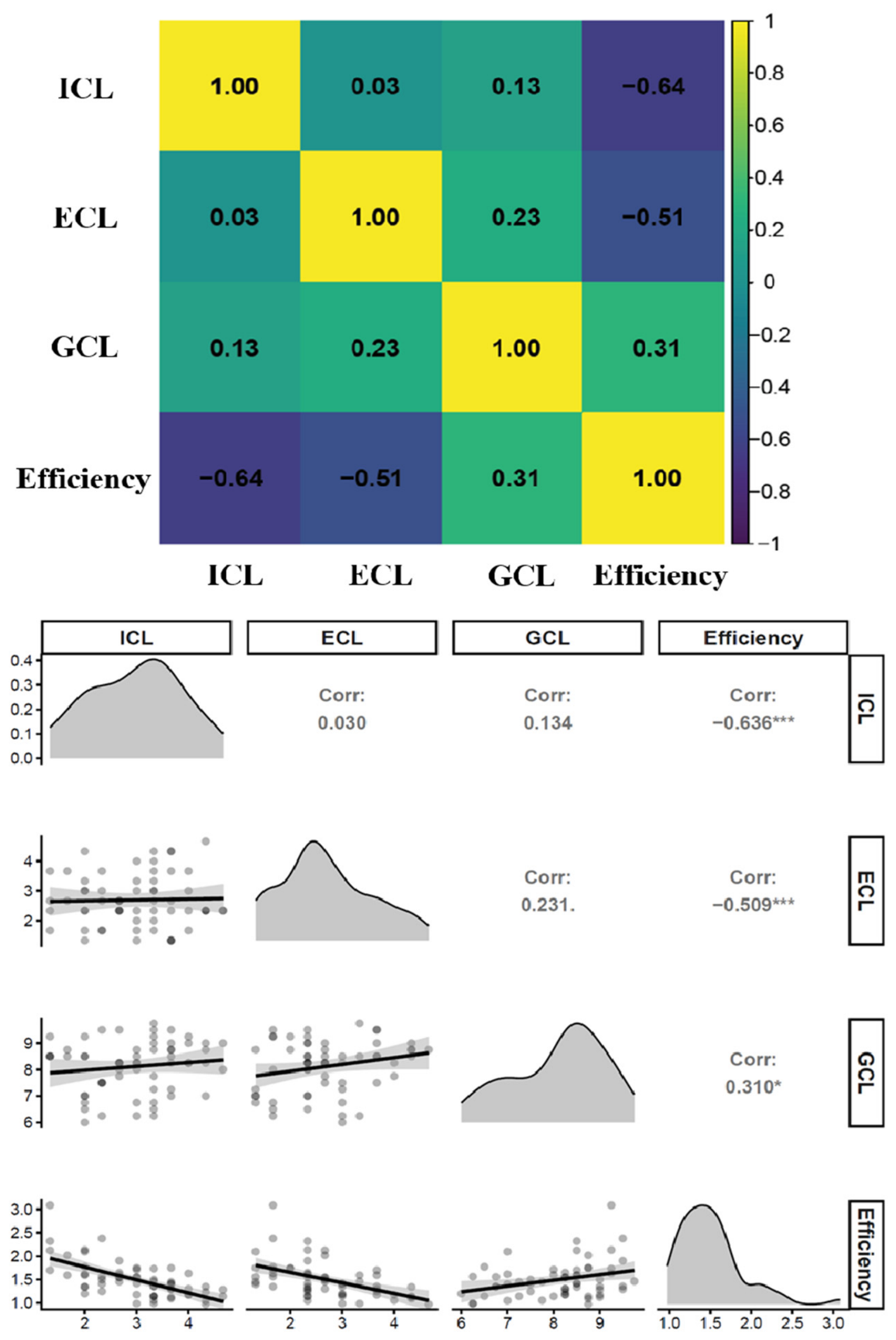
Figure 7 illustrates the relationships among the three cognitive load dimensions (ICL, ECL, and GCL) and the exploratory cognitive processing index adopted in this study. The figure allows the visualization of the direction and magnitude of the observed correlations, as well as the distribution and variability of participants’ responses. The observed relationships should be interpreted as an exploratory characterization of students perceived cognitive processing during the interaction with HistARium.
In addition to presenting the correlation coefficients, these graphical representations provide a visual description of the relationships among the cognitive load dimensions and the exploratory cognitive processing index, as well as the dispersion of participants’ responses. The results show a positive correlation between GCL and the cognitive processing index (r ≈ 0.31), suggesting that students who reported allocating more cognitive resources to understanding, organizing, and relating historical information also tended to present higher values of the exploratory index.
Similarly, the relationships between the cognitive processing index and both ICL (r ≈ −0.64) and ECL (r ≈ −0.51) were moderately negative. These results suggest that higher levels of perceived task complexity or unnecessary cognitive demands tended to coincide with lower values of the exploratory cognitive processing index. Nevertheless, these associations should be interpreted cautiously because they describe statistical relationships rather than causal effects. Moreover, the observed levels of ICL and ECL remained within ranges that participants generally perceived as manageable during the instructional activity.
The scatterplots also reveal a relatively controlled dispersion of responses and generally consistent trends across participants, providing descriptive support for the observed correlation patterns. Overall, the results suggest that HistARium promoted a perceived cognitive profile characterized by comparatively higher levels of learning-oriented cognitive processing together with relatively low levels of unnecessary cognitive demands.

5. Discussion

The results of this study provide empirical evidence on the cognitive processes that students experienced while interacting with the AR application HistARium. From the standpoint of CLT, our findings suggest that the application achieved an adequate balance among ICL, ECL and GCL, without overloading students cognitively.
These results can be explained by the way the application presented the historical information. From the CLT perspective, AR can support cognitive processing when instructional design follows CLT principles not only by incorporating three-dimensional elements, but also by altering the way information is processed by working memory. In HistARium, the integration of virtual objects directly into the real environment, manipulation via hand tracking, and immediate feedback allowed students to interact with the content without having to constantly switch between different sources of information.
Regarding RQ1, this question seeks to address the levels of intrinsic, extraneous and germane cognitive load perceived by students while using HistARium for his-tory learning. The three dimensions of CLT showed differentiated profiles, consistent with a favorable balance that promoted cognitive processes associated with schema construction.
First, GCL reached the highest meaning (M = 8.12), which indicates that students directed a substantial share of their cognitive resources toward understanding, organizing and relating historical information. From the perspective of CLT, this is considered a positive outcome because germane load is associated with the schema construction processes described by CLT. The pattern indicates that HistARium actively promoted cognitive engagement during the immersive experience. According to the CLT, this type of processing promotes the organization of schemas in long-term memory, a finding consistent with the high levels observed in this dimension. This result does not imply that immersion alone supported cognitive processing during the instructional activity. Rather, it suggests that active interaction with historical objects, the need to classify figures and events, and immediate feedback facilitated cognitive processes related to the organization, elaboration, and integration of prior knowledge.
ICL exhibited a moderate value (M = 2.98), suggesting that students perceived the historical content and the activities as challenging but manageable. Although AR introduces new perceptual and interactive demands, such as manipulating three-dimensional objects and navigating an immersive environment, these demands did not significantly increase the intrinsic cognitive load. This can be attributed to the progressive design of the activities and the preliminary familiarization phase with the Meta Quest 3 headset and the interaction system, which reduced the effect of technological novelty. Consequently, perceived complexity was determined primarily by the historical content rather than by the technology used, allowing the activities to be perceived as challenging yet cognitively manageable.
ECL showed the lowest mean (M = 2.69), indicating that the application and its interface did not introduce significant unnecessary cognitive demands. The low levels of extrinsic cognitive load can be explained by the fact that the app presented historical objects, instructions, and feedback within the same interactive space. These findings are consistent with the CLT and CTML principles incorporated into the instructional design of HistARium, particularly those described in Section 2.3.
Likewise, the reliability results obtained through the Cronbach’s Alpha showed acceptable values for the 3D evaluated (ICL = 0.627, ECL = 0.677 and GCL = 0.697). Although these values are not extremely high, they are considered adequate for exploratory research in educational contexts and support the internal consistency of the instruments used. This strengthens the validity of the interpretations made about the cognitive perceptions of the students.
RQ2 examined how the three cognitive load dimensions were distributed during students’ interaction with the AR application and whether this distribution was consistent with a balanced allocation of perceived cognitive resources during the instructional activity. Overall, the three dimensions exhibited a generally balanced profile, suggesting that participants experienced a distribution of perceived cognitive load that was compatible with the cognitive demands expected for the instructional design of HistARium.
First, ICL and GCL showed a slight positive relationship: as the inherent complexity of the task increased, the cognitive effort also rose slightly. Although the dispersion around the regression line indicates that this relationship is not particularly strong, the historical content’s complexity does not appear to have acted as an obstacle but rather as a moderate stimulus that promoted comprehension and analysis. In other words, the level of task difficulty appeared sufficient to stimulate cognitive processing without overwhelming students cognitively. On the other hand, the relationship between the ECL and the GCL showed a moderate positive trend with no evidence of clear patterns of negative interference. This finding is relevant, since an excessive increase in cognitive load usually reduces the available cognitive resources that can be used for learning. However, in this research no systematic decrease in GCL was observed as ECL increased. This indicates that the elements related to the design of the application, the interface and the visual interaction did not significantly divert the attention of the students towards irrelevant processes. On the contrary, participants were still able to allocate their cognitive effort to processing the instructional content despite the moderate demands imposed by the immersive environment.
Furthermore, Figure 6 shows that the confidence intervals associated with the regression lines maintained an approximately constant width and a positive o. This supports the interpretation of the results and suggests that the observed relationships between the cognitive dimensions present statistical stability. The moderate dispersion of the data also evidences that, although there were individual differences between students, the general behavior of the variables followed relatively consistent trends.
The results obtained from the exploratory cognitive processing index complement this interpretation. The positive correlation observed between GCL and the cognitive processing index (r ≈ 0.31) suggests that students who reported allocating a greater proportion of their cognitive resources to understanding, organizing, and relating historical information also tended to present higher values on this index. Although this association was weak to moderate, it is consistent with the theoretical expectation of CLT that learning-oriented cognitive processing is associated with a more balanced allocation of perceived cognitive resources.
Similarly, the negative correlations observed between the cognitive processing index and ICL (r ≈ −0.64), as well as between the cognitive processing index and ECL (r ≈ −0.51), suggest that higher levels of perceived task complexity or unnecessary cognitive demands tended to coincide with lower values of the exploratory index. Although the perceived levels of ICL and ECL remained within moderate ranges throughout the instructional activity, the present findings should be interpreted as describing students perceived cognitive profile rather than providing direct evidence of learning gains, knowledge construction, or cognitive efficiency in the traditional sense.
Taken together, these results suggest that the educational impact of AR does not depend solely on the level of immersion provided by the technology, but rather on the way in which instructional design principles organize information to optimize cognitive processing. CLT helped explain how working memory resources were distributed during the activity, while CTML offers a complementary framework for understanding how the integration of visual and verbal information facilitated the construction of coherent mental representations. Consequently, both theories provide a more comprehensive explanation of the cognitive mechanisms underpinning the use of AR in history education.
Although the observed correlations ranged from weak to moderate, they exhibited theoretically consistent directions according to CLT. Therefore, the results should be interpreted as preliminary evidence of the relationships among the cognitive load dimensions rather than strong predictive associations.

6. Conclusions

Overall, our findings suggest that students experienced a generally balanced cognitive environment while interacting with HistARium. GCL showed the highest means among the three dimensions, indicating that students invested substantial cognitive effort in understanding, organizing, and relating the historical information delivered by the application. HistARium promoted cognitive conditions that, according to CLT, are associated with schema construction and information organization. ICL reached moderate levels, suggesting that the historical content and the activities were perceived as challenging yet manageable, without producing cognitive overload. ECL showed the lowest values, indicating that the application’s design, interface, and visual elements did not introduce unnecessary cognitive demands that could interfere with cognitive processing.
Moreover, the results suggest that the HistARium application provided a cognitively balanced AR environment, where the demands associated with the complexity of the content and with the design of the interface remained at manageable levels. These findings support the potential of AR applications as educational tools capable of offering immersive and interactive experiences without causing harmful levels of cognitive overload for the students.
In addition, the results suggest that HistARium was adequately designed from a cognitive and educational perspective. The navigation structure, the visual organization of historical information and the interactive elements of AR facilitated the organization of information of the content without generating distractions or significant mental overload. In this sense, the design of the application allowed the students to concentrate most of their cognitive efforts on activities related to information organization and schema construction, rather than using them to deal with interface-related or technical difficulties. This study provides empirical evidence regarding the usefulness of CLT for analyzing educational experiences based on immersive technologies.
This study did not include a direct assessment of learning outcomes, such as pretest-post-test knowledge tests or objective performance measures. Consequently, the results should be interpreted as evidence of students perceived cognitive processing rather than direct evidence of learning gains. Because participants’ prior historical knowledge was not objectively measured before the intervention, differences in previous knowledge across students could have influenced the perceived levels of intrinsic cognitive load.

7. Limitation

One limitation of this study is that the intervention consisted of a single 35 min session. Although this duration was sufficient to evaluate students’ perceived cognitive load, it does not allow conclusions regarding long-term cognitive processes or knowledge retention.
Since the objective was to characterize students’ perceived cognitive load during the use of HistARium, no control group was incorporated. Future research should compare AR-based instruction with conventional teaching strategies to determine differences in learning outcomes and cognitive processing.
Another limitation is that cognitive load was evaluated exclusively through self-report questionnaires. Although subjective instruments are widely used and validated in CLT research, they may be influenced by participants’ perceptions. Future studies should complement subjective measures with physiological indicators such as eye-tracking, electroencephalography (EEG), pupillometry, or electrodermal activity to obtain a more comprehensive understanding of cognitive processing.

8. Future Work

As future work, it is proposed to extend this research by incorporating new metrics and evaluation models that allow a more comprehensive analysis of students’ experiences in AR-based educational environments. Although the results obtained indicate an adequate balance between the dimensions of cognitive load, the recent literature has identified a lack of standardized metrics specifically designed to evaluate user experience in educational AR applications, which continues to represent an important limitation in this field of research. In this sense, future studies could focus on the development and validation of standardized evaluation frameworks integrating dimensions related to cognitive load, usability, immersion, interaction, and learning perception.
It would also be relevant to incorporate technology acceptance models, such as the Technology Acceptance Model (TAM) [45], to analyze factors associated with perceived ease of use, perceived usefulness, and behavioral intention to use AR applications in educational contexts. Previous studies have suggested that when immersive applications are intuitive and easy to use, students tend to report lower levels of perceived mental effort and greater acceptance of emerging educational technologies. Future research could also explore the relationships among technology acceptance, perceived cognitive load, and students’ cognitive processing profiles to better understand how instructional design and interface characteristics influence the educational experience. Likewise, further studies should examine how different AR interface design elements, such as the amount of visual information presented, interaction mechanisms, level of immersion, and complexity of virtual objects, influence the different dimensions of perceived cognitive load. Combining subjective cognitive load measures with objective indicators of learning performance, mental effort, and physiological measurements (e.g., eye-tracking, pupillometry, or electroencephalography) would provide a more comprehensive understanding of the cognitive mechanisms underlying AR-supported learning. Such evidence could contribute to the development of user-centered AR applications designed according to cognitive principles that minimize unnecessary cognitive demands and support effective instructional experiences.
Finally, considering that the recent literature has highlighted challenges associated with high costs, technological limitations, and the lack of scalable solutions in AR educational applications, future research could focus on the development of more accessible and technologically efficient systems. This could include the optimization of applications for low-cost mobile devices, the integration of AI-based technologies, and the design of immersive educational platforms that can be implemented in institutions with limited resources. These research directions would contribute to the development of AR educational environments that are more accessible, sustainable, and aligned with the cognitive and pedagogical needs of students.

Author Contributions

Conceptualization, S.C.-C. and S.L.-M.; methodology, S.C.-C.; software, S.C.-C.; validation, S.C.-C. and O.M.-Z.; formal analysis, S.C.-C. and S.L.-M.; investigation, S.C.-C.; resources, S.C.-C.; data curation, S.C.-C.; writing—original draft preparation, O.M.-Z. and Y.M.A.; writing—review and editing, S.C.-C. and O.M.-Z.; visualization, S.C.-C.; supervision, S.L.-M.; project administration, S.C.-C.; funding acquisition, S.C.-C. All authors have read and agreed to the published version of the manuscript.

Funding

This research was funded by Universidad de Las Américas grant number 627.A.XVIII.26.

Institutional Review Board Statement

According to the regulations of the Research Ethics Committee on Human Beings of the Universidad de Las Américas (CEISH-UDLA), the present study did not require formal ethical review and approval. The research involved the evaluation of the user experience and cognitive perceptions of university students interacting with an educational application, without collecting sensitive personal data, medical information, or conducting interventions that could represent physical or psychological risks. Furthermore, this study is covered by the exemption granted by the CEISH-UDLA under the research project entitled “Análisis de Experiencia de Usuario en las Tecnologías Digitales Más Utilizadas para la Educación: Principales Beneficios y Problemas”, which was classified as EXEMPT from ethics review by the committee. The exemption letter states that the project, identified with code 2024-EXC-004, is exempt from evaluation according to the applicable legal and institutional regulations (Date of Exemption: April, 2024).

Informed Consent Statement

Informed consent was obtained from all participants prior to their participation in the study. As described in the manuscript, during the induction phase, all students read and signed an informed consent form before taking part in the experimental activities. The consent form informed participants about the objectives of the study, the voluntary nature of participation, data confidentiality, and their right to withdraw from the study at any time without academic consequences.

Data Availability Statement

The data presented in this study are openly available in Mendeley Data at 10.17632/cwpdrbz6cw.1.

Conflicts of Interest

The authors declare no conflict of interest.

References

  1. Shoffner, M.B.; Jones, M.; Harmon, S.W. Paradigms Restrained: Implications of New and Emerging Technologies for Learning and Cognition. J. Electron. Publ. 2000, 6. [Google Scholar] [CrossRef] [Scilit]
  2. Ouwehand, K.; Lespiau, F.; Tricot, A.; Paas, F. Cognitive Load Theory: Emerging Trends and Innovations. Educ. Sci. 2025, 15, 458. [Google Scholar] [CrossRef] [Scilit]
  3. Nurjanah, A.; Retnowati, E. Augmented reality in the perspective of cognitive load theory. AIP Conf. Proc. 2024, 2622, 090002. [Google Scholar] [CrossRef] [Scilit]
  4. Makransky, G.; Mayer, R.E. Benefits of Taking a Virtual Field Trip in Immersive Virtual Reality: Evidence for the Immersion Principle in Multimedia Learning. Educ. Psychol. Rev. 2022, 34, 1771–1798. [Google Scholar] [CrossRef] [Scilit] [PubMed]
  5. Elmqaddem, N. Augmented Reality and Virtual Reality in education. Myth or reality? Int. J. Emerg. Technol. Learn. 2019, 14, 234–242. [Google Scholar] [CrossRef] [Scilit]
  6. Yang, C.-H.; Liu, S.-F.; Lin, C.-Y.; Liu, C.-F. Immersive Virtual Reality-Based Cardiopulmonary Resuscitation Interactive Learning Support System. IEEE Access 2020, 8, 120870–120880. [Google Scholar] [CrossRef] [Scilit]
  7. Hassan, S.A.; Rahim, T.; Shin, S.Y. ChildAR: An augmented reality-based interactive game for assisting children in their education. Univers. Access Inf. Soc. 2022, 21, 545–556. [Google Scholar] [CrossRef] [Scilit]
  8. Shrestha, M. Augmented Reality Mobile Tool for Engineering Education. In Proceedings of the 2021 ASEE Virtual Annual Conference Content Access, Virtual, 26–29 July 2026. [Google Scholar] [CrossRef] [Scilit]
  9. Rossano, V.; Lanzilotti, R.; Cazzolla, A.; Roselli, T. Augmented Reality to Support Geometry Learning. IEEE Access 2020, 8, 107772–107780. [Google Scholar] [CrossRef] [Scilit]
  10. Tripoulas, C.; Koutromanos, G. The Use of Augmented Reality in Teaching History to Primary and Secondary-School Students in Formal and Informal Learning Environments: A Review of the Literature. In Smart Mobile Communication & Artificial Intelligence; Lecture Notes in Networks and Systems; Springer: Cham, Switzerland, 2024; Volume 936, pp. 3–14. [Google Scholar] [CrossRef] [Scilit]
  11. Schiavi, B.; Gechter, F.; Gechter, C.; Rizzo, A. Teach Me a Story: An Augmented Reality Application for Teaching History in Middle School. In Proceedings of the 25th IEEE Conference on Virtual Reality and 3D User Interfaces, VR 2018—Proceedings, Tuebingen/Reutlingen, Germany, 18–22 March 2018; pp. 679–680. [Google Scholar] [CrossRef] [Scilit]
  12. Ducasse, J. Augmented Reality for Outdoor Environmental Education. In Augmented Reality in Education; Springer: Cham, Switzerland, 2020; pp. 329–352. [Google Scholar] [CrossRef] [Scilit]
  13. Criollo-C, S.; Guerrero-Arias, A.; Buenaño-Fernandez, D.; Lujan-Mora, S. Usability and Workload Evaluation of a Cybersecurity Educational Game Application: A Case Study. IEEE Access 2024, 12, 12771–12784. [Google Scholar] [CrossRef] [Scilit]
  14. Sweller, J. Cognitive Load During Problem Solving: Effects on Learning. Cogn. Sci. 1988, 12, 257–285. [Google Scholar] [CrossRef] [PubMed]
  15. Sweller, J.; Van Merrienboer, J.J.G.; Paas, F.G.W.C. Cognitive Architecture and Instructional Design. Educ. Psychol. Rev. 1998, 10, 251–296. [Google Scholar] [CrossRef] [Scilit]
  16. Sweller, J. Cognitive load theory and individual differences. Learn. Individ. Differ. 2024, 110, 102423. [Google Scholar] [CrossRef] [Scilit]
  17. Criollo-C, S.; Guerrero-Arias, A.; Buenaño-Fernández, D.; Jaramillo-Alcazar, Á.; Luján-Mora, S. Using Mixed Reality (MR) as an Emerging Technology for Improving Higher Education: Analysis of Mental Workload. Emerg. Sci. J. 2024, 8, 410–424. [Google Scholar] [CrossRef] [Scilit]
  18. Criollo-C, S.; Guerrero-Arias, A.; Guaña-Moya, J.; Samala, A.D.; Luján-Mora, S. Towards Sustainable Education with the Use of Mobile Augmented Reality in Early Childhood and Primary Education: A Systematic Mapping. Sustainability 2024, 16, 1192. [Google Scholar] [CrossRef] [Scilit]
  19. Hossain, M.F.; Barman, S.; Biswas, N.; Bahalul Haque, A.K.M. Augmented reality in medical education: AR bones. In Proceedings of the International Conference on Computing, Communication, and Intelligent Systems, Greater Noida, India, 19–20 February 2021; pp. 348–353. [Google Scholar] [CrossRef] [Scilit]
  20. Dogan Turkoglu, H.; Cakıcı Alp, N. Evaluating Cultural Heritage Preservation Through Augmented Reality: Insights from the Kaisareia-AR Application. Architecture 2025, 5, 59. [Google Scholar] [CrossRef] [Scilit]
  21. Usma, M.S.; Bangay, S.; Sajjanhar, A. Augmented Reality Enhanced Analytics for Education: A Systematic Review. J. Learn. Anal. 2025, 12, 126–155. [Google Scholar] [CrossRef] [Scilit]
  22. Challenor, J.; Ma, M. A Review of Augmented Reality Applications for History Education and Heritage Visualisation. Multimodal Technol. Interact. 2019, 3, 39. [Google Scholar] [CrossRef] [Scilit]
  23. Coleman, K.A.; Ehrlich, L.R. Emerging Technologies: Learning from History. Proc. Annu. Symp. Comput. Appl. Med. Care 1984, 975–979. [Google Scholar]
  24. Raghaw, M.; Paulose, J.; Goswami, B. Augmented reality for history education. Int. J. Eng. Technol. 2018, 7, 121–125. [Google Scholar] [CrossRef] [Scilit]
  25. Szlachta Junior, A.M.; Tete Ramos, M.E. Augmented reality games and the possibilities for history heritage education. Metis-Hist. Cult. 2019, 18, 97–119. [Google Scholar]
  26. Azhar, N.H.M.; Diah, N.M.; Ahmad, S.; Ismail, M. Development of augmented reality to learn history. Bull. Electr. Eng. Inform. 2019, 8, 1425–1432. [Google Scholar] [CrossRef] [Scilit]
  27. Remolar, I.; Rebollo, C.; Fernández-Moyano, J.A. Learning History Using Virtual and Augmented Reality. Computers 2021, 10, 146. [Google Scholar] [CrossRef] [Scilit]
  28. Carrascosa, C.L.; Ylardia, I.P.; Paredes-Velasco, M.; García-Suelto, M.D.C.N. Game-Based Learning with Augmented Reality for History Education. Rev. Iberoam. Tecnol. Aprendiz. 2024, 19, 14–23. [Google Scholar] [CrossRef] [Scilit]
  29. Gurevych, R.; Silveistr, A.; Mokliuk, M.; Shaposhnikova, I.; Gordiichuk, G.; Saiapina, S. Using Augmented Reality Technology in Higher Education Institutions. Postmod. Open. 2021, 12, 109–132. [Google Scholar] [CrossRef] [Scilit]
  30. Abdullah, N.A.S.; Rokmain, N.S.S. Learning Human Anatomy Using Augmented Reality Mobile Application. In Proceedings of the International Conference on Digital Applications, Transformation & Economy, Miri, Malaysia, 14–16 July 2023; pp. 1–5. [Google Scholar] [CrossRef] [Scilit]
  31. Kazlaris, G.C.; Keramopoulos, E.; Bratsas, C.; Kokkonis, G. Augmented Reality in Education Through Collaborative Learning: A Systematic Literature Review. Multimodal Technol. Interact. 2025, 9, 94. [Google Scholar] [CrossRef] [Scilit]
  32. Küçük, S.; Kapakin, S.; Göktaş, Y. Learning anatomy via mobile augmented reality: Effects on achievement and cognitive load. Anat. Sci. Educ. 2016, 9, 411–421. [Google Scholar] [CrossRef] [Scilit] [PubMed]
  33. Cecotti, H.; Day-Scott, Z.; Huisinga, L.; Gordo-Pelaez, L. Virtual Reality for Immersive Learning in Art History. In Proceedings of the International Conference of the Immersive Learning Research Network, San Luis Obispo, CA, USA, 21–25 June 2020; pp. 16–23. [Google Scholar] [CrossRef] [Scilit]
  34. Zhu, X.; Peng, K.; Yu, S.; Wang, G. Can augmented reality technology reduce learners’ cognitive load? A meta-analysis. Smart Learn. Environ. 2026, 13, 9. [Google Scholar] [CrossRef] [Scilit]
  35. Cejka, J.; Mangeruga, M.; Bruno, F.; Skarlatos, D.; Liarokapis, F. Evaluating the Potential of Augmented Reality Interfaces for Exploring Underwater Historical Sites. IEEE Access 2021, 9, 45017–45031. [Google Scholar] [CrossRef] [Scilit]
  36. Priyono, C.D.; Sok, V.; Souza, F. The Use of Augmented Reality in History Education: A Study on Conceptual Understanding Effects. J. Neosantara Hybrid Learn. 2025, 2, 470–483. [Google Scholar] [CrossRef] [Scilit]
  37. Altmeyer, K.; Brünken, R.; Kuhn, J.; Malone, S. The Role of Cognitive Learner Prerequisites for Cognitive Load and Learning Outcomes in AR-Supported Lab Work. Educ. Sci. 2024, 14, 1161. [Google Scholar] [CrossRef] [Scilit]
  38. Buchner, J.; Buntins, K.; Kerres, M. The impact of augmented reality on cognitive load and performance: A systematic review. J. Comput. Assist. Learn. 2022, 38, 285–303. [Google Scholar] [CrossRef] [Scilit]
  39. Vidak, A.; Šapić, I.M.; Mešić, V.; Gomzi, V. Augmented Reality Technology in Teaching about Physics: A systematic review of opportunities and challenges. Eur. J. Phys. 2023, 45, 023002. [Google Scholar] [CrossRef] [Scilit]
  40. Porncharoen, R.; Ratchataruj, S.; Wichiranon, S. Using Augmented Reality Technology in Learning Archeological Places. In Proceedings of the International STEM Education Conference, Pattaya, Thailand, 10–12 November 2021. [Google Scholar] [CrossRef] [Scilit]
  41. Mayer, R.E. The Past, Present, and Future of the Cognitive Theory of Multimedia Learning. Educ. Psychol. Rev. 2024, 36, 8. [Google Scholar] [CrossRef] [Scilit]
  42. Candido, V.; Cattaneo, A. Applying cognitive theory of multimedia learning principles to augmented reality and its effects on cognitive load and learning outcomes. Comput. Hum. Behav. Rep. 2025, 18, 100678. [Google Scholar] [CrossRef] [Scilit]
  43. Leppink, J.; Paas, F.; Van der Vleuten, C.P.M.; Van Gog, T.; Van Merriënboer, J.J.G. Development of an instrument for measuring different types of cognitive load. Behav. Res. Methods 2013, 45, 1058–1072. [Google Scholar] [CrossRef] [Scilit] [PubMed]
  44. Hair, J.F.; Hult, G.T.M.; Ringle, C.M.; Sarstedt, M. A Primer on Partial Least Squares Structural Equation Modeling (PLS-SEM); Sage: Thousand Oaks, CA, USA, 2017. [Google Scholar]
  45. Joo, Y.J.; Lee, H.W.; Ham, Y. Integrating user interface and personal innovativeness into the TAM for mobile learning in Cyber University. J. Comput. High. Educ. 2014, 26, 143–158. [Google Scholar] [CrossRef] [Scilit]
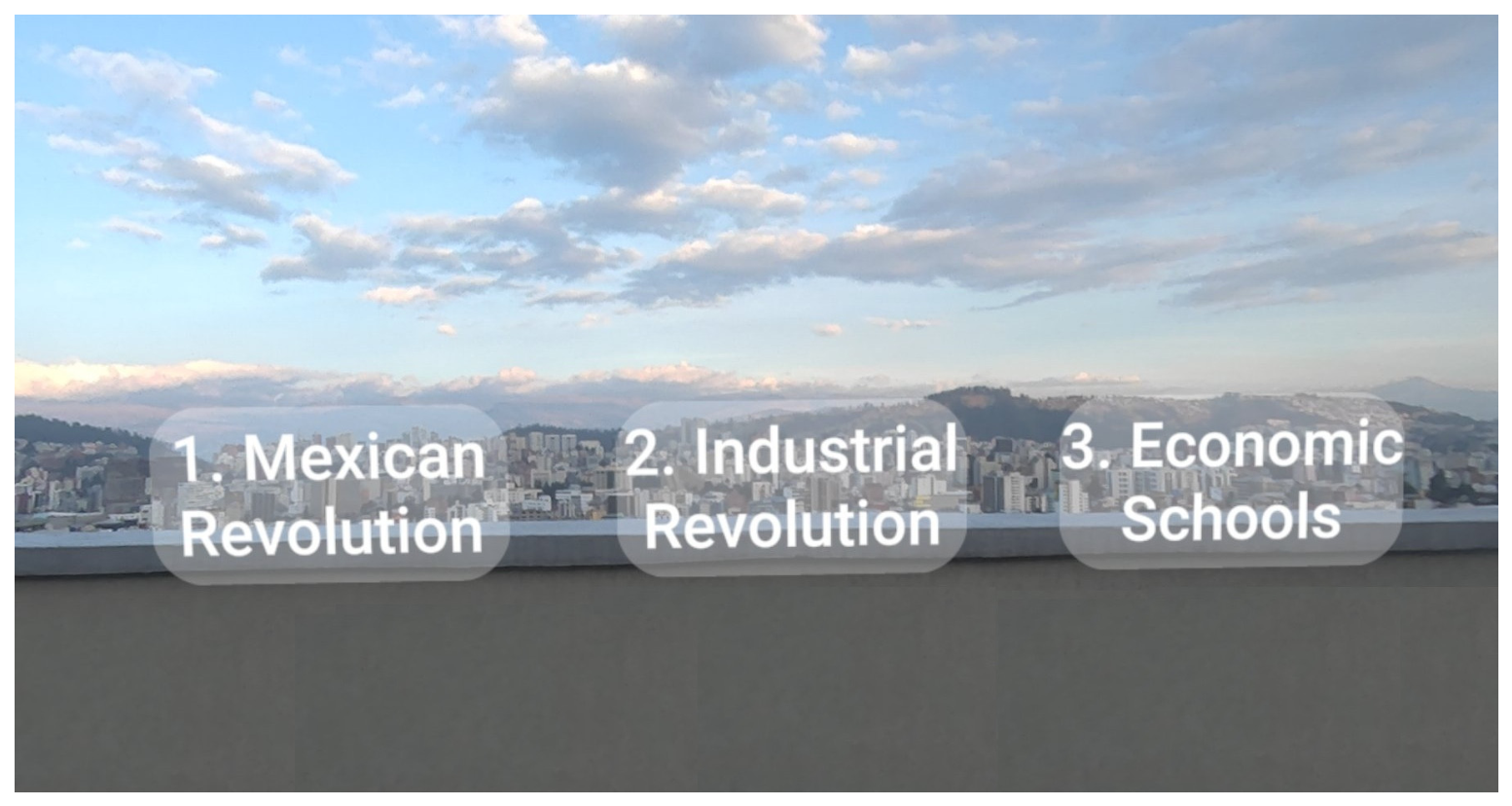
Figure 1. Start of the HistARium application along with the three designed scenarios.
Informatics 13 00126 g001
Figure 2. Characters that stand out in the Mexican Revolution.
Informatics 13 00126 g002
Figure 3. Evolution of the Industrial Revolution.
Informatics 13 00126 g003
Figure 4. Main characters of the Economic Schools.
Informatics 13 00126 g004
Figure 5. Distribution of student responses across the three CLT dimensions.
Informatics 13 00126 g005
Figure 6. Relationship between ICL, ECL, and GCL.
Informatics 13 00126 g006
Figure 7. Relationships among the perceived cognitive load dimensions and the exploratory cognitive processing index.
Informatics 13 00126 g007
Table 1. Instructional design principles implemented in HistARium based on Cognitive Load Theory (CLT).
Theoretical PrincipleInstructional Design Decision in HistARiumExpected Cognitive Effect
Intrinsic Cognitive Load (ICL)Historical content was divided into three independent instructional modules (Mexican Revolution, Industrial Revolution, and Schools of Economic Thought). Activities progressed from exploration to identification, comparison, classification, and association tasks.Maintains task complexity at manageable levels and prevents cognitive overload caused by simultaneously processing multiple historical topics.
Extraneous Cognitive Load (ECL)Three-dimensional objects, textual descriptions, and interaction instructions were spatially integrated within the same AR environment.Reduces split attention and unnecessary cognitive processing associated with searching and integrating information from multiple sources.
Schema Construction (Germane Cognitive Processes)Activities required learners to compare historical events, classify artifacts, associate historical figures with events, and interpret conceptual relationships.Encourages schema construction, knowledge organization, and meaningful cognitive processing
Table 2. Statistical data of the 60 participants.
Statistical DataValue
Number of participants60
Age, mean (SD)19.15 (1.01)
Age range17–21
Number of variables15
Missing values (NA)0
Percentage of missing values0%
Table 3. Descriptive statistics of the three cognitive load dimensions.
Statistical ValuesICLECLGCL
Mean2.982.698.12
SD0.890.880.98
Min value1.331.336.00
Max value4.674.679.75
Range3.333.333.75
Table 4. Number of items and Cronbach’s alpha per CLT dimension.
CLT DimensionNumber of ItemsCronbach’s Alpha
Intrinsic Cognitive Load (ICL)30.627
Extraneous Cognitive Load (ECL)30.677
Germane Cognitive Load (GCL)40.697
Disclaimer/Publisher’s Note: The statements, opinions and data contained in all publications are solely those of the individual author(s) and contributor(s) and not of MDPI and/or the editor(s). MDPI and/or the editor(s) disclaim responsibility for any injury to people or property resulting from any ideas, methods, instructions or products referred to in the content.