1. Introduction
Access to cultural heritage sites is essential for supporting cultural understanding, historical interpretation, and sustainable heritage tourism. However, physical access to such sites is frequently constrained by conservation requirements, architectural fragility, safety concerns, or long-established ritual and cultural practices [
1,
2]. In particular, sacred architectural spaces are often governed by traditional norms that restrict access to specific areas or to certain visitor groups. These access constraints are not exceptional cases limited to individual sites, but rather represent a recurring structural condition observed across different religious and cultural contexts worldwide [
3]. As a result, a persistent gap exists between the cultural value of sacred heritage sites and the ability of all visitors to experience and interpret them directly.
To address this challenge, Virtual Reality (VR) technologies have increasingly been adopted as alternative access mechanisms for cultural heritage interpretation [
4]. VR-based systems enable visitors to explore heritage spaces remotely, mitigate physical impact on fragile structures, and provide access to sites that are geographically distant or culturally restricted. Among existing approaches, VR360 systems are widely used due to their relatively low development cost, straightforward deployment, and ability to present high-fidelity panoramic visual content [
5]. However, prior studies have noted that VR360 systems typically rely on predefined viewpoints and fixed informational hotspots, resulting in largely passive user experiences with limited interactivity and minimal support for user-driven inquiry [
6]. In contrast, immersive VR systems based on fully navigable three-dimensional reconstructions allow greater spatial exploration and user agency, but demand more complex content production pipelines and interaction design considerations [
7]. Presence and spatial experience have therefore become key evaluation dimensions in virtual heritage research, often assessed using standardized presence measurement instruments [
8].
Recent advances in artificial intelligence, particularly Large Language Models (LLMs), further extend the capabilities of immersive VR by enabling conversational and adaptive interaction within virtual environments [
9]. AI-driven conversational interfaces allow users to pose natural language questions and receive context-sensitive explanations, transforming VR from a static visualization medium into an interactive information system. Despite growing interest in AI-enhanced virtual heritage, empirical comparisons between conventional VR360 systems and AI-driven immersive VR systems remain limited, especially in real-world heritage contexts characterized by ritual access restrictions [
10]. Three limitations in the current literature can be identified. First, many studies examine immersive VR and panoramic VR360 systems separately, without conducting controlled comparisons between different access paradigms within the same heritage context. Second, a substantial portion of AI-enhanced virtual heritage research focuses on technical prototypes or laboratory-based demonstrations, leaving limited empirical evidence from real-world heritage deployments where operational constraints and visitor diversity influence system use. Third, although conversational AI has been proposed as a mechanism to enrich interpretation and visitor engagement, little empirical evidence exists regarding how conversational interaction influences user experience outcomes compared with established VR360 system.
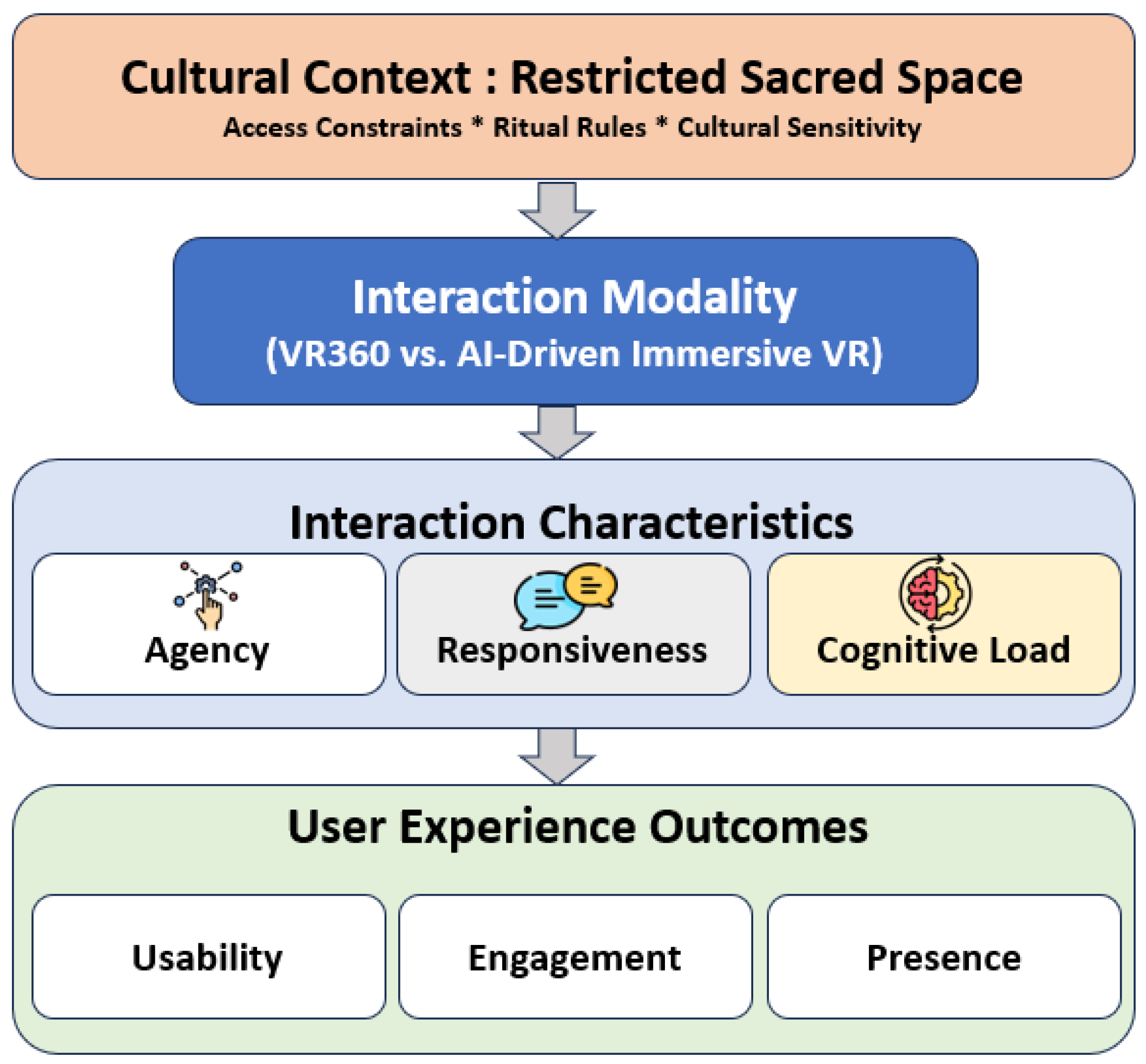
To address these gaps, this study adopts a comparative research-in-the-wild approach to examine two virtual heritage access paradigms—a VR360 system and an AI-driven immersive VR system with conversational interaction—deployed in an access-restricted sacred heritage site. To strengthen the theoretical grounding of this study, we adopt an interaction-driven perspective in which VR360 and AI-driven immersive VR are conceptualized as distinct interaction modalities that shape user experience through differences in interaction characteristics, including user agency, system responsiveness, and cognitive load. This perspective is situated within the context of access-restricted sacred spaces, where virtual reality functions as a mediated access mechanism.
The research contributes to the literature in three ways: theoretically, by clarifying how interaction modality influences presence and user experience in culturally constrained heritage environments; methodologically, by demonstrating the value of real-world comparative evaluation for XR heritage systems; and practically, by identifying design and operational trade-offs between VR360 and AI-driven immersive VR to inform heritage institutions seeking to balance inclusivity, experiential depth, and deployment feasibility. To guide the comparative analysis, this study addresses the following research questions:
RQ1: How do VR360 systems and AI-driven immersive VR systems differ in terms of perceived usability and user engagement when applied to an access-restricted sacred heritage context?
RQ2: How do VR360 systems and AI-driven immersive VR systems differ in terms of presence and perceived spatial presence in an access-restricted sacred heritage context?
RQ3: What system-level design and operational trade-offs emerge when transitioning from VR360-based heritage access systems to AI-driven immersive VR systems for access-constrained cultural heritage sites?
Author Contributions
Conceptualization, P.A. and P.J.; methodology, P.A. and P.J.; software, P.T.; validation, S.K.; formal analysis, P.A. and P.J.; investigation, S.K.; resources, P.T.; data curation, D.P.; writing—original draft preparation, P.A. and P.J.; writing—review and editing, P.A.; visualization, D.P.; supervision, P.J.; project administration, P.T.; funding acquisition, P.A. All authors have read and agreed to the published version of the manuscript.
Funding
This research project was supported by the Fundamental Fund 2026, Chiang Mai University, and also Thailand Science Research and Innovation 2026.
Institutional Review Board Statement
The study was conducted in accordance with the Declaration of Helsinki and approved by the Institutional Review Board of Committee of Research Ethics, Chiang Mai University Research Ethics Committee, Chiang Mai University (COA No. 244/68, approved on 9 September 2025).
Informed Consent Statement
Informed consent was obtained from all subjects involved in the study.
Data Availability Statement
The data presented in this study are available upon request from the corresponding author due to privacy and ethical restrictions.
Conflicts of Interest
The authors declare no conflicts of interest.
References
- Chong, H.T.; Lim, C.K.; Ahmed, M.F.; Tan, K.L.; Mokhtar, M. Virtual Reality Usability and Accessibility for Cultural Heritage Practices: Challenges Mapping and Recommendations. Electronics 2021, 10, 1430. [Google Scholar] [CrossRef]
- Bekele, M.K.; Pierdicca, R.; Frontoni, E.; Malinverni, E.S.; Gain, J. A Survey of Augmented, Virtual, and Mixed Reality for Cultural Heritage. J. Comput. Cult. Herit. 2018, 11, 1–36. [Google Scholar] [CrossRef]
- Timothy, D.J.; Boyd, S.W. Heritage tourism in the 21st century: Valued traditions and new perspectives. J. Herit. Tour. 2006, 1, 1–16. [Google Scholar] [CrossRef]
- Roussou, M.; Katifori, A. Flow, Staging, Wayfinding, Personalization: Evaluating User Experience with Mobile Museum Narratives. Multimodal Technol. Interact. 2018, 2, 32. [Google Scholar] [CrossRef]
- Rodríguez-García, B.; Guillén-Sanz, H.; Checa, D.; Bustillo, A. A Systematic Review of Virtual 3D Reconstructions of Cultural Heritage in Immersive Virtual Reality. Multimed. Tools Appl. 2024, 83, 89743–89793. [Google Scholar] [CrossRef]
- Sylaiou, S.; Mania, K.; Karoulis, A.; White, M. Exploring the Relationship between Presence and Enjoyment in a Virtual Museum. Int. J. Hum.-Comput. Stud. 2010, 68, 243–253. [Google Scholar] [CrossRef]
- Champion, E. Critical Gaming: Interactive History and Virtual Heritage; Routledge: London, UK, 2015. [Google Scholar]
- Schubert, T.; Friedmann, F.; Regenbrecht, H. The Experience of Presence: Factor Analytic Insights. Presence Teleoper. Virtual Environ. 2001, 10, 266–281. [Google Scholar] [CrossRef]
- Sánchez-Berriel, I.; Pérez-Nava, F.; Pérez-Rosario, L. Natural Interaction in Virtual Heritage: Enhancing User Experience with Large Language Models. Electronics 2025, 14, 2478. [Google Scholar] [CrossRef]
- Lombardo, V.; Pizzo, A.; Damiano, R. Safeguarding and Accessing Drama as Intangible Cultural Heritage. J. Comput. Cult. Herit. 2016, 9, 1–26. [Google Scholar] [CrossRef]
- Chong, H.T.; Lim, C.K.; Ahmed, M.F.; Tan, K.L.; Mokhtar, M. Comprehensive Systematic Review on Virtual Reality for Cultural Heritage Practices: Coherent Taxonomy and Motivations. Multimed. Syst. 2022, 28, 481–507. [Google Scholar] [CrossRef]
- Li, J.; Zheng, X.; Watanabe, I.; Ochiai, Y. A Systematic Review of Digital Transformation Technologies in Museum Exhibition. Comput. Hum. Behav. 2024, 161, 108407. [Google Scholar] [CrossRef]
- Skublewska-Paszkowska, M.; Milosz, M.; Powroznik, P.; Lukasik, E. 3D Technologies for Cultural Heritage: A Review. Appl. Sci. 2022, 12, 61. [Google Scholar] [CrossRef]
- Marto, A.; Gonçalves, A.; Melo, M.; Bessa, M. A Survey of Multisensory VR and AR Applications for Cultural Heritage. Comput. Graph. 2022, 102, 426–440. [Google Scholar] [CrossRef]
- Haddad, N.A. Insight on 3D virtual reconstruction of architectural and archaeological cultural heritage: Critical assessment, comprehensive guidelines, and recommendations. Stud. Conserv. 2025. [Google Scholar] [CrossRef]
- Kabassi, K.; Amelio, A.; Komianos, V.; Oikonomou, K. Evaluating a Virtual Tour in a Museum Based on the Visitor’s Experience. PLoS ONE 2022, 17, e0261607. [Google Scholar] [CrossRef]
- Ariya, P.; Sirilertworakul, N.; Angskun, T. Immersive Realities in Museums: Evaluating the Impact of VR, VR360, and Mixed Reality Technologies on Visitor Presence, Engagement and Motivation. Virtual Real. 2025, 29, 117. [Google Scholar] [CrossRef]
- Cui, H.; Wu, J. Virtual Exhibitions of Cultural Heritage: Research Landscape and Future Directions. Appl. Sci. 2025, 15, 12287. [Google Scholar] [CrossRef]
- Balzani, M.; Maietti, F. Saving Temporary Exhibitions in Virtual Environments: The Digital Renaissance of Ulisse Aldrovan-di—Acquisition and Digitisation of Cultural Heritage Objects. Digit. Appl. Archaeol. Cult. Herit. 2023, 32, e00309. [Google Scholar] [CrossRef]
- Shehade, M.; Stylianou-Lambert, T. Virtual Reality in Museums: Exploring the Experiences of Museum Professionals. Appl. Sci. 2020, 10, 4031. [Google Scholar] [CrossRef]
- Vaz, R.; Fernandes, P.O.; Veiga, A.C. Interactive Technologies in Museums: How Digital Installations and Media Are Enhancing the Visitors’ Experience. In Handbook of Research on Technological Developments for Cultural Heritage and eTourism Applications; Rodrigues, J.M.F., Ramos, C.M.Q., Cardoso, P.J.S., Henriques, C., Eds.; IGI Global: Hershey, PA, USA, 2018; pp. 30–53. [Google Scholar] [CrossRef]
- Teppati Losè, L.; Rinaudo, F. A Systematic Literature Review to Assist in Defining New Guidelines and Practical Handbooks for the Documentation of Built Heritage. Heritage 2025, 8, 249. [Google Scholar] [CrossRef]
- Sun, X.; Ch’ng, E. Beyond the screen: Enhancing ethnic cultural representation and engagement through immersive 360° documentary experiences in museums. Humanit. Soc. Sci. Commun. 2025, 12, 1014. [Google Scholar] [CrossRef]
- Vosinakis, S.; Koutsabasis, P.; Anastassakis, G.; Papasalouros, A.; Damianidis, K. Designing and evaluating an immersive VR experience of a historic sailing ship in museum contexts. Comput. Graph. 2025, 133, 104439. [Google Scholar] [CrossRef]
- Iacono, S.; Scaramuzzino, M.; Martini, L.; Panelli, C.; Zolezzi, D.; Perotti, M.; Traverso, A.; Vercelli, G.V. Virtual Reality in Cultural Heritage: A Setup for Balzi Rossi Museum. Appl. Sci. 2024, 14, 3562. [Google Scholar] [CrossRef]
- Guan, H.; Chen, P.; Kwon, C.L. Virtual Museums as Meaning-Modeling Systems in Digital Heritage. Heritage 2025, 8, 484. [Google Scholar] [CrossRef]
- Wang, Y.; Wang, S.; Pan, Y.; Li, C.; Chen, C.; Wang, J. Immersive virtual reality and computer vision for heritage: Visual evaluation and perception of the industrial heritage sites along the Yunnan–Vietnam railway (Yunnan section). Herit. Sci. 2024, 12, 36. [Google Scholar] [CrossRef]
- Tromp, J.; Schofield, D.; Raeisian Parvari, P.; Poyade, M.; Eaglesham, C.; Torres, J.C.; Johnson, T.; Jürivete, T.; Lauer, N.; Reyes-Lecuona, A.; et al. Designing and Evaluating XR Cultural Heritage Applications Through Human–Computer Interaction Methods: Insights from Ten International Case Studies. Appl. Sci. 2025, 15, 7973. [Google Scholar] [CrossRef]
- Mishra, M.; Doria, E. Virtual Reality and Artificial Intelligence-Assisted Visual Inspections for Cultural Heritage Structures: A Review. Int. J. Archit. Herit. 2026. [Google Scholar] [CrossRef]
- Ke, P.; Lin, G.; Hui, Y.-F. Immersive Virtual Reality Design for the Architectural Heritage of Rovigo, Italy: Digital Preservation and Interactive Exploration Based on Embodied Interaction. Int. Arch. Photogramm. Remote Sens. Spatial Inf. Sci. 2025, XLVIII-M-9-2025, 659–666. [Google Scholar] [CrossRef]
- Mohammed-Amin, R.K.; Economou, M.; Katifori, A.; Rasool, K.K.; Raouf, T.L.; Ibrahim, N.H.; Radha, R.A.; Ali, K.O. Nobody’s Listening: Evaluating the Impact of Immersive VR for Engaging with Difficult Heritage and Human Rights. Heritage 2025, 8, 474. [Google Scholar] [CrossRef]
- Zhang, J.; Yahaya, W.A.J.W.; Sanmugam, M. The Impact of Immersive Technologies on Cultural Heritage: A Bibliometric Study of VR, AR, and MR Applications. Sustainability 2024, 16, 6446. [Google Scholar] [CrossRef]
- Spennemann, D.H.R. Generative Artificial Intelligence, Human Agency and the Future of Cultural Heritage. Heritage 2024, 7, 3597–3609. [Google Scholar] [CrossRef]
- DaCosta, B. Speaking with the Past: Constructing AI-Generated Historical Characters for Cultural Heritage and Learning. Heritage 2025, 8, 387. [Google Scholar] [CrossRef]
- Zhang, S.; Ma, M.; Li, Y.; Man, K.L.; Smith, J.; Yue, Y. The Effects of LLM-Empowered Chatbots and Avatar Guides on the Engagement, Experience, and Learning in Virtual Museums. Int. J. Hum. Comput. Interact. 2025. [Google Scholar] [CrossRef]
- Garcia, I.L.; Schott, E.; Gohsen, M.; Bernhard, V.; Stein, B.; Fröhlich, B. Speaking with Objects: Conversational Agents’ Embodiment in Virtual Museums. In Proceedings of the 2024 IEEE International Symposium on Mixed and Augmented Reality Adjunct (ISMAR-Adjunct), Bellevue, WA, USA, 21–25 October 2024; pp. 281–286. [Google Scholar] [CrossRef]
- Upadhyay, A.; Yang, F.-C.; Mousas, C. Virtual Museum Tour Agent: Effects of Responsiveness and Awareness. Comput. Animat. Virtual Worlds 2023, 34, e2155. [Google Scholar] [CrossRef]
- Mazzanti, P.; Ferracani, A.; Bertini, M.; Principi, F. Reshaping Museum Experiences with AI: The ReInHerit Toolkit. Heritage 2025, 8, 277. [Google Scholar] [CrossRef]
- Tiansawang, K.; Monvucharin, P.; Kongjarern, T.; Thamboon, P.; Saelee, C.; Riyaprao, O. Archaeoastronomical Analysis of Sri Suphan Temple. ASEAN J. Sci. Technol. Rep. 2025, 28, e257483. [Google Scholar] [CrossRef]
- Pumketkao-Lecourt, P.; Teeraparbwong, K.; Tansukanun, P. Silver craft and Buddhist temple in the shaping of neighbourhood communities in Wua-Lai, Chiang Mai, Thailand. Asia Pac. Viewp. 2022, 63, 379–395. [Google Scholar] [CrossRef]
- Rogers, Y. Interaction Design Gone Wild: Striving for Wild Theory. Interactions 2011, 18, 58–62. [Google Scholar] [CrossRef]
- Chamberlain, A.; Crabtree, A.; Rodden, T.; Jones, M.; Rogers, Y. Research in the Wild: Understanding “In the Wild” Approaches to Design and Development. In Proceedings of the Designing Interactive Systems Conference (DIS); ACM: New York, NY, USA, 2012; pp. 795–796. [Google Scholar] [CrossRef]
- Brooke, J. SUS: A “Quick and Dirty” Usability Scale. In Usability Evaluation in Industry; Jordan, P.W., Thomas, B., Weerd-Meester, B.A., McClelland, I.L., Eds.; Taylor & Francis: London, UK, 1996; pp. 189–194. [Google Scholar]
- Vlachogianni, P.; Tselios, N. Perceived usability evaluation of educational technology using the System Usability Scale (SUS): A systematic review. J. Res. Technol. Educ. 2022, 54, 392–409. [Google Scholar] [CrossRef]
- O’Brien, H.L.; Toms, E.G. The development and evaluation of a survey to measure user engagement. J. Am. Soc. Inf. Sci. Technol. 2010, 61, 50–69. [Google Scholar] [CrossRef]
- O’Brien, H.L.; Cairns, P.; Hall, M. A practical approach to measuring user engagement with the refined User Engagement Scale (UES) and new UES short form. Int. J. Hum. Comput. Stud. 2018, 112, 28–39. [Google Scholar] [CrossRef]
- Tran, T.Q.; Langlotz, T.; Young, J.; Schubert, T.W.; Regenbrecht, H. Classifying presence scores: Insights and analysis from two decades of the Igroup Presence Questionnaire (IPQ). ACM Trans. Comput. Hum. Interact. 2024, 31, 1–26. [Google Scholar] [CrossRef]
- Rieman, J. The diary study: A workplace-oriented research tool to guide laboratory efforts. In Proceedings of the INTERACT’93 and CHI’93 Conference on Human Factors in Computing Systems; ACM: New York, NY, USA, 1993; pp. 321–326. [Google Scholar]
- Lee, C.-Y.; Chen, Y.-C.; Huang, Y.-M. Development of a VR360 Ecological System for Learning Indigenous Cultures and Environmental Conservation. Appl. Sci. 2024, 14, 10582. [Google Scholar] [CrossRef]
- Radianti, J.; Majchrzak, T.A.; Fromm, J.; Wohlgenannt, I. A systematic review of immersive virtual reality applications for higher education: Design elements, lessons learned, and research agenda. Comput. Educ. 2020, 147, 103778. [Google Scholar] [CrossRef]
- Ho, H.P.; Ramesh, V.; Zaloudek, I.; Rikhtehgar, D.J.; Wang, S. Enhancing Visitor Engagement in Interactive Art Exhibitions with Visual-Enhanced Conversational Agents. In Proceedings of the 30th International Conference on Intelligent User Interfaces (IUI 2025); ACM: New York, NY, USA, 2025; pp. 660–671. [Google Scholar]
- Pietroni, E. Experience Design, Virtual Reality and Media Hybridization for the Digital Communication of Cultural Heritage. Appl. Sci. 2019, 9, 1963. [Google Scholar] [CrossRef]
- Weech, S.; Kenny, S.; Barnett-Cowan, M. Presence and Cybersickness in Virtual Reality Are Negatively Related: A Review. Front. Psychol. 2019, 10, 158. [Google Scholar] [CrossRef]
- Wang, H.; Liu, Y. Gamifying Cultural Heritage: Exploring the Potential of Immersive Virtual Exhibitions. J. Cult. Herit. 2024, 68, 45–58. [Google Scholar] [CrossRef]
Figure 1.
Conceptual framework of interaction modality and user experience in access-restricted sacred heritage contexts.
Figure 2.
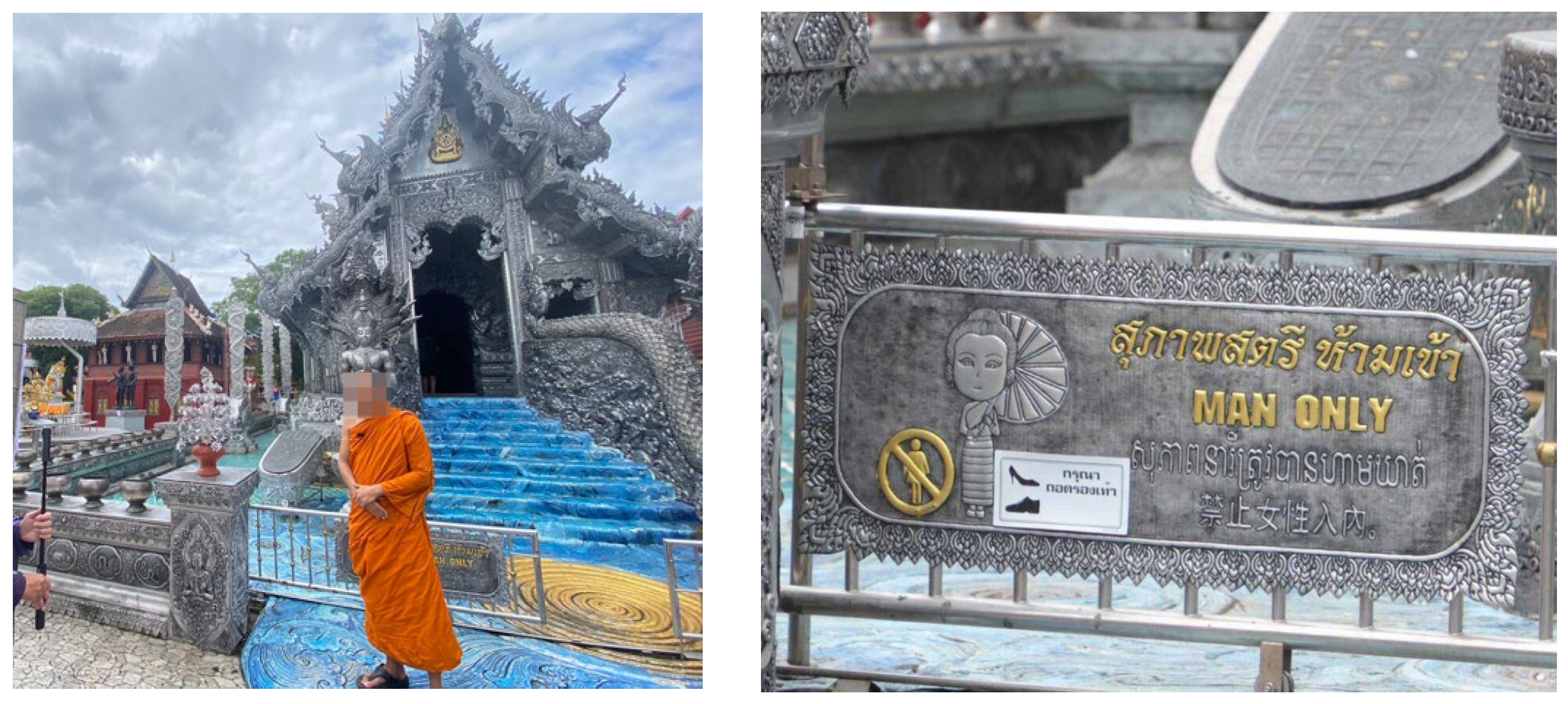
The Silver Ubosot at Wat Sri Suphan (left) and on-site signage indicating traditional access restrictions to the sacred space (right).
Figure 3.
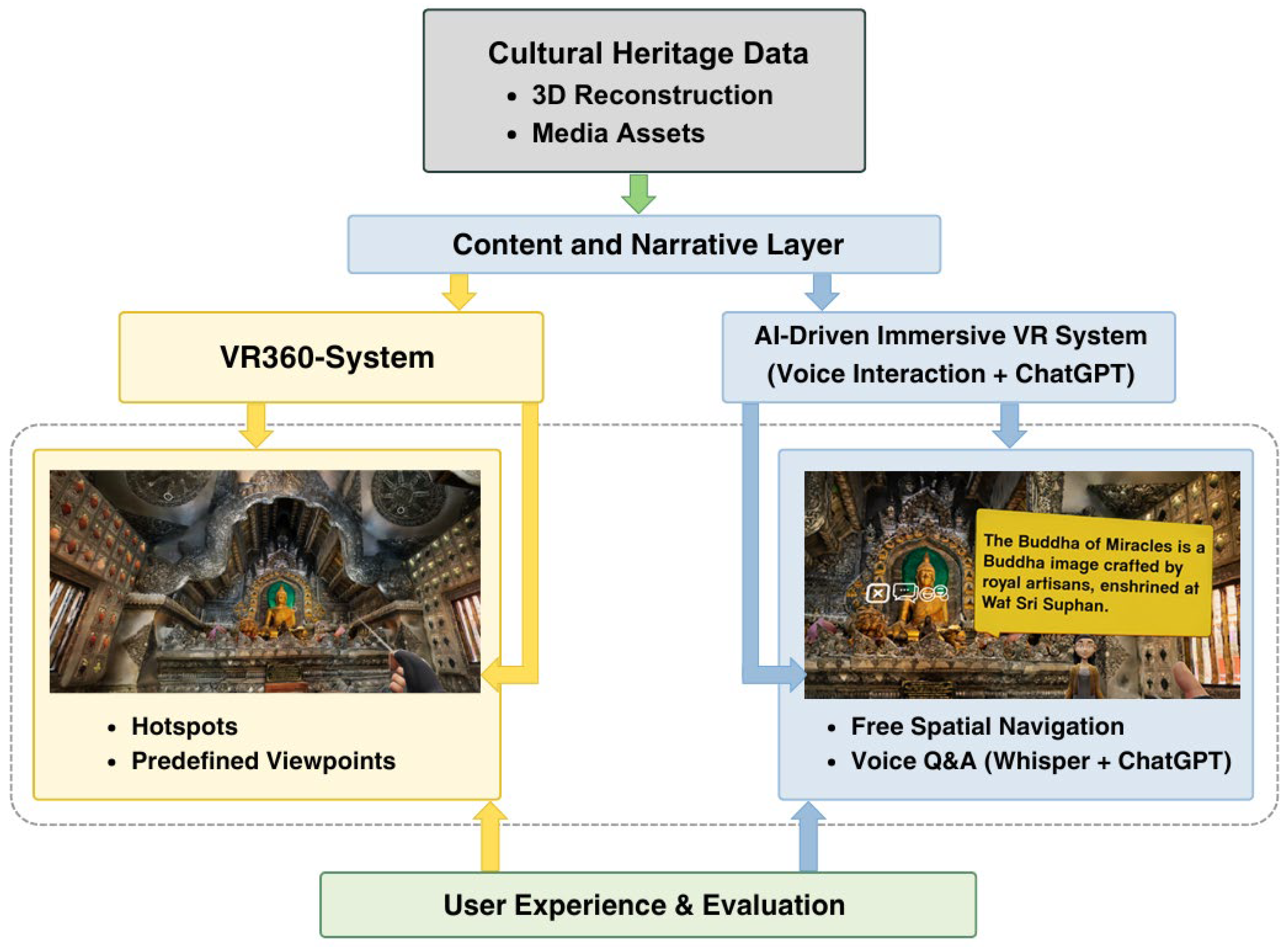
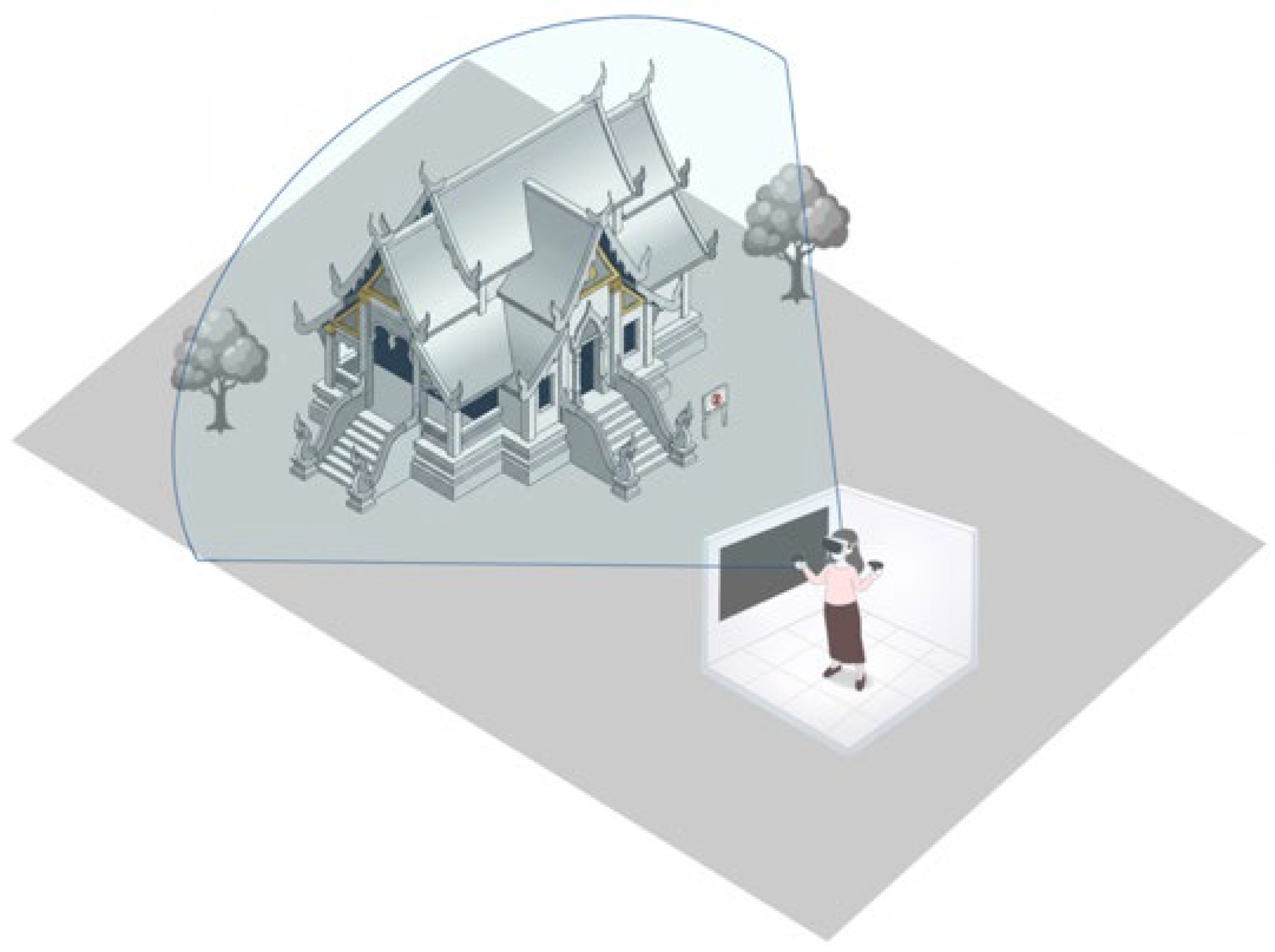
Overall system architecture showing the shared content layer and two virtual access systems: VR360-based heritage access and AI-driven immersive VR.
Figure 4.
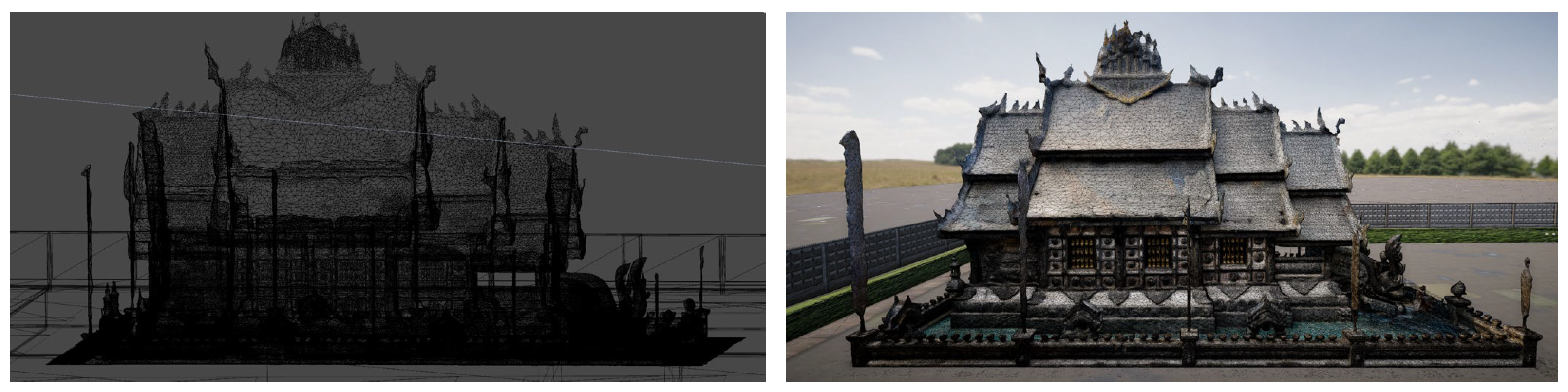
Photogrammetry-derived wireframe (left) and immersive VR-rendered 3D model (right) of the Silver Ubosot at Wat Sri Suphan.
Figure 5.
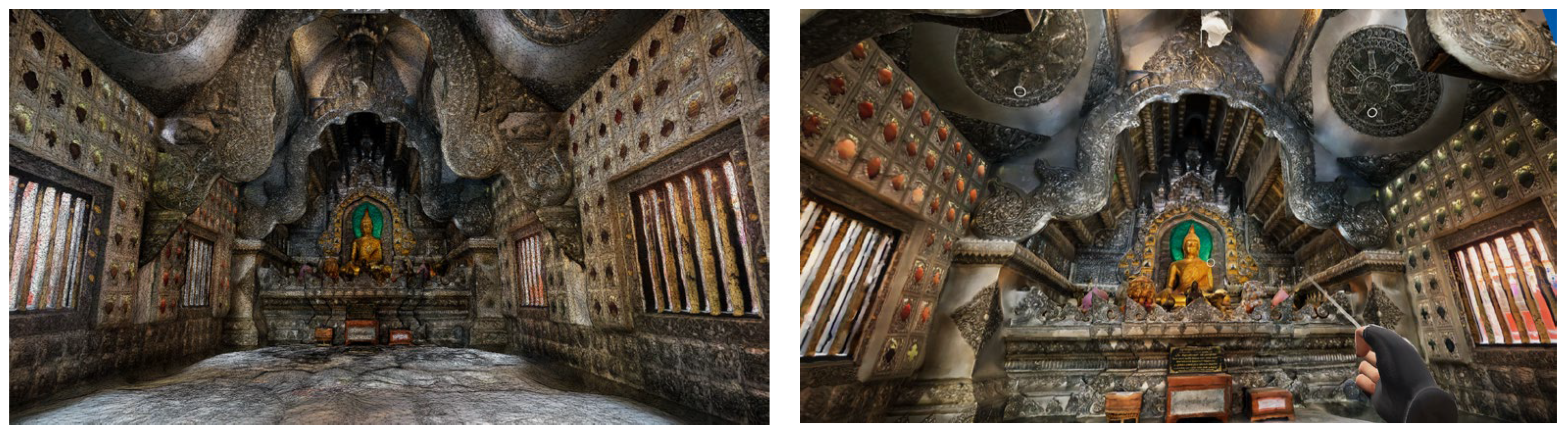
Interior view of the photogrammetry-based 3D reconstruction of the Silver Ubosot at Wat Sri Suphan rendered in the immersive VR environment.
Figure 6.
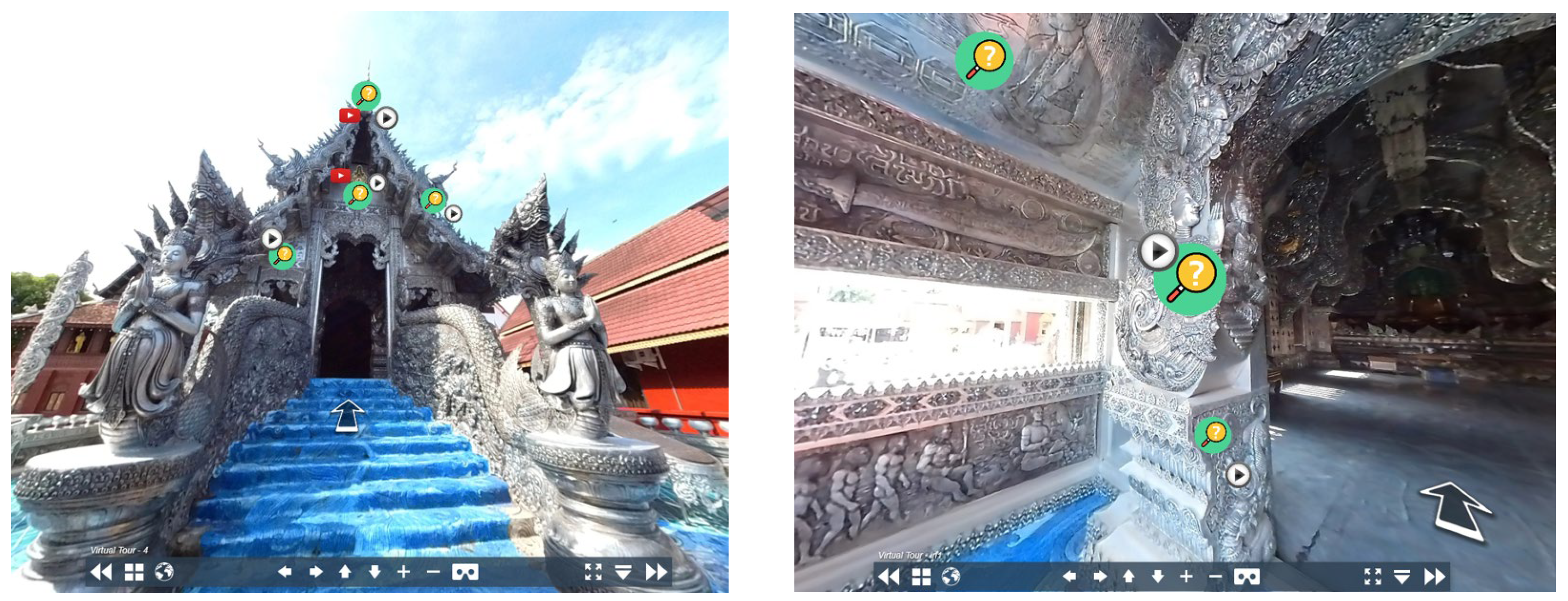
VR360-based heritage access system showing node-based navigation and interactive icons for information access and narrated storytelling at Wat Sri Suphan.
Figure 7.
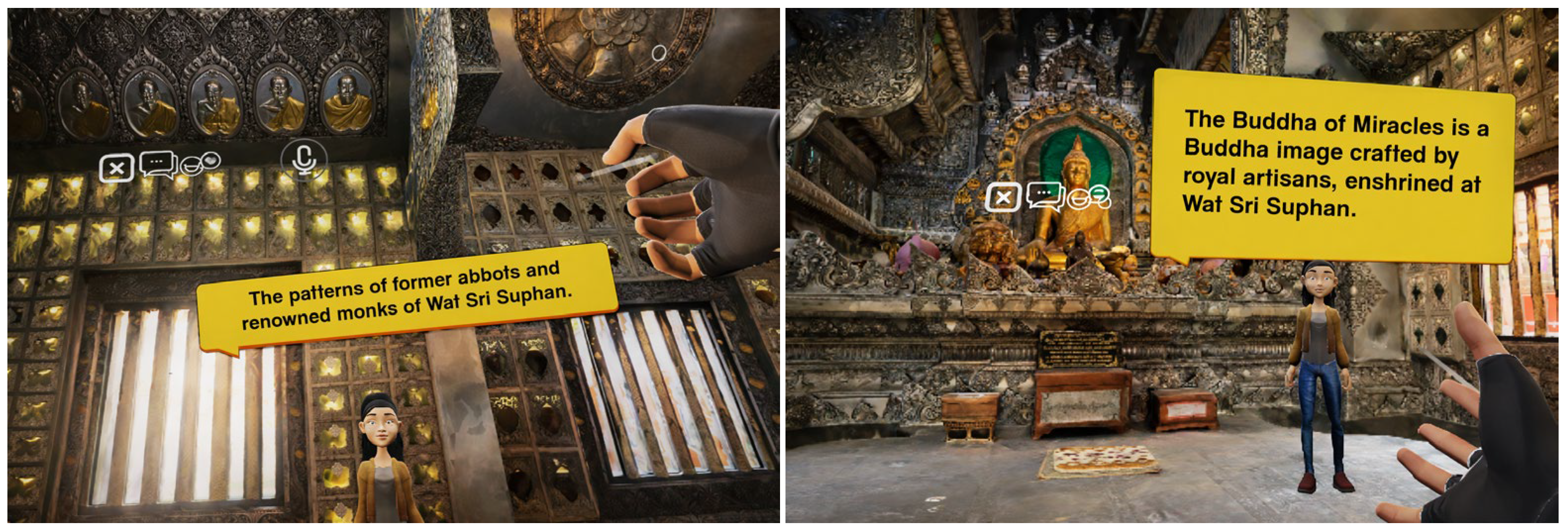
AI-driven immersive VR interaction with voice-based questioning and on-screen responses at Wat Sri Suphan.
Figure 8.
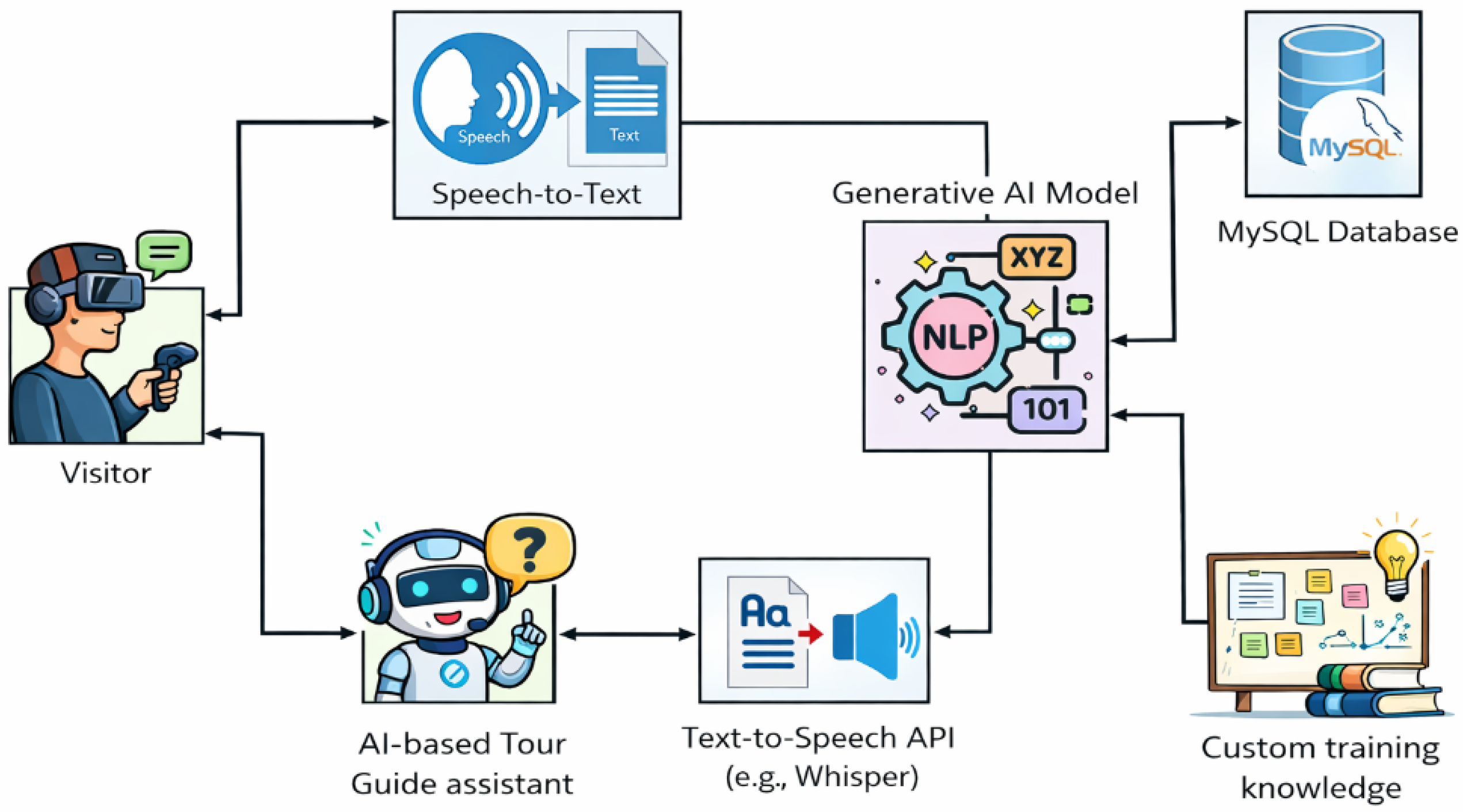
System architecture of the AI-driven immersive VR platform with LLM-based conversational interaction.
Figure 9.
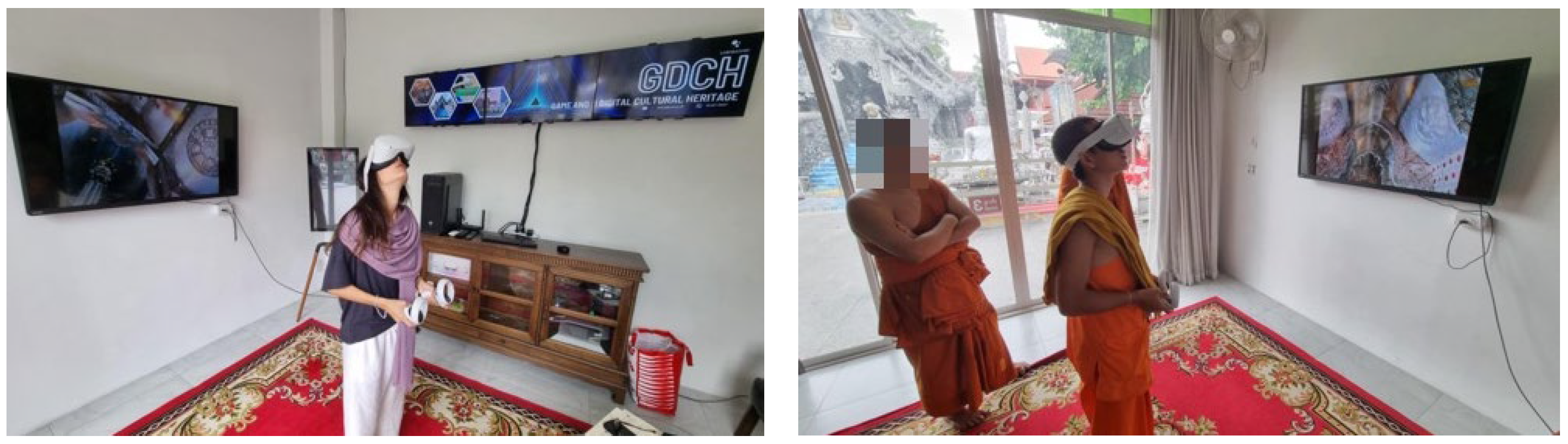
Experimental setup of the virtual heritage systems in a designated room opposite the Ubosot: a female participant using the system (left) and a monk serving as exhibition operation staff (right).
Figure 10.
Exhibit setting room opposite the Ubosot.
Figure 11.
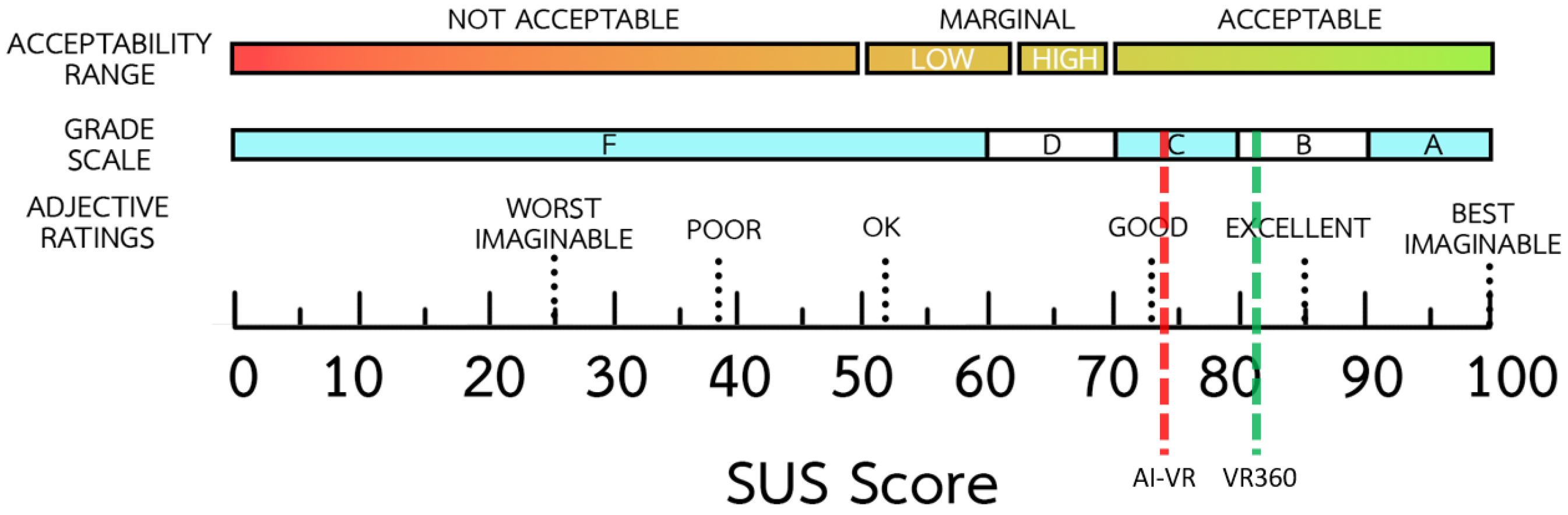
SUS scores for the VR360 and AI-driven immersive VR systems, interpreted using standard acceptability ranges and adjective ratings.
Figure 12.
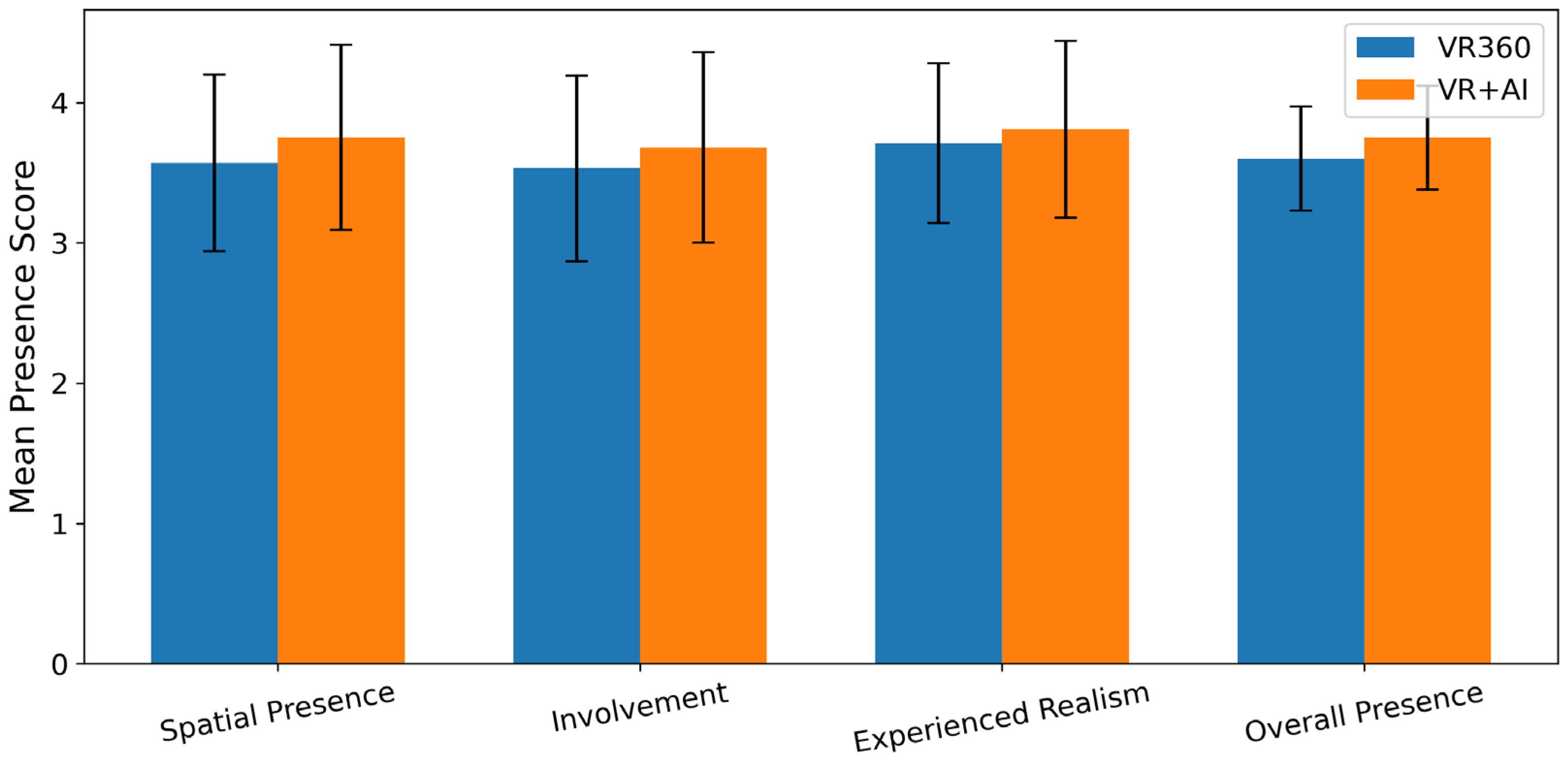
Mean presence scores comparing VR360 and AI-driven immersive VR across presence dimensions.
Table 1.
Results of UES Using an Independent-Samples t-Test.
| UES Dimension | VR360 (N = 68) | VR+AI (N = 68) | Statistic Test |
|---|
| Mean | SD | Mean | SD | P | Cohen’s d |
|---|
| Focus Attention | 3.64 | 0.65 | 3.79 | 0.66 | N/A | N/A |
| Perceived Usability | 4.17 | 0.73 | 3.81 | 0.67 | N/A | N/A |
| Aesthetic Appeal | 4.04 | 0.57 | 4.24 | 0.61 | N/A | N/A |
| Reward | 3.77 | 0.78 | 4.07 | 0.61 | N/A | N/A |
| Overall | 3.91 | 0.32 | 3.98 | 0.34 | 0.20 | 0.22 |
Table 2.
Results of IPQ Using an Independent-Samples t-Test.
| IPQ Dimension | VR360 (N = 68) | VR+AI (N = 68) | Statistic Test |
|---|
| Mean | SD | Mean | SD | P | Cohen’s d |
|---|
| Spatial Presence | 3.57 | 0.63 | 3.75 | 0.66 | N/A | N/A |
| Involvement | 3.53 | 0.66 | 3.68 | 0.68 | N/A | N/A |
| Experienced Realism | 3.71 | 0.57 | 3.81 | 0.63 | N/A | N/A |
| Overall Presence | 3.60 | 0.37 | 3.75 | 0.37 | 0.027 | 0.38 |
Table 3.
Behavioral Interaction metrics.
| Metric | VR360 | AI-Driven Immersive VR |
|---|
| Mean session duration | 6.8 min | 9.4 min |
| Mean number of user interactions | 12.3 | 14.4 |
| Mean number of AI questions | - | 6.6 |
| Mean response latency | - | 6.3 s |
Table 4.
Comparison of VR Approaches for Cultural Heritage Access.
| Approach | Strengths | Limitations |
|---|
| VR360 Virtual Tours | Easy deployment, high visual realism, low development cost, minimal supervision required | Limited interactivity, fixed viewpoints, passive exploration |
| Immersive VR Reconstruction | High spatial presence, free navigation, interactive exploration | Higher development cost, complex content production |
| AI-Driven Immersive VR | Conversational interaction, inquiry-driven exploration, enhanced perceived spatial presence | Higher technical complexity, infrastructure dependency, need for operational support |
| Disclaimer/Publisher’s Note: The statements, opinions and data contained in all publications are solely those of the individual author(s) and contributor(s) and not of MDPI and/or the editor(s). MDPI and/or the editor(s) disclaim responsibility for any injury to people or property resulting from any ideas, methods, instructions or products referred to in the content. |