Project Report

Implementation of Surfactant Administration through Laryngeal or Supraglottic Airways (SALSA): A Jordanian NICU’s Journey to Improve Surfactant Administration

by
Naser Aldain A. Abu Leyah
1,*,
Abeer A. Hasan
1,
John N. Juneau
2,
Maryam Ali Al Jammal
1,
Ghada A. Jaber
1,
Gregory E. Wilding
3,
Kari D. Roberts
4 and
Scott O. Guthrie
5
1
Department of Pediatrics, Division of Neonatology, Maternity and Children’s Hospital at Al Bashir Hospital, Amman 11151, Jordan
2
Department of Pediatrics, Division of Neonatology, University of Louisville, Louisville, KY 40202, USA
3
Department of Biostatistics, State University of New York, Buffalo, NY 14214, USA
4
Department of Pediatrics, Division of Neonatology, University of Minnesota, Minneapolis, MN 55454, USA
5
Department of Pediatrics, Division of Neonatology, Vanderbilt University School of Medicine, Nashville, TN 37232, USA
*
Author to whom correspondence should be addressed.
Children 2022, 9(8), 1147; https://doi.org/10.3390/children9081147

Submission received: 30 June 2022 / Revised: 15 July 2022 / Accepted: 27 July 2022 / Published: 30 July 2022
(This article belongs to the Special Issue Neonatal Airway Management)

Abstract

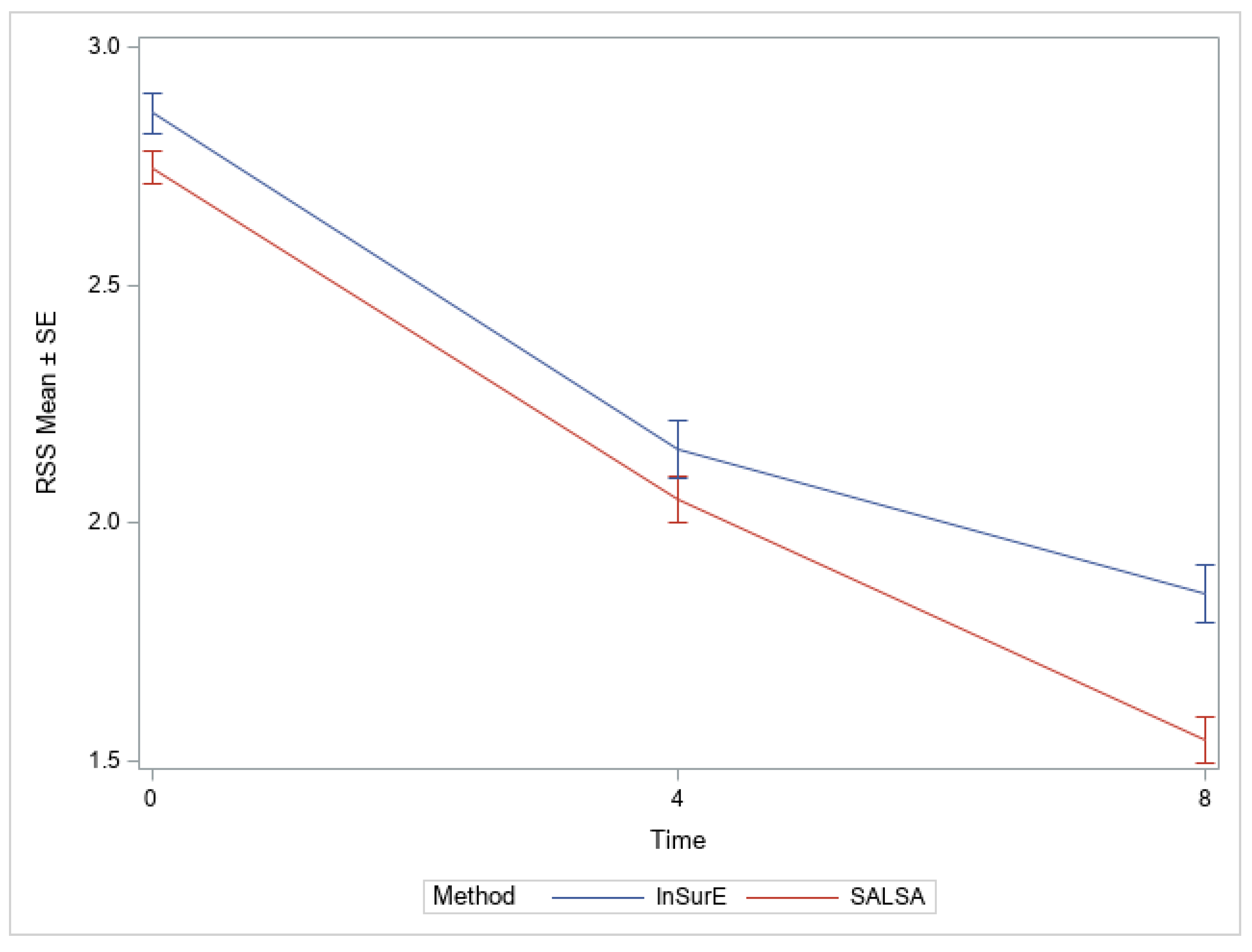
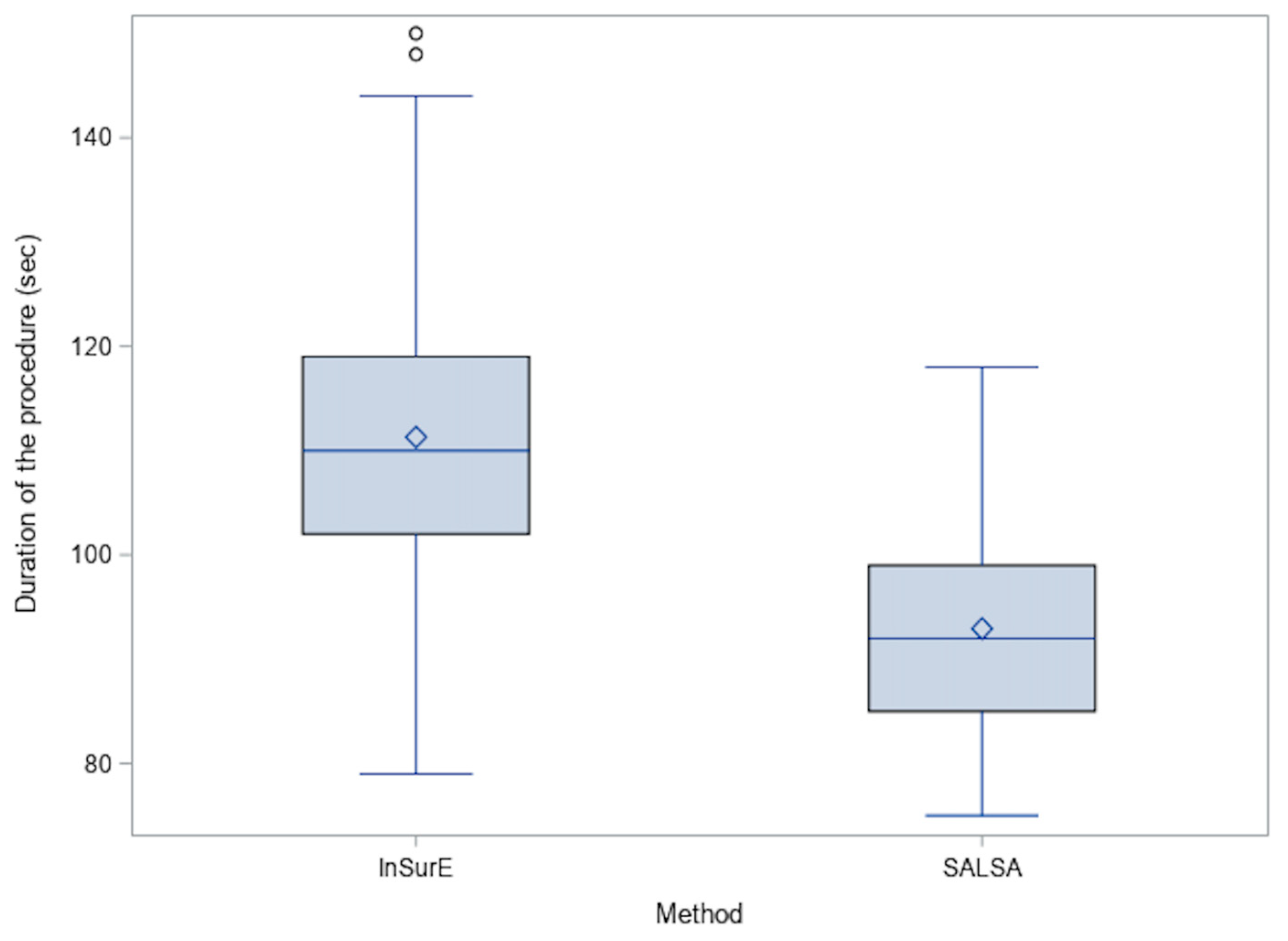
Administration of liquid surfactant through an endotracheal tube for the treatment of respiratory distress syndrome has been the standard of care for decades. Surfactant administration through laryngeal or supraglottic airways (SALSA) is a simplified procedure for delivery of surfactant that is less invasive and better tolerated. The Al Bashir Maternity and Children’s Hospital NICU in Amman, Jordan, implemented SALSA as a potentially better practice in 2019 with the objective to effectively and efficiently deliver surfactant in a minimally invasive way and to decrease the adverse events associated with intubation–surfactant–extubation (InSurE) and laryngoscopy. The quality improvement initiative was conducted from March 2019 to December 2019. All infants who weighed 750 g or more who required surfactant were eligible. As physicians were trained in the technique and use expanded, we were able to use plan–do–study–act cycles to observe differences between SALSA and InSurE. The primary aim was the optimization of non-invasive ventilation by the effective and efficient delivery of surfactant. Balancing measures included episodes of bradycardia while receiving surfactant or the need for a second dose of surfactant. We evaluated 220 infants who received surfactant by SALSA or InSurE with a mean gestational age of 32 weeks and a mean birth weight of 1.8 kg. The Respiratory Severity Score (RSS) prior to surfactant administration was 2.7 in the SALSA group compared to 2.9 in the InSurE group (p = 0.024). Those in the InSurE group had a lower mean heart rate during the procedure (p =< 0.0001) and were more likely to need a second dose of surfactant (p = 0.026) or require intubation for mechanical ventilation (p = 0.022). Both groups were effectively delivered surfactant as evidenced by improvement in their RSS over an 8 h period. SALSA was a more time efficient surfactant delivery method (93 vs. 111 secs, p =< 0.0001). Implementation of SALSA into the Al Bashir NICU was successful. We found that it was equally effective to InSurE, but was a more efficient method of delivery. Infants who received surfactant by this method tolerated it well.
Keywords: Respiratory Distress Syndrome (RDS); surfactant; LMA; supraglottic airways (SALSA); intubation–surfactant–extubation (InSurE) Respiratory Distress Syndrome (RDS); surfactant; LMA; supraglottic airways (SALSA); intubation–surfactant–extubation (InSurE)