Review

Assessing the Predictive Validity of Risk Assessment Tools in Child Health and Well-Being: A Meta-Analysis

1
School of Social Development and Public Policy, Fudan University, Shanghai 200433, China
2
Department of Social Sciences, University of Eastern Finland, 70211 Kuopio, Finland
*
Author to whom correspondence should be addressed.
Children 2025, 12(4), 478; https://doi.org/10.3390/children12040478

Submission received: 11 January 2025 / Revised: 23 March 2025 / Accepted: 1 April 2025 / Published: 7 April 2025
(This article belongs to the Special Issue Adverse Childhood Experiences: Assessment and Long-Term Outcomes)

Abstract

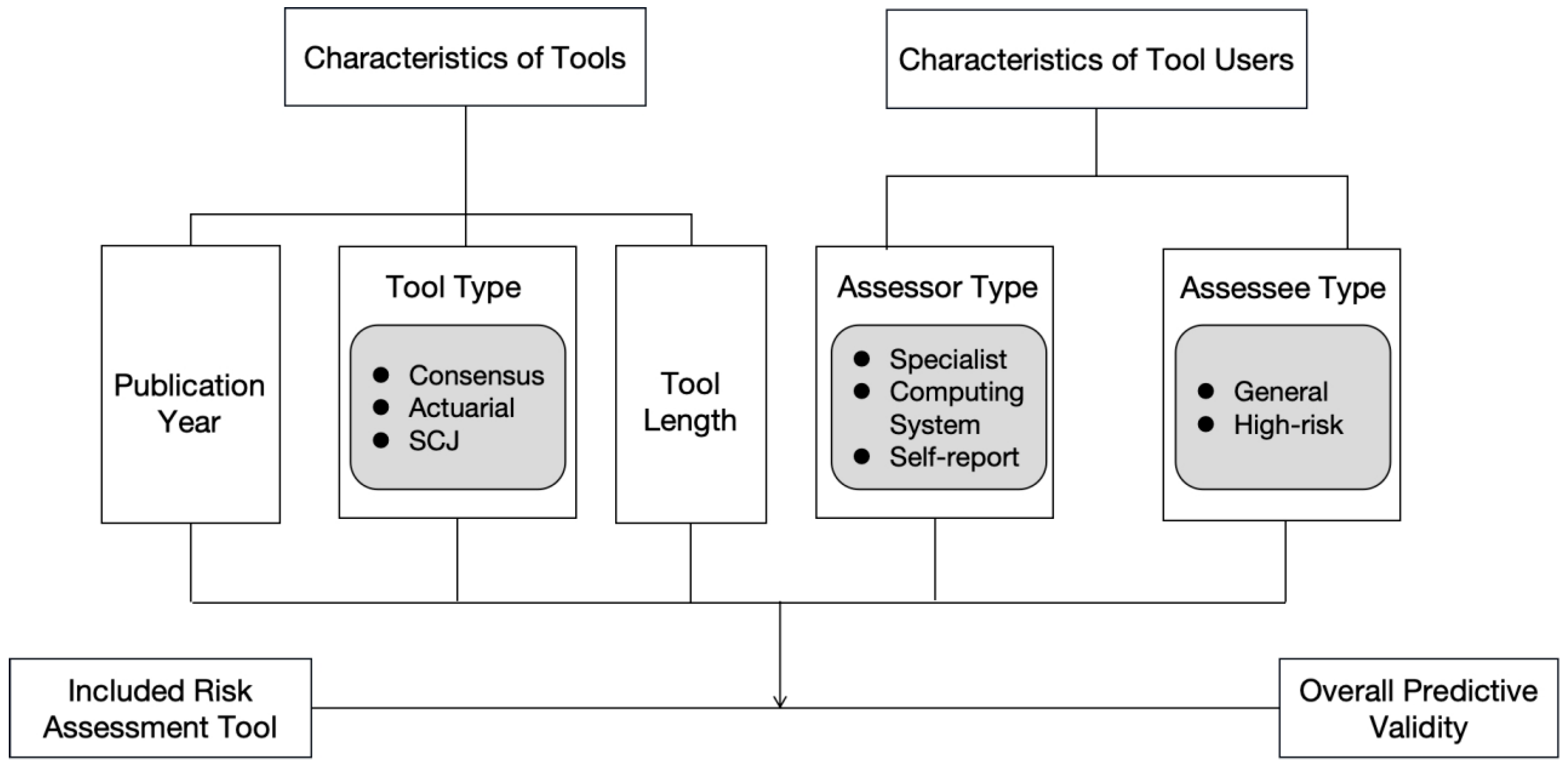
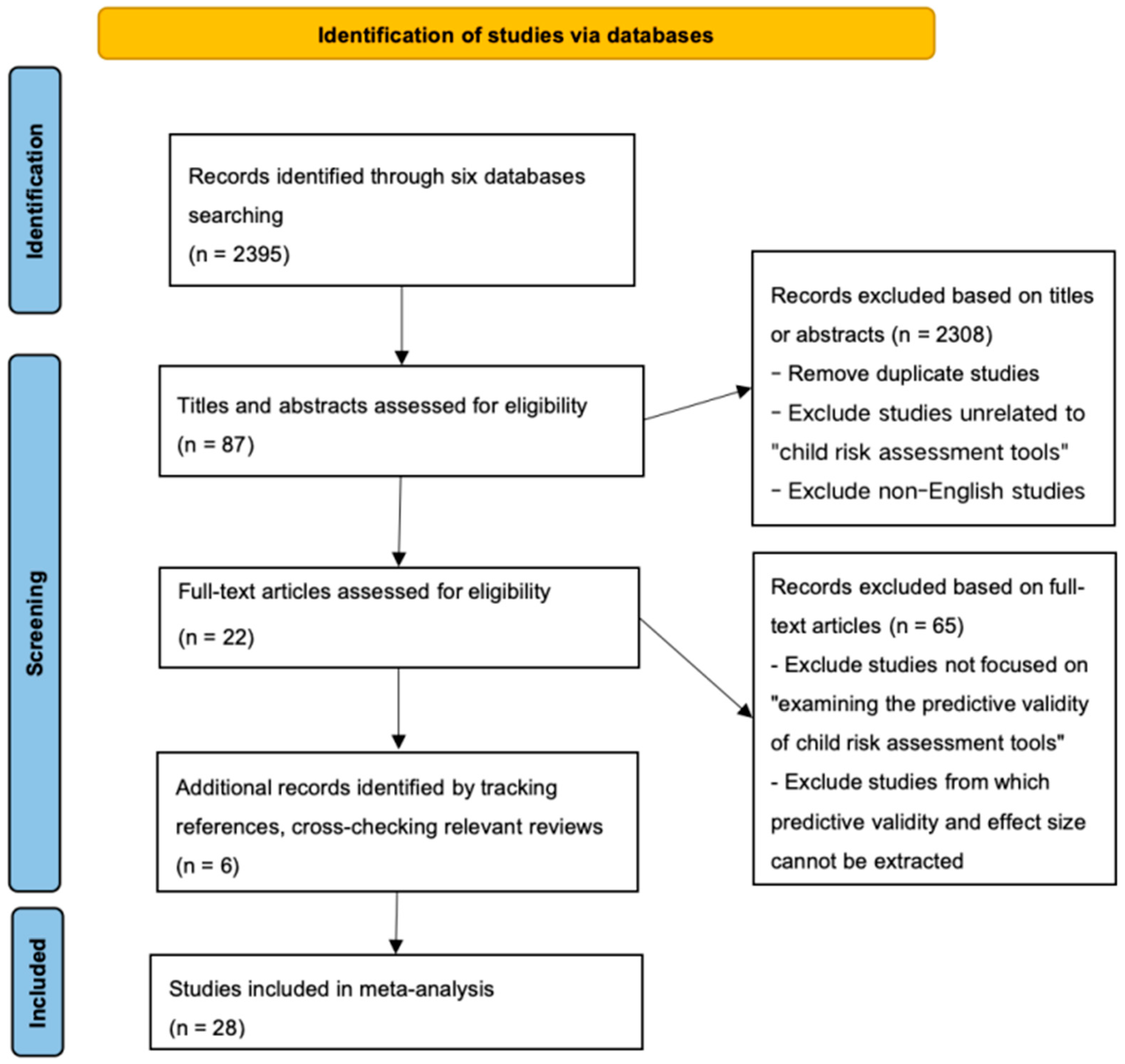
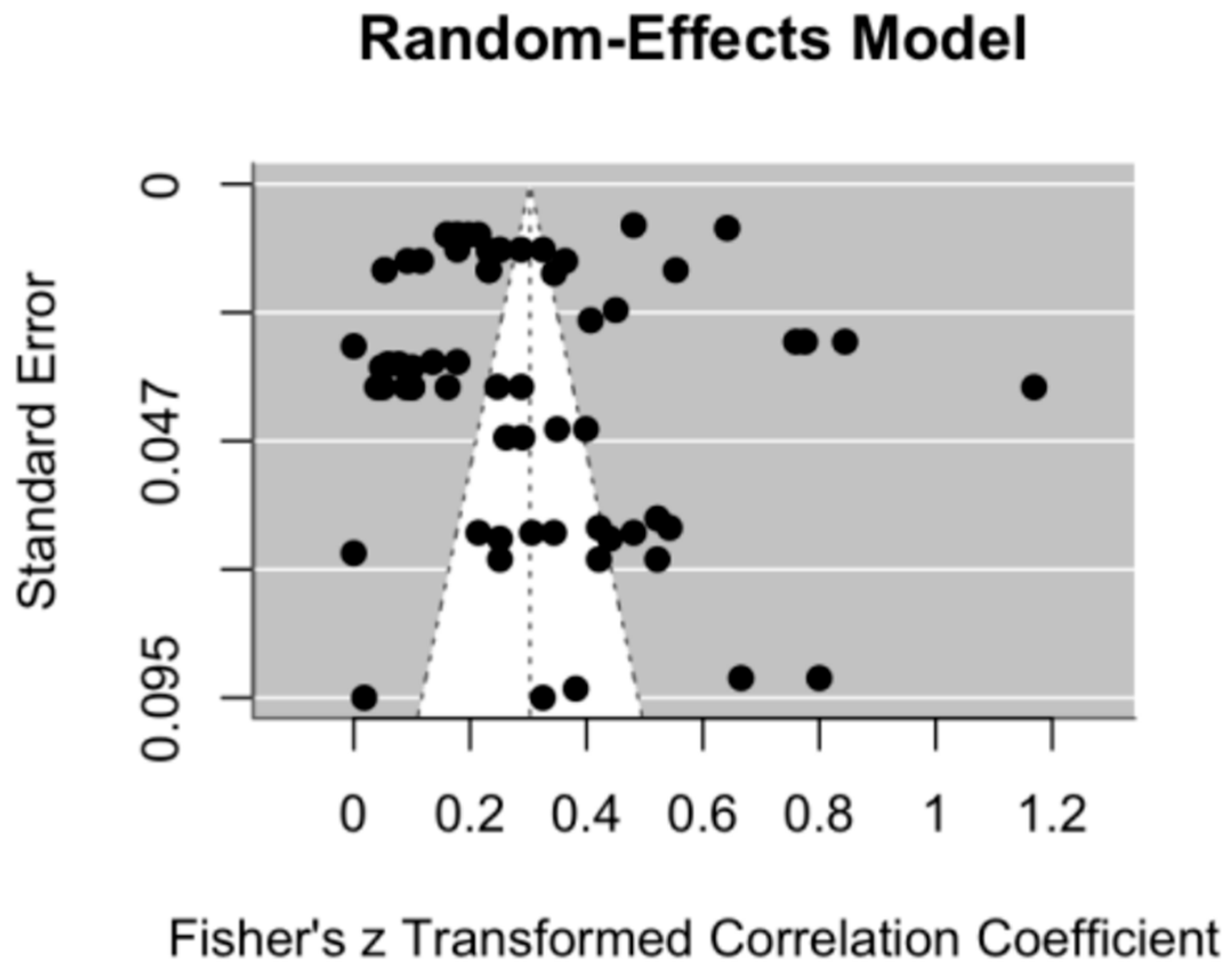
Background/Objectives: Violence and harm to children’s health and well-being remain pressing global concerns, with over one billion children affected annually. Risk assessment tools are widely used to support early identification and intervention, yet their predictive accuracy remains contested. This study aims to systematically evaluate the predictive validity of internationally used child risk assessment tools and examine whether the tools’ characteristics influence their effectiveness. Methods: A comprehensive meta-analysis was conducted using 28 studies encompassing 27 tools and a total sample of 136,700 participants. A three-level meta-analytic model was employed to calculate pooled effect sizes (AUC), assess heterogeneity, and test moderation effects of tool type, length, publication year, assessor type, and target population. The publication bias was tested using Egger’s regression and funnel plots. Results: Overall, the tools demonstrated moderate predictive validity (AUC = 0.686). Among the tool types, the structured clinical judgment (SCJ) tools outperformed the actuarial (AUC = 0.662) and consensus-based tools (AUC = 0.580), suggesting greater accuracy in complex decision-making contexts. Other tool-related factors did not significantly moderate the predictive validity. Conclusions: SCJ tools offer a promising balance between structure and professional judgment. However, all tools have inherent limitations and require careful contextual application. The findings highlight the need for dynamic tools integrating risk and needs assessments and call for practitioner training to improve tool implementation. This study provides evidence-based guidance to inform the development, adaptation, and use of child risk assessment tools in global child protection systems.
Keywords: child health; child well-being; risk assessment tool; predictive validity; meta-analysis child health; child well-being; risk assessment tool; predictive validity; meta-analysis