


Abstract
Background/Objectives: “Return-to-play” and “return-to-learn” after a concussion are familiar concepts due to guidelines proposed by the Concussion in Sport Group and Heads-Up Initiative. The purpose of this commentary is to expand upon the current consensus guidelines for treatment of concussed children and adolescents, as well as provide guidelines for returning to physical education (RT-PE) classes. Proposal: The authors propose one general and four subtype-specific guidelines post-concussion injury. This framework highlights the role of physical therapists in the management of children with prolonged recovery. The final RT-PE determination should occur with documented medical clearance from a licensed healthcare provider trained in the evaluation and management of a concussion. Conclusions: Despite significant gains regarding the management of concussed children and adolescents, confusion remains regarding RT-PE post-concussion. To eliminate ambiguity and promote adherence to a gradual return to activity protocols, the authors developed guidelines based on current evidence and recommendations.
1. Introduction
A concussion, a form of mild traumatic brain injury (mTBI), is a severe problem with increasing incidence in pediatric populations [1,2]. Defined as a complex pathophysiological process induced by biomechanical forces affecting the brain, concussion injuries cause an acute physiological disruption of brain function that typically does not have trauma-related abnormalities on standard structural neuroimaging studies [3,4]. The potential impact on the developing brain, including subtle changes in brain morphology and function, suggests the need for a safe return to physical activity (PA), including a return to physical education (RT-PE) guidelines [1,2,3,4,5,6,7,8,9,10].
Concussions accounted for more than 2 million outpatient visits and 3 million emergency department visits from 2005 to 2009 in the United States, though research indicates that more than 50% of concussions are likely to go unreported to healthcare professionals [1,2,8]. Adolescents aged 13 to 19 are at the highest risk due to the rising number of student–athletes involved in sports activities [9,10]. While organized sports have the highest incidence of a concussion, data from 1408 pediatric patients at Saint Peter’s Sports Medicine Institute from September 2014 to May 2018 revealed that the second highest incidence of a concussion was from physical education (PE) classes [11]. Although most cases resolve within weeks, at one-month post-injury, nearly a quarter of children report a headache, over 20% suffer from fatigue, and nearly 20% report increased processing time [12]. These symptoms can adversely affect school participation, PA, and quality of life [13,14,15].
2. Clinical Question
What recommendations exist in the literature regarding a safe return to PE class after a concussion for school-aged children and given the current level of evidence, how can physical therapists facilitate the transition of concussed children and adolescents back to PE class?
3. Background: Return to Physical Education Is Not the Same as Return to Play
In 2001, the multidisciplinary Concussion in Sport Group (CISG) of sport and medical professionals convened the First International Conference on Concussion in Sport (ICCS) with the objective of improving the evaluation, management, and return-to-play (RTP) of concussed athletes [16]. At the fifth meeting in 2016, the ICCS recommended that student–athletes should return to school prior to returning to sport and noted that the early introduction of symptom-limited PA is appropriate [17]. These suggestions are consistent with educational initiatives, such as the Centers for Disease Control Heads-Up program, to facilitate return-to-school after a concussion and support gradual re-entry with accommodations that taper as the student’s symptoms improve [16,17,18,19,20,21]. Current return-to-school recommendations, however, focus primarily on the management of environmental stimulation and cognitive demands with little guidance on returning to PA despite recent updates by the New York State Education Department to its Concussion Management Guidelines for Schools to better differentiate between a return to athletic activity, which includes after-school sports, and a return to physical activity, which includes PE class [15,16,17,18,19,20,21,22,23,24,25,26].
Tsuchida and colleagues recently outlined a RT-PE progression following the standard scholastic sports RTP guidelines. However, this program does not begin until a student is medically cleared from a concussion [27]. This is the most common approach followed in schools, and many physicians will provide a note indicating that a student is “out of sports and PE until cleared”. Whether a student recovers quickly from a concussion or experiences a more prolonged course, it is appropriate for the student to re-engage in the PE curriculum whenever they are back in school, even if still symptomatic. Just as adjustments or accommodations are made in other academic subjects, modifications to assignments and in-class participation can allow PE teachers to meet individual students’ needs. While there is understandable concern about the risk of re-injury associated with PA, there is evidence that symptomatic student–athletes who engage in light PA recover faster from a concussion with noted psychological benefit [13,28,29,30,31,32,33,34,35,36,37,38,39]. Furthermore, the most recent recommendations from the CISG (Amsterdam 2022) specifically note that mild symptom exacerbation (i.e., no more than a 2-point increase in concussion symptoms on a 0–10 scale when compared with the pre-activity level) during physical or cognitive activity is typically brief (less than one hour), is not harmful, and does not delay recovery [3,40].
In youth who sustained a sport-related concussion (SRC), Leddy and colleagues demonstrated that participation in light PA within 48–72 h of injury, beginning at approximately 50–60% of the age-appropriate maximum heart rate, safely facilitated recovery when compared with stretching-exercise controls [34,35]. The psychological consequences of removal from validating life activities combined with physical deconditioning may contribute to the development of persisting symptoms after mTBI [10,11,12,29,31,32,33,39]. Given the emerging evidence, we suggest that it is safe to allow symptomatic students to progress through a guided return to a physical education (RT-PE) program with supervision. Additionally, we propose that physical therapists can play an essential role in facilitating RT-PE in instances of prolonged (>10 days of persistent symptoms) or complex (multi-symptom or severe symptoms) injury, and their observations can provide the academic team with important information regarding readiness of the student to advance along the continuum of graduated RT-PE.
The RTP protocol for sports seeks to establish clinical recovery over the course of an increasing exertional and coordination challenge under the supervision of a qualified healthcare practitioner [7,8]. Per the 2022 Amsterdam guidelines, this graduated stepwise strategy occurs in conjunction with return-to-learn (RTL) following an initial period of relative rest (approximately 24–48 h following initial injury), though participation in activities of daily living including walking is permitted immediately following injury [3,4,5,24,25,41]. RTL programs encourage student participation in symptom-limited academic effort (Table 1).
Table 1.
Return to Play Versus Return to Physical Education.
The authors acknowledge that PE class involves more physical exertion than subjects such as Math or English, but emerging evidence documents a protective effect of active rehabilitative interventions such as PA in concussion management [33,42,43,44,45,46]. A 2016 pilot study by Gagnon and colleagues found that light PA in the post-acute period following a concussion is safe and yields a positive impact on adolescents’ functioning [31]. Furthermore, a multicenter cohort study in 2016 by Grool et al. of 3063 children aged 5–18 years noted that the proportion with post-concussive symptoms at 28 days was 28.7% with participation in early PA versus 40.1% with conservative rest [33]. This corroborates previous randomized control studies by Leddy and colleagues from 2017, 2019, and 2021, which found strict physical rest until symptom resolution to be an ineffective method to treat a concussion in adolescents [34,35,36].
Although school districts generally do not require concussion management training for physical educators, secondary responsibilities such as coaching drive many to pursue online training [47]. While this training yields a greater understanding of concussion policies and procedures, confusion remains regarding implementation in PE class [22,41,47]. In the authors’ experience, many schools do not allow participation in PE until the student has completed the RTP protocol and is cleared to return to contact sports. Rather than participating in regular PE activities, students complete stationary cognitive work—even though doing so may aggravate symptoms. Schools may require make-up PE classes once students recover, while others are relegated to sitting in the gymnasium to watch classmates participate, despite the potential for symptom exacerbation. Such restriction from class participation may cause additional stress and contribute to the student feeling abnormal [8,46,48]. To address this problem and encourage greater consistency, we propose a stepwise progression for RT-PE that occurs in parallel with the current RTL and RTP progressions and supports students not engaged in school-sponsored athletics at the time of injury. These guidelines were developed to best support typically developing school-aged children (approximately 3–18 years of age) with and without access to structured school-sponsored athletics to recover safely post-concussive injury.
4. Description of Topic
The following RT-PE guideline was developed after an extensive literature review of five databases (PubMed, Cochrane library, PEDro, CINAHL, and Scopus) revealed no specific protocol for a return to PE after concussion injury. These guidelines were created based on the summation of evidence-based recommendations from this search, in addition to the collaborative efforts of a multidisciplinary medical team including physicians, psychiatrists, and therapists specialized in concussion rehabilitation at both the SUNY Upstate Concussion Center and the SUNY Buffalo Jacobs School of Medicine and Biomedical Sciences. These suggestions were reviewed and supported by the Brain Injury Association of New York State (BIANYS), as well as expert opinion from physical educators, school administrators, school-based therapists, school-based athletic trainers, and other multidisciplinary concussion-specialized medical professionals across the states of New York, Connecticut, and Texas. These guidelines are currently being implemented in association with three upstate New York school districts over the course of one academic year (2024–2025) and expand on recent recommendations from Rieger and colleagues for physical educators and school administrators [49], to propose suggestions for physical therapists to facilitate safe RT-PE for students affected by a concussion (Table 2).
Table 2.
RT-PE General Guideline.
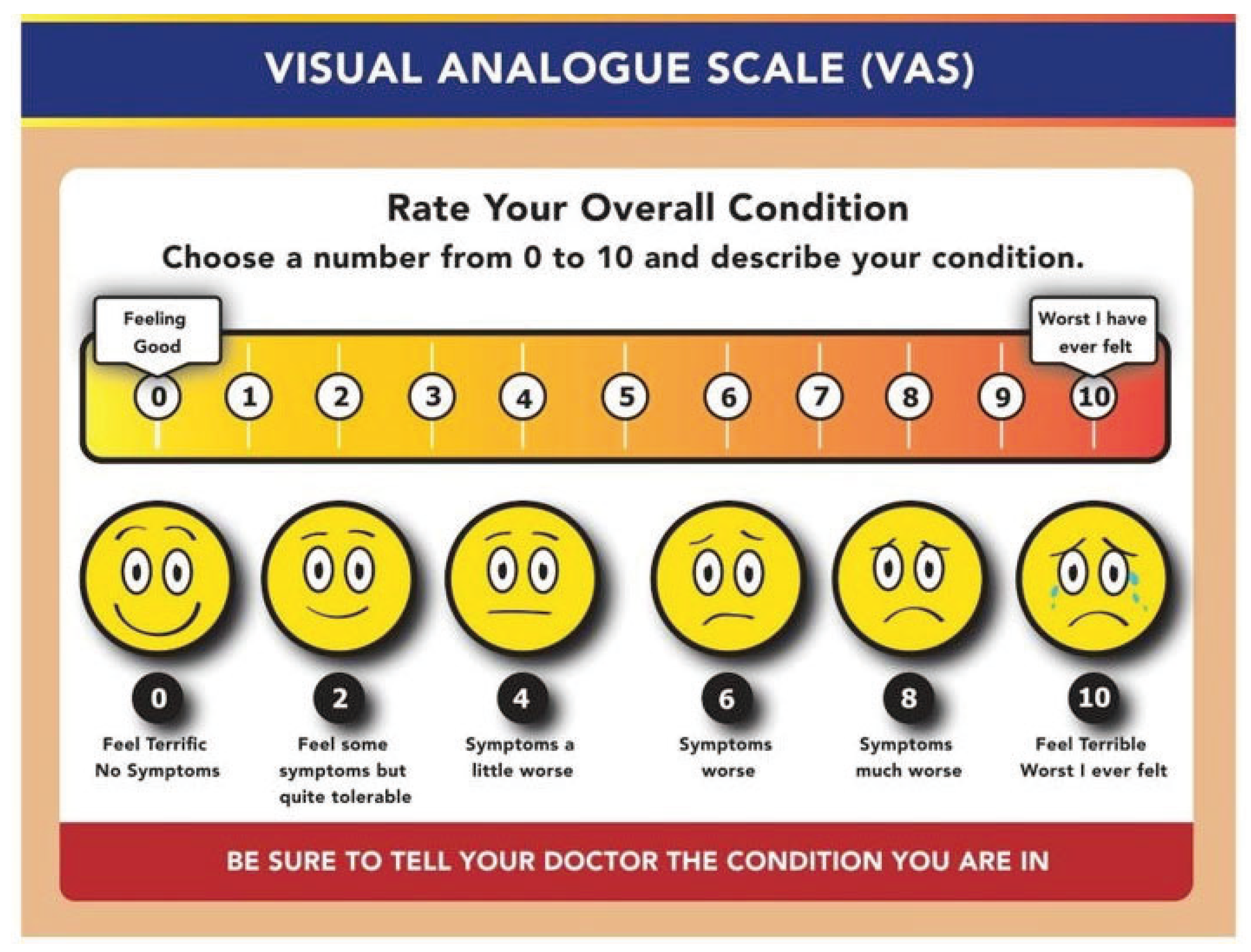
These guidelines aim to maintain the integrity of the current six-step RTP and the four-step RTL strategies suggested by the ICCS [3,24,25,26]. The authors propose this general RT-PE guideline that can be implemented after injury with agreement and supervision from both the medical and academic teams. To this end, Leddy and colleagues found the Visual Analog Scale (VAS) to be an easy and effective tool for assessing overall symptom burden (Figure 1) [34,35,50,53].
Figure 1.
Visual Analog Scale adapted from Hayes and Patterson [50].
They recommend the initiation of light PA if symptom severity at rest is <7/10, and stopping PA when symptoms rise by more than 2 points on a 0–10 scale when compared with the pre-activity resting value [34,35,36].
The authors further propose four subtype-specific RT-PE protocols for patients who may experience a more complicated recovery (Appendix A), as described by the ICCS as experiencing persisting neck pain and/or headache for more than 10 days or symptoms, such as dizziness or balance problems, persisting beyond 4 weeks across all age groups [3,16,17,18,19,20,21]. These follow the Concussion Clinical Practice Guideline (CPG) Classifications of impairments in the domains of cervical musculoskeletal, vestibulo-oculomotor, autonomic dysfunction and exertion intolerance, and motor function [54]. These recommendations are not strict protocols, but are suggestions based on the current evidence of best practice for concussion management. They will benefit from empirical analyses and assessment of cost effectiveness and resource utilization as the pilot program unfolds through the Upstate Medical University hospital system and participating New York state school districts over one year (2024–2025).
5. Proposed Implementation
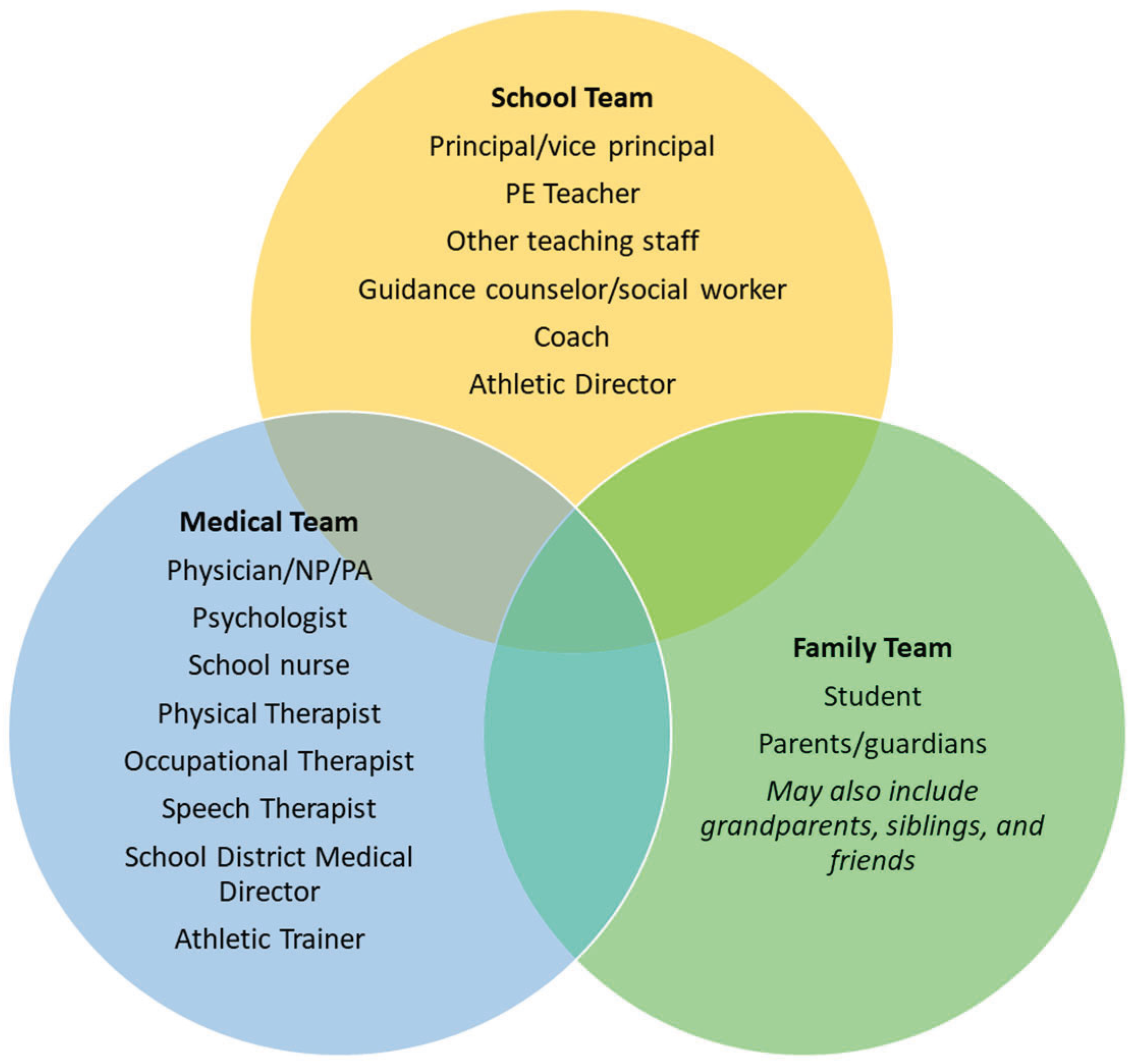
After a concussion, the student engages with healthcare professionals who provide appropriate management, including recommendations related to school (Figure 2) [7].
Figure 2.
A multidisciplinary approach to concussion management adapted from the Brain Injury Association of New York State and the Colorado Department of Education’s Reduce, Educate, Accommodate, Pace (REAP) program [6].
The provider who completes the initial assessment determines immediate activity restrictions and clearance to attend school. First-line providers should educate the family about concussion risks and document all recommendations in writing for the family, school, and other medical team members. Barriers identified to concussion management and family education include inadequate training, time, and infrastructure to successfully manage these patients [55]. Where the clinical environment allows, we recommend that the student be referred to clinicians with specialized knowledge and skills in concussion management for further evaluation and targeted treatment of symptoms. After assessment, an appropriate medical professional determines cognitive activity restrictions [56]. A medical provider educated and experienced in concussion management and physical training progression, such as a physical therapist, may provide PA recommendations including when RT-PE may be attempted [57]. Individualized accommodations should be provided in writing to both the family and the academic team [6,34,56,57]. We include a sample letter that physical therapists can complete quickly in the clinical setting (Supplementary Material File S1) to increase the likelihood that they will receive support from their school [6,41]. As the academic team is required to facilitate the return for all students with a concussion, regardless of athletic status or access to athletic trainers, we propose that PE teachers fill this role as a direct contact for the medical team to assess the student’s tolerance to PA (Figure 2). Open, regular, and clear communication between the various teams throughout the program will promote its overall success.
Many states have passed legislation designed to address the growing concern of concussions among students. The Colorado Department of Education’s Reduce, Educate, Accommodate, Pace (REAP) program is a community-based concussion management approach that has been adapted across several states with the goal of creating a wide safety net for students as they recover from a concussion [6]. Our protocol builds on the multidisciplinary model proposed in REAP, as well as the Return to Activity Guidelines for Concussion and Youth proposed by DeMatteo and colleagues in 2014 and subsequentially implemented across Ontario [1,2]. Unique aspects of the Canadian protocol include an emphasis on conservative management, striving to balance brain healing and active participation, and multiple pathways to promote recovery [2]. Our protocol is currently being piloted at the Upstate Concussion Clinic in Syracuse, NY, and in New York state school districts in collaboration with BIANYS and local athletic trainers. Though sound in model, a quantitative analysis as to the efficacy and cost effectiveness of this program cannot be established until formal data collection occurs after the completion of the one-year trial, which the authors recognize as a limitation.
Students with typical uncomplicated presentations should follow the general RT-PE protocol outlined in Table 2 as tolerated, starting at Step 1 immediately and for the first 24–48 h post-injury. Students with more complex presentations such as multiple, severe, or persisting symptoms as identified by the ICCS may require further assessment to manage their recovery [3,16,17,18,19,20,21,26,54]. Progression through both guidelines is based on overall tolerance and symptomology, as well as performance in the various activities at each stage. Like the RTP guidelines, each stage lasts a minimum period of 24 h. Due to the lack of a specific reconditioning program post-concussion, our six-step programs must be individualized to fit each student’s presentation. Proper form and technique should be emphasized, and intermittent rest breaks should be provided to avoid symptom exacerbation. Per the Concussion CPG, the guiding criterion for the progression of aerobic exercise is the reduction in symptom irritability [54]. In their 2018 study, Lawrence et al. utilized a standardized stationary bike protocol with progressive time and intensity intervals [58]. The researchers recommend a minimum of two sessions tolerated at each level prior to progression to the next stage. While these recommendations provide a foundation for our proposed progression of aerobic activity, we suggest the use of a modified Borg rating of the perceived exertion (RPE) scale to monitor the student’s activity level if heart rate monitoring equipment is not readily available [51].
When reintroducing resistance training, the student’s one-repetition maximum (1RM) can be estimated using a 10RM load following established guidelines [59]. The student should start at a lower relative intensity (20% 1RM) at 10 repetitions with gradual progression to higher repetitions (12–20) to improve muscular endurance [59,60]. As endurance improves, the relative intensity increases to a moderate level (50% 1RM) with 8–12 repetitions to build muscle strength. In appropriate student–athletes, this should then progress to a strength–power focus (85% 1RM) with only 2–8 repetitions that mimic more sport-related movement patterns. The progression of the resistance training program should be based on the student’s ability to complete the exercise with good form without symptom exacerbation [59,60,61].
The proposed PE class activities in our guidelines support the product (fitness) and process (PA and other healthy lifestyles) proposed by the Society of Health and Physical Educators (SHAPE) in their Instructional Framework for Fitness Education in Physical Education and align with the National Standards for K-12 Physical Education (2013) and accompanying Grade-Level Outcomes (2013) [62]. The framework suggests what students should understand and be able to carry out at specific grade levels, focusing on helping them adopt a healthy lifestyle during the years of education ranging from prekindergarten to college. Our guidelines build upon this curriculum framework and gradually progress the students to more complex coordination and motor planning activities to facilitate reintegration into their premorbid school and PA environment.
6. Subtype-Specific Guidelines
While more than 80% of pediatric concussions resolve within three weeks, a subset of patients experience prolonged symptoms that can persist for months to years and require more specialized outpatient management [4,9,10,63,64,65,66]. The timeline of recovery may vary from patient to patient based on factors such as history of previous concussions, severity of initial symptoms, age, and gender [7,8,11,65]. As multiple studies report a risk of re-injury most notably for pediatric patients within the first 10 days of injury [8,16,17,18,19,20,21,32,44,56,63,65], physical therapists can play an essential role in the multidisciplinary team. Therapists allow patients to achieve a controlled level of exercise and stimulation, offering patients a more fulfilling and safer lifestyle during recovery [57]. Physical therapists are uniquely positioned to evaluate the various impairments students may exhibit post-concussion and to classify a specific treatment track for recovery as outlined in the Concussion CPG from the American Physical Therapy Association [54].
Once referred for examination, we recommend that therapists screen and clear patients for signs of a medical emergency or severe pathology and then complete a comprehensive evaluation identifying relevant impairments in the domains of cervical musculoskeletal function, vestibulo-oculomotor function, autonomic dysfunction/exertional tolerance, and motor function through foundational standard-of-care screening strategies [54]. Provocative testing of neurocognitive function, exercise tolerance, and vestibular-oculomotor function are important components of this evaluation, as symptoms and performance may be normal in the resting state [67]. Although we acknowledge that many patients will present with symptoms that may encompass multiple tracks, we propose that therapists identify the patient’s primary limitations and utilize the most appropriate subtype-specific guideline to facilitate recovery. Clinicians are strongly encouraged to monitor the student throughout their rehabilitation, with feedback from the academic and family teams, to determine whether the student remains appropriate for the chosen rehabilitation track or if updates to the plan of care are necessary.
Although our recommendations are based on the available literature, we recognize that the current body of evidence from which to draw conclusions is limited. The Concussion CPG is new, and the four domains were recently established. Therefore, an optimal battery of assessments and interventions following standardized protocols addressing the various aspects of recovery does not currently exist. We further recognize that the stages and interventions for our described PE activities have yet to be validated for PE of physical therapy in a concussion cohort. However, therapists can complete developmental functional testing of motor and postural control, perceptual and oculomotor abilities, and screening of the vestibulo-ocular and vestibulo-spinal systems to establish whether functional balance and/or oculomotor deficits exist, isolate the contributions of the various components of postural control and gaze stability, and provide a basis for referral for further diagnostic testing [68,69]. Students scoring below age-appropriate levels identified in screening for vestibulo-ocular or vestibulo-spinal dysfunction should be referred for more comprehensive testing (e.g., oculomotor, caloric, vestibular evoked myogenic potential (VEMP) testing). Therapy interventions should consider the inclusion of balance, adaptation, and substitution training modified to the child’s level of cognitive maturation and interest level, with consideration for the caregiver assisting with the activities in the home exercise program. Our suggested interventions and stages draw from general guidelines for exercise prescription and progression by Herdman et al. [70], as well as tested precision vestibular rehabilitation programs [71,72,73,74,75]. Current evidence supports this multi-modal approach to address individual impairments including modalities, manual therapy, and therapeutic exercise [38,72]. The authors propose that physical therapists utilize the suggested guidelines to promote habituation and neurological compensation following three principal methods of exercise: gaze stabilization, habituation, and balance/exertional training [70,71,74,75,76,77]. Finally, as many vestibular programs draw from unilateral hypofunction, which has an undetermined frequency in concussion injury, we encourage therapists to consider the inclusion of sensory integration or delayed motor responsiveness interventions to the plan of care as appropriate.
A customized problem-oriented approach is the standard intervention for rehabilitation post-concussion [43,54,56,57,64,70,72,78]. The general rationale for exercise prescription in the subtype-specific protocols was developed using the following: the (1) identification of the impairments during evaluation, (2) prescription of a specific initial exercise to address the impairments safely, and (3) progression of the exercise to include functional performance at increasing levels of difficulty. For instance, post-concussion vestibular impairment frequently presents functionally as balance dysfunction, visual motion sensitivity, vestibulo-ocular reflex (VOR) impairment, and/or post-traumatic benign paroxysmal positional vertigo (BPPV). The implementation of vestibular rehabilitation is recommended when deficits are identified in any of these areas [67]. The VORx1 exercise may be used as an example. Students may start in static, stable positions such as standing with feet apart or sitting. This activity may progress to increasing the VOR gain demand by increasing head velocity, decreasing the distance to the target, varying target size and complexity, or switching to a VOR x 2 paradigm [73]. Additional balance progressions may be considered such as standing with feet together, standing tandem, and eventually walking [72]. Because vestibular interventions, most notably treatment of visual motion sensitivity, have the potential to exacerbate symptoms, interventions should be introduced in a step-by-step progression that is carefully monitored by a trained vestibular therapist [67,70,73,79].
The same principles were utilized when selecting recommendations for each subtype domain. As seen in the musculoskeletal domain, therapeutic exercise interventions should start by addressing the identified impairments [57,78,79,80]. For instance, a combined approach of mobilization techniques and postural awareness training may facilitate symptom management [81,82]. Reinforcement of appropriate biomechanics with activity can restore muscle balance and affect motor control deficits. Exercises to improve upper quarter strength may demonstrate a positive impact on symptom management for cervicogenic dysfunction [78]. We propose that therapists develop an individualized exercise program based on findings from the assessment, which may then be implemented during PE class in place of or in conjunction with planned activities as tolerated by the student. Therapists are encouraged to remain in frequent communication with the various teams, most notably the referring physician and the PE teacher, regarding the student’s progress through the various stages of recovery to facilitate the eventual discharge from the program and clearance for pre-injury-level activity.
7. Conclusions and Future Directions
Current guidelines for rehabilitation after concussion injury fail to describe how students may return to PE class, which potentially extends their recovery timeline and limits their participation in validating activities. The authors propose progressive six-step programs, which may be utilized by healthcare, academic, and family team members to facilitate the student’s RT-PE. Successful concussion management occurs if the student can maintain their pre-injury academic progress without lasting adjustments and safely return to activity, minimizing the potential for social isolation and depression/anxiety symptoms. These guidelines bridge the gap between the current RTL and RTP protocols and promote the rehabilitation of both athlete and non-athlete students. Although some research suggests that prolonged physical and cognitive rest may be beneficial to recovery [83], the evidence overwhelmingly supports an early and gradual return to activity to maximize overall rehabilitation [3,40,42]. We recommend that each case be implemented on an individual basis and students be monitored continuously for progress and any potential worsening of symptoms. These recommendations provide a framework to allow clinicians and schools to communicate more openly about the student’s overall progress, limitations, and support needs.
As these guidelines are currently being implemented on a trial basis through Upstate Medical University and surrounding New York school districts, a significant limitation of these guidelines is that they do not currently have empirical evidence to support their use. Further research is necessary to validate their potential impact on RTP and RTL efficacy, their cost effectiveness and resource management, and their overall success. Additionally, given the heterogenous nature of concussion injuries, the authors emphasize that the universal prescription of any intervention, including the suggested guidelines, to all concussed students is an inefficient strategy. Instead, comprehensive scholastic and clinical assessments, the targeted implementation of accommodations and interventions, and shared communication between the various teams are supported.
A practical barrier to the implementation of these guidelines is the knowledge and expertise to guide students through these guidelines effectively. We highly recommend frequent and clear communication between the academic, family, and medical teams to ensure the appropriate implementation of these suggestions. Finally, variations in resources across school districts will necessitate the adaptation of the suggested guidelines based on availability. Although these guidelines may potentially benefit students outside of the United States educational system, the authors acknowledge that further updates may be necessary based on the educational program, resources, and culture specific to the student’s environment. As there is limited empirical support for the rehabilitation strategies discussed in these guidelines, the authors suggest future research to include multi-site, randomized controlled trial research designed to better elucidate the specific effects of these interventions and strategies.
Despite these limitations, the authors propose that these guidelines serve as a stepping stone to support students who would be otherwise under-supported by the current protocols. The hope is that these guidelines serve as a living document that may enhance and support various programs across the United States and world educational communities, with adaptations and updates as necessary given future insights and resources.
Supplementary Materials
The following supporting information can be downloaded at: https://www.mdpi.com/article/10.3390/children11101206/s1, File S1: Sample School Accommodation Form.
Author Contributions
Conceptualization: P.M.T., J.S., B.R. and J.L.; methodology: P.M.T., J.S. and S.L.; validation: P.M.T., J.L., J.S., B.R. and S.L.; formal analysis: P.M.T. and J.S.; investigation: P.M.T. and J.S.; resources: P.M.T. and J.S.; data curation: P.M.T., J.S. and B.R.; writing—original draft preparation: P.M.T., B.R. and J.S.; writing—review and editing: P.M.T., J.S., B.R., S.L. and J.L.; visualization: P.M.T. and J.S.; supervision: P.M.T., B.R. and J.S.; project administration: P.M.T. and J.S. All authors have read and agreed to the published version of the manuscript.
Funding
This research received no external funding.
Institutional Review Board Statement
Study participants were not involved in the design, conduct, interpretation, or translation of the current research.
Acknowledgments
The authors would like to thank Fayetteville-Manlius School District educator Matthew Murphy for his expertise and assistance throughout all aspects of our project and for his help in revising the manuscript. The authors would further like to thank the athletic trainers of Syracuse Orthopedic Specialists and the Baldwinsville school district, the educational professionals of the Clinton Public School system, and the concussion specialty team at Children’s Health in Dallas for their expertise and assistance throughout the generation and revision of the guidelines.
Conflicts of Interest
We affirm that we have no financial affiliation (including research funding) or involvement with any commercial organization that has a direct financial interest in any matter included in this manuscript, except as disclosed and cited in the manuscript. Any other conflict of interest (i.e., personal associations or involvement as a director, officer, or expert witness) is also disclosed and cited in the manuscript.
Abbreviations
| MCID | Minimum Clinically Important Difference |
| ATC | Certified Athletic Trainer |
| MD | Medical Doctor |
| E | Elementary School |
| MS | Middle School |
| HS | High School |
| HR | Heart Rate |
| RPE | Rate of Perceived Exertion |
| AROM | Active Range of Motion |
| PROM | Passive Range of Motion |
| UE | Upper Extremity |
| SOT | Sensory Organization Test |
| BOT-2 | Bruininks–Oseretsky Test of Motor Proficiency Edition 2 |
| CTSIB-M | Modified Clinical Test of Sensory Interaction in Balance |
| Bess | Balance Error Scoring System |
| PDMS-2 | Peabody Developmental Motor Scale Second Edition |
| HIIT | High-Intensity Interval Training |
| DHI | Dizziness Handicap Inventory |
| DGI | Dynamic Gait Index |
| POTS | Postural Orthostatic Tachycardia Syndrome |
| FGA | Functional Gait Assessment |
Appendix A. Return to Physical Education Subtype-Specific Guidelines
- -
- RTL and RT-PE are interrelated, but not interdependent.
- -
- Progress through RTL is independent of progress through RT-PE.
- -
- Each step must last a minimum of 24 h.
- -
- Step 1 occurs at home; Steps 2 and thereafter occur at school.
- -
- The student progresses to the next step when able to complete all activities of the current step with no greater than mild (two-point increase in symptoms per the VAS) (Figure 1) [50] and brief (<1 h) symptom exacerbation, and no new symptoms.
- -
- If the student experiences symptom exacerbation >2 points per the VAS scale (Figure 1) [50], they are advised to stop the triggering activity for a therapeutic break. If symptoms improve, they may return to that activity [40].
Initial Relative Rest
- The student begins at Step 1 immediately and for up to 24–48 h post-injury [40,44,56].
- The student moves to Step 2 when symptoms begin to improve or after 48 h (whichever occurs first) [40,44].
**** The student must return to previous step for a minimum of 24 h when they exhibit or report more than a mild (>2 points on a 0–10 scale) or brief (>1 h) exacerbation of current symptoms or new symptoms evolve.
**** The student should see a medical doctor if symptoms do not improve by the following day or if new symptoms arise and persist.
**** The student may begin in one subtype guideline, though their progress should be monitored throughout by a skilled clinical professional as students may cross-over to a different guideline as they progress through their rehabilitation.
**** If progression through these guidelines is limited by factors outside of concussion injury, the authors suggest progression through the activities as directed by the medical team to the best of the student’s abilities to facilitate the long-term goal of attaining pre-injury mobility status.
Table A1.
Cervical Musculoskeletal Impairment Guideline.
Table A2.
Vestibulo-oculomotor Impairment Guideline.
Table A3.
Autonomic Dysfunction and Exertion Intolerance Guideline.
Table A4.
Motor Function Impairment Guideline.
References
- DeMatteo, C.; McCauley, D.; Stazyk, K.; Harper, J.; Adamich, J.; Randall, S.; Missiuna, C. Post-concussion return to play and return to school guidelines for children and youth: A scoping methodology. Disabil. Rehabil. 2015, 37, 1107–1112. [Google Scholar] [CrossRef] [Scilit]
- DeMatteo, C.; Stazyk, K.; Giglia, L.; Mahoney, W.; Singh, S.K.; Hollenberg, R.; Harper, J.A.; Missiuna, C.; Law, M.; McCauley, D.; et al. A Balanced Protocol for Return to School for Children and Youth Following Concussion Injury. Clin. Pediatr. 2015, 54, 783–792. [Google Scholar] [CrossRef] [Scilit] [PubMed]
- Patricios, J.S.; Schneider, K.J.; Dvorak, J.; Ahmed, O.H.; Blauwet, C.; Cantu, R.C.; A Davis, G.; Echemendia, R.J.; Makdissi, M.; McNamee, M.; et al. Consensus statement on concussion in sport: The 6th International Conference on Concussion in Sport–Amsterdam, October 2022. Br. J. Sports Med. 2023, 57, 695–711. [Google Scholar] [CrossRef] [Scilit] [PubMed]
- Silverberg, N.D.; Iverson, G.L.; Cogan, A.; Dams-O-Connor, K.; Delmonico, R.; Graf, M.J.P.; Iaccarino, M.A.; Kajankova, M.; Kamins, J.; McCulloch, K.L.; et al. The American Congress of Rehabilitation Medicine Diagnostic Criteria for Mild Traumatic Brain Injury. Arch. Phys. Med. Rehabil. 2023, 104, 1343–1355. [Google Scholar] [CrossRef] [Scilit] [PubMed]
- Gioia, G.A. Medical-School Partnership in Guiding Return to School Following Mild Traumatic Brain Injury in Youth. J. Child Neurol. 2016, 31, 93–108. [Google Scholar] [CrossRef] [Scilit] [PubMed]
- Kirelik, S.B.; McAvoy, K. Acute Concussion Management with Remove-Reduce/Educate/Adjust-Accommodate/Pace (REAP). J. Emerg. Med. 2016, 50, 320–324. [Google Scholar] [CrossRef] [Scilit] [PubMed]
- Rose, S.; McNally, K.; Heyer, G. Returning the student to school after concussion: What do clinicians need to know? Concussion 2015, 1, CNC4. [Google Scholar] [CrossRef] [Scilit] [PubMed]
- Harmon, K.G.; A Drezner, J.; Gammons, M.; Guskiewicz, K.M.; Halstead, M.; A Herring, S.; Kutcher, J.S.; Pana, A.; Putukian, M.; O Roberts, W. American Medical Society for Sports Medicine position statement: Concussion in sport. Br. J. Sports Med. 2013, 47, 15–26. [Google Scholar] [CrossRef] [Scilit]
- Karlin, A. Concussion in the pediatric and adolescent population: “Different population, different concerns”. PM&R 2011, 3, S369–S379. [Google Scholar]
- Vidal, P.; Goodman, A.; Colin, A.; Leddy, J.J.; Grady, M.F. Rehabilitation strategies for prolonged recovery in pediatric and adolescent concussion. Pediatr. Ann. 2012, 41, 9. [Google Scholar] [CrossRef] [Scilit]
- Yaramothu, C.; Goodman, A.M.; Alvarez, T.L. Epidemiology and Incidence of Pediatric Concussions in General Aspects of Life. Brain Sci. 2019, 9, 257. [Google Scholar] [CrossRef] [Scilit] [PubMed]
- Eisenberg, M.A.; Meehan, W.P.; Mannix, R. Duration and Course of Post-Concussive Symptoms. Pediatrics 2014, 133, 999–1006. [Google Scholar] [CrossRef] [Scilit] [PubMed]
- DiFazio, M.; Silverberg, N.; Kirkwood, M.; Bernier, R.; Iverson, G.L. Prolonged Activity Restriction after Concussion: Are We Worsening Outcomes? Clin. Pediatr. 2016, 55, 443–451. [Google Scholar] [CrossRef] [Scilit] [PubMed]
- Russell, K.; Selci, E.; Black, B.; Ellis, M.J. Health-related quality of life following adolescent sports-related concussion or fracture: A prospective cohort study. J. Neurosurg. Pediatr. 2019, 23, 455–464. [Google Scholar] [CrossRef] [Scilit] [PubMed]
- Stålnacke, B.-M. Community integration, social support and life satisfaction in relation to symptoms 3 years after mild traumatic brain injury. Brain Inj. 2007, 21, 933–942. [Google Scholar] [CrossRef] [Scilit]
- Aubry, M.; Cantu, R.; Dvorak, J.; Graf-Baumann, T.; Johnston, K.; Kelly, J.; Lovell, M.; McCrory, P.; Meeuwisse, W.; Schamasch, P. Summary and agreement statement of the first International Conference on Concussion in Sport, Vienna 2001. Br. J. Sports Med. 2002, 36, 6–7. [Google Scholar] [CrossRef] [Scilit] [PubMed]
- McCrory, P.; Meeuwisse, W.; Dvořák, J.; Aubry, M.; Bailes, J.; Broglio, S.; Cantu, R.C.; Cassidy, D.; Echemendia, R.J.; Castellani, R.J.; et al. Consensus statement on concussion in sport-the 5th international conference on concussion in sport held in Berlin, October 2016. Br J Sports Med. 2017, 51, 838–847. [Google Scholar] [CrossRef] [Scilit] [PubMed]
- Centers for Disease Control and Prevention. Heads Up, Concussion in High School Sports. Follow-Up Evaluation of a Concussion Toolkit for High School Coaches; Final report; CDC: Atlanta, GA, USA, 2007. [Google Scholar]
- McCrory, P.; Johnston, K.; Meeuwisse, W.; Aubry, M.; Cantu, R.; Dvorak, J.; Graf-Baumann, T.; Kelly, J.; Lovell, M.; Schamasch, P. Summary and agreement statement of the 2nd International Conference on Concussion in Sport, Prague 2004. Br. J. Sports Med. 2005, 39, 196–204. [Google Scholar] [CrossRef] [Scilit] [PubMed]
- McCrory, P.; Meeuwisse, W.; Aubry, M.; Molloy, M.; Cantu, R. Consensus Statement on Concussion in Sport—The 4th International Con-ference on Concussion in Sport held in Zurich, November 2012. J. Athl. Train. 2013, 48, 554–575. [Google Scholar] [CrossRef] [Scilit]
- McCrory, P.; Meeuwisse, W.; Johnston, K.; Dvorak, J.; Aubry, M.; Molloy, M.; Cantu, R. Consensus Statement on Concussion in Sport: The 3rd International Conference on Concussion in Sport held in Zurich, November 2008. Br. J. Sports Med. 2009, 43, i76–i84. [Google Scholar] [CrossRef] [Scilit] [PubMed]
- Baker, J.G.; Rieger, B.P.; McAvoy, K.; Leddy, J.J.; Master, C.L.; Lana, S.J.; Willer, B.S. Principles for return to learn after concussion. Int. J. Clin. Pract. 2014, 68, 1286–1288. [Google Scholar] [CrossRef] [Scilit] [PubMed]
- Caron, J.; Bloom, G.; Falcão, W.; Sweet, S. An examination of concussion education programmes: A scoping review method-ology. Inj. Prev. 2015, 21, 301–308. [Google Scholar] [CrossRef] [Scilit] [PubMed]
- Halstead, M.; McAvoy, K.; Devore, C.; Carl, R.; Lee, M.; Logan, K. Council on Sports Medicine and Fitness, and Council of School Health. Return to Learning Following a Concussion. Pediatrics 2013, 132, 948–957. [Google Scholar] [CrossRef] [Scilit]
- Iverson, G.; Gioia, G. Returning to School Following Sport-Related Concussion. Phys. Med. Rehabil. Clin. N. Am. 2016, 27, 429–436. [Google Scholar] [CrossRef] [Scilit] [PubMed]
- Master, C.; Gioia, G.; Leddy, J.; Grady, M. The Importance of “Return-to-Learn” in Pediatric and Adolescent Concussion. Pediatr. Ann. 2012, 41, e160–e166. [Google Scholar] [CrossRef] [Scilit] [PubMed]
- Tsuchida, A.R.; Murata, N.M.; Furutani, T.M. Return to Learn Physical Education Activity Progression Post-Concussion. Strategies 2022, 35, 38–41. [Google Scholar] [CrossRef] [Scilit]
- Boisgontier, M.P.; Cheval, B.; Schmidt, J. Daily Life Physical Activity and Concussion Symptoms in Adolescents. Can. J. Occup. Ther. 2020, 87, 364–371. [Google Scholar] [CrossRef] [Scilit] [PubMed]
- Fineblit, S.; Selci, E.; Loewen, H.; Ellis, M.; Russell, K. Health-Related Quality of Life after Pediatric Mild Traumatic Brain Injury/Concussion: A Systematic Review. J. Neurotrauma 2016, 33, 1561–1568. [Google Scholar] [CrossRef] [Scilit]
- Gagnon, I.; Galli, C.; Friedman, D.; Grilli, L.; Iverson, G.L. Active rehabilitation for children who are slow to recover following sport-related concussion. Brain Inj. 2009, 23, 956–964. [Google Scholar] [CrossRef] [Scilit]
- Gagnon, I.; Grilli, L.; Friedman, D.; Iverson, G.L. A pilot study of active rehabilitation for adolescents who are slow to recover from sport-related concussion. Scand. J. Med. Sci. Sports 2015, 26, 299–306. [Google Scholar] [CrossRef] [Scilit]
- Gagnon, I.; Swaine, B.; Friedman, D.; Forget, R. Children show decreased dynamic balance after mild traumatic brain injury. Arch. Phys. Med. Rehabil. 2004, 85, 444–452. [Google Scholar] [CrossRef] [Scilit] [PubMed]
- Grool, A.M.; Aglipay, M.; Momoli, F.; Meehan, W.P.; Freedman, S.B.; Yeates, K.O.; Gravel, J.; Gagnon, I.; Boutis, K.; Meeuwisse, W.; et al. Association Between Early Participation in Physical Activity Following Acute Concussion and Persistent Postconcussive Symptoms in Children and Adolescents. JAMA 2016, 316, 2504–2514. [Google Scholar] [CrossRef] [Scilit]
- Leddy, J.; Haider, M.; Ellis, M.; Mannix, R.; Darling, S.R.; Freitas, M.S.; Suffoletto, H.N.; Leiter, J.; Cordingley, D.M.; Willer, B.; et al. Early Subthreshold Aerobic Exercise for Sport-Related Concussion: A Randomized Clinical Trial. JAMA Pediatr. 2019, 173, 319–325. [Google Scholar] [CrossRef] [Scilit] [PubMed]
- Leddy, J.; Master, C.; Mannix, R.; Wiebe, D.J.; Grady, M.F.; Meehan, W.P.; Storey, E.P.; Vernau, B.T.; Brown, N.J.; Hunt, D. Early targeted heart rate aerobic exercise versus placebo stretching for sport-related concussion in adolescents: A randomized controlled trial. Lancet Child Adolesc. Health 2021, 5, 792–799. [Google Scholar] [CrossRef] [Scilit] [PubMed]
- Leddy, J.J.; Hinds, A.L.; Miecznikowski, J.; Darling, S.; Matuszak, J.; Baker, J.G.; Picano, J.; Willer, B. Safety and Prognostic Utility of Provocative Exercise Testing in Acutely Concussed Adolescents. Clin J Sport Med. 2017, 28, 13–20. [Google Scholar] [CrossRef] [Scilit]
- Leddy, J.J.; Willer, B. Use of Graded Exercise Testing in Concussion and Return-to-Activity Management. Curr. Sports Med. Rep. 2013, 12, 370–376. [Google Scholar] [CrossRef] [Scilit]
- Murray, D.A.; Meldrum, D.; Lennon, O. Can vestibular rehabilitation exercises help patients with concussion? A systematic review of efficacy, prescription and progression patterns. Br. J. Sports Med. 2017, 51, 442–451. [Google Scholar] [CrossRef] [Scilit]
- Mychasiuk, R.; Hehar, H.; Ma, I.; Candy, S.; Esser, M.J. Reducing the time interval between concussion and voluntary exercise restores motor impairment, short-term memory, and alterations to gene expression. Eur. J. Neurosci. 2016, 44, 2407–2417. [Google Scholar] [CrossRef] [Scilit]
- Leddy, J.; Burma, J.; Toomey, C.; Hayden, A.; Davis, G.A.; Babl, F.E.; Gagnon, I.; Giza, C.C.; Kurowski, B.G.; Silverberg, N.D.; et al. Rest and exercise early after sport-related concussion: A systematic review and me-ta-analysis. Br. J. Sports Med. 2023, 57, 762–770. [Google Scholar] [CrossRef] [Scilit]
- Heyer, G.; Weber, K.; Rose, S.; Perkins, S.; Schmittauer, C. High school principal’s resources, knowledge and practices regarding the returning student with concussion. J. Pediatr. 2015, 166, 594–599. [Google Scholar] [CrossRef] [Scilit] [PubMed]
- Lal, A.; Kolakowsky-Hayner, S.A.; Ghajar, J.; Balamane, M. The Effect of Physical Exercise after a Concussion a Systematic Review and Meta-analysis. Am. J. Sports Med. 2018, 46, 743–752. [Google Scholar] [CrossRef] [Scilit] [PubMed]
- Majerske, C.W.; Mihalik, J.P.; Ren, D.; Collins, M.W.; Reddy, C.C.; Lovell, M.R.; Wagner, A.K. Concussion in Sports: Postconcussive Activity Levels, Symptoms, and Neurocognitive Performance. J. Athl. Train. 2008, 43, 265–274. [Google Scholar] [CrossRef] [Scilit]
- McLeod, T.C.V.; Lewis, J.H.; Whelihan, K.; Bacon, C.E.W.; Tamara, C.; McLeod, V.; Lewis, J.H.; Whelihan, K.; Cailee, E.; Bacon, W. Rest and Return to Activity after Sport-Related Concussion: A Systematic Review of the Literature. J. Athl. Train. 2017, 52, 262–287. [Google Scholar] [CrossRef] [Scilit] [PubMed]
- Schneider, K.; Leddy, J.; Guskiewicz, K.; Seifert, T.; McCrea, M.; Silverberg, N.D.; Feddermann-Demont, N.; Iverson, G.L.; Hayden, A.; Makdissi, M. Rest and treatment/rehabilitation following sport-related concussion: A systematic review. Br. J. Sports Med. 2017, 51, 930–934. [Google Scholar] [CrossRef] [Scilit] [PubMed]
- Silverberg, N.; Iverson, G. Is rest after concussion “the best medicine?”: Recommendations for activity resumption following concussion in athletes, civilians, and military service members. J. Head Trauma Rehabil. 2013, 28, 250–259. [Google Scholar] [CrossRef] [Scilit]
- Hildenbrand, K.; Richards, K.; Wright, P. Physical Education Teachers’ Awareness and Understanding of Concussions, and Concussion Policies and Protocols. Res. Q. Exerc. Sport 2018, 89, 361–366. [Google Scholar] [CrossRef] [Scilit]
- Houston, M.N.; Bay, R.C.; McLeod, T.C.V. The relationship between post-injury measures of cognition, balance, symptom reports and health-related quality-of-life in adolescent athletes with concussion. Brain Inj. 2016, 30, 891–898. [Google Scholar] [CrossRef] [Scilit]
- Rieger, B.P.; Murphy, M.; Tucker, P.; Leddy, J. Return to Physical Education Is Not the Same as Return to Play: Proposed Guidelines for Reintegrating Students into Physical Education after Concussion. J. Phys. Educ. Recreat. Dance 2024, 95, 6–12. [Google Scholar] [CrossRef] [Scilit]
- Hayes, M.; Patterson, D. Experimental development of the graphic rating method. Psychol. Bull. 1921, 18, 98–99. [Google Scholar]
- Borg, G. Borg’s Perceived Exertion and Pain Scales; Human kinetics: Champaign, IL, USA, 1998. [Google Scholar]
- Kochick, V.; Sinnott, A.M.; Eagle, S.R.; Bricker, I.R.; Collins, M.W.; Mucha, A.; Connaboy, C.; Kontos, A.P. The Dynamic Exertion Test for Sport-Related Concussion: A Comparison of Athletes at Return-to-Play and Healthy Controls. Int. J. Sports Physiol. Perform. 2022, 17, 834–843. [Google Scholar] [CrossRef] [Scilit] [PubMed]
- Scrimshaw, S.V.; Maher, C. Responsiveness of visual analogue and McGill pain scale measures. J. Manip. Physiol. Ther. 2001, 24, 501–504. [Google Scholar] [CrossRef] [Scilit] [PubMed]
- Quatman-Yates, C.; Hunter-Giordano, A.; Shimamura, K.; Landel, R.; Alsalaheen, B.A.; Hanke, T.A.; McCulloch, K.L.; Altman, R.D.; Beattie, P.; Berz, K.E.; et al. Physical Therapy Evaluation and Treatment after Concussion/Mild Traumatic Brain Injury. J. Orthop. Sports Phys. Ther. 2020, 50, 4. [Google Scholar] [CrossRef] [Scilit]
- Zonfrillo, M.; Master, C.; Grady, M.; Winston, F.; Callahan, J.; Abrogast, K. Pediatric providers’ self-reported knowledge, practices, and attitudes about concussion. Pediatrics 2016, 130, 1120–1125. [Google Scholar] [CrossRef] [Scilit]
- Podolak, O.E.; Arbogast, K.B.; Master, C.L.; Sleet, D.; Grady, M.F. Pediatric Sports-Related Concussion: An Approach to Care. Am. J. Lifestyle Med. 2021, 16, 469–484. [Google Scholar] [CrossRef] [Scilit] [PubMed]
- Lundblad, M. A Conceptual Model for Physical Therapists Treating Athletes with Protracted Recovery Following Concussion. Int. J. Sports Phys. Ther. 2017, 12, 286–296. [Google Scholar] [PubMed]
- Lawrence, D.W.; Richards, D.; Comper, P.; Hutchison, M.G. Earlier time to aerobic exercise is associated with faster recovery following acute sport concussion. PLoS ONE 2018, 13, e0196062. [Google Scholar] [CrossRef] [Scilit] [PubMed]
- Potach, D.; Borden, R. Rehabilitation and reconditioning. In Essentials of Strength Training and Conditioning, 2nd ed.; Baechle, T.R., Earle, R.W., Eds.; Human Kinetics: Champaign, IL, USA, 2000; pp. 529–546. [Google Scholar]
- Kissick, J.; Johnston, K.M. Return to play after a concussion principles and practice. Clin. J. Sport Med. 2005, 15, 426–431. [Google Scholar] [CrossRef] [Scilit] [PubMed]
- Haykowsky, M.J.; Eves, N.D.; Warburton, D.E.R.; Findlay, M.J. Resistance Exercise, the Valsalva Maneuver, and Cerebrovascular Transmural Pressure. Med. Sci. Sports Exerc. 2003, 35, 65–68. [Google Scholar] [CrossRef] [Scilit]
- SHAPE America. National Standards for K-12 Physical Education; SHAPE: Reston, VA, USA, 2013. [Google Scholar]
- Barlow, K.M.; Crawford, S.; Stevenson, A.; Sandhu, S.S.; Belanger, F.; Dewey, D. Epidemiology of Postconcussion Syndrome in Pediatric Mild Traumatic Brain Injury. Pediatrics 2010, 126, e374–e381. [Google Scholar] [CrossRef] [Scilit]
- Schneider, K.J. Sport-Related Concussion: Optimizing Treatment Through Evidence-Informed Practice. J. Orthop. Sports Phys. Ther. 2016, 46, 613–616. [Google Scholar] [CrossRef] [Scilit]
- Colvin, A.C.; Mullen, J.; Lovell, M.R.; West, R.V.; Collins, M.W.; Groh, M. The Role of Concussion History and Gender in Recovery from Soccer-Related Concussion. Am. J. Sports Med. 2009, 37, 1699–1704. [Google Scholar] [CrossRef] [Scilit] [PubMed]
- Yeates, K.O.; Taylor, H.G.; Rusin, J.; Bangert, B.; Dietrich, A.; Nuss, K.; Wright, M.; Nagin, D.S.; Jones, B.L. Longitudinal Trajectories of Postconcussive Symptoms in Children with Mild Traumatic Brain Injuries and Their Relationship to Acute Clinical Status. Pediatrics 2009, 123, 735–743. [Google Scholar] [CrossRef] [Scilit] [PubMed]
- Mucha, A.; Trbovich, A. Considerations for Diagnosis and Management of Concussion. J. Orthop. Sports Phys. Ther. 2019, 49, 787–798. [Google Scholar] [CrossRef] [Scilit] [PubMed]
- Kristjansson, E.; Treleaven, J. Sensorimotor function and dizziness in neck pain: Implications for assessment and management. J. Orthop. Sports Phys. Ther. 2009, 39, 364–377. [Google Scholar] [CrossRef] [Scilit] [PubMed]
- Matuszak, J.M.; McVige, J.; McPherson, J.; Willer, B.; Leddy, J. A Practical Concussion Physical Examination Toolbox. Sports Health 2016, 8, 260–269. [Google Scholar] [CrossRef] [Scilit] [PubMed]
- Herdman, S.; Whitney, S. Interventions for the Patient with Vestibular Hypofunction. In Vestibular Rehabilitation; Herdman, S.J., Ed.; Davis Company: Philadelphia, PA, USA, 2007; pp. 309–337. [Google Scholar]
- Kontos, A.P.; Eagle, S.R.; Mucha, A.; Kochick, V.; Reichard, J.; Moldolvan, C.; Holland, C.L.; Blaney, N.A.; Collins, M.W. A Randomized Controlled Trial of Precision Vestibular Rehabilitation in Adolescents following Concussion: Preliminary Findings. J. Pediatr. 2021, 239, 193–199. [Google Scholar] [CrossRef] [Scilit] [PubMed]
- Alsalaheen, B.A.; Whitney, S.L.; Mucha, A.; Morris, L.O.; Furman, J.M.; Sparto, P.J. Exercise Prescription Patterns in Patients Treated with Vestibular Rehabilitation after Concussion. Physiother. Res. Int. 2013, 18, 100–108. [Google Scholar] [CrossRef] [Scilit]
- Broglio, S.; Collins, M.; Williams, R.; Mucha, A.; Kontos, A.P. Current and emerging rehabilitation for concussion: A review of the evidence. Clin. Sports Med. 2015, 34, 213–231. [Google Scholar] [CrossRef] [Scilit]
- Rine, R.; Christy, J. Physical Therapy Management of Children with Vestibular Dysfunction. In Vestibular Rehabilitation, Herdman, S.J., Clendaniel, R.A., Eds.; 4th ed.; McGraw Hill: New York, NY, USA, 2014. [Google Scholar]
- Schubert, M.C.; Migliaccio, A.A.; Clendaniel, R.A.; Allak, A.; Carey, J.P. Mechanism of Dynamic Visual Acuity Recovery with Vestibular Rehabilitation. Arch. Phys. Med. Rehabil. 2008, 89, 500–507. [Google Scholar] [CrossRef] [Scilit] [PubMed]
- Farrel, L. Vestibular Rehabilitation: An Effective, Evidence-Based Treatment. Vestibular Disorders Association. 2015. Available online: https://vestibular.org/article/diagnosis-treatment/treatments/vestibular-rehabilitation-therapy-vrt/ (accessed on 1 September 2023).
- Miranda, N. Concussion: When Recovery Is Complicated by Vestibular Involvement and How Vestibular Rehabilitation Can Help. Vestibular Disorders Association. 2015. Available online: https://s3.amazonaws.com/chsaanow.com/documents/2021/7/22/Concussion_0.pdf (accessed on 1 September 2023).
- Page, P. Cervicogenic headaches: An evidence-led approach to clinical management. Int. J. Sports Phys. Ther. 2011, 6, 254–266. [Google Scholar]
- Reneker, J.; Babl, R.; Pannell, W.C.; Adah, F.; Flowers, M.M.; Curbow-Wilcox, K.; Lirette, S. Sensorimotor training for injury prevention in collegiate soccer players: An experimental study. Phys. Ther. Sport 2020, 40, 184–192. [Google Scholar] [CrossRef] [Scilit]
- Teasell, R.W.; McClure, J.A.; Walton, D.; Pretty, J.; Salter, K.; Meyer, M.; Sequeira, K.; Death, B. A Research Synthesis of Therapeutic Interventions for Whiplash-Associated Disorder (WAD): Part 2—Interventions for Acute WAD. Pain Res. Manag. 2010, 15, 295–304. [Google Scholar] [CrossRef] [Scilit] [PubMed]
- Luedtke, K.; Allers, A.; Schulte, L.H.; May, A. Efficacy of interventions used by physiotherapists for patients with headache and migraine—Systematic review and meta-analysis. Cephalalgia 2016, 36, 474–492. [Google Scholar] [CrossRef] [Scilit] [PubMed]
- Varatharajan, S.; Ferguson, B.; Chrobak, K.; Shergill, Y.; Côté, P.; Wong, J.J.; Yu, H.; Shearer, H.M.; Southerst, D.; Sutton, D.; et al. Are non-invasive interventions effective for the management of headaches associated with neck pain? An update of the Bone and Joint Decade Task Force on Neck Pain and Its Associated Disorders by the Ontario Protocol for Traffic Injury Management (OPTIMa) Collaboration. Eur. Spine J. 2016, 25, 1971–1999. [Google Scholar] [CrossRef] [Scilit]
- Moser, R.S.; Schatz, P.; Glenn, M.; Kollias, K.E.; Iverson, G.L. Examining prescribed rest as treatment for adolescents who are slow to recover from concussion. Brain Inj. 2014, 29, 58–63. [Google Scholar] [CrossRef] [Scilit] [PubMed]
- Young, B.; Walker, M.; Strunce, J.; Boyles, R.E.; Whitman, J.M.; Childs, J.D. Responsiveness of the Neck Disability Index in patients with mechanical neck dis-orders. Spine J. 2009, 9, 802–808. [Google Scholar] [CrossRef] [Scilit]
- Potter, S.; Leigh, E.; Wade, E.; Fleminger, S. The rivermead post concussion symptoms questionnaire: A confirmatory factor analysis. J. Neurol. 2006, 253, 1603–1614. [Google Scholar] [CrossRef] [Scilit]
- Jacobson, G.P.; Ramadan, N.M.; Aggarwal, S.K.; Newman, C.W. The Henry Ford Hospital Headache Disability Inventory (HDI). Neurology 1994, 44, 837. [Google Scholar] [CrossRef] [Scilit]
- Lovell, M.R.; Iverson, G.L.; Collins, M.W.; Podell, K.; Johnston, K.M.; Pardini, D.; Pardini, J.; Norwig, J.; Maroon, J.C. Measurement of Symptoms Following Sports-Related Concussion: Reliability and Normative Data for the Post-Concussion Scale. Appl. Neuropsychol. 2006, 13, 166–174. [Google Scholar] [CrossRef] [Scilit]
- Kontos, A.P.; Elbin, R.J.; Trbovich, A.; Womble, M.; Said, A.; Sumrok, V.F.; French, J.; Kegel, N.; Puskar, A.; Sherry, N.; et al. Concussion Clinical Profiles Screening (CP Screen) Tool: Preliminary Evidence to Inform a Multidisciplinary Approach. Neurosurgery 2020, 87, 348–356. [Google Scholar] [CrossRef] [Scilit]
- Hides, J.; Frattenovich Smith, M.; Mendis, M.; Smith, N.A.; Cooper, A.J.; Treleaven, J.; Leung, F.; Gardner, A.J.; McCrory, P.; Choy, N.L.L. A prospective investigation of changes in the sensorimotor system fol-lowing sports concussion. An exploratory study. Musculoskelet. Sci. Pract. 2017, 29, 7–19. [Google Scholar] [CrossRef] [Scilit] [PubMed]
- L’heureux-Lebeau, B.; Godbout, A.; Berbiche, D.; Saliba, I. Evaluation of Paraclinical Tests in the Diagnosis of Cervicogenic Dizziness. Otol. Neurotol. 2014, 35, 1858–1865. [Google Scholar] [CrossRef] [Scilit]
- Haider, M.N.; Johnson, S.L.; Mannix, R.; Macfarlane, A.J.; Constantino, D.; Johnson, B.D.; Willer, B.; Leddy, J. The Buffalo Concussion Bike Test for Concussion Assessment in Adolescents. Sports Health 2019, 11, 492–497. [Google Scholar] [CrossRef] [Scilit]
- Domenech, M.; Sizer, P.; Dedrick, G.; McGalliard, M.; Brismee, J. The deep neck flxor endurance test: Normative data scores in healthy adults. PM&R 2011, 3, 105–110. [Google Scholar]
- Schneider, K.J.; Meeuwisse, W.H.; Palacios-Derflingher, L.; Emery, C.A. Changes in Measures of Cervical Spine Function, Vestibulo-ocular Reflex, Dynamic Balance, and Divided Attention Following Sport-Related Concussion in Elite Youth Ice Hockey Players. J. Orthop. Sports Phys. Ther. 2018, 48, 974–981. [Google Scholar] [CrossRef] [Scilit]
- Sinnott, A.; Kochick, V.; Raub, I.; Nindl, B.; Collins, M.; Kontos, A. Dynamic Exertion Testing (EXIT): A New Approach to Inform Return to Play Fol-lowing Sport-related Concussion. Med. Sci. Sports Exerc. 2020, 52, 310. [Google Scholar] [CrossRef] [Scilit]
- McCaslin, D.; Jacobson, G.; Lambert, W.; English, L.N.; Kemph, A.J. The development of the Vanderbilt Pediatric Dizziness Handicap Inventory for Child Caregivers (DHI-PC). Int. J. Pediatr. Otorhinolaryngol. 2015, 79, 1662–1666. [Google Scholar] [CrossRef] [Scilit] [PubMed]
- Akin, F.W.; Davenport, M.J. Validity and reliability of the Motion Sensitivity Test. J. Rehabil. Res. Dev. 2003, 40, 415–421. [Google Scholar] [CrossRef] [Scilit] [PubMed]
- Borsting, E.; Rouse, M.; Mitchell, G.; Mitchell, S.; Susan, C.A.; Jeffrey, C.; Taylor, K.M.; Ma, L.R.; The CITT group. Validity and reliability of the revised convergence insufficiency symptom survey in children. Optom. Vis. Sci. 2003, 80, 832–838. [Google Scholar] [CrossRef] [Scilit]
- Wrisley, D.; Kumar, N. Functional gait assessment: Concurrent, discriminative, and predictive validity in community-dwelling older adults. Phys. Ther. 2010, 90, 761–773. [Google Scholar] [CrossRef] [Scilit] [PubMed]
- Lubetzky-Vilnai, A.; Jirikowic, T.; McCoy, S. Investigation of the Dynamic Gait Index in children: A pilot study. Pediatr. Phys. Ther. 2011, 23, 268–273. [Google Scholar] [CrossRef] [Scilit] [PubMed]
- Westcott, S.; Crowe, T.; Dietz, J.; Richardson, P. Test-retest reliability of the Pediatric Clinical Test of Sensory Interaction for Balance (P-CTSIB). Phys. Occup. Ther. Pediatr. 1994, 14, 1–22. [Google Scholar] [CrossRef]
- Folio, M.; Fewell, R. Peabody Developmental Motor Scales-2, 2nd ed.; PRO-ED, Inc.: Austin, TX, USA, 2000. [Google Scholar]
- Donahoe, B.; Turner, D.; Worrell, T. The use of functional reach as a measurement of balance in boys and girls without disabilities ages 5 to 15 years. Pediatr. Phys. Ther. 1994, 6, 189–193. [Google Scholar] [CrossRef]
- Norris, R.A.; Wilder, E.; Norton, J. The Functional Reach Test in 3- to 5-Year-Old Children Without Disabilities. Pediatr. Phys. Ther. 2008, 20, 47–52. [Google Scholar] [CrossRef] [Scilit]
- Bruininks, R.H. Bruininks-Oseretsky Test of Motor Proficiency: Examiner’s Manual; American Guidance Service: Circle Pines, MI, USA, 1978. [Google Scholar]
- Clendaniel, R.A. Outcome Measures for Assessment of Treatment of the Dizzy and Balance Disorder Patient. Otolaryngol. Clin. N. Am. 2000, 33, 519–533. [Google Scholar] [CrossRef] [Scilit] [PubMed]
- Iverson, G.L.; Koehle, M.S. Normative Data for the Balance Error Scoring System in Adults. Rehabil. Res. Pr. 2013, 2013, 846418. [Google Scholar] [CrossRef] [Scilit] [PubMed]
- Franjoine, M.R.; Darr, N.P.; Held, S.L.; Kott, K.; Young, B.L. The Performance of Children Developing Typically on the Pediatric Balance Scale. Pediatr. Phys. Ther. 2010, 22, 350–359. [Google Scholar] [CrossRef] [Scilit] [PubMed]
- Franjoine, M.R.; Gunther, J.S.; Taylor, M.J. Pediatric Balance Scale: A Modified Version of the Berg Balance Scale for the School-Age Child with Mild to Moderate Motor Impairment. Pediatr. Phys. Ther. 2003, 15, 114–128. [Google Scholar] [CrossRef] [Scilit] [PubMed]
- Deitz, J.C.; Richardson, P.; Atwater, S.W.; Crowe, T.K.; Odiorne, M. Performance of Normal Children on the Pediatric Clinical Test of Sensory Interaction for Balance. Occup. Ther. J. Res. 1991, 11, 336–356. [Google Scholar] [CrossRef] [Scilit]
- Yorke, A.; Smith, L.; Babcock, M.; Alsalaheen, B. Validity and Reliability of the Vestibular/Ocular Motor Screening and As-sociations with Common Concussion Screening Tools. Sports Health 2017, 9, 174–180. [Google Scholar] [CrossRef] [Scilit] [PubMed]
- Mucha, A.; Collins, M.; Elbin, R.; Furman, J.M.; Troutman-Enseki, C.; DeWolf, R.M.; Marchetti, G.; Kontos, A.P. A Brief Vestibular/Ocular Motor Screening (VOMS) assessment to evaluate concussions: Preliminary findings. Am. J. Sports Med. 2014, 42, 2479–2486. [Google Scholar] [CrossRef] [Scilit] [PubMed]
- Dematteo, C.; Volterman, K.A.; Breithaupt, P.G.; Claridge, E.A.; Adamich, J.; Timmons, B.W. Exertion Testing in Youth with Mild Traumatic Brain Injury/Concussion. Med. Sci. Sports Exerc. 2015, 47, 2283–2290. [Google Scholar] [CrossRef] [Scilit] [PubMed]
- US Department of Health and Human Services. Barriers to Being Physically Active Quiz. 1999. Available online: https://www.cdc.gov/diabetes/professional-info/pdfs/toolkits/road-to-health-barriers-activity-quiz-p.pdf (accessed on 12 June 2023).
- George, S.; Bivens, T.; Howden, E.; Saleem, Y.; Galbreath, M.M.; Hendrickson, D.; Fu, Q.; Levine, B.D. The international POTS registry: Evaluating the efficacy of an exercise training intervention in a community setting. Heart Rhythm 2016, 13, 943–950. [Google Scholar] [CrossRef] [Scilit] [PubMed]
- Kutcher, J.S.; Eckner, J.T. At-Risk Populations in Sports-Related Concussion. Curr. Sports Med. Rep. 2010, 9, 16–20. [Google Scholar] [CrossRef] [Scilit] [PubMed]
- Vaishnavi, S.; Rao, V. Healing the Traumatized Brain: Coping with Mood, Memory, and Behavior Changes after Concussion and Other Brain Injuries; Johns Hopkins University Press: Baltimore, MD, USA, 2023. [Google Scholar]
- Acabchuk, R.; Brisson, J.; Park, C.; Babbott-Bryan, N.; Parmelee, O.A.; Johnson, B.T. Therapeutic Effects of Meditation, Yoga, and Mindfulness-Based Interventions for Chronic Symptoms of Mild Traumatic Brain Injury: A Systematic Review and Meta-Analysis. Appl. Psychol. Health Well-Being 2021, 13, 34–62. [Google Scholar] [CrossRef] [Scilit] [PubMed]
- Powell, L.E.; Myers, A.M. The Activities-specific Balance Confidence (ABC) Scale. J. Gerontol. A Biol. Sci. Med. Sci. 1995, 50, M28–M34. [Google Scholar] [CrossRef] [Scilit]
- Mathias, S.; Nayak, U.; Isaacs, B. Balance in the elderly patient: The “Get-up and Go” test. Arch. Phys. Med. Rehabil. 1986, 67, 387. [Google Scholar] [PubMed]
- Newman, M.A.; Hirsch, M.A.; Peindl, R.D.; Habet, N.A.; Tsai, T.J.; Runyon, M.S.; Huynh, T.; Phillips, C.; Zheng, N. Use of an instrumented dual-task timed up and go test in children with traumatic brain injury. Gait Posture 2020, 76, 193–197. [Google Scholar] [CrossRef] [Scilit]
- Lowe, L.; Castillo, F.; Gokun, Y.; Williams, D.K.; Israel, M.; Yates, C. Static and Dynamic Balance Assessment in Healthy and Concussed Adolescent Athletes. Am. J. Ther. 2022, 32, 385–390. [Google Scholar] [CrossRef] [Scilit]
- Watson, S.; Trudelle-Jackson, E. Test-Retest Reliability and Minimal Detectable Change of the Instrumented Modified Clinical Test of Sensory Interaction on Balance in Healthy, Older Adults. J. Geriatr. Phys. Ther. 2021, 44, 183–188. [Google Scholar] [CrossRef] [Scilit] [PubMed]

Disclaimer/Publisher’s Note: The statements, opinions and data contained in all publications are solely those of the individual author(s) and contributor(s) and not of MDPI and/or the editor(s). MDPI and/or the editor(s) disclaim responsibility for any injury to people or property resulting from any ideas, methods, instructions or products referred to in the content. |
© 2024 by the authors. Licensee MDPI, Basel, Switzerland. This article is an open access article distributed under the terms and conditions of the Creative Commons Attribution (CC BY) license (https://creativecommons.org/licenses/by/4.0/).