Review

Functional Materials for Molecular POCT in Infectious Disease Detection: Advances and Regulatory Perspectives


1
Greater Bay Area Center for Medical Device Evaluation and Inspection, National Medical Products Administration, Shenzhen 518045, China
2
Yangtze River Delta Center for Medical Device Evaluation and Inspection, National Medical Products Administration, Shanghai 201210, China
*
Authors to whom correspondence should be addressed.
Chemosensors 2026, 14(7), 163; https://doi.org/10.3390/chemosensors14070163
Submission received: 20 April 2026 / Revised: 15 June 2026 / Accepted: 30 June 2026 / Published: 14 July 2026

Abstract

On-site nucleic acid analysis for infectious diseases can be rapidly achieved through molecular point-of-care testing (molecular POCT), which plays an indispensable role in early pathogen identification, timely clinical intervention, and public health emergency response. Performance improvements in such systems are largely driven by innovations in functional materials that refine nucleic acid extraction, amplification, and signal output. This article reviews recent developments in functional materials deployed in molecular POCT, with emphasis on nucleic acid capture matrices, amplification-promoting agents, and signal transduction components. From a medical device regulatory standpoint, we examine how material characteristics shape key analytical indicators, including sensitivity and specificity, and discuss critical risks such as off-target amplification and batch inconsistency. Finally, we outline future directions, highlighting cross-disciplinary cooperation to reconcile technological innovation with risk control for translating advanced materials into high-performance molecular POCT products.

1. Introduction

Infectious diseases remain a grave global public health concern, responsible for millions of deaths annually and recurrent pandemic events such as COVID-19 and Chikungunya [1]. Traditional laboratory nucleic acid assays, exemplified by centralized Polymerase Chain Reaction (PCR) and microbial culture, deliver gold-standard diagnostic outcomes with high accuracy and reliability. However, their clinical deployment is severely restricted by specialized laboratory infrastructure, trained personnel, and lengthy turnaround times ranging from several hours to days [2]. These constraints are particularly limiting in resource-limited settings, emergency departments, and primary care facilities, where rapid diagnosis directly improves patient outcomes and supports effective public health interventions [3,4]. Molecular point-of-care testing (POCT) has emerged as a transformative technological approach, merging the high analytical sensitivity of nucleic acid amplification with the speed and portability of near-patient testing [5,6]. Contemporary molecular POCT platforms integrate full process functions including sample handling, in situ nucleic acid amplification, and signal detection into compact, user-friendly devices, enabling accurate nucleic acid detection within 15–60 min independent of centralized laboratories facilities [7]. Cumulative clinical and epidemiological evidence has validated that POCT significantly facilitates early case identification, prompt treatment initiation, and standardized outbreak containment for high-burden infections including Human Immunodeficiency Virus (HIV), tuberculosis, malaria, influenza, Respiratory Syncytial Virus (RSV), and COVID-19 [8].
From the perspective of regulatory science, no commercial nucleic acid detection products have been approved and explicitly labeled as “molecular POCT” or “point-of-care testing” by National Medical Products Administration (NMPA) of China. Nevertheless, numerous rapid nucleic acid detection kits based on real-time PCR or isothermal amplification have been certified as Class III medical devices, e.g., (1) Coyo® FlashDetect™ SARS-CoV-2 & Influenza A/B Nucleic Acid Detection Kit (real-time PCR, 25 min, NMPA Class III); (2) Ustar RSV Nucleic Acid Detection Kit (isothermal amplification, 30 min, NMPA Class III) [9,10,11]. These products are registered alongside fully automated integrated instruments, forming integrated detection systems that satisfy the functional definition of molecular POCT. Notably, these commercial products adopt the unified official registration name of “PCR Nucleic Acid Detection Kit”, without specific POCT labeling. In terms of core technical features and intended clinical application which including bedside or on-site operation, ultra-rapid detection and one-stop-sample-to-answer workflows, these approved products largely meet the core technical criteria of molecular POCT and enable decentralized, on-site rapid nucleic acid testing at frontline medical institutions. Although these functionally qualified POCT products have been widely deployed in clinical settings, their detection stability, reaction efficiency, and overall operational robustness fundamentally rely on the intrinsic properties of their core functional materials.
The overall performance of molecular POCT devices is fundamentally governed by the functional materials employed in each functional unit. In this work, functional materials are defined as key consumables and structural components supporting automatic nucleic acid testing. According to their roles throughout the POCT workflow, we categorize them into three major groups: nucleic acid extraction materials, integrated chip materials, and amplification reagent materials. Nucleic acid extraction materials are responsible for purifying target nucleic acids from clinical samples. Integrated chip materials mainly serve as microfluidic carriers for integrating multiple reaction units. Amplification reagent materials consist of enzymes, primers, fluorescent probes and buffers for nucleic acid amplification and signal generation. Among them, functional nucleic acids represented by primers, probes and CRISPR-related guide RNAs are typical biomacromolecular materials, which play an irreplaceable role in specific recognition and signal transformation.
A variety of advanced materials, including inorganic nanomaterials, customized synthetic polymers, functional nucleic acids, and composite biomaterials, process unique physicochemical advantages such as high specific surface area, adjustable sensitivity and specificity, and operational simplicity [12]. Nevertheless, translating advanced material technologies into regulatory-cleared products demands systematic performance verification, full cycle risk assessment and management, and strict compliance with continuously updated regulatory guidelines issued by NMPA, FDA, and WHO [13,14].
Different from existing material focused or technique-oriented reviews, this paper summarizes the latest research advances of functional materials for molecular POCT by integrating material innovation and regulatory science perspectives. We focus on three core functional modules: nucleic acid extraction, amplification enhancement, and signal transduction. This paper further evaluated the technical characteristics and application prospects of representative POCT platforms, analyzed the regulatory bottlenecks restricting the clinical transformation of novel materials, and process future developmental directions and optimization strategies for high-performance regulatory compliant molecular POCT.

2. Molecular POCT Workflow and Material Roles

Traditional PCR rely on temperature-controlled processes provided by heating devices to achieve exponential amplification of nucleic acids, requiring considerable time for completion. Additionally, the high-power consumption of these instruments limits their application in POCT. However, with the emergence of isothermal amplification techniques such as recombinase polymerase isothermal amplification (RPA), loop-mediated isothermal amplification (LAMP), nucleic acid sequence-dependent amplification (NASBA), rolling circle amplification (RCA), and strand displacement amplification (SDA), reaction times have been significantly reduced, and the requirements for equipment have been lowered, leading to a wide variety of molecular POCT detection methods. Furthermore, recent breakthroughs in research and applications of the CRISPR and CRISPR-associated protein (Cas) systems have made them effective tools for sequence-specific targeted detection. When combined with nucleic acid amplification techniques, these systems can amplify detection signals. Numerous studies have reported highly sensitive, highly specific, and rapid molecular POCT assays based on CRISPR technology. The development of these new technologies has also imposed higher demands on functional materials.
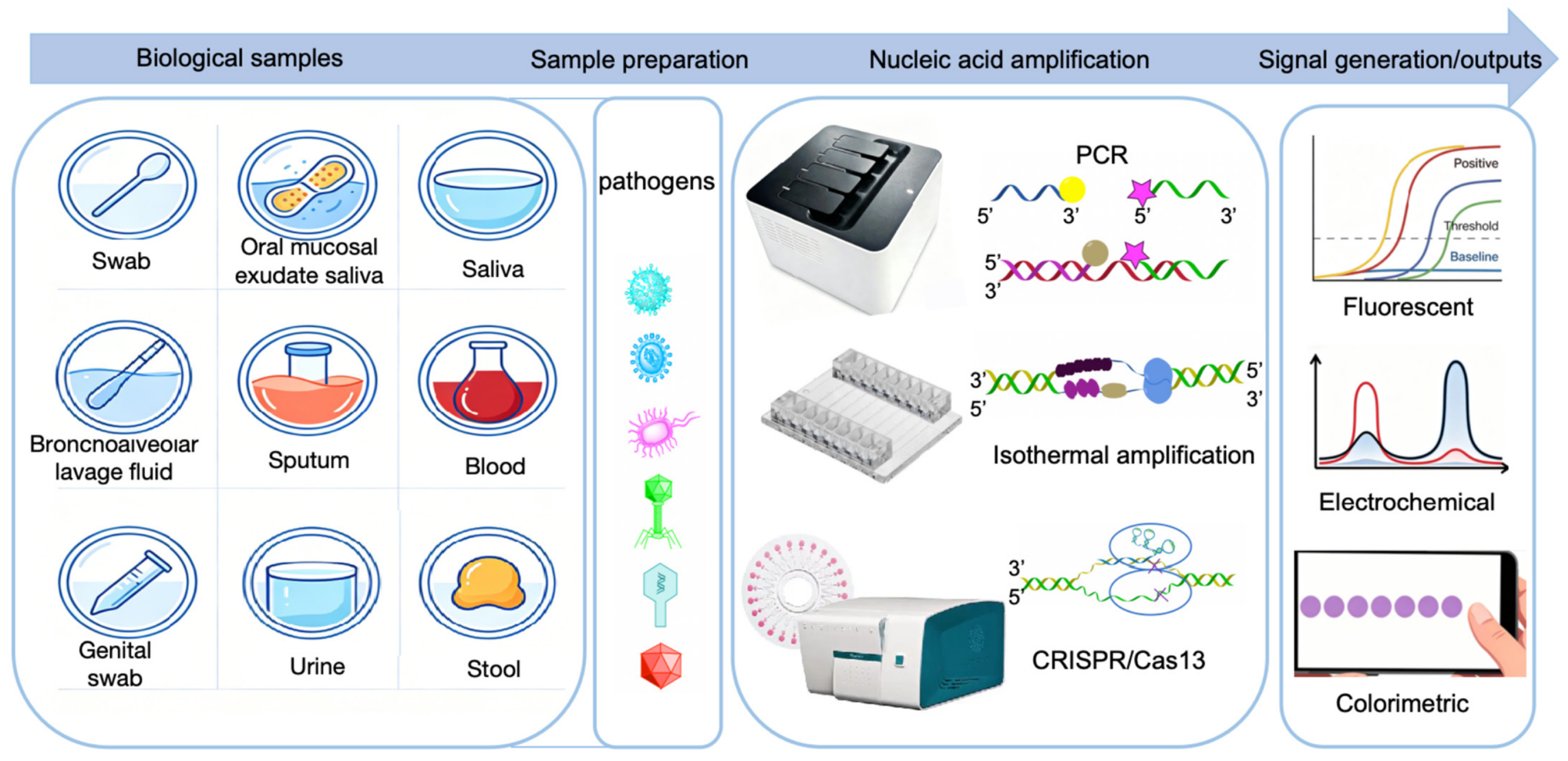
A complete molecular POCT system consists of three successive modules (Figure 1): (i) sample preparation, covering lysis, nucleic acid immobilization, washing, and elution; (ii) nucleic acid amplification via PCR or isothermal techniques; and (iii) signal generation and interpretation to yield visually readable outputs. Functional materials exert a decisive influence on performance at each stage, and impairment in any module can result in erroneous diagnostic conclusions.
Given that the original sample may contain various endogenous inhibitors affecting nucleic acid amplification reactions—particularly at low pathogen concentrations—it is necessary to isolate and purify the nucleic acids to ensure high amplification sensitivity. To meet the portability, integration, and automation requirements of POCT, various functional materials must be integrated into a single sealed, portable device, effectively controlling cross-contamination while maintaining high specificity and sensitivity for diverse testing scenarios; consequently, any deficiency in the functional materials of any module could lead to erroneous diagnostic conclusions.
The WHO REASSURED framework defines desirable attributes for POCT systems [15]. Simultaneously satisfying these criteria represents the central challenge in materials engineering: extraction materials must achieve high nucleic acid recovery without concentrating inhibitors; amplification materials must retain activity under ambient storage and simplified thermal control; detection materials must generate clear signals without reliance on laboratory instruments. From a regulatory perspective, REASSURED aligns with NMPA performance requirements for nucleic acid detection reagents under Device Classification Code 6840, as well as CLSI guidelines.

3. Nucleic Acid-Binding Materials for Sample Preparation

Sample preparation constitutes the most technically challenging step in molecular POCT. Clinical specimens including nasopharyngeal swabs, oropharyngeal swabs, saliva, bronchoalveolar lavage fluid, sputum, whole blood, cervical swabs, vaginal swabs, urethral swabs, urine, and stool contain various inhibitors that can suppress downstream amplification if not efficiently removed [16]. In addition to clinical specimens, sample preparation is also closely related to the nucleic acid detection technique subsequently employed. Among the common real-time PCR and isothermal amplification techniques used in molecular POCT, three categories of functional materials have driven advancements in this module.

3.1. Silica-Based and Magnetic Nanoparticles

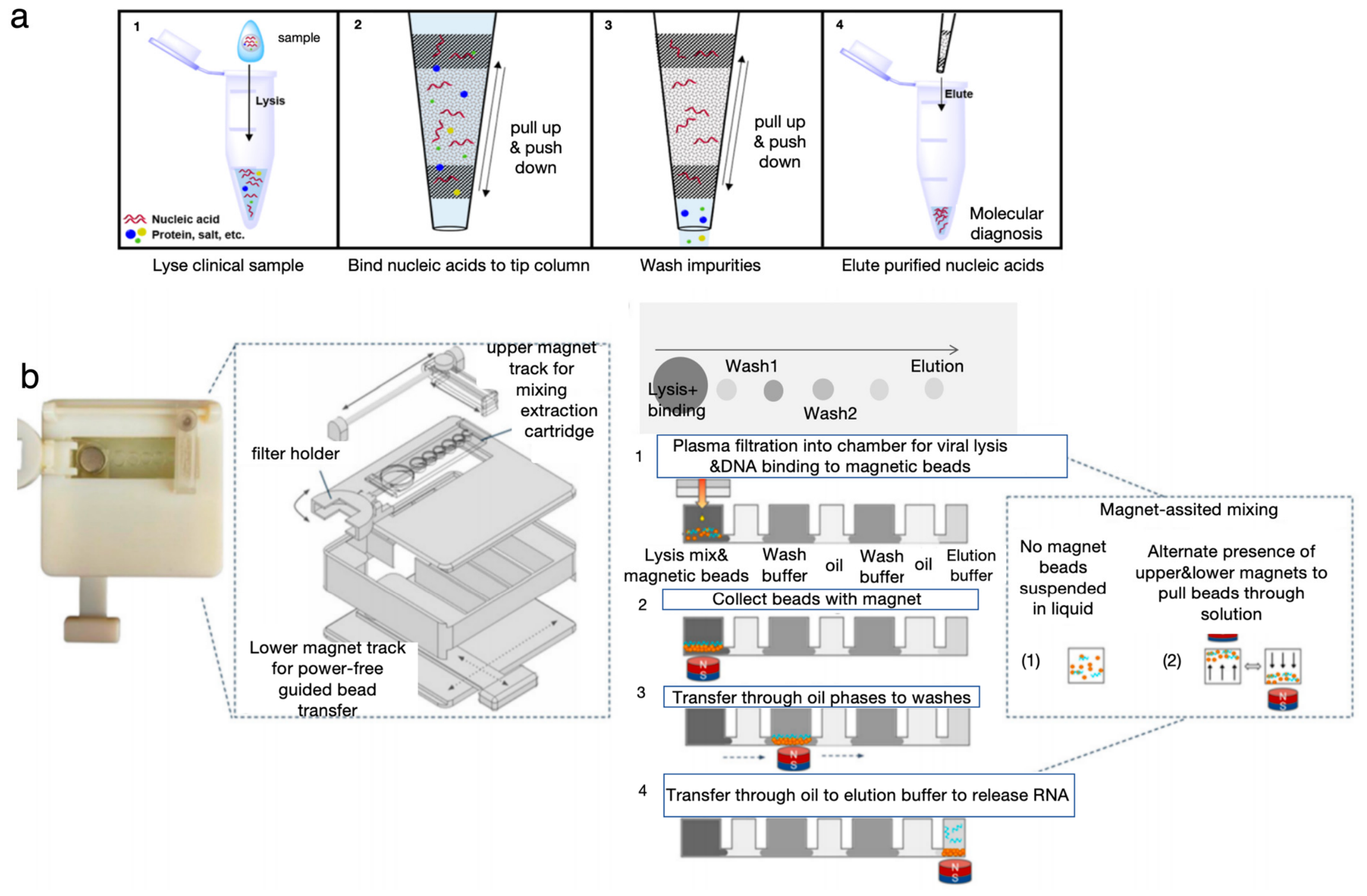
Silica materials capture nucleic acids via pH and chaotropic agent-dependent electrostatic interactions between phosphate backbones and protonated silanol moieties. Mesoporous silica nanoparticles (MSNs) with pore diameters of 2 to 50 nm exhibit specific surface areas up to 1000 m2 g−1, supporting efficient extraction from low-abundance samples while excluding high-molecular-weight inhibitors through size exclusion. Jung et al. reported a silica-based pipet tip column nucleic acid extraction for nasopharyngeal and saliva samples (Figure 2a) [17]. Silica-coated magnetic nanoparticles Fe3O4@SiO2 combine magnetic separability with silanol-mediated binding, enabling centrifugation-free nucleic acid purification using integrated magnets in cartridge systems for POCT applications [18,19,20]. Such solid-phase nucleic acid extraction method exhibits prominent advantages by offering a novel solution to automate nucleic acid extraction for massive sample batches including blood and other samples. With simple operational procedures, this extraction approach is highly suitable for automated workflows, large-scale detection and in low technological clinical scenario [21,22]. For instance, M. Barutiak reported a specific ligand-modified Fe3O4@SiO2 system designed to enhance RNA separation efficiency. Specifically, core–shell Fe3O4@SiO2 nanoparticles (approximately 10 nm) were coated with different organic ligands on the surface, and the selection of these specific ligands was based on their functional groups to improve RNA binding capacity [23].
Furthermore, the development of microfluidic chips has provided robust technical support for innovating nucleic acid extraction methods. By utilizing a specialized fluid channel system within the chip, buffer solution is sequentially introduced into the reaction zone, enabling efficient nucleic acid extraction and purification. As shown in Figure 2b. for immiscible phase nucleic acid extraction in Hepatitis C Virus (HCV) detection by a PRECISE (Point-of-care RNA/DNA Extraction Cartridge using Immiscible phase Separation) device, a microfluidic module with circular chambers was designed, with adjacent chambers separated by mineral oil barriers. A permanent magnet controls the free movement of magnetic beads across these oil barriers, enabling the beads to sequentially complete HCV nucleic acid binding, washing, and elution in different reagent-containing chambers. The mineral oil prevents cross-contamination between reagents, and the module’s hydrophobic, low-roughness PMMA base (superior to 3D-printed resin) ensures optimal magnetic bead movement and stable HCV nucleic acid extraction performance [24].
Regulatory review imposes stringent demands for batch-to-batch consistency, biological safety, and impurity control. Currently, silica-based solid-phase extraction remains the dominant technology in commercial nucleic acid purification [25,26], as exemplified kits such as the Qiagen QIAamp series and Sansure Biotech silica-based extraction reagents, as well as FDA-cleared platforms including the VERIGENE System and Roche High Pure nucleic acid isolation kits. Notably, such separate usage of extraction reagents is relatively common in NMPA-approved products, where they are often not listed among the core components of diagnostic kits, but specified as supplementary materials in the “required but not provided” section with corresponding filing numbers indicated. This is because separately marketed nucleic acid extraction reagents are regulated as Class I medical devices under the Chinese notification system. By contrast, highly integrated automated all-in-one POCT systems are usually closed systems with full integration. Lysis buffer, wash buffer, elution buffer, and other extraction reagents all serve as integral core components of the system and are declared together with the diagnostic assay in a single registration application. Under common practice, these reagents are typically presented in the form of lyophilized beads.

3.2. Functional Nucleic Acids for POCT

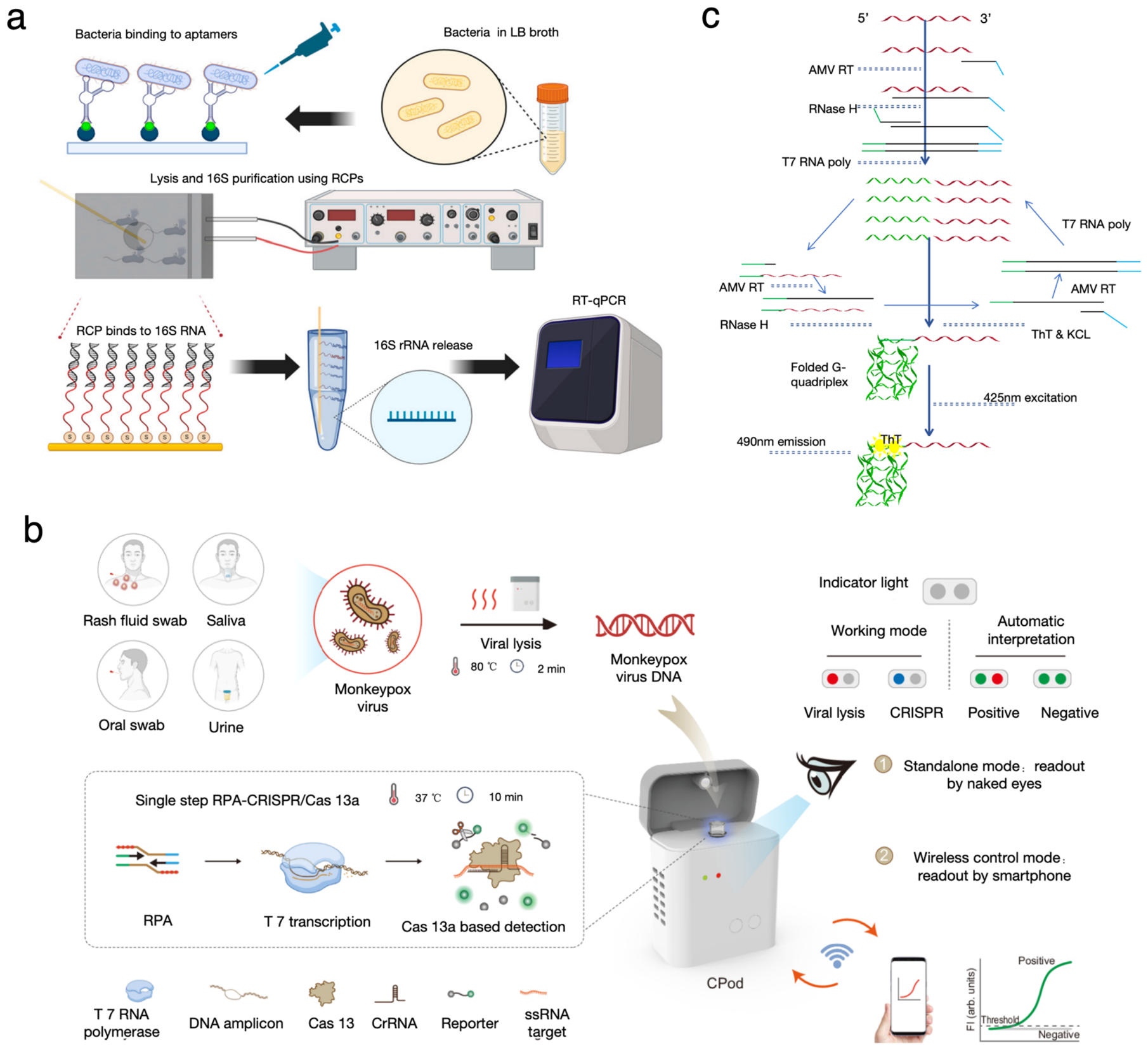
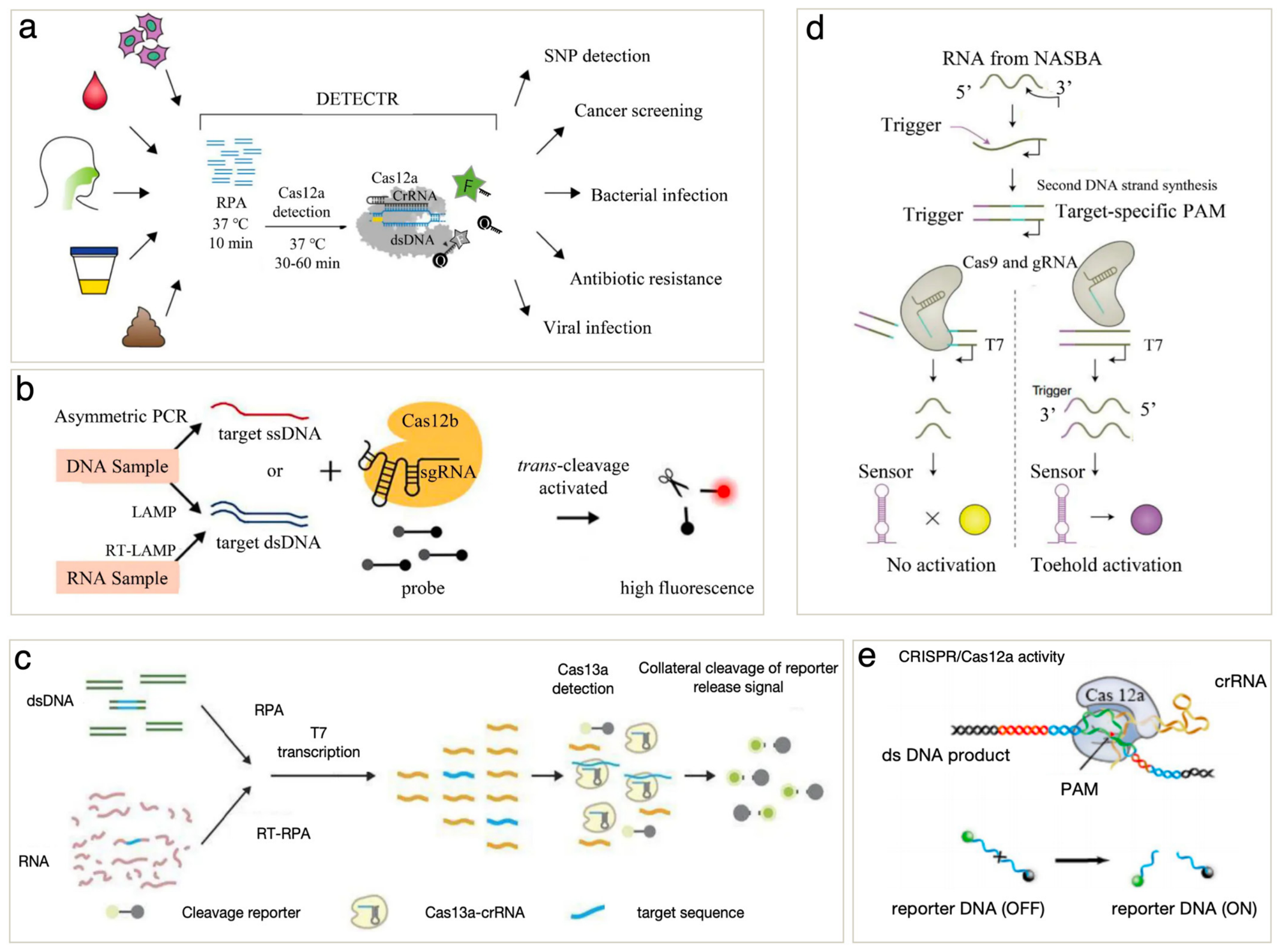
Nucleic acid aptamers, also known as chemical antibodies, are single-stranded DNA or RNA molecules containing fewer than 100 bases. The bases within these molecules can form stable three-dimensional structures through interactions such as hydrogen bonds, van der Waals forces, and hydrophobic stacking. Developing simple and rapid aptamer screening methods to expand the repertoire of nucleic acid aptamers capable of recognizing diverse target molecules will significantly advance their application in POCT technologies. Aptamers and CRISPR-Cas guide RNAs act as sequence-specific capture tools for POCT sample processing [27,28,29,30,31]. Solid supports functionalized with aptamers facilitate selective enrichment of target pathogens, particularly in differentiating closely related strains. As shown in Figure 3a, Aptamer-modified capture needles combined with piezoelectric lysis enable pathogen-specific capture, in situ lysis, and rapid RNA enrichment; their selectivity for Escherichia coli is markedly higher than control groups, verifying aptamer specificity. These systems process specimens in under 2 min and boost enrichment efficiency by three-fold, making them highly suitable for POCT pretreatment [32]. Chen et al. developed a one-pot CRISPR-based terminal-specific amplification (CASTSA) platform that eliminates pre-amplification, combines the high specificity of CRISPR-Cas12a and high sensitivity of qPCR, and achieves accurate HPV subtype discrimination with 18 copies/reaction detection limit when coupled with a laser-induced graphene-based electrochemical sensor [33]. Leveraging functional nucleic acid design principles—including CRISPR-Cas complexes, G-quadruplexes, gold nanoparticles (AuNP)-DNA conjugates, and DNAzymes—these tools are widely implemented in isothermal amplification (RPA, NASBA, MCDA, LAMP) to develop advanced molecular POCT products [34,35,36,37,38,39,40]. For instance, a portable, single-step CRISPR-based diagnostic platform named SCOPE was established for point-of-care of monkeypox virus (MPXV) detection. Integrating rapid viral lysis, one-pot RPA-CRISPR/Cas13a reaction and miniaturized pod-shaped detection device, this assay completes whole testing within 15 min from multiple clinical matrices, reaching ultrahigh sensitivity of 0.5 copies/μL. Validated in 102 clinical samples, it exhibits perfect consistency with real-time PCR, enabling simplified, rapid and field-deployable CRISPR diagnosis in resource-limited scenarios [41] (Figure 3b). In another typical case, G-quadruplex functional nucleic acids are combined with NASBA isothermal system to realize rapid fluorescent molecular detection of Classical Swine Fever Virus achieving ultra-low detection limit of two copies/μL (Figure 3c) [42].

3.3. Paper-Based Materials for POCT

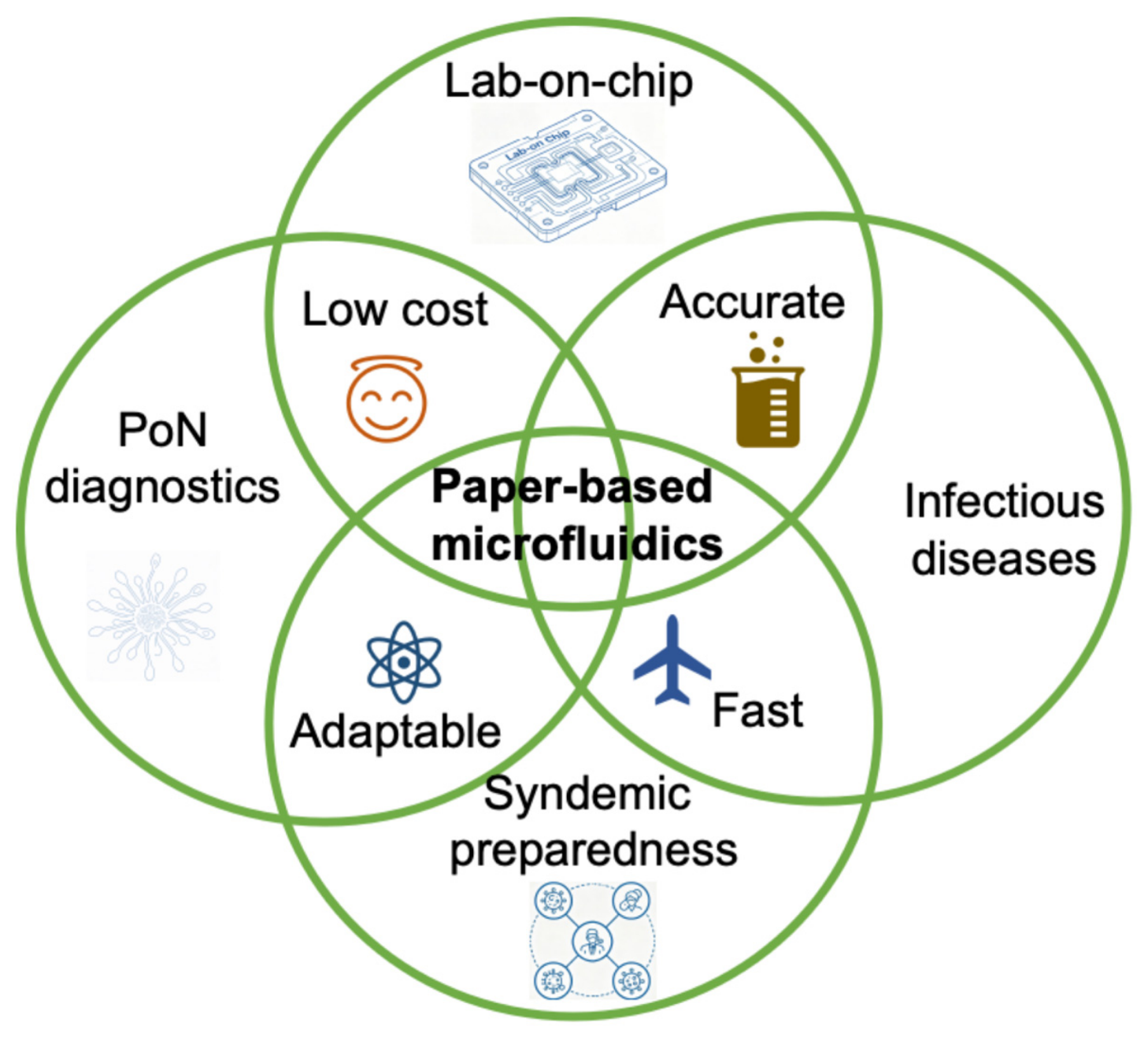
The paper-based materials for POCT typically serve as solid-phase support substrates, providing a medium for reactions while enabling direct observation of the generated signals. Paper-based materials including cellulose paper, glass fiber membranes, FTA cards, and paper microfluidic chips serve as low-cost, efficient capture substrates for nucleic acid extraction. Through capillary action, porous fiber structures, and surface chemistry, paper platforms enable rapid capture, enrichment, and preliminary purification from complex clinical specimens. Specifically, the interconnected porous fibrous network achieves dual effects: it retains target nucleic acids via surface adsorption and also performs passive filtration to physically intercept amplification interferents such as cell debris, mucus, aggregated proteins and fine particulates. Performance is governed by fiber composition, pore size, surface modification, and chemical pretreatment, which determine binding capacity, recovery rate, inhibitor removal, and elution efficiency [39,43,44]. In molecular POCT for infectious pathogens, paper-based components support fully integrated, equipment-independent workflows by unifying capture, washing, and amplification in a single device [45,46,47]. Functionalized paper matrices strengthen specific DNA/RNA binding while mitigating interference from hemoglobin, bile salts, polysaccharides, and nucleases that impede downstream amplification. Optimized paper-based systems achieve sensitivity comparable to conventional column- or magnetic bead-based methods, with detection limits reaching 1 CFU/mL for bacteria and 10–100 copies/mL for viral nucleic acids [48,49,50,51]. Moreover, paper substrates exhibit high compatibility with lyophilized reagents and isothermal amplification techniques (LAMP, RPA, CRISPR-Cas), supporting stable storage, simplified operation, and rapid readout for field-deployable diagnostics [52,53,54,55]. Despite advantages in cost, portability, and usability, paper-based capture faces limitations including variable recovery, incomplete inhibitor elimination, and limited integration scalability (Figure 4). Rational design of pore architecture, surface functionalization, and buffer chemistry has alleviated these constraints, establishing paper as a reliable capture platform for decentralized molecular POCT in endemic and pandemic infectious disease settings [56,57,58]. These materials feature strong adaptability and are well suited for PoN (Point-of-Need) diagnostics, a field-testing modality equivalent to on-site POCT. Their versatile properties also render them valuable for syndemic preparedness, which refers to emergency prevention and response against concurrent outbreaks of multiple infectious pathogens. Long-term ambient storage of unstable reagents is essential for field-ready POCT. Lyophilization excipients—trehalose, sucrose, PVP, and BSA—form protective glassy matrices around enzymes and capture beads during freeze-drying, preserving activity through dehydration–rehydration cycles [7,59]. Integration of lyophilized extraction beads directly into sealed POCT cartridges fully removes cold chain requirements. Phase change materials (PCMs) adapted from food warming technology utilize solid–liquid transition latent heat to maintain isothermal reaction temperatures within ±1 °C without external power, enabling self-contained, electricity-free POCT for field use [60].

4. Amplification-Enhancing Materials

For amplification-dependent nucleic acid detection assays, polymerases are the key materials that dominate overall detection efficiency. While CRISPR-based platforms are capable of direct target identification without prior amplification, the inherent sensitivity of standalone Cas proteins is insufficient for clinical applications. In practice, such CRISPR systems are usually coupled with nucleic acid amplification to achieve robust signal enhancement. Within these integrated systems, polymerases and functional nucleic acids, typical biomacromolecular materials, serve as major amplification-enhancing components, laying the material foundation for high-efficiency detection in molecular POCT.

4.1. Engineered Polymerases and Isothermal Amplification Systems

As the core drivers of nucleic acid amplification, polymerases govern POCT performance through their inhibitor tolerance, processivity, and thermal stability. Modified thermostable polymerase variants such as inhibitor-resistant Taq SD, rTaq, and chimeric Tth/Taq fusion enzymes support direct amplification from minimally processed samples, eliminating the need for specialized nucleic acid extraction [61]. Fusion enzymes for RT-PCR merge reverse transcription and DNA amplification into a single enzymatic reaction, simplifying POCT for RNA pathogens such as SARS-CoV-2, influenza and HIV [62,63,64]. Isothermal amplification techniques, including LAMP (63 to 65 °C), RPA (37 to 42 °C), NASBA, and SDA, eliminate the need for thermal cycling, greatly simplifying instrument design [65,66,67]. Lyophilized reagent formulations such as Bst polymerase mixed with LAMP primers in a trehalose matrix or recombinase combined with optimized lyoprotectants for RPA can be pre-integrated into cartridges during manufacturing, enabling single-step user reconstitution [68,69,70].

4.2. Crispr-Based Signal Enhancement

CRISPR-based signal amplification fundamentally relies on engineered protein materials and functional nucleic acid biomacromolecules, which serve as the core enabling components for ultra-sensitive molecular POCT. A panel of well-established CRISPR diagnostic platforms, such as DETECTR, HOLMESv2, SHERLOCK and NASBACC, have been widely deployed for nucleic acid detection. They are all built upon Cas effector proteins and custom functional nucleic acids to realize signal amplification. Upon target sequence binding, engineered Cas12a and Cas13a initiate strong collateral trans-cleavage activity, especially targeting fluorophore-quencher dual labeled reporter nucleic acids. These rationally designed functional nucleic acid probes acts as signal switching biomaterials, converting molecular recognition events into measurable fluorescent signals and achieving exponential signal amplification beyond traditional isothermal amplification. As illustrated in Figure 5a–d, these platforms deliver outstanding analytical performance including attomolar sensitivity and single-nucleotide discrimination, largely attributed to optimized gRNA sequence design and high specificity Cas effector materials. Such material innovations support precise variant identification for SARS-CoV-2, influenza A/B subtyping, and antibiotic resistance gene detection [71,72,73]. Furthermore, POCT compatibility is enabled by specialized lateral flow substrate materials and immobilized reporter biomaterials. Lateral flow-compatible CRISPR reporters translate this analytical capability into equipment-free visual readout suitable for POCT formats. Notably, the modular design of these core material design and signal amplification workflow are transferable to infectious pathogen POCT. The antibody–DNA functional magnetic materials enrichment module can be modified with pathogen-specific aptamers or antibodies to concentrate trace microbes in clinical specimens, while the CRISPR amplification and lateral flow readout unit retains universal compatibility for protein and nucleic acid targets. Recent studies have adopted identical magnetic enrichment-CRISPR-LFA frameworks for ultra-sensitive visual detection of respiratory viruses, MRSA and pathogenic fungi, reaching comparable pg-level detection limits. In addition, material optimization for anti-interference optimization of urinary lateral flow strips offers practical solutions for complex biological samples in infectious disease testing [74,75,76].

5. Signal Transduction Materials

Regardless of the signal amplification method employed, signal visualization ultimately relies on signal transduction materials such as fluorescent labeling or color reactions.

5.1. Fluorescent Materials

Fluorescence is the dominant detection approach adopted by mainstream commercial molecular POCT devices, representative examples including Cobas Liat, Xpert, BioFire FilmArray and ID NOW [77,78]. Mature fluorescent labeling technologies have been extensively applied in multiple nucleic acid amplification modalities, covering conventional PCR and prevalent isothermal amplification methods like LAMP, RPA and RCA. Non-specific fluorescent intercalators, such as SYBR Green, EvaGreen, LC Green and PicoGreen, are capable of tracing amplified products in a universal manner. In contrast, sequence-specific tools, namely TaqMan probes and molecular beacons, enable accurate target recognition and effectively inhibit non-target amplification interference [61,79,80,81]. For multi-index parallel detection in molecular POCT, classic fluorescent reporters such as FAM, HEX, ROX and Cy-series chromophores are commonly utilized, whose excitation and emission signals span ultraviolet, visible and near-infrared spectra. Fluorescent nucleic acid detection technologies exhibit prominent advantages in diagnostic performance, including ultrahigh sensitivity, reliable specificity and time-saving operational procedures. A wealth of fluorescent reagents is available to match the miniaturization design of portable diagnostic equipment. To meet on-site rapid testing demands, molecular POCT systems are designed to be highly integrated, with minimized sample and reagent dosage. Additionally, high-performance optical sensing units are indispensable for precisely capturing faint fluorescent signal changes generated by micro-volume nucleic acid amplification.

5.2. Colorimetric and Lateral Flow Materials

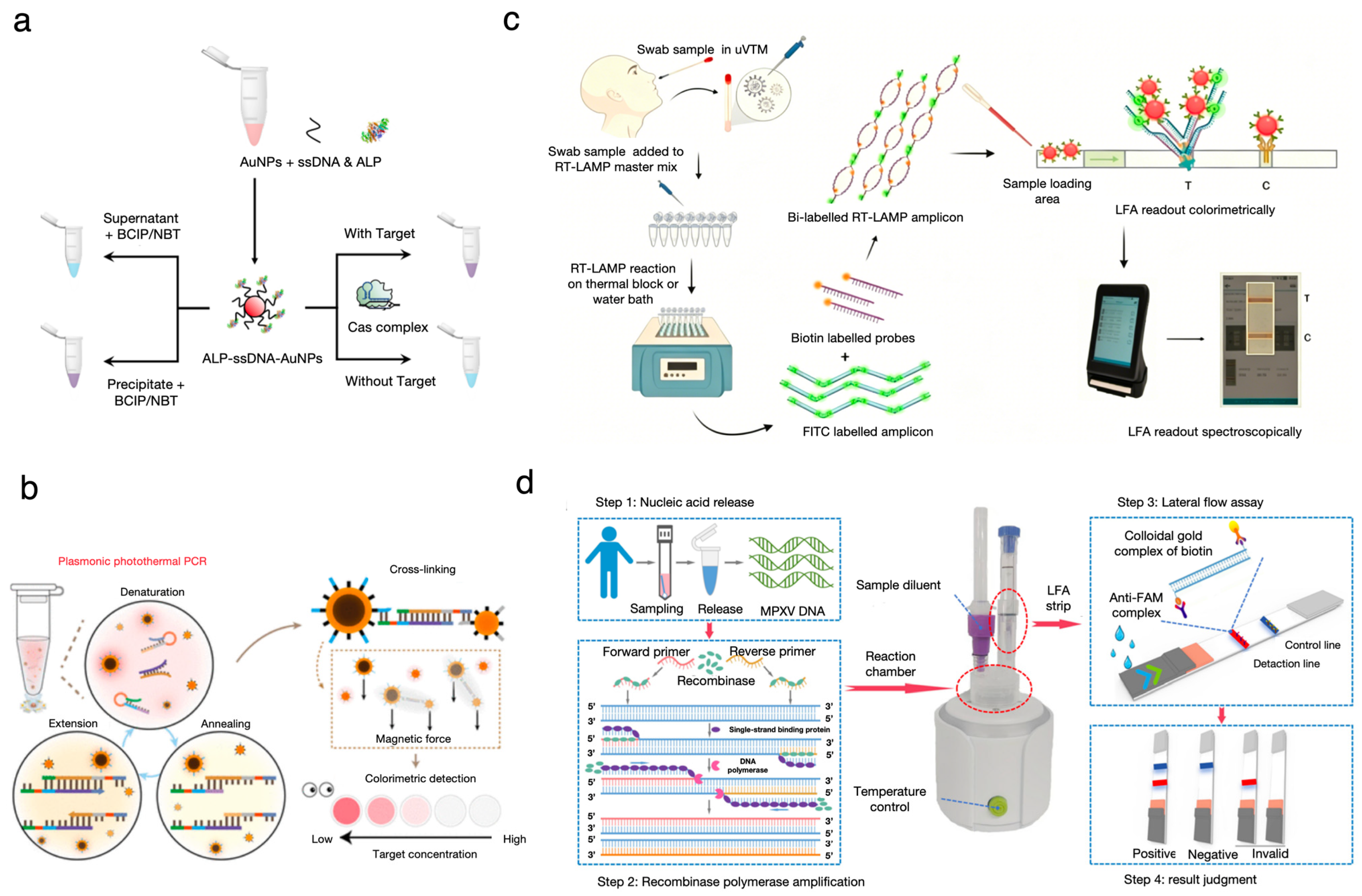
Colorimetric signal output relies on target-induced color variation in functional materials, observable by the naked eye without equipment [82,83,84,85]. The core mechanism is target-binding induced changes in material properties, leading to distinguishable color shifts. AuNPs are the mainstream colorimetric materials in molecular POCT: dispersed AuNPs show wine-red color via surface plasmon resonance, while nucleic acid hybridization-induced aggregation turns them purple/blue, enabling semi-quantitative detection [86]. As presented in Figure 6a, Tong et al. constructed an integrated 3D-printed biosensing device based on a CRISPR/Cas12a dual-enzyme system. Gold nanoparticles were adopted to improve the enzyme labeling density, and alkaline phosphatase was conjugated through single-stranded DNA. Visual detection can be realized by adding only a single substrate. Without nucleic acid amplification and centrifugation, this colorimetric method achieves a detection limit of 10 pM [87]. A COVID-19 colorimetric assay developed using thiol-linked RNA-modified AuNPs and oligonucleotide probes targeting the ORF1ab gene of SARS-CoV-2, tested on 200 pharyngeal swab samples (with RT-PCR as the gold standard); this method achieved 96% sensitivity, 100% specificity, a detection limit of 25 copies/μL, and a total detection time of ~30 min, serving as a rapid, cost-effective alternative to conventional RT-PCR, especially suitable for low-income and over-populated regions [88]. Amaral et al. established a rapid single-tube RT-LAMP assay for visual SARS-CoV-2 detection within 30 min, which could identify fewer than 100 viral genome copies with high sensitivity and specificity, and further developed an extraction-free saliva-based detection mode, low-cost pretreatment strategy and pH-independent colorimetric visualization method for convenient and accessible on-site testing. Jiang et al. developed a novel PPT-ccPCR assay that integrates plasmonic magnetic nanoparticle-based photothermal amplification with gold nanoparticle cross-linking colorimetry, enabling rapid, low-cost, instrument-free visual nucleic acid detection with high sensitivity down to 1.8 copies/μL and great application potential in point-of-care pathogen diagnosis (Figure 6b) [89]. Additionally, silver nanoparticles and quantum dots also serve as colorimetric materials, offering higher sensitivity or multi-target discrimination [90,91]. Silver staining enhances AuNP color intensity by 10 to 100 folds via silver shell formation on aggregated AuNPs, as demonstrated in a colorimetric silver detection method coupled with linker-PCR for DNA methylation detection, which can detect as low as 0.1 fmol of target DNA amplicons [92].
LF materials (mainly LF strips) integrate sample loading, reaction and readout, with signal output as visible test (T) and control (C) bands, driven by capillary action to transport samples and trigger reactions on the strip. Nucleic acid LF strips adopt a sandwich structure with AuNPs as labeling materials: target amplicons bind to AuNP-conjugated probes, then are captured by T-band probes to form red bands (positive), while unbound probes bind to C-band probes (validity indicator). No target results in only a C-band, realizing simple qualitative detection. For instance, a RT-LAMP-LFA platform using biotinylated DNA probes for SARS-CoV-2 detection achieves 98.11% sensitivity and 96.15% specificity, with a total detection time of 35 min (Figure 6c) [93]. For LF signal output, nucleic acid amplification increases amplicon quantity to enhance T-band intensity; DNAzyme-assisted RCA and oriented probe immobilization further reduce background and improve specificity. As shown in Figure 6d, Yu et al. designed a novel MPXV POCT kit integrating RPA-LFA, with a closed design to reduce contamination, achieved 25 min visual readout, 100% consistency with RT-qPCR, and high sensitivity (41 copies/mL in clinical samples) [94].

6. Representative Platforms and Regulatory Perspectives

We herein foucus on high efficiency, user-friendly sample preparation system and field system implementation strategies, alongside the comparative analysis of typical commercial molecular POCT platforms based on the performance, materials characteristics and regulatory status summarized in Table 1.

6.1. PCR-Based Platform and Regulatory Benchmarking

From a regulatory science perspective, the analytical performance of molecular diagnostic assays is strictly constrained by multiple technical and material factors. Analytical sensitivity is directly determined by the surface area of extraction materials and their binding kinetics, while analytical specificity relies on both probe sequence selectivity and material induced interference, including cross reactivity of capture elements and non-specific reporter adsorption. Assay reproducibility further necessitates rigorous control over nanoparticle size distribution, surface functionalization density, and lyophilization stability. As shown in Table 1, mainstream commercial PCR-based POCT devices predominantly adopt thermoplastic and polypropylene substrates, while a small number of ultra-rapid detection platforms apply flexible plastic film materials. Both thermoplastic and polypropylene cartridges feature excellent mechanical stability, controllable batch consistency, which conform to industrial mass production requirements. Benefiting from standardized material preparation processes, these platforms such as Cobas and X pert achieve stable diagnostic sensitivity and reliable reproducibility thus obtaining FDA 510K clearance and EU CE-IVD or even CLIA-waived qualification with complete regulatory documentation. In contrast, flexible plastic film based POCT systems represented by the BIOFIRE system leverage the ultrathin, low thermal mass structural characteristic of flexible substrates. Compared with rigid thick-walled thermoplastic chips, flexible films possess extremely low heat capacity and rapid thermal response, enabling ultra efficient heat transfer and fast heating/cooling cycling. This unique material derived thermal advantage fundamentally supports ultra-rapid detection within 15 min. However, such flexible thin film structures are more susceptible to dimensional deviation and material deformation during fabrication, bringing higher technical barriers in large-scale standardized manufacturing and demanding more stringent batch quality control to guarantee consistent detection performance. Beside the mentioned commercialized substate technologies, the emerging QUICK-PCR platform realized further accelerated POCT amplification via innovative thermal control functional material design. Unlike the conventional plastic substrates, this platform integrates ITO Joule heating films and phase change materials (PCMs) to realize active and precise temperature regulation, breaking the thermal response limits. These heating-related functional materials serve as core auxiliary components to optimize temperature cycling efficiency. However, such customized composite material structures lack unified manufacturing specifications and standardized stability evaluation criteria, raising potential risks in batch consistency and long-term storage stability. Such material specific uncertainties introduced distinct regulatory challenges, requiring systematic performance validation to support the clinical translation and market approval of ultra-fast POCT devices.
To secure marketing authorization from regulatory bodies including the FDA and CE-IVD, direct clinical performance comparisons with currently approved commercial products are essential. In terms of clinical indicators, regulatory compliance typically requires clinical positive percent agreement (PPA) and negative percent agreement (NPA) of no less than 95%, together with reliable limit of detection performance [95,96].
In FDA regulatory practice, most ultra-rapid molecular amplification platforms tend to avoid explicit “bedside” or “POCT” labeling in official indications and are instead indicated for rapid qualitative detection with matched dedicated instruments. There point-of-care applicability is validated through clinical testing in near-patient settings rather than relying on labeled terminology. Notably, the FDA adopts a risk-stratified, tiered regulatory framework, and multiple authorized molecular assays are explicitly indicated for POCT use with CLIA-waived status. Representative products include the Cepheid Xpert Xpress series and Roche cobas Liat multiplex panels, which are fully approved for near-patient clinical deployment. Certain platforms have even obtained authorization for over-the-counter home testing, demonstrating the flexibility of current FDA labeling conventions. Additionally, home-use diagnostics comply with independent and stricter regulatory specifications. Early adherence to unified global standards is therefore essential to accelerate the clinical translation of innovative QUICK-PCR technology. The Cepheid GeneXpert system exemplifies the typical integration of functional materials within a regulatory-cleared molecular POCT platform [67]. Its cartridge combines silica-coated magnetic bead extraction, inhibitor-tolerant RT-PCR with TaqMan probes, and real-time fluorescence detection, supporting clinical applications including tuberculosis, HIV viral load monitoring, SARS-CoV-2, and multiple respiratory panels. The global regulatory authorizations, including FDA clearances, NMPA Class III (Code 6840) approval, and WHO prequalification, are fundamentally underpinned by well documented material quality attributes. Strict lot-release specifications for magnetic bead binding capacity, polymerase activity and probe hybridization kinetics are enforced throughout manufacturing fully complying with the ISO 13485 quality management system [97]. This standardized material control and regulatory validation framework provides a practical and authoritative template to address the translational and regulatory challenges of emerging ultra-fast POCT.

6.2. Isothermal Platforms: Regulatory Risk Profile

Commercial isothermal POCT platforms including RPA-based Abbott ID NOW, Eiken LAMP systems, and CRISPR-integrated systems present distinctive regulatory risk profiles compared to PCR-based platforms. The primary concern is non-specific amplification. Unlike PCR with temperature-dependent specific amplification constraints, LAMP and RPA lack inherent pre-reaction inhibition mechanisms [98,99]. Hot-start polymerase formulations and physical separation of amplification and detection zones via wax valves have been adopted to mitigate false positive generation and carryover contamination [100]. Batch variability in isothermal functional materials, including UvsX recombinase lyophilization uniformity, Bst polymerase unit activity, and AuNP particle size distribution necessitates well defined lot-release protocols with quantitative acceptance criteria linked to assay key performance indicators. Relevant NMPA guidance documents covering COVID-19, HBV, HCV, tuberculosis, and influenza specify raw material performance specifications aligned with CLSI EP series guidelines [101,102,103,104,105,106].

6.3. Microfluidic Integration: Material Selection

It was reported that a retrospective validation study assessed the STANDARD M10 Fast Assay, a rapid, multiplex real-time RT-PCR kit by SD Biosensor designed for POC detection of Influenza A/B, RSV, and SARS-CoV-2 in nasopharyngeal swabs, utilizing archived specimens collected during Italian respiratory surveillance and adhering to STARD guidelines [107]. Microfluidic chip material selection exerts significant impacts on both analytical performance and regulatory compliance. PDMS, which dominates academic research, tends to absorb hydrophobic amplification reagents, thereby reducing effective enzyme concentration and introducing batch-to-batch variability. Cyclic olefin copolymer (COC) together with polystyrene (PS), polycarbonate (PC) and polyethylene terephthalate (PET), features minimal reagent adsorption and favorable dimensional stability, which well matches the requirements of injection molding for large-scale manufacturing. All cartridge materials that directly contacting patient samples require biocompatibility evaluation to exclude toxic or interfering extractables, with particular attention to nanoscale leachable residues released from polymetric substrates [7,66,98]. Ambient temperature stability is a core requirement for field-deployable POCT. Accelerated stability studies (40 °C/75% RH for 6 months, used as a surrogate for 2 years shelf life) must demonstrate that extraction efficiency, enzyme activity, probe hybridization kinetics, and nanoparticle optical properties remain within pre-defined specifications.

6.4. Regulatory Harmonization and Material Standardization

As shown in Table 1, most routine POC infectious disease molecular assays are regulated as IVD devices by the FDA. Following successive official risk reclassification adjustments, the vast majority of conventional nucleic acid-based POC tests have been downgraded to Class II devices and formally authorized through the 510(k) premarket notification clearance pathway [108,109]. At present, Class III Premarket Approval (PMA) and temporary Emergency Use Authorization (EUA) are no longer adopted for commercially available conventional diagnostic products; EUA is reserved exclusively for emerging pathogens and acute public health emergency scenarios. For POC testing manufacturers, acquiring Clinical Laboratory Improvement Amendments (CLIA) waiver qualification has become a core development goal, permitting widespread deployment beyond high-complexity clinical laboratories. To obtain this waiver, products must demonstrate straightforward operation and an extremely low risk of erroneous results, even under suboptimal conditions or when operated by non-specialized personnel. Key validation requirements include human factors assessment, stability and robustness testing, and integration of error-prevention design features [110]. Notably, diagnostics cleared for home use or over-the-counter (OTC) sale automatically qualify for CLIA waiver, expanding market accessibility while imposing stricter usability and labeling standards. Regulatory frameworks differ significantly across regions in terms of classification rules, clinical evidence requirements, and post-market surveillance. As a result, developers should establish region-specific evidence strategies early in the product development process. For POC tests to be distributed globally, they must comply with the distinct regulatory frameworks of different regions. Within the European Union (EU), under the IVDR 2017/746, most POC infectious disease assays fall into Class B or C. These require third-party conformity assessment by notified bodies as well as thorough evidence of clinical performance. The WHO Prequalification Program for In Vitro Diagnostics (PQDx) assesses assays for global health procurement, prioritizing their alignment with target product profiles (TPPs), usability, and performance in resource-constrained settings. While efforts to harmonize regulations internationally led by the International Medical Device Regulators Forum (IMDRF) and the WHO Global Model Regulatory Framework are ongoing. This situation arises mainly from different official naming rules, rather than a lack of applicable products. In China, the NMPA has approved a range of molecular POC nucleic acid detection kits, which are based on technologies such as real-time fluorescence PCR, isothermal amplification, and microfluidics. Although official naming conventions prohibit the use of “POCT” or “point-of-care testing” on labels, these systems are specifically designed to meet core POC characteristics: rapid testing, full automation, and applicability at the patient’s bedside. Most of these kits deliver results within 30 to 60 min, making them suitable for on-demand nucleic acid testing in fever clinics, community healthcare facilities, and at the bedside. Classified as Class III IVDs under NMPA regulations, these molecular POC products require premarket technical review and comprehensive characterization of raw materials. Manufacturers must declare all critical raw materials including magnetic bead extraction systems, amplification enzymes, and fluorescent probes with strict specifications for their composition, binding capacity, activity, purity, and uniformity. Any modifications to key raw materials or their suppliers require re-validation and notification to regulatory authorities to ensure traceability and batch-to-batch consistency. The NMPA also mandates systematic screening of raw materials and comparative performance evaluations, covering aspects such as extraction efficiency, inhibitor resistance, analytical sensitivity and specificity, signal stability, and matrix compatibility. These preclinical data are a crucial component of the regulatory dossier, justifying the selection of materials before clinical studies commence.
The global commercialization of molecular POC tests requires navigating these divergent regulatory frameworks, with a growing focus on material standardization to simplify access to international markets. Regulatory and governance models for POC tests vary considerably across jurisdictions, differing in accreditation requirements and implementation practices. While global regulators share the core objectives of ensuring diagnostic quality and patient safety, their implementation methods differ significantly. Beyond regulatory approval, the effective deployment of POC tests faces notable practical challenges, including the need for robust data management and integration with medical information systems. For manufacturers, these requirements are increasingly reflected in NMPA submissions, which now incorporate documentation related to software, data handling, and material quality. Internationally, WHO IVD Prequalification and ISO 13485/15189 certification provide aligned quality frameworks that support the integration of global supply chains. The adoption of standardized reference materials for extraction efficiency, polymerase activity, and probe performance would further enhance the comparability of validation data across jurisdictions, reduce regulatory uncertainty, and facilitate simultaneous global submissions for molecular POC developers.

7. Future Directions and Conclusions

The advancement of infectious disease molecular POCT is mainly fueled by four major material research directions: stimuli-responsive systems, multifunctional integrated composites, eco-friendly biodegradable carriers, and intelligent sensing materials. Stimuli-responsive materials, such as temperature-sensitive PNIPAM hydrogels enable thermally controlled nucleic acid capture and release, simplifying pretreatment procedures and omitting independent elution operations. DNA nanotechnology, including DNAzyme hydrogels and DNA origami, supports customizable microscale structures for integrated multi-step biochemical reactions. Integrated composite materials integrate nucleic acid extraction, amplification and detection into one platform, minimizing manual operation and assay duration, and greatly improving the stability and practicability of POCT systems. To reduce environmental waste caused by disposable diagnostic consumables, biodegradable substrates including paper microfluidics, natural biopolymers and composite hydrogels have attracted extensive attention. Currently, global regulators have gradually incorporated life cycle assessment into device development requirements, making sustainability an essential consideration for IVD design.
The combination of novel intelligent sensing materials and artificial intelligence (AI) enables in-depth processing of colorimetric, fluorescent and electrochemical signals. Beyond simple digital conversion, AI algorithms perform real-time signal denoising, background correction and automatic result classification to eliminate interference derived from complex clinical matrices and material defects. This collaborative mode significantly improves the accuracy and repeatability of POCT interpretation. Translating material innovations into commercial IVD products requires interdisciplinary collaboration and standardized regulatory management. Early communication with regulatory authorities, such as NMPA pre-submission consultation and FDA Q-Submission, facilitates standardized material characterization and meets regional compliance. Rigorous quality control including systematic assessment of non-specific amplification, batch variability and matrix instability is essential for reducing regulatory barriers for market approval.
Advanced functional materials have fundamentally addressed the core technical drawbacks of traditional POCT platforms. Optimized nucleic acid capture carriers improve sample purification and extraction efficiency, while anti-inhibition amplification systems, phase change thermal control materials, and CRISPR-assisted detection tools effectively narrow the performance disparity between point-of-care and central laboratory testing. Such advances enable robust, reliable detection in resource-limited environments. Meanwhile, diverse signal conversion materials support both rapid qualitative screening and high-precision quantitative analysis, greatly expanding the applicable scenarios of infectious disease POCT. While these material innovations have greatly upgraded the technical performance of molecular POCT, their translational maturity and commercialization potential differ drastically. This review delivers explicit take-home messages regarding the industrial applicability of mainstream POCT materials. Currently, thermoplastic and polypropylene-based composites dominate translational research as the most commercially viable options, owing to mature manufacturing techniques, reliable batch consistency, and complete ISO-standardized quality control systems that support scalable clinical deployment. In contrast, emerging functional materials including responsive hydrogels, DNA nanomaterials, and biodegradable substrates remain confined to laboratory research, as their unstable batch performance and immature industrial verification systems hinder large-scale clinical transformation.
Beyond differentiated commercialization prospects, material-intrinsic flaws and inconsistent regulatory frameworks represent major translational obstacles. Widespread issues including non-specific amplification, unstable biomaterial activity and matrix interference frequently lead to clinical validation failures and regulatory rejection under FDA, CE-IVD and NMPA supervision. To standardize raw material management for the IVD products, NMPA has issued dedicated guiding principles that clarify standardized technical requirement for the research, characterization and quality control of core raw materials, filling part of the domestic regulatory gap. Even so, emerging POCT functional materials lack globally unified characterization and quality specifications, while regionally divergent evaluation criteria further restrict synchronized large-scale industrial promotion. Balancing technological innovation and standardized supervision is therefore the central priority for future POCT development. The iterative optimization of China’s NMPA Class III IVD system has aligned with international regulatory norms, offering a standardized commercial pathway for high-risk molecular diagnostics. Future technological upgrading will focus on the integration of intelligent nanomaterials, DNA nanotechnology, AI analysis and green materials to achieve precise, accessible global infectious disease detection. Targeted, region-adaptive verification strategies in early R&D stages are essential to break current translational limitations and realize compliant industrial transformation of innovative POCT materials.

Author Contributions

Conceptualization, Y.T.; writing—original draft preparation, Y.T. and H.W. (Haonan Wu); review and editing, H.W. (Haonan Wu), J.L., T.Q., X.Z., S.Z., H.W. (Hui Wang). All authors have read and agreed to the published version of the manuscript.

Funding

This work was supported by the Postdoctoral Retention Research Grant of Shenzhen and the Shenzhen High-Level Talents Funding Program. The work was also supported by the open funds of the State Key Laboratory of Chemo and Biosensing (Hunan University).

Institutional Review Board Statement

Not applicable.

Informed Consent Statement

Not applicable.

Data Availability Statement

No new data were created or analyzed in this study.

Conflicts of Interest

The authors declare no conflict of interest.

References

  1. World Health Organization. World Health Statistics 2023: Monitoring Health for the SDGs; WHO: Geneva, Switzerland, 2023. [Google Scholar]
  2. Emmadi, R.; Boonyaratanakornkit, J.B.; Selvarangan, R.; Shyamala, V.; Zimmer, B.L.; Williams, L.; Bryant, B.; Schutzbank, T.; Schoonmaker, M.M.; Amos Wilson, J.A.; et al. Molecular methods and platforms for infectious diseases testing a review of FDA-approved and cleared assays. J. Mol. Diagn. 2011, 13, 583–604. [Google Scholar] [CrossRef] [Scilit] [PubMed]
  3. Gavina, K.; Franco, L.C.; Khan, H.; Lavik, J.P.; Relich, R.F. Molecular point-of-care devices for the diagnosis of infectious diseases in resource-limited settings—A review of the current landscape, technical challenges, and clinical impact. J. Clin. Virol. 2023, 169, 105613. [Google Scholar] [CrossRef] [Scilit] [PubMed]
  4. Chakraborty, S. Democratizing nucleic acid-based molecular diagnostic tests for infectious diseases at resource-limited settings—From point of care to extreme point of care. Sens. Diagn. 2024, 3, 536–561. [Google Scholar] [CrossRef] [Scilit]
  5. Zu, Y.; Chang, H.; Cui, Z. Molecular point-of-care testing technologies: Current status and challenges. Nexus 2025, 2, 100059. [Google Scholar] [CrossRef] [Scilit]
  6. Liu, W.; Yue, F.; Lee, L.P. Integrated Point-of-Care Molecular Diagnostic Devices for Infectious Diseases. Acc. Chem. Res. 2021, 54, 4107–4119. [Google Scholar] [CrossRef] [Scilit] [PubMed]
  7. Ren, S.; Liu, D.; Xu, S. Development and Challenges of Pathogen Molecular Point-of-Care Testing Systems Based on Microfluidic Technology. iLABMED 2025, 3, 21–28. [Google Scholar] [CrossRef] [Scilit]
  8. Kardjadj, M. Advances in Point-of-Care Infectious Disease Diagnostics: Integration of Technologies, Validation, Artificial Intelligence, and Regulatory Oversight. Diagnostics 2025, 15, 2845. [Google Scholar] [CrossRef] [Scilit] [PubMed]
  9. Ma, L.; Fan, Y.; Kong, X.; Jiang, Y.; Huang, H.; Zhao, M.; Liu, Y.; Gao, P.; Cui, Y.; Cao, Y. Fast and Sensitive Detection of SARS-CoV-2 Nucleic Acid Using a Rapid Detection System Free of RNA Extraction. Int. J. Anal. Chem. 2023, 2023, 8053524. [Google Scholar] [CrossRef] [Scilit] [PubMed]
  10. Deng, J.; Zhu, H.; An, S.; Huang, H.; Wang, R.; Chen, Y.; Chen, P.; Yu, X. Accurate detection of influenza A virus by use of a novel cross-priming isothermal amplification-based point-of-care assay. Microbiol. Spectr. 2024, 12, e03074-23. [Google Scholar] [CrossRef] [Scilit] [PubMed]
  11. Yang, C.; Wang, Z.; Kong, L.; Du, J.; Yi, J. Evaluation of three rapid assays for detecting Mycoplasma pneumoniae in nasopharyngeal specimens. AMB Express 2024, 14, 134. [Google Scholar] [CrossRef] [Scilit] [PubMed]
  12. Wang, H.; Wang, Y.; Wang, W.; Zhang, Y.; Yuan, Q.; Tan, J. Materials-Functionalized Point-of-Care Testing Devices for Pathogen Detection. Acc. Mater. Res. 2023, 4, 1083–1094. [Google Scholar] [CrossRef] [Scilit]
  13. Gao, Q.; Li, S. Intelligent point of care testing for medicine diagnosis. Interdiscip. Med. 2024, 2, e20230031. [Google Scholar] [CrossRef] [Scilit]
  14. National Medical Products Administration. Provisions for In Vitro Diagnostic Reagent Registration and Filing. Available online: https://english.nmpa.gov.cn/2024-06/05/c_1049322.htm (accessed on 20 April 2026).
  15. Otoo, J.A.; Schlappi, T.S. REASSURED Multiplex Diagnostics: A Critical Review and Forecast. Biosensors 2022, 12, 124. [Google Scholar] [CrossRef] [Scilit] [PubMed]
  16. Sidstedt, M.; Radstrom, P.; Hedman, J. PCR inhibition in qPCR, dPCR and MPS-mechanisms and solutions. Anal. Bioanal. Chem. 2020, 412, 2009–2023. [Google Scholar] [CrossRef] [Scilit] [PubMed]
  17. Jung, C.; Kim, G.; Song, M.B.; Kim, M.G. Rapid Equipment-Free Nucleic Acid Extraction Using a Silica-Based Pipet Tip Column. ACS Omega 2025, 10, 20427–20434. [Google Scholar] [CrossRef] [Scilit] [PubMed]
  18. Quy, D.V.; Hieu, N.M.; Tra, P.T.; Nam, N.H.; Hai, N.H.; Thai Son, N.; Nghia, P.T.; Anh, N.T.V.; Hong, T.T.; Luong, N.H. Synthesis of Silica-Coated Magnetic Nanoparticles and Application in the Detection of Pathogenic Viruses. J. Nanomater. 2013, 2013, 603940. [Google Scholar] [CrossRef] [Scilit]
  19. Tang, C.; He, Z.; Liu, H.; Xu, Y.; Huang, H.; Yang, G.; Xiao, Z.; Li, S.; Liu, H.; Deng, Y.; et al. Application of magnetic nanoparticles in nucleic acid detection. J. Nanobiotechnol. 2020, 18, 62. [Google Scholar] [CrossRef] [Scilit] [PubMed]
  20. Arockiam, S.; Nguyen, V.T.; Knappenberger, M.; Anderson, C.; Hansen, M.; Murugan, V.; Christen, J.B.; Anderson, K.S. Rapid on-chip nucleic acid extraction for point-of-care salivary diagnostics. Anal. Methods 2025, 17, 4321–4333. [Google Scholar] [CrossRef] [Scilit] [PubMed]
  21. Ali, N.; Rampazzo, R.C.P.; Costa, A.D.T.; Krieger, M.A. Current Nucleic Acid Extraction Methods and Their Implications to Point-of-Care Diagnostics. BioMed Res. Int. 2017, 2017, 9306564. [Google Scholar] [CrossRef] [Scilit] [PubMed]
  22. Berensmeier, S. Magnetic particles for the separation and purification of nucleic acids. Appl. Microbiol. Biotechnol. 2006, 73, 495–504. [Google Scholar] [CrossRef] [Scilit] [PubMed]
  23. Barutiak, M.; Zeleňáková, A.; Hrubovčák, P.; Nagy, L.; Szűcsová, J.; Fabriciová, Ž.; Beňová, E.; Király, N.; Zeleňák, V.; Antošová, A. Enhanced efficiency of Fe3O4@SiO2 with specific ligand layer in magnetic separation technique. Surf. Interfaces 2025, 72, 107252. [Google Scholar] [CrossRef] [Scilit]
  24. Ayers, A.G.; Victoriano, C.M.; Sia, S.K. Integrated device for plasma separation and nucleic acid extraction from whole blood toward point-of-care detection of bloodborne pathogens. Lab Chip 2024, 24, 5124–5136. [Google Scholar] [CrossRef] [Scilit] [PubMed]
  25. Mirna Lorena, S.; Cynthia, P.C.; Maria Isabela, A.R.; Pamela, V.M.; Gabriela, R.H.; Jorge, B.; Mariano, G. Nucleic Acids Isolation for Molecular Diagnostics: Present and Future of the Silica-based DNA/RNA Purification Technologies. Sep. Purif. Rev. 2023, 52, 193–204. [Google Scholar] [CrossRef] [Scilit]
  26. Li, P.; Li, M.; Yue, D.; Chen, H. Solid-phase extraction methods for nucleic acid separation. A review. J. Sep. Sci. 2022, 45, 172–184. [Google Scholar] [CrossRef] [Scilit] [PubMed]
  27. Verma, M.K.; Roychowdhury, S.; Sahu, B.D.; Mishra, A.; Sethi, K.K. CRISPR-based point-of-care diagnostics incorporating Cas9, Cas12, and Cas13 enzymes advanced for SARS-CoV-2 detection. J. Biochem. Mol. Toxicol. 2022, 36, e23113. [Google Scholar] [CrossRef] [Scilit] [PubMed]
  28. Li, X.; Su, B.; Yang, L.; Kou, Z.; Wu, H.; Zhang, T.; Liu, L.; Han, Y.; Niu, M.; Sun, Y.; et al. Highly sensitive and rapid point-of-care testing for HIV-1 infection based on CRISPR-Cas13a system. BMC Infect. Dis. 2023, 23, 627. [Google Scholar] [CrossRef] [Scilit] [PubMed]
  29. Chen, X.F.; Zhao, X.; Yang, Z. Aptasensors for the detection of infectious pathogens: Design strategies and point-of-care testing. Mikrochim. Acta 2022, 189, 443. [Google Scholar] [CrossRef] [Scilit] [PubMed]
  30. Luo, S.; Zhang, X.; Zhang, Y.; Qu, X.; Sun, Q.; Peng, T.; Yuan, Q. Recent Advances in Aptamer-Based Point-of-Care Testing. Sensors 2025, 25, 3587. [Google Scholar] [CrossRef] [Scilit] [PubMed]
  31. Liu, Y.; Wang, J.; Cui, G.; Wang, X.; Xiang, S.; Huang, W.; Liu, C. RNA aptamer-based CRISPR-Cas12a system for enhanced small molecule detection and point-of-care testing. Int. J. Biol. Macromol. 2025, 303, 140675. [Google Scholar] [CrossRef] [Scilit] [PubMed]
  32. Islam, M.A.; Giorno, R.; Nestorova, G.G. Aptamer-Functionalized Platform for Selective Bacterial Isolation and Rapid RNA Purification Using Capture Pins. Sensors 2025, 25, 1774. [Google Scholar] [CrossRef] [Scilit] [PubMed]
  33. Chen, Y.; Chen, Y.; Zhang, C.; Cai, Y.; Zeng, Z.; Reboud, J.; Cooper, J.M.; Shan, H.; Wang, Y.; Xu, G. One-pot CRISPR-based point of care platform for rapid, specific and sensitive detection of HPV 16 without pre-amplification. Microsyst. Nanoeng. 2026, 12, 81. [Google Scholar] [CrossRef] [Scilit] [PubMed]
  34. Shin, H.; Yoon, J.; Kim, Y.; Jung, C. Dual-Gated G-Quadruplex DNAzyme-LAMP for Sequence-Specific and Positive Colorimetric Nucleic Acid Detection. ACS Sens. 2026, 11, 2473–2481. [Google Scholar] [CrossRef] [Scilit] [PubMed]
  35. Jin, A.; Deng, M.; Yang, H.S.; Li, Z. Loop-mediated isothermal amplification (LAMP)-based microbial detection: A review of FDA-authorized tests and future perspectives. Crit. Rev. Clin. Lab. Sci. 2026, 63, 57–79. [Google Scholar] [CrossRef] [Scilit] [PubMed]
  36. Fu, J.; Zhang, Q.; Liu, S.; Puyat, D.; Shah, A.; Ebrahimimojarad, A.; Oh, S.W. Rapid Amplification and Detection of Single-Stranded Nucleic Acids for Point-of-Care Diagnosis. Small Methods 2025, 9, e2401733. [Google Scholar] [CrossRef] [Scilit] [PubMed]
  37. Cardoso, V.F.; Souza, C.C.; Gloria, J.C.; Silva, E.; Gandarilla, A.M.D.; Brito, W.R.; Mariuba, L.A.M. Molecular assays and point-of-care tools: A review of amplification methods and nucleic acid detection systems. Acad. Bras. Cienc. 2026, 98, e20250565. [Google Scholar] [CrossRef] [Scilit] [PubMed]
  38. Chow, K.; Li, Y. Functional Nucleic Acids as Bacterial Biosensors: A Focus on Clostridioides difficile Infection. Anal. Sens. 2025, 5, e202400056. [Google Scholar] [CrossRef] [Scilit]
  39. Luo, L.; Zhang, Y.; Sun, Z.; He, Y.; Ma, J.; Yang, X.; Li, S.; Wu, X.; Wang, Y. G4-NASBA: An ultra-fast, highly sensitive and portable isothermal detection system for diagnosing influenza A virus. Talanta 2026, 297, 128657. [Google Scholar] [CrossRef] [Scilit] [PubMed]
  40. Das, D.; Lin, C.W.; Chuang, H.S. LAMP-Based Point-of-Care Biosensors for Rapid Pathogen Detection. Biosensors 2022, 12, 1068. [Google Scholar] [CrossRef] [Scilit] [PubMed]
  41. Wang, Y.; Chen, H.; Lin, K.; Han, Y.; Gu, Z.; Wei, H.; Mu, K.; Wang, D.; Liu, L.; Jin, R.; et al. Ultrasensitive single-step CRISPR detection of monkeypox virus in minutes with a vest-pocket diagnostic device. Nat. Commun. 2024, 15, 3279. [Google Scholar] [CrossRef] [Scilit] [PubMed]
  42. Guoshuai, J.; Xiaomeng, X.; Zengdan, G.; Xingxing, H.; Qi, P.; Hanbing, Z.; Yi, W. A rapid and high sensitivity RNA detection based on NASBA and G4-ThT fluorescent biosensor. Sci. Rep. 2022, 12, 10076. [Google Scholar] [CrossRef] [Scilit] [PubMed]
  43. Tang, R.H.; Yang, H.; Choi, J.R.; Gong, Y.; Feng, S.S.; Pingguan-Murphy, B.; Huang, Q.S.; Shi, J.L.; Mei, Q.B.; Xu, F. Advances in paper-based sample pretreatment for point-of-care testing. Crit. Rev. Biotechnol. 2017, 37, 411–428. [Google Scholar] [CrossRef] [Scilit] [PubMed]
  44. Rink, S.; Baeumner, A.J. Progression of Paper-Based Point-of-Care Testing toward Being an Indispensable Diagnostic Tool in Future Healthcare. Anal. Chem. 2023, 95, 1785–1793. [Google Scholar] [CrossRef] [Scilit] [PubMed]
  45. Adedokun, G.; Alipanah, M.; Fan, Z.H. Sample preparation and detection methods in point-of-care devices towards future at-home testing. Lab Chip 2024, 24, 3626–3650. [Google Scholar] [CrossRef] [Scilit] [PubMed]
  46. Lee, S.M.; Doeven, E.H.; Yuan, D.; Guijt, R.M. Method for lysis and paper-based elution-free DNA extraction with colourimetric isothermal amplification. Sci. Rep. 2024, 14, 14479. [Google Scholar] [CrossRef] [Scilit] [PubMed]
  47. Gao, X.; Feng, L.; Deng, R.; Wang, B.; He, Y.; Zhang, L.; Luo, D.; Chen, M.; Chang, K. Bottom-up DNA nanostructure-based paper as point-of-care diagnostic: From method to device. Interdiscip. Med. 2024, 2, e20230033. [Google Scholar] [CrossRef] [Scilit]
  48. Zhao, X.; Wan, Q.; Zhang, J.; Duan, Y.; Li, Y.; Ma, J.; Shi, C.; Ma, C. Single-tube analysis for ultra-fast and visual detection of Salmonella. Anal. Bioanal. Chem. 2022, 414, 2333–2341. [Google Scholar] [CrossRef] [Scilit] [PubMed]
  49. Magro, L.; Escadafal, C.; Garneret, P.; Jacquelin, B.; Kwasiborski, A.; Manuguerra, J.C.; Monti, F.; Sakuntabhai, A.; Vanhomwegen, J.; Lafaye, P.; et al. Paper microfluidics for nucleic acid amplification testing (NAAT) of infectious diseases. Lab Chip 2017, 17, 2347–2371. [Google Scholar] [CrossRef] [Scilit] [PubMed]
  50. Pinheiro, T.; Cardoso, A.R.; Sousa, C.E.A.; Marques, A.C.; Tavares, A.P.M.; Matos, A.M.; Cruz, M.T.; Moreira, F.T.C.; Martins, R.; Fortunato, E.; et al. Paper-Based Biosensors for COVID-19: A Review of Innovative Tools for Controlling the Pandemic. ACS Omega 2021, 6, 29268–29290. [Google Scholar] [CrossRef] [Scilit] [PubMed]
  51. Fronczek, C.F.; Park, T.S.; Harshman, D.K.; Nicolini, A.M.; Yoon, J.-Y. Paper microfluidic extraction and direct smartphone-based identification of pathogenic nucleic acids from field and clinical samples. RSC Adv. 2014, 4, 11103–11110. [Google Scholar] [CrossRef] [Scilit]
  52. Liu, S.; Yu, T.; Song, L.; Kalantar-Zadeh, K.; Liu, G. CRISPR/Cas on Microfluidic Paper-Based Analytical Devices for Point-of-Care Screening of Cervical Cancer. ACS Sens. 2025, 10, 4569–4579. [Google Scholar] [CrossRef] [Scilit] [PubMed]
  53. Cui, S.; Wang, K.; Yang, Y.; Lv, X.; Li, X. An integrated and paper-based microfluidic system employing LAMP-CRISPR and equipped with a portable device for simultaneous detection of pathogens. Anal. Bioanal. Chem. 2025, 417, 785–797. [Google Scholar] [CrossRef] [Scilit] [PubMed]
  54. Zhang, Z.; Fu, Q.; Wen, T.; Zheng, Y.; Ma, Y.; Liu, S.; Liu, G. Integrated Colorimetric CRISPR/Cas12a Detection of Double-Stranded DNA on Microfluidic Paper-Based Analytical Devices. Biosensors 2026, 16, 32. [Google Scholar] [CrossRef] [Scilit] [PubMed]
  55. Chen, J.; Lu, Y.; Meng, X.; Chen, D.; Wu, C.; Song, D. Visual and self-contained diagnosis of Salmonella using RPA-CRISPR on a centrifugal force driven microfluidic system. Food Microbiol. 2025, 132, 104844. [Google Scholar] [CrossRef] [Scilit] [PubMed]
  56. Kumar, A.; Parihar, A.; Panda, U.; Parihar, D.S. Microfluidics-Based Point-of-Care Testing (POCT) Devices in Dealing with Waves of COVID-19 Pandemic: The Emerging Solution. ACS Appl. Bio Mater. 2022, 5, 2046–2068. [Google Scholar] [CrossRef] [Scilit] [PubMed]
  57. Tsaloglou, M.N.; Christodouleas, D.C.; Milette, J.; Milkey, K.; Romine, I.C.; Im, J.; Lathwal, S.; Selvam, D.T.; Sikes, H.D.; Whitesides, G.M. Point-of-need diagnostics in a post-Covid world: An opportunity for paper-based microfluidics to serve during syndemics. Lab Chip 2025, 25, 741–751. [Google Scholar] [CrossRef] [Scilit] [PubMed]
  58. Akarapipad, P.; Kaarj, K.; Breshears, L.E.; Sosnowski, K.; Baker, J.; Nguyen, B.T.; Eades, C.; Uhrlaub, J.L.; Quirk, G.; Nikolich-Zugich, J.; et al. Smartphone-based sensitive detection of SARS-CoV-2 from saline gargle samples via flow profile analysis on a paper microfluidic chip. Biosens. Bioelectron. 2022, 207, 114192. [Google Scholar] [CrossRef] [Scilit] [PubMed]
  59. Kumar, S.; Gallagher, R.; Bishop, J.; Kline, E.; Buser, J.; Lafleur, L.; Shah, K.; Lutz, B.; Yager, P. Long-term dry storage of enzyme-based reagents for isothermal nucleic acid amplification in a porous matrix for use in point-of-care diagnostic devices. Analyst 2020, 145, 6875–6886. [Google Scholar] [CrossRef] [Scilit] [PubMed]
  60. Hamidizadeh, M.; Martins, R.F.; Bier, F.F. Point-of-Care Diagnostics Using Self-heating Elements from Smart Food Packaging: Moving Towards Instrument-Free Nucleic Acid-Based Detection. Mol. Diagn. Ther. 2025, 29, 67–80. [Google Scholar] [CrossRef] [Scilit] [PubMed]
  61. Petralia, S.; Conoci, S. PCR Technologies for Point of Care Testing: Progress and Perspectives. ACS Sens. 2017, 2, 876–891. [Google Scholar] [CrossRef] [Scilit] [PubMed]
  62. Smirnova, E.V.; Blagodatskikh, K.A.; Barsova, E.V.; Varlamov, D.A.; Kramarov, V.M.; Ignatov, K.B. Comparison of Commercially Available Thermostable DNA Polymerases with Reverse Transcriptase Activity in Coupled Reverse Transcription Polymerase Chain Reaction Assays. Methods Protoc. 2025, 8, 11. [Google Scholar] [CrossRef] [Scilit] [PubMed]
  63. Huber, L.B.; Marchand, V.; Somturk, M.; Muller, S.; Marx, A. Engineering of novel DNA polymerase variants for single enzyme quantitative multiplex reverse transcription-PCR. Sci. Rep. 2025, 15, 26147. [Google Scholar] [CrossRef] [Scilit] [PubMed]
  64. Pant, A.; Kakde, G.S.; Maurya, P.K. Pragmatic Clinical Methods, Tools and Amplification Techniques Used in RNA-Based Diagnostic Applications. In RNA-Based Cancer Therapeutics: Techniques, Applications and Challenges in Prognosis; Sharma, N.K., Chand Dakal, T., Maurya, P.K., Wadhwa, G., Eds.; Springer Nature: Singapore, 2025; pp. 265–281. [Google Scholar] [CrossRef] [Scilit] [PubMed]
  65. Asiello, P.J.; Baeumner, A.J. Miniaturized isothermal nucleic acid amplification, a review. Lab Chip 2011, 11, 1420–1430. [Google Scholar] [CrossRef] [Scilit] [PubMed]
  66. Neumann, F.; Madaboosi, N.; Nilsson, M. Isothermal Amplification Methods for Point-of-Care Diagnostics of Infectious Diseases. In Emerging Technologies in Biophysical Sciences: A World Scientific Reference; World Scientific: Singapore, 2023; pp. 239–286. [Google Scholar] [CrossRef] [Scilit]
  67. Kim, S.; Shrestha, K.; Cho, G. Towards practical point-of-care quick, ubiquitous, integrated, cost-efficient molecular diagnostic Kit (QUICK) PCR for future pandemic response. Microsyst. Nanoeng. 2025, 11, 204. [Google Scholar] [CrossRef] [Scilit] [PubMed]
  68. Matl, M.; Kellner, M.J.; Ansah, F.; Grishkovskaya, I.; Handler, D.; Heinen, R.; Bauer, B.; Menendez-Arias, L.; Auer, T.O.; Prieto-Godino, L.L.; et al. A lyophilized open-source RT-LAMP assay for molecular diagnostics in resource-limited settings. Life Sci. Alliance 2025, 8, e202403167. [Google Scholar] [CrossRef] [Scilit] [PubMed]
  69. Cordoba-Andrade, F.; Peralta-Castro, A.; García-Medel, P.L.; Castro-Torres, E.; Gonzalez-Gonzalez, R.; Castro-Lara, A.Y.; Mora Garduño, J.D.; Raygoza, C.D.; Baruch-Torres, N.; Peñafiel-Ayala, A.; et al. The concentration of single-stranded DNA-binding proteins is a critical factor in recombinase polymerase amplification (RPA), as revealed by insights from an open-source system. PeerJ 2025, 13, e19758. [Google Scholar] [CrossRef] [Scilit] [PubMed]
  70. Daher, R.K.; Stewart, G.; Boissinot, M.; Bergeron, M.G. Recombinase Polymerase Amplification for Diagnostic Applications. Clin. Chem. 2016, 62, 947–958. [Google Scholar] [CrossRef] [Scilit] [PubMed]
  71. Chen, J.S.; Ma, E.; Harrington, L.B.; Da Costa, M.; Tian, X.; Palefsky, J.M.; Doudna, J.A. CRISPR-Cas12a target binding unleashes indiscriminate single-stranded DNase activity. Science 2018, 360, 436–439. [Google Scholar] [CrossRef] [Scilit] [PubMed]
  72. Kulkarni, A.; Tanga, S.; Karmakar, A.; Hota, A.; Maji, B. CRISPR-Based Precision Molecular Diagnostics for Disease Detection and Surveillance. ACS Appl. Bio Mater. 2023, 6, 3927–3945. [Google Scholar] [CrossRef] [Scilit] [PubMed]
  73. Haozhe, R.; Shiyuan, L.; Yiqing, Y.; Pengfei, C.; Ke, W. Advances in the Application of CRISPR/Cas Systems in Molecular Diagnostics. Synth. Biol. Eng. 2026, 4, 10005. [Google Scholar] [CrossRef] [Scilit]
  74. Zhao, C.; Li, G.; Shen, C.; Xie, Y.; Chen, Y.; Ying, X.; Chen, Y.; Zhang, C. An extraction-free and one-pot two-temperature CRISPR/Cas12b system for visual detection of Group B Streptococcus by integrating with RPA. J. Clin. Microbiol. 2025, 63, e0081925. [Google Scholar] [CrossRef] [Scilit] [PubMed]
  75. Wu, J.; Huang, Y.; Ding, X.; Kang, L.; Wang, X.; Li, D.; Cheng, W.; Liu, G.; Xue, J.; Ding, S. CPA-Cas12a-based lateral flow strip for portable assay of Methicillin-resistant Staphylococcus aureus in clinical sample. J. Nanobiotechnol. 2023, 21, 234. [Google Scholar] [CrossRef] [Scilit] [PubMed]
  76. Wang, H.; Li, H.; Zeng, D.; Li, Y.; Yu, X.; Shangguan, C.; Liu, X.; Yang, X.; Ren, H.; Hu, P.; et al. Listeria monocytogenes detection assay via aptamer-functionalized magnetic bead enrichment coupled with RPA-CRISPR/Cas12a lateral flow strips. npj Sci. Food 2026, 10, 79. [Google Scholar] [CrossRef] [Scilit] [PubMed]
  77. Alzahrani, A.J. Molecular Point-of-Care Testing for Respiratory Infections: A Comprehensive Literature Review (2006–2026). Diagnostics 2026, 16, 930. [Google Scholar] [CrossRef] [Scilit] [PubMed]
  78. Sachdeva, S.; Davis, R.W.; Saha, A.K. Microfluidic Point-of-Care Testing: Commercial Landscape and Future Directions. Front. Bioeng. Biotechnol. 2020, 8, 602659. [Google Scholar] [CrossRef] [Scilit] [PubMed]
  79. Ponchel, F.; Toomes, C.; Bransfield, K.; Leong, F.T.; Douglas, S.H.; Field, S.L.; Bell, S.M.; Combaret, V.; Puisieux, A.; Mighell, A.J.; et al. Real-time PCR based on SYBR-Green I fluorescence: An alternative to the TaqMan assay for a relative quantification of gene rearrangements, gene amplifications and micro gene deletions. BMC Biotechnol. 2003, 3, 18. [Google Scholar] [CrossRef] [Scilit] [PubMed]
  80. Jansson, L.; Koliana, M.; Sidstedt, M.; Hedman, J. Blending DNA binding dyes to improve detection in real-time PCR. Biotechnol. Rep. 2017, 14, 34–37. [Google Scholar] [CrossRef] [Scilit] [PubMed]
  81. Busi, F. Fluorescent Probes for the Quantification of RNA by Real-Time qPCR. Methods Mol. Biol. 2026, 3004, 285–314. [Google Scholar] [CrossRef] [Scilit] [PubMed]
  82. Alafeef, M.; Moitra, P.; Dighe, K.; Pan, D. RNA-extraction-free nano-amplified colorimetric test for point-of-care clinical diagnosis of COVID-19. Nat. Protoc. 2021, 16, 3141–3162. [Google Scholar] [CrossRef] [Scilit] [PubMed]
  83. Jaroenram, W.; Chatnuntawech, I.; Kampeera, J.; Pengpanich, S.; Leaungwutiwong, P.; Tondee, B.; Sirithammajak, S.; Suvannakad, R.; Khumwan, P.; Dangtip, S.; et al. One-step colorimetric isothermal detection of COVID-19 with AI-assisted automated result analysis: A platform model for future emerging point-of-care RNA/DNA disease diagnosis. Talanta 2022, 249, 123375. [Google Scholar] [CrossRef] [Scilit] [PubMed]
  84. Vafabakhsh, M.; Dadmehr, M.; Kazemi Noureini, S.; Es’haghi, Z.; Malekkiani, M.; Hosseini, M. Paper-based colorimetric detection of COVID-19 using aptasenor based on biomimetic peroxidase like activity of ChF/ZnO/CNT nano-hybrid. Spectrochim. Acta A Mol. Biomol. Spectrosc. 2023, 301, 122980. [Google Scholar] [CrossRef] [Scilit] [PubMed]
  85. Yedire, S.G.; Khan, H.; AbdelFatah, T.; Siavash Moakhar, R.; Mahshid, S. Microfluidic-based colorimetric nucleic acid detection of pathogens. Sens. Diagn. 2023, 2, 763–780. [Google Scholar] [CrossRef] [Scilit]
  86. He, Z.; Ma, J.; Wu, Z.; Wu, D.; Li, Z.; Song, X.; Liu, J.; Zhang, J. Quantum dot-based POCT systems: From multiplexed detection to cross-domain applications. Nano Res. 2026, 19, 94908412. [Google Scholar] [CrossRef] [Scilit]
  87. Tong, G.; Nath, P.; Hiruta, Y.; Citterio, D. Amplification-free CRISPR/Cas based dual-enzymatic colorimetric nucleic acid biosensing device. Lab Chip 2025, 25, 536–545. [Google Scholar] [CrossRef] [Scilit] [PubMed]
  88. Sepahi, N.; Samsami, S.; Mansoori, Y.; Chenari, M.; Namavari, N.; Yazdanpanah, A.; Ghasemian, A.; Montaseri, Z.; Sharifzadeh, M.; Ranjbar, R.; et al. Development of a novel Colorimetric Assay for the rapid diagnosis of Coronavirus disease 2019 from nasopharyngeal samples. Sci. Rep. 2024, 14, 12125. [Google Scholar] [CrossRef] [Scilit] [PubMed]
  89. Jiang, K.; Wu, J.; Kim, J.E.; An, S.; Nam, J.M.; Peng, Y.K.; Lee, J.H. Plasmonic Cross-Linking Colorimetric PCR for Simple and Sensitive Nucleic Acid Detection. Nano Lett. 2023, 23, 3897–3903. [Google Scholar] [CrossRef] [Scilit] [PubMed]
  90. Sabela, M.; Balme, S.; Bechelany, M.; Janot, J.-M.; Bisetty, K. A Review of Gold and Silver Nanoparticle-Based Colorimetric Sensing Assays. Adv. Eng. Mater. 2017, 19, 1700270. [Google Scholar] [CrossRef] [Scilit]
  91. Sahu, S.; Sharma, S.; Kurrey, R.; Ghosh, K.K. Recent advances on gold and silver nanoparticle-based colorimetric strategies for the detection of different substances and SARS-CoV-2: A comprehensive review. Environ. Sci. Nano 2022, 9, 3684–3710. [Google Scholar] [CrossRef] [Scilit]
  92. Ji, M.; Hou, P.; Li, S.; He, N.; Lu, Z. Colorimetric silver detection of methylation using DNA microarray coupled with linker-PCR. Clin. Chim. Acta 2004, 342, 145–153. [Google Scholar] [CrossRef] [Scilit] [PubMed]
  93. Agarwal, S.; Hamidizadeh, M.; Bier, F.F. Detection of Reverse Transcriptase LAMP-Amplified Nucleic Acid from Oropharyngeal Viral Swab Samples Using Biotinylated DNA Probes through a Lateral Flow Assay. Biosensors 2023, 13, 988. [Google Scholar] [CrossRef] [Scilit] [PubMed]
  94. Yu, J.; Di, B.; Zhou, L.; Zhao, Y.; Zhang, D.; Hong, W.; Cao, L.; Liang, H.; Jia, H.; Gu, B. A point-of-care testing device for monkeypox virus integrating recombinase polymerase amplification and lateral flow assay. BMC Med. 2025, 23, 641. [Google Scholar] [CrossRef] [Scilit] [PubMed]
  95. Ulhaq, Z.S.; Soraya, G.V. The diagnostic accuracy of seven commercial molecular in vitro SARS-CoV-2 detection tests: A rapid meta-analysis. Expert. Rev. Mol. Diagn. 2021, 21, 733–740. [Google Scholar] [CrossRef] [Scilit] [PubMed]
  96. Kadakia, K.T.; Rathi, V.K.; Dhruva, S.S.; Ross, J.S.; Krumholz, H.M. Modernizing Medical Device Regulation: Challenges and Opportunities for the 510(k) Clearance Process. Ann. Intern. Med. 2024, 177, 1558–1565. [Google Scholar] [CrossRef] [Scilit] [PubMed]
  97. ISO 13485:2016; Medical Devices—Quality Management Systems—Requirements for Regulatory Purposes. International Organization for Standardization (ISO): Geneva, Switzerland, 2016. Available online: http://www.iso.org/standard/59752.html (accessed on 20 April 2026).
  98. Shi, C.; Yu, Z.; Tan, H.; Li, W.; Wang, Y.; Wang, Y.; Zhang, Q.; Man, Y. One-Pot CRISPR-Based Isothermal Amplification for Nucleic Acid Detection: A Comparative Review of Different Strategies. ACS Sens. 2025, 10, 9108–9134. [Google Scholar] [CrossRef] [Scilit] [PubMed]
  99. Zhang, C.; Belwal, T.; Luo, Z.; Su, B.; Lin, X. Application of Nanomaterials in Isothermal Nucleic Acid Amplification. Small 2022, 18, e2102711. [Google Scholar] [CrossRef] [Scilit] [PubMed]
  100. Homchan, A.; Patchsung, M.; Chantanakool, P.; Wongsatit, T.; Onchan, W.; Muengsaen, D.; Thaweeskulchai, T.; Tandean, M.; Sakpetch, T.; Suraritdechachai, S.; et al. Recombinase-Controlled Multiphase Condensates Accelerate Nucleic Acid Amplification and CRISPR-Based Diagnostics. J. Am. Chem. Soc. 2025, 147, 10088–10103. [Google Scholar] [CrossRef] [Scilit] [PubMed]
  101. National Medical Products Administration (NMPA); Center for Medical Device Evaluation (CMDE). Technical Review Guideline for Research on Core Raw Materials of In Vitro Diagnostic Reagents. Available online: https://www.cmde.org.cn/xwdt/shpgzgg.gztg/20230302171913174.html (accessed on 20 April 2026).
  102. National Medical Products Administration (NMPA); Center for Medical Device Evaluation (CMDE). Technical Guidelines for In Vitro Diagnostic Reagents. 2023. Available online: https://www.cmde.org.cn/flfg/zdyz/zdyzwbk/20230309105742123.html (accessed on 20 April 2026).
  103. National Medical Products Administration (NMPA); Center for Medical Device Evaluation (CMDE). Technical Review Guideline for Hepatitis B Virus Genotyping Detection Reagents (2025 Revised Version). Available online: https://www.cmde.org.cn/flfg/zdyz/zdyzwbk/20250403145011119.html (accessed on 20 April 2026).
  104. National Medical Products Administration (NMPA); Center for Medical Device Evaluation (CMDE). Technical Review Guideline for Hepatitis C Virus RNA Detection Reagents (2025 Revised Version). Available online: https://www.cmde.org.cn/flfg/zdyz/zdyzwbk/20250403145053101.html (accessed on 20 April 2026).
  105. National Medical Products Administration; Center for Medical Device Evaluation (CMDE). Technical Review Guideline for Mycobacterium Tuberculosis Complex Nucleic Acid Detection Reagents. Available online: https://www.cmde.org.cn//flfg/zdyz/zdyzwbk/20260311141548128.html (accessed on 20 April 2026).
  106. National Medical Products Administration (NMPA); Center for Medical Device Evaluation (CMDE). Technical Review Guideline for Influenza Virus Nucleic Acid Detection Reagents (2023 Revised Version). Available online: https://www.cmde.org.cn/flfg/zdyz/zdyzwbk/20240109140745194.html (accessed on 20 April 2026).
  107. Domnich, A.; Garzillo, G.; Paolozzi, V.; Ricucci, V.; Orsi, A.; Icardi, G. Comparative Diagnostic Performance of the 36-Minute STANDARD M10 Fast Assay for Molecular Diagnosis of SARS-CoV-2, Influenza A and B, and Respiratory Syncytial Virus in Near-Patient Settings. Infect. Dis. Ther. 2026, 15, 591–604. [Google Scholar] [CrossRef] [Scilit] [PubMed]
  108. U.S. Food and Drug Administration (FDA). CDRH Announces Intent to Initiate the Reclassification Process for Most High Risk IVDs. Available online: https://www.fda.gov/medical-devices/medical-devices-news-and-events/cdrh-announces-intent-initiate-reclassification-process-most-high-risk-ivds (accessed on 31 January 2024).
  109. U.S. Food and Drug Administration (FDA). Device Classification Under Section 513(f)(2) (De Novo). Available online: https://www.fda.gov/medical-devices/classify-your-medical-device/reclassification (accessed on 15 January 2026).
  110. U.S. Food and Drug Administration (FDA). CLIA Waiver by Application. Available online: https://www.fda.gov/medical-devices/ivd-regulatory-assistance/clia-waiver-application (accessed on 29 February 2024).
Figure 1. Schematic overview of the molecular POCT workflow including three sequential operational modules: sample preparation, nucleic acid amplification, and signal readout. Representative functional materials involved at each stage are highlighted, including sample preservation solutions, magnetic beads, microfluidic chips, and amplification reagents. This figure is inspired by the design ideas reported in Zu et al. [5] and Wang et al. [12].
Chemosensors 14 00163 g001
Figure 2. Silica and magnetic nanomaterials for pathogen detection in POCT devices. (a) Procedure for nucleic acid extraction in 3 min using the silica-based tip column combined with a disposable syringe. (b) mechanism of nucleic acid extraction of the PRECISE device from whole blood. From refs. [17,24].
Chemosensors 14 00163 g002
Figure 3. Functional nucleic acids for pathogen detection in POCT: (a) Aptamer-modified capture needles integrated with piezoelectric lysis enable specific pathogen capture; (b) Schematic illustration of SCOPE for monkeypox virus detection. (c) G-quadruplex functional nucleic acids are combined with NASBA isothermal system. From refs. [32,41,42].
Chemosensors 14 00163 g003
Figure 4. Advantages of paper-based microfluidics for POCT. PON: Point-of-Need.
Chemosensors 14 00163 g004
Figure 5. CRISPR-Cas-based detection integrated with isothermal amplification for molecular POCT [73]. (a) DETECTR: Combines isothermal amplification with Cas12a collateral cleavage for DNA detection. (b) HOLMESv2: Integrates LAMP with Cas12a, supporting multiplex nucleic acid detection. (c) SHERLOCK: Couples RPA with Cas13a to detect RNA/DNA targets via reporter cleavage. (d) NASBACC: Combines NASBA with Cas activity for direct RNA pathogen detection. (e) CPA-Cas12a-mediated lateral flow assay for MRSA detection, producing a visible strip readout. Figure 5a–d is reproduced from ref. [73], Figure 5e is reproduced from ref. [75].
Chemosensors 14 00163 g005
Figure 6. Signal transduction materials for molecular POCT: (a) Workflow of evaluating AuNPs–ssDNA-ALP conjugation and target DNA responsiveness; (b) Schematic of plasmonic cross-linking colorimetric PCR (PPT-ccPCR) assay by integrating plasmonic magnetic nanoparticle (PMN)-based PPT-PCR with AuNP-based cross-linking colorimetry; (c) Conceptual schematic of the RT-LAMP-LFA point-of-care platform for viral RNA detection in clinical swab sample. (d) Conceptual diagram of the LFA-RPA POCT assay for MPXV detection: principle and operation workflow. Figure 6b original figure reproduced with permission from Ref. [89]. Copyright © Year American Chemical Society. License Number: 6291741078029, License Date: 18 June 2026. Other figures are reproduced from refs. [87,93,94].
Chemosensors 14 00163 g006
Table 1. Summary of commercial molecular POCT products for pathogen detection. Analytical sensitivity refers to the limit of detection (LOD) evaluated using standard reference materials. Diagnostic sensitivity represents the true positive rate tested with clinical specimens. * Represents diagnostic sensitivity (%), others are analytical sensitivity of the product. Key materials # are categorized into housing, substrate and sensing components. Sensing modality indicates the signal readout principle of each system. EUA: Emergency Use Authorization; temporary FDA authorization for the use during public health emergencies, based on limited but promising evidence; CLIA-waived: designation for tests simple and with low risk of error, allowing use in non-laboratory settings like clinics and pharmacies; CE-IVD: certification that an in vitro diagnostic device meets EU safety and performance standards and can be sold in the European market.
Product.Diagnosis MethodDiagnosis Time (min)SensitivityKey Material #Sensing ModalityApproval Status
The BIOFIRE® SPOTFIRE® System (BioMérieux, USA)RT-PCR~150.985 *Flexible plastic filmFluorescent detection510(k) cleared, CLIA-waived
CLEO™ Q16 (Wizbiosolutions, KR)RT-PCR~30–40//Fluorescent detectionCE-IVD
Q-POC™ (QuantuMDx, UK)RT-PCR~30~97% *ThermoplasticFluorescent detectionCE-IVD
Convergys® POC (Convergent Technologies, DE)RT-PCR~120~98% *ThermoplasticFluorescent detectionCE-IVD
QIAstat-Dx Respiratory Panel Plus (Qiagen, DE)RT-PCR~60Flu B: 5000 CEID50/mL
Cov-19 HKU1: 4.0 × 10⁴ copies/mL
Parainfluenza virus 3: 2.3 TCID50/mL
Rhinovirus: 8.9 TCID50/mL
Adenovirus B3: 4993 TCID50/mL
Mycoplasma pneumoniae: 1.0 CCU/mL
/Fluorescent detection510 cleared
QIAstat-Dx 1.0 (Qiagen, DE)RT-PCR60–75/ThermoplasticFluorescent detection510(k) cleared
ID NOW™ (Abbott, USA)NEAR46,185~125 copies/mLThermoplasticFluorescent detection510(k) cleared
Cobas Liat (Roche, USA)RT-PCR~15/ThermoplasticFluorescent detectionEUA, CE-IVD
cobas liat SARS-CoV-2/FluA/B/RSV (Roche, USA)RT-PCR~20H3N2: 0.295 TCID50/mL, H1N1: 0.00325 TCID50/mL, Influenza B: 0.979 TCID50/mL, SARS-CoV-2: 65.1 IU/mL ThermoplasticFluorescent detectionEUA
Xpert Xpress CoV-2/Flu/RSV plus (Cepheid, USA)RT-PCR25~36SARS-CoV-2: 138 copies/mL, Flu A Victoria: 0.05 TCID50/mL, Flu B: 2.4 TCID50/mL, RSV B: 0.37 TCID50/mLThermoplasticFluorescent detectionEUA
Xpert Xpress SARS-CoV-2/Flu/RSV (Cepheid, USA)RT-PCR19~36~250 copies/mLPolypropyleneFluorescent detection510(k) cleared, CLIA-waived
ePlex Respiratory Pathogen Panel 2 (GenMark/Roche, USA)digital microfluidic (electrowetting) eSensor® electrochemical detection~90SARS-CoV-2: 0.01 TCID50/mLGold electrodes & thermoplasticElectrochemical detectionEUA
Liaison® NES SARS-CoV-2/Flu A/B/RSV (Diasorin Molecular, USA)Real-time Multiplex RT-PCR (Cartridge)~18H1N1: 6000 copies/swab, H3N2: 8000 copies/swab, Flu B: 5000copies/swab, SARS-CoV-2: 1000 copies/swabPolypropyleneFluorescent detection510(k) cleared, CLIA-waived
Visby Medical Respiratory Health Test (Visby Medical, USA)Disposable microfluidic PCR~30H1N1: 106 copies/swab, H3N2: 125 copies/swab, Flu B: 778 copies/swab, SARS-CoV-2: 100 copies/swabPolypropyleneFluorescent detectionEUA
FilmArray Pneumonia Panel plus (BioMérieux, USA)fully automatic nested multiplex RT-PCR melting curves~60≤103~104 copies/mLPolypropyleneFluorescent detection510(k) cleared
Disclaimer/Publisher’s Note: The statements, opinions and data contained in all publications are solely those of the individual author(s) and contributor(s) and not of MDPI and/or the editor(s). MDPI and/or the editor(s) disclaim responsibility for any injury to people or property resulting from any ideas, methods, instructions or products referred to in the content.