Review

Electrochemical Strategies to Evaluate the Glycosylation Status of Biomolecules for Disease Diagnosis


by
Roberto María-Hormigos
,
Olga Monago-Maraña
and
Agustin G. Crevillen
*
Department of Analytical Sciences, Faculty of Sciences, Universidad Nacional de Educación a Distancia (UNED), E-28232 Las Rozas, Spain
*
Author to whom correspondence should be addressed.
Chemosensors 2026, 14(2), 38; https://doi.org/10.3390/chemosensors14020038
Submission received: 24 December 2025 / Revised: 21 January 2026 / Accepted: 27 January 2026 / Published: 3 February 2026

Abstract

Aberrant glycosylation is linked to several diseases, making glycoproteins and their glycoforms promising biomarkers. Traditional methods like mass spectrometry offer high sensitivity but are costly, time-consuming, and unsuitable for point-of-care testing. Electrochemical biosensors emerge as an attractive alternative due to their simplicity, affordability, portability, and rapid response. This review focuses on electrochemical strategies developed to assess the glycosylation level of a specific glycoprotein or biological structure rather than merely glycoprotein or cell concentration, as in previous reviews. Approaches include the use of aptamers, boronic acid derivatives, antibodies, and lectins, often combined with nanomaterials for enhanced sensitivity. Applications span the diagnosis/prognosis of several illnesses such as diabetes, congenital disorders of glycosylation, cancer, and neurodegenerative diseases. Innovative designs incorporate microfluidic and paper-based platforms for faster, low-cost analysis, while strategies using dual-signal acquisition or competitive assays improve accuracy. Despite promising sensitivity and selectivity, most sensors require multi-step protocols and lack of validation in clinical samples. Future research should focus on simplifying procedures, integrating microfluidics, and exploring novel capture or detection probes such as metal complexes or metal–organic frameworks. Overall, electrochemical sensors hold significant potential for point-of-care testing, enabling rapid and precise evaluation of glycosylation status, which could drive cell-based biomarker discovery and disease diagnostics.

1. Introduction

Glycosylation is a post-translational modification (PTM) of proteins and lipids carried out by enzymes, in which a chain of carbohydrates (also termed glycans) is covalently linked to a protein or lipid at a specific point, resulting in the corresponding glycoconjugate [1,2].
Focusing on glycoproteins, around 50% of total proteins are glycosylated and they act as hormones, enzymes, antibodies, cell membranes, growth factors, and other biological mediators [3,4]. The presence of glycans on these proteins is essential because they participate in many biological processes, including cell adhesion, cell differentiation, cell growth, cell–cell signaling, intracellular trafficking, protein folding, receptor binding and activation, host–pathogen interactions, immune responses, and inflammation [5,6,7]. In fact, protein glycosylation has a prominent role in disease genesis and progression; for instance, in cancer [4,8]. The aberrant glycosylation of proteins implies many serious diseases such as neurodegenerative diseases, infectious diseases, cardiovascular diseases, immune deficiencies, hereditary disorders, metastasis, and cancer [2,4,8]. Therefore, glycoproteins or specific glycoforms of these proteins are potential biomarkers for disease diagnosis and prognosis, showing a huge relevance in the clinical field. As a paradigmatic example, there are more than 20 biomarkers (α-fetoprotein, CA15-3, CA125, prostate specific antigen…) based on glycoproteins and carbohydrates approved by the US Food and Drug Administration [9].
Mass spectrometry (MS) has emerged as a prominent analytical technique to characterize the glycosylation, and it is widely used in clinical and preclinical glycomic studies. This technique is very sensitive and provides structural information, allowing scientists to study released glycans, glycopeptides, or native glycoproteins. In addition, the combination of MS with separation techniques such as liquid chromatography (LC) and capillary electrophoresis (CE) fostered resolution ability, facilitating the identification and quantification of glycans even in complex biological matrices, making these hyphenated techniques the tool for discovering new glycan-based biomarkers [10,11]. However, these methods are expensive, time-consuming, require trained professionals, and are performed in centralized clinical labs, so they are inappropriate for point-of-care testing (POCT) [12].
The use of biosensors is an alternative approach for rapid glycan analysis because they are simple, rapid, sensitive, and cheap, especially in the context of biomarker detection and disease diagnosis close to the point of care [12,13]. Among biosensors, electrochemical sensors have rapidly advanced as powerful tools for disease diagnosis because they are easily miniaturizable, facilitating the development of portable and POCT instrumentation, and the fabrication is cost-effective [14]. However, there are still several concerns for the transference to the industry related to long-term stability and user-friendliness [14,15].
Recent reviews emphasize the development of highly sensitive and specific electrochemical biosensors, employing nanomaterials, lectins, aptamers, antibodies, and molecularly imprinted polymers to detect glycan structures at ultra-low concentrations in biological samples [13,16,17]. For instance, Akiba et al. reported a review related to the topic in 2016 [16]. The authors reviewed the advancements in electrochemical biosensors designed to detect glycoproteins, mainly related to cancer and diabetes diagnosis. This work summarizes fabrication strategies, recognition elements (antibodies, lectins, phenylboronic acids, molecularly imprinted polymers), and the role of nanomaterials like graphene, carbon nanotubes, and metal nanoparticles in enhancing sensitivity. The paper highlights challenges like selectivity and the need for label-free, single-step assays. Later, Echevarri & Orozco reported a review focused on the development and application of electrochemical biosensors using glycans as biorecognition elements, covering from 2012 to 2022 [13]. Specifically, they aimed to report the application of these glycan-based electrochemical biosensors on the detection of infectious diseases and cancer biomarkers. The paper also discusses structural glycobiology, biosensor classification, recent advances, and challenges such as glycan stability and reproducibility, highlighting opportunities for integrating nanomaterials and multiplexed formats to improve clinical applicability and enable decentralized, rapid, and cost-effective disease diagnosis. Another recent and interesting review was reported by Hashkavayi et al. in 2025 and it is focused on the recent progress in glycan-detection strategies on exomes, cancer cells, and circulating cancer-derived glycoproteins, emphasizing electrochemical biosensors [17]. This paper describes the characteristics of the most-used affinity probes (lectins, aptamers, antibodies, and boronic acid derivatives) and critically discusses the advantages and disadvantages of each affinity probe. Ultimately, these authors seek to guide innovations in glycobiosensors for cancer diagnostics toward reliable, portable, and miniaturized tools with multiassay capabilities in combination with microfluidics.
These reviews are focused on electrochemical biosensors for the quantification of total glycoprotein or cell concentration in biological fluids. However, several disease biomarkers rely on the ratio between a specific protein glycoform and the total amount of this protein (glycated hemoglobin (HbA1)/total hemoglobin (tHb) or HbA1c%, carbohydrate deficient transferrin (CDT)…), instead the concentration of a specific glycoform or glycoprotein. Furthermore, the increased amount of glycans on cells or tissues is indicative of the onset or progression of diseases such as cancer. In this review, we aim to survey electrochemical strategies applied to the assessment of glycosylation level or status of a specific glycoprotein or cell, trying to fulfill a gap found in the literature. The bibliographic search covers the last 10 years until July 2025. The discussion is mainly centered on the electrochemical strategies employed to measure the two different signals (glycoform or glycan residue signal, and total glycoprotein or cell signal) used to assess glycosylation status by their ratios. Moreover, the advantages and limitations of each approach are discussed to identify research bottlenecks. Finally, the main challenges and future research lines will be outlined.
On the other hand, there are multiple reviews focused on the biorecognition events used for the detection of glycoproteins, but none summarizes the use of this recognition event to evaluate the glycosylation status/level. Therefore, this review does not describe the general ways for the immobilization of biorecognition elements (covalent and noncovalent) and for the recognition of biomolecules (biorecognition element/analyte interaction). Interested readers are invited to check the following reviews and book chapters [13,16,17,18,19,20,21].
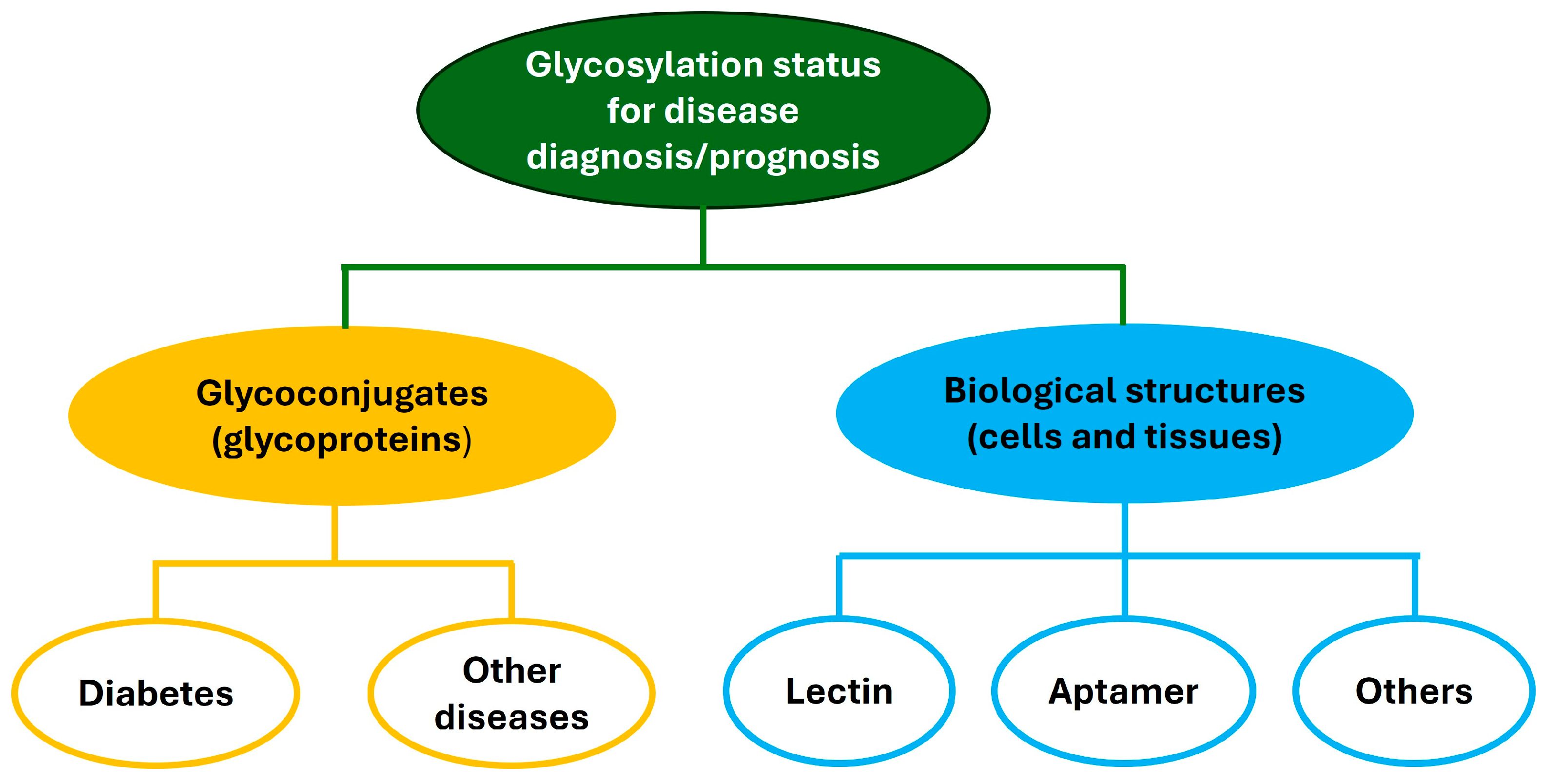
The contents are organized in two blocks (see Scheme 1). In the first, electrochemical sensors applied to glycoconjugates are discussed and the discussion is carried out depending on the disease for which the sensors was devised. Each disease has a different glycoprotein biomarker that defines the electrochemical strategy used in each sensor. The second block deals with the application of electrochemical sensors for the detection of cells and tissues with altered glycosylation. The articles will be organized and discussed depending on the biorecognition element used, since most applications focus on the diagnosis and prognosis of cancer.

2. Evaluation of Glycosylation Degree of Glycoconjugates

2.1. Electrochemical Approaches for Diabetes Diagnosis/Prognosis

One of the most paradigmatic examples of evaluating the glycosylation status or level of a glycoprotein is hemoglobin (Hb). This protein is mainly found in red blood cells, and it is responsible for oxygen and carbon dioxide transport. Its concentration in blood ranges from 11 to 16 g dL−1 in adult people, depending on the age and sex [22]. Hb in healthy individuals consists of 94% non-glycated Hb and 6% glycated Hb. Glycated hemoglobin consists of HbA1a and HbA1b (around 1% of total Hb), and of HbA1c glycoform (around 5% of total Hb) [23]. This means that HbA1c concentration varies from 3 to 13 mg mL−1 in blood [24]. HbA1c is a biomarker used for the diagnosis and management of diabetes; specifically, it provides information about the long-term glycemic status (2–3 months), and it is more convenient to evaluate for diabetic patients than fasting glucose or the 2 h oral glucose tolerance test [25,26,27,28]. However, the absolute concentration of HbA1c is not used as clinical reference because there are fluctuations on the total hemoglobin (tHb) concentration depending on the health status, sex, and gender, resulting in higher false positive rates [23,26]. Instead, the ratio of HbA1c concentration to tHb (glycated/non-glycated) is more accurate and is used for clinical purposes. This ratio can be expressed as HbA1c% ([Hab1c] × 100/[tHb]), according to the National Glycohemoglobin Standardization Program (NGSP), or as mmol HbA1c/mol Hb (using SI units), according to the International Federation of Clinical Chemistry and Laboratory Medicine (IFCC) Working Group [23,26].
Among the electrochemical sensors for HbA1c% found in the literature, there are examples of using the typical capture probes for glycan sensing: antibodies, aptamers, and boronic acid derivatives. Moreover, there are original strategies employing other capture probes as will be shown next. All this data is collected in Table 1.

2.1.1. Aptamer-Based Strategies for Diabetes Diagnosis/Prognosis

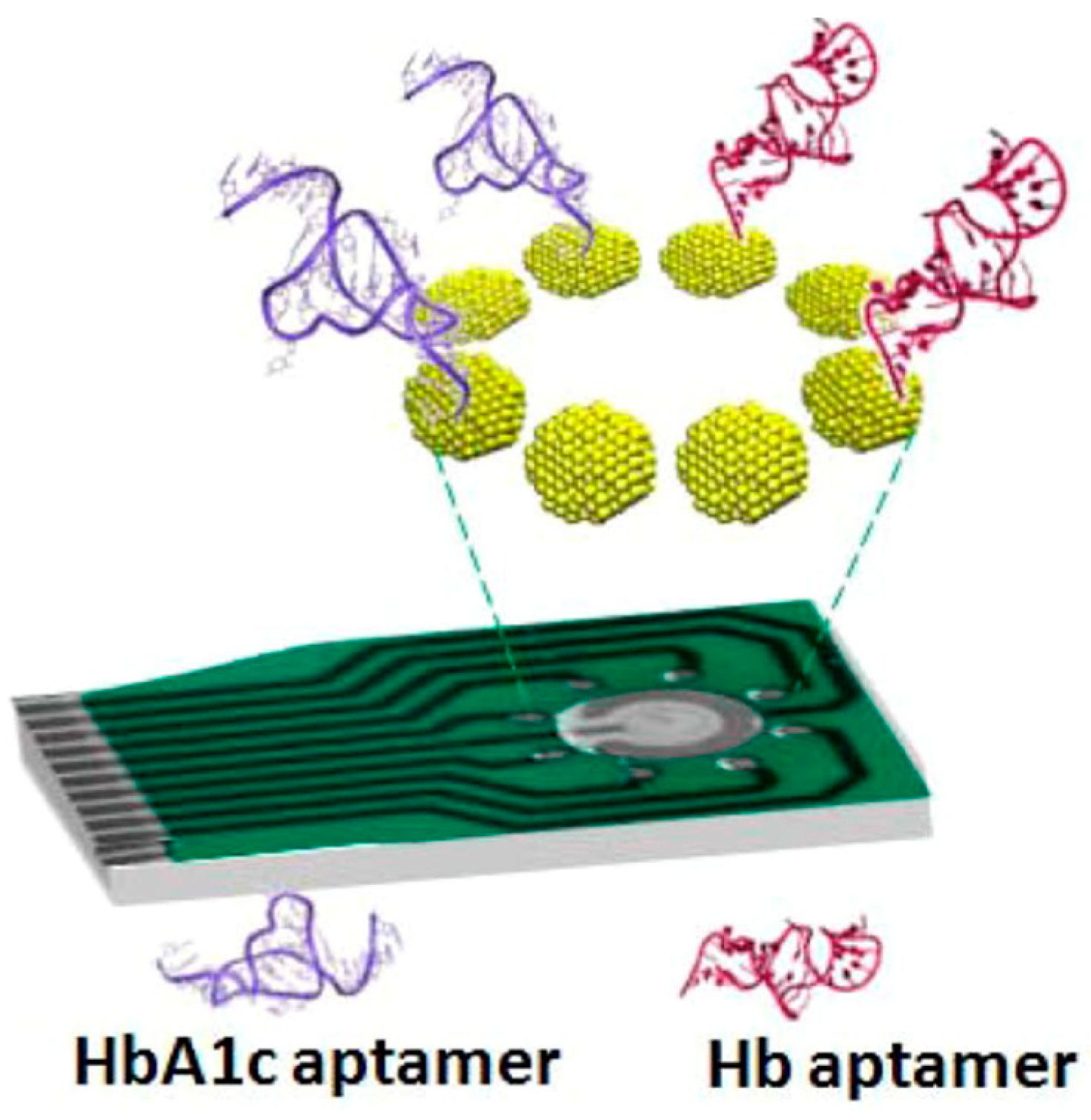
Most reported works employ aptamers as the capture probe. Aptamer is a very selective ligand, and it consists of short DNA or RNA strands, which are generated using the systematic evolution of ligands by exponential enrichment (SELEX) technology. The chemistry of the aptamer–glycoprotein interaction is well-known, and these recent reviews can be found for more details [17,19]. For instance, Zourob’s group published two interesting articles. In the first one, they developed a label-free aptasensor based on an eight-electrode array chip modified by gold nanoparticles (AuNPs) for HbA1c% [29] (see Figure 1). Two selective thiolated aptamers were developed by the SELEX process: one for Hb and the other for HbA1c. Then, they were anchored on different working electrodes from the array chip by thiol chemistry. The assay consisted of adding the hemolyzed blood sample on the aptasensor, so the target analytes (Hb or HbA1c) are captured by their corresponding aptamer. Then, the [Fe(CN)6]4−/3− solution was added, acting as the redox probe, and square wave voltammetry (SWV) was carried out, monitoring the oxidation/reduction reaction of the redox probe. The signal from the redox probe was registered before (no analyte) and after sample addition (with analyte), so the signal was expressed as the difference between both peak intensities. A decrease in peak current happens on the different electrodes when the target proteins are bound to their specific aptamer, due to the blockage of electrode surface by the bulky proteins, preventing the access of the redox probe to the electrode. These signal decreases were directly proportional to Hb and HbA1c concentration depending on the aptamer attached to each electrode surface. The aptasensor showed excellent limits of detection (LODs) (0.2 ng mL−1 for HbA1c and 0.34 ng mL−1 for tHb) and only 30 min of incubation time was needed. The sensor was validated by analyzing some reference blood samples provided by the College of American Pathologists, showing a good agreement with the refence values. In the second work, the authors also used a different aptamer for each analyte (tHb and HbA1c) and the [Fe(CN)6]4−/3− solution as the redox probe [30]. However, the detection mechanism was distinct. In this case, the aptamers were adsorbed on a single-walled carbon nanotube (SWCNT)-modified SPCE and then the sample was added. When the target analytes (tHb and HbA1c) interact with their corresponding aptamer, the adducts formed were desorbed from the electrode surface. This fact facilitates the arrival of the electrochemical probe, generating a higher redox signal (oxidation/rection current monitored by SWV). The use of SWCNT decreased by ten times the LODs of the aptasensor with respect to the previous work.
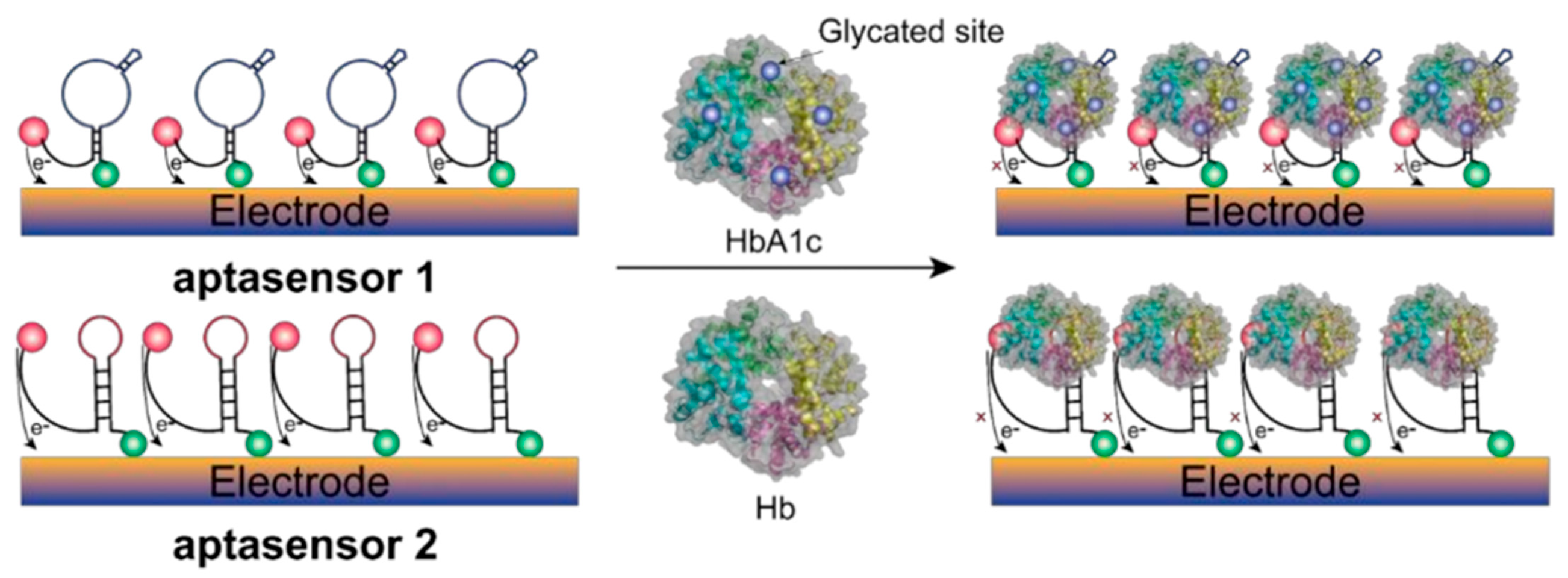
Feng et al. also reported a similar strategy to the aforementioned works, in which two selective thiolated aptamers were separately bound to different gold SPEs [31]. Each aptasensor measured the amount of its corresponding analyte (tHb or HbA1c) and then HbA1c/tHb was calculated using these signals. The aptamers contained a ferrocene group as detection probe in the 5′ end of DNA strand. According to the authors, when the aptamer captures the protein, the distance from the ferrocene to the electrode surface is increased, so oxidation process of ferrocene is hindered (see Figure 2). This means that the current signal obtained by DPV decreases with the concentration of the analyte (inversely proportional). The most relevant aspect of this work is that it was not necessary to add an external redox probe as in previous works, simplifying the overall process and, theoretically, enabling direct analysis of the sample. The incubation time was 90 min and LODs were below ng mL−1, so it was excellent for HbA1c% determination; however, the usefulness of the approach was not demonstrated in real sample analysis.
In addition, Moon et al. proposed another label-free sensing approach based on aptamers, but, in this case, only the HbA1c selective aptamer was employed, while Hb was monitored directly in the sample without the use of a capture probe [32]. The analytical device consisted of a microfluidic amperometric dual sensor that was fabricated by attaching face-to-face two SPCE with a plastic adhesive spacer between them (with a gap around 75 μm). This configuration creates a microfluidic structure with a single inlet for sample introduction. Both SPCE were modified by poli 2,2′: 5′,5″-Terthiophene-3′-p-benzoic acid (pTBA) and multi-walled carbon nanotube (MWCNT), creating a conducting composite layer on the working electrode (pTBA@MWCNT-SPCE). Then, a redox probe (toluidine blue O, TBO) was bound to the working electrode by using N-hydroxy succinimide (NHS) and 1-ethyl-3-(3-(dimethylamino)-propyl)-carbodiimide (EDC) as linkers (EDC/NHS chemistry). In the case of SPCE for HbA1c detection, the aptamer was added at the same time as TBO, yielding a label-free aptasensor. The incubation time was only 4 min. The detection mechanism was as follows: TBO catalyzes the electrochemical reduction of Hb and then the oxidized TBO is reduced on the working electrode at −0.3 V (vs. Ag/AgCl) by cyclic voltammetry (CV). The fabrication protocol of the sensor surface was long and comprised several steps, but, as a counterpart, its stability was good (50 days). Regarding the sensitivity, LODs were higher than previous articles (µg mL−1 order); even so, they were adequate for Hb and HbA1c detection in blood. The authors performed a selectivity study for Hb detection using small analytes found in blood, but serum proteins were not considered. Next, the sensor was applied to the analysis of finger prick blood samples (previously hemolyzed) and the results were compared to those provided by a reference method (LC), showing excellent agreement with it. The latter demonstrates the excellent selectivity and accuracy of the approach.

2.1.2. Boronic Acid Derivatives-Based Strategies

In the context of evaluation of glycosylation status, the second-most employed strategy is the use of boronic acid derivatives as the capture probe for HbA1c. For example, Thiruppathi et al. developed a specific chemically modified SPCE for each compound [33]. In the case of Hb, a SPCE was modified with MWCNT and nafion (Nf). Then, the blood sample was added onto the electrode followed by the addition of more Nf, surrounding the sample with the conductive polymer. It was left to dry for 17 min and an electrolyte was then added. This allowed for the monitoring of the electroactivity of the heme group (reversible redox reaction of Fe2+/Fe3+) by SWV (at −0.5 V vs. Ag/AgCl). For Hb, it was not necessary to use any capture probe due to its abundance in the sample. In the case of HbA1c, anthraquinone boronic acid (AQBA)-modified SPCE was employed for the selective and sensitive detection of the analyte, where AQBA acted as capture and detection probe. Glycans present in HbA1c bound to AQBA through boronic acid–diol binding (10 min incubation). This complexation blocked the insertion and extraction of ions onto the electrode, which impedes the redox conversion of AQBA because of a lack of ion flux. This sensing mechanism is termed “binding-induced ion-flux blocking” [38]. This means that the higher the amount of HbA1c, the lower the reduction/oxidation signal of AQBA (inversely proportional). The authors demonstrated that the sensor did not show any interference from small molecules and even proteins (Hb and BSA). Furthermore, the sensitivity was good, reporting a LOD below µg mL−1. Finally, the method was validated by quantifying HbA1c% in human blood samples, and the results were similar to those provided by a reference method (LC). Interestingly, this approach does not require complex bioreagents and it can analyze whole blood (without red blood lysis).
Another interesting sensor based on boronic acid affinity was developed by Boonyasit et al. [34]. They proposed a low-cost paper-based electrochemical impedance device for simultaneous determination of Hb and HbA1c, using a different electrode for each analyte. The electrodes were fabricated by screen-printing on office paper and then they were modified by an eggshell membrane. The detection mechanism was the same for both electrodes, and it was based on electrochemical impedance spectroscopy using Fe(CN)6]4−/3− as the redox probe and choosing only a specific single-frequency, instead of using frequency sweep, to decrease the detection time. The difference between both working electrodes relies on the capture probe. The electrode for Hb sensing was modified with Haptoglobin (Hp), which selectively binds free Hb; the electrode for HbA1c sensing was modified with aminophenylboronic acid (APBA), which interacts with diol groups from glycans. After the protein binding (5 min incubation), the access of the redox probe is impeded, increasing the impedance signal. The selectivity of the Hb and HbA1c sensors were tested by using human serum albumin (HSA) and non-glycated hemoglobin, respectively, as potential interferences. There was a negligible effect on the sensor signal. Furthermore, the limit of detection was in the mg mL−1 range, but it was sufficient for the evaluation of HbA1c% in blood samples. In fact, the paper-based sensor was validated by analyzing lysate blood samples from healthy and diabetic patients and the results were compared with those determined with a reference method (turbidimetric inhibition immunoassay). There was an acceptable agreement between both results, showing zero bias between both methods.
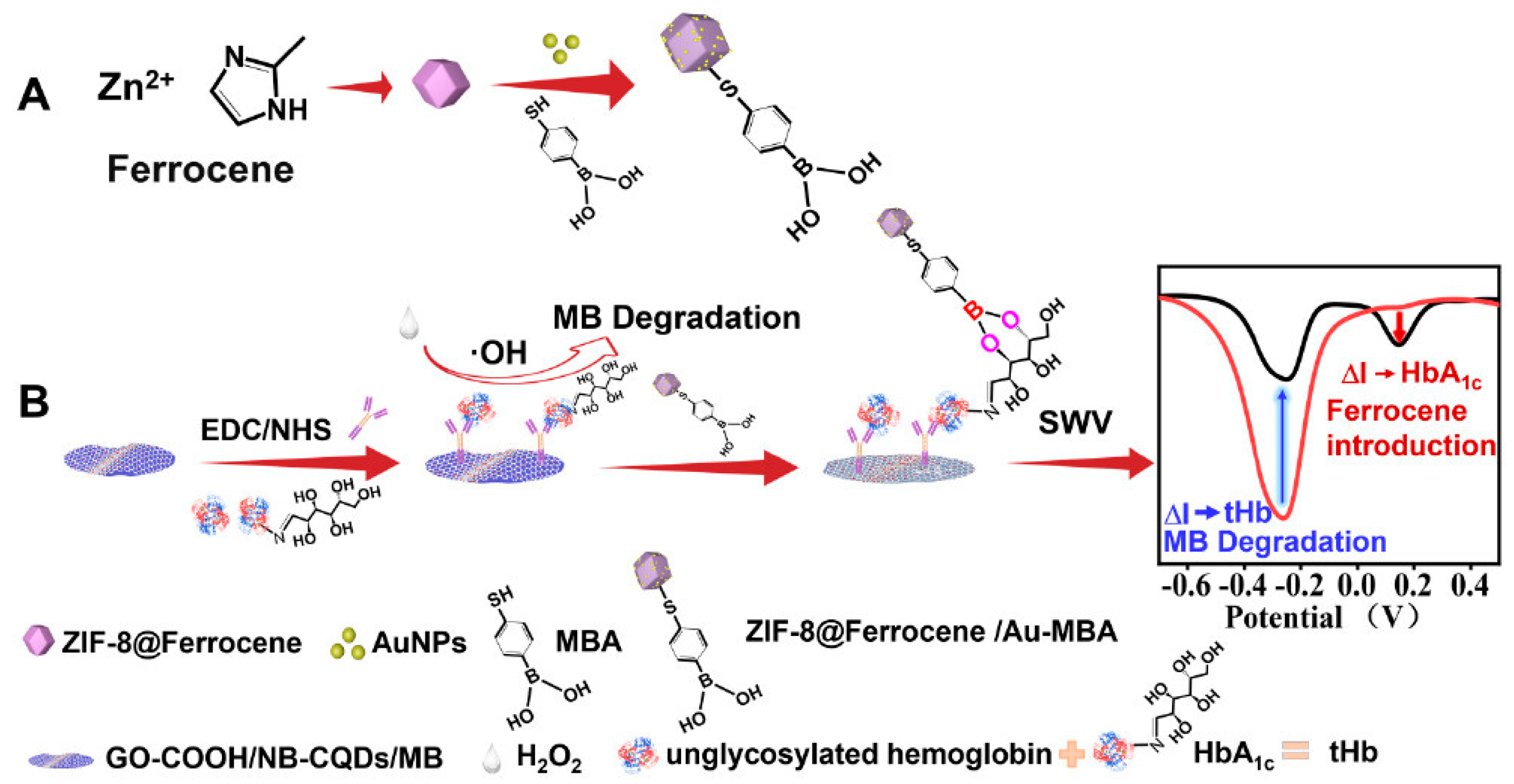
The last sensor for the HbA1c% assessment combines the use of an antibody (Ab) and a boronic acid derivative. Wang et al. reported a sandwich-type immunosensor with a unique working electrode, i.e., the signal of Hb and HbA1c were recorded on a single readout [35]. The strategy is shown in Figure 3. A polyclonal antibody against Hb was anchored on a carboxylated graphene-nitrogen−boron-doped carbon quantum dot-methylene-blue-modified glassy carbon electrode (GO−COOH/NB-CQD/MB-GCE) by NHS/EDC chemistry. This antibody captured all Hb forms. Then, two different electrochemical strategies were applied to simultaneously quantify tHb and HbA1c. On one side, hydrogen peroxide was added on the sensor after Hb capture, generating hydroxyl radicals due to the catalytic activity of heme group from Hb. These radicals degraded the MB contained in the sensor, thereby decreasing the oxidation signal of MB (inverse proportionality between the sensor signal and Hb concentration). On the other hand, gold nanoparticles (AuNPs) were modified with ferrocene-modified zeolitic imidazolate framework (ZIF-8−ferrocene) and mercapto-phenylboronic acid (MBA) and they were used as the detection probe for HbA1c through the union of cis-diol to boronic acid. Ferrocene was the redox probe for HbA1c detection, showing a direct proportionality in the calibration curve. After adding hydrogen peroxide, this detection probe was brought into contact with the sensor, building a sandwich-like structure (Ab/HbA1c/detection probe). Finally, MB (for tHb quantification) and ferrocene (for HbA1c quantification) oxidation signals were simultaneously recorded by SWV on the same working electrode. Regarding the analytical performance, the sensor exhibited an extraordinary LOD for HbA1c (4 pg mL−1), thanks to the use of ferrocene-loaded ZIF-8 as the signal-amplification strategy. In addition, no significant signal changes were observed when several small analytes (glucose, uric acid…) and proteins (ferritin, PSA, CA-199) were analyzed by this sensor. The sensor was stable for at least 5 weeks stored at 4 °C. Furthermore, several spiked serum samples were analyzed by the proposed sensor and an ELISA method, showing good accuracy (relative error of up to 3%). However, the utility of the sensor in blood samples was not reported and the analysis time was long (at least 90 min owing to incubation steps).

2.1.3. Other Strategies for Diabetes Management

As has been observed in the previous subsections, the main glycoprotein biomarker for the diagnosis and prognosis of diabetes is HbA1c. However, there is a potential biomarker that is gaining recognition as a useful alternative or complementary test in specific clinical situations: glycated human serum albumin (gHSA). In comparison to HbA1c, gHSA provides information about short-term glycemia, because the half lifetime of the albumin is 3 weeks [39,40]. HSA is the main plasma protein (60%) with concentrations ranging from 3.0 to 5.0 g dL−1. In addition, the glycosylation level of HSA is higher than Hb. In fact, cut-off values for diabetes diagnosis are set at 17.1% for gHSA [39] and at 6.5% for HbA1c [28]. These facts make it potentially easier to develop point-of-care tests or sensors for diabetes management.
In this context, there are two interesting articles about the gHSA/tHSA ratio assessment (see Table 1). In the first one, Bunyarataphan et al. reported a dual aptasensor for the gHSA/tHSA ratio [36]. The strategy was equal to that used by Zourob’s group [29,30] in which a different aptamer was employed for each analyte (gHSA and tHSA) and the binding process was monitored by the decrease in redox signal from the [Fe(CN)6]4−/3− probe using SWV. Both aptamers were linked to distinct working electrodes on the same dual SPCE using streptavidin/biotin affinity. The incubation time of the sample with the aptasensor was 40 min. During the interference evaluation, small molecules found in blood, such as glucose, glycine, and folic acid, yielded a response below 13% using both aptasensors. However, HSA yielded a 29% response using the gHSA aptasensor, so the gHSA aptamer showed unspecific binding to HSA. Furthermore, the sensor exhibited a LOD in ng mL−1 range, which is excellent for HSA detection, and only 1 µL of plasma sample was required. The aptasensor for tHSA evaluation was validated by analyzing clinical samples and comparing the results to those obtained by an enzymatic method. Finally, 30 plasma samples from diabetic and nondiabetic individuals were analyzed by the approach and significant differences were obtained between both groups at a 95% confidence level (t-test), demonstrating its applicability in real domains.
In the second article, Zhou et al. developed a flexible gold multielectrode array-based electrochemical aptasensor for simultaneous detection of gHSA and HSA in 30 min [37]. Again, two different aptamers and the [Fe(CN)6]4−/3− redox probe were used. The capture of the target analyte by the corresponding aptamer was registered by DPV. In this case, the aptamers were linked to the gold electrode using thiol-groups from the aptamers. The advantage of using a multielectrode sensor relies on the simultaneous recording of redundant signals from different electrodes of the same device, in such a way that reduces the impact of device-specific variations. Moreover, the flexibility of the multielectrode arrays facilitates the modification of each gold electrode by the corresponding aptamer, because each set of gold electrodes can be submerged into different vials. With respect to the analytical performance, the aptasensor showed good accuracy (recoveries from 105 to 109%) and sensitivity (LOD ≈ 1 µg mL−1); in fact, it allowed authors to dilute 100 times the blood samples, causing the cells to lyse and facilitating the analysis with a simple sample treatment. Regarding selectivity, the authors described cross reactivity between HSA and gHSA aptamer at room temperature. However, after 80 °C treatment of the sensor for 5 min, only residual interference from a 50 μM HSA solution was observed for the gHSA aptamer, improving the selectivity of the sensor but increasing the complexity of the methodology. Interestingly, the authors estimated that the cost was USD 17.64 per analysis using their aptasensor and it was compared to other commercial tests for intermediate-term glycemic control, showing their approach was the cheapest. However, this aptasensor was not compared to a reference method, missing a complete validation.

2.2. Electrochemical Apporaches for Other Diseases

There are other diseases in addition to diabetes in which the evaluation of the glycosylation level of glycoproteins is used for their diagnosis and/or prognosis. In fact, electroanalysts have proposed electrochemical approaches for several of these diseases, as Table 2 shows.
Among them, carbohydrate-deficient transferrin (CDT) occupies a relevant position, because it is utilized for the diagnosis of several illnesses such as congenital disorders of glycosylation (CDG), chronic alcohol abuse and leakage of cerebrospinal fluid [41,42,43]. Transferrin (Tf) is an iron-binding glycoprotein, which participates in iron transport and metabolism. It is present in several body fluids including plasma, bile, amniotic, cerebrospinal, lymph and breast milk. Plasma concentration of Tf ranges from 2 g L−1 to 3 g L−1. It contains two N-linked oligosaccharide chains in the positions Asn-413 and Asn-611 and the amount of glycans in the protein is around 6% w/w [44]. The glycan structure of Tf is very complex, ranging from the total loss of glycans (asialo-Tf) to two N-triantennary glycans with six sialic groups at the end of the chain (hexasialo-Tf). However, the most abundant glycoform is an N-biantennary glycan with four sialic acids (tetrasialo-Tf). Due to alcohol abuse or genetic disorders, the concentration of asialo- and disialo-Tf glycoforms are increased with respect to healthy people. This low-glycosylated Tf is termed carbohydrate-deficient transferrin (CDT) [41,42]. As for glycated Hb, it is more reliable to measure CDT to total Tf ratio values rather than CDT only. The ratio minimizes variability due to the differences in Tf concentrations under certain health conditions such as anemia or cancer. According to the IFCC Working Group on Standardization of CDT, the measurand for CDT is defined as the disialo-Tf to total transferrin ratio (CDT%) [45].
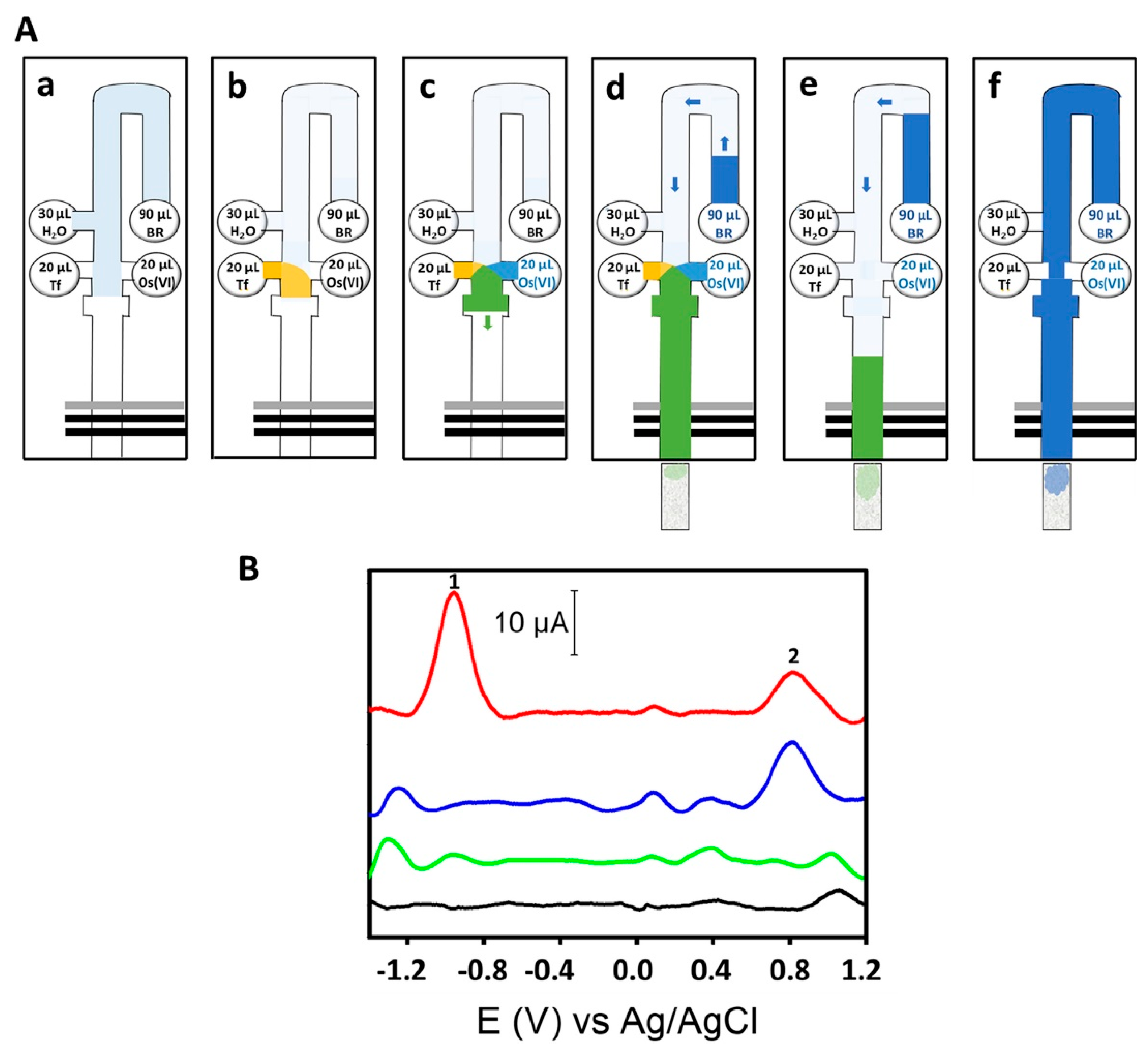
Regarding CDT evaluation, Escarpa’s group proposed a new parameter, called the Electrochemical Index of Glycosylation (EIG), to assess CDT using an electrochemical approach [46]. The strategy is based on selective tagging of glycans present in Tf by an electroactive Os(VI) complex. This compound reacts selectively with diol groups from carbohydrates [47]. Firstly, the electrochemical tag (Os(VI) complex) was added into the serum sample and all glycans and carbohydrates content in the sample, including Tf, were tagged (overnight). Then, the Tf-Os(VI) complex was separated from the rest of the components, by employing immunomagnetic beads. Finally, the isolated Tf-Os(VI) complex solution was poured onto a SPCE, and adsorptive transfer square wave voltammetry (AdTSWV) was carried out. Tf-Os(VI) complex generated two voltammetric signals: one from carbohydrates (gTf, due to the electrochemical tag at −0.9 V/Ag) and one from electroactive amino acids (tTf, intrinsic signal of the protein at +0.8 V/Ag). The ratio between both signals (carbohydrate signal/protein signal) is an indicator of Tf glycosylation status (EIG), which showed good correlation (r = 0.990) with the reference parameter %CDT, evaluated by a capillary electrophoresis coupled to the ultraviolet–visible (CE-UV) method. Several serum samples from healthy people and patients with congenital disorders of glycosylation (CDG), a rare disease, were analyzed by this approach. The sensor was able to differentiate between both groups (t-test, p ≤ 0.05), demonstrating its utility. Regarding the analytical performance, LOD was high (mg mL−1 range), but enough for Tf quantification. Furthermore, the accuracy was evaluated by analyzing a certified human serum reference material, showing a good relative error (below 3%).
Later, the same group proposed a capillary-driven microfluidic electrochemical device for the same application (CDG diagnosis) [48]. The device consisted of a long reaction channel with four inlets and a burst valve to regulate the flow (see Figure 4A). It was manufactured by a lamination method, sticking polyethylene terephthalate (PET) with a pre-designed geometry using double-sided adhesive. The proper design, alignment and bonding of the different layers created the different elements of the device (inlets, channels and burst valve). All steps for EIG evaluation (Os(VI) labeling, adsorption on the electrode, washing and AdTSWV), except for immunopurification by magnetic beads, were performed in the main channel without an external pump. The microfluidic approach allowed authors to reduce the labeling time from 16 h [42] to 60 min [44] because of the high surface contact between the sample and labeling solutions inside the microchannel. The two signals from Tf-Os(VI) complex were recorded (see Figure 4B) and the EIG value was calculated. The device was successfully applied to the analysis of serum samples from CDG patients.
Table 2. Electrochemical assessment of glycosylation status of glycoprotein biomarkers for other diseases.
TargetDiseaseSampleSensing ApproachElectrochemical Technique/ElectrodeLODMeritsRef.
gTf/tTf (electrochemical index of glycosylation, EIG)Congenital disorders of glycosylation (CDG)Human serumChemical labeling and immunosensor.
Capture probe: Ab-modified magnetic beads.
Detection probe: Os(VI) complex for gTf.
Electrochemical signal: Os(VI) complex for gTf and electroactive amino acids for tTf.
AdTSWV/SPCE0.6 and 0.9 mg mL−1 for gTf and for tTfNew indicator for diagnosis. EIG showed excellent correlation (r = 0.990) with the official parameter %
CDT.
[46]
gTf/tTf (EIG)Congenital disorders of glycosylation (CDG)Human serumDisposable pump-free electrochemical microfluidic device.
Capture probe: Antibody-modified magnetic beads.
Detection probe: Os(VI) complex for gTf.
Electrochemical signal: Os(VI) complex for gTf and electroactive amino acids for tTf.
SWV/Stencil-printed carbon electrode2.04 mg mL−1 and 1.56 mg mL−1 for gTf and for tTfIntegration of key assay steps on the microfluidic device: labeling,
washing and detection.
Reduction in the labeling time
(60 min).
[48]
gTf/tTf (EIG)Chronic alcohol abuseRat plasmaChemical labeling and immunosensor.
Capture probe: Antibody-modified magnetic beads.
Detection probe: Os(VI) complex for gTf.
Electrochemical signal: Os(VI) complex for gTf and electroactive amino acids for tTf.
SWV/SPCE0.7 mg mL−1 and 0.5 mg mL−1 for gTf and for tTfA total of 31 rat samples. Good diagnostic performance (sensitivity 81%, specificity 87%).[49]
PSAG-1 reactive PSA/tPSA ratio
(glycan score)
Prostatic cancerHuman serumLabel-free aptasensor.
Capture probe: Two different aptamers, PSAG-1 reactive PSA aptamer and anti-PSA aptamer for tPSA.
Detection probe: [Fe(CN)6]4−/3−.
EIS/SPR gold chips0.26 ng mL−1 for PSAG-1 reactive PSA and 0.64 ng mL−1 for tPSAProposal for a new indicator for diagnosis with better predictive power than total PSA.[50]
gHp/tHp ratioColorectal cancerSecretomes of in vitro-cultured CRC cellsSandwich assay using magnetic beads.
Capture probe: Two antibodies.
Detection probe: Biotinylated Ab for tHp and FITC-Lectin for gHp.
Electrochemical signal: Streptavidin or anti-FITC-modified HRP enzymes/H2O2/hydroquinone.
Amperometry/SPCE with 4 working electrodes0.07 and 0.46 ng mL−1 for tHp and gHpFirst electrochemical immunoplatform
for simultaneous gHp and tHp detection.
[51]
GlcNAc/Gal ratio in IgG
(agalactosylation factor)
COVID-19Human serumImpedance-based lectin sensor.
Capture probe: EDC/NHS chemistry.
Detection probe: Specific biotinylated lectins for GlNAc and Gal/Streptavidin gold nanoparticles.
EIS/gold interdigitated electrodes31 µg mL−1 for IgGSimultaneous analysis of 8 samples.[52]
oNFL/tNFL ratio NeurodegenerationHuman serumSandwich immuno/lectin assay.
Capture probe: Antibody (Ab1).
Detection probe: Cu2+ preloaded-mesoporous silica.
Nanospheres-Ab2 for tHp, and HRP-modified lectin for gNFL.
Electrochemical signal: Reduction of Cu2+ for tNFL and O2 reduction for oNFL.
DPV/gold electrode0.13 and 0.11 pg mL−1 for tNFL and gNFLSynchronous and dual-path amplification. Proposal for a new indicator for diagnosis.[53]
t means total. g means glycosylated.
Next, the same group explored the use of the EIG parameter for diagnosis of another health problem: chronic alcohol abuse [49]. The strategy previously developed using SPCE [46] was slightly modified for the analysis of rat plasma. In this work, two different rat groups were devised: one chronically exposed to alcohol (16 individuals) and one saline control (15). Alcohol or saline solution was intravenously administrated to the rats through a polyvinyl chloride catheter. The plasma rats were analyzed using the sensor and their diagnostic capability was evaluated, yielding a good clinical sensitivity (81%, positive cases) and specificity (87%, negative cases). Going deeper into this application, Garrido-Matilla et al. performed a preclinical validation of the sensor using polydrug self-administration animal model (cocaine + alcohol) with a higher number of individuals (121 rats) [54]. The experimental design attempts to imitate the most typical pattern of drug abuse: polydrug use and self-administration. In all rat groups, EIG values were lower for female than male rats, so authors defined different cut-off values according to sex. Based on these cut-off values, the approach displayed a lower sensitivity (70–75%) and specificity (67%) than the previous work, but the experimental model was more realistic.
On the other hand, there are two promising electrochemical sensors for the diagnosis/prognosis of cancer based on the evaluation of the glycosylation status of glycoprotein biomarkers. The first one was developed by Díaz-Fernández et al. [50] and the prostate-specific antigen (PSA) was the target glycoprotein. PSA is a well-known biomarker for the screening and prognosis of prostate cancer [55]. When serum PSA level is higher than 3–4 ng mL−1 in a man, a prostate biopsy is proposed for confirming the diagnosis of prostate cancer, according to the current diagnostic pathway [56]. However, the serum PSA test shows a low specificity (high number of positive false), leading to harmful over diagnosis (in terms of unnecessary biopsies) [57]. For this reason, there is intensive research in finding new and/or complementary biomarkers for differentiating between significant and insignificant prostate cancers [55,57]. In this sense, Díaz-Fernández et al. proposed a new diagnostic index called the glycan score (GS). It is defined as the ratio between the concentration assessed by using PSAG-1 aptamer (selective to core-fucosylated PSA) and the concentration assessed by using an anti-PSA aptamer (total PSA) multiplied by 100 [50]. The key point was the PSAG-1 aptamer. They previously developed this aptamer for PSA capture and demonstrated that it recognizes the peptide region surrounding the glycosylation site and the glycan at the core, including fucose [58]. The electrochemical strategy was like Zourob’s for HbA1c% [29]: a specific aptamer for each target analyte was anchored on gold electrodes (SPR gold chip) and then an EIS assay was carried out using Fe(CN)6]4−/3− as the redox probe, recording the signal for core-fucosylated PSA and tPSA. All analytical steps took approximately 35 min. The LODs were extraordinary (below ng mL−1), critical for the quantification of this low-concentration glycoprotein. In addition, the results from the aptasensor for tPSA showed good correlation to those provided by ELISA. Finally, the approach was applied to the analysis of 12 serum samples from patients with different prostate problems, including prostate cancer. The new index (GS) was able to discriminate between prostate cancer patients and the rest of groups, showing better predictive power than only tPSA.
The other electroanalytical approach for cancer management was proposed by Muñoz-San Martín et al. and it was developed for the evaluation of glycosylation status of Hp [51]. Briefly, Hp is a positive acute phase glycoprotein, whose main function is to capture and transport free Hb for its degradation in the liver and for recovering iron. The amount of Hp in serum ranges between 0.3 and 3 mg mL−1, but it is increased during inflammation processes [59,60]. Hp presents four N-glycosylation sites (Asn-184, Asn-207, Asn-211, and Asn-241) [60]. Interestingly, this glycoprotein exhibits aberrant glycosylation profiles under several diseases including cancer, so it is the focus of intense research for cancer diagnostic and prognostic purposes [60,61,62]. Bearing this in mind, Muñoz-San Martín et al. developed a bioelectronic immunoplatform based on the implementation of non-competitive bioassays on magnetic beads using two different antibodies for tHp detection, and an antibody and a lectin for gHp [51]. The bioassay consists of three steps: (i) tHp or gHp was captured by immunomagnetic beads; (ii) a secondary recognizing element (biotinylated Ab for tHp and FITC-lectin for gHp) was put in contact with the immunomagnetic beads (sandwich-type assay); (iii) streptavidin or anti-FITC-modified horseradish peroxidase (HRP) enzymes were added on the beads, binding with the corresponding affinity target (biotin or FITC). Finally, the immunocomplexes were dropped onto a SPCE with four working electrodes (SP4CE), and an amperometry was performed, using H2O2/hydroquinone (HQ) system as the redox probe. This strategy allows authors to detect tHp and gHp, simultaneously, in 75 min. Regarding the analytical performance, LOD was excellent (below ng mL−1); however, the selectivity was not good, because Hb, has, and IgG interfered in the measurement, hindering the use of this approach in serum or plasma samples. Regardless, the approach was successfully applied to assess the glycosylation status of Hp in the secretomes of in vitro-cultured colorectal cancer (CRC) cells.
The glycosylation level of immunoglobulins, especially IgG, is of rising interest in the scientific community. IgG is the most abundant immunoglobulin in serum, and its concentration varies between 560 and 1800 mg dL−1 [63]. The loss of galactose from the extreme of the IgG glycan chain is called agalactosylation and it is related to the appearance and progression of several illnesses such as rheumatoid arthritis [64], tuberculosis [65], and cancer [66,67], so it is a potential biomarker of diseases. In this sense, Khorshed et al. developed an impedance-based biosensor for determination of IgG galactosylation level [52]. Specifically, the biosensor measures two binding events using two different biotinylated lectins: Griffonia simplicifolia II (GSL-II), selective to terminal N-acetylglucosamine (GlcNAc); and Ricinus communis agglutinin I (RCA-I), selective to terminal galactose (Gal). The ratio between both signals (GSL-II/RCA-I binding or GlcNAc/Gal concentration) is defined as agalactosylation factor (AF) [64]. The analytical device consists of a glass/PDMS microchip with eight wells and gold interdigitated electrodes. The procedure was as follows: (i) IgG was anchored on gold electrodes by EDC/NHS chemistry; (ii) dithiothreitol (DTT) was added to break disulfide bonds of IgG, facilitating the accessibility to the glycans and lectin binding; (iii) biotinylated GSL-II and RCA-I lectins were added on the corresponding electrode, binding to GlcNAc and Gal, respectively; (vi) streptavidin AuNPs solution was dropped on the electrodes, linking it to biotinylated lectins and magnifying the change in impedance signal; and (v) EIS was carried out. The higher the amount of target analyte (GlcNAc or Gal), the lower the impedance signal, due to the presence of conductive AuNPs. The process takes around 7h. Considering the analytical features, LOD was excellent (31 µg mL−1 for IgG), but the selectivity was not evaluated. However, different kinds of samples (rat and human sera) were analyzed, and the AF values provided were very close to those reported by the literature, demonstrating good accuracy. Finally, twenty human serum samples (ten samples tested positive for COVID-19 and ten samples negative) were analyzed by this approach to investigate alterations in the glycan profile of IgG due to COVID-19. The authors reported a rise in agalactosylation of IgG in positive COVID-19 samples, suggesting a potential strategy for prognosis in COVID-19 patients.
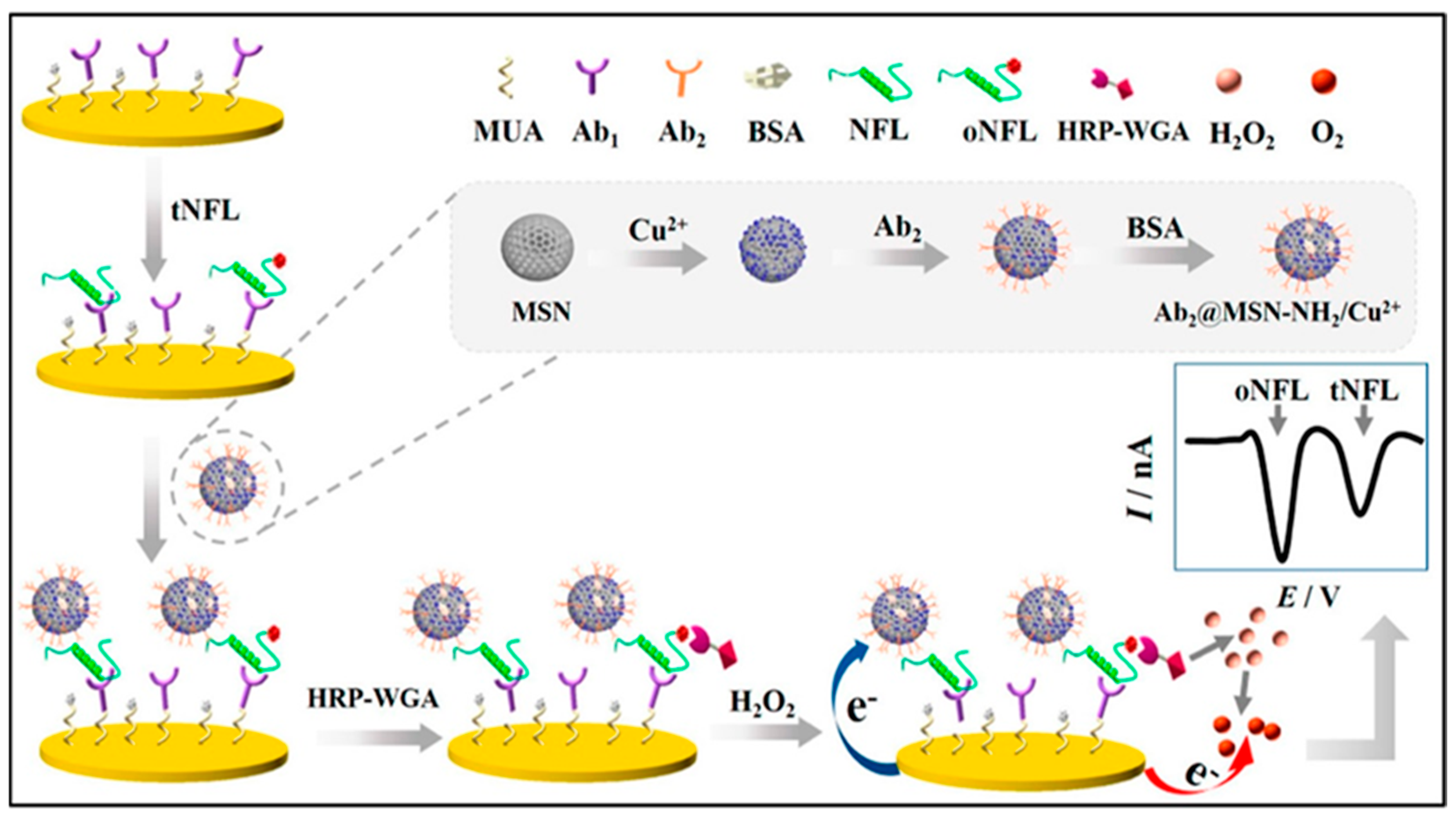
The last work is related to the evaluation of glycosylation level of serum neurofilament light chain (NFL) for the diagnosis of neurodegeneration [53]. Shortly, neurofilaments are the most important component of the protein scaffold that forms the cytoskeleton of axons. Neurofilaments are composed of three subunits, a light (NFL), a medium (NFM), and a heavy (NFH) chain [66]. Among them, NFL stands out for its role as a blood biomarker for monitoring neuronal damage in several neurologic diseases [68]. The concentration of serum NFL in healthy people varies from 3 to 54 pg mL−1 [69], but this value increases when a neurodegenerative disease appears [70,71]. However, this increase also happens in other brain diseases such as cerebral small-vessel disease [72] or brain trauma [73], limiting its diagnostic value. For this reason, Zhou et al. proposed a new parameter for diagnosis of neurodegeneration based on the glycosylation level of NFL, that is defined as the ratio of O-GlcNAcylated NFL (oNFL) to the total NFL (tNFL) concentration [53]. Both analytes were simultaneously measured by a sandwich immuno/lectin assay on a gold electrode (see Figure 5). This electrode was modified by an antiNFL antibody (Ab1) that captured all NFL forms. Then, different secondary recognizing compounds were added for each analyte: a Cu2+ preloaded-mesoporous silica nanospheres-modified antibody (Ab2) for tHp, and HRP-modified wheat germ agglutinin (WGA) lectin for oNFL. Finally, DPV was performed in a 0.03% H2O2 solution (PBS pH 6.0), registering the reduction of Cu2+ for tNFL detection and O2 for gNFL detection. The protocol needed around 100 min. The amplification strategy allows for detecting this low-concentrated glycoprotein and its glycoform (LOD 0.1 pg mL−1 for both). Furthermore, proteins that may co-exist with NFL in serum such as amyloid β40, BDNF, IF-17, IgG, and myoglobin did not interfere even in amounts that were up to 100 times more concentrated than the tNFL and oNFL. The accuracy was evaluated by recovery studies, yielding values between 96% and 105; the sensor and the new proposed parameter (oNFL/tNFL ratio) were applied to the diagnosis of neurodegenerative diseases. Serum samples from healthy individuals and patients with cerebral thrombosis, Alzheimer’s disease, and Parkinson’s disease (n = 5) were analyzed, finding significant differences between the health group and the rest of groups (p < 0.01). Moreover, there were significant differences between cerebral thrombosis and neurodegeneration (Alzheimer’s disease and Parkinson’s disease) patients (p < 0.001), indicating the potential utility of oNFL/tNFL ratio for differentiating neurodegeneration from other brain damage.

2.3. General Discussion About the Strategies for the Evaluation of Glycosylation Degree of Glycoconjugates

Most articles that have commented before focused on glycoproteins present in blood or serum at high concentration (>1mg mL−1), so the sensitivity was not a problem. However, the majority of LODs reported were well below the concentration of the target glycoprotein; even of the minor glycoform. In these cases, the use of nanomaterials such as AuNPs, CNTs, graphene, or QD was crucial for obtaining these excellent LODs. Another interesting strategy is the use of metal–organic frameworks (MOF) for signal amplification, such as that reported in [35]. In this work, ZIF-8 was preloaded with ferrocene (electroactive compound) yielding a LOD of 1 pg mL−1. MOFs have been previously used for signal amplification in the detection of other glycoproteins such as recombinant human erythropoietin with excellent LODs (pg mL−1 range) [74].
Furthermore, there are two works that reported the quantification of two extremely-low-concentration glycoproteins: PSA [50] and NFL [53]. This not only means than dilution can be employed as sample treatment (elimination of interferences or cell blood lysis) but also these electrochemical approaches can be applied to other glycoprotein biomarkers that are at low concentrations, such as other cancer biomarkers (AFP, CA 19-9…). Among them, AFP may be an interesting candidate for establishing a new index that relies on glycosylation status because some unique AFP glycoforms have been proposed to discriminate between hepatocarcinoma and other liver diseases, in which AFP levels are also elevated [75].
Regarding capture probes for the evaluation of glycosylation status, aptamers are predominant [29,30,31,32,36,37,50]. They are selective (thanks to the SELEX procedure), cost-effective, stable, and easy to modify with different functionalities such as thiol groups (for anchoring on gold electrodes) or redox probes. However, the development of aptamers selective to glycans is challenging, due to the scarcity of charged groups and aromatic rings in carbohydrates [21]. Two examples of this fact can be found in this review: Zhou et al. had to implement a thermal treatment to avoid cross reactivity between gHSA aptamer and tHSA [35], and the PSAG-1 aptamer developed by Díaz-Fernández et al. interacted not only with glycans but also with peptides around the glycosylation site [58]. On the other hand, the common strategy of aptasensors for the assessment of glycosylation status is the use of a different aptamer for each target analyte (one for a specific glycoform and one for total glycoprotein), so each analyte is captured on a different electrode. Next, their corresponding electrochemical signals are recorded separately by a label-free approach, and whether they added an external redox probe or not.
The second position is occupied by antibodies [35,46,48,49,51,53]. As is well-known, this recognizing element shows a high specificity for proteins and glycoproteins, but not for carbohydrates due to the low immunity of carbohydrates [16,17]. For this reason, in all reported immunosensors for glycosylation evaluation, the antibody was used for capturing all forms of the glycoprotein (total glycoprotein) and a different and selective detection probe (labeling) was then used for each target analyte (specific glycoform and total glycoprotein).
Boronic acid derivatives can specifically react with cis-diols, forming five- or six-membered cyclic esters. This binding is reversible and pH dependent [18]. They were used as the capture [33,34] and detection probe [35] for the selective quantification of HbA1c.
The last biorecognition probes are lectins. They are proteins or glycoproteins naturally synthesized in diverse organisms, such as plants, animals, algae, fungal, yeast, bacteria, and viruses [21]. Lectins bind to specific glycan structures; however, some cross reactivity is always observed, showing, in general, lower selectivity than aptamers or antibodies [17,21]. In this case, lectins were used as detection probes for gHp [51], GlcNAc in IgG [52], and oNFL [53], after the selective isolation of the glycoprotein by the other capture probe.
Moreover, Escarpa’s group proposed the use of a non-biological detection probe for specific labeling of glycans; an Os(VI) complex [46,48,49]. This compound reacts selectively with diol groups from carbohydrates. In addition, there are other selective-labeling strategies for glycoproteins in the literature [76] that were not applied to the evaluation of glycosylation status. We would like to highlight a very original strategy based on the selective silver metallization of 1,2-diol sites in glycoproteins [77]. Firstly, 1,2-diols from glycans are oxidized by NaIO4 to aldehyde groups; next, silver cations were reduced by these groups, producing silver nanoparticles (AgNPs) and carboxylic groups on the glycans. Then, the amount of AgNPs were measured by voltammetric stripping analysis, obtaining an extraordinary LOD of 1.65 pg mL−1 for carcinoembryonic antigen (CEA) detection.
Regarding the general strategy for recording two different signals (specific glycoform and total glycoprotein), the most employed was the modification of two or various electrodes with different capture probes and then adding the adequate detection probe. This approach is very simple, and it is supported by the current low-cost technology for manufacturing multielectrode platforms such as screen printing. However, the use of two different electrodes implies higher signal variability with, indeed, lower method precision. On the contrary, other strategies use a unique working electrode to capture and evaluate the glycosylation status of the glycoprotein. To do it, a different detection probe is used for each target analyte and the electrochemical signal is then recorded. This strategy eliminates the interelectrode variability. The works reported by Wang et al. for the evaluation of HbA1c/tHb ratio [35], by Escarpa’s group [46,48,49] for EIG assessment, and by Zhou et al. for oNFL/tNFL ratio [53] employed this strategy.
Envisioning an ideal POCT device for the evaluation of the glycosylation level of glycoproteins, it must be affordable, easy-to-use, simple (allowing for use by non-skilled people), fast, selective, accurate, precise, and sensitive. This is a horizon that the scientific community wants to reach, but is (almost) impossible to achieve. On the basis of the articles discussed, all sensors seem to fulfill the paramount analytical merits (selectivity, accuracy, precision, and sensitivity), although some works reported minor interferences from total glycoprotein in the detection of the specific glycoform. However, considering the ease of use, rapidity, and simplicity, we are quite far from this horizon. Most articles reported analysis time ≥ 30 min and the protocols consist of multiple steps (incubation, washing, secondary labeling, or adding an external redox probe…). However, there are two promising label-free aptasensors for HbA1c/tHb ratio evaluation that require less than 6 min [28,31]. The microfluidic approach developed by Moon et al. only needs two steps: incubation of the sample for 4 min and then a washing with a phosphate buffer [32]. The paper-based electrochemical device proposed by Boonyasit et al. consists of three steps: incubation of the sample for 5 min, washing, and adding of the redox probe [34].

3. Assessment of Glycosylation in Biological Structures for Disease Diagnosis

The appearance of altered glycosylation patterns due to pathological states is not only exclusive to glycoconjugates (glycoproteins, glycolipids…) released onto biological fluids (blood, urine, interstitial fluid…) but also occurs in the biological structures (cells, tissues, organs…). In this context, optical and bioimaging techniques are highlighted in comparison to electrochemical techniques, because they offer the possibility of in vivo monitoring of this glycosylation in tissues and organs [78,79]. However, electrochemical sensors have huge potential for in vitro assays or diagnostic applications, due to their simplicity and high sensitivity [17]. Table 3 and Table 4 collect the features and analytical merits of the reported electrochemical approaches in the last ten years. Clearly, the application of these sensors on cancer diagnosis (mainly circular tumor cells, CTC) or the study of the glycosylation expression in cancer are dominant, but we found in the literature one example about a different disease (systemic sclerosis) [80].

3.1. Lectin-Based Strategies

As is well-known, the aberration of glycosylation profile in glycoconjugates, cells, and tissues is the hallmark of cancer. In this sense, it seems that lectins emerge as the ideal biorecognizing probe for identifying and capturing specific monosaccharides and glycans on the surface of cancer cells [81]. Lectins can distinguish fine structural differences in glycans (branching patterns, linkages (α/β), terminal epitopes, and monosaccharide composition). The lectin–glycan binding depends on highly defined physicochemical and geometric features within lectin binding sites, including pocket depth, charge, hydrophobicity, and aromatic stacking. These features create highly selective interactions with particular glycan motifs (e.g., sialylated, high mannose, branched N glycans) [82]. In fact, most works shown in Table 3 employed lectins as the capture probe.
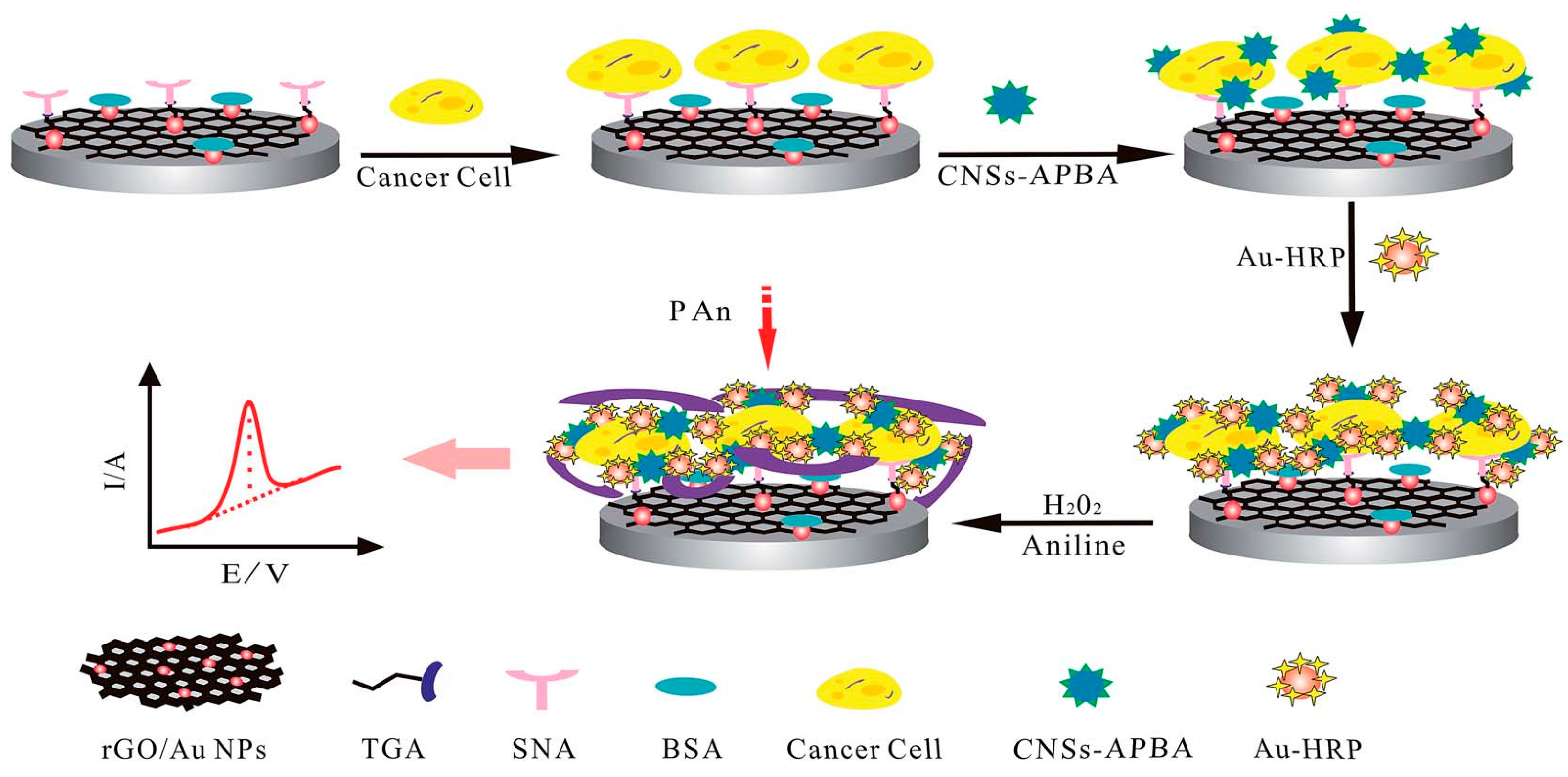
For instance, Xu & Zhang’s group reported two interesting sandwich-type lectin sensors based on different detection probes [83,84]. The first work reported a lectin sensor for the detection of MCF-7 cells (from breast cancer) and BGC-823 cells (from gastric cancer), which overexpress sialic acid on their surface [83]. The capture probe was the Sambucus nigra agglutinin (SNA) lectin that shows high affinity for sialic acid molecule. The scheme of the process is shown in Figure 6. SNA was anchored on a rGO/AuNPs-GCE and the cancer cells were then added onto the sensor and incubated for 50 min. Subsequently, APBA-modified carbon nanospheres (CNS, detection probe) were cast on the captured cells (incubation for 60 min), followed by incubation with AuNPs-HRP for 50 min (signal amplification), which bound to carbon nanospheres through the free boronic groups after the reaction with cancer cells. HRP catalyzed the oxidation of aniline in the presence of H2O2, forming a layer of polianiline (PAn) on the electrode. Finally, the reduction of PAn was recorded by DPV. This double-amplification strategy provided a LOD of 25 and 800 cells mL−1 for MCF-7 and BGC-823 cells, respectively. Furthermore, the sensor selectivity was investigated by comparing the signal of MCF-7 cells with those of sialidase-treated MCF-7 cells and L929 cells (non-cancerous), showing the former higher peak intensity than the last two. In the second work, authors used the same strategy for detection of the same cancer cells (MCF-7 and BGC-823), but changed the capture and detection probes [84]. In this case, the capture probe was ConA lectin that exhibits high affinity for mannose (Man), and the detection probe was CNSs surrounded by AuNPs, which were modified with SNA lectin and HRP. HRP catalyzed the oxidation of hydroquinone (HQ) to benzoquinone in the presence of H2O2, and then DPV was carried out, monitoring the current generated by benzoquinone reduction. The LODs were similar to those of previous work.
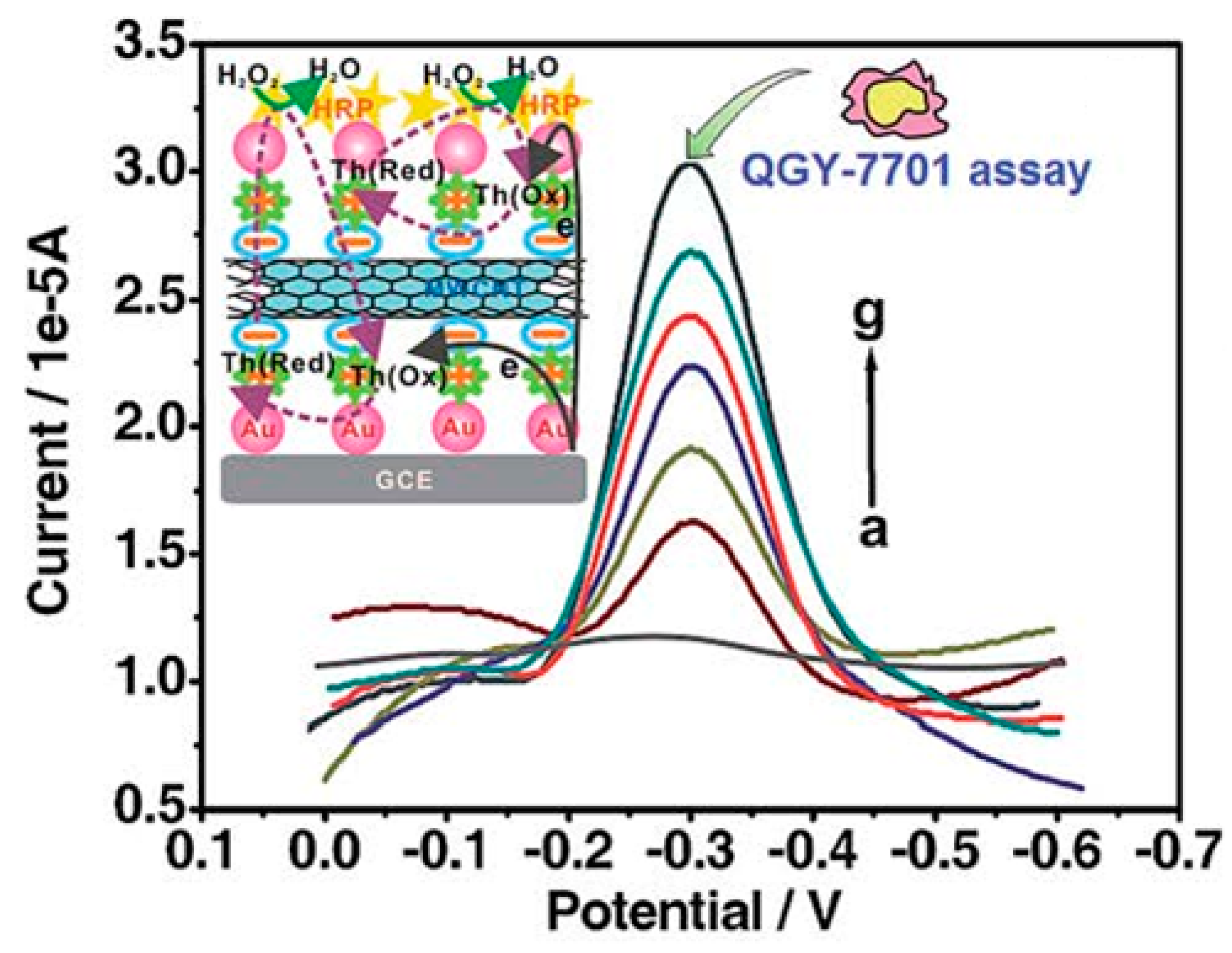
Also using a sandwich-type strategy, Zhang et al. proposed a lectin-based electrochemical sensor for the detection of QGY-7701 (liver cancer) and LNCaP cells (prostate cancer) [85]. In this work, ConA lectin was used as the capture and detection probes. ConA was bound to thionine-MWCNT/AuNPs-modified GCE. The protocol was as follows: (i) the cells were added onto the electrode and incubated for 60 min, (ii) a HRP-modified ConA was cast on the cells (for 60 min), and (iii) DPV was carried out to monitor the reduction of H2O2 using HRP as catalyst and thionine as the electron mediator (see Figure 7). LODs were 20 and 35 cells mL−1 for QGY-7701 and LNCaP cells, respectively. In our opinion, the most relevant point of this work is that the sensor was able to estimate the average amount of Man on a single-cell surface, using an equation that correlates the concentration of Man with the concentration of the cell.
Table 3. Electrochemical approaches based on lectins for glycosylation evaluation of cells and other biological samples.
Target of Capture ProbeDiseaseSampleSensing ApproachElectrochemical Technique/ElectrodeLODMeritsRef.
Sialic acidBreast and gastric cancerMCF-7 and BGC-823 cellsSandwich-type biosensor
Capture probe: SNA lectin on electrode
Detection probe: APBA modified carbon nanospheres and AuNPs-HRP. HRP catalyzes the oxidation.
of aniline in the presence of H2O2.
DPV/rGO/AuNPs-GCE25 and 800 cells mL−1Double-signal amplification.[83]
Man and sialic acidBreast and gastric cancerMCF-7 and BGC-823 cellsSandwich-type biosensor
Capture probe: ConA lectin on electrode
Detection probe: SNA lectin and HRP-AuNPs on carbon nanospheres. HRP catalyzes the oxidation of HQ in the presence of H2O2.
DPV/AuNPs-gold electrode40 and 120 cells mL−1Double-signal amplification.[84]
ManLiver and prostate cancersQGY-7701 and LNCaP cellsSandwich-type lectin sensor
Capture probe: ConA lectin on electrode
Detection probe: ConA-HRP. HRP reduces H2O2 using
thionine as electron mediator.
DPV/Thionine-MWCNT/AuNPs-modified GCE20 and 35 cells mL−1Dual-signal amplification. Evaluation of the
average amount of mannose on single-cell surface.
[85]
Man and sialic acidAcute lymphoblastic leukemiaMolt-4 cellsSandwich-type biosensor
Capture probe: ConA lectin liposome
Detection probe: Boronic acid liposome: [Fe(CN)6]4−/3−.
DPV/AuNPs-SPCE5000 cells mL−1Use of liposome helps in the orientation of biorecognizing elements.[86]
ManLiver, lung and prostate cancerA549, QGY-7703 and LNCaP cellsCompetitive carbohydrate assay
Capture and detection probe:
ConA-MWCNT-HRP, HQ and H2O2 as redox probes.
DPV/Thiomannosyl -AuNP-modified GCE10–40 cells mL−1High sensitivity due to signal-amplification scheme.
Estimation of the number of mannoses on cell surface.
[87]
Gluc and GlcNAcHistocytic lymphomaU937 cell in fetal bovine serumCompetitive carbohydrate assay
Capture probe: WGA lectin
Detection probe: Cellobiose-electron-transfer peptide (YYYYYC).
DPV/GCE70 cells mL−1Good recoveries in spiked bovine fetal serum. [88]
Gal/
Asialoprotein receptor
Myeloid leukemia and liver cancerK562 and HepG2 cells in human serumCompetitive carbohydrate assay
Capture probe: SBA lectin for K562 cells (Gal); and ASF for HepG2 cells (asialoprotein receptor)
Detection probe: Electron-transfer carbohydrate-mimetic peptide (YYYYC).
DPV/GCE70 and 30 cells mL−1Good accuracy in human serum.[89]
Man and GlcNAcBreast cancerMCF-7 and T47D Label-free lectin-based sensor
Capture probe: WGA and ConA lectins
Detection probe: [Fe(CN)6]4−/3−.
EIS/gold-modified TiO2 butterfly-like nanostructured working electrode 10 cells mL−1Differentiation of highly invasive cancer cell lines from weakly invasive cell lines and normal tissue cells.[90]
-Breast and cervical cancerMCF-7 and HeLa cellsLabel-free lectin-based sensor
Capture probe: ConA on electrode
Detection probe: [Fe(CN)6]4−/3−.
EIS/GQD Fe3O4 NPs modified gold electrode246 and 367 cells mL−1Detection of cancer cells in human serum and CTC in PBS.[91]
Sialic acidSystemic sclerosisSerumLabel- free lectin sensor
Capture probe: SNA lectin on electrode
Detection probe: [Fe(CN)6]4−/3−.
EIS/gold electrode100 aM in a model glycoproteinDiscrimination between healthy individuals and
systemic sclerosis patients.
[80]
Yazdi et al. proposed a sandwich-type lectin sensor for Molt-4 cells (acute lymphoblastic leukemia) but using liposomes for storing the biorecognition compounds [86]. The capture probe was a ConA-containing liposome and the detection probe was a boronic acid-containing liposome. When the detection probe links to Molt-4 cells, the access of the redox probe (Fe(CN)6]4−/3−) to the electrode surface is hindered. Therefore, the concentration of cells was proportional to the decrease in the redox probe, recorded by DPV. All sensing processes last for 2 h. The use of liposome facilitates the orientation of biorecognition compounds, but the LOD was very high compared to aforementioned works (5000 cells mL−1).
Moreover, there are three articles in which a competitive carbohydrate assay was carried out for cancer cell electrochemical detection using lectins. In the first article, three different cancer cells (A549, QGY-7703, and LNCaP) were quantified by using a carbohydrate-modified electrode (thiomannosyl-AuNPs-GCE) [87]. MWCNTs were modified with ConA and HRP, acting as the capture and detection probe. The cancer cells and ConA-MWCNT-HRP were added on the mannosyl-electrode and incubated for 60 min. During this time, there was a competition between the mannosyl group from the electrode and the mannoses from the cancer cell to link with ConA. After a washing step, HQ and H2O2 solution were added on the electrode and HRP catalyzed the HQ oxidation to benzoquinone. Then, the reduction of benzoquinone was monitored by DPV. The higher the number of cancer cells, the lower the DPV signal. LODs were good, ranging from 10 to 40 cells mL−1. The authors estimated the amount of mannose expression on cancer cells using the same mathematical approach as in [85].
The other two lectin sensors based on a competitive carbohydrate assay were reported by Sugawara’s group. In both articles, electron-transfer peptides were used as the detection probe [88,89]. In the first work, a cellobiose-peptide (YYYYYC) was synthesized [88]. Cellobiose showed affinity for WGA lectin, and the cysteine (C) of peptide showed a DPV signal at +0.65 V vs. Ag/AgCl. The assay consists of a competition between Gluc and GlcNAc, present in U937 cells (Histocytic lymphoma), and the cellobiose-peptide to bind with WGA. The greater the amount of U937 cells, the greater amount of free cellobiose-peptide and, therefore, DPV signal (oxidation of cysteine). The analysis time was around 65 min and LOD was 70 cells mL−1. Finally, the approach was applied to the quantification of U937 cells in spiked bovine fetal serum, yielding good accuracy (recoveries 99–102%). In the second work, the authors modified the strategy with the aim of quantifying K562 (myeloid leukemia) and HepG2 (liver cancer) cells [89]. The detection probe was the same for both cancer cells, and it was an electron-transfer carbohydrate-mimetic peptide (amino acid sequence YYYYC). The authors demonstrated that this peptide shows affinity to Soybean agglutinin (SBA) lectin and the asialoprotein receptor, so they took advantage of this interaction to develop two different sensing strategies for each kind of cancer cell. The first approach targeted Galactose (Gal) present on the surface of K562 cells. There was a competition between Gal from cancer cells and the carbohydrate-mimetic peptide to bind to the SBA lectin. The greater the amount of K562 cells, the higher the DPV signal from the electroactive peptide (oxidation of cysteine). The second approach targeted asialoprotein receptors present on the surface of HepG2 cells. There was a competition between asialofetuin (ASF) and the carbohydrate-mimetic peptide to interact with the asialoprotein receptors from cancer cells. The greater the amount of HepG2 cells, the lower the DPV signal from the electroactive peptide. In both cases, the incubation time was 60 min and the cells were separated from the solution by a centrifugation step (5 min). Both approaches showed a good LOD (<70 cells mL−1) and accuracy (recoveries from 98 to 102% in human serum).
In addition, there are three works related to the development of impedimetric label-free lectin sensors for cancer cell detection. In the first one, Zanghelini et al. developed a cytosensor for the recognition and differentiation of highly invasive breast cancer cell lines from weakly invasive cell lines and normal tissue cells [90]. Two different lectin sensors were fabricated by modifying gold-modified TiO2 butterfly-like nanostructured working electrodes with distinct lectins: WGA and ConA. When the lectin binds to the target cells, the impedance of the system is increased due to impediment of the electrochemical probe ([Fe(CN)6]4−/3−) to reach the electrode surface. Both lectin sensors showed low sensitivity against a non-cancerous cell line (normal human skin-fibroblast), but high sensitivity against MCF-7 (weakly invasive breast cancer cells) and T47D (highly invasive breast cancer cells) cells. Moreover, the ConA-based sensor showed higher signals for MCF-7 cells than T47D, and the WGA-based sensor showed the opposite. On the basis of this finding, the authors stated that the discrimination between highly invasive breast cancer cells from weakly invasive ones is possible by using these lectin sensors. In addition, the LOD was excellent (10 cells mL−1) and the analysis time was short (incubation time 30 min).
The second work was reported by Chowdhury et al. for the detection of MCF-7 and HeLa cells [91]. A GQD/Fe3O4/NPs-gold electrode was modified with ConA and the binding between the lectin and the cancer cells was monitored by EIS using Fe(CN)6]4−/3− as the redox probe. The incubation time was only 10 min. The selectivity of the sensor was tested by analyzing non-cancerous MCF-10 and bEnd.3 cells, showing low sensitivity towards these cells. However, the sensor showed a good sensitivity towards MCF-7 and HeLa cells, yielding a LOD of 246 and 367 cells mL−1. The utility of the impedimetric lectin sensor was demonstrated by detecting cancer cells in human serum and CTCs in blood.
The third work was very original because it is not dedicated to cancer but to systemic sclerosis; in addition, the target analyte is serum, a component of the blood tissue [80]. Systemic sclerosis is a rare, chronic autoimmune connective tissue disease, characterized by fibrosis of the skin and internal organs and vasculopathy [92]. Klukova et al. developed an impedimetric biosensor for glycoprofiling the human serum with the aim of systemic sclerosis diagnosis [80]. The biosensor consists of a gold electrode modified with SNA, which is selective to sialic acids. When the human serum is added to the electrode, SNA recognizes mainly sialic acids from all glycoproteins present in serum. The binding is monitored as an increase in impedance, using Fe(CN)6]4−/3− as the redox probe. The sensor was applied to the analysis of sera from healthy individuals (n = 10) and systemic sclerosis patients (n = 10), and it was able to discriminate between both groups based on the glycans signal.

3.2. Aptamer-Based Strategies

On the other hand, the second-most employed biorecognition element as a capture probe was aptamer (see Table 4). For example, Su et al. reported a paper-based electrochemical biosensor for the detection of K562 cells (chronic myeloid leukemia) [93]. An aptamer selective to the K562 cell surface was linked to a macroporous gold electrode, deposited on the paper device. Then, cancer cells were cast on the electrode and kept in contact for 16 min. After rinsing, a HRP-modified WGA lectin was used as the detection probe (incubation for 5 min), monitoring, by DPV, the oxidation of o-phenylenediamine by H2O2, catalyzed by HRP. The selectivity of the approach was not studied, but it showed an excellent LOD (4 cells mL−1). The paper cytosensor was successfully employed for multi-glycan expressions of K562 cells in response to 3′-azido-3′-deoxythymidine drugs. This work represents a promising example of a cheap, portable, and disposable lab-on-paper device for cell cancer detection.
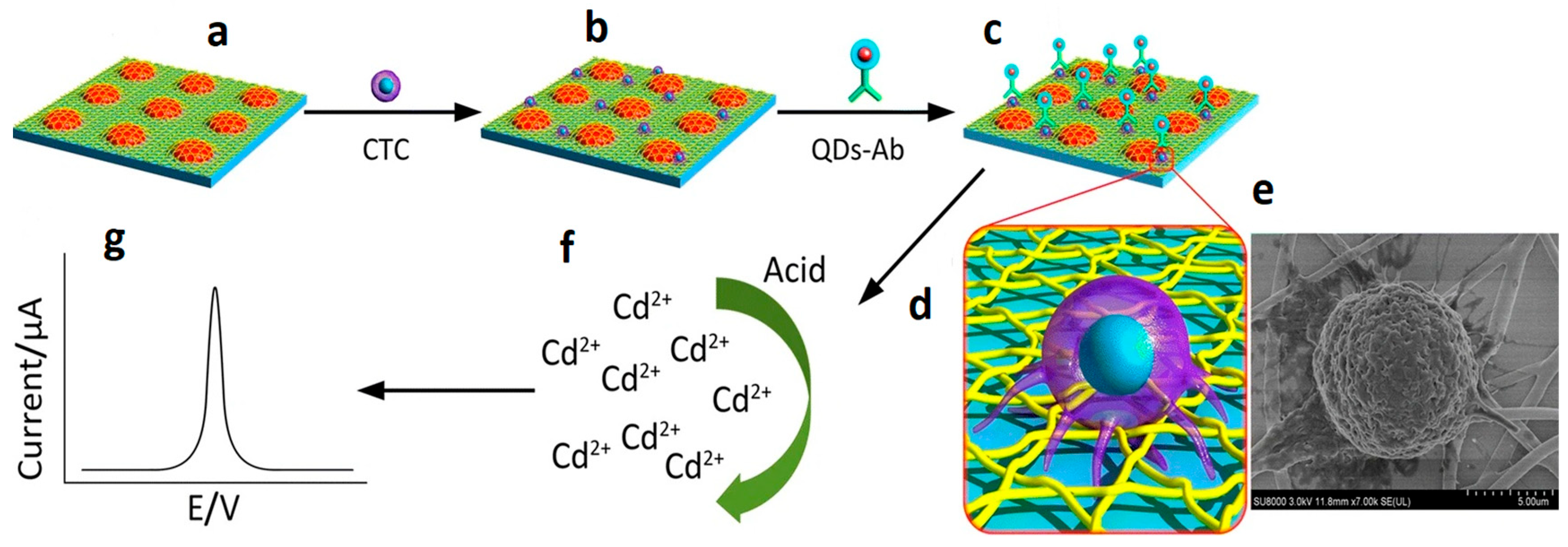
Another sandwich-type aptasensor was reported by Zhang et al. for the detection of MCF-7 cells [94]. The cancer cells were captured by antiMUC1 aptamer-modified magnetic beads (incubation for 30 min) using a 96-well plate. Then, ConA lectin-modified AuNPs solution was added to the magnetic-beads-suspension well, and it was incubated for 30 min. Next, a 1:1 mixture of silver enhancer solutions A and B were poured on the well and let to react for 5 min (AuNPs promotes Ag reduction). Finally, a HNO3 solution was added to dissolve all AgNPs formed and the amount of Ag+ was recorded by stripping DPV using a GCE. Regarding analytical performance, the LOD was higher than most of the above-mentioned articles (500 cells mL−1); however, a selectivity study was performed using HL-60 cells as interference, showing negligible binding of the aptamer to these cells. Interestingly, the authors also developed a competitive assay using the same aptasensor and detection probe (ConA) for Mannose detection. The authors stated that the aptasensor could be applied for electrochemical detection of cell surface mannosyl groups by assuming that the mannose had the same binding kinetics as that at the MCF-7 cell surface.
Table 4. Electrochemical approaches based on aptamers and other capture probes for glycosylation evaluation of cells.
Target of Capture ProbeDiseaseSampleSensing ApproachElectrochemical Technique/ElectrodeLODMeritsRef.
K562 cellsChronic myeloid leukemiaK562 cellsSandwich-type paper biosensor
Capture probe: Aptamer bound to electrode.
Detection probe: HRP-WGA lectin. HRP catalyzed oxidation of o-phenylenediamine by H2O2.
DPV/Macroporous gold electrode4 cells mL−1Inexpensive,
portable, and disposable lab-on-paper device.
[93]
MUC-1Human breast adenocarcinomaMCF-7 cellsSandwich-type aptasensor
Capture probe: AntiMUC1 aptamer-modified magnetic beads.
Detection probe: ConA lectin-modified AuNPs + Ag amplification.
Stripping DPV/GCE500 cells mL−1Evaluation of cell surface mannosyl groups.[94]
MUC-1CTCs from breast tumor metastasisMCF-7 cells Aptasensor with DNA walker
Isolation CTC: Aptamer-modified magnetic beads, hybridized with complementary DNA walker strand.
Amplification detection probe: Magnetic beads modified with deoxyuracil-containing RNA -CeO2@Ir nanorods, and H2O2 as redox probe.
Secondary capture probe: Aptamer selective to RNA bound to electrode.
DPV/gold electrode1 cells mL−1High sensitivity. Detection in whole blood from breast cancer patients.[95]
MUC-1CTCMCF-7 cellsSequestering strategy
Capture probe: MUC-1 aptamer-magnetic beads.
Detection probe: Ferroceneboronic acid.
DPV/GCE50 cells mL−1Amplification-free method.[96]
Permeability glycoprotein (P-gp)CancerDrug-resistant cancer cells in serum Sandwich-type biosensor
Capture probe: Anti P-gp Ab.
Detection probe: APBA and hydrazine-modified MWCNT. Hydrazine catalyzes the reduction of H2O2.
Chrono-amperometry/AuNPs GCE23 cells mL−1Detection of drug-resistant cancer cells in mixed-cell samples.[97]
EpCAMCTCs from lung and gastric tumor metastasisMCF-7 cells Chip cytosensor
Capture probe: Electrospun PLGA nanofibers-deposited Ni micropillars net.
Detection probe: (i) Cd QDs-Ab, (ii) HCl and Hg2+ solution.
Stripping DPV/gold-sputtered micropillars8 cells mL−1Good recoveries in human plasma. Applied to blood samples from gastric and lung cancer
patients.
[98]
Sialic acidRenal cell carcinoma 786-O cellsImpedimetric boronic acid-based sensor
Capture probe: APBA on electrode.
Detection probe: [Fe(CN)6]4−/3−.
EIS/Polypyrrole-BSA-Ag NPs-modified gold
electrode
6 cells mL−1Applied to urine samples from kidney cancer patients.[99]
Shen et al. developed an original strategy in which an aptasensor (selective to MUC1) is combined with a DNA walker for CTC detection in human blood [95]. Magnetic beads modified with a specific aptamer hybridized with a DNA walker strand were used to capture CTC, displacing DNA walker strands. The magnetic beads were removed using a magnet and the released DNA walker was put into contact with other magnetic beads modified with deoxyuracil-containing RNA-CeO2@Ir nanorods (amplification step). DNA walker strands continually cleave deoxyuracil-containing RNA to release many signal probes (CeO2@Ir nanorods). Then, the signal probe supernatant was dropped on a gold electrode modified with a secondary aptamer and incubated for 30 min. Finally, H2O2 solution was added to the electrode and the catalytic signal from decomposition of H2O2 by CeO2@Ir nanorods was monitored by DPV. Although the multi-step procedure is complex, the amplification strategy yields an extremely low LOD, down to 1 cell mL−1. In addition, the sensor selectivity was good (no interference from HL-60, HeLa, or HepG-2 cells), showing only response from MUC-7 cells. Finally, the utility of the aptasensor was demonstrated in whole blood from breast cancer patients. Xia et al. proposed a simple and fast strategy (11 min) for CTC detection based on aptamer-modified magnetic beads and ferroceneboronic acid [96]. The aptamer-modified magnetic beads captured CTCs and then this complex was added into a ferroceneboronic acid solution. The complex sequestered ferrocene from the solution by the interaction between boronic acid and diols present on CTC surface. Then, magnetic beads were removed by a magnet, decreasing the amount of ferroceneboronic acid in solution. The reduction of ferroceneboronic acid concentration was monitored by DPV, and this signal was inversely proportional to CTC concentration. The LOD was good (50 cell mL−1), considering the lack of amplification strategy. Furthermore, the sensor showed a small response towards HeLa, HeGp2, and PC12 cells, but was high towards MCF-7, exhibiting excellent selectivity.

3.3. Other Strategies

There are some examples of other types of capture probes (antibodies and boronic acid derivatives), but they are hardly used for glycan detection on cell surface. For instance, Chandra et al. reported an amperometric biosensor to detect drug-resistant cancer cells by sensing the Permeability glycoprotein (P-gp), a cell membrane transporter that decreases intracellular drug concentrations [97]. They used a sandwich-type strategy in which an antiP-gp Ab-modified AuNPs/GCE captured drug-resistant cancer cells and then an APBA/hydrazine-modified MWCNT was used as a detection probe. Hydrazine served as an electrocatalyst for the reduction of H2O2 and it was monitored by chronoamperometry (−0.45 V vs. Ag/AgCl). All the procedures take around 1 h and the LOD was good (23 cell mL−1). Regarding selectivity, negligible signals were observed for SKBr-3, HeLa, OSE, and HEK-293 cells at 30.000 cell mL−1. The sensor was applied to detect drug-resistant cancer cells in spiked serum samples.
Wu et al. proposed a micro-/nano-structure-based cytosensor for CTC detection using an antibody against the Epithelial Cell Adhesion Molecule (EpCAM, transmembrane glycoprotein) as the detection probe [98]. The strategy is shown in Figure 8. The cytosensor consisted of an array of nickel micropillars, which were covered by ultra-long poly (lactic-co-glycolic acid) nanofibers. This environment facilitates cell capture and adhesion (1 h incubation). Then, an anti-Epcam Ab was anchored onto cadmium quantum dots (Cd-QDs). This detection probe was poured onto the cytosensor and it selectively bound to CTCs (1 h). Next, a HCl solution was added, dissolving the Cd-QDs. Finally, a Hg2+ solution was added for carrying out an anodic-stripping DPV for Cd2+ detection, using the gold-sputtered micropillars as electrodes. The amount of CTC was proportional to the concentration of Cd2+. This approach showed an extraordinary LOD (8 cell mL−1) and good accuracy (recoveries of 93.5–105% in serum samples) using MCF7 cells. However, the selectivity was not evaluated. Finally, CTC-capture study was performed on peripheral blood samples from gastric and lung cancer patients, but the results were not compared to a reference method.
The last work was reported by Zhang et al. and it describes an impedimetric biosensor based on boronic acid chemistry for renal cell carcinoma cells detection in urine [99]. APBA was bound to a polypyrrole-BSA-Ag NPs-modified gold electrode and it was used to capture cancer cells (786-O cells), taking advantage of the interaction between APBA and sialic acids present in the cell membrane (1 h incubation). Then, the binding event was monitored by EIS using [Fe(CN)6]4−/3− as the redox probe, yielding an excellent LOD (8 cell mL−1). The sensor selectivity was evaluated using leukocytes and epithelial cells as interferences, reporting no response for both. Lastly, the sensor was applied to urine samples from three kidney cancer patients and one healthy person. They found significant differences in the signal between the cancer group and the healthy patient.

3.4. General Discussion About the Assessment of Glycosylation in Biological Structures

Except for the sensor used to measure serum glycosylation [77], the others were designed to detect a specific type of cancer cell. For this application, the use of lectins as the capture probe appears to be the most promising strategy because they interact with specific monosaccharides, whose expression on the cell surface is a common feature of many cancer types. The second-most relevant capture probe were aptamers. The reported aptamers showed affinity for specific glycoproteins present in cell membranes, offering a different detection target than lectins. This opens up a range of possibilities for designing more selective sensors (capable of identifying a single type of cancer such as chronic myeloid leukemia [93]) or for other more specific applications, such as the one reported for detecting drug-resistant cancer cells, which targets the P-gp glycoprotein [97].
Furthermore, most approaches used nanomaterials, levering the high surface-to-volume ratio of these materials (to load multiple detection probes) or magnetic properties such as those of magnetic beads (to facilitate the washing or manipulation).
Thinking of the use of these sensors for POCT in medical facilities, they must be simple (procedure with one or two steps), easy-to-use (by non-skilled personnel), and fast (for quick decision-making). However, most reported sensors require long analysis time ≥ 30 min and entail multiple-step protocols (incubation, washing, secondary labeling…). Nevertheless, there are two interesting works where the total analysis time is lower than 15 min and the protocol only involves two steps: an impedimetric lectin-based sensor (10 min) [91] and a sequestering strategy that employed aptamer-modified magnetic beads and ferroceneboronic acid as the detection probe (11 min) [96].
Regarding the kind of samples, most sensors were applied to detect cancer cells (previously cultivated) prepared in buffer solutions or spiked in biological fluids (serum, blood, or urine), but not in real samples from patients. Therefore, there are doubts about whether these sensors can be useful for cancer diagnosis. For this reason, it is necessary for the scientific community to make an effort to validate these sensors in real-world situations. However, there are some promising works in which the sensors were applied to the analysis of blood samples from patients with breast cancer [95], gastric and lung cancer [91], and to the analysis of urine from kidney cancer patients [99].
As mentioned before, the sensors were used to capture and detect cells with a specific presence of glycans on the surface or in a high number. So, cell concentration is the analytical data provided by the sensor. However, some authors have attempted to go further and instead of calculating the concentration of a cell type, they have tried to measure the amount of a specific monosaccharide (mannose) present on the cell surface [85,86,94]. Briefly, they calculated the calibration curve equation for the cell and for mannose, and then both equations were equalized, obtaining a correlation between the cell concentration and the amount of monosaccharide on its surface. This point is very attractive because surface mannoses are closely related to cancer processes such as tumor growth and metastasis. Therefore, the evaluation of mannose expression is essential for understanding its role in cancer development and it can open the door to the finding of more specific cancer biomarkers based on the glycosylation level of the cell surface.

4. Conclusions and Future Perspectives

Altered glycosylation of biomolecules and biological structures (proteins, lipids, membranes, etc.) is a characteristic sign of numerous diseases. In fact, there are many biomarkers used in clinical practice based on the increased concentration of a specific glycoconjugate in biological fluids (PSA, CA-19, etc.). However, assessing the degree of glycosylation of these glycoderivatives and/or biological structures, instead the total concentration, is a fundamental strategy for understanding the development and progression of certain diseases, such as cancer; it offers enormous potential for proposing new biomarkers for the diagnosis and prognosis of these diseases, such as, for example, the core-fucosylation PSA/PSA ratio. Therefore, developing analytical strategies capable of performing this task near the point of care is an urgent need for healthcare systems. Among these strategies, those based on electrochemical sensors stand out for their speed, ease of use, low cost, and portability, making them ideal candidates.
Throughout this revision, we have seen multiple examples of how it is possible to measure or estimate the degree of glycosylation of a given glycoprotein using electrochemical sensors, either with a single electrode (simultaneous measurement of total glycoprotein and a specific glycoform) using selective detection probes, or multiple electrodes (a different electrode for each analyte). Among all the published strategies, label-free approaches stand out for their simplicity, speed, and cost-effectiveness, as well as for not compromising selectivity or accuracy. Despite the large number of glycoproteins analyzed using electrochemical sensors, many more remain to be explored, especially those related to cancer, such as AFP.
Regarding the analysis of glycosylation in biological structures such as cells and/or tissues, almost all studies have focused on determining the concentration of a specific cell with an altered glycosylation pattern. However, several studies have been published proposing strategies to electrochemically assess the amount of a specific monosaccharide on the cell surface. These pioneering studies in evaluating the glycosylation degree of cells open up a range of possibilities for the discovery of new, more specific biomarkers.
On the other hand, these sensors have primarily been applied to the analysis of model samples (cell cultures or single spikes). Therefore, further efforts are needed to demonstrate the utility of these devices in real-world samples, including clinical validations to define their sensitivity and specificity for disease diagnosis.
Likewise, a multitude of detection probes have been used for the assessment of carbohydrates on these glycoconjugates or biological structures, highlighting those based on lectins, antibodies, and boronic acid, due to the additional selectivity that they provide to the sensor. However, we cannot forget those electrochemical markers based on metal complexes or metals that can open the door to the appearance of newer, cheaper, more selective electrochemical markers, or to the implementation of metal–organic frameworks (MOFs), which scarcely have been explored for this application.
Finally, it is worth highlighting the few examples of the use of microfluidic systems, whether in paper format or other materials, for the evaluation of the glycosylation of glycoconjugates and cells. These platforms offer the possibility of storing reagents and carrying out the extraction, labeling, and detection steps, all in the same device. In fact, articles that have used these systems have shown much lower analysis times. However, these articles have not yet exploited all the possibilities offered by this technology. In fact, microfluidics combined with electrochemical sensors offer the possibility of developing wearable devices that, who knows, could continuously monitor the release of CTCs in the bloodstream in the near future. For this reason, we sense that the implementation of these microfluidic systems can be one of the great lines of research in this field.

Author Contributions

Conceptualization, A.G.C.; methodology, R.M.-H., O.M.-M. and A.G.C.; data curation, R.M.-H. and O.M.-M.; writing—original draft preparation, A.G.C.; writing—review and editing, R.M.-H., O.M.-M. and A.G.C.; funding acquisition, A.G.C. All authors have read and agreed to the published version of the manuscript.

Funding

This research was funded by Universidad Nacional de Educación a Distancia (UNED), “Ayudas para el desarrollo de proyectos de investigación UNED 2025” (BICI nº 35, 23 de junio de 2025).

Institutional Review Board Statement

Not applicable.

Informed Consent Statement

Not applicable.

Data Availability Statement

No new data were created or analyzed in this study.

Conflicts of Interest

The authors declare no conflicts of interest.

Abbreviations

The following abbreviations are used in this manuscript:
AbAntibody
AFAgalactosylation factor
AFPα-fetoprotein
AdTSWVAdsorptive transfer square wave voltammetry
APBAAminophenylboronic acid
AQBAAnthraquinone boronic acid
ASFAsialofetuin
AuNPsGold nanoparticles
BSABovine serum albumin
CCysteine
CDTCarbohydrate deficient transferrin
CECapillary electrophoresis
CNSCarbon nanosphere
ConAConcanavalin A
CRCColorectal cancer
CTCCirculating tumor cell
CVCyclic voltammetry
DPVDifferential pulse voltammetry
EDC1-ethyl-3-(3-(dimethylamino)-propyl)-carbodiimide
EIGElectrochemical index of glycosylation
EISElectrochemical impedance spectroscopy
FITCFluorescein isothiocyanate
GalGalactose
GCEGlassy carbon electrode
GlcNAcN-acetylglucosamine
GQDGraphene quantum dot
GSL-IIGriffonia simplicifolia II lectin
HbHemoglobin
HbA1Glycated hemoglobin
HpHaptoglobin
HQHydroquinone
HRPHorseradish peroxidase
HSAHuman serum albumin
IFCC International Federation of Clinical Chemistry and Laboratory Medicine
IgGImmunoglobulin G
Man Mannose
MBMethylene blue
MBA4-mercaptophenylboronic acid
MOFMetal–organic framework
MWCNTMulti-walled carbon nanotube
NfNafion
NFLNeurofilament light chain
NHSN-hydroxysuccinimide
NPNanoparticle
oNFL O-GlcNAcylated neurofilament light chain
P-gpPermeability glycoprotein
PBSPhosphate-buffered saline
PDDAPoly(diallyldimethylammonium chloride)
PLGA Poly(lactic-co-glycolic acid)
PNAPeanut agglutinin
PSAProstate specific antigen
PEG Polyethylene glycol
QDQuantum dots
RCA-IRicinus communis agglutinin I lectin
SASialic acid
SBASoybean agglutinin
SNA Sambucus nigra agglutinin
SPR Surface plasmon resonance
SWCNTSingle-walled carbon nanotube
SWVSquare wave voltammetry
TfTransferrin
WGAWheat germ agglutinin
YTyrosine
ZIFZeolitic imidazolate framework

References

  1. Mikolajczyk, K.; Czerwinski, M.; Kaczmarek, R. Glycoproteins, Glycolipids, or Both: Why do Glycosyltransferases Recognize Different Acceptors? ChemBioChem 2025, 26, e202500212. [Google Scholar] [CrossRef]
  2. Li, Y.; Tran, A.H.; Danishefsky, S.J.; Tan, Z. Chemical biology of glycoproteins: From chemical synthesis to biological impact. Methods Enzymol. 2019, 621, 213–229. [Google Scholar] [CrossRef]
  3. Naseri, R.; Navabi, S.J.; Samimi, Z.; Mishra, A.P.; Nigam, M.; Chandra, H.; Olatunde, A.; Tijjani, H.; Morais-Urano, R.P.; Farzaei, M.H. Targeting Glycoproteins as a therapeutic strategy for diabetes mellitus and its complications. DARU J. Pharmac. Sci. 2020, 28, 333–358. [Google Scholar] [CrossRef]
  4. Tian, Y.; Zhang, H. Glycoproteomics and clinical applications. Proteom. Clin. Appl. 2010, 4, 124–132. [Google Scholar] [CrossRef]
  5. Ortega, V.; Stone, J.A.; Contreras, E.M.; Iorio, R.M.; Aguilar, H.C. Addicted to sugar: Roles of glycans in the order Mononegavirales. Glycobiology 2019, 29, 2–21. [Google Scholar] [CrossRef]
  6. Varki, A. Biological roles of glycans. Glycobiology 2017, 27, 3–49. [Google Scholar] [CrossRef] [PubMed]
  7. Ohtsubo, K.; Marth, J.D. Glycosylation in Cellular Mechanisms of Health and Disease. Cell 2006, 126, 855–867. [Google Scholar] [CrossRef] [PubMed]
  8. Kailemia, M.J.; Park, D.; Lebrilla, C.B. Glycans and glycoproteins as specific biomarkers for cancer. Anal. Bioanal. Chem. 2017, 409, 395–410. [Google Scholar] [CrossRef] [PubMed]
  9. Füzéry, A.K.; Levin, J.; Chan, M.M.; Chan, D.W. Translation of proteomic biomarkers into FDA approved cancer diagnostics: Issues and challenges. Clin. Proteom. 2013, 10, 13. [Google Scholar] [CrossRef]
  10. Steigmeyer, A.D.; Lowery, S.C.; Rangel-Angarita, V.; Malaker, S.A. Decoding Extracellular Protein Glycosylation in Human Health and Disease. Ann. Rev. Anal. Chem. 2025, 18, 241–264. [Google Scholar] [CrossRef]
  11. Patabandige, M.W.; Pfeifer, L.D.; Nguyen, H.T.; Desaire, H. Quantitative clinical glycomics strategies: A guide for selecting the best analysis approach. Mass Spectrom. Rev. 2022, 41, 901–921. [Google Scholar] [CrossRef]
  12. Qu, K.; Li, J. Functional Interface for Glycoprotein Sensing: Focusing on Biosensors. Langmuir 2024, 40, 10405–10413. [Google Scholar] [CrossRef]
  13. Echeverri, D.; Orozco, J. Glycan-Based Electrochemical Biosensors: Promising Tools for the Detection of Infectious Diseases and Cancer Biomarkers. Molecules 2022, 27, 8533. [Google Scholar] [CrossRef] [PubMed]
  14. Hernández-Rodríguez, J.F.; Rojas, D.; Escarpa, A. Electrochemical Sensing Directions for Next-Generation Healthcare: Trends, Challenges, and Frontiers. Anal. Chem. 2021, 93, 167–183. [Google Scholar] [CrossRef]
  15. Hosseinikebria, S.; Khazaei, M.; Dervisevic, M.; Judicpa, M.A.; Tian, J.; Razal, J.M.; Voelcker, N.H.; Nilghaz, A. Electrochemical biosensors: The beacon for food safety and quality. Food Chem. 2025, 475, 143284. [Google Scholar] [CrossRef]
  16. Akiba, U.; Anzai, J.I. Recent progress in electrochemical biosensors for glycoproteins. Sensors 2016, 16, 2045. [Google Scholar] [CrossRef]
  17. Bagheri Hashkavayi, A.; Alizadeh, A.; Chun, H. Review of advances in glycan analysis on exosomes, cancer cells, and circulating cancer-derived glycoproteins with an emphasis on electrochemistry. Anal. Chim. Acta 2025, 1336, 343277. [Google Scholar] [CrossRef] [PubMed]
  18. Qin, X.; Zhang, Z.; Shao, H.; Zhang, R.; Chen, L.; Yang, X. Boronate affinity material-based sensors for recognition and detection of glycoproteins. Analyst 2020, 145, 7511–7527. [Google Scholar] [CrossRef] [PubMed]
  19. Liu, S.; Zhao, F.; Xu, K.; Cao, M.; Sohail, M.; Li, B.; Zhang, X. Harnessing aptamers for the biosensing of cell surface glycans—A review. Anal. Chim. Acta 2024, 1288, 342044. [Google Scholar] [CrossRef]
  20. Abrantes-Coutinho, V.E.; Santos, A.O.; Moura, R.B.; Pereira-Junior, F.N.; Mascaro, L.H.; Morais, S.; Oliveira, T.M. Systematic review on lectin-based electrochemical biosensors for clinically relevant carbohydrates and glycoconjugates. Colloids Surf. B Biointerfaces 2021, 208, 112148. [Google Scholar] [CrossRef]
  21. Silva, M.L.S. Chapter One—Lectin biosensors in cancer glycan biomarker detection. In Advances in Clinical Chemistry; Makowski, G.S., Ed.; Elsevier Inc.: New York, NY, USA, 2019; Volume 93, pp. 1–61. ISSN 0065-2423. [Google Scholar] [CrossRef]
  22. Beutler, E.; Waalen, J. The definition of anemia: What is the lower limit of normal of the blood hemoglobin concentration? Blood 2006, 107, 1747–1750. [Google Scholar] [CrossRef]
  23. Lenters-Westra, E.; Schindhelm, R.K.; Bilo, H.J.; Slingerland, R.J. Haemoglobin A1c: Historical overview and current concepts. Diabetes Res. Clin. Pract. 2013, 99, 75–84. [Google Scholar] [CrossRef] [PubMed]
  24. Zhan, Z.; Li, Y.; Zhao, Y.; Zhang, H.; Wang, Z.; Fu, B.; Li, W.J. A Review of Electrochemical Sensors for the Detection of Glycated Hemoglobin. Biosensors 2022, 12, 221. [Google Scholar] [CrossRef] [PubMed]
  25. Zhou, B.; Sheffer, K.E.; Bennett, J.E.; NCD Risk Factor Collaboration (NCD-RisC). Global variation in diabetes diagnosis and prevalence based on fasting glucose and hemoglobin A1c. Nat. Med. 2023, 29, 2885–2901. [Google Scholar] [CrossRef]
  26. Little, R.R.; Rohlfing, C.; Sacks, D.B. The national glycohemoglobin standardization program: Over 20 years of improving hemoglobin A1c measurement. Clin. Chem. 2019, 65, 839–848. [Google Scholar] [CrossRef]
  27. Chaila, M.Z.; Viniegra, M.; Gagliardino, J.J.; Martínez, A.; Simesen de Bielke, M.G.; Frusti, M.; Monaco, L.; Salgado, P.; Buso, C.; Gonzalez, C.D.; et al. Glycated Hemoglobin Measurement: Comparison of Three Methods Versus High Performance Liquid Chromatography. J. Diabetes Sci. Technol. 2022, 16, 724–731. [Google Scholar] [CrossRef]
  28. American Diabetes Association Professional Practice Committee. 2. Classification and Diagnosis of Diabetes: Standards of Medical Care in Diabetes—2022. Diabetes Care 2022, 45, S17–S38. [Google Scholar] [CrossRef]
  29. Eissa, S.; Zourob, M. Aptamer- Based Label-Free Electrochemical Biosensor Array for the Detection of Total and Glycated Hemoglobin in Human Whole Blood. Sci. Rep. 2017, 7, 1016. [Google Scholar] [CrossRef]
  30. Eissa, S.; Almusharraf, A.Y.; Zourob, M. A comparison of the performance of voltammetric aptasensors for glycated haemoglobin on different carbon nanomaterials-modified screen printed electrodes. Mater. Sci. Eng. C 2019, 101, 423–430. [Google Scholar] [CrossRef] [PubMed]
  31. Feng, X.Q.; Ju, Y.; Dou, W.T.; Li, Q.; Jin, Z.G.; He, X.P.; James, T.D.; Ye, B.C. Ferrocene-labelled electroactive aptamer-based sensors (Aptasensors) for glycated haemoglobin. Molecules 2021, 26, 7077. [Google Scholar] [CrossRef]
  32. Moon, J.M.; Kim, D.M.; Kim, M.H.; Han, J.Y.; Jung, D.K.; Shim, Y.B. A disposable amperometric dual-sensor for the detection of hemoglobin and glycated hemoglobin in a finger prick blood sample. Biosens. Bioelectron. 2017, 91, 128–135. [Google Scholar] [CrossRef]
  33. Thiruppathi, M.; Lee, J.F.; Chen, C.C.; Ho Jan, A. A disposable electrochemical sensor designed to estimate glycated hemoglobin (HbA1c) level in whole blood. Sens. Actuators B Chem. 2021, 329, 129119. [Google Scholar] [CrossRef]
  34. Boonyasit, Y.; Chailapakul, O.; Laiwattanapaisal, W. A multiplexed three-dimensional paper-based electrochemical impedance device for simultaneous label-free affinity sensing of total and glycated haemoglobin: The potential of using a specific single-frequency value for analysis. Anal. Chim. Acta 2016, 936, 1–11. [Google Scholar] [CrossRef]
  35. Wang, J.; Xiong, Q.; Zhang, S.; Han, H.; Ma, Z. Quantification of Glycated Hemoglobin in Total Hemoglobin by a Simultaneous Dual-Signal Acquisition Approach. ACS Sens. 2024, 9, 2141–2148. [Google Scholar] [CrossRef] [PubMed]
  36. Bunyarataphan, S.; Dharakul, T.; Fucharoen, S.; Paiboonsukwong, K.; Japrung, D. Glycated Albumin Measurement Using an Electrochemical Aptasensor for Screening and Monitoring of Diabetes Mellitus. Electroanalysis 2019, 31, 2254–2261. [Google Scholar] [CrossRef]
  37. Zhou, L.; Figueroa-Miranda, G.; Chen, S.; Neis, M.; Hu, Z.; Zhu, R.; Li, Y.; Prömpers, M.; Offenhäusser, A.; Mayer, D. Flexible multielectrode arrays based electrochemical aptasensor for glycated human serum albumin detection. Sens. Act. B Chem. 2023, 386, 133730. [Google Scholar] [CrossRef]
  38. Wang, J.Y.; Chou, T.C.; Chen, L.C.; Ho, K.C. Using poly(3-aminophenylboronic acid) thin film with binding-induced ion flux blocking for amperometric detection of hemoglobin A1c. Biosens. Bioelectron. 2015, 63, 317–324. [Google Scholar] [CrossRef]
  39. Freitas, P.A.C.; Ehlert, L.R.; Camargo, J.L. Glycated albumin: A potential biomarker in diabetes. Arch. Endocrinol. Metab. 2017, 61, 296–304. [Google Scholar] [CrossRef]
  40. Chume, F.C.; Freitas, P.A.; Schiavenin, L.G.; Pimentel, A.L.; Camargo, J.L. Glycated albumin in diabetes mellitus: A meta-analysis of diagnostic test accuracy. Clin. Chem. Lab. Med. 2022, 60, 61–974. [Google Scholar] [CrossRef]
  41. Van Scherpenzeel, M.; Willems, E.; Lefeber, D.J. Clinical diagnostics and therapy monitoring in the congenital disorders of glycosylation. Glycoconj. J. 2016, 33, 345–358. [Google Scholar] [CrossRef]
  42. Bortolotti, F.; Sorio, D.; Bertaso, A.; Tagliaro, F. Analytical and diagnostic aspects of carbohydrate deficient transferrin (CDT): A critical review over years 2007–2017. J. Pharm. Biomed. Anal. 2018, 147, 2–12. [Google Scholar] [CrossRef]
  43. Rodríguez-Capote, K.; Turner, J.; Macri, J. Evaluation of a commercially available carbohydrate deficient transferrin kit to detect beta-2-transferrin in cerebrospinal fluid using capillary electrophoresis. Clin. Biochem. 2013, 46, 1770–1773. [Google Scholar] [CrossRef]
  44. Gomme, P.T.; McCann, K.B.; Bertolini, J. Transferrin: Structure, function and potential therapeutic actions. Drug Discov. Today 2005, 10, 267–273. [Google Scholar] [CrossRef] [PubMed]
  45. Helander, A.; Wielders, J.; Anton, R.; Arndt, T.; Bianchi, V.; Deenmamode, J.; Jeppsson, J.O.; Whitfield, J.B.; Weykamp, C.; Schellenberg, F. Standardisation and use of the alcohol biomarker carbohydrate-deficient transferrin (CDT). Clin. Chim. Acta 2016, 459, 19–24. [Google Scholar] [CrossRef]
  46. Sierra, T.; Crevillen, A.G.; Escarpa, A. Electrochemical sensor for the assessment of carbohydrate deficient transferrin: Application to diagnosis of congenital disorders of glycosilation. Biosens. Bioelectron. 2021, 179, 113098. [Google Scholar] [CrossRef]
  47. Trefulka, M.; Paleček, E. Direct chemical modification and voltammetric detection of glycans in glycoproteins. Electrochem. Commun. 2014, 48, 52–55. [Google Scholar] [CrossRef]
  48. Sierra, T.; Henry, C.S.; Crevillén, A.G.; Escarpa, A. Disposable Passive Electrochemical Microfluidic Device for Diagnosis of Congenital Disorders of Glycosylation. Anal. Sens. 2022, 2, 202100038. [Google Scholar] [CrossRef]
  49. Rodriguez-Hidalgo, G.; Sierra, T.; Dortez, S.; Marcos, A.; Ambrosio, E.; Crevillen, A.G.; Escarpa, A. Transferrin analysis in wistar rats plasma: Towards an electrochemical point-of-care approach for the screening of alcohol abuse. Microchem. J. 2022, 181, 107738. [Google Scholar] [CrossRef]
  50. Diaz-Fernandez, A.; Miranda-Castro, R.; de-Los-Santos-Álvarez, N.; Lobo-Castañón, M.J.; Estrela, P. Impedimetric aptamer-based glycan PSA score for discrimination of prostate cancer from other prostate diseases. Biosens. Bioelectron. 2021, 175, 112872. [Google Scholar] [CrossRef] [PubMed]
  51. Muñoz-San Martín, C.; Montero-Calle, A.; Garranzo-Asensio, M.; Gamella, M.; Pérez-Ginés, V.; Pedrero, M.; Pingarrón, J.M.; Barderas, R.; de-Los-Santos-Álvarez, N.; Lobo-Castañón, M.J.; et al. First bioelectronic immunoplatform for quantitative secretomic analysis of total and metastasis-driven glycosylated haptoglobin. Anal. Bioanal. Chem. 2023, 415, 2045–2057. [Google Scholar] [CrossRef]
  52. Khorshed, A.A.; Savchenko, O.; Liu, J.; Shoute, L.; Zeng, J.; Ren, S.; Gu, J.; Jha, N.; Yang, Z.; Wang, J.; et al. Development of an impedance-based biosensor for determination of IgG galactosylation levels. Biosens. Bioelectron. 2024, 245, 115793. [Google Scholar] [CrossRef] [PubMed]
  53. Zhou, S.; Liu, D.; Chen, J.; Xiang, C.; Xiang, J.; Yang, M. Electrochemical Quantitation of the Glycosylation Level of Serum Neurofilament Light Chain for the Diagnosis of Neurodegeneration: An Interface-Solution Dual-Path Amplification Strategy. Anal. Chem. 2022, 94, 11433–11440. [Google Scholar] [CrossRef]
  54. Garrido-Matilla, L.; María-Hormigos, R.; Monago-Maraña, O.; Marcos, A.; Ambrosio, E.; Crevillen, A.G. Preclinical Validation of an Electrochemical Sensor for Alcohol Consumption Monitoring in a Polydrug Self-Administration Animal Model. Chemosensors 2025, 13, 97. [Google Scholar] [CrossRef]
  55. Saini, S. PSA and beyond: Alternative prostate cancer biomarkers. Cell. Oncol. 2016, 39, 97–106. [Google Scholar] [CrossRef]
  56. Lomas, D.J.; Ahmed, H.U. All change in the prostate cancer diagnostic pathway. Nat. Rev. Clin. Oncol. 2020, 17, 372–381. [Google Scholar] [CrossRef]
  57. Gilgunn, S.; Conroy, P.J.; Saldova, R.; Rudd, P.M.; O’kennedy, R.J. Aberrant PSA glycosylation—A sweet predictor of prostate cancer. Nat. Rev. Urol. 2013, 10, 99–107. [Google Scholar] [CrossRef] [PubMed]
  58. Díaz-Fernández, A.; Miranda-Castro, R.; Díaz, N.; Suárez, D.; de-Los-Santos-Álvarez, N.; Lobo-Castañón, M.J. Aptamers targeting protein-specific glycosylation in tumor biomarkers: General selection, characterization and structural modeling. Chem. Sci. 2020, 11, 9402–9413. [Google Scholar] [CrossRef]
  59. Kohansal-Nodehi, M.; Swiatek-de Lange, M.; Tabarés, G.; Busskamp, H. Haptoglobin polymorphism affects its N-glycosylation pattern in serum. J. Mass Spectrom. Adv. Clin. Lab 2022, 25, 61–70. [Google Scholar] [CrossRef]
  60. Zhang, S.; Shang, S.; Li, W.; Qin, X.; Liu, Y. Insights on N-glycosylation of human haptoglobin and its association with cancers. Glycobiology 2016, 26, 684–692. [Google Scholar] [CrossRef] [PubMed]
  61. Oh, M.J.; Lee, S.H.; Kim, U.; An, H.J. In-depth investigation of altered glycosylation in human haptoglobin associated cancer by mass spectrometry. Mass. Spectrom. Rev. 2023, 42, 496–518. [Google Scholar] [CrossRef]
  62. Kim, J.H.; Lee, S.H.; Choi, S.; Kim, U.; Yeo, I.S.; Kim, S.H.; Oh, M.J.; Moon, H.; Lee, J.; Jeong, S.; et al. Direct analysis of aberrant glycosylation on haptoglobin in patients with gastric cancer. Oncotarget 2017, 8, 11094–11104. [Google Scholar] [CrossRef] [PubMed]
  63. Jazayeri, M.H.; Pourfathollah, A.A.; Rasaee, M.J.; Porpak, Z.; Jafari, M.E. The concentration of total serum IgG and IgM in sera of healthy individuals varies at different age intervals. Biomed. Aging Pathol. 2013, 3, 241–245. [Google Scholar] [CrossRef]
  64. Pasek, M.; Duk, M.; Podbielska, M.; Sokolik, R.; Szechiński, J.; Lisowska, E.; Krotkiewski, H. Galactosylation of IgG from rheumatoid arthritis (RA) patients—Changes during therapy. Glycoconj. J. 2006, 23, 463–471. [Google Scholar] [CrossRef]
  65. Liu, P.; Ren, S.; Xie, Y.; Liu, C.; Qin, W.; Zhou, Y.; Zhang, M.; Yang, Q.; Chen, X.C.; Liu, T.; et al. Quantitative analysis of serum-based IgG agalactosylation for tuberculosis auxiliary diagnosis. Glycobiology 2020, 30, 746–759. [Google Scholar] [CrossRef]
  66. Alley, W.R., Jr.; Vasseur, J.A.; Goetz, J.A.; Svoboda, M.; Mann, B.F.; Matei, D.E.; Menning, N.; Hussein, A.; Mechref, Y.; Novotny, M.V. N-linked glycan structures and their expressions change in the blood sera of ovarian cancer patients. J. Proteome Res. 2012, 11, 2282–2300. [Google Scholar] [CrossRef]
  67. Matsushita, H.; Nouso, K.; Dohi, C.; Miyahara, K.; Kinugasa, H.; Terasawa, H.; Hirai, M.; Nishimura, S.I.; Okada, H. Mo1447—Agalactosylation of Serum Immunoglobulin G As a Potential Biomarker for Hepatocellular Carcinoma. Gastroenterology 2019, 156, S-1310. [Google Scholar] [CrossRef]
  68. Petzold, A. Neurofilament phosphoforms: Surrogate markers for axonal injury, degeneration and loss. J. Neurol. Sci. 2005, 233, 183–198. [Google Scholar] [CrossRef] [PubMed]
  69. Barro, C.; Chitnis, T.; Weiner, H. Blood neurofilament light: A critical review of its application to neurologic disease. Ann. Clin. Transl. Neurol. 2020, 7, 2508–2523. [Google Scholar] [CrossRef]
  70. Disanto, G.; Barro, C.; Benkert, P.; Naegelin, Y.; Schädelin, S.; Giardiello, A.; Zecca, C.; Blennow, K.; Zetterberg, H.; Leppert, D.; et al. Serum Neurofilament light: A biomarker of neuronal damage in multiple sclerosis. Ann. Neurol. 2017, 81, 857–870. [Google Scholar] [CrossRef]
  71. Gaiottino, J.; Norgren, N.; Dobson, R.; Topping, J.; Nissim, A.; Malaspina, A.; Bestwick, J.P.; Monsch, A.U.; Regeniter, A.; Lindberg, R.L.; et al. Increased Neurofilament Light Chain Blood Levels in Neurodegenerative Neurological Diseases. PLoS ONE 2013, 8, e75091. [Google Scholar] [CrossRef]
  72. Peters, N. Neurofilament Light Chain as a Biomarker in Cerebral Small-Vessel Disease. Mol. Diagn. Ther. 2022, 26, 1–6. [Google Scholar] [CrossRef]
  73. Sellebjerg, F.; Magyari, M. The prognostic value of neurofilament light chain in serum. Lancet Neurol. 2022, 21, 207–208. [Google Scholar] [CrossRef] [PubMed]
  74. Chang, Y.; Liu, G.; Li, S.; Liu, L.; Song, Q. Biorecognition element-free electrochemical detection of recombinant glycoproteins using metal-organic frameworks as signal tags. Anal. Chim. Acta 2023, 1273, 341540. [Google Scholar] [CrossRef]
  75. Stowell, S.R.; Ju, T.; Cummings, R.D. Protein glycosylation in cancer. Ann. Rev. Pathol. Mech. Dis. 2015, 10, 473–510. [Google Scholar] [CrossRef]
  76. Sierra, T.; Crevillen, A.G.; Escarpa, A. Derivatization agents for electrochemical detection in amino acid, peptide and protein separations: The hidden electrochemistry? Electrophoresis 2017, 38, 2695–2703. [Google Scholar] [CrossRef] [PubMed]
  77. Lv, J.; Wu, D.; Ma, Y.; Zhang, X.; Xu, W.; Wang, M.; Chen, S.; Hu, Q.; Han, D.; Niu, L. Glycan-Evocated Metallization for Amplification-Free Electrochemical Detection of Glycoproteins at Low Concentration Levels. Anal. Chem. 2024, 96, 17739–17745. [Google Scholar] [CrossRef] [PubMed]
  78. Han, H.-H.; Hu, X.-L.; He, X.-P. Recent advances in fluorescent glycoconjugate probes for biosensing, bioimaging and targeted photodynamic therapy. Chem. Comm. 2025, 61, 15735–15758. [Google Scholar] [CrossRef]
  79. Wagner, A.M.; Knipe, J.M.; Orive, G.; Peppas, N.A. Quantum dots in biomedical applications. Acta Biomater. 2019, 94, 44–63. [Google Scholar] [CrossRef]
  80. Klukova, L.; Bertok, T.; Petrikova, M.; Sediva, A.; Mislovicova, D.; Katrlik, J.; Vikartovska, A.; Filip, J.; Kasak, P.; Andicsová-Eckstein, A.; et al. Glycoprofiling as a novel tool in serological assays of systemic sclerosis: A comparative study with three bioanalytical methods. Anal. Chim. Acta 2015, 853, 555–562. [Google Scholar] [CrossRef]
  81. Gurav, M.J.; Manasa, J.; Sanji, A.S.; Megalamani, P.H.; Chachadi, V.B. Lectin-glycan interactions: A comprehensive cataloguing of cancer associated glycans for biorecognition and bio-alteration: A review. Glycoconj. J. 2024, 41, 301–322. [Google Scholar] [CrossRef]
  82. Mattox, D.E.; Bailey-Kellogg, C. Comprehensive analysis of lectin-glycan interactions reveals determinants of lectin specificity. PLoS Comput. Biol. 2021, 17, e1009470. [Google Scholar] [CrossRef]
  83. Liu, K.; Sun, Q.; Zhu, L.; Feng, C.; Zhang, J.; Wang, Y.; Zhang, F.; Xu, Z.; Zhang, W. A sensitive cytosensor for sialic acid assay based on dual signal amplification by functionalized carbon nanospheres and enzymatically produced polyaniline. Anal. Methods 2015, 7, 3819–3826. [Google Scholar] [CrossRef]
  84. Geng, P.; Feng, C.; Zhu, L.; Zhang, J.; Wang, F.; Liu, K.; Xu, Z.; Zhang, W. Evaluation of Sialic Acid Expression on Cancer Cells via an Electrochemical Assay Based on Biocompatible Au@BSA Architecture and Lectin-modified Nanoprobes. Electroanalysis 2016, 28, 1331–1339. [Google Scholar] [CrossRef]
  85. Zhang, X.; Huang, C.; Jiang, Y.; Shen, J.; Geng, P.; Zhang, W.; Huang, Q. An electrochemical glycan biosensor based on a thionine-bridged multiwalled carbon nanotube/gold nanoparticle composite-modified electrode. RSC Adv. 2016, 6, 12981–112987. [Google Scholar] [CrossRef]
  86. Yazdi, M.K.; Ghazizadeh, E.; Neshastehriz, A. Different liposome patterns to detection of acute leukemia based on electrochemical cell sensor. Anal. Chim. Acta 2020, 1109, 122–129. [Google Scholar] [CrossRef]
  87. Zhang, X.; Lu, W.; Shen, J.; Jiang, Y.; Han, E.; Dong, X.; Huang, J. Carbohydrate derivative-functionalized biosensing toward highly sensitive electrochemical detection of cell surface glycan expression as cancer biomarker. Biosens. Bioelectron. 2015, 74, 291–298. [Google Scholar] [CrossRef] [PubMed]
  88. Sugawara, K.; Kadoya, T.; Kuramitz, H.; Mihara, Y. Design of carbohydrate/electron-transfer peptides for human histocytic lymphoma cell sensing. Anal. Chim. Acta 2017, 983, 198–205. [Google Scholar] [CrossRef] [PubMed]
  89. Sugawara, K.; Kuramitz, H.; Kadoya, T. Label-free cytosensing of cancer cells based on the interaction between protein and an electron-transfer carbohydrate-mimetic peptide. Anal. Chim. Acta 2018, 1040, 166–176. [Google Scholar] [CrossRef]
  90. Zanghelini, F.; Frías, I.A.; Rêgo, M.J.; Pitta, M.G.; Sacilloti, M.; Oliveira, M.D.; Andrade, C.A. Biosensing breast cancer cells based on a three-dimensional TiO2 nanomembrane transducer. Biosens. Bioelectron. 2017, 92, 313–320. [Google Scholar] [CrossRef]
  91. Chowdhury, A.D.; Ganganboina, A.B.; Park, E.Y.; Doong, R.A. Impedimetric biosensor for detection of cancer cells employing carbohydrate targeting ability of Concanavalin, A. Biosens. Bioelectron. 2018, 122, 95–103. [Google Scholar] [CrossRef]
  92. Denton, C.P.; Khanna, D. Systemic sclerosis. Lancet 2017, 390, 1685–1699. [Google Scholar] [CrossRef]
  93. Su, M.; Ge, L.; Kong, Q.; Zheng, X.; Ge, S.; Li, N.; Yu, J.; Yan, M. Cyto-sensing in electrochemical lab-on-paper cyto-device for in-situ evaluation of multi-glycan expressions on cancer cells. Biosens. Bioelectron. 2015, 63, 232–239. [Google Scholar] [CrossRef] [PubMed]
  94. Zhang, J.J.; Cheng, F.F.; Zheng, T.T.; Zhu, J.J. Versatile aptasensor for electrochemical quantification of cell surface glycan and naked-eye tracking glycolytic inhibition in living cells. Biosens. Bioelectron. 2017, 89, 937–945. [Google Scholar] [CrossRef] [PubMed]
  95. Shen, H.; Deng, W.; He, Y.; Li, X.; Song, J.; Liu, R.; Yang, G.; Li, L. Ultrasensitive aptasensor for isolation and detection of circulating tumor cells based on CeO2@Ir nanorods and DNA walker. Biosens. Bioelectron. 2020, 168, 112516. [Google Scholar] [CrossRef] [PubMed]
  96. Xia, N.; Wu, D.; Yu, H.; Sun, W.; Yi, X.; Liu, L. Magnetic bead-based electrochemical and colorimetric assays of circulating tumor cells with boronic acid derivatives as the recognition elements and signal probes. Talanta 2021, 221, 121640. [Google Scholar] [CrossRef]
  97. Chandra, P.; Noh, H.B.; Pallela, R.; Shim, Y.B. Ultrasensitive detection of drug resistant cancer cells in biological matrixes using an amperometric nanobiosensor. Biosens. Bioelectron. 2015, 70, 418–425. [Google Scholar] [CrossRef]
  98. Wu, X.; Xiao, T.; Luo, Z.; He, R.; Cao, Y.; Guo, Z.; Zhang, W.; Chen, Y. A micro-/nano-chip and quantum dots-based 3D cytosensor for quantitative analysis of circulating tumor cells. J. Nanobiotechnology 2018, 16, 65. [Google Scholar] [CrossRef]
  99. Zhang, L.; Yu, C.; Gao, R.; Niu, Y.; Li, Y.; Chen, J.; He, J. An impedimetric biosensor for the diagnosis of renal cell carcinoma based on the interaction between 3-aminophenyl boronic acid and sialic acid. Biosens. Bioelectron. 2017, 92, 434–441. [Google Scholar] [CrossRef]
Scheme 1. Structure of the review content.
Chemosensors 14 00038 sch001
Figure 1. Schematic illustration of the aptasensor based on 8-electrode array chip [29]. © 2017 by Eissa et al. CC By 4.0.
Chemosensors 14 00038 g001
Figure 2. Schematic illustration of aptasensors and detection mechanisms for HbA1c (aptasensor 1) and Hb (aptasensor 2). The captured proteins increase the distance from ferrocene to the electrode surface, thereby hindering the electron-transfer process. Red circle is ferrocene and green circle is thiol group. Adapted from [31]. © 2021 by Feng et al. CC By 4.0.
Chemosensors 14 00038 g002
Figure 3. Scheme of the electrochemical boronic/immunoassay strategy for dual-signal acquisition of HbA1c%. (A) Synthesis of the detection probe for HbA1c detection: ferrocene-modified zeolitic imidazolate framework (ZIF-8−ferrocene), containing AuNPs modified with mercapto-phenylboronic acid (MBA). (B) Scheme of sensing approach: MB degradation by oxygen radicals for tHb detection, and Ferrocene oxidation for HbA1c detection. Reprinted with permission from [35]. Copyright © 2024 American Chemical Society.
Chemosensors 14 00038 g003
Figure 4. (A) Sequential steps in the capillary-driven electrochemical microfluidic device: (a) water injecting (ligh blue color), (b) Tf injection (yellow color), (c) Os (VI) complex injection (blue color)) (opening of the valve and beginning of labeling reaction, green color), (d,e) washing, and (f) detection buffer injection (dark blue color). The arrows indicate the direction of flow. (B) Voltammograms obtained using AdTSWV for blank (black line), Os (VI) complex (control) (green line), Tf (blue line), and Tf- Os(VI) (red line). Peak 1: Carbohydrates from Tf-Os(VI). Peak 2: amino acids from Tf. Reprinted with permission from [48]. © 2021 Sierra et al. CC BY-NC 4.0. Analysis and Sensing published by Wiley-VCH GmbH.
Chemosensors 14 00038 g004
Figure 5. Scheme of the electrochemical approach for simultaneous quantification of tNFL and oNFL. Reprinted with permission from [53]. Copyright © 2022 American Chemical Society.
Chemosensors 14 00038 g005
Figure 6. Scheme of the sandwich-type electrochemical biosensor for cancer cells (MCF-7 and BGC-823) detection. TGA: thioglycolic acid; SNA: Sambucus nigra agglutinin; PAn: polyaniline. Reprinted with permission from ref. [83]. © The Royal Society of Chemistry.
Chemosensors 14 00038 g006
Figure 7. DPV signal from lectin-based electrochemical sensor for the detection of QGY-7701. Inset: Scheme of the sensor and sensing mechanism. Adapted with permission from ref. [85]. © The Royal Society of Chemistry.
Chemosensors 14 00038 g007
Figure 8. Schematic of the chip cytosensor and the procedure for electrochemical detection of CTCs. (ac) Capture of CTC by poly (lactic-co-glycolic acid) nanofibers-modified gold-sputtered nickel micropillars (orange circles) and labeling by the detection probe (Cd-QDs-Ab). (d) Drawing of CTC captured by poly (lactic-co-glycolic acid) nanofibers (yellow color). (e) scanning electronic microscope image of captured CTC. (f) Addition of acid to dissolve of Cd-QDs. (g) anodic-stripping DPV for Cd2+ detection. Adapted from [98]. © Wu et al. 2018 CC By 4.0.
Chemosensors 14 00038 g008
Table 1. Electrochemical assessment of glycosylation status of glycoprotein biomarkers for diabetes diagnosis/prognosis.
TargetSampleSensing ApproachElectrochemical Technique/ElectrodeLODMeritsRef.
HbA1c/tHb ratioWhole blood (hemolyzed)Label-free aptasensor.
Capture probe: a different aptamer for each analyte (tHb and HbA1c).
Detection probe: [Fe(CN)6]4−/3−.
SWV/AuNPs modified 8 electrodes array chip0.2 and 0.34 ng mL−1 for HbA1c and tHbHigh affinity DNA aptamers for HbA1c and tHb.
Validated by reference material.
[29]
HbA1c/tHb ratioWhole blood (hemolyzed)Label-free aptasensor.
Capture probe: a different aptamer for each analyte (tHb and HbA1c).
Detection probe: [Fe(CN)6]4−/3−.
SWV/SWCNT-SPCE0.03 and 0.13 pg mL−1 for HbA1c and tHb The use of SWCNT improved LOD. Validated by reference material.[30]
HbA1c/tHb ratioProtein standard solutionLabel-free aptasensor.
Capture probe: a different aptamer for each analyte (tHb and HbA1c).
Detection probe: Ferrocene-labeled aptamers.
DPV/Au SPE0.084 and 0.24 ng mL−1
for HbA1c and tHb
No need for external detection probe.
Low cost.
[31]
HbA1c/tHb ratioFinger prick blood sample (hemolyzed)Microfluidic dual-sensor.
Capture probe: Nothing for tHb. Aptamer for HbA1c.
Detection probe: Cathodic currents of Hb catalyzed by a toluidine blue O (TBO).
CV/Dual TBO_pTBA@MWCNT modified SPCE0.24 and 5.29 μg mL−1
for HbA1c and tHb
Low sample consumption (1 μL). Fast analysis (approx. 5 min). Validated by LC method.[32]
HbA1c/tHb ratioWhole bloodLabel-free chemosensor.
Capture probe: Boronic acid for HbA1c.
Detection probe: Intrinsic Hb redox signal (Fe2+/Fe3+) using SPCE/MWCNT-Nf@blood-Nf electrode for tHb.
Inhibition of anthraquinone signal using an anthraquinone boronic acid-modified SPCE for HbA1c.
SWV/Two different chemically modified SPCE271 ng mL−1
for HbA1c
No bioreagent. Low sample consumption (2 μL). Validated by comparison to LC method.[33]
HbA1c/tHb ratioWhole blood (hemolyzed)Paper-based dual electrochemical impedance device.
Capture probe: Haptoglobin (Hp) for tHb.
Aminophenylboronic acid (APBA)
for HbA1c.
Detection probe: [Fe(CN)6]4−/3−.
EIS/eggshell membrane-modified SPCE0.8 mg mL−1
for tHb and 0.21% for HbA1c
Use a specific
single frequency to reduce detection time. Validated by comparison to reference method.
[34]
HbA1c/tHb ratioSpiked serumSandwich-type immunosensor.
Capture probe: Ab for both (tHb and HbA1c).
Detection probe: MB and H2O2 for tHb; ZIF-8−ferrocene−gold nanoparticles−mercapto-phenylboronic acid for HbA1c.
SWV/
GO−COOH/NB-CQD-GCE
1 and 4 pg mL−1 for HbA1c and tHbOnly one signal readout.
Ferrocene-loaded ZIF-8 as signal-amplification strategy. Validated by ELISA.
[35]
gHSA/tHSA ratioPlasma Label-free aptasensor.
Capture probe: A different aptamer for each analyte (HSA and gHSA).
Detection probe: [Fe(CN)6]4−/3−.
SWV/dual streptavidin modified screen printed carbon electrodes (SPCE)3 ng mL−1
and 200 ng mL−1 for gHSA and tHSA
Low sample consumption (<1 μL). No sample treatment. Validated by enzymatic method.[36]
gHSA/tHSA ratioDiluted whole bloodFlexible multielectrode array aptasensor.
Capture probe: A different aptamer for each analyte (HSA and gHSA).
Detection probe: [Fe(CN)6]4−/3−.
DPV/gold multielectrode1.66
and 0.86 µg mL−1 for gHSA and tHSA
Simultaneous dual-target detection from the same sample. Low cost.[37]
t means total. g means glycosylated.
Disclaimer/Publisher’s Note: The statements, opinions and data contained in all publications are solely those of the individual author(s) and contributor(s) and not of MDPI and/or the editor(s). MDPI and/or the editor(s) disclaim responsibility for any injury to people or property resulting from any ideas, methods, instructions or products referred to in the content.