Review

Emerging Novel Psychoactive Substances (2020–2025): GC-MS Approaches for Separation, Detection, and Characterization


Faculty of Physical Chemistry, University of Belgrade, Studentski trg 12-16, 11000 Belgrade, Serbia
Chemosensors 2025, 13(12), 426; https://doi.org/10.3390/chemosensors13120426

Submission received: 23 October 2025 / Revised: 28 November 2025 / Accepted: 6 December 2025 / Published: 9 December 2025

Abstract

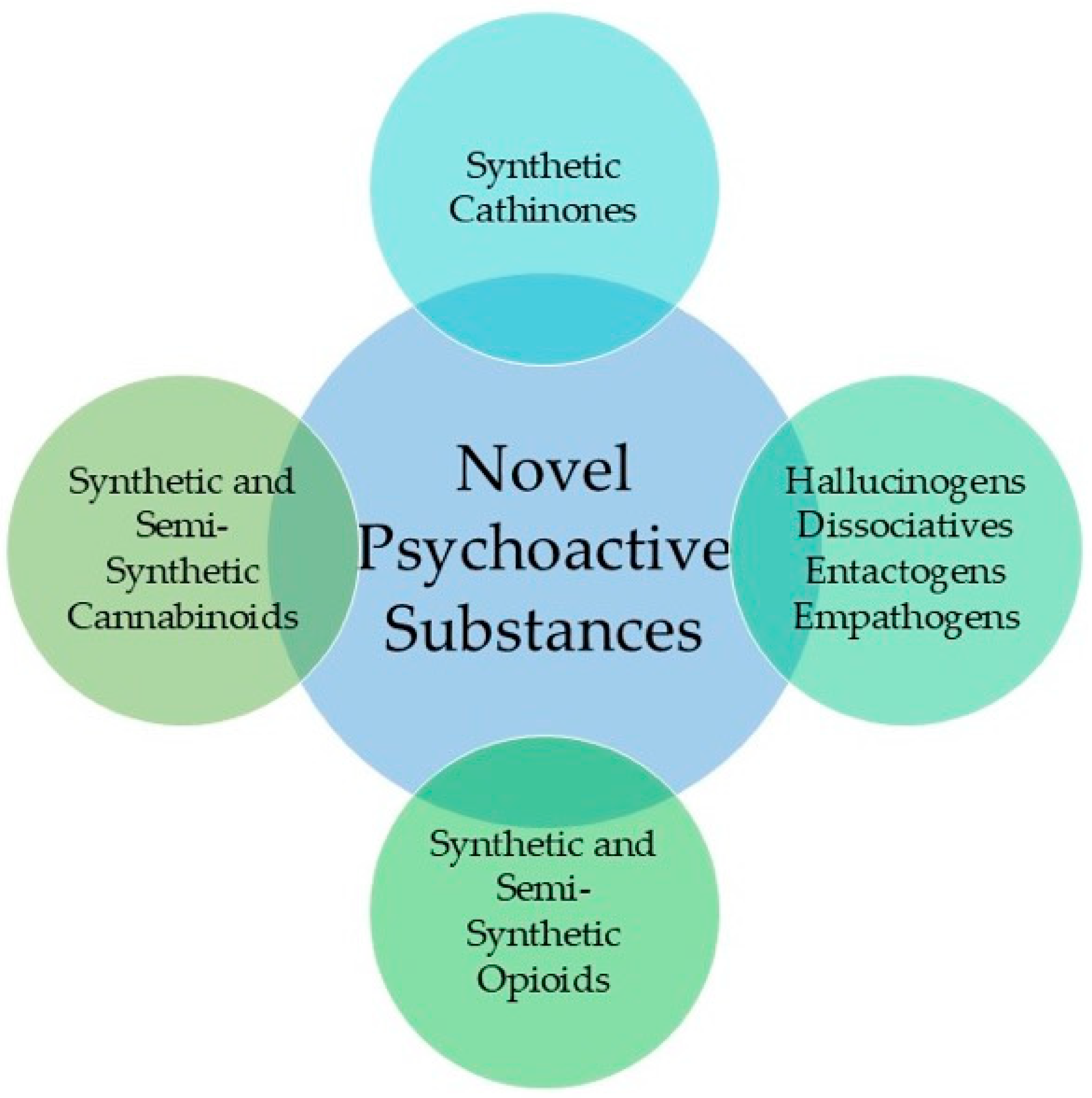
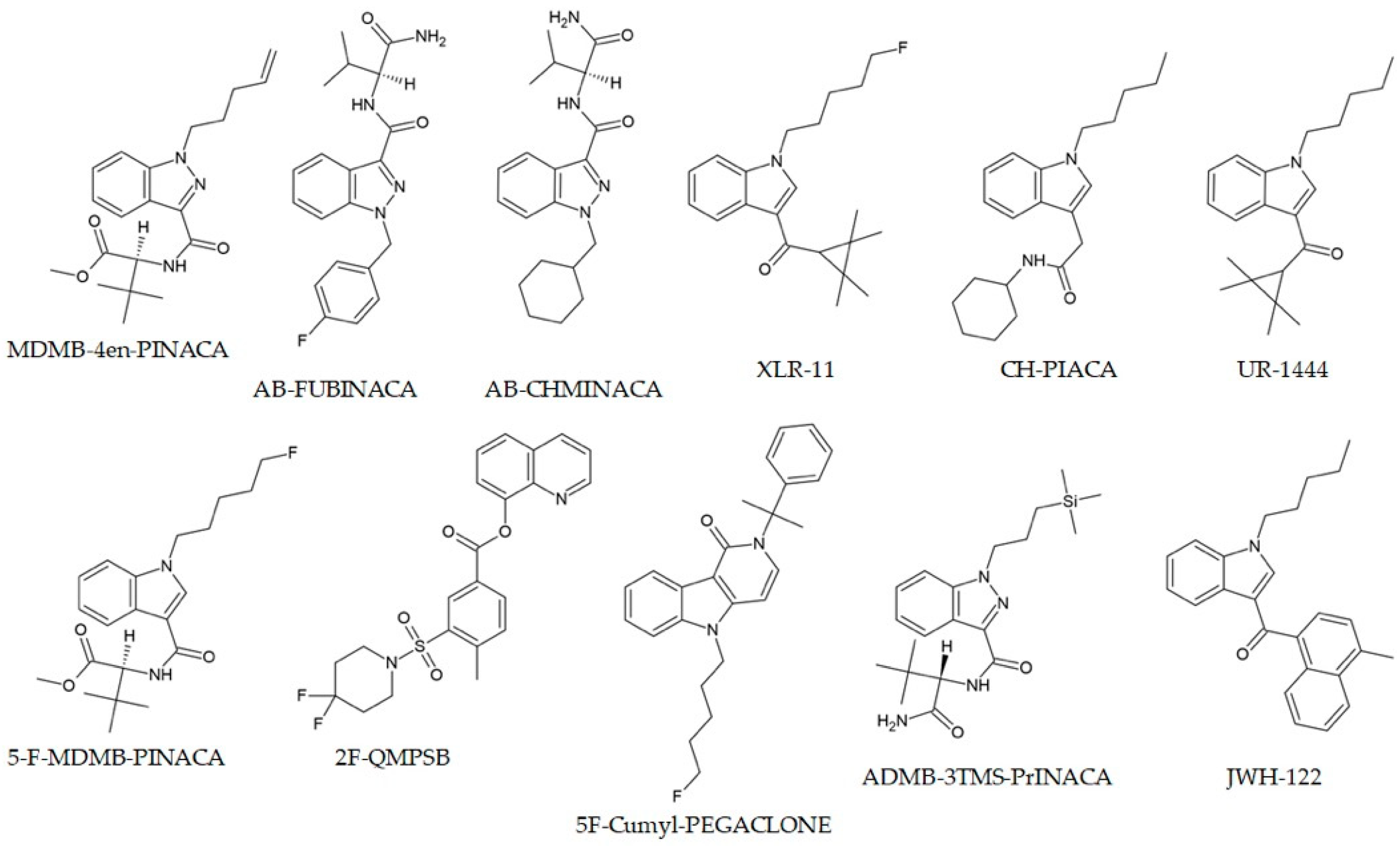
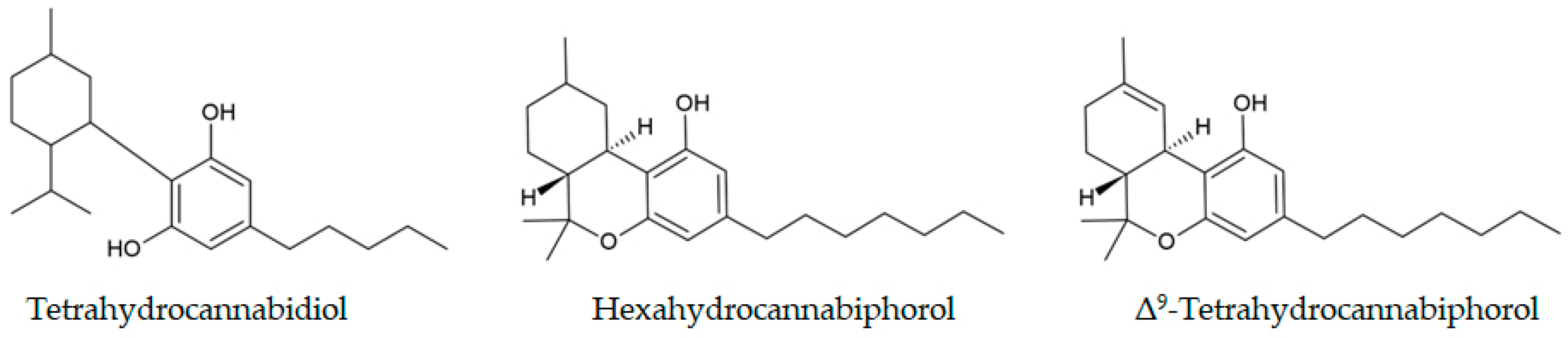
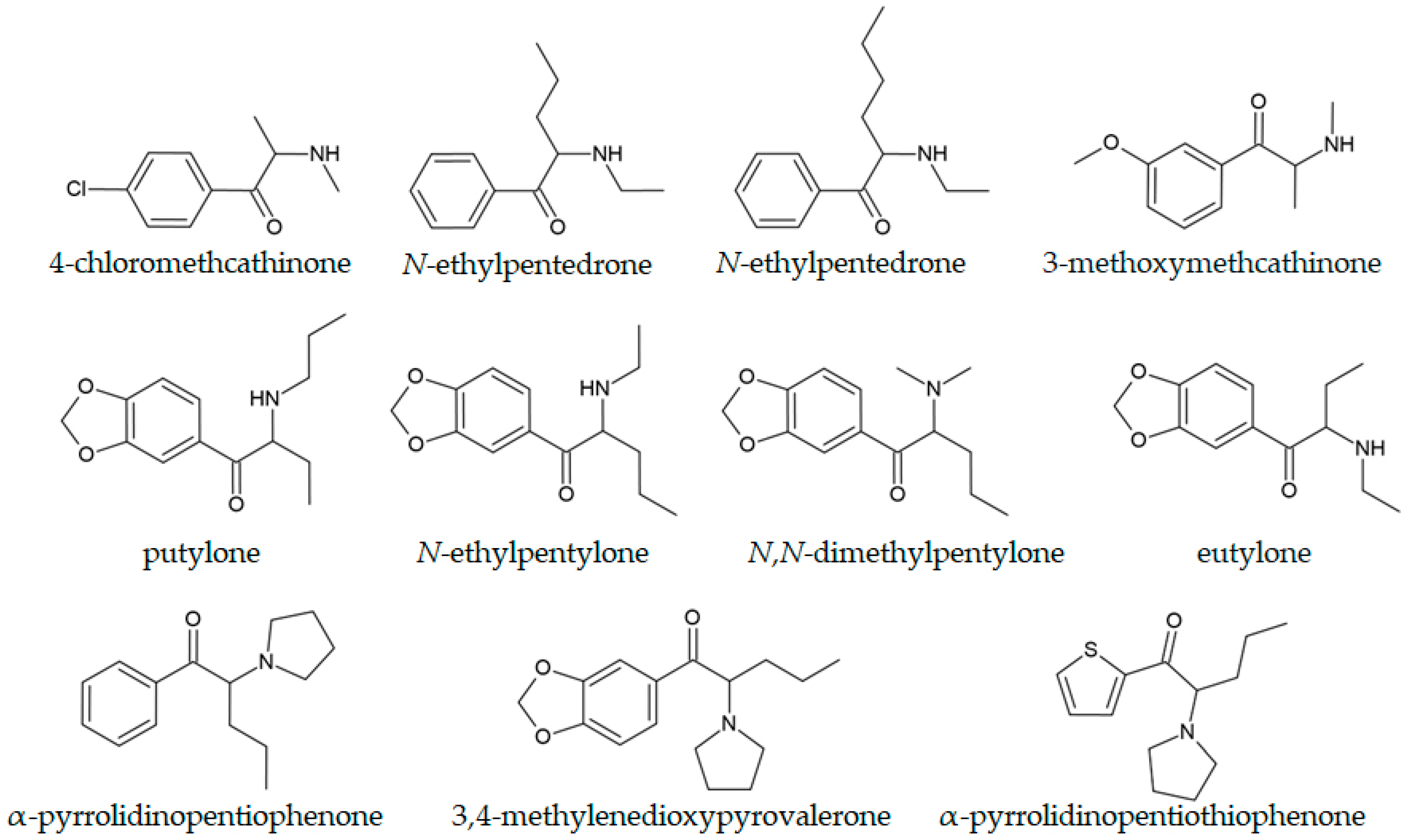
The rapid emergence of novel psychoactive substances (NPSs) after 2020 has created one of the most dynamic analytical challenges in modern forensic science. Hundreds of new synthetic cannabinoids, synthetic cathinones, synthetic opioids, hallucinogens, and dissociatives, appearing as hybrid or structurally modified analogues of conventional drugs, have entered the illicit market, frequently found in complex polydrug mixtures. This review summarizes recent advances in gas chromatography-mass spectrometry (GC-MS) for their detection, structural elucidation, and differentiation between 2020 and 2025 based on the ScienceDirect and Google Scholar databases. Due to its reproducible electron-ionization spectra, established reference libraries, and robustness toward complex matrices, GC-MS remains the primary tool for the separation and identification of emerging NPS. The current literature highlights significant improvements in extraction and pre-concentration procedures, derivatization strategies for thermally unstable analogues, and chromatographic optimization that enable discrimination between positional and stereoisomers. This review covers a wide range of matrices, including powders, herbal materials, vaping liquids, and infused papers, as well as biological specimens such as blood, urine, and hair. Chemometric interpretation of GC-MS data now supports automated classification and prediction of fragmentation pathways, while coupling with complementary spectroscopic techniques strengthens compound confirmation. The review emphasizes how continuous innovation in GC-MS methodology has paralleled the rapid evolution of the NPS landscape, ensuring its enduring role as a reliable, adaptable, and cost-effective platform for monitoring emerging psychoactive substances in seized materials.
Keywords: GC-MS; synthetic cannabinoids; synthetic cathinones; synthetic opioids; novel benzodiazepines; fentanyls; hallucinogens; dissociatives; polydrug mixtures; portable GC-MS GC-MS; synthetic cannabinoids; synthetic cathinones; synthetic opioids; novel benzodiazepines; fentanyls; hallucinogens; dissociatives; polydrug mixtures; portable GC-MS