Tracking PFAS Using Nanomaterial-Based Sensors: Limitations, Advances, and Challenges

 , , , , ,
  and
and 
Abstract
1. Introduction
2. Nanomaterials in Sensing Technologies
3. Nanomaterials Used for PFAS Detection
4. New Strategies to Enhance Sensitivity, Selectivity, and Reliability
4.1. Metal Nanoparticle
4.2. MXenes
4.3. MOF
4.4. Magnetic Nanoparticles
4.5. Carbon Nanostructures
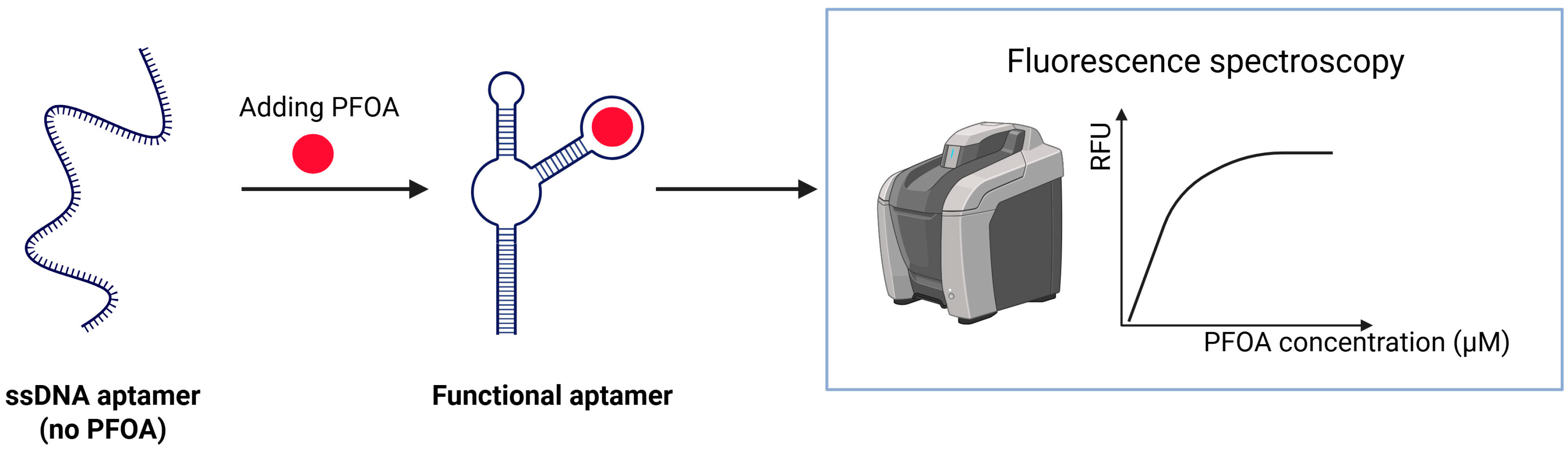
4.6. Nanomaterials Functionalized with Aptamers
4.7. Other Nanostructures
5. Challenges and Perspectives
6. Conclusions
Author Contributions
Funding
Institutional Review Board Statement
Informed Consent Statement
Data Availability Statement
Acknowledgments
Conflicts of Interest
References
- Buck, R.C.; Franklin, J.; Berger, U.; Conder, J.M.; Cousins, I.T.; de Voogt, P.; Jensen, A.A.; Kannan, K.; Mabury, S.A.; van Leeuwen, S.P. Perfluoroalkyl and Polyfluoroalkyl Substances in the Environment: Terminology, Classification, and Origins. Integr. Environ. Assess. Manag. 2011, 7, 513–541. [Google Scholar] [CrossRef] [PubMed]
- Wang, Z.; DeWitt, J.C.; Higgins, C.P.; Cousins, I.T. A Never-Ending Story of Per- and Polyfluoroalkyl Substances (PFASs)? Environ. Sci. Technol. 2017, 51, 2508–2518. [Google Scholar] [CrossRef]
- Glüge, J.; Scheringer, M.; Cousins, I.T.; DeWitt, J.C.; Goldenman, G.; Herzke, D.; Lohmann, R.; Ng, C.A.; Trier, X.; Wang, Z. An Overview of the Uses of Per- and Polyfluoroalkyl Substances (PFAS). Environ. Sci. Process. Impacts 2020, 22, 2345–2373. [Google Scholar] [CrossRef]
- Megson, D.; Bruce-Vanderpuije, P.; Idowu, I.G.; Ekpe, O.D.; Sandau, C.D. A Systematic Review for Non-Targeted Analysis of per- and Polyfluoroalkyl Substances (PFAS). Sci. Total Environ. 2025, 960, 178240. [Google Scholar] [CrossRef] [PubMed]
- Jiang, L.; Cao, R.; Huang, Z.; Jin, J.; Du, Z.; Li, H. Efficiencies and Mechanisms of Remediation Techniques for Cationic and Zwitterionic Per- and Polyfluoroalkyl Substances (PFAS) from Aqueous Environments: A Review. Chem. Eng. J. 2024, 502, 158161. [Google Scholar] [CrossRef]
- Munoz, G.; Taxil-Paloc, A.; Desrosiers, M.; Vo Duy, S.; Liu, M.; Houde, M.; Liu, J.; Sauvé, S. Zwitterionic, Cationic, and Anionic PFAS in Freshwater Sediments from AFFF-Impacted and Non-Impacted Sites of Eastern Canada. J. Hazard. Mater. 2025, 484, 136634. [Google Scholar] [CrossRef]
- Blum, A.; Balan, S.A.; Scheringer, M.; Trier, X.; Goldenman, G.; Cousins, I.T.; Diamond, M.; Fletcher, T.; Higgins, C.; Lindeman, A.E.; et al. The Madrid Statement on Poly- and Perfluoroalkyl Substances (PFASs). Environ. Health Perspect. 2015, 123, A107–A111. [Google Scholar] [CrossRef]
- Vojnović, V.; Ranković, M.; Jevremović, A.; Mijailović, N.R.; Nedić Vasiljević, B.; Milojević-Rakić, M.; Bajuk-Bogdanović, D.; Gavrilov, N. Doping of Magnéli Phase—New Direction in Pollutant Degradation and Electrochemistry. Molecules 2025, 30, 4282. [Google Scholar] [CrossRef]
- Zhao, L.; Teng, M.; Zhao, X.; Li, Y.; Sun, J.; Zhao, W.; Ruan, Y.; Leung, K.M.Y.; Wu, F. Insight into the Binding Model of Per- and Polyfluoroalkyl Substances to Proteins and Membranes. Environ. Int. 2023, 175, 107951. [Google Scholar] [CrossRef] [PubMed]
- Sunderland, E.M.; Hu, X.C.; Dassuncao, C.; Tokranov, A.K.; Wagner, C.C.; Allen, J.G. A Review of the Pathways of Human Exposure to Poly- and Perfluoroalkyl Substances (PFASs) and Present Understanding of Health Effects. J. Expo. Sci. Environ. Epidemiol. 2019, 29, 131–147. [Google Scholar] [CrossRef]
- Xu, B.; Qiu, W.; Du, J.; Wan, Z.; Zhou, J.L.; Chen, H.; Liu, R.; Magnuson, J.T.; Zheng, C. Translocation, Bioaccumulation, and Distribution of Perfluoroalkyl and Polyfluoroalkyl Substances (PFASs) in Plants. iScience 2022, 25, 104061. [Google Scholar] [CrossRef]
- Lasters, R.; Groffen, T.; Eens, M.; Bervoets, L. Per- and Polyfluoroalkyl Substances (PFAS) in Homegrown Crops: Accumulation and Human Risk Assessment. Chemosphere 2024, 364, 143208. [Google Scholar] [CrossRef]
- DeLuca, N.M.; Minucci, J.M.; Mullikin, A.; Slover, R.; Cohen Hubal, E.A. Human Exposure Pathways to Poly- and Perfluoroalkyl Substances (PFAS) from Indoor Media: A Systematic Review. Environ. Int. 2022, 162, 107149. [Google Scholar] [CrossRef]
- Wee, S.Y.; Aris, A.Z. Environmental Impacts, Exposure Pathways, and Health Effects of PFOA and PFOS. Ecotoxicol. Environ. Saf. 2023, 267, 115663. [Google Scholar] [CrossRef]
- IUPAC Terminology and Classification of Per- and Poly-Fluoroalkyl Substances (PFAS). Available online: https://iupac.org/project/2024-006-3-100 (accessed on 19 October 2025).
- Stecconi, T.; Tavoloni, T.; Stramenga, A.; Bacchiocchi, S.; Barola, C.; Dubbini, A.; Galarini, R.; Moretti, S.; Sagratini, G.; Piersanti, A. A LC-MS/MS Procedure for the Analysis of 19 Perfluoroalkyl Substances in Food Fulfilling Recent EU Regulations Requests. Talanta 2024, 266, 125054. [Google Scholar] [CrossRef] [PubMed]
- Dube, A.; Malode, S.J.; Akhdar, H.; Alodhayb, A.N.; Shetti, N.P. Electrochemical Detection of Per- and Polyfluoroalkyl Substances: A Review. Colloids Surf. B Biointerfaces 2025, 252, 114653. [Google Scholar] [CrossRef] [PubMed]
- Rodriguez, K.L.; Hwang, J.-H.; Esfahani, A.R.; Sadmani, A.H.M.A.; Lee, W.H. Recent Developments of PFAS-Detecting Sensors and Future Direction: A Review. Micromachines 2020, 11, 667. [Google Scholar] [CrossRef]
- Gondhiya, N.; Rehman, A.U.; Andreescu, D.; Andreescu, S. Portable Electrochemical Sensors for Per- and Polyfluoroalkyl Substances: Design, Challenges, and Opportunities for Field Deployment. Curr. Opin. Electrochem. 2025, 53, 101725. [Google Scholar] [CrossRef]
- Zenobio, J.E.; Salawu, O.A.; Han, Z.; Adeleye, A.S. Adsorption of Per- and Polyfluoroalkyl Substances (PFAS) to Containers. J. Hazard. Mater. Adv. 2022, 7, 100130. [Google Scholar] [CrossRef]
- Iannone, A.; Carriera, F.; Di Fiore, C.; Avino, P. Poly- and Perfluoroalkyl Substance (PFAS) Analysis in Environmental Matrices: An Overview of the Extraction and Chromatographic Detection Methods. Analytica 2024, 5, 187–202. [Google Scholar] [CrossRef]
- Lockwood, T.E.; Talebi, M.; Minett, A.; Mills, S.; Doble, P.A.; Bishop, D.P. Micro Solid-Phase Extraction for the Analysis of per- and Polyfluoroalkyl Substances in Environmental Waters. J. Chromatogr. A 2019, 1604, 460495. [Google Scholar] [CrossRef]
- Huo, T.; Sarkar, D.; Andreescu, S.; Du, H. Advances in Nanosensor Technologies for PFAS Detection: A Review. IEEE Sens. Rev. 2025, 2, 498–510. [Google Scholar] [CrossRef]
- Thompson, D.; Zolfigol, N.; Xia, Z.; Lei, Y. Recent Progress in Per- and Polyfluoroalkyl Substances (PFAS) Sensing: A Critical Mini-Review. Sens. Actuators Rep. 2024, 7, 100189. [Google Scholar] [CrossRef]
- Menger, R.F.; Funk, E.; Henry, C.S.; Borch, T. Sensors for Detecting Per- and Polyfluoroalkyl Substances (PFAS): A Critical Review of Development Challenges, Current Sensors, and Commercialization Obstacles. Chem. Eng. J. 2021, 417, 129133. [Google Scholar] [CrossRef]
- Han, D.; Hosamo, H.; Ying, C.; Nie, R. A Comprehensive Review and Analysis of Nanosensors for Structural Health Monitoring in Bridge Maintenance: Innovations, Challenges, and Future Perspectives. Appl. Sci. 2023, 13, 11149. [Google Scholar] [CrossRef]
- Thiruvengadam, M.; Chi, H.-Y.; Choi, H.-J.; Jung, B.-S.; Lee, S.-B.; Park, Y.; Jeon, D.; Ciftci, F.; Shariati, M.A.; Kim, S.-H. Sustainable and Smart Nano-Biosensors: Integrated Solutions for Healthcare, Environmental Monitoring, Agriculture, and Food Safety. Ind. Crops Prod. 2025, 233, 121337. [Google Scholar] [CrossRef]
- Exbrayat, L.; Salaluk, S.; Uebel, M.; Jenjob, R.; Rameau, B.; Koynov, K.; Landfester, K.; Rohwerder, M.; Crespy, D. Nanosensors for Monitoring Early Stages of Metallic Corrosion. ACS Appl. Nano Mater. 2019, 2, 812–818. [Google Scholar] [CrossRef]
- Hamzat, A.K.; Asmatulu, R. Nanotechnology Safety in Sensors and Security Industries. In Nanotechnology Safety; Elsevier: Amsterdam, The Netherlands, 2025; pp. 251–281. [Google Scholar]
- Darwish, M.A.; Abd-Elaziem, W.; Elsheikh, A.; Zayed, A.A. Advancements in Nanomaterials for Nanosensors: A Comprehensive Review. Nanoscale Adv. 2024, 6, 4015–4046. [Google Scholar] [CrossRef] [PubMed]
- Brase, R.A.; Mullin, E.J.; Spink, D.C. Legacy and Emerging Per- and Polyfluoroalkyl Substances: Analytical Techniques, Environmental Fate, and Health Effects. Int. J. Mol. Sci. 2021, 22, 995. [Google Scholar] [CrossRef]
- US EPA. Final PFAS National Primary Drinking Water Regulation. Available online: https://www.epa.gov/sdwa/and-polyfluoroalkyl-substances-pfas (accessed on 19 October 2025).
- US EPA. Developing and Demonstrating Nanosensor Technology to Detect, Monitor, and Degrade Pollutants Request for Applications (RFA). Available online: https://www.epa.gov/research-grants/developing-and-demonstrating-nanosensor-technology-detect-monitor-and-degrade-1 (accessed on 19 October 2025).
- Radjenovic, J.; Duinslaeger, N.; Avval, S.S.; Chaplin, B.P. Facing the Challenge of Poly- and Perfluoroalkyl Substances in Water: Is Electrochemical Oxidation the Answer? Environ. Sci. Technol. 2020, 54, 14815–14829. [Google Scholar] [CrossRef]
- Codina, A.S.; Lumbaque, E.C.; Radjenovic, J. Electrochemical Removal of Contaminants of Emerging Concern with Manganese Oxide-Functionalized Graphene Sponge Electrode. Chem. Eng. J. 2025, 508, 160940. [Google Scholar] [CrossRef]
- Lumbaque, E.C.; Radjenovic, J. Electro-Oxidation of Persistent Organic Contaminants at Graphene Sponge Electrodes Using Intermittent Current. Chem. Eng. J. 2023, 476, 146910. [Google Scholar] [CrossRef]
- Jevremović, A.; Ranković, M.; Janošević Ležajić, A.; Uskoković-Marković, S.; Nedić Vasiljević, B.; Gavrilov, N.; Bajuk-Bogdanović, D.; Milojević-Rakić, M. Regeneration or Repurposing of Spent Pollutant Adsorbents in Energy-Related Applications: A Sustainable Choice? Sustain. Chem. 2025, 6, 28. [Google Scholar] [CrossRef]
- Manayil Parambil, A.; Priyadarshini, E.; Paul, S.; Bakandritsos, A.; Sharma, V.K.; Zbořil, R. Emerging Nanomaterials for the Detection of Per- and Poly-Fluorinated Substances. J. Mater. Chem. A Mater. 2025, 13, 8246–8281. [Google Scholar] [CrossRef]
- Fang, C.; Dharmarajan, R.; Megharaj, M.; Naidu, R. Gold Nanoparticle-Based Optical Sensors for Selected Anionic Contaminants. TrAC Trends Anal. Chem. 2017, 86, 143–154. [Google Scholar] [CrossRef]
- Jouyban, A.; Rahimpour, E. Optical Sensors Based on Silver Nanoparticles for Determination of Pharmaceuticals: An Overview of Advances in the Last Decade. Talanta 2020, 217, 121071. [Google Scholar] [CrossRef]
- Wu, W.; Jiang, C.Z.; Roy, V.A.L. Designed Synthesis and Surface Engineering Strategies of Magnetic Iron Oxide Nanoparticles for Biomedical Applications. Nanoscale 2016, 8, 19421–19474. [Google Scholar] [CrossRef]
- Keshta, B.E.; Gemeay, A.H.; Kumar Sinha, D.; Elsharkawy, S.; Hassan, F.; Rai, N.; Arora, C. State of the Art on the Magnetic Iron Oxide Nanoparticles: Synthesis, Functionalization, and Applications in Wastewater Treatment. Results Chem. 2024, 7, 101388. [Google Scholar] [CrossRef]
- Kang, K.H.; Saifuddin, M.; Chon, K.; Bae, S.; Kim, Y.M. Recent Advances in the Application of Magnetic Materials for the Management of Perfluoroalkyl Substances in Aqueous Phases. Chemosphere 2024, 352, 141522. [Google Scholar] [CrossRef]
- Zhang, K.; Song, X.; Liu, M.; Chen, M.; Li, J.; Han, J. Review on the Use of Magnetic Nanoparticles in the Detection of Environmental Pollutants. Water 2023, 15, 3077. [Google Scholar] [CrossRef]
- Sendão, R.M.S.; Esteves da Silva, J.C.G.; Pinto da Silva, L. Polyfluoroalkyl Substances (PFASs) Detection Via Carbon Dots: A Review. Sustain. Chem. 2023, 4, 339–362. [Google Scholar] [CrossRef]
- Walekar, L.S.; Zheng, M.; Zheng, L.; Long, M. Selenium and Nitrogen Co-Doped Carbon Quantum Dots as a Fluorescent Probe for Perfluorooctanoic Acid. Microchim. Acta 2019, 186, 278. [Google Scholar] [CrossRef] [PubMed]
- Crista, D.M.A.; Esteves da Silva, J.C.G.; Pinto da Silva, L. Evaluation of Different Bottom-up Routes for the Fabrication of Carbon Dots. Nanomaterials 2020, 10, 1316. [Google Scholar] [CrossRef] [PubMed]
- Ahmad, O.S.; Bedwell, T.S.; Esen, C.; Garcia-Cruz, A.; Piletsky, S.A. Molecularly Imprinted Polymers in Electrochemical and Optical Sensors. Trends Biotechnol. 2019, 37, 294–309. [Google Scholar] [CrossRef]
- LeBarron, C.T.; Pavithra; Hosseini, S. Recent Insights into Electrochemical Sensing of Per- and Polyfluoroalkyl Substances. ECS Sens. Plus 2025, 4, 033601. [Google Scholar] [CrossRef]
- Chaudhary, M.L.; Patel, R.; Chaudhary, K.J.; Gupta, R.K. Metal–Organic Frameworks for PFAS Remediation and Sensing: From Molecular Design to Real-World Implementation. Ind. Eng. Chem. Res. 2025, 64, 13536–13556. [Google Scholar] [CrossRef]
- Cheng, Y.H.; Barpaga, D.; Soltis, J.A.; Shutthanandan, V.; Kargupta, R.; Han, K.S.; McGrail, B.P.; Motkuri, R.K.; Basuray, S.; Chatterjee, S. Metal–Organic Framework-Based Microfluidic Impedance Sensor Platform for Ultrasensitive Detection of Perfluorooctanesulfonate. ACS Appl. Mater. Interfaces 2020, 12, 10503–10514. [Google Scholar] [CrossRef] [PubMed]
- Ihsanullah, I. Targeted PFAS Removal Using MXene-Based Polymeric Membranes: Toward Cleaner Water Solutions. Chem. Asian J. 2025, 20, e00822. [Google Scholar] [CrossRef]
- Wang, W.; He, Y.; He, S.; Deng, L.; Wang, H.; Cao, Z.; Feng, Z.; Xiong, B.; Yin, Y. A Brief Review of Aptamer-Based Biosensors in Recent Years. Biosensors 2025, 15, 120. [Google Scholar] [CrossRef]
- Ahmadi Tabar, F.; Lowdon, J.W.; Bakhshi Sichani, S.; Khorshid, M.; Cleij, T.J.; Diliën, H.; Eersels, K.; Wagner, P.; van Grinsven, B. An Overview on Recent Advances in Biomimetic Sensors for the Detection of Perfluoroalkyl Substances. Sensors 2023, 24, 130. [Google Scholar] [CrossRef]
- Karimian, N.; Stortini, A.M.; Moretto, L.M.; Costantino, C.; Bogialli, S.; Ugo, P. Electrochemosensor for Trace Analysis of Perfluorooctanesulfonate in Water Based on a Molecularly Imprinted Poly(o-Phenylenediamine) Polymer. ACS Sens. 2018, 3, 1291–1298. [Google Scholar] [CrossRef]
- Lu, D.; Zhu, D.Z.; Gan, H.; Yao, Z.; Luo, J.; Yu, S.; Kurup, P. An Ultra-Sensitive Molecularly Imprinted Polymer (MIP) and Gold Nanostars (AuNS) Modified Voltammetric Sensor for Facile Detection of Perfluorooctance Sulfonate (PFOS) in Drinking Water. Sens. Actuators B Chem. 2022, 352, 131055. [Google Scholar] [CrossRef]
- Cheng, X.; Tang, J.; Chen, Y.; Bai, X.; Liao, Y.; Ouyang, X.; Wang, Y.; Tang, L. A Stable Dual-Functional Monomer Imprinted Polymer Platform for Electrochemical Sensitive Detection of PFAS. J. Hazard. Mater. 2025, 493, 138422. [Google Scholar] [CrossRef] [PubMed]
- Malloy, C.S.; Danley, M.J.; Bellido-Aguilar, D.A.; Partida, L.; Castrejón-Miranda, R.; Savagatrup, S. Effects of Fabrication Parameters on the Mechanical and Sensing Properties of Molecularly Imprinted Polymers (MIPs) for the Detection of Per- and Polyfluoroalkyl Substances (PFAS). ACS Appl. Polym. Mater. 2024, 6, 9914–9921. [Google Scholar] [CrossRef]
- Khitous, A.; Arcadio, F.; Zeni, L.; Cennamo, N.; Soppera, O. In Situ Synthesis of Molecularly Imprinted Polymers by Near-Field Photopolymerization for Ultrasensitive PFOA Plasmonic Plastic Fiber Optic Sensors. Sens. Actuators B Chem. 2025, 442, 137992. [Google Scholar] [CrossRef]
- Amin, N.; Chen, J.; He, Q.; Schwartz, J.S.; Wu, J.J. Ultra-Sensitive and Rapid Detection of Perfluorooctanesulfonic Acid by a Capacitive Molecularly-Imprinted-Polymer Sensor Integrated with AC Electrokinetic Acceleration. Sens. Actuators B Chem. 2024, 420, 136464. [Google Scholar] [CrossRef]
- Guo, Y.; Li, Z.; Li, W.; Chen, X.; Cai, Z. Hydrophobic SERS Substrate for PFOA Sensing and Cooperative Adsorption. Talanta 2025, 294, 128244. [Google Scholar] [CrossRef]
- Khan, R.; Uygun, Z.O.; Andreescu, D.; Andreescu, S. Sensitive Detection of Perfluoroalkyl Substances Using MXene–AgNP-Based Electrochemical Sensors. ACS Sens. 2024, 9, 3403–3412. [Google Scholar] [CrossRef] [PubMed]
- Rothstein, J.C.; Cui, J.; Yang, Y.; Chen, X.; Zhao, Y. Ultra-Sensitive Detection of PFASs Using Surface Enhanced Raman Scattering and Machine Learning: A Promising Approach for Environmental Analysis. Sens. Diagn. 2024, 3, 1272–1284. [Google Scholar] [CrossRef]
- Calvillo Solís, J.J.; Yin, S.; Galicia, M.; Ersan, M.S.; Westerhoff, P.; Villagrán, D. “Forever Chemicals” Detection: A Selective Nano-Enabled Electrochemical Sensing Approach for Perfluorooctanoic Acid (PFOA). Chem. Eng. J. 2024, 491, 151821. [Google Scholar] [CrossRef]
- Jung, J.; Park, J.; Choe, J.K.; Choi, Y. Perfluoroalkyl Functionalized-Au Nanoparticle Sensor: Employing Rate of Spectrum Shifting for Highly Selective and Sensitive Detection of per- and Polyfluoroalkyl Substances (PFASs) in Aqueous Environments. Water Res. X 2024, 24, 100239. [Google Scholar] [CrossRef] [PubMed]
- Wan, W.; Zhao, H.; Qian, B.; Lan, M. A Molecularly Imprinted Electrochemical Sensor Based on Nitrogen-Doped Graphene Oxide Nanoribbons and Au-Pt Bimetallic Nanoparticles for Ultrasensitive Detection of Perfluorooctane Sulfonate (PFOS) in Aqueous Medium. Microchem. J. 2025, 215, 114256. [Google Scholar] [CrossRef]
- Dixit, F.; Munoz, G.; Mirzaei, M.; Barbeau, B.; Liu, J.; Duy, S.V.; Sauvé, S.; Kandasubramanian, B.; Mohseni, M. Removal of Zwitterionic PFAS by MXenes: Comparisons with Anionic, Nonionic, and PFAS-Specific Resins. Environ. Sci. Technol. 2022, 56, 6212–6222. [Google Scholar] [CrossRef]
- Rashtbari, S.; Dehghan, G.; Khataee, A.; Khataee, S.; Orooji, Y. A Sensitive and Selective Amperometric Determination of Perfluorooctanesulfonic Acid on Mo2Ti2AlC3 MXene Precursor-Modified Electrode. Chemosphere 2025, 370, 144012. [Google Scholar] [CrossRef]
- Lu, G.; Xiao, J.; Bu, L.; Ao, J.; Wu, Y.; Zhou, S. F⋯F Interaction-Boosted Molecular Imprinting on MOF/MXene Heterostructure: Field-Deployable Sensor for Ultrashort-Chain PFAS at Trace Levels. Sens. Actuators B Chem. 2026, 448, 139031. [Google Scholar] [CrossRef]
- Su, T.; Kong, F.; Guo, J.; Wang, S.; Li, J.; Song, Y.-Y.; Gao, Z.; Zhao, C. Signal Amplification via MOF-Nanozyme Microenvironment Modulation in Nanochannels for PFOA Detection. Chem. Eng. J. 2025, 521, 166891. [Google Scholar] [CrossRef]
- Cai, R.; Jiang, Y.; Liu, Q.; Li, W.; Qiu, J. On a Nanocontainer Having a Magnetic Core and a Porous Shell Loaded with Erythrosin B for the Optical Sensing and Adsorption of Perfluorooctane Sulfonate. J. Photochem. Photobiol. A Chem. 2025, 469, 116604. [Google Scholar] [CrossRef]
- Gong, Z.; Li, J.; Wu, F. The Characterization and Performance of a Core–Shell Structured Nanoplatform for Fluorescence Turn-on Sensing and Selective Removal of Perfluorooctane Substance. Spectrochim. Acta A Mol. Biomol. Spectrosc. 2025, 340, 126356. [Google Scholar] [CrossRef] [PubMed]
- Zhang, Y.; Ortiz, J.; He, S.; Li, X.; Kaur, B.; Cao, B.; Seiden, Z.; Wu, S.; Wei, H. Magnetically Retrievable Nanoparticles with Tailored Surface Ligands for Investigating the Interaction and Removal of Water-Soluble PFASs in Natural Water Matrices. Sensors 2025, 25, 4353. [Google Scholar] [CrossRef]
- Chen, X.; Hussain, S.; Tang, Y.; Chen, X.; Zhang, S.; Wang, Y.; Zhang, P.; Gao, R.; Wang, S.; Hao, Y. Two-in-One Platform Based on Conjugated Polymer for Ultrasensitive Ratiometric Detection and Efficient Removal of Perfluoroalkyl Substances from Environmental Water. Sci. Total Environ. 2023, 860, 160467. [Google Scholar] [CrossRef] [PubMed]
- Pierpaoli, M.; Szopińska, M.; Olejnik, A.; Ryl, J.; Fudala-Ksiażek, S.; Łuczkiewicz, A.; Bogdanowicz, R. Engineering Boron and Nitrogen Codoped Carbon Nanoarchitectures to Tailor Molecularly Imprinted Polymers for PFOS Determination. J. Hazard. Mater. 2023, 458, 131873. [Google Scholar] [CrossRef]
- Mohammadi, S.; Dorado, Z.N.; Sharifan, H. Nanoscale Fluorinated Carbon Dots for the Detection of Perfluorooctanoic Acid in Aqueous Systems: A Fluorescence Assay Enhanced by Fluorophilic Interactions. ACS Appl. Nano Mater. 2024, 7, 21410–21419. [Google Scholar] [CrossRef]
- Abdelhamid, H.N. N, S-Doped Carbon Dots (N, S-CDs) for Perfluorooctane Sulfonic Acid (PFOS) Detection. C 2025, 11, 36. [Google Scholar] [CrossRef]
- Nie, C.; Shui, J.; Huang, L.; Wang, J.; Shen, Y.; Wu, Y. Programming of a Portable Digital Monitoring System-Integrated DNA Aptamer Reversely Regulated Oxidase-Like Nanozyme for Real-Time Dynamic Analysis of Atmospheric Perfluorooctanoic Acid. Anal. Chem. 2024, 96, 13512–13521. [Google Scholar] [CrossRef]
- Park, J.; Yang, K.-A.; Choi, Y.; Choe, J.K. Novel SsDNA Aptamer-Based Fluorescence Sensor for Perfluorooctanoic Acid Detection in Water. Environ. Int. 2022, 158, 107000. [Google Scholar] [CrossRef]
- Park, J.; Kim, D.; Kim, D.; Jung, J.; Zoh, K.-D.; Lee, C.; Choi, Y.; Choe, J.K. Development of an Aptamer-Based QPCR Method for the Selective and Rapid Picomolar-Level Detection of Perfluorooctanesulfonic Acid in Water. Environ. Sci. Technol. 2025, 59, 17247–17257. [Google Scholar] [CrossRef]
- Li, F.; Jiang, B.; Sun, M.; Yang, X.; Hao, Z.; Ma, Q.; Gao, Z. Highly-Performance Aptapipette Sensor for Ultrasensitive and Specific Detection of Perfluorooctanoic Acid in Environmental Water Samples. Anal. Methods 2025, 17, 8754–8763. [Google Scholar] [CrossRef]
- Park, H.; Park, J.; Kim, W.; Kim, W.; Park, J. Ultra-Sensitive SERS Detection of Perfluorooctanoic Acid Based on Self-Assembled p-Phenylenediamine Nanoparticle Complex. J. Hazard. Mater. 2023, 453, 131384. [Google Scholar] [CrossRef]
- McDonnell, C.; Albarghouthi, F.M.; Selhorst, R.; Kelley-Loughnane, N.; Franklin, A.D.; Rao, R. Aerosol Jet Printed Surface-Enhanced Raman Substrates: Application for High-Sensitivity Detection of Perfluoroalkyl Substances. ACS Omega 2023, 8, 1597–1605. [Google Scholar] [CrossRef] [PubMed]
- Dalapati, R.; Manickam, S.; Shi, J.; Hunter, M.; Zang, L. Perylene Diimide Based Fluorescent Sensors for Aqueous Detection of Perfluorooctane Sulfonate (PFOS). Anal. Chim. Acta 2025, 1341, 343670. [Google Scholar] [CrossRef] [PubMed]
- Law, C.S.; Wang, J.; Gunenthiran, S.; Lim, S.Y.; Abell, A.D.; Ahrens, L.; Kumeria, T.; Santos, A.; Voelcker, N.H. Real-Time Detection of per-Fluoroalkyl Substance (PFAS) Self-Assembled Monolayers in Nanoporous Interferometers. Sens. Actuators B Chem. 2022, 355, 131340. [Google Scholar] [CrossRef]



| Nanomaterials | Typical Formats | Detection Method | Target PFAs | Advantages | Real Life Applications | Challenges | LOD | Ref. |
|---|---|---|---|---|---|---|---|---|
| Metal nanoparticles (Au, Ag) | AuNPs, AgNPs, nanostars | SERS, colorimetryfluorescence, plasmonics | PFOA PFOS | large surface area, strong adsorption capacity, high stability, unique morphology | interference testing rare in tap/brackish water; high sensitivity | fluorescence from Raman scattering, spectral overlap, cost (Au) | 33 ppq– 24 ppt | [40,56,62,63,64,65,66] |
| Polymer-coated nanomaterials | molecularly imprinted polymers (MIP) | electrochemical sensing, potentiometric, fluorescence | PFOS PFBA PFBS | sensitivity, selectivity, high adsorption capacity | interference testing, spiked river water | strong interface, reproducibility, increased cost, potential environ. hazard | 5 × 10⁻⁷ ppt–20 ppt | [25,48,49,55,57,58,59,60] |
| MXenes and Hybrids | MXene-AgNPs | impediometric sensing, SERS | PFOS, zwitterionic PFAs | rapid quantification, high sensitivity, minimal interference | interference testing, spiked real samples | stability, selectivity | 33 ppq– 0.4 ppt | [62,67,68] |
| Metal–organic framework (MOF) | Cr-MIL-101, Ce-based, peroxidase-like CeMOF on TiO2 | electrochemical sensing, fluorescence, colorimetry, magnetic solid-phase extraction, FTIR | PFOA PFOS | high porosity, tunable surface chemistry, selectivity, portable sensor | spiked groundwater sample, landfill leachate, interference testing | develop sorbents with tunable selectivity for detection of a wider range of PFAS | 0.5–32 ppt | [50,51,70] |
| Magnetic nanoparticles | IONPs (maghemite, magnetite, hematite) | colorimetry, magnetic solid-phase extraction | PFOA PFOS | high adsorption capacity, easy separation, reusability, recyclability | interference testing, tap, pool, and river water | preparation, may need functionalization | 2500–1.4 × 10⁵ ppt | [42,44,71,72,73,74] |
| Carbon nanomaterials | graphene, carbon nanotubes, carbon nanodots | fluorescence, F19 NMR, electrochemical sensing | PFOA PFOS | affordability, highly luminescent, easy to obtain, water solubility, stability, no toxicity | interference testing, spiked distilled, lake and tap water, buffer and wastewater | limited PFAS coverage, matrix interference, dependent on synthetic conditions | 3–7.5 × 10⁵ ppt | [2,45,46,47,75,76] |
| NM functionalized with aptamers | ssDNA, aptamer-based qPCR | colorimetry, fluorescence, voltammetry | PFOAPFOS | high specificity, high affinity | wastewater, interference testing | aptamer stability, specificity, matrix interference | 0.35–70,400 ppt | [79,80,81] |
Disclaimer/Publisher’s Note: The statements, opinions and data contained in all publications are solely those of the individual author(s) and contributor(s) and not of MDPI and/or the editor(s). MDPI and/or the editor(s) disclaim responsibility for any injury to people or property resulting from any ideas, methods, instructions or products referred to in the content. |
© 2025 by the authors. Licensee MDPI, Basel, Switzerland. This article is an open access article distributed under the terms and conditions of the Creative Commons Attribution (CC BY) license (https://creativecommons.org/licenses/by/4.0/).
Share and Cite
Gavran, A.; Uskoković-Marković, S.; Nedić Vasiljević, B.; Janošević Ležaić, A.; Gavrilov, N.; Milojević-Rakić, M.; Bajuk-Bogdanović, D. Tracking PFAS Using Nanomaterial-Based Sensors: Limitations, Advances, and Challenges. Chemosensors 2025, 13, 421. https://doi.org/10.3390/chemosensors13120421
Gavran A, Uskoković-Marković S, Nedić Vasiljević B, Janošević Ležaić A, Gavrilov N, Milojević-Rakić M, Bajuk-Bogdanović D. Tracking PFAS Using Nanomaterial-Based Sensors: Limitations, Advances, and Challenges. Chemosensors. 2025; 13(12):421. https://doi.org/10.3390/chemosensors13120421
Chicago/Turabian StyleGavran, Anđela, Snežana Uskoković-Marković, Bojana Nedić Vasiljević, Aleksandra Janošević Ležaić, Nemanja Gavrilov, Maja Milojević-Rakić, and Danica Bajuk-Bogdanović. 2025. "Tracking PFAS Using Nanomaterial-Based Sensors: Limitations, Advances, and Challenges" Chemosensors 13, no. 12: 421. https://doi.org/10.3390/chemosensors13120421
APA StyleGavran, A., Uskoković-Marković, S., Nedić Vasiljević, B., Janošević Ležaić, A., Gavrilov, N., Milojević-Rakić, M., & Bajuk-Bogdanović, D. (2025). Tracking PFAS Using Nanomaterial-Based Sensors: Limitations, Advances, and Challenges. Chemosensors, 13(12), 421. https://doi.org/10.3390/chemosensors13120421