


Virtual Reality for Upper Extremity Rehabilitation—A Prospective Pilot Study

 , ,
, ,
Abstract
1. Introduction
2. Materials and Methods
2.1. The Intervention
2.2. Assessment and Statistical Analysis
- Flexion: the bending of a joint. This decreases the angle between two body parts.
- Extension: the extending of a joint. This is a movement that increases the angle between two body parts.
- Abduction: movement away from the midline of the body.
- Adduction: the movement of a limb or other part towards the midline of the body or towards another part.
2.3. Qualitative Data Collection
3. Results
3.1. User Experience and Acceptance
3.2. Results of the Interview Analysis
4. Discussion
5. Conclusions
Supplementary Materials
Author Contributions
Funding
Institutional Review Board Statement
Informed Consent Statement
Data Availability Statement
Acknowledgments
Conflicts of Interest
References
- Deutsche Rentenversicherung. Reha-Bericht 2019. Available online: https://www.deutscherentenversicherung.de/SharedDocs/Downloads/DE/Statistiken-und-Berichte/Berichte/rehabericht_2019.html (accessed on 10 February 2023).
- Deutsche Gesetzliche Unfallversicherung. BGIA-Report: Muskel-Skelett-Erkrankungen der Oberen Extremität und Berufliche Tätigkeit. Available online: https://www.dguv.de/ifa/publikationen/reports-download/bgia-reports-2007-bis-2008/bgia-report-2-2007/index.jsp (accessed on 10 February 2023).
- Bundesarbeitsgemeinschaft für Rehabilitation. Praxisleitfaden: Strategien zur Sicherung der Nachhaltigkeit von Leistungen zur Medizinischen Rehabilitation; BAR e.V: Frankfurt, Germany, 2008. [Google Scholar]
- Mehrholz, J.; Elsner, B.; Thomas, S. Virtuelle Realität: Was ist im Einsatz? Neuroreha 2017, 9, 9–14. [Google Scholar] [CrossRef] [Scilit]
- Büro für Technikfolgenabschätzung beim Deutschen Bundestag. Virtual und Augmented Reality. Status Quo, Herausforderungen und Zukünftige Entwicklungen. Available online: https://publikationen.bibliothek.kit.edu/1000134066 (accessed on 10 February 2023).
- Holden, M.K. Virtual environments for motor rehabilitation: Review. Cyberpsychol. Behav. 2005, 8, 187–211. [Google Scholar] [CrossRef] [Scilit] [PubMed]
- Baldominos, A.; Saez, Y.; García del Pozo, C. An approach to physical rehabilitation using stateof-the-art virtual reality and motion tracking technologies. Procedia Comput. Sci. 2015, 64, 10–16. [Google Scholar] [CrossRef] [Scilit]
- Valle, C.; Schmitt-Sody, M. Was gibt es Neues in der physikalischen Medizin und Rehabilitation? Knie J. 2019, 1, 151–153. [Google Scholar] [CrossRef] [Scilit]
- Chughtai, M.; Shah, N.V.; Sultan, A.A.; Solow, M.; Tiberi, J.V.; Mehran, N.; North, T.; Moskal, J.T.; Newman, J.M.; Samuel, L.T.; et al. The role of prehabilitation with a telerehabilitation system prior to total knee arthroplasty. Ann. Transl. Med. 2019, 7, 68. [Google Scholar] [CrossRef] [Scilit]
- Goble, D.J.; Cone, B.L.; Fling, B.W. Using the Wii Fit as a tool for balance assessment and neurorehabilitation: The first half decade of “Wii-search”. J. Neuroeng. Rehabil. 2014, 11, 12. [Google Scholar] [CrossRef] [Scilit]
- Webster, D.; Celik, O. Systematic review of Kinect applications in elderly care and stroke rehabilitation. J. Neuroeng. Rehabil. 2014, 11, 108. [Google Scholar] [CrossRef] [Scilit]
- Macías-Hernández, S.I.; Vásquez-Sotelo, D.S.; Ferruzca-Navarro, M.V.; Sánchez, S.H.B.; Gutiérrez-Martínez, J.; Núñez-Gaona, M.A.; Meneses, H.A.; Velez-Gutiérrez, O.B.; Tapia-Ferrusco, I.; Soria-Bastida, M.D.L.Á.; et al. Proposal and evaluation of a telerehabilitation platform designed for patients with partial rotator cuff tears: A Preliminary Study. Ann. Rehabil. Med. 2016, 40, 710–717. [Google Scholar] [CrossRef] [Scilit]
- Levac, D.E.; Huber, M.E.; Sternad, D. Learning and transfer of complex motor skills in virtual reality: A perspective review. J. Neuroeng. Rehabil. 2019, 16, 121. [Google Scholar] [CrossRef] [Scilit]
- Amirthalingam, J.; Paidi, G.; Alshowaikh, K.; Jayarathna, A.I.; Salibindla, D.B.A.M.R.; Karpinska-Leydier, K.; Ergin, H.E. Virtual reality intervention to help improve motor function in patients undergoing rehabilitation for cerebral palsy, parkinson’s disease, or stroke: A systematic review of randomized controlled trials. Cureus 2021, 13, e16763. [Google Scholar] [CrossRef] [Scilit]
- Høeg, E.R.; Povlsen, T.M.; Bruun-Pedersen, J.R.; Lange, B.; Nilsson, N.C.; Haugaard, K.B.; Mølgard Faber, S.; Hansen, S.W.; Kimby, C.K.; Serafin, S. System immersion in virtual reality-based rehabilitation of motor function in older adults: A systematic review and meta-analysis. Front. Virtual Real. 2021, 2, 647993. [Google Scholar] [CrossRef] [Scilit]
- Fandim, J.V.; Saragiotto, B.T.; Porfírio, G.J.M.; Santana, R.F. Effectiveness of virtual reality in children and young adults with cerebral palsy: A systematic review of randomized controlled trial. Braz. J. Phys. Ther. 2021, 25, 369–386. [Google Scholar] [CrossRef] [Scilit] [PubMed]
- Hao, J.; Li, Y.; Swanson, R.; Chen, Z.; Siu, K.C. Effects of virtual reality on physical, cognitive, and psychological outcomes in cancer rehabilitation: A systematic review and meta-analysis. Support. Care Cancer 2023, 31, 112. [Google Scholar] [CrossRef] [Scilit] [PubMed]
- De Miguel-Rubio, A.; Rubio, M.D.; Alba-Rueda, A.; Salazar, A.; Moral-Munoz, J.A.; Lucena-Anton, D. Virtual Reality Systems for Upper Limb Motor Function Recovery in Patients With Spinal Cord Injury: Systematic Review and Meta-Analysis. JMIR mHealth uHealth. 2020, 8, e22537. [Google Scholar] [CrossRef] [Scilit]
- Sánchez-Herrera-Baeza, P.; Cano-De-La-Cuerda, R.; Oña-Simbaña, E.D.; Palacios-Ceña, D.; Pérez-Corrales, J.; Cuenca-Zaldivar, J.N.; Gueita-Rodriguez, J.; de Quirós, C.B.-B.; Jardón-Huete, A.; Cuesta-Gomez, A. The Impact of a Novel Immersive Virtual Reality Technology Associated with Serious Games in Parkinson’s Disease Patients on Upper Limb Rehabilitation: A Mixed Methods Intervention Study. Sensors 2020, 20, 2168. [Google Scholar] [CrossRef] [Scilit]
- Lozano-Quilis, J.A.; Gil-Gómez, H.; Gil-Gómez, J.A.; Albiol-Perez, S.; Palacios-Navarro, G.; Fardoun, H.M.; Mashat, A.S. Virtual rehabilitation for multiple sclerosis using a kinect-based system: Randomized controlled trial. JMIR Serious Games 2014, 2, e12. [Google Scholar] [CrossRef] [Scilit]
- Kalron, A.; Frid, L.; Fonkatz, I.; Menascu, S.; Dolev, M.; Magalashvili, D.; Achiron, A. The Design, Development, and Testing of a Virtual Reality Device for Upper Limb Training in People with Multiple Sclerosis: Single-Center Feasibility Study. JMIR Serious Games 2022, 10, e36288. [Google Scholar] [CrossRef] [Scilit]
- Wang, Z.-R.; Wang, P.; Xing, L.; Mei, L.-P.; Zhao, J.; Zhang, T. Leap Motion-based virtual reality training for improving motor functional recovery of upper limbs and neural reorganization in subacute stroke patients. Neural Regen. Res. 2017, 12, 1823–1831. [Google Scholar] [CrossRef] [Scilit]
- Colombo, R.; Raglio, A.; Panigazzi, M.; Mazzone, A.; Bazzini, G.; Imarisio, C.; Molteni, D.; Caltagirone, C.; Imbriani, M. The SonicHand protocol for rehabilitation of hand motor function: A validation and feasibility study. IEEE Trans. Neural Syst. Rehabil. Eng. 2019, 27, 664–672. [Google Scholar] [CrossRef] [Scilit]
- Laver, K.E.; Lange, B.; George, S.; Deutsch, J.E.; Saposnik, G.; Crotty, M. Virtual reality for stroke rehabilitation. Cochrane Database Syst. Rev. 2017, 11, CD008349. [Google Scholar] [CrossRef] [Scilit]
- Lohse, K.R.; Hilderman, C.G.; Cheung, K.L.; Tatla, S.; Van der Loos, H.M. Virtual reality therapy for adults post-stroke: A systematic review and meta-analysis exploring virtual environments and commercial games in therapy. PLoS ONE 2014, 9, e93318. [Google Scholar] [CrossRef] [Scilit] [PubMed]
- Saposnik, G.; Levin, M. Virtual reality in stroke rehabilitation: A meta-analysis and implications for clinicians. Stroke 2011, 42, 1380–1386. [Google Scholar] [CrossRef] [Scilit] [PubMed]
- Henderson, A.; Korner-Bitensky, N.; Levin, M. Virtual reality in stroke rehabilitation: A systematic review of its effectiveness for upper limb motor recovery. Top. Stroke Rehabil. 2007, 14, 52–61. [Google Scholar] [CrossRef] [Scilit] [PubMed]
- Lee, S.-H.; Yeh, S.-C.; Chan, R.-C.; Chen, S.; Yang, G.; Zheng, L.-R. Motor Ingredients Derived from a Wearable Sensor Based Virtual Reality System for Frozen Shoulder Rehabilitation. BioMed Res. Int. 2016, 2016, 7075464. [Google Scholar] [CrossRef] [Scilit]
- Chau, B.; Phelan, I.; Ta, P.; Chi, B.; Loyola, K.; Yeo, E.; Dunn, J.; Humbert, S.; Hata, J.; Haglund, R.; et al. Immersive Virtual Reality for Pain Relief in Upper Limb Complex Regional Pain Syndrome: A Pilot Study. Innov. Clin. Neurosci. 2020, 17, 47–52. [Google Scholar] [PubMed]
- Parker, M.; Delahunty, B.; Heberlein, N.; Devenish, N.; Wood, F.M.; Jackson, T.; Carter, T.; Edgar, D.W. Interactive gaming consoles reduced pain during acute minor burn rehabilitation: A randomized, pilot trial. J. Int. Soc. Burn Inj. 2016, 42, 91–96. [Google Scholar] [CrossRef] [Scilit]
- Joo, S.Y.; Cho, Y.S.; Lee, S.Y.; Seok, H.; Seo, C.H. Effects of Virtual Reality-Based Rehabilitation on Burned Hands: A Prospective, Randomized, Single-Blind Study. J. Clin. Med. 2020, 9, 731. [Google Scholar] [CrossRef] [Scilit]
- Pekyavas, N.O.; Ergun, N. Comparison of virtual reality exergaming and home exercise programs in patients with subacromial impingement syndrome and scapular dyskinesis: Short term effect. Acta Orthop. Traumatol. Turc. 2017, 51, 238–242. [Google Scholar] [CrossRef] [Scilit]
- Dahl-Popolizio, S.; Loman, J.; Cordes, C.C. Comparing Outcomes of Kinect Videogame Based Occupational/Physical Therapy Versus Usual Care. Games Health J. 2014, 3, 157–161. [Google Scholar] [CrossRef] [Scilit]
- Yohannan, S.K.; Tufaro, P.A.; Hunter, H.; Orlemann, L.; Palmatier, S.; Sang, C.; Gorga, D.I.; Yurt, R.W. The utilization of Nintendo Wii™ during burn rehabilitation: A pilot study. J. Burn. Care Res. 2012, 33, 36–45. [Google Scholar] [CrossRef] [Scilit]
- Voon, K.; Silberstein, I.; Eranki, A.; Phillips, M.; Wood, F.M.; Edgar, D.W. Xbox Kinect™ based rehabilitation as a feasible adjunct for minor upper limb burns rehabilitation: A pilot RCT. J. Int. Soc. Burn Inj. 2016, 42, 1797–1804. [Google Scholar] [CrossRef] [Scilit] [PubMed]
- O’Cathain, A.; Thomas, K.J.; Drabble, S.; Rudolph, A.; Goode, J.; Hewison, J. Maximising the value of combining qualitative research and randomised controlled trials in health research: The QUAlitative Research in Trials (QUART) study—A mixed methods study. Health Technol. Assess. 2014, 18, 1–197. [Google Scholar] [CrossRef] [Scilit] [PubMed]
- Curry, L.A.; Krumholz, H.M.; O’Cathain, A.; Clark, V.L.P.; Cherlin, E.; Bradley, E.H. Mixed methods in biomedical and health services research. Circ. Cardiovasc. Qual. Outcomes 2013, 6, 119–123. [Google Scholar] [CrossRef] [Scilit] [PubMed]
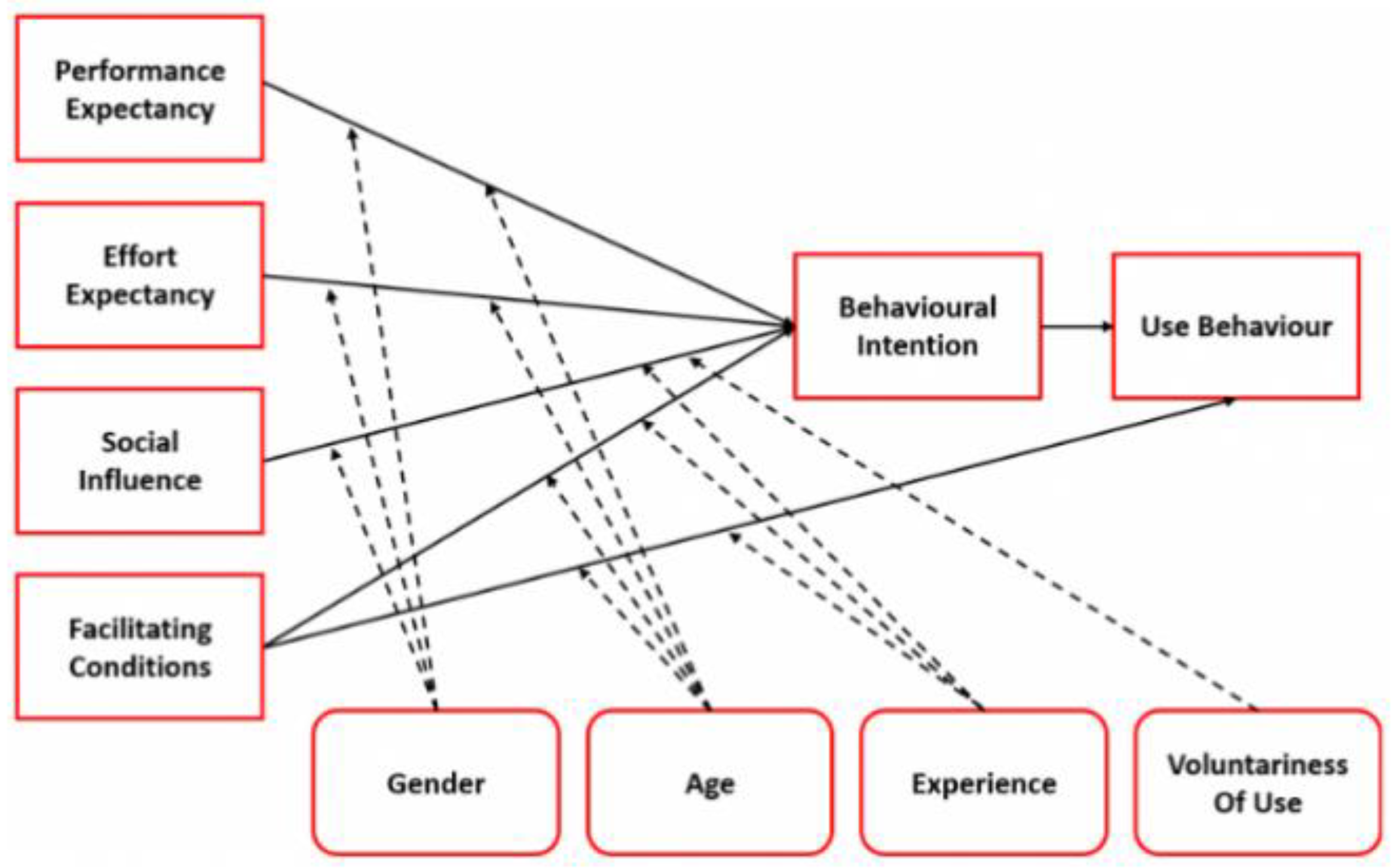
- Venkatesh, V.; Morris, M.G.; Davis, G.B.; Davis, F.D. User acceptance of information technology: Toward a unified view. Manag. Inf. Syst. Q. 2003, 27, 425–478. [Google Scholar] [CrossRef] [Scilit]
- Thrasher, A.; Zivanovic, V.; McIlroy, W.; Popovic, M.R. Rehabilitation of reaching and grasping function in severe hemiplegic patients using functional electrical stimulation therapy. Neurorehabil. Neural Repair 2008, 22, 706–714. [Google Scholar] [CrossRef] [Scilit]
- Kennedy, C.A.; Beaton, D.E.; Smith, P.; van Eerd, D.; Tang, K.; Inrig, T.; Hogg-Johnson, S.; Linton, D.; Couban, R. Measurement properties of the QuickDASH (disabilities of the arm, shoulder and hand) outcome measure and cross-cultural adaptations of the QuickDASH: A systematic review. Qual. Life Res. 2013, 22, 2509–2547. [Google Scholar] [CrossRef] [Scilit]
- Seyfarth, H.; Bülow, B.; Buchmann, J. Praktische Erfahrungen mit der Neutral-Null Durchgangsmethode. Beitr. Orthop. Traumatol. 1973, 20, 228–231. [Google Scholar]
- Gesetzliche Unfallversicherung. Messblatt Obere Extremität. Available online: https://www.dguv.de/medien/formtexte/aerzte/f_4222/f4222.pdf (accessed on 10 February 2023).
- Ware, J.E.; Kosinski, M.; Dewey, J.E. How to Score Version Two of the SF-36 Health Survey; QualityMetric: Lincoln, RI, USA, 2000; ISBN 978-1-891-81006-0. [Google Scholar]
- Kizony, R.; Katz, N.; Rand, D.; Weiss, P.L. A Short Feedback Questionnaire (SFQ) to enhance client-centered participation in virtual environments. In Proceedings of the 11th Annual Cyber Therapy Conference: Virtual Healing: Designing 4 Reality, Gatineau, QC, Canada, 5–8 May 2013. [Google Scholar]
- Gil-Gómez, J.-A.; Manzano-Hernández, P.; Albiol-Perez, S.; Aula-Valero, C.; Gil-Gómez, H.; Lozano-Quilis, J.A. SEQ: Suitability Evaluation Questionnaire for Virtual Rehabilitation Systems. Application in a virtual Rehabilitation system for balance rehabilitation. In Proceedings of the 2013 7th International Conference on Pervasive Computing Technologies in Healthcare and Workshops, Venice, Italy, 5–8 May 2013; pp. 335–338. [Google Scholar] [CrossRef]
- Taiwo, A.A.; Downe, A.G. The theory of user acceptance and use of technology (UTAUT). A meta-analytic review of empirical findings. J. Theor. Appl. Inf. Technol. 2013, 49, 48–58. [Google Scholar]
- Ebert, D.D.; Berking, M.; Cuijpers, P.; Lehr, D.; Pörtner, M.; Baumeister, H. Increasing the acceptance of internet based mental health interventions in primary care patients with depressive symptoms. A randomized controlled trial. J. Affect. Disord. 2015, 176, 9–17. [Google Scholar] [CrossRef] [Scilit]
- Niklas, S. Akzeptanz und Nutzung Mobiler Applikationen; Springer Gabler: Wiesbaden, Germany, 2015; ISBN 978-3-658-08262-8. [Google Scholar]
- Kuckartz, U. Introduction in Computer Based Analysis of Qualitative Data; VS Verlag für Sozialwissenschaften: Wiesbaden, Germany, 2010; ISBN 978-3-531-16661-2. [Google Scholar]
- Mayring, P. Qualitative Inhaltsanalyse. In Handbuch Qualitative Forschung in der Psychologie; Mey, G., Mruck, K., Eds.; VS Verlag für Sozialwissenschaften: Wiesbaden, Germany, 2010; ISBN 978-3-531-16726-8. [Google Scholar]
- Meijer, H.A.; Graafland, M.; Goslings, C.; Schijven, M.P. Systematic Review on the effects of serious games and Wearable technology used in rehabilitation of patients with traumatic bone and soft tissue injuries. Arch. Phys. Med. Rehabil. 2018, 99, 1890–1899. [Google Scholar] [CrossRef] [Scilit]
- Zernicke, J.; Kedor, C.; Müller, A.; Burmester, G.-R.; Reißhauer, A.; Feist, E. A prospective pilot study to evaluate an animated home-based physical exercise program as a treatment option for patients with rheumatoid arthritis. BMC Musculoskelet. Disord. 2016, 17, 351. [Google Scholar] [CrossRef] [Scilit] [PubMed]
- Brady, N.; Dejaco, B.; Lewis, J.; McCreesh, K.; McVeigh, J.G. Physiotherapist beliefs and perspectives on virtual reality supported rehabilitation for the management of musculoskeletal shoulder pain: A focus group study. PLoS ONE 2023, 18, e028444. [Google Scholar] [CrossRef] [Scilit] [PubMed]
- Tsekleves, E.; Paraskevopoulos, I.T.; Warland, A.; Kilbride, C. Development and preliminary evaluation of a novel low cost VR-based upper limb stroke rehabilitation platform using Wii technology. Disabil. Rehabil. Assist. Technol. 2016, 11, 413–422. [Google Scholar] [CrossRef] [Scilit] [PubMed]
- Warland, A.; Paraskevopoulos, I.; Tsekleves, E.; Ryan, J.; Nowicky, A.; Griscti, J.; Levings, H.; Kilbride, C. The feasibility, acceptability and preliminary efficacy of a low-cost, virtual-reality based, upper-limb stroke rehabilitation device: A mixed methods study. Disabil. Rehabil. 2019, 41, 2119–2134. [Google Scholar] [CrossRef] [Scilit] [PubMed]
- Afif, I.Y.; Farkhan, M.; Kurdi, O.; Maula, M.I.; Ammarullah, M.I.; Setiyana, B.; Jamari, J.; Winarni, T.I. Effect of Short-Term Deep-Pressure Portable Seat on Behavioral and Biological Stress in Children with Autism Spectrum Disorders: A Pilot Study. Bioengineering 2022, 9, 48. [Google Scholar] [CrossRef] [Scilit]
- Paolucci, S.; Di Vita, A.; Massicci, R.; Traballesi, M.; Bureca, I.; Matano, A.; Iosa, M.; Guariglia, C. Impact of participation on rehabilitation results: A multivariate study. Eur. J. Phys. Rehabil. Med. 2012, 48, 455–466. [Google Scholar]
- Jones, F.; Riazi, A. Self-efficacy and self-management after stroke: A systematic review. Disabil. Rehabil. 2011, 33, 797–810. [Google Scholar] [CrossRef] [Scilit]
- Hall, A.M.; Ferreira, P.H.; Maher, C.G.; Latimer, J.; Ferreira, M.L. The influence of the therapist-patient relationship on treatment outcome in physical rehabilitation: A systematic review. Phys. Ther. 2010, 90, 1099–1110. [Google Scholar] [CrossRef] [Scilit]
- Del Baño-Aledo, M.E.; Medina-Mirapeix, F.; Escolar-Reina, P.; Montilla-Herrador, J.; Collins, S.M. Relevant patient perceptions and experiences for evaluating quality of interaction with physiotherapists during outpatient rehabilitation: A qualitative study. Physiotherapy 2014, 100, 73–79. [Google Scholar] [CrossRef] [Scilit]
- Moore, A.J.; Holden, M.A.; Foster, N.E.; Jinks, C. Therapeutic alliance facilitates adherence to physiotherapy-led exercise and physical activity for older adults with knee pain: A longitudinal qualitative study. J. Physiother. 2020, 66, 45–53. [Google Scholar] [CrossRef] [Scilit]
- Tatla, S.K.; Shirzad, N.; Lohse, K.R.; Virji-Babul, N.; Hoens, A.M.; Holsti, L.; Li, L.C.; Miller, K.J.; Lam, M.Y.; van der Loos, H.F.M. Therapists’ perceptions of socialmedia and video game technologies in upper limb Rehabilitation. JMIR Serious Games 2015, 3, e3401. [Google Scholar] [CrossRef] [Scilit] [PubMed]
- Kelly, J.M.; Coppieters, M.W.; Kluver, J.; Deen, M.; Rio, E.; Harvie, D.S. “It made you feel like you’ve still got it”: Experiences of people with chronic low back pain undertaking a single session of body image training in virtual reality. Physiother. Theory Pract. 2022, 1–16. [Google Scholar] [CrossRef] [Scilit] [PubMed]
- Brady, N.; McVeigh, J.G.; McCreesh, K.; Rio, E.; Dekkers, T.; Lewis, J.S. Exploring the effectiveness of immersive Virtual Reality interventions in the management of musculoskeletal pain: A state-of-the-art review. Phys. Ther. Rev. 2021, 26, 262–275. [Google Scholar] [CrossRef] [Scilit]
- Miller, K.J.; Adair, B.S.; Pearce, A.J.; Said, C.M.; Ozanne, E.; Morris, M.M. Effectiveness and feasibility of virtual reality and gaming system use at home by older adults for enabling physical activity to improve health related domains: A systematic review. Age Ageing 2014, 43, 188–195. [Google Scholar] [CrossRef] [Scilit]
- Stocké, V. Entstehungsbedingungen von Antwortverzerrungen durch soziale Erwünschtheit-Ein Vergleich der Prognosen der Rational-Choice Theorie und des Modells der Frame-Selektion. Z. Soziologie 2004, 33, 303–320. [Google Scholar] [CrossRef] [Scilit]
- Birckhead, B.; Khalil, C.; Liu, X.; Conovitz, S.; Rizzo, A.; Danovitch, I.; Bullock, K.; Spiegel, B. Recommendations for Methodology of Virtual Reality Clinical Trials in Health Care by an International Working Group: Iterative Study. JMIR Ment. Health 2019, 6, e11973. [Google Scholar] [CrossRef] [Scilit]
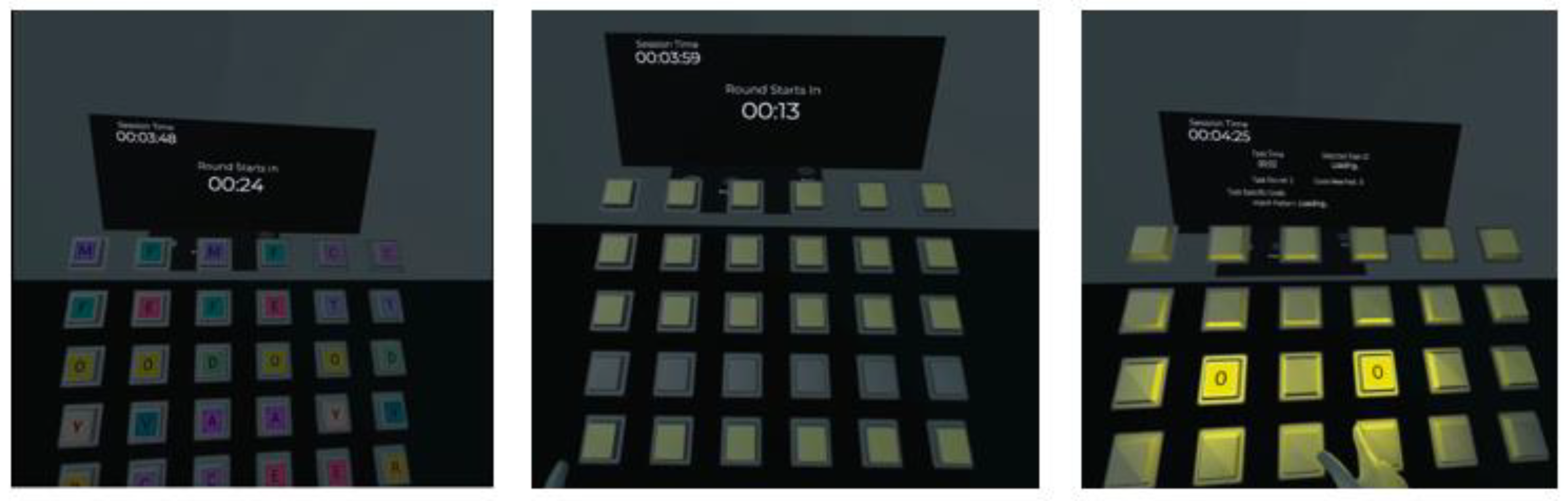
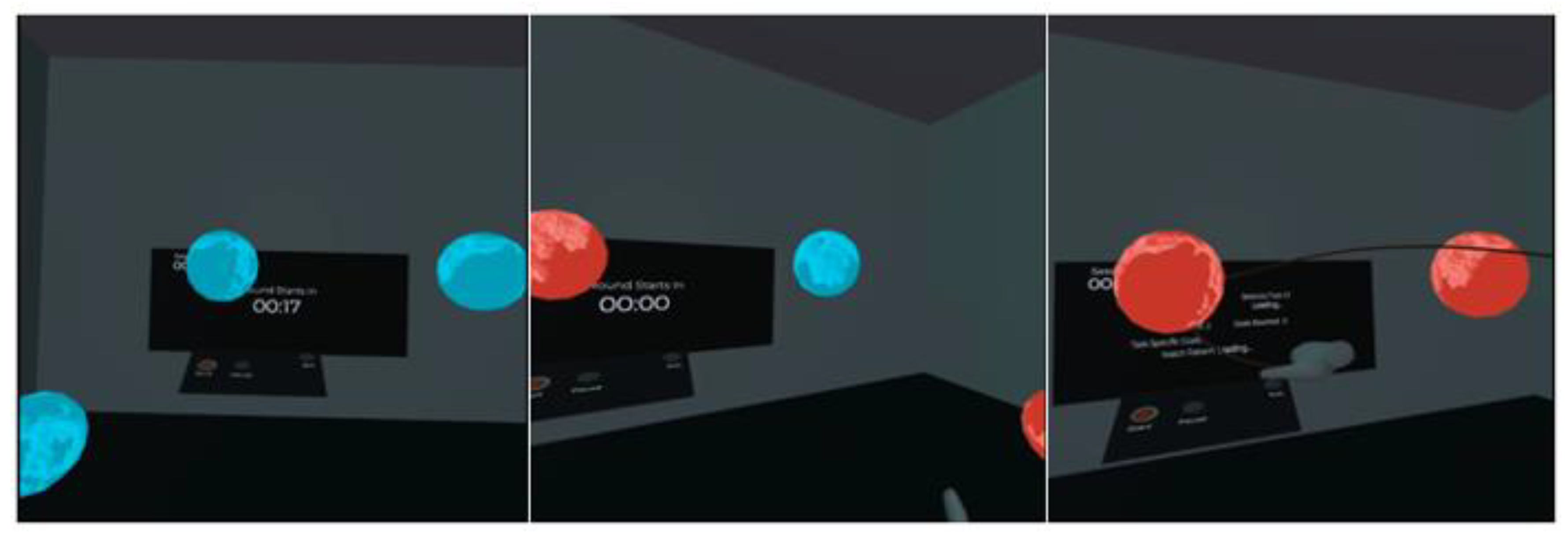
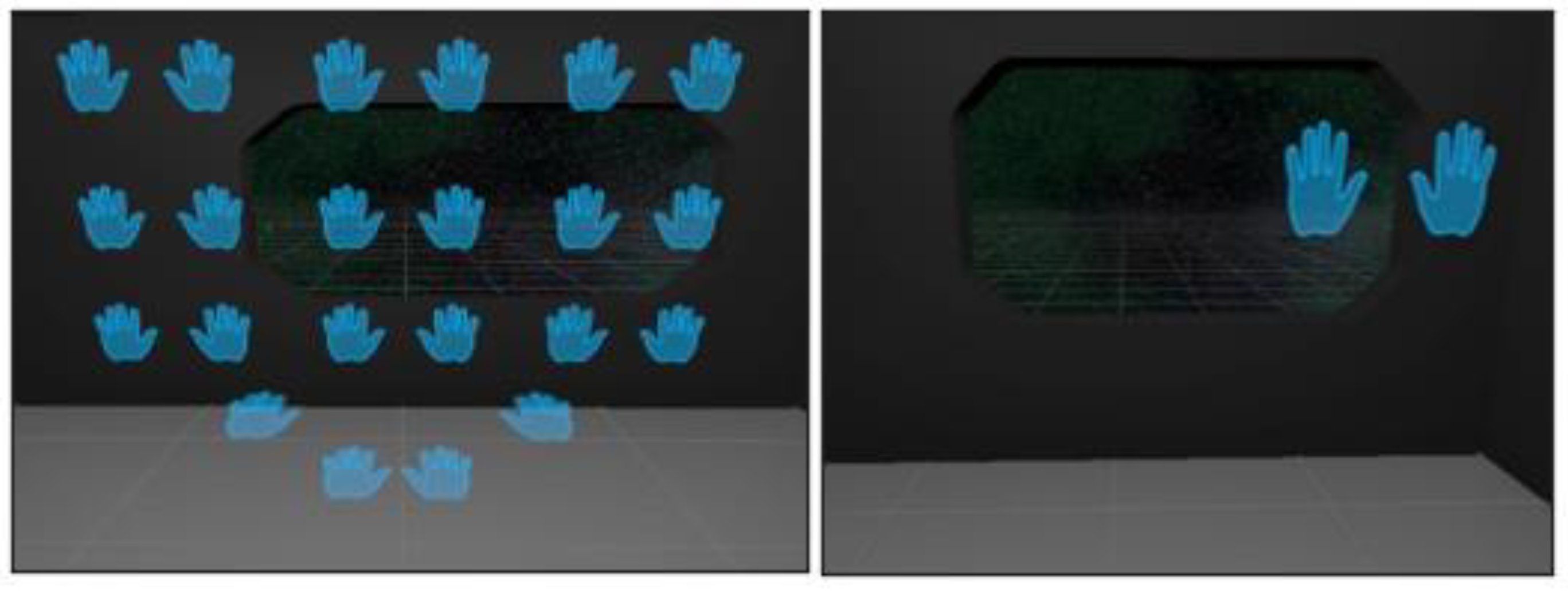

| Time Frame | Training Modality |
|---|---|
| At 9:00 a.m. | Heat therapy |
| At 9:30 a.m. | Medical training therapy |
| At 10:30 a.m. | VR training |
| At 11:00 a.m. | Lunch break |
| At 11:30 a.m. | Ergotherapy |
| At 12:30 p.m. | Progressive muscle relaxation |
| At 13:00 p.m. | Rest time |
| At 14:00 p.m. | Motion bath |
| Variable | N | |
|---|---|---|
| Gender | F:M | 2:3 |
| Age | Category | 31 to 40 years: 1 |
| 41 to 50 years: 2 | ||
| 51 to 60 years: 1 | ||
| Over 60 years: 1 | ||
| Level of education | Category | Lower-level employees: 1 |
| Upper-level employees: 4 | ||
| Indication for rehabilitation | Category | Following humeral fracture: 3 |
| Following injury of the shoulder: 2 | ||
| Site of lesion | Category | Left: 0 |
| Right: 5 | ||
| Previous VR use | Category | Yes: 2 |
| No: 3 | ||
| QuickDASH | Mean ± SD | |
| Baseline | 49.55 ± 7.08 | |
| Post-intervention (t2) | 44.55 ± 8.29 | |
| SF-36_MCS | Mean ± SD | |
| Baseline | 41.10 ± 17.07 | |
| Post-intervention (t2) | 43.36 ± 14.49 | |
| SF-36_PCS | Mean ± SD | |
| Baseline | 39.52 ± 4.54 | |
| Post-intervention (t2) | 42.04 ± 7.09 | |
| VAS | Mean ± SD | |
| Baseline | 2.60 ± 2.51 | |
| Post-intervention (t2) | 3.00 ± 2.92 |
| Body Area | Movement Measured | Mean ± SD |
|---|---|---|
| Shoulder | Abduction baseline | 89.00 ± 24.60 |
| Abduction post-intervention (t2) | 115.00 ± 32.79 | |
| Shoulder | Extension baseline | 42.00 ± 28.85 |
| Extension post-intervention (t2) | 34.00 ± 11.40 | |
| Shoulder | Flexion baseline | 98.00 ± 56.30 |
| Flexion post-intervention (t2) | 133.00 ± 27.30 | |
| Elbow | Extension baseline | 6.00 ± 8.22 |
| Extension post-intervention (t2) | 5.00 ± 4.47 | |
| Elbow | Flexion baseline | 97.00 ± 68.34 |
| Flexion post-intervention (t2) | 146.00 ± 8.94 |
| Question | Mean ± SD after the First Session | Mean ± SD after the Fifth Session | Mean ± SD after the Fifteenth Session |
|---|---|---|---|
| Q1: How much did you enjoy your experience with the system? | 2.8 ± 1.79 | 3.4 ± 0.55 | 2.2 ± 1.30 |
| Q2: How much did you sense to be in the environment of the system? | 3.2 ± 1.30 | 3.6 ± 0.89 | 2.6 ± 1.52 |
| Q3: How successful were you in the system? | 2.8 ± 1.64 | 3.6 ± 1.14 | 2.8 ± 1.79 |
| Q4: To what extent were you able to control the system? | 3.0 ± 1.87 | 4.0 ± 1.23 | 2.6 ± 1.52 |
| Q5: How real is the virtual environment of the system? | 3.2 ± 1.09 | 3.8 ± 0.84 | 2.6 ± 1.52 |
| Q6: Is the information provided by the system clear? | 2.8 ± 1.64 | 4.00 ± 1.00 | 2.8 ± 0.84 |
| Q7: Did you feel discomfort during your experience with the system? | 2.4 ± 1.14 | 1.8 ± 1.82 | 1.0 ± 0.06 |
| Q8: Did you experience dizziness or nausea during your use of the system? | 1.0 ± 0.06 | 1.0 ± 0.06 | 1.0 ± 0.06 |
| Q9: Did you experience eye discomfort during your use of the system? | 1.2 ± 0.45 | 1.4 ± 0.89 | 1.0 ± 0.06 |
| Q10: Did you feel confused or disoriented during your experience with the system? | 1.8 ± 1.30 | 1.0 ± 0.06 | 1.0 ± 0.06 |
| Q11: Do you think that this system will be helpful for your rehabilitation? | 1.8 ± 1.09 | 3.0 ± 1.03 | 2.4 ± 1.34 |
| Q12: Did you find the task difficult? | 2.4 ± 1.01 | 2.6 ± 0.55 | 2.4 ± 1.67 |
| Q13: Did you find the devices of the system difficult to use? | 2.4± 1.01 | 2.4 ± 1.04 | 2.4 ± 1.67 |
| Q14: If you felt uncomfortable during the task, please indicate the reasons. | Open response | ||
| T: Global Score | 44.4 ± 2.61 | 50.4 ± 1.27 | 45.2 ± 2.19 |
Disclaimer/Publisher’s Note: The statements, opinions and data contained in all publications are solely those of the individual author(s) and contributor(s) and not of MDPI and/or the editor(s). MDPI and/or the editor(s) disclaim responsibility for any injury to people or property resulting from any ideas, methods, instructions or products referred to in the content. |
© 2023 by the authors. Licensee MDPI, Basel, Switzerland. This article is an open access article distributed under the terms and conditions of the Creative Commons Attribution (CC BY) license (https://creativecommons.org/licenses/by/4.0/).
Share and Cite
Tokgöz, P.; Wähnert, D.; Elsner, A.; Schack, T.; Cienfuegos Tellez, M.A.; Conrad, J.; Vordemvenne, T.; Dockweiler, C. Virtual Reality for Upper Extremity Rehabilitation—A Prospective Pilot Study. Healthcare 2023, 11, 1498. https://doi.org/10.3390/healthcare11101498
Tokgöz P, Wähnert D, Elsner A, Schack T, Cienfuegos Tellez MA, Conrad J, Vordemvenne T, Dockweiler C. Virtual Reality for Upper Extremity Rehabilitation—A Prospective Pilot Study. Healthcare. 2023; 11(10):1498. https://doi.org/10.3390/healthcare11101498
Chicago/Turabian StyleTokgöz, Pinar, Dirk Wähnert, Andreas Elsner, Thomas Schack, Miguel Angel Cienfuegos Tellez, Jens Conrad, Thomas Vordemvenne, and Christoph Dockweiler. 2023. "Virtual Reality for Upper Extremity Rehabilitation—A Prospective Pilot Study" Healthcare 11, no. 10: 1498. https://doi.org/10.3390/healthcare11101498
APA StyleTokgöz, P., Wähnert, D., Elsner, A., Schack, T., Cienfuegos Tellez, M. A., Conrad, J., Vordemvenne, T., & Dockweiler, C. (2023). Virtual Reality for Upper Extremity Rehabilitation—A Prospective Pilot Study. Healthcare, 11(10), 1498. https://doi.org/10.3390/healthcare11101498

