Article

Evaluating the Performances of Biomarkers over a Restricted Domain of High Sensitivity
by
Manuel Franco
1,2,* and
Juana-María Vivo
1,2,*
1
Department of Statistics and Operations Research, University of Murcia, CEIR Campus Mare Nostrum, 30100 Murcia, Spain
2
Bio-Health Research Institute of Murcia (IMIB-Arrixaca), 30120 Murcia, Spain
*
Authors to whom correspondence should be addressed.
Mathematics 2021, 9(21), 2826; https://doi.org/10.3390/math9212826
Submission received: 12 October 2021 / Revised: 1 November 2021 / Accepted: 2 November 2021 / Published: 7 November 2021
(This article belongs to the Special Issue Models and Methods in Bioinformatics: Theory and Applications)

Abstract

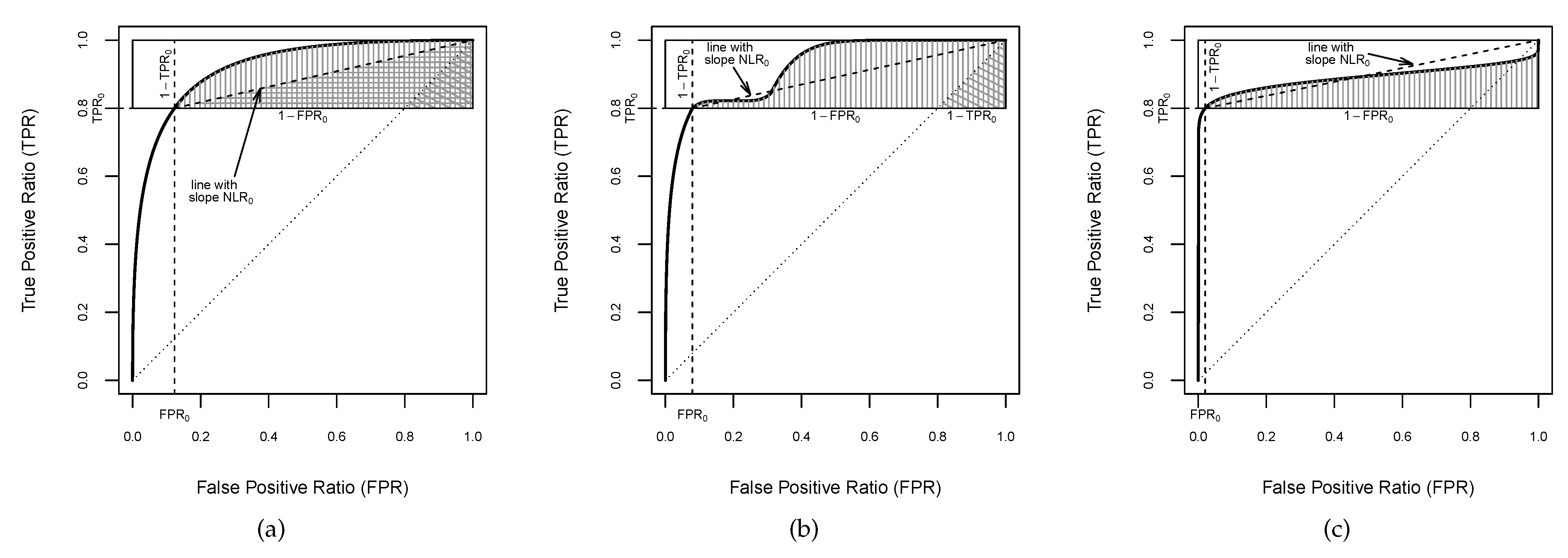
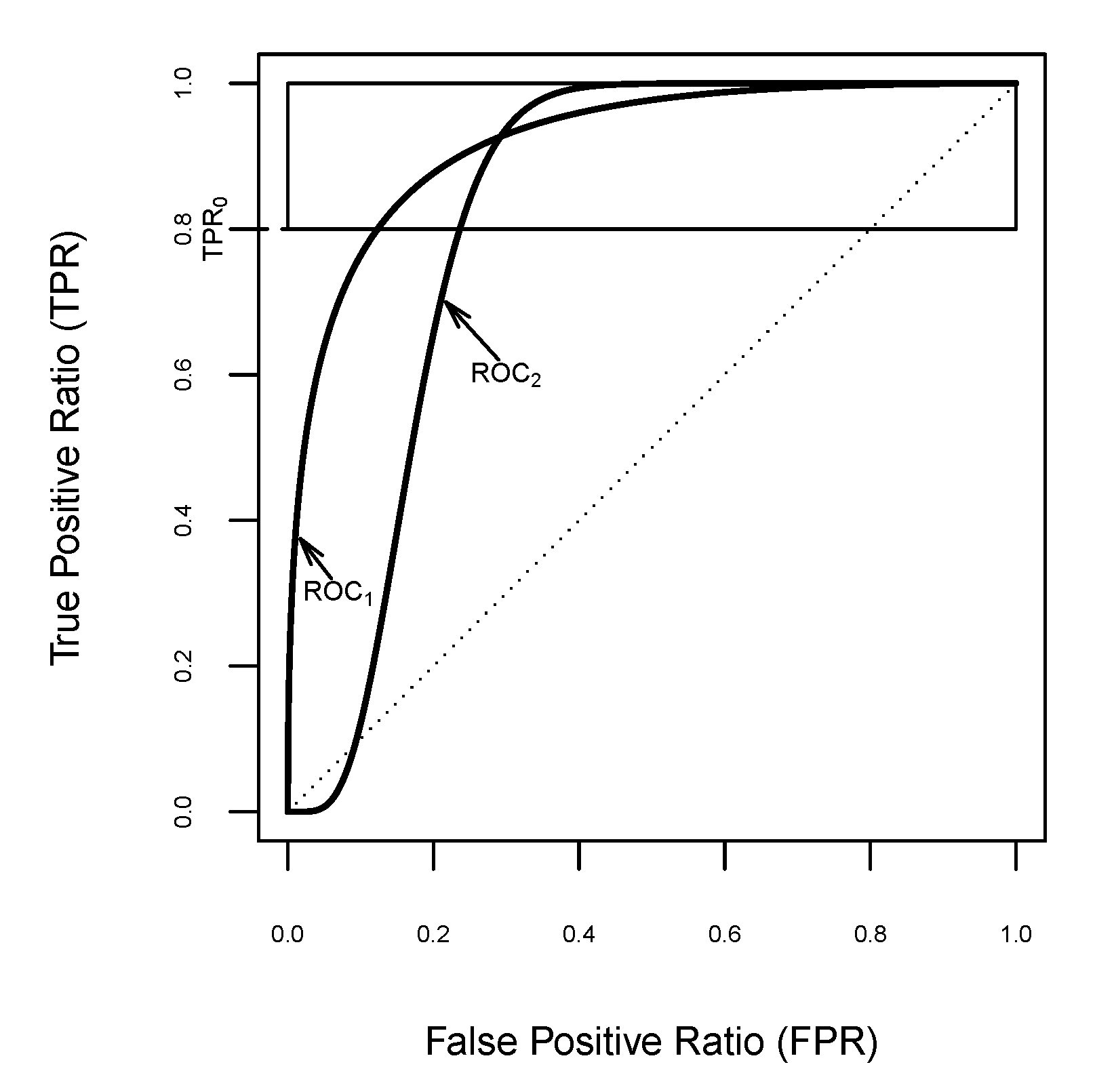
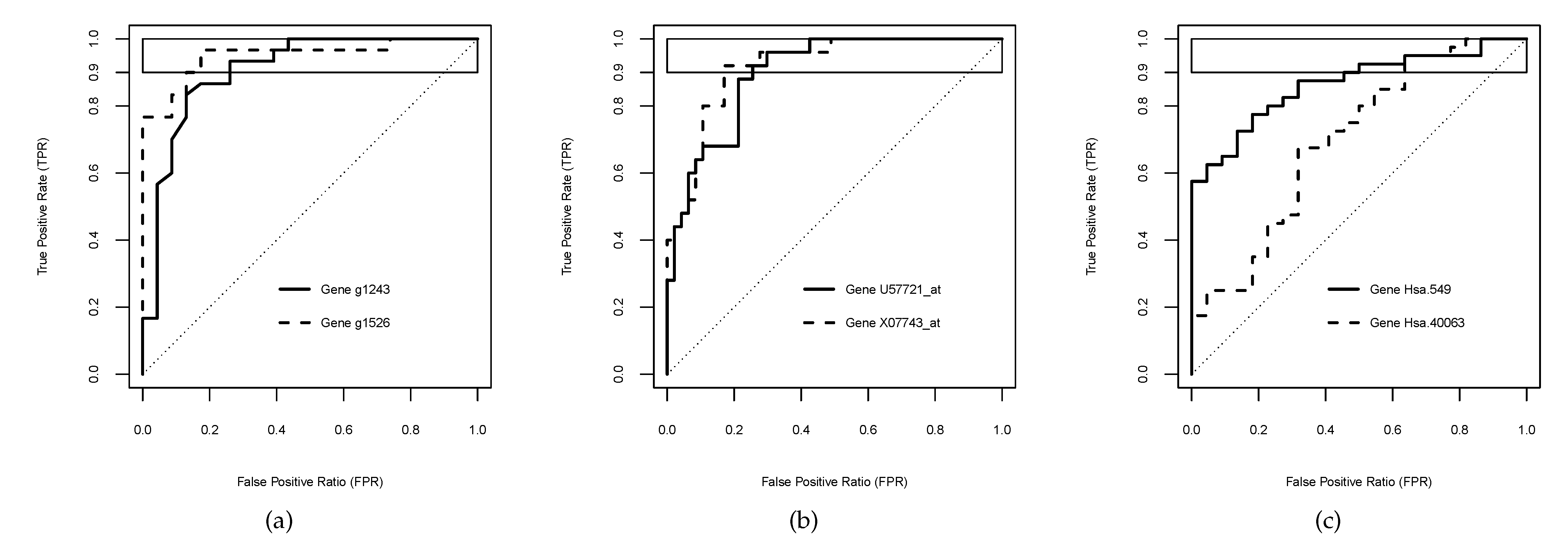
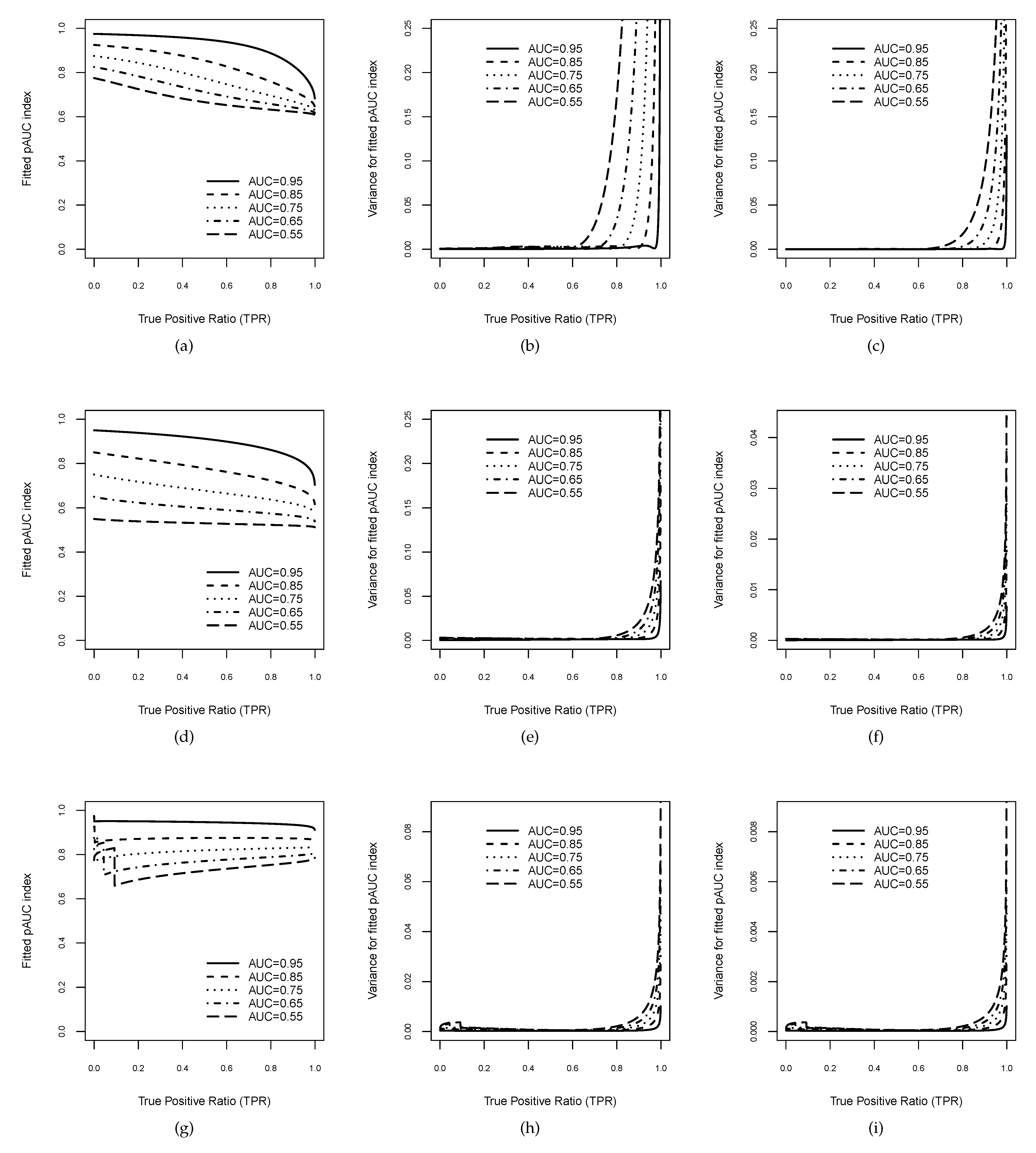
The burgeoning advances in high-throughput technologies have posed a great challenge to the identification of novel biomarkers for diagnosing, by contemporary models and methods, through bioinformatics-driven analysis. Diagnostic performance metrics such as the partial area under the ROC (pAUC) indexes exhibit limitations to analysing genomic data. Among other issues, the inability to differentiate between biomarkers whose ROC curves cross each other with the same pAUC value, the inappropriate expression of non-concave ROC curves, and the lack of a convenient interpretation, restrict their use in practice. Here, we have proposed the fitted partial area index (FpAUC), which is computable through an algorithm valid for any ROC curve shape, as an alternative performance summary for the evaluation of highly sensitive biomarkers. The proposed approach is based on fitter upper and lower bounds of the pAUC in a high-sensitivity region. Through variance estimates, simulations, and case studies for diagnosing leukaemia, and ovarian and colon cancers, we have proven the usefulness of the proposed metric in terms of restoring the interpretation and improving diagnostic accuracy. It is robust and feasible even when the ROC curve shows hooks, and solves performance ties between competitive biomarkers.
Keywords: ROC partial area; scaled partial area index; high sensitivity; negative diagnostic likelihood ratio; variance of FpAUC; biomarker performance; genomic data ROC partial area; scaled partial area index; high sensitivity; negative diagnostic likelihood ratio; variance of FpAUC; biomarker performance; genomic data