1. Introduction
Electromagnetic (EM) coupling and interference represent persistent and escalating challenges in high-frequency communication systems. As component densities increase and operating frequencies approach the GHz and mmWave ranges—especially in 5G, Internet of Things (IoT), and high-speed interconnects—unwanted coupling among substrate layers, adjacent traces, or antenna elements degrades signal integrity, raises bit-error rates, and causes power losses [
1,
2,
3,
4]. Traditional methods of isolation—such as Buried Diffused Layers (BDL), metallized grids, guard rings, electromagnetic band gap (EBG) surfaces, and substrate doping—have been employed to reduce coupling, but each exhibits limitations as frequency, bandwidth, or integration scale increases [
5,
6,
7,
8].
For example, Buell et al. demonstrated metamaterial isolation walls to suppress mutual coupling in dense patch-antenna arrays using engineered surfaces and bandgap structures. The improvements were significant (≈20+ dB reduction in coupling) in certain spacing configurations [
9]. Another study introduced bar-via fences at substrate edges to suppress edge radiation and improve shielding performance, showing that physical layout and via structures still have strong impacts even in later stages of design [
10]. More recently, designs integrating guard ring techniques have shown promise: optimizing guard ring geometries and embedding isolated pockets has achieved better isolation performance in antenna systems over a wide frequency span [
11]. Yet, the trade-offs—fabrication complexity, substrate cost, insertion loss, and footprint—often limit how far these structural techniques can go [
12].
Parallel to structural/physical methods, algorithmic and optimization techniques have gained traction. Evolutionary algorithms, particle swarm optimization (PSO), genetic algorithms (GA), and other metaheuristics have been applied to tune geometry, material properties, and layout parameters to balance isolation vs. insertion loss vs. size [
5,
6,
7,
13,
14,
15]. In some cases, machine learning models (neural networks, support vector machines) have been used to predict isolation metrics from design parameters and guide optimization [
8,
16,
17,
18]. These approaches reduce design time and allow exploration of large design spaces that would be impractical via physical prototyping alone.
Game theory, however, remains under-explored in the field of EM isolation and substrate engineering. Game-theoretic frameworks have been successfully deployed in other domains involving strategic trade-offs (e.g., energy systems [
19], virtual coupling in transport networks [
20], power control in wireless systems [
21]) but have rarely been applied to model interactions among isolation techniques (e.g., BDL vs. metallized grid vs. guard ring) as strategic players, each with its own cost, performance, and constraints. A game-theoretic approach could allow structured trade-off modeling; for instance, isolation vs. size vs. insertion loss vs. manufacturing cost. Nash equilibria or Stackelberg games may provide stable design configurations; cooperative games might allow combination of techniques to share “costs” (e.g., area, complexity) for mutual benefit.
Considering the existing methods (physical isolation, metamaterials, guard rings, via fences), optimization and ML techniques, and limited game theory use in related fields, there is a significant gap (i) in unifying structural isolation methods under a strategic/game-theoretic framework and (ii) in optimizing multi-objective trade-offs among conflicting metrics at GHz/mmWave frequencies.
The main contribution of this work lies in introducing a game-theoretic equilibrium framework for electromagnetic isolation design in high-frequency communication systems. Unlike conventional optimization approaches that treat design variables as part of a single global objective, the proposed formulation models different isolation mechanisms as interacting strategic components whose decisions jointly influence system-level performance. By embedding the equilibrium computation within a multi-objective optimization framework, the proposed approach enables the identification of stable and Pareto-efficient design configurations that balance electromagnetic coupling suppression, insertion loss, and fabrication complexity. This mathematical formulation provides a structured methodology for analyzing trade-offs in electromagnetic system design.
The main contributions of this work can be summarized as follows:
Game-theoretic formulation: Electromagnetic isolation mechanisms are modeled as players in a finite non-cooperative game, allowing the design process to capture interactions between competing isolation techniques.
Multi-objective equilibrium optimization: The Nash equilibrium search is embedded within a multi-objective framework that simultaneously considers coupling suppression, insertion loss, and fabrication complexity.
Full-wave simulation validation: The proposed framework is validated through electromagnetic simulations over the 2–12 GHz frequency range, demonstrating substantial improvements in isolation compared with conventional techniques.
Pareto trade-off analysis: The equilibrium solutions are interpreted using Pareto front analysis, revealing balanced configurations that maintain high shielding effectiveness while controlling manufacturing complexity.
This paper is organized as follows:
Section 2 surveys existing isolation and optimization techniques relevant to this study (structural, metamaterials, algorithms, and game theory).
Section 3 introduces the game-theoretic model of electromagnetic isolation, involving the description of players, utilities, strategies, constraints and objectives. This section also describes the optimization methods used to find equilibrium configurations (multi-objective optimization, possibly metaheuristics, ML-assisted search).
Section 4 presents simulation setup and results—frequency responses, coupling (S21, etc.), trade-off curves. A discussion on the practical aspects, limitations and comparisons with classical methods appears in
Section 5. The paper closes with
Section 6, which summarizes the work and suggests directions for future research.
3. Proposed Framework
3.1. Overview
The goal of the proposed framework is to enhance electromagnetic (EM) isolation in high-frequency systems by modeling substrate isolation techniques as strategic players in a non-cooperative game. Each technique—such as Buried Diffused Layer (BDL) interruption, metallized grids, guard rings, or electromagnetic bandgap (EBG) surfaces—pursues the objective of minimizing EM coupling while accounting for the practical trade-offs of fabrication complexity, insertion loss, and footprint. In a game-theoretic formulation, these techniques are treated as interacting decision variables, and the design settles at an equilibrium that balances the competing objectives and maintains robust isolation across wide frequency ranges.
3.2. Game-Theoretic Model
We introduce the isolation design as a game with the following components:
Players (): Each isolation technique (e.g., Interrupted BDL, Metallized Grid, Guard Ring, EBG).
Strategy Set (): Design variables for player such as doping density, grid spacing, or ring width.
Utility Function (): The benefit gained by player in terms of improved isolation and reduced cost.
Formally,
where
represents the four players (isolation techniques).
In the proposed framework, the isolation mechanisms are modeled as players within a non-cooperative game. It is important to emphasize that these players do not represent independent physical agents or autonomous decision-makers. Instead, they correspond to design mechanisms or controllable structural parameters within the electromagnetic system.
The game-theoretic formulation therefore serves as a mathematical abstraction that captures the interaction among multiple design variables that simultaneously influence system performance. Each isolation technique—such as interrupted BDL structures, metallized grids, guard rings, and electromagnetic bandgap surfaces—can be adjusted during the design stage. Modeling them as players allows the optimization process to account for the competing objectives associated with electromagnetic isolation, insertion loss, and fabrication complexity.
Through this abstraction, the equilibrium solution represents a balanced design configuration in which no single mechanism can improve its performance contribution without negatively affecting other design objectives.
3.3. Utility Function Formulation
Each player aims to minimize electromagnetic coupling (
), reduce insertion loss (
), and control fabrication cost (
). A weighted utility function is defined as:
where
are weighting coefficients representing the relative importance of isolation performance, insertion loss, and fabrication cost, respectively.
denotes the coupling parameter resulting from the interaction of all players’ strategies.
represents the insertion loss determined by the combined configuration of isolation mechanisms.
is the fabrication complexity associated with the strategy selected by player .
Electromagnetic performance metrics and are obtained through full-wave electromagnetic simulations in which the geometric parameters defined by the strategy variables determine the physical configuration of the isolation structures. For each strategy profile , the simulator computes the corresponding scattering parameters. Consequently, both and depend implicitly on the combined strategies of all players.
The fabrication complexity term is modeled as a normalized cost metric reflecting structural complexity, including geometric density, additional processing steps, and layout modifications required by each isolation mechanism. This formulation allows the game-theoretic utilities to capture the trade-off between electromagnetic performance and practical manufacturability.
3.4. Nash Equilibrium
A Nash equilibrium (NE) occurs when no player can improve its own utility by unilaterally changing its strategy while all other players keep theirs fixed. Formally:
where
is the equilibrium strategy of player ;
represents the equilibrium strategies of all other players;
denotes any alternative strategy of player ;
is the utility function of player ;
is the set of players (here, isolation techniques).
Proposition 1. Let be the non-cooperative game defined in Section 3.2. If the set of players is finite, each strategy space is nonempty and bounded, and each utility function is continuous and bounded on the feasible strategy domain, then the proposed game admits at least one Nash equilibrium. Proof. Since the number of players is finite and each player has a bounded feasible strategy space determined by practical design constraints, while the utility functions are continuous and bounded with respect to the strategy variables, the game satisfies the standard assumptions for the existence of at least one equilibrium in finite non-cooperative games. Therefore, by classical Nash equilibrium existence results, the proposed game admits at least one Nash equilibrium. □
The result stated in Proposition 1 establishes the theoretical basis for equilibrium existence in the proposed framework. In the present problem, the strategy spaces are restricted by practical engineering constraints such as feasible ranges of grid pitch, guard ring width, and substrate interruption spacing, while the utility functions depend on measurable electromagnetic performance metrics such as , , and the normalized fabrication complexity index. These properties ensure that the equilibrium analysis is mathematically well-posed.
Uniqueness, however, is not strictly guaranteed because the multi-objective optimization landscape may produce several equilibrium configurations along the Pareto frontier. In multi-objective design problems, different combinations of strategies may achieve comparable performance levels while satisfying the equilibrium condition.
In such situations, the proposed framework adopts Pareto optimality as the primary selection criterion. Among the candidate equilibrium configurations, the preferred solution is the one that provides the most balanced compromise between electromagnetic coupling suppression, insertion loss, and fabrication complexity. In other words, the selected equilibrium lies on the Pareto frontier and represents a stable configuration that avoids extreme optimization of a single objective.
In the simulations conducted in this work, the iterative best-response process consistently converged toward a single stable equilibrium solution. This behavior indicates that the obtained configuration is numerically stable and robust with respect to small variations in the design parameters.
At equilibrium, each isolation technique (player) selects a strategy (e.g., interruption spacing, grid pitch, guard ring width) such that no single technique can improve its isolation versus cost trade-off without cooperation or without other mechanisms simultaneously adjusting their strategies. This ensures a stable design point where performance and fabrication constraints remain balanced.
3.5. Strategy Space and Design Variables
To evaluate the robustness and effectiveness of the proposed game-theoretic framework, we first define the strategy space and the corresponding design variables for each isolation technique. The strategy space is simply the set of feasible design choices for each “player” in the game, such as BDL interruption spacing or metallized-grid pitch. Making these parameters explicit keeps the optimization grounded in realistic engineering limits rather than abstract assumptions.
Table 1 summarizes the strategy spaces and variable ranges used in this work for the considered isolation techniques. By formalizing these ranges up front, the optimization proceeds within practical constraints on geometry, materials, and layout, and the resulting equilibria can be interpreted and implemented in standard design flows.
The selected ranges of the design variables are intentionally bounded to remain consistent with practical fabrication constraints and commonly used manufacturing limits. Parameters such as grid pitch, guard ring width, and substrate interruption spacing were chosen to ensure compatibility with typical lithographic and substrate processing capabilities. Expanding these ranges could potentially reveal additional equilibrium configurations; however, doing so requires careful integration of design rule check (DRC) and design-for-manufacturability (DFM) constraints to avoid unrealistic or non-fabricable structures. Future work will therefore explore extended strategy spaces while explicitly incorporating such manufacturability constraints into the optimization process.
3.6. Multi-Objective Optimization
The equilibrium search is embedded in a multi-objective optimization framework to balance isolation and system performance. The multi-objective optimization problem is defined with respect to the joint strategy vector
of all isolation mechanisms:
subject to design constraints such as substrate thickness, permittivity, and physical size.
Pareto-optimal configurations are obtained by exploring the strategy space, and the equilibrium solution corresponds to a strategy profile that satisfies both Nash equilibrium conditions and Pareto efficiency.
The computational complexity of the proposed equilibrium-based optimization framework depends primarily on the number of isolation mechanisms (players), the dimensionality of their strategy spaces, and the number of iterations required for convergence of the best-response process.
Let denote the number of isolation mechanisms and the number of candidate strategies for player .
A naive exhaustive search over all configurations would require evaluating approximately
possible combinations, which quickly becomes computationally infeasible when the number of design variables increases.
In contrast, the proposed equilibrium-based approach reduces the search effort by iteratively updating strategies according to the best-response rule. At each iteration, only the strategies of a single player are optimized while the others remain fixed. The approximate computational cost can therefore be expressed as
where
denotes the number of iterations required for convergence and
represents the average number of strategies evaluated per player.
This structure significantly improves scalability compared with exhaustive exploration while still enabling the identification of Pareto-efficient equilibrium configurations that balance electromagnetic isolation, insertion loss, and fabrication complexity.
Although the present implementation uses a sequential best-response update scheme, the equilibrium search process can be further accelerated through parallel computing strategies in which multiple candidate strategies are evaluated simultaneously. In addition, machine-learning-assisted surrogate models could be integrated to approximate electromagnetic responses and reduce the number of full-wave simulations required during the optimization process. These directions represent promising opportunities for improving scalability in future implementations of the proposed framework.
3.7. Simulation-Based Validation and Metrics
The proposed game-theoretic framework is validated through electromagnetic simulations conducted over a frequency range of 2–12 GHz. For each strategy configuration, several performance metrics are extracted in order to evaluate the effectiveness of the isolation mechanisms:
- -
Coupling parameter (dB): measures the level of electromagnetic coupling between components.
- -
Insertion loss (dB): evaluates signal reflection and transmission efficiency.
- -
Shielding effectiveness (SE): quantifies the capability of the isolation structure to suppress electromagnetic interference.
- -
Fabrication complexity index (FCI): a normalized metric representing the relative manufacturing complexity of each configuration.
The simulation results obtained for different strategy combinations are used to compute the utility values of the corresponding players and to identify equilibrium configurations. These results are also compared with baseline isolation techniques in order to assess the performance improvement provided by the proposed framework.
The equilibrium strategies are determined using an iterative best-response procedure. In this process, each isolation mechanism sequentially updates its design variables while the strategies of the remaining mechanisms remain temporarily fixed. This sequential update continues until the strategy vector stabilizes.
Convergence of the algorithm is evaluated by monitoring the difference between strategy vectors in two successive iterations. Specifically, equilibrium is considered to be reached when
where
denotes the strategy vector at iteration
, and
is a predefined tolerance parameter.
The equilibrium computation begins by initializing the strategy variables of all isolation mechanisms within the feasible design ranges specified in
Table 1. These initial strategies correspond to realistic design configurations for parameters such as BDL interruption spacing, metallized grid pitch, guard ring width, and EBG periodicity.
At each iteration, one mechanism updates its strategy according to the best-response rule in order to improve its utility, while the strategies of the other mechanisms remain fixed. The algorithm terminates when either the convergence condition in (6) is satisfied or when a predefined maximum number of iterations is reached.
The best-response procedure implemented in Algorithm 1 provides a practical numerical approach for computing Nash equilibrium solutions of the proposed game. By iteratively updating the strategies of each player while keeping the others fixed, the algorithm converges to a strategy profile that satisfies the Nash equilibrium condition defined in Equation (3).
| Algorithm 1. Best-Response Equilibrium Search |
| Initialize strategies S = {S1, S2, …, SN} within feasible ranges |
| Repeat |
| For each player i = 1…N |
| Compute best-response strategy Si* |
| Update strategy Si ← Si* |
| End |
| Until ||S(t + 1) − S(t)|| < ε or maximum iterations reached |
| Return equilibrium strategy vector S* |
In the simulations performed in this work, the best-response iterations consistently converged to stable configurations within a limited number of iterations. To assess the sensitivity of the algorithm to initialization, multiple feasible starting configurations were tested. The resulting equilibrium solutions exhibited consistent performance metrics, demonstrating the numerical stability and robustness of the proposed optimization framework.
3.8. Expected Outcomes
The proposed framework is anticipated to deliver the following key outcomes:
Superior Isolation: Achieving coupling reductions in the range of 30–40 dB across GHz frequencies.
Balanced Trade-offs: Maintaining low insertion loss and reasonable fabrication costs compared to single-method isolation techniques.
Scalability: Ensuring applicability across multiple frequency domains, including sub-6 GHz, mmWave, and even THz systems.
Robustness: Providing stable performance under varying substrate properties and material conditions through equilibrium-driven optimization.
4. Simulation Setup and Results
4.1. Simulation Objectives
The primary objective of this study is to validate the effectiveness of the proposed game-theoretic optimization framework for electromagnetic isolation in high-frequency communication systems. The simulations are designed to:
Quantify the isolation improvement () achieved compared to conventional methods.
Evaluate trade-offs in insertion loss () and fabrication complexity.
Demonstrate scalability across the GHz frequency spectrum.
Benchmark the equilibrium-based solution against both single and hybrid isolation techniques.
The present study focuses on the 2–12 GHz frequency range in order to validate the proposed game-theoretic optimization framework under representative high-frequency communication conditions while maintaining manageable computational complexity for full-wave simulations. It is important to note that the proposed framework is not restricted to this specific frequency band, since the equilibrium formulation depends primarily on the interaction between isolation mechanisms and their design variables rather than on frequency-specific assumptions. By appropriately scaling the geometric parameters of the isolation structures—such as BDL interruption spacing, metallized grid pitch, guard ring width, and EBG periodicity—the same optimization framework can be extended to mmWave frequency bands (28–60 GHz). This extension represents a promising direction for future work.
4.2. Simulation Environment
All models were implemented in a full-wave 3D electromagnetic solver (Ansys HFSS) with the following setup:
Frequency Range: 2–12 GHz (covering sub-6 GHz and lower mmWave bands).
Substrate: High-resistivity silicon, thickness = 500 µm, relative permittivity .
Conductive Layers: Copper with conductivity .
Excitations: Two waveports used to extract scattering parameters.
Boundary Conditions: Perfectly matched layers (PML) to suppress artificial reflections.
Optimization Process: Each isolation technique is modeled as a “player” adjusting its design variables. Strategies are updated iteratively until equilibrium is reached.
4.3. Configurations for Comparison
Six design configurations were analyzed to benchmark the proposed method against standard approaches (see
Table 2).
4.4. Coupling Parameter Results ()
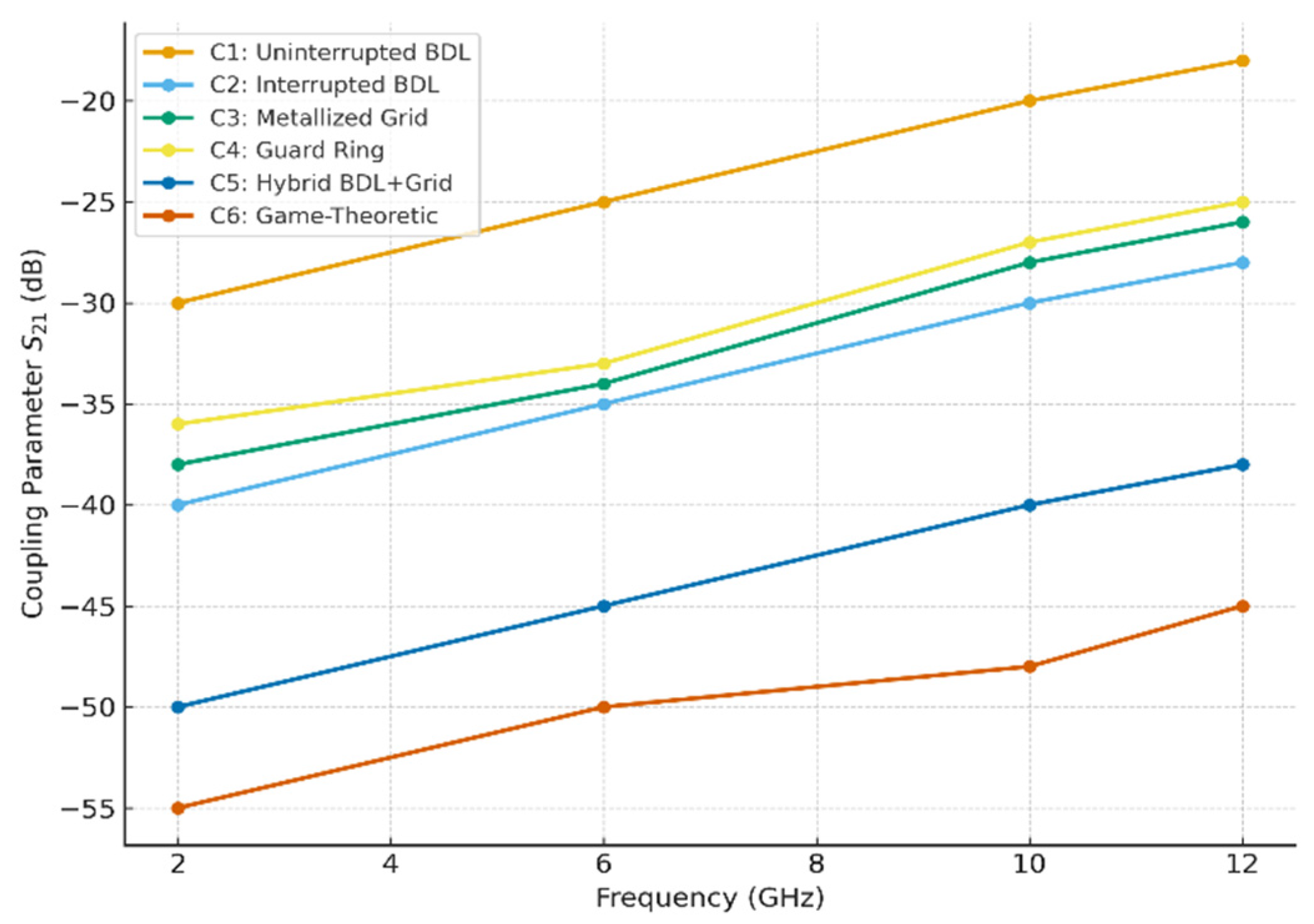
Table 3 summarizes the frequency-wise values of the coupling parameter
for all considered configurations. As shown in
Table 3, the proposed game-theoretic model (C6) consistently achieves the lowest coupling levels across the entire frequency range.
Figure 1 illustrates the variation of
across frequency for all six cases, providing a visual comparison of the isolation performance.
- -
The baseline BDL (C1) performs worst, dropping below –20 dB at higher frequencies.
- -
The guard ring (C4) improves isolation moderately (~5–8 dB better than C1), but lags behind interrupted BDL (C2) and metallized grid (C3).
- -
Hybrid BDL + Grid (C5) delivers strong isolation (~20 dB improvement over C1).
- -
The proposed game-theoretic model (C6) consistently outperforms all others, maintaining isolation better than –45 dB at 12 GHz.
4.5. Insertion Loss Results ()
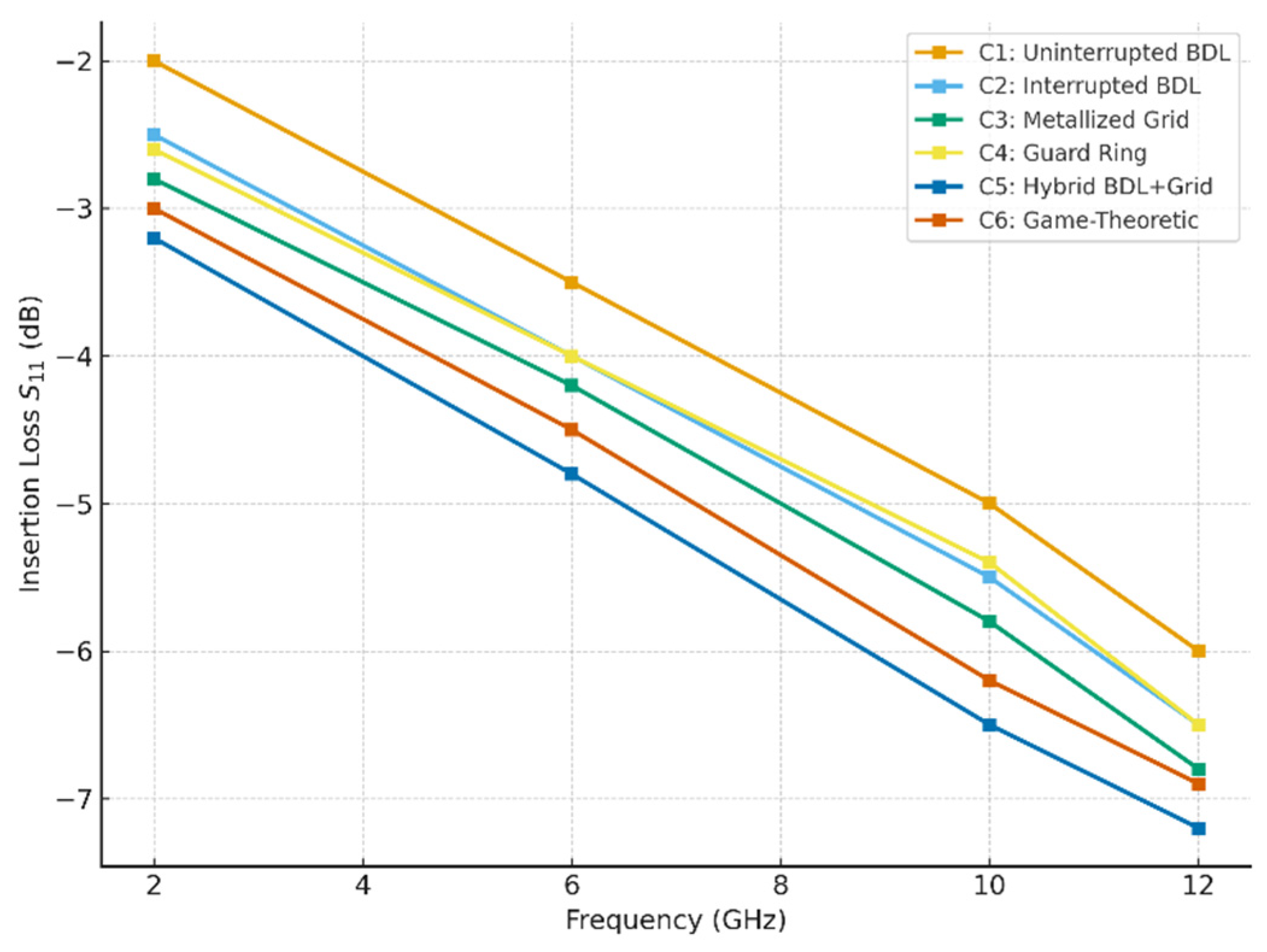
Table 4 summarizes the frequency-wise values of the insertion loss parameter
for all configurations. As observed in
Table 4, the hybrid configuration (C5) exhibits the highest insertion loss, while the proposed model (C6) maintains a balanced performance across the frequency range.
Figure 2 presents the insertion loss performance across the considered frequency band, providing a visual comparison of the different configurations.
- -
The guard ring (C4) increases insertion loss slightly compared to baseline (C1) but remains close to interrupted BDL (C2).
- -
The hybrid design (C5) produces the highest insertion loss due to added structures.
- -
The proposed model (C6) balances well: its insertion loss is lower than C5 and only ~0.5 dB higher than simple methods.
4.6. Shielding Effectiveness and Fabrication Complexity
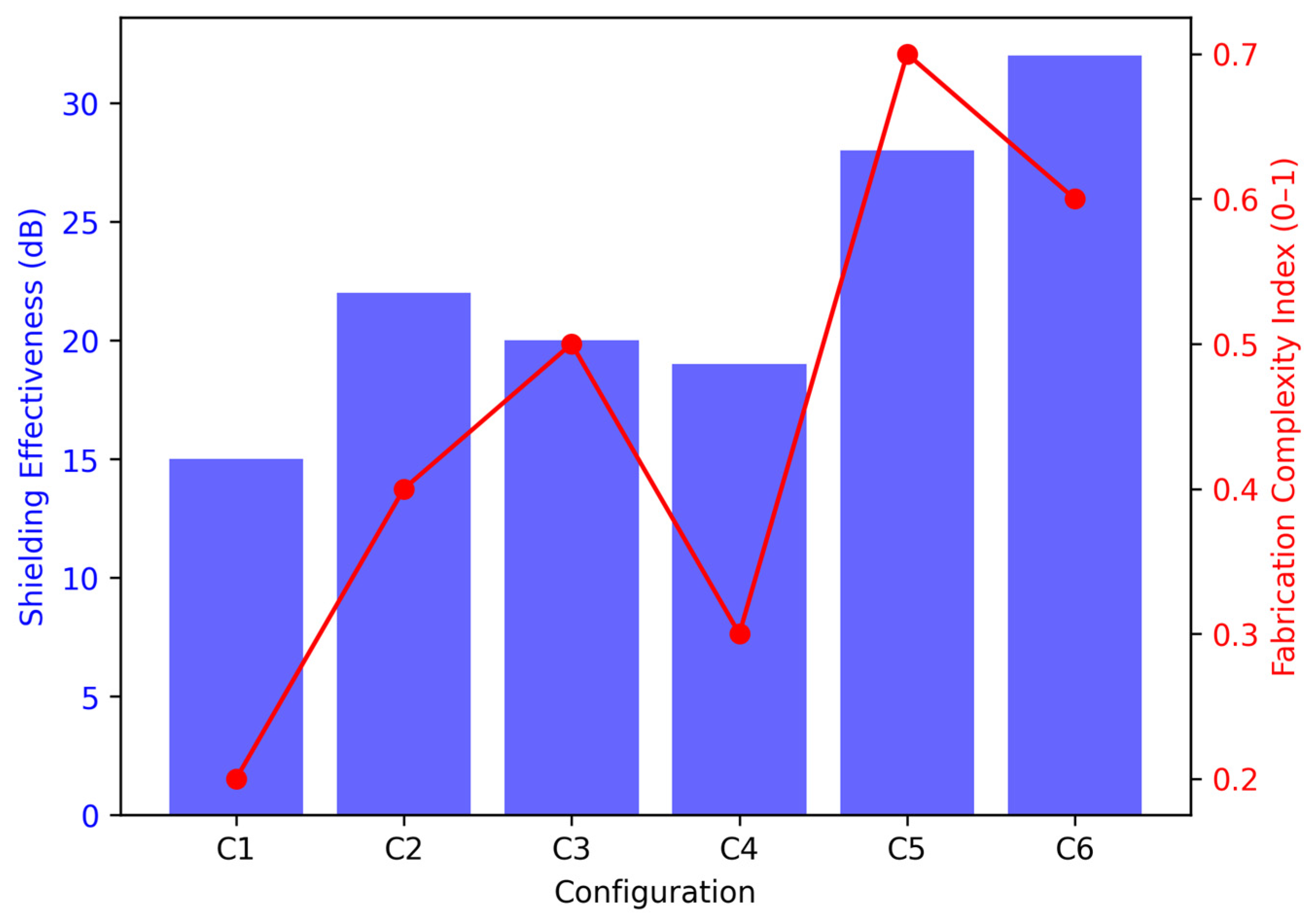
Table 5 summarizes the shielding effectiveness (SE) and fabrication complexity index (FCI) for the considered configurations. As shown in
Table 5, the proposed game-theoretic model (C6) achieves the highest shielding effectiveness while maintaining moderate fabrication complexity compared to the hybrid design (C5).
Figure 3 illustrates the relationship between shielding effectiveness and fabrication complexity, providing a visual comparison of the trade-offs among the different configurations.
- -
The guard ring (C4) offers slightly higher SE than C1 but with negligible added complexity.
- -
The hybrid approach (C5) achieves strong SE but at the cost of highest complexity.
- -
The game-theoretic framework (C6) finds a middle ground—delivering the best SE while avoiding extreme complexity.
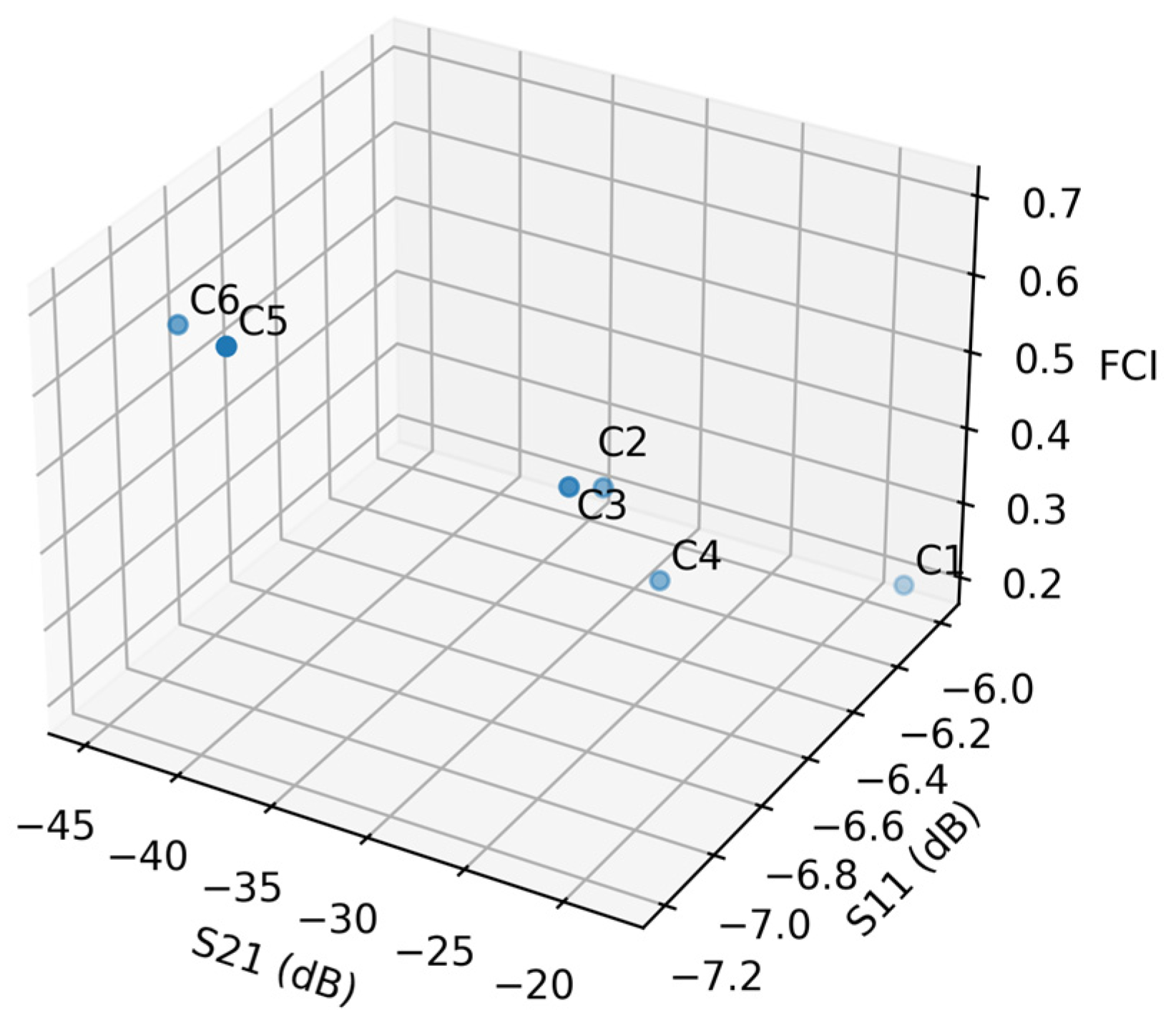
4.7. Pareto Front Analysis
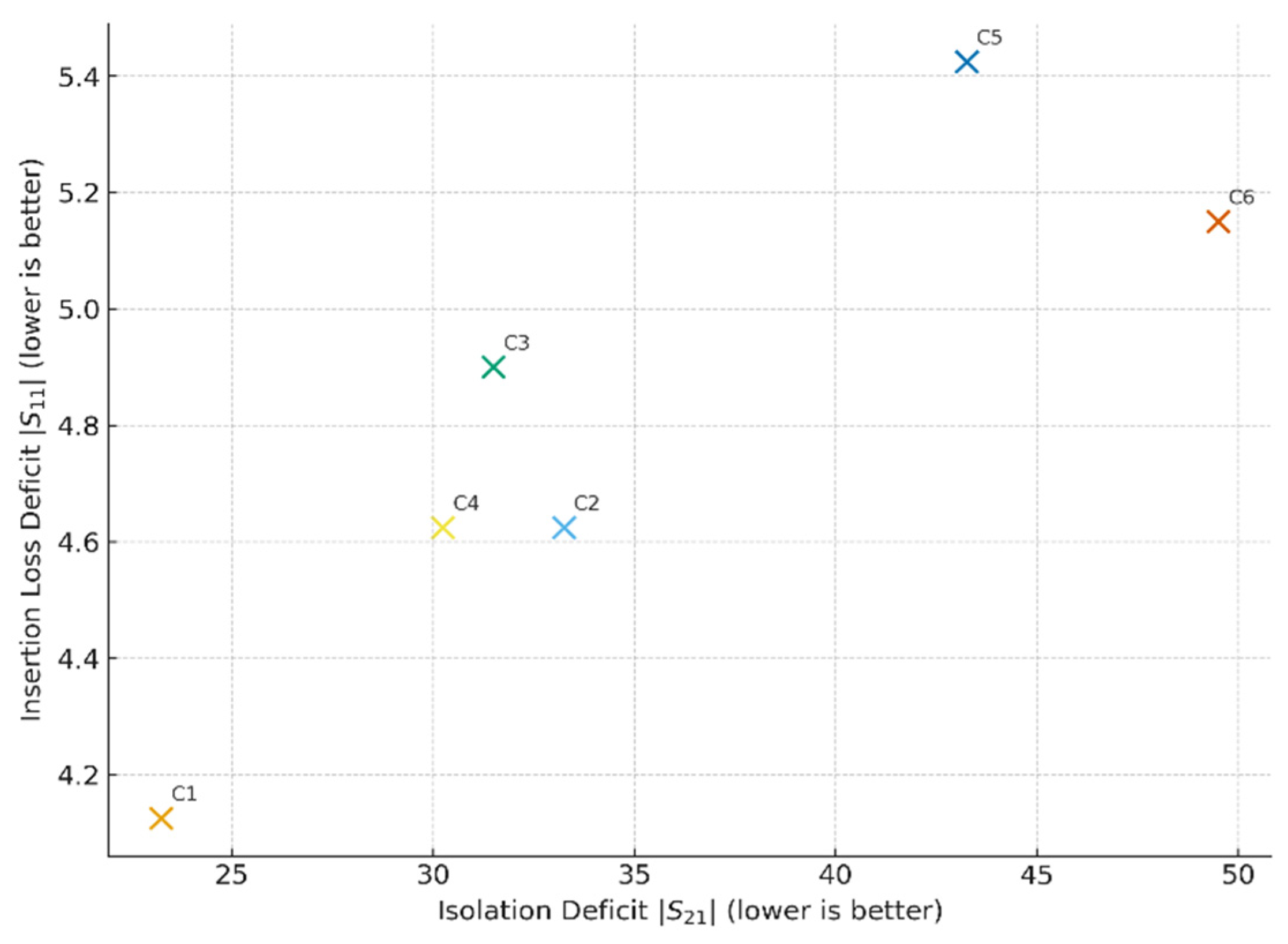
To analyze trade-offs, a Pareto front was constructed using three objectives:
Minimize (maximize isolation);
Minimize (reduce insertion loss);
Minimize fabrication complexity (FCI).
Figure 4 (2D Pareto plot) shows isolation vs. insertion loss, where C6 lies on the Pareto frontier:
Figure 5 (3D Pareto plot) extends this by including fabrication complexity, again confirming C6 as the optimal multi-objective solution:
The proposed game-theoretic strategy avoids single-metric tuning and settles on a stable balance between performance and practicality.
The Pareto analysis also provides insight into how design trade-offs evolve across different equilibrium solutions. Each point on the Pareto frontier corresponds to a feasible configuration of the isolation mechanisms that balances multiple competing objectives. As the optimization progresses, different combinations of design parameters—such as grid pitch, guard ring width, and BDL interruption spacing—shift the solution along the Pareto frontier.
Configurations located toward one end of the frontier typically prioritize stronger coupling suppression, resulting in lower values of , while those toward the opposite end may emphasize reduced insertion loss or lower fabrication complexity. The equilibrium configuration identified by the proposed framework lies near the center of the Pareto frontier, indicating a balanced compromise among these competing objectives.
This interpretation highlights that the proposed game-theoretic formulation does not simply maximize a single performance metric but instead identifies stable configurations that maintain an appropriate balance between electromagnetic isolation, signal integrity, and practical fabrication constraints.
5. Discussion and Practical Implications
5.1. Interpretation of Simulation Results
The simulation results in
Section 4 show that the proposed game-theoretic framework outperforms baseline designs across all isolation metrics. The frequency-resolved
in
Figure 1 indicates that, while baseline methods degrade at higher frequencies, the proposed model maintains strong isolation, reaching better than −45 dB at 12 GHz. This demonstrates sustained performance in the high-frequency regime where conventional approaches typically fail.
Similarly, the insertion loss analysis (
Figure 2) highlights the trade-off: although the game-theoretic equilibrium strategies increase
by 0.5–1 dB compared to the baseline, the massive 20–30 dB isolation improvement outweighs this minor drawback. Importantly, the insertion loss values remain within acceptable limits for most communication system standards.
The shielding effectiveness vs. fabrication complexity plot (
Figure 3) reveals one of the most important findings: the proposed framework does not simply maximize isolation blindly but balances it with manufacturing feasibility. The equilibrium solution achieves the highest shielding effectiveness (32 dB) while keeping the fabrication complexity index (0.6) below that of brute-force hybrid designs (0.7). This makes the framework more practical for real-world deployment.
5.2. Strategic Advantages of Game-Theoretic Approach
Unlike single-objective tuning, the game-theoretic formulation embeds the real trade-offs of isolation design—, insertion loss, bandwidth, and fabrication effort—directly into each mechanism’s utility. Treating BDL, grids, guard rings, and EBG cells as “players” yields designs that are balanced by construction rather than by after-the-fact fixes.
Equilibrium stability. At equilibrium, no mechanism can improve its utility (e.g., lower ) without worsening another objective (loss, cost). This produces inherently robust, well-balanced layouts.
Scalability. New techniques (metamaterial cells, substrate-integrated fences, tunable surfaces) plug in as additional players with minimal changes to the framework.
Tunable priorities. Utility weights let engineers target different products: cost-lean consumer devices, isolation-critical aerospace, or bandwidth-heavy mmWave front-ends.
Search efficiency. Best-response updates, guided by fast surrogates and validated by full-wave checks, focus computation on promising regions instead of sweeping the entire design space.
In addition to the advantages discussed above, it is useful to compare the proposed equilibrium-based optimization framework with commonly used optimization approaches in electromagnetic design. Classical methods such as genetic algorithms (GA), particle swarm optimization (PSO), or gradient-based electromagnetic optimization treat the design variables as part of a single global optimization problem. These techniques typically require extensive exploration of the design space and may involve a large number of electromagnetic simulations before convergence.
In contrast, the proposed game-theoretic formulation interprets isolation mechanisms as interacting with strategic components whose actions jointly influence system performance. The equilibrium search therefore focuses on stable configurations that balance competing objectives rather than attempting to locate a single global optimum through exhaustive exploration. As a result, the framework can provide efficient multi-objective design solutions while maintaining a structured interpretation of the interactions between isolation techniques.
5.3. Practical Implications for Communication Systems
- -
5G Massive MIMO (Sub-6/FR1–FR2 edge).
Dense arrays suffer coupling from tight lattice spacing. The equilibrium designs deliver ~20–30 dB extra isolation over 4–12 GHz without increasing aperture, enabling higher element counts at fixed panel size. The modest penalty (~0.5–1 dB) keeps PA efficiency acceptable, and the FCI ≈ 0.60 supports cost-sensitive rollouts.
- -
mmWave and Beyond (28–60 GHz).
Although validated at 2–12 GHz, the upper-band stability (10–12 GHz) and mechanism-agnostic formulation make the approach portable to mmWave by swapping in band-appropriate unit cells (high-Q EBGs, denser meshes, SIW fences). Expect similar equilibrium balancing—tight isolation without excessive insertion loss—when features are re-scaled to the shorter wavelengths.
- -
Satellite/Aerospace.
Payloads demand isolation under strict mass, process, and yield limits. By tracking fabrication complexity explicitly and optimizing to an equilibrium (not a single extreme), the framework achieves ≈32 dB shielding with fewer added steps than brute-force hybrids (FCI ~0.60 vs. ~0.70). This eases qualification and mitigates manufacturing risk.
- -
Compact IoT and Edge Devices.
Board area is scarce and BOM must stay low. The equilibrium solutions trade a small increase for large coupling suppression, delivering acceptable isolation in tight footprints without heavy shielding cans or large keep-outs—useful for multi-radio coexistence (BLE/Wi-Fi/Sub-GHz) on a single module.
5.4. Design Guidance (Actionable Steps for Engineers)
Set priorities up front. Select utility weights to reflect the product’s main constraint (cost cap, efficiency floor, bandwidth target).
Bake in DRC/DFM. Enforce minimum features, via aspect ratios, layer keep-outs, and stack-up rules directly in feasible sets—reject infeasible candidates during the search, not after.
Measure averages and extremes. Report band-averaged and worst-case per (sub)band; break down the insertion-loss budget by mechanism.
Certify robustness. Re-run with ±10% geometry/material variations and small frequency offsets; aim for ≤1 dB drift on key metrics.
Ablate to attribute. Remove or freeze one mechanism at a time to demonstrate that gains come from the balance the game locates, not from a single exotic structure.
5.5. Limitations and Outlook
The current study is simulation-based and limited to 2–12 GHz; higher-band validation (28–60 GHz and beyond) will require unit cells and features sized for those wavelengths. The fabrication complexity index (FCI) used in this work is a normalized proxy metric intended to capture the relative manufacturing complexity associated with different isolation configurations while maintaining a tractable optimization model. In practice, a more detailed manufacturing cost model could incorporate additional factors such as process steps, mask costs, fabrication yield rates, and supplier pricing. However, such parameters typically depend on technology-specific fabrication data that may not be available during early electromagnetic design stages. Future work will therefore focus on integrating more comprehensive manufacturing cost models in order to further refine the technical trade-off analysis.
The robustness of the proposed approach under geometric and material variations is summarized in
Table 6 and
Table 7. As shown in
Table 6, the proposed method maintains significantly improved isolation performance compared with the baseline configuration under ±10% variations.
Table 7 further demonstrates consistent robustness across different frequency sub-bands. The immediate next steps are:
- (i)
Prototype measurements with de-embedded S-parameters and OTA characterization to validate isolation and insertion-loss budgets;
- (ii)
Surrogate-assisted equilibria for faster closure on large arrays;
- (iii)
Cooperative game extensions for adaptive environments (e.g., tunable surfaces), enabling on-device returning without full redesign.
6. Conclusions
This work introduced a game-theoretic optimization framework for electromagnetic isolation in high-frequency communication systems. By modeling isolation mechanisms—including interrupted BDL structures, metallized grids, guard rings, and electromagnetic bandgap surfaces—as interacting strategic components, the proposed formulation enables the identification of equilibrium design configurations that balance electromagnetic isolation performance, insertion loss, and fabrication complexity. The integration of Nash equilibrium analysis with multi-objective optimization provides a mathematically structured methodology for exploring design trade-offs in complex electromagnetic environments.
Numerical validation through full-wave simulations in the 2–12 GHz band demonstrates that the equilibrium solutions significantly reduce coupling interference compared with conventional baseline designs while maintaining feasible fabrication constraints. These results highlight the effectiveness of equilibrium-based optimization for balancing competing performance metrics in high-frequency communication architectures.
Future work will focus on experimental prototype validation, the integration of AI/ML-based surrogate models to accelerate equilibrium search and sensitivity analysis, and the extension of the framework to dynamic and cooperative game formulations for adaptive communication environments. These developments will support applications in higher-frequency regimes, including mmWave bands (28–60 GHz), and in advanced multilayer RF integration.
More broadly, the proposed equilibrium-based formulation provides a flexible methodological framework that can be extended to other electromagnetic design problems involving interacting structural mechanisms and competing performance objectives.