Parameter Study and Structural Optimization of Liquid Cooling Plates with Internal Spiral Rib for High–Capacity Lithium Batteries


Abstract
1. Introduction
2. Mathematical Model
2.1. Electrochemical Model
- (1)
- The battery is modeled as a uniform heat source, assuming that heat is generated uniformly across the entire battery volume;
- (2)
- Side reactions occurring at the battery anode are disregarded;
- (3)
- Volume changes caused by lithium-ion deintercalation/intercalation reactions at the electrodes are neglected;
- (4)
- Within the plane of the electrode sheet, ion and electron transport rates are assumed to be constant, considering only variations in the thickness direction;
2.2. Flow and Heat Transfer Model
- (1)
- At Re < 2300, fluid flow is laminar, considering viscous dissipation;
- (2)
- A no-slip condition exists between the fluid and the inner wall of the channel;
- (3)
- Gravity effects on fluid flow are neglected;
- (4)
- The fluid is incompressible.
2.3. Geometric Structure
2.4. Mesh Independence Verification
2.5. Parameter Description
3. Results
3.1. Influence of Continuous Single-Helix Fin Pitch on Microchannel Heat Transfer Performance
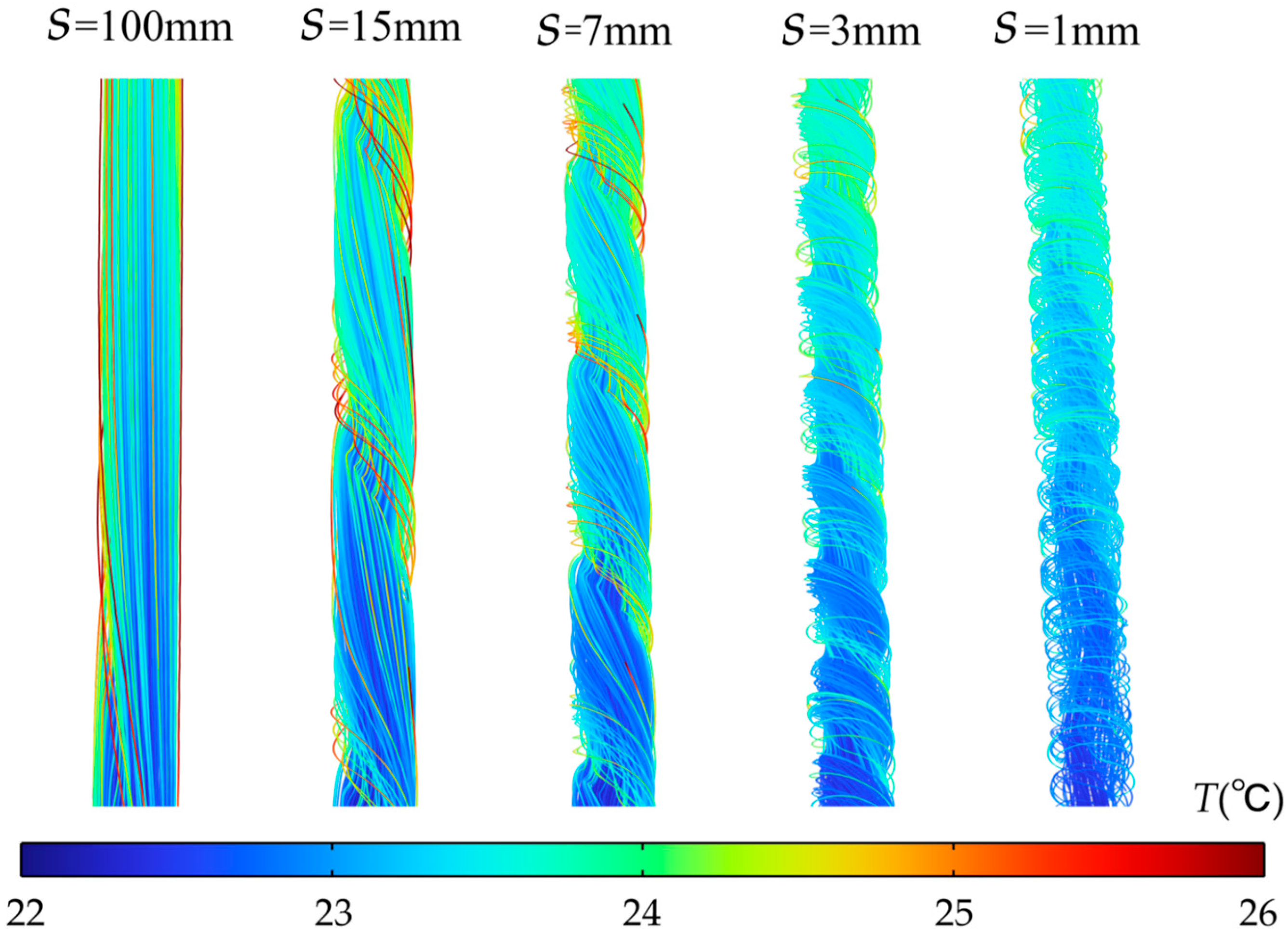
3.1.1. Temperature Distribution Characteristics Analysis Under Different Pitches S
3.1.2. Analysis of Working Fluid Flow Characteristics Under Different Pitches S
3.2. Effect of Continuous Single-Helix Fin Height h on Microchannel Heat Transfer Performance
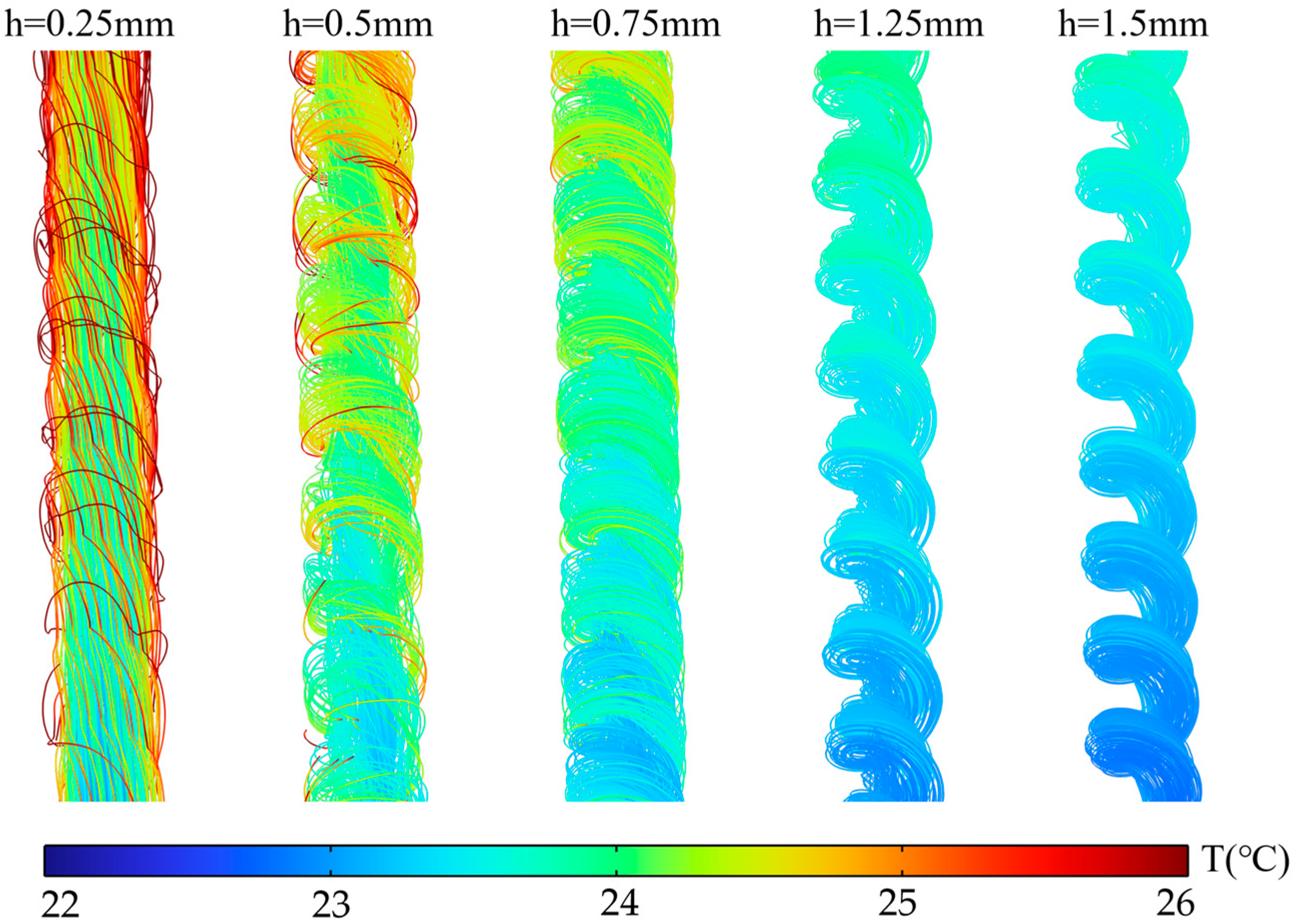
3.2.1. Temperature Distribution Characteristics Analysis Under Different Fin Heights h
3.2.2. Analysis of Working Fluid Flow Characteristics Under Different Fin Heights h
4. Conclusions
- (1)
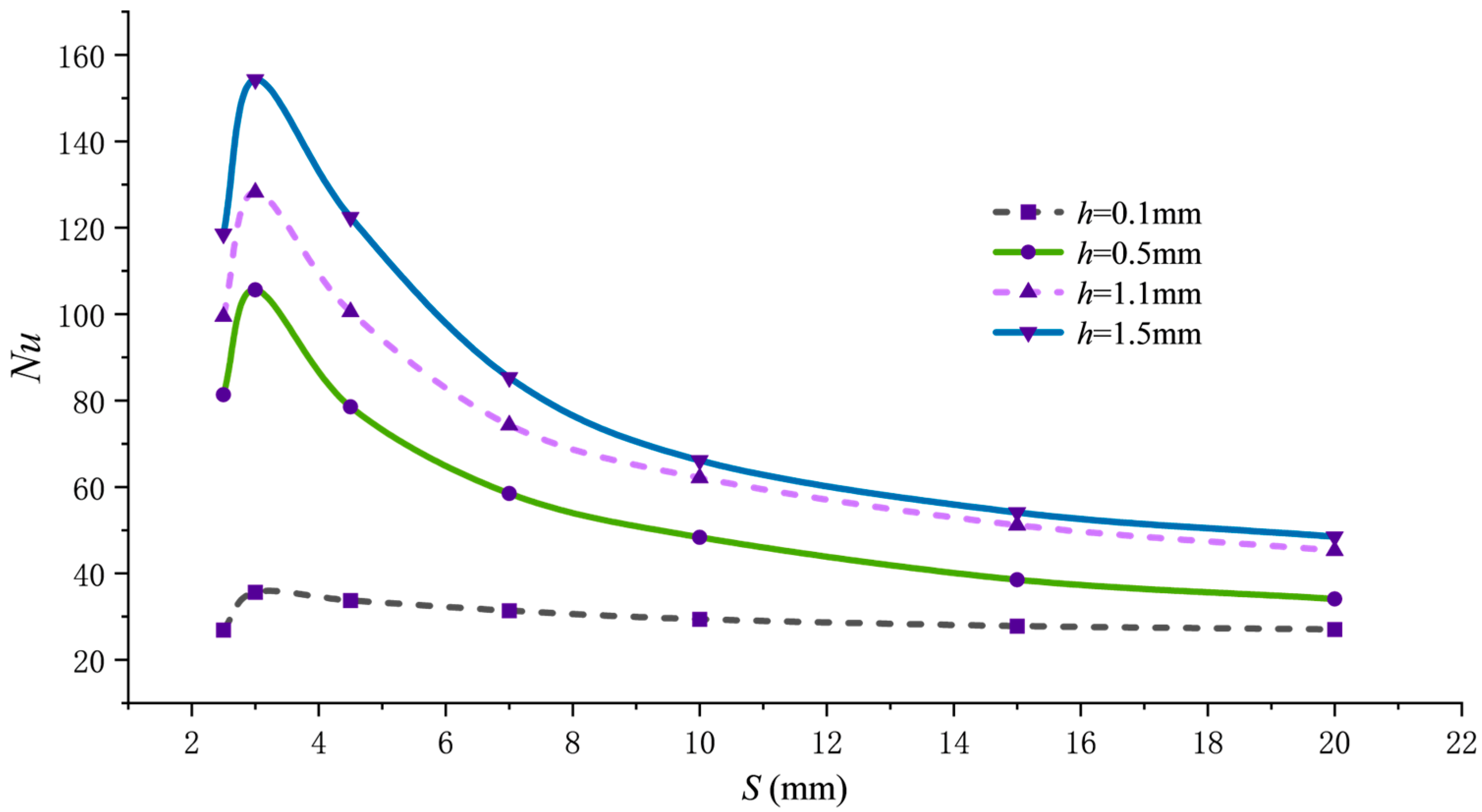
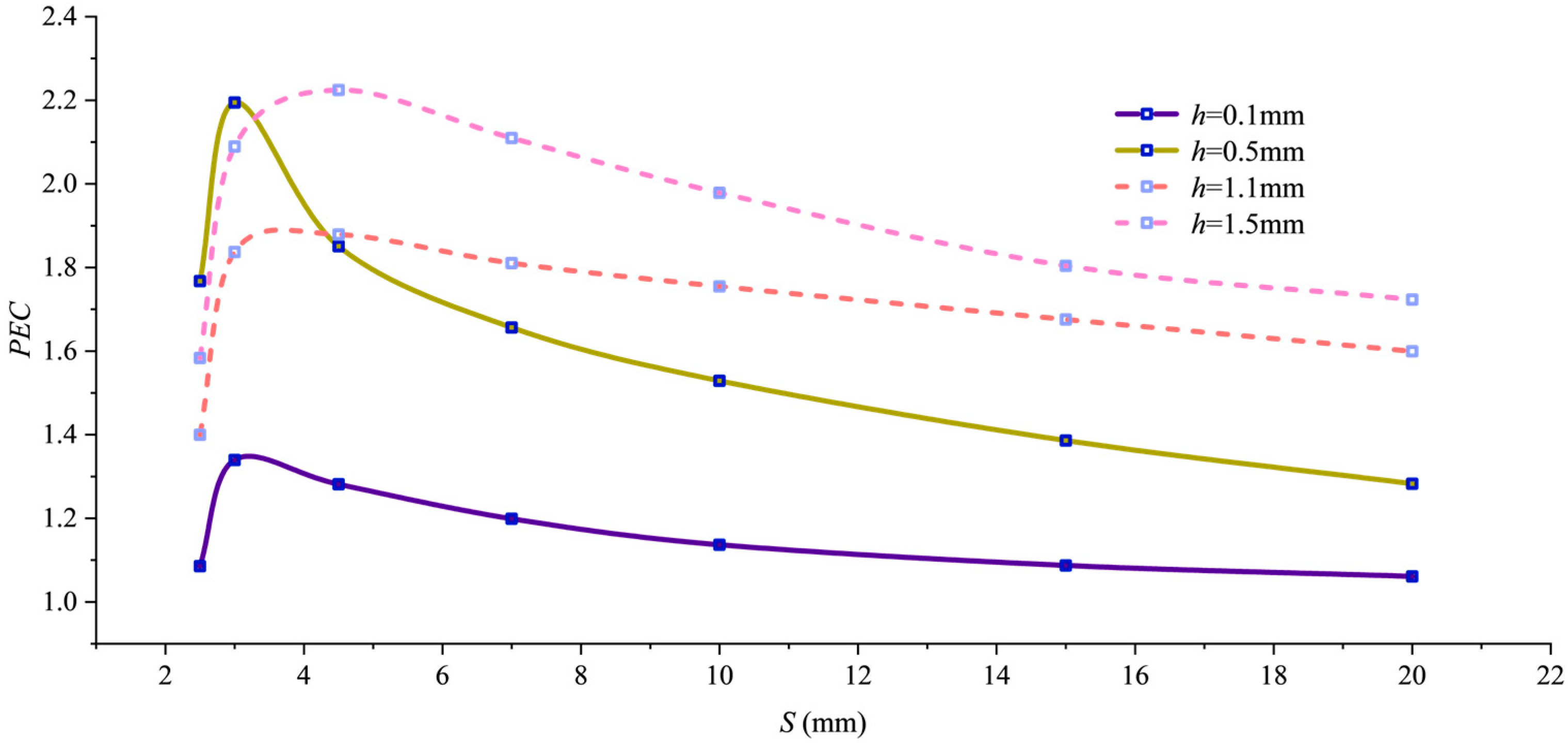
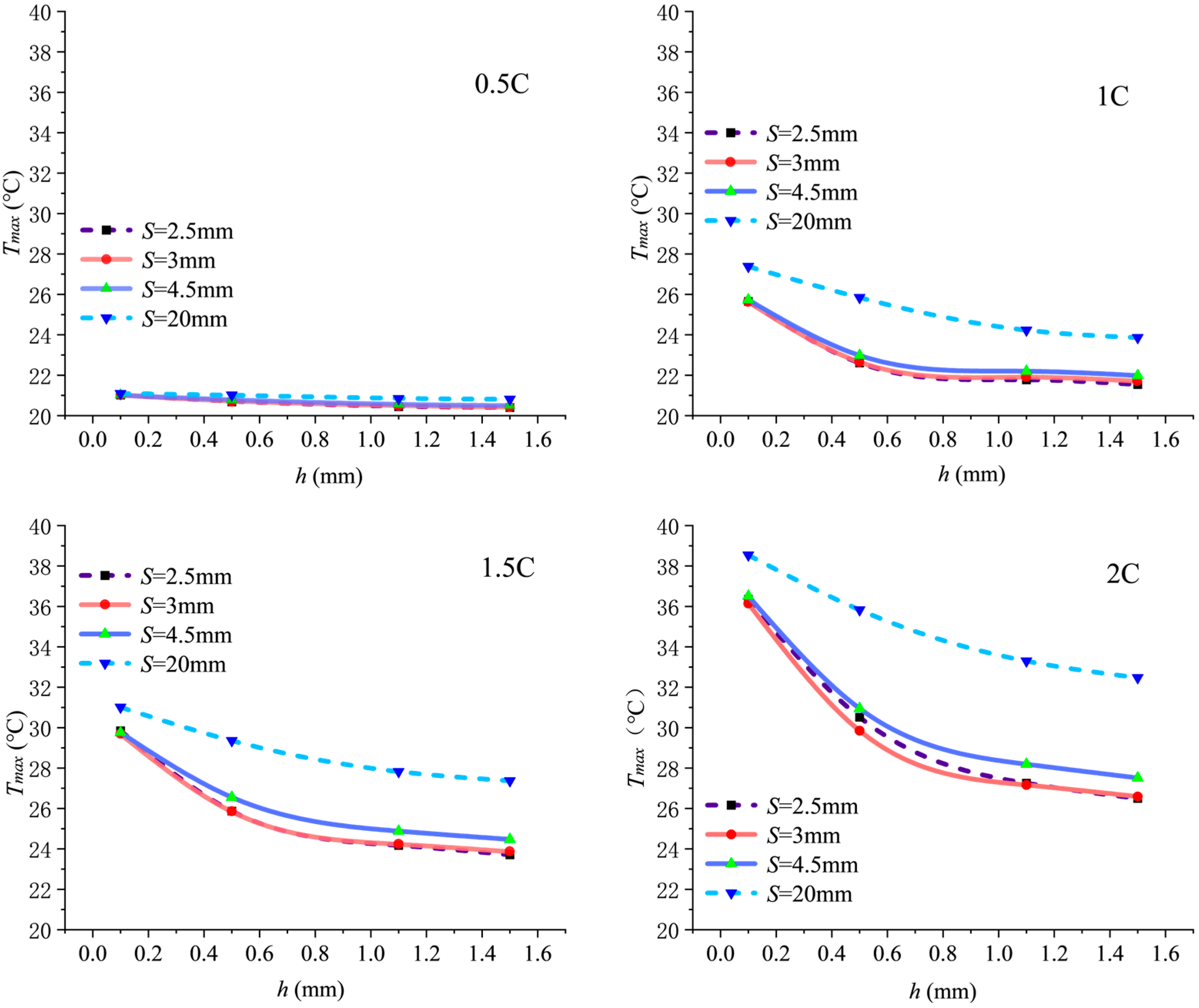
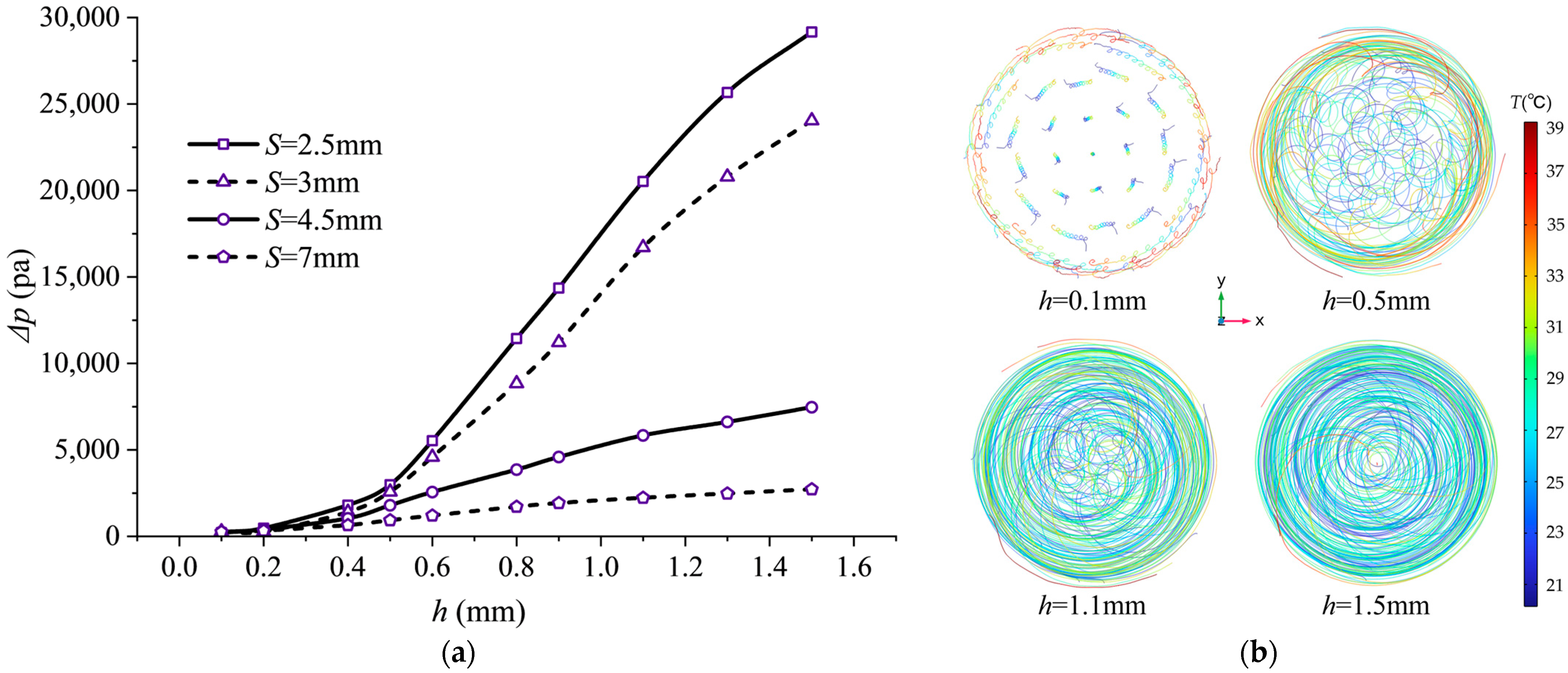
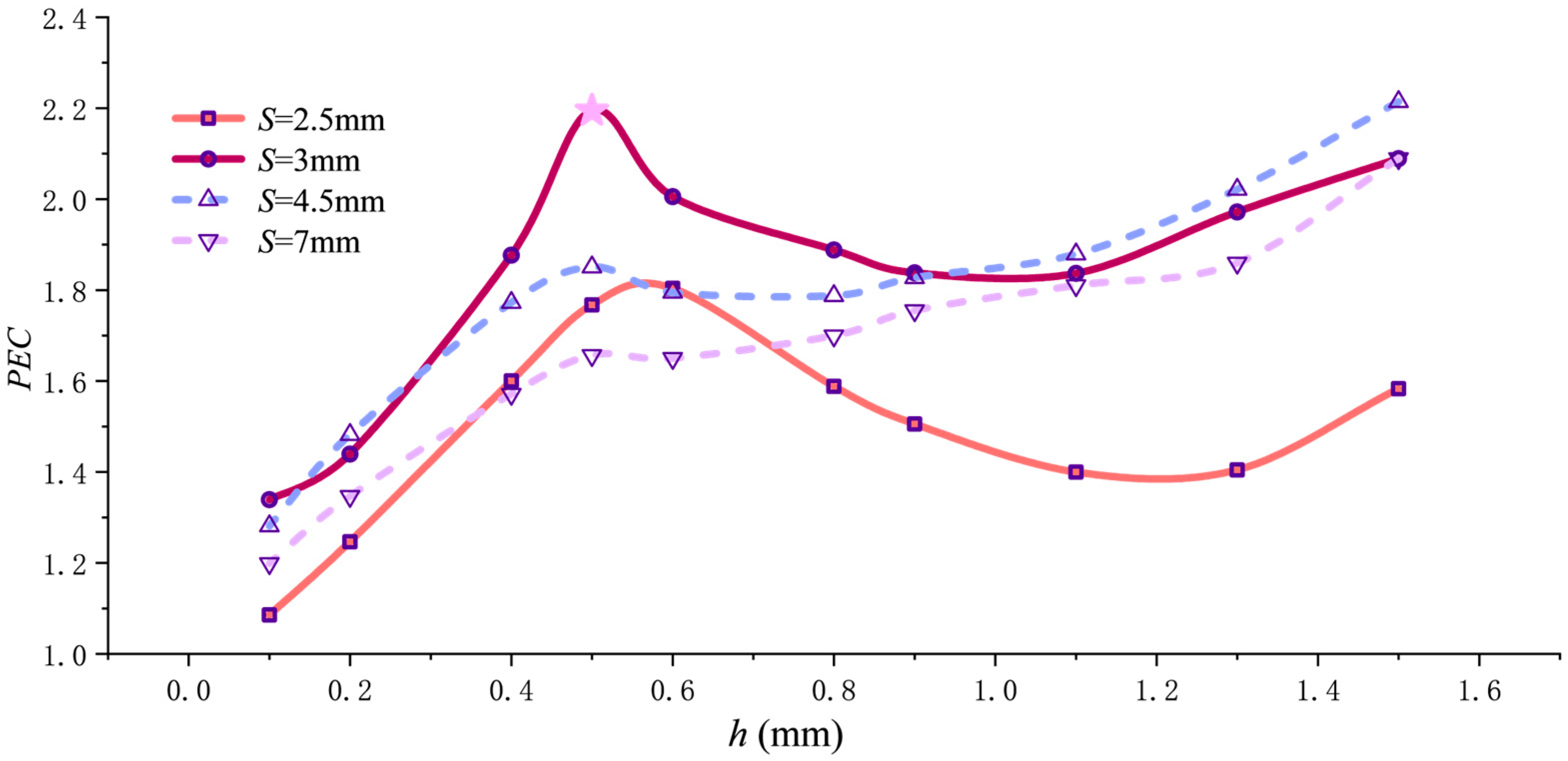
- The PEC values for S = 3 mm and h = 0.5 mm (2.19) and S = 4.5 mm and h = 1.5 mm (2.21) indicate that both structures exhibit excellent comprehensive performance in enhancing heat transfer. However, the latter exhibits a pressure drop of 7462.9 Pa, which is significantly higher than the former’s pressure drop of 2569.4 Pa. Therefore, when both structures meet the cooling requirements, the S = 3 mm and h = 0.5 mm configuration with a lower pressure drop is preferred to balance flow resistance and system energy consumption.
- (2)
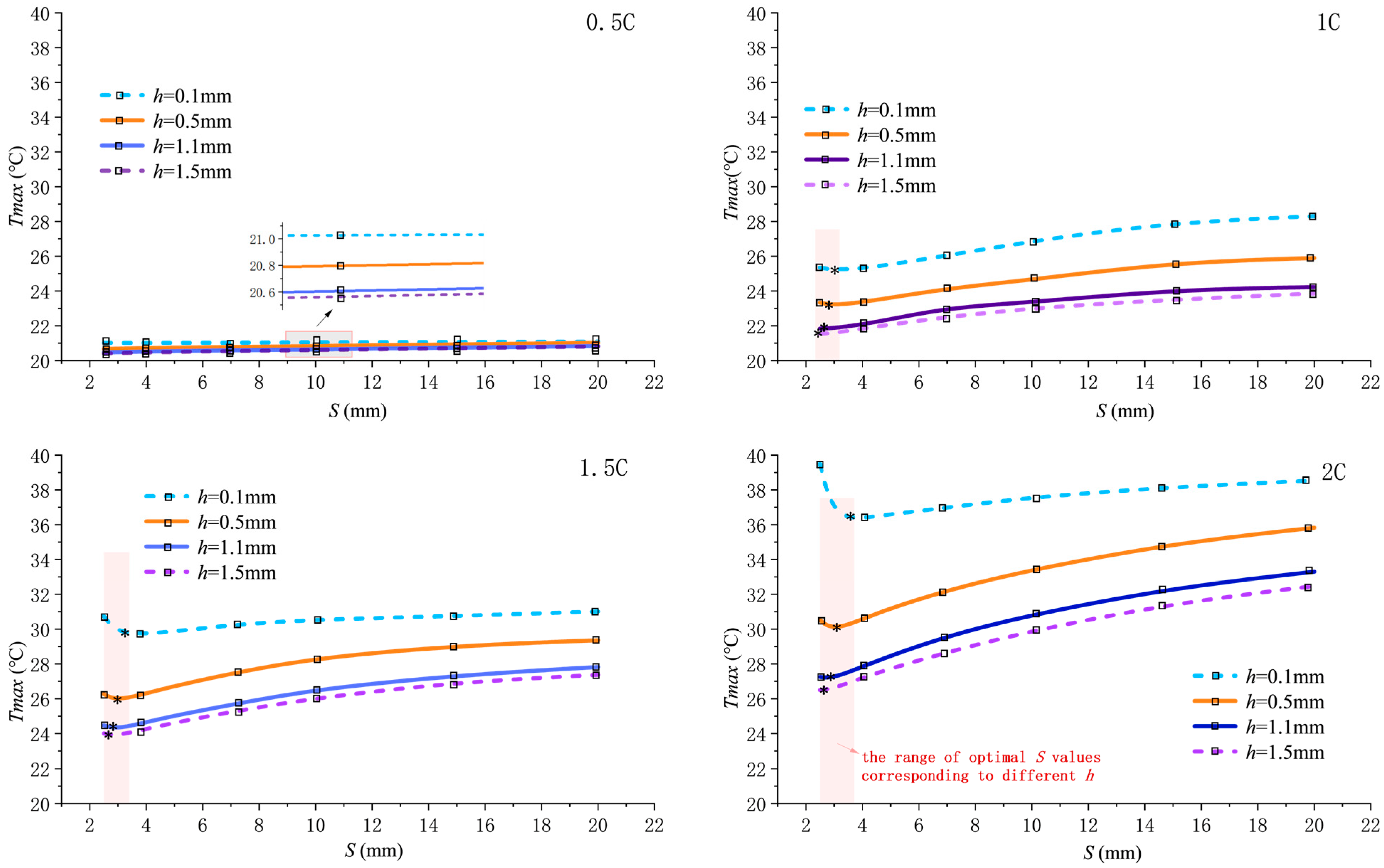
- When the structural parameters are optimized to S = 3 mm and h = 0.5 mm, the PEC value reaches its peak. At this point, the fluid–wall heat transfer is sufficient, and the axial temperature gradient is small. Compared with the smooth channel without spiral ribs, the maximum temperature under discharge rates of 0.5C, 1C, 1.5C, and 2C is reduced by 0.70 °C, 2.75 °C, 6.05 °C, and 10.12 °C, respectively, corresponding to a percentage decrease ranging from 3.27% to 25.32%. The cooling effect achieved by optimizing the spiral rib structure is notably more pronounced at high discharge rates.
- (3)
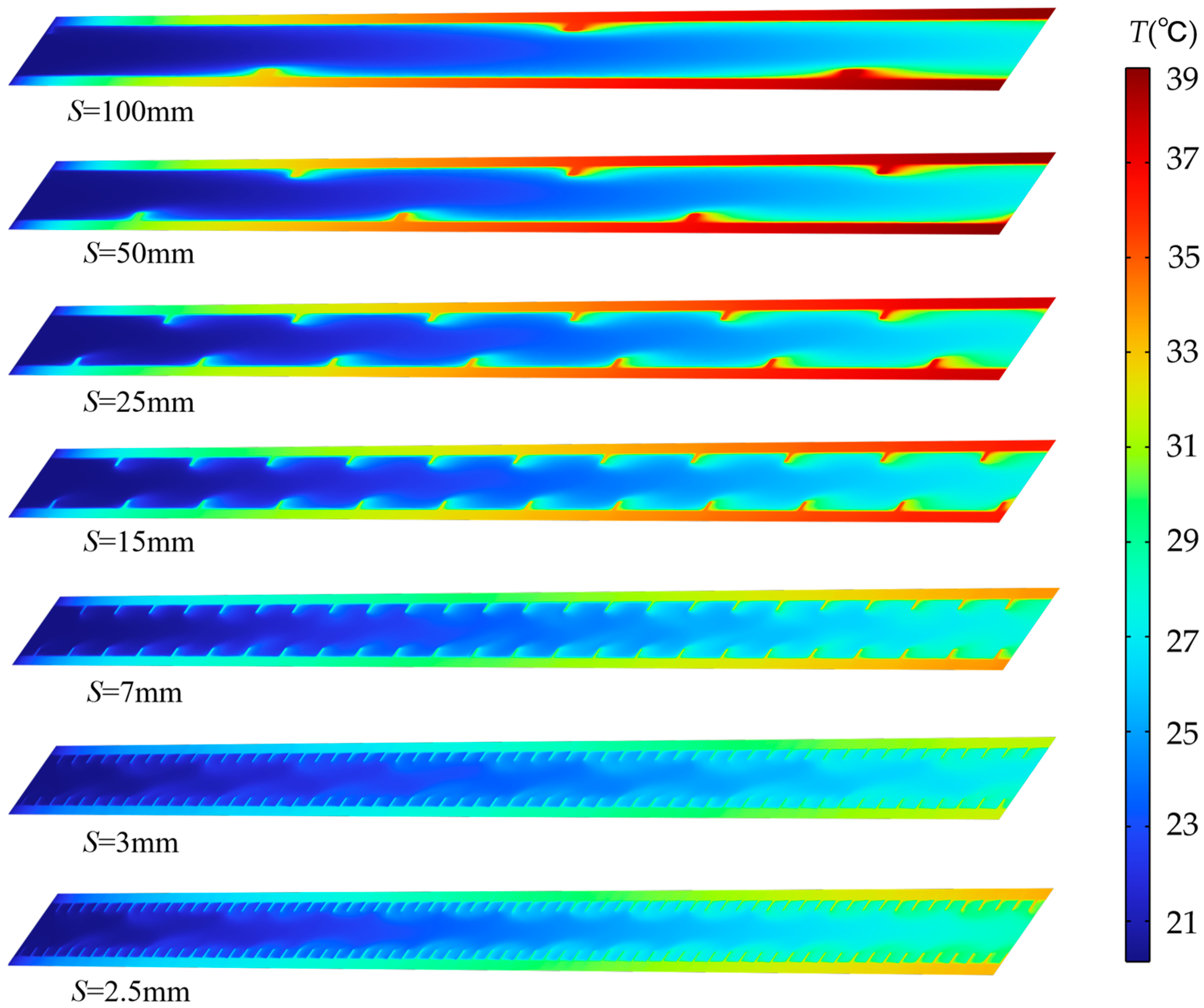
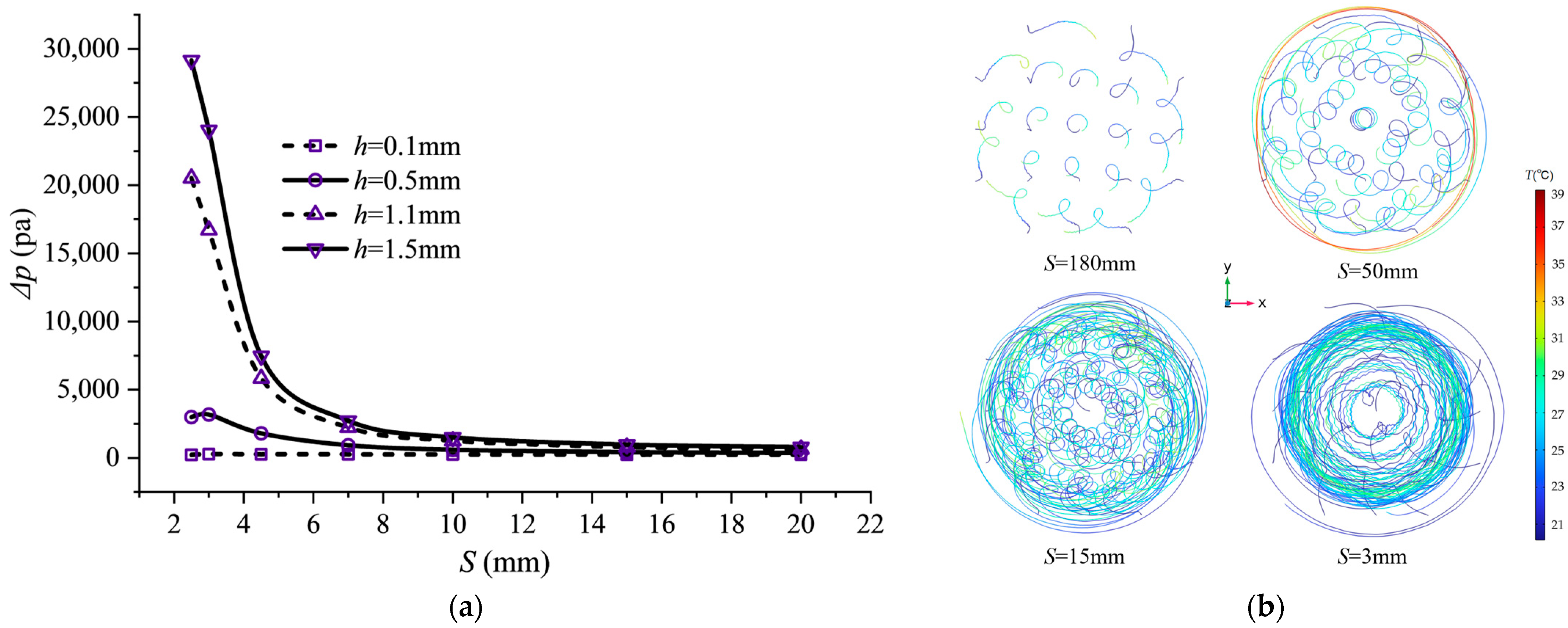
- Adjusting the pitch S influences heat transfer and flow performance by altering the radial fluid velocity and flow path length within the channel. Smaller pitches tend to induce flow “short-circuiting,” where fluid predominantly traverses the rib-free central region, thereby weakening the spiral ribs’ flow-guiding effect.
- (4)
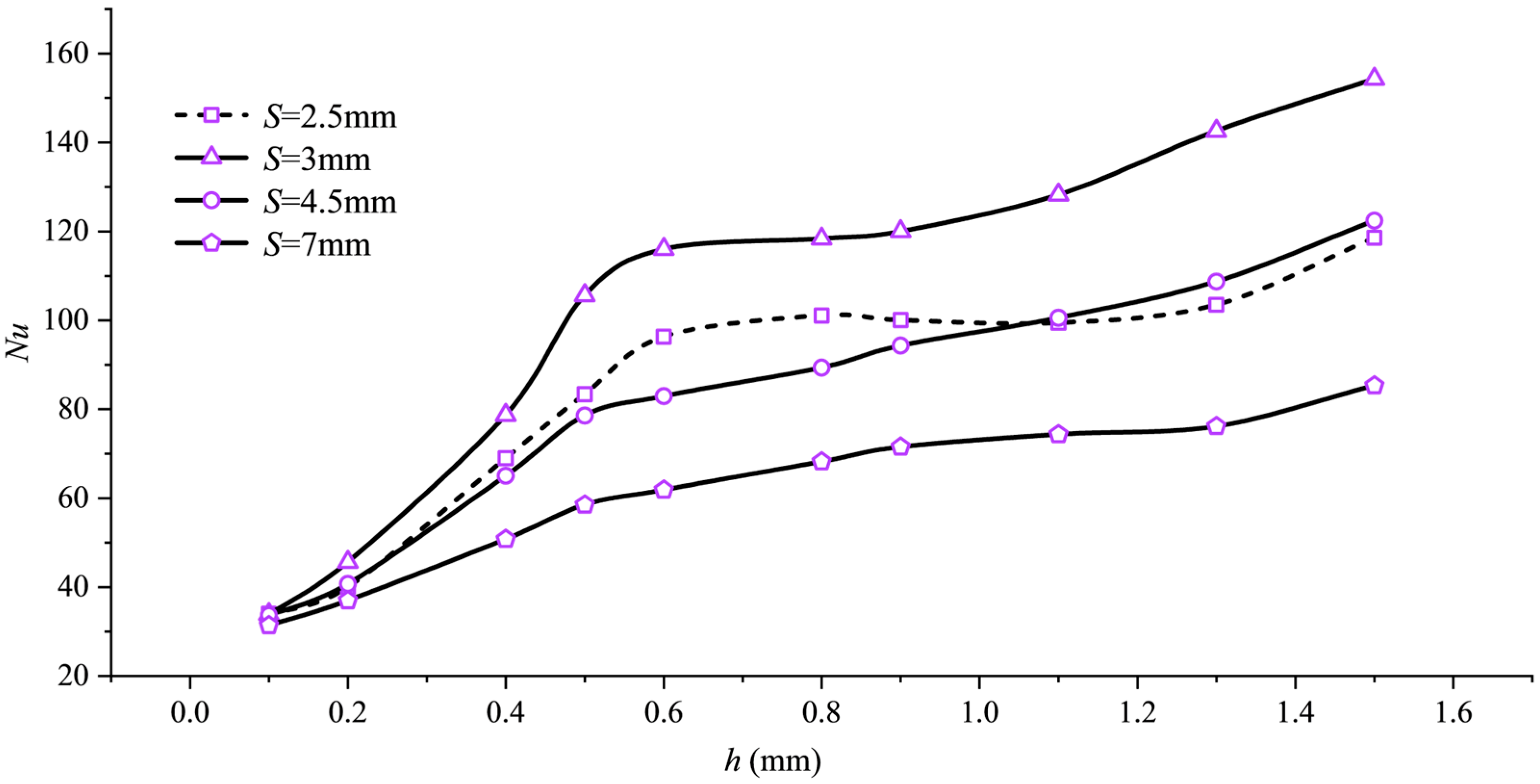
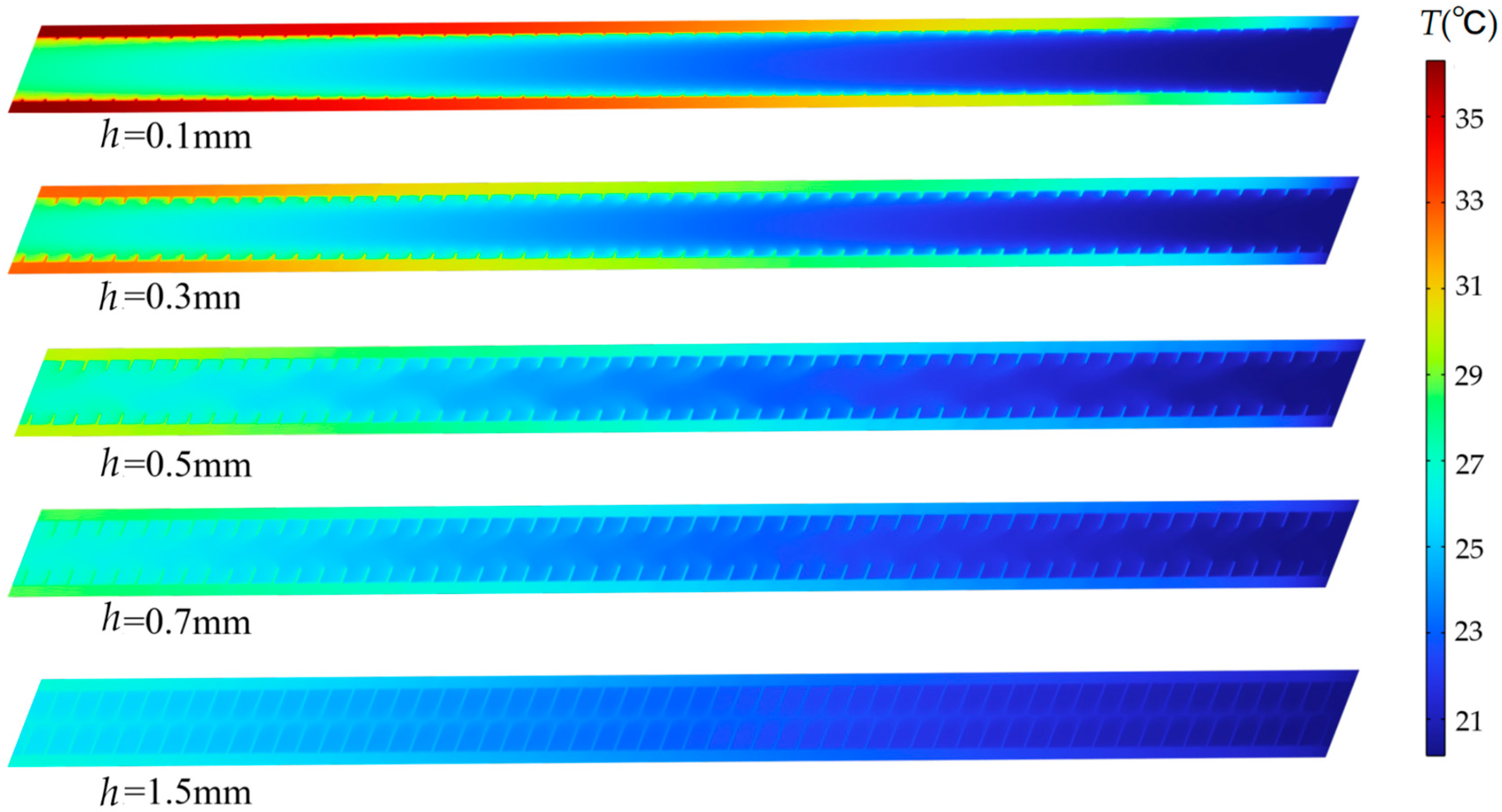
- Increasing the fin height h significantly alters the flow distribution between the finless and helical fin regions within the channel. As h increases, the proportion of the helical fin region rises, enhancing the fin’s flow guidance effect and correspondingly increasing swirl intensity and heat transfer area. Simultaneously, structures with high fin height suppress bypass flow at small pitches but also cause rapid increase in the pressure drop.
Author Contributions
Funding
Data Availability Statement
Acknowledgments
Conflicts of Interest
References
- Zhang, Y.; Zhang, W.; Kong, W. Numerical and experimental study on thermal behavior of prismatic lithium-ion battery for large-capacity energy storage. J. Energy Storage 2024, 83, 110620. [Google Scholar] [CrossRef] [Scilit]
- Rocha, L.C.S.; Rotella, J.P.; Aquila, G. Multi-objective optimization of hybrid wind-photovoltaic plants with battery energy storage system: Current situation and possible regulatory changes. J. Energy Storage 2022, 51, 104467. [Google Scholar] [CrossRef] [Scilit]
- Tahir, M.W.; Merten, C. Multi-scale thermal modeling, experimental validation, and thermal characterization of a high-power lithium-ion cell for automobile application. Energy Convers. Manag. 2022, 258, 115490. [Google Scholar] [CrossRef] [Scilit]
- Hao, M.; Weng, S. Structure and evolution of solid electrolyte interphase (SEI) at the electrode-electrolyte interface. Mater. Today Energy 2025, 53, 101998. [Google Scholar] [CrossRef] [Scilit]
- Lain, M.J.; Kendrick, E. Understanding the limitations of lithium-ion batteries at high rates. J. Power Sources 2021, 493, 229690. [Google Scholar] [CrossRef] [Scilit]
- Yang, M.; Ye, Y.; Yang, A.; Jiang, Z. Comparative study on aging and thermal runaway of commercial LiFePO4/graphite battery undergoing slight overcharge cycling. J. Energy Storage 2022, 50, 104691. [Google Scholar] [CrossRef] [Scilit]
- Chen, S.; Bao, N.; Garg, A.; Peng, X.; Gao, L. A fast charging-cooling coupled scheduling method for a liquid cooling-based thermal management system for lithium-ion batteries. Engineering 2021, 7, 1165–1176. [Google Scholar] [CrossRef] [Scilit]
- Pang, H.; Yan, X. Towards co-estimation of lithium-ion battery state of charge and state of temperature using a thermal-coupled extended single-particle model. Energy 2025, 326, 136186. [Google Scholar] [CrossRef] [Scilit]
- Ren, L.; Zhu, G.; Kang, J. An algorithm for state of charge estimation based on a single-particle model. J. Energy Storage 2021, 39, 102644. [Google Scholar] [CrossRef] [Scilit]
- Hunt, M.J.; Brosa, P.F. Derivation of an effective thermal electrochemical model for porous electrode batteries using asymptotic homogenisation. J. Eng. Math. 2020, 122, 31–57. [Google Scholar] [CrossRef] [Scilit]
- Wang, B.C.; He, Y.B. Fast parameter identification of lithium-ion batteries via classification model-assisted Bayesian optimization. Energy 2024, 288, 129667. [Google Scholar] [CrossRef] [Scilit]
- Yu, Y.; Lan, Y.; Ling, Z. A dual-objective data-driven framework combining Bayesian optimization and improved differential evolution for rapid and accurate parameter identification of lithium-ion battery P2D models. Energy 2025, 335, 137974. [Google Scholar] [CrossRef] [Scilit]
- Xu, J.; Sun, C.; Ni, Y. Fast identification of micro-health parameters for retired batteries based on a simplified P2D model by using Padé approximation. Batteries 2023, 9, 64. [Google Scholar] [CrossRef] [Scilit]
- Xu, S.; Cao, L. Optimal-rate error estimates and a twice decoupled solver for a backward Euler finite element scheme of the Doyle–Fuller–Newman model of lithium-ion cells. J. Comput. Appl. Math. 2026, 476, 117131. [Google Scholar] [CrossRef] [Scilit]
- Joly, R.; Allaire, G.; De, L.R. Geometric optimization of a lithium-ion battery with the Doyle–Fuller–Newman model. J. Comput. Phys. 2025, 543, 114390. [Google Scholar] [CrossRef] [Scilit]
- Gotti, D.; Prodanovic, M.; Pinilla, S. A novel Doyle-Fuller-Newman battery model formulation for online parameter estimation. J. Energy Storage 2026, 141, 119115. [Google Scholar] [CrossRef] [Scilit]
- Zhao, R.; Zhang, S.; Liu, J.; Gu, J. A review of thermal performance improving methods of lithium ion battery: Electrode modification and thermal management system. J. Power Sources 2015, 299, 557–577. [Google Scholar] [CrossRef] [Scilit]
- An, Z.; Jia, L.; Ding, Y.; Dang, C. A review on lithium-ion power battery thermal management technologies and thermal safety. J. Therm. Sci. 2017, 26, 391–412. [Google Scholar] [CrossRef] [Scilit]
- Mahamud, R.; Park, C. Reciprocating air flow for Li-ion battery thermal management to improve temperature uniformity. J. Power Sources 2011, 196, 5685–5696. [Google Scholar] [CrossRef] [Scilit]
- Ren, R.; Zhao, Y.; Diao, Y.; Liang, L.; Jing, H. Active air cooling thermal management system based on U-shaped micro heat pipe array for lithium-ion battery. J. Power Sources 2021, 507, 230314. [Google Scholar] [CrossRef] [Scilit]
- Yang, N.; Zhang, X.; Li, G. Assessment of the forced air-cooling performance for cylindrical lithium-ion battery packs: A comparative analysis between aligned and staggered cell arrangements. Appl. Therm. Eng. 2015, 80, 55–65. [Google Scholar] [CrossRef] [Scilit]
- Huang, Q.; Li, X. Thermal management of Lithium-ion battery pack through the application of flexible form-stable composite phase change materials. Appl. Therm. Eng. 2021, 183, 116151. [Google Scholar] [CrossRef] [Scilit]
- Zhang, J.; Li, X.; Zhang, G. Experimental investigation of the flame retardant and form-stable composite phase change materials for a power battery thermal management system. J. Power Sources 2020, 480, 229116. [Google Scholar] [CrossRef] [Scilit]
- Gan, Y.; He, L.; Liang, J. A numerical study on the performance of a thermal management system for a battery pack with cylindrical cells based on heat pipes. Appl. Therm. Eng. 2020, 179, 115740. [Google Scholar] [CrossRef] [Scilit]
- Zhong, Q.; Chandra, P.K. A comprehensive numerical study based on topology optimization for cooling plates thermal design of battery packs. Appl. Therm. Eng. 2024, 236, 121918. [Google Scholar] [CrossRef] [Scilit]
- Liu, Z.; Liu, W.; Lv, S. Numerical study of battery thermal management system using bionic leaf-shaped channel liquid cooling plate. Appl. Therm. Eng. 2025, 268, 125898. [Google Scholar] [CrossRef] [Scilit]
- Jung, E.; Kong, D.; Kang, M.; Park, J.; Kim, J.-H.; Jeong, J.; Bin In, J.; Oh, K.-Y.; Lee, H. Enhanced Immersion Cooling Using Laser-Induced Graphene for Li-Ion Battery Thermal Management. Int. Commun. Heat Mass Transf. 2024, 155, 107558. [Google Scholar] [CrossRef] [Scilit]
- Tuckerman, D.B.; Pease, R.F.W. High-performance heat sinking for VLSI. IEEE Electron Device Lett. 1981, 2, 126–129. [Google Scholar] [CrossRef] [Scilit]
- Shu, Z.; Li, Y.; Goyal, V.; Alghanmi, S. Artificial neural network-based optimization of baffle geometries for maximized heat transfer efficiency in microchannel heat sinks. Case Stud. Therm. Eng. 2023, 49, 103331. [Google Scholar] [CrossRef] [Scilit]
- Chen, L.; Feng, H.; Zhang, F. Constructal design for composite heat dissipating structure composed of an “arrow”-shaped high conductivity channel and an externally connected “T”-shaped fin. Int. Commun. Heat Mass Transf. 2024, 153, 107341. [Google Scholar] [CrossRef] [Scilit]
- Ren, H.; Jia, L.; Dang, C.; Yang, C. Experimental investigation on pouch lithium-ion battery thermal management with mini-channels cooling plate based on heat generation characteristic. J. Therm. Sci. 2022, 31, 816–829. [Google Scholar] [CrossRef] [Scilit]
- Wang, J.; Qi, S.; Xu, Y. Numerical investigations of the thermal-hydraulic characteristics of microchannel heat sinks inspired by leaf veins. Energies 2024, 17, 311. [Google Scholar] [CrossRef] [Scilit]
- Lu, Z.Q.; Xie, Z.H.; Wu, F. Constructal optimization design of hybrid microchannel heat sink with single-sided internal fin array and comparative study of genetic algorithms. Chin. J. Ship Res. 2023, 18, 247–259. [Google Scholar] [CrossRef]
- Lu, Z.Q.; Xie, Z.H.; Wang, R. Flow and heat transfer performance analysis and constructal design of hybrid microchannel heat sink with single-sided internal fin array. J. Eng. Thermophys. 2022, 43, 2841–2851. (In Chinese) [Google Scholar]
- Chen, T.; Wang, G.L.; Wu, Y.J. Study on flow and heat transfer characteristics of microchannels with staggered internal ribs. J. Eng. Therm. Energy Power 2022, 37, 128–135. [Google Scholar] [CrossRef]
- Yang, X.; Zhong, X.; Su, C.; Chen, K.; Xie, J. Thermal Performance Enhancement of Blade Battery Packs via Multi-Branch-Converging Channel Design. Int. J. Heat Mass Transf. 2026, 258, 128330. [Google Scholar] [CrossRef] [Scilit]
- Huang, H.H.; Chen, H.Y.; Liao, K.C. Thermal-electrochemical coupled simulations for cell-to-cell imbalances in lithium-iron-phosphate based battery packs. Appl. Therm. Eng. 2017, 123, 584–591. [Google Scholar] [CrossRef] [Scilit]
- Fu, Z.; Zuo, W.; Li, Q.; Zhou, K.; Huang, Y.; Li, Y. Performance Enhancement Studies on the Liquid Cooling Plate Fully Filled with Porous Medium for Thermal Management of Lithium-Ion Battery Pack. J. Energy Storage 2025, 116, 116072. [Google Scholar] [CrossRef] [Scilit]
- Lin, X.W.; Shi, M.Y.; Zhou, Z.F.; Chen, B.; Lu, Y.J.; Jing, D.W. Multi-Objective Topology Optimization Design of Liquid-Based Cooling Plate for 280 Ah Prismatic Energy Storage Battery Thermal Management. Energy Convers. Manag. 2025, 325, 119440. [Google Scholar] [CrossRef] [Scilit]
- He, T.; Zhang, T.; Wang, Z.; Cai, Q. A Comprehensive Numerical Study on Electrochemical-Thermal Models of a Cylindrical Lithium-Ion Battery during Discharge Process. Appl. Energy 2022, 313, 118797. [Google Scholar] [CrossRef] [Scilit]







| Design Variable | Symbol | Value Range (mm) |
|---|---|---|
| Pitch | S | 2.5, 3, 4.5, 7, 20 |
| Fin Height | h | 0.1, 0.25, 0.5, 1, 1.5 |
| Number of Elements (×104) | Solve Time | Hydraulic Section | Thermal Section | ||
|---|---|---|---|---|---|
| (Pa) | Difference (%) | Nu | Difference (%) | ||
| 10.33 | 00:00:43 | 495.12 | 2.63 | 49.57 | 29.12 |
| 11.32 | 00:01:04 | 489.3 | 1.42 | 44.18 | 15.08 |
| 23.41 | 00:02:08 | 486.3 | 0.8 | 39.95 | 4.06 |
| 55.00 | 00:05:16 | 483.66 | 0.25 | 38.60 | 0.54 |
| 235.97 | 00:25:52 | 482.44 | - | 38.39 | - |
Disclaimer/Publisher’s Note: The statements, opinions and data contained in all publications are solely those of the individual author(s) and contributor(s) and not of MDPI and/or the editor(s). MDPI and/or the editor(s) disclaim responsibility for any injury to people or property resulting from any ideas, methods, instructions or products referred to in the content. |
© 2026 by the authors. Licensee MDPI, Basel, Switzerland. This article is an open access article distributed under the terms and conditions of the Creative Commons Attribution (CC BY) license.
Share and Cite
Zhang, M.; Xi, K.; Lu, Z.; Xiao, S.; Wang, C.; Xie, Z. Parameter Study and Structural Optimization of Liquid Cooling Plates with Internal Spiral Rib for High–Capacity Lithium Batteries. Mathematics 2026, 14, 1002. https://doi.org/10.3390/math14061002
Zhang M, Xi K, Lu Z, Xiao S, Wang C, Xie Z. Parameter Study and Structural Optimization of Liquid Cooling Plates with Internal Spiral Rib for High–Capacity Lithium Batteries. Mathematics. 2026; 14(6):1002. https://doi.org/10.3390/math14061002
Chicago/Turabian StyleZhang, Min, Kun Xi, Zhuoqun Lu, Sheng Xiao, Chao Wang, and Zhihui Xie. 2026. "Parameter Study and Structural Optimization of Liquid Cooling Plates with Internal Spiral Rib for High–Capacity Lithium Batteries" Mathematics 14, no. 6: 1002. https://doi.org/10.3390/math14061002
APA StyleZhang, M., Xi, K., Lu, Z., Xiao, S., Wang, C., & Xie, Z. (2026). Parameter Study and Structural Optimization of Liquid Cooling Plates with Internal Spiral Rib for High–Capacity Lithium Batteries. Mathematics, 14(6), 1002. https://doi.org/10.3390/math14061002