Article

Blockchain-Enabled Data Supply Chain Governance: An Evolutionary Game Model Based on Prospect Theory

1
Technology Innovation Center, Shanxi Information Industry Technology Research Institute Co., Ltd., Taiyuan 030012, China
2
Graduate School, Sehan University, Yeongam-gun 58447, Jeollanam-do, Republic of Korea
3
School of Management, Tianjin Normal University, Tianjin 300387, China
4
School of Information, Shanxi University of Finance and Economics, Taiyuan 030006, China
*
Author to whom correspondence should be addressed.
Mathematics 2026, 14(3), 432; https://doi.org/10.3390/math14030432
Submission received: 17 December 2025 / Revised: 8 January 2026 / Accepted: 23 January 2026 / Published: 26 January 2026
(This article belongs to the Special Issue Dynamic Analysis and Decision-Making in Complex Networks)

Abstract

With the continuous expansion of data trading, the data supply chain system has gradually developed and improved. However, frequent security issues during the data transaction process have seriously hindered the development of the digital economy. As a key link in the data supply chain, the data trading market needs to use blockchain technology to achieve full-chain supervision of the data supply chain, which has become a top priority. Based on prospect theory, this paper constructs an evolutionary game model composed of data suppliers, consumers and data trading markets at all levels. The main factors affecting the system game strategy are discussed. The results show that: (1) The development of the data supply chain system can be divided into three stages, and blockchain technology plays a key role in realizing full-chain supervision of the data transaction process. The costs of blockchain adoption, market rewards, and penalties significantly affect the behavior of all parties. (2) The behavior of data suppliers has strong negative externalities and affects other participants. In addition, the larger the size of the data transaction, the lower the probability of breach by the data provider. (3) Adopting blockchain technology and implementing effective incentives can promote the development of the data supply chain.

1. Introduction

In the era of the digital economy, data as a novel production factor has been deeply integrated into the processes of production, distribution, and circulation, becoming a core engine driving high-quality economic development [1]. However, data possesses distinct characteristics, including non-rivalry, low-cost replicability, and value uncertainty. While these attributes significantly unleash productivity, they also induce high risks within the data trading process, leading to frequent security issues such as illegal resale, privacy leakage, and data fabrication [2,3]. According to ReversingLabs’ “2024 Software Supply Chain Security Report,” the widespread adoption of open-source libraries has lowered the barrier to entry for supply chain attacks, leading to a significant increase in the number of malware packages. The overall threat grew by over 1300% from 2020 to 2023. This trend peaked with the XZ Utils backdoor incident, which nearly caused a collapse of trust in the global Linux ecosystem, highlighting how a small breach at a single node upstream in the supply chain can cascade into a systemic disaster downstream. Similar challenges exist in the development of the data element market. In January 2025, the ransomware group Medusa launched a ransomware attack on SimonMed Imaging, resulting in the leakage of sensitive data from approximately 1.2 million patients. Despite the continuous iteration of regulatory technology accurately tracing violations and effectively defining liability within complex and dynamic data supply chains remains a critical bottleneck restricting the market-oriented allocation of data factors.
As the pivotal hub of the data supply chain, the data trading market urgently needs to shift away from the traditional centralized endorsement model and seek an endogenous trust mechanism based on technology. Blockchain technology, leveraging characteristics such as distributed ledgers, hash locking, and smart contracts, provides a solid infrastructure for building a fully traceable data supply chain [4,5]. However, existing literature predominantly focuses on addressing security and efficiency issues from a technical architecture perspective, largely overlooking the evolution of behavioral strategies by trading subjects under institutional constraints. From an economic perspective, data trading is inherently a continuous game process involving multiple stakeholders with bounded rationality [6]. Driven by profit, data suppliers at various levels face a strategic trade-off between providing compliant data and low-quality data. Similarly, trading platforms must weigh the costs of technical deployment against the risks of regulatory failure when deciding whether to introduce blockchain regulation.
Therefore, the mere accumulation of technology cannot automatically generate governance efficacy; technical solutions must be examined within a game-theoretic framework of multi-party interaction. Evolutionary game theory as a powerful tool for analyzing the dynamic strategies of populations, has been widely applied in supply chain governance [7,8,9]. However, traditional models are typically based on expected utility theory, which assumes that players are perfectly rational. This assumption diverges from the psychological characteristics of real-world decision-makers. Prospect theory in behavioral economics posits that individuals exhibit irrational characteristics such as “loss aversion” and “reference dependence” when facing uncertainty [10]. In data trading regulation, factors such as the probability of punishment for violations and the cost of blockchain technology often carry weights in decision-makers’ mental accounts that differ from their objective numerical values.
Addressing this context, this study aims to bridge the gap in existing literature regarding the cross-dimensional integration of “technology–behavior–psychology.” We construct a tripartite evolutionary game model involving data suppliers at various levels, data consumers, and the data trading market. To clearly delineate the research gap and position our contributions within the field, Table 1 summarizes the differences between representative existing studies and the approach taken in this paper.
Distinguished from prior research, this model offers the following innovations: First, it integrates a holistic supply chain perspective, analyzing not only the buyers and sellers but also incorporating the data trading market as a key governance subject. Second, it quantifies mental accounts by introducing Prospect Theory to modify the traditional payoff matrix, specifically quantifying the perceived value of blockchain adoption costs, violation fines, and reputation losses for subjects with different risk preferences. Third, it elucidates the dynamic evolutionary mechanism, revealing how blockchain costs, incentive intensity, and psychological parameters jointly affect the governance efficacy of the data supply chain.
The paper is structured as follows: Section 2 reviews literature on blockchain in data trading and evolutionary game theory. Section 3 outlines the problem, hypotheses, and payoff matrix based on Prospect Theory. Section 4 analyzes strategy stability and equilibrium points. Section 5 presents numerical simulations to demonstrate the impact of key parameters. Section 6 concludes with policy recommendations.

2. Literature Review

2.1. Blockchain for Trust Reconstruction in Data Trading

In data supply chains, the “trust deficit” acts as a critical bottleneck hindering the efficient circulation of data assets [14]. Blockchain technology, characterized by decentralization, immutability, and traceability, provides a novel paradigm to address this issue and has achieved significant engineering and theoretical advancements in recent years [15,16].
Nguyen et al. [17] demonstrated that blockchain-based IoT data trading models effectively support the trustworthy flow of large-scale sensing data. Critically, the application of smart contracts codifies trading rules, realizing an automated execution mechanism where “code is law.” Chen et al. [18] proposed a blockchain-based two-stage fair exchange protocol utilizing smart contracts as decentralized arbitrators. This approach effectively resolves the fairness dilemma of “simultaneous exchange” in data trading and eliminates reliance on third-party intermediaries. Furthermore, Li et al. [5] indicated that combining smart contracts with oracle mechanisms allows for real-time monitoring of the data supply chain status. Upon the detection of violations, the contract automatically triggers penalty mechanisms, thereby significantly reducing trust costs.
With increasingly stringent data privacy regulations (e.g., GDPR), simple on-chain storage no longer meets requirements, making “data utility without visibility” a new technological trend. Li et al. [19] designed a Zero-Knowledge Proof (ZKP)-based regulatable data trading scheme. This allows data sellers to prove data authenticity and compliance to buyers without revealing the raw data, achieving a balance between privacy protection and regulatory needs. Additionally, addressing blockchain storage bottlenecks, Liang et al. [20] proposed a “Trusted Data Space” framework. By adopting a hybrid architecture of “On-chain Light Attest, Off-chain Deep Store” and utilizing hash locking and cross-chain bridging, this framework ensures data sovereignty while enabling trustworthy data sharing across organizations and regions.
To mitigate speculative behavior by malicious nodes, blockchain-based reputation systems have become a research hotspot. Javed et al. [21] proposed a decentralized reputation mechanism based on blockchain and smart contracts. By dynamically adjusting credit scores based on historical trading behavior, this system effectively identifies and isolates “lemon” suppliers providing low-quality data. In enterprise applications, Geng et al. [22] emphasized the role of Consortium Blockchains. Through access control and multi-party consensus mechanisms, they provide a trusted environment for cross-organizational data exchange, which is particularly suitable for high-value scenarios such as supply chain finance and medical data sharing.

2.2. Evolutionary Game Analysis of Multi-Party Data Governance

Data trading is not merely a technical issue but a complex economic behavior involving multiple stakeholders [23]. Evolutionary Game Theory (EGT) abandons the “perfect rationality” assumption of traditional game theory, focusing instead on the dynamic learning and strategy adjustment of boundedly rational agents [24,25]. Consequently, it is widely used to analyze behavioral mechanisms in data governance.
Early studies focused primarily on bilateral games between buyers and sellers, but recent literature has expanded to more complex ecosystems. Tian et al. [26] constructed a tripartite game model including digital platforms, third-party inspection agencies, and government regulators, revealing the role of collaborative governance mechanisms in enhancing data security. Wang et al. [12] focused on cross-level regulation, establishing a game framework involving grassroots government, local government, and third-party regulators. They found that dynamic penalty-incentive mechanisms promote evolutionary stability more effectively than static ones. In specific domains, Yao & Liu [27] analyzed the game relationship among administrative departments, operating agencies, and data subjects in medical data sharing, pointing out that reasonable benefit distribution is key to breaking “data silos”.
Although EGT provides a dynamic perspective, traditional models are often based on Expected Utility Theory, overlooking decision-makers’ psychological biases. To simulate reality more accurately, scholars have introduced Prospect Theory (PT) into game models [28,29] . PT suggests that individual decision-making is characterized by reference point dependence, loss aversion, and the overweighting of small-probability events. In a study on shipping carbon data governance, Chen et al. [30] found that corporate rent-seeking behavior is driven not only by economic interests but also significantly by risk perception and loss aversion. Zhu et al. [31] confirmed in research on R&D team knowledge sharing that payoff matrices modified by PT predict cooperative willingness more accurately, especially when agents face uncertain regulatory risks and exhibit non-linear risk reactions. Su et al. (2025) [29] constructed a game model in the field of engineering safety involving construction companies, third-party monitoring units, and regulatory authorities. By incorporating Mental Accounting Theory, they analyzed how blockchain alters the risk decision-making behaviors of these agents by addressing information asymmetry.
In summary, while existing research has yielded fruitful results in both technical implementation and game analysis, limitations remain. First, most blockchain solutions focus on technical performance optimization, lacking in-depth discussion on economic incentives and cost-sharing among parties during technology implementation. Second, although existing game models incorporate government regulation, few studies treat blockchain technology as an endogenous variable (i.e., a strategic option) within the game framework to explore the dynamic balance between technology costs and regulatory efficacy. Finally, regarding the specific scenario of data supply chains, research combining Prospect Theory to quantitatively analyze how blockchain technology alters the psychological accounts of multi-tier suppliers remains absent. Based on these gaps, this study attempts to construct a comprehensive governance model integrating technical characteristics with psychological features.

3. Basic Assumptions and Model Construction

3.1. The Game Relationship Between the Three Participants

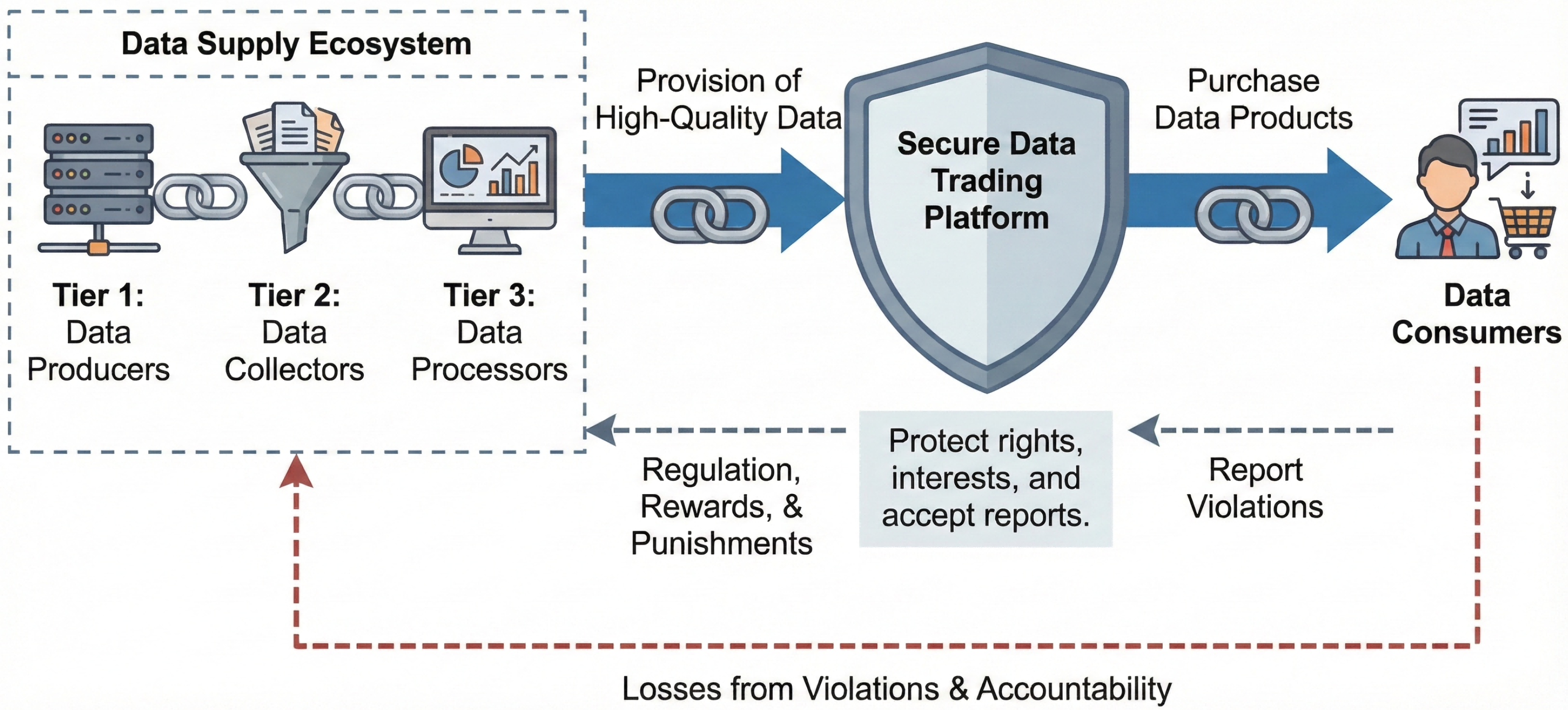
The game model constructed in this paper includes three participants: data suppliers at all levels, consumers, and the data trading market. The game relationship is shown in Figure 1. The data supply chain refers to the entire process from data generation to end consumer use, including data generation, collection, processing, storage, transaction, and distribution. We categorize the various data suppliers in the data supply chain into three tiers: data producers as first-tier suppliers are responsible for providing data products and ensuring data accuracy and real-time availability; data collectors as second-tier suppliers are responsible for integrating various data sources and providing data cleansing, integration, and compliance checking services; and data processors as third-tier suppliers are responsible for providing customized data processing and analysis services based on customer needs.
From an economic perspective, data transactions involve data processing entities comprised of multiple stakeholders. It is a continuous, boundedly rational process, with each stakeholder striving to maximize its own interests [32]. Data suppliers provide data to consumers through data trading markets, and violations may occur at each level of the data collection and processing process. For example, data producers may provide false information services to evade legal responsibilities for data security governance. Data collectors may avoid legal means to maximize profits. Data processors may provide data services that are perfunctory or fail to meet acceptance standards. Consumers have the right to report violations if they discover that purchased data products and services do not meet standards. Data trading markets accept these reports, identify and verify them, and then implement appropriate rewards and penalties. To ensure the legality, transparency, and security of data transactions, whether or not data trading markets utilize blockchain technology, especially smart contracts for automated governance [33], will have a significant impact on the successful identification of violations.

3.2. Basic Assumptions

Assumption 1.
In a three-party game, the data supplier’s behavioral strategy is represented by  α = ( α 1 , α 2 ) = ( v i o l a t i o n , c o m p l i a n c e ) . It chooses  α 1  ith probability x and  α 2  with probability  1 x , where x ranges from 0 to 1. The consumer’s strategy space is represented by  β = ( β 1 , β 2 ) = ( r e p o r t , d o n o t r e p o r t ) . It chooses  β 1  with probability y and  β 2  with probability  1 y , where y ranges from 0 to 1. The data trading market’s strategy space is represented by  γ = ( γ 1 , γ 2 ) = ( u s e b l o c k c h a i n t e c h n o l o g y , d o n o t u s e b l o c k c h a i n t e c h n o l o g y ) . It chooses  γ 1  with probability z and  γ 2  with probability  1 z , where z ranges from 0 to 1.
Assumption 2.
During data transactions, participants typically exhibit bounded rationality and determine the optimal course of action through repeated game-playing. Because each party’s strategic choice primarily relies on their subjective perceptions of the gains and losses of their strategies, prospect theory effectively explains the behavioral patterns of decision-makers facing uncertainty and risk. Therefore, this paper defines the perceived value V of participants in data transactions as prospect value, measured using the value function  v ( Δ π )  and the weight function  w ( p ) . Where p is the objective probability of event i, w ( p )  is a monotonically increasing function, i.e.,  w ( 1 ) = 1 , w ( 0 ) = 0 . w ( p )  represents the decision maker’s subjective weight for event i. Δ π  represents the difference between the decision maker’s actual payoff  π i  and the reference point  π 0  after the event;  v ( Δ π )  represents the decision maker’s subjective perceived value. η and μ represent the decision maker’s risk appetite for gains and losses, respectively, satisfying  η , μ ( 0 , 1 ) . Larger values indicate a more sensitive risk attitude toward gains (losses). λ 1  is the loss aversion coefficient, reflecting the psychological phenomenon of losses outweighing gains.
V = v ( Δ π ) w ( p ) )
w ( p ) = p σ p σ + ( 1 p ) σ 1 / σ
v ( Δ π ) = Δ π η , Δ π 0 λ ( Δ π ) μ , Δ π < 0
Assumption 3.
The revenue a data supplier can earn from selling data is  M s , and the total amount of data in the trading market is p. The probability of a data supplier violating a rule is a, and the data violation rate resulting from a violation is b. The cost of processing data for the data supplier is  C s , and the supplier’s speculative profit from the violation is  V s . When a data supplier’s violation is reported, the data trading market will impose a fine of  F s  on the violating supplier, with the total penalty for the top two data suppliers being  P s = 2 a F s . In particular, blockchain smart contracts enforce the principle that ’Code is Law.’ Once non-compliant data is confirmed on the chain, a penalty  F s  is automatically deducted from the provider’s deposit, thereby eliminating any psychological expectation of evading punishment. Furthermore, if the data trading market does not use blockchain technology, it will provide a favorable environment for data suppliers, resulting in a profit of  V e .
Assumption 4.
Data consumers are the largest participant group in the data supply chain and can significantly influence other participants. For data products purchased by consumers, violations by suppliers at every level of the data supply chain will result in losses  L c  for the data consumer. The perceived benefit of purchasing data products is  V b . When a supply chain participant violates regulations, consumers can choose to report them. The data trading market will reward consumers with  M c  for successful reports. The application of blockchain technology in data trading markets provides essential technical support for safeguarding the legitimate rights and interests of consumers. Its immutability serves as a quality endorsement, allowing consumers to derive a benefit of  V k .
Assumption 5.
The data trading market will develop incentives to encourage suppliers to comply with regulations. Therefore, data suppliers receive a benefit of g. The cost of using blockchain technology in the trading market is L. If blockchain technology is not used but a consumer reports a violation, the platform incurs a cost of  C p  for identification, with a probability of successful identification of  r , r ( 0 ,   1 ) . A successful transaction generates revenue of  M p  for the platform.
Based on the above assumptions, the symbols and meanings of the three-party game model are summarized in Table 2. Among them, V s = s η , V c = c η , V k = k η , V e = ( λ ) ( e ) μ .

3.3. Profit Matrix

When the benefits and costs of a strategy are certain, there is no discrepancy between actual benefits and perceived value. Only when uncertainty exists do decision makers experience psychological utility. The costs of using blockchain technology in the data trading market, the costs of identifying reports after they are received, and the fines and rewards imposed on other participants are interrelated and deterministic expenditures. Meanwhile, the data supplier’s data sales revenue is deterministic. Therefore, M S , C s , F s , g, p, P s , L c , f, L, C p , and M p lack perceived utility, while s, e, c, and k possess both uncertainty and perceived characteristics. Therefore, the payoff matrix for the mixed-strategy game between data suppliers, consumers, and the data trading market is shown in Table 3.

4. Evolutionary Game Model Analysis

4.1. Stability Analysis of Strategies of Evolutionary Game Agents

4.1.1. Data Supplier Strategy Stability Analysis

The expected benefits of data suppliers’ non-compliance or compliance and the average expected benefits ( U 11 , U 12 , U 1 ) are:
U 11 = ( 1 z ) V e + V s + z ( r 1 ) + M s p ( 1 b )
U 12 = ( 1 + z ) ( y 1 ) V s + ( y ( 1 z ) + z ) V s + g y + M s p C s
U 1 = x U 11 + ( 1 x ) U 12
From this, we can get the data supplier’s replicator dynamic equation and its first-order derivative with respect to x:
F ( x ) = x ( U 11 U 1 ) = x ( x 1 ) ( g y V e C s + z V e + b M s p + r F s y + F s y z r F s y z )
d F ( x ) d x = ( 2 x 1 ) ( y ( g + r F s + F s z r F s z ) + V e ( z 1 ) C s + b M s p )
For ease of expression, let G(y) be:
G ( y ) = y ( g + r F s + F s z r F s z ) + V e ( z 1 ) C s + b M s p
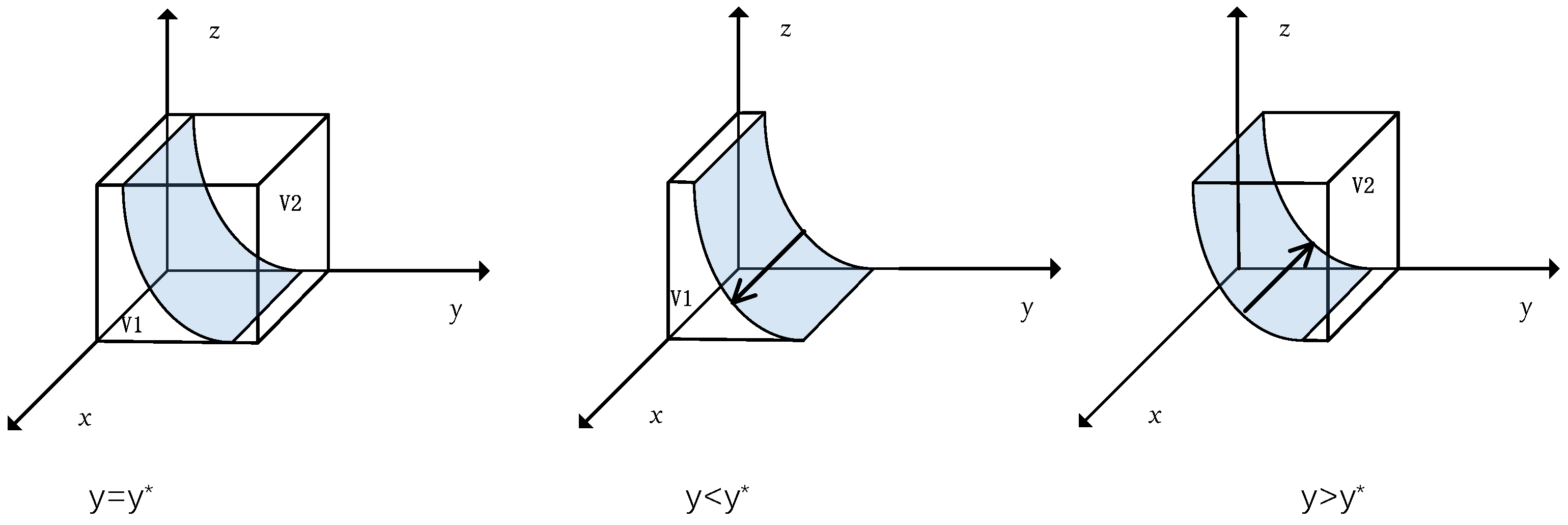
According to the stability theorem of differential equations, the probability of a data supplier choosing a violation in a stable state must satisfy: F ( x ) = 0 and d F ( x ) d x < 0 . From G ( y ) = 0 , we can obtain: y = ( V e ( 1 z ) + C s b M s p ) ( g + r F s + F s z r F s z ) . Therefore, we begin the following discussion:
When y = y , we can get F ( x ) = 0 . That is, no matter what value x takes, the data provider’s strategic choice is in a stable state;
When 0 < y < y , we can obtain d ( F ( x ) ) d x | x = 1 < 0 and d ( F ( x ) ) d x | x = 0 > 0 . In this case, x = 1 is the data supplier’s evolutionary stable strategy, which indicates that the data supplier’s strategy has evolved from non-violation to violation and finally to violation and stability.
When y < y < 1 , d ( F ( x ) ) d x | x = 0 < 0 , d ( F ( x ) ) d x | x = 1 > 0 , at this time x = 0 is the data supplier’s evolutionary stable strategy, which indicates that the data supplier’s strategy tends to be stable by choosing not to violate regulations.
In summary, the data supplier’s replicator dynamic phase diagram can be obtained, as shown in Figure 2.

4.1.2. Analysis of Consumer Strategy Stability

The expected benefits of consumers reporting or not reporting and the average expected benefits ( U 21 , U 22 , U 2 ) are:
U 21 = x z ( V c + f + V k L c ) + x ( 1 z ) ( V c + r f L c ) + ( 1 x ) z ( V c + a f + V k L c ) + ( 1 x ) ( 1 z ) ( V b + a r f L c )
U 22 = x z ( V c + V k L c ) + x ( 1 z ) ( V c L c ) + ( 1 x ) z ( V c + V k ) + ( 1 x ) ( 1 z ) ( V b L c )
U 2 = x U 21 + ( 1 x ) U 22
From this, we can get the consumer’s replicator dynamic equation and its first-order derivative with respect to y:
F ( y ) = y ( U 21 U 2 ) = f y ( 1 y ) ( a + x a x ) ( r + z r z )
d F ( y ) d y = ( 1 2 y ) ( f ) ( a + x a x ) ( r + z r z )
For ease of expression, let J ( z ) be:
J ( z ) = ( f ) ( a + x a x ) ( r + z r z )
According to the stability theorem of differential equations, the probability of a consumer choosing to report a problem in a stable state must satisfy: F ( x ) = 0 and d F ( x ) d x < 0 . From J ( z ) = 0 , we can obtain: z = r 1 r . Therefore:
When z = z , we can get F ( y ) = 0 . That is, no matter what value y takes, the consumer’s strategy choice is in a stable state;
When 0 < z < z , we can obtain d ( F ( y ) ) d y | y = 1 > 0 and d ( F ( y ) ) d y | y = 0 < 0 . In this case, y = 0 is the consumer’s evolutionary stable strategy, which indicates that the consumer’s strategy tends to be stable by choosing not to report;
In summary, the consumer’s replicator dynamic phase diagram can be obtained, as shown in Figure 3.

4.1.3. Analysis of Strategy Stability in Data Trading Market

The expected returns and average expected returns ( U 31 , U 32 , U 3 ) of the data trading market using or not using blockchain technology are:
U 31 = x y ( M p L + F s f + P s ) + x ( 1 y ) ( M p L P s ) + ( 1 x ) y ( M p L + P s g ) + ( 1 x ) ( 1 y ) ( M p L )
U 32 = x y ( M p C p + r F s f + P s ) + x ( 1 y ) ( M p ) + ( 1 x ) y ( M p C p + P s g ) + ( 1 x ) ( 1 y ) ( M p )
U 3 = z U 31 + ( 1 z ) U 32
Therefore, the replicator dynamic equation of the data trading market and its first-order derivative with respect to z are:
F ( z ) = z ( U 31 U 3 ) = z ( 1 z ) ( L C P y + P s x F s x y P s x y + r F s x y )
d F ( z ) d z = ( 1 2 z ) ( L C P y + P s x F s x y P s x y + r F s x y )
Similarly, let H ( x ) be:
H ( x ) = L C P y + P s x F s x y P s x y + r F s x y
According to the stability theorem of differential equations, the probability of a data trading market choosing to use blockchain technology in a stable state must satisfy: F ( z ) = 0 and d ( F ( z ) ) d z < 0 . From H ( x ) = 0 , we can obtain z = C P L P s x F s x y P s x y + r F s x y .
When x = x , we can get F ( z ) = 0 . That is, no matter what value z takes, the strategic choice of the data consumption market is in a stable state;
When 0 < x < x , we can obtain d ( F ( z ) ) d z | z = 1 < 0 and d ( F ( z ) ) d z | z = 0 > 0 . At this time, z = 1 is the evolutionary stable strategy of the data trading market, which shows that the strategy of the data trading market tends to be stable by choosing to use blockchain technology;
To sum up, we can derive the replicator dynamic phase diagram of the data trading market, as shown in Figure 4.

4.2. Stability Analysis of the Equilibrium Point of a Three-Party Evolutionary Game System

It is worth noting that according to Selten [34] and Ritzberger & Weibull [35], in asymmetric multi-population evolutionary games, mixed-strategy equilibrium points are typically unstable saddle points. Therefore, this study focuses on the stability analysis of pure-strategy equilibrium points to identify sustainable long-term governance states. From F ( x ) = F ( y ) = F ( z ) = 0 , we can conclude that the evolutionary game system has eight pure-strategy equilibria: (0,0,0), (0,1,0), (0,0,1), (0,1,1), (1,0,0), (1,1,0), (1,0,1), (1,1,1). To analyze the stability of these equilibria, we use Lyapunov’s first method to determine the stability. First, we construct the Jacobian matrix:
J = F 11 F 12 F 13 F 21 F 22 F 23 F 31 F 32 F 33
Among them,
F 11 = F ( x ) x = x ( z V e C s + V e z + g y r z + M s b p ) + ( x 1 ) ( z V e C s + V e z + g y r z + M s b p ) F 12 = F ( x ) y = g x ( x 1 ) F 13 = F ( x ) z = x ( x 1 ) ( V e r + 1 ) F 21 = F ( y ) x = f y ( a 1 ) ( y 1 ) ( r + z r z ) F 22 = F ( y ) y = f y ( a + x a x ) ( r + z r z ) f ( y 1 ) ( a + x a x ) ( r + z r z ) F 23 = F ( y ) z = f y ( r 1 ) ( y 1 ) ( a + x a x ) F 31 = F ( z ) x = z ( z 1 ) ( P s F s y P s y + F s r y ) F 32 = F ( z ) y = z ( z 1 ) ( C p + F s x + P s x F s r x ) F 33 = F ( z ) z = z ( L C p y + P s x F s x y P s x y + F s r x y ) + ( z 1 ) ( L C p y + P s x F s x y P s x y + F s r x y )
According to Lyapunov’s first law, when all eigenvalues of the Jacobian matrix are negative, the equilibrium point is the system’s ESS. When at least one eigenvalue is positive, the equilibrium point is unstable. When eigenvalues are both zero and negative, the equilibrium point is in a critical state, and the sign of the eigenvalue cannot determine its stability [36] (*, − and +). Substituting each equilibrium point into the Jacobian matrix yields the corresponding eigenvalues, as shown in Table 4.
The stability of the eight equilibrium points is analyzed using Lyapunov’s first law, and the results are shown in Table 5.
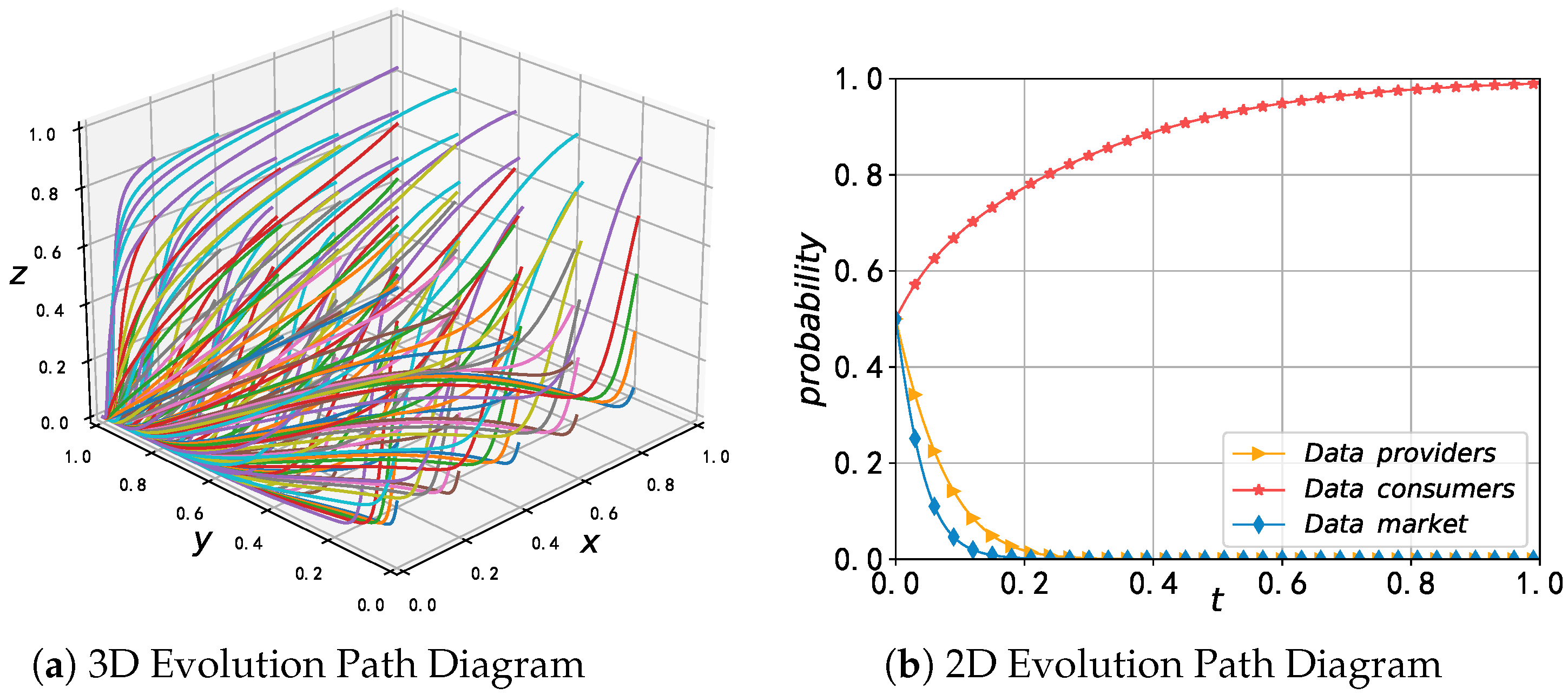
Scenario 1: The conditions g C s V e + F s r + b p M s , C p L + F s F s r are satisfied. E 6 (1,1,0) shows that when the data trading market chooses not to use blockchain technology, data suppliers choose to violate regulations and consumers choose to report.
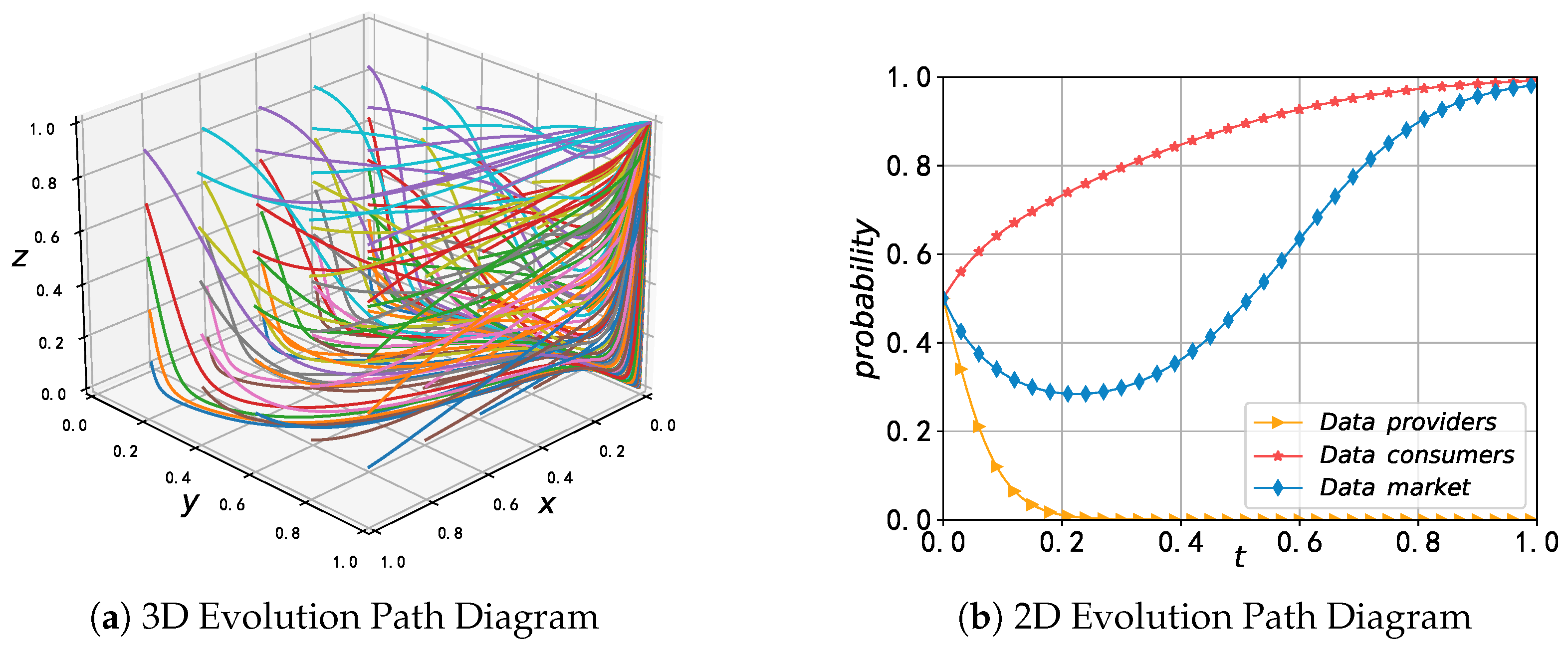
As shown in Figure 5, this scenario is equivalent to the early stages of data supply chain development. Due to the immaturity of industry culture and environment, and the inadequate supply chain technology, the cost of adopting blockchain technology in the data trading market is high. When the cost of adopting blockchain technology exceeds a certain critical value, namely, C p L + F s F s r < 0 , the data trading market’s strategy is to not adopt blockchain technology. This creates favorable conditions for data suppliers to violate regulations. In this situation, data suppliers can obtain higher speculative returns at a lower expected cost. However, the data trading market’s inadequate reward and punishment mechanism makes the expected returns of violations higher than those of compliance. Specifically, when g C s V e + F s r + b p M s < 0 , data suppliers will choose to violate regulations. Due to the lack of corresponding regulatory measures in the data trading market, the probability of data supplier violations gradually increases, resulting in losses for consumers. To protect their rights and interests, consumers will choose to report violations. Therefore, E 6 (1,1,0) is the system’s ESS.
Scenario 2: The conditions C s g F s b p M s < 0 and L C p < 0 are satisfied. The equilibrium point E 4 (0,1,1) indicates that when the data trading market chooses to use blockchain technology, data suppliers choose to comply with regulations and consumers choose to report.
As shown in Figure 6, this scenario corresponds to the development phase of data supply chain system construction. As regulatory technology matures and the increasing government emphasis on strengthening data supply chain governance, the data market will gradually increase its oversight of data transactions. When the cost of using blockchain technology to identify non-compliance issues among suppliers at all levels is lower than traditional methods, that is, when L C p < 0 , the data market will tend to adopt blockchain technology. At the same time, the data market will also strengthen its reward and penalty mechanisms for data suppliers. When the intensity of rewards and penalties reaches a certain level, that is, C s g F s b p M s < 0 , data suppliers will gradually adopt compliant practices. In this scenario, although some data suppliers may still engage in non-compliance, consumers will actively report violations, motivated by the dual incentives of rewards for successful reporting and the protection of their rights. Therefore, E 4 (0,1,1) is the system’s ESS.
Scenario 3: The conditions V e + C s g r F s b p M s < 0 and C p L < 0 are satisfied. The equilibrium point E 2 (0, 1, 0) represents the case where the data trading market chooses not to use blockchain technology, data suppliers choose to comply with regulations, and consumers choose to report.
As shown in Figure 7, this scenario represents the mature stage of the data trading industry’s development. With advancements in data trading regulatory technology and the government’s increased attention, relevant laws and regulations are gradually being strengthened and improved. The space for data suppliers to profit from illegal activities will be significantly reduced, and they will gradually and consciously adhere to industry regulations. In this scenario, when V e + C s g r F s b p M s < 0 , data suppliers will choose to operate in compliance. At the same time, excessive intervention in the data trading market will only increase the burden. Because C p L < 0 , the data trading market will gradually reduce oversight at every stage, and even, under the constraints of sound laws and regulations, will no longer choose to use blockchain technology. However, consumers will still choose to report issues with data products due to the low cost of reporting and the rewards offered for successful reports.

5. Simulation Analysis

To evaluate the impact of several key parameters on the evolution and trajectory of the tripartite ESS, this paper also conducts numerical simulations. The parameters are the initial willingness ( x , y , z ), the cost L required for the data trading market to choose blockchain technology, the amount of data p traded in the market, and the rewards g and f provided by the data trading market to data suppliers and consumers.
Currently, enterprises are increasingly prioritizing to the integrated development of data elements and industries, and the government has a deeper understanding of the importance of technologies such as blockchain to the construction of data supply chain systems. In the context of the rapid development of China’s data trading market is in a period of rapid development. Therefore, in this context, the initial parameters are set to reflect the conditions of Scenario 2: V s = 50 , M s = 3 , a = 0.3 , b = 0.2 , C s = 45 , V e = 20 , F s = 20 , g = 20 , V c = 100 , r = 0.4 , f = 20 , V k = 30 , L = 30 , C p = 40 , M p = 100 , p = 100 , P s = 20 . The impact of the parameters on the evolutionary results and trajectories of the strategy choices of data suppliers, consumers, and data trading markets is discussed as follows.

5.1. Impact of Initial Strategy on System Evolution

Since data suppliers, consumers, and data trading markets are in the same dynamic system, the strategy stability of one party will affect the decision-making behavior of other stakeholders. Therefore, we gradually increase the initial strategies of parties x, y, and z to analyze the impact of the initial probability combination of the three parties on the evolution path.
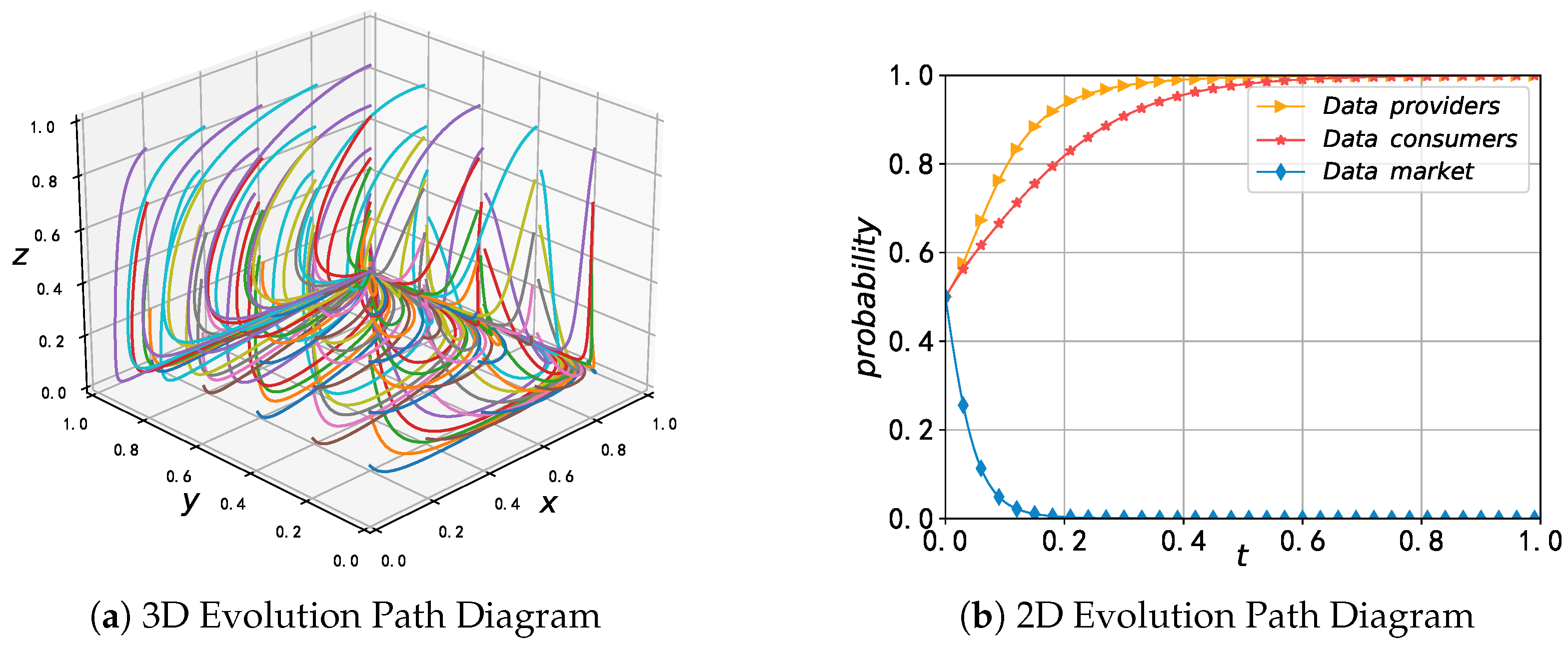
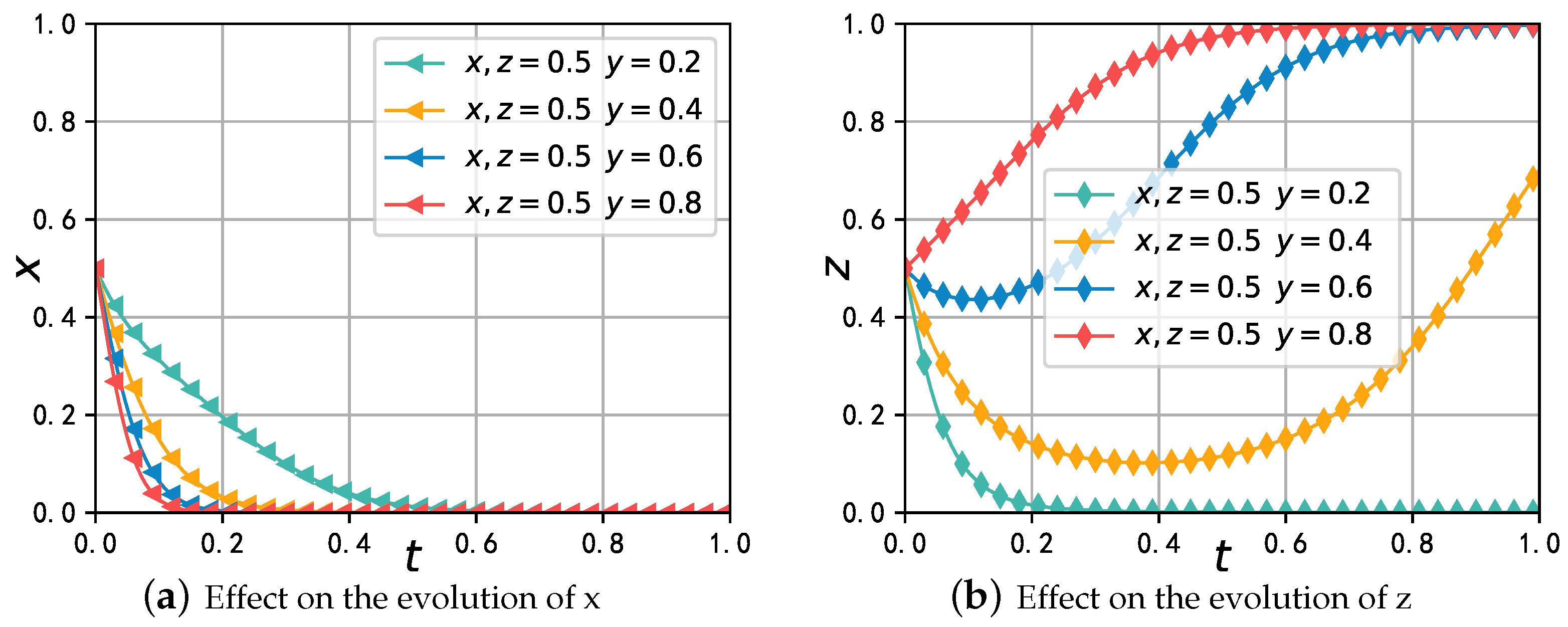
In Figure 8, we set the initial strategy for y and z to 0.5, thereby changing the data supplier’s initial strategy to “violate.” As shown in Figure 8a,b, as x gradually increases from 0.2 to 0.8, the rate of consumer adoption of the “report” strategy increases, and the data trading market’s enthusiasm for adopting the “use blockchain technology” strategy also increases. This demonstrates that the strategy chosen by data suppliers can have a significant impact on the entire system. This is because data is the core resource of the entire supply chain, and data quality determines the effectiveness of the entire supply chain system.
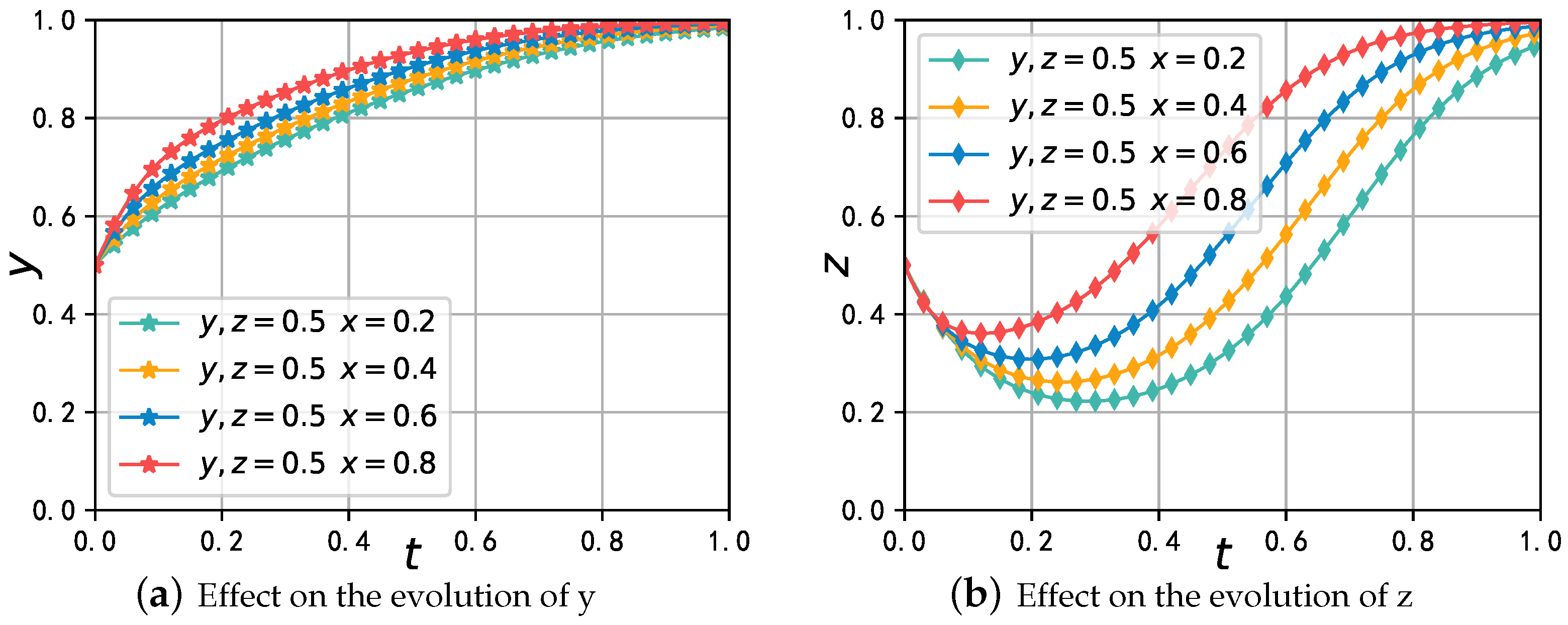
Figure 9 illustrates the impact of consumers’ initial strategies on system evolution. As shown in Figure 9a, as the probability of consumers adopting a reporting strategy increases from 0.2 to 0.8, the speed at which data suppliers converge to “compliance” is negatively correlated with y. In Figure 9b, the data trading market rapidly shifts from converging toward “not adopting blockchain technology” to “using blockchain technology.” This demonstrates that consumer choices directly influence the behavior of data suppliers and the data trading market, thereby indirectly driving data supply chain governance.
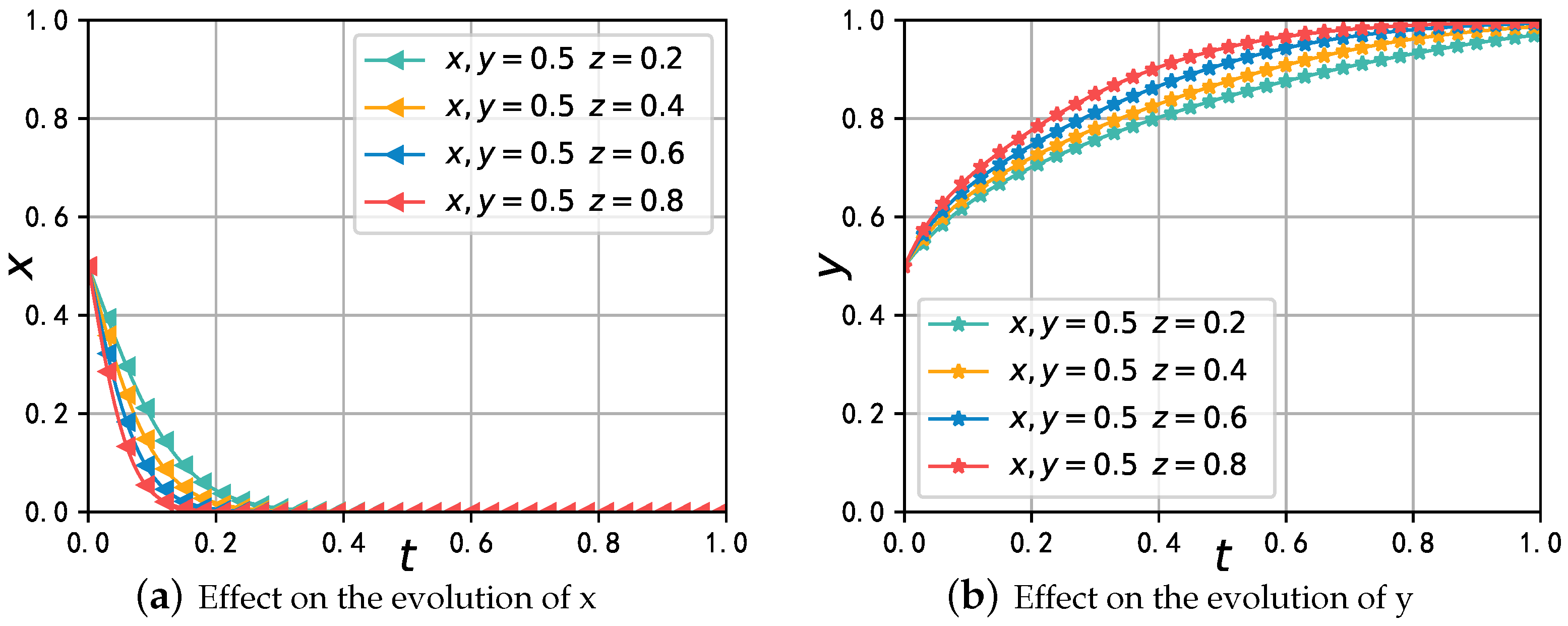
Figure 10 shows that the data trading platform’s initial strategy of “using blockchain technology” gradually increases, influencing the decisions of other stakeholders in the system. As shown in Figure 10a, as z increases from 0.2 to 0.8, the rate at which data suppliers choose “compliance” accelerates. Similarly, in Figure 10b, consumer behavior is significantly impacted, with the rate of convergence towards “reporting” accelerating. This demonstrates that the choices made by the data trading market directly influence the behavior of data suppliers.

5.2. The Impact of the Cost L Required for the Data Trading Market to Choose to Use Blockchain Technology

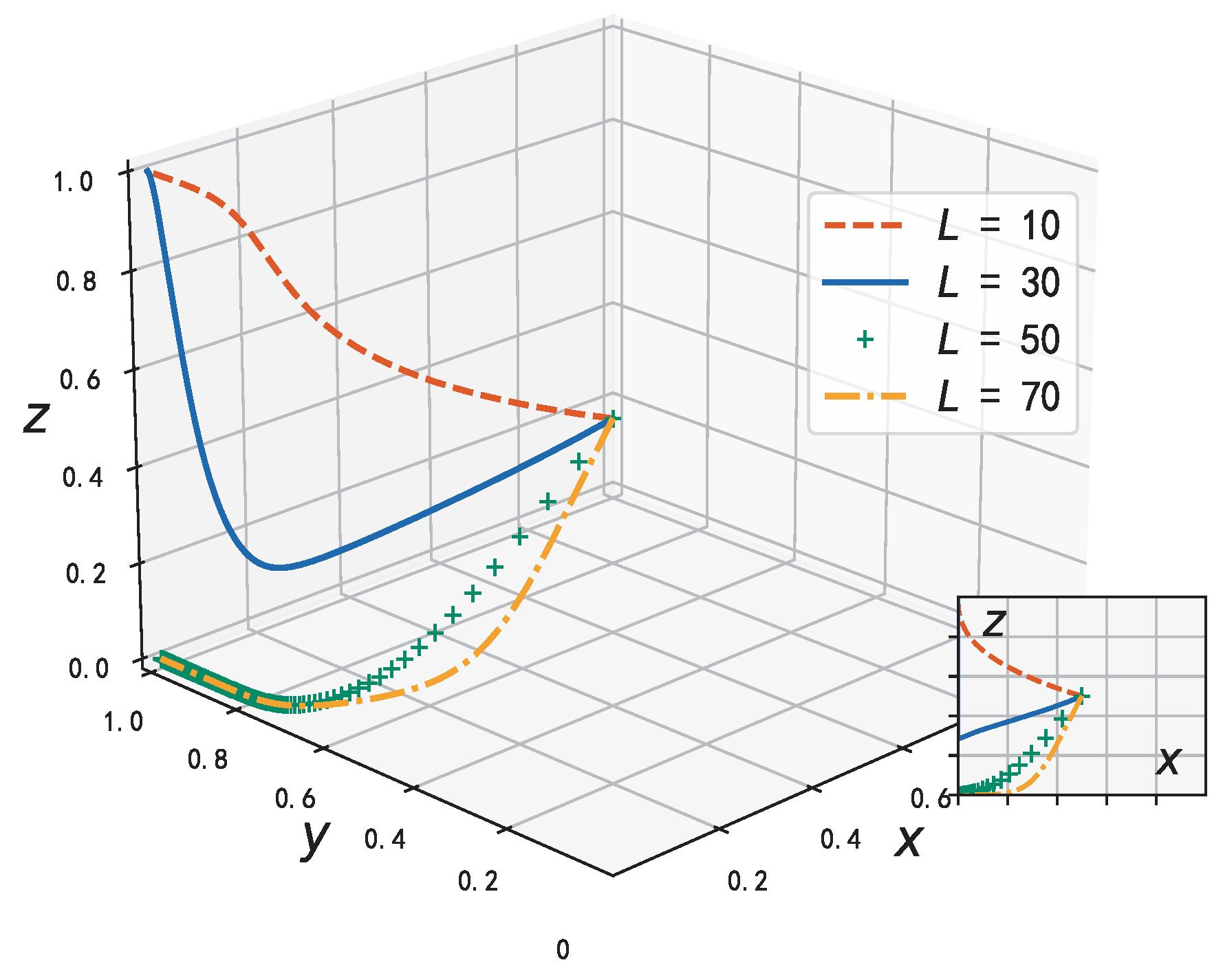
When data trading markets provide technical support for data supply chain oversight and actively utilize blockchain technology, a corresponding cost, L is incurred. With L initially set at 30 and other parameters remaining unchanged, as shown in Figure 11, we examine three scenarios: decreasing L to 10, increasing L to 50, and increasing L to 70. When L decreases to 10, the equilibrium point remains unchanged. However, when L increases to 50, the equilibrium point shifts from (0, 1, 1) to (0, 1, 0).
Research indicates that technological cost is a key negative factor influencing the adoption of blockchain technology in the data trading market, profoundly reflecting the profit-driven nature of data trading platforms. While blockchain technology can bring a significant “trust premium” by establishing a full-chain traceability system and accurately identifying supply chain problems, platforms will only choose to adopt it if and only if this premium covers the construction costs. If the initial construction costs are too high, platforms, considering cost-benefit maximization, often prefer to bear the risks of inefficiency and high error rates associated with manual review rather than optimize governance through technological upgrades. This logic strongly explains the current market stratification phenomenon: only large, regulated exchanges actively deploy blockchain, while small and medium-sized or informal platforms still tend to favor traditional, low-cost models. It is worth noting that the adoption of blockchain not only concerns platform interests but also directly relates to consumer rights. The introduction of the technology can significantly improve the success rate of consumer complaints, thereby strengthening their willingness to monitor. Therefore, to break down the current cost barriers, vigorously developing regulatory technology and effectively reducing the cost of using blockchain is the only way to improve the governance of the data trading supply chain and balance commercial interests with regulatory effectiveness.

5.3. The Impact of the Amount of Data p Traded in the Market

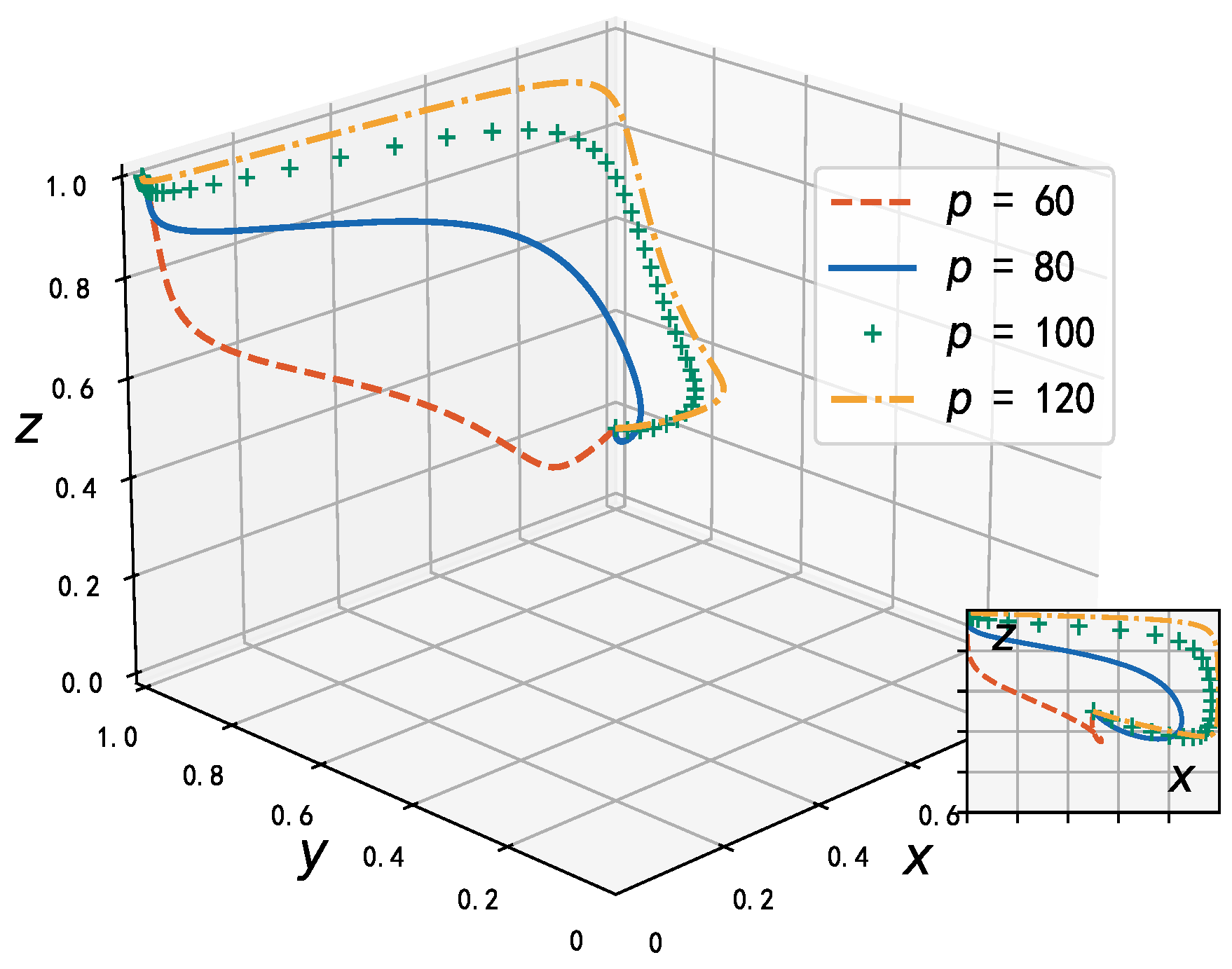
From the perspective of economies of scale, the scale of data products is a key factor influencing the efficiency and cost of the data supply chain. Specifically, expanding the scale of data circulation not only significantly improves the overall efficiency and resilience of the supply chain but also better meets market demand and promotes integration between different segments. Therefore, changes in data volume p inevitably drive adjustments in the behavioral strategies of supply chain participants. To quantify this impact, we conducted simulation analyses for four scenarios where p takes values of 60, 80, 100, and 120, respectively.
As shown in Figure 12, the convergence of data suppliers toward compliance gradually decelerates. A critical turning point occurs at p = 80 , where the supplier’s strategy shifts to non-compliance. From an overall market perspective, this indicates that although the market initially tends to forgo blockchain technology, an increase in p acts as a catalyst for its adoption. These findings confirm a significant positive correlation between the scale of data circulation and the payoffs of supply chain participants. Specifically, the dual growth in market size and profitability creates an incentive mechanism that encourages the platform to adopt blockchain technology while guiding suppliers back to compliance. Therefore, formulating strategies to promote the development of the data supply chain and expand the market scale is essential.

5.4. The Impact of Data Trading Markets on the Incentives g and f of Data Suppliers and Consumers

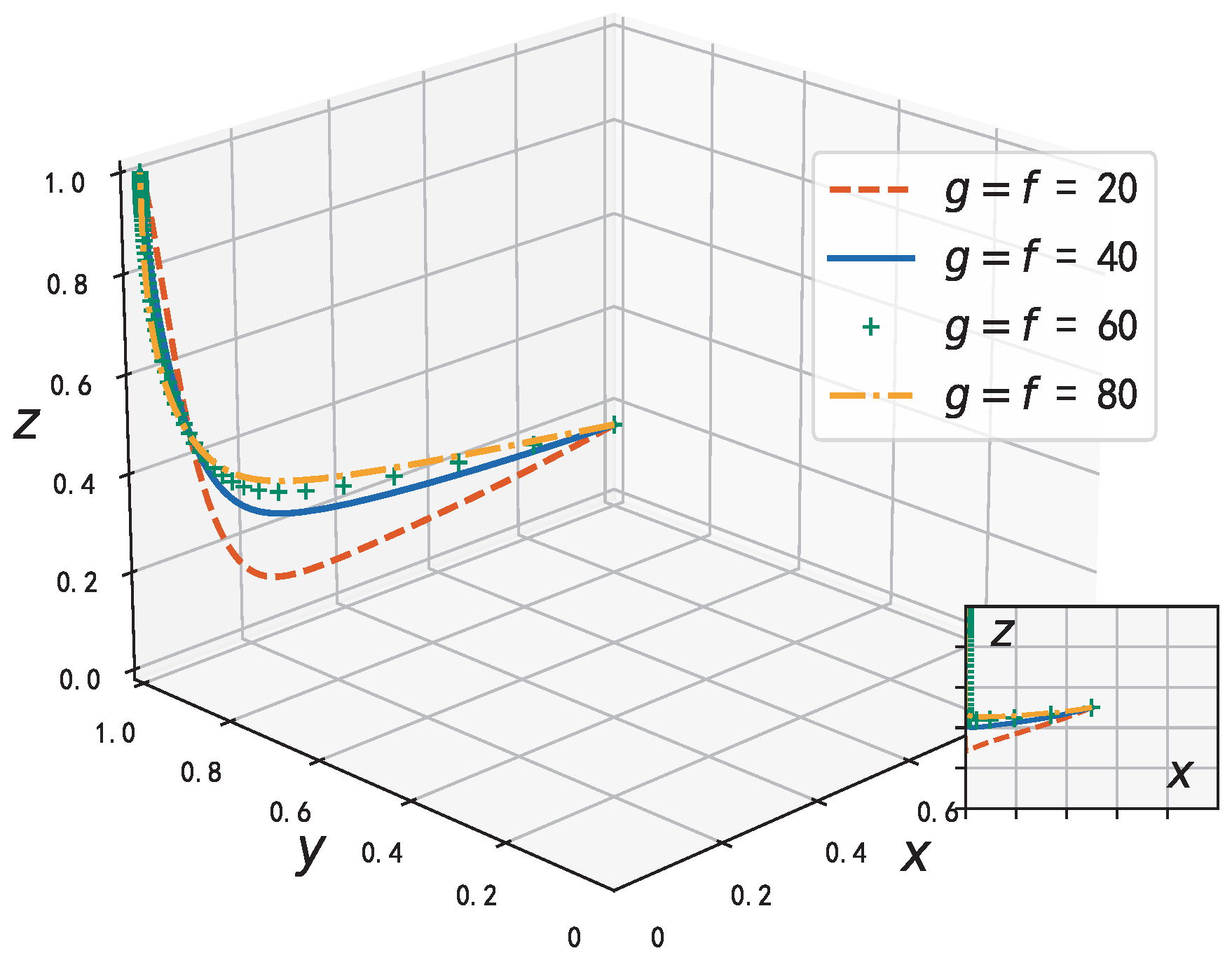
The governance efficiency of the data supply chain system reaches its optimum when both data providers and consumers actively supply high-quality data and strictly adhere to market regulations. To achieve this, the data trading market introduces incentive parameters g and f. In the simulation experiments, the initial values of g and f were increased from 20 to 40 and 80, respectively. The results indicate that although increasing the incentive intensity does not alter the evolutionary equilibrium point (which remains at (0, 1, 1)), it has a significant positive effect on the compliance behavior of supply chain participants and the consumers’ willingness to report violations. Particularly in the initial stage of industry development, when data providers have weak compliance awareness and consumers lack sufficient awareness of rights protection, the market incentive mechanism plays a dominant guiding role. However, it is worth noting that as the incentive amount continues to increase, its marginal effect gradually diminishes or even approaches saturation. Therefore, it is necessary for the data trading market to construct a reasonable incentive mechanism to maximize governance efficiency (see Figure 13).

6. Conclusions and Recommendation

6.1. Conclusions

This paper integrates Evolutionary Game Theory and Prospect Theory to construct a tripartite evolutionary game model involving data providers, data consumers, and data trading platforms. Through system stability analysis and numerical simulation, this study deeply explores the influence mechanism of blockchain technology on data supply chain governance within the data trading market. The research yields the following three primary conclusions:
First, by dissecting the evolutionary paths of data supply chain governance across the early, middle, and late stages, three typical stability scenarios and their formation mechanisms are identified. The results indicate that the incentive mechanism design of the data trading market and the application cost of blockchain technology are key variables driving the system toward higher evolutionary stages. Specifically, key parameters such as L, p, g, and f exert significant regulatory effects on the system’s evolutionary stable states.
Second, the study reveals significant negative externalities among data providers. The scale of data trading acts as a moderator for system behavior: a larger trading volume accelerates the convergence speed (or significantly intensifies the decline) of non-compliant behaviors by data providers. Meanwhile, the cost of blockchain technology directly constrains its application benefits in the market, thereby altering the behavioral strategies of both supply and demand sides.
Furthermore, the results emphasize that establishing a robust market incentive mechanism is crucial during the early stages of data supply chain governance. Finally, this paper achieves an integration of Prospect Theory and Evolutionary Game Theory. On one hand, Evolutionary Game Theory is utilized to reveal the dynamic strategy adjustment process of parties based on “trial-and-error, imitation, and learning.” On the other hand, Prospect Theory is introduced to characterize the cognitive differences and psychological biases of the three stakeholders during decision-making, effectively enhancing the scientific validity and realistic applicability of the decision model. The stable strategies proposed provide theoretical guidance for real-world data supply chain governance, suggesting that stakeholders should jointly enhance compliance awareness, actively promote the application of blockchain technology, and co-construct a transparent information traceability system.

6.2. Recommendation

Based on the conclusions drawn from the system stability and typical parameter sensitivity analysis, we put forward the following policy recommendations.
First, strengthen public awareness and education. The public should be fully informed about the role of data as a key factor of economic development, enhancing consumers’ sense of responsibility for maintaining a healthy data trading market and fostering a favorable data circulation environment through active consumer reporting. Simultaneously, the product quality and safety awareness of data suppliers and practitioners should be raised to ensure strict compliance with relevant laws, regulations, and standards regarding data transactions. Also, by highlighting good examples, data supply chain companies should be encouraged to be honest and offer high-quality services, which will help the industry grow.
Second, support the development of blockchain and related technologies, promote technological innovation, and facilitate data supply chain governance. The data trading market needs to implement a series of technical and management measures to ensure the smooth use of blockchain technology, specifically at both the technical and management levels. Improve the construction of blockchain infrastructure and promptly update and upgrade relevant technical means; conduct regular security and compliance audits to ensure that market operations comply with relevant laws and industry standards; establish a decentralized market governance mechanism to allow users and developers to jointly participate in market governance and decision-making, enhance market transparency and user participation, and design reasonable incentive mechanisms to encourage users and developers to actively participate in market development and innovation.
Third, the data supply chain regulatory framework should establish a fair reward and penalty system. The quality of data supply chain oversight should be enhanced by implementing a data traceability and accountability system and strengthening market supervision. Timely penalties for violations, regular funding for the development and updating of technologies like blockchain, encouraging active compliance among data supply chain participants, and incentivizing consumers to report violations are equally crucial factors influencing data supply chain governance, as analyzed from a game-theoretic perspective of government regulation.
In constructing this evolutionary game model for data suppliers, consumers, and the data trading market, and conducting subsequent analysis, we recognized several limitations of this paper, which will provide potential avenues for future research. First, this paper does not consider other factors that may influence data supply chain governance using blockchain technology, such as the psychological impact of negative externalities on participants at one level of the data supply chain from participants at other levels. Second, this evolutionary game model does not consider the influence of other stakeholders, such as the government, on data supply chain governance. Furthermore, the influence of consumers in the model is relatively small compared to the other two groups, so simplification of the model is worth considering in the future. Third, this paper does not account for the heterogeneity of individual behavior across different stakeholders. In the future, we will address the impact of individual differences, such as consumers’ knowledge and consumption needs, and suppliers’ professional ethics, on data supply chain governance.

Author Contributions

Conceptualization, J.Z. and J.Y.; methodology, J.Z.; validation, J.Z.; formal analysis, J.Z. and J.Y.; writing—original draft preparation, J.Z.; writing—review and editing, J.Z. and J.Y.; supervision, J.Y.; funding acquisition, J.Y. All authors have read and agreed to the published version of the manuscript.

Funding

This work was supported in part by the Humanities and Social Science Fund of Ministry of Education of China (No. 21YJCZH197); Shanxi Provincial Research Foundation for Basic Research (No. 202303021221184).

Data Availability Statement

The original contributions presented in this study are included in the article. Further inquiries can be directed to the corresponding author.

Conflicts of Interest

Author Jie Zhang was employed by the company Shanxi Information Industry Technology Research Institute Co., Ltd. The remaining author declares that the research was conducted in the absence of any commercial or financial relationships that could be construed as a potential conflict of interest.

References

  1. Yang, Y.; Li, Y.; Liang, X. The role of data trading platforms (DTPs) in digital technology innovation: Mechanisms & evidence from China. J. Policy Model. 2025, 47, 1372–1396. [Google Scholar]
  2. Lv, Y.; Yang, J.; Sun, X.; Wu, H. Evolutionary game analysis of stakeholder privacy management in the AIGC model. Oper. Res. Perspect. 2025, 14, 100327. [Google Scholar] [CrossRef]
  3. Li, C.; Liang, S.; Zhang, J.; Wang, Q.E.; Luo, Y. Blockchain-based data trading in edge-cloud computing environment. Inf. Process. Manag. 2022, 59, 102786. [Google Scholar] [CrossRef]
  4. Abla, P.; Li, T.; He, D.; Huang, H.; Yu, S.; Zhang, Y. Fair and privacy-preserved data trading protocol by exploiting blockchain. IEEE Trans. Inf. Forensics Secur. 2024, 19, 9012–9025. [Google Scholar] [CrossRef]
  5. Li, T.; Liu, A.; Zhang, S.; Wang, T.; Song, H. TCDT: A trust-enabled crowdsourced data trading system in intelligent blockchain over Internet of Things. Expert Syst. Appl. 2025, 265, 125968. [Google Scholar] [CrossRef]
  6. Zhang, J.; Zhang, S.; Zhang, G.; Liao, G. A data trading scheme based on blockchain and game theory in federated learning. Expert Syst. Appl. 2025, 278, 127158. [Google Scholar] [CrossRef]
  7. Guo, L.; Zhang, Q.; Wu, J.; Gonzalez, E.D.S. An evolutionary game model of manufacturers and consumers’ behavior strategies for green technology and government subsidy in supply chain platform. Comput. Ind. Eng. 2024, 189, 109918. [Google Scholar] [CrossRef]
  8. Fan, W.; Wu, X.; He, Q. Digitalization drives green transformation of supply chains: A two-stage evolutionary game analysis. Ann. Oper. Res. 2024, 355, 1483–1502. [Google Scholar] [CrossRef]
  9. Cao, W.; Tao, X. A study on the evolutionary game of the four-party agricultural product supply chain based on collaborative governance and sustainability. Sustainability 2025, 17, 1762. [Google Scholar] [CrossRef]
  10. Zhao, E.; Sun, S.; Fu, C.; Wu, J.; Wang, S. How user-generated content influence different types of travelers to select hotels? A perspective with prospect theory. Inf. Process. Manag. 2025, 62, 104049. [Google Scholar] [CrossRef]
  11. Qiu, R.; Wang, L.; Jia, Y.; Yu, L. Understanding digital risk governance in manufacturing supply chains: Behavioral insights from prospect theory and evolutionary games. Asia Pac. J. Mark. Logist. 2025, 1–34. [Google Scholar] [CrossRef]
  12. Wang, S.; Zou, K.; Zou, Y.; Jiang, Z. Dynamic Tripartite Governance in data security: An evolutionary game model with cross-level government supervision. PLoS ONE 2025, 20, e0325473. [Google Scholar] [CrossRef] [PubMed]
  13. Liu, X.; Wang, Q.; Li, Z.; Jiang, S. An Evolutionary Game Analysis of Decision-Making and Interaction Mechanisms of Chinese Energy Enterprises, the Public, and the Government in Low-Carbon Development Based on Prospect Theory. Energies 2025, 18, 2041. [Google Scholar] [CrossRef]
  14. Baah-Peprah, P.; Shneor, R. A trust-based crowdfunding campaign marketing framework: Theoretical underpinnings and big-data analytics practice. Int. J. Big Data Manag. 2022, 2, 1–24. [Google Scholar] [CrossRef]
  15. Dong, S.; Abbas, K.; Li, M.; Kamruzzaman, J. Blockchain technology and application: An overview. PeerJ Comput. Sci. 2023, 9, e1705. [Google Scholar] [CrossRef]
  16. Ressi, D.; Romanello, R.; Piazza, C.; Rossi, S. AI-enhanced blockchain technology: A review of advancements and opportunities. J. Netw. Comput. Appl. 2024, 225, 103858. [Google Scholar] [CrossRef]
  17. Nguyen, L.D.; Leyva-Mayorga, I.; Lewis, A.N.; Popovski, P. Modeling and analysis of data trading on blockchain-based market in IoT networks. IEEE Internet Things J. 2021, 8, 6487–6497. [Google Scholar] [CrossRef]
  18. Chen, F.; Zhang, H.; Xiang, T.; Liu, J.K. A two-stage approach for fair data trading based on blockchain. IEEE Trans. Inf. Forensics Secur. 2024, 19, 9835–9849. [Google Scholar] [CrossRef]
  19. Li, D.; Ke, X.; Zhang, X.; Zhang, Y. A trusted and regulated data trading scheme based on blockchain and zero-knowledge proof. IET Blockchain 2024, 4, 443–455. [Google Scholar] [CrossRef]
  20. Liang, Z.Y.; Liu, G.Y.; Ren, Y.; Yang, M.; Jiang, R.W.; Luo, Y.; Ma, Y.S. Trustworthy data space collaborative trust mechanism driven by blockchain: Technology integration, cross-border governance, and standardization path. Information 2025, 16, 1066. [Google Scholar] [CrossRef]
  21. Javed, F.; Mangues-Bafalluy, J.; Zeydan, E.; Blanco, L. Trustworthy reputation for federated learning in o-ran using blockchain and smart contracts. IEEE Open J. Commun. Soc. 2025, 6, 1343–1362. [Google Scholar] [CrossRef]
  22. Geng, Q.; Chuai, Z.; Jin, J. Cross-organizational data exchange based on consortium blockchain with consistency guarantee. J. Supercomput. 2024, 80, 18199–18236. [Google Scholar] [CrossRef]
  23. Yang, J.; Yang, T.; Zhang, C. System dynamics based evolutionary game model for data transaction quality regulation. Front. Comput. Sci. 2026, 20, 2003609. [Google Scholar] [CrossRef]
  24. Avila, P.; Mullon, C. Evolutionary game theory and the adaptive dynamics approach: Adaptation where individuals interact. Philos. Trans. R. Soc. B 2023, 378, 20210502. [Google Scholar] [CrossRef]
  25. Li, X. An evolutionary game-theoretic analysis of enterprise information security investment based on information sharing platform. Manag. Decis. Econ. 2022, 43, 595–606. [Google Scholar] [CrossRef]
  26. Tian, Z.; Han, M.; Jiang, C. Research on platform data security governance strategy based on three-party evolutionary game. Heliyon 2024, 10, e36391. [Google Scholar] [CrossRef]
  27. Yao, H.; Liu, Y. Evolutionary game analysis of healthcare data governance in China’s experimental data trading pilots. Npj Digit. Med. 2025, 8, 562. [Google Scholar] [CrossRef] [PubMed]
  28. Liu, X.; Yue, J.; Luo, L.; Liu, C.; Zhu, T. Evolutionary analysis of nuclear wastewater collaborative governance based on prospect theory. J. Clean. Prod. 2024, 465, 142856. [Google Scholar] [CrossRef]
  29. Su, C.; Deng, J.; Li, X.; Ma, J.; He, W.; Wang, X.; Wang, C. The mechanism of blockchain technology in safety risk monitoring. Eng. Constr. Archit. Manag. 2025, 1–21. [Google Scholar] [CrossRef]
  30. Chen, Q.; Chen, F.; Gu, B.; Tian, P.; Fu, Y. Research on shipping carbon governance considering rent-seeking behavior: An evolutionary game analysis based on prospect theory. Front. Mar. Sci. 2025, 12, 1655085. [Google Scholar] [CrossRef]
  31. Zhu, X.; Meng, X.; Zhang, Y. How to promote knowledge transfer within R&D team? An evolutionary game based on prospect theory. PLoS ONE 2023, 18, e0289383. [Google Scholar]
  32. Zhang, J.; Zhang, X.; Zhang, J. Research on the on-exchange implementation of data trading based on evolutionary game theory. IEEE Access 2024, 12, 20894–20906. [Google Scholar] [CrossRef]
  33. Zhang, J.; Datta, A. Blockchain-enabled data governance for privacy-preserved sharing of confidential data. PeerJ Comput. Sci. 2024, 10, e2581. [Google Scholar] [CrossRef] [PubMed]
  34. Selten, R. A note on evolutionarily stable strategies in asymmetric animal conflicts. In Models of Strategic Rationality; Springer: Berlin/Heidelberg, Germany, 1988; pp. 67–75. [Google Scholar]
  35. Cressman, R. Evolutionary Dynamics and Extensive form Games; MIT Press: Cambridge, MA, USA, 2003; Volume 5. [Google Scholar]
  36. Zou, C.; Huang, Y.; Hu, S.; Huang, Z. Government participation in low-carbon technology transfer: An evolutionary game study. Technol. Forecast. Soc. Change 2023, 188, 122320. [Google Scholar] [CrossRef]
Figure 1. Logical diagram of the three-party evolutionary game model.
Mathematics 14 00432 g001
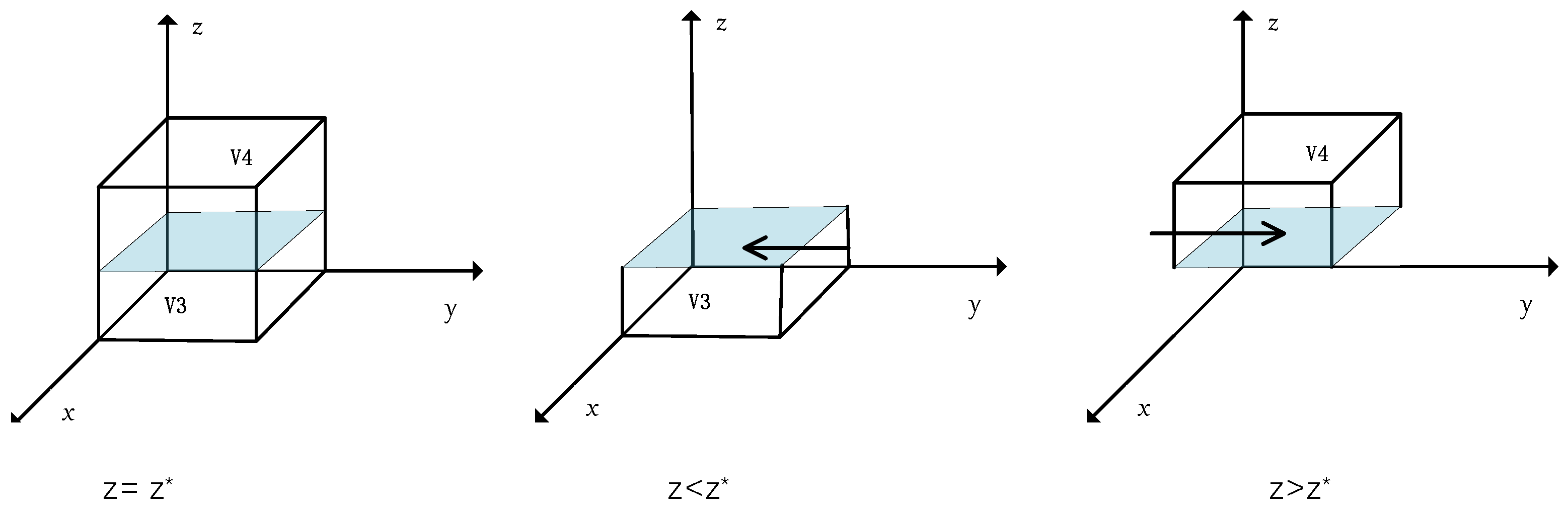
Figure 2. Data supplier’s replicated dynamic phase diagram.
Mathematics 14 00432 g002
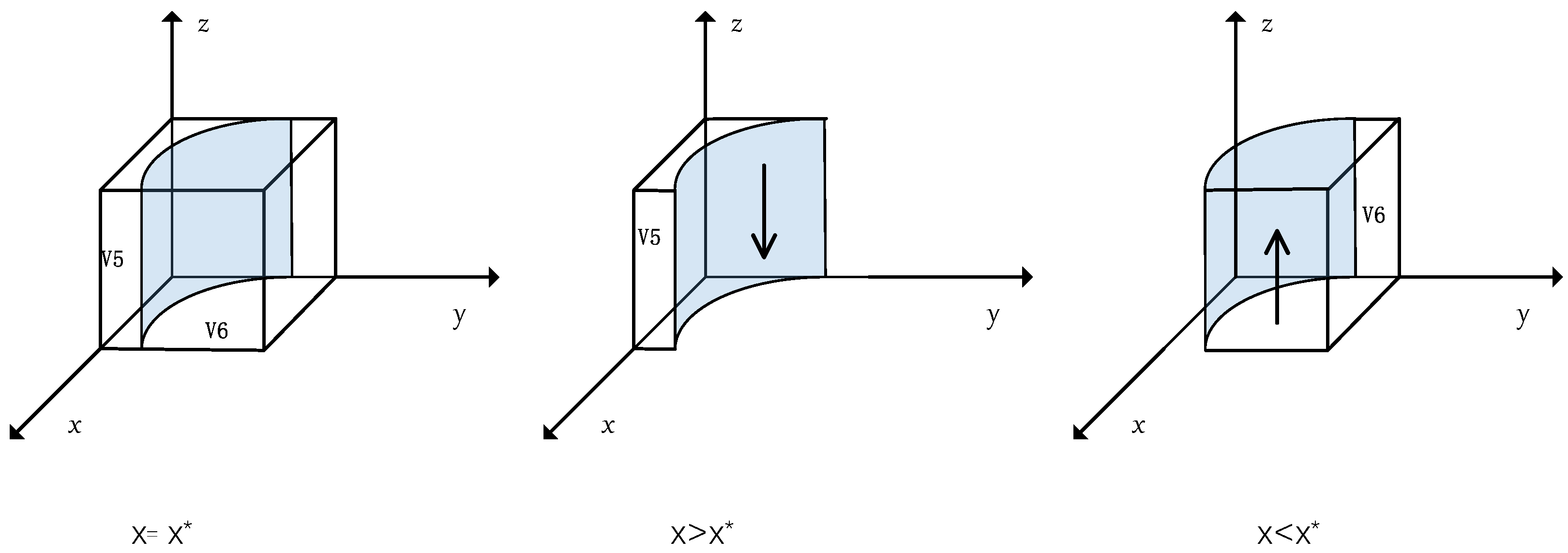
Figure 3. The replicator dynamic phase diagram of consumer.
Mathematics 14 00432 g003
Figure 4. The replicator dynamic phase diagram of data trading market.
Mathematics 14 00432 g004
Figure 5. Evolutionary trajectory of E 6 (1,1,0).
Mathematics 14 00432 g005
Figure 6. Evolutionary trajectory of E 4 (0,1,1).
Mathematics 14 00432 g006
Figure 7. Evolutionary trajectory of E 2 (0,1,0).
Mathematics 14 00432 g007
Figure 8. The impact of initial willingness of data suppliers.
Mathematics 14 00432 g008
Figure 9. The impact of initial willingness of data consumers.
Mathematics 14 00432 g009
Figure 10. The impact of initial willingness of data trading market.
Mathematics 14 00432 g010
Figure 11. Effect of changes in L on evolutionary pathways.
Mathematics 14 00432 g011
Figure 12. Effect of changes in p on evolutionary pathways.
Mathematics 14 00432 g012
Figure 13. Effect of changes in g and f on evolutionary pathways.
Mathematics 14 00432 g013
Table 1. Comparison of research perspectives and methodologies.
DimensionTraditional ResearchRecent Research  [11,12,13]This Study
Game subjectsBuyer–seller bilateral gameGovernment-enterprise-third party regulatorSupplier–consumer-trading platform (emphasizing the platform’s endogenous governance role)
Rationality assumptionPerfect rationalityBounded rationalityBounded rationality + Prospect theory (Quantifying loss aversion and reference point dependence)
Role of blockchainExogenous variableInstrumental toolStrategic variable (Platform dynamically chooses deployment based on cost-benefit, affecting penalty probability r)
Data characteristicsGeneral commoditiesCarbon emission data/Logistics dataData elements (Non-rivalry, Privacy risk L c )
Table 2. Parameter symbols and their meanings.
ParameterParameter Description
V s Speculative gains made by data vendors in the event of a breach
M s Revenue earned by data suppliers from selling data
aProbability of data supplier breach
bData breach rate caused by data supplier breaches
C s Costs to data suppliers for processing data
V e Data suppliers gain from not using blockchain technology in the market
F s Fines imposed by the data trading market on data suppliers that violate regulations
gRewards for data suppliers to actively provide high-quality data
pThe total amount of data in the trading market
P s Total penalties imposed on the top 2 tiers of data providers
L c Losses caused to consumers by data suppliers due to violations
V c Consumers’ perceived benefits of purchasing data products
fThe data trading market will reward consumers who successfully report
V k Benefits to consumers from using blockchain technology in the market
LThe cost of using blockchain technology in the trading market
C p The data trading market does not use blockchain technology to identify the cost of reporting inputs
M p The revenue generated by successful transactions for the platform
rThe probability of successful identification of reports in the data trading market
Table 3. Payoff Matrix.
Data SuppliersData ConsumerData Trading Market
Adopting Blockchain ( z ) No Blockchain ( 1 z )
Violations
( x )
Report
( y )
V s + p M s ( 1 b ) F s V c + f + V k L c M p L + F s f + P s V e + V s + p M s ( 1 b ) r F s V c + r f L c M p C p + r F s f + P s
Do not report
( 1 y )
V s + p M s ( 1 b ) V c + V k L c M p L P s V e + V s + p M s ( 1 b ) V c L c M p
Compliance
( 1 x )
Report
( y )
V s + M s p + g C s V c + a f + V k L c M p L + P s g V s + M s p + g C s V c + a r f L c M p C p + P s g
Do not report
( 1 y )
V s + M s p C s V c + V k L c M p L V s + M s p C s V c L c M p
Table 4. Eigenvalues of the equilibrium point.
Equilibrium Point λ 1 λ 2 λ 3
E 1 ( 0 , 0 , 0 ) V e + C s b p M s a f r L
E 2 ( 0 , 1 , 0 ) V e + C s g F s r b p M s ( a f r ) C p L
E 3 ( 0 , 0 , 1 ) C s b p M s a f L
E 4 ( 0 , 1 , 1 ) C s g F s b p M s ( a f ) L C p
E 5 ( 1 , 0 , 0 ) b p M s C s V e f r ( L ) P s
E 6 ( 1 , 1 , 0 ) g C s V e + F s r + b p M s ( f r ) C p L + F s F s r
E 7 ( 1 , 0 , 1 ) b p M s C s f L + P s
E 8 ( 1 , 1 , 1 ) g C s + F s + b p M s ( f ) L C p F s + F s r
Table 5. Equilibrium point stability analysis.
Equilibrium PointSymbolStable ConditionStability Analysis
E 1 ( 0 , 0 , 0 ) ( , + , ) Unstable
E 2 ( 0 , 1 , 0 ) ( , , ) Scenario 3ESS
E 3 ( 0 , 0 , 1 ) ( , + , + ) Unstable
E 4 ( 0 , 1 , 1 ) ( , , ) Scenario 2ESS
E 5 ( 1 , 0 , 0 ) ( , + , ) Unstable
E 6 ( 1 , 1 , 0 ) ( , , ) Scenario 1ESS
E 7 ( 1 , 0 , 1 ) ( , + , + ) Unstable
E 8 ( 1 , 1 , 1 ) ( + , , ) Unstable
Disclaimer/Publisher’s Note: The statements, opinions and data contained in all publications are solely those of the individual author(s) and contributor(s) and not of MDPI and/or the editor(s). MDPI and/or the editor(s) disclaim responsibility for any injury to people or property resulting from any ideas, methods, instructions or products referred to in the content.