Article

Fuzzy Comprehensive Evaluation of the Geological Environment of Abandoned Open-Pit Mines Based on IRBMO-G1-EWM Combined Weighting


School of Civil Engineering, Central South University, Railway Campus, No. 22, Shaoshan South Rd., Changsha 410075, China
*
Author to whom correspondence should be addressed.
Mathematics 2026, 14(13), 2448; https://doi.org/10.3390/math14132448
Submission received: 16 April 2026 / Revised: 14 June 2026 / Accepted: 27 June 2026 / Published: 7 July 2026
(This article belongs to the Special Issue Sensitivity Analysis and Decision Making)

Abstract

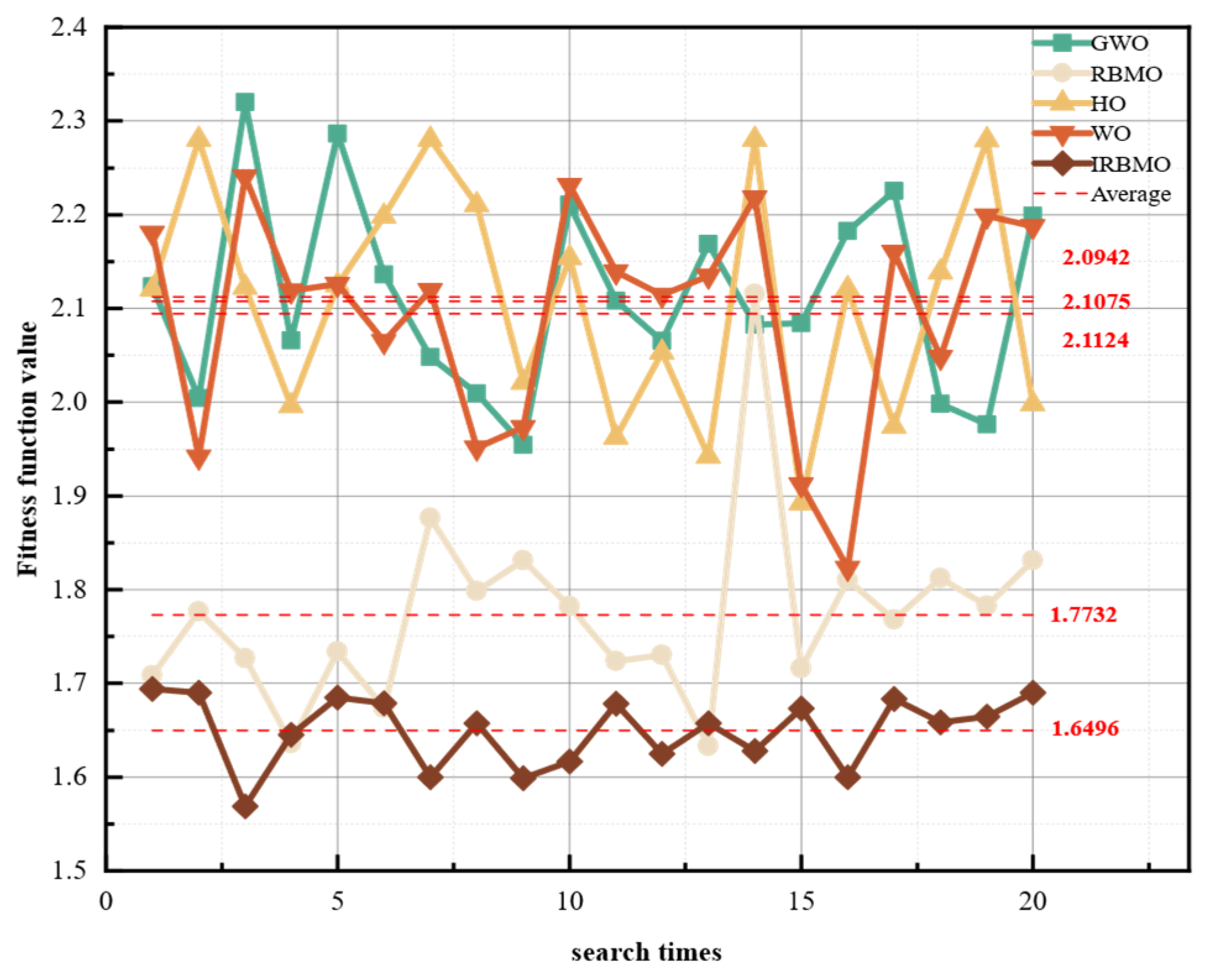
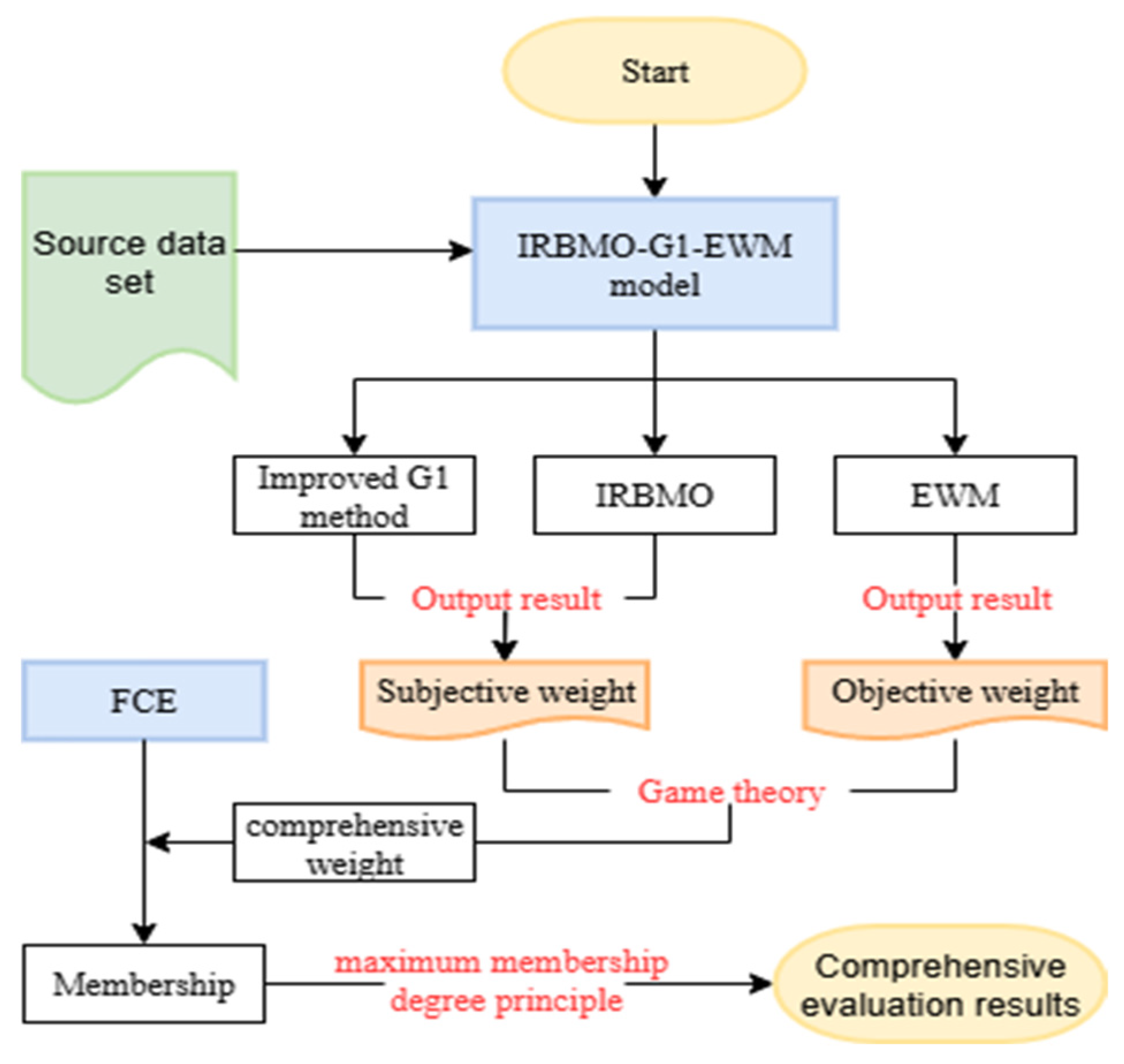
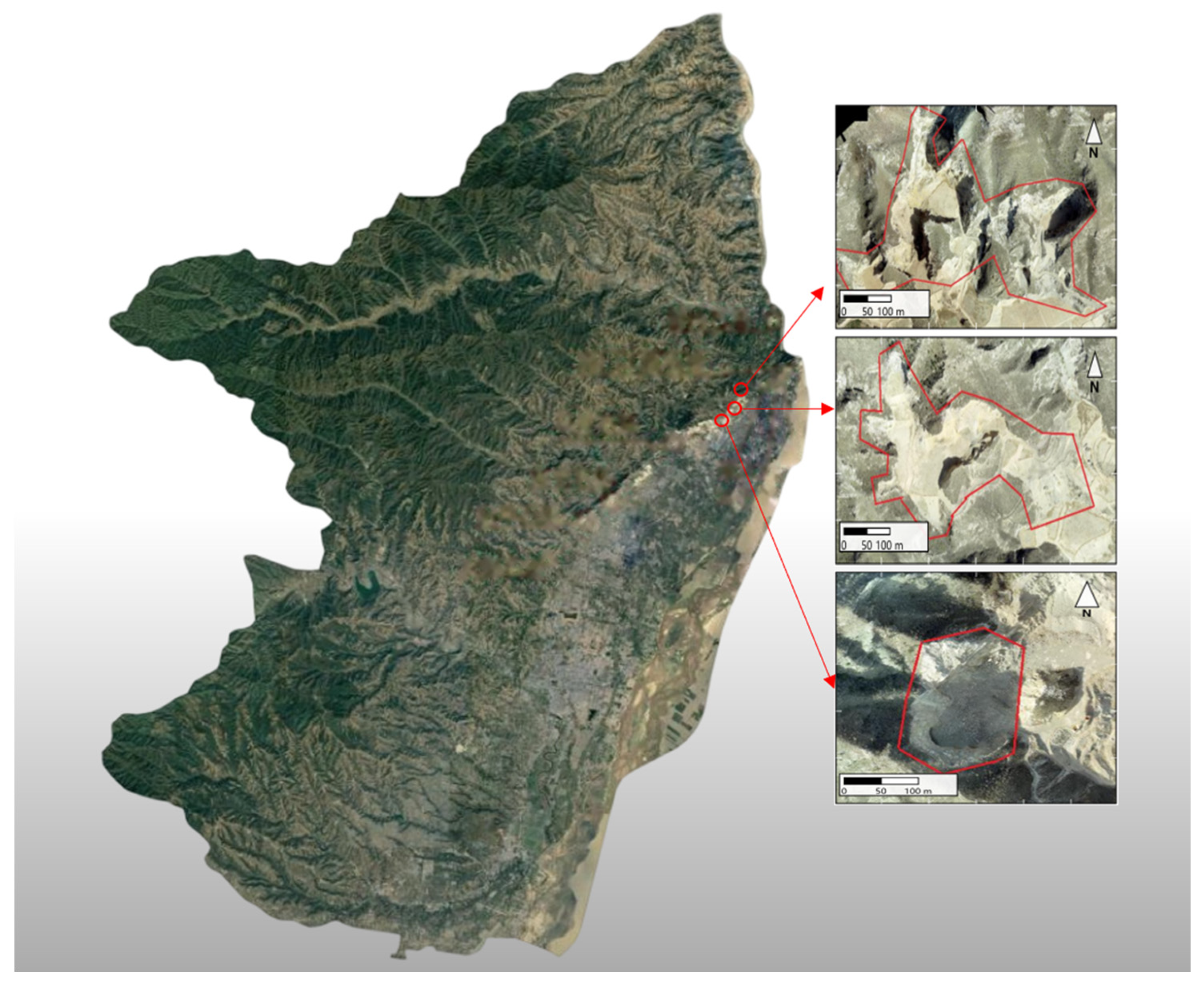
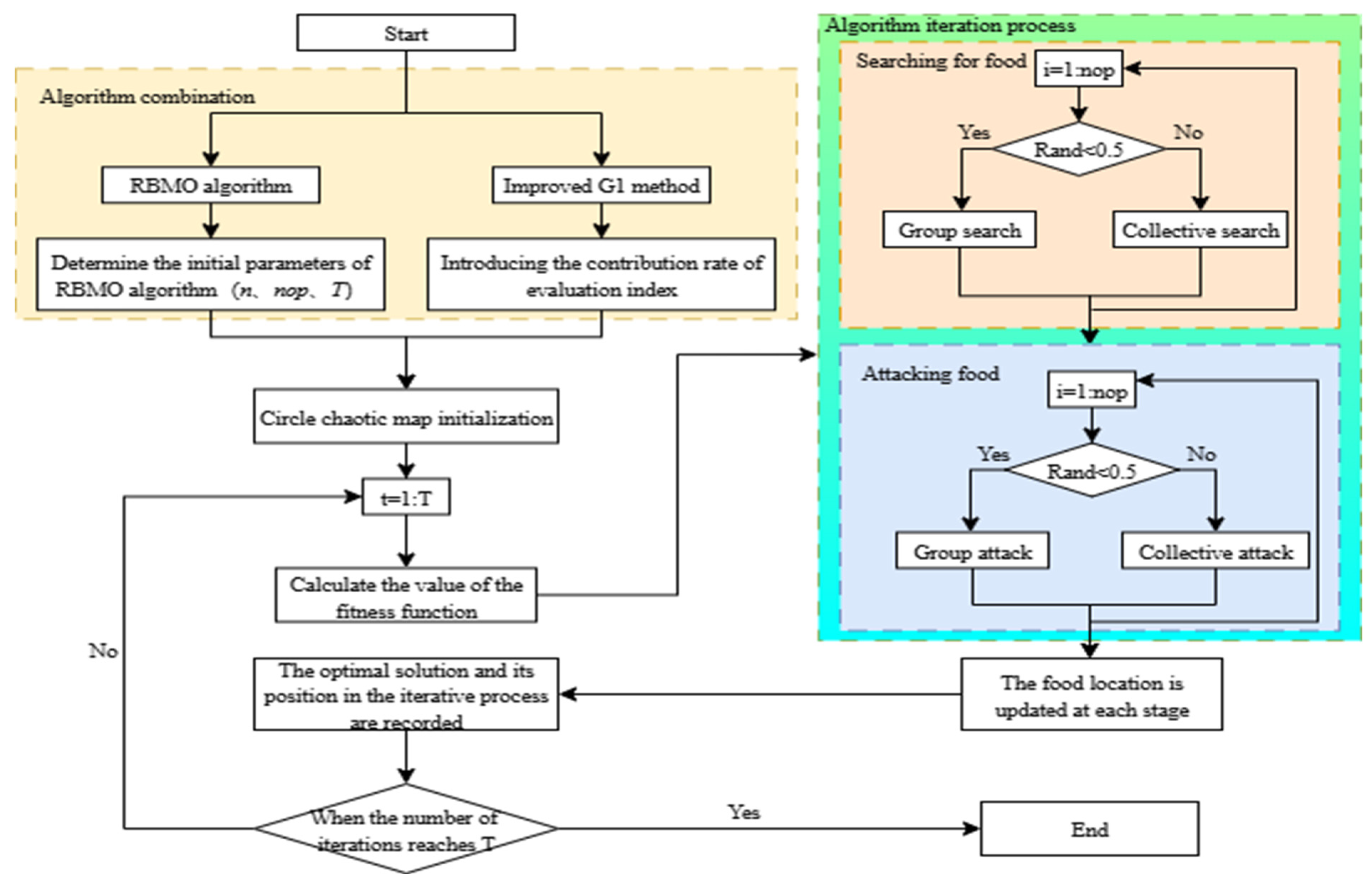
The geological environment evaluation of abandoned open-pit mines frequently encounters challenges, including the reliance of subjective weighting on judgment matrices, the complexity of weight adjustment, and the inadequate interpretation of systematic evaluation results. Addressing these limitations in existing AHP/FAHP and their combinatory weighting models, this study proposes the IRBMO-G1-EWM-FCE framework. This framework embeds the Improved Red Billed Blue Magpie Optimizer (IRBMO) into the improved G1 method to optimize indicator contribution rates, and subsequently integrates EWM, game theory combinatory weighting, and Fuzzy Comprehensive Evaluation (FCE) to evaluate three abandoned quarries in the Yellow River Basin of Shaanxi Province. The results demonstrate that across 20 independent runs, IRBMO yields a mean fitness value of 1.6496, lower than the 1.7732 of RBMO, with a 63.8% reduction in standard deviation, thereby indicating superior convergence accuracy and stability. The comprehensive membership degrees of the three quarries are A = [0.405,0.143,0.452], B = [0.405,0.450,0.145], and C = [0.742,0.077,0.181], corresponding to evaluation grades of Grade III, Grade II, and Grade I, respectively. While circumventing the construction of complete judgment matrices and consistency modifications, this method incorporates both expert experience and data discreteness into the evaluation, thereby providing an interpretable quantitative tool for geological environment classification, governance priority identification, and restoration decision-making for abandoned open-pit mines.
Keywords: multi-criteria decision making; combined weighting; IRBMO-G1; EWM; FCE; abandoned open-pit mine geological environment multi-criteria decision making; combined weighting; IRBMO-G1; EWM; FCE; abandoned open-pit mine geological environment