


Abstract
This paper introduces an Improved Red-Billed Blue Magpie Optimizer (IRBMO) to enhance the Maximum Second-Order Cyclostationary Blind Deconvolution (CYCBD) method, which traditionally depends on manual, experience-based setting of its key parameters (filter length and cyclic frequency ). By adopting an Improved Envelope Spectrum Entropy (EK) as the fitness function, the IRBMO autonomously optimizes these parameters, eliminating the need for prior knowledge and improving its applicability in industrial settings. The Improved Red-Billed Blue Magpie algorithm is employed to adaptively optimize the penalty parameter and kernel function parameter of the support vector machine, thereby obtaining an optimal support vector machine model. By introducing fuzzy entropy theory, the feature vectors of filtered signals—processed by the Cyclostationary Blind Deconvolution method with optimal parameters—are extracted and used as input for the optimally parameterized support vector machine, achieving multi-fault classification for bogie bearings. The results show that the IRBMO-CYCBD method significantly enhances the periodic weak fault impulse components and improves the signal-to-noise ratio of the processed signal. Envelope spectrum analysis of the filtered signal allows for clear observation of shaft frequency components, as evidenced by the accurate identification of the 110 Hz fundamental frequency and its harmonic components at 220 Hz, 330 Hz, and 440 Hz in the spectrum. Simulation tests verify the efficacy of the IRBMO-CYCBD method in processing rolling bearing vibration signals under strong noise interference. Under laboratory conditions, simulation experiments were conducted by collecting vibration acceleration signals from rolling bearings in various states. The aforementioned method was applied for fault diagnosis, achieving a maximum diagnostic accuracy of 100%. Through repeated experiments, it was verified that this method meets the fault diagnosis requirements for rolling bearings in metro train bogies.
MSC:
68W40; 74H50
1. Introduction
In the process of industrial production and the operation of rolling machinery, rolling bearings are key components. Their operational status directly affects the reliability and safety of the entire system. With the development of modern industry towards high speed, the working environment of mechanical equipment is becoming increasingly complex, and the probability of bearing failure has significantly increased. According to statistics, in rotating machinery failures, the bearing failure rate is as high as 30% or 40%, and equipment shutdown accidents caused by bearing failures often cause huge economic losses. Therefore, research on bearing fault diagnosis methods has significant engineering application value [1,2,3].
Although CYCBD demonstrates significant advantages in extracting periodic fault impulses, its performance heavily relies on the manual setting of key parameters—filter length and cycle frequency based on prior knowledge, which limits its practical application in unknown or complex operating conditions. While some studies have attempted to introduce intelligent optimization algorithms (such as IRBMO) to achieve parameter adaptation, existing work still exhibits clear gaps. Firstly, the robustness and generalization capability of current objective functions in scenarios involving operating conditions, strong noise, and compound faults require further validation. Secondly, most methods remain validated only on laboratory data, with their engineering applicability and real-time performance in real industrial environments, such as online monitoring of metro trains, not yet systematically addressed. Finally, current research primarily focuses on improving diagnostic accuracy, while theoretical explanations of the internal optimization mechanism of the algorithm and its integration with next-generation artificial intelligence diagnostic paradigms remain underexplored. This study aims to address the aforementioned gaps by proposing an improved IRBMO-CYCBD method and conducting comprehensive validation and theoretical analysis.
In the field of railway vehicles, Wang et al. [4] applied Time Synchronous Averaging (TSA) to filter the raw signal and investigate the vibration characteristics of bearings. Liu et al. [5] proposed a novel multi-cosine function to model composite errors, analyzing the influence of error amplitude and order on high-speed train vibrations. Lu et al. [6] conducted kinematic analysis and modeling of bearings, proposing defect modeling algorithms for the inner raceway, outer raceway, and rolling elements. It can be concluded that although scholars have conducted multi-faceted research on fault diagnosis of railway vehicle bearings, further studies are still required to effectively enhance the identification of characteristic fault frequencies.
Wiggins pioneered the Minimum Entropy Deconvolution (MED) method, which achieves feature extraction of seismic signals by maximizing the kurtosis of the filtered signal [7]. Based on this method, Xu et al. [8] applied it to fault detection in spur gearbox bearings and found that it could clearly identify weak bearing fault characteristics. However, the MED method has an inherent defect of being vulnerable to interference from isolated pulses, which may lead to incorrect extraction of periodic shock features. To address this, Yang Jieli et al. [9] proposed a convolutional neural network model incorporating MED-assisted feature extraction, which significantly enhances the diagnostic accuracy for training rolling bearing faults based on vibration signals. Qiao Zhicheng et al. [10] selected the component with the maximum kurtosis value for signal reconstruction, then applied MED to denoise the reconstructed signal. Their approach proved effective in diagnosing weak faults in rolling bearings. Kang Wei et al. [11] improved the MED method based on the Combined Square Envelope Spectrum (CSES) approach under high-noise conditions, which effectively enhanced fault characteristics within the frequency band. Luo Shimin et al. [12] employed the Particle Swarm Optimization (PSO) algorithm to optimize key Variational Mode Decomposition (VMD) parameters, subsequently applied Multipoint Optimal Minimum Entropy Deconvolution Adjusted (MOMEDA) to eliminate transmission path effects in the signal, and ultimately combined a 1.5-dimensional energy spectrum for rolling bearing fault diagnosis. Liu Shangkun et al. [13] proposed an Improved Singular Spectrum Decomposition (ISSD) method that utilizes minimum energy difference to accurately determine component numbers, combined with Minimum Entropy Deconvolution (MED) for noise reduction to extract bearing fault features under noisy background conditions. Wang Xinglong et al. [14] proposed a correlated kurtosis (CK) index and developed a Maximum Correlated Kurtosis Deconvolution (MCKD) model by integrating signal sparsity and periodicity characteristics. By presetting fault period parameters, this method can effectively extract periodic impulse components under strong noise interference. To address these limitations, McDonald et al. [15] proposed the MOMEDA method. By constructing a non-iterative optimization framework using multipoint kurtosis indicators, this approach overcomes the dependency on preset fault periods. Building upon the cyclostationary characteristics of rotating machinery vibration signals, researchers [16,17,18] introduced the maximum second-order cyclostationarity index (ICS2) into the deconvolution framework, proposing the CYCBD method. The proposed method enhances the periodic impact component by measuring the coherence of the cyclic spectrum, which shows significant advantages in bearing fault diagnosis. Liu Yang et al. [19] proposed a collaborative noise reduction method based on CYCBD and fast iterative filter decomposition, which effectively improved the separation degree of fault features. Zhao Xiaotao et al. [20] successfully extracted distinct fault characteristic frequencies by employing CYCBD preprocessing coupled with envelope demodulation techniques. However, CYCBD’s performance exhibits strong sensitivity to cyclic frequency parameters and relies on prior knowledge for parameter configuration, which, to some extent, limits its engineering applicability. Therefore, further research on CYCBD’s parameter selection is warranted.
This paper addresses the practical limitations of the CYCBD method in industrial applications, where manual setting of key parameters (filter length and cyclic frequency ) requires prior knowledge. To overcome this challenge, we propose an Improved Red-Billed Blue Magpie Optimizer (IRBMO) that utilizes Envelope Spectrum Entropy (EK) as a fitness function to adaptively optimize both filter length and cyclic frequency . The optimized parameters are then combined with envelope spectrum analysis to achieve effective fault diagnosis. An optimized Red-Billed Blue Magpie algorithm was employed to adaptively optimize the penalty parameter and kernel function parameter of the Support Vector Machine (SVM), thereby obtaining the optimal SVM model. By introducing fuzzy entropy theory, the feature vectors of filtered signals processed by the optimal-parameter CYCBD method were extracted and used as inputs for the optimally tuned SVM, ultimately achieving multi-fault classification of bogie bearings.
2. Basic Theory
As the name suggests, CYCBD is a Blind Deconvolution method that maximizes second-order Cyclostationarity. Its core objective is to extract fault-induced components from complex observed signals [21,22]. The mathematical model representing the Deconvolution workflow is given by Equation (1):
In Equation (1), represents the estimated source signal; denotes the observed signal; stands for the inverse filter; corresponds to the input source signal; signifies the impulse response function; indicates the convolution operation. The equation can be expressed in matrix form as shown in Equation (2):
In Equation (2): represents the discrete signal vector; denotes the length of the inverse filter ; and indicates the length of the observed signal . The second-order Cyclostationarity index ICS2, expressed in the form of generalized Rayleigh entropy, can be derived as shown in Equation (3):
In Equation (3): denotes the conjugate transpose operation of the matrix; represents the correlation matrix; and corresponds to the weighted correlation matrix. The weighting matrix is given by Equation (4):
In the above equation, P[|s|2] represents the periodic component containing |s|2 in the observed signal, whose mathematical expression is given by Equation (5):
In the above equation, the expression for is given by Equation (6):
In the above equation, the expression of is given by Equation (7):
In the above equations: represents the sample size; denotes the fault period; and indicates the cyclic frequency, as given in Equation (8).
Under these conditions, can be reformulated as in the vector , where represents the time corresponding to the data point; denotes the sampling frequency; indicates the fault characteristic frequency.
The final solution process of the CYCBD algorithm is mathematically expressed in Equation (9):
The maximum ICS2 value is obtained by solving the generalized eigenvalue problem, where the largest eigenvalue corresponds to the maximal ICS2 value, as formulated in Equation (10):
The initialization of the weighting matrix is achieved through a preset initial filter, while the maximum ICS2 value can only be obtained through an iterative optimization process. The detailed procedure is as follows:
- (1)
- Initialize the filter h to obtain filter coefficients;
- (2)
- Compute the weighting matrix W from the input signal X and current filter h;
- (3)
- Solve for the maximum eigenvalue λ in Equation (10) and its corresponding filter h;
- (4)
- Iterate by returning to Step (2) until convergence is achieved, yielding the optimal filter h0.
3. IRBMO Algorithm Principle
IRBMO is an enhanced metaheuristic algorithm based on the Red-Billed Blue Magpie Optimizer (RBMO). The key improvements include as follows:
- (1)
- Initialization Phase introduces the Halton sequence for population initialization;
- (2)
- Foraging Phase incorporates a spiral search strategy;
- (3)
- Post-Hunting Phase integrates an Aquila search strategy;
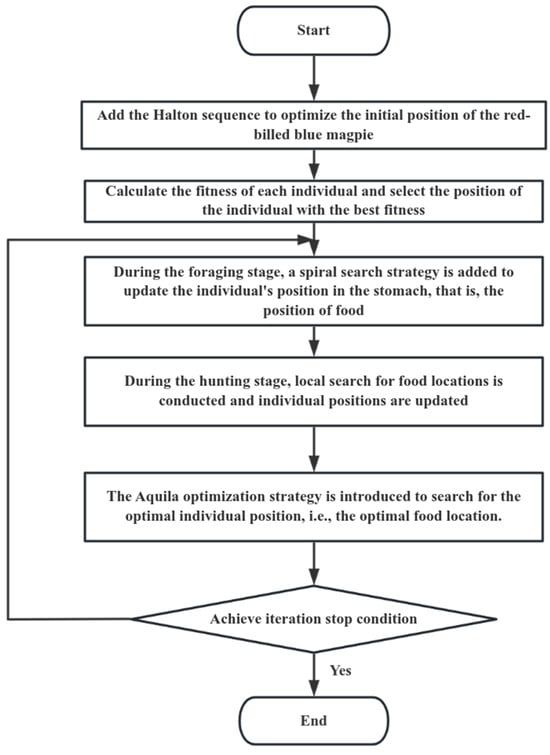
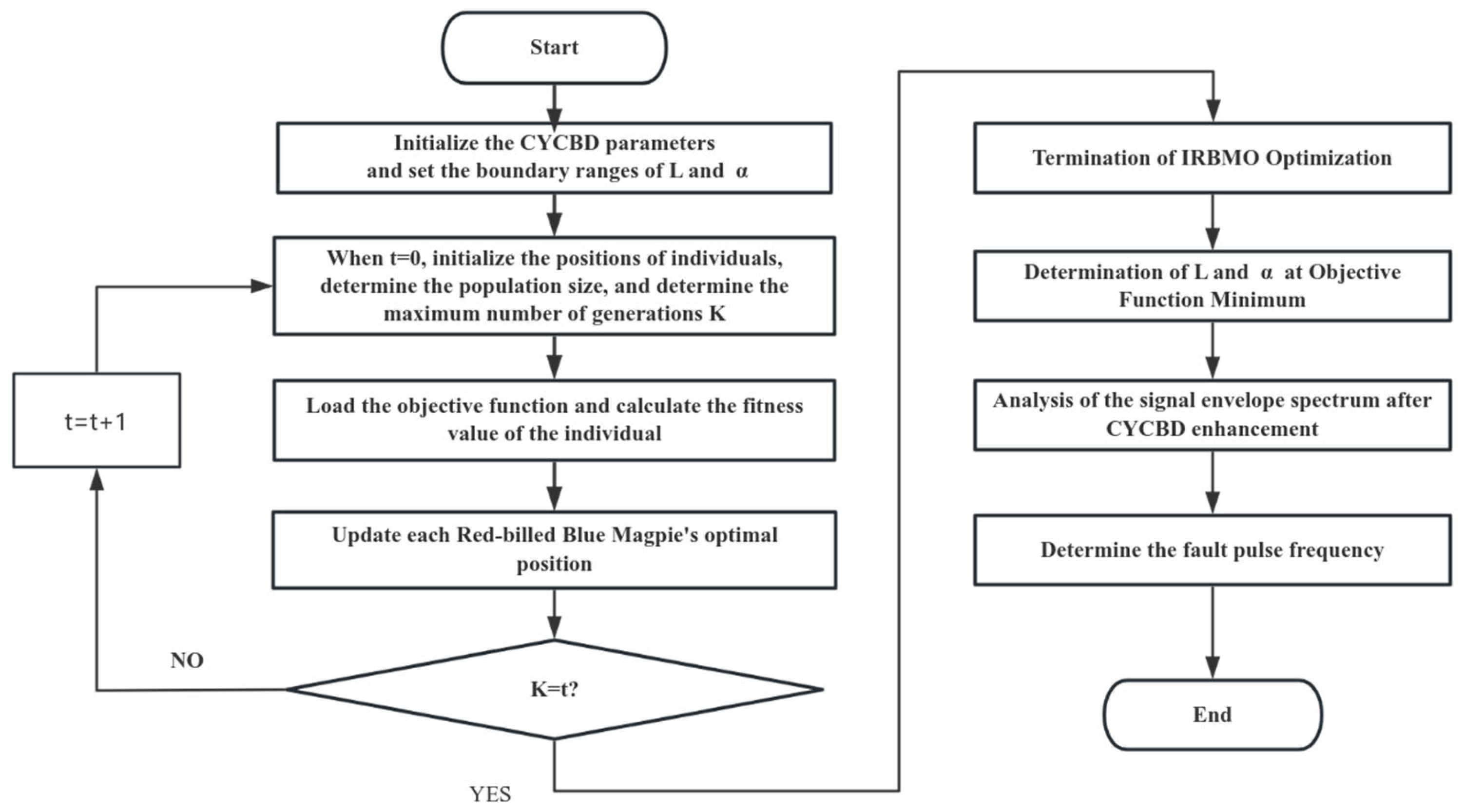
The algorithmic workflow of IRBMO is illustrated in Figure 1.
Figure 1.
IRBMO algorithm flowchart.
3.1. Halton Sequence Initialization
To address the inherent limitations of random distribution-based population initialization in the conventional Red-Billed Blue Magpie Optimizer (RBMO), this study proposes an enhanced population initialization strategy utilizing Halton quasi-random sequences. The Halton sequence, as a rigorously defined low-discrepancy sequence, is constructed based on prime number theory in number theory. The sequence generates space-filling samples through a deterministic approach by selecting distinct prime numbers as the base for each dimension. For a two-dimensional search space, two coprime integers p1 and p2 are selected as the bases for the x and y dimensions, respectively. A uniformly distributed point set is then generated through the following recursive formula:
In the equation, n denotes the index of the Halton sequence; p1 represents the base of the Halton sequence, which is a prime number ≥ 2; where is a constant; denotes the defined sequence function; and represents the two-dimensional uniform Halton sequence.
This construction method ensures optimal distribution characteristics of sample points throughout the entire solution space, with its space-filling performance being rigorously verifiable through the Star Discrepancy measurement.
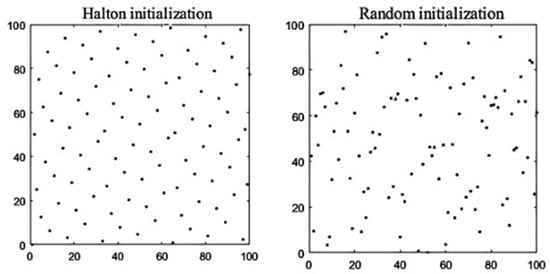
Figure 2 demonstrates a comparative visualization of initial population distributions (population size = 100) within a bounded two-dimensional solution space (domain [0,100] × [0,100]), contrasting conventional random distribution with Halton quasi-random sequence (with base parameters 2 and 3, respectively).
Figure 2.
Halton and random distribution initialize the population.
3.2. Spiral Search Strategy
The collective foraging strategy can significantly enhance the algorithm’s convergence rate. However, this intensive search pattern inevitably leads to a decline in population diversity, thereby increasing the risk of converging to local optima [23,24,25]. To address this, the Red-Billed Blue Magpie algorithm incorporates a spiral search strategy during the Foraging phase, as mathematically formulated in Equations (14) and (15), which, respectively, represent the processes of subgroup exploration and collective swarm exploration for food sources.
In the above equations: represents the spiral factor, controlling the curvature of the search trajectory and denotes the spiral step length, determining the exploration granularity.
In the above equations, is the dynamic spiral search shape parameter; represents a user-defined parameter; denotes the current iteration count; and indicates the maximum iteration number.
3.3. Aquila Optimization Strategy
In the Red-Billed Blue Magpie Optimizer (RBMO), integrating the Aquila search strategy into the Post-Hunting and Foraging phases significantly enhances both convergence performance and global exploration capabilities. This hybrid strategy is mathematically implemented through Equations (17) and (18), with its core advantage lying in the diving mechanism of the Aquila strategy [26,27,28], which
- (1)
- Accelerates localized refinement searches;
- (2)
- Increases probability of escaping local optima;
- (3)
- Dynamically balances exploration-exploitation processes through adaptive weight adjustment.
In the equations: Xi(t+1) represents the position of the i new search agent; Xfood(t) denotes the current food source location; t indicates the current iteration count; and T specifies the maximum iteration number.
3.4. Support Vector Machine Strategy
Support Vector Machine (SVM) is a supervised classification model based on statistical learning theory and the principle of structural risk minimization. Compared to other classification algorithms, SVM excels in small-sample classification, achieving high classification accuracy even with limited training data. Since bearings primarily operate under normal conditions in practice, and data for various fault states are relatively scarce, SVM was selected for the classification of rolling bearing faults.
The fundamental idea of SVM is to find a hyperplane within the classified samples that can separate the samples into two categories, while maximizing the distance between samples on either side of the hyperplane to enhance the classifier’s generalization ability.
SVM is typically employed for binary classification tasks. For small-sample classification problems, it demonstrates better performance compared to other kernel functions and is therefore commonly used as the kernel function in SVM. When employing the radial basis function as the kernel function in support vector machines, the parameters that most significantly affect the classification performance are the penalty factor and the kernel function parameter.
3.5. Integrating Sample Entropy for Rolling Bearing Fault Feature Extraction
Sample Entropy (SE) is an algorithm designed to describe the complexity of a time series sample. It intuitively reflects the likelihood of generating new patterns in the time series as its dimensionality changes. Since the SE algorithm does not require comparing the time series to itself, it achieves higher computational accuracy. When comparing the magnitudes of Sample Entropy values calculated from two different time series, their relative order remains unchanged regardless of variations in the embedding dimension and tolerance threshold. This demonstrates that the computational results of Sample Entropy possess strong consistency. Moreover, the calculation of Sample Entropy exhibits high tolerance to information loss in time series data. Therefore, even if a small portion of data is lost during the acquisition of bearing fault signals, the Sample Entropy algorithm can still effectively capture the characteristics of the fault signals, facilitating fault diagnosis in bearings. For vibration acceleration signals from bearings in different fault states, the complexity of each component varies after IPSO-VMD processing. Hence, this paper selects Sample Entropy as the fault feature for rolling bearing fault diagnosis.
The steps for extracting bearing fault feature vectors by combining parameter-optimized Variational Mode Decomposition (VMD) and Sample Entropy are as follows:
Step 1: Analyze the original vibration signal using the Improved Particle Swarm Optimization (IPSO) algorithm to determine the decomposition level and penalty parameters. Perform Variational Mode Decomposition on the vibration signal to obtain K components.
Step 2: Based on the correlation coefficients between the VMD components and the original signal, select the three components containing the most fault information.
Step 3: Determine the embedding dimension and similarity tolerance threshold for the Sample Entropy algorithm and calculate the Sample Entropy values of the selected VMD components.
Step 4: Use the values processed through VMD and Sample Entropy as fault feature vectors to construct a fault feature vector set suitable for bearing fault diagnosis.
4. The IRBMO-CYCBD Method
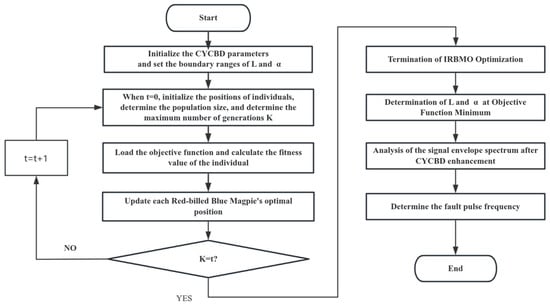
The CYCBD method significantly improves the recognition of fault features by enhancing the periodic fault impact components in the signal and simultaneously suppressing random noise interference [29]. The IRBMO algorithm plays a core optimization role in this framework. It achieves adaptive search in the parameter space based on the improved envelope spectral entropy EK by dynamically adjusting two key parameters, namely the filter length and the cycle frequency . The IRBMO-CYCBD flowchart and method have been illustrated as the Figure 3.
Figure 3.
IRBMO-CYCBD flowchart.
Envelope Spectrum Entropy is a frequency-domain feature metric based on information entropy theory, designed to quantify the energy distribution characteristics of frequency components in the envelope spectrum of mechanical vibration signals [30,31]. The fundamental principle involves quantifying the uncertainty in the envelope spectrum’s energy distribution to characterize both
- (1)
- The salience of periodic impulse components in the signal;
- (2)
- The degree of noise interference.
Mathematical representation is formalized in Equation (19):
where pk represents the probability density of the k frequency component in the envelope spectrum.
The Kurtosis index can sensitively monitor the situation of impact components in the signal. The Kurtosis of the signal is directly proportional to its impact. The stronger the impact, the greater the Kurtosis of the signal [24]. The Kurtosis of the signal is calculated as shown in Equation (20):
N denotes the number of sampling points; xi represents the i time-domain vibration signal sample (where i = 1, 2, …, N); and indicates the signal mean value.
To better quantify periodic impulse components in signals, the Envelope Spectrum Entropy is enhanced by integrating with the Kurtosis index, yielding the improved Envelope Spectrum Entropy EK as defined in Equation (21):
The Es value is smaller, the Kr value is larger, and thus the smaller the EK value, indicating that the periodic pulses in the signal are significant and contain more fault characteristics. The IRBMO algorithm seeks to optimize the key CYCBD parameters: cyclic frequency α and filter length by minimizing the improved Envelope Spectrum Entropy (EK) value.
5. Experimental Analysis
5.1. Comparative Experiment of the IRBMO Algorithm
In order to verify the effectiveness of IRBMO, the experiments use IRBMO, RBMO, Secretary Bird Optimization Algorithm (SBOA), Arctic Puffin Optimization (APO), Seagull Optimization Algorithm (SOA), Sine Cosine Algorithm (SCA), and the above algorithms are used to optimize and compare the benchmark test functions [32,33].
The operating environment of all algorithms is as follows: 64-bit Windows 11 operating system, 13th Gen Intel Core i5-13400F CPU with a frequency of 2.50 GHz, 16 GB of memory, and NVIDIA GeForce RTX 4060 Ti GPU.
To verify the effectiveness of IRBMO’s improvements compared to the baseline RBMO algorithm, optimization experiments were conducted using 9 selected benchmark functions from the CEC2005 test suite (comprising 23 standard test functions). And reference and comparative experiments were conducted using RBMO, SBOA, APO, SOA, and SCA. The test experiment sets the population size to 30 and the maximum number of iterations to 500.
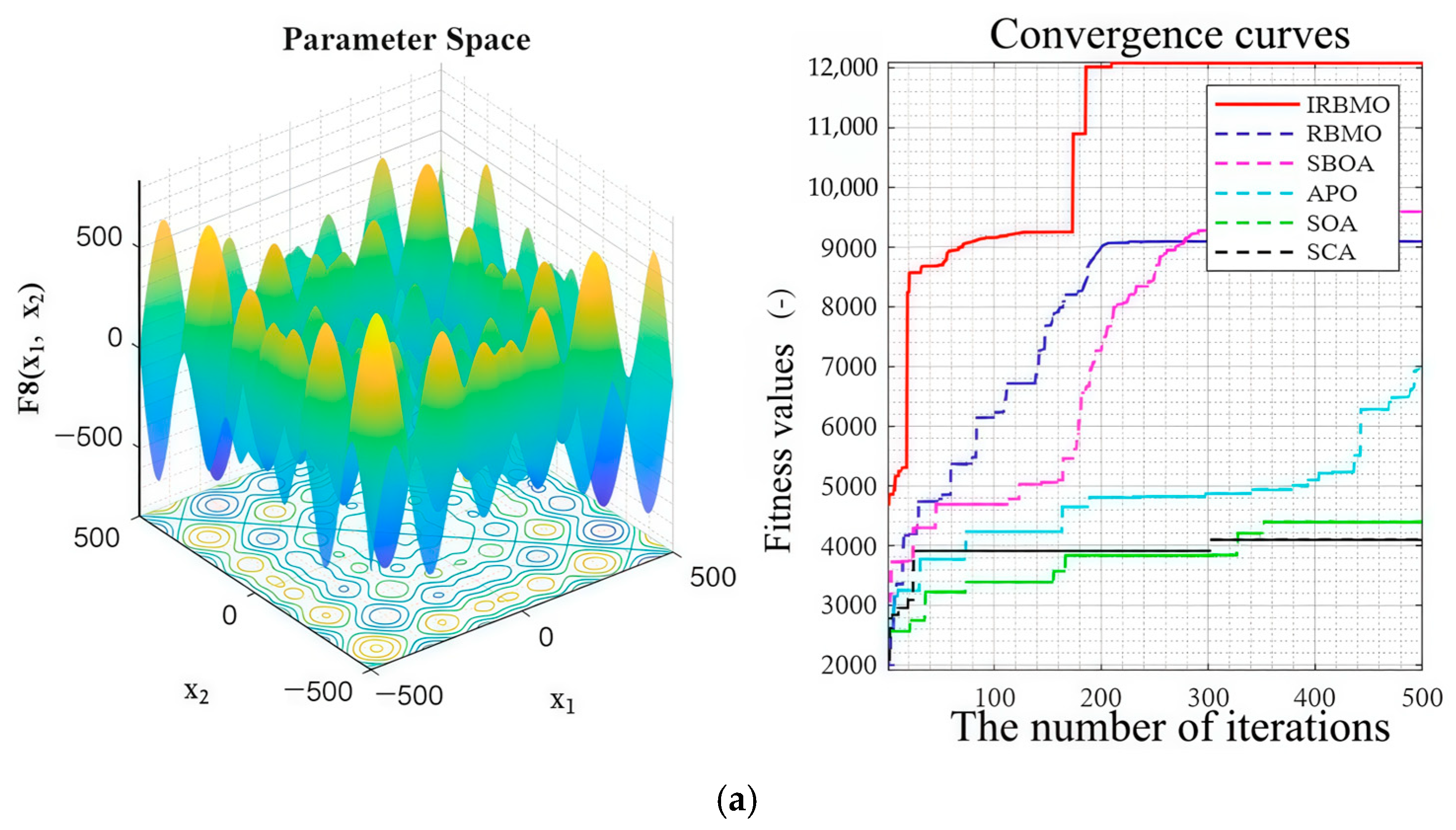
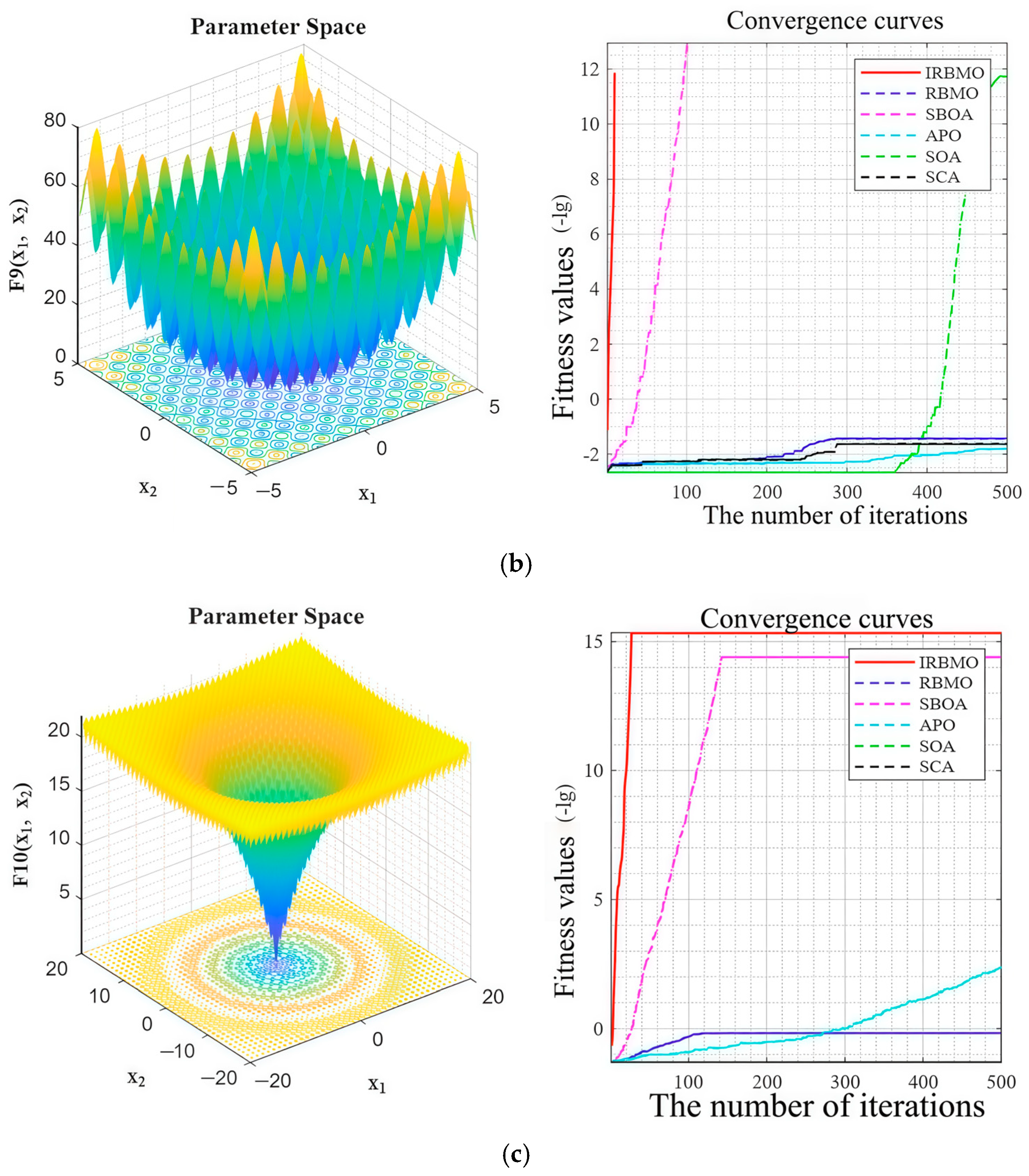
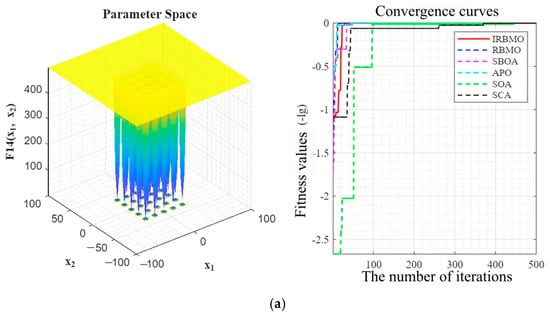
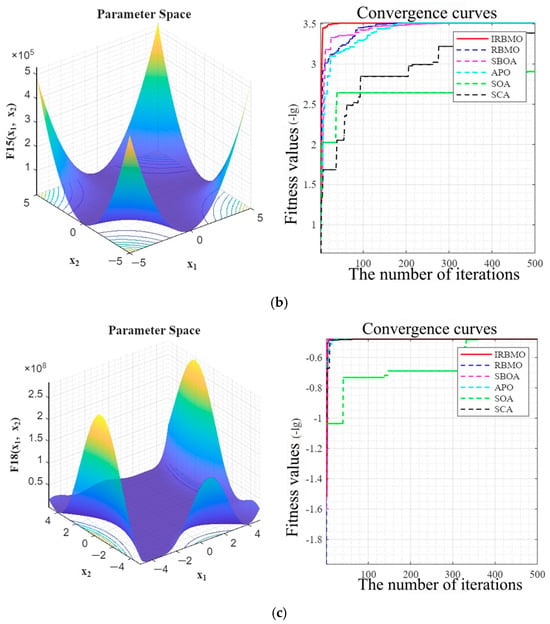
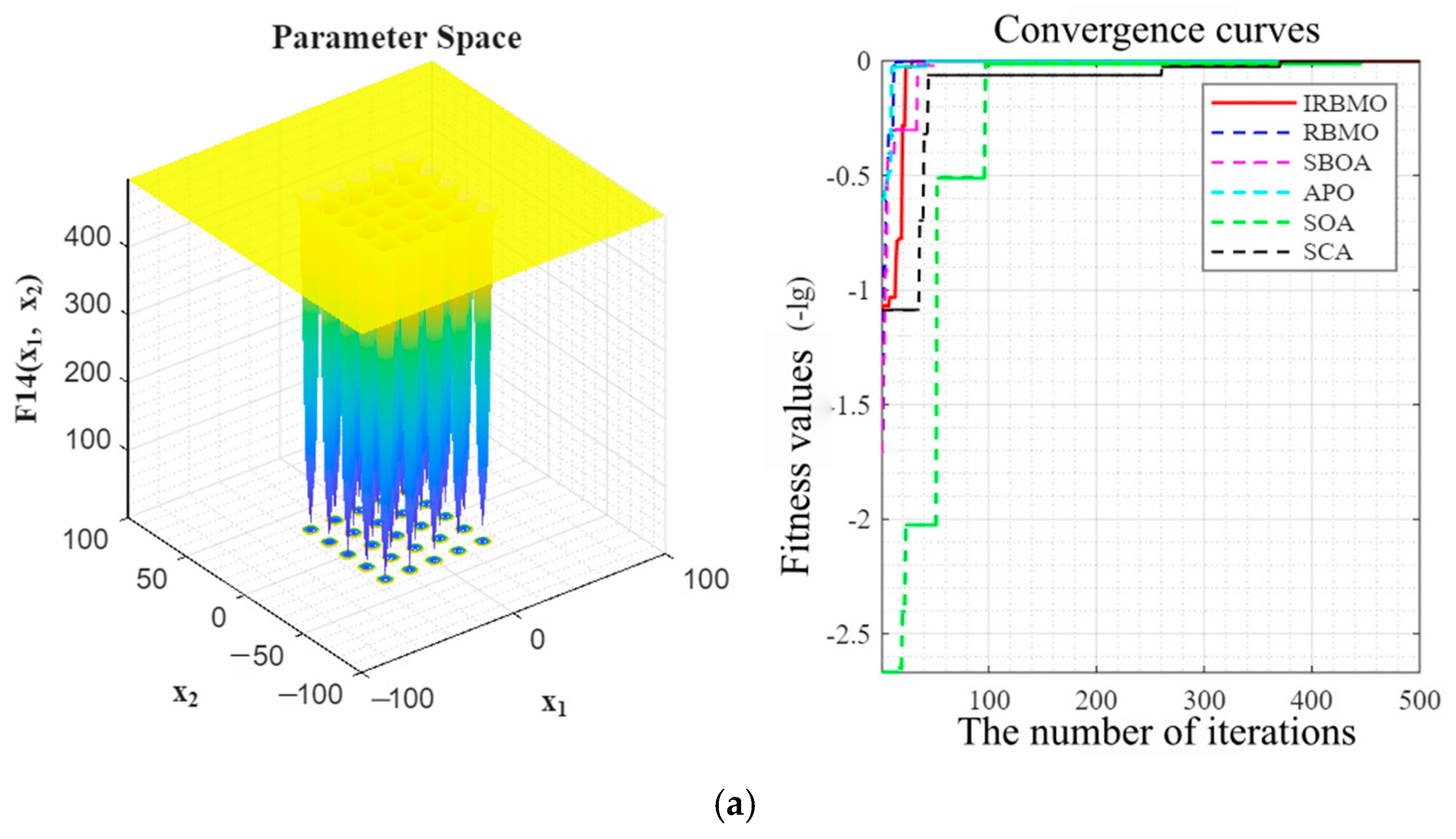
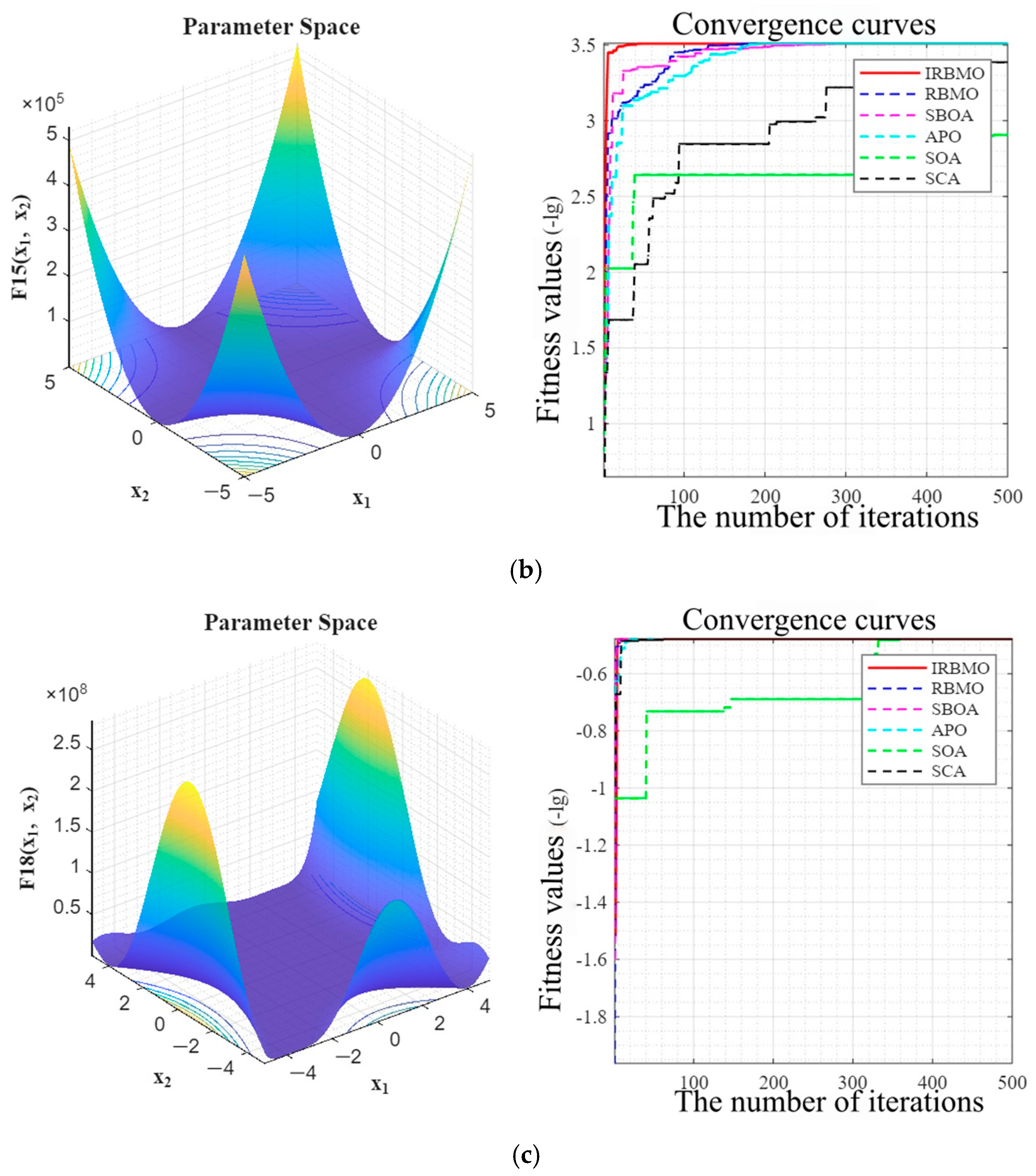
Table 1 lists in detail the characteristics of the test functions used in this experiment. F1–F3 belong to the unimodal test functions, which have a unique global optimal solution (function minimum). F8–F10 are high-dimensional multimodal test functions, characterized by numerous local optima that rigorously challenge an optimization algorithm’s global exploration capability. F14–F16 are fixed-dimensional multimodal test functions.
Table 1.
Information on test functions.
According to the comparative experimental results in Table 2, it can be concluded that
(1) Unimodal function test results (F1–F3)
IRBMO exhibits remarkable performance superiority, achieving a substantially better mean optimization solution compared to other algorithms and attaining the global optimum of the function. The standard deviation is reduced to zero, demonstrating the algorithm’s exceptional stability. With a convergence rate 2.5 times faster than benchmark algorithms, it exhibits outstanding computational efficiency.
(2) High-dimensional multimodal functions test results (F8–F10)
In the 30-dimensional search space, IRBMO maintains optimization accuracy with errors within 0.01%. The standard deviation is controlled within 1%, demonstrating its robust performance. Compared to the original RBMO, the convergence efficiency is improved by ten orders of magnitude.
(3) Fixed-dimensional functions test results (F14–F16)
All algorithms demonstrate comparable optimization capabilities with differences of less than 0.01%. The solutions exhibit excellent stability, as evidenced by standard deviations ≤ 1 × 10⁻¹⁶, which validates the benchmark characteristics of the test functions.
Table 2.
Optimization results of algorithms.
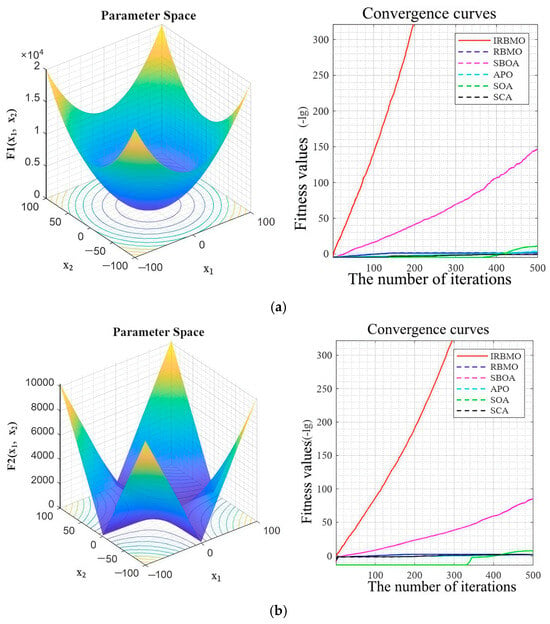
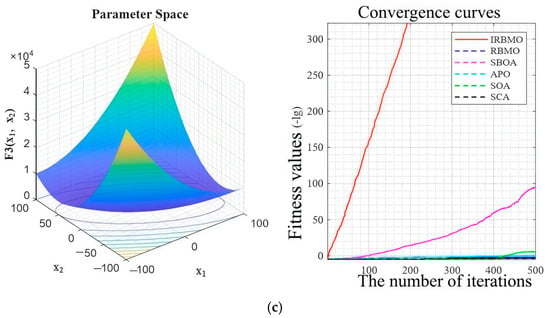
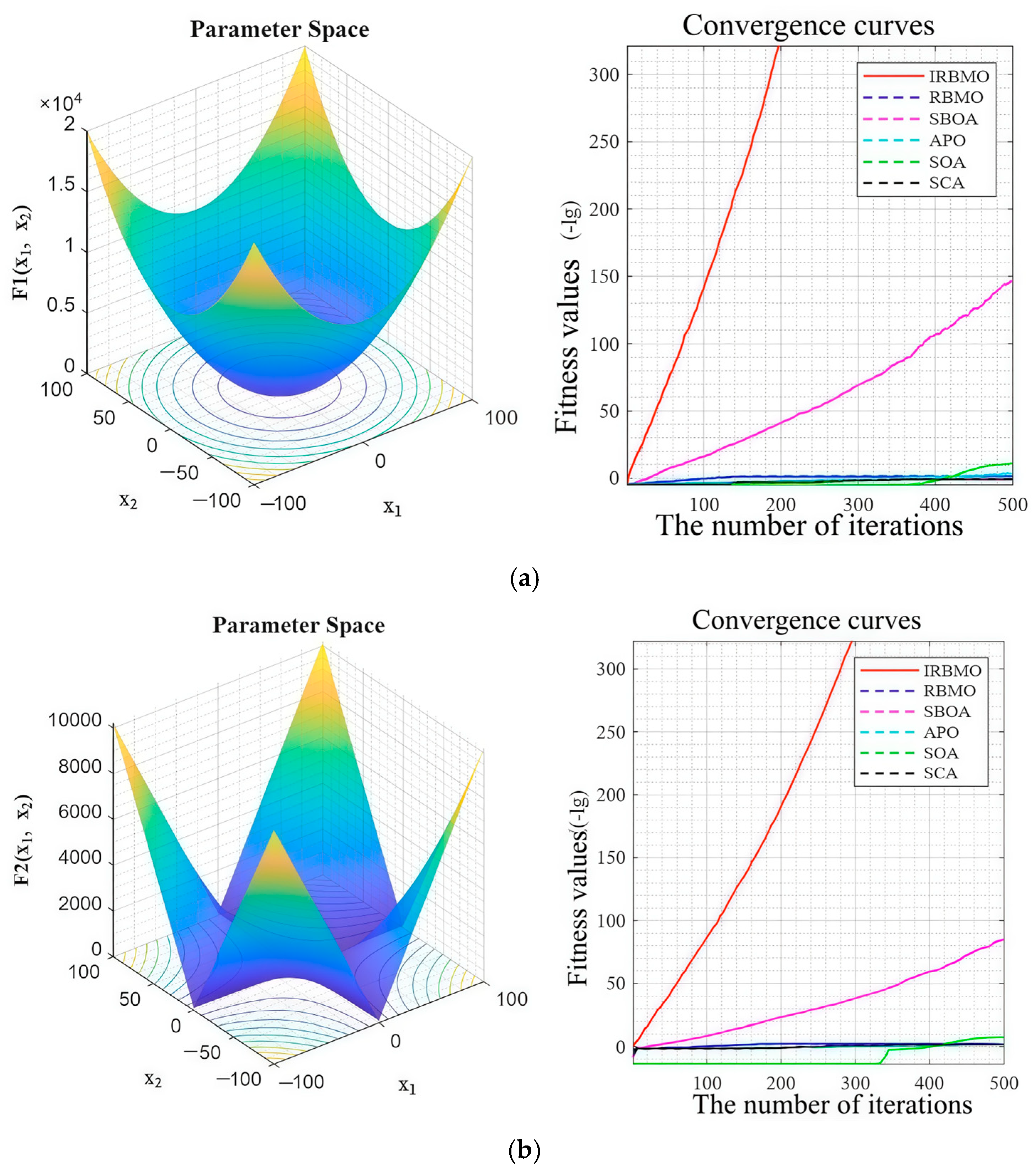
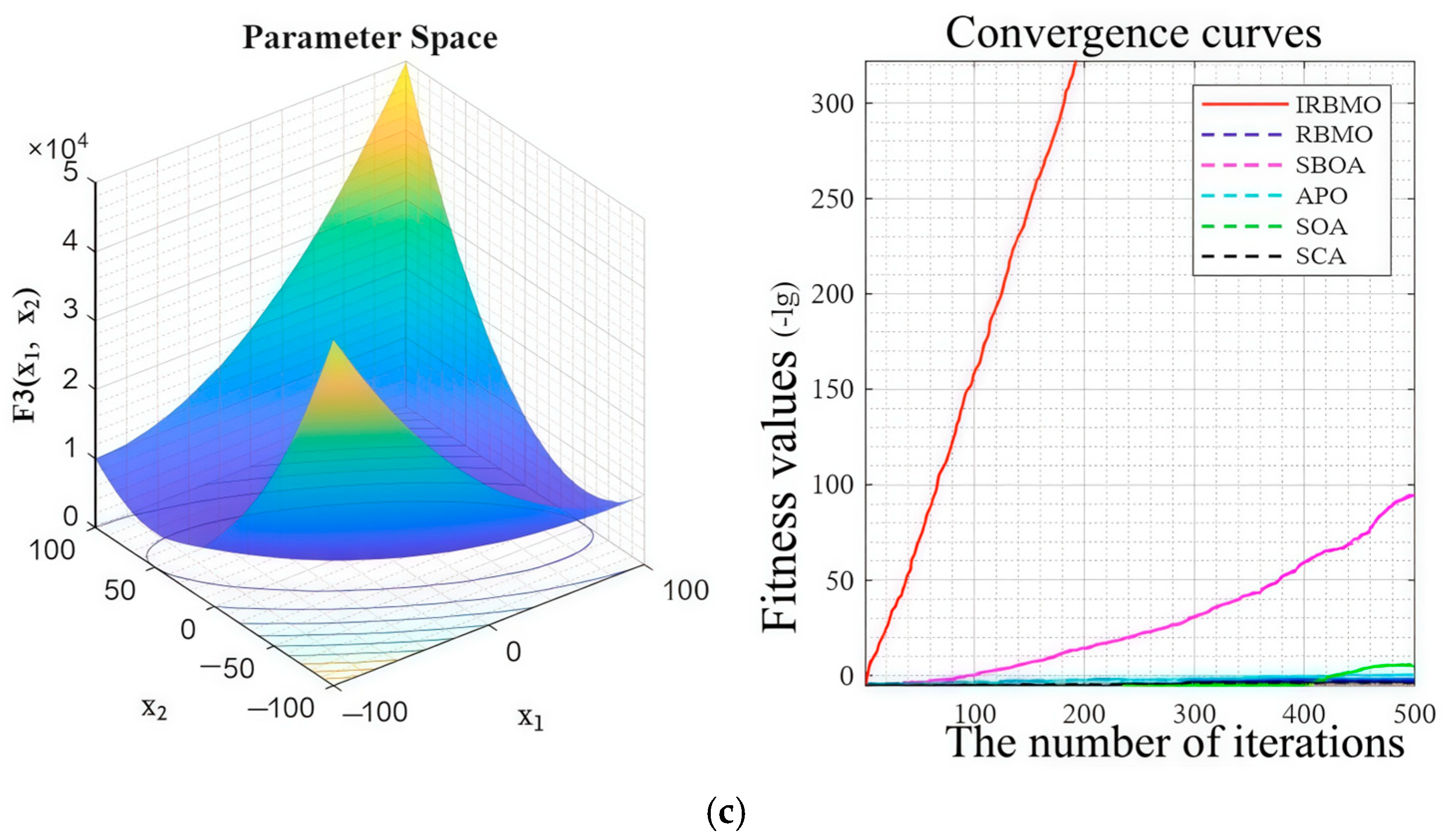
As observed from the convergence curves in Figure 4a–c for unimodal test functions, RBMO demonstrates relatively poor convergence performance. This is primarily manifested in three aspects: (1) frequent entrapment in local optima; (2) excessive iterations required for convergence; and (3) suboptimal overall optimization efficiency. Except IRBMO and SBOA, all other comparative algorithms exhibited varying degrees of premature convergence. IRBMO demonstrated significant advantages in optimizing high-dimensional unimodal functions, showing notably faster convergence rates than other algorithms while consistently locating the global optimum. The experimental results validate the effectiveness of the improvements made to the IRBMO algorithm.
Figure 4.
Convergence curves of unimodal test functions (a–c). (a) F1 sphere function; (b) F2 Schwefel’s problem; (c) F3 Schwefel’s problem.
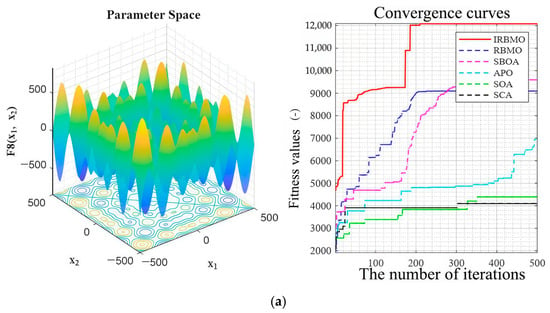
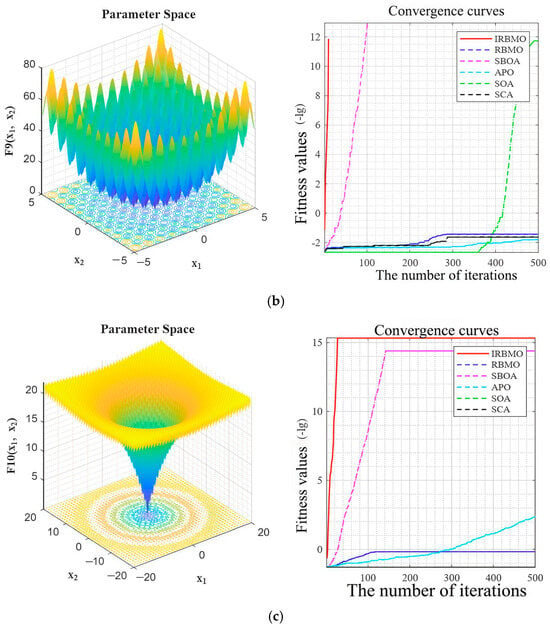
Figure 4a–c presents the optimization results for high-dimensional multimodal functions, which impose more stringent requirements on both solution accuracy and convergence efficiency of optimization algorithms. An observation of the convergence curves reveals that IRBMO achieves remarkable search precision, demonstrating stable, fine-grained exploration within the neighborhood of the global optimum. Furthermore, it exhibits accelerated convergence with significantly fewer required iterations compared to other algorithms. As shown in Figure 5 and Figure 6, the IRBMO algorithm demonstrates excellent convergence characteristics when optimizing the key parameters of CYCBD.
Figure 5.
Convergence curve of multi-modal high-dimensional functions (a–c). (a) F8 Generalized Schwefel’s problem; (b) F9 Generalized Rastrigin’s function; (c) F10 Ackley’s function.
Figure 6.
Convergence curve of multi-modal fixed-dimensional functions (a–c). (a) F14 Shekel’s Foxholes function; (b) F15 Kowalik’s function; (c) F16 Goldstein–Price function.
Rapid Convergence: The fitness value decreases sharply during the initial iterations (e.g., within the first 50 generations), indicating that the algorithm can efficiently locate promising parameter regions.
Global Optimization Capability: Compared to algorithms such as PSO, IRBMO effectively avoids premature convergence in the mid-to-late stages of iteration, continues with refined search, and ultimately achieves a better (lower) fitness value. This is primarily attributed to its introduced dynamic adaptive adjustment mechanism, which balances global exploration and local exploitation.
Stability: Multiple independent repeated experiments show consistent trends in the convergence curves of IRBMO, with small variances in the final optimization results, proving that the algorithm exhibits good stability and repeatability.
The above convergence analysis indicates that the IRBMO algorithm can reliably and efficiently perform automatic optimization of CYCBD’s filter length and cycle frequency , laying a solid foundation for subsequent fault feature extraction and addressing the bottleneck issue of the original method’s reliance on manual empirical parameter setting.
The experimental results demonstrate that IRBMO achieves significant improvements over the baseline RBMO algorithm across key performance metrics: (1) approximately one order of magnitude enhancement (82.6% increase) in search accuracy and (2) nearly two orders of magnitude improvement in convergence efficiency, achieving a speedup ratio of 96.3 times.
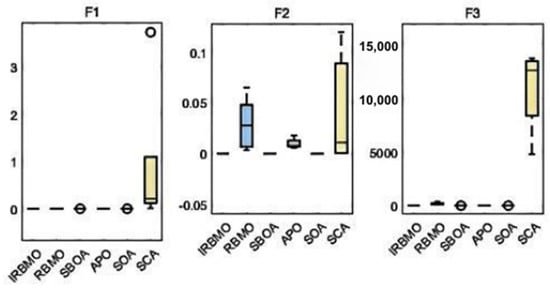
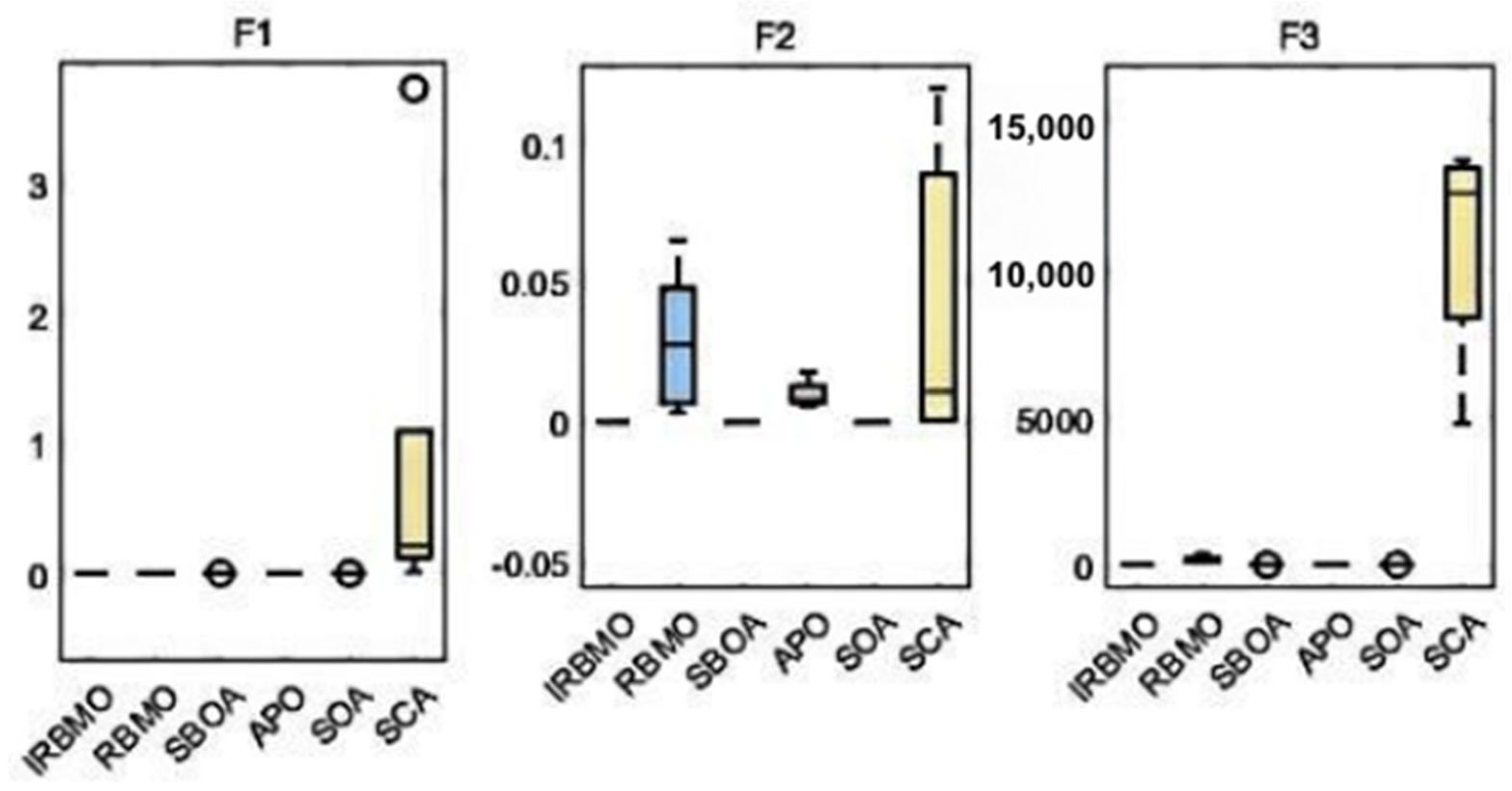
In Figure 7, the box plot of the unimodal test function demonstrates the superior performance of the improved algorithm IRBMO, which exhibits no outliers or bias. In contrast, RBMO shows bias, further indicating the effectiveness of the IRBMO improvements. The performance of SCA is relatively poor, displaying bias in all cases.
Figure 7.
Boxplot of unimodal test functions.
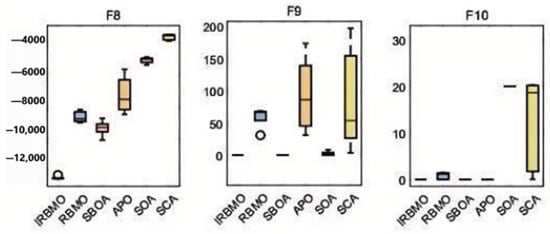
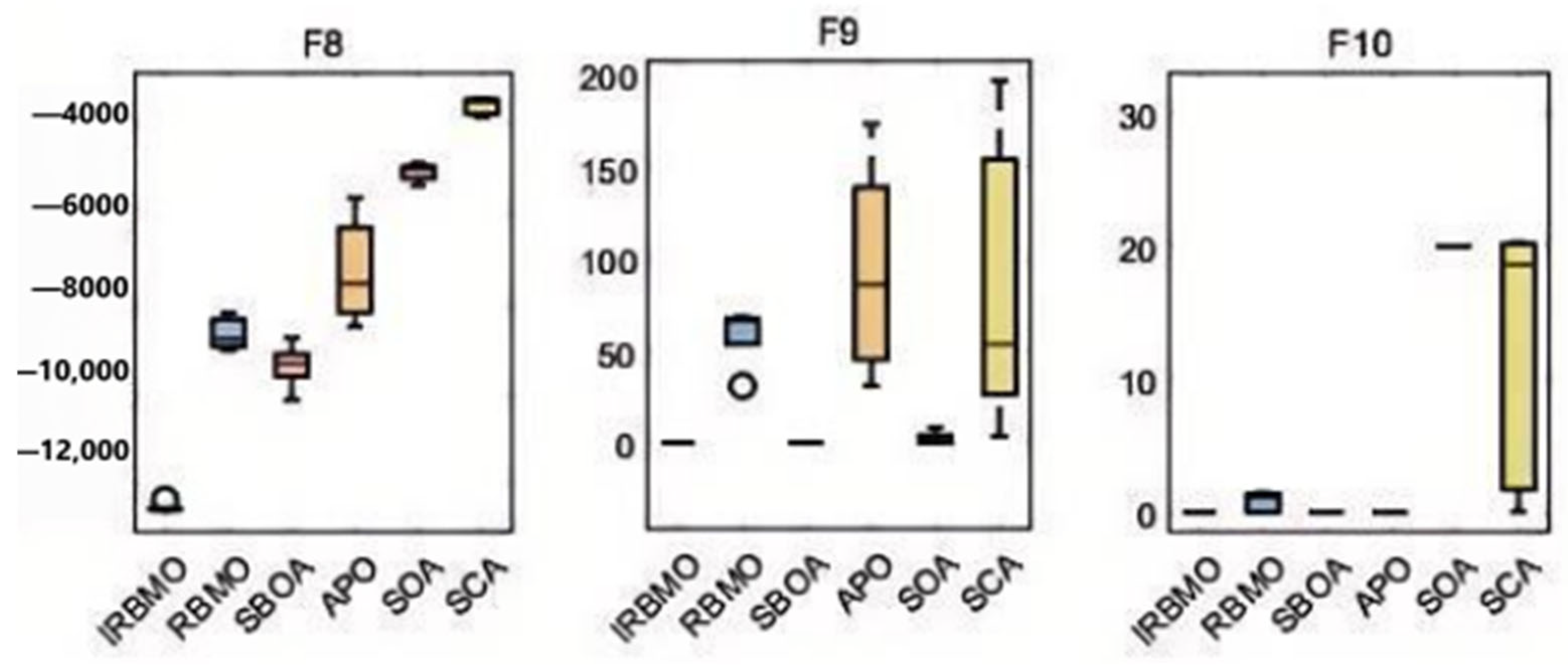
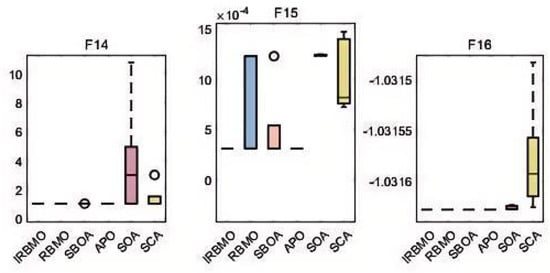
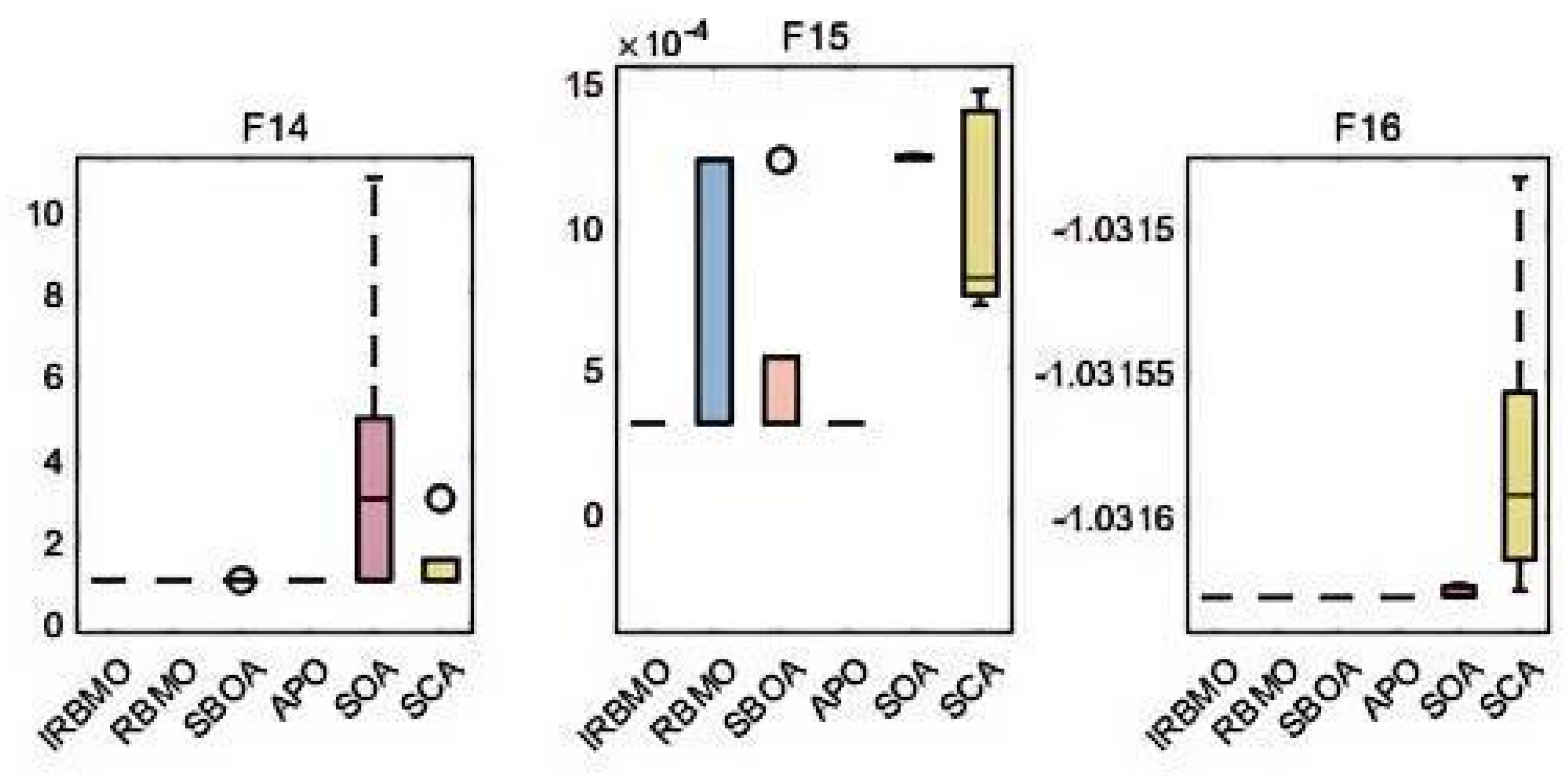
As shown in the box plot analysis of multimodal function optimization results in Figure 8 and Figure 9, the improved IRBMO algorithm demonstrates excellent stability characteristics. The distribution of its optimization results is highly concentrated, with a minimal occurrence of outliers, and the deviation between the median and the theoretical optimal value remains within a narrow range. In contrast, the optimization results of other comparison algorithms show more dispersed distributions, significant deviations between the median and the optimal value, and a higher frequency of outliers. Further statistical tests confirm that the performance advantage of the IRBMO algorithm is statistically significant.
Figure 8.
Boxplot of multi-modal high-dimensional test functions.
Figure 9.
Boxplot of multi-modal fixed-dimensional test functions.
Performance evaluation of six algorithms on nine test functions based on the Friedman test (each algorithm was independently executed 30 times). IRBMO attained the optimal average ranking (specific rank value) with statistically significant dominance, demonstrating substantially superior optimization efficacy compared to peer algorithms. Friedman test results of different algorithms could be found in the Table 3. The test results demonstrate the following performance ranking of algorithms in ascending order of average rank: IRBMO > SBOA > RBMO > APO > SOA > SCA. This empirical study conclusively validates the superior global optimization capability of the IRBMO algorithm.
Table 3.
Friedman test results of different algorithms.
To comprehensively validate the effectiveness of the proposed IRBMO-CYCBD method, this study employs internationally recognized benchmark datasets for rolling bearing fault testing. Specifically, the Case Western Reserve University (CWRU) bearing dataset is utilized, which includes vibration signals under various fault types (inner race, outer race, and rolling element faults), different damage sizes (ranging from 0.007 to 0.021 inches), and multiple load conditions. The signals are sampled at a frequency of 12 kHz. To simulate real industrial noise environments, Gaussian white noise with different signal-to-noise ratios (e.g., −4 dB, 0 dB, and 4 dB) is added to the original signals, thereby constructing scenarios with strong noise interference.
Comparison Methods and Evaluation Metrics
To objectively evaluate performance, the proposed IRBMO-CYCBD method is compared with the following classical and advanced approaches:
Traditional methods: Fast Kurtogram and Wavelet Packet Transform.
Adaptive Blind Deconvolution methods: Basic CYCBD (with empirically set parameters) and MCKD.
Intelligent optimization methods: Particle Swarm Optimized CYCBD (PSO–CYCBD).
Evaluation metrics include the peak signal-to-noise ratio of the envelope spectrum, the amplitude ratio of fault characteristic frequencies, and the final classification accuracy. These metrics are adopted to comprehensively assess the feature enhancement capability and diagnostic performance of the methods.
5.2. Fault Simulation Signal Experiment
In applications of engineering, the performance of the CYCBD method is critically dependent on the precise configuration of two key parameters: the cyclic frequency α and the filter length . Suboptimal parameter selection will not only compromise the effective elimination of harmonic components and random noise interference but also cause significant distortion in fault characteristic waveforms. To comprehensively evaluate parameter sensitivity, this study constructs simulated signals of outer raceway faults based on a rolling bearing fault dynamics model, as expressed in Equation (22).
In the above equation: represents the mixed signal; denotes the periodic impulse response; corresponds to random impulses generated by external disturbances; characterizes harmonic interference induced by rotational motion; and signifies Gaussian white noise.
In Equation (23), is used to simulate the load distribution and amplitude modulation; represents the sensor impulse response function; denotes the periodic time interval, specifically the outer race fault frequency ; is a random variable representing roller slip, generally satisfying ; and represent the amplitude and time of impulse excitation, respectively; and denotes the impulse response function of the interference impulse transmission path. In , , , , .
The specific function is shown in Equation (24).
In the above equation, , is the system structural attenuation factor, is the attenuation factor; and is the rotational frequency of the shaft.
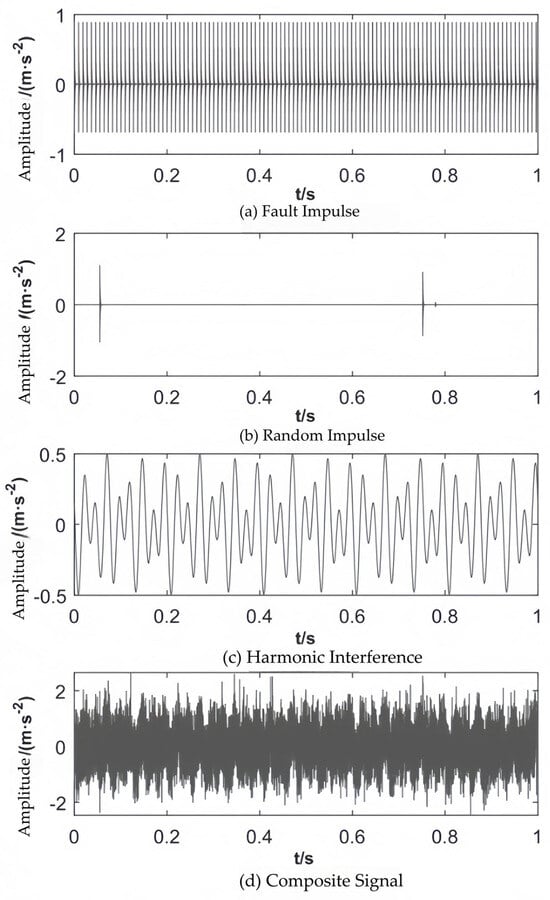
The experiment employed a sampling frequency of 25 kHz with a data acquisition duration of 1 s. Figure 10a displays the characteristic fault impulses at a frequency of 110 Hz originating from the outer race, Figure 10b shows random interference impulses, and Figure 10c represents harmonic interference caused by mechanical motion. As illustrated in Figure 10d, the composite signal makes it difficult to identify the time-domain characteristics of periodic fault impulses due to the masking effects of strong harmonics and noise.
Figure 10.
Time domain composite signal with component superposition.
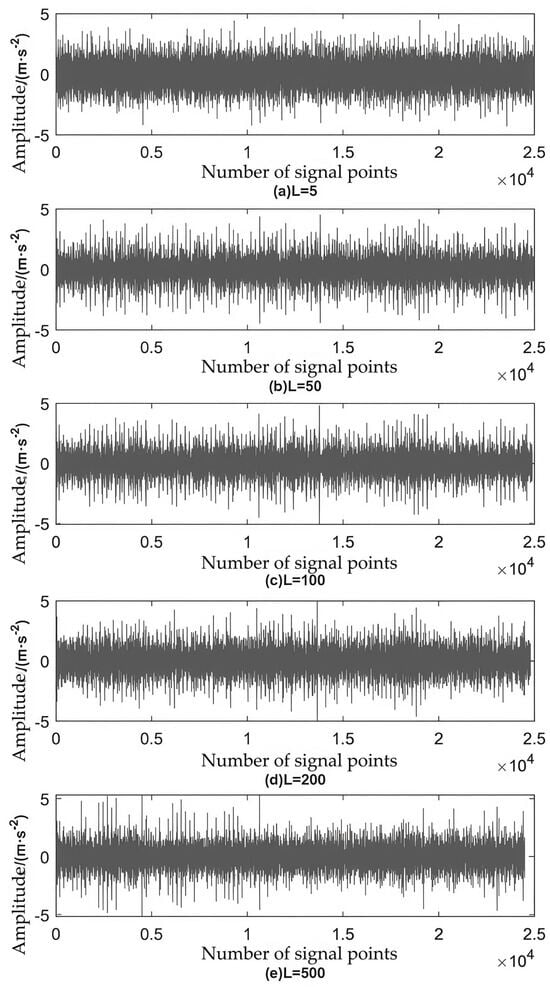
Based on this simulation model, the influence mechanism of CYCBD algorithm parameters was investigated: under the conditions of a fixed cyclic frequency α = 110 Hz and a maximum of 100 iterations for CYCBD, the impact of the filter length (with values of 5, 50, 100, 200, and 500) on the signal processing effectiveness was analyzed in detail. The specific results are shown in Figure 11, which is added in the new version.
Figure 11.
Filtering signals of CYCBD using different L.
The experimental results in Figure 11 reveal a significant correlation between the parameter settings of the CYCBD algorithm and the effectiveness of signal extraction. When the number of sampling points and algorithm parameters are optimally configured, CYCBD can effectively separate the periodic impulse components from the simulated signal. The impact of variations in the filter length L on CYCBD is as follows:
- (1)
- Impact of insufficient parameter settings: When the filter length L is too small, as shown in Figure 11a, the capability of CYCBD to extract periodic fault pulses is significantly constrained, resulting in markedly inadequate identifiability of signal characteristics.
- (2)
- Parameter optimization process: As the filter length L is appropriately increased, as shown in Figure 11b,c, the number of extracted pulse components demonstrates an upward trend, with background noise being effectively suppressed, leading to a gradual enhancement of CYCBD’s feature extraction capability.
- (3)
- Impact of excessive parameters: When the filter length exceeds the optimal range, as shown in Figure 11d,e, the effective signal components experience significant attenuation, and the filtering performance exhibits a declining trend.
This phenomenon stems from the inverse relationship between filter length and frequency resolution: an excessively large filter length causes the passband interval to narrow, making it difficult to fully cover the characteristic frequency band of the signal, thereby reducing the deconvolution effect. Table 4 further quantifies the algorithm runtime and information entropy metrics under different parameter configurations, providing data support for parameter optimization.
Table 4.
The filtering effect of CYCBD using different parameters L.
The experimental results in Table 4 clearly demonstrate the intrinsic relationship between the performance of the CYCBD algorithm and the filter parameter settings. Data analysis indicates that the algorithm’s runtime increases significantly with the growth of filter length, particularly at larger parameter values, where computational efficiency noticeably decreases. Meanwhile, the information entropy of the filtered signal shows a regular decreasing trend, indicating that increasing the filter length can improve noise reduction. However, combined with the time-domain waveform analysis in Figure 11, it can be observed that an excessively large filter length leads to a noticeable loss of useful signal, suggesting that parameter selection requires a balance between computational efficiency and signal integrity.
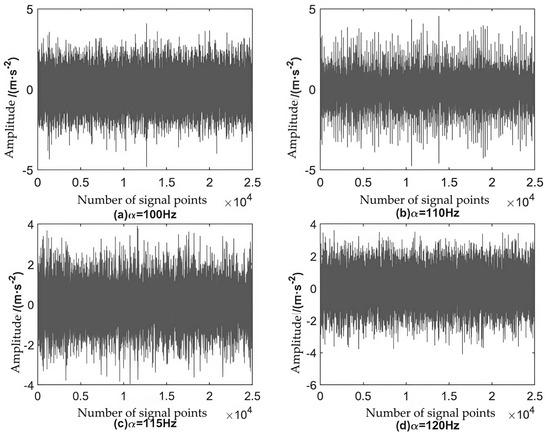
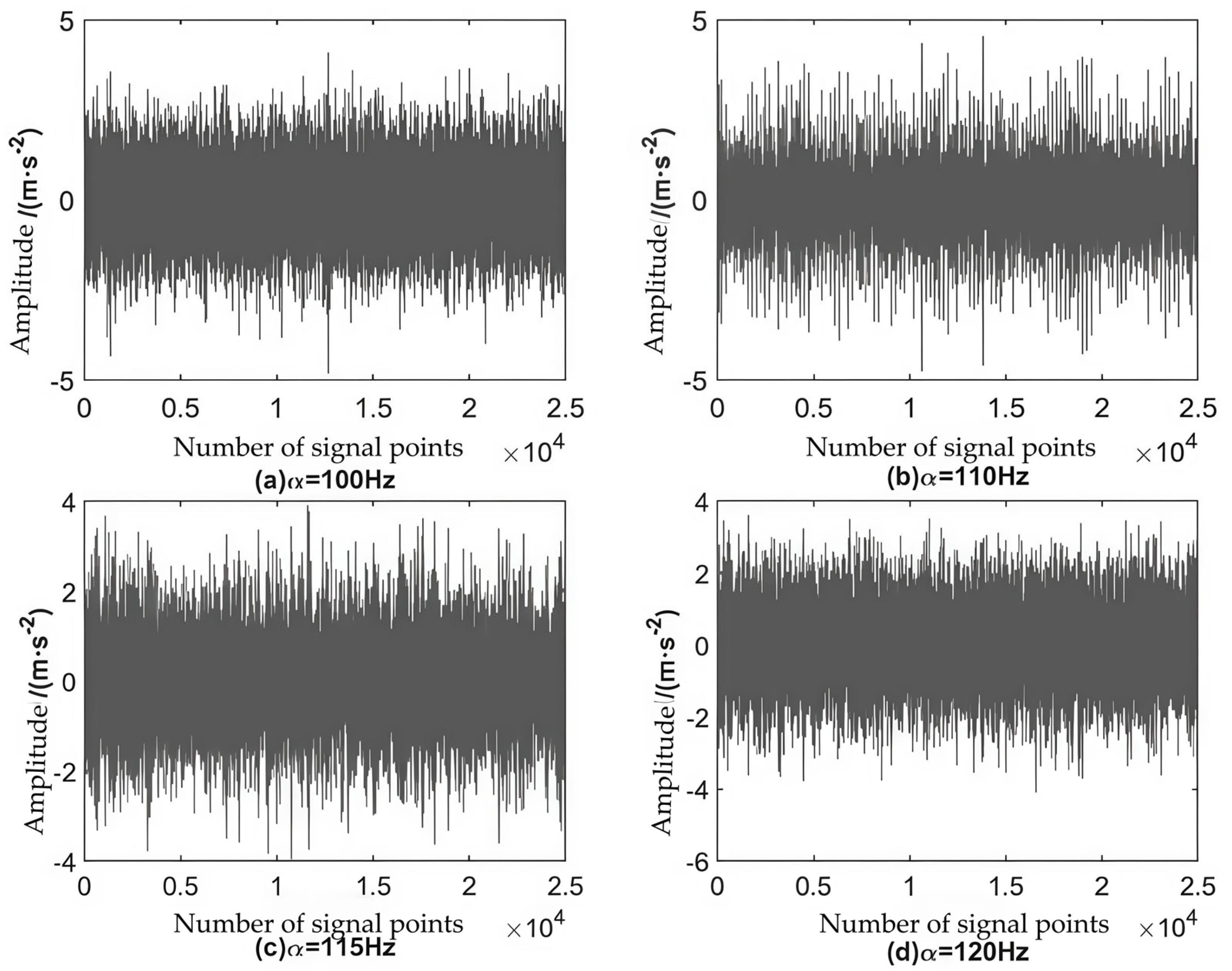
Based on this finding, the subsequent research investigates the influence of the cyclic frequency α on the deconvolution performance of CYCBD. With the filter length fixed at L = 100 and the maximum number of CYCBD iterations set to 100, the deconvolution effects of CYCBD were tested under four different cyclic frequency α settings: 100 Hz, 110 Hz, 115 Hz, and 120 Hz. The experimental results are shown in Figure 12.
Figure 12.
Filtering signals of CYCBD using different α.
The experimental results indicate the following:
(1) When the cyclic frequency α deviates from the characteristic frequency (100 Hz, 115 Hz, 120 Hz), as shown in Figure 12a,c,d, the periodic impulse features in the deconvolved signal are not prominent, the noise suppression effect is limited, and the algorithm performance fails to be fully utilized.
(2) When the characteristic frequency is matched (110 Hz), as shown in Figure 12b, the periodic impulse features are significantly enhanced, noise is effectively suppressed, and the algorithm achieves optimal performance.
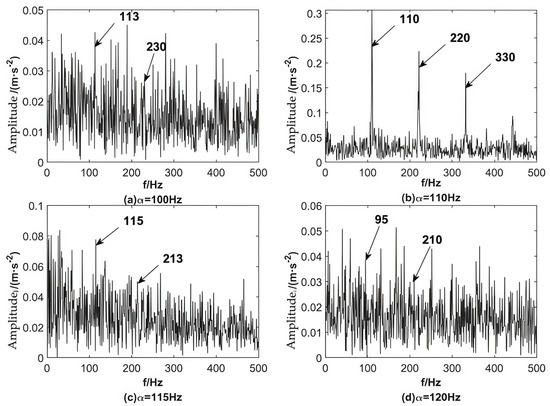
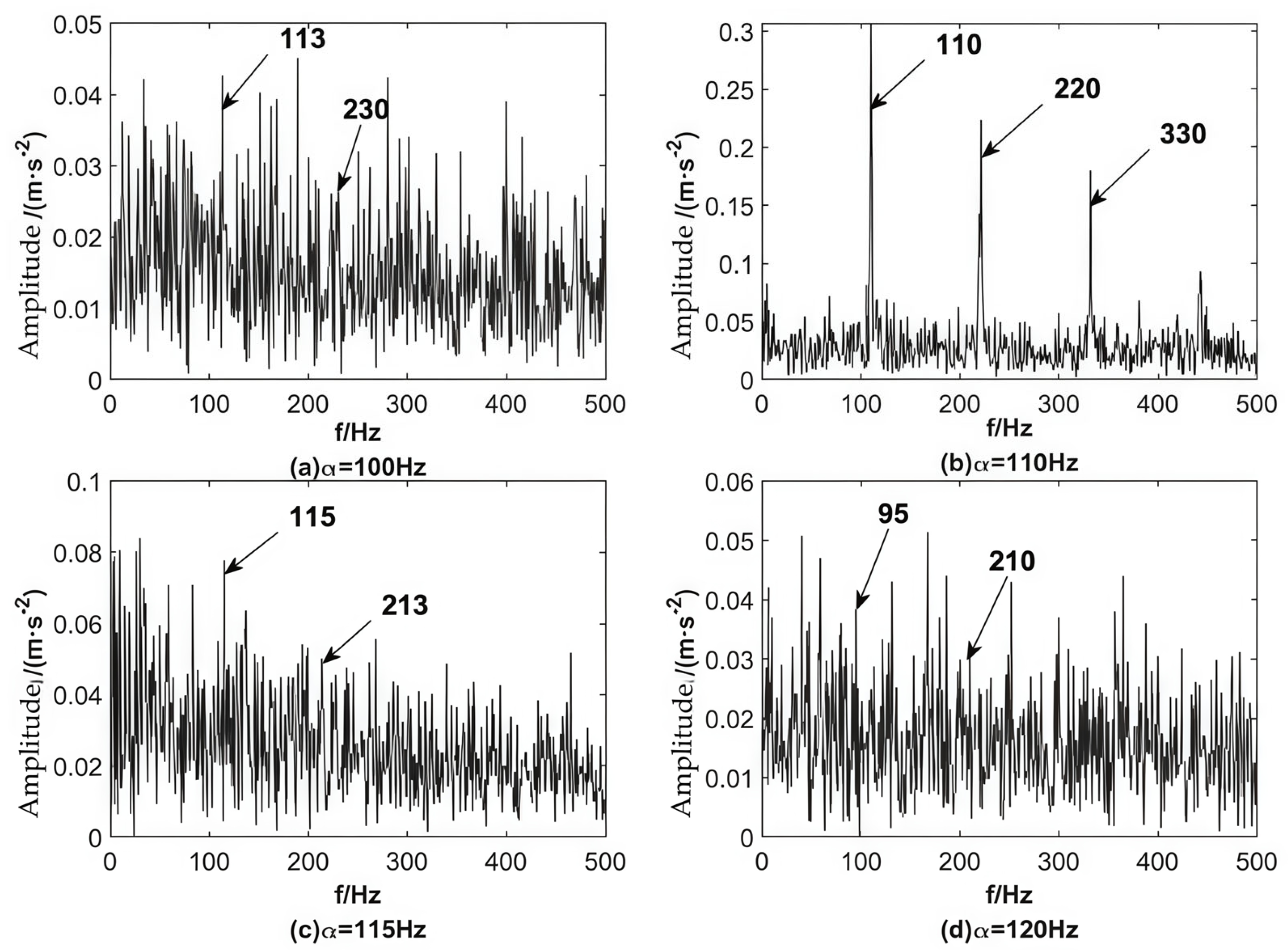
To further validate these findings, the study performed envelope demodulation analysis on the filtered signals under different parameters, as shown in Figure 13. The envelope spectrum analysis results not only confirm the performance improvement under optimal parameter settings but also reveal the characteristic blurring phenomenon that occurs when parameter mismatch exists.
Figure 13.
Envelope spectrum of filtered signals with different α.
The analysis results in Figure 13 indicate that when the cyclic frequency deviates from the fault characteristic frequency (110 Hz), the CYCBD algorithm fails to accurately extract the target frequency components. This leads to significantly disordered characteristics in the output signal spectrum, seriously affecting the accuracy of bearing fault diagnosis. Comparative experiments demonstrate that only when the cyclic frequency α is set appropriately can CYCBD fully leverage its dual advantages of periodic impulse extraction and noise suppression. Conversely, an improper setting not only weakens the noise reduction effect but may also introduce spurious frequency components.
The simulation results clearly demonstrate that the two key parameters—cyclic frequency and filter length—significantly influence the signal processing performance of CYCBD. Traditional parameter optimization methods rely on prior knowledge, which poses clear limitations in practical engineering applications. To address this, this study proposes the use of the IRBMO algorithm to achieve adaptive optimization of CYCBD parameters, thereby enhancing algorithm performance and expanding its applicability.
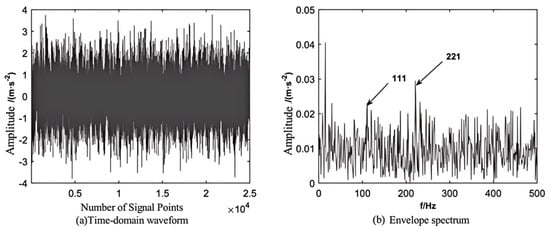
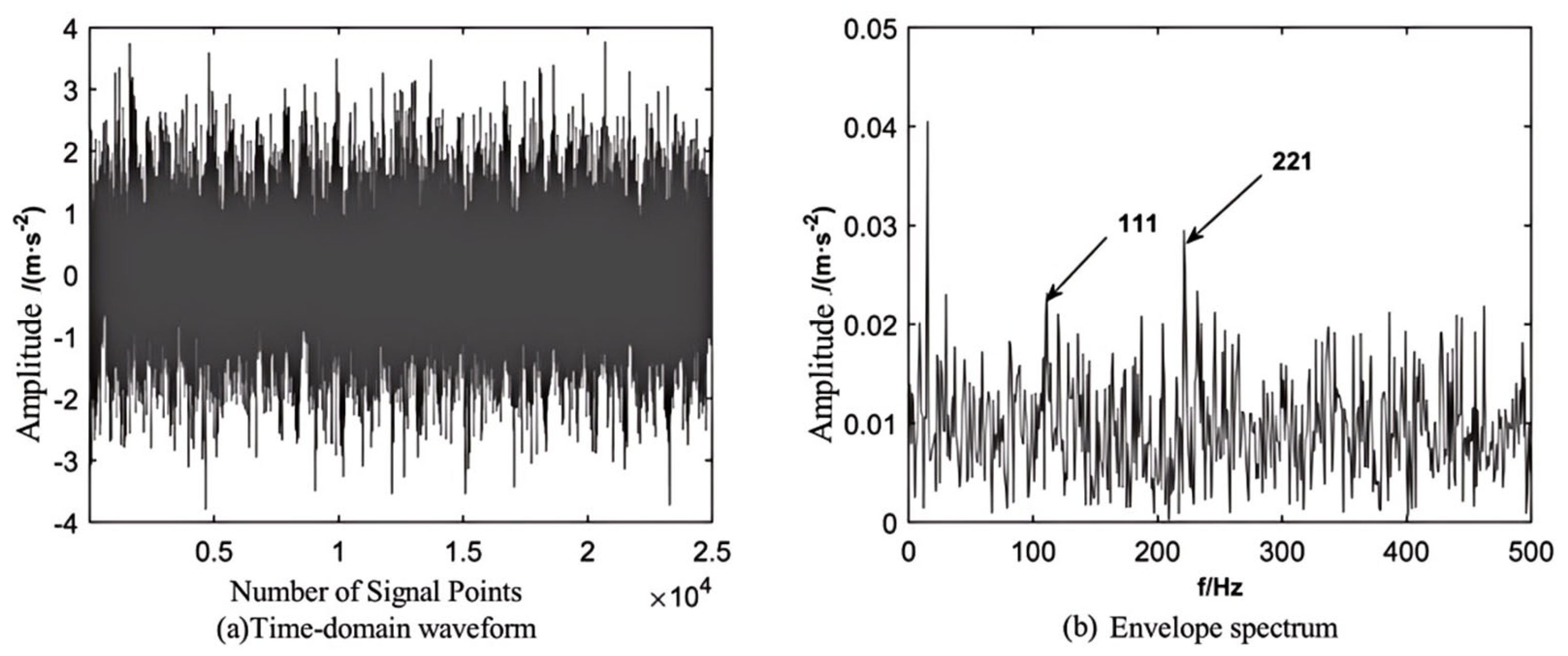
The sampling frequency is 25 kHz, with an acquisition duration of 1 s. Analysis of the data in Figure 14 reveals that under background noise interference, the periodic fault impulses in the simulated signal are completely masked in the time-domain waveform. The envelope spectrum shows two distinct spectral lines at 111 Hz and 221 Hz, with the 111 Hz component closely matching the bearing outer race fault characteristic frequency (110 Hz), while the 221 Hz component corresponds to its second harmonic. However, the critical third harmonic component is absent, and numerous interfering spectral lines are present. This condition leads to failure in fault feature extraction and significantly increases the risk of misdiagnosis.
Figure 14.
Simulation signal.
The IRBMO-CYCBD method requires parameter initialization for signal filtering.
- (1)
- Initialize the population of red-billed blue magpies to 30 individuals;
- (2)
- Set the search range for filter length L to [10, 150].
- (3)
- Appropriately expand the search range of cyclic frequency α to [50, 300] in coordination with the filter length.
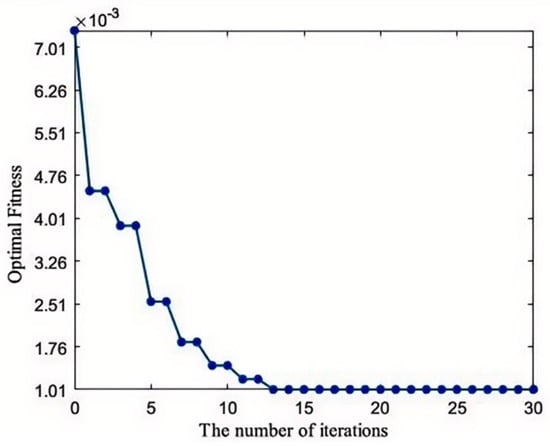
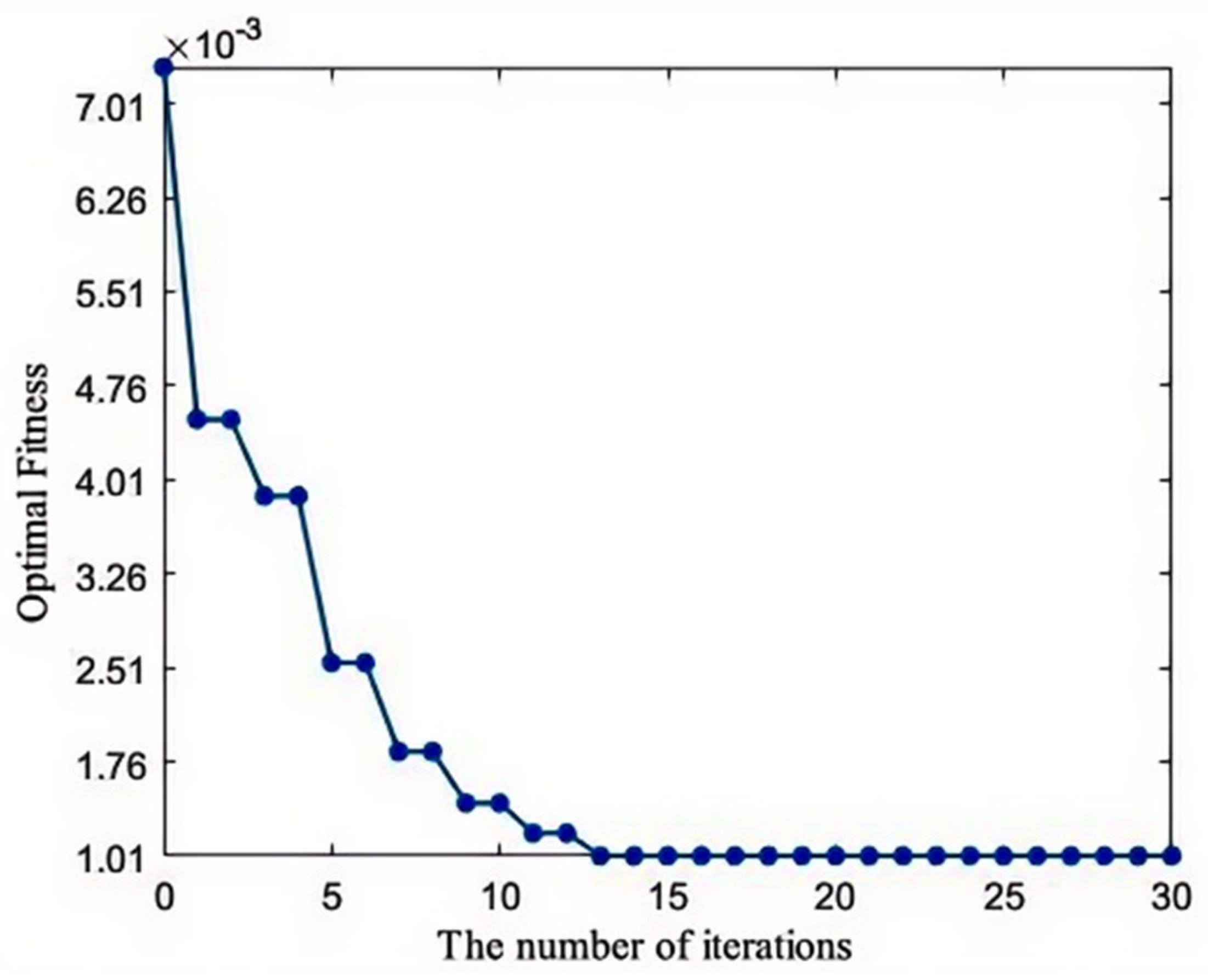
In Figure 15, the iteration count of IRBMO was set to 30. As the iteration count increases, the convergence curve progressively approaches the minimum value, ultimately outputting the optimal L and α values. As shown in Figure 12, the modified Envelope Spectrum Entropy (EK) reaches its minimum value of 0.00101 at the 13th iteration when [L,α] = [50.2, 111.5]. The signal filtered by IRBMO-CYCBD is presented in the same figure.
Figure 15.
IRBMO iterative curve.
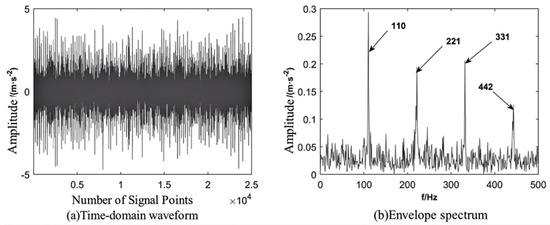
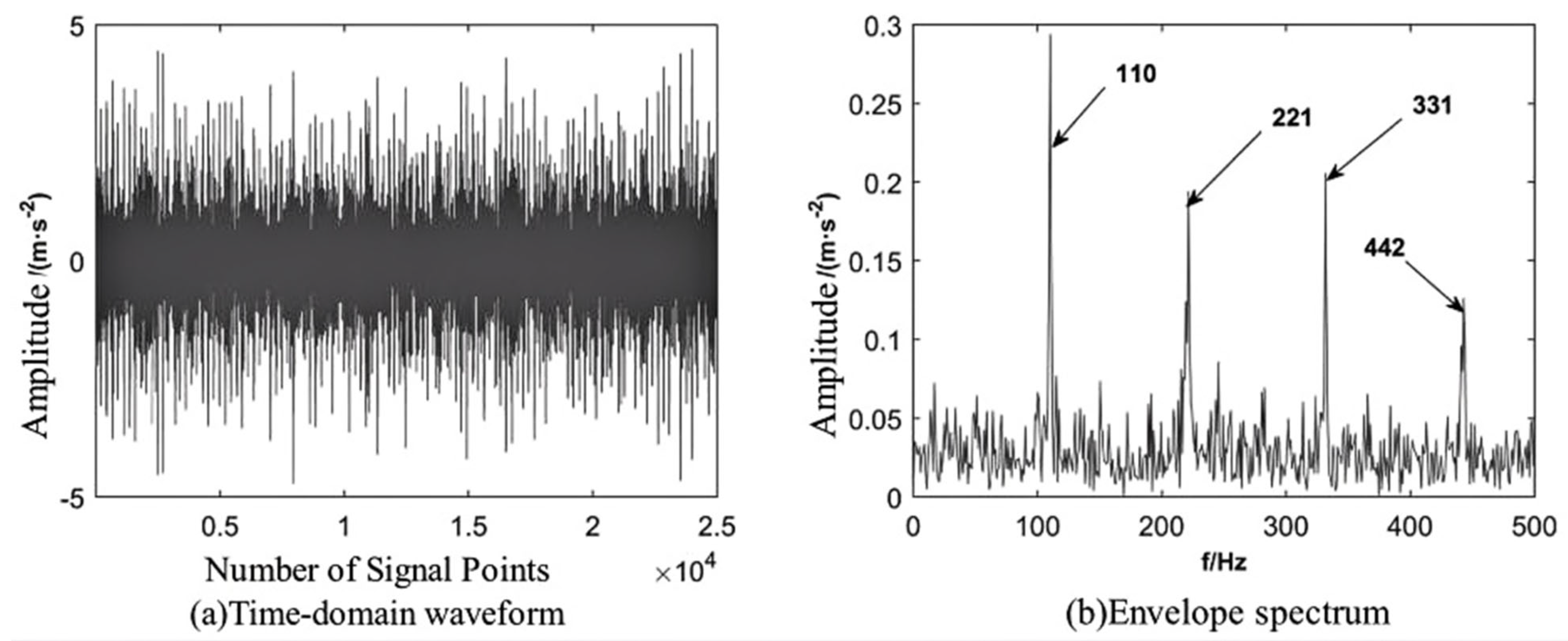
From the Figure 16, distinct periodic impact characteristics can be observed in the processed time-domain signal. Envelope spectrum analysis of the filtered signal successfully identifies the fundamental frequency component at 110 Hz along with its harmonic components at 220 Hz, 330 Hz, and 440 Hz in the frequency spectrum. This simulation experiment confirms the superior filtering performance of the IRBMO-CYCBD method.
Figure 16.
IRBMO-CYCBD filtered signal.
6. Conclusions
To address the limitations of RBMO, including insufficient global exploration due to random initialization of the population and limited local exploitation capability, a multi-strategy enhanced version (IRBMO) was developed. The improved algorithm demonstrates outstanding overall performance on the test function suite, exhibiting faster convergence speed and higher solution accuracy compared to other swarm intelligence algorithms. Comparative experiments have shown that when the cycle frequency α is set appropriately, CYCBD can fully leverage its dual advantages of periodic impulse extraction and noise suppression; conversely, it may not only weaken the noise reduction effect but also introduce false frequency components. In the performance evaluation of six algorithms on nine test functions based on the Friedman test, IRBMO achieved the optimal average ranking with statistically significant superiority, demonstrating substantially better optimization efficacy than comparative algorithms.
To overcome the limitation of CYCBD requiring prior knowledge for manual configuration of key parameters (filter length and cyclic frequency α), the IRBMO-CYCBD method was proposed by integrating IRBMO with the modified Envelope Spectrum Entropy (EK). This novel approach effectively resolves the parameter selection challenges of CYCBD in practical industrial applications. The time-domain signal processed by the IRBMO-CYCBD method exhibits distinct periodic impact characteristics. Envelope spectrum analysis of the filtered signal enables accurate identification of fundamental frequency components and their harmonics. Experimental results have shown that the IRBMO-CYCBD method can effectively handle vibration signals of rolling bearings with strong noise pollution.
Author Contributions
Conceptualization, J.F.; methodology, D.G.; software, D.G.; validation, J.C.; formal analysis, J.C.; investigation, J.C.; resources, J.C.; data curation, J.C.; writing—original draft preparation, X.L.; writing—review and editing, X.L.; visualization, J.C.; supervision, J.F.; project administration, D.G.; funding acquisition, J.F. All authors have read and agreed to the published version of the manuscript.
Funding
This research received no external funding.
Data Availability Statement
The original contributions presented in the study are included in the article; further inquiries can be directed to the corresponding author.
Conflicts of Interest
The authors declare no conflicts of interest.
Abbreviations
The following abbreviations are used in this manuscript:
| IRBMO | Improved Red-Billed Blue Magpie Optimizer |
| CYCBD | Cyclostationary Blind Deconvolution |
| TSA | Time Synchronous Averaging |
| MED | Minimum Entropy Deconvolution |
| VMD | Variational Mode Decomposition |
| CSES | Combined Square Envelope Spectrum |
| PSO | Particle Swarm Optimization |
| MOMEDA | Multipoint Optimal Minimum Entropy Deconvolution Adjusted |
| ICS2 | Maximum Second-order Cyclostationarity Index |
| SVM | Support Vector Machine |
| ISSD | Improved Singular Spectrum Decomposition |
| RBMO | Red-billed Blue Magpie Optimizer |
| SBOA | Secretary Bird Optimization Algorithm |
References
- Liu, M.; Zhang, J.; Gao, Y.; Jiang, W.; Xiao, X. Experimental Analysis on Characteristics and Source Identification of Interior Noise of a High-speed Train Running in a Tunnel. J. Mech. Eng. 2020, 56, 207–215. [Google Scholar]
- Zhao, X.; Liu, F.; Huang, M.; Zhu, Z.; Hou, C.; Liu, Y. Single-channel decorrelation separation and correction for railway bearing fault acoustic signals. J. Vib. Shock 2023, 42, 137–146. [Google Scholar]
- Liu, F.; Zhai, T.; Hou, C.; Teng, F.; Liu, Y. A fast transient component extraction method for train bearing fault acoustic signals based on Doppler-modulated time-shifting Laplace wavelet. Chin. J. Sci. Instrum. 2022, 43, 40–48. [Google Scholar]
- Wang, J.; Yang, J.; Bai, Y.; Zhao, Y.; He, Y.; Yao, D. A comparative study of the vibration characteristics of railway vehicle axlebox bearings with inner/outer race faults. Proc. Inst. Mech. Eng. Part F J. Rail Rapid Transit 2021, 235, 1035–1047. [Google Scholar] [CrossRef] [Scilit]
- Liu, J.; Li, X.; Yu, W.N. Vibration analysis of the axle bearings considering the combined errors for a high-speed train. Proc. Inst. Mech. Eng. Part K J. Multi-Body Dyn. 2020, 234, 481–497. [Google Scholar] [CrossRef] [Scilit]
- Lu, Z.; Wang, X.; Yue, K.; Wei, J.; Yang, Z. Coupling model and vibration simulations of railway vehicles and running gear bearings with multitype defects. Mech. Mach. Theory 2021, 157, 25. [Google Scholar] [CrossRef] [Scilit]
- Ding, S.; Chen, D.; Liu, J. Research, development and prospect of China high-speed train. Chin. J. Theor. Appl. Mech. 2021, 53, 35–50. [Google Scholar]
- Xu, Y.; Cai, Z.; Cai, X.; Ding, K. An enhanced multipoint optimal minimum entropy deconvolution approach for bearing fault detection of spur gearbox. J. Mech. Sci. Technol. 2019, 33, 2573–2586. [Google Scholar] [CrossRef] [Scilit]
- Yang, J.; Lin, J.; Chen, L. Fault diagnosis method for railway bearings based on MED-assisted feature extraction and CNN model. China Meas. Test 2020, 46, 124–129. [Google Scholar]
- Qiao, Z.; Liu, Y.; Liao, Y. Application of improved empirical wavelet transform and minimum entropy deconvolution in fault diagnosis of railway bearings. J. Vib. Shock 2021, 40, 81–90+118. [Google Scholar]
- Kang, W.; Zhu, Y.; Yan, K.; Ren, Z. Weak fault feature extraction of rolling bearings based on CSES and MED. J. Vib. Meas. Diagn. 2021, 41, 660–666+827. [Google Scholar]
- Luo, S.; Huang, J.; Cai, B. An adaptive joint denoising method for rolling bearings based on improved VMD and MOMEDA. Mech. Sci. Technol. Aerosp. Eng. 2022, 41, 329–336. [Google Scholar]
- Liu, S.; Fan, Z.; Zhang, X.; Kong, D. Bearing Fault Diagnosis Method Based on MED and ISSD. Mach. Des. Manuf. 2025, 407, 136–139. [Google Scholar]
- Wang, X.; Zheng, J.; Pan, H.; Tong, J.; Liu, Q.; Ding, K. A fault diagnosis method for rolling bearings based on MED and autocorrelation spectral kurtosis map. J. Vib. Shock 2020, 39, 118–124+131. [Google Scholar]
- McDonald, G.L.; Zhao, Q.; Zuo, M.J. Maximum correlated Kurtosis deconvolution and application on geartooth chip fault detection. Mech. Syst. Signal Process. 2012, 33, 237–255. [Google Scholar] [CrossRef] [Scilit]
- Li, Y.; Jin, W. Application of Full Vector IMF Entropy in Fault Diagnosis of High Speed Train. J. Vib. Meas. Diagn. 2021, 41, 1030. [Google Scholar]
- Fu, S.; Li, K.; Huang, H.; Ma, C.; Fan, Q.; Zhu, Y. Red-billed blue magpie optimizer: A novel metaheuristic algorithm for 2D/3D UAV path planning and engineering design problems. Artif. Intell. Rev. 2024, 57, 134. [Google Scholar] [CrossRef] [Scilit]
- Du, X.; Hao, T.; Wang, B.; Wang, Z.; Zhang, J.; Jin, M. Gorilla troops optimizer based on double random disturbance and its engineering applications. J. Beijing Univ. Aeronaut. Astronaut. 2025, 5, 1–17. [Google Scholar]
- Liu, Y.; Li, L.; Yu, W.; Wang, J.; Cao, Y. Research on fault feature extraction method for rolling bearings based on FIF-CYCBD. J. Zhengzhou Univ. (Eng. Sci.) 2022, 1–6. [Google Scholar] [CrossRef]
- Zhao, X.; Sun, H.; Yao, W. Weak fault feature extraction of rolling bearings based on CYCBD and envelope spectrum. J. Mech. Transm. 2020, 44, 165–169+176. [Google Scholar]
- Zhang, D.; Xu, H.; Wang, Y.; Song, T.; Wang, L. Whale optimization algorithm embedded with Circle map and dimensional by dimensional pinhole imaging opposition-based learning. Control Decis. 2021, 36, 1173–1180. [Google Scholar]
- Abualigah, L.; Yousri, D.; Elaziz, M.A.; Ewees, A.A.; Al-qaness, M.A.A.; Gandomi, A.H. Aquila Optimizer: A novel meta-heuristic optimization algorithm. Comput. Ind. Eng. 2021, 157, 1–37. [Google Scholar] [CrossRef] [Scilit]
- Fu, Y.; Liu, D.; Chen, J.; He, L. Secretary bird optimization algorithm: A new metaheuristic for solving global optimization problems. Artif. Intell. Rev. 2024, 57, 123. [Google Scholar] [CrossRef] [Scilit]
- Wang, W.-C.; Tian, W.-C.; Xu, D.-M.; Zang, H.-F. Arctic puffin optimization: A bio-inspired metaheuristic algorithm for solving engineering design optimization. Adv. Eng. Softw. 2024, 195, 103694. [Google Scholar] [CrossRef] [Scilit]
- Dhiman, G.; Kumar, V. Seagull optimization algorithm: Theory and its applications for large-scale industrial engineering problems. Knowl.-Based Syst. 2018, 165, 169–196. [Google Scholar] [CrossRef] [Scilit]
- Mirjalili, S. SCA: A Sine Cosine Algorithm for solving optimization problems. Knowl.-Based Syst. 2016, 96, 120–133. [Google Scholar] [CrossRef] [Scilit]
- Zhao, K. Research on PM2.5 Concentration Prediction Model Based on improved dung beetle Algorithm and Support Vector Regression; Nanchang Institute of Technology: Nanchang, China, 2024. [Google Scholar]
- Wei, X.; Peng, M.; Huang, H. Node coverage optimization of wireless sensor network based on multi-strategy improved butterfly optimization algorithm. J. Comput. Appl. 2024, 44, 1009–1017. [Google Scholar]
- Li, Y.; Xie, S.; Wang, J.; Yang, L. Train Bogie Bearings Fault Diagnosis Model Based on Multimodal Signal Features and Physics Knowledge Learning. IEEE Trans. Reliab. 2024, 13, 3695–3707. [Google Scholar] [CrossRef] [Scilit]
- Zhang, Y.; Yang, Z.; Zhang, X. Dynamic analysis of spindle—Bearing system considering bearing wear evolution. J. Braz. Soc. Mech. Sci. Eng. 2024, 46, 26. [Google Scholar] [CrossRef] [Scilit]
- Zhang, X.; Liu, Y.; Gong, C.; Nie, Y.; Rodriguez, J. Electric Motor Bearing Fault Noise Detection via Mel-Spectrum-Based Contrastive Self-Supervised Transformer Model. IEEE Trans. Ind. Appl. 2024, 60, 8755–8765. [Google Scholar] [CrossRef] [Scilit]
- Jiang, H.; Zhao, K.; Chen, L.; Fang, D.; Cheng, F.; Chen, Y. Automatic bearing diagnosis based on improved empirical wavelet decomposition and nonparametric test. J. Mech. Sci. Technol. 2023, 37, 6245–6256. [Google Scholar] [CrossRef] [Scilit]
- Wang, M.; Yang, S.; Liu, Y.; Chen, Y.; Zhang, K. Establishment of the thermo-mechanical coupling model of axle box bearings with track irregularity excitation and analysis of its temperature characteristics. Appl. Math. Mech. Engl. Ed. 2024, 45, 1965–1986. [Google Scholar] [CrossRef] [Scilit]

Disclaimer/Publisher’s Note: The statements, opinions and data contained in all publications are solely those of the individual author(s) and contributor(s) and not of MDPI and/or the editor(s). MDPI and/or the editor(s) disclaim responsibility for any injury to people or property resulting from any ideas, methods, instructions or products referred to in the content. |
© 2026 by the authors. Licensee MDPI, Basel, Switzerland. This article is an open access article distributed under the terms and conditions of the Creative Commons Attribution (CC BY) license.