Article

The Influence of Urban Digital Financial Spatial Correlation Network Centrality on Common Prosperity

1
School of Economics, Shanxi University of Finance and Economics, Taiyuan 030006, China
2
School of Government, Nanjing University, Nanjing 210023, China
*
Authors to whom correspondence should be addressed.
Mathematics 2025, 13(22), 3605; https://doi.org/10.3390/math13223605
Submission received: 9 October 2025 / Revised: 4 November 2025 / Accepted: 5 November 2025 / Published: 10 November 2025
(This article belongs to the Special Issue Complex Network Modeling: Theory and Applications, 2nd Edition)

Abstract

While the inclusiveness of digital finance is widely acknowledged, existing research predominantly focuses on its developmental level, with limited attention to its spatial correlation network and structural characteristics. A city’s centrality within this network governs the flow and allocation of digital financial resources, thereby influencing interregional and urban-rural efficiency in resource allocation and income distribution, which ultimately shapes the trajectory of common prosperity. Based on panel data from 280 Chinese cities (2011–2021), this study employs social network analysis to measure urban centrality in the digital financial spatial correlation network and empirically investigates its impact and mechanisms on common prosperity. The main findings are as follows: (1) Benchmark regressions confirm that overall network centrality and its three dimensions—degree, betweenness, and closeness centrality—significantly promote common prosperity, specifically by enhancing the “wealth” dimension and reducing regional development disparities, with the growth effect currently surpassing the inclusion effect. (2) Robustness checks, including instrumental variable approaches addressing endogeneity, affirm the reliability of the core findings. (3) Heterogeneity analysis reveals that the positive effect is more pronounced in cities that are less developed or have weaker financial foundations, such as those in Western China, non-financial centers, cities with no presence of formal financial institutions in antiquity, fifth-tier cities, and small and medium-sized cities, suggesting that network centrality serves as a catalytic tool for urban catch-up strategies. (4) Mechanism analysis identifies that fostering entrepreneurship, particularly among self-employed individuals and wholesale/retail enterprises characterized by decentralized operations and abundant transaction data, is the primary channel through which centrality advances common prosperity. This study provides insights into promoting balanced regional development and common prosperity by optimizing the spatial structure of digital finance.

1. Introduction

In 1989, Francis Fukuyama put forward the “end of history” thesis, arguing that Western-style modernization, characterized by market economies and democratic politics, had become the dominant and widely accepted paradigm. However, in 2022, China formally proposed the concept of “Chinese-style modernization,” suggesting that multiple pathways to modernization exist. A core feature of Chinese-style modernization is common prosperity, which aims to avoid the polarization between rich and poor often associated with Western models. Common prosperity encompasses development, sharing, and sustainability (Zhou & Ding, 2023) [1], representing a commitment to economic growth, equitable sharing of development outcomes, and sustainable development.
Deng Xiaoping formally introduced the concept of common prosperity in 1985 and later articulated a two-stage strategy to achieve it: first, allowing some regions and individuals to prosper ahead of others; and second, having those who have prospered help others to achieve prosperity. From the widespread poverty of the planned economy era, to the emergence of a prosperous class during the reform and opening-up period, and further to the strategy of steadily advancing common prosperity outlined in China’s 14th Five-Year Plan in 2020, the pursuit of common prosperity has entered a new stage aimed at benefiting all citizens. According to World Bank statistics, China’s consumption Gini coefficient fell from 0.437 in 2010 to 0.371 in 2020, moving from the highest inequality bracket (above 0.40) to the third bracket (0.334–0.379). Data from the National Bureau of Statistics of China also show that the income Gini coefficient declined from 0.491 in 2008 to 0.468 in 2020. Although the reduction in income inequality appears modest, it is a notable achievement given China’s population of 1.4 billion. Studying how to further advance common prosperity is therefore of great significance in the new era.
Digital finance in China is characterized by three key features: rapid development, high technological intensity, and uneven spatial distribution.
First, against the backdrop of financial repression and the rise of digital technologies emblematic of the Fourth Industrial Revolution, digital finance in China has grown rapidly, driven by both demand and supply factors. According to the “Peking University Digital Inclusive Finance Index (2010–2020)” report released in 2021, the median provincial digital finance index surged from 33.6 in 2011 to 334.8 in 2020—a tenfold increase, with an average annual growth rate of 29.1%. Financial repression policies have led to strict credit rationing, making it difficult for small and medium-sized enterprises (SMEs) to obtain loans from traditional financial institutions, mainly banks. This has created strong demand for digital financial services. At the same time, high corporate leverage after the financial crisis enhanced profitability in the financial sector, motivating large technology firms such as Alibaba and Tencent to enter digital finance, thereby providing technological support and high-quality financial services.
Second, digital finance is significantly more technology-intensive than traditional finance. The “Blue Book on Digital Finance: China’s Digital Finance Innovation and Development Report (2023)” by the Central University of Finance and Economics noted that from January 2018 to October 2022, a total of 190,000 digital finance-related patents were filed worldwide. China led with 107,000 patents, followed by the United States (37,100) and Japan (77,680). Patents filed in China accounted for 56.316% of the global total during this period.
Third, the spatial distribution of digital finance in China is highly uneven. As highlighted by the China Digital Finance Index (2020) released by Zhejiang University, a clear regional divide exists, with the southern and eastern regions outperforming the northern and western ones. Resources and elements tend to concentrate in more developed provinces and municipalities, such as the Beijing–Tianjin–Hebei region, the Yangtze River Delta, and the Pearl River Delta. While China’s rapid progress in digital finance and technological innovation has strengthened digital financial linkages between cities, inherent disparities in financial market size, digital infrastructure, and financial history result in varying positions for cities within the digital finance spatial correlation network. Cities with higher centrality in this network are better positioned to attract digital financial resources, making the study of urban centrality within the network highly relevant.
Current research in this area exhibits several limitations:
(1)
Neglect of Digital Finance Network Structure: Existing studies focus mainly on the development level of digital finance (e.g., coverage) but overlook how structural features of its spatial correlation network—such as urban centrality—affect common prosperity.
(2)
Inadequate Endogeneity Handling and Mechanism Analysis: Prior research often relies on single instrumental variables, failing to reflect the multidimensional nature of digital financial centrality (integrating technology, finance, and network structure). Mechanism analyses also tend to be overly general, lacking granular insights at the sectoral or micro-entity level.
(3)
Limited Heterogeneity Analysis: Most studies examine only geographical differences, without accounting for multidimensional urban attributes (e.g., city size, financial history, administrative rank), limiting understanding of how effects vary across city types.
(4)
Unclear Link Between Spatial Imbalance and Common Prosperity: Although spatial inequality in Chinese digital finance is pronounced (e.g., “strong East, weak West”), how this imbalance—mediated by network centrality—influences common prosperity remains underexplored.
This study makes four key contributions:
(1)
Novel Focus on Network Structure Effects: It is among the first to investigate how urban centrality in the digital financial spatial network influences common prosperity, shifting the focus from development levels to structural network characteristics.
(2)
Advanced Endogeneity Solutions: We address endogeneity through a multidimensional approach, decomposing network centrality into digital technology, financial, and spatial network dimensions and employing four instrumental variables across these domains—a methodological improvement over single-instrument strategies.
(3)
Multidimensional Heterogeneity Analysis: We conduct a comprehensive urban heterogeneity analysis across six dimensions—geography, financial center status, historical financial foundation, city size, administrative rank, and commercial attractiveness—going beyond conventional single-dimensional comparisons.
(4)
Granular Mechanism Investigation: We establish new analytical pathways by examining mechanisms using detailed sectoral data (20 industries) and self-employment metrics, offering micro-level insights beyond the broad factors (e.g., innovation or employment) typically found in the literature.
The remainder of the paper is structured as follows: Section 2 reviews the literature and develops research hypotheses. Section 3 describes the variable definitions and empirical design. Section 4 presents benchmark regression results, robustness checks, heterogeneity analysis, and mechanism analysis. Section 5 concludes with a discussion of findings and implications.

2. Literature Review and Hypothesis

2.1. Concept Definition

2.1.1. Urban Digital Financial Spatial Correlation Network Centrality

The urban digital financial spatial correlation network represents an interconnected system formed by digital finance activities—such as mobile payments, blockchain applications, and big data analytics—across cities. This network captures the structural relationships among cities in the allocation of digital financial resources, mapping how financial flows, information exchange, and technology diffusion generate spatial interdependencies. It is characterized by three core dimensions:
(1)
Nodal Attributes: The position of each city is weighted by indicators of digital financial development, such as adoption rates of electronic payments and volumes of online lending.
(2)
Linkage Dynamics: These are reflected in cross-city digital transactions, interregional business operations, and patterns of population mobility.
(3)
Structural Features: These include the centrality of key financial hubs (e.g., Beijing and Shanghai as dominant nodes), hierarchical differentiation across city tiers, and geographically distributed spillover effects.
This conceptual framework enables researchers to analyze spatial inequalities in financial resource distribution and assists policymakers in designing more equitable strategies for digital finance infrastructure.
Urban digital financial spatial correlation network centrality refers to a city’s strategic position and influence within the spatially interconnected system of digital financial flows. This metric captures the extent to which a city functions as a hub for digital financial activities—such as mobile payments, online lending, and blockchain-based transactions—across regions. Centrality is measured along three critical dimensions:
(1)
Connectivity Strength: The volume and value of digital financial transactions channeled through the city.
(2)
Intermediation Power: The city’s role in facilitating transactions between other cities.
(3)
Resource Control: Its capacity to attract and redistribute digital financial capital.
Cities with high centrality, such as Beijing and Shenzhen, typically exhibit dense connections with multiple regions, serve as crucial intermediaries in cross-regional financial flows, and concentrate key digital finance platforms and institutions. This structural advantage allows them to shape regional financial inclusion patterns, influence the speed of technological diffusion, and ultimately affect wealth distribution across the network. Measuring centrality provides essential insights for understanding spatial inequality in digital finance development and for designing policies that optimize resource allocation in support of common prosperity.

2.1.2. Common Prosperity

Common prosperity denotes a development paradigm aimed at achieving equitable and inclusive economic growth, ensuring that all members of society share the benefits of modernization. In contrast to conventional models that may tolerate significant wealth disparities, common prosperity emphasizes balanced development across regions, sectors, and social groups. It integrates three core dimensions:
(1)
Economic Development: Sustained GDP growth coupled with enhanced productivity.
(2)
Distributional Equity: Narrowing income and wealth gaps through progressive fiscal and social policies.
(3)
Social Sustainability: Universal access to essential public services such as education and healthcare.
This concept explicitly rejects the polarization tendencies observed in some Western-style modernization pathways. Instead, it advocates a coordinated approach in which market efficiency is complemented by government-led redistribution mechanisms. In the Chinese context, common prosperity is pursued through a phased strategy: first encouraging market-driven wealth creation, and then strengthening redistributive instruments—all while respecting legitimate income differentials. Measurable outcomes include a declining Gini coefficient, an expanding middle-income population, and converging regional development indicators, supported by innovations in digital finance, taxation, and social welfare systems.

2.2. Literature Review

Academic researchers have conducted systematic studies on common prosperity, primarily focusing on four dimensions: corporate common prosperity, urban–rural common prosperity, regional common prosperity, and the role of the digital economy in promoting common prosperity.
Studies on corporate common prosperity reveal that digital transformation positively influences corporate philanthropy (Hu, Du, Lin, & Liang, 2024) [2]. Research on urban–rural common prosperity covers areas such as rural transportation, agricultural policies, and strategic pathways. For instance, rural bus accessibility has a limited effect on income mobility among low-income households (Zhang, Zhou, & Huang, 2024) [3], while agricultural subsidies significantly raise farmers’ per capita income and reduce intra-rural income inequality (Sha, Ren, Li, & Wang, 2024) [4]. To achieve urban–rural common prosperity, it is essential to integrate endogenous growth mechanisms with sharing mechanisms in strategic planning (Wei, Cui, & Wang, 2022) [5].
In terms of regional common prosperity, regional coordination has been identified as a solid foundation for achieving shared prosperity (Zhang & Ye, 2022) [6]. Research on the digital economy highlights its dual role in reducing carbon emissions and advancing common prosperity (Gao, Zhou, Cheng, & Liu, 2024) [7], underscoring the importance of balancing multiple development objectives.
Studies focusing on digital finance and common prosperity have addressed several key aspects: income inequality, intergenerational mobility, mechanism pathways, sub-indicator heterogeneity, and regional disparities. Digital finance helps narrow the income gap by promoting entrepreneurship among low-income households and increasing job opportunities for rural residents (Yin, Wen, & Li, 2023) [8]. From an intergenerational perspective, digital finance significantly reduces intergenerational income elasticity and enhances intergenerational mobility (Zhou & Ding, 2023) [1]. In terms of mechanisms, digital finance facilitates urban common prosperity by bridging the digital divide and boosting urban innovation and entrepreneurship (Zou, Yao, Wang, Zhang, & Deng, 2024) [9]. Regarding sub-indicator and regional heterogeneity, digital finance mainly promotes common prosperity by raising overall prosperity levels, with a more pronounced effect in western China (Zhang, Zhu, & Zhang, 2024) [10]. In the Yangtze River Delta urban agglomeration, the coupling coordination network between digital finance and common prosperity is evolving toward higher density and “small-world” characteristics, with narrowing centrality gaps between cities and an overall strengthening of network centrality (Zeng & Sun) [11].
Despite these insights, most existing studies focus on quantitative relationships, with limited attention to spatial relationships—particularly the structural characteristics of digital finance spatial association networks. Even fewer studies examine the role of urban centrality within such networks. Although digital finance can transcend spatial and temporal barriers due to its technological edge, its development remains constrained by regional digital infrastructure, which in turn depends on local population size and economic development levels. This results in pronounced spatial disparities in digital finance distribution. Spatial distance influences the scale of cross-city financial transactions, while differences in digital finance development levels affect the efficiency of interregional financial collaboration.
Consequently, cities exhibit varying degrees of centrality within the digital finance spatial association network. Centrality affects the direction and speed of digital financial resource flows, shaping the overall efficiency of regional resource allocation. This, in turn, influences regional economic growth and factor income distribution, ultimately impacting urban common prosperity. Digital financial resources may either concentrate in a few central cities—creating a Matthew effect—or diffuse to peripheral cities, thereby fostering common prosperity. In this context, studying how urban digital finance spatial association network centrality influences common prosperity is of significant theoretical and practical relevance.

2.3. Hypothesis

2.3.1. Hypothesis 1: The Centrality of Urban Digital Financial Spatial Correlation Networks Exerts a Positive Influence on Common Prosperity

In conventional finance, the collateral channel plays a paramount role, where a borrower’s repayment capacity is intricately tied to the valuation of their collateral—a mechanism rooted in information asymmetry (Stiglitz & Weiss, 1981) [12]. This asymmetry leads to credit rationing, suppressing a substantial portion of loan demand. Consequently, large corporations and wealthier individuals, possessing greater collateral, typically secure loans with ease, whereas small and medium-sized enterprises (SMEs) and less prosperity groups often struggle to meet their financing needs.
In China, financial exclusion is further complicated by institutional factors. Within the government-dominated market economy, state-owned banks naturally favor state-owned enterprises and state-system employees, who are perceived as lower-risk borrowers. This exacerbates the difficulty for private enterprises, employees of non-state sectors, and self-employed individuals in accessing formal credit.
Digital finance, by contrast, emphasizes credit assessment based on big data analytics rather than physical collateral. It enables more accurate evaluation of borrowers’ repayment capacity, thereby meeting the financing needs of underserved groups and showcasing its inherent inclusiveness. The centrality of an urban digital financial spatial correlation network reflects a city’s capacity to assimilate and leverage digital financial resources within the intercity network. A higher centrality allows a city to harness scale effects from aggregated digital financial elements, foster regional synergy through interconnected flows, ease credit constraints for enterprises and entrepreneurs, and ultimately stimulate employment and economic participation. These mechanisms collectively enhance the city’s progress toward common prosperity.
Thus, we propose:
H1: 
The centrality of urban digital financial spatial correlation networks exerts a positive influence on common prosperity.

2.3.2. Hypothesis 2: Urban Digital Financial Spatial Correlation Network Centrality Positively Influences the Wealth Dimension of Common Prosperity

The influence of digital financial network centrality on the wealth dimension of common prosperity operates through multiple theoretical channels.
First, drawing on the Harrod–Domar model, economic growth depends critically on capital accumulation. Cities with high centrality in the digital financial spatial network are adept at attracting and concentrating digital financial capital, thereby achieving economies of scale and accelerating capital formation.
Second, endogenous growth theory highlights technological innovation as a key driver of economic expansion. Highly central cities often become hubs for fintech innovation, where continuous development of new digital financial products and services enhances the efficiency of financial resource allocation and stimulates real economic growth.
Third, following the theory of financial deepening, a higher degree of network centrality facilitates greater financial liberalization. This is realized through an expanded presence of non-state financial institutions, increased market competition, and reduced financial repression—all contributing to sustained economic growth.
Therefore, we posit:
H2: 
The centrality of the urban digital financial spatial correlation network exerts a positive influence on the wealth dimension of common prosperity.

2.3.3. Hypothesis 3: Urban Digital Financial Spatial Correlation Network Centrality Positively Influences the Shared Dimension of Common Prosperity

The shared dimension of common prosperity relates to equitable distribution and inclusive participation in economic growth, which can be facilitated through employment restructuring, regional spillovers, and urban–rural integration.
According to the Clark–Fisher theorem, economic development induces a structural shift in employment from primary to secondary and tertiary sectors. Digital finance accelerates this transition. Cities with high network centrality generate more employment opportunities in digital finance and related service industries, thereby optimizing the employment structure and raising average income levels.
Furthermore, drawing on Myrdal (1965)’s [13] theory of circular and cumulative causation, developed regions can spur growth in less developed ones through diffusion effects. Central cities in the digital finance network act as regional growth poles, fostering financial cooperation and knowledge spillovers to neighboring areas, thereby enhancing intercity sharing.
Finally, Lewis’s (1954) [14] dual-sector model highlights the urban–rural development gap. Digital finance mitigates this by extending diversified and efficient financial services to rural areas via internet platforms. Central cities can channel surplus financial resources to rural regions, raising rural capital accumulation and strengthening urban–rural sharing.
Accordingly, we propose:
H3: 
Urban digital financial spatial correlation network centrality positively influences the shared dimension of common prosperity.

2.3.4. Hypothesis 4: The Centrality of Urban Digital Financial Spatial Correlation Networks Influences Common Prosperity Through the Entrepreneurial Channel

Entrepreneurship serves as a critical mechanism linking digital financial network centrality to common prosperity. The centrality of such networks supports entrepreneurship through improved financial access, information dissemination, and risk sharing.
From the perspective of entrepreneurial threshold theory, access to startup capital is essential. Cities with high network centrality concentrate digital financial resources, enabling more entrepreneurs to secure initial funding.
Theories of enterprise growth and market structure further suggest that different types of firms have varying financial needs across development stages. Central cities attract diverse digital financial institutions, broadening the range of available financial products and supporting entrepreneurial experimentation and scaling.
Information asymmetry theory also underscores the role of network position: central cities serve as information hubs, reducing information gaps and improving matching efficiency between capital and entrepreneurial projects.
In turn, entrepreneurship fuels common prosperity through multiple channels. Keynesian employment theory suggests that new ventures create jobs and raise incomes, stimulating consumption and growth. Schumpeterian creative destruction emphasizes how entrepreneurs reconfigure resources and enhance allocative efficiency. Endogenous growth theory highlights their role in driving technological innovation and total factor productivity. Finally, trickle-down effects from entrepreneurial spending can enhance income distribution and broaden prosperity.
We therefore hypothesize:
H4: 
The centrality of urban digital financial spatial correlation networks influences common prosperity via the entrepreneurial channel.

3. Methodology

The data utilized in this study were obtained from multiple sources, including the EPS database, the China Statistical Yearbook, the China Urban Statistical Yearbook, and the statistical bulletins of prefecture-level cities. Our analysis is based on a panel dataset comprising 280 prefecture-level cities in China over the period 2011–2021. To account for potential heterogeneity across both time and individual entities, we employ a two-way fixed effects model for empirical estimation.
C P i t = α + β 1 c e n t e r i t + β 2 X i t + α i + β t + ε it
where CP stands for common prosperity, center stands for urban digital financial spatial correlation network centrality, and X stands for control variables, including government intervention, industrial structure, foreign investment, and external dependence. Then, α represents individual fixed effects, controlling individual non-time-varying heterogeneity, θ is time fixed effects, controlling time non-individual heterogeneity, and ε is the error term. As shown in Table 1, this is the nomenclature for the primary variables.

3.1. Explained Variables

The explained variable in this study is Common Prosperity (CP). While existing metrics for gauging common prosperity are predominantly founded on the three core dimensions of prosperity, sharing, and sustainability, this paper refines the conceptualization and operationalization of these dimensions. As shown in Table 2, the prosperity dimension is disaggregated into three sub-dimensions: national prosperity, residents’ prosperity, and sustainable prosperity. The sharing dimension is similarly subdivided into public service sharing and development sharing. Consequently, a novel composite index for common prosperity is constructed, encompassing two secondary indicators (Prosperity and Sharing) and five tertiary indicators: National Prosperity, Residents’ Prosperity, Sustainable Prosperity, Public Service Sharing, and Development Sharing.
A distinctive feature of our index is its approach to measuring sustainability. Rather than relying on traditional outcome indicators such as carbon emissions, we employ process indicators that capture the drivers of sustainable development, namely technological innovation and application. We posit that sustainable development is fundamentally achieved through advancements in technology, particularly in network information technology. Therefore, the Sustainable Prosperity sub-dimension is measured using per capita patent counts (reflecting innovation) and per capita internet user access (reflecting application).
Furthermore, the Prosperity dimension explicitly distinguishes between national wealth and resident wealth, acknowledging that they are not synonymous and are influenced by distinct mechanisms within the income distribution system. Thus, prosperity is conceptualized as an aggregate of both. National prosperity is gauged through sub-indicators including the urbanization rate and GDP per capita, whereas resident prosperity is assessed by the per capita disposable incomes of both urban and rural households.
The inclusion of public service sharing is pivotal, as it represents not only a fundamental function of a service-oriented government but also a primary channel through which residents partake in the nation’s developmental gains. This sub-dimension is quantified using four specific metrics: the number of public transport vehicles per capita (transportation), the number of library books per capita (cultural), the number of doctors per capita (healthcare), and per capita public expenditure on education (education).
Finally, the development sharing dimension is designed to evaluate disparities in development outcomes. It focuses on the urban–rural gap and regional disparities, which are among the most prominent development challenges in China. The urban–rural income gap is quantified using the Theil index, regional disparities are measured by the absolute difference between a city’s GDP per capita and the national average, and intra-city development gaps are approximated using nighttime light data.
To synthesize these measures, the study employs the entropy method to assign objective weights to each sub-indicator, ultimately computing a comprehensive score that reflects a city’s overall level of common prosperity.

3.2. Core Explanatory Variables

The core explanatory variable in this study is the centrality of a city within the digital financial spatial correlation network. To construct this variable, we implement a three-step procedure.
First, a spatial association network for inter-city digital finance is constructed using a modified gravity model, which quantifies the strength of digital financial linkages between city pairs.
Second, based on the established network, we calculate three canonical metrics of network centrality for each city: degree centrality, betweenness centrality, and closeness centrality. As shown in Table 3, these metrics, respectively, capture a city’s direct connectivity, its role as an intermediary, and its overall proximity within the network.
Finally, to integrate these distinct dimensions into a unified measure, we employ the entropy method to determine the objective weights of the three centrality metrics. These weights are then used to compute a comprehensive composite score, which serves as our final measure of each city’s overall centrality within the digital financial spatial correlation network.
F p q = f p q R p G p g p 3 R q G q g q 3 D p q 2
Among them: f p q = f p f p + f q   D p q = d p q g p g q .
As shown in Equation (2), F p q is the gravitational force of digital finance spatial association of city p to city q, and f p q is the proportion of city p in the sum of the two-city digital finance indexes of city p and city q, R is the number of city population, G is the city GDP, g is the city GDP per capita, f is the city digital finance index, and d is the spatial distance between cities. Putting all the cities between constitute a gravity matrix, the average value of each row of the gravity matrix as a critical value, the digital financial spatial association gravity value exceeding the critical value is 1, not exceeding the value is 0, the gravity matrix is converted into a binary asymmetric matrix, that is, the digital financial spatial correlation network of the city. The urban digital financial index data comes from the Peking University Digital Financial Inclusion Index DIFI, which has a total of 33 tertiary indicators and 3 secondary indicators, and the original underlying data comes from one of the largest digital financial institutions in China’s market, which is broadly representative of the whole country and the region. Using the urban digital financial spatial correlation network matrix data, the degree centrality, intermediary centrality, and closeness centrality are finally calculated by using pajek v6.01 software, and the entropy method is used to synthesize the three kinds of centrality data into a comprehensive centrality. The centrality of the urban digital financial spatial correlation network is the core explanatory variable of this paper.
As shown in Formula (2), Fpq represents the “spatial correlation gravity of digital finance” between city p and city q. This value aims to quantify the influence and connection strength of digital finance in the spatial dimension between the two cities. The model mimics the gravitational law in physics. To facilitate understanding, this gravity model can be decomposed into two core components:
The Capability Module (numerator part) characterizes the “capability” of cities to generate spatial connections in digital finance.
R p   G p     g   p 3 represents the “comprehensive economic capacity” of city p, which integrates the city’s population size (R), economic aggregate (G), and economic development level (per capita GDP, denoted as g). The cube root is taken to balance the dimensions of each indicator and obtain a balanced comprehensive evaluation.
R p   G p     g   p 3 represents the “comprehensive economic capacity” of city q, with the same meaning as above.
fpq is a directional weight, defined as fpq = fp/(fp + fq). It determines the dominant party in the directional spatial gravity of digital finance. When city p has a higher digital finance index (fp), it exerts stronger dominance in the mutual relationship.
The Damping Module (denominator part) characterizes the “friction” that hinders spatial connections in digital finance between cities.
Dpq is a composite distance factor, which includes not only the physical distance (dpq) between the two cities but also their economic disparity (gp − gq). The underlying logic of this design is that even if cities are geographically close, a significant economic development gap can act as an invisible barrier, substantially weakening the strength of digital finance connections between them.
Finally, the gravity value Fpq is obtained by dividing the capability module by the square of the damping module.
In summary, Fpq can be intuitively understood as the directed spatial connection strength of digital finance between cities p and q, formed under the joint effect of their “comprehensive capacities” and overcoming the resistance constituted by the “composite geographic and economic distance”.
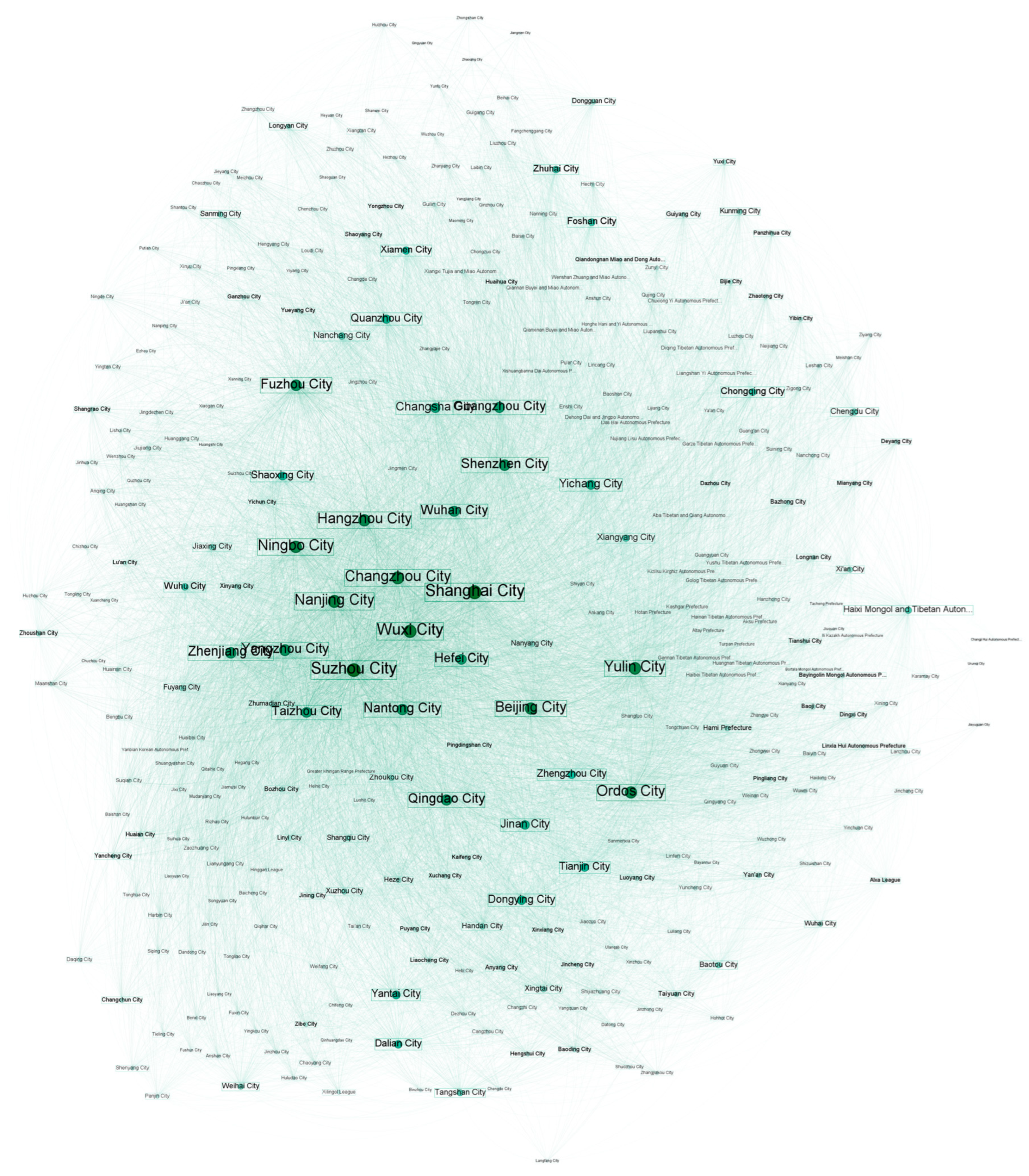
As shown in the Figure 1, too many citiesincreases the complexity of social network analysis. Due to space constraints, a simplified case study illustrates the spatial network centrality measurement for digital finance cities. As shown in Table 4, consider five cities—ABCDE—with gravitational values calculated via the digital finance spatial association gravity model as shown in. As shown in Table 5, a conditional function converts these values: gravitational values ≥ the mean are set to 1, while those < the mean are set to 0, forming a binary matrix. Finally, importing the attraction matrix into Gephi v0.10.1 software enables the calculation of each city’s degree centrality, intermediary centrality, and proximity centrality. Weighting these three centrality measures using the entropy method allows for the synthesis of a composite centrality indicator.

3.3. Control Variables

3.3.1. Industrial Structure

The upgrading of industrial structure significantly shapes income distribution among workers across sectors, thereby influencing the achievement of common prosperity. To capture this effect, we measure industrial structure as the ratio of the output value of the tertiary sector to that of the secondary sector.

3.3.2. Government Intervention

Government intervention affects income distribution through fiscal redistribution mechanisms such as transfer payments and public service provision, which are instrumental in advancing common prosperity. This variable is measured as the share of government fiscal expenditure in regional GDP.

3.3.3. Foreign Direct Investment

Foreign direct investment (FDI) may influence common prosperity by altering wage levels and income structures in foreign-invested enterprises relative to domestic firms. We use the amount of non-financial FDI to gauge this effect.

3.3.4. Dependence on Foreign Trade

The reliance on foreign trade impacts common prosperity by influencing the relative income disparities between the foreign and domestic sectors. To gauge this, we employ the ratio of the combined value of imports and exports to GDP as an indicator of external trade dependence.

3.4. Intermediate Variables

Entrepreneurship contributes to common prosperity by generating employment, stimulating economic growth, and influencing income distribution. We use two indicators to proxy for entrepreneurship: the number of registered enterprises per 100 people and the number of self-employed individuals per 100 people.

3.5. Characterization Facts Analysis

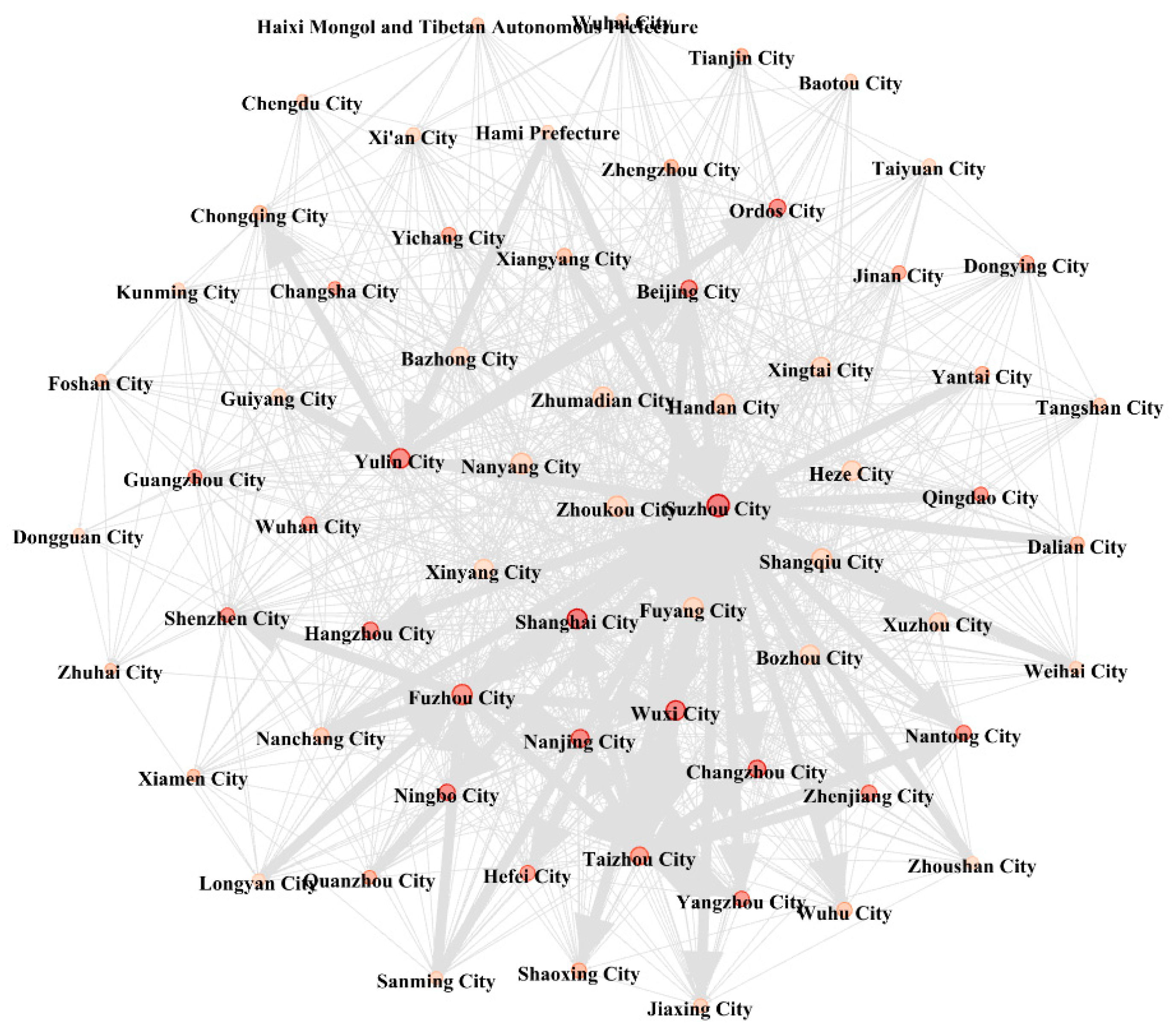
As illustrated in Figure 2, cities such as Beijing, Shanghai, Suzhou, Wuxi, Hangzhou, Nanjing, Changzhou, and Zhenjiang occupy the most central positions within the digital finance spatial association network, functioning as key regional hubs. With the exception of Beijing, these core nodes are densely concentrated in the Yangtze River Delta region, while the Pearl River Delta contains relatively fewer hubs, indicating that the epicenter of China’s digital finance ecosystem lies predominantly in the Yangtze River Delta.
As shown in Table 6, from 2011 to 2021, multiple structural metrics of the digital finance spatial network consistently reflect a trend of intensifying interconnectivity among Chinese prefecture-level cities:
(1)
The average node degree increased from 40.902 to 44.693, indicating stronger direct connectivity across the network.
(2)
Network density rose from 0.126 to 0.138, reflecting a tighter and more interlinked structure.
(3)
The average clustering coefficient grew from 0.259 to 0.270, signaling enhanced local clustering and subgroup cohesion.
In summary, the consistent upward trends in average degree, network density, and clustering coefficient collectively demonstrate that the digital finance spatial association network among Chinese prefecture-level cities became significantly more connected and cohesive over the studied period.
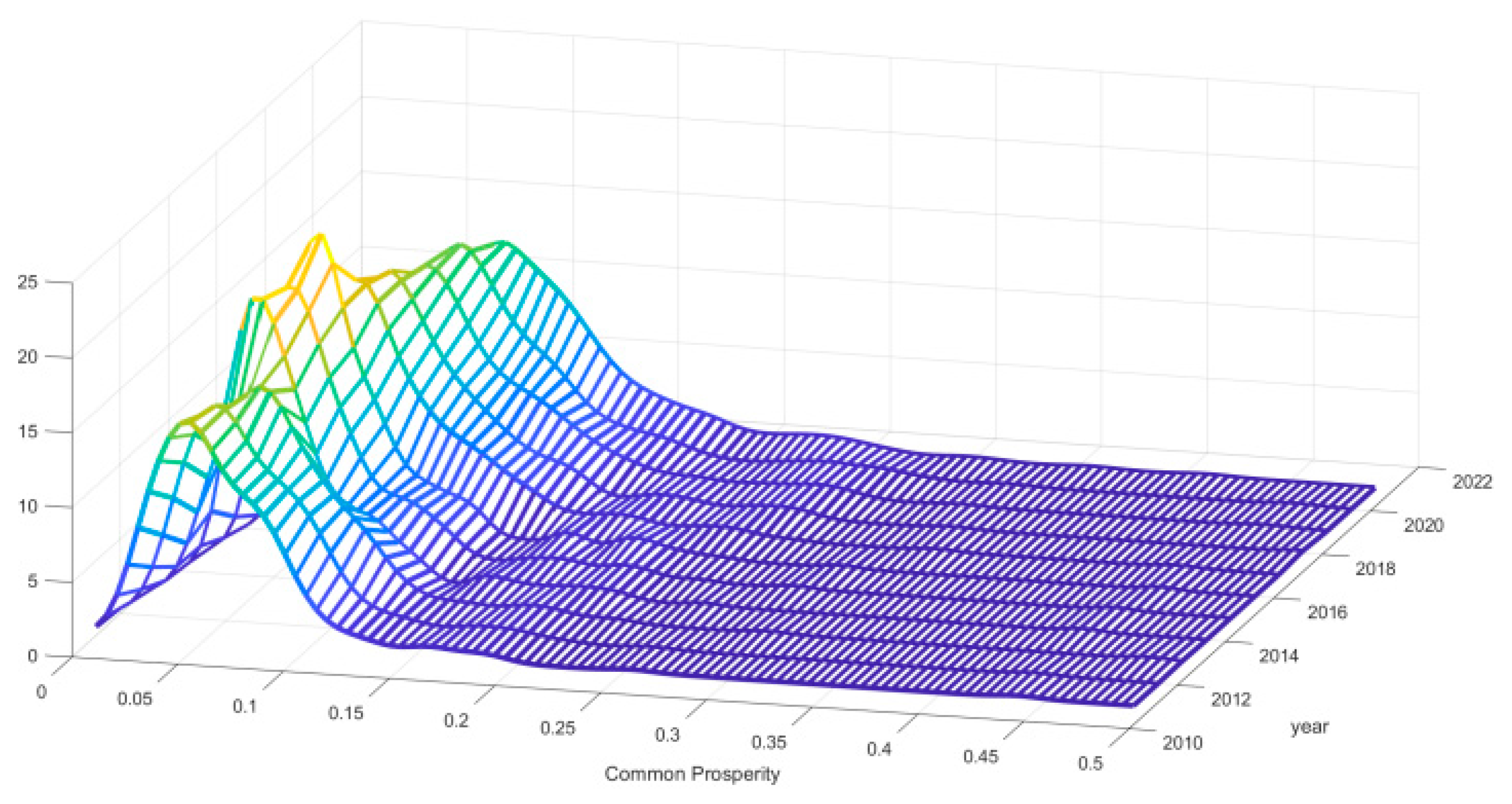
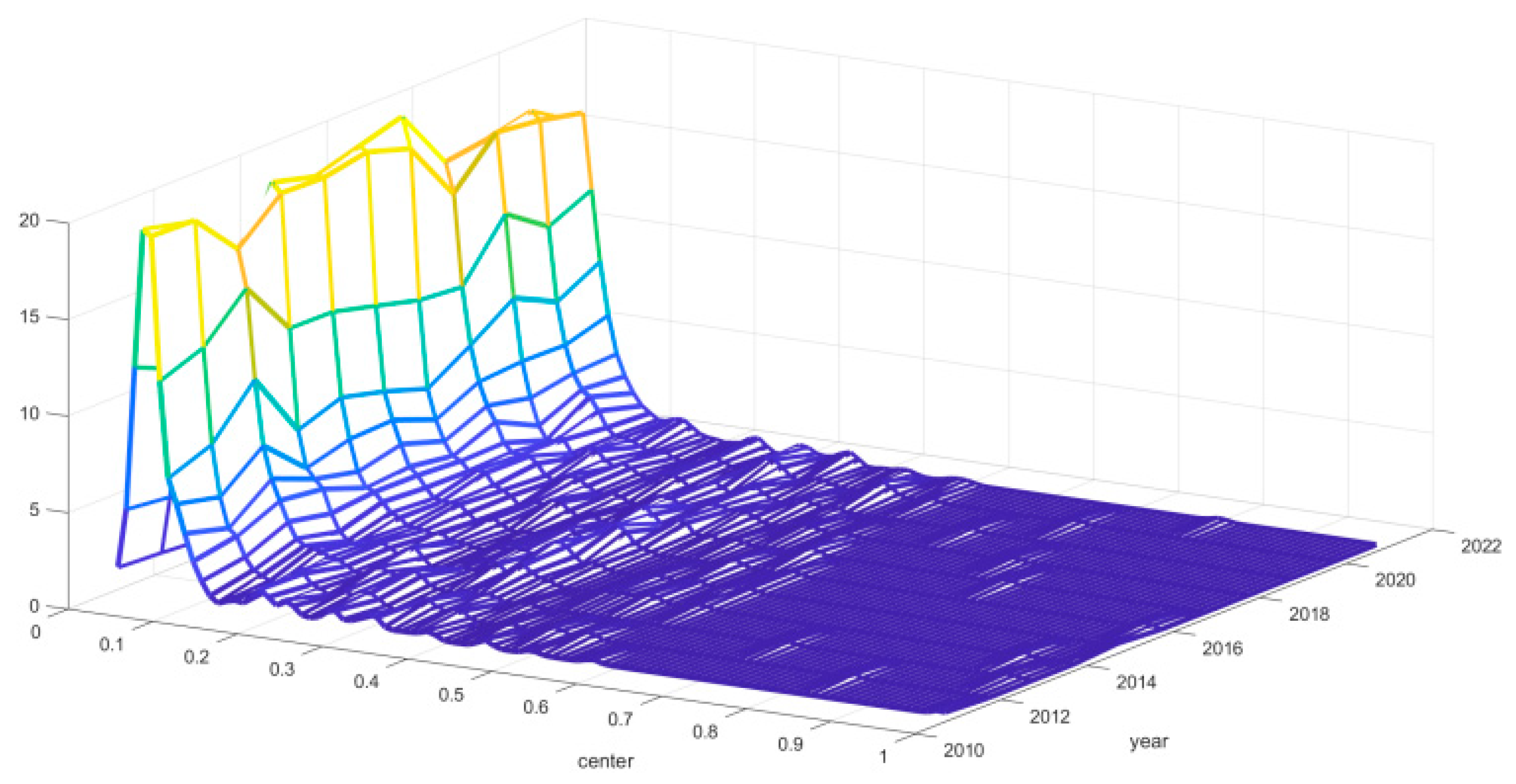
Employing the Gaussian kernel density function, we generate three-dimensional kernel density maps to analyze the dynamic evolution of common prosperity and digital financial network centrality. The analysis reveals distinct temporal patterns for both variables.
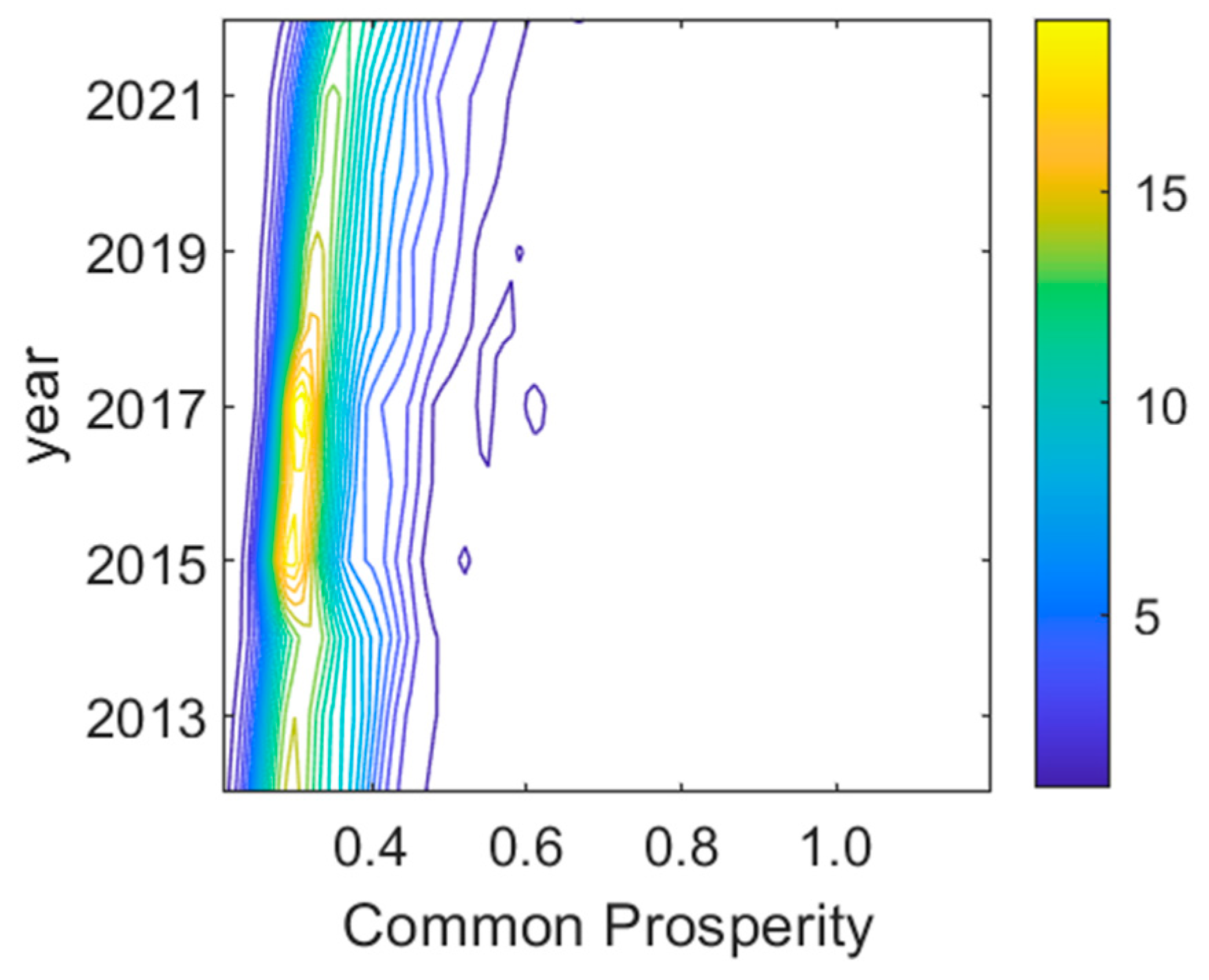
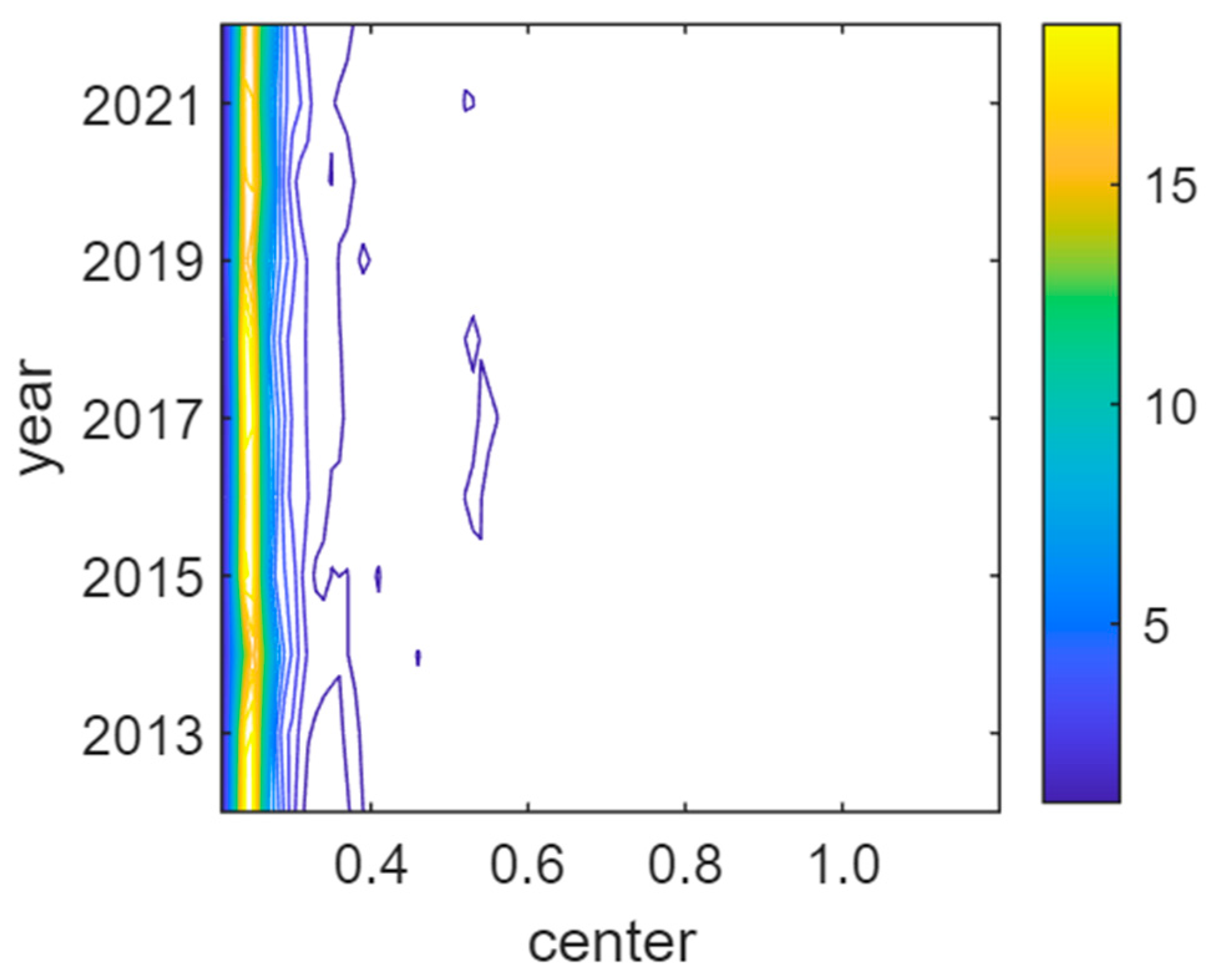
As shown in Figure 3,for common prosperity, the kernel density curve exhibits a consistent rightward shift over time, indicating a clear upward trend in the overall level of common prosperity across Chinese cities. The distribution pattern shows wave peaks that initially rise and subsequently decline, while their width expands from narrow to broad, suggesting widening disparities in common prosperity among cities. However, the persistent presence of a single peak throughout the observation period indicates no significant polarization between cities. As shown in Figure 4, the density contour map further confirms that the national average level of common prosperity increased throughout the sample period, with accelerated growth in later stages compared to earlier years.
As shown in Figure 5,regarding the centrality within the digital financial spatial correlation network, the kernel density curve similarly demonstrates a rightward shift, reflecting an overall upward trajectory in network centrality across Chinese cities. The distribution pattern reveals more complex dynamics in peak amplitude—initially decreasing, then increasing, before decreasing again—while the peak width remains relatively stable. This pattern suggests that inter-city disparities in network centrality have remained largely consistent over time. The consistent presence of a single peak in each year’s data again indicates no polarization phenomenon. As shown in Figure 6, according to the density contour plot, the average centrality of the digital finance spatial correlation network across all cities shows a slight but steady upward trend throughout the observation period.
These findings collectively characterize the temporal evolution of both common prosperity and digital financial network centrality, revealing both convergent trends in overall levels and distinct patterns in their distributional dynamics across cities.
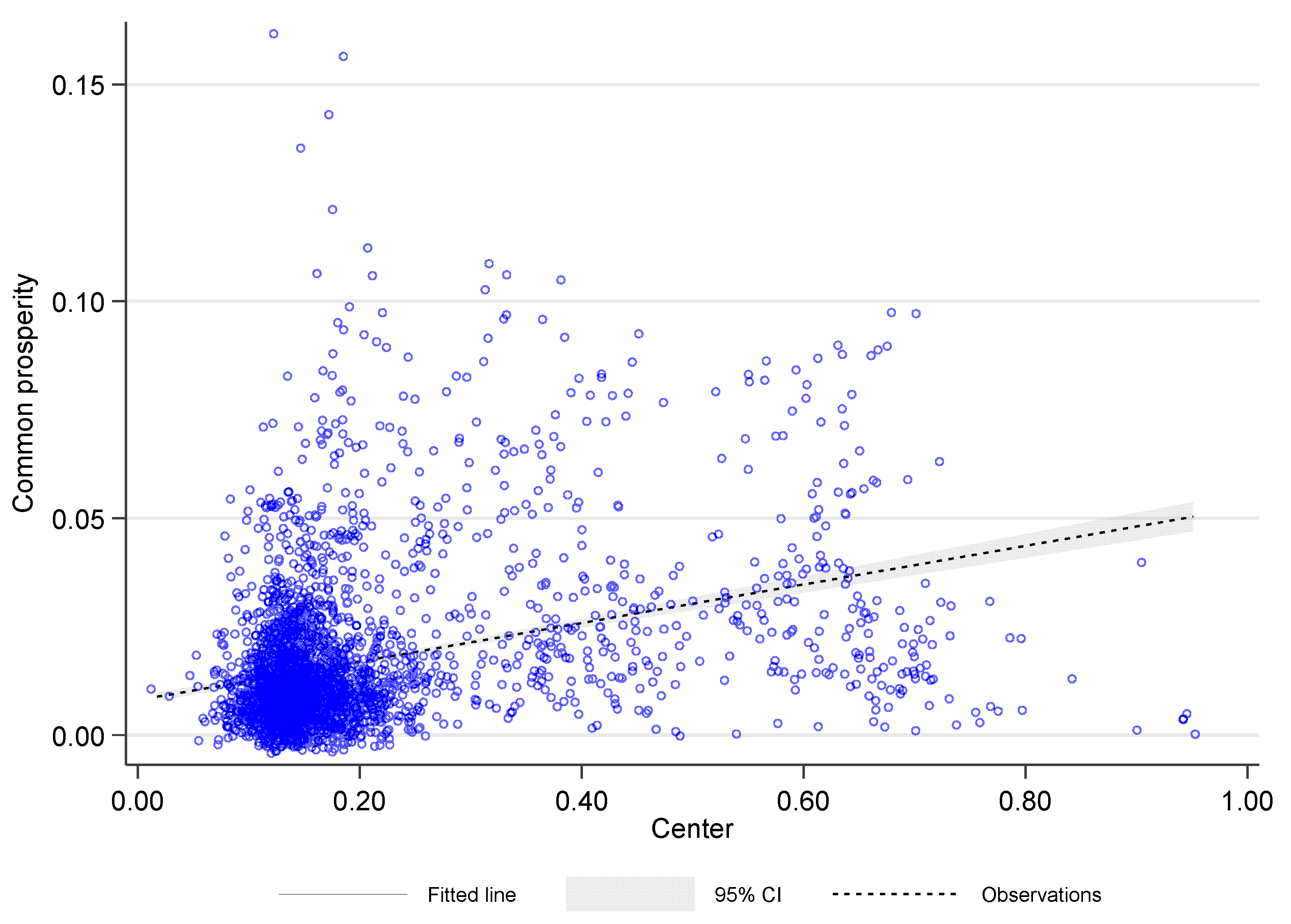
As shown in Figure 7, the scatter plot indicates a positive association between the centrality of the digital financial spatial correlation network and common prosperity, though the exact nature of this relationship warrants further empirical verification.

3.6. Descriptive Statistics

Upon examination of the descriptive statistics, it can be observed that most variables exhibit means greater than their respective standard deviations. While three variables display means lower than their standard deviations, the discrepancies are moderate, indicating that extreme values are not substantial enough to warrant corrective treatment.
As shown in Table 7,the core explanatory variable—urban digital finance spatial correlation network centrality—shows a median of 0.080 and a mean of 0.051, indicating some deviation from symmetry. Its values range from 0.008 to 0.984, pointing to considerable variation across samples. This is corroborated by a standard deviation of 0.098, which signifies more pronounced fluctuations compared to the dependent variable.

4. Regression Results and Analyses

4.1. Whole Sample Regression

4.1.1. Impact of Urban Digital Finance Spatial Correlation Network Centrality on Common Prosperity and Its Sub-Indicators

Columns (1) to (8) in Table 8 report the estimated effects of urban digital finance spatial correlation network centrality on common prosperity and its constituent indicators—specifically, the two secondary indicators (prosperity and sharing) and five tertiary indicators (national wealth, resident wealth, sustainable wealth, development gap, and public services).
The results indicate that the centrality of the urban digital finance spatial correlation network exerts a statistically significant positive effect on the overall common prosperity index, thus providing support for Hypothesis 1.
At the level of secondary indicators, digital finance network centrality significantly enhances the prosperity dimension, whereas its effect on the sharing dimension is not statistically significant. This pattern is consistent with findings reported in the existing literature (Zhang, Zhu, & Zhang, 2024) [10]. Accordingly, Hypothesis 2 is confirmed, while Hypothesis 3 is not supported by the empirical evidence.
Regarding the tertiary indicators, urban digital finance spatial correlation network centrality shows a significantly positive influence on national prosperity and the development gap. However, its effects on resident prosperity, sustainable prosperity, and public service sharing are not statistically significant.

4.1.2. Impact of Sub-Dimensions of Digital Financial Spatial Correlation Network Centrality on Common Prosperity

Table 9 presents the estimated effects of the three sub-dimensions of centrality in the digital financial spatial correlation network—degree centrality, betweenness centrality, and closeness centrality—on common prosperity and its two secondary indicators (prosperity and sharing).
The results show that all three centrality measures exert statistically significant positive effects on the overall common prosperity index. However, differential effects emerge at the level of secondary indicators: both degree centrality and closeness centrality significantly enhance the prosperity dimension, while only closeness centrality demonstrates a significant positive impact on the sharing dimension.
Degree centrality, which reflects the number of digital financial linkage paths connecting a city to other nodal cities, signifies a city’s capacity to orchestrate digital financial flows within the network. Higher degree centrality enhances a city’s ability to attract and concentrate digital financial resources, thereby alleviating local financing constraints and stimulating economic prosperity.
Betweenness centrality measures the extent to which a city lies on the shortest paths between other city pairs in the network. A higher value indicates a greater role as an intermediary, enabling the city to mobilize and redirect digital financial resources across the region. This facilitates more efficient allocation of financial resources at the regional level, thereby contributing to shared prosperity.
Closeness centrality captures the average shortest path distance from a city to all other cities in the network. A higher closeness centrality implies lower costs and higher efficiency in the inter-city flow of digital financial resources. This improves the overall allocation efficiency of digital financial factors and supports the enhancement of both wealth accumulation and distributional outcomes.

4.2. Robustness Test

4.2.1. Replacement of Proxy Variables

To verify the robustness of the findings, we alter the methodology for constructing both the common prosperity index and the digital financial spatial correlation network centrality index from the entropy method to principal component analysis. Both sets of indicators pass the KMO test, confirming the suitability of the data for factor analysis. As reported in Columns (1) and (2) of Table 10, the common prosperity index and the network centrality measure are replaced separately, while Column (3) replaces both variables simultaneously. The results remain consistent with the benchmark regressions, confirming the robustness of the main findings.

4.2.2. Sample Adjustments

We further test robustness through sample modifications. Column (4) of Table 10 excludes municipalities directly under the central government, and Column (5) winsorizes the sample at the 1st and 99th percentiles. In both cases, the benchmark regression results continue to hold, indicating that the findings are not driven by special administrative status or extreme values.

4.2.3. Adjustment of Sample Period

The year 2015 marked a turning point in China’s digital financial landscape, characterized by a wave of bankruptcies among P2P lending platforms and the subsequent introduction of comprehensive regulatory policies by the People’s Bank of China. This period is widely regarded as the beginning of formal digital finance supervision. As shown in Column (6) of Table 10, we restrict the sample to the post-regulatory period (2015–2021) to examine whether the relationship persists under a stricter regulatory environment. The results show that the effect of urban digital financial network centrality on common prosperity remains statistically significant at the 1% level, with a coefficient of 0.040—larger than the benchmark estimate of 0.028. This amplification may be attributed to more standardized cross-city flows of digital financial resources, reduced speculative bubbles, and an overall improvement in the quality of digital finance during the regulatory period, which collectively enhance the role of network centrality in promoting common prosperity.

4.3. Endogeneity Test

To address potential endogeneity concerns arising from reverse causality, we employ a two-stage least squares (2SLS) estimation with multiple instrumental variables (IVs). The use of several IVs serves to cross-validate the results and mitigates the risk associated with relying on a single instrument.
Conceptually, the centrality of the urban digital finance spatial correlation network can be decomposed into three dimensions: digital technology, financial foundation, and network structure. Accordingly, we select 1–2 instrumental variable for each dimension:
Digital Technology Dimension: We use mobile phone penetration as an instrument. As the primary terminal for accessing digital financial services, mobile phones significantly influence the development of regional digital finance and its network centrality, yet they are not directly linked to common prosperity.
Financial Foundation Dimension: We introduce two instruments related to regional financial development. The first is the number of temples per city, reflecting the historical role of “temple finance” in mobilizing social wealth and enforcing loan repayment (Wang, Zhou, & Li, 2017) [15]. Temples lack commercial licenses and thus do not directly affect modern economic outcomes (Huang, Wang, Du et al., 2023) [16]. The second is the number of bank branches in each city in 1934, as recorded in the National Banking Yearbook, interacted with a financial regulation intensity dummy (set to 2 from 2015 onward—the start of stringent digital finance regulation—and 1 otherwise). The historical presence of banks captures long-term financial development path dependence (Li, Jin, & Kong, 2020) [17], while the regulatory dummy introduces time variation. Both variables are closely related to regional financial foundations but not directly to common prosperity.
Network Centrality Dimension: We instrument using the distance from each city to Hangzhou—the headquarters of Ant Group, China’s leading digital finance enterprise—interacted with year fixed effects. As the origin and core of China’s digital finance network, Hangzhou’s position influences the centrality of other cities in the spatial network (Zhang, Yang, Wang et al., 2020) [18]. However, the physical distance to Hangzhou does not directly determine a city’s level of common prosperity.
As shown in Table 11, the results of the endogeneity tests, which are reported in the subsequent tables, confirm that our baseline findings remain robust across all instrumental variable specifications.

4.4. Heterogeneity Analysis

Based on the geographical location of cities, we categorize the sample into four regions—Eastern, Central, Western, and Northeastern—following the classification criteria of the China Statistical Yearbook, in order to examine regional heterogeneity in the effect of digital finance network centrality on common prosperity.
As shown in Columns (1)–(4) of Table 12, the impact is statistically significant at the 5% level only for cities in the Western region, a finding consistent with prior studies (Zhang, Zhu, & Zhang, 2024) [10],. This suggests that the promoting effect of digital finance network centrality on common prosperity is more pronounced in less economically and financially developed regions. One plausible explanation is that improved network centrality more effectively alleviates financing constraints in underserved areas, thereby contributing more substantially to common prosperity in these regions.
Heterogeneity analysis is conducted based on a city’s status as a financial hub, a classification reflecting disparities in the scale and diversity of financial resources across cities. Data on financial centers are obtained from the China Financial Center Index (CDI CFCI), published by the China Development Institute, a high-end think tank. This index is regarded as being well-aligned with China’s specific context. Its evaluation framework integrates theories from industrial development, financial markets, and urbanization into a dynamic system for assessing the competitiveness of financial centers. The initial edition included 24 major cities—primarily direct-controlled municipalities, sub-provincial cities, and provincial capitals with high levels of economic development and administrative significance—which tend to attract concentrated financial resources. Subsequent releases expanded the sample to 31 cities. In this study, cities ranked among the top 10 in the CDI CFCI between 2011 and 2021 are classified as financial hubs. This dynamic selection method accounts for temporal changes and preserves representativeness.
As shown in Columns (1)–(2) of Table 13, the estimated effect of digital finance network centrality is not statistically significant in financial hub cities, whereas it is significant at the 1% level in non-hub cities. A potential explanation lies in the relative lack of binding financing constraints in established financial hubs. In contrast, in non-hub cities, increased centrality in the digital finance network may help mitigate local financing bottlenecks, stimulate economic growth, and improve income distribution, thereby contributing more substantially to common prosperity.
Further analysis examines heterogeneity based on the historical presence of draft banks (*Piaohao*) run by Shanxi merchants during the Qing dynasty. These institutions supported intercity financial operations through multi-branch networks, enabling long-distance trade through bill exchanges. Cities that housed such draft banks may have developed early forms of financial spatial correlation networks, which could be associated with contemporary digital finance centrality. Results in Columns (3)–(4) of Table 13 indicate that the effect of digital finance network centrality is statistically significant only in cities without a history of Qing-era draft banks. This suggests that cities lacking an early financial network foundation depend more critically on modern digital financial linkages. Strengthening their position within the digital finance spatial network can enhance financial resource mobility and improve cross-regional resource allocation, thereby advancing common prosperity.
Cities are also categorized according to the presence of bank branches in 1934—a period when China’s financial system remained under considerable state control yet experienced notable branch expansion. A greater number of bank branches typically reflected more active intercity financial interactions and a more developed financial network. Estimates reported in Columns (5)–(6) of Table 13 show that although digital finance network centrality exerts a significant effect in both types of cities, the regression coefficient is larger in cities that lacked bank branches in 1934. This indicates that the benefits of digital financial connectivity are more pronounced in cities with historically weaker financial foundations. By facilitating intercity capital flows, digital finance can help offset historical financial disadvantages and promote more efficient resource allocation, thus supporting the attainment of common prosperity.
Regional heterogeneity is operationalized through a categorization predicated upon the extent of urban business attractiveness, which functions as an indicator of the level of marketization. This variable is theorized to exert a positive moderating influence on the efficacy of digital finance in fostering common prosperity (Zhou & Ding, 2023) [1]. The categorization is derived from the “New First-Tier Cities Charm Ranking,” an authoritative annual publication issued by CBNWeekly between 2013 and 2024. This taxonomy, resultant from a methodology incorporating five primary dimensions, stratifies cities into tiers from first to fifth based on commercial appeal.
Empirical estimates, as delineated in Columns (1) through (5) of Table 14, indicate that the principal effect attains its highest magnitude within fifth-tier municipalities. The interpretation offered is that these jurisdictions are characterized by a comparatively attenuated degree of marketization, rendering their financial resource allocation systems more vulnerable to non-market administrative interventions. Such interventions condition the ingress of state-affiliated enterprises and personnel, subsequently generating inefficiencies and misallocations in the deployment of capital.
Digital finance, constituted as a commercial entity governed by market principles, presents a countervailing force. The enhanced centrality of its spatial correlation network within these contexts elevates the market-orientation of local financial resource allocation. The ultimate consequence is a movement towards more efficient utilization of finance, thereby facilitating progress toward common prosperity.
Heterogeneity in the effects is examined across different administrative tiers of Chinese cities. Within China’s governmental system, a city’s political hierarchy significantly shapes its access to national resources and its autonomy in policy-making, particularly concerning financial resource allocation. Cities are formally classified into several administrative ranks, including municipalities directly under the central government, sub-provincial cities, cities with independent planning status, provincial capitals, and standard prefecture-level cities.
Empirical results, presented in Columns (1)–(2) of Table 15, indicate a statistically significant impact in prefecture-level and provincial capital cities, whereas the effect is not significant in municipalities directly under the central government, sub-provincial cities, and cities with independent planning status. This differential effect may be attributable to the distinct institutional positions of these city tiers. Prefecture-level and provincial capital cities, occupying lower administrative ranks, typically receive a lesser share of centralized national resources. This can result in a relative scarcity of formal financial support and impose more binding constraints on entrepreneurial financing.
In this context, an elevated centrality within the digital finance spatial correlation network can serve to alleviate these localized financing challenges. By mitigating credit constraints through enhanced market connectivity, improved network centrality facilitates entrepreneurial activity and fosters inclusive economic growth, thereby contributing to the broader objective of common prosperity.
The analysis incorporates city size as a dimension of heterogeneity, acknowledging that urban scale economies influence both the breadth of financial markets and the geographic concentration of financial institutions. The official classification framework is defined by the State Council’s 2014 “Circular on Adjusting the Standards for City-Size Categories”, which classifies cities into five broad categories comprising seven tiers based on municipal resident population statistics.
According to this standard:
(1)
Small cities are defined as those with a permanent residential population below 500,000, subdivided into Type I (200,000–500,000) and Type II (<200,000).
(2)
Medium cities host populations between 500,000 and 1 million.
(3)
Large cities range from 1 million to 5 million residents, with Type I encompassing 3–5 million and Type II covering 1–3 million residents.
(4)
Megacities have urban populations between 5 million and 10 million.
(5)
Supercities exceed 10 million permanent residents in the urban core.
Results from Column (1) of Table 16 reveal a statistically significant treatment effect in small and medium-sized cities, while coefficients for larger city categories remain statistically indistinguishable from zero. This pattern may reflect structural differences in financial ecosystems: smaller cities typically exhibit lower demand for sophisticated financial services, which constrains the development of local financial markets. This, in turn, exacerbates entrepreneurial financing constraints. Against this backdrop, strengthening a city’s centrality within the digital financial spatial network can mitigate local credit shortages. By broadening financial service variety and stimulating sectoral development, enhanced digital finance centrality helps alleviate financing barriers for entrepreneurs, thereby contributing more effectively to common prosperity in these contexts.

4.5. Analysis of Mechanisms

Entrepreneurship is posited as a key mechanism through which digital finance influences common prosperity. This proposition is theoretically anchored in the established link between entrepreneurship and shared economic outcomes (Zhang, Zhu, & Zhang, 2024) [10]. Theoretically, entrepreneurship advances common prosperity via dual pathways: at the micro level, it augments business owners’ profits and employees’ wages; at the macro level, it optimizes income distribution structures and expands aggregate employment.
Empirical support for this pathway is provided by official Chinese data. At a State Council press briefing on 18 May 2022, Vice Minister of MIIT Xu Xiaolan disclosed that households engaged in small and medium-sized enterprises (SMEs) saw a 26.7% income increase and demonstrated a significantly higher propensity to attain middle-income and high-income status, with probabilities rising by 27% and 78.8%, respectively. Furthermore, at the city level, an incremental increase of 1000 SMEs was associated with a 0.68% growth in the employment rate and a 0.78% increase in wage levels. These figures corroborate that entrepreneurship functions as a critical conduit for elevating household income and driving broader employment and wage growth.
Regression results affirm this transmission channel. As shown in Columns (1)–(2) of Table 17, the centrality of a city within the digital finance network exerts a significant positive effect on entrepreneurship indicators—specifically, the number of entrepreneurs and individual businesses per 100 people. This indicates that digital finance network centrality significantly promotes entrepreneurial activity, particularly in small and micro-enterprises.
To identify which sectors benefit most, a granular analysis was performed using business registration data across 20 industries. The results identify the wholesale and retail trade as the sole sector exhibiting statistical significance at the 5% level. The pronounced sensitivity of this sector is logically attributable to its inherent characteristics: firms are typically small-scale and asset-light, lacking conventional collateral (e.g., real estate, heavy machinery), which traditionally impedes their access to bank credit. Conversely, their high-frequency transactional operations generate extensive digital footprints, enabling digital finance platforms to effectively assess creditworthiness via big-data modeling. Consequently, cities with higher digital finance network centrality are better positioned to channel financial resources to this sector, effectively alleviating its credit constraints and thereby activating the entrepreneurship-mediated pathway to common prosperity.

5. Conclusions and Discussion

5.1. Conclusions

Based on a series of empirical tests, the following conclusions can be drawn regarding the impact of urban digital finance network centrality on common prosperity.
First, benchmark regressions confirm that the overall centrality of the urban digital finance spatial network, along with its three constituent measures—degree centrality, betweenness centrality, and closeness centrality—exerts a significant positive effect on common prosperity. Specifically, network centrality primarily enhances the wealth dimension of common prosperity and reduces development disparities between regions, suggesting that its growth effect currently outweighs its inclusion effect.
Second, robustness checks validate the reliability of this core finding. The estimated effect remains statistically solid after addressing endogeneity through instrumental variables, including those capturing digital infrastructure (mobile phone penetration), historical financial development (number of temples, number of bank branches in 1934 interacted with regulatory intensity), and geographic spillovers (distance to Hangzhou interacted with year dummies). Furthermore, the result persists after replacing the measure of common prosperity, reconstructing the centrality index via principal component analysis, excluding municipalities and top/bottom 1% outliers, and restricting the sample to the period of stricter digital finance regulation (2015–2021).
Third, heterogeneity analyses reveal that the effect is more pronounced in cities that are less developed or have weaker financial foundations. These include cities located in Western China, those not classified as financial centers, those lacking historical financial institutions such as Qing-dynasty draft banks or pre-1949 bank branches, those ranked as fifth-tier, prefecture-level cities and provincial capitals, and small and medium-sized cities. This pattern underscores that digital finance network centrality acts as a catalyst for urban catch-up strategies, helping such cities accumulate digital financial resources and narrow development gaps.
Finally, the primary mechanism identified is the promotion of entrepreneurship, especially among self-employed individuals and small businesses in the wholesale and retail trade sector. These entities typically operate in a decentralized market structure, possess limited tangible collateral, yet generate rich transactional data—traits that make them particularly reliant on and responsive to digital financial services. Since entrepreneurs and workers in these segments often belong to lower-income groups, enhancing digital finance network centrality effectively supports grassroots entrepreneurship, raises household income, and facilitates upward mobility, thereby reinforcing the inclusive nature of common prosperity.

5.2. Discussion

This study contributes to several strands of literature on digital finance and regional development. The observed growth effects of digital financial network centrality lend support to the resource aggregation hypothesis, whereas the relatively weaker inclusive effects temper their earlier optimism regarding automatic trickle-down benefits. This partial confirmation indicates that while such networks effectively generate wealth—consistent with Borgatti et al.’s (2009) [19], network theory—their distributional consequences cannot be taken for granted and necessitate targeted policy interventions, a nuance largely overlooked in the extant literature.
The documented city catch-up effects offer strong empirical grounding for the technological leapfrogging framework articulated by Lee and Malerba (2017) [20], albeit with an important qualification. Contrary to assumptions in certain digital finance studies, which emphasize technological access alone, our findings underscore that strategic network positioning is equally, if not more, consequential—thereby challenging tendencies toward technological determinism. This insight resonates with emerging concepts like “network-enabled leapfrogging”, while further specifying which city types—particularly those lacking historical financial infrastructure—derive the greatest advantage.
Furthermore, the identification of entrepreneurship as a key mechanism both affirms and complicates prevailing explanations. Although the results align with Goldstein et al.’s (2019) [21], transaction-cost rationale, they further reveal that such benefits are distributed unevenly across sectors, concentrating notably in wholesale and retail trades rather than manufacturing. Such sectoral specificity—previously underexplored—implies that the pro-poor effects of digital finance (Bazarbash, 2020) [22], are contingent upon underlying industrial structure.
Policy Implications:
(1)
Network Architecture: The results endorse the World Bank’s (2021) emphasis on “deliberate network design,” yet caution that purely hierarchical (hub-and-spoke) models risk amplifying inclusion gaps. Polycentric network structures with tiered connectivity may better reconcile growth with equity objectives.
(2)
Targeted Support: The sector-concentrated nature of the benefits suggests that financial inclusion initiatives should give priority to trade-oriented micro and small enterprises (MSEs), accompanied by tailored financial products designed for sector-specific needs.
(3)
Compensatory Investment: Cities historically marginalized in formal financial systems—evidenced by the absence of Qing-era draft banks or Republican-era bank branches merit prioritized investment in digital financial infrastructure to counteract inherited disadvantage.
Social and Environmental Considerations:
(1)
The pronounced role of MSEs suggests digital finance can facilitate the formalization of informal economic activities—an important milestone toward achieving Sustainable Development Goals—though it may simultaneously unsettle incumbent supply chain arrangements.
(2)
Paperless transactions prevalent in wholesale and retail sectors could contribute to lowering carbon emissions, albeit against the background of rising energy consumption from digital infrastructure.
(3)
Rapid MSE growth in catch-up cities may intensify pressure on public services, necessitating complementary investment in housing, transport, and urban management.
Collectively, these implications suggest that while our findings broadly affirm current policy orientations, they also bring to light unresolved challenges in network governance and sector-sensitive targeting. Further research should evaluate whether the proposed network configurations indeed bolster inclusiveness without undermining growth, possibly through experimental pilots adopting varying topological designs.
Due to space limitations and in keeping with this paper’s focus on the aggregate effect of network centrality on common prosperity, visualizations of centrality sub-indicators are not included here. Future work will extend this line of inquiry by examining each sub-indicator individually as a core explanatory variable.

Author Contributions

Conceptualization: Y.L.; Methodology: Y.L.; Software: Y.L.; Validation: Y.L.; Formal Analysis: S.W.; Investigation: S.W.; Resources: J.G.; Data Curation: Y.L.; Writing—Original Draft: Y.L.; Writing—Review and Editing: S.W.; Visualization: S.W.; Supervision: J.G.; Funding Acquisition: J.G. All authors have read and agreed to the published version of the manuscript.

Funding

This research was funded by the National Social Science Fund Project “Research on Negative Interest Rate Theory” (17BJL034), the Key Soft Science Research Project of Shanxi Province “Research on the Construction of a System for Preventing and Resolving Major Financial Risks in Shanxi Province—Model Analysis of Preventing Financial Risks Based on Big Data Technology” (2018042005-1), the Postgraduate Education Innovation Project of Shanxi Province “Research on Singleness, Digital Finance and High-quality Economic Development under the Background of Domestic Circulation” (2021Y501), the Postgraduate Research and Practice Innovation Program Project of Jiangsu Province “Research on the Sustainability of the Basic Old-age Insurance System for Urban and Rural Residents under the Change of Population Structure” (KYCX24_0049), and the Postgraduate Innovation Project of Shanxi University of Finance and Economics “Research on Singleness, Digital Finance and High-quality Economic Development under the Background of Domestic Circulation” (21cxxj001).

Data Availability Statement

The data used in this study were obtained through institutional subscriptions held by Shanxi University of Finance and Economics (https://www.sxufe.edu.cn/ (accessed on 9 September 2025) to:EPS Database (https://www.epsnet.com.cn/ (accessed on 9 September 2025); CNKI Database (https://www.cnki.net/ (accessed on 9 September 2025); These databases are part of SXUFE’s licensed academic resources available to all university researchers.

Conflicts of Interest

The authors declare that the research was conducted in the absence of any commercial or financial relationships that could be construed as a potential conflict of interest.

References

  1. Zhou, G.; Ding, X. Digital finance, liquidity constraints and common prosperity: From the perspective of intergenerational mobility. J. Quant. Tech. Econ. 2023, 40, 160–179. [Google Scholar] [CrossRef]
  2. Hu, W.; Du, R.; Lin, Y.-E.; Liang, B. Leading to common prosperity: Does digital transformation help promote corporate philanthropy? Emerg. Mark. Financ. Trade 2024, 60, 2447–2461. [Google Scholar] [CrossRef]
  3. Zhang, F.; Zhou, L.; Huang, J. “First Kilometer” to realise common prosperity: Impact of public bus expansion into villages on farmers’ income mobility. Appl. Econ. 2024, 56, 4761–4775. [Google Scholar] [CrossRef]
  4. Sha, Z.; Ren, D.; Li, C.; Wang, Z. Agricultural subsidies on common prosperity: Evidence from the Chinese Social Survey. Int. Rev. Econ. Financ. 2024, 91, 1–18. [Google Scholar] [CrossRef]
  5. Wei, H.K.; Cui, K.; Wang, Y. Goal evolution and promotion strategies of rural revitalization in the view of common prosperity. China Econ. 2022, 17, 63–76. [Google Scholar] [CrossRef]
  6. Zhang, Q.; Ye, Z. Coordinating regional development as a solid foundation for common prosperity. China Econ. 2022, 17, 37–49. [Google Scholar] [CrossRef]
  7. Gao, J.; Zhou, W.; Cheng, J.; Liu, Z. Digital economy development, common prosperity, and carbon emissions: An empirical study in China. Economies 2024, 12, 120. [Google Scholar] [CrossRef]
  8. Yin, Z.; Wen, X.; Li, C. Inclusive finance, income gaps and common prosperity. China Econ. 2023, 18, 34–53. [Google Scholar] [CrossRef]
  9. Zou, J.; Yao, L.; Wang, B.; Zhang, Y.; Deng, X. How does digital inclusive finance promote the journey of common prosperity in China? Cities 2024, 150, 105083. [Google Scholar] [CrossRef]
  10. Zhang, C.; Zhu, Y.; Zhang, L. Effect of digital inclusive finance on common prosperity and the underlying mechanisms. Int. Rev. Financ. Anal. 2024, 91, 102940. [Google Scholar] [CrossRef]
  11. Zeng, F.; Sun, H. Spatial network analysis of coupling coordination between digital financial inclusion and common prosperity in the Yangtze River Delta Urban Agglomeration. Mathematics 2024, 12, 1285. [Google Scholar] [CrossRef]
  12. Stiglitz, J.E.; Weiss, A. Credit rationing in markets with imperfect information. Am. Econ. Rev. 1981, 71, 393–410. [Google Scholar] [CrossRef]
  13. Myrdal, G. Economic Theory and Underdeveloped Regions; Gerald Duckworth: London, UK, 1957. [Google Scholar]
  14. Lewis, W.A. Economic development with unlimited supplies of labour. Manch. Sch. 1954, 22, 139–191. [Google Scholar] [CrossRef]
  15. Wang, R.; Zhou, J.; Li, L. Financial Channels Through Which Social Capital Affects Social Welfare: The Perspective of Temple Finance. Econ. Sci. 2017, 38, 31–47, (In Chinese with English Abstract). [Google Scholar]
  16. Huang, X.; Wang, S.; Du, L.; Ye, Z. Financial development in cities and FDI: From the perspective of old temple finance. Econ. Sci. 2023, 45, 89–105, (In Chinese with English Abstract). [Google Scholar]
  17. Li, Z.; Jin, L.; Kong, D. Branch Geographical Distribution, Bank Competition and Firm Leverage. Econ. Res. J. 2020, 55, 141–158, (In Chinese with English Abstract). [Google Scholar]
  18. Zhang, X.; Yang, T.; Wang, C.; Wan, G. Digital finance and household consumption: Theory and evidence from China. Manag. World 2020, 36, 48–63. [Google Scholar] [CrossRef]
  19. Borgatti, S.P.; Mehra, A.; Brass, D.J.; Labianca, G. Network analysis in the social sciences. Science 2009, 323, 892–895. [Google Scholar] [CrossRef] [PubMed]
  20. Lee, K.; Malerba, F. Catch-up cycles and changes in industrial leadership. Res. Policy 2017, 46, 338–351. [Google Scholar] [CrossRef]
  21. Goldstein, I.; Jiang, W.; Karolyi, G.A. To FinTech and beyond. Rev. Financ. Stud. 2019, 32, 1647–1661. [Google Scholar] [CrossRef]
  22. Bazarbash, M. Filling the gap: Digital credit and financial inclusion. IMF Work. Pap. 2020, WP/20/150, 1–30. [Google Scholar] [CrossRef]
Figure 1. Complete map of spatial correlation network of digital finance between cities in 2021. Note: The larger the node, the stronger its centrality.
Mathematics 13 03605 g001
Figure 2. Simplified spatial network of digital finance connections between cities in 2021 (cities with degree over 100). Note: The larger the node and the darker the color, the stronger the centrality.
Mathematics 13 03605 g002
Figure 3. Three-dimensional kernel density map of common prosperity, 2011–2021.
Mathematics 13 03605 g003
Figure 4. Density contours of common prosperity, 2011–2021.
Mathematics 13 03605 g004
Figure 5. Three-dimensional kernel density map of the centrality of urban digital financial spatial correlation networks, 2011–2021.
Mathematics 13 03605 g005
Figure 6. Density contour map of the centrality of urban digital financial spatial correlation network, 2011–2021.
Mathematics 13 03605 g006
Figure 7. Scatterplot of centrality of urban digital financial spatial correlation networks versus common prosperity, 2011–2021.
Mathematics 13 03605 g007
Table 1. Nomenclature of main variables.
Variable TypeVariable NameAcronymsMeaningCountData Sources
explained variablecommon prosperityCPWidespread prosperity and low income disparityEntropy method of multi-indicator synthesiswork out
Core explanatory variablesUrban digital financial spatial correlation network centralitycenterThe location and energy of cities in the network of financial spatial linkagesSynthesis of proximity centrality, intermediary centrality and degree centrality metricswork out
control variablegovernment interventiongovGovernment influence on the economyFiscal expenditure/GDPUrban Statistical Yearbook
control variableindustrial structureindustryRatio of the three industriesValue added of tertiary industry/value added of secondary industryUrban Statistical Yearbook
control variableforeign investmentFDIInvestment in China by Foreign EnterprisesNon-financial FDI/GDPUrban Statistical Yearbook
control variableExternal trade dependencetradeDependence of the economy on import and export tradeSum of imports and exports/GDPEPS database
intermediary variablebegin an undertakingenterpriseNumber of business registrationsNumber of enterprises per 100 inhabitantsBusiness registration data
intermediary variableIndividual entrepreneurshipindividual-runNumber of self-employed persons registeredNumber of self-employed persons per 100 populationBusiness registration data
Table 2. Common Prosperity Indicator System.
Secondary IndicatorsTertiary IndicatorsQuadruple IndicatorsCalculation Method
ProsperitySustainable ProsperityPatents per capitaNumber of patent applications/resident population
Internet access number of households per capitaInternet access number of households /resident population
National ProsperityGDP per capitaGDP/resident population
urbanization rateUrban resident population/resident population
Resident ProsperityPer capita income of urban residentsGross urban income/urban resident population
Per capita income of rural residentsGross rural income/rural resident population
SharePublic ServiceBuses per capitaNumber of buses/resident population
Library book collection per capitaLibrary book collection/resident population
Number of doctors per capitaNumber of medical practitioners/resident population
Per capita financial expenditure on educationFinancial expenditure on education/resident population
Sharing Of DevelopmentInternal disparities in regional developmentGini coefficient for inner-city nighttime lighting data
Theil Index of Urban and Rural IncomeCalculation of the Theil Index of per capita income of urban and rural residents
Regional disparitiesAbsolute value of the difference between urban GDP per capita and national GDP per capita
Table 3. Central comparison.
Metric NameDefinition & IllustrationBasis of CalculationGraph-Theoretic MeaningEconomic/Policy Implication in Our Context
Degree CentralityMeasures the number of direct connections a node has with other nodes (in a directed network, this can be broken down into out-degree and in-degree).Local StructureThe direct influence or popularity of a node. Nodes with high degree centrality serve as the “hubs” of the network.Digital finance radiation capacity or absorption capacity. High in-degree centrality indicates that the city serves as a key node for the digital finance development of numerous other cities, possessing strong attractiveness or a “siphon effect” as a core hub within the network. High out-degree centrality signifies robust outward radiation capacity.
Betweenness CentralityMeasures the frequency with which a node lies on the shortest path between other nodes, i.e., its ability to serve as a “bridge.”Global PositionA node’s ability to control the flow of network resources. Nodes with high intermediary centrality serve as critical “brokers” or “bottlenecks.”Control over the circulation of digital financial resources. Cities with high intermediary centrality serve as critical bridges or conduits within digital financial networks, exerting strong control and mediation over the cross-regional flow of information, capital, and technology.
Closeness
Centrality
The reciprocal of the average distance from a node to all other nodes in the network. The shorter the distance, the higher the centrality.Overall ReachabilityNodes not controlled by others independently impact the speed and efficiency of the entire network. Nodes with high centrality serve as the network’s “broadcast centers.”The Independence and Efficiency of Digital Finance Influence. Cities with high proximity to central nodes can establish connections or exert influence more rapidly and directly with other cities within the network. They are less susceptible to control or interference from intermediate cities, thereby possessing greater autonomy and efficiency.
Table 4. Digital financial spatial correlation gravity between cities.
Near CityABCDEMean Value
A 0.0033851691.5473397832.07267 × 10−60.0463197250.399261687
B0.003304447 0.4351827420.0143301820.0209007280.118429525
C1.3298973160.383164795 0.276447844.0999769491.522371725
D2.01044 × 10−60.0142394830.311990796 0.0030606680.082323239
E0.0434984260.0201071494.4797787040.002963213 1.136586873
Table 5. Binary matrix of spatial correlation gravity in digital finance between cities.
Near CityABCDE
A00100
B00100
C00001
D00100
E00100
Table 6. Overall Network Indicators of Spatial Connectivity in Digital Finance Among Cities, 2011–2021.
YearAverage DegreeNetwork DensityThe Average Clustering Coefficient
201140.9020.1260.259
201241.8740.1290.266
201341.3440.1270.298
201442.1200.1300.265
201542.4170.1310.270
201642.9230.1320.273
201742.5860.1310.273
201843.9260.1350.273
201941.2820.1270.321
202043.8500.1350.269
202144.6930.1380.270
Data source: GEPHI software calculation.
Table 7. Descriptive statistics of the main variables.
VariableNMeanp50SDMinMax
common
prosperity
30800.0800.0670.0500.0100.491
centrality30800.0880.0510.0980.0080.984
government intervention30800.2020.1760.1020.0440.915
industrial structure30801.0420.9150.5510.1755.298
foreign trade30800.1930.0770.3230.0003.078
foreign investment30800.0160.0110.0170.0000.199
startups30751.2111.0380.8830.18023.500
self-employed-enterprise 25180.7400.6600.4300.0777.968
Table 8. Benchmark regression results.
(1)(2)(3)(4)(5)(6)(7)(8)
Common
Prosperity
ProsperityShareNations
Prosperity
Resident
Prosperity
Sustainable ProsperityDevelopment GapPublic Service
centrality0.028 ***0.015 **0.0130.007 **0.0010.0060.007 ***0.006
(0.009)(0.006)(0.008)(0.003)(0.002)(0.004)(0.003)(0.007)
_cons0.071 ***0.033 ***0.038 ***0.012 ***0.012 ***0.009 ***0.031 ***0.007 ***
(0.002)(0.001)(0.002)(0.001)(0.001)(0.001)(0.001)(0.002)
ControlYesYesYesYesYesYesYesYes
Individual FEYesYesYesYesYesYesYesYes
Time FEYesYesYesYesYesYesYesYes
Observations30803080308030803080308030803080
R-squared0.6410.6670.2970.3090.9150.1830.4840.112
Standard errors are in parentheses. *** p < 0.01, ** p < 0.05, * p < 0.1.
Table 9. Sub-indicator regression results.
(1)(2)(3)(4)(5)(6)(7)(8)(9)
Common
Prosperity
ProsperityShareCommon
Prosperity
ProsperityShareCommon
Prosperity
ProsperityShare
Degree Center Degree0.025 ***0.017 ***0.008 *
(0.006)(0.003)(0.004)
Intermediary Center Degree 0.132 **0.0550.078
(0.054)(0.042)(0.056)
proximity to the center 0.077 ***0.043 ***0.034 **
(0.022)(0.013)(0.014)
_cons0.067 ***0.030 ***0.037 ***0.073 ***0.034 ***0.039 ***0.030 **0.0100.020 **
(0.003)(0.002)(0.002)(0.002)(0.001)(0.002)(0.013)(0.008)(0.009)
ControlYesYesYesYesYesYesYesYesYes
Individual FEYesYesYesYesYesYesYesYesYes
Time FEYesYesYesYesYesYesYesYesYes
Observations308030803080308030803080308030803080
R-squared0.6440.6700.2970.6390.6660.2950.6460.6690.302
Standard errors are in parentheses. *** p < 0.01, ** p < 0.05, * p < 0.1.
Table 10. Robustness analysis results.
(1)(2)(3)(4)(5)(6)
Principal Common
Prosperity
Common
Prosperity
Principal Common
Prosperity
Remove Municipalities Directly Under the Central Government,Trim 1% and 99%2015–2021
centrality1.061 *** 0.028 ***0.026 **0.040 ***
(0.340) (0.011)(0.011)(0.014)
principal centrality 0.004 ***0.170 ***
(0.001)0(.026)
_cons−0.383 ***0.072 ***−0.290 ***0.070 ***0.070 ***0.076 ***
(0.042)(0.002)(0.046)(0.002)(0.002)(0.003)
ControlYesYesYesYesYes
Individual FEYesYesYesYesYes
Time FEYesYesYesYesYes
Observations303630363036303630201960
R-squared0.5020.6410.5150.6380.6480.529
Standard errors are in parentheses. *** p < 0.01, ** p < 0.05, * p < 0.1.
Table 11. Results of endogeneity analysis.
(1)(2)(3)(4)
Mobile Phone Penetration RateNumber of TemplesNumber of Urban Banks in 1934 * Degree of Finance RegulationDistance from the City to Hangzhou * Year Dummy
centrality0.441 ***0.538 ***0.857 ***0.725 ***
ControlYesYesYesYes
FEYesYesYesYes
Anderson canon. corr. LM statistic10.24021.61312.44730.884
Chi-sq(1) p-value0.0010.0000.0000.000
Cragg–Donald Wald F statistic10.22321.66512.43631.062
15% maximal IV size8.9608.9608.9608.960
Observations3080308030803069
Standard errors are in parentheses. *** p < 0.01, ** p < 0.05, * p < 0.1.
Table 12. Results of the analysis of the heterogeneity of the geographical location of cities.
(1)(2)(3)(4)
Central PartEastern PartWestern PartNorth-Eastern
centrality0.0200.0160.043 ***0.013 *
(0.016)(0.012)(0.015)(0.007)
_cons0.061 ***0.097 ***0.036 ***0.060 ***
(0.003)(0.005)(0.004)(0.002)
ControlYesYesYesYes
Individual FEYesYesYesYes
Time FEYesYesYesYes
Observations9791078649374
R-squared0.7880.7140.4750.791
Standard errors are in parentheses. *** p < 0.01, ** p < 0.05, * p < 0.1.
Table 13. Results of heterogeneity analysis of urban financial centers, ancient financial development, and modern financial development.
(1)(2)(3)(4)(5)(6)
Financial Center
City
Non-Financial Center CitiesCities with
Draft Bank
in Qing Dynasty
Cities Without Draft Bank in Qing DynastyCities with Bank Institutions in 1934Cities Without Bank Institutions in 1934
centrality0.0310.031 ***0.018 *0.031 ***0.022 **0.031 ***
(0.020)(0.010)(0.010)(0.01)(0.01)(0.011)
_cons0.0600.067 ***0.087 ***0.065 ***0.08 ***0.062 ***
(0.046)(0.002)(0.003)(0.002)(0.003)(0.002)
ControlYesYesYesYesYesYes
Individual FEYesYesYesYesYesYes
Time FEYesYesYesYesYesYes
Observations1102970968211216171463
R-squared0.5910.6640.8110.5850.7200.557
Standard errors are in parentheses. *** p < 0.01, ** p < 0.05, * p < 0.1.
Table 14. Results of the heterogeneity analysis of urban commercial attractiveness.
(1)(2)(3)(4)(5)(6)
First-Line CityNew First-Line CitySecond-Tier CityThird-Tier CityFourth-Tier CityFifth-Tier City
centrality0.1390.0090.0210.0160.0210.046 ***
(0.079)(0.010)(0.014)(0.014)(0.028)(0.014)
_cons0.0640.097 ***0.132 ***0.080 ***0.056 ***0.037 ***
(0.1)(0.026)(0.010)(0.003)(0.004)(0.002)
ControlYesYesYesYesYesYes
Individual FEYesYesYesYesYesYes
Time FEYesYesYesYesYesYes
Observations36133284586642839
R-squared0.5480.6400.7990.7650.7230.418
Standard errors are in parentheses. *** p < 0.01, ** p < 0.05, * p < 0.1.
Table 15. Results of the analysis of the heterogeneity of the city’s administrative hierarchy.
(1)(2)(3)(4)(5)
Prefecture Level CityProvincial CapitalCities with Separate PlansSub-Provincial CitiesMunicipalities Directly Under the Central Government
centrality0.028 **0.055 ***0.051 *0.0050.010
(0.012)(0.016)(0.023)(0.012)(0.013)
_cons0.065 ***0.071 ***0.1020.138 ***0.098
(0.002)(0.009)(0.08)(0.028)(0.054)
ControlYesYesYesYesYes
Individual FEYesYesYesYesYes
Time FEYesYesYesYesYes
Observations27061655511044
R-squared0.6540.8580.5670.7960.932
Standard errors are in parentheses. *** p < 0.01, ** p < 0.05, * p < 0.1.
Table 16. Results of the analysis of heterogeneity in city size.
(1)(2)(3)(4)(5)
Small and Medium-Sized CitiesType II Large CitiesType I Big CityMegacitiesSupercities
centrality0.036 ***0.0150.0310.0100.078 *
(0.013)(0.016)(0.023)(0.012)(0.037)
(0.002)(0.003)(0.008)(0.020)(0.044)
ControlYesYesYesYesYes
Individual FEYesYesYesYesYes
Time FEYesYesYesYesYes
Observations198071515415477
R-squared0.6190.8210.8480.7390.534
Standard errors are in parentheses. *** p < 0.01, ** p < 0.05, * p < 0.1.
Table 17. Results of the analysis of the mechanism.
(1)(2)(3)
Number of Registered Enterprises per 100 PopulationNumber of Registered Individual Household Enterprises per 100 PopulationNumber of Registered Enterprises in the Wholesale and Retail Sector per 100 Persons
center0.853 **0.350 **76.323 **
(0.411)(0.172)(30.257)
_cons0.954 ***0.613 ***56.047 ***
(0.081)(0.057)(4.528)
ControlYesYesYes
Individual FEYesYesYes
Time FEYesYesYes
Observations307525183080
R-squared0.3200.5160.138
Standard errors are in parentheses. *** p < 0.01, ** p < 0.05, * p < 0.1.
Disclaimer/Publisher’s Note: The statements, opinions and data contained in all publications are solely those of the individual author(s) and contributor(s) and not of MDPI and/or the editor(s). MDPI and/or the editor(s) disclaim responsibility for any injury to people or property resulting from any ideas, methods, instructions or products referred to in the content.