Abstract
Nonlocal models offer a unified framework for describing long-range spatial interactions and temporal memory effects. The review briefly outlines several representative physical problems, including anomalous diffusion, material fracture, viscoelastic wave propagation, and electromagnetic scattering, to illustrate the broad applicability of nonlocal systems. However, the intrinsic global coupling and historical dependence of these models introduce significant computational challenges, particularly in high-dimensional settings. From the perspective of algorithmic strategies, the review systematically summarizes high-dimensional numerical methods applicable to nonlocal equations, emphasizing core approaches for overcoming the curse of dimensionality, such as structured solution frameworks based on FFT, spectral methods, probabilistic sampling, physics-informed neural networks, and asymptotically compatible schemes. By integrating recent advances and common computational principles, the review establishes a dual “problem review + method review” structure that provides a systematic perspective and valuable reference for the modeling and high-dimensional numerical simulation of nonlocal systems.
MSC:
31B10; 35K57; 35R11; 60J60; 65R20; 74A70
1. Introduction
Multiscale interactions and temporal memory effects are pervasive in natural and engineered systems. Nonlocal models provide a theoretical framework for characterizing long-range effects and historical dependence through mathematical mechanisms, including integral operators and fractional derivatives. Compared to classical partial differential equations (PDEs), they exhibit superior physical consistency and can more naturally describe complex phenomena such as crack initiation, hysteresis, and structural heterogeneity. (see Figure 1 for a conceptual overview).
Figure 1.
Conceptual framework of spatiotemporal nonlocality: from physical problems to modeling approaches.
Nonlocal models demonstrate significant advantages in several typical problems. In porous media flow and groundwater transport, the spatiotemporal fractional diffusion equations more accurately characterize particle retention, jumps, and long-range migration, providing a more precise physical interpretation than classical diffusion models [1,2,3,4,5,6,7,8,9,10,11]. In problems involving seismic wave propagation, shear waves in biological tissues, and multiscale structural vibrations, nonlocal constitutive relations capture the creep and relaxation of viscoelastic materials, significantly improving the prediction of dynamic behaviors in complex geological media and composite materials [12,13,14,15,16,17,18,19,20,21,22]. In structural failure analysis, nonlocal gradient damage models [23,24,25,26,27,28] effectively describe the cooperative evolution of micro-defects and size effects, while peridynamics (PD) overcomes the limitations of classical continuum mechanics by naturally simulating the dynamic processes of crack initiation, growth, and branching [29,30,31,32,33,34]. Meanwhile, Limkatanyu et al. [35] developed a nanobeam–substrate system model based on the mixture stress-driven nonlocal theory, which provides a unified description of long-range nonlocal interactions and surface energy effects. This approach reveals the nonlocal coupling between size effects and structural stiffness at the micro- and nanoscales. In addition, the inherent spatial dispersion and nonlocal polarization responses in electromagnetic scattering can be more accurately represented by nonlocal models, enabling effective simulation of frequency-dependent resonances and near-field coupling in subwavelength structures [36,37,38,39]. Collectively, these examples illustrate some central advantages of nonlocal models:
- Spatial long-range coupling: Nonlocal operators explicitly account for interactions beyond an infinitesimal neighborhood, enabling the modeling of particle transport or stress transmission across finite distances.
- Temporal memory: They provide a systematic framework to capture delayed responses of a system to its past states, which is particularly relevant for viscoelastic relaxation and anomalous diffusion processes with retardation behavior.
- Enhanced physical consistency: Nonlocal models naturally avoid stress singularities at crack tips, allow for spontaneous crack initiation and propagation, and better accommodate multiscale mechanical behavior across heterogeneous materials.
In recent years, some progress has been made in the development of numerical methods for nonlocal models. Researchers have proposed a series of improvements in finite difference [40,41,42,43,44,45], finite element [46,47,48], and spectral methods [49,50,51]. Chen and Deng developed finite difference schemes employing weighted and shifted Lubich operators, which demonstrated high-order convergence in solving space-fractional diffusion equations [52]. Building upon the block-by-block strategy, Xu et al. [49,53] developed high-order numerical schemes that markedly improve computational accuracy in the time direction while maintaining stability. The Karniadakis group systematically developed a Petrov–Galerkin spectral method based on poly-fractonomials, which not only enables high-accuracy resolution of singular solutions but also demonstrates spectral convergence for tempered fractional Sturm–Liouville eigenvalue problems [54,55]. These approaches have shown favorable stability and convergence behavior when applied to low-dimensional problems.
However, when extending to three or higher spatial dimensions, nonlocality introduces severe computational challenges due to global coupling, dense matrix structures, and memory-intensive history terms. This results in the well-known curse of dimensionality, manifested in:
- Densification of system matrices: Spatial coupling leads to fully populated or high-bandwidth matrices, dramatically increasing memory and storage demands.
- Memory accumulation in time-fractional models: Historical convolution terms scale poorly with time steps, with per-step costs growing linearly or quadratically.
- Degraded convergence of iterative solvers: High condition numbers hinder the efficiency of Krylov subspace methods in nonlocal settings.
This review provides a comprehensive and systematic synthesis of research advances in nonlocal modeling and high-dimensional numerical computation. It reviews four representative classes of nonlocal problems, highlighting the broad applicability and modeling diversity of nonlocal systems. Unlike traditional reviews that establish a one-to-one correspondence between problems and algorithms, this work conducts a systematic discussion along two parallel dimensions—modeling and computation. In the algorithm section, this paper organizes high-dimensional numerical methods based on core strategies, emphasizing key pathways to overcome the curse of dimensionality. By integrating recent advancements and general computational principles, this study offers a dual perspective that both examines problem essence and outlines methodological strategies. It provides a reference for researchers to understand, compare, and advance high-dimensional numerical computations for nonlocal models.
The structure of this review is as follows. In Section 2, four representative categories of nonlocal physical problems and their corresponding models are introduced. Section 3 systematically discusses numerical computation methods for high-dimensional nonlocal models from an algorithmic strategy perspective. These methods are not limited to the four problem classes addressed in Section 2. Section 4 concludes the review and outlines potential directions for future exploration.
2. Several Typical Types of Nonlocal Problems
Nonlocal operators are fundamental mathematical tools in the construction of nonlocal models. These operators, typically represented by fractional derivatives or integral operators, are used to capture long-range interactions and memory effects within a system. Common forms of fractional derivatives include the Caputo, Riemann-Liouville, and Grünwald-Letnikov types [56,57]. The Caputo operator is widely used in engineering and physical problems due to its clear physical meaning with respect to initial conditions, defined as
where is the Gamma function. And represents the fractional order, reflecting the intensity of the time memory effect. By switching the order of integration and differentiation, the Riemann-Liouville definition can be obtained. When transformed into a discrete form with a step size , the Grünwald-Letnikov definition is derived,
For spatially non-local problems, the Riesz fractional Laplace operator is a commonly used mathematical tool. In addition to the Riesz definition, fractional Laplacian operators also have spectral and directional definitions, each with its advantages in different application scenarios.
Moreover, nonlocal integral operators capture nonlocal effects in space or time through integral forms, utilizing kernel functions to describe the interaction strength and range between a point and other points. The specific form is as follows
With the development of the theory, the nonlocal vector calculus framework has been proposed, extending the traditional scalar field nonlocal effects. This framework is capable of describing long-range interactions between the components of vector fields, providing a unified mathematical foundation for modeling complex systems [58].
The following section will delve into several typical non-local problems and their latest research developments.
2.1. Anomalous Diffusion
Anomalous diffusion phenomena are ubiquitous in natural environments and complex engineering systems, commonly observed in heterogeneous settings such as porous media, fracture networks, and groundwater systems. Unlike the linear diffusion behavior predicted by classical Fick’s law, these processes exhibit distinctive features including non-Gaussian distributions, extended concentration tailing, and breakthrough curve hysteresis. The root cause lies in the strong memory effects and long-range spatial correlations present during particle migration, which are typically associated with the structural complexity of the medium, particle retention behavior, or long-distance hopping.
To characterize such phenomena, the Caputo fractional advection-diffusion equations (FADE) is widely adopted, typically expressed as
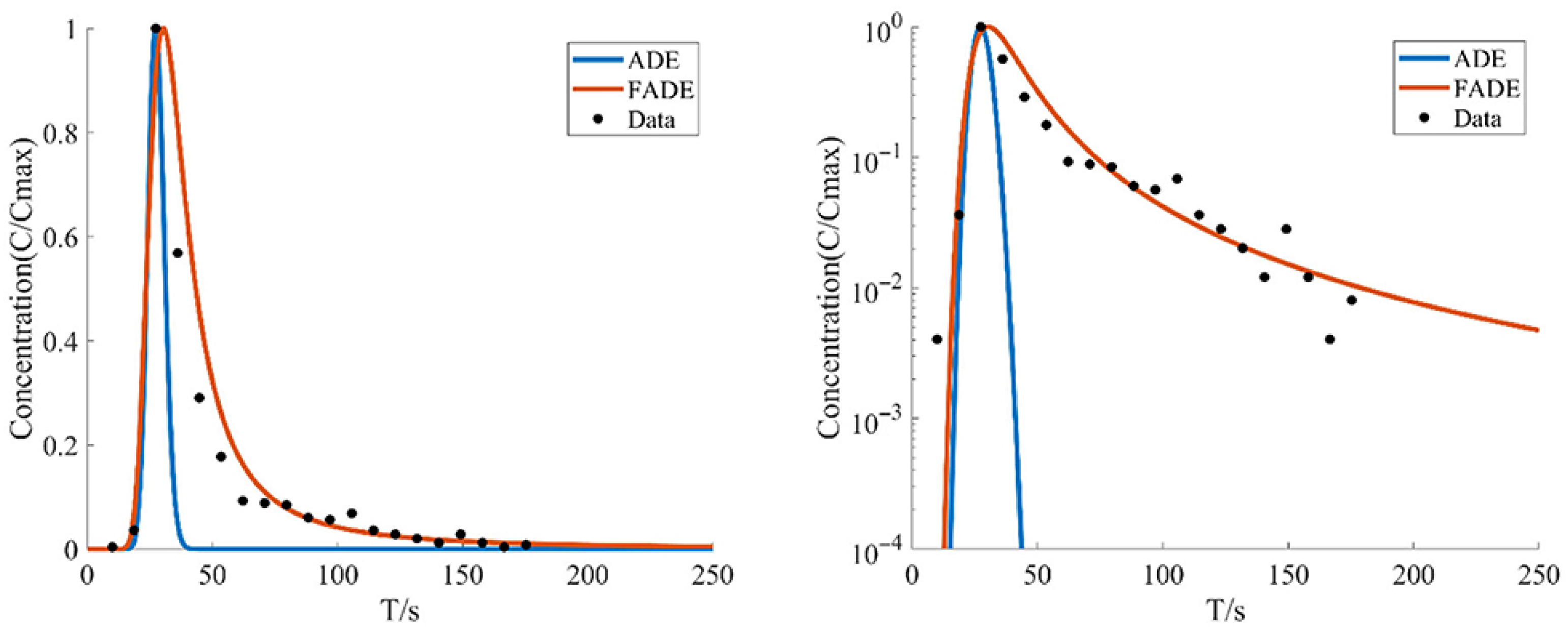
where denotes the solute concentration, v is the flow velocity, and k is the non-negative diffusion coefficient. The model incorporates a convolution kernel function to express the time memory effect, and its order can regulate the migration lag and release behavior of particles [4]. Qiao et al. [6] further confirmed through controlled experiments on chloride ion migration in vertical fractures that the FADE exhibits higher fitting accuracy than traditional convection-diffusion equations in simulating non-Fickian diffusion behavior, particularly in reproducing the power-law tail of penetration curves and hysteresis response, as shown in Figure 2. Considering the complexity introduced by medium-scale heterogeneity and fracture-matrix coupling, Lei et al. [11] proposed a scale-amplification modeling method based on fractional derivatives, effectively capturing non-normal behavior in solute transport processes and providing important support for simulating migration processes over long time scales and large spatial regions.
Figure 2.
Measured data (symbols) and numerical simulation results (lines) [6]. The orange line denotes the solution from the FADE model. Copyright © 2020 Qiao, Xu, Zhao, Qian, Wu and Sun.
In addition to temporal nonlocality, a key mechanism underlying anomalous diffusion lies in the non-Gaussian characteristics of spatial jump processes, such as Lévy flights. The spatial fractional diffusion equation (SFDE) has emerged as a important tool for describing such behavior, with its mathematical form as follows
Sun et al. [8] developed a generalized finite difference method (GFDM) for the three-dimensional SFDE to achieve numerical solutions, enabling accurate characterization of long-range jumps and boundary responses in irregular grids and heterogeneous media. Wang et al. [10] further extended this method to three-dimensional time-space fractional convection-diffusion models and constructed a numerical framework suitable for complex boundary conditions and discontinuous problems.
In discontinuous media or physical systems with fractal structures, the Hausdorff derivative can also be used to describe the modulation effect of the internal structural complexity of the medium on diffusion behavior, which is defined as
Hao et al. [7] proposed a time-dependent fractal model based on the Hausdorff derivative in their study of the migration process of inorganic arsenic in porous media. This model exhibits high sensitivity to characteristics such as the tail extension of the solute penetration curve and the main peak hysteresis. Furthermore, Tang et al. [9] developed a high-precision meshfree numerical solution method for surface diffusion problems in complex geometric structures by combining the Hausdorff derivative and the generalized finite difference method, which applies to problems involving complex structures.
Overall, the Caputo-FADE, SFDE, and Hausdorff derivative models respectively characterize the key mechanisms of anomalous diffusion from different dimensions. The FADE emphasizes temporal nonlocality, capturing memory-driven hysteresis and release behavior in heterogeneous media. The SFDE highlights spatial nonlocality, describing long-range jumps and superdiffusion in discontinuous structures. The Hausdorff derivative model extends nonlocality to fractal media, explicitly incorporating structural complexity within its equations.
Based on these spatio-temporal and structural generalizations, Li et al. [59] proposed a spatio-temporal interface-coupled fractional derivative model applicable to single-fissure systems, which unifies subdiffusive, superdiffusive, and non-Fickian interface mass exchange phenomena. This model excels in reproducing the heavy-tailed breakthrough curves observed in laboratory tracer experiments, highlighting the advantage of fractional modeling in capturing multiscale complex nonlocal transport phenomena.
2.2. Viscoelastic Waves
In seismic wave propagation and structural vibration engineering, the involved media often exhibit both elastic and viscous characteristics [12,14]. The viscoelasticity of materials results in a nonlocal relationship between stress and strain, meaning that the stress response at a given point is influenced not only by the local strain but also by the strain history and deformations occurring at remote locations.
To more accurately capture nonlocal response mechanisms, fractional-order viscoelastic models incorporating spatiotemporal nonlocal characteristics have emerged as a mainstream approach in contemporary material modeling. Among these, the Kelvin–Voigt fractional derivative (KVFD) model is a representative example, defined by the following stress–strain relationship
This model effectively captures both the long-range spatial interactions and temporal memory effects of materials, making it suitable for modeling media with microstructural defects, multiscale structural systems, and shear wave propagation in biological tissues [14,15]. Javadi [16] employed the KVFD model to simulate the viscoelastic behavior of beams in their study on nonlinear vibration and demonstrated that fractional-order parameters significantly influence the amplitude-response and frequency-response characteristics of the system. However, the KVFD model often performs poorly in simulating relaxation behavior.
In the study of the vibrational behavior of viscoelastic nanobeams, Martin introduced the fractional Zener model, whose constitutive equation is expressed as
enabling the simultaneous prediction of material creep and relaxation responses. The relaxation modulus of this model is defined as
where denotes the Mittag-Leffler function, as detailed in [13]. The research demonstrates that by replacing integer-order derivatives with Riemann–Liouville or Caputo fractional derivatives, the fractional Zener model significantly enhances the ability to characterize wave propagation and material relaxation phenomena. Bazhlekova et al. [18] further systematically investigated the generalized fractional Zener model by incorporating generalized convolution derivatives, proposing and proving the complete monotonicity and subordination principle under this model, thereby enriching the internal framework of fractional constitutive theory.
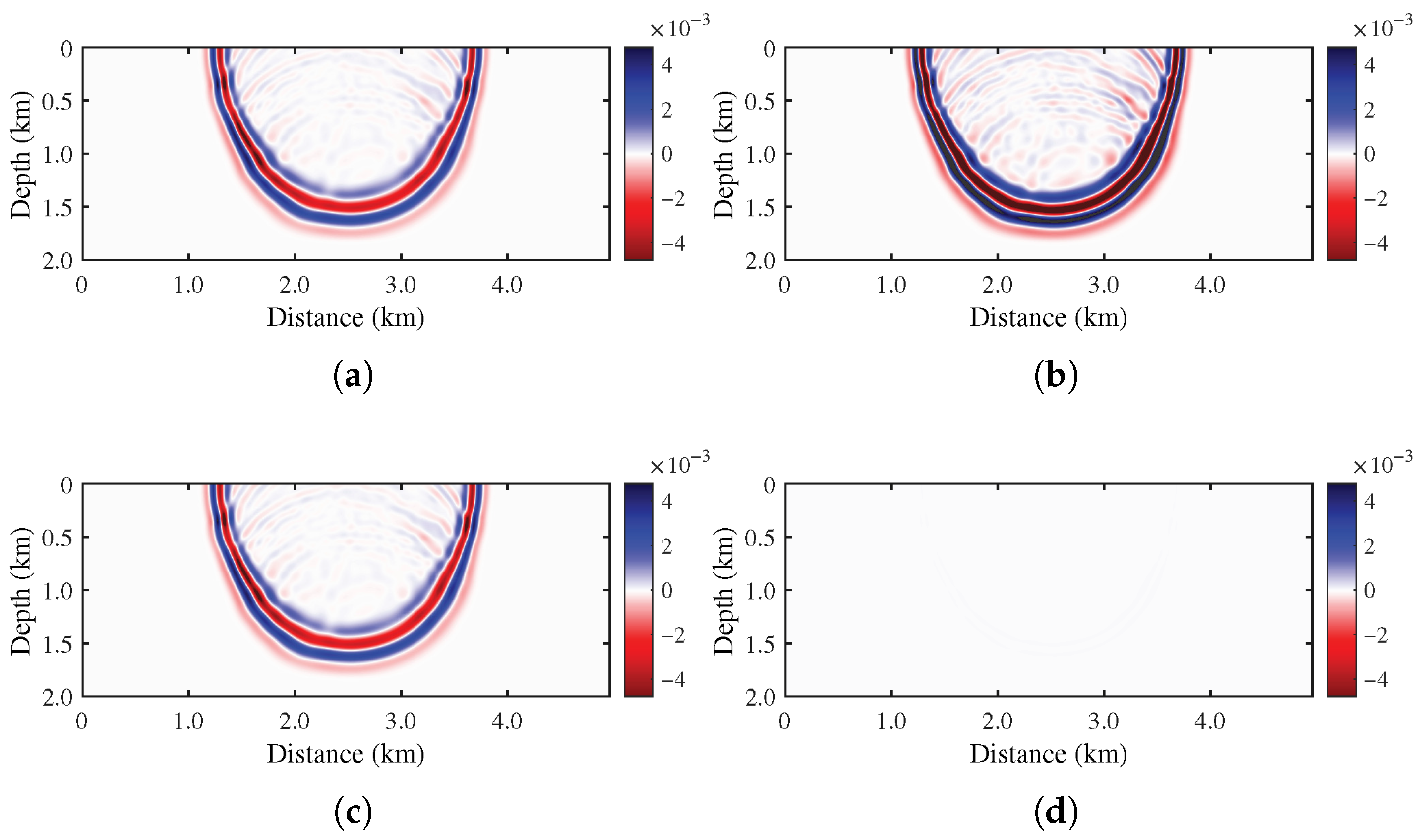
The development of nonlocal models has continued to advance. Wang et al. [17] constructed a fractional Laplacian wave equation to address seismic wave propagation in anisotropic attenuating media, simultaneously accounting for anisotropy in both velocity and attenuation. This model effectively captures the energy propagation characteristics within complex geological structures and is well-suited for full waveform inversion and crustal-scale seismic simulations. In addition, the work of Wang and Guo [60] further demonstrated the significant applicability of nonlocal models in geological exploration. As shown in Figure 3, the viscoelastic wave equation incorporating nonlocal effects exhibits a stronger attenuation behavior when simulating seismic wave propagation in realistic geological media. Shi et al. [22] integrated fractional viscoelastic constitutive theory with stress wave theory, establishing a viscoelastic stress wave propagation model based on fractional derivatives, more accurately characterizing the frequency-dependent propagation behavior of stress waves in viscoelastic rods.
Figure 3.
Snapshots of the wavefield at 600 ms [60]: (a) Reference. (b) Simulation results based on the elastic wave equation. (c) Simulation results based on the time-fractional viscoacoustic wave equation. (d) Residual.
It is thus evident that fractional-order derivative models exhibit strong physical consistency and mathematical flexibility in modeling viscoelastic wave propagation, establishing them as the core theoretical framework in current research. However, beyond fractional-order models, some researchers have conducted related studies by combining traditional viscoelastic constitutive relations with nonlocal elasticity theory, providing new insights into understanding viscoelastic wave propagation behavior. A representative example is the work by Shariati et al. [61], who analyzed the vibration stability of function-gradient viscoelastic nanobeams undergoing axial motion. They employed the Kelvin–Voigt constitutive equations combined with Eringen’s nonlocal elasticity theory to formulate the following governing equations:
The model incorporates both the nonlocal length scale and the material viscosity coefficient , while also accounting for the continuous axial gradient distribution of the elastic modulus . It effectively reveals the complex coupling between viscous dissipation and nonlocal softening effects.
In summary, the KVFD captures the long-range effects and time memory of viscoelastic materials but has limitations in describing stress relaxation. The fractional-order Zener model incorporates both creep and relaxation responses, making it suitable for broadband viscoelastic materials and nanostructures. The fractional Laplacian wave equation effectively characterizes anisotropic attenuation and frequency-dependent propagation in complex geological media, while the nonlocal elasticity–viscoelastic coupling framework reveals the interplay between viscous dissipation and nonlocal softening.
2.3. Fracture and Damage Evolution of Materials
Fracture and damage evolution of materials constitute fundamental physical mechanisms underlying solid failure. These processes involve complex phenomena such as long-range stress interactions, indeterminate crack path propagation, cooperative evolution of microdefect clusters, and pronounced scale effects.
On the one hand, to effectively characterize the cooperative evolution of micro-defects and scale effects, researchers have developed nonlocal gradient damage models, which are fundamentally defined as
where denotes the Cauchy stress tensor, represents the fourth-order elastic stiffness tensor, is the infinitesimal strain tensor, and denotes the intrinsic material length parameter. The model quantifies the spatial correlation of damage through the second-order gradient term and employs to account for scale effects, thereby addressing the issue of damage localization in classical models.
Building upon this foundation, Haim et al. [23] introduced a permeability gradient to develop a nonlocal damage-poroelastic model, which effectively eliminates spurious oscillations observed in local models and mitigates mesh dependency. Ren et al. [27] proposed an extended gradient damage model to characterize fracture behavior, wherein the irreversibility of damage evolution was ensured by decoupling the damage evolution from the cohesive law. Wu and his collaborators [28] constructed a strictly monotonically convergent gradient damage model to describe the damage and fracture behavior of various quasi-brittle materials. By solving a first-kind Volterra integral equation, they naturally incorporated arbitrary forms of cohesive laws into the modeling framework.
On the other hand, the PD method proposed by Silling [29] has been widely employed in the study of crack path uncertainty and dynamic fracture processes. It is formulated as
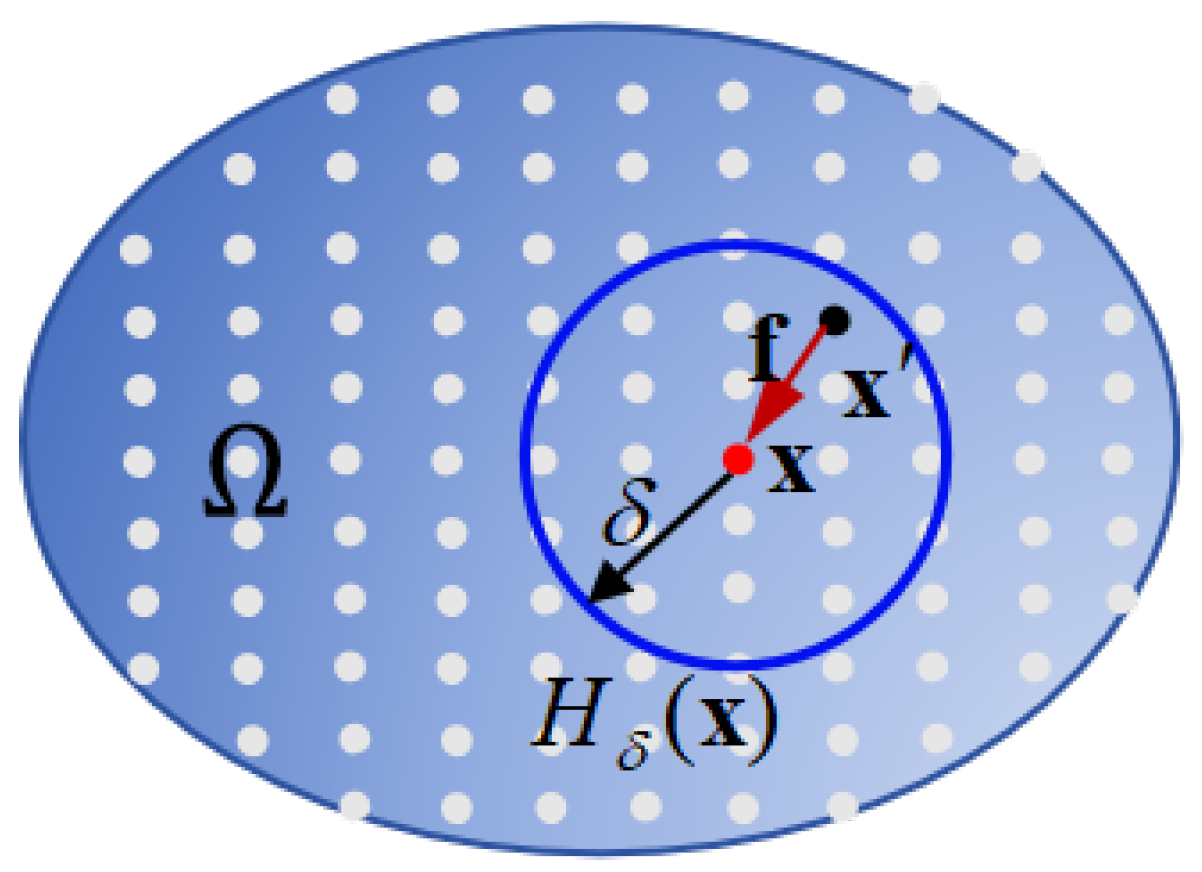
Here, denotes the displacement vector, is the pairwise force function, is some prescribed loading force density, and refers to a spherical neighborhood centered at with radius , as illustrated in Figure 4. By introducing nonlocal terms such as spatial integrals of pairwise forces and damage criteria, the PD framework overcomes the limitations of classical continuum mechanics based on partial differential equations, which require spatial derivatives and assume continuity of the displacement field. This approach allows for the simulation of crack initiation, propagation, and branching without the need to pre-specifying the crack path.
Figure 4.
Interaction point and its neighborhood within the continuous domain .
Zhou et al. [62] proposed an improved bond-based PD model, introducing shear bonds alongside traditional tensile bonds. Numerical results revealed that the diagonal shear crack bands formed in rock-like materials under compression are not merely the outcome of localized failure, but rather the manifestation of accumulated long-range interactions within the horizon. Ma et al. [33] integrated a strain energy density softening criterion into a bond-based PD model to construct a damage evolution function accounting for material softening and heterogeneity. This approach directly reflects the structural fracture process of rock materials, revealing the critical role of nonlocal interactions in the synergistic evolution of multiple cracks. Abdoh et al. developed a three-dimensional PD model to reveal fiber interactions and damage accumulation pathways within ballistic materials under high-speed impact loading [34]. Collectively, these studies demonstrate that long-range interactions are not only a fundamental physical origin of crack initiation and propagation, but also a core element for accurately characterizing the damage mechanisms of complex materials under multi-crack cooperative evolution and extreme loading conditions.
2.4. Electromagnetic Scattering and Radiation
At the nanoscale or within strongly coupled media, electromagnetic scattering and radiation exhibit pronounced nonlocal characteristics. The response of a material to an external electromagnetic field depends not only on the local electric field but is also strongly coupled to the field distribution in the surrounding spatial domain. Similarly, the electromagnetic field intensity at a given point is no longer determined solely by local source terms or material parameters, but is instead associated with the current and charge distributions over the entire scatterer or its boundaries.
Nonlocal electromagnetic responses primarily arise from collective electronic behavior and spatial dispersion effects, which are particularly pronounced in systems such as plasmas and metallic nanostructures. To characterize this effect, the constitutive relation between the electric displacement field and the electric field can be expressed in a spatial convolution form:
Here, the nonlocal dielectric kernel function characterizes the long-range coupling of fields between different spatial locations. Previous studies have demonstrated that incorporating nonlocal responses can account for physical phenomena [63,64,65] that local models, such as size-dependent blue shifts of plasmonic resonances, spectral line broadening, and the saturation of hotspot field intensities in sub-nanometer gaps, cannot capture.
In terms of modeling approaches, the integral equation framework inherently embodies nonlocality. The integral representation constructed via Green’s functions directly characterize the global coupling between field points and source points. The surface integral equations (SIE), derived from the surface equivalence principle, is particularly well-suited for scattering problems involving perfect electric conductors (PECs) and can be expressed as
where, and denote the incident electric and magnetic fields; G represents the free-space Green’s function; is the induced surface current density within the domain; and denotes the unit normal vector to the surface of the scatterer, as detailed in [37]. The SIE requires only surface discretization to efficiently capture nonlocal interactions at boundaries. For structures with complex medium distributions or subwavelength nanoscale features, the volume integral equation (VIE) is more appropriate, generally defined as
The VIE characterizes the electromagnetic field distribution inside the medium through discretization of the volume integral, allowing it to handle internal inhomogeneities and dispersive properties. However, this approach incurs higher computational costs.
To further enhance the physical fidelity of the model, Bagci et al. [38] have coupled the VIE with the hydrodynamic equation (HDE) to capture the collective dynamical response of free electrons in metals. This approach demonstrates precise analytical capabilities for nonlocal plasmonic modes, longitudinal field components, and energy dissipation mechanisms in metal–dielectric–metal structures.
In summary, the SIE is suitable for boundary-dominated scattering problems, while the VIE is more appropriate for medium-dominated structural responses. The coupled models excel in capturing metallic electron dynamics and strong nonlocal interactions. For specific application scenarios, the choice of modeling strategy should comprehensively consider factors such as structural scale and material properties. For ease of comparison, Table 1 provides a systematic summary of the application scenarios, advantages, and limitations of the representative methods.
Table 1.
Comparison of Nonlocal Electromagnetic Modeling Methods for Scattering and Radiation Problems.
The aforementioned classes of representative nonlocal problems are predominantly modeled within a constant-order fractional framework. However, the assumption of a fixed fractional order in both space and time limits the capability of such models to capture the dynamic variation of nonlocal interaction strength with spatial location, temporal evolution, or environmental conditions in real physical systems [66,67,68]. To address these limitations, researchers have proposed variable-order fractional nonlocal models, whose core concept is to incorporate spatiotemporal dependence into the fractional derivative by defining the order as a function of spatial position, time, or other state variables, i.e., . This formulation explicitly reflects the dynamic influence of medium properties, environmental conditions, or loading history in the model.
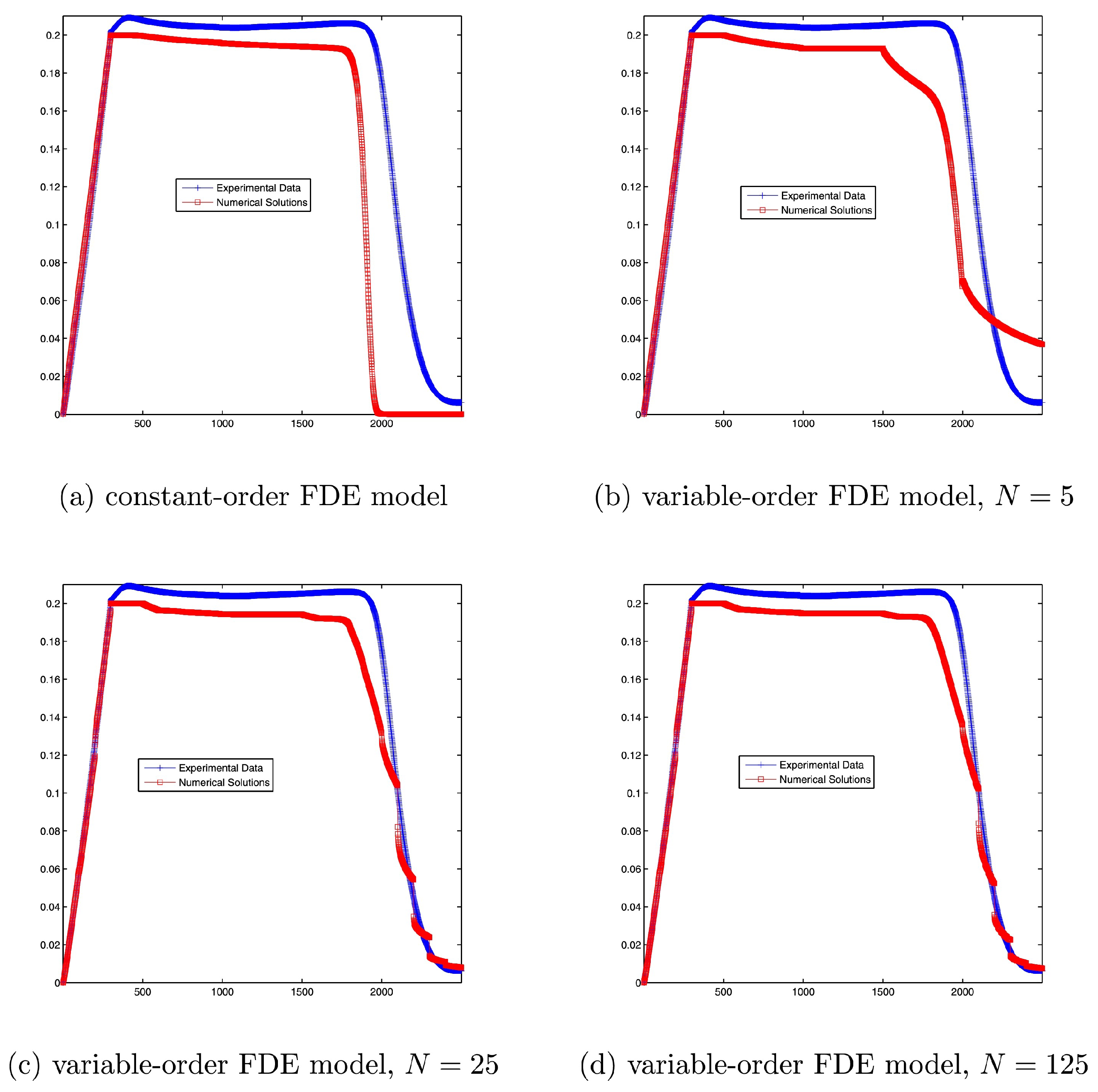
The flexibility of variable-order formulations allows the fractional order to vary spatially or temporally, capturing heterogeneous diffusion or evolving memory effects. Figure 5 and Figure 6 illustrate nonlocal models with variable order exhibit greater physical consistency than conventional models in addressing phenomena such as anomalous transport and viscoelastic behavior of materials.
- A representative variable-order diffusion model can be expressed aswhich enables the simulation of local diffusion mechanisms in heterogeneous media that adapt to variations in position and time [68,69]. The choice of fractional orders is governed by the characteristics of the medium and the diffusion state. In general, the time-fractional order is influenced by the evolution of retention behavior across multiple scales, whereas the space-fractional order is associated with the structural non-stationarity of the medium.
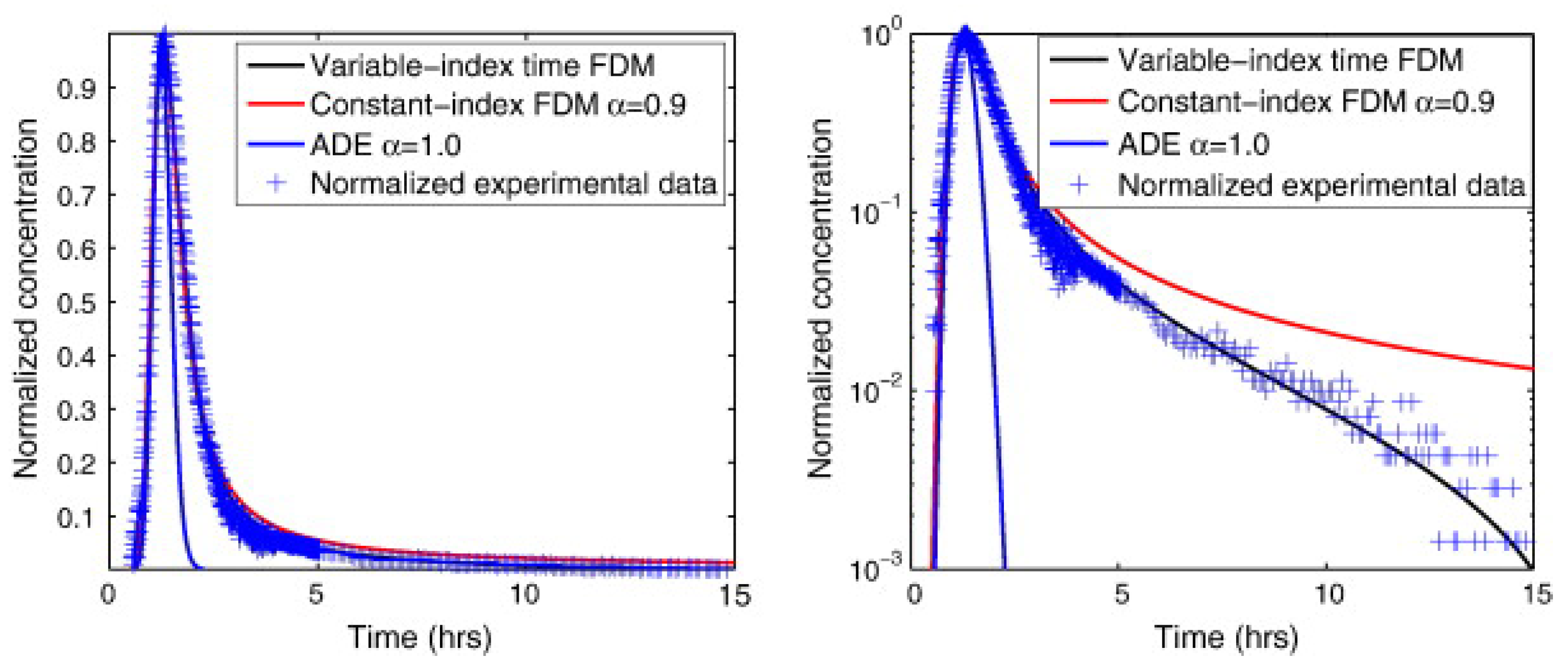
Figure 5.
Comparison between constant-order and variable-order fractional diffusion models. The variable-order formulation more accurately captures anomalous diffusion behaviors [70].
- The variable-order viscoelastic constitutive modelwhere the order varies with strain, temperature, or loading rate, thereby allowing the model to accurately characterize the dynamic adjustment of the material’s relaxation mechanism under different loading stages [66,71].
Figure 6.
Comparison between variable-order and constant-order FDE models in fitting material response: (a) constant-order FDE model. (b) variable-order FDE model, . (c) variable-order FDE model, . (d) variable-order FDE model, . The variable-order fractional differential equation models more accurately describe the memory behavior of shape memory polymers [72].
3. Numerical Computation for High-Dimensional Nonlocal Models
Nonlocal models offer distinct advantages for characterizing material fracture, anomalous diffusion, and long-range interactions; however, their high-dimensional numerical realization faces formidable challenges, including rapidly escalating memory demands, bottlenecks in computational efficiency, limited geometric adaptability, and difficulties in ensuring stability over long-time simulations. Here, high-dimensional in this paper refers not only to spatial dimensions of three or more, but also to extended models incorporating time, parameters, or random variables, all of which contribute to the exponential growth in computational complexity. Although numerous efficient numerical methods have been developed for the one-dimensional setting, their extension to higher dimensions is often not directly applicable. The techniques discussed below emphasize general algorithmic strategies, rather than being restricted to specific physical problems.
3.1. Computational Challenges
The curse of dimensionality constitutes the primary obstacle in high-dimensional numerical computation. Due to the involvement of long-range interactions, nonlocal models typically generate dense or even fully dense and structurally complex matrices after discretization, leading to a substantial increase in computational resource requirements, as shown in Table 2. In the one-dimensional case, employing Gaussian elimination to directly solve the discretized system at each time step generally requires storage and computational cost. As the spatial dimension increases, the size of the discretized matrix grows exponentially. For a three-dimensional nonlocal problem, i.e., dimension , assuming a uniform grid of points per dimension within a unit cube, the number of unknowns reaches . Explicitly storing the dense stiffness matrix in this case would occupy approximately 512 TB of memory, rendering direct methods practically infeasible.
Table 2.
Memory and computational complexity estimates for typical nonlocal models under increasing spatial dimensions with .
Although iterative solvers such as the Conjugate Gradient (CG) method and Generalized Minimal Residual (GMRES) can reduce overall computational complexity, the matrix condition number significantly deteriorates markedly with mesh refinement, resulting in poor convergence performance. Moreover, each iteration entails dense or high-bandwidth matrix–vector multiplications, resulting in a substantial per-iteration cost.
More critically, many real-world problems are inherently high-dimensional, and their physical and geometric complexity further exacerbates the computational burden associated with increasing dimensionality. For example, in geomechanical hydraulic fracturing, fracture propagation and fluid flow constitute a strongly coupled multiphysics system; dynamically simulating long-term crack evolution therefore imposes stringent demands on numerical stability, memory consumption, and computational resources.
3.2. Efficient Implementation of High-Dimensional Numerical Computation
In addressing the core challenges inherent in high-dimensional numerical computation for nonlocal models, the past decade has seen a proliferation of innovative methodologies aimed at improving computational efficiency, numerical stability, and scalability. These can be categorized as follows: (i) Probabilistic sampling methods, which reconstruct nonlocal operators via stochastic integration to alleviate computational burdens from dense coupling; (ii) Structure-utilizing methods, which leverage matrix structural patterns for efficient computation; (iii) Spectral methods and high-order discretization techniques, which enhance global accuracy while maintaining fewer degrees of freedom; (iv) Neural network approximations, integrating data-driven learning with physical constraints; (v) Asymptotically compatible schemes ensure numerical stability when degenerating to the classical local limit. This section focuses on these representative methods and systematically reviews their research developments, analyzing their core mechanisms, key challenge mitigation strategies, and practical computational performance in depth, to provide theoretical and methodological support for the high-dimensional numerical computation of nonlocal models.
To mitigate the curse of dimensionality, randomized probabilistic frameworks have shown significant potential. By employing Monte Carlo techniques or stochastic process representations, these methods reformulate high-dimensional nonlocal integral operators as expectation estimates, thereby circumventing the discretization overhead of traditional mesh-based schemes. Agrawal et al. [73] proposed a random feature expansion approach transmitting information in feature space to bypass costly spatial discretization, achieving notable results in state spaces of up to hundreds of dimensions. Yang et al. [74] developed a Feynman–Kac-based method, leveraging the intrinsic adaptability of stochastic path integrals to complex boundaries and avoiding dense linear solvers. Recognizing the adaptability of stochastic particles in avoiding unnecessary storage, Lei et al. [75] introduced a stochastic particle method based on the Lawson–Euler weak formulation, which achieves both accuracy preservation and computational efficiency for moderately high-dimensional problems. These randomized probabilistic frameworks provide mesh-free and dimension-independent solutions for high-dimensional nonlocal problems. Their reliance on sampling rather than explicit discretization endows them with exceptional scalability and parallelizability, particularly when handling integral operators and long-range interactions. However, their performance is highly dependent on the variance of the estimator. Without effective variance reduction techniques or favorable kernel regularity, the required sample size or number of features may grow exponentially, significantly reducing computational efficiency in extreme settings.
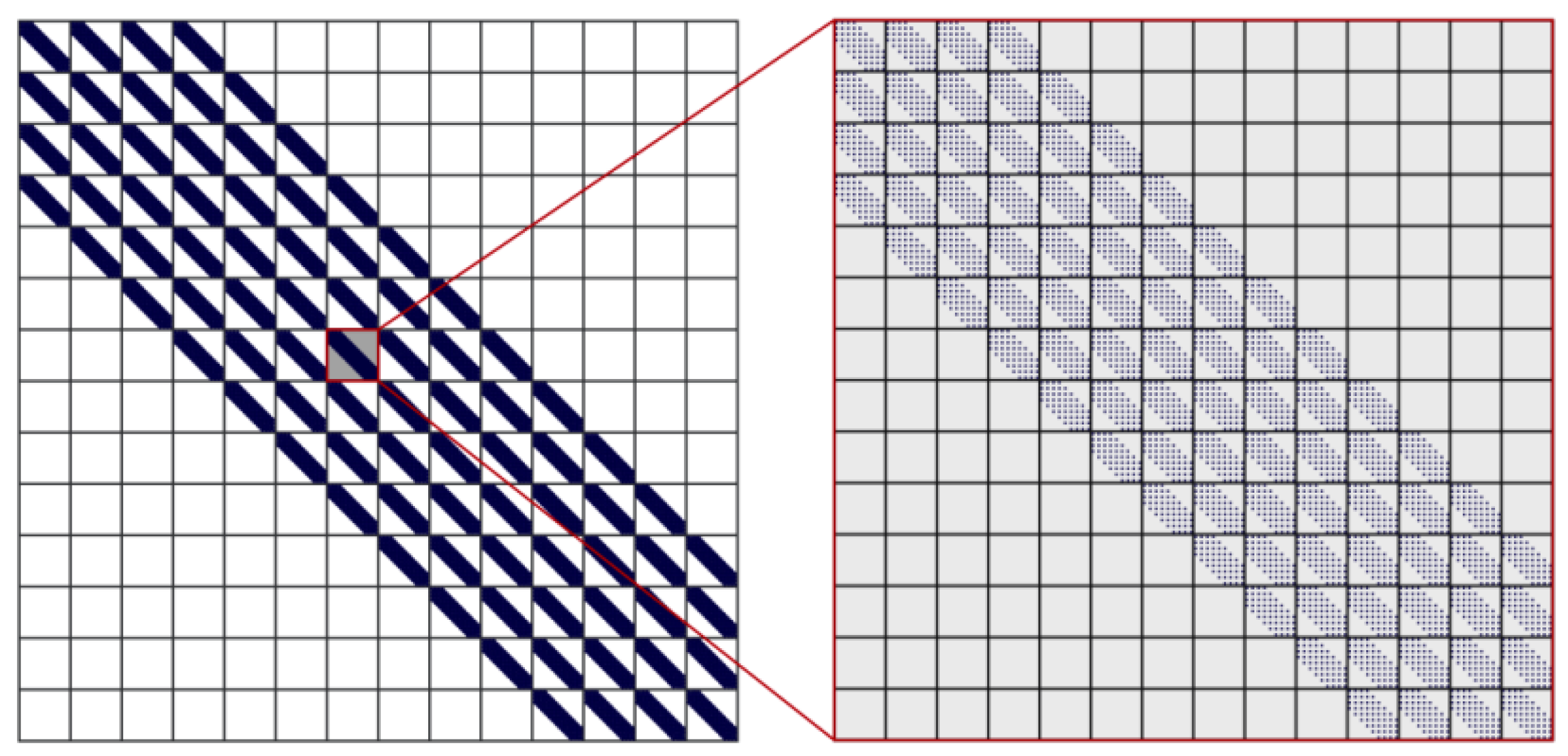
Moreover, researchers have also devoted efforts to leveraging intrinsic structures such as multilevel hierarchies and low-rank properties to develop acceleration strategies and construct efficient reduced-order models, thereby alleviating the high computational and memory costs [76,77,78,79,80,81]. A representative example is the work of Wang’s team [82,83]. In the context of fractional diffusion equations, they employed a matrix-splitting framework that leverages the Toeplitz structure of coefficient matrices (see Figure 7). By integrating FFT-accelerated matrix–vector products, directional decomposition for dimensionality reduction, and structure-preserving boundary treatments, they reduced computational complexity from the conventional to and memory requirements to , effectively overcoming long-standing bottlenecks in three-dimensional nonlocal simulations. In parallel, Vollmann et al. [84] further proposed a structured finite element method that exploits the translation and reflection invariance of the kernel function to construct symmetric multilevel Toeplitz stiffness matrices. This design drastically reduces storage requirements and facilitates efficient algorithmic acceleration. Guan et al. [85] combined a greedy reduced-order method with a sparse grid strategy, reformulating the solution of large-scale linear systems into a set of independent small-scale problems, thereby reducing the overall computational cost. These strategies achieve significant computational efficiency gains without sacrificing accuracy, and are well-suited for large-scale deterministic simulations and uncertainty quantification. However, this efficiency typically relies on strong structural assumptions, such as regular grids and symmetric kernels. In irregular domains or under strongly anisotropic interactions, the matrix structure may break down, rendering fast transforms ineffective. Despite these limitations, structure-utilizing methods remain one of the most scalable and accurate solver categories for solving high-dimensional nonlocal problems.
Figure 7.
Block-Toplits-Toplits-Block Matrix Structure.
Spectral methods [86,87,88,89,90,91], renowned for their superconvergence in handling smooth problems, serve as a powerful high-accuracy discretization technique. In bounded domains, Chen et al. [92] combined the Caffarelli–Silvestre extension with a Laguerre-enriched approach, leveraging spectral diagonalization in the extended dimension to reduce high-dimensional singular problems to low-dimensional Poisson subproblems. In unbounded domains, Sheng et al. [93] employed a mapped Chebyshev fast spectral method, utilizing the Dunford–Taylor representation for operator diagonalization in high-dimensional integral-type nonlocal problems. For typical nonlocal diffusion problems with power-law slow decay, Tang et al. [94] developed a rational spectrum method that exhibits superior approximation performance when dealing with slow decay tails and algebraic nonlocal kernels. Polynomial-based high-dimensional collocation schemes have likewise demonstrated robustness and exponential convergence. Abdelkawy et al. [95] employed a shifted Legendre spectral collocation method to solve high-dimensional nonlinear fractional wave equations involving the Riesz operator, achieving exponential convergence. Moussa et al. [96] further introduced a spectral collocation method based on non-smoothly mapped Legendre polynomials for solving time-fractional diffusion–wave equations, which retains spectral convergence in high-dimensional computations and outperforms conventional spectral methods in both accuracy and stability. In short, spectral methods effectively handle challenges such as singular weights, unbounded domains, and fractional operators. In moderate dimensions (2D–5D), when combined with tensor product structures, matrix diagonalization, or FFT fast algorithms, spectral methods still maintain acceptable computational efficiency. However, as dimensionality increases, both computational cost and memory requirements grow polynomially or even exponentially. Additionally, spectral methods generate dense global matrices and are sensitive to mapping parameters, with reduced flexibility for irregular geometries or low-regularity solutions.
With the rapid advancement of emerging technologies, deep learning offers powerful tools for solving high-dimensional partial differential equations [97,98,99,100,101]. Their mesh-free property and ability to capture global solutions exhibited when dealing with nonlocal operators have attracted wide attention. Pang et al. [102] developed nonlocal physics-informed neural networks (nPINNs) that combine Sobol sequence sampling with composite Gaussian quadrature, enabling stable training and accurate nonlocal parameter identification in three dimensions. Shen et al. [103] introduced MC-Nonlocal-PINNs, reformulating generalized nonlocal integral operators into a Beta-distribution-based sampleable form. The approach enhances adaptability to singular kernels, fractional derivatives, and variable integration domains, removes dependence on automatic differentiation, and achieves nearly dimension-independent complexity. Karniadakis et al. [104] employed Monte Carlo and quasi–Monte Carlo sampling with sample deduplication and classification to replace high-dimensional grid integration. The generalized Monte Carlo PINNs (GMC-PINNs) reduced computational time by about compared with conventional fPINNs over 300,000 iterations. However, applying PINNs to high-dimensional nonlocal problems remains highly challenging. The evaluation of nonlocal operators during training introduces heavy computational overhead, as each iteration involves high-dimensional integrations that require costly Monte Carlo or quadrature approximations. Singular kernels and sharp solution features further complicate optimization, often causing gradient instability and loss imbalance. Long-memory effects in time-fractional or history-dependent operators dramatically increase the number of training constraints, while standard architectures suffer from spectral bias—favoring low-frequency components and failing to capture oscillatory or singular dynamics. Although recent advances, such as importance sampling, auxiliary variables, and Fourier feature embeddings, have partially alleviated these issues, their scalability and reliability for complex nonlocal operators remain limited. Addressing these challenges demands both algorithmic innovation and a deeper theoretical understanding of neural representations of nonlocality.
Beyond the curse of dimensionality, a common challenge lies in maintaining numerical stability when degenerating to the classical local limit. To address this issue, Du and his collaborators [105,106,107,108] have conducted systematic research on constructing asymptotically compatible schemes for nonlocal models. By employing structure-preserving discretization, boundary-layer adjustments, and mapping techniques, they ensure that as the nonlocal scale tends to zero, the numerical solution correctly converges to its local limit, exhibiting high robustness—particularly suitable for complex problems such as crack propagation in peridynamics and multiphysics coupling. Del Teso et al. [109,110] unified local and nonlocal diffusion operators under the framework of Lévy-type nonlocal operators and developed a class of asymptotically compatible schemes that naturally maintain consistency in the nonlocal-to-local limit, further proving that the scheme preserves structural monotonicity and stability.
Research on nonlocal problems with complex boundaries in high dimensions has also made some progress [111,112,113]. A representative example is the work of Du and Ni [114,115] on high-dimensional Fisher–KPP nonlocal diffusion equations with free boundaries. Their multiscale matching method is coupled with the kernel structure of the fractional Laplace operator, enabling a refined characterization of the interplay between boundary propagation speed and nonlinear feedback of the solution. This approach ensures numerical accuracy while achieving smooth evolution and topological preservation of the free boundary, demonstrating strong adaptability in simulations of ecological invasion, financial liquidity fronts, and biological tissue propagation.
Overall, these algorithmic strategies embody multiple trade-offs between scalability, accuracy, geometric adaptability, and robustness. Their effectiveness often depends on the specific problem characteristics and available computational resources. Table 3 summarizes the representative complexity and convergence behavior of these methods to facilitate practical selection and further research development.
Table 3.
Comparison of representative numerical methods for high-dimensional nonlocal models. In probabilistic methods, N denotes the number of Monte Carlo or particle samples, determining computational cost and variance convergence rate; in structure-exploiting methods, N represents the number of grid points or the matrix size (FFT complexity ); in PINNs, N is the number of training points (collocation points). M denotes the number of random features or basis functions; E is the number of training epochs; Q denotes the number of quadrature or Monte Carlo sampling points used for temporal/spatial integration; p represents the order of convergence; and P is the number of trainable network parameters.
4. Discussion
Nonlocal models display theoretical advantages in describing long-range spatial interactions and temporal memory effects. This paper analyzes the subject from two parallel perspectives. On one hand, it reviews representative nonlocal physical problems and their modeling characteristics, demonstrating the applicability and advantages of nonlocal modeling across diverse physical contexts. On the other hand, it systematically summarizes high-dimensional numerical computation methods from an algorithmic strategy standpoint, with a focus on outlining core approaches to addressing the dimension catastrophe. By integrating recent research advances with common computational principles, this review provides a systematic research framework for understanding the theoretical characteristics of nonlocal modeling and its high-dimensional numerical implementation.
To more intuitively demonstrate the applicability of different numerical strategies in typical nonlocal problems, Table 4 summarizes the correspondence between the four categories of typical nonlocal problems and high-dimensional numerical methods discussed in this paper. Structured and spectral methods yield the best numerical simulation performance for anomalous diffusion problems. In viscoelastic wave propagation, long-memory kernels are well suited to FFT acceleration and spectral methods. For fracture and damage problems, random sampling and PINNs better capture interactions between discontinuous fields and microcracks. Although the spectral method is applicable to electromagnetic scattering, oscillations and dispersion kernels weaken its stability, necessitating integration with boundary element methods or fast multipole methods to enhance robustness. Overall, algorithm suitability exhibits problem-dependent characteristics, with no universal optimal solution existing.
Table 4.
Mapping between representative nonlocal physical problems and the classes of high-dimensional numerical methods most compatible with them. The filled asterisks (*) qualitatively indicate the adaptability level: ***** excellent, **** good, *** moderate, ** limited. This summary bridges the physical models (Section 2) and computational strategies (Section 3).
From the perspective of algorithmic strategies, structural algorithms can significantly reduce computational complexity in problems with regular geometry. At the same time, spectral methods have a clear advantage in high-order approximations of smooth solutions. Probabilistic methods based on sampling have a natural adaptability to high-dimensional irregular domains and are suitable for modeling uncertainty propagation in multi-physics scenarios. PINNs offer a flexible, data-driven framework for solving complex geometry and parameter inversion problems; however, they still face challenges in addressing nonlocal models. The high cost of evaluating integral terms during training, training instability caused by singular kernels and long-range memory effects, and the inherent spectral bias of network structures. Asymptotically compatible schemes address numerical degradation issues in nonlocal models as they approach local limits, serving as a crucial bridge between nonlocal and local modeling frameworks.
Despite significant progress in non-local high-dimensional computation research in recent years, several areas requiring further exploration and open questions remain:
- Efficient algorithms for complex boundaries and irregular domains: Existing structured and spectral methods largely rely on regular geometry, while achieving high-order accuracy and stability under complex boundary conditions remains a bottleneck. Developing hybrid algorithms based on sparse grids, local spectral bases, and fast integration could provide a breakthrough.
- Integration mechanisms between deep learning and nonlocal operators: Future research should further explore the potential of emerging architectures like Fourier Neural Operators (FNO), Graph Neural Networks (GNN), and Transformers in approximating nonlocal kernels. FNO captures long-range correlations in the frequency domain, the GNNs are well-suited for modeling pointwise nonlocal dependencies, while the Transformer frameworks with attention mechanisms show promise for improved generalization in spatio-temporal memory operators. Complementary training strategies such as importance sampling, physics-guided regularization, hierarchical loss balancing, and multiscale Fourier embedding are also critical for enhancing network scalability and physical consistency.
- High-performance computing and heterogeneous parallelization frameworks: Given the global coupling nature of nonlocal integrals, further development of GPU/CPU co-computing, distributed storage, and communication compression strategies is needed to overcome memory constraints in high-dimensional integral computation and gradient backpropagation.
Overall, nonlocal modeling and high-dimensional numerical computation are situated at a pivotal stage where theoretical refinement and practical implementation are beginning to converge. The research frontier is gradually shifting from foundational questions of computability to broader concerns of efficiency, generalizability, and scalability, which hold significant academic value and broad application prospects.
Author Contributions
Conceptualization, X.G. and Y.J.; investigation, Y.J. and D.W.; writing—original draft preparation, Y.J.; writing—review and editing, Y.J. and D.W.; visualization, Y.J.; funding acquisition, X.G. All authors have read and agreed to the published version of the manuscript.
Funding
This research was funded by the National Key R&D Program of China (No. 023YFA1008903), the National Natural Science Foundation of China (No. 12271303), the Major Fundamental Research Project of Shandong Province of China (No. ZR2023ZD33), and the Natural Science Foundation of Shandong Province for Outstanding Youth Scholars (No. ZR2024JQ008).
Data Availability Statement
No new data were created or analyzed in this study. Data sharing is not applicable to this article.
Acknowledgments
The authors wish to thank Francisco Chiclana for his cordial invitation.
Conflicts of Interest
The authors declare no conflicts of interest.
Abbreviations
The following abbreviations are used in this manuscript:
| CG | Conjugate Gradient |
| FADE | Fractional advection-diffusion equations |
| FDE | Fractional diffusion equations |
| FFT | Fast Fourier transform |
| GFDM | Generalized finite difference method |
| GMC-PINNs | Generalized Monte Carlo PINNs |
| GMRES | Generalized Minimal Residual |
| HDE | Hydrodynamic equation |
| KVFD | Kelvin–Voigt fractional derivative |
| nPINNs | Nonlocal physics-informed neural networks |
| PD | Peridynamics |
| PDEs | Partial differential equations |
| PVBF | Pulse vector basis functions |
| SFDE | Spatial fractional diffusion equation |
| VIE | Volume integral equation |
References
- Meerschaert, M.M.; Tadjeran, C. Finite difference approximations for fractional advection–dispersion flow equations. J. Comput. Appl. Math. 2004, 172, 65–77. [Google Scholar] [CrossRef]
- Sun, H.; Chen, W.; Chen, Y. Variable-order fractional differential operators in anomalous diffusion modeling. Phys. A Stat. Mech. Appl. 2009, 388, 4586–4592. [Google Scholar] [CrossRef]
- Chen, W.; Sun, H.; Zhang, X.; Korošak, D. Anomalous diffusion modeling by fractal and fractional derivatives. Comput. Math. Appl. 2010, 59, 1754–1758. [Google Scholar] [CrossRef]
- Sun, H.; Chang, A.; Chen, W.; Zhang, Y. Anomalous diffusion: Fractional derivative equation models and applications in environmental flows. Sci. China Phys. Mech. Astron. 2015, 45, 8–22. [Google Scholar]
- Liu, X.; Sun, H.; Zhang, Y.; Zheng, C.; Yu, Z. Simulating multi-dimensional anomalous diffusion in nonstationary media using variable-order vector fractional-derivative models with Kansa solver. Adv. Water Resour. 2019, 133, 103423. [Google Scholar] [CrossRef]
- Qiao, C.; Xu, Y.; Zhao, W.; Qian, J.; Wu, Y.; Sun, H. Fractional derivative modeling on solute non-Fickian transport in a single vertical fracture. Front. Phys. 2020, 8, 378. [Google Scholar] [CrossRef]
- Hao, X.; Sun, H.; Zhang, Y.; Li, S.; Song, J.; Salsky, K. Hausdorff fractal derivative model to characterize transport of inorganic arsenic in porous media. Water 2020, 12, 2353. [Google Scholar] [CrossRef]
- Sun, H.G.; Wang, Z.; Nie, J.; Zhang, Y.; Xiao, R. Generalized finite difference method for a class of multidimensional space-fractional diffusion equations. Comput. Mech. 2021, 67, 17–32. [Google Scholar] [CrossRef]
- Tang, Z.; Fu, Z.; Sun, H.; Liu, X. An efficient localized collocation solver for anomalous diffusion on surfaces. Fract. Calc. Appl. Anal. 2021, 24, 865–894. [Google Scholar] [CrossRef]
- Wang, Z.; Sun, H. Generalized finite difference method with irregular mesh for a class of three-dimensional variable-order time-fractional advection-diffusion equations. Eng. Anal. Bound. Elem. 2021, 132, 345–355. [Google Scholar] [CrossRef]
- Lei, D.; Sun, H.; Zhang, Y.; Blaszczyk, T.; Yu, Z. Upscaling solute transport in rough single-fractured media with matrix diffusion using a time fractional advection-dispersion equation. J. Hydrol. 2023, 627, 130280. [Google Scholar] [CrossRef]
- Galucio, A.C.; Deü, J.F.; Ohayon, R. Finite element formulation of viscoelastic sandwich beams using fractional derivative operators. Comput. Mech. 2004, 33, 282–291. [Google Scholar] [CrossRef]
- Martin, O. Nonlocal effects on the dynamic analysis of a viscoelastic nanobeam using a fractional Zener model. Appl. Math. Model. 2019, 73, 637–650. [Google Scholar] [CrossRef]
- Li, L.; Lin, R.; Ng, T.Y. A fractional nonlocal time-space viscoelasticity theory and its applications in structural dynamics. Appl. Math. Model. 2020, 84, 116–136. [Google Scholar] [CrossRef]
- Gomez, A.; Rus, G.; Saffari, N. Wave propagation in a fractional viscoelastic tissue model: Application to transluminal procedures. Sensors 2021, 21, 2778. [Google Scholar] [CrossRef]
- Javadi, M.; Rahmanian, M. Nonlinear vibration of fractional Kelvin–Voigt viscoelastic beam on nonlinear elastic foundation. Commun. Nonlinear Sci. Numer. Simul. 2021, 98, 105784. [Google Scholar] [CrossRef]
- Wang, N.; Xing, G.; Zhu, T.; Zhou, H.; Shi, Y. Propagating seismic waves in VTI attenuating media using fractional viscoelastic wave equation. J. Geophys. Res. Solid Earth 2022, 127, e2021JB023280. [Google Scholar] [CrossRef]
- Bazhlekova, E.; Bazhlekov, I. Subordination principle for generalized fractional Zener models. Fractal Fract. 2023, 7, 298. [Google Scholar] [CrossRef]
- Meng, R.; Cao, L.; Zhang, Q. Study on the performance of variable-order fractional viscoelastic models to the order function parameters. Appl. Math. Model. 2023, 121, 430–444. [Google Scholar] [CrossRef]
- Zhang, Q.; Gu, X.; Dong, Q.; Liang, J. Modified fractional-Zener model—Numerical application in modeling the behavior of asphalt mixtures. Constr. Build. Mater. 2023, 388, 131690. [Google Scholar] [CrossRef]
- Cai, S.; Chen, Y.; Liu, Q. Development and validation of fractional constitutive models for viscoelastic-plastic creep in time-dependent materials: Rapid experimental data fitting. Appl. Math. Model. 2024, 132, 645–678. [Google Scholar] [CrossRef]
- Shi, Z.; Zhou, J.; Song, D.; Cui, J.; Yuan, M.; Miao, C. The viscoelastic stress wave propagation model based on fractional derivative constitutive. Int. J. Impact Eng. 2025, 202, 105330. [Google Scholar] [CrossRef]
- Mobasher, M.E.; Berger-Vergiat, L.; Waisman, H. Non-local formulation for transport and damage in porous media. Comput. Methods Appl. Mech. Eng. 2017, 324, 654–689. [Google Scholar] [CrossRef]
- Jiang, Y.; Li, L.; Hu, Y. A physically-based nonlocal strain gradient theory for crosslinked polymers. Int. J. Mech. Sci. 2023, 245, 108094. [Google Scholar] [CrossRef]
- Tran, H.T.; Bui, T.Q.; Chijiwa, N.; Hirose, S. A new implicit gradient damage model based on energy limiter for brittle fracture: Theory and numerical investigation. Comput. Methods Appl. Mech. Eng. 2023, 413, 116123. [Google Scholar] [CrossRef]
- Tran, H.T.; Bui, T.Q. A nonlocal gradient damage model with energy limiter for dynamic brittle fracture. Comput. Mech. 2024, 73, 831–856. [Google Scholar] [CrossRef]
- Xue, L.; Feng, Y.; Ren, X. An extended gradient damage model for anisotropic fracture. Int. J. Plast. 2024, 179, 104042. [Google Scholar] [CrossRef]
- Huang, H.; Poh, L.H.; Yu, H.; Wang, Q.; Wu, H. A rigorously convergent and irreversible gradient damage model. J. Mech. Phys. Solids 2025, 203, 106262. [Google Scholar] [CrossRef]
- Silling, S.A. Reformulation of elasticity theory for discontinuities and long-range forces. J. Mech. Phys. Solids 2000, 48, 175–209. [Google Scholar] [CrossRef]
- Silling, S.A.; Epton, M.; Weckner, O.; Xu, J.; Askari, E. Peridynamic states and constitutive modeling. J. Elast. 2007, 88, 151–184. [Google Scholar] [CrossRef]
- Wang, Y.T.; Zhou, X.P.; Kou, M.M. Three-dimensional numerical study on the failure characteristics of intermittent fissures under compressive-shear loads. Acta Geotech. 2019, 14, 1161–1193. [Google Scholar] [CrossRef]
- Zhou, X.P.; Zhang, T.; Qian, Q.H. A two-dimensional ordinary state-based peridynamic model for plastic deformation based on Drucker-Prager criteria with non-associated flow rule. Int. J. Rock Mech. Min. Sci. 2021, 146, 104857. [Google Scholar] [CrossRef]
- Ma, P.; Li, S.; Wang, X.; Yuan, C.; Li, J.; Zhang, F. Numerical simulation of crack propagation and coalescence in rock materials by the peridynamic method based on strain energy density theory. Comput. Geosci. 2022, 26, 1379–1396. [Google Scholar] [CrossRef]
- Abdoh, D.A. Exploring damage and penetration in soft armors under ballistic impact through a novel and efficient 3D peridynamic model. Fatigue Fract. Eng. Mater. Struct. 2025, 48, 1697–1711. [Google Scholar] [CrossRef]
- Limkatanyu, S.; Sae-Long, W.; Rungamornrat, J.; Damrongwiriyanupap, N.; Keawsawasvong, S.; Sukontasukkul, P.; Hansapinyo, C. Static Bending Analysis of Nanobeam-Substrate Medium Systems Incorporating Mixture Stress-Driven Nonlocality, Surface Energy, and Substrate-Structure Interactions. J. Appl. Comput. Mech. 2025, 11, 327–343. [Google Scholar]
- Zhang, L.; Monticone, F.; Miller, O.D. All electromagnetic scattering bodies are matrix-valued oscillators. Nat. Commun. 2023, 14, 7724. [Google Scholar] [CrossRef]
- Jiang, M.; Li, Y.; Lei, L.; Hu, J. A review on fast direct methods of surface integral equations for analysis of electromagnetic scattering from 3-D PEC objects. Electronics 2022, 11, 3753. [Google Scholar] [CrossRef]
- Uulu, D.A.; Chen, R.; Chen, L.; Li, P.; Bagci, H. Coupled solution of volume integral and hydrodynamic equations to analyze electromagnetic scattering from composite nanostructures. IEEE Trans. Antennas Propag. 2023, 71, 3418–3429. [Google Scholar] [CrossRef]
- Deng, A.L.; Ren, B.Z.; Zhang, L.M. Solution of the volume integral equation using the revised pulse vector basis functions for electromagnetic scattering from thin homogeneous dielectric objects. J. Opt. Soc. Am. A 2025, 42, 442–448. [Google Scholar] [CrossRef] [PubMed]
- Gao, G.h.; Sun, Z.z. The finite difference approximation for a class of fractional sub-diffusion equations on a space unbounded domain. J. Comput. Phys. 2013, 236, 443–460. [Google Scholar] [CrossRef]
- Tian, W.; Zhou, H.; Deng, W. A class of second order difference approximations for solving space fractional diffusion equations. Math. Comput. 2015, 84, 1703–1727. [Google Scholar] [CrossRef]
- Chen, S.; Liu, F.; Jiang, X.; Turner, I.; Anh, V. A fast semi-implicit difference method for a nonlinear two-sided space-fractional diffusion equation with variable diffusivity coefficients. Appl. Math. Comput. 2015, 257, 591–601. [Google Scholar] [CrossRef][Green Version]
- Li, C.; Yi, Q.; Chen, A. Finite difference methods with non-uniform meshes for nonlinear fractional differential equations. J. Comput. Phys. 2016, 316, 614–631. [Google Scholar] [CrossRef]
- Yan, Y.; Sun, Z.Z.; Zhang, J. Fast evaluation of the Caputo fractional derivative and its applications to fractional diffusion equations: A second-order scheme. Commun. Comput. Phys. 2017, 22, 1028–1048. [Google Scholar] [CrossRef]
- Guo, X.; Li, Y.; Zeng, T. A finite difference scheme for Caputo-Fabrizio fractional differential equations. Int. J. Numer. Anal. Model. 2020, 17, 195–211. [Google Scholar]
- Zeng, F.; Li, C.; Liu, F.; Turner, I. Numerical algorithms for time-fractional subdiffusion equation with second-order accuracy. SIAM J. Sci. Comput. 2015, 37, A55–A78. [Google Scholar] [CrossRef]
- Zhao, Y.; Bu, W.; Huang, J.; Liu, D.Y.; Tang, Y. Finite element method for two-dimensional space-fractional advection–dispersion equations. Appl. Math. Comput. 2015, 257, 553–565. [Google Scholar] [CrossRef]
- Yang, Z.; Nie, Y.; Yuan, Z.; Wang, J. Finite element methods for fractional PDEs in three dimensions. Appl. Math. Lett. 2020, 100, 106041. [Google Scholar] [CrossRef]
- Lin, Y.; Li, X.; Xu, C. Finite difference/spectral approximations for the fractional cable equation. Math. Comput. 2011, 80, 1369–1396. [Google Scholar] [CrossRef]
- Chen, S.; Shen, J.; Wang, L.L. Generalized Jacobi functions and their applications to fractional differential equations. Math. Comput. 2016, 85, 1603–1638. [Google Scholar] [CrossRef]
- Chen, S.; Shen, J.; Wang, L.L. Laguerre functions and their applications to tempered fractional differential equations on infinite intervals. J. Sci. Comput. 2018, 74, 1286–1313. [Google Scholar] [CrossRef]
- Chen, M.; Deng, W. Fourth order accurate scheme for the space fractional diffusion equations. SIAM J. Numer. Anal. 2014, 52, 1418–1438. [Google Scholar] [CrossRef]
- Cao, J.; Xu, C. A high order schema for the numerical solution of the fractional ordinary differential equations. J. Comput. Phys. 2013, 238, 154–168. [Google Scholar] [CrossRef]
- Zayernouri, M.; Ainsworth, M.; Karniadakis, G.E. Tempered fractional Sturm–Liouville eigenproblems. SIAM J. Sci. Comput. 2015, 37, A1777–A1800. [Google Scholar] [CrossRef]
- Mao, Z.; Karniadakis, G.E. A spectral method (of exponential convergence) for singular solutions of the diffusion equation with general two-sided fractional derivative. SIAM J. Numer. Anal. 2018, 56, 24–49. [Google Scholar] [CrossRef]
- Du, Q. Nonlocal Modeling, Analysis, and Computation: Nonlocal Modeling, Analysis, and Computation; SIAM: Philadelphia, PA, USA, 2019. [Google Scholar]
- D’Elia, M.; Du, Q.; Glusa, C.; Gunzburger, M.; Tian, X.; Zhou, Z. Numerical methods for nonlocal and fractional models. Acta Numer. 2020, 29, 1–124. [Google Scholar] [CrossRef]
- Du, Q.; Gunzburger, M.; Lehoucq, R.B.; Zhou, K. A nonlocal vector calculus, nonlocal volume-constrained problems, and nonlocal balance laws. Math. Model. Methods Appl. Sci. 2013, 23, 493–540. [Google Scholar] [CrossRef]
- Li, X.; Zhang, Y.; Reeves, D.M.; Zheng, C. Fractional-derivative models for non-Fickian transport in a single fracture and its extension. J. Hydrol. 2020, 590, 125396. [Google Scholar] [CrossRef]
- Wang, F.; Li, X.; Li, Y.; Fu, C.; Guo, X. An efficient short memory algorithm for the propagation of viscoacoustic waves in heterogeneous media. Geophysics 2025, 90, F27–F41. [Google Scholar] [CrossRef]
- Shariati, A.; Jung, D.W.; Mohammad-Sedighi, H.; Żur, K.K.; Habibi, M.; Safa, M. On the vibrations and stability of moving viscoelastic axially functionally graded nanobeams. Materials 2020, 13, 1707. [Google Scholar] [CrossRef]
- Zhou, X.; Shou, Y. Numerical simulation of failure of rock-like material subjected to compressive loads using improved peridynamic method. Int. J. Geomech. 2017, 17, 04016086. [Google Scholar] [CrossRef]
- Raza, S.; Toscano, G.; Jauho, A.P.; Wubs, M.; Mortensen, N.A. Unusual resonances in nanoplasmonic structures due to nonlocal response. Phys. Rev. B Condens. Matter Mater. Phys. 2011, 84, 121412. [Google Scholar] [CrossRef]
- Ciracì, C.; Hill, R.; Mock, J.; Urzhumov, Y.; Fernández-Domínguez, A.; Maier, S.; Pendry, J.; Chilkoti, A.; Smith, D. Probing the ultimate limits of plasmonic enhancement. Science 2012, 337, 1072–1074. [Google Scholar] [CrossRef] [PubMed]
- Christensen, T.; Yan, W.; Jauho, A.P.; Soljačić, M.; Mortensen, N.A. Quantum corrections in nanoplasmonics: Shape, scale, and material. Phys. Rev. Lett. 2017, 118, 157402. [Google Scholar] [CrossRef] [PubMed]
- Patnaik, S.; Hollkamp, J.P.; Semperlotti, F. Applications of variable-order fractional operators: A review. Proc. R. Soc. A 2020, 476, 20190498. [Google Scholar] [CrossRef]
- Sun, H.; Chen, W.; Li, C.; Chen, Y. Fractional differential models for anomalous diffusion. Phys. A Stat. Mech. Appl. 2010, 389, 2719–2724. [Google Scholar] [CrossRef]
- Sun, H.G.; Chang, A.; Zhang, Y.; Chen, W. A review on variable-order fractional differential equations: Mathematical foundations, physical models, numerical methods and applications. Fract. Calc. Appl. Anal. 2019, 22, 27–59. [Google Scholar] [CrossRef]
- Zhuang, P.; Liu, F.; Anh, V.; Turner, I. Numerical methods for the variable-order fractional advection-diffusion equation with a nonlinear source term. SIAM J. Numer. Anal. 2009, 47, 1760–1781. [Google Scholar] [CrossRef]
- Sun, H.; Zhang, Y.; Chen, W.; Reeves, D.M. Use of a variable-index fractional-derivative model to capture transient dispersion in heterogeneous media. J. Contam. Hydrol. 2014, 157, 47–58. [Google Scholar] [CrossRef]
- Atangana, A. On the stability and convergence of the time-fractional variable order telegraph equation. J. Comput. Phys. 2015, 293, 104–114. [Google Scholar] [CrossRef]
- Li, Z.; Wang, H.; Xiao, R.; Yang, S. A variable-order fractional differential equation model of shape memory polymers. Chaos Solit. Fractals 2017, 102, 473–485. [Google Scholar] [CrossRef]
- Agrawal, S.; Lee, W.; Fung, S.W.; Nurbekyan, L. Random features for high-dimensional nonlocal mean-field games. J. Comput. Phys. 2022, 459, 111136. [Google Scholar] [CrossRef]
- Yang, M.; Zhang, G.; Del-Castillo-Negrete, D.; Cao, Y. A probabilistic scheme for semilinear nonlocal diffusion equations with volume constraints. SIAM J. Numer. Anal. 2023, 61, 2718–2743. [Google Scholar] [CrossRef]
- Lei, Z.; Shao, S.; Xiong, Y. An efficient stochastic particle method for moderately high-dimensional nonlinear PDEs. J. Comput. Phys. 2025, 527, 113818. [Google Scholar] [CrossRef]
- Zhang, X.; Gunzburger, M.; Ju, L. Nodal-type collocation methods for hypersingular integral equations and nonlocal diffusion problems. Comput. Methods Appl. Mech. Eng. 2016, 299, 401–420. [Google Scholar] [CrossRef]
- Zhang, C.; Liu, H.; Zhou, Z. A priori error analysis for time-stepping discontinuous Galerkin finite element approximation of time fractional optimal control problem. J. Sci. Comput. 2019, 80, 993–1018. [Google Scholar] [CrossRef]
- Liu, Z.; Li, X. The fast scalar auxiliary variable approach with unconditional energy stability for nonlocal Cahn–Hilliard equation. Numer. Methods Partial. Differ. Equ. 2021, 37, 244–261. [Google Scholar] [CrossRef]
- Huang, X.; Lin, X.L.; Ng, M.K.; Sun, H.W. Spectral analysis for preconditioning of multi-dimensional Riesz fractional diffusion equations. Numer. Math. Theory Methods Appl. 2022, 15, 565–591. [Google Scholar] [CrossRef]
- Chen, H.; Sun, H.W. A dimensional splitting exponential time differencing scheme for multidimensional fractional Allen-Cahn equations. J. Sci. Comput. 2021, 87, 30. [Google Scholar] [CrossRef]
- Jia, J.; Wang, H.; Zheng, X. A preconditioned fast finite element approximation to variable-order time-fractional diffusion equations in multiple space dimensions. Appl. Numer. Math. 2021, 163, 15–29. [Google Scholar] [CrossRef]
- Wang, H.; Du, N. A fast finite difference method for three-dimensional time-dependent space-fractional diffusion equations and its efficient implementation. J. Comput. Phys. 2013, 253, 50–63. [Google Scholar] [CrossRef]
- Zhao, M.; Wang, H.; Cheng, A. A fast finite difference method for three-dimensional time-dependent space-fractional diffusion equations with fractional derivative boundary conditions. J. Sci. Comput. 2018, 74, 1009–1033. [Google Scholar] [CrossRef]
- Vollmann, C.; Schulz, V. Exploiting multilevel Toeplitz structures in high dimensional nonlocal diffusion. Comput. Vis. Sci. 2019, 20, 29–46. [Google Scholar] [CrossRef]
- Guan, Q.; Gunzburger, M.; Webster, C.G.; Zhang, G. Reduced basis methods for nonlocal diffusion problems with random input data. Comput. Methods Appl. Mech. Eng. 2017, 317, 746–770. [Google Scholar] [CrossRef]
- Tang, T.; Yuan, H.; Zhou, T. Hermite spectral collocation methods for fractional PDEs in unbounded domains. Commun. Comput. Phys. 2018, 24, 1143–1168. [Google Scholar] [CrossRef]
- Zhao, W.; Hon, Y.c.; Stoll, M. Localized radial basis functions-based pseudo-spectral method (LRBF-PSM) for nonlocal diffusion problems. Comput. Math. Appl. 2018, 75, 1685–1704. [Google Scholar] [CrossRef]
- Sheng, C.; Cao, D.; Shen, J. Efficient spectral methods for PDEs with spectral fractional Laplacian. J. Sci. Comput. 2021, 88, 4. [Google Scholar] [CrossRef]
- Guo, S.; Yan, W.; Li, C.; Mei, L. Dissipation-preserving rational spectral-Galerkin method for strongly damped nonlinear wave system involving mixed fractional Laplacians in unbounded domains. J. Sci. Comput. 2022, 93, 53. [Google Scholar] [CrossRef]
- Hu, D.; Fu, Y.; Cai, W.; Wang, Y. Unconditional convergence of conservative spectral Galerkin methods for the coupled fractional nonlinear Klein–Gordon–Schrödinger equations. J. Sci. Comput. 2023, 94, 70. [Google Scholar] [CrossRef]
- Lu, J.; Zhang, Q.; Zhao, L.; Nie, Y. An Efficient Jacobi Spectral Collocation Method with Nonlocal Quadrature Rules for Multi-Dimensional Volume-Constrained Nonlocal Models. Int. J. Comput. Methods 2023, 20, 2350004. [Google Scholar] [CrossRef]
- Chen, S.; Shen, J. An efficient and accurate numerical method for the spectral fractional Laplacian equation. J. Sci. Comput. 2020, 82, 17. [Google Scholar] [CrossRef]
- Sheng, C.; Shen, J.; Tang, T.; Wang, L.L.; Yuan, H. Fast Fourier-like mapped Chebyshev spectral-Galerkin methods for PDEs with integral fractional Laplacian in unbounded domains. SIAM J. Numer. Anal. 2020, 58, 2435–2464. [Google Scholar] [CrossRef]
- Tang, T.; Wang, L.L.; Yuan, H.; Zhou, T. Rational spectral methods for PDEs involving fractional Laplacian in unbounded domains. SIAM J. Sci. Comput. 2020, 42, A585–A611. [Google Scholar] [CrossRef]
- Abdelkawy, M.A.; Soluma, E.; Al-Dayel, I.; Baleanu, D. Spectral solutions for a class of nonlinear wave equations with Riesz fractional based on Legendre collocation technique. J. Comput. Appl. Math. 2023, 423, 114970. [Google Scholar] [CrossRef]
- Moussa, H.; Saker, M.; Zaky, M.; Babatin, M.; Ezz-Eldien, S. Mapped Legendre-spectral method for high-dimensional multi-term time-fractional diffusion-wave equation with non-smooth solution. Comput. Appl. Math. 2025, 44, 167. [Google Scholar] [CrossRef]
- Yuan, L.; Ni, Y.Q.; Deng, X.Y.; Hao, S. A-PINN: Auxiliary physics informed neural networks for forward and inverse problems of nonlinear integro-differential equations. J. Comput. Phys. 2022, 462, 111260. [Google Scholar] [CrossRef]
- Guo, L.; Wu, H.; Yu, X.; Zhou, T. Monte Carlo fPINNs: Deep learning method for forward and inverse problems involving high dimensional fractional partial differential equations. Comput. Methods Appl. Mech. Eng. 2022, 400, 115523. [Google Scholar] [CrossRef]
- Boussange, V.; Becker, S.; Jentzen, A.; Kuckuck, B.; Pellissier, L. Deep learning approximations for non-local nonlinear PDEs with Neumann boundary conditions. Partial. Differ. Equ. Appl. 2023, 4, 51. [Google Scholar] [CrossRef]
- Eghbalpoor, R.; Sheidaei, A. A peridynamic-informed deep learning model for brittle damage prediction. Theor. Appl. Fract. Mech. 2024, 131, 104457. [Google Scholar] [CrossRef]
- Ma, J.; Zhou, X. A minimum potential energy-based nonlocal physics-informed deep learning method for solid mechanics. J. Appl. Mech. 2025, 92, 031008. [Google Scholar] [CrossRef]
- Pang, G.; D’Elia, M.; Parks, M.; Karniadakis, G.E. nPINNs: Nonlocal physics-informed neural networks for a parametrized nonlocal universal Laplacian operator. Algorithms and applications. J. Comput. Phys. 2020, 422, 109760. [Google Scholar] [CrossRef]
- Feng, X.; Qian, Y.; Shen, W. MC-nonlocal-PINNS: Handling nonlocal operators in PINNS via Monte Carlo sampling. Numer. Math. Theory Methods Appl. 2023, 16, 769–791. [Google Scholar] [CrossRef]
- Wang, S.; Karniadakis, G.E. GMC-PINNs: A new general Monte Carlo PINNs method for solving fractional partial differential equations on irregular domains. Comput. Methods Appl. Mech. Eng. 2024, 429, 117189. [Google Scholar] [CrossRef]
- Tian, X.; Du, Q. Asymptotically compatible schemes for robust discretization of parametrized problems with applications to nonlocal models. SIAM Rev. 2020, 62, 199–227. [Google Scholar] [CrossRef]
- Tian, X.; Du, Q. Asymptotically compatible schemes and applications to robust discretization of nonlocal models. SIAM J. Numer. Anal. 2014, 52, 1641–1665. [Google Scholar] [CrossRef]
- Du, Q.; Tao, Y.; Tian, X.; Yang, J. Asymptotically compatible discretization of multidimensional nonlocal diffusion models and approximation of nonlocal Green’s functions. IMA J. Numer. Anal. 2019, 39, 607–625. [Google Scholar] [CrossRef]
- Du, Q.; Scott, J.; Tian, X. Asymptotically compatible schemes for nonlinear variational models via Gamma-convergence and applications to nonlocal problems. Math. Comput. 2025. [Google Scholar] [CrossRef]
- Del Teso, F.; Endal, J.; Jakobsen, E.R. Robust numerical methods for nonlocal (and local) equations of porous medium type. Part I: Theory. SIAM J. Numer. Anal. 2019, 57, 2266–2299. [Google Scholar] [CrossRef]
- Del Teso, F.; Endal, J.; Jakobsen, E.R. Robust numerical methods for nonlocal (and local) equations of porous medium type. Part II: Schemes and experiments. SIAM J. Numer. Anal. 2018, 56, 3611–3647. [Google Scholar] [CrossRef]
- Du, Y.; Ni, W. The Fisher-KPP nonlocal diffusion equation with free boundary and radial symmetry in R3. Math. Eng. 2023, 5, 1–26. [Google Scholar] [CrossRef]
- Elbar, C.; Perthame, B.; Poiatti, A.; Skrzeczkowski, J. Nonlocal Cahn–Hilliard equation with degenerate mobility: Incompressible limit and convergence to stationary states. Arch. Ration. Mech. Anazlysis 2024, 248, 41. [Google Scholar] [CrossRef]
- Zheng, Y.; Karami, B.; Shahsavari, D. On the vibration dynamics of heterogeneous panels under arbitrary boundary conditions. Int. J. Eng. Sci. 2022, 178, 103727. [Google Scholar] [CrossRef]
- Du, Y.; Ni, W. The high dimensional Fisher-KPP nonlocal diffusion equation with free boundary and radial symmetry, part 1. SIAM J. Math. Anal. 2022, 54, 3930–3973. [Google Scholar] [CrossRef]
- Du, Y.; Ni, W. The high dimensional Fisher-KPP nonlocal diffusion equation with free boundary and radial symmetry, part 2: Sharp estimates. J. Funct. Anal. 2024, 287, 110649. [Google Scholar] [CrossRef]
Disclaimer/Publisher’s Note: The statements, opinions and data contained in all publications are solely those of the individual author(s) and contributor(s) and not of MDPI and/or the editor(s). MDPI and/or the editor(s) disclaim responsibility for any injury to people or property resulting from any ideas, methods, instructions or products referred to in the content. |
© 2025 by the authors. Licensee MDPI, Basel, Switzerland. This article is an open access article distributed under the terms and conditions of the Creative Commons Attribution (CC BY) license (https://creativecommons.org/licenses/by/4.0/).