Article

Two-Sided Matching with Bounded Rationality: A Stochastic Framework for Personnel Selection

by
Saeed Najafi-Zangeneh
1,
Naser Shams-Gharneh
1,* and
Olivier Gossner
2,3
1
Industrial Engineering Department, Amirkabir University of Technology, Tehran 1591634311, Iran
2
CNRS-CREST, École Polytechnique, 91120 Palaiseau, France
3
Department of Mathematics, London School of Economics, London WC2A 2AE, UK
*
Author to whom correspondence should be addressed.
Mathematics 2025, 13(19), 3173; https://doi.org/10.3390/math13193173
Submission received: 7 September 2025 / Revised: 27 September 2025 / Accepted: 1 October 2025 / Published: 3 October 2025
(This article belongs to the Section D2: Operations Research and Fuzzy Decision Making)

Abstract

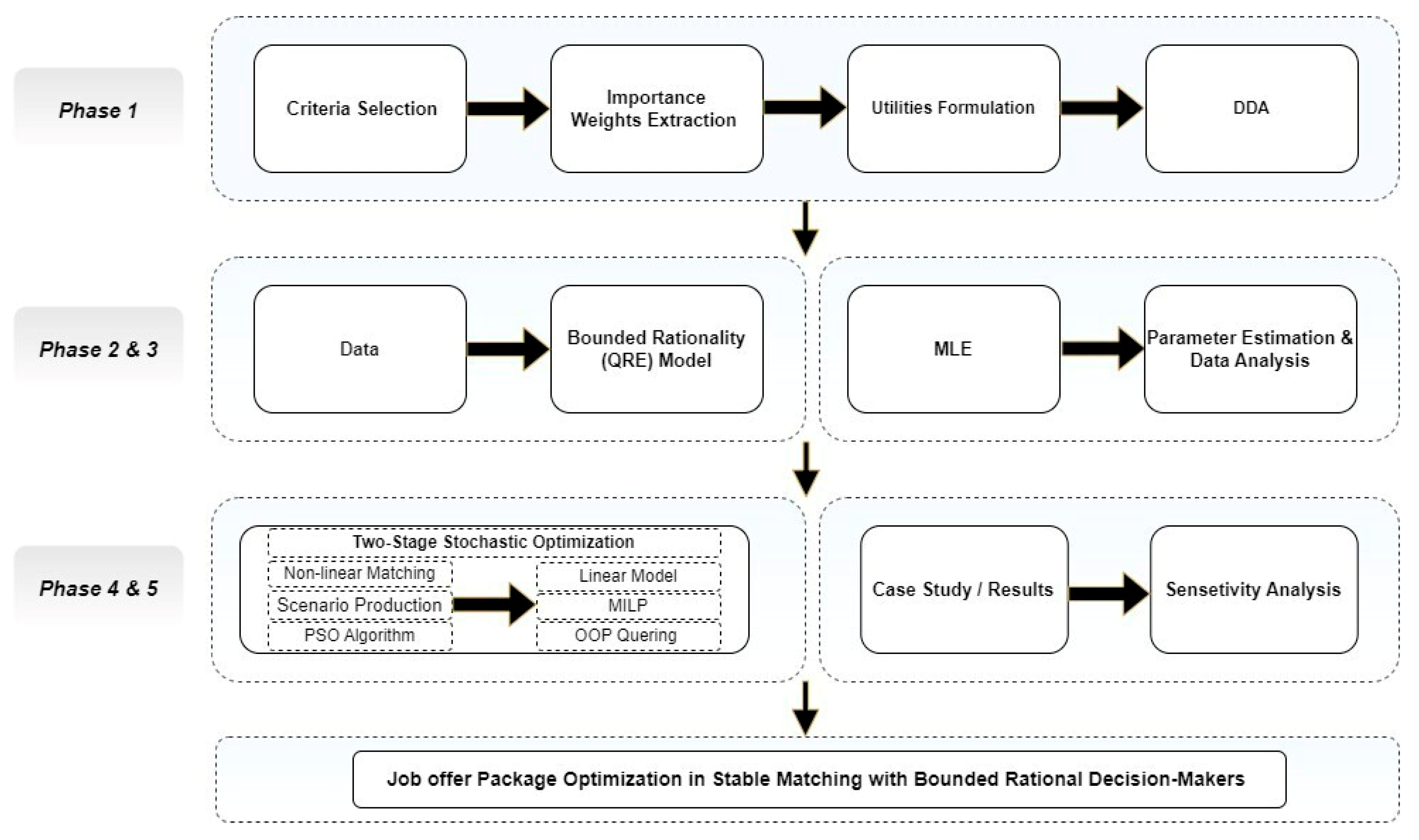
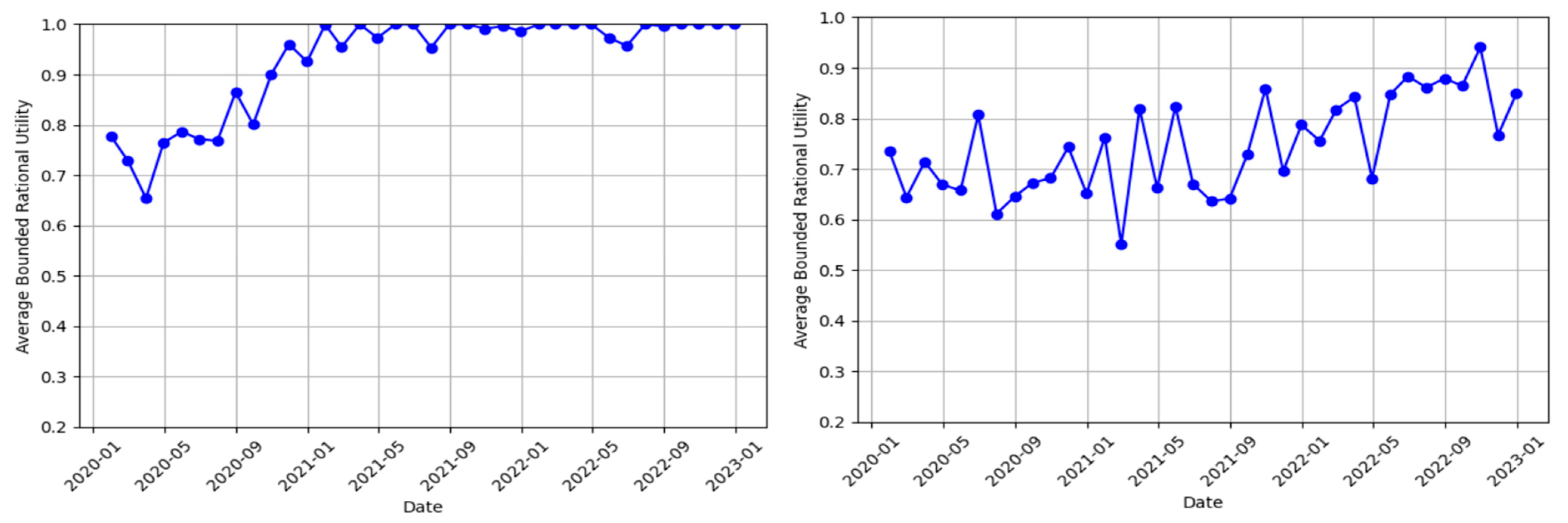
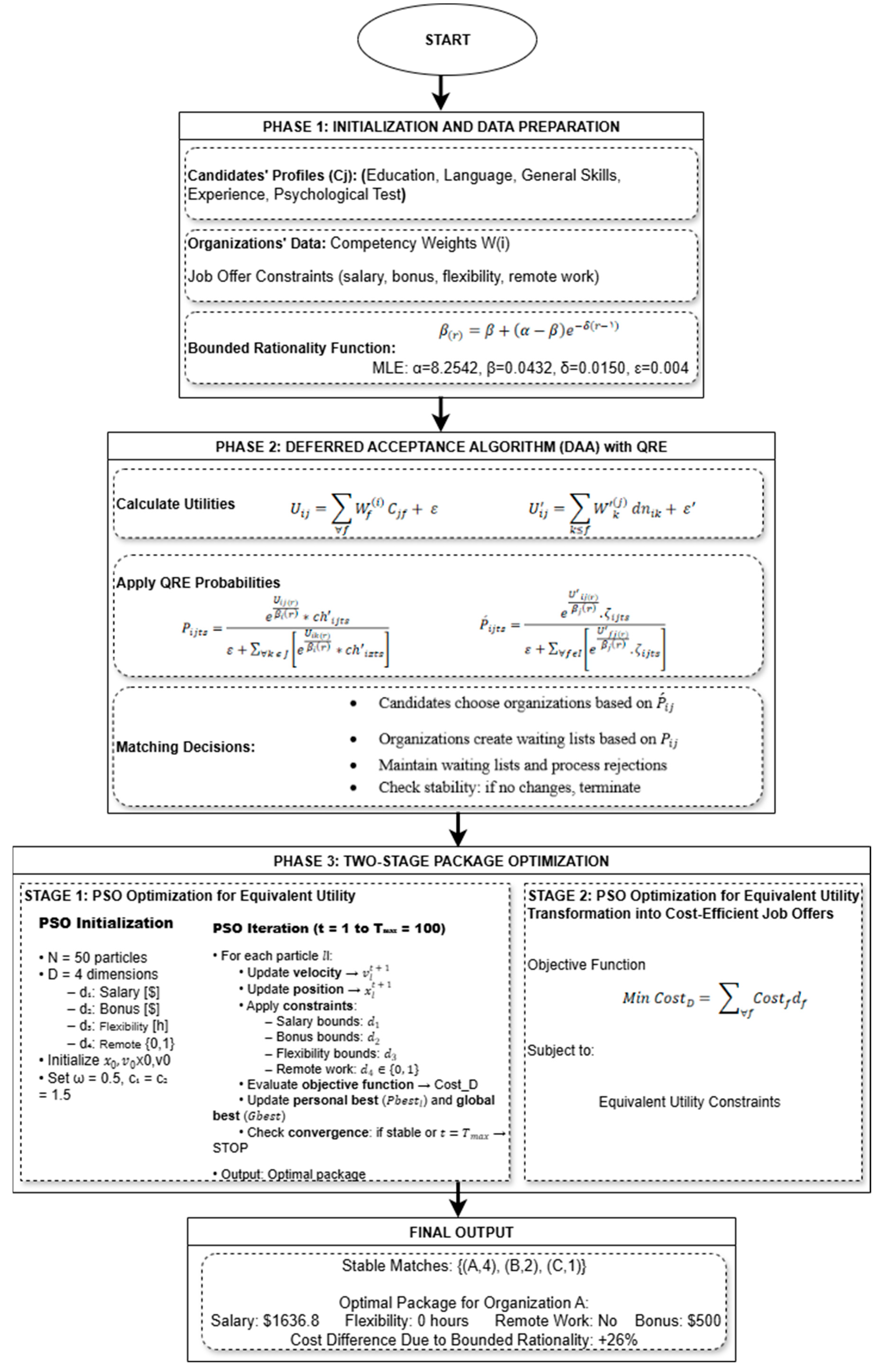
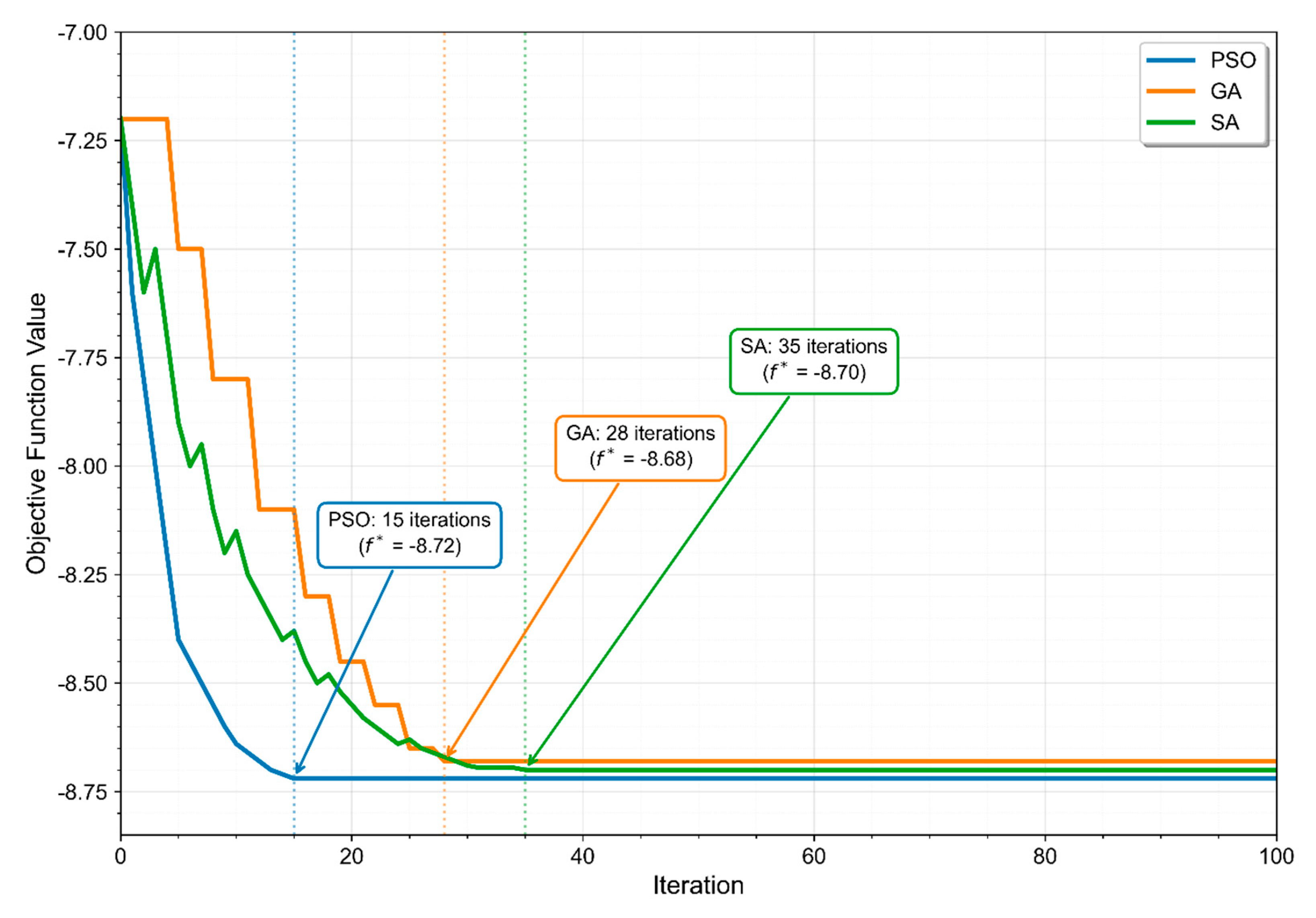
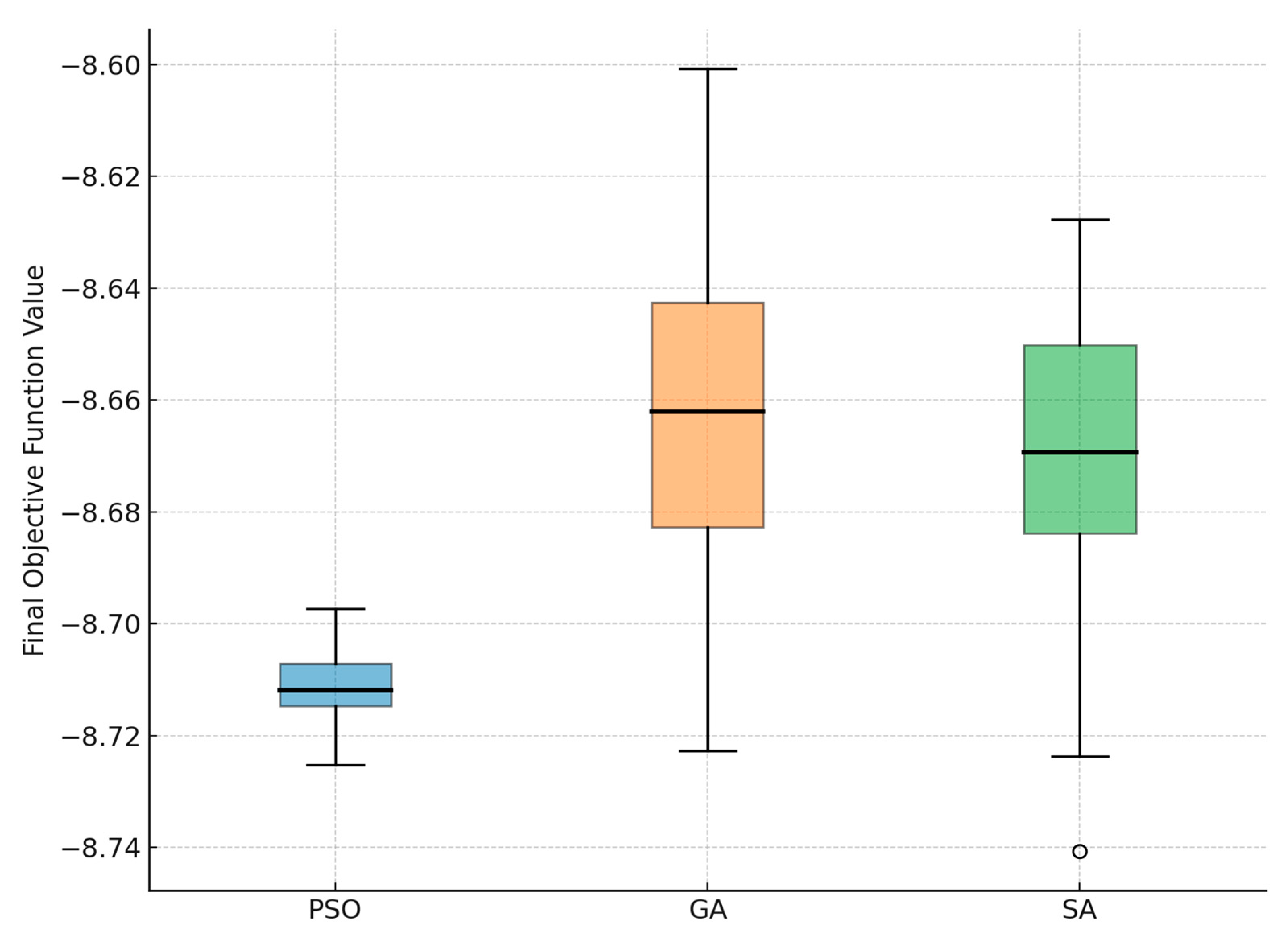
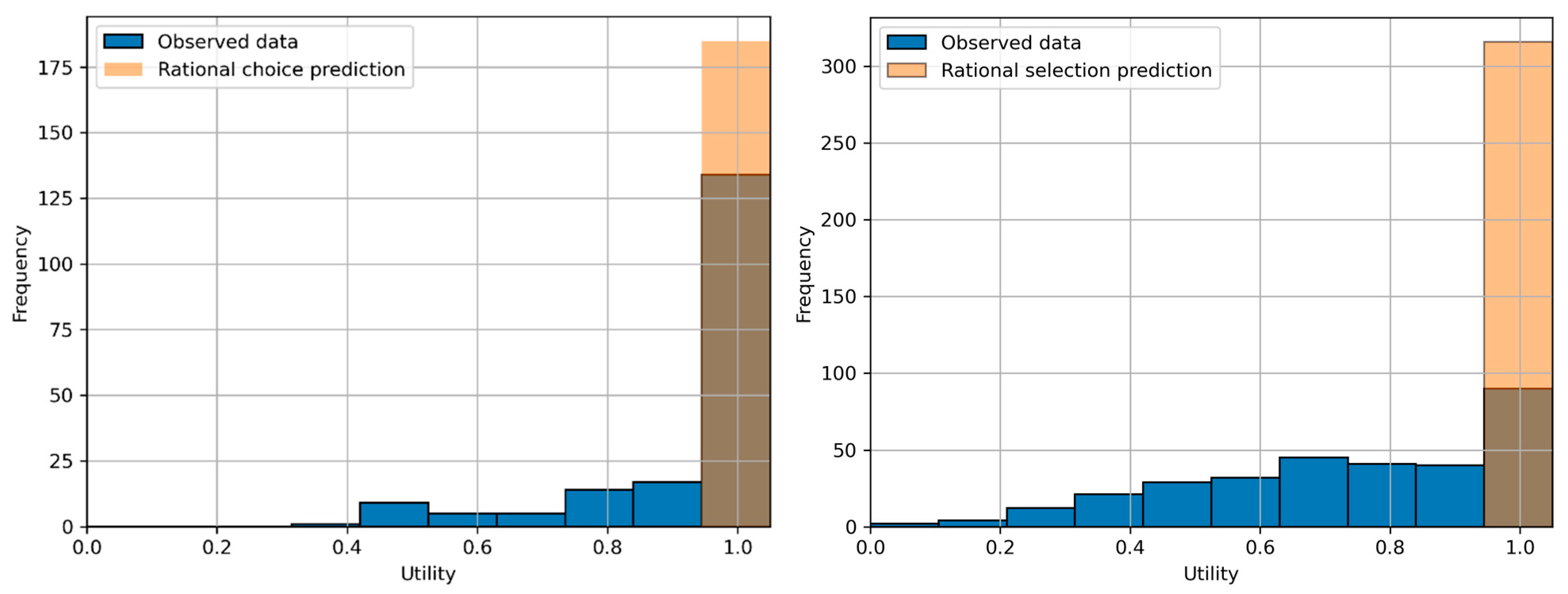
Personnel selection represents a two-sided matching problem in which firms compete for qualified candidates by designing job-offer packages. While traditional models assume fully rational agents, real-world decision-makers often face bounded rationality due to limited information and cognitive constraints. This study develops a matching framework that incorporates bounded rationality through the Quantal Response Equilibrium, where firms and candidates act as probabilistic rather than perfect optimizers under uncertainty. Using Maximum Likelihood Estimation and organizational hiring data, we validate that both sides display bounded rational behavior and that rationality increases as the selection process advances. Building on these findings, we propose a two-stage stochastic optimization approach to determine optimal job-offer packages that balance organizational policies with candidate competencies. The optimization problem is solved using particle swarm optimization, which efficiently explores the solution space under uncertainty. Data analysis reveals that only 23.10% of low-level hiring decisions align with rational choice predictions, compared to 64.32% for high-level positions. In our case study, bounded rationality increases package costs by 26%, while modular compensation packages can reduce costs by up to 25%. These findings highlight the cost implications of bounded rationality, the advantages of flexible offers, and the systematic behavioral differences across job levels. The framework provides theoretical contributions to matching under bounded rationality and offers practical insights to help organizations refine their personnel selection strategies and attract suitable candidates more effectively.
Keywords: two-sided matching; quantal response equilibrium; bounded rationality; two-stage stochastic approach; particle swarm optimization two-sided matching; quantal response equilibrium; bounded rationality; two-stage stochastic approach; particle swarm optimization