Article

A Dynamics and Control Study of the New H1N1 Influenza with Two Roots of Infection: The Impact of Optimal Vaccination and Treatment


by
Amar Nath Chatterjee
1,
Santosh Kumar Sharma
1,
Fahad Al Basir
2,* and
Aeshah A. Raezah
3
1
Department of Mathematics, K. L. S. College in Nawada, Magadh University, Bodh Gaya 805110, Bihar, India
2
Department of Mathematics, Asansol Girls’ College, Asansol 713304, West Bengal, India
3
Department of Mathematics, Faculty of Science, King Khalid University, Abha 62529, Saudi Arabia
*
Author to whom correspondence should be addressed.
Mathematics 2025, 13(19), 3086; https://doi.org/10.3390/math13193086
Submission received: 17 August 2025 / Revised: 18 September 2025 / Accepted: 22 September 2025 / Published: 25 September 2025
(This article belongs to the Section C1: Difference and Differential Equations)
Editorial Note: Due to an editorial processing error, this article was incorrectly included within the Special Issue Advances in Dynamical Systems, Differential Equations, and Their Applications upon publication. This article was removed from this Special Issue’s webpage on 16 October 2025 but remains within the regular issue in which it was originally published. The editorial office confirms that this article adhered to MDPI's standard editorial process (https://www.mdpi.com/editorial_process).

Abstract

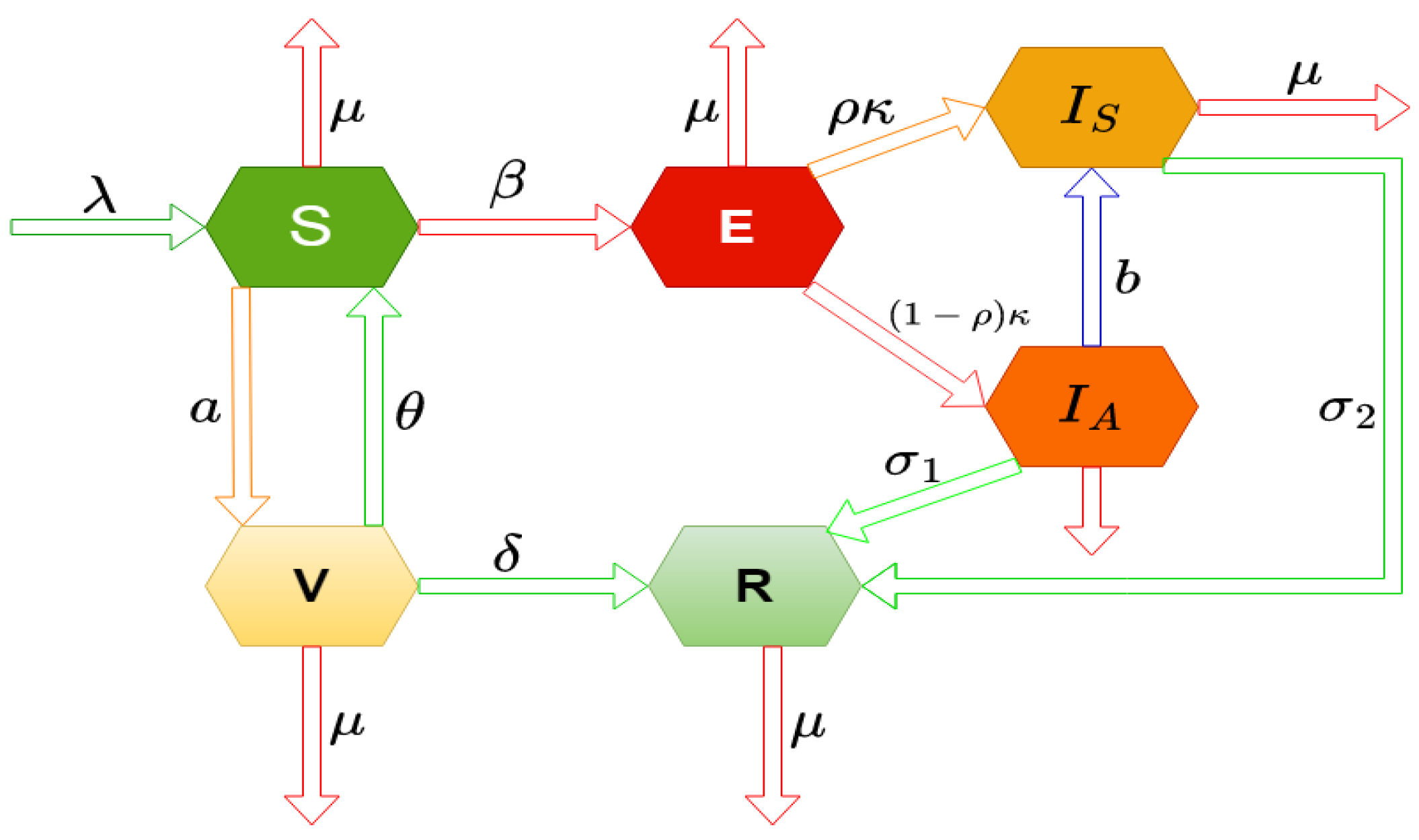
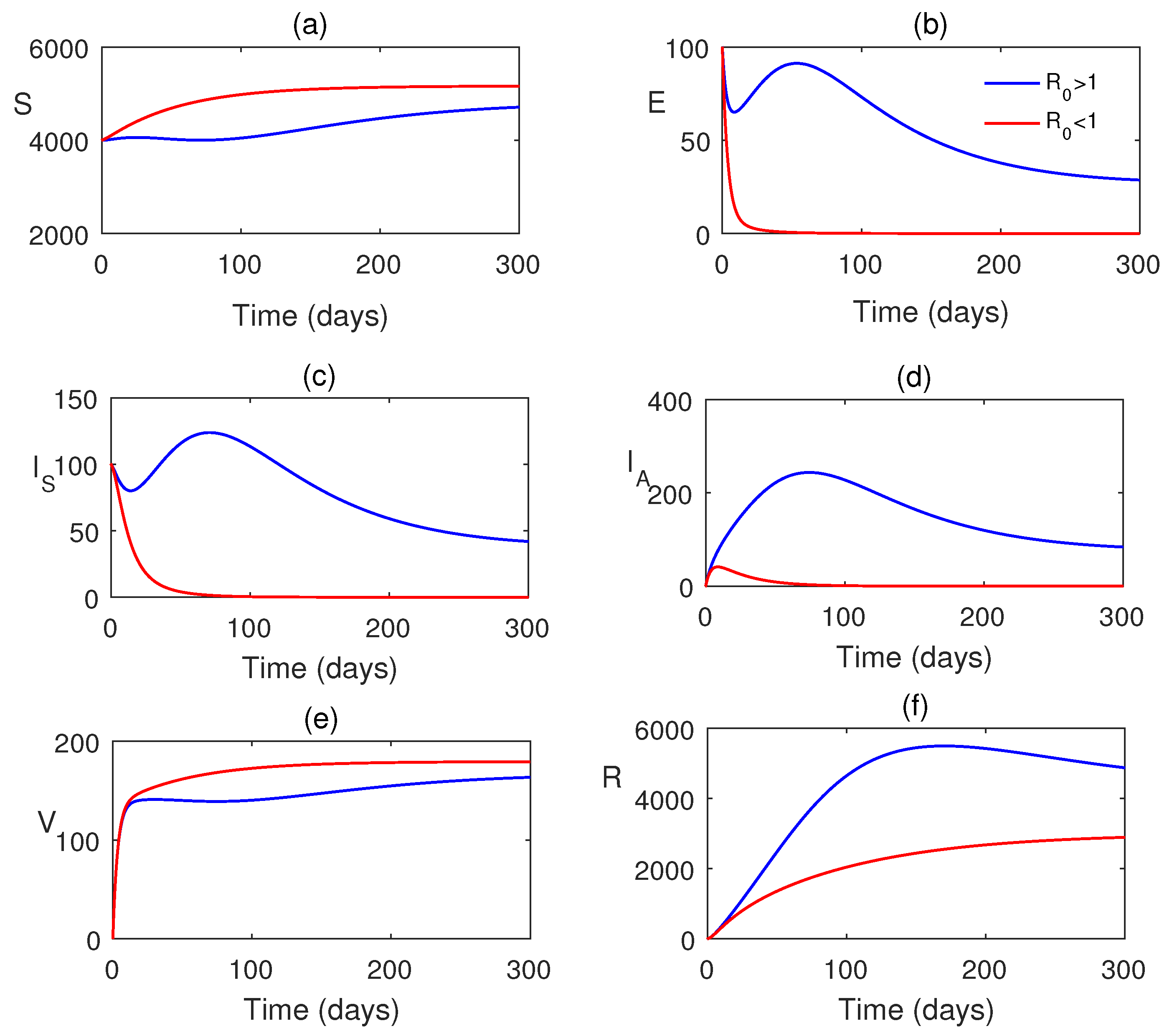
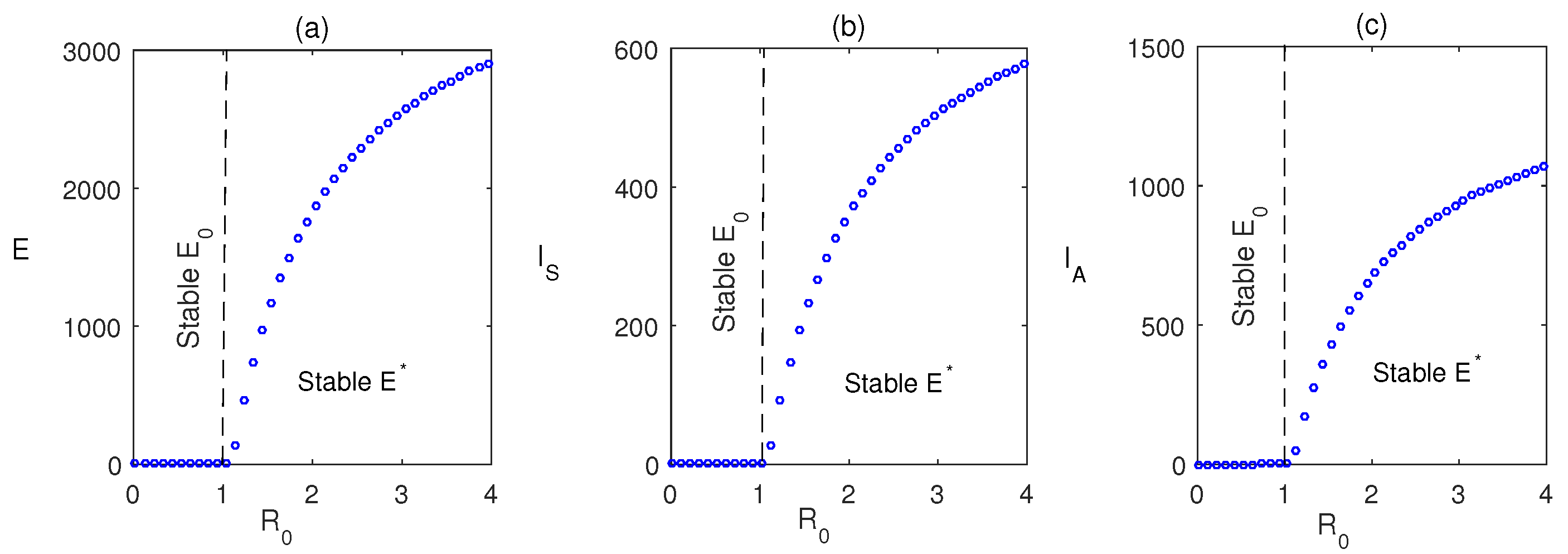
H1N1 influenza, also known as swine flu, is a subtype of the influenza A virus that can infect humans, pigs, and birds. Sensitivity analysis and optimal control studies play a crucial role in understanding the dynamics of H1N1 influenza. In this study, we have derived a mathematical model incorporating both symptomatic and asymptomatic infections, as well as vaccination, to assess the impact of key parameters on disease transmission. Also, we have assumed a density-dependent infection transmission in the modeling process of H1N1 dynamics. We determine the basic reproduction number using the next-generation matrix method and found that the disease-free equilibrium is stable when the basic reproduction number R0<1 and the endemic equilibrium exists and is stable globally when R0>1. By performing sensitivity analysis, the most influential factors affecting infection spread are identified, aiding in targeted intervention strategies. Optimal control techniques are then applied to determine the best approaches to minimize infections while considering resource constraints. The findings provide valuable insights for public health policies, offering effective strategies for mitigating H1N1 outbreaks and enhancing disease management efforts using optimal vaccination.
Keywords: mathematical model; basic reproduction number (R0); sensitivity analysis; equilibria and stability; forward bifurcation; optimal vaccination; numerical simulations mathematical model; basic reproduction number (R0); sensitivity analysis; equilibria and stability; forward bifurcation; optimal vaccination; numerical simulations