Article

A Double-Layer Coupled Network Model of Network Density Effects on Multi-Stage Innovation Efficiency Dynamics: Agent-Based Modeling Methods

International Business School, Shaanxi Normal University, Xi’an 710119, China
*
Author to whom correspondence should be addressed.
Mathematics 2024, 12(2), 337; https://doi.org/10.3390/math12020337
Submission received: 14 October 2023 / Revised: 22 November 2023 / Accepted: 23 November 2023 / Published: 19 January 2024

Abstract

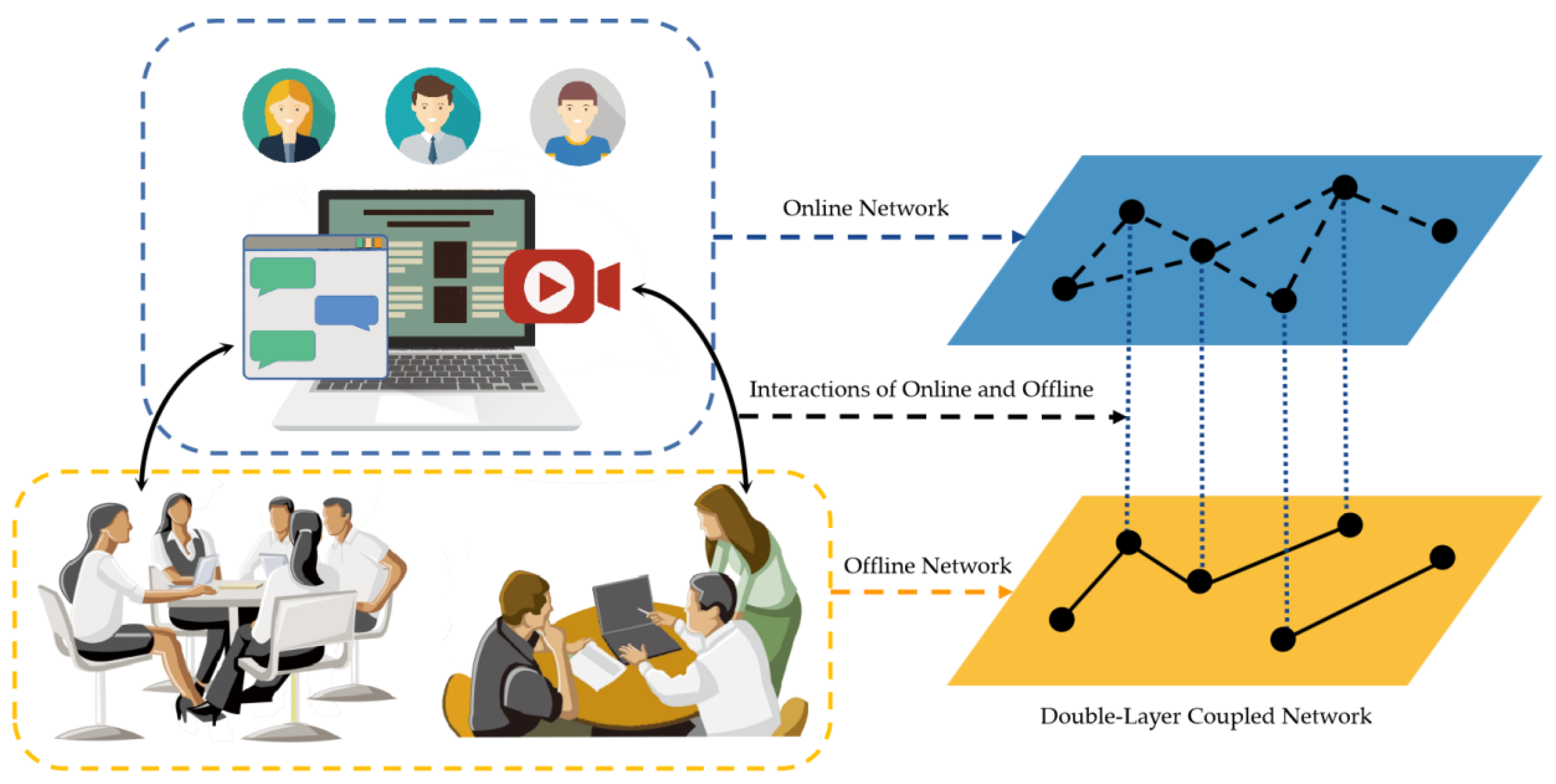
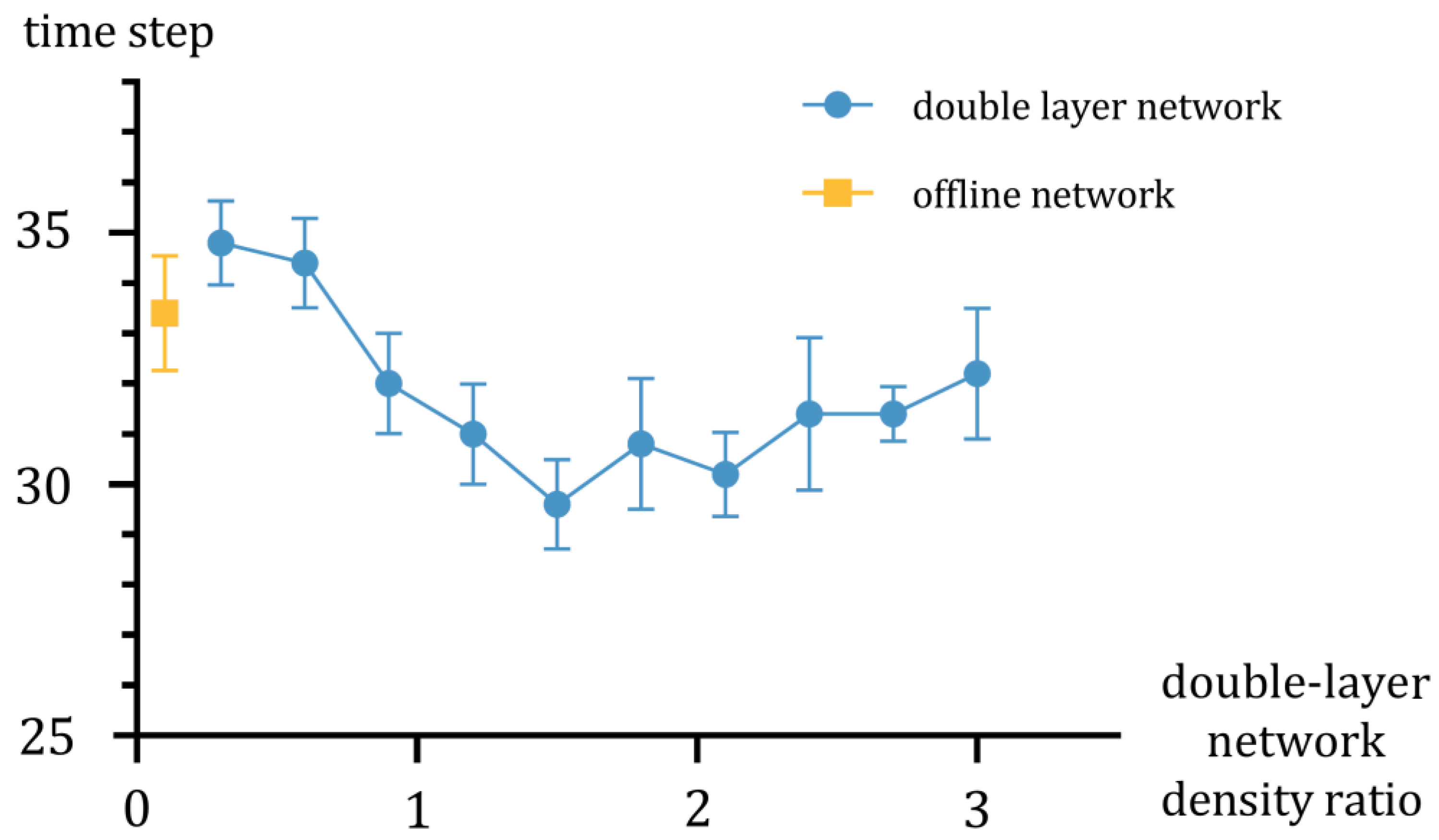
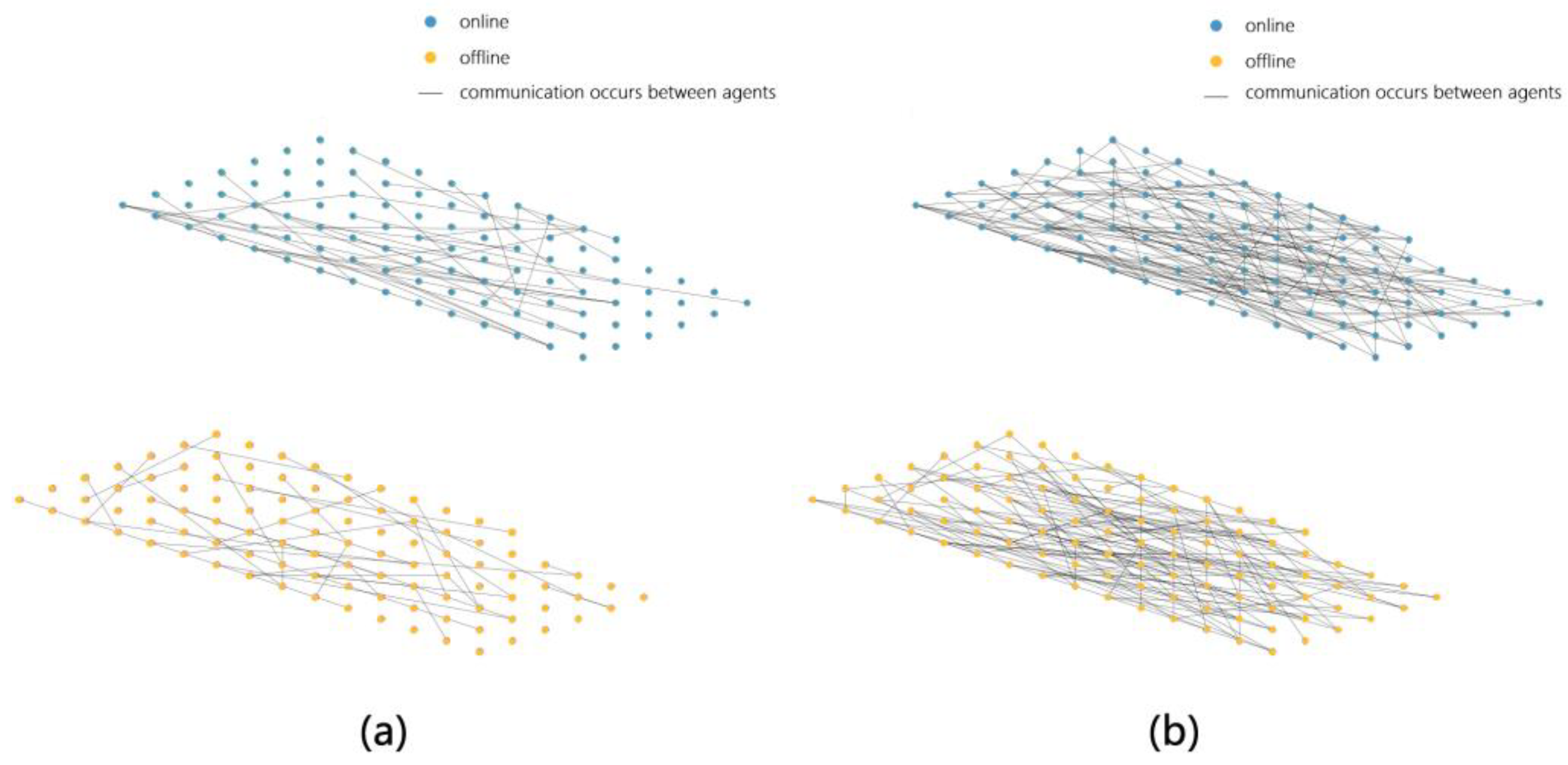
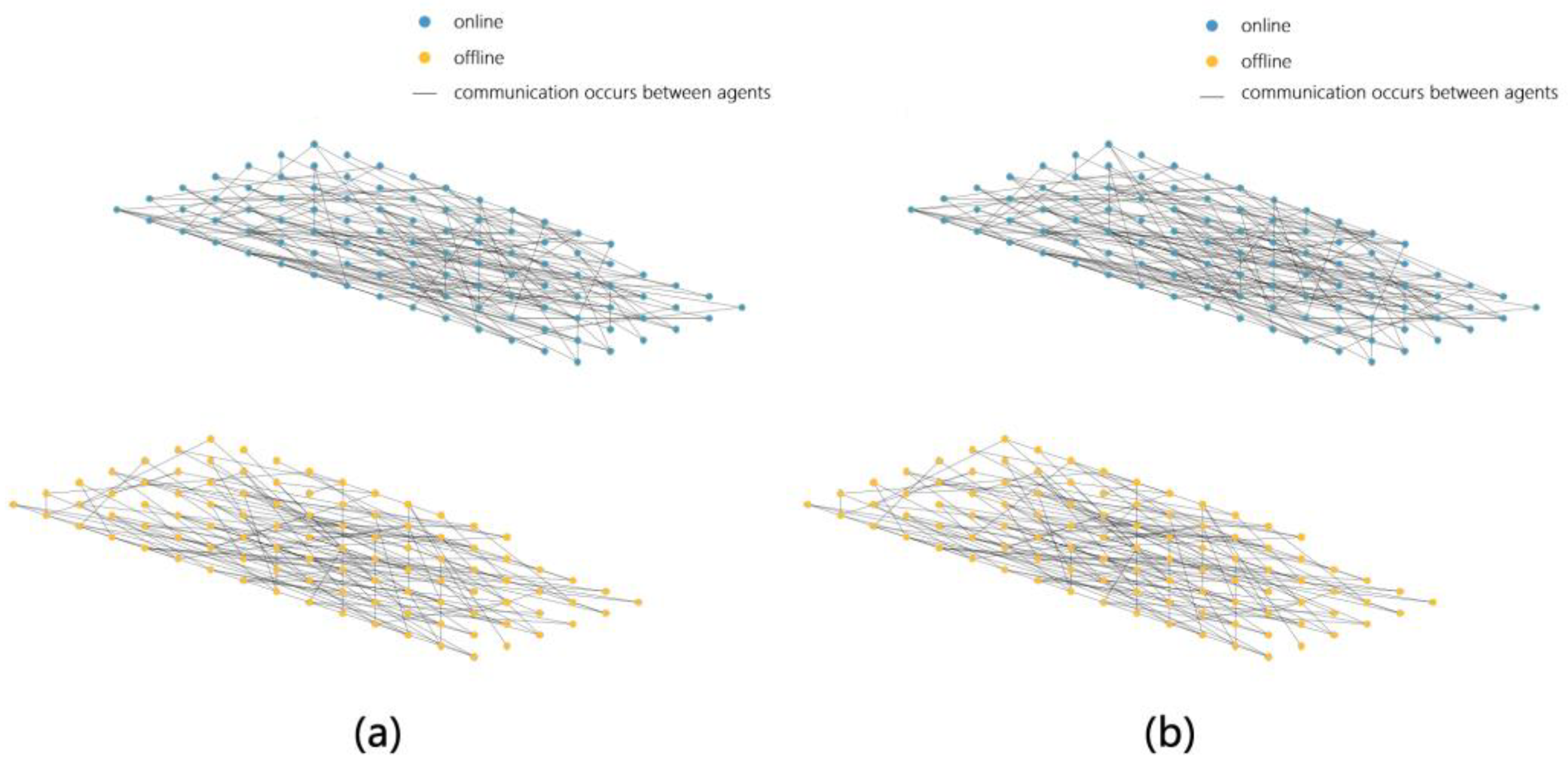
This paper proposes a double-layer coupled network model to analyze the multi-stage innovation activities of online, and the model consists of two layers: the online layer, which represents the virtual interactions among innovators, and the offline layer, which represents the physical interactions among innovators. The model assumes that the innovation activities are influenced by both the online and offline network structures, as well as the coupling effect between them. And it simulates the entire innovation process including knowledge diffusion and knowledge recombination. The model also incorporates the concept of network density, which measures the degree of network connectivity and cohesion (network structure). Observing the network density influence on innovation efficiency during the innovation process is realized through setting the selection mechanism and the knowledge recombination mechanism. The coupling relationship between the two layers of network density on the three stages of innovation is further discussed under the theoretical framework of the innovation value chain. Simulation and experimental results suggest that when the offline network density is constant, a higher online network density is not always better. When the online network density is low, the sparse structure of the online network reduces innovation efficiency. When the online network density is high, the structural redundancy caused by the tight network structure prevents innovation efficiency from improving. The results of the study help enterprises to adjust and optimize the internal cooperation network structure at different stages of innovation in order to maximize its effectiveness and improve the innovation efficiency of enterprises.
Keywords: online social media; double-layer coupled network; network density; multi-stage innovation online social media; double-layer coupled network; network density; multi-stage innovation