Article

Numerical Analysis of a Drop-Shaped Aquatic Robot

by
Evgeny V. Vetchanin
* and
Ivan S. Mamaev
Ural Mathematical Center, Udmurt State University, Izhevsk 426034, Russia
*
Author to whom correspondence should be addressed.
Mathematics 2024, 12(2), 312; https://doi.org/10.3390/math12020312
Submission received: 8 December 2023 / Revised: 10 January 2024 / Accepted: 15 January 2024 / Published: 18 January 2024

Abstract

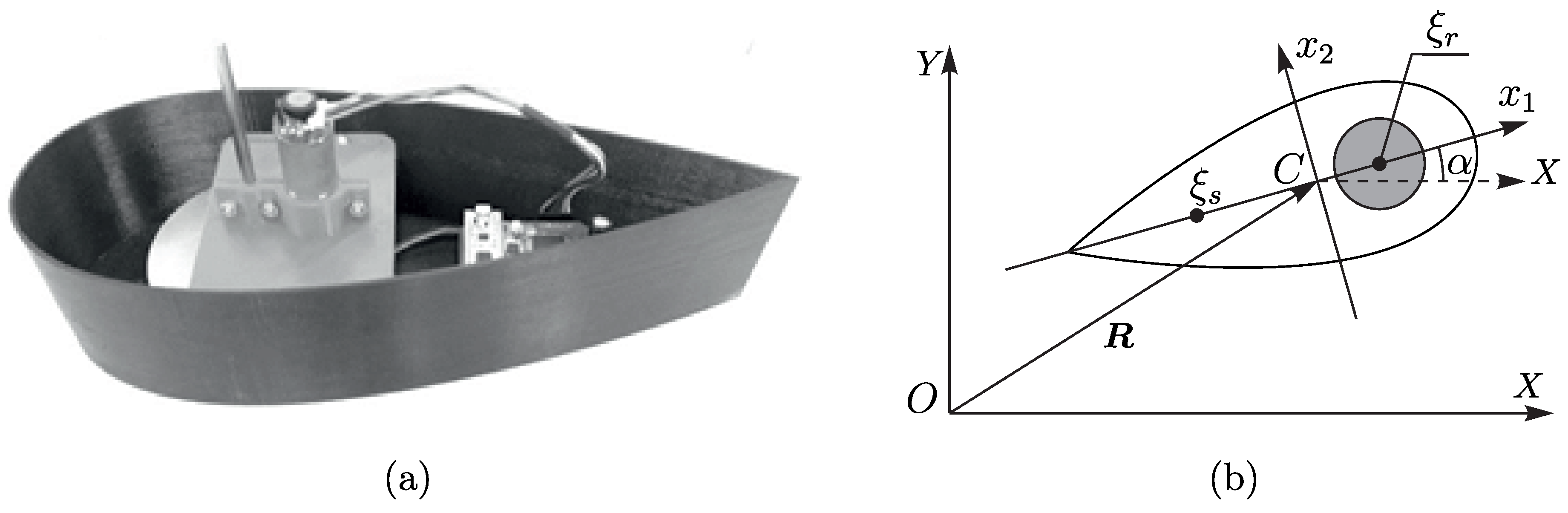
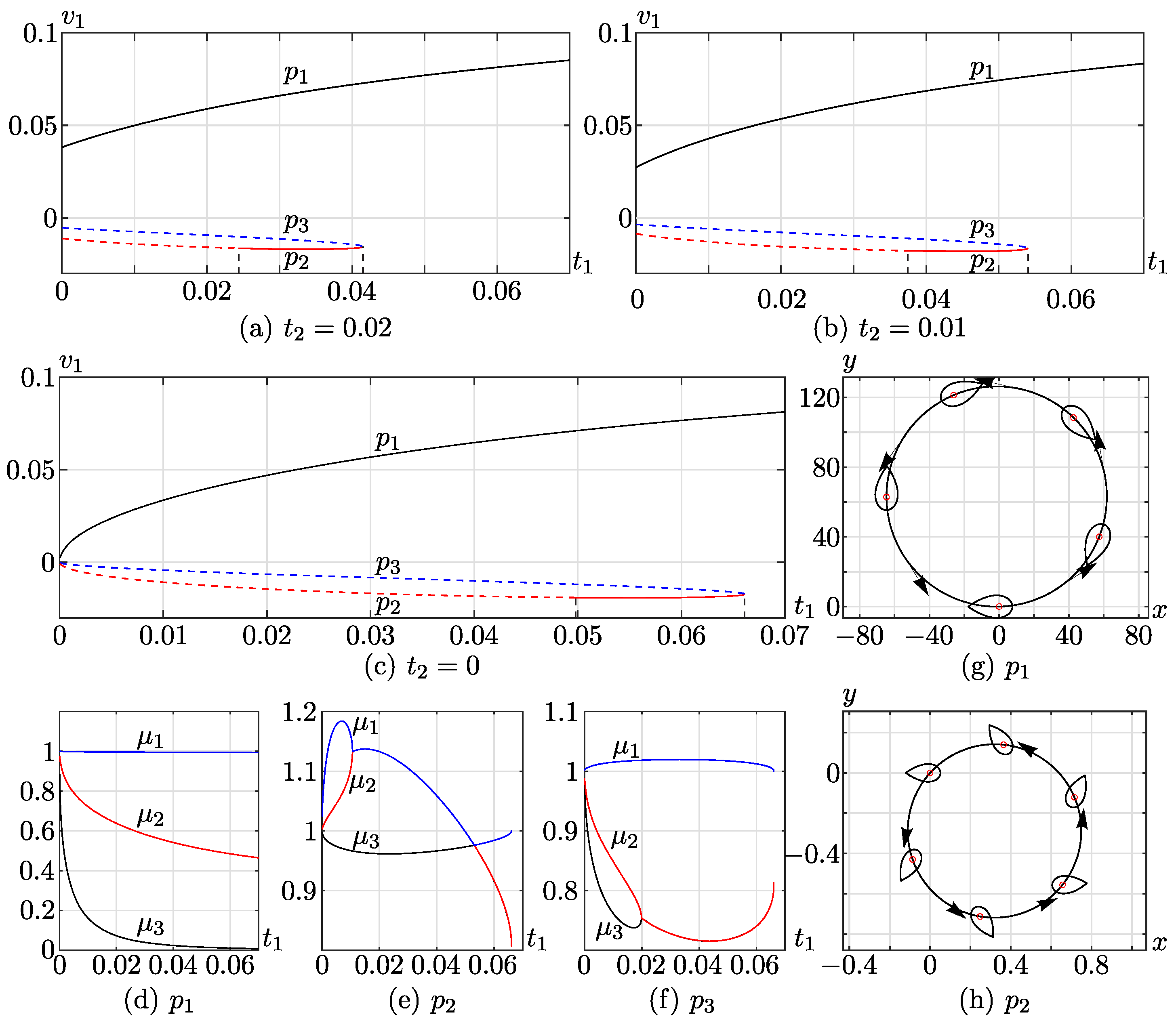
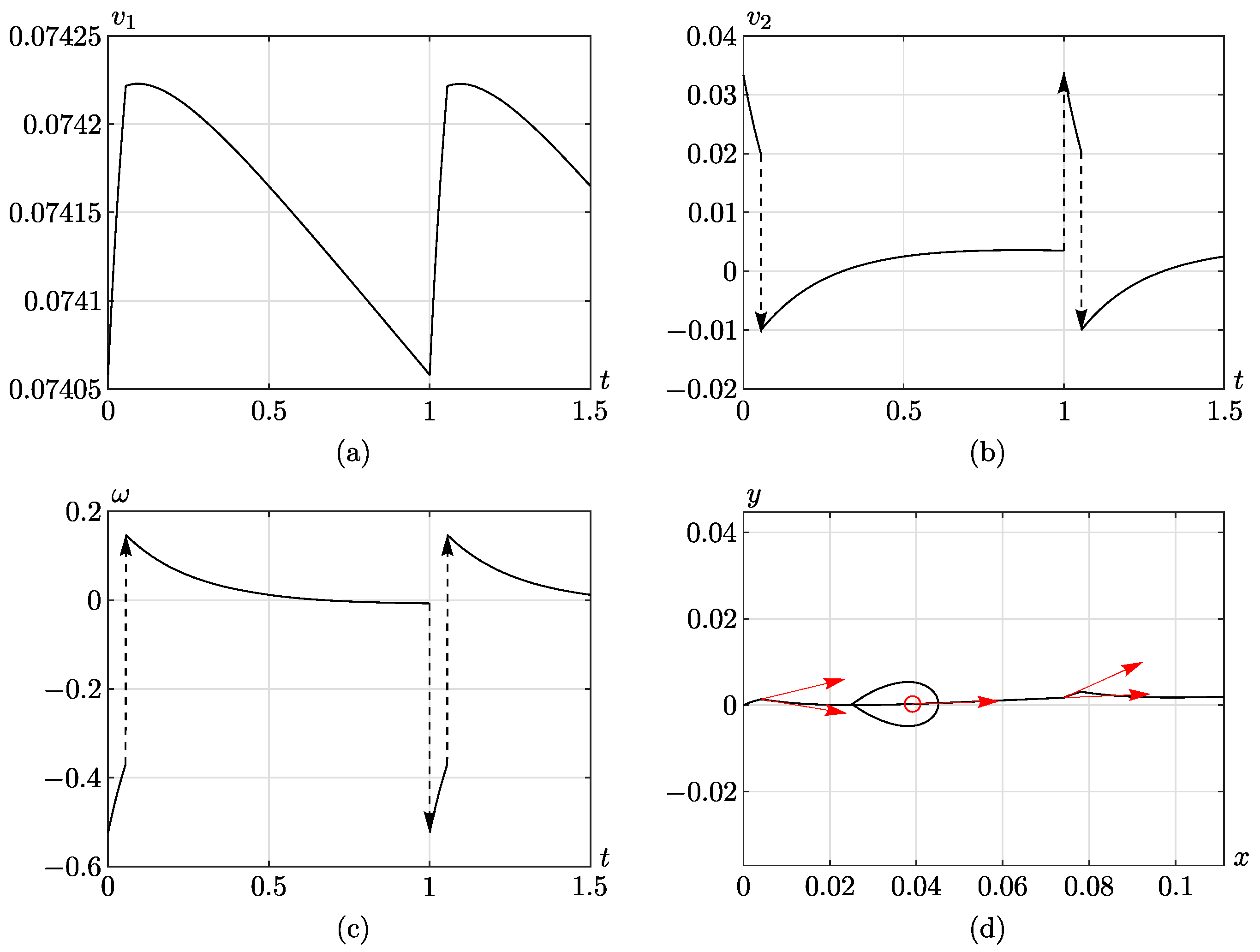
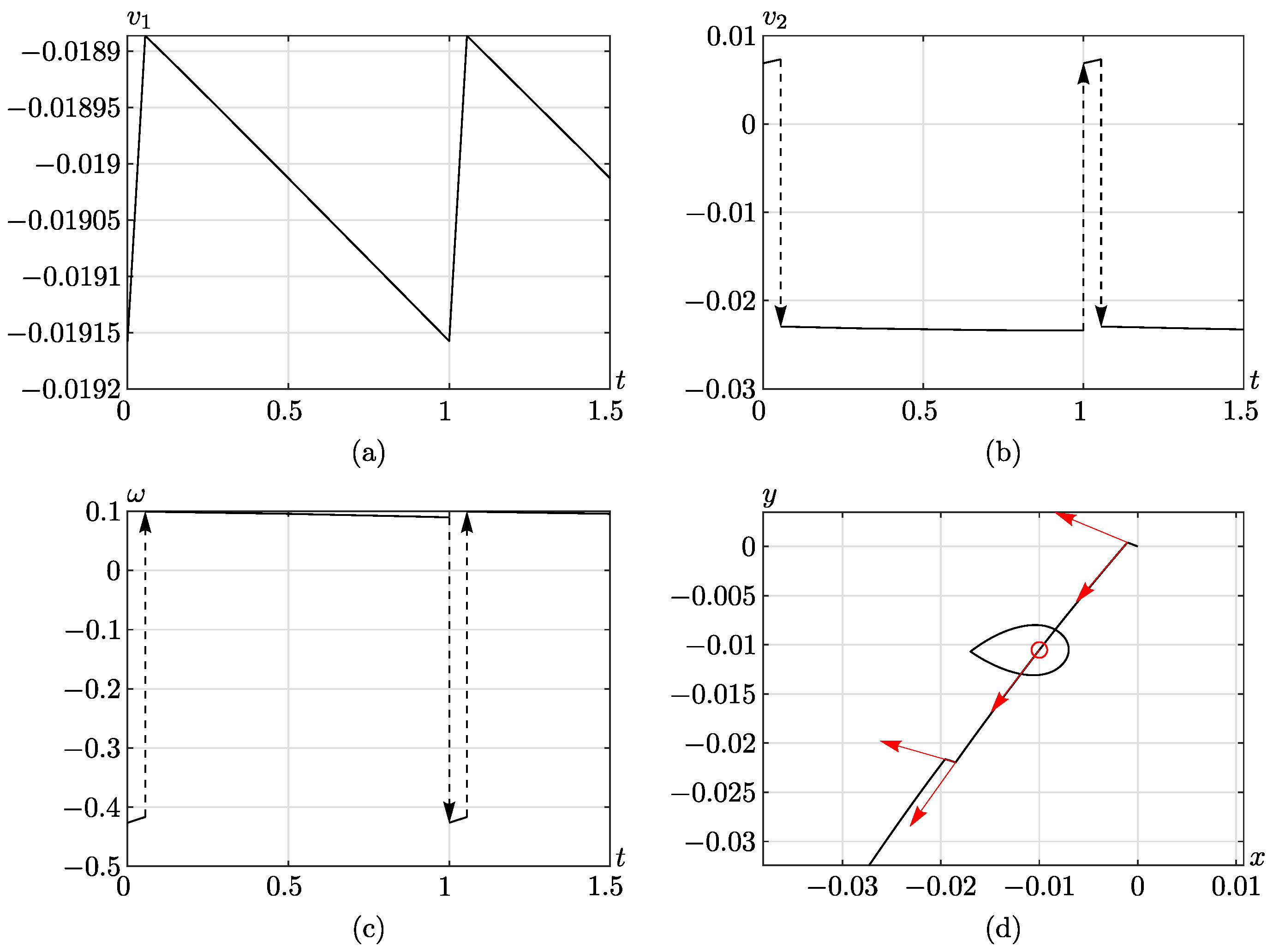
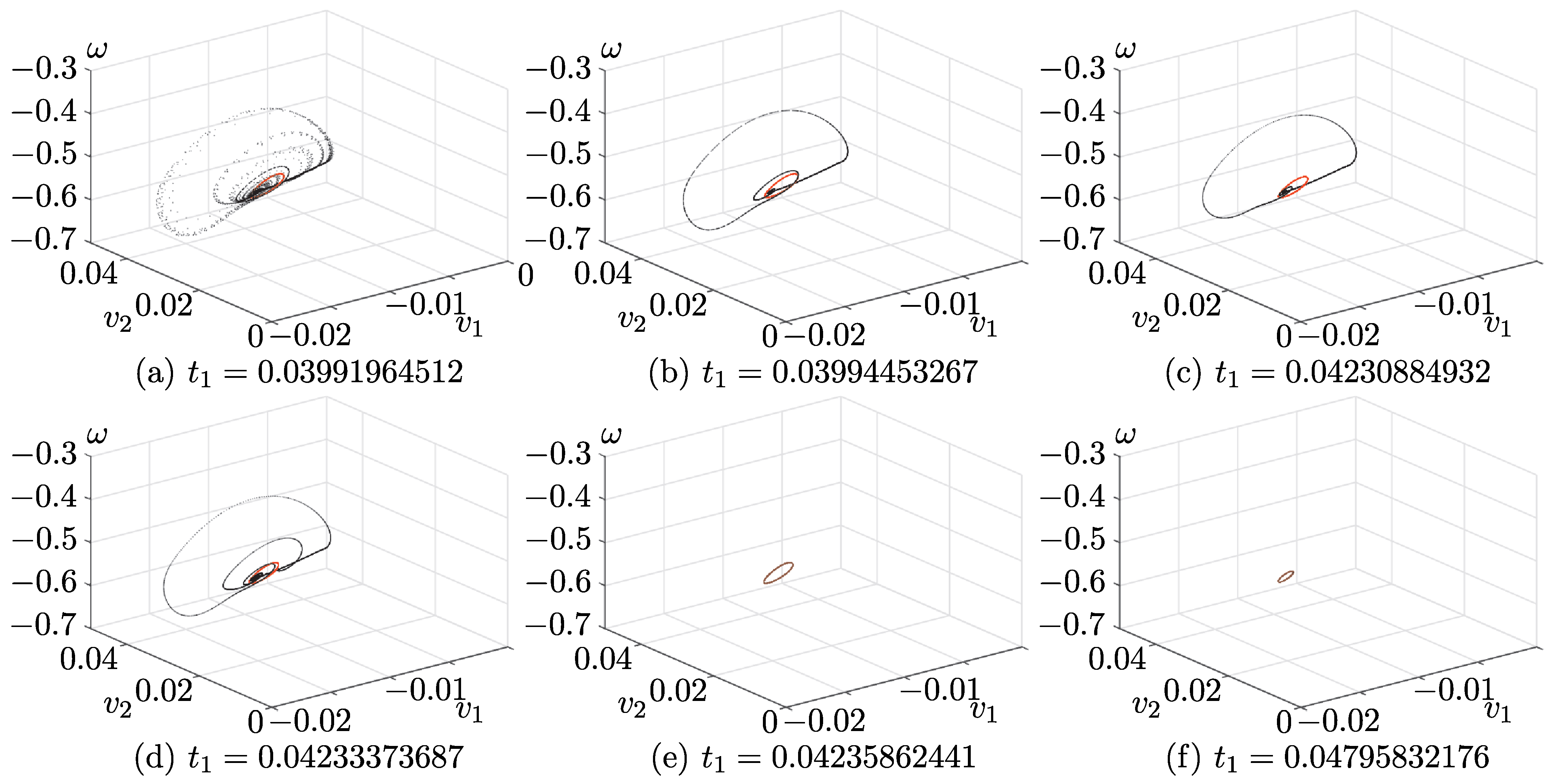
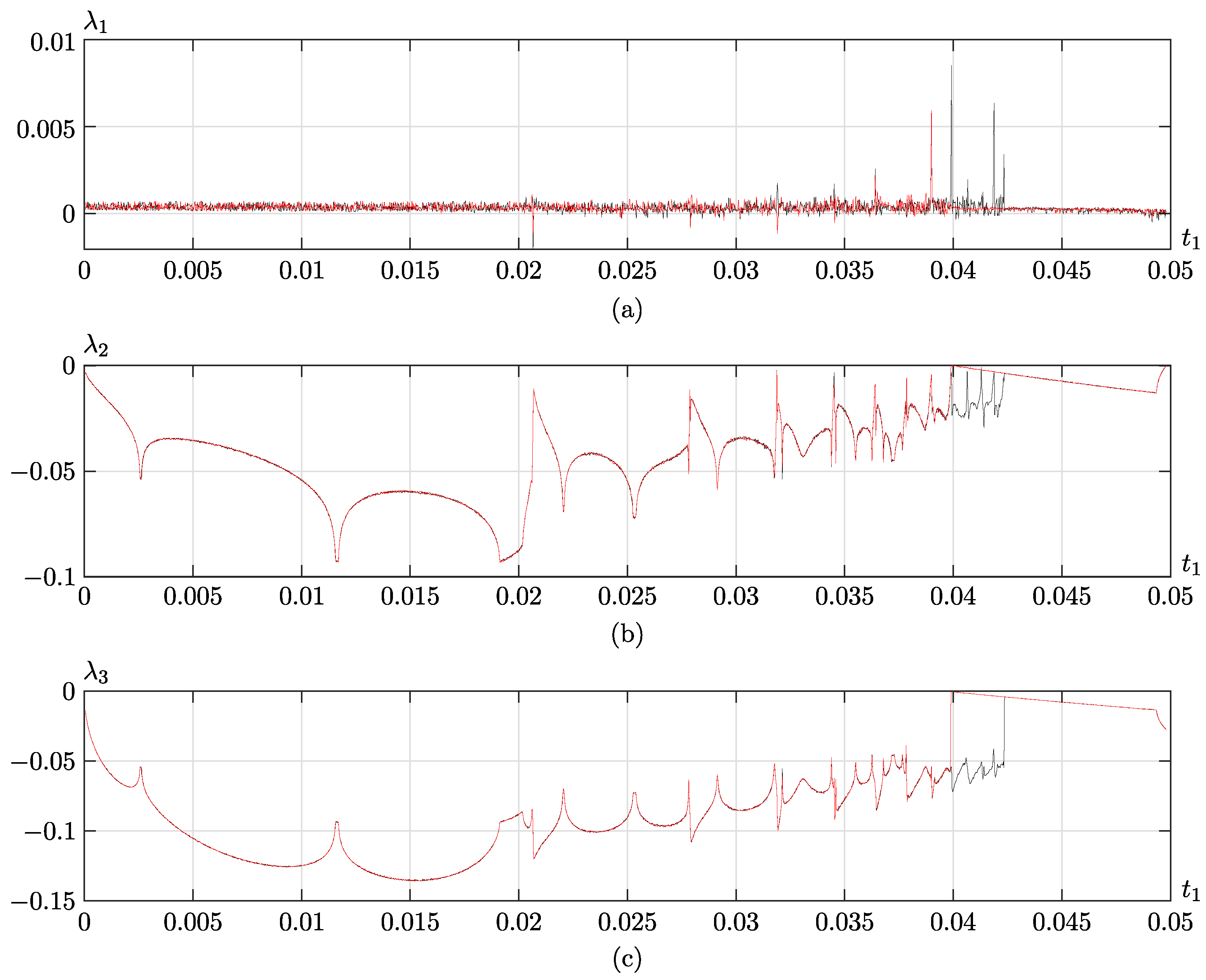
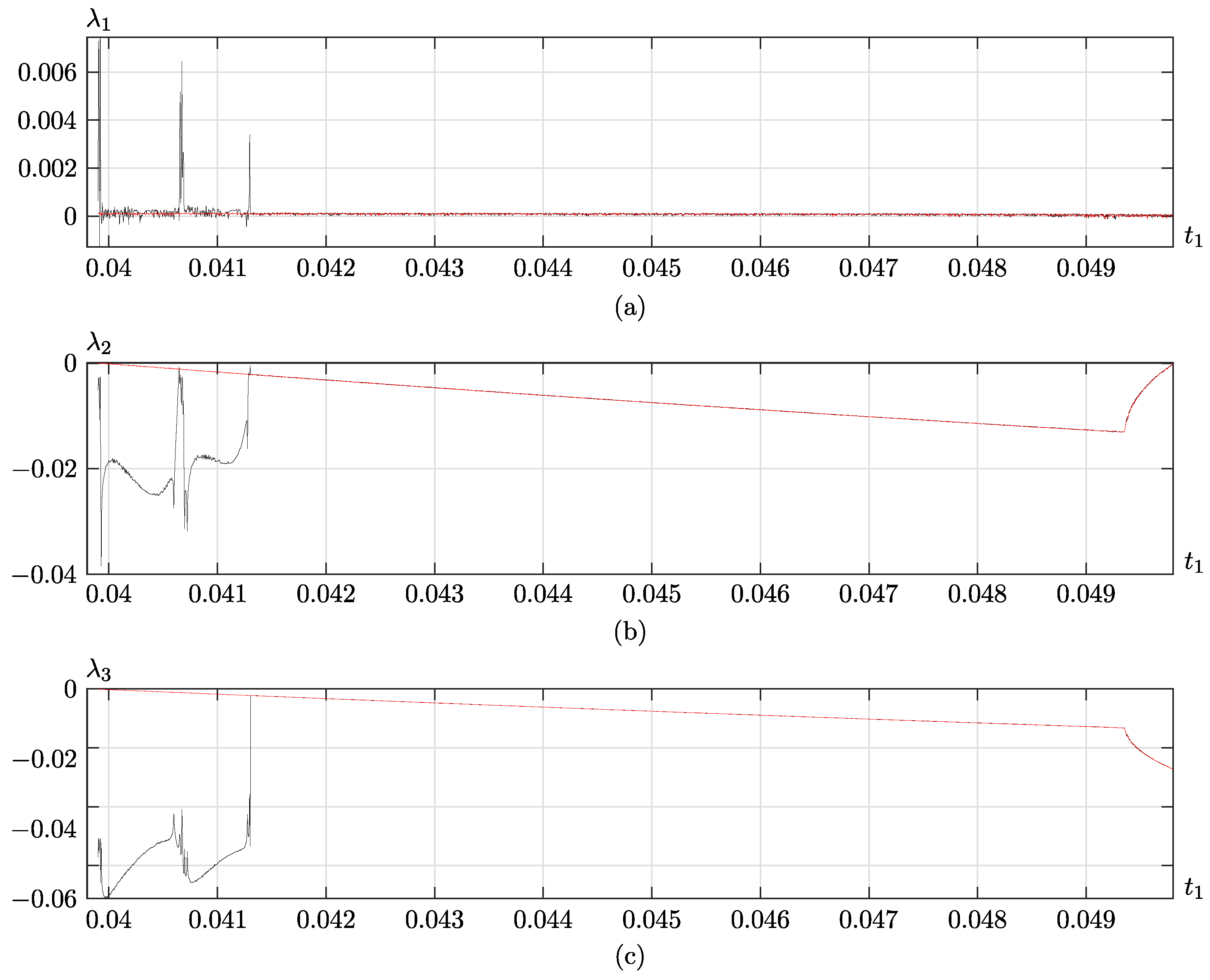
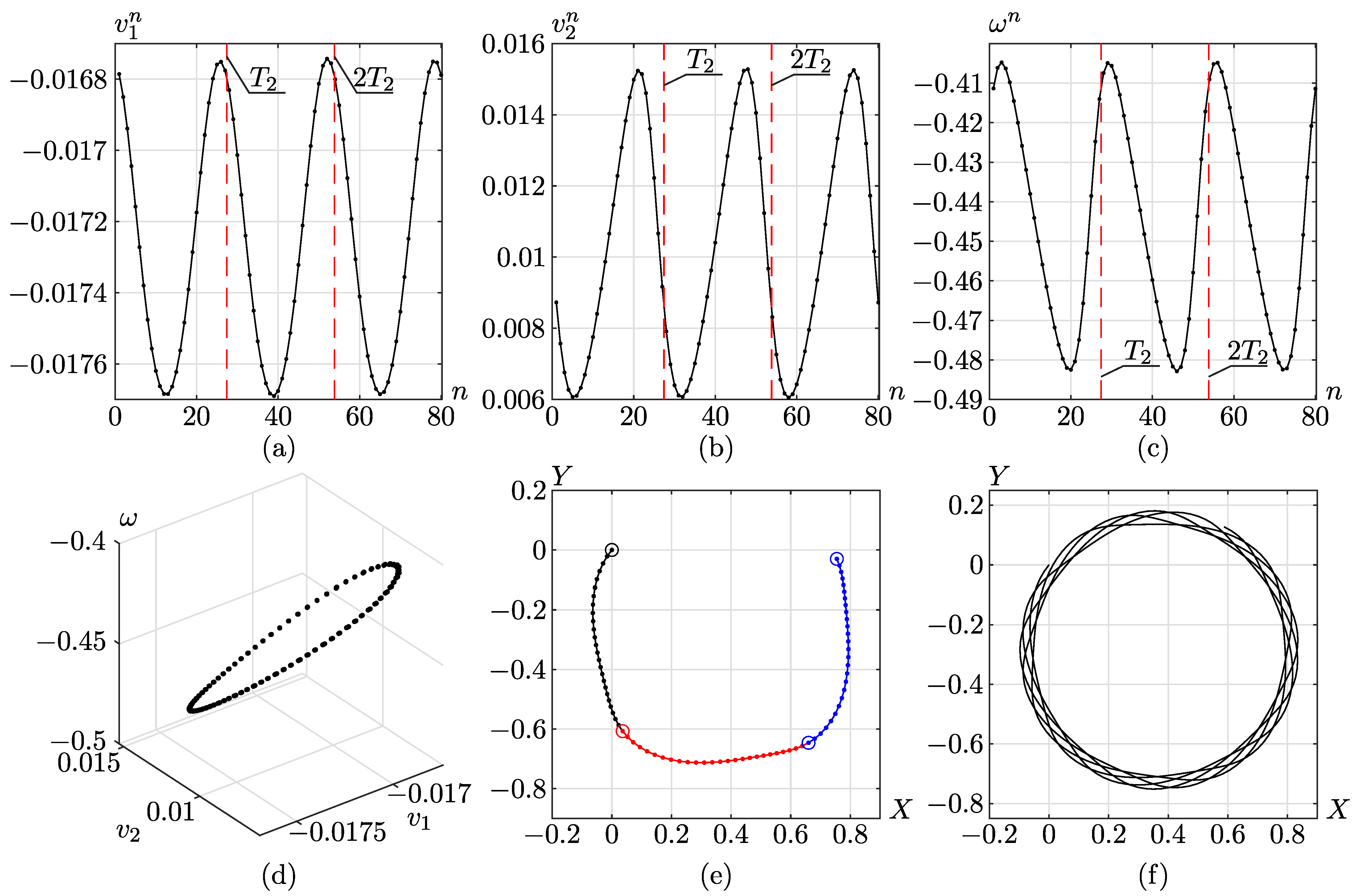
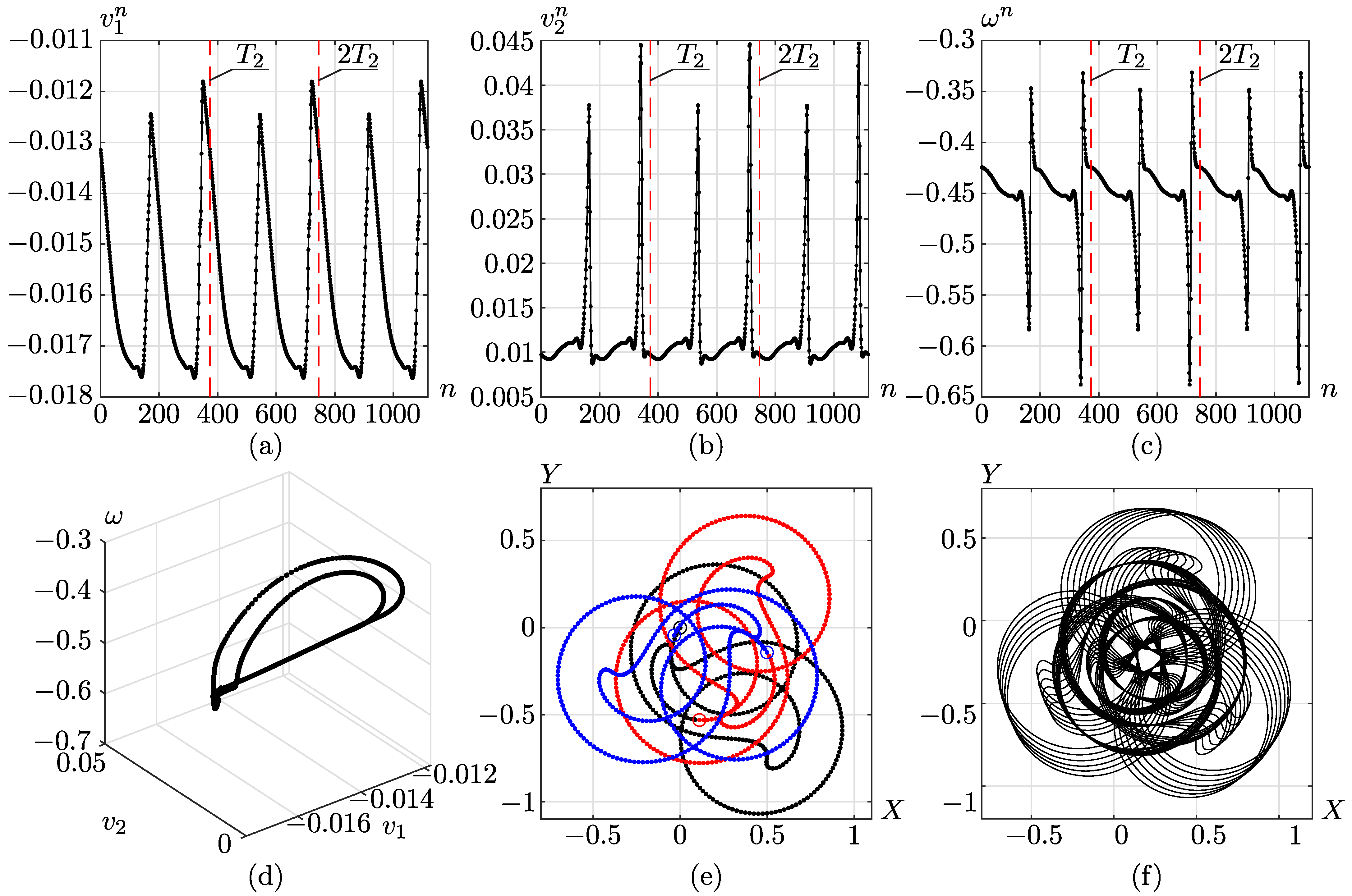
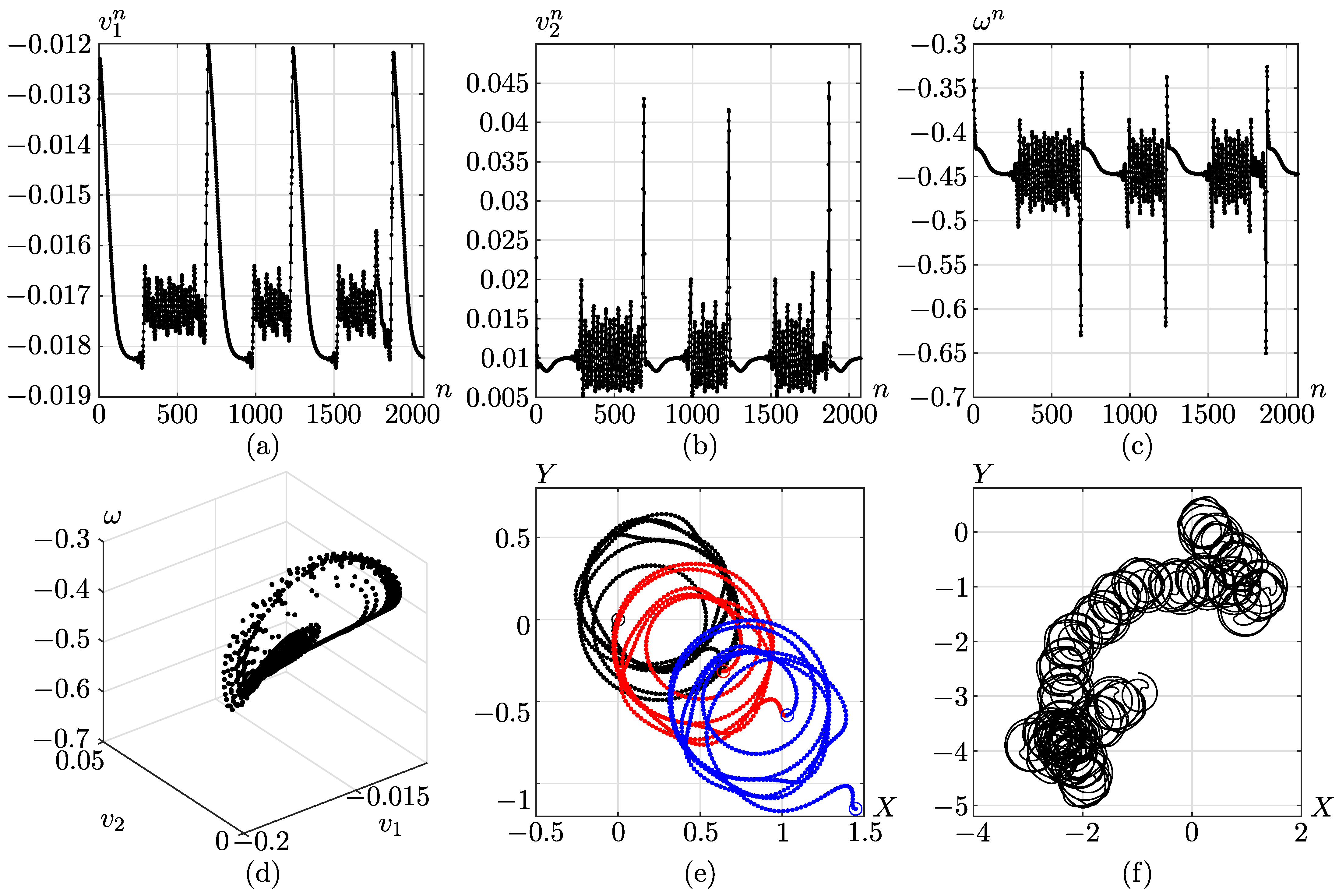
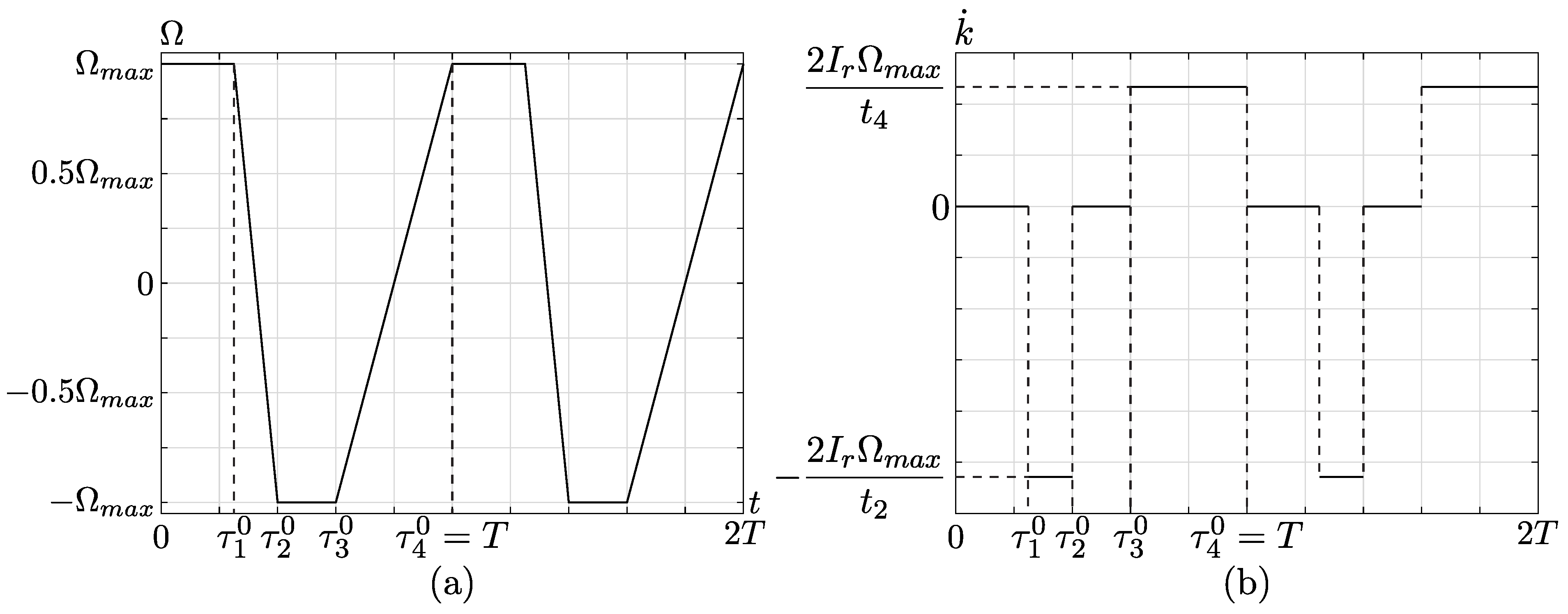
Finite-dimensional equations constructed earlier to describe the motion of an aquatic drop-shaped robot due to given rotor oscillations are studied. To study the equations of motion, we use the Poincaré map method, estimates of the Lyapunov exponents, and the parameter continuation method to explore the evolution of asymptotically stable solutions. It is shown that, in addition to the so-called main periodic solution of the equations of motion for which the robot moves in a circle in a natural way, an additional asymptotically stable periodic solution can arise under the influence of highly asymmetric impulsive control. This solution corresponds to the robot’s sideways motion near the circle. It is shown that this additional periodic solution can lose stability according to the Neimark–Sacker scenario, and an attracting torus appears in its vicinity. Thus, a quasiperiodic mode of motion can exist in the phase space of the system. It is shown that quasiperiodic solutions of the equations of motion also correspond to the quasiperiodic motion of the robot in a bounded region along a trajectory of a rather complex shape. Also, strange attractors were found that correspond to the drifting motion of the robot. These modes of motion were found for the first time in the dynamics of the drop-shaped robot.
Keywords: aquatic robot; finite-dimensional model; invariant torus; strange attractor aquatic robot; finite-dimensional model; invariant torus; strange attractor