Article

A Smart Contract Vulnerability Detection Method Based on Multimodal Feature Fusion and Deep Learning

1
School of Information Science, Yunnan University, Kunming 650500, China
2
Yunnan Provincial Health and Medical Big Data Center, Kunming 650500, China
*
Author to whom correspondence should be addressed.
Mathematics 2023, 11(23), 4823; https://doi.org/10.3390/math11234823
Submission received: 22 October 2023 / Revised: 20 November 2023 / Accepted: 24 November 2023 / Published: 29 November 2023
(This article belongs to the Special Issue AI Algorithm Design and Application)

Abstract

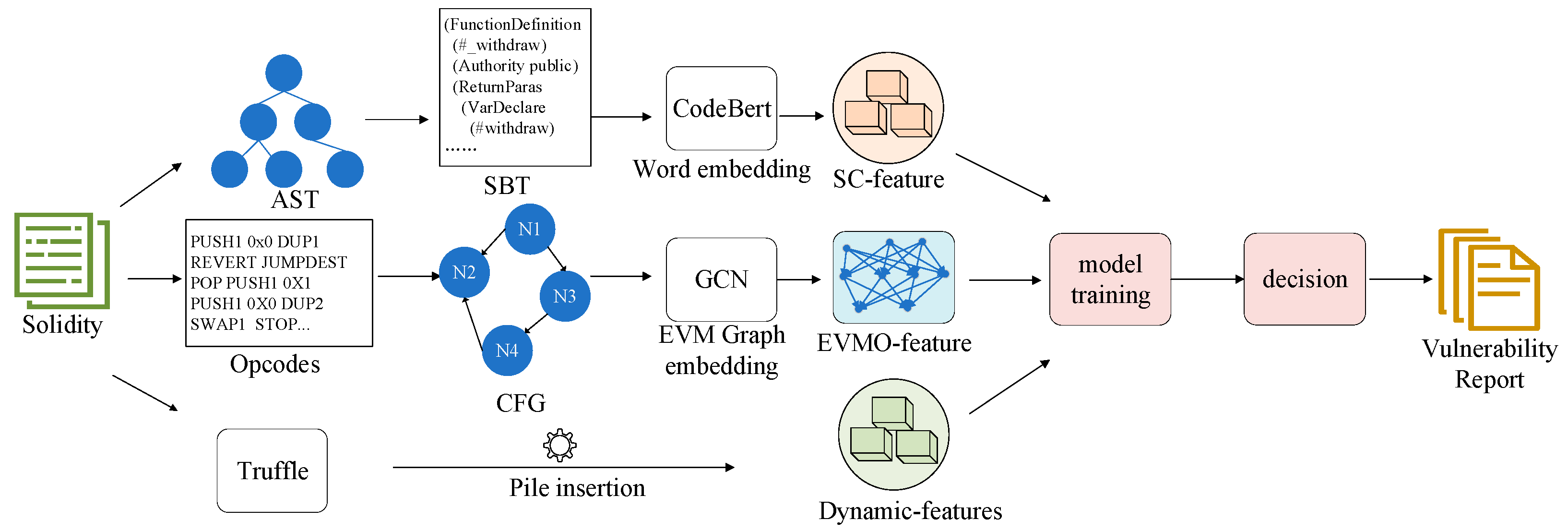
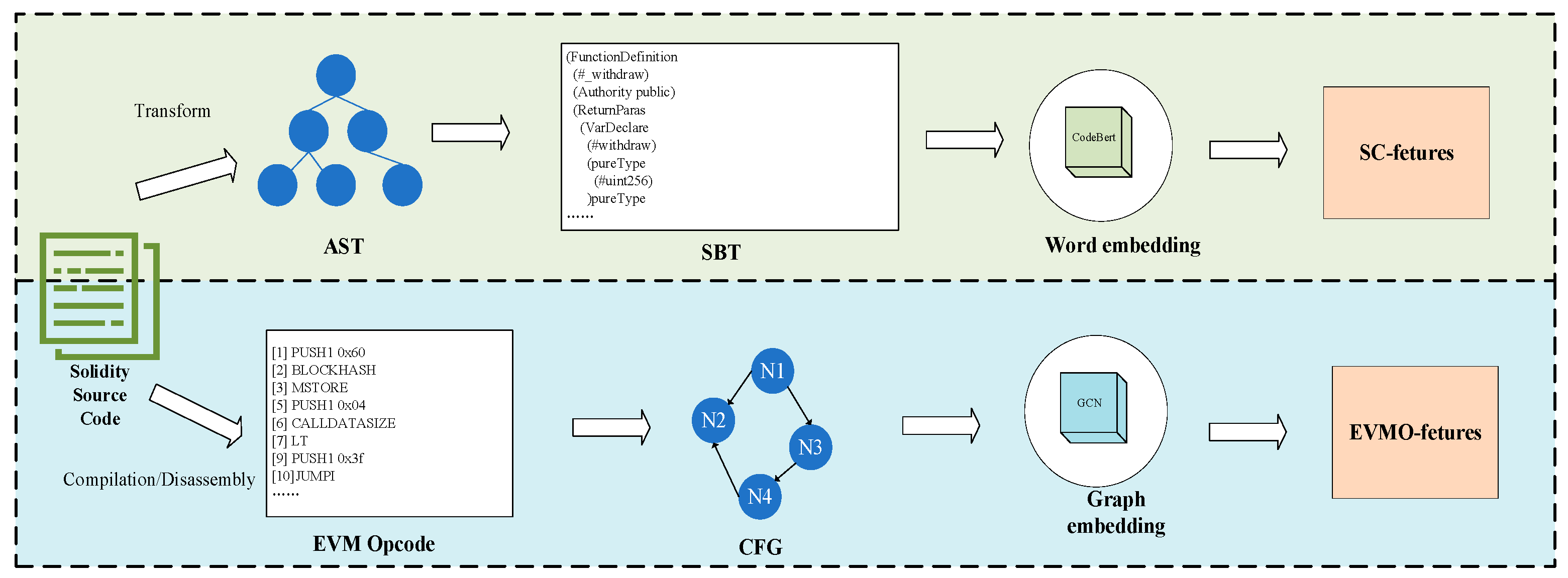
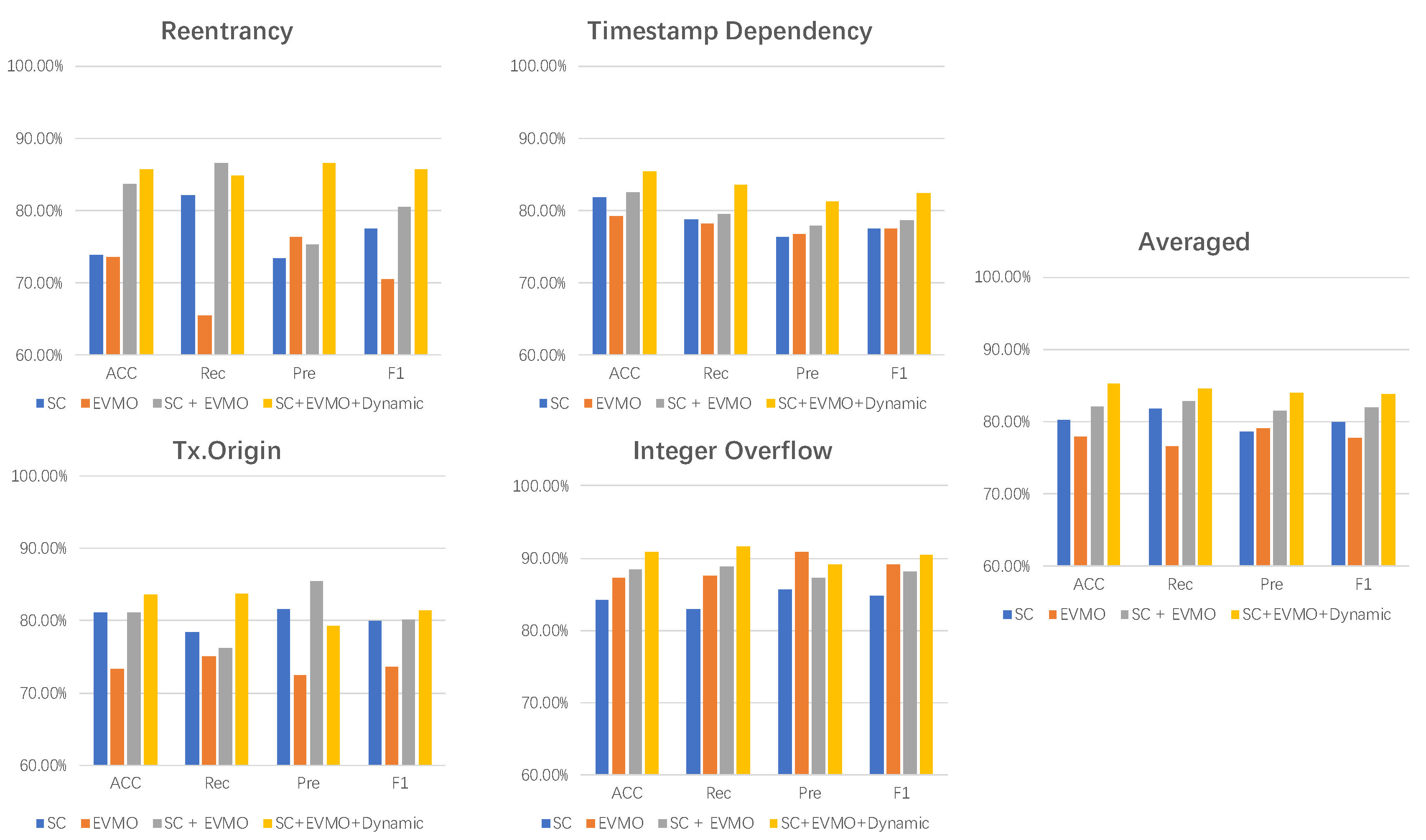
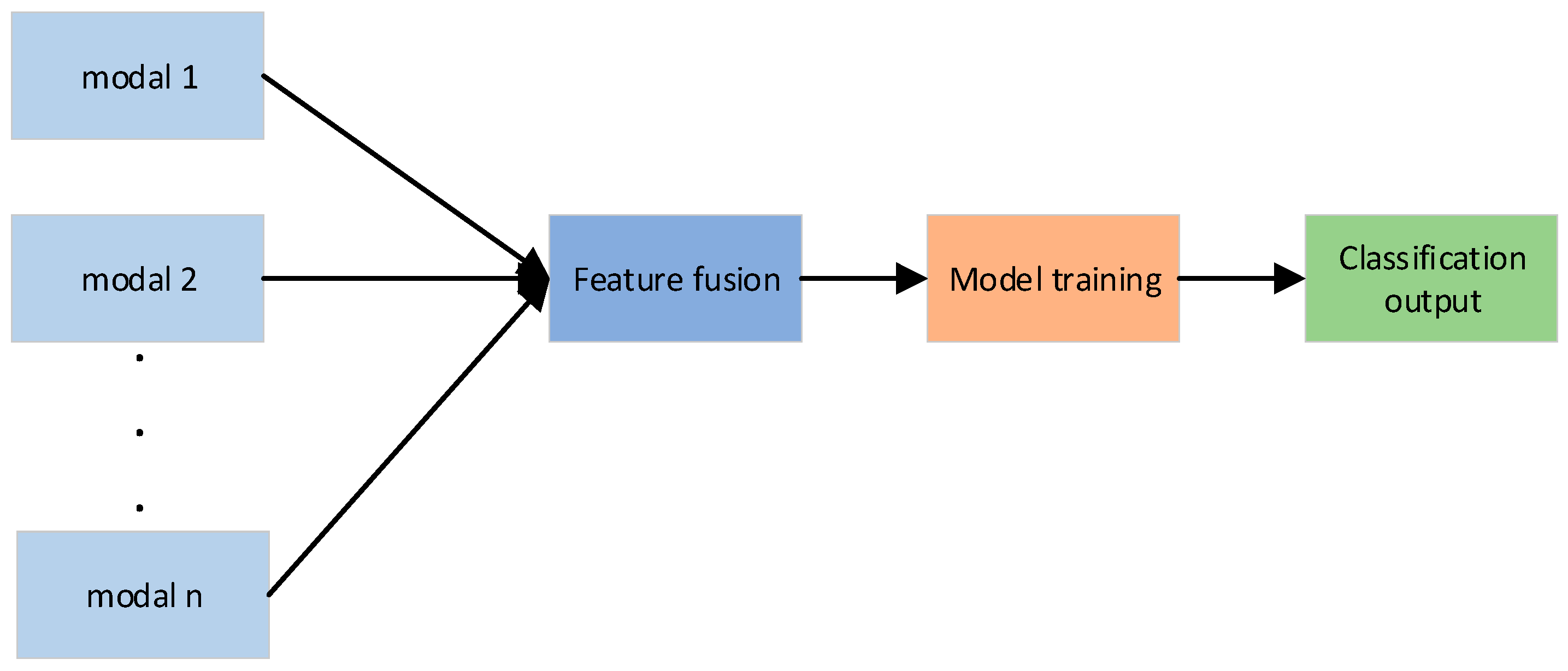
With the proliferation of blockchain technology in decentralized applications like decentralized finance and supply chain and identity management, smart contracts operating on a blockchain frequently encounter security issues such as reentrancy vulnerabilities, timestamp dependency vulnerabilities, tx.origin vulnerabilities, and integer overflow vulnerabilities. These security concerns pose a significant risk of causing substantial losses to user accounts. Consequently, the detection of vulnerabilities in smart contracts has become a prominent area of research. Existing research exhibits limitations, including low detection accuracy in traditional smart contract vulnerability detection approaches and the tendency of deep learning-based solutions to focus on a single type of vulnerability. To address these constraints, this paper introduces a smart contract vulnerability detection method founded on multimodal feature fusion. This method adopts a multimodal perspective to extract three modal features from the lifecycle of smart contracts, leveraging both static and dynamic features comprehensively. Through deep learning models like Graph Convolutional Networks (GCNs) and bidirectional Long Short-Term Memory networks (bi-LSTMs), effective detection of vulnerabilities in smart contracts is achieved. Experimental results demonstrate that the proposed method attains detection accuracies of 85.73% for reentrancy vulnerabilities, 85.41% for timestamp dependency vulnerabilities, 83.58% for tx.origin vulnerabilities, and 90.96% for integer Overflow vulnerabilities. Furthermore, ablation experiments confirm the efficacy of the newly introduced modal features, highlighting the significance of fusing dynamic and static features in enhancing detection accuracy.
Keywords: vulnerability detection; smart contract; multimodal fusion; deep learning vulnerability detection; smart contract; multimodal fusion; deep learning