Article

Reinforcement Learning-Based Delay-Aware Path Exploration of Parallelized Service Function Chains


1
School of Computer Science and Engineering, International Institute of Next Generation Internet, Macau University of Science and Technology, Taipa 999078, Macao
2
Zhuhai-M.U.S.T. Science and Technology Research Institute, Zhuhai 519031, China
3
Faculty of Innovation Engineering, Macau University of Science and Technology, Taipa 999078, Macao
4
Guangdong Communication & Network Institute, Guangzhou 510000, China
*
Author to whom correspondence should be addressed.
Mathematics 2022, 10(24), 4698; https://doi.org/10.3390/math10244698
Submission received: 8 November 2022 / Revised: 6 December 2022 / Accepted: 8 December 2022 / Published: 11 December 2022
(This article belongs to the Special Issue Machine Learning and Data Mining: Techniques and Tasks)

Abstract

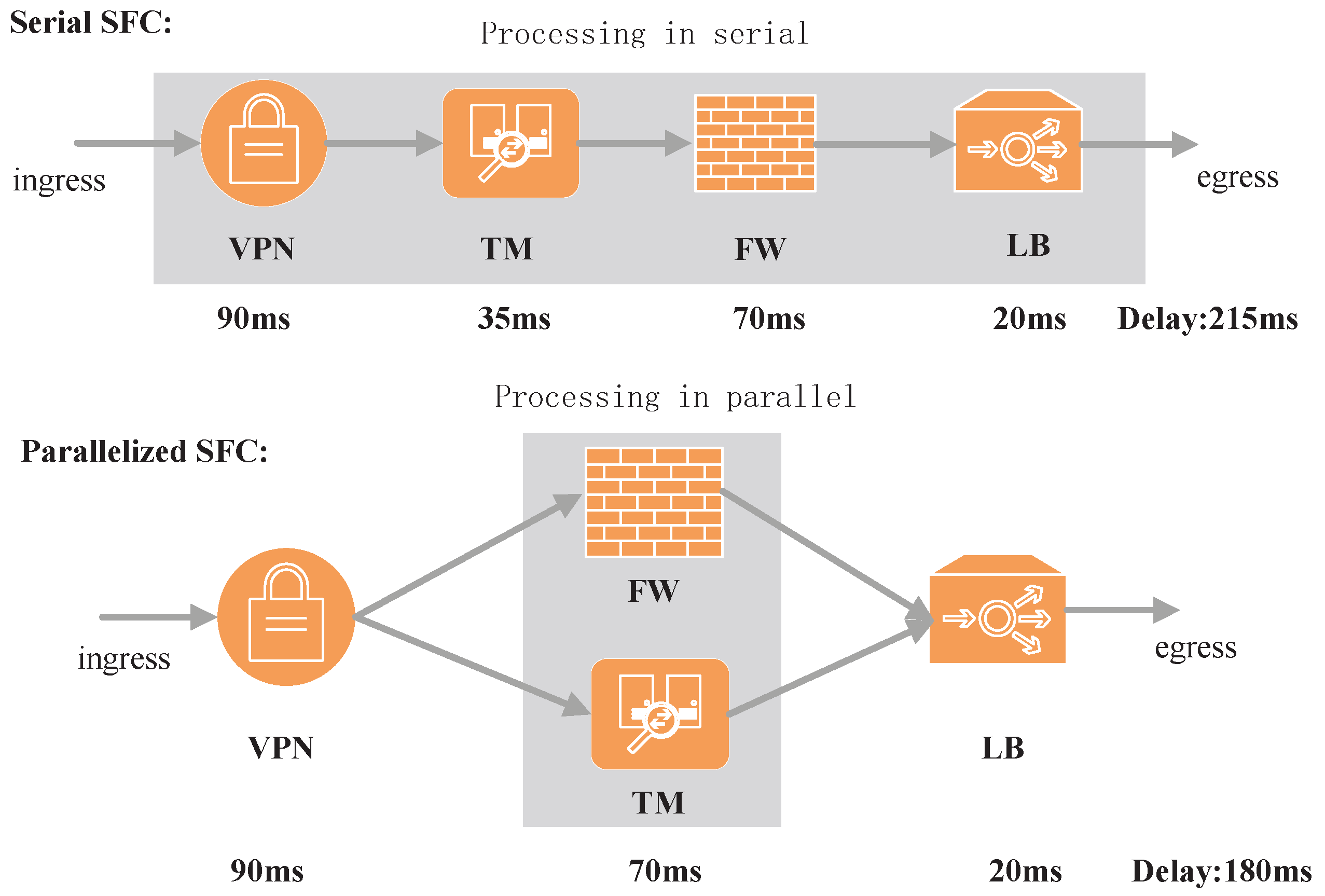
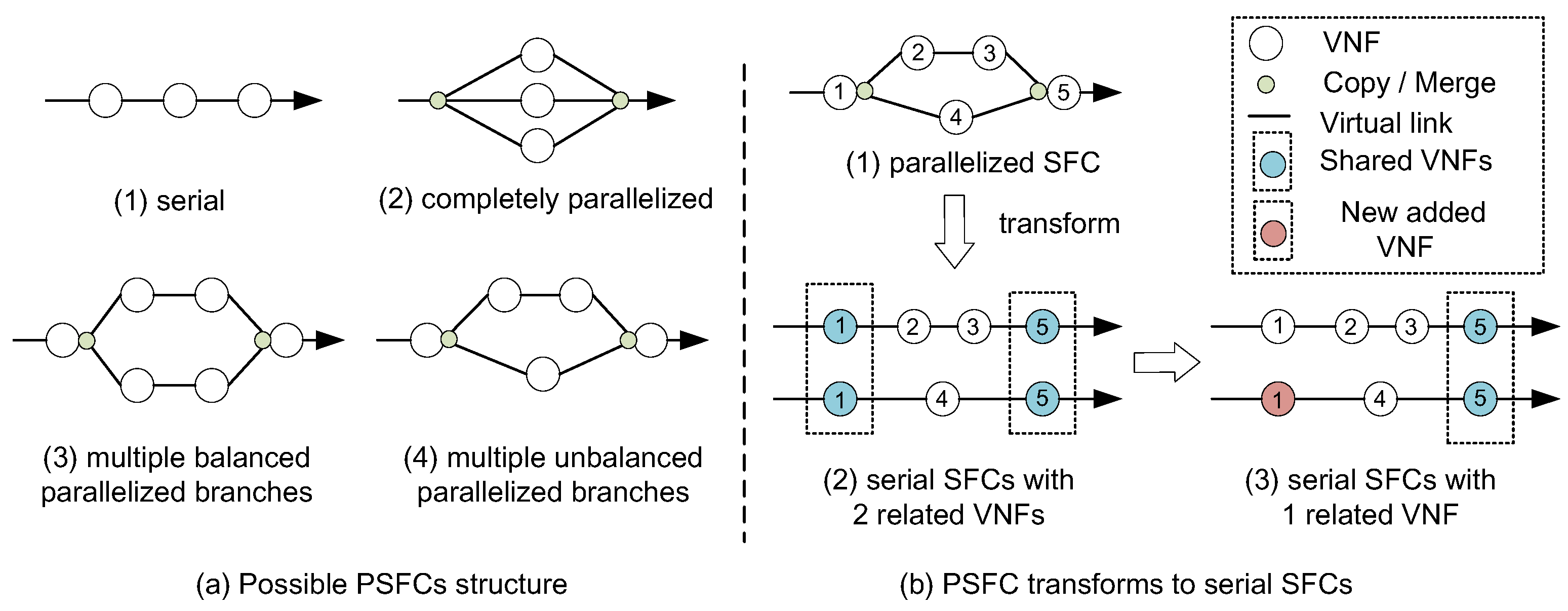
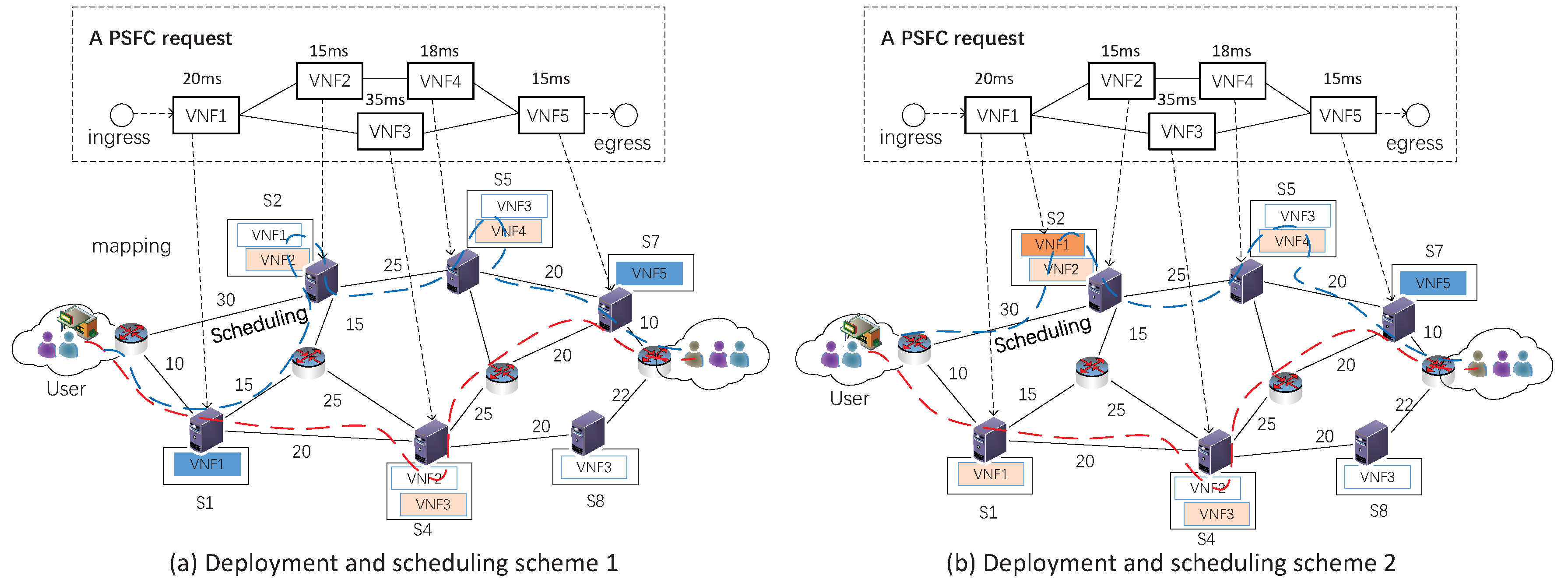
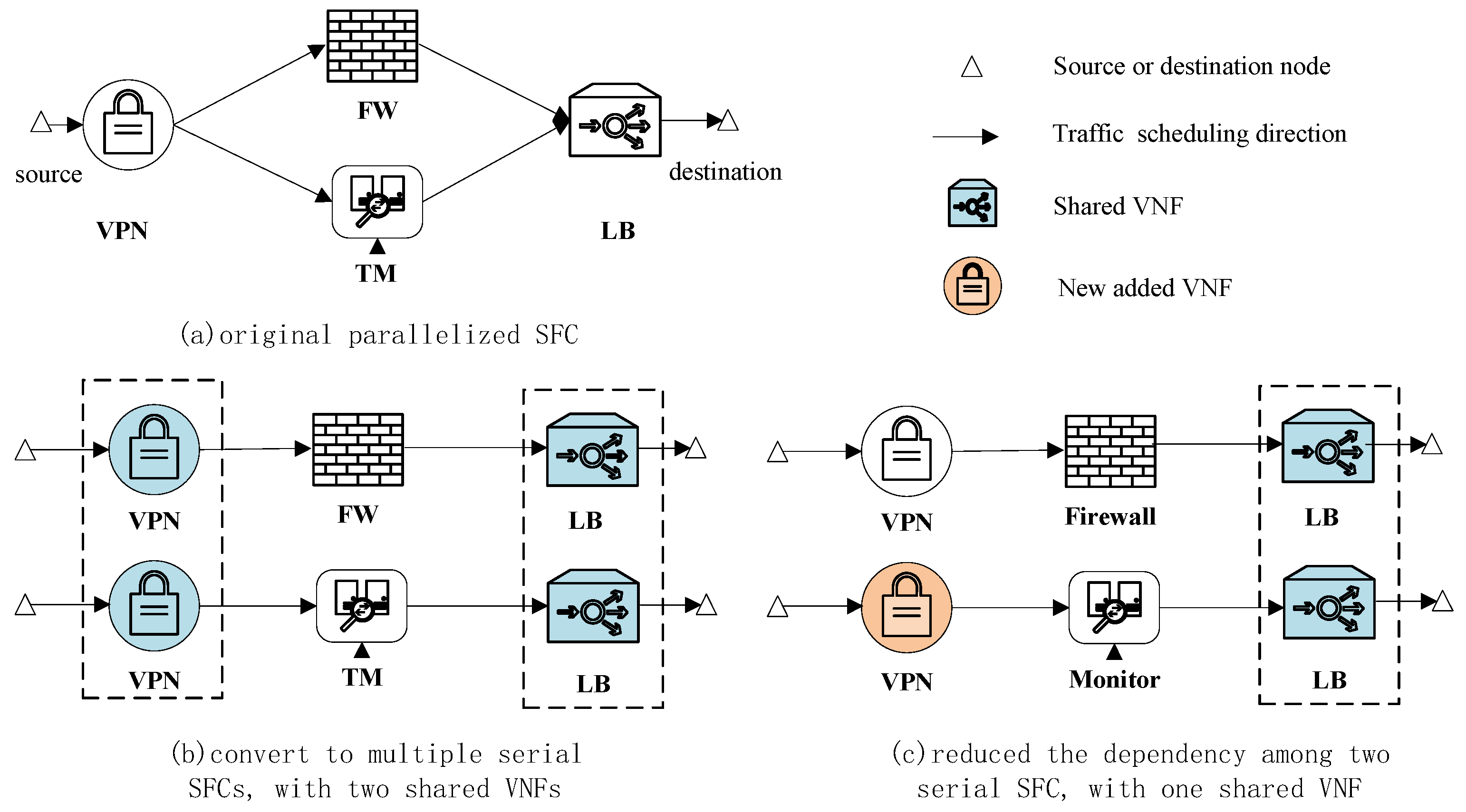
The parallel processing of the service function chain (SFC) is expected to provide better low-delay service delivery, because it breaks through the bottleneck of traditional serial processing mode in which service delay increases linearly with the SFC length. However, the provision of parallelized SFC (PSFC) is much more difficult due to the unique construction of PSFCs, inevitable parallelization overhead, and delay balancing requirement of PSFC branches; therefore, existing mechanisms for serial SFC cannot be directly applied to PSFC. After a comprehensive review of recent related work, we find that traffic scheduling mechanisms for PSFCs is still lacking. In this paper, a delay-aware traffic scheduling mechanism (DASM) for PSFCs is proposed. DASM first transforms PSFC into several serial SFCs by releasing the upstream VNF constraints so as to handle them independently while keeping their parallel relations. Secondly, DASM realizes delay-aware PSFC traffic scheduling based on the reinforcement learning (RL) method. To the best knowledge of the authors, this is the first attempt to address the PSFC traffic scheduling problem by transforming them into independent serial SFCs. Simulation results show that the proposed DASM outperforms the advanced PSFCs scheduling strategies in terms of delay balance and throughput.
Keywords: machine learning; reinforcement learning; parallelized service function chains; delay-aware traffic scheduling machine learning; reinforcement learning; parallelized service function chains; delay-aware traffic scheduling