1. Introduction
The United Nations (UN) Summit, held in New York from 25 to 27 September 2015, marked a major milestone in global development by adopting the post-2015 development framework known as the 2030 Agenda for Sustainable Development (SD), together with a set of Sustainable Development Goals (SDGs). These SDGs aim to reinforce the social, economic, and environmental pillars of SD. The summit’s official outcome document, “Transforming our World: the 2030 Agenda for Sustainable Development,” presents the 17 SDGs and their 169 associated targets, which act as key drivers for enhanced collaboration and coordinated action toward SD (
Romero et al., 2020;
Shahidul, 2020). However, before this global momentum, UNESCO had already emphasized the central role of education in advancing SD during its 2005 meeting, where four priority areas were identified as fundamental: (1) quality basic education; (2) education programs oriented toward SD; (3) public awareness and understanding of sustainability; and (4) the promotion of training in SD (
Shahidul, 2020). Together, these priorities reinforced the growing expectation placed on higher education institutions (HEIs), particularly universities, to educate future professionals and systematically integrate SD into their curricula (
Nakad et al., 2024).
Within this context, education for sustainable development (ESD) has become an expanding field of research, aiming to consolidate advances in sustainability through the development of assessment frameworks and evaluation tools (
Trad, 2019). Given the pivotal role of engineers in achieving the SDGs, engineering education for sustainable development (EESD) has emerged as a comprehensive approach that integrates technical competencies with social and economic considerations. EESD is therefore essential for equipping engineering graduates with the knowledge, motivation, and skills needed to address the complex challenges of the twenty-first century and beyond (
Nakad et al., 2024,
2025).
Despite the recognized importance of embedding sustainability within engineering curricula, significant challenges remain in the effective implementation of EESD (
Mulder et al., 2012;
Sabri, 2025). One key strategy for overcoming these challenges lies in strengthening the alignment between research and teaching (
Yang, 2024).
The research–teaching nexus is a longstanding area of inquiry in HEIs, which explores the ways in how research and teaching can inform and reinforce one another (
Elsen et al., 2009;
Annala & Mäkinen, 2011). In this regard, the “research–teaching nexus” is defined as the integration of discipline-based research into course content to develop students’ research abilities (
Abdel Latif, 2021), and to provide a valuable framework for advancing sustainability education. When sustainability-oriented research conducted by faculty members is systematically integrated into engineering curricula, it enhances the relevance, coherence, and depth of learning experience, allowing students to engage with real-world sustainability challenges through research informed education (
Menon & Paretti, 2024). This alignment is particularly important given that many faculty members lack prior experience in sustainability education and require targeted professional development to teach effectively the sustainability concepts (
Romero et al., 2020). In this context, faculty members’ own research may serve as a powerful pedagogical resource, demonstrating instructors’ active involvement in sustainability issues while simultaneously supporting their own learning and training processes to pass on to their students. Such integration supports the development of essential sustainability competencies, including systems thinking and problem-solving, which are central to achieving the SDGs (
Misseyanni et al., 2020). However, research and teaching are not necessarily connected in practice, and the existence of research expertise within an institution does not automatically ensure its integration into curricula.
Despite the growing integration of SDGs into engineering curricula, coupled with the extensive literature on both ESD and the research–teaching nexus, limited empirical attention has been given to whether sustainability-oriented teaching is aligned with the sustainability research expertise of the academics responsible for delivering teaching. Existing studies have examined sustainability integration in curricula or investigated research–teaching relationships more broadly, but there is still a need for an analytical approach that can examine these two dimensions together using a common sustainability framework. Linking learning outcomes (LOs) and faculty members’ research output to the SDGs, therefore, allows the analysis to move beyond identifying isolated sustainability-related content. In this sense, this study does not seek merely to evaluate whether individual curricula meet an institutional expectation; it rather uses empirical curriculum evidence to contribute to the wider discussion on how engineering departments can use their syllabi and research output to translate them into meaningful ESD integration.
Accordingly, the problem addressed in this study is not simply whether sustainability is embedded in engineering curricula, but how ESD is reflected from the analysis of the alignment between sustainability integration in the intended LOs of engineering programs and the faculty members’ research output using SDG mapping.
Therefore, this paper aims to develop a new model, the Nakad model, that addresses the following questions:
How are the SDGs reflected in the LOs and research output of the two engineering departments?
To what extent are the SDGs addressed in the LOs aligned with those represented in faculty members’ research output, and what strengths and gaps does this alignment reveal?
For this study, the civil and environmental engineering and chemical engineering departments were chosen out of five departments in our faculty based on their research output, which increasingly contribute to sustainability-oriented knowledge.
2. Literature Review
The research–teaching nexus has been applied in HEIs for more than three decades and has proven to be both resilient and widely recognized (
Tight, 2016;
Hassaniyan, 2024). It has long been proposed that teaching and research should be closely interlinked (
Hassaniyan, 2024).
Musthafa and Sajila (
2014) defined the term nexus as a “bond, link, connection, or means of communication”. Within this perspective, a key element of the research–teaching nexus is that learning should result from both teaching and research activities. In essence, the research–teaching nexus refers to the ways in which research informs teaching and teaching, in turn, contributes to advance research, ultimately supporting effective student learning. Thus, it represents a dynamic relationship between teaching and research within higher education. Fundamentally, the concept suggests that active engagement in research enhances the quality of teaching by introducing cutting-edge and applied knowledge, inquiry skills, and scholarly methodologies into student learning experiences. At the same time, teaching can also inspire new research questions and insights (
Hattie & Marsh, 1996).
Kaasila et al. (
2021) noted that the term ‘research–teaching nexus’ has been employed in various contexts. They explained that
Coate et al. (
2001), had identified six possible relationships between teaching and research, classified as follows: (a) integration; (b) research as a positive influence on teaching; (c) teaching as a positive influence on research; (d) separate activities with little impact on each other; (e) research as a negative influence on teaching; and (f) teaching as a negative influence on research. The research–teaching nexus is therefore required to assess the connections between these two activities beyond their traditional definitions. It assumes that teaching and research should inherently be interlinked and that this relationship should ideally be strong, forming a cornerstone for HEIs’ missions (
Tight, 2016).
Among the various HEIs academic disciplines, engineering stands out as a field where keeping pace with rapid technological advancements is essential (
Stappenbelt, 2013). In this context, the integration of sustainability in research and teaching becomes particularly very important. Several studies had explored how the nexus can contribute to sustainability education in engineering. For instance,
Clark and Andrews (
2010) examined the role of the research–teaching nexus in engineering programs and argued that integrating research insights into teaching can support the development of sustainability-oriented thinking among engineering students. Their work highlighted that bridging research and teaching allows sustainability concepts to be embedded more effectively within engineering curricula, although institutional and disciplinary barriers may hinder this integration. Similarly,
Pan et al. (
2012) investigated the implementation of research-informed teaching in sustainable construction education and found that linking teaching with ongoing research projects improved students’ understanding of sustainability practices and strengthened their ability to connect theoretical knowledge with real-world environmental challenges. Research-based learning approaches provide further evidence of the potential benefits of integrating research into teaching for sustainability education. For example,
Shah et al. (
2024) demonstrated that involving students in research activities related to environmental engineering topics, such as microplastic pollution, enhanced their understanding of sustainability challenges and increased their motivation to engage with environmental issues. Likewise,
del-Río Fernández et al. (
2024) showed that integrating students into active engineering research groups allowed them to participate in scientific projects and publications, fostering innovation, problem-solving skills, and engagement with sustainability-related technologies. These studies collectively suggest that the research–teaching nexus should serve as a powerful pedagogical approach for advancing sustainability in engineering education by interlinking research knowledge, teaching practices, and real-world environmental challenges.
From a different perspective,
Leoncini et al. (
2025) attempted to investigate the research–teaching nexus and sustainability by examining the dynamics of academic engagement with sustainability at the individual level for an Italian university, focusing on whether teaching and research activities reinforce one another or remain compartmentalized. The authors developed a longitudinal dataset covering the period 2016–2023, documenting the annual teaching and research activities of the university’s academic staff in areas related to the SDGs. Using both exploratory and regression analyses, their results revealed a gradual and asymmetric pattern of engagement. Sustainability-related research followed a longer and slower trajectory of adoption, whereas sustainability-oriented teaching emerged more recently and expanded more rapidly. The findings also indicated that a substantial proportion of academics were involved in only one of the two domains, reflecting a fragmented response to institutional pressures. However, their logistic regression analyses showed a significant positive relationship between prior teaching activities and subsequent research engagement, and vice versa, supporting the hypothesis that teaching and research can mutually reinforce each other in advancing sustainability and learning.
Several studies developed approaches for examining sustainability within HEIs from different perspectives. As such, sustainability curriculum mapping had been used to identify the extent to which sustainability pillars and the SDGs are embedded within the curricula and the LOs (
Adams et al., 2023;
Nakad et al., 2024). Similarly, research on ESD competencies had developed approaches for identifying and assessing the knowledge, skills, and competencies required to address sustainability challenges (
Wiek et al., 2011;
Brundiers et al., 2021). Further studies had examined SDG integration across HEIs, including teaching, research, governance, and institutional activities (
Dutta et al., 2026;
Nakad et al., 2026b). In parallel, bibliometric and research-mapping approaches had been used to identify and classify research outputs according to their relevance to specific SDGs (
Armitage et al., 2020;
Alfirević et al., 2023). These approaches generally focus on these dimensions separately and do not specifically examine the alignment between sustainability-related research conducted by faculty members and sustainability-oriented LOs embedded in engineering courses.
In other words, the existing literature remains fragmented and largely focused on pedagogical approaches or course-level interventions with most studies examine how research activities can be incorporated into teaching to improve student learning, but relatively few investigate the reciprocal relationship between sustainability-related research and sustainability teaching at the level of individual academics. This study therefore builds on these complementary strands of the literature by proposing the Nakad model as an exploratory analytical framework for examining this alignment. The latter is essential for understanding how universities can better align their research and teaching missions to support the development of engineers capable of addressing complex sustainability challenges.
3. Methodology
To answer the research questions listed in
Section 1, this study adopts an exploratory document-based design combining deductive qualitative content analysis with quantitative descriptive analysis. This study examines two complementary documentary datasets: (1) engineering course syllabi, with particular attention to their stated LOs, and (2) Scopus-indexed research publications produced by faculty members in the selected departments. These datasets are analyzed using the SDGs as a common analytical framework.
The curriculum analysis uses deductive qualitative content analysis to identify and classify sustainability-related LOs according to the 17 SDGs and their associated targets. The resulting coding is subsequently summarized using quantitative frequency counts to describe the distribution of SDG-linked LOs across courses.
This curriculum analysis was complemented by collecting academic’s research output from Scopus, which is owned by the publishers Elsevier, and is considered a reliable research repository that is used by many agencies and educational institutions for ranking and assessment of academics’ performance, respectively. The two resulting SDG datasets were then compared descriptively at the departmental levels. Finally, exploratory regression analysis is used to examine the correspondence between the number of SDG-linked publications and the number of LOs associated with the same SDGs.
The analysis of LOs provides an observable entry point for examining the intended curriculum because LOs explicitly articulate what students are expected to learn and demonstrate. Accordingly, the Nakad model uses the correspondence between curriculum and research SDG profiles as a diagnostic and exploratory indicator of potential research–teaching alignment.
3.1. The Development of the Nakad Model
The Nakad model was developed as a practical way to examine the alignment between faculty members’ research output and curriculum LOs in the context of sustainability. Thus, it is based on the research–teaching nexus discussed earlier in
Section 2, particularly the relationships between research and teaching as described in 2001 by Coate et al. and reported by
Kaasila et al. (
2021). These relationships provide the conceptual basis for the interpretation of the patterns identified by the model.
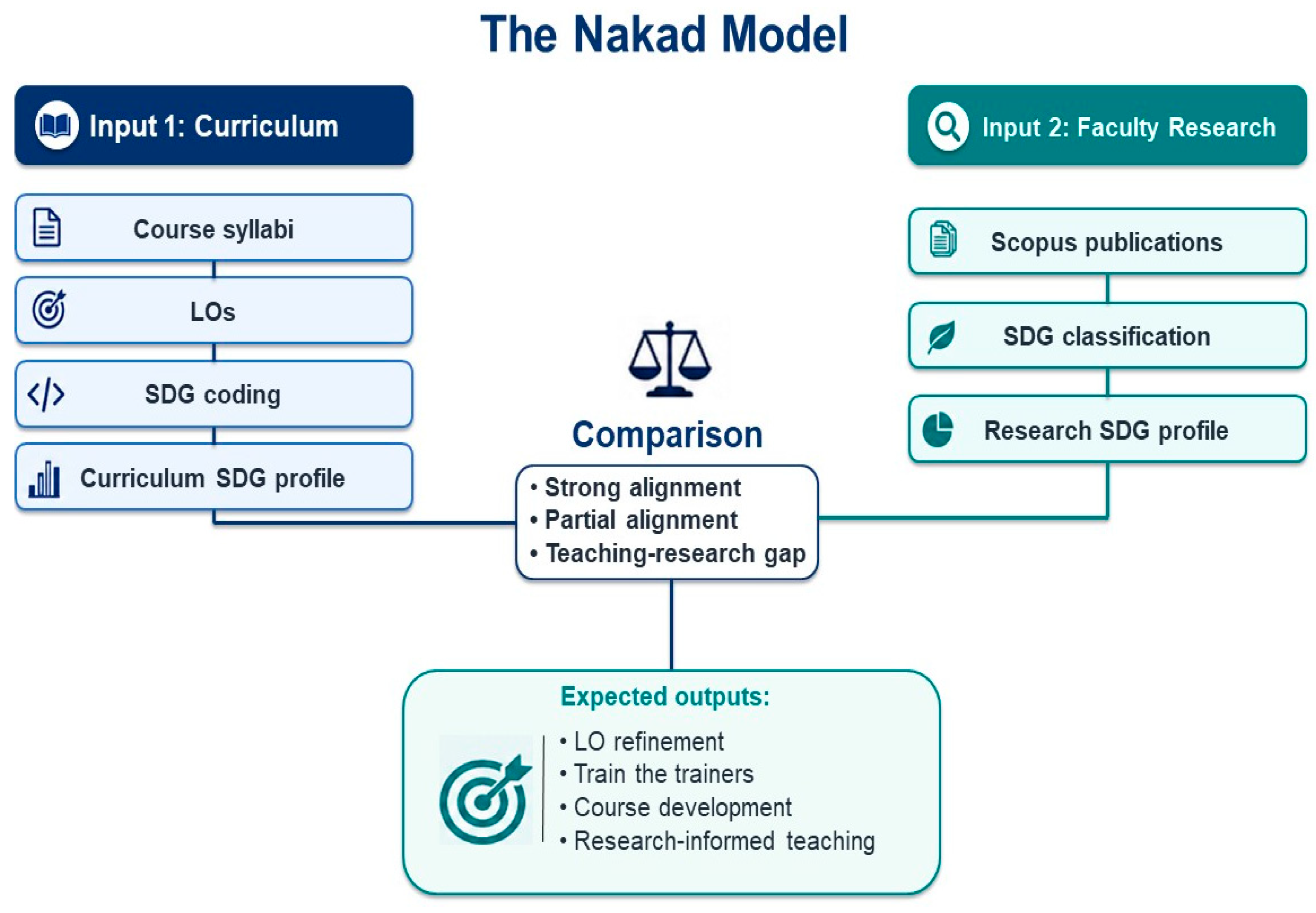
As shown in
Figure 1, the model starts with two main inputs. The first is the curriculum, where course syllabi and their stated LOs are reviewed and linked to the relevant SDGs to develop a Curriculum SDG Profile. The second is faculty members’ research output, where Scopus-indexed publications are linked to their associated SDGs to develop a Research SDG Profile. A single LO as stated before or research publication may be linked to more than one SDG when it addresses several sustainability dimensions.
What distinguishes the Nakad model is not simply the use of Scopus data together with course syllabi, nor is it intended to be a simple comparison matrix. Instead, it brings these two sources of information into a common SDG-based framework and follows a clear sequence from data collection and SDG mapping, to comparison, interpretation, and potential action. The research and curriculum SDG profiles are first compared to identify where the same SDGs are strongly represented, partly represented, or weakly represented. Exploratory regression is then used as an additional way to examine the degree of correspondence between the number of SDG-linked publications and the number of LOs targeting the same SDGs. The regression is therefore one analytical step within the overall model.
The comparison may identify strong alignment, partial alignment, or a research- teaching gap. Thus, stronger alignment may be consistent with closer integration between research and teaching, whereas weaker alignment may suggest that the two activities remain more separate. However, these relationships are used only as a basis for interpretation. The model does not assume that a publication linked to a particular SDG means that the related knowledge is directly transferred into teaching, nor does the presence of an SDG-related LO demonstrate transformative teaching practice. This comparison is mainly exploratory and descriptive. Therefore, the Nakad model aims to highlight areas where faculty members’ research strengths and formally stated curriculum outcomes appear to come together and areas where further curriculum examination or teaching practices may be required.
For the Nakad model to be applied meaningfully, several factors support its effective application. The department should have an active research profile, while the course syllabi should contain clear and identifiable LOs that can be systematically analyzed. Depending on the findings, the expected outputs may include LO refinement, training the trainers, course development, and research-informed teaching, thereby supporting targeted curriculum improvement based on the identified areas of alignment and gap.
The Nakad model should be viewed as a diagnostic and reflective approach that can support curriculum review and development, rather than direct evidence that faculty research is integrated into teaching. This distinction is consistent with the work of
Coate et al. (
2001).
3.2. Syllabi Analysis
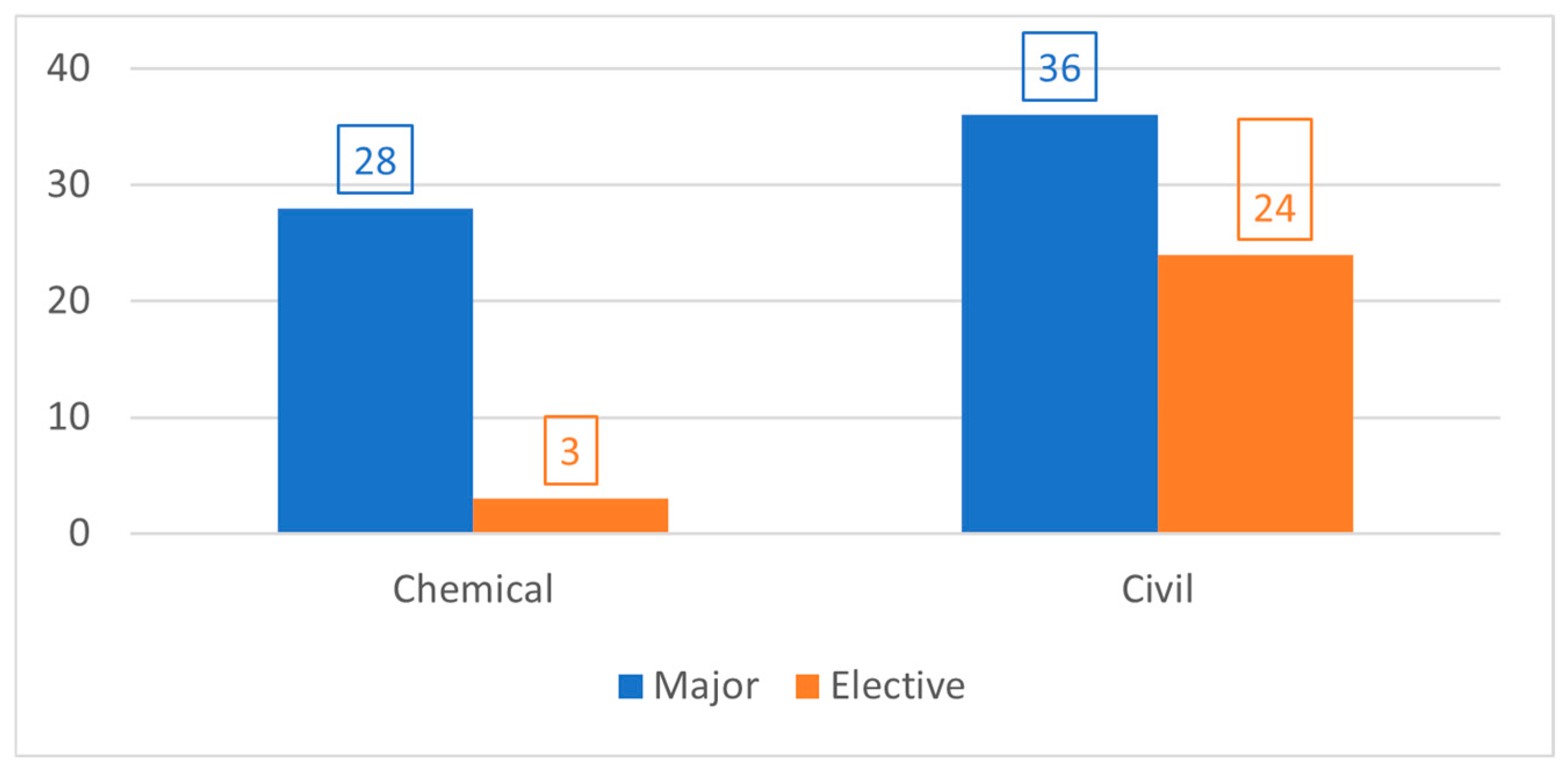
In this study, two departments from the Faculty of Engineering at the University of Balamand, Lebanon, were selected for qualitative analysis to test the Nakad model: the civil and environmental engineering and the chemical engineering departments were chosen as their research output increasingly contribute to sustainability-oriented knowledge. A total of 91 course syllabi were examined, including 60 and 31 syllabi from the two departments, respectively. The syllabi are reliable, as they belong to ABET accredited BS and BE degrees in the two disciplines.
To obtain clearer and more accurate results, each course syllabus was analyzed manually, following the structured information in
Table 1.
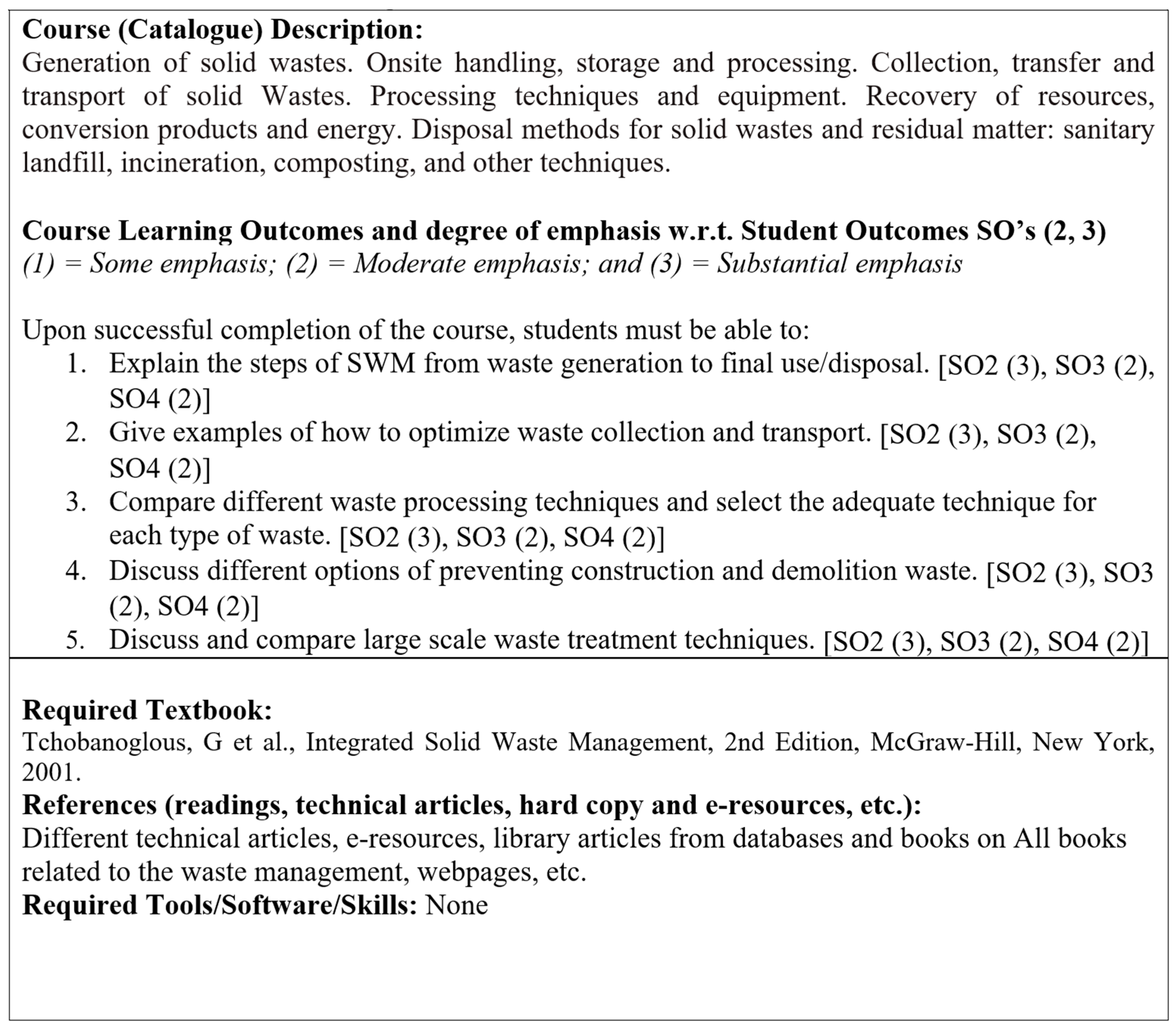
How sustainability was integrated into the course objectives and LOs of each syllabus, specifically assessing whether it addressed any of the three pillars of sustainability or aligned with any of the SDGs were examined. The reasons for incorporating sustainability into the courses were also explored. Additionally, the presence and depth of key sustainability themes within the syllabi were analyzed. The required readings and resources to determine their support for sustainability education were reviewed, and the methods used to evaluate students’ sustainability-related knowledge and skills were assessed. After completing the syllabi analysis, a comparative analysis across the different syllabi was conducted. For example, let us consider the “Solid Waste Disposal” syllabus (
Figure 2) and how it was analyzed according to
Table 1, as presented in
Table 2.
Among the dimensions of the analyzed data under the “Objectives and leaning outcomes” in
Table 2, the results related to the question “Do the learning outcomes address any SDG(s)?” (highlighted in
Table 2) provide the most relevant dimension for examining alignment with faculty members’ research output through SDG association.
The LOs were analyzed using deductive qualitative content analysis, with the 17 SDGs and their associated targets serving as predefined coding categories. The purpose of the coding was to determine whether, and to which SDG(s), each stated LO could be linked based on its substantive content.
The syllabus was defined as the documentary unit, while the individual LO was defined as the coding unit. Each LO was examined against the targets associated with the 17 SDGs. An LO was assigned to an SDG when its content demonstrated a clear correspondence with one or more of the relevant SDG targets. An LO could be assigned to more than one SDG when its substantive content addressed distinct sustainability objectives corresponding to different SDG targets.
Two authors manually conducted the coding of the LOs using the predefined 17 SDGs framework. Each LO was examined against the clearly defined SDG targets to determine its relevance and alignment, with both authors working together throughout the analysis. Each LO could be associated with more than one SDG when its substantive content addressed distinct sustainability objectives corresponding to different SDG targets. The authors coded the LOs jointly through consensus coding rather than through independent coding for the purpose of calculating inter-rater reliability. When an LO was ambiguous or potentially applicable to more than one SDG, the authors discussed its wording and compared it with the relevant SDG targets until a consensus was reached. To minimize over-coding, broad or generic references to sustainability were not considered sufficient to assign an SDG. Multiple SDG assignments were made only when a clear substantive connection to each assigned SDG could be established.
Following coding, the number of LOs associated with each SDG was counted to generate the Curriculum SDG Profile for each department. These frequency counts were then used for descriptive comparison across departments and between core and elective courses.
3.3. Data Collection of Faculty Research and SDG Alignment
This study employed a structured data collection and analysis procedure to examine faculty research activities in relation to sustainability-oriented LOs. The Scopus research data were collected for all existing faculty members in the two departments: 11 faculty members from the civil and environmental engineering department and 5 faculty members from the chemical engineering department. Each faculty member was identified through a unique Scopus Author ID to ensure accurate attribution of publications and to avoid duplication of records. Scopus was used as the only source of research data to assure consistency, traceability, and comparability of research outputs across faculty members and departments. To note that, the database used standardized content selection criteria and quality control processes, providing uniform bibliometric indicators and subject classifications. Hence, it supports reliable collection and cross-departmental analysis of research activity (
Mongeon & Paul-Hus, 2016;
Elsevier, 2020;
Kashnitsky et al., 2024).
For each faculty member, all documents indexed in Scopus at the time of data collection in September 2025 were retrieved. The extracted bibliometric indicators included the total number of documents, total citation counts, and h-index values, as reported in Scopus. These indicators were used to identify research productivity and scholarly impact in a consistent manner across both departments, following well-known bibliometric practice (
Hirsch, 2005;
Waltman, 2016). In addition to these indicators, data related to the sustainability orientation of faculty research were extracted using Scopus SDG-linked publication information. In this context, Scopus assigns publications to the SDGs based on document metadata, including titles, abstracts, keywords, and subject area classifications (
Elsevier, 2020). In the present model, Scopus SDG classifications are therefore used primarily to identify comparative research patterns within departments rather than to establish definitive SDG attribution for each individual publication. Although Scopus provides a standardized and reproducible approach for SDG mapping, its algorithmic classification is not free from limitations. The latter are bound to improve with the advances in artificial intelligence and machine learning to improve research mapping to SDGs. In this endeavor, Elsevier embarked on such mapping as early as 2018 to facilitate repeatability and reliability achieving an accuracy above 80% (
Kashnitsky et al., 2024). Misclassification, disciplinary bias, and differences in keyword or metadata representation may lead to false-positive or under-represented SDG assignments; therefore, the resulting SDG classifications were treated as comparative indicators rather than as definitive measures of the sustainability content of individual publications. Thus, this SDG-based mapping approach was used to analyze research contributions to sustainability and to support comparative assessment across different disciplines.
Beyond SDG-linked publication counts, research outputs were further analyzed as reflected in Scopus metadata and SDG associations. Hence, publications were grouped into broader thematic tracks corresponding to common sustainability-related research domains in the two departments accordingly. These tracks included areas related to materials, structures, water and environmental systems, transportation and construction management, as well as chemical, biochemical, and process-based engineering. The thematic grouping enabled a structured interpretation of SDG distributions and facilitated comparison with curriculum-based SDG mapping, in line with sustainability assessment reported in the engineering education literature (
Nakad et al., 2024).
All extracted data were compiled into structured Excel datasets derived from individual faculty members’ research output, including bibliometric indicators, SDG-linked document counts, and thematic classifications. These datasets were then grouped at the departmental level to generate research profiles, which were compared with SDG coverage in course LOs to evaluate alignment or mismatch between faculty research and the curriculum/teaching. The 17 SDGs and their relevant targets were used as the common units of analysis because they provide a comprehensive representation of sustainability and allow for a consistent comparison of faculty members’ research output and curriculum LOs. An exploratory regression analysis was conducted to examine the descriptive correspondence between the number of Scopus-indexed publications associated with each SDG and the number of LOs associated with the same SDG. The regression is exploratory and descriptive and is not intended to provide inferential or causal evidence. Given that the analysis is based on the 17 SDG categories, the resulting R2 values were interpreted as indicators of correspondence within the observed datasets rather than as evidence of causality or broader statistical generalization.
4. Results
In this section, the results are organized according to the steps presented in the methodology, beginning with the distribution of SDG-linked LOs, followed by the distribution of SDG-linked research output and the exploratory comparison between the two SDG profiles.
4.1. SDGs Addressed in LOs
Whilst
Figure 3 presents the distribution of the analyzed syllabi across the civil and environmental engineering and chemical engineering departments,
Table 3 illustrates the total number of LOs in the two departments’ syllabi that target the SDGs. Among civil and environmental engineering courses, SDG9 is the most frequently addressed with 15 LOs. This is followed by SDG11, SDG12, and SDGs 6 and 13 with 11, 9 and 7 LOs, respectively. While in the chemical engineering courses, SDG12 appears most prominently with 7 LOs, followed by SDGs 3 and 9, and SDGs 8 and 13 with 4 and 3 LOs, respectively.
4.2. SDG Distribution in Faculty Members’ Research Output
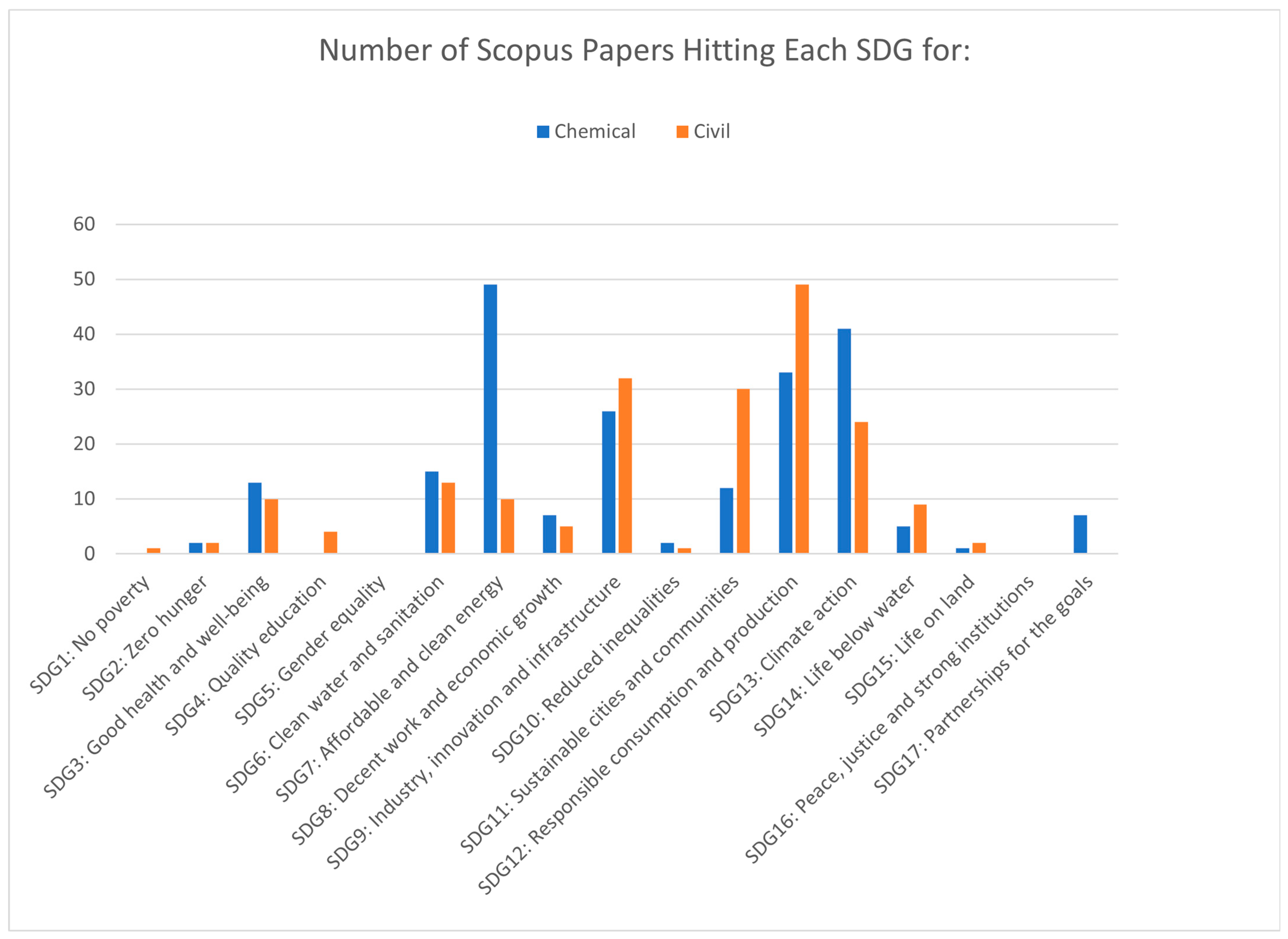
As shown in
Figure 4, the analysis of Scopus-indexed publications produced by faculty members in the two departments identified a substantial body of research aligned with the UN SDGs. The analysis from the civil and environmental engineering and chemical engineering existing faculty members identified 192 and 213 SDG-linked publications, respectively. The results reflect considerable research engagement with sustainability-related topics across both departments.
The distribution of publications across SDGs shows distinct disciplinary patterns. Within the chemical engineering department, the highest number of publications is associated with SDG7 (Affordable and Clean Energy) with 49 publications, followed by SDG13 (Climate Action) with 41 publications, SDG12 (Responsible Consumption and Production) with 33 publications and SDG9 (Industry, Innovation and Infrastructure) with 26 publications. Together, these three SDGs account for 149 publications, representing 69.9% of the department’s total SDG-linked research output. Additional SDGs with notable publication counts include SDG9 (Industry, Innovation and Infrastructure) with 26 publications, SDG6 (Clean Water and Sanitation) with 15 publications, and SDG3 (Good Health and Well-Being) with 13 publications. Furthermore, SDG11 (Sustainable Cities and Communities) is associated with 12 publications, while SDG8 (Decent Work and Economic Growth) and SDG17 (Partnerships for the Goals) are each associated with 7 publications. Lower publication counts are observed for SDG14 (Life Below Water) with 5 publications, SDG2 (Zero Hunger) and SDG10 (Reduced Inequalities) with 2 publications each, and SDG15 (Life on Land) with 1 publication. No publications are associated with SDG1 (No Poverty), SDG4 (Quality Education), SDG5 (Gender Equality), or SDG16 (Peace, Justice and Strong Institutions).
Within the civil and environmental engineering department, the distribution of SDG-linked publications shows a different concentration pattern. The largest number of publications is associated with SDG12 (Responsible Consumption and Production) with 49 publications, followed by SDG9 (Industry, Innovation and Infrastructure) with 32 publications, SDG11 (Sustainable Cities and Communities) with 30 publications, and SDG13 (Climate Action) with 24 publications. Together, these four SDGs account for 135 publications, representing 70.3% of the department’s SDG-linked research output. Additional SDGs with notable representation include SDG6 (Clean Water and Sanitation) with 13 publications, SDG3 (Good Health and Well-Being) with 10 publications, and SDG7 (Affordable and Clean Energy) with 10 publications. Furthermore, SDG14 (Life Below Water) is associated with 9 publications, while SDG8 (Decent Work and Economic Growth) is associated with 5 publications, and SDG4 (Quality Education) with 4 publications. Lower publication counts are observed for SDG2 (Zero Hunger) and SDG15 (Life on Land) with 2 publications each, and SDG1 (No Poverty) and SDG10 (Reduced Inequalities) with 1 publication each. No publications are associated with SDG5 (Gender Equality), SDG16 (Peace, Justice and Strong Institutions), or SDG17 (Partnerships for the Goals).
At the departmental level, the bibliometric indicators associated with SDG-linked research output reveal variability in research activity and scholarly impact across faculty members in both departments (
Table 4). In the chemical engineering department, the reported h-index values range from 9 to 20, while citation counts vary between 198 and 1065, and the number of Scopus-indexed documents ranges from 22 to 40 publications.
In the civil and environmental engineering department, the reported h-index values range from 3 to 37, while citation counts vary between 20 and 3718, reflecting differences in research visibility and cumulative scholarly impact across faculty members. The number of Scopus-indexed documents ranges from 7 to 150 publications, indicating substantial heterogeneity in publication volume across the department.
Table 5 also presents the distribution of SDG-linked publications among individual faculty members, showing that research contributions related to sustainability are distributed across multiple SDGs rather than concentrated in a single thematic area.
4.3. SDG Mapping of Learning Outcomes in the Engineering Curriculum
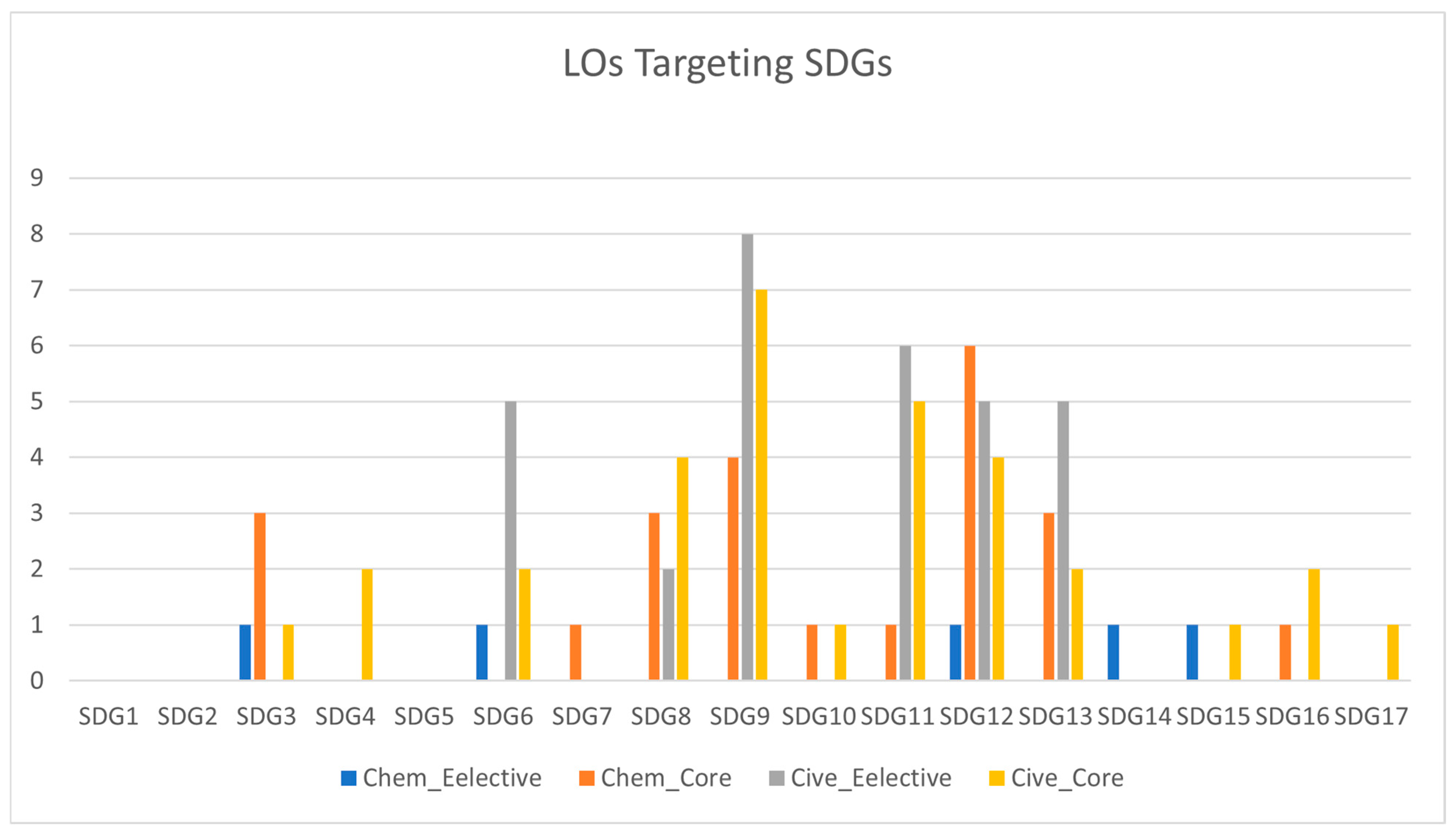
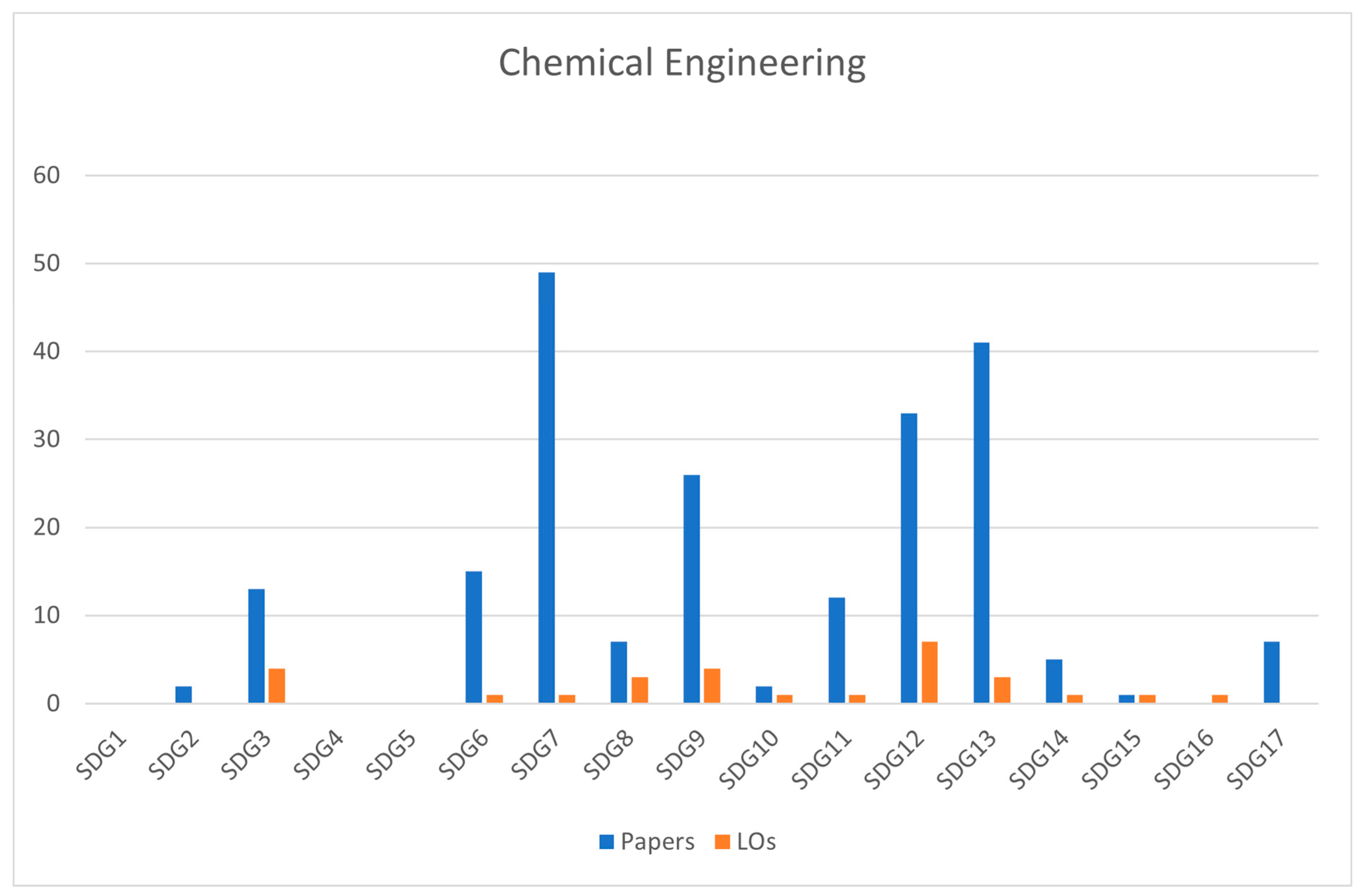
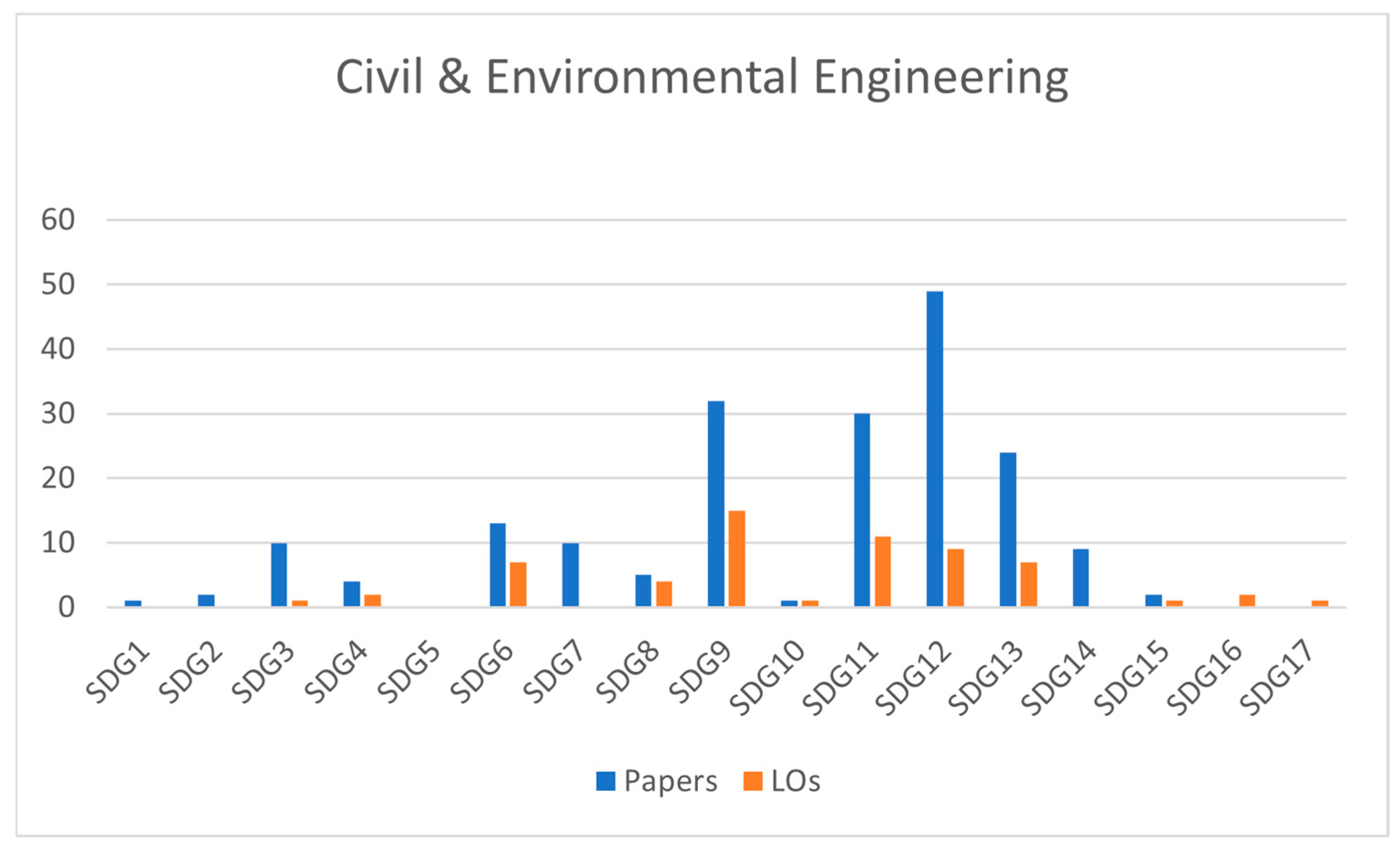
Figure 5 shows that SDG coverage within LOs is uneven across the 17 SDGs for both departments’ curricula. The distribution of SDG-related LOs reflects differences in disciplinary focus while demonstrating that sustainability considerations are incorporated within the teaching frameworks of both programs.
Within the chemical engineering curriculum, the highest number of LOs is associated with SDG12 (Responsible Consumption and Production) with 7 LOs, of which 1 originates from elective courses. SDG3 (Good Health and Well-Being) and SDG9 (Industry, Innovation and Infrastructure) each show 4 LOs. For SDG3, 3 LOs originate from core courses and 1 from an elective course, whereas all 4 LOs associated with SDG9 originate from core courses. SDG13 (Climate Action) is represented by 3 LOs, all derived from core courses, while SDG8 (Decent Work and Economic Growth) is also associated with 3 LOs, entirely originating from core courses. A single LO is mapped to SDG6 (Clean Water and Sanitation), SDG7 (Affordable and Clean Energy), SDG10 (Reduced Inequalities), SDG11 (Sustainable Cities and Communities), and SDG16 (Peace, Justice and Strong Institutions). Among these, all originate from core courses except SDG6, which is derived from an elective course. In addition, SDG14 (Life Below Water) and SDG15 (Life on Land) are each associated with 1 LO, both originating from elective courses. No LOs are mapped to SDG1 (No Poverty), SDG2 (Zero Hunger), SDG4 (Quality Education), SDG5 (Gender Equality), or SDG17 (Partnerships for the Goals).
Within the civil and environmental engineering curriculum, the distribution of SDG-related LOs shows a different concentration pattern. The highest number of LOs is associated with SDG9 (Industry, Innovation and Infrastructure) with 15 LOs, including 8 derived from elective courses. This is followed by SDG11 (Sustainable Cities and Communities) with 11 LOs, including 6 derived from elective courses; SDG12 (Responsible Consumption and Production) with 9 LOs, including 5 derived from elective courses, and SDG6 (Clean Water and Sanitation) and SDG13 (Climate Action) with 7 LOs each, including 5 LOs from an elective course in each case. Additional SDGs represented in the curriculum include SDG8 (Decent Work and Economic Growth) with 6 LOs, including 2 derived from an elective course, while SDG4 (Quality Education) and SDG16 (Peace, Justice and Strong Institutions) are each associated with 2 LOs, both originating from core courses. A single LO is mapped to SDG3 (Good Health and Well-Being), SDG10 (Reduced Inequalities), SDG15 (Life on Land), and SDG17 (Partnerships for the Goals), all of which originate from core courses. No LOs are mapped to SDG1 (No Poverty), SDG2 (Zero Hunger), SDG5 (Gender Equality), SDG7 (Affordable and Clean Energy), or SDG14 (Life Below Water).
Across both programs, the curriculum data indicate that core courses contribute the majority of SDG-related LOs, while elective courses provide additional contributions in selected sustainability domains. The distribution of LOs therefore reflects the integration of sustainability-related competencies within the core structure of the engineering curricula while allowing elective courses to extend coverage to additional SDGs.
4.4. Exploratory Correspondence Between SDG-Linked Research Output and Curriculum Learning Outcomes
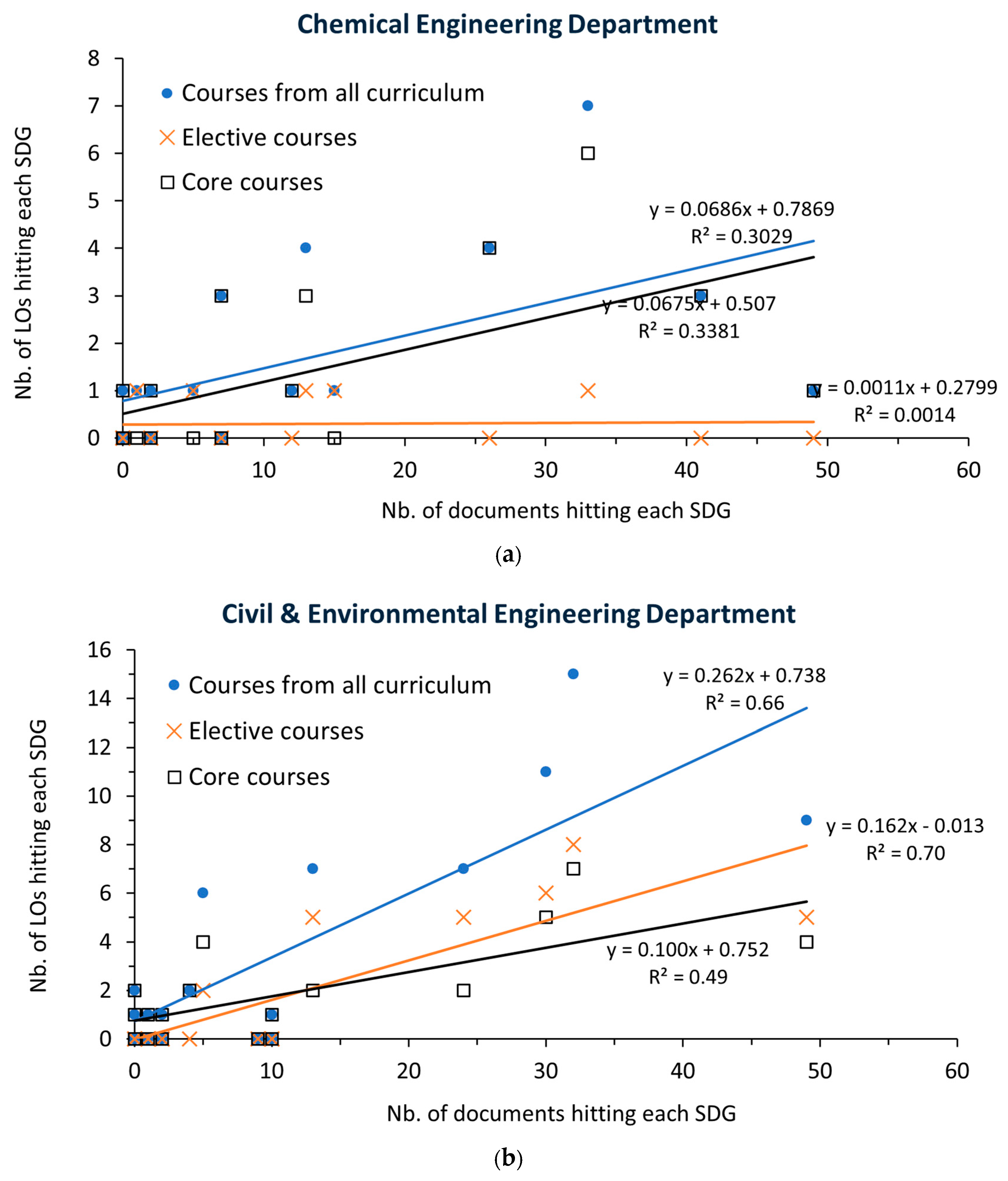
Figure 6 shows the relationship between SDG-linked research publications and the number of LOs mapped to the same SDGs in both engineering programs. The figure examines the correspondence between research output and LOs by comparing the number of Scopus-indexed publications associated with each SDG with the number of LOs mapped to the same SDGs.
For the chemical engineering curriculum, the regression analysis indicates a weak-to-moderate association between SDG-linked research publications and curriculum LOs when the full curriculum is considered, with an R2 value of 0.3029. A slightly improved association is observed for core courses, where the regression yields an R2 value of 0.3381. In contrast, the association for elective courses is negligible, with an R2 value of 0.0014, indicating minimal correspondence between research activity and elective LOs at the SDG level.
For the civil and environmental engineering curriculum, the regression analysis shows a stronger descriptive association between SDG-linked research publications and curriculum LOs across the full curriculum, with an R2 value of 0.66. A slightly improved association is observed for elective courses, where the regression yields an R2 value of 0.70. In comparison, the association for core courses is lower, with an R2 value of 0.49.
Overall, the regression results show differences in the degree of correspondence between SDG-linked research publications and curriculum LOs across the two engineering programs as well as across the full curriculum, core and elective courses.
5. Discussion
5.1. Sustainability Integration in Engineering Education
The analysis from both engineering departments reveals complementary patterns of sustainability integration within engineering education. In both cases, the research activities demonstrate strong engagement with the UN SDGs (
Figure 4 and
Table 4), yet the way sustainability is translated into curriculum design varies greatly across the two disciplines (
Figure 5). The Scopus-based SDG mapping (
Table 5) shows that sustainability considerations are embedded within the departments’ research activities, particularly in technically oriented domains typical of engineering practice such as energy systems, environmental protection, infrastructure development, materials engineering, and industrial optimization. These patterns are consistent with previous studies indicating that engineering disciplines frequently contribute to sustainable development through technological innovation and system optimization rather than through explicitly social or institutional sustainability frameworks (
Azapagic et al., 2005;
Mulder et al., 2012).
In the chemical engineering case, research output demonstrates strong concentration within technically oriented SDGs, particularly those related to energy systems, climate action, and responsible resource management. Such a distribution reflects the disciplinary nature of chemical engineering, where sustainability outcomes often arise from improvements in process efficiency, emissions reduction, resource utilization, and materials innovation. These contributions typically emerge through technological advances in industrial processes rather than through explicitly framed sustainability objectives. Bibliometric analyses of sustainability science have similarly shown that chemical and process engineering disciplines often contribute to SD through process-level innovations that indirectly address sustainability challenges (
Nakamura et al., 2019;
Romero et al., 2020).
However, the analysis reveals that this sustainability research engagement is not fully mirrored in the formal articulation of curriculum LOs (
Figure 6). Although sustainability-related concepts appear across several courses, their explicit alignment with the SDG targets remains uneven. Sustainability is therefore frequently embedded within technical competencies without being clearly identified as a sustainability learning objective. Prior research in EESD has emphasized that such implicit integration may limit students’ ability to connect engineering knowledge with broader environmental, societal, and global sustainability challenges (
Wiek et al., 2011;
Lozano et al., 2015). Consequently, even when sustainability-related topics are present within the curriculum, their visibility at the program level may remain limited when evaluated through structured frameworks such as SDG mapping (
Nakad et al., 2024), as can be seen clearly from
Figure 7.
In contrast, the civil and environmental engineering department demonstrates a stronger and more explicit integration of sustainability within both research activity and LOs. The SDG distribution indicates substantial research engagement with goals related to sustainable infrastructure, urban development, resource efficiency, and climate action. These research themes correspond closely to the core mission of civil and environmental engineering, which focuses on the planning, design, and management of infrastructure and environmental systems that support sustainable societies. Thus, research contributions related to SDG12, SDG9, SDG11, and SDG13 therefore reflect ongoing work in circular construction practices, resilient infrastructure systems, sustainable urban planning, and climate-responsive engineering design (
Pomponi & Moncaster, 2017;
Scrivener et al., 2018). The mapping results further demonstrates that sustainability-related LOs are aligned with the same sustainability research priorities. A substantial portion of LOs is associated with infrastructure innovation, environmental protection, urban sustainability, and responsible resource management. This correspondence indicates that sustainability themes represented in faculty research are also reflected in the formal educational framework, although the present analysis cannot establish whether the research directly informed curriculum or teaching practices (
Figure 8). Albeit, further work is needed to strengthen the remaining SDGs through other measures. Previous work in sustainability education has shown that clearly expressed sustainability competencies within LOs play a crucial role in enabling students to contextualize technical knowledge within broader environmental and societal challenges (
Wiek et al., 2011;
Lozano et al., 2015).
Notably, these findings also provide an important perspective on the ongoing debate in the literature regarding the need for “training the trainers” in sustainability education. While several studies emphasize the necessity of dedicated professional development to equip instructors with sustainability competencies (e.g.,
Barth & Rieckmann, 2012;
Lozano et al., 2015), the results of the present study suggest that sustainability-oriented faculty research may represent a potential resource for informing teaching and curriculum development. They provide a positive starting point for further research and reflection on sustainability integration within engineering education. By identifying areas of correspondence as well as potential gaps between sustainability-oriented research and curriculum LOs, the study can encourage further investigation into what remains to be addressed and how stronger connections between research and teaching can be developed.
The regression analysis linking SDG-related research output and curriculum LOs (
Figure 6) provides additional insight into the relationship between research and teaching. In chemical engineering, the weak correspondence suggests that research strengths are only partially reflected in the LOs (
Figure 7). Core courses show some alignment with research activity, but elective courses display minimal correspondence with SDG-linked research topics (
Figure 5). This pattern indicates that curriculum flexibility may provide opportunities for incorporating sustainability research into specialized learning opportunities. Similar findings have been reported in the engineering education literature, where sustainability integration often depends on individual instructor initiatives rather than coordinated program-level or institutional strategies (
Mulder et al., 2012;
Nakad et al., 2024).
Conversely, the civil and environmental engineering curriculum exhibits a stronger sustainability relationship between research output and curriculum LOs. The stronger correspondence suggests that the SDG profile of departmental research output is more closely aligned with the SDG profile of the program LOs. This correspondence could be more studied in a later stage to seek if the departmental research priorities are directly translated into teaching. In particular, elective courses appear to provide important opportunities for incorporating contemporary sustainability research topics into teaching (
Figure 5 and
Figure 8). This observation highlights the potential role of curriculum flexibility in creating opportunities to connect faculty research expertise with educational innovation, allowing students to engage directly with emerging sustainability challenges.
When considered together, the two departments illustrate how sustainability integration in engineering education can follow different but complementary pathways. The chemical engineering department demonstrates a research-driven model in which sustainability contributions primarily emerge through technological innovation and industrial process optimization. The civil and environmental engineering department, by contrast, reflects a curriculum-integrated model in which sustainability themes are explicitly embedded within educational outcomes. These differences highlight the influence of disciplinary orientation in shaping how sustainability is incorporated into engineering education.
Importantly, these findings should be interpreted as an opportunity rather than a deficiency, as the chemical engineering department already possesses a sustainability-relevant research base, indicating substantial capacity for EESD with proper mentoring. To note, strengthening sustainability integration does not require new research directions or extensive curriculum restructuring. Instead, it can be achieved through targeted refinement of the LOs language that explicitly links existing technical content to relevant SDGs. Such alignment would enhance students’ awareness of sustainability dimensions without compromising the technicalities or discipline identity of the curriculum (
Azapagic et al., 2005;
Mulder et al., 2012;
Nakad et al., 2025).
A key novelty of this study lies in combining LOs with Scopus-based SDG mapping to provide an evidence-based approach for reflecting on the relationship between research and teaching in EESD. The proposed Nakad model enables engineering departments to analyze sustainability alignment patterns using data that are already available, externally validated, and comparable across disciplines and institutions (
Nakamura et al., 2019;
Elsevier, 2020). This methodological contribution responds directly to calls in the EESD literature for scalable and transparent sustainability assessment approaches that do not rely on resource-intensive audits or surveys (
Lozano et al., 2015;
Nakad et al., 2024). The findings also carry practical implications for curriculum governance and instructional practice. Hence, SDG mapping can support curriculum redesign efforts based on existing research strengths, making sustainability contributions explicit within LOs, and serving as a periodic curriculum review mechanism for monitoring sustainability integration over time. These applications can be relevant for institutions operating under financial or administrative constraints, where sustainability integration must be achieved through optimization rather than expansion. Thus, by identifying areas where research strengths are not fully reflected in the LOs, departments can introduce targeted refinements to course design and LO formulation. These adjustments can improve the visibility of sustainability competencies within engineering programs while maintaining the technical rigor and disciplinary identity of the curriculum.
5.2. Comparative Analysis Between Civil and Environmental Engineering and Chemical Engineering
The application of the Nakad model revealed a notable gap in the integration of social sustainability, as SDGs related to social dimensions are minimally addressed across both departments. This observation is consistent with the existing literature, which highlights the persistent difficulty of embedding social sustainability within engineering education due to its traditionally strong focus on technical and environmental dimensions (
Davidson et al., 2007;
Segalàs et al., 2010;
Mulder et al., 2012). When examined comparatively, the two departments reveal distinct but complementary patterns of sustainability integration that would not be apparent from a single-department analysis alone. Although both demonstrate significant SDG-linked research activity, the comparison shows that research intensity alone does not guarantee curriculum coherence. Rather, sustainability integration is shaped by disciplinary orientation and by how explicitly research priorities are reflected in LOs. The civil and environmental engineering curriculum exhibits a more coherent, program-level model in which sustainability is consistently reflected across both core and elective courses, while the chemical engineering curriculum displays a research-intensive but more indirectly framed model, particularly within electives. This contrast underscores the strategic importance of curricular flexibility, showing that intentional alignment of elective courses with research strengths leads to more explicit and coherent sustainability integration, while implicit exposure alone weakens curriculum coherence. Beyond disciplinary insights, the comparison revealed the value of cross-departmental benchmarking as an EESD diagnostic approach, allowing institutions to identify gaps, convenient practices, and discipline-appropriate pathways for improvement using existing data.
6. Limitations and Future Research
Future research should test the Nakad model across multiple institutions and engineering disciplines to enhance its generalizability. Knowing that engineering plays a critical role across all 17 SDGs, it will be important to ascertain the results from other disciplines, e.g., humanities, by using the Nakad model. Comparative studies involving engineering and other academic fields would be particularly valuable, provided that disciplinary differences in research and practices are taken into account.
A further development of the Nakad model should incorporate a competency-oriented dimension. While the present study identifies the SDGs addressed in stated LOs, it does not systematically determine which sustainability competencies students are expected to develop or whether these competencies are achieved. Future research could therefore examine the results of the Nakad model with the assessment strategies against established sustainability competency frameworks, such as the systems-thinking, anticipatory, normative, strategic, and interpersonal competencies proposed by
Wiek et al. (
2011). Such research would enable a more comprehensive assessment of the research–teaching nexus by distinguishing between the transfer of sustainability knowledge from research into teaching and the development of students’ capacities to apply that knowledge to complex sustainability challenges.
In addition, while the use of Scopus SDG mapping provides a valuable analytical basis, further verification of its consistency is recommended, not as a critique of its reliability, but to emphasize that artificial intelligence should complement, rather than replace, human judgment. The interpretation of the LOs also warrants further consideration, as the extent to which sustainability can be identified may be influenced by the level of detail and specificity provided in the syllabi. Broadly formulated or implicitly sustainability-related LOs may provide limited evidence of their sustainability orientation and may require a degree of researcher interpretation or subjectivity. Future studies could therefore investigate the development and validation of reliable AI-assisted approaches for the systematic identification and mapping of sustainability-related LOs to the SDGs and their targets. Such approaches could help improve the consistency and scalability of the analysis, particularly when large numbers of syllabi are examined, while retaining human review to validate ambiguous or context-dependent cases. Future studies should therefore explore approaches that combine document analysis with additional sources of evidence to strengthen the interpretation of sustainability integration.
A further limitation concerns the comparability of the two SDG profiles. Curriculum LOs were manually coded deductively by the authors against SDG targets, whereas research publications were classified using the algorithmic SDG mapping provided by Scopus. Although both procedures use the SDGs as a common framework, differences in classification procedures may influence the observed correspondence between research and curriculum profiles. The comparison should therefore be interpreted as exploratory rather than as a direct measure of research–teaching integration.
Moreover, as the current framework relies primarily on explicitly stated LOs, future research should explore approaches to capture sustainability integration embedded in teaching practices that are not formally articulated in syllabi. This is particularly important given that, in some cases, sustainability is conveyed through pedagogical methods rather than written outcomes (
Lozano et al., 2017;
Birdman et al., 2022;
Nakad et al., 2026a). In this regard, the Nakad model should be understood as a diagnostic approach for identifying potential research–teaching alignments, opportunities, and gaps that may warrant further curriculum examination, rather than as direct evidence that faculty research is incorporated into teaching or that transformative sustainability learning is taking place. Establishing the actual influence of faculty members’ research on teaching would require additional evidence, such as faculty interviews, classroom observations, teaching materials, and assessment practices. As highlighted by
Nakad et al. (
2024), many methods are needed to achieve a more accurate outcome about EESD.
7. Conclusions
In the chemical engineering department, the substantial engagement of faculty members in sustainability-related research was not reflected in the LOs. However, the civil and environmental engineering department demonstrates a better alignment of sustainability, particularly through the flexibility offered by elective courses to incorporate sustainability themes. The analysis also identified a shared gap in the representation of social sustainability across both departments. The Nakad model contributes to the research–teaching nexus by providing a diagnostic approach for identifying strengths, gaps and opportunities to strengthen sustainability integration in engineering education.
This study introduces the Nakad model, a practical diagnostic approach for assessing the alignment between sustainability-oriented LOs and faculty members’ research output using SDG mapping. Applied to civil and environmental engineering and chemical engineering departments, the findings reveal that sustainability in the research–teaching nexus is inherently discipline-sensitive. In the chemical engineering department, the substantial engagement of faculty members in sustainability-related research was not reflected in the LOs. However, the civil and environmental engineering department demonstrates a more explicit and consistent alignment of sustainability between teaching and research, facilitated by the flexibility of elective courses to incorporate sustainability themes. The analysis also identified a shared gap in the representation of social sustainability across both departments.
Beyond these disciplinary insights, this study makes a conceptual contribution by addressing a critical and underexplored gap in EESD: linking the research–teaching nexus with SDG assessment to a better sustainability integration. While the EESD literature has extensively emphasized curriculum content and competencies, the systematic alignment between research and teaching as a driver of sustainability integration remains largely overlooked. This work positions SDG-based comparison as an exploratory approach for examining potential correspondence between research and curriculum and for identifying opportunities to strengthen SDG integration in engineering curricula.
The Nakad model provides an exploratory and diagnostic approach for examining potential correspondence between sustainability-oriented research and curriculum LOs. Rather than providing direct evidence of research–teaching integration, the model can help identify areas of correspondence, gaps, and opportunities that warrant further investigation and curriculum development. Although this study is limited to two departments within a single institution and primarily captures sustainability through stated LOs rather than enacted teaching practices, the approach provides a structured basis for future research examining how faculty research may inform curriculum and teaching.
Author Contributions
Conceptualization, M.S.N.; Methodology, M.S.N.; Validation, M.S.N., J.J.A., J.C.A. and R.J.A.; Formal analysis, M.S.N., J.J.A., J.C.A. and R.J.A.; Investigation, M.S.N. and J.J.A.; Data curation, M.S.N., J.J.A. and J.C.A.; Writing—original draft, M.S.N., J.J.A. and J.C.A.; Writing—review & editing, M.S.N., J.J.A., J.C.A. and R.J.A.; Visualization, M.S.N., J.J.A., J.C.A. and R.J.A.; Project administration, M.S.N. All authors have read and agreed to the published version of the manuscript.
Funding
This research received no external funding.
Institutional Review Board Statement
This study did not require ethical approval.
Informed Consent Statement
Not applicable.
Data Availability Statement
The original contributions presented in this study are included in the article. Further inquiries can be directed to the corresponding author.
Conflicts of Interest
The authors declare that they have no known competing financial interests or personal relationships that could have appeared to influence the work reported in this paper.
References
- Abdel Latif, M. M. (2021). The research-teaching nexus in a graduate CALL course: An action research study. Journal of Computer Assisted Learning, 37(1), 69–79. [Google Scholar] [CrossRef] [Scilit]
- Adams, T., Jameel, S. M., & Goggins, J. (2023). Education for sustainable development: Mapping the SDGs to university curricula. Sustainability, 15(10), 8340. [Google Scholar] [CrossRef] [Scilit]
- Alfirević, N., Malešević Perović, L., & Mihaljević Kosor, M. (2023). Productivity and impact of sustainable development goals (SDGs)-related academic research: A bibliometric analysis. Sustainability, 15(9), 7434. [Google Scholar] [CrossRef] [Scilit]
- Annala, J., & Mäkinen, M. (2011). The research-teaching nexus in higher education curriculum design. TCI (Transnational Curriculum Inquiry), 8(1), 3–21. [Google Scholar] [CrossRef]
- Armitage, C. S., Lorenz, M., & Mikki, S. (2020). Mapping scholarly publications related to the Sustainable Development Goals: Do independent bibliometric approaches get the same results? Quantitative Science Studies, 1(3), 1092–1108. [Google Scholar] [CrossRef] [Scilit]
- Azapagic, A., Perdan, S., & Shallcross, D. (2005). How much do engineering students know about sustainable development? The findings of an international survey and possible implications for the engineering curriculum. European Journal of Engineering Education, 30(1), 1–19. [Google Scholar] [CrossRef] [Scilit]
- Barth, M., & Rieckmann, M. (2012). Academic staff development as a catalyst for curriculum change towards education for sustainable development: An output perspective. Journal of Cleaner Production, 26, 28–36. [Google Scholar] [CrossRef] [Scilit]
- Birdman, J., Wiek, A., & Lang, D. J. (2022). Developing key competencies in sustainability through project-based learning in graduate sustainability programs. International Journal of Sustainability in Higher Education, 23(5), 1139–1157. [Google Scholar] [CrossRef] [Scilit]
- Brundiers, K., Barth, M., Cebrián, G., Cohen, M., Diaz, L., Doucette-Remington, S., Dripps, W., Habron, G., Harré, N., Jarchow, M., Losch, K., Michel, J., Mochizuki, Y., Rieckmann, M., Parnell, R., & Walker, P. (2021). Key competencies in sustainability in higher education—Toward an agreed-upon reference framework. Sustainability Science, 16(1), 13–29. [Google Scholar] [CrossRef] [Scilit]
- Clark, R., & Andrews, J. (2010). Building bridges for future sustainability? Breaching the research-teaching nexus in engineering education. In Engineering education 2010: Inspiring the next generation of engineers. IEEE. Available online: https://www.scopus.com/pages/publications/84857664641 (accessed on 1 March 2026).
- Coate, K., Barnett, R., & Williams, G. (2001). Relationships between teaching and research in higher education in England. Higher Education Quarterly, 55(2), 158–174. [Google Scholar] [CrossRef] [Scilit]
- Davidson, C. I., Matthews, H. S., Hendrickson, C. T., Bridges, M. W., Allenby, B. R., Crittenden, J. C., Chen, Y., Williams, E., Allen, D. T., Murphy, C. F., & Austin, S. (2007). Adding sustainability to the engineer’s toolbox: A challenge for engineering educators. Environmental Science & Technology, 41(14), 4847–4849. [Google Scholar] [CrossRef] [Scilit] [PubMed]
- del-Río Fernández, J., Toma, D. M., Carandell-Widmer, M., Martinez-Padró, E., Nogueras-Cervera, M., Bou, P., & Mànuel-Làzaro, A. (2024). Research–teaching nexus in electronic instrumentation, a tool to improve learning and knowledge of marine sciences and technologies. Knowledge, 4(4), 481–505. [Google Scholar] [CrossRef] [Scilit]
- Dutta, D., Moganti, L. K., & Kundu, D. (2026). Integrating sustainable development goals in higher education: A review and framework. International Journal of Educational Development, 122, 103535. [Google Scholar] [CrossRef] [Scilit]
- Elsen, M., Visser-Wijnveen, G. J., Van der Rijst, R. M., & Van Driel, J. H. (2009). How to strengthen the connection between research and teaching in undergraduate university education. Higher Education Quarterly, 63(1), 64–85. [Google Scholar] [CrossRef] [Scilit]
- Elsevier. (2020). Sustainable development goals (SDGs) and Scopus. Available online: https://www.elsevier.com/solutions/scopus/sustainable-development-goals (accessed on 1 March 2026).
- Hassaniyan, A. (2024). Revisiting the debate about teaching-research nexus relevance. Research in Education, 122(2), 215–227. [Google Scholar] [CrossRef] [Scilit]
- Hattie, J., & Marsh, H. W. (1996). The relationship between research and teaching: A meta-analysis. Review of Educational Research, 66(4), 507–542. [Google Scholar] [CrossRef]
- Hirsch, J. E. (2005). An index to quantify an individual’s scientific research output. Proceedings of the National Academy of Sciences of the United States of America, 102(46), 16569–16572. [Google Scholar] [CrossRef] [Scilit] [PubMed]
- Kaasila, R., Lutovac, S., Komulainen, J., & Maikkola, M. (2021). From fragmented toward relational academic teacher identity: The role of research-teaching nexus. Higher Education, 82(3), 583–598. [Google Scholar] [CrossRef] [Scilit]
- Kashnitsky, Y., Roberge, G., Mu, J., Kang, K., Wang, W., Vanderfeesten, M., Rivest, M., Chamezopoulos, S., Jaworek, R., Vignes, M., Jayabalasingham, B., Boonen, F., James, C., Doornenbal, M., & Labrosse, I. (2024). Evaluating approaches to identifying research supporting the United Nations Sustainable Development Goals. Quantitative Science Studies, 5(2), 408–425. [Google Scholar] [CrossRef] [Scilit]
- Leoncini, A., Chiarello, F., Martini, A., & Bonaccorsi, A. (2025). How academics at an Italian university respond to the sustainability challenge: A quantitative study of the research-teaching nexus. Studies in Higher Education, 51(7), 1523–1540. [Google Scholar] [CrossRef] [Scilit]
- Lozano, R., Ceulemans, K., Alonso-Almeida, M. M., Huisingh, D., Lozano, F. J., Waas, T., Lambrechts, W., Lukman, R., & Hugé, J. (2015). A review of commitment and implementation of sustainable development in higher education: Results from a worldwide survey. Journal of Cleaner Production, 108, 1–18. [Google Scholar] [CrossRef] [Scilit]
- Lozano, R., Merrill, M. Y., Sammalisto, K., Ceulemans, K., & Lozano, F. J. (2017). Connecting competences and pedagogical approaches for sustainable development in higher education: A literature review and framework proposal. Sustainability, 9(10), 1889. [Google Scholar] [CrossRef] [Scilit]
- Menon, M., & Paretti, M. C. (2024). Faculty perspectives on integrating sustainable development into engineering education. IEEE Transactions on Technology and Society, 5(3), 316–324. [Google Scholar] [CrossRef] [Scilit]
- Misseyanni, A., Marouli, C., & Papadopoulou, P. (2020). How teaching affects student attitudes towards the environment and sustainability in higher education: An instructors’ perspective. European Journal of Sustainable Development, 9(2), 172–182. [Google Scholar] [CrossRef] [Scilit]
- Mongeon, P., & Paul-Hus, A. (2016). The journal coverage of Web of Science and Scopus: A comparative analysis. Scientometrics, 106, 213–228. [Google Scholar] [CrossRef] [Scilit]
- Mulder, K. F., Segalas, J., & Ferrer-Balas, D. (2012). How to educate engineers for/in sustainable development: Ten years of discussion, remaining challenges. International Journal of Sustainability in Higher Education, 13(3), 211–218. [Google Scholar] [CrossRef] [Scilit]
- Musthafa, M. M. A., & Sajila, K. M. (2014). Reconsidering the teaching–research nexus in higher education. Higher Education for the Future, 1(2), 123–138. [Google Scholar] [CrossRef] [Scilit]
- Nakad, M., Assaf, J. C., Karam, K., & Abboud, R. J. (2026a). A case study about exploring sustainability through an environmental robotic engineering design. Sustainability, 18(12), 6369. [Google Scholar] [CrossRef] [Scilit]
- Nakad, M., Gardelle, L., & Abboud, R. J. (2024). A systematic review of the different methods assessing sustainability integration in engineering curricula. Sustainability, 16(11), 4549. [Google Scholar] [CrossRef] [Scilit]
- Nakad, M., Gardelle, L., & Abboud, R. J. (2025). Stimulating engineering students’ potential for sustainable development. Sustainability, 17(3), 1073. [Google Scholar] [CrossRef] [Scilit]
- Nakad, M., Gardelle, L., & Abboud, R. J. (2026b). Advancing sustainable development goal 4.7 in engineering education: Faculty members’ perspectives from the Lebanese context. Sustainability, 18(10), 5154. [Google Scholar] [CrossRef] [Scilit]
- Nakamura, M., Pendlebury, D., Schnell, J., & Szomszor, M. (2019). Navigating the structure of research on sustainable development goals. Policy, 11(12), 1–16. [Google Scholar]
- Pan, W., Murray, P., Cotton, D., & Garmston, H. (2012). Integrating research-informed teaching into sustainable construction education. Journal for Education in the Built Environment, 7(1), 94–117. [Google Scholar] [CrossRef] [Scilit]
- Pomponi, F., & Moncaster, A. (2017). Circular economy for the built environment. Journal of Cleaner Production, 143, 710–718. [Google Scholar] [CrossRef] [Scilit]
- Romero, S., Aláez, M., Amo, D., & Fonseca, D. (2020). Systematic review of how engineering schools around the world are deploying the 2030 agenda. Sustainability, 12(12), 5035. [Google Scholar] [CrossRef] [Scilit]
- Sabri, O. K. (2025). Rethinking sustainability in engineering education: A call for systemic change. Frontiers in Education, 10, 1587430. [Google Scholar] [CrossRef] [Scilit]
- Scrivener, K. L., John, V. M., & Gartner, E. M. (2018). Eco-efficient cements. Cement and Concrete Research, 114, 2–26. [Google Scholar] [CrossRef] [Scilit]
- Segalàs, J., Ferrer-Balas, D., & Mulder, K. F. (2010). What do engineering students learn in sustainability courses? The effect of the pedagogical approach. Journal of Cleaner production, 18(3), 275–284. [Google Scholar] [CrossRef] [Scilit]
- Shah, T. M., Jannesarahmadi, S., Shokri-Kuehni, S., Ellinger, D., Brose, A., Or, D., & Shokri, N. (2024). Research-based learning as an innovative approach for teaching students of environmental engineering: A case study of the emerging field of microplastics in soil. Discover Education, 3(1), 97. [Google Scholar] [CrossRef] [Scilit]
- Shahidul, M. I. (2020). Engineering education for achieving sustainable development goals by 2030: Revealing the paths for challenging climate change and COVID 19. Science International, 32(4), 403–410. [Google Scholar]
- Stappenbelt, B. (2013). The effectiveness of the teaching–research nexus in facilitating student learning. Engineering Education, 8(1), 111–121. [Google Scholar] [CrossRef] [Scilit]
- Tight, M. (2016). Examining the research/teaching nexus. European Journal of Higher Education, 6(4), 293–311. [Google Scholar] [CrossRef] [Scilit]
- Trad, S. P. (2019). A framework for mapping sustainability within tertiary curriculum. International Journal of Sustainability in Higher Education, 20(2), 288–308. [Google Scholar] [CrossRef] [Scilit]
- Waltman, L. (2016). A review of the literature on citation impact indicators. Journal of Informetrics, 10(2), 365–391. [Google Scholar] [CrossRef] [Scilit]
- Wiek, A., Withycombe, L., & Redman, C. L. (2011). Key competencies in sustainability: A reference framework for academic program development. Sustainability Science, 6, 203–218. [Google Scholar] [CrossRef] [Scilit]
- Yang, M. (2024). Enhancing the integration between teaching and research in sustainability subjects. In Handbook on teaching and learning in operations management (pp. 372–389). Edward Elgar Publishing. [Google Scholar] [CrossRef] [Scilit]
| Disclaimer/Publisher’s Note: The statements, opinions and data contained in all publications are solely those of the individual author(s) and contributor(s) and not of MDPI and/or the editor(s). MDPI and/or the editor(s) disclaim responsibility for any injury to people or property resulting from any ideas, methods, instructions or products referred to in the content. |