1. Introduction
Accreditation emerged in the late nineteenth/early twentieth century, when reputable higher-education institutions sought to distinguish themselves from those self-identifying as ‘colleges’, which merely offered high school curricula (
Marin-Rodriguez et al., 2025). Accreditation has since evolved from simple differentiation into a comprehensive framework for institutional improvement and quality assurance (
Eldridge & Dada, 2016). The accreditation process constantly improves, ensuring confidence in degrees granted by higher-education institutions, especially as many careers require collegiate-level qualifications (
Graves, 2021). This continual strengthening has, likewise, boosted the sense of security and confidence in educational institutions, acting as an approach to verify their credibility (
Okulova & Shakina, 2022) and quality (
Romanowski, 2022). Presently, most financial assistance available to students pursuing higher education is contingent upon their chosen college’s accreditation. Indeed,
Kelchen (
2017) argued that government aid and scholarships be granted only to students enrolled at accredited institutions. This shift underscores accreditation’s critical role for maintaining accountability and enhancing higher-education quality. It provides a well-structured framework for continuous improvement, helping programs meet educational and labor-market needs.
Today’s accreditation processes descend from decades of refinement built upon research, stakeholder expectations, and education’s practical conditions. In the teacher education field, accreditation helps ensure that teacher education programs (TEPs) actively meet high levels of content and pedagogical knowledge, skills, and student-centered practice (
Ingvarson et al., 2006). Accreditation offers a framework for institutions, establishing explicit academic standards guaranteeing rigor and consistency in program delivery and accountability for preparing qualified future teachers (
Bourke et al., 2016). It transcends basic compliance, enhancing continuous improvement, innovation, and responsiveness to the evolving needs of schools and learners. It verifies that TEPs align with professional teaching standards and deliver the essential components of effective educator preparation. Furthermore, by implementing accreditation standards, teacher education institutions can strengthen their confidence in, and commitment to, preparing effective, ethical educators.
Among TEP accreditors, the Council for the Accreditation of Educator Preparation (CAEP) represents the most rigorous and widely recognized benchmark (
Romanowski, 2022). It embraces data-driven decision-making, requiring that TEPs provide evidence of candidate teaching effectiveness with P–12 learners, strong school partnerships, and robust quality assurance systems (
Al-Harthi et al., 2022). CAEP’s structured framework prompts many TEPs globally to seek its accreditation (
AlHouli, 2024;
Chaaban et al., 2025;
Learned, 2016). For instance, Bahrain Teachers College at the University of Bahrain received full CAEP accreditation at both initial and advanced licensure levels in April 2023. Moreover, Sultan Qaboos University’s College of Education achieved full CAEP accreditation following a formal, virtual review visit in December 2023. These examples indicate that CAEP accreditation is increasingly a regional benchmark for TEP quality assurance.
The increasing adoption of CAEP accreditation across different countries highlights its growing recognition as an international framework for enhancing quality in teacher education. Nevertheless, the adoption of an accreditation framework does not guarantee that it will be implemented in the same way across institutions or national contexts. Instead, institutions interpret and adapt international standards in response to their governance structures, educational priorities, institutional cultures, and policy environments. As a result, understanding accreditation extends beyond examining compliance with external standards; it also requires exploring how these standards are interpreted, enacted, and integrated into institutional practices. This perspective is especially relevant in teacher education, where international quality frameworks are continuously shaped and reinterpreted to align with national educational priorities, institutional missions, and local contexts.
Most studies of international accreditation in teacher education have focused on institutional readiness, compliance with accreditation standards, or accreditation outcomes. Less attention has been given to how international accreditation frameworks are interpreted, adapted, and implemented across different institutional and national contexts. This gap is particularly evident in the Gulf Cooperation Council (GCC) region, where the use of international accreditation has expanded rapidly but continues to be shaped by national governance structures, educational priorities, and institutional cultures. Examining these interactions provides a deeper understanding of how international quality assurance frameworks are applied outside the contexts in which they were originally developed.
Against this background, this study examines how the CAEP accreditation framework is interpreted and implemented within a teacher education institution in Kuwait. Using the College of Education at Kuwait University as a case study, the research contributes to the literature on international accreditation and quality assurance by showing how organizational structures, institutional practices, and local policy priorities influence the implementation of global accreditation standards. Rather than viewing accreditation solely as a process of meeting external requirements, the study highlights it as an organizational process shaped by the local context. Accordingly, the study aims to: (1) examine the extent to which the teacher education programs in the College of Education at Kuwait University are aligned with the CAEP standards, and (2) explore the perceptions of faculty members and institutional leaders regarding the opportunities and challenges of implementing an internationally recognized accreditation framework. The following research questions were pursued:
To what extent are teacher education programs at Kuwait University’s College of Education aligned with the expectations of the CAEP accreditation framework within their local institutional context?
What challenges do faculty members and institutional leaders perceive in implementing CAEP standards within the local context?
How do participants perceive the organizational changes required to implement CAEP standards within the local context?
What institutional factors help explain the differences in perceived alignment across the six CAEP accreditation standards?
2. Literature Review
Academic accreditation offers formal verification that a program or institution meets required levels of established quality standards (
Eaton, 2010). It offers public assurances that an institution operates with integrity, upholds district academic and administrative practices, and strives for continual improvement. Initially, the accreditation process emerged as a voluntary, institution-led quality assurance approach for proving a given entity had sufficient quality to prepare students to earn a degree or qualify for a particular career (
Eaton, 2015).
Burke and Butler (
2012) noted how institutions often seek accreditation to qualify for federal aid, while some pursue it to enhance their competitiveness (
Lewis, 2016). Accreditation has since evolved into a central verification mechanism which higher-education institutions, federal and state governments, taxpayers, and students rely upon (
Graves, 2021).
Academic accreditation splits between two main categories: institutional and programmatic (
United States Department of Education, 2016). Administered by organizations like the Higher Learning Commission, institutional accreditation evaluates higher-education institutions comprehensively, assessing aspects from teaching/learning quality to ethical considerations, financial stability, admissions and student services, resources, planning and infrastructure. (
Gaston, 2023). Such accreditation follows exacting criteria to ensure educational quality (
Bañuelos, 2021); universities pursuing it must conduct rigorous self-examinations, presenting results in highly documented, evidence-based reports.
Programmatic accreditation, however, includes professional fields like law, medicine, education, and business. Individual programs conduct internal self-assessments and obtain peer feedback on program quality, thereby strengthening their effectiveness and overall performance (
Eaton, 2010). Within education, professional organizations like the CAEP establish whether a given TEP meets rigorous educational standards. Verifying performance with evidence-based outcomes (
Council for the Accreditation of Educator Preparation, 2015), it “assures quality and supports continuous improvement to strengthen P–12 learning” (
Council for the Accreditation of Educator Preparation, 2015, p. 2). By seeking CAEP accreditation, TEPs can help guarantee their educational quality, educator skills, and accountability; the process also propels continuous improvement via reliable evidence.
2.1. Conceptual Framework: The Council for the Accreditation of Educator Preparation
The ‘internationalization’ of higher education is now a central feature of higher-education systems worldwide, driven by growing global interconnectedness, student mobility, and institutional efforts to align with international standards (
Altbach & Knight, 2007). For many organizations, especially those within the Global South, internationalization offers strategies for achieving universal recognition as high-quality institutions capable of competing internationally (
Romanowski, 2022). A key mechanism for achieving internationalization involves adopting globally recognized accreditation standards (
Chaaban et al., 2025). Standards established by external bodies like the CAEP affect local educational systems by requiring compliance with established benchmarks intended to promote continuous advancement while strengthening public trust in learning outcomes. Beyond accountability, these standards also influence institutional planning and resource allocation, thereby embedding global norms and expectations into local educational practices (
Council for the Accreditation of Educator Preparation, 2013).
Within teacher education, CAEP’s rise to global prominence reflects broader shifts in international education policy governing the pursuit of “best practices” and increasing standardization of teacher preparation. CAEP seeks to “advance excellence in educator preparation through evidence-based accreditation that assures quality and supports continuous improvement in the effectiveness of preparation, so that P–12 students learn effectively” (
Council for the Accreditation of Educator Preparation, 2015, p. 5). Major objectives involve improving P–12 teacher effectiveness and enhancing the teaching profession’s status by setting higher standards (
Council for the Accreditation of Educator Preparation, 2013). The focus upon evidence-based decision-making helps promote better programs and stronger accountability across teacher education. CAEP accreditation depends upon six standards: (1) Content and Pedagogical Knowledge; (2) Clinical Partnerships and Practice; (3) Candidate Quality, Recruitment and Selectivity; (4) Program Impact; (5) Provider Quality Assurance and Continuous Improvement; and (6) Fiscal and Administrative Capacity. These standards help assess TEP quality, forming the basis for accreditation reviews and decisions (
Council for the Accreditation of Educator Preparation, 2015). CAEP-accredited programs must demonstrate their efficacy by providing evidence-based, measurable outcomes adhering to CAEP criteria.
By promoting its standards as international benchmarks for educator preparation, the U.S.-based CAEP has become an influential framework in teacher education worldwide. However, as international policy ideas move across countries, they are not adopted in the same way everywhere. Instead, they are interpreted and adapted to fit national and institutional contexts (
Rizvi & Lingard, 2009). As a result, many institutions outside of the United States seek CAEP accreditation to enhance their international reputation while adapting its standards to their own educational priorities, governance structures, and policy environments (
Chaaban et al., 2025;
Romanowski, 2022). Kuwait’s adoption of CAEP reflects this broader process of internationalization and policy borrowing, in which international quality frameworks are used to guide educational reform rather than being implemented without change (
Harvey & Williams, 2010;
Romanowski & Alkhateeb, 2020). From this perspective, accreditation is more than a quality assurance process; it is shaped by the local institutional context in which it is implemented.
Research reveals that such accreditation standards are not neutral quality descriptors but are integrated within specific constructs delineating how good teaching and teacher preparation should appear (
Cochran-Smith, 2021). These standards favor measurable, comparable, and auditable evidence, aligning with broader educational trends in accountability and performance management (
Council for the Accreditation of Educator Preparation, 2015). CAEP’s categories therefore focus upon clear definitions of effectiveness tied to measurable program results. However, this approach can undervalue contextual, relational, or critical teaching practice perspectives (
Romanowski & Alkhateeb, 2020), and thereby actively influence institutional priorities by establishing which forms of teacher education knowledge and evidence are legitimate.
Applying CAEP standards in non-Western contexts requires careful adaptation rather than direct adoption. International standards cannot simply be transferred from one context to another because they may not fully reflect local educational priorities, cultural values, or teaching traditions (
Romanowski, 2022;
Nguyen-Phuong-Mai et al., 2012). Although CAEP provides a structured approach to quality assurance, evidence collection, and continuous improvement, its standards are most effective when used as flexible guidelines that support local educational goals rather than replace them (
Council for the Accreditation of Educator Preparation, 2013). In Kuwait, this approach allows institutions to benefit from internationally recognized standards while ensuring that their curriculum, institutional mission, educational values, and quality practices remain aligned with local priorities and the country’s social and cultural context (
Romanowski et al., 2024).
Previous studies consistently describe CAEP as a rigorous framework for improving the quality and accountability of teacher education. At the same time, they recognize that its implementation is influenced by national policies, institutional structures, and local educational priorities. Although the literature emphasizes the need for contextual adaptation, there is still limited empirical evidence on how faculty members perceive the implementation of CAEP standards and how institutional factors shape differences in perceived alignment across the accreditation standards, particularly in non-Western contexts. To address this gap, this study uses the concepts of internationalization, policy borrowing, and organizational learning as analytical lenses to examine how CAEP standards are adapted in the Kuwaiti context and how institutional factors influence accreditation implementation and continuous improvement.
2.2. Kuwait University’s College of Education Accreditation Status
The CoE is Kuwait’s largest institution dedicated to teacher preparation. Roughly 9000 students are enrolled across three main academic programs: Kindergarten, Elementary, and Secondary Education, demonstrating its extensive mission to equip educators for all levels of Kuwaiti schooling. As such, the CoE shapes the quality and future of Kuwait’s teaching profession. Some 900 candidates graduate each semester, providing Kuwait’s education system with a steady flow of qualified teachers meeting national standards and school system needs.
However, teacher preparation research reveals challenges for Kuwait’s education system;
Alsaleh et al. (
2022) reported that, despite high admission requirements, many CoE teachers graduate with lower GPAs than those from other colleges. Moreover,
Alazmi (
2023) described a gap between theoretical knowledge teachers gain at university and their real-world teaching practices, leaving many feeling unprepared to apply their learning in classrooms.
AlHouli (
2024) indicate, however, that rigorous accreditation processes can alleviate such problems; standardization and quality assurance mechanisms ensuring that TEPs meet and maintain exacting criteria focused upon curriculum content, pedagogical methodologies, faculty qualifications, and student assessments.
Kuwait University encourages its academic programs to pursue accreditation from recognized international organizations. In line with this commitment, the College of Education (CoE) began its accreditation journey in 2006, initially with NCATE and later with CAEP. However, accreditation efforts between 2006 and 2013 were unsuccessful due to several challenges, including limited curriculum alignment, weaknesses in assessment practices, insufficient school partnerships, underdeveloped quality assurance systems, and a lack of institutional readiness.
Recent research has raised important questions about the role of accreditation in higher education (
Chaaban et al., 2025;
Rizvi & Lingard, 2009). Accreditation frameworks are intended to promote continuous improvement through the systematic use of evidence. However, institutions may focus more on generating evidence for external review processes than on using that evidence to inform decision-making and enhance program development. As a result, accreditation can become a compliance-driven process rather than a tool for organizational learning and improvement (
Guziak et al., 2025;
Mella & Celedón, 2026). This issue is especially pertinent in the context of international accreditations, as institutions are required to follow standards created externally while they must deal with local educational demands and goals (
Chaaban et al., 2025). Therefore, this study examines these challenges not simply as obstacles to accreditation, but as reflections of the organizational, structural, and cultural factors that shape the implementation of international quality assurance frameworks within teacher education programs.
The existing literature shows that accreditation can support quality assurance and continuous improvement. However, its implementation is influenced by factors such as organizational capacity, institutional culture, and governance. Most previous studies have focused on accreditation outcomes or compliance with standards, with less attention given to how institutional actors perceive the implementation process or why some accreditation standards are viewed as more successfully implemented than others. To address these gaps, this study uses both quantitative and qualitative data to examine faculty perceptions of alignment with CAEP standards and to explore the institutional factors that shape accreditation implementation at Kuwait University’s College of Education.
4. Results
4.1. TEP Alignment with CAEP Standards
Thirty-eight faculty members, representing five CoE departments, completed the questionnaire addressing RQ1.
Table 2 illustrates their perceptions of TEP alignment with each CAEP standard.
As
Table 3 reveals, Content and Pedagogical Knowledge scored highest (M = 2.70, SD = 0.60), indicating moderate alignment. Clinical Partnership and Practice (M = 2.60, SD = 0.73) and Fiscal and Administrative Capacity (M = 2.64, SD = 0.78) also showed moderate alignment.
However, Candidate Quality, Recruitment, and Selectivity M = 2.41 (SD = 0.84), Program Impact scored M = 2.15 (SD = 0.83), and Quality Assurance and Continuous Improvement M = 2.07 (SD = 0.72), indicating that faculty perceived lower levels of alignment in the areas of candidate quality, program impact, and quality assurance when compared with the other accreditation domains.
4.2. Perceived Challenges Associated with the Implementation of CAEP Standards
Qualitative data derived from interviews and three formal accreditation visit reports helped address RQ2.
Table 4 summarizes key challenges identified.
4.2.1. Curriculum Alignment and Assessment Challenges
Interview data and archival accreditation reports identified several curriculum-related challenges associated with the implementation of accreditation expectations. Firstly, both data sources pointed consistently to misalignments in course content, outcomes, and assessments with CAEP/InTASC standards. As participant P3 noted: “The critical question is: Do our courses and curricula align with what CAEP requires and with international high-quality standards?” Visit reports recommended aligning course content and assessment with international standards more effectively, one stating: “Judgments were made mainly based on course titles rather than full syllabi” (IRTE, 2010, p. 30). One curriculum-related challenge emerged exclusively from interviewees, with three participants highlighting how courses often use traditional assessment methods like quizzes and tests. Furthermore, visit reports cited the need to integrate required coursework program-wide with special-education teaching strategies to meet InTASC standards.
4.2.2. Challenges in School–University Partnerships
Participants and archival reports consistently highlighted limitations in school–university partnerships as a challenge affecting accreditation implementation. Each visit report criticized the limited opportunities for early field experiences, highlighting how the CoE neither systematically embeds nor progressively structures practical placements in its programs, reflecting weak coordination with partner schools; meaningful collaboration requires shared planning, co-supervision, and joint responsibility for candidate development in real classroom settings. Secondly, TEPs failed to assess candidates post-graduation. Interviewees argued that accreditation requires the CoE to track graduate performance and employment outcomes systematically for three-plus years. The absence of strong partnerships and structured communication channels with schools hinders accurate, timely data collection cataloging graduate professional progress, teaching effectiveness, and career development. IRTE reports concurred, noting: “There is a lack of school–university partnerships … The college lacks involvement of field supervisors, cooperating teachers, and external stakeholders in program evaluation and development processes” (IRTE, 2006, p. 5).
4.2.3. Admission Criteria and Candidate Quality Challenges
Inadequate admissions criteria present an accreditation problem. Six participants highlighted how program admission is based primarily upon high school grades and personal interviews. The latter, they argued, is largely procedural, often failing to evaluate candidate motivation or teaching suitability, one participant noting: “While many admitted students demonstrate strong academic performance, they often lack interest in teaching as a career.” She indicated that financial benefits, long vacations, or social constraints often influence enrollment motivation more than true commitment to the profession.
4.2.4. Quality Assurance and Evidence Use Challenges
Both interviews and archival reports highlighted concerns regarding the coherence of quality assurance processes and the systematic use of evidence for program improvement. Three interviewees agreed, one stating: “[There is no] clear vision, mission, measurable objective, or expected learning outcome … Also, we have no assessment tools.” Relatedly, one IRTE report stated: “While the College had established a foundation for self-analysis, greater coherence across departments was still required to strengthen the conceptual framework and unify assessment practices” (p. 8). The absence of systematic, data-driven decision-making is problematic, with one interviewee citing the CoE’s limited ability to “collect, analyze, and report evidence systematically… to clarify the weakness, and take decisions to improve our program.” IRTE reports concurred, one noting: “There was no comprehensive or consistent system for collecting and analyzing candidate performance data across programs” (IRTE, 2007, p. 12).
4.2.5. Lack of Awareness and Resistance to Change
Interview data revealed that limited awareness and resistance to change amongst faculty posed significant accreditation obstacles.
Interviewees reported that many faculty members expressed frustration with accreditation process-related disruptions to their routines, teaching methods, and workload; one participant explained: “This fear of change reflected a desire to preserve the known status quo rather than rejecting quality assurance efforts.” Moreover, participants often viewed accreditation as an externally imposed requirement rather than a shared institutional effort aimed at improving programs and practices. Several interviewees noted that faculty involvement was frequently driven by the need to meet accreditation requirements rather than by a collective commitment to continuous improvement and organizational learning. As one participant explained: “Only a small group of faculty members are actively involved in the accreditation process … while others disengaged, viewing accreditation as a temporary requirement driven by external pressures instead of a collective, institutional commitment.” These findings suggest that accreditation was often viewed as a process focused on meeting external requirements rather than as an opportunity to promote institutional learning and continuous improvement.
4.2.6. Institutional and Leadership Challenges
Analysis of both data sources revealed that institutional and leadership challenges significantly undermine CAEP accreditation prospects. Interviewees described how weak leadership commitment to accreditation priorities delivered fragmented planning, inconsistent expectations, and poor accountability structures. IRTE reports concurred, one stating that it caused “uneven integration of accreditation processes across programs, leading to inconsistencies in the application of professional standards” (IRTE, 2006, p. 4). One IRTE report noted that another challenge involves the “unclear structure between programs, and between the College’s and the University’s central administration” (IRTE, 2007, p. 11). Interviewees agreed, suggesting that unclear institutional structures create ambiguity in responsibilities and decision-making.
4.2.7. Resources, Communication and Operational Barriers
Interview and visit report analysis revealed that resources, communications, and operational barriers undermine accreditation prospects; major challenges involve funding and logistical constraints. Interviewees said that budget allocation delays, including unpaid accreditation memberships, disrupted CoE abilities to support essential accreditation activities like translation work, hiring key technical staff (e.g., data analysts, translators, and QAS officers), and training workshops. IRTE reports emphasized the provision of necessary facilities, resources, and logistical support to ensure accreditation success.
Interviewees also noted language and documentation barriers, describing how accreditation materials are exclusively English-language, but internal communications and official documents are mostly Arabic. Consequently, faculty and staff devote significant additional effort into translating, editing, and aligning documents which, as one interviewee said, “slowed progress and increased the overall workload during the accreditation process.” IRTE reports sympathized, noting: “Many institutional documents are currently written in Arabic and require translation into English to meet accreditation requirements.”
Weak internal communication and coordination undermine accreditation efforts, with interviewees citing the lack of clear procedures for sharing updates, standards, or progress across departments. Such communication gaps produce inconsistent understandings amongst faculty and staff, limiting impressions of shared ownership of accreditation goals.
4.3. Perceived Institutional Conditions Supporting Alignment with Accreditation Expectations
The analysis of interview data and historical accreditation reports identified several institutional factors that participants considered important for improving alignment with accreditation expectations. These factors represent organizational, structural, and cultural aspects of accreditation implementation rather than a specific set of accreditation steps or procedures.
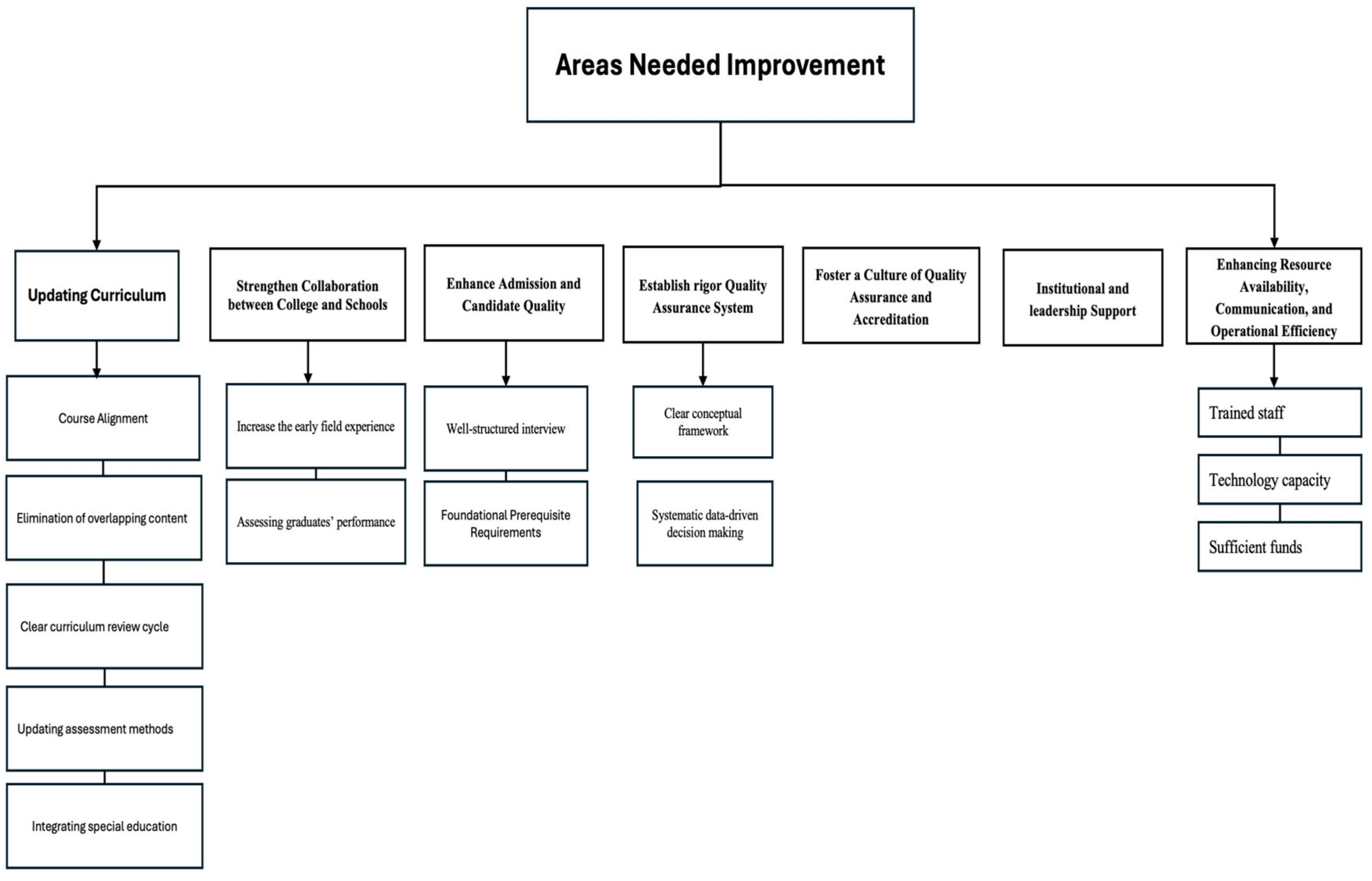
Figure 1 illustrates the key institutional factors identified as necessary to strengthen alignment with the CAEP accreditation standards. The findings indicate that successful accreditation depends on the interaction of multiple organizational dimensions, including curriculum reform, school–university partnerships, candidate quality, quality assurance capacity, institutional leadership, organizational culture, and resource support, rather than on isolated improvements in individual areas.
4.3.1. Curriculum Reform and Standards Alignment
Interview participants and archival reports highlighted curriculum reform as an important condition for strengthening alignment with accreditation expectations. The first involves realigning courses and curriculum with international standards (e.g., InTASC and CAEP) to strengthen program effectiveness. Both data sources highlighted needs for curriculum revision to ensure TEPs are standards-based and mirror “best practices”. Interviewees noted that course objectives and outcomes should reflect established teacher preparation benchmarks. Additionally, interviewees indicated that overlapping course material disrupts student learning, one stating: “Students sometimes take similar content in multiple courses … updating curricula will help us solve this problem.”
Participants also recommended creating clear curriculum-review cycles, one participant reporting: “We need a structured mechanism to periodically review and update courses so that they align with standards and reflect recent TEP trends.” One report (IRTE, 2007) concurred, advocating comprehensive syllabus reviews and calibrating course outcomes explicitly with NCATE and InTASC standards.
Another challenge involves updating assessment methods. Four participants recommended performance-based assessments, like projects, problem-based learning, and field work, instead of traditional testing.
And finally, participants and external reviewers emphasized the importance of incorporating special education content more systematically across teacher preparation programs. For example, one IRTE report recommended including “required coursework in special education in all programs” (IRTE, 2007, p. 12).
4.3.2. Strengthening School–University Partnerships
Both interviews and archival reports highlighted school–university partnerships as an important component of accreditation implementation. Early field experience opportunities must increase; IRTE reports suggested that they integrate them systematically into TEPs and “occur early and progressively” (IRTE, 2007, p. 14). Performance assessment must also improve; interviewee P4 recommended stronger partnerships with schools hiring CoE graduates, thereby creating “centers for data collection, monitoring our students after graduation, and providing us with follow-up information.”
4.3.3. Enhance Admission and Candidate Quality
Interviewees stated that admission and candidate quality affect TEP effectiveness and CAEP accreditation opportunities. Strengthening admission requirements, they believe, will enhance candidate quality.
They recommended that admission interviews prioritize prospective student professional dispositions, communication skills, and motivations for teaching. Current interview processes focus primarily upon academic achievement, but as participant P2 stated: “Interviews should be redesigned to assess student interpersonal and ethical skills … [and] passion for teaching … This would provide a more holistic understanding of applicant potential.”
Furthermore, students entering language-education programs (e.g., Arabic, English) must complete specific foundational courses and earn a B or better before program advancement occurs. This helps ensure students have sufficient language proficiency and pedagogical foundation to succeed.
4.3.4. Developing Quality Assurance Capacity
Both interviews and archival reports emphasized the importance of developing institutional capacity for quality assurance and evidence-based decision-making. Clear policies, structured procedures, and reliable data systems supporting decision-making are vital, participant P1 stating: “No quality-assurance system, no accreditation … plus zero assessments equals zero accreditation.” IRTE reports also recommended a systematic QAS for assessing program effectiveness.
Interviewees also suggested creating a clear conceptual framework for guiding CoE efforts. IRTE reports agreed, stating: “a clearly articulated and shared conceptual framework across all departments was essential to achieving alignment with international accreditation standards” (IRTE, 2006, p. 8).
4.3.5. Fostering a Quality Assurance and Accreditation Culture
Interview data revealed that establishing cultures of quality assurance and accreditation comprehension form the first step towards accreditation, participants adding: “Awareness and active engagement across all institutional levels are key to success.” They argued that achieving accreditation begins by building shared understandings amongst administrators, faculty, and staff regarding quality standards and techniques. When everyone recognizes their collective roles in maintaining quality standards, accreditation efforts become more authentic and sustainable. Such awareness helps develop active participation in self-evaluation, evidence-based improvement, and collaborative decision-making. Participants believed that successful accreditation depends not only on meeting accreditation standards but also on building a shared institutional culture that supports continuous improvement, collective responsibility, and the use of evidence to guide decision-making.
4.3.6. Leadership and Institutional Support
Participants emphasized that leadership support and institutional coordination play an important role in facilitating accreditation implementation. Interviewees felt Kuwait University must prioritize accreditation and encourage colleges to pursue it. Such support must extend beyond moral encouragement to include facilitating all procedures and obstacle removal. Moreover, participants argued that the CoE needs leadership coordination between the dean, academic departments, central quality assurance, and accreditation units. Similarly, IRTE reports recommended that the CoE strengthen “continued administrative coordination and policy support from both the dean and university leadership to sustain accreditation readiness” (IRTE, 2010, p. 25).
4.3.7. Enhancing Resource and Infrastructure Capacity
Interviewees suggested that the CoE improve its human and material resources, with staff receiving training in data analysis and management, documentation, and Arabic-to-English translation. Results also revealed that the college needs appropriate technology and software systems “to manage evidence and assessment faster.” Two participants also emphasized supplying sufficient funds supporting accreditation efforts. Similarly, IRTE reports “advised increasing resources for faculty development, technology integration, and professional workshops to facilitate a culture of continuous improvement” (IRTE, 2010, p. 23). Boosting resources is an essential next step towards accreditation.
Across all themes, participants emphasized that accreditation involves more than simply meeting external standards. The findings suggest that successful accreditation depends on several organizational factors, including effective leadership, the use of evidence in decision-making, active stakeholder engagement, and the ability to adapt international standards to local educational needs and contexts.
4.4. Institutional Factors Explaining Differences in Perceived Alignment Across the CAEP Standards
The findings suggest that differences in perceived alignment across the six CAEP accreditation standards were shaped by several interconnected institutional factors. The quantitative results showed that Standards 1 (Content and Pedagogical Knowledge), 2 (Clinical Partnerships and Practice), and 6 (Administrative and Fiscal Capacity) received relatively higher alignment ratings than Standards 3 (Candidate Quality, Recruitment, and Selectivity), 4 (Program Impact), and 5 (Quality Assurance and Continuous Improvement). The qualitative findings helped explain these differences by identifying the institutional conditions that influenced the implementation of each standard.
Participants consistently linked the lower levels of perceived alignment for Standards 3, 4, and 5 to weaknesses in candidate recruitment and admission policies, limited systems for monitoring graduate outcomes and program impact, and underdeveloped quality assurance processes to support continuous improvement. They also pointed to the lack of systematic data collection and analysis, which reduced the institution’s ability to make evidence-informed decisions and conduct ongoing program evaluation.
In addition to these standard-specific challenges, participants identified several broader institutional factors that influenced accreditation implementation across all six standards. These included aligning the curriculum with international standards, strengthening partnerships between schools and the university, providing committed institutional leadership, fostering a culture of quality assurance, improving communication and coordination among stakeholders, and ensuring adequate financial, technological, and human resources. Participants emphasized that these organizational conditions are critical for strengthening alignment with the CAEP standards and supporting effective accreditation implementation within the institutional context.
Overall, the findings suggest that differences in perceived alignment across the CAEP standards are largely explained by broader institutional capacities rather than weaknesses within individual standards alone. These results indicate that strengthening institutional structures, processes, and resources is essential for achieving more consistent alignment with the CAEP accreditation framework.
5. Discussion
The current study provides insight into how internationally developed accreditation frameworks function within a non-Western teacher education context. Although the quantitative data indicated varying degrees of alignment with the six CAEP standards, the qualitative findings showed that accreditation involves more than fulfilling a set of external requirements. For participants, the accreditation process was shaped by institutional culture, leadership and governance structures, resource availability, faculty participation, and established institutional practices. By integrating the quantitative and qualitative findings, the study demonstrates that differences in perceived alignment with the CAEP standards are best understood through these institutional and organizational factors, which explain why some standards were perceived as more closely aligned than others. These findings align with the literature on policy borrowing and educational transfer (
Rizvi & Lingard, 2009), which suggests that institutions do not uniformly implement global accreditation models. Rather, they adjust and reinterpret these models that reflect their local contexts and priorities.
The case of Kuwait University illustrates the challenges institutions may face when integrating internationally recognized quality assurance standards into existing institutional structures and practices. The findings are consistent with previous studies showing that accreditation frameworks serve not only as mechanisms for accountability but also as policy instruments that shape institutional priorities, definitions of quality, and approaches to evidence use (
Harvey & Williams, 2010;
Romanowski, 2022). Thus, the study contributes to the growing body of research that explores how international accreditation standards are adapted to diverse educational settings, rather than being applied uniformly.
Curriculum coherence emerged as a central theme in faculty perceptions of accreditation implementation and is reflected in CAEP Standard 1. Previous research on standards-based teacher education suggests that strong alignment among curriculum, assessment, and field experiences is critical for strengthening teacher preparation and fostering the development of professional teaching competencies (
Stojadinovic et al., 2021). From this perspective, curriculum alignment is an ongoing organizational process through which institutions ensure that candidates progressively develop the knowledge, skills, and professional competencies expected of effective teachers. The findings further suggest that accreditation provides a structured framework for systematically examining the coherence of program components, identifying areas for improvement, and enhancing candidates’ learning experiences and readiness for professional practice.
The discussion of assessment practices reflects broader changes in teacher education internationally. Recently studies have emphasized assessment methods that demonstrate candidates’ ability to apply their pedagogical knowledge in authentic teaching contexts instead of focusing on traditional academic performance (
Ketonen & Nieminen, 2024;
Meylani, 2024). Within accreditation frameworks, assessment serves not only as a means of evaluating candidate performance, but it also acts as a foundation for gathering evidence that can inform program improvements and support accountability. As a result, institutions are increasingly working to balance traditional assessment methods with approaches that offer a more comprehensive evaluation of candidate competence.
The findings also draw attention to the relationship between international quality frameworks and local educational contexts in which they are implemented. Accreditation standards are often based on widely recognized ideas of effective teaching and professional competence (
Chaaban et al., 2025). However, institutions apply these standards within specific institutional, cultural, and policy environments. This approach allows accreditation to be understood as a process of adaptation as institutions align international expectations with local educational goals, needs, and practices. This approach allows quality assurance efforts to remain responsive to local priorities while still reflecting international professional standards.
Discussions about preparing teachers to work with diverse learners reveal a similar pattern. The growing emphasis on inclusive education in teacher preparation programs reflects the need to equip future teachers with the knowledge and skills required to support all students (
Minkos et al., 2023). Integrating these competencies into teacher education programs helps ensure that graduates are better prepared for diverse classroom environments. In this context, curriculum development should be understood as an ongoing process in which programs incorporate emerging professional expectations into program structures while remaining responsive to local educational needs and realities.
Clinical partnerships and field-based learning emerged as central themes in faculty perceptions of accreditation implementation and are reflected in CAEP Standard 2. Previous research consistently shows that clinical experiences help teacher candidates bridge theory and practice, strengthen their professional confidence, and develop essential teaching competencies (
Alazmi, 2023;
Kwok & Bartanen, 2022). The findings further indicate that effective clinical preparation depends on strong, sustained partnerships between universities and schools. The accreditation literature increasingly recognizes clinical preparation as a shared responsibility among teacher education programs, partner schools, and mentor teachers (
Alazmi, 2023). These collaborative partnerships create authentic learning opportunities that support candidates’ professional growth while strengthening the quality of teacher preparation. Overall, the findings suggest that successful accreditation implementation depends not only on well-designed clinical experiences but also on effective institutional collaboration and long-term partnerships that sustain high-quality clinical practice.
The findings highlight the importance of organizational learning, institutional governance, and quality assurance capacity as interconnected foundations for successful accreditation implementation. These dimensions are reflected in CAEP Standards 3–5, which collectively emphasize the institutional systems needed to recruit high-quality candidates and evaluate program effectiveness and use evidence to drive continuous improvement. The lower perceived alignment across these standards suggests that successful accreditation depends not only on meeting individual accreditation requirements but also on developing integrated institutional processes that connect candidate recruitment, graduate outcomes, quality assurance, and evidence-informed decision-making. Together, these findings reinforce the view that accreditation is fundamentally an organizational process in which institutional capacity, effective governance, and continuous learning work together to sustain program quality and support ongoing improvement.
This interpretation is consistent with previous research showing that quality assurance systems are most effective when candidate recruitment, program evaluation, and continuous improvement operate as interdependent components of a coherent institutional framework rather than as isolated accreditation requirements (
Harvey & Williams, 2010;
Romanowski et al., 2024). The findings further indicate that systematic evidence collection, stakeholder engagement, and sustained collaboration with schools are essential for evaluating program effectiveness and informing continuous improvement (
Alkhateeb & Romanowski, 2021;
Griffiths et al., 2021;
Zhang et al., 2022). Together, these findings suggest that Standards 3–5 cluster because they share a common institutional purpose: ensuring that teacher education programs continuously generate, evaluate, and use evidence to strengthen program quality and graduate outcomes.
Institutional capacity emerged as a fundamental theme in faculty perceptions of accreditation implementation and is reflected in CAEP Standard 6. Effective accreditation depends on strong leadership, clear governance structures, effective communication, and qualified personnel to support strategic planning, assessment, and continuous improvement. Previous research similarly highlights the critical role of institutional governance and administrative capacity in advancing educational reform and strengthening quality assurance in higher education (
Eltayeb & Abdel-Gadir, 2020;
Tashtoush et al., 2025). The findings further suggest that successful accreditation implementation relies on a network of interconnected organizational processes, including curriculum alignment, clinical partnerships, candidate recruitment, quality assurance systems, leadership support, and institutional coordination. Together, these processes enhance institutional capacity to implement international accreditation standards while fostering a culture of continuous learning and sustained program improvement.
In summary, although frameworks such as CAEP are designed to support evidence-based decision-making and continuous improvement, the findings suggest that institutions often face a challenge in balancing compliance with accreditation requirements and using the process as an opportunity for organizational learning. Several participants noted that accreditation efforts were frequently focused on preparing documents and meeting reporting expectations, rather than using evidence systematically to guide program improvement and decision-making. Similar concerns have been highlighted in the quality assurance literature, which suggests that accreditation processes can sometimes emphasize compliance more than meaningful institutional learning and development (
Harvey & Williams, 2010;
Romanowski, 2022). These findings suggest that the long-term value of accreditation lies not only in meeting external requirements but also in building institutional capacity for learning, reflection, and continuous improvement. Such a shift depends on leadership support, faculty engagement, and quality assurance systems that promote the meaningful use of evidence in decision-making and program enhancement. The findings further contribute to understanding how international accreditation frameworks are interpreted and adapted within non-Western higher education settings.
This study enhances the literature on international accreditation and quality assurance by illustrating the implementation of global standards within a specific institutional context. Viewed through the perspectives of policy borrowing, internationalization, and organizational learning, these findings suggest that implementing accreditation extends beyond the simple adoption of international standards. Instead, it involves adapting those standards to fit the institution’s local structures, organizational culture, and evolving practices through continuous learning and improvement. More specifically, this study extends the existing literature by demonstrating that differences in perceived alignment with the CAEP standards are influenced not only by compliance with external accreditation requirements but also by institutional governance, organizational learning, quality assurance capacity, and the local adaptation of international policy frameworks. By integrating quantitative and qualitative evidence, the study provides a more comprehensive understanding of how faculty members perceive accreditation implementation and how institutional conditions shape the adaptation of international accreditation standards within a non-Western teacher-education context. These findings contribute to the growing literature by showing that accreditation implementation is an organizational and context-dependent process in which international standards are interpreted, adapted, and embedded within local institutional practices rather than adopted unchanged. The case of Kuwait University shows that accreditation is not simply the adoption of external requirements. Rather, it involves connecting internationally recognized standards with local priorities, institutional structures, and educational practices. This process offers insight into how higher-education institutions engage with global quality assurance frameworks while responding to their own needs and goals.
6. Conclusions
This study contributes to the literature on international accreditation, policy transfer, and quality assurance in teacher education by examining how a globally recognized accreditation framework is implemented within a non-Western higher education context. Rather than presenting accreditation as the direct adoption of externally developed standards, this study demonstrates that differences in alignment with international quality frameworks are explained by local institutional conditions, governance structures, organizational culture, leadership practices, and quality assurance capacity. The case of Kuwait University demonstrates that accreditation implementation is largely a process of adaptation, as institutions work to connect international expectations with existing educational systems and local priorities.
The findings also suggest that accreditation challenges extend beyond technical issues related to curriculum alignment, assessment, clinical practice, and candidate recruitment. Many of the challenges identified in this study reflect broader organizational factors, including institutional coordination, stakeholder engagement, evidence use, and the capacity to support continuous improvement. One important finding is that quality assurance processes may function either as tools for organizational learning and improvement or as activities focused mainly on compliance. This distinction contributes to ongoing discussions about how accreditation can promote meaningful institutional development rather than simply help institutions meet external accountability requirements.
By providing evidence from the Gulf region, this study extends a body of literature that has largely been shaped by Western contexts. It also offers insight into how international accreditation frameworks operate within different cultural, organizational, and policy environments. The findings reinforce the arguments in the policy borrowing literature that international educational models undergo adaptation rather than adoption in their original form. Instead, they are adapted to local priorities, constraints, and institutional realities. As a result, this study helps clarify how global accreditation frameworks interact with local educational contexts.
Several limitations should be acknowledged. Because the study focused on a single institution, the findings should be viewed as context-specific rather than broadly generalizable. The quantitative component was intended to provide an institutional perspective on faculty perceptions, not to support statistical generalization. Likewise, the qualitative findings are based on participants’ perceptions and experiences of accreditation implementation and, therefore, may not fully reflect the full range of institutional perspectives or capture every aspect of the accreditation process. In addition, the archival accreditation reports were analyzed to identify recurring organizational patterns and challenges, rather than to evaluate the institution’s current status. Although these reports provided valuable historical documentary evidence, they reflect specific stages of the accreditation process and may not fully represent current institutional conditions. Finally, accreditation standards and institutional practices continue to evolve, which may affect how accreditation requirements are interpreted and implemented over time. Therefore, these methodological considerations should be taken into account when interpreting and transferring the findings to other institutional or national contexts.
The study also identifies several directions for future research. Researchers could conduct comparative studies across Gulf Cooperation Council countries to investigate the interpretation and implementation of international accreditation frameworks in various national and institutional contexts. Longitudinal studies are needed to examine how institutions move from accreditation implementation to sustainable organizational learning and continuous improvement. Future research should also include the perspectives of additional stakeholders, such as teacher candidates, graduates, school partners, employers, policymakers, and external reviewers. In addition, comparative analyses of different accreditation systems could help researchers better understand how global quality assurance frameworks interact with local educational priorities, institutional cultures, and governance structures. Such research would strengthen understanding of the opportunities and challenges associated with the internationalization of quality assurance in teacher education.