From Discipline to Improvisation: A Practice-Based Model for Training Creativity


Abstract
1. Introduction
2. Qualitative Introspection
3. Introspection Report
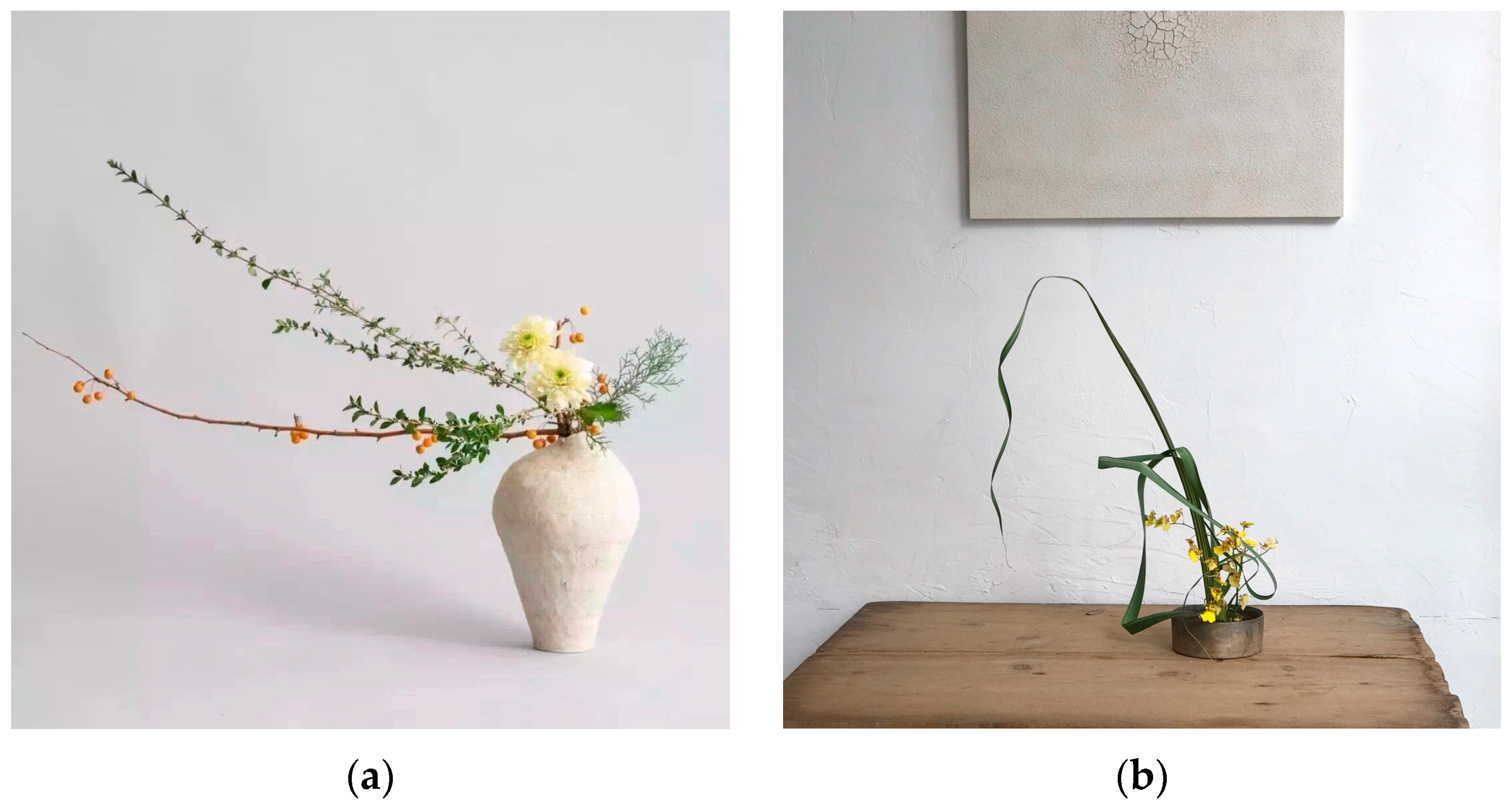
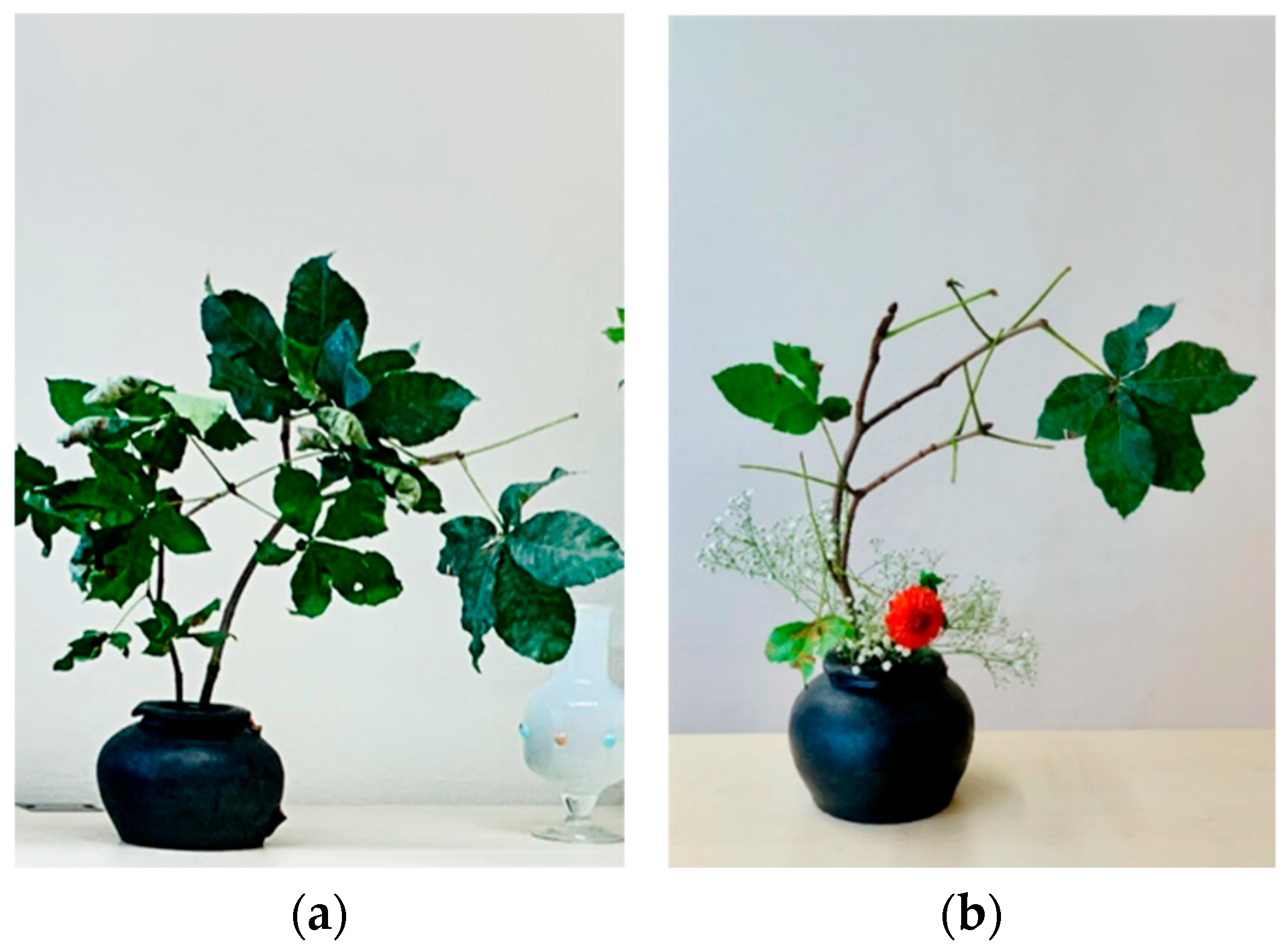
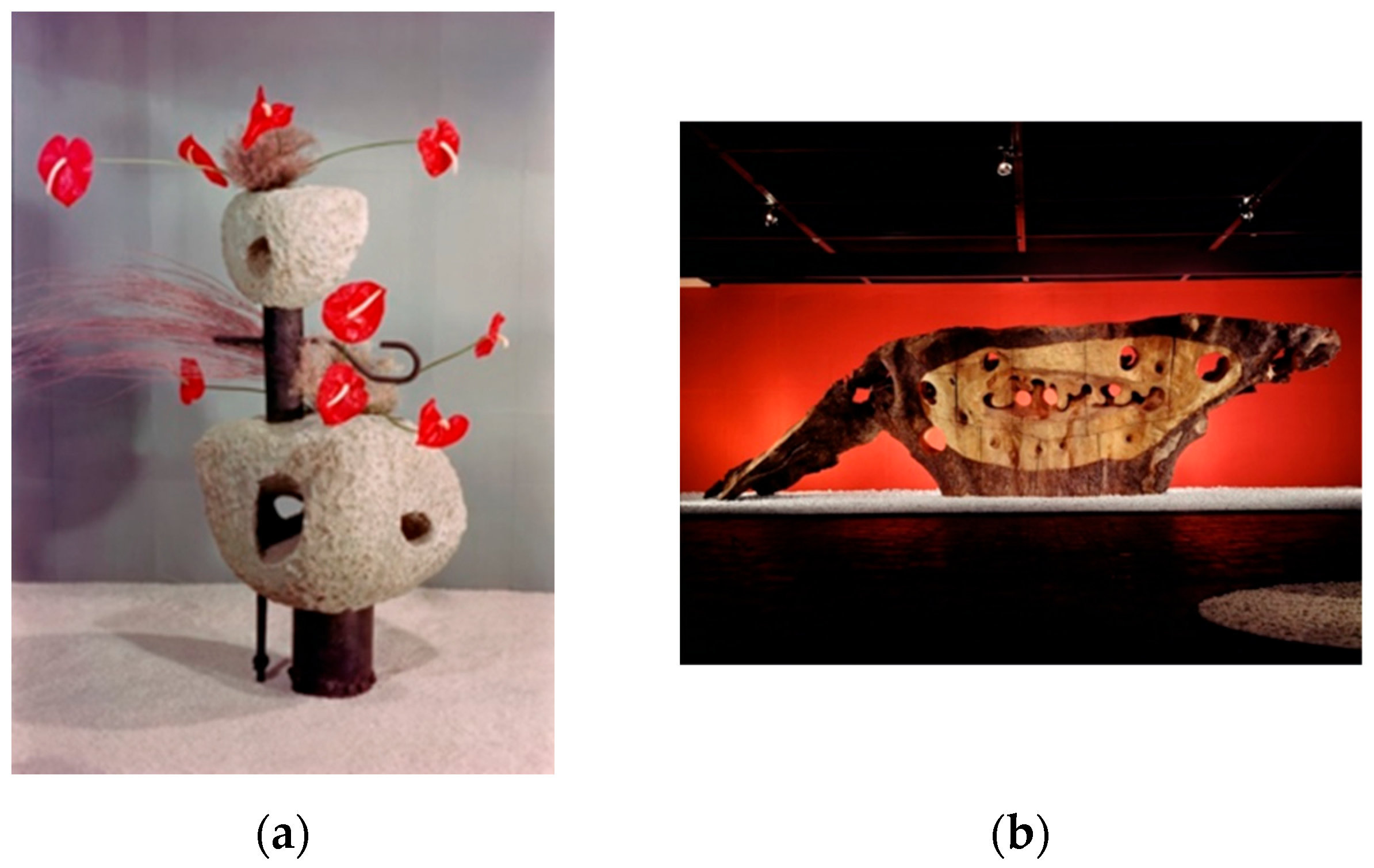
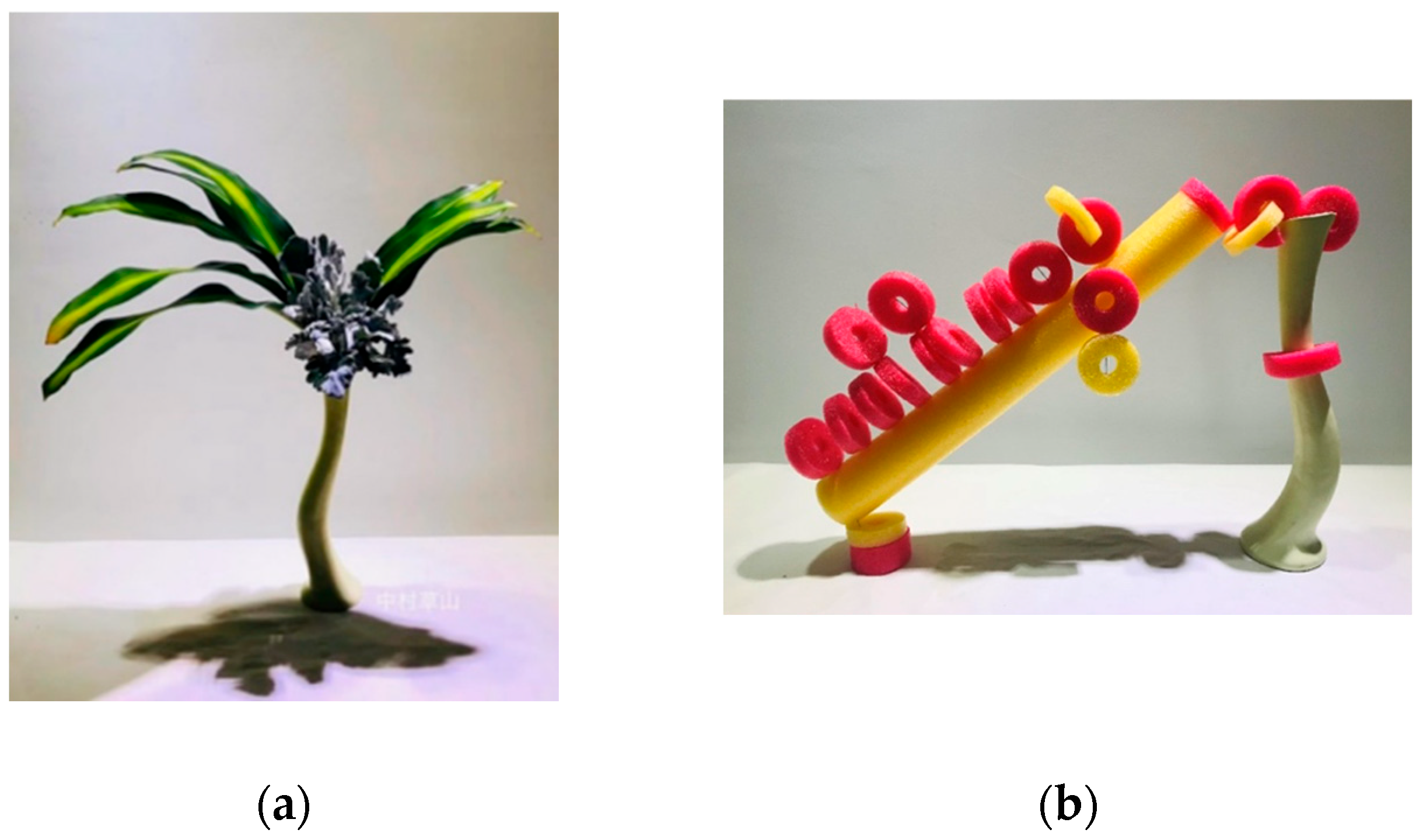
3.1. What Do I Create in Ikebana Art?
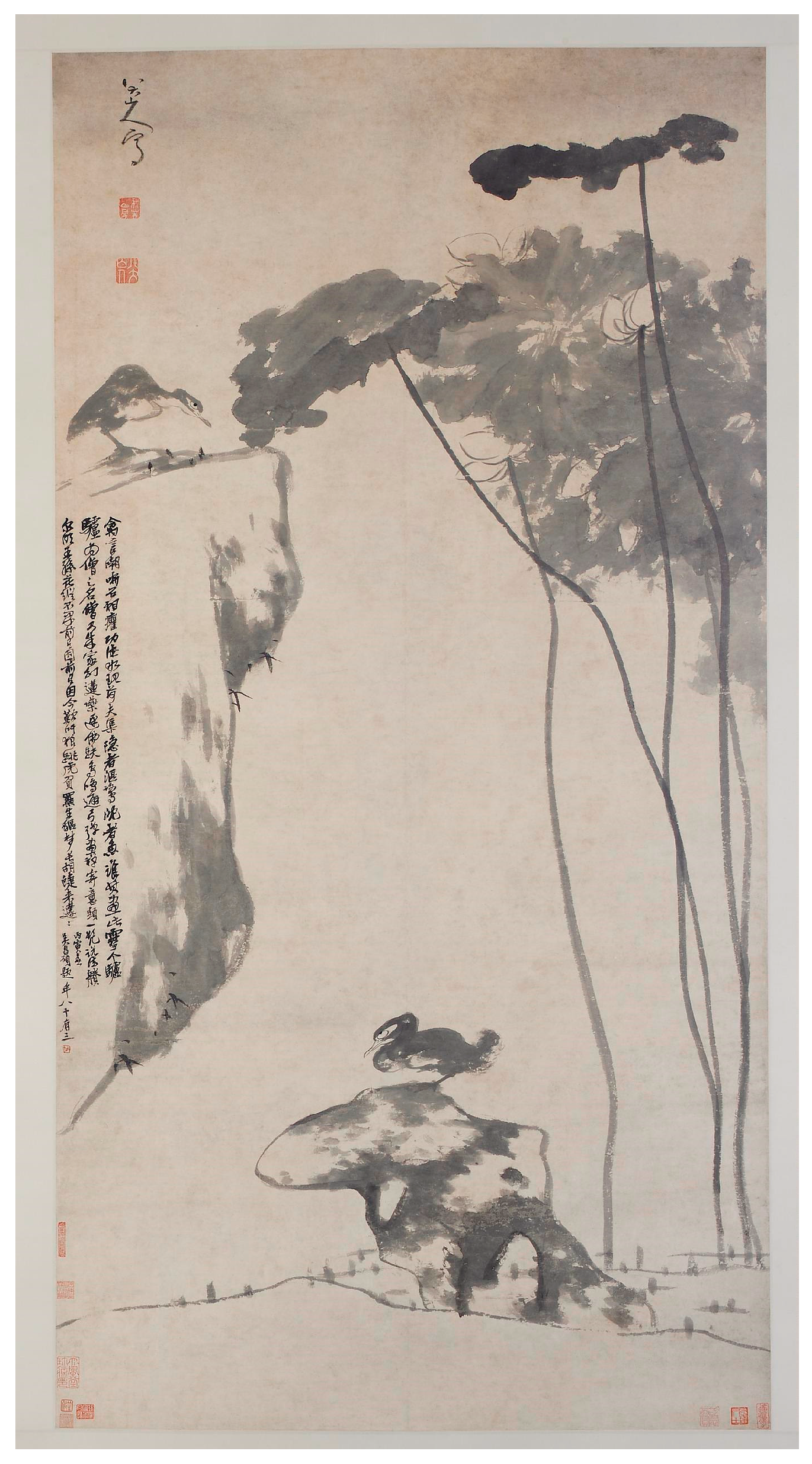
“… look at the division, low and high, the separation between the two, with a wide swath of unpainted paper, all of the flowers stems coming up and rising the full length of the painting on the right side …” Now get closer to see the lotus flowers. “Although they are constructed of just two strokes of ink, they create this full volume, and a sense of lightness and preciousness that recalls the beauty of a lotus blossom, with remarkable fidelity…”(Excerpt from a commentary by Stephen D. Allee, as cited in Smarthistory, n.d.)
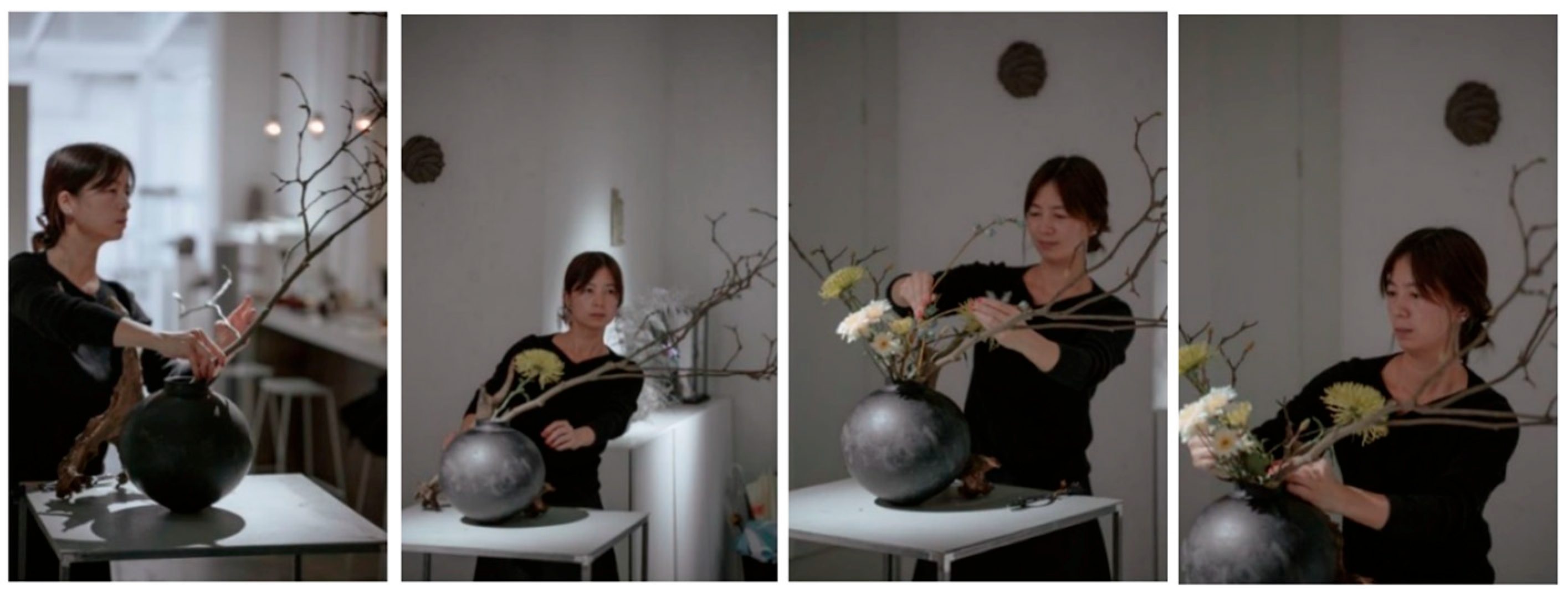
3.2. How Do I Make Ikebana Performance?
3.3. How Do I Feel When I Create?
3.4. I Am Trained to Be Creative—How?
3.5. How Do I Keep Experimenting?
3.6. How Does the Environment Enable Me?
4. Findings and Discussion
4.1. Creativity as a Structured and Experimental Practice
“Personality, values, intrinsic motivation, and discovery orientation give valuable clues as to who may turn out to make a creative contribution in art—and perhaps other domains as well… But in the course of our investigations, it became very clear that a prediction based on these factors left much of the variance in creative achievement unexplained”.(p. 143)
4.2. Embodied Creativity, Through Bodily and Material Engagement
4.3. Flow as Both Feeling and Perception
4.4. The Social Environment of Creativity: Peer Dynamics
4.5. Resilience: An Underexplored Trait in Creativity
“Genius is one percent inspiration and ninety-nine percent perspiration.”
- Acceptance of independent challenges
- Proactivity
- Originality
- High capability
- Imagination
- Knowledge-seeking behaviour
- Adaptability
- Associative ability
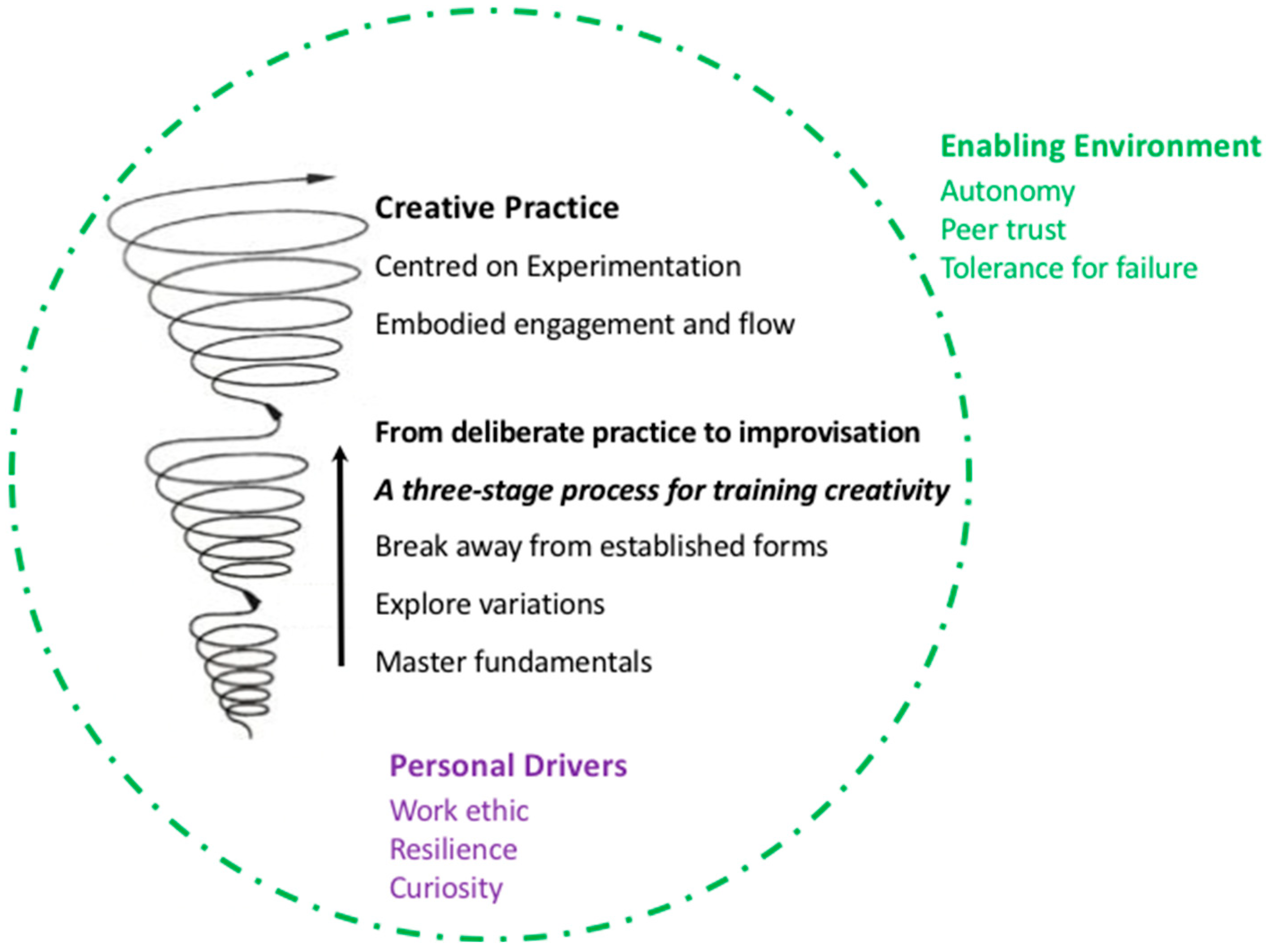
5. Conclusions: A Practice-Based Model for Training Creativity
5.1. Three Core Dimensions of the Model
- Individual dimension: cultivating intrinsic motivation and resilience
- 2.
- Creative practice dimension: a three-stage process of disciplined experimentation
- 3.
- Environmental dimension: autonomy, peer trust, and tolerance for failure
5.2. Experimentation at the Centre of Creative Practice
6. Contribution, Limitations, and Implications
“I am aware, in fact, that the experience gained from my artistic research has provided me with a large stock of knowledge about everyday life in organizations. Knowledge of this kind, I believe, has been deliberately neglected by organizational theories and management studies.”
Author Contributions
Funding
Data Availability Statement
Conflicts of Interest
References
- Agogué, M., Parguel, B., & Bendas, A. (2024). Do you believe Red Bull gives wings? When implicit theories of creativity impair creative performance. Creativity and Innovation Management, 33(3), 461–475. [Google Scholar] [CrossRef] [Scilit]
- Aiken, M., Bacharach, S. B., & French, J. L. (1980). Organizational structure, work process, and proposal making in administrative bureaucracies. Academy of Management Journal, 23(4), 631–652. [Google Scholar] [CrossRef] [Scilit]
- Amabile, T. M. (1983). The case for a social psychology of creativity. In The social psychology of creativity (pp. 3–15). Springer. [Google Scholar]
- Amabile, T. M. (1988). A model of creativity and innovation in organizations. Research in Organizational Behavior, 10(1), 123–167. [Google Scholar]
- Amabile, T. M. (1996). Creativity in context. Westview Press. [Google Scholar]
- Amabile, T. M., Barsade, S. G., Mueller, J. S., & Staw, B. M. (2005). Affect and creativity at work. Administrative Science Quarterly, 50(3), 367–403. [Google Scholar] [CrossRef] [Scilit]
- Amabile, T. M., Conti, R., Coon, H., Lazenby, J., & Herron, M. (1996). Assessing the work environment for creativity. Academy of Management Journal, 39(5), 1154–1184. [Google Scholar] [CrossRef] [Scilit]
- Amabile, T. M., & Pratt, M. G. (2016). The dynamic componential model of creativity and innovation in organizations: Making progress, making meaning. Research in Organizational Behavior, 36, 157–183. [Google Scholar] [CrossRef] [Scilit]
- Anderson, L. (2006). Analytic autoethnography. Journal of Contemporary Ethnography, 35(4), 373–395. [Google Scholar] [CrossRef] [Scilit]
- Andreasen, N. C., & Glick, I. D. (1988). Bipolar affective disorder and creativity: Implications and clinical management. Comprehensive Psychiatry, 29(3), 207–217. [Google Scholar] [CrossRef] [Scilit] [PubMed]
- Bailyn, L. (1985). Autonomy in the industrial R&D lab. Human Resource Management, 24(2), 129–146. [Google Scholar] [CrossRef] [Scilit]
- Barron, F. (1963). Creativity and psychological health: Origins of personality and creative freedom. D. Van Nostrand Company. [Google Scholar]
- Barron, F., & Harrington, D. M. (1981). Creativity, intelligence, and personality. Annual Review of Psychology, 32, 439–476. [Google Scholar] [CrossRef] [Scilit]
- Beaty, R. E. (2015). The neuroscience of musical improvisation. Neuroscience & Biobehavioral Reviews, 51, 108–117. [Google Scholar] [CrossRef] [Scilit] [PubMed]
- Berntsen, D. (2009). Involuntary autobiographical memories: An introduction to the unbidden past. Cambridge University Press. [Google Scholar]
- Berntsen, D., Staugaard, S. R., & Sørensen, L. M. T. (2013). Why am I remembering this now? Predicting the occurrence of involuntary (spontaneous) episodic memories. Journal of experimental psychology: General, 142(2), 426–444. [Google Scholar] [CrossRef] [Scilit] [PubMed]
- Brown, S. (1998). What’s love got to do with it?: Sex, shopping and subjective personal introspection. In S. Brown, B. Clarke, & A. M. Doherty (Eds.), Romancing the market (pp. 135–169). Routledge. [Google Scholar]
- Burleson, W., & Selker, T. (2002). Creativity and interface. Communications of the ACM, 45(10), 89–90. [Google Scholar]
- Byrne, A. (2005). Introspection. Philosophical Topics, 33(1), 79–104. [Google Scholar]
- Conway, M. A., & Pleydell-Pearce, C. W. (2000). The construction of autobiographical memories in the self-memory system. Psychological Review, 107(2), 261–288. [Google Scholar] [CrossRef] [Scilit] [PubMed]
- Coste, A., Bardy, B. G., & Marin, L. (2019). Towards an embodied signature of improvisation skills. Frontiers in Psychology, 10, 2441. [Google Scholar] [CrossRef] [Scilit] [PubMed]
- Coutu, D. L. (2002). How resilience works. Harvard Business Review, 80(5), 46–55. [Google Scholar] [PubMed]
- Cropley, A. J. (1997). Fostering creativity in the classroom: General principles. In M. A. Runco (Ed.), The creativity research handbook (Vol. 1, pp. 84–114). Hampton Press. [Google Scholar]
- Csikszentmihalyi, M. (1988). Motivation and creativity: Toward a synthesis of structural and energistic approaches to cognition. New Ideas in Psychology, 6(2), 159–176. [Google Scholar] [CrossRef] [Scilit]
- Csikszentmihalyi, M. (1990). The domain of creativity. In M. A. Runco, & R. S. Albert (Eds.), Theories of creativity (pp. 190–212). Sage Publications, Inc. [Google Scholar]
- Csikszentmihalyi, M. (1998). Fruitless polarities. Behavioral and Brain Sciences, 21(3), 411. [Google Scholar] [CrossRef] [Scilit]
- Csikszentmihalyi, M. (2001). A systems perspective on creativity. Creative Management, 11–26. [Google Scholar]
- Csikszentmihalyi, M., & Sawyer, K. (2014). Shifting the focus from individual to organizational creativity. In The systems model of creativity (pp. 67–71). Springer. [Google Scholar]
- Cummings, A., & Oldham, G. R. (1997). Enhancing creativity: Managing work contexts for the high potential employee. California Management Review, 40(1), 22–38. [Google Scholar] [CrossRef] [Scilit]
- Dearani, J. A., Gold, M., Leibovich, B. C., Ericsson, K. A., Khabbaz, K. R., Foley, T. A., Julsrud, P. R., Matsumoto, J. M., & Daly, R. C. (2017). The role of imaging, deliberate practice, structure, and improvisation in approaching surgical perfection. The Journal of Thoracic and Cardiovascular Surgery, 154(4), 1329–1336. [Google Scholar] [CrossRef] [Scilit] [PubMed]
- Dunbar, K. (1997). How scientists think: On-line creativity and conceptual change in science. In T. B. Ward, S. M. Smith, & J. Vaid (Eds.), Creative thought: An investigation of conceptual structures and processes (pp. 461–493). American Psychological Association. [Google Scholar]
- Eisner, E. W. (2004). The arts and the creation of mind. Yale University Press. [Google Scholar]
- Ellis, C. (1991). Sociological introspection and emotional experience. Symbolic Interaction, 14(1), 23–50. [Google Scholar] [CrossRef] [Scilit]
- Ellis, C. (1992). Investigating subjectivity: Research on lived experience (Vol. 139). Sage. [Google Scholar]
- Ellis, C. (2016). Revision: Autoethnographic reflections on life and work. Routledge. [Google Scholar]
- Ellis, C., Adams, T. E., & Bochner, A. P. (2011). Autoethnography: An overview. Historical Social Research/Historische Sozialforschung, 36(4), 273–290. [Google Scholar] [CrossRef]
- Ericsson, K. A., & Charness, N. (1994). Expert performance: Its structure and acquisition. American Psychologist, 49(8), 725–747. [Google Scholar] [CrossRef]
- Ericsson, K. A., Krampe, R. T., & Tesch-Römer, C. (1993). The role of deliberate practice in the acquisition of expert performance. Psychological Review, 100(3), 363–406. [Google Scholar] [CrossRef]
- Ericsson, K. A., Roring, R. W., & Nandagopal, K. (2007). Giftedness and evidence for reproducibly superior performance: An account based on the expert performance framework. High Ability Studies, 18(1), 3–56. [Google Scholar] [CrossRef] [Scilit]
- Eysenck, H. J. (1993). Creativity and personality: Suggestions for a theory. Psychological Inquiry, 4(3), 147–178. [Google Scholar] [CrossRef] [Scilit] [PubMed]
- Feldman, D. H., Csikszentmihalyi, M., & Gardner, H. (1994). Changing the world: A framework for the study of creativity. Praeger. [Google Scholar]
- Fisher, C. M., & Barrett, F. J. (2019). The experience of improvising in organizations: A creative process perspective. Academy of Management Perspectives, 33(2), 148–162. [Google Scholar] [CrossRef] [Scilit]
- Frith, E., Miller, S., & Loprinzi, P. D. (2020). A review of experimental research on embodied creativity: Revisiting the mind–body connection. The Journal of Creative Behavior, 54(4), 767–798. [Google Scholar] [CrossRef] [Scilit]
- Frow, P., Nenonen, S., Payne, A., & Storbacka, K. (2015). Managing co-creation design: A strategic approach to innovation. British Journal of Management, 26(3), 463–483. [Google Scholar] [CrossRef] [Scilit]
- Gallagher, S. (2003). Phenomenology and experimental design toward a phenomenologically enlightened experimental science. Journal of Consciousness Studies, 10(9–10), 85–99. [Google Scholar]
- Ghiselin, B. (1963). Automatism, intention, and autonomy in the novelist’s production. Daedalus, 92(2), 297–311. [Google Scholar]
- Glăveanu, V. P. (2013). Rewriting the language of creativity: The Five A’s framework. Review of General Psychology, 17(1), 69–81. [Google Scholar] [CrossRef] [Scilit]
- Glăveanu, V. P., & Beghetto, R. A. (2021). Creative experience: A non-standard definition of creativity. Creativity Research Journal, 33(2), 75–80. [Google Scholar] [CrossRef] [Scilit]
- Gould, S. J. (1995). Researcher introspection as a method in consumer research: Applications, issues, and implications. Journal of Consumer Research, 21(4), 719–722. [Google Scholar] [CrossRef] [Scilit]
- Gould, S. J. (2011). The emergence of consumer introspection theory (CIT): Introduction to a JBR special issue. Journal of Business Research, 65(4), 453–460. [Google Scholar] [CrossRef] [Scilit]
- Greenberg, E. (1992). Creativity, autonomy, and evaluation of creative work: Artistic workers in organizations. The Journal of Creative Behavior, 26(2), 75–80. [Google Scholar] [CrossRef] [Scilit]
- Griffith, A. (2021). Embodied creativity in the fine and performing arts. Journal of Creativity, 31, 100010. [Google Scholar] [CrossRef] [Scilit]
- Guastello, S. J. (1998). Creative problem solving groups at the edge of chaos. The Journal of Creative Behavior, 32(1), 38–57. [Google Scholar] [CrossRef] [Scilit]
- Guilford, J. P. (1950). Creativity. American Psychologist, 5(9), 444–454. [Google Scholar] [CrossRef] [Scilit] [PubMed]
- Guilford, J. P. (1967). The nature of human intelligence. McGraw-Hill. [Google Scholar]
- Guo, H., Zhou, Z., & Ma, F. (2025). Effect of training programs on the creativity of university students: A multi-level meta-analysis. Thinking Skills and Creativity, 56, 101779. [Google Scholar] [CrossRef] [Scilit]
- Harrington, D. M. (1990). The ecology of human creativity: A psychological perspective. In M. A. Runco, & R. S. Albert (Eds.), Theories of creativity (pp. 143–169). Sage Publications. [Google Scholar]
- Hayes, J. R. (1989). Cognitive processes in creativity. In J. A. Glover, R. R. Ronning, & C. R. Reynolds (Eds.), Handbook of creativity (pp. 135–145). Springer. [Google Scholar]
- Hochschild, A. R. (2015). The managed heart. In Working in America (pp. 29–36). Routledge. [Google Scholar]
- Holbrook, M. B. (1986). Aims, concepts, and methods for the representation of individual differences in esthetic responses to design features. Journal of Consumer Research, 13(3), 337–347. [Google Scholar] [CrossRef] [Scilit]
- Holbrook, M. B. (1987). What is consumer research? Journal of Consumer Research, 14(1), 128–132. [Google Scholar] [CrossRef] [Scilit] [PubMed]
- Humphreys, M. (2005). Getting personal: Reflexivity and autoethnographic vignettes. Qualitative Inquiry, 11(6), 840–860. [Google Scholar] [CrossRef] [Scilit]
- Ivcevic, Z., & Brackett, M. A. (2015). Predicting creativity: Interactive effects of openness to experience and emotion regulation ability. Psychology of Aesthetics, Creativity, and the Arts, 9(4), 480–487. [Google Scholar] [CrossRef] [Scilit]
- Jacoby, L. L. (1983). Perceptual enhancement: Persistent effects of an experience. Journal of Experimental Psychology: Learning, Memory, and Cognition, 9(1), 21–38. [Google Scholar] [CrossRef] [PubMed]
- James, W. (1890). The principles of psychology (Vol. 1). Henry Holt and Company. [Google Scholar]
- Joas, H. (1994). The creativity of action: Pragmatism and the critique of the rational action model. In I. Carlgren, G. Handal, & S. Vaage (Eds.), Teachers’ minds and actions: Research on teachers’ thinking and practice (pp. 62–73). Routledge. [Google Scholar]
- Johansen, G. G. (2016). To practise improvisation. A qualitative study of practice activity among jazz students, with a particular focus on the development of improvisation competence. Arts and Humanities in Higher Education, 15(3–4), 347–365. [Google Scholar]
- Karkockiene, D. (2005). Creativity: Can it be trained? A scientific educology of creativity. International Journal of Educology, 51–58. [Google Scholar]
- Kelley, T., & Kelley, D. (2012). Reclaim your creative confidence. Harvard Business Review, 90(12), 115–118. [Google Scholar] [PubMed]
- Koren, L. (1994). Wabi-sabi for artists, designers, poets & philosophers. Stone Bridge Press. [Google Scholar]
- Leclair, M. (2023). The atmospherics of creativity: Affective and spatial materiality in a designer’s studio. Organization Studies, 44(5), 807–829. [Google Scholar] [CrossRef] [Scilit]
- Leung, A. K.-y., Kim, S., Polman, E., Ong, L. S., Qiu, L., Goncalo, J. A., & Sanchez-Burks, J. (2012). Embodied metaphors and creative “acts”. Psychological Science, 23(5), 502–509. [Google Scholar] [CrossRef] [Scilit] [PubMed]
- Lou, S.-J., Chung, C.-C., Dzan, W.-Y., & Shih, R.-C. (2012). Construction of a creative instructional design model using blended, project-based learning for college students. Creative Education, 3(7), 1281–1290. [Google Scholar]
- Makel, M. C., & Plucker, J. A. (2008). Creativity. In S. I. Pfeiffer (Ed.), Handbook of giftedness in children: Psychoeducational theory, research, and best practices (pp. 247–270). Springer. [Google Scholar] [CrossRef] [Scilit]
- Malinin, L. H. (2019). How radical is embodied creativity? Implications of 4E approaches for creativity research and teaching. Frontiers in Psychology, 10, 2372. [Google Scholar] [CrossRef] [Scilit] [PubMed]
- Maslow, A. H. (1962). Creativity in self-actualizing people. In Toward a psychology of being (pp. 127–137). D Van Nostrand. [Google Scholar] [CrossRef] [Scilit]
- Matthews, G. (1986). The interactive effects of extraversion and arousal on performance: Are creativity tests anomalous? Personality and Individual Differences, 7(6), 751–761. [Google Scholar] [CrossRef] [Scilit]
- Mayer, R. E. (2013). Designing instruction for constructivist learning. In Instructional-design theories and models (pp. 141–159). Routledge. [Google Scholar]
- McMahon, J., Zehntner, C., & McGannon, K. R. (2017). Fleshy, female and forty: A docudrama of a former elite swimmer who re-immersed herself into elite swimming culture. Qualitative Research in Sport, Exercise and Health, 9(5), 546–553. [Google Scholar] [CrossRef] [Scilit]
- Mueller, J. S., Melwani, S., & Goncalo, J. A. (2012). The bias against creativity: Why people desire but reject creative ideas. Psychological Science, 23(1), 13–17. [Google Scholar] [CrossRef] [Scilit] [PubMed]
- Mumford, M. D., & Gustafson, S. B. (1988). Creativity syndrome: Integration, application, and innovation. Psychological Bulletin, 103(1), 27–43. [Google Scholar] [CrossRef]
- Newton, D. P., Wang, Y., & Newton, L. (2022). ‘Allowing them to dream’: Fostering creativity in mathematics undergraduates. Journal of Further and Higher Education, 46(10), 1334–1346. [Google Scholar] [CrossRef] [Scilit]
- Oldham, G. R., & Cummings, A. (1996). Employee creativity: Personal and contextual factors at work. Academy of Management Journal, 39(3), 607–634. [Google Scholar] [CrossRef] [Scilit]
- Oleynick, V. C., Thrash, T. M., LeFew, M. C., Moldovan, E. G., & Kieffaber, P. D. (2014). The scientific study of inspiration in the creative process: Challenges and opportunities. Frontiers in Human Neuroscience, 8, 436. [Google Scholar] [CrossRef] [Scilit] [PubMed]
- Overgaard, M. (2008). Introspection. Scholarpedia, 3(5), 4953. [Google Scholar]
- Passarotto, E., Preckel, F., Schneider, M., & Müllensiefen, D. (2022). Deliberate practice in music: Development and psychometric validation of a standardized measurement instrument. Psychology of Music, 50(5), 1637–1655. [Google Scholar] [CrossRef] [Scilit]
- Pelz, D. C., & Andrews, F. M. (1966). Scientists in organizations: Productive climates for research and development. John Wiley. [Google Scholar]
- Pressing, J. (2007). Improvisation: Methods and models. In Physical theatres: A critical reader (pp. 66–78). Routledge. [Google Scholar]
- Redmond, M. R., Mumford, M. D., & Teach, R. (1993). Putting creativity to work: Effects of leader behavior on subordinate creativity. Organizational Behavior and Human Decision Processes, 55(1), 120–151. [Google Scholar] [CrossRef] [Scilit]
- Rees, S. W., & Newton, D. P. (2021). The creative sciences. School Science Review, 382, 57–62. Available online: https://www.ase.org.uk/resources/school-science-review/issue-382/creative-sciences (accessed on 15 July 2026).
- Renzulli, J. S. (1978). What makes giftedness? Reexamining a definition. Phi Delta Kappan, 60(3), 180–184, 261. [Google Scholar]
- Richards, M. C. (1996). Opening our moral eye. SteinerBooks. [Google Scholar]
- Rogers, C. R. (1954). Toward a theory of creativity. ETC: A Review of General Semantics, 11(4), 249–260. [Google Scholar]
- Runco, M. A., & Sakamoto, S. O. (1998). Experimental studies of creativity. In R. J. Sternberg (Ed.), Handbook of creativity (pp. 62–92). Cambridge University Press. [Google Scholar]
- Russ, S. W. (2013). Affect and creativity: The role of affect and play in the creative process. Routledge. [Google Scholar]
- Scott, G., Leritz, L., & Mumford, M. (2004). The effectiveness of creativity training: A quantitative review. Creativity Research Journal, 16(4), 361–388. [Google Scholar] [CrossRef] [Scilit]
- Sharma, S. C. (1986). Creativity and mental health training. Indian Journal of Behaviour, 10(3), 11–16. [Google Scholar]
- Simonton, D. K. (2000). Creativity: Cognitive, personal, developmental, and social aspects. American Psychologist, 55(1), 151–158. [Google Scholar] [CrossRef] [PubMed]
- Simonton, D. K. (2012). Taking the U.S. Patent Office criteria seriously: A quantitative three-criterion creativity definition and its implications. Creativity Research Journal, 24(2–3), 97–106. [Google Scholar] [CrossRef] [Scilit]
- Sloman, S. A. (1996). The empirical case for two systems of reasoning. Psychological Bulletin, 119(1), 3–22. [Google Scholar] [CrossRef]
- Smarthistory. (n.d.). Bada Shanren, Lotus and Ducks. Available online: https://smarthistory.org/bada-shanren-lotus-and-ducks/ (accessed on 15 October 2021).
- Smith, E. R., & DeCoster, J. (1999). Associative and rule-based processing: A connectionist interpretation of dual-process models. In S. Chaiken, & Y. Trope (Eds.), Dual-process theories in social psychology (pp. 323–336). The Guilford Press. [Google Scholar]
- Sogetsu Foundation. (n.d.). Sofu Teshigahara. Available online: https://www.sogetsu.or.jp/about/iemoto/sohu/ (accessed on 15 October 2021).
- Spradley, J. P. (1980). Participant observation. Harcourt Brace Jovanovich College Publishers. [Google Scholar]
- Stanciu, M. M. (2015). Embodied creativity: A critical analysis of an underdeveloped subject. Procedia-Social and Behavioral Sciences, 187, 312–317. [Google Scholar] [CrossRef] [Scilit]
- Staugaard, S. R., & Berntsen, D. (2014). Involuntary memories of emotional scenes: The effects of cue discriminability and emotion over time. Journal of Experimental Psychology: General, 143(5), 1939–1957. [Google Scholar] [CrossRef] [Scilit] [PubMed]
- Sternberg, R. J. (1988). A three-facet model of creativity. In R. J. Sternberg (Ed.), The nature of creativity (pp. 125–147). Cambridge University Press. [Google Scholar]
- Sternberg, R. J., & Lubart, T. I. (1991). An investment theory of creativity and its development. Human Development, 34(1), 1–31. [Google Scholar] [CrossRef] [Scilit]
- Sternberg, R. J., & Lubart, T. I. (1995). Defying the crowd: Cultivating creativity in a culture of conformity. Free Press. [Google Scholar]
- Strati, A. (2000). Theory and method in organization studies: Paradigms and choices. Sage. [Google Scholar]
- Strati, A. (2020). Art and organizing: A brief personal reflection. In Aesthetics, organization, and humanistic management (pp. 11–21). Routledge. [Google Scholar]
- Thompson, N. A. (2018). Imagination and creativity in organizations. Organization Studies, 39(2–3), 229–250. [Google Scholar] [CrossRef] [Scilit]
- van Marrewijk, A. (2010). The beauty and the beast: The embodied experience of two corporate buildings. In A. van Marrewijk, & D. Yanow (Eds.), Organizational spaces: Rematerializing the workaday world (pp. 96–114). Edward Elgar. [Google Scholar]
- Wall, T. D., Cordery, J. L., & Clegg, C. W. (2002). Empowerment, performance, and operational uncertainty: A theoretical integration. Applied Psychology, 51(1), 146–169. [Google Scholar] [CrossRef] [Scilit]
- Wallace, B. (1986). Creativity: Some definitions: The creative personality; the creative process; the creative classroom. Gifted Education International, 4(2), 68–73. [Google Scholar] [CrossRef] [Scilit]
- Wallendorf, M., & Brucks, M. (1993). Introspection in consumer research: Implementation and implications. Journal of Consumer Research, 20(3), 339–359. [Google Scholar] [CrossRef] [Scilit] [PubMed]
- Wang, X., He, Y., Lu, K., Deng, C., Qiao, X., & Hao, N. (2019). How does the embodied metaphor affect creative thinking? NeuroImage, 202, 116114. [Google Scholar] [CrossRef] [Scilit] [PubMed]
- Watts, L. L., McIntosh, T. J., Gibson, C., Mulhearn, T. J., Medeiros, K. E., Mecca, J. T., & Cohen-Charash, Y. (2020). Mild affective shifts and creativity: Effects on idea generation, evaluation, and implementation planning. The Journal of Creative Behavior, 54(4), 985–1001. [Google Scholar] [CrossRef] [Scilit]
- Woodman, R. W. (1981). Creativity as a construct in personality theory. Journal of Creative Behavior, 15(1), 43–66. [Google Scholar] [CrossRef] [Scilit]
- Woodman, R. W., Sawyer, J. E., & Griffin, R. W. (1993). Toward a theory of organizational creativity. The Academy of Management Review, 18(2), 293–321. [Google Scholar] [CrossRef] [Scilit]
- Woodman, R. W., & Schoenfeldt, L. F. (1989). Individual differences in creativity. In J. A. Glover, R. R. Ronning, & C. R. Reynolds (Eds.), Handbook of creativity (pp. 77–91). Springer. [Google Scholar]
- Woodman, R. W., & Schoenfeldt, L. F. (1990). An interactionist model of creative behavior. The Journal of Creative Behavior, 24(1), 10–20. [Google Scholar] [CrossRef] [Scilit]
- Wundt, W. (1880). Logik: Eine untersuchung der principien der erkenntniss und der methoden wissenschaftlicher forschung (Vol. 1). Enke. [Google Scholar]
- Xie, H., Beaty, R. E., Jahanikia, S., Geniesse, C., Sonalkar, N. S., & Saggar, M. (2021). Spontaneous and deliberate modes of creativity: Multitask eigen-connectivity analysis captures latent cognitive modes during creative thinking. NeuroImage, 243, 118531. [Google Scholar] [CrossRef] [Scilit] [PubMed]
- Yang, T., & Wu, G. (2022). Spontaneous or deliberate: The dual influence of mind wandering on creative incubation. The Journal of Creative Behavior, 56(4), 584–600. [Google Scholar] [CrossRef] [Scilit]
- Zhou, J., & Su, Y. (2010). A missing piece of the puzzle: The organizational context in cultural patterns of creativity. Management and Organization Review, 6(3), 391–413. [Google Scholar] [CrossRef] [Scilit]





Disclaimer/Publisher’s Note: The statements, opinions and data contained in all publications are solely those of the individual author(s) and contributor(s) and not of MDPI and/or the editor(s). MDPI and/or the editor(s) disclaim responsibility for any injury to people or property resulting from any ideas, methods, instructions or products referred to in the content. |
© 2026 by the authors. Licensee MDPI, Basel, Switzerland. This article is an open access article distributed under the terms and conditions of the Creative Commons Attribution (CC BY) license.
Share and Cite
Liang, Y.; Walgenbach, P.; Schweinberger, S.R. From Discipline to Improvisation: A Practice-Based Model for Training Creativity. Educ. Sci. 2026, 16, 1311. https://doi.org/10.3390/educsci16081311
Liang Y, Walgenbach P, Schweinberger SR. From Discipline to Improvisation: A Practice-Based Model for Training Creativity. Education Sciences. 2026; 16(8):1311. https://doi.org/10.3390/educsci16081311
Chicago/Turabian StyleLiang, Yuli, Peter Walgenbach, and Stefan R. Schweinberger. 2026. "From Discipline to Improvisation: A Practice-Based Model for Training Creativity" Education Sciences 16, no. 8: 1311. https://doi.org/10.3390/educsci16081311
APA StyleLiang, Y., Walgenbach, P., & Schweinberger, S. R. (2026). From Discipline to Improvisation: A Practice-Based Model for Training Creativity. Education Sciences, 16(8), 1311. https://doi.org/10.3390/educsci16081311