1. Introduction
Twice-exceptional students—those with both high abilities and disabilities—are under-identified and under-supported (
Foley-Nicpon et al., 2013). Although more twice-exceptional students are seeking postsecondary education (
Madaus et al., 2023), few existing programs address their unique needs (
McClurg et al., 2021). The twice-exceptional population encompasses a wide range of profiles (
Reis et al., 2014), with prevalence estimates ranging from 2–9.1% (
Barnard-Brak et al., 2015;
Nielsen, 2002). A notable subset includes students with autism spectrum disorder (ASD), a neurodevelopmental disability affecting behavior and social interaction (
American Psychiatric Association, 2013). About 1.9% of college-age students meet ASD diagnostic criteria, with numbers expected to increase, and many also may be twice-exceptional (2eASD;
Madaus et al., 2023;
Viezel et al., 2020;
White et al., 2011). One study found that 3% of children with ASD are academically or cognitively advanced (
Charman et al., 2011); however, overall prevalence estimates of students who are 2eASD are not well established in the literature, likely due to inconsistently used definitions and continued challenges with under-identification (
Cain et al., 2019). Some individuals with ASD identify as neurodivergent, a term describing cognitive differences from societal “norms” (
Goldberg, 2023;
Kapp, 2020;
Legault et al., 2021). Despite comprising 15–20% of the population (
Goldberg, 2023), neurodivergent students continue to face stigma and barriers in higher education (
Dwyer et al., 2023;
Wolpe, 2024). More research is needed to improve inclusion, transition, matriculation, and employment outcomes for neurodivergent and 2eASD university students.
1.1. Need for Targeted Intervention
Students with ASD, including those who are 2eASD, face lower enrollment, higher dropout rates, and reduced participation in postsecondary education compared to other groups (
Gelbar et al., 2015;
White et al., 2016). Despite these challenges, very few university programs have been identified that specifically support 2eASD students (
Gelbar et al., 2022;
Viezel et al., 2020), leaving a critical gap during a key developmental period. Existing university services (e.g., honors programming, disability services) can be difficult for this population to access (
Madaus et al., 2022), and students with ASD use disability services less frequently than peers with other disabilities (
Petcu et al., 2021). Research remains limited, with only 20 studies addressing academically advanced students with ASD by 2022 (
Gelbar et al., 2022), and few exploring their transition experiences (
Wolpe, 2024). These gaps highlight the need to better understand how 2eASD students transition to postsecondary education.
Higher education settings can support emerging adulthood, a distinct and critical developmental period, as its environment is characterized by increased autonomy, exploration of interests, personal growth, and formation of new social relationships (
Arnett, 2016). Forming and renegotiating a healthy identity is one of the critical developmental tasks of emerging adulthood (
Arnett, 2000;
Azmitia et al., 2013). Moreover, postsecondary students navigate their identity formation using their social contexts and support from important social relationships, including family, friends, and even university faculty (
Azmitia et al., 2013). Successful adjustment during the postsecondary transition period depends in part on students’ abilities to establish supportive relationships and develop a coherent sense of self. These processes may be especially relevant for 2eASD students, who face additional social and identity-related challenges. Accordingly, the present study focuses on how relationships and identity development may be impacted by a structured university support program.
1.2. Support and Relational Needs
University students with ASD experience isolation, difficulty establishing social networks and navigating new situations, and reluctance to seek help (
Bailey et al., 2020;
Petcu et al., 2021;
Reis et al., 2021;
Stark & Lindo, 2023;
Viezel et al., 2020). Many rely on family, pre-college friends, school staff, or online communities for social support (
Bailey et al., 2020;
Cullen, 2015). Friendships for twice-exceptional students often form around shared interests or experiences (
Berns, 2016;
Conejeros-Solar et al., 2021), but twice-exceptional students may feel rejected by both academically advanced and disabled peer groups (
Hoza et al., 2005;
Conejeros-Solar et al., 2021). 2eASD students also report elevated social anxiety and difficulties navigating interpersonal relationships (
Petcu et al., 2021;
White et al., 2011). More research is needed to understand how twice-exceptionality shapes peer relationships, and how structured support during university may improve social outcomes.
1.3. University Services and Gaps
Although disability accommodations are available under Section 504 and the Americans with Disabilities Act (
Rehabilitation Act, 1973;
ADA, 2008), access requires self-advocacy and executive functioning skills many 2eASD students find challenging (
Madaus et al., 2022,
2023;
Viezel et al., 2020). Transition services supporting social, emotional, vocational, and executive functioning skills are rarely included in plans for university students with ASD (
Weiss & Rohland, 2015).
Of the 55 U.S. programs for college students with ASD, none were tailored to 2eASD populations (
Viezel et al., 2020) prior to the development of this program in 2022. Existing programs vary widely and often focus on academic but not social-emotional support (
Viezel et al., 2020), despite evidence that effective interventions for twice-exceptional students must address both domains and support both talent and disability (
Foley-Nicpon, 2015;
Reis et al., 2014). Best practices include small class sizes, clear expectations, instructor support, peer mentoring, strengths-based approaches, and opportunities to pursue interests and build supportive relationships (
Reis et al., 2021;
Yager, 2016). Institutional support, individual traits, and family involvement are also key to success in higher education for this population (
Madaus et al., 2023).
1.4. Identity Development
Twice-exceptional students navigate complex identities, sharing similarities and differences with both academically advanced and disabled populations (
Reis et al., 2021). Definitions of what it means to be “disabled” are inconsistent, contradictory, and culturally situated (
Ronksley-Pavia, 2015). Twice-exceptional students must navigate the often socially valued aspects (e.g., intelligence) alongside the often socially stigmatized aspects of the self (e.g., disability;
Ronksley-Pavia, 2015).
Despite the importance of emerging adulthood for identity development (
Arnett et al., 2014), relatively little work has focused on how 2eASD university students navigate identity formation in postsecondary settings. This gap highlights the potential role of targeted support programming to assist with positive identity development. To further contextualize identity development among 2eASD students, disability identity development frameworks can provide a relevant conceptual lens by emphasizing how individuals may integrate disability into their self-concepts.
Newer models of disability identity development conceptualize identity as an evolving, psychosocial process where individuals integrate disability into their self-concept and increase their connection to the disability community (
Forber-Pratt & Zape, 2017). Disability identity is conceptualized as a multidimensional construct composed of internal beliefs about disability, emotional responses to disability-related experiences, connection to disability-related values, and contributions to the disability community (
Forber-Pratt et al., 2020;
Forber-Pratt & Zape, 2017). It is a four-status process involving (a) acceptance and recognition of one’s disability, and (b) formation of relationships and a sense of belonging within the disability community, (c) adoption of the values and norms of the disability community, and (d) active contribution to the disability community. Identity development is thereby socially mediated and influenced by mirroring, modeling, and recognition (
Forber-Pratt et al., 2017).
Utilizing disability identity perspectives may assist in clarifying how 2eASD students interpret and understand their experiences in postsecondary settings, particularly in relation to stigma, utilization of supports, and finding social community. Without existing empirical studies of these constructs applied to 2eASD students, we draw on these frameworks alongside the TDMM to inform interpretation of participant experiences.
1.5. Theoretical Framework
The Talent Development Mega-Model (TDMM) offers an integrated framework for understanding talent development as a lifelong process, emphasizing identification of early potential and growth through opportunity, practice, and mentorship (
Subotnik et al., 2011;
Worrell et al., 2019). Within the TDMM, “ability” refers to elevated general or domain-specific capacities that serve as the foundation for development, and “talent” refers to the observable outcomes of the developmental process, demonstrated by a high level of performance, competence, or expertise in a specific domain after utilizing training, opportunities, and psychosocial supports (
Subotnik et al., 2011). The TDMM further highlights the importance of domain-specific abilities, psychosocial skills, and insider knowledge as critical to progressing from competence to expertise (
Subotnik et al., 2021). Talent development therefore requires tailored support to help students build domain-related identities and access to advanced opportunities in higher education. This model is especially relevant for students who are 2eASD, who often lack access to tailored support in university settings. Applying the TDMM may help institutions better support talent and identity development in this population, with emphasis on psychosocial support and opportunities outside the classroom.
1.6. Purpose of the Study
The purpose of this study was to examine the experiences of 2eASD students in a university support program. We explored how students viewed the program, how it affected their relationships, and how it influenced their personal identification as “twice-exceptional.” We asked the following research questions:
How do participants view the university support program?
How do participants view their identity as “twice-exceptional” over the course of the university support program?
How do participants describe their relationships (e.g., with family, friends, peers, professors) over the course of the university support program?
2. Materials and Methods
2.1. Study Participants
Participants were a part of a program for twice-exceptional students at a Midwest university in academic year 2022–2023 (pilot year) and/or 2023–2024. Grounded in the TDMM and informed by current research and expertise, the program offered support in academic, executive functioning, adaptive living, and social-communication domains, with an emphasis on psychosocial support and opportunities outside the classroom. A more detailed description of the program’s development and components is available online, including changes made based on student and staff feedback from pilot and subsequent years (
Kuhlmann, 2025). Core program components included weekly individual meetings with staff to support student needs, goal setting, and skills development; group seminars focused on practical skills and personal development; and scheduled social events to build community and promote engagement.
Program applicants first needed to be accepted at the University, then they applied to the twice-exceptional program by submitting documentation of a diagnosis of ASD (e.g., psychological report, IEP) and evidence of high ability or potential in at least one domain (e.g., GPA, standardized or IQ test scores, honors program participation, dual enrollment coursework, notable awards, etc.). Students completed a multi-component application process that included submitting documentation, a written application, and a parent/guardian report, and participating in a semi-structured interview. Application materials assessed students’ goals, strengths, interests, areas for growth, and existing supports. Program faculty/staff made selection decisions using a holistic evaluation process that integrated information across application and interview materials, and they admitted all applicants who demonstrated a level of need that could be provided in the program.
All 15 students enrolled in the program in the 2023–2024 academic year elected to participate in the study. Students received $50 electronic gift cards for participation. Nine students were in their first year of the program, and six were in their second. Only group level demographics are reported to protect student confidentiality given the small program size.
2.2. Procedures
A doctoral student unaffiliated with the program gave a recruitment presentation to decrease the potential for undue influence to participate. This project received exempt status by the university’s IRB, but participants still provided informed consent. We collected demographic information at the start of the year and administered surveys at the end of each semester. Students completed surveys at convenient times and locations and had the option to use accommodations (e.g., working in a quiet space, pausing and finishing later, using speech-to-text). All students chose to write responses, with some completing surveys over multiple sessions or in private rooms. We de-identified data prior to storage and analysis. Students selected their own pseudonyms or were assigned one if they did not have a preference. Participation concluded at the end of the 2024 academic year or if participants left the university.
2.3. Measurement
We collected self-reported demographic and diagnostic data via Qualtrics (See
Appendix A and
Table 1). Grounded in the TDMM (
Subotnik et al., 2011), we created open-ended Qualtrics survey questions to capture students’ views on the program, twice-exceptional identity, and relationships. We used surveys in this preliminary study, rather than interviews or focus groups, in attempt to reduce social desirability bias and minimize perceived pressure to provide favorable responses, since the primary researcher was also affiliated with the program. Students completed surveys at the end of each semester to capture potential differences across the year. Prompts asked about experiences in the program, most and least helpful components, and understanding of terms like “twice-exceptional”, “gifted”, and “neurodiverse.” Students indicated whether they identified with specific labels and explained what those labels meant to them. Additional questions explored how the program influenced relationships with family, peers, faculty, and others (See
Appendix A).
2.4. Qualitative Design, Analysis & Interpretation
We employed qualitative descriptive methods, aimed to provide a summary of participants’ perspectives and experiences (
Sandelowski, 2000). This approach supported our goal to describe students’ experiences within a university support program, rather than generating formal theory or deeply examining lived experiences. We summarized demographic and diagnostic data with means and standard deviations for continuous variables (e.g., age) and frequencies and percentages for categorical variables (e.g., race, gender).
We entered written responses line by line into a shared Excel file. We manually coded the data using Excel to organize responses and analyze emerging themes using a four-phase inductive-deductive coding process based on
Kalpokaite and Radivojevic (
2019). This analytic approach incorporates thematic analysis, a flexible qualitative method used to identify, organize, and interpret patterns within data (
Braun & Clarke, 2006,
2013).
We began with the Inspection Cycle, where we familiarized ourselves with the data by reading through responses multiple times. During the Coding and Elaborative Cycles, we independently pre-coded responses, kept memos on notable responses, and applied both emergent (inductive) and literature-based (deductive) codes (See
Appendix B;
Auerbach & Silverstein, 2003;
Braun & Clarke, 2013;
Charmaz, 2006;
Kalpokaite & Radivojevic, 2019;
Miles et al., 2014;
Saldaña, 2013).
In the Categorization Cycle, we refined and revised codes using thematic analysis (
Braun & Clarke, 2006,
2013), focused coding (
Charmaz, 2006;
Saldaña, 2013), and comparative analysis to group responses and develop themes across the academic year (
Braun & Clarke, 2006,
2013). Finally, in the Modeling Cycle, we reviewed themes in relation to existing literature and the TDMM (
Subotnik et al., 2011) theoretical framework. We engaged in an iterative process of coding, discussion, and refinement of themes until we reached consensus and no new themes were identified (
Braun & Clarke, 2013;
Denzin & Lincoln, 2005;
Flick, 2009;
Guest et al., 2012).
Three counseling psychology doctoral students with clinical experience working with twice-exceptional populations conducted qualitative coding; two of these coders were not involved in the program. Given the first author’s involvement in the development and implementation of the program, the coding team engaged in ongoing reflexivity throughout the study process to address potential biases in data interpretation.
The authors acknowledge their dual positions as both program faculty/staff and researchers, as well as their perspectives as trained clinicians and researchers rather than individuals with lived experience of autism or twice-exceptionality, which may have shaped interpretations of participant responses. To mitigate these influences, survey questions were intentionally designed to be open-ended, allowing participants to share their perspectives and feedback freely, and participant language was prioritized during the coding process.
Throughout the analytic process, the coding team engaged in reflexive discussions to examine how their perspectives influenced coding decisions, critically evaluated alternative interpretations, and utilized investigator triangulation to enhance credibility and trustworthiness (
Lincoln & Guba, 1985). An expert in twice-exceptionality also reviewed themes, and student participants were invited to provide feedback on final themes. Although only one student expressed interest and did not suggest any changes to the final themes, this member checking process supported the credibility of findings by verifying that themes more accurately reflected participant experiences (
Lincoln & Guba, 1985).
2.5. Data Richness
Participant responses varied in length and depth, reflecting the wide range of abilities, strengths, and challenges in self-reflection, communication, and expression that are characteristic of the 2eASD population. Some students provided responses consisting of short phrases or single sentences (e.g., “I enjoyed it”), while others provided more elaborate descriptions. Although recurrent patterns emerged across responses of variable lengths and provided sufficient data to address the aims of our study, the use of open-ended surveys limited opportunities for further clarification, probing, and in-depth exploration of participant experiences of complex constructs. We interpret the variability in response length as reflective of the differences in expressive and communicative styles found within the 2eASD population, rather than as a limitation of the data. Still, findings should be interpreted as preliminary insights rather than comprehensive accounts of students’ program experiences.
3. Results
3.1. Demographics
Although the program was designed as a year-long intervention, the 15 participants varied in their level and duration of involvement. Twelve completed the full academic year (2023–2024), while three participated for one semester (two in the fall, one in the spring). Due to the small program size and potentially identifiable student profiles, demographic information is reported at the group level to protect student confidentiality (See
Table 1).
Across the sample, there were seven first-year students, one sophomore, five juniors, and two seniors. Academic standing was based on the number of credits rather than the year in school due to variations in educational trajectories (e.g., taking a gap year, transferring from community college, beginning college early, planning to attend more than four years, etc.). All students were enrolled full-time at the university. Twelve students lived on campus, two lived in their family home, and one lived in off-campus housing. Nine students were enrolled in a Science, Technology, Engineering, and Mathematics (STEM) program and six in a non-STEM program. In-state status and specific majors are not reported to protect the identities of the participants, especially since there were several unique major combinations (See
Table 1).
All students reported a previous diagnosis of a disability and/or mental health condition. Fourteen reported a current ASD diagnosis; one student was previously diagnosed with Asperger’s syndrome but did not identify as autistic. Students reported co-occurring diagnoses including attention-deficit/hyperactivity disorder (ADHD), anxiety, depressive/mood disorder, and/or learning disabilities. Eleven students selected more than one response, indicating a high level of co-occurring diagnoses in this group (See
Table 2).
3.2. Student Views of the Program
Overwhelmingly, students described the program as a positive influence on their university experience, using words like “helpful,” “beneficial,” and “fun” to describe their experience. Most participants reported they would recommend the program to others, with 86% endorsing it in the fall semester and 85% endorsing it in the spring. Only one student provided a reason for not recommending the program, citing its cost. When asked open-ended questions about their views of the program, many students shared positive perceptions of one-on-one supportive relationships with faculty/staff and being part of a small and inclusive community, while some offered constructive critiques.
3.2.1. Theme 1: Desire for Individualized Support
Students consistently identified the weekly one-on-one meetings with program staff as the most helpful program component. In the fall semester, 11 of the 14 students (79%) identified these meetings as the most valuable aspect of the program, with this trend continuing in the spring. Students described the benefits of consistent, positive, and personal relationships with support staff when navigating academic and personal challenges. Richard explained the meetings were “an excellent tool to help navigate the complexities of college life,” while Nova appreciated receiving “support with getting the ‘steps’ to do things that are daunting.” Mark emphasized the program’s integration with the university, stating, “It provides support structures that are well integrated… While outside support structures are helpful sometimes, they can’t work with the university in the same way that [the program] can.” Natalie noted the meetings provided “people I knew I could go to for help.”
Although the program did not directly target mental health, students reported that consistent support from staff helped with stress management. Sabrina shared, “I sometimes get stressed or can’t get over a problem that already occurred, so I would come to these weekly meetings to chat…and just to ask for advice.” Michael included, “It allows you to have someone to talk to when you are struggling with something and excellent advice for how to navigate stressful times.” These descriptions suggest that one-on-one meetings provided a reliable space for students to process their experiences, which may support the development of coping and emotional regulation for emerging adults. Students reported valuing meetings with staff as a place to process events with a consistent and supportive person, especially in times of academic challenge or stress, even if the program could not resolve broader institutional issues they faced.
3.2.2. Theme 2: Desire for an Inclusive Community
Students expressed appreciation for the program’s small size and inclusive environment. Natalie described it as “very welcoming,” and Brent shared he “enjoys classes with less people.” Students also valued the opportunity to connect with peers who were also 2eASD. Kyle shared, “It is strange to be around so many people who think similarly to me, but it is also beneficial,” and later added, “Getting to know there were other people who thought like me was an incredible experience and made me a rather happy individual.” Jerry contrasted the program with his experiences on the larger campus, sharing, “I found most of the university’s resources to not be very inclusive for neurodivergent people, so it’s nice to have people to turn to who can help you with issues relating to that.” Some students also described the community aspect of the program as unique and transformative. Sabrina wrote, “This group has really changed me for the better and made me who I am today.” She also described the program as a “life changing experience.” Student experiences reflect the importance of both belonging and community during this developmental period. Opportunities to connect with similar peers may facilitate identity exploration for the 2eASD population, particularly for students who feel excluded from the larger university setting.
3.2.3. Theme 3: Desire for Changes
A third theme centered on the students’ desired changes in the program. Students identified areas for improvement within the seminar content and program’s social events. Some students found seminar topics repetitive, irrelevant, “already known,” “basic,” or “disengaging.” Michael shared many seminar topics were “things that I already learn from mentors and the advisor,” while Kyle noted some seminar topics were “things I’ve already done.” Natalie commented that one guest speaker’s presentation was “incomplete,” while Jerry felt some of the guest speakers were not relevant to him. Several participants also perceived certain seminar activities as not a good use of time, particularly for students with more salient academic priorities. Some students reported their academic needs were already met independently, resulting in “no impact on grades or academic goals.”
Students also had mixed views on social events, reflecting differences in interests, preferences, expectations, and needs for social support. Mark shared, “I felt my social needs were met otherwise so the social events were not needed for me,” while Richard wrote, “The occasional social events would be the weak link in my mind, mostly since we’ve had so few of them.” Nova pointed out that it was “jarring going from what seems rather like a social club to more academic aspects.” Other students reported discomfort in social settings, not enjoying certain activities, or dislike of certain negative peer dynamics during social events.
For some students, there appears a mismatch between the program’s content and individual needs, mainly for those with higher baseline academic or social skills or more established support systems. Given their developmental stage, it is not surprising that students entered the program at different levels of social comfort and with varied interest in finding new relationships. While some students described the program as transformative or life-changing, others reported minimal benefit from certain components or perceived seminar content as repetitive or redundant. This may point to the program being more beneficial to students who require greater academic, social, or executive functioning support, especially during the first year of transition to a university setting.
Returning participants tended to offer more criticisms, particularly related to redundancy of seminar content and lack of interest in social activities. This variability likely reflects differences in support needs, developmental stage, prior experience, existing support systems, and varying levels of engagement with the larger university. The pattern of greater criticism among returning participants suggests that support needs may change over time and more differentiated programming may be needed across years of participation.
3.3. Impact of Program on Twice-Exceptional Identity
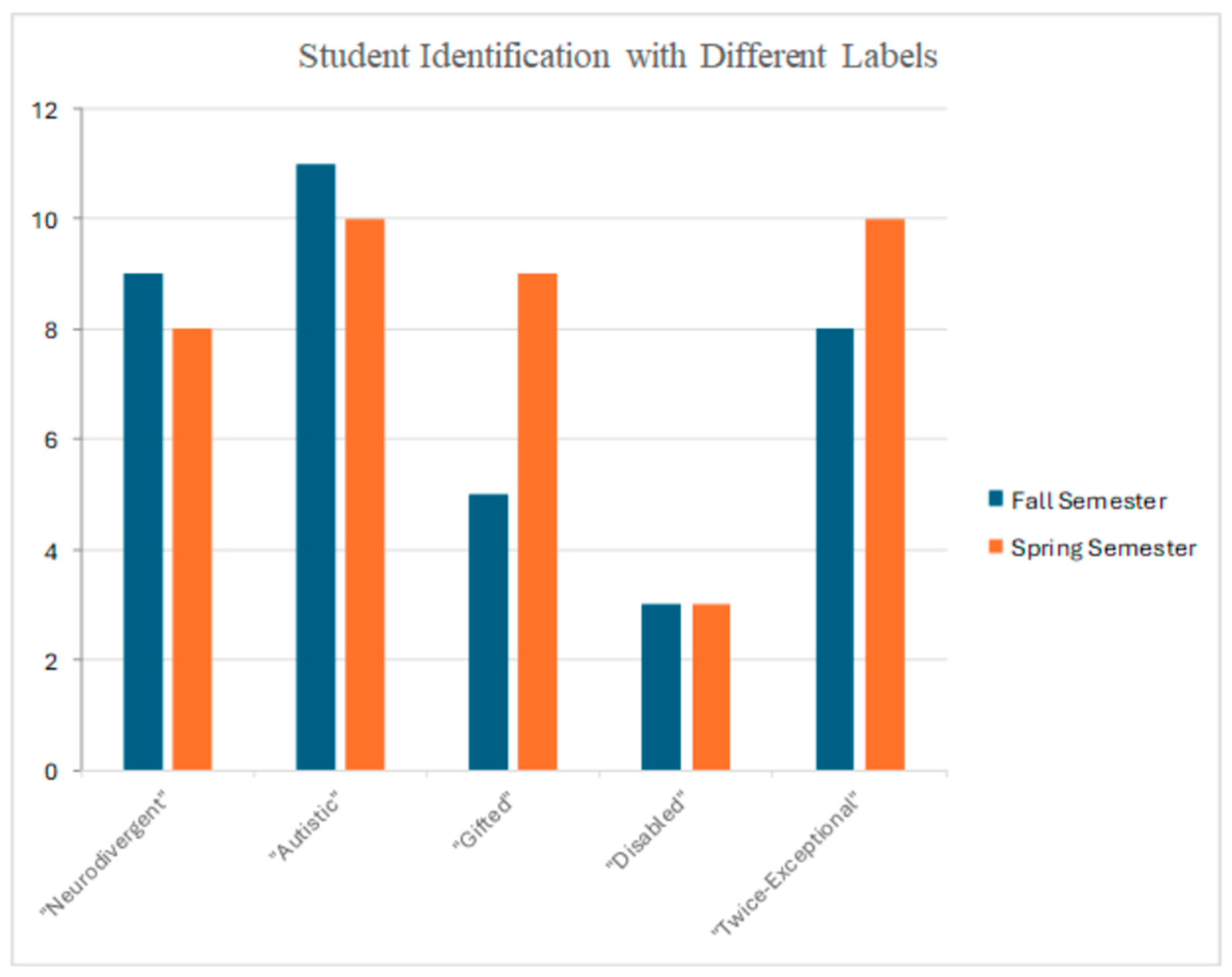
We asked students at the end of each semester how they view their twice-exceptional identity and how they identify with different labels including “twice-exceptional,” “neurodivergent/neurodiverse,” autistic,” “gifted,” and/or “disabled.” It is interesting to note that though all students participated in a program for twice-exceptional students, not all students in the program identified with this label. In the fall semester, eight students identified as “twice-exceptional” (67%), increasing to 10 students (83%) in the spring. Five students initially identified as “gifted” (42%), increasing to nine students in the spring (75%). Identification with the labels “neurodivergent/neurodiverse” and “autistic” remained consistently high across semesters, with nine and eight students endorsing “neurodivergence” in the fall and spring respectively, and 11 and then 10 students endorsing the “autistic” label. In contrast, only three students (25%) identified with the term “disabled” in each semester, despite all participants reporting at least one disability to the university (See
Figure 1).
We then asked students to describe their understanding of the label “twice-exceptional.” Students mentioned overlapping descriptions of neurodivergence and “gifted” and contrasted the terms with “typical” and “other.”
3.3.1. Theme 1: Combining Definitions of Ability and Neurodivergence
Most students described twice-exceptionality as the intersection of being both academically advanced and neurodivergent or disabled. Mark wrote, “Gifted across one or more domain and affected by some learning disability.” Michael replied, “Someone who has a gift and a mental disability with it. Savants are a good example of this.” Others in the group focused on ability alongside neurodivergence. Jerry wrote, “Twice-exceptional means that you are neurodivergent and have high intellectual ability.” Kyle elaborated on his definition, “Twice-exceptional is someone who is neurodiverse/autistic who is also gifted, gaining some of their natural affinities from their different wiring.” In general, these students framed their understanding of twice-exceptionality in terms of the convergence of perceived dichotomies present in one person.
3.3.2. Theme 2: Twice-Exceptionality as Different than “Typical”
Students also discussed the term “twice-exceptional” by drawing comparisons to “typical” peers. Natalie described, “An individual who has a mental state differentiating from the typical human brain…that limits their expression in certain fields, yet exceptional enough to potentially surpass neurotypical peers in others.” Kyle wrote that this term “means you were born with some sort of neurodivergence or something that gives you a new perspective of life, different from others, while also being gifted in some way or another.” Richard responded, “It refers to those who hold an exceptional level of ability in some regard, while also possessing some trait in contrast to that ability which places them as an outsider to their peers.” In summary, these students defined twice-exceptionality in comparison to perceived norms in society.
3.3.3. Theme 3: Developing a New Understanding of Twice-Exceptionality
Students also described how participation in the program deepened or provided new information for their understandings of twice-exceptionality. Eli responded, “I learned what 2e means,” while Natalie replied, “It gave me more respect for what the words ‘twice-exceptionality’ really meant…and has shown me a new idea of what ‘normal’ is supposed to mean.” Others described how they developed new understandings about themselves as twice-exceptional. Michael wrote, “It confirmed what I already knew, but it did help me to be able to understand and utilize my gifts in a more mentally healthy way.” Richard replied, “I once believed that being ‘twice-exceptional’ should mean that the disabilities I suffer [from] should be somehow balanced out by my gifts. I’ve come to understand that the gifts and difficulties I face can’t simply be placed on two sides of a scale, and I need to be able to consider and apply each as singular conditions, as well as being able to do the same for them combined.” Sabrina wrote the program “affected my understanding about the people I know and care about around me and helped me learn some new things about the world and myself.”
Some students included expressions of pride in being twice-exceptional. Kyle wrote, “I am proud of being a 2e student. It gives me a chance to…provide a perspective many others don’t have.” Richard wrote, “I can only say that I have come to a point where I am unafraid to share my status as an individual with ASD.” Sabrina listed many positive descriptors in her response, sharing that being twice-exceptional also means one is, “Amazing, extravagant, knowledgeable…brave, self-assured…passionate.” Although new understandings of what it means to be twice-exceptional ranged from learning the term to a growing self-understanding, these students generally had positive descriptions that became more integrated during their time in the program.
3.3.4. Theme 4: Finding Identity Through Community
Students reported that being part of a community of twice-exceptional peers helped them to better understand and embrace their identity. Mark wrote, “It has provided a space where being gifted or exceptional doesn’t have to be tied to high achievement.” Kyle described the program as, “a perfect fit” that helped him “find people who think similarly to me.” Some students described how interacting with other twice-exceptional students allowed them to notice similarities and differences. Natalie commented, “I met many others who had more open and subtle differences that I do not normally see.” Brent wrote, “I realized there are people with different types of needs.” Kyle also reflected, “[The program] has given me the chance to interact with other people on the spectrum, other gifted individuals, and other people who identify as neurodivergent, and allowed me to see just how wide of a spectrum those titles cover. Autism isn’t a spectrum, it’s a kaleidoscope.” In summary, reflections suggest that joining a community of students with a common identity can support positive associations and identification as “twice-exceptional.”
3.4. Program Participation and Relationships
We asked students if participating in the program had any impact on their relationships with friends, family members, and/or university staff and faculty. Students mostly described new relationships with program faculty/staff and other students within the program. Depending on student comfort and interest in socializing, responses varied from descriptions of meeting new people to developing friendships. Students also mentioned receiving support with socializing and improving social and communication skills on the larger university campus.
3.4.1. Theme 1: Building Relationships Within the Program
Students initially discussed how the program provided a space to meet new people and find things in common with each other. Marissa shared, “It’s been quite fun. I’ve gotten to meet a lot of cool people.” Similarly, Eli wrote, “It helped me meet new people.” For some, the program encouraged greater social engagement. Marissa wrote, “I’ve gone to the events, I’ve gone to the lectures…I sometimes do things with other people in [the program].” Brent wrote, “It helps fill out my schedule by giving me something productive to do…instead of watching more TV.” Mark responded, “It pushed me to engage more within the community which led to further positive social relationships.” Jerry included, “I was able to…socialize which is something I probably wouldn’t have done without being in [the program].”
Students also described forming friendships based on shared experiences and interests. DJ wrote, “I did meet a few friends.” Nova responded, “It made it easy to make friends with commonalities to me. I enjoyed bonding with fellow 2e students.” Sabrina wrote, “I have met new people who have amazing interests and goals…I made a lot of friends.” She added, “These new people that I have met made me a much happier person.” Other students described how they were impacted by new friendships and interactions within the program. Natalie also wrote, “I have made many great friends I have come to deeply respect.” Richard responded, “It has given me a few more friends and trusted staff members than I would have been able to find myself.” Eli wrote, “It helped me create better relationships.” Different levels of interest and comfort with socializing impacted the effort students put towards forming relationships within the program, and relationships were impacted by common interests and shared traits. Overall, responses suggest that the program offered opportunities to connect, and for some students, to develop deeper peer relationships. Preferred events and common peer characteristics were referenced as beneficial to socialization, though variability in social motivation and preferences were evident across participants.
3.4.2. Theme 2: Building Relationships Outside the Program
Beyond the program, some students self-reported perceived improvements in their social skills and ability to navigate social situations outside the program. Sabrina described the program as “a perfect opportunity to help out with…social skills and meeting new people.” Jerry shared, “The small group helped me to work on my social skills.” Similarly, Michael described, “It has been immensely helpful with helping me navigate the social side of college.” Richard stated that participation “has greatly helped my ability to interact with my peers.”
Students also described how the program supported relationships with university faculty/staff. Richard wrote that the program has “given me some support in reaching out to my professors.” Michael responded, “It helped me to take advice from neurotypical faculty better and understand it easier.” Kyle noted the program “has encouraged me to move forward to help build relationships with people from all around, especially in a professional setting,” adding that it also “helped me develop my professional communication skills.” Students often attributed these gains to reflecting on social interactions during individual meetings, which they described as helpful in developing skills and strategies to use in other campus contexts. These accounts primarily reflected increased comfort or perceived skill improvement, rather than documented changes in campus engagement. Overall, findings indicate that students primarily experienced relationship development within program-related contexts, suggesting room for improvement in the program supporting broader relationships across different university settings.
4. Discussion
The purpose of this qualitative study was to examine the experiences of 2eASD students in a university support program. We operationalized this purpose through three research questions that asked students’ views of the program, views about their identities, and perceptions of their relationships within the program. The results offer meaningful ways university programs can be designed to help 2eASD students matriculate to university settings.
4.1. Perspectives to Shape the Program
Students mainly expressed high satisfaction with the program, valuing consistent one-on-one support and connection with a small group who shared the 2eASD identity. High rates of recommendation and repeated participation suggest perceived benefit of program engagement, consistent with findings from similar ASD support programs (
Ncube et al., 2019;
Siew et al., 2017). Although some students reported improved coping with stress, this was not a direct aim of the program. Prior research indicates that similar programs incorporating structured mental health supports increased well-being and reduced stress (
Ncube et al., 2019;
Siew et al., 2017), suggesting that integrating explicit stress management and mental health support may enhance impact.
Though individualized support within an inclusive community was identified as a strength, feedback from students varied on what specific program components were most helpful. Variable perceptions of program helpfulness may be reflective of the individual differences present in this population (
Reis et al., 2014) and the evolving nature of identity development during college (
Arnett et al., 2014). Additionally, compared to other existing support programs, students reported individualized support and connection with 2eASD peers as helpful during their adjustment to university life. Further, students described one-on-one support as a relational context where they could discuss challenges, problem-solve issues, and reflect on their experiences.
Again, participants did not describe uniform experiences within the program, highlighting the heterogeneity within the 2eASD population. While some students described meaningful relationships, increased peer connections, or personal benefits from group-level programming (e.g., seminar, social events), others reported that some group-level program components were unnecessary, repetitive, or poorly aligned with their personal needs. These different perspectives suggest that group-level support is not experienced as beneficial in the same way across 2eASD students. Rather than indicating a singular most valuable program component, our findings highlight the need for flexible individualized and group-level support that can be adapted to varying levels of academic, social, and developmental needs.
Future iterations of similar programs should prioritize: (a) integrated mental health supports, (b) individualized flexibility with more structured and comprehensive skill-building opportunities to all participants, and (c) opportunities related to self-advocacy and coping. Additionally, program faculty/staff must adequately balance opportunities to connect with individual differences in preferences. Perceived mismatches in social programming may reflect developmental differences, different stages of adjustment to the university setting, and challenges in creating beneficial social experiences for all participants.
4.2. Identity Development
By the end of the year, students reported consistent or stronger identification with the labels “autistic,” “neurodivergent,” “gifted,” and “twice-exceptional” but few explicitly endorsed the term “disabled.” Participants did not explain why the term “disabled” was less frequently endorsed in our study questions. However, students’ preferences for labels such as “neurodivergent” or “autistic” might reflect greater familiarity or perceived relevance to their experiences; prior literature has found these terms carry less stigma and have gained broader social acceptance (
Ronksley-Pavia, 2015). Because participants did not explicitly elaborate on their preferences, this interpretation should be further investigated to assess students’ reasoning for their label preferences in greater depth.
While participation in a 2eASD community appeared to support positive identification with the twice-exceptional label, it is unclear how this could translate to a positive disability identity. Prior literature suggests that supporting a disability identity may involve acceptance, community, adopting shared values of disability culture, and role modeling (
Forber-Pratt & Zape, 2017). Similarly, young persons with disabilities may benefit from developing coping strategies, navigating barriers, strengthening self- and group-advocacy skills, fostering independence, finding confidence and pride in one’s disability identity, and forming connections within the disability community (
Kuhlmann et al., 2024). Given ongoing stigma and ableism still present in higher education settings, future programming may benefit from more explicitly supporting positive disability identity alongside neurodivergence and twice-exceptionality.
Students generally defined twice-exceptionality as the intersection of being academically advanced with neurodivergence or a disability and were generally positive in their descriptions. Some noted developing their understanding of twice-exceptionality by comparing themselves to “typical” peers and recognizing shared traits and differences among other twice-exceptional students. These patterns provide preliminary insight into how participants describe their understandings of twice-exceptional identity in relation to broader social “norms” and interactions with similar peers. Twice-exceptional students often navigate intersecting and conflicting identities, and students may feel they need to use their strengths to “overcome” their weaknesses (
Mayes et al., 2014).
Consistent with an intersectional framework, identity development among students who are 2eASD also should be understood as being shaped by multiple identity domains, including gender, race, ethnicity, socioeconomic status, and others. While gender diversity has been increasingly studied in ASD populations (e.g.,
Rea et al., 2026), very little research has evaluated gender identity within the twice-exceptional or 2eASD populations. Notably, four (27%) of our participants identified as transgender or non-binary, which exceeds national college estimates (2.1%,
American College Health Association, 2020) and previously reported rates among those with ASD (11%;
Kallitsounaki & Williams, 2023). While limited conclusions can be drawn from this small number of students, it is possible that gender-diverse 2eASD students navigate multiple, intersecting forms of stigma. We should explore in greater depth how these intersecting identities relate to establishing new relationships, disclosure, and finding a sense of community and belonging.
It is also important to consider other demographic factors. Participants were predominantly White, middle-class, and enrolled in higher education, which may limit transferability of findings to other demographic groups. The limited racial and socioeconomic diversity reflects broader inequities in access to education for advanced learners (
Grissom et al., 2019;
Mayes & Moore, 2016). Experiences of identity development in this sample may not reflect the experiences of students from more racially, culturally, or economically diverse backgrounds. For example, prior work indicates that students of color who are also twice-exceptional often navigate negative messages and treatment from peers, educators, and society related to both disability and racial identity, which can negatively impact their sense of self (
Mayes et al., 2014;
Mayes & Moore, 2016). Promoting positive racial identity development has been shown to support student resiliency and psychological well-being (
Mayes et al., 2014). It is plausible that promoting a positive disability identity in the twice-exceptional population may have similar benefits.
4.3. Relationship Development
Students reported perceived changes in their campus relationships, primarily with peers and program staff, which they associated with shared experiences and structured social opportunities. Some participants indicated that consistent interactions and support navigating new social situations were meaningful. Students also described increased communication and confidence in engaging with faculty and staff, aligning with prior research highlighting the importance of instructor relationships for twice-exceptional students (
Gelbar et al., 2015;
Sandoval-Rodríguez & Conejeros-Solar, 2024). Still, students with ASD are less likely to interact with faculty compared to students with other learning disabilities (
Petcu et al., 2021).
Prior literature suggests that structured programs may reduce isolation for university students with ASD, who often report feeling like “outsiders” (
Siew et al., 2017). Participants’ descriptions of smaller social events with neurodivergent peers are consistent with research indicating that these events can create a more comfortable environment and reduce the pressure to “mask” (
Weiss & Rohland, 2015). Social support is associated with higher quality of life for individuals with ASD (
Siew et al., 2017), and close friendships can offer meaningful support for twice-exceptional students (
Conejeros-Solar et al., 2021). Importantly, individuals with ASD may demonstrate successful social relationships that differ from the neurotypical style (
Trevisan et al., 2018).
Overall, students emphasized the value of regular peer interaction, although motivations to socialize varied across participants. Relationships within the program described by students included shared experiences, interests, and identity. Participant accounts highlight the perceived value of social connections, especially as students become more independent and may have less family support available after transitioning to the university.
4.4. Integration with the TDMM
The current findings can be further understood in relation to the TDMM (
Subotnik et al., 2011) with respect to how intrapersonal, environmental, and developmental processes interact. Across themes, student experiences reflected both individual (e.g., motivation, self-understanding) and environmental supports (e.g., peer community, staff relationships), consistent with the TDMM’s focus on interactions with contexts. Findings related to identity align with the model’s description of how intrapersonal processes can impact talent development. Students noted increased understanding of twice-exceptionality in relation to academic talent and neurodivergence. That few students identified with the disability label suggests they may perceive this identity as limiting access to opportunity, which is a key aspect of the model (
Subotnik et al., 2011).
Relational findings relate to the TDMM’s emphasis on environmental supports and educational contexts. Students’ descriptions of peer connections, shared identity, and program structure suggest that participants perceived the program’s social environments as beneficial. Such communities may be important for neurodivergent students whose relational needs may not be supported by the broader university setting. Program components that are perceived as redundant or outside of individual needs may be less effective in supporting development within specific social domains.
Variability across participants is consistent with the TDMM’s acknowledgement of students’ non-linear developmental and educational trajectories, which highlights the need for flexible, individualized approaches. However, the TDMM does not address how asynchronous development commonly seen in twice-exceptional students (
Ottone-Cross et al., 2019) may impact talent development trajectories. Future exploration of how TDMM constructs interface with issues specific to 2eASD students could inform ways the model could be modified for this population.
4.5. Recommendations for University Support of 2eASD Students
This study offers preliminary insight into how 2eASD students experienced a targeted, individualized support program during their transition to university across academic, relational, and identity domains. Students frequently described valuing one-on-one support, structured programming, and access to a small, affirming community. Weekly meetings and group seminars were described as spaces where academic, social, and personal challenges could be discussed. Many challenges experienced by university students who are 2eASD have been linked to institutional barriers rather than individual deficits (
Gelbar et al., 2022). As such, universities may benefit from adopting a neurodiversity framework to reduce stigma and promote inclusion for students with intersecting identities (
Dwyer et al., 2023;
Vasquez, 2023). Potential strategies could include integrating disability into diversity and inclusion initiatives, expanding accommodations, and training faculty on neurodiversity (
Dwyer et al., 2023;
Petcu et al., 2021).
Participant feedback suggests that for some students, support needs may evolve across the university experience. Students in their first year may particularly benefit from structured support, frequent staff contact, and opportunities to build social connections. In contrast, returning students may benefit more from advanced or individualized programming that emphasizes career development, self-advocacy, mentorship, or specialized skill development. Offering tiered support across years of participation may reduce reported perceptions of redundancy while allowing students to continue receiving support for their changing needs.
Without adequate financial resources from universities, support programs come at a larger cost to participants. Additionally, participants’ desire for individualized support and smaller groups suggests that smaller-scale programs may better align with student preferences and be more feasible to sustain long-term. Programs may be able to provide stronger wraparound services by collaborating with existing campus supports (e.g., disability services, student counseling services), which could save programs money, support additional target areas (e.g., mental health, career development), and generalize skills across different campus settings. Finally, programs should seek and incorporate student feedback to provide services that are of interest and most beneficial to student needs.
We acknowledge the program evaluated in this study represents a specialized and resourced model that may not be feasible for all institutions to implement. However, core features, such as individualized meetings, small group seminars, dedicated staff support, and structured social opportunities, seem central to students’ success. Ways to make these components more economical include substituting program staff for peer mentors or graduate trainees (e.g., doctoral psychology trainees) and relying more on group-level support and collaboration with existing campus services.
4.6. Limitations and Suggestions for Future Research
The program’s intentionally small size limited the number of participants, reflecting the reality of studying a low incidence, specialized, and underrepresented population (
Foley-Nicpon et al., 2020). Further, this sample had little racial and socioeconomic diversity. Participant experiences may not reflect those of students from more diverse, intersectional backgrounds, particularly given known disparities in access to resources, educational opportunities, and support systems (
Hines et al., 2025). Future research with the 2eASD population should more directly examine how intersecting identities, including race, ethnicity, gender, socioeconomic status, and disability, shape access to resources, experiences of stigma, sense of belonging, and identity development. Scholars also should consider how gender identity intersects with twice-exceptionality to shape students’ social experiences, identity development, and overall university adjustment.
The studied program was not originally designed for research, but rather as a flexible and individualized student support program. Students in this sample had variability in the type and duration of support received across some program components. Additionally, students differed in their starting level of academic support, social confidence, prior experiences, and support needs. These differences reflect the naturalistic implementation of a newly developed program and impacted the levels of exposure to program components at the time of data collection. While this variability may have contributed to heterogeneity in participants’ reported experiences, it is similar to other studies of support programs for neurodivergent youth (e.g.,
Beck et al., 2026). Future research should explore which students are most likely to benefit from specific support across academic years, and how programming could be tailored to developmental stage and participation year.
Another limitation relates to the data collection method and potential response bias. Participants completed surveys about a program in which they were actively enrolled and supported by faculty/staff members, one of whom is the first author of this study. Although responses were collected via surveys in attempt to reduce direct social pressure, participants still could have wanted to provide favorable feedback. Social desirability concerns may have limited students’ willingness to share negative feedback. Additionally, the use of open-ended surveys limited opportunities for more in-depth exploration of student perspectives and experiences.
Researchers should consider using more in-depth quantitative methods like individual interviews, observational data, or focus groups. These methods could allow for additional probing, clarification of responses, and deeper exploration of perspectives and experiences, particularly for complex processes like identity development and university adjustment. Longitudinal designs that include repeated interviews across the academic year may help clarify how students’ experiences and adjustment evolve, and how duration of involvement influences outcomes over time and across cohorts. Deeper examination of the benefits of different program components could help shape program models.
Finally, given this study’s exploratory and descriptive nature using self-reported data, findings should not be considered as causal of program effects, but rather as reflective of participant experiences within the program’s context. It is also important to consider alternative explanations for participant experiences, as changes over time may in part reflect broader developmental processes of maturation, adjustment to university life, or engagement with other university or personal supports (e.g., family, therapy, etc.). Findings cannot be solely attributed to participation in the program.
5. Conclusions
This study offers preliminary insight into how 2eASD students experienced participation in a targeted support program during their transition to a university setting. Aligned with the TDMM (
Subotnik et al., 2011), students described engaging in valued program components including one-on-one mentorship, psychosocial supports, small group social activities, and an affirming environment, which they associated with changes in their use of new skills, relationships, and understanding of their twice-exceptional identity. Positive relationships with staff and program participants were frequently described as meaningful for a sense of community, accessing resources, reflecting on social interactions, and navigating academic and social challenges. Students highlighted the value of individualized, sustained support within a small program context and reported high satisfaction, with many choosing to continue participation beyond the first year. While most students described overall benefits across program components, some reported limited relevance or redundancy, particularly involving group-level support. This highlights the importance of flexible approaches in designing supports for 2eASD populations. Finally, students less frequently emphasized their disability identity, indicating a potential area for further exploration in twice-exceptional students.
Given the ongoing systemic barriers and high rates of co-occurring mental health conditions among 2eASD populations, university support programs should prioritize student voices, psychosocial supports, and inclusive, intersectional philosophies. Additionally, greater institutional support is needed to replicate the resource-intensive and specialized nature of similar programs at other institutions. Overall, results highlight the importance of student perspectives when developing supports for 2eASD students in their transition to university and underscore the need for continued research to better understand program components, benefits, and implementation. Though there remains much to be discovered about the kaleidoscope of twice-exceptionality, we will not have fully inclusive campuses without seeking out the perspectives of these students and addressing remaining barriers preventing them from reaching their full potential.