


Abstract
School Attendance Problems (SAPs) are multidimensional phenomena with significant short- and long-term effects not only for students’ socio-emotional and cognitive development but also for the broader social welfare of the country. Grounded in Self-Determination Theory (SDT), this study examined the associations between self-perceived competence and distinct non-attendance motivations among adolescents at risk for SAPs. In Study 1, Exploratory and Confirmatory Factor Analyses (EFA: n = 391; CFA: n = 593) supported a refined 13-item four-factor structure of the Italian version of the Adolescent Reasons for School Non-Attendance Scale (ARSNA), with satisfactory fit indices (CFI = 0.90; TLI = 0.87; RMSEA = 0.07), demonstrating its suitability for use with Italian adolescents. In Study 2 (n = 183 at-risk adolescents), hierarchical regression analyses, controlling age, gender, academic achievement, and failed subjects, revealed that lower self-perceived academic competence was associated with Truancy-related reasons (β = −0.27, p < 0.01), whereas School Refusal-related reasons were associated with lower self-perceived general (β = −0.23, p < 0.01) and academic competence (β = −0.18, p < 0.05). These findings provide the first Italian validation of the ARSNA and highlight competence-related processes as central mechanisms underlying Truancy and School refusal in at-risk adolescents, with direct implications for early identification and targeted intervention.
1. Introduction
In recent years, the failure to maintain regular school attendance—encapsulated in Italy by the umbrella term dispersione scolastica—has emerged as a pressing educational concern (D’Arcangelo & Giuliani, 2022; MIUR, 2019). This issue carries profound short- and long-term implications. It not only hinders an individual’s emotional, cognitive, and social development (Meduri et al., 2026), highlighting the role of psychological and social barriers, but also poses a broader threat to the nation’s social welfare by, for instance, reducing future workforce productivity, increasing the burden on public assistance programs, and exacerbating socioeconomic inequalities (Salatin, 2022). As a result, such phenomena are widely recognized as a challenge for educational systems globally (Tonge & Silverman, 2019). The concept of dispersione scolastica encompasses a different spectrum of absenteeism, driven by a complex interplay of individual and contextual factors. Therefore, to conceptualize and address this multifaceted issue effectively, a rigorous examination of School Attendance Problems (SAPs) is essential to differentiate between the various forms of absenteeism and accurately identify the underlying risk factors. SAPs encompass a heterogeneous set of absences—both excused and unexcused—that emerge from the dynamic interplay of individual, family, school, and contextual factors (Kearney et al., 2020, 2023). The reasons behind these absences reflect significant psychosocial barriers, such as difficult peer and teacher dynamics, a lack of motivation, and anxiety (Fuster et al., 2026; Hilal et al., 2024; Meduri et al., 2026). These challenges are closely linked to the school context itself, where adolescents are required to cope with sustained academic demands, performance evaluations, and increasingly complex social dynamics (Pandey et al., 2018; Ren et al., 2025; Warschburger et al., 2023). In this framework, students’ perceptions of their own competences may play a central role in shaping how they interpret and respond to these demands (Sigmundsson et al., 2023). When school-related challenges are perceived as exceeding one’s own competences, non-attendance may function as a way of managing distress, avoiding anticipated failure, or withdrawing from contexts experienced as overwhelming, sometimes redirecting engagement toward alternative activities outside school that are perceived as more rewarding (Pérez-Marco et al., 2026; Rahman et al., 2023; Sorrenti et al., 2024).
Given the well-documented negative consequences of persistent absenteeism for educational trajectories, engagement, and psychosocial adjustment (Fernández-Sogorb et al., 2023; Kearney et al., 2023), advancing research in this field requires greater conceptual precision. Specifically, it is crucial to clearly differentiate among distinct forms of absenteeism and to identify the specific reasons underlying students’ non-attendance at school.
1.1. School Absenteeism Among Adolescent Students
Among the various classifications proposed in the literature, the categorial model developed by Havik et al. (2015) offers a systematic framework for identifying forms of school absenteeism. Rather than focusing exclusively on attendance rates, this model emphasizes the importance of distinguishing between the reasons that drive students’ non-attendance. Specifically, Havik et al. (2015) distinguishes four main categories: Somatic symptoms, Subjective Health complaints, Truancy-related reasons and School Refusal-related reasons. Somatic symptoms reasons refer to absences due to medically recognized physical conditions, such as fever or other acute illness. Subjective Health complaints include commonly reported symptoms such as headaches, stomachaches, and general bodily discomfort (e.g., muscle aches, tiredness, and fatigue) that may not necessarily correspond to a diagnosed medical condition. Truancy-related reasons describe unexcused absences in which students find school boring and deliberately disengage from school, often preferring alternative activities outside of the school context. School Refusal-related reasons, in contrast, involve absences motivated by the desire to avoid distressing or anxiety-provoking school experiences, typically accompanied by significant emotional discomfort. Havik et al. (2015) highlight that both Somatic symptoms and Subjective Health complaints may serve as bases for what is perceived as legitimate absenteeism. During adolescence, emotional distress may be expressed through physical symptoms, which can provide socially acceptable explanations for school absence. Because such complaints are relatively common, they may be interpreted as normative, potentially complicating the early identification of students at risk for more persistent attendance difficulties.
The ARSNA (Assessing Reasons for School Non-Attendance; Havik et al., 2015) was developed precisely to enable the systematic assessment of these differentiated motivations and to support a more nuanced understanding of school absenteeism. However, despite its increasing use in international research, the ARSNA has not yet been validated in the Italian context. Establishing its psychometric properties is therefore essential to provide researchers and practitioners with a reliable instrument for both the assessment of school absenteeism and the identification of psychological factors associated with SAPs. Accordingly, the first research question addressed whether the Italian version of the ARSNA exhibits satisfactory psychometric properties and factorial validity in an Italian adolescent sample (RQ1).
1.2. Socio-Demographic Characteristics of School Absenteeism
Beyond motivational distinctions, research highlights the relevance of socio-demographic factors in shaping patterns of non-attendance. Although overall absenteeism rates tend to be relatively similar across genders, differences emerge when examining specific reasons for absence. Males are more frequently associated with truancy-related reasons, whereas females more often report absences linked to emotional distress or somatic complaints (Låftman & Modin, 2012; Liu et al., 2024; Wolf et al., 2016). Age also represents a relevant variable. Truancy typically emerges in early adolescence and increases between ages 13 and 17 (Wroblewski et al., 2019), whereas School Refusal is often observed during school transitions (Fremont, 2003; Gallé-Tessonneau et al., 2019; Liu et al., 2024; Ren et al., 2025). Somatic complaints are particularly common during adolescence, a developmental stage characterized by heightened emotional and physiological sensitivity (Janssens et al., 2011; Li et al., 2021). Overall, these findings suggest that school absenteeism during adolescence is not only multifaceted in its motivations but also shaped by gender- and age-related patterns. However, socio-demographic factors alone may not fully explain why some students disengage from school, pointing to the importance of examining psychological processes underlying non-attendance behaviors.
1.3. Students’ Perceived Competence in School and Life Contexts
Among the psychological factors associated with school adjustment, students’ self-perceived competence has consistently emerged as a central predictor of academic achievement and engagement (Pérez-Marco et al., 2026; Sigmundsson et al., 2023; Sorrenti et al., 2024). Within Self-Determination Theory framework (SDT; Ryan & Deci, 2024), competence is conceptualized as a fundamental psychological need that supports motivation and adaptive functioning. In educational contexts, students’ beliefs about their own abilities influence how they approach learning tasks, set goals, regulate effort, and respond emotionally to evaluative situations (Enderle et al., 2024; Jeno et al., 2023). Perceived competence refers to individuals’ beliefs about their capacity to attain valued goals and exert control over meaningful outcomes (White, 1959). Its development represents a core developmental task during adolescence (Gomez-Lopez et al., 2022), a period marked by intensified academic evaluation, evolving peer dynamics, and increasing demands for autonomy. Competence beliefs are shaped through repeated experiences of success and failure, feedback from significant others, and broader life circumstances (Wigfield & Eccles, 2002). Because these experiences occur across multiple contexts—academic, social, and extracurricular—adolescents gradually form differentiated self-evaluations rather than a single global sense of efficacy. Accordingly, self-perceived competence is best conceptualized as a multidimensional construct. The model proposed by Losier et al. (1993) distinguishes self-competence across academic, interpersonal, leisure, and general life domains, acknowledging that adolescents may experience effectiveness in some areas while feeling vulnerable in others (Wigfield & Eccles, 2002). This differentiation is particularly relevant for understanding SAPs. When students perceive themselves as unable to cope with academic or social demands, school may be experienced as threatening or overwhelming, increasing the likelihood of absence (Pérez-Marco et al., 2026; Sorrenti et al., 2024). Conversely, stronger competence beliefs may function as protective resources, promoting engagement, persistence, and adaptive coping in the face of school-related challenges (Gonzálvez et al., 2019; Kearney & Gonzálvez, 2022; Sorrenti et al., 2024).
From this perspective, examining domain-specific perceived competence provides a theoretically grounded framework for understanding individual differences in adolescents’ responses to school demands, including vulnerability to distinct forms of school absenteeism. Accordingly, the second research question examined whether multidimensional self-perceived competence explains additional variance in different reasons for school non-attendance beyond socio-demographic and academic variables (RQ2).
Overall, previous research has established that school absenteeism is a multidimensional phenomenon associated with individual, social, and school-related factors (D’Arcangelo & Giuliani, 2022; Gonzálvez et al., 2021; Havik et al., 2015). However, important gaps remain. First, the psychometric properties of the ARSNA have not yet been examined in the Italian context. Second, limited evidence is available regarding the contribution of multidimensional perceived competence to different reasons for school non-attendance after accounting for socio-demographic and academic characteristics (Pérez-Marco et al., 2026). Addressing these gaps may advance both the assessment of school absenteeism and the identification of psychological factors associated with SAPs. Accordingly, the present research addressed the following research questions:
RQ1. Does the Italian version of the ARSNA exhibit satisfactory psychometric properties and factorial validity in an Italian adolescent sample?
RQ2. Does multidimensional self-perceived competence explain additional variance in different reasons for school non-attendance beyond socio-demographic and academic variables?
2. Present Study
SAPs represent a multifaceted phenomenon characterized by differentiated motivations and the interplay of developmental, risk, and protective factors. Beyond their educational consequences, persistent school absenteeism is increasingly regarded as an indicator of educational vulnerability, a condition in which the interaction of individual, relational, and contextual risk factors limit students’ opportunities to fully engage in learning and to achieve positive educational outcomes (Clarke et al., 2026; Inoue et al., 2018). Within this perspective, the categorical model proposed by Havik et al. (2015), which highlights the main psychological factors and social dynamics influencing school attendance, provides a theoretically grounded framework for distinguishing four primary reasons for school non-attendance: Somatic Reasons, Subjective Health Complaints, Truancy-Related Reasons, and School Refusal-Related Reasons. Despite the growing body of research SAPs important gaps remain in the literature. Although prior research has highlighted the role of gender and age in shaping patterns of absenteeism (Fremont, 2003; Liu et al., 2024; Wolf et al., 2016), research examining the contribution of domain-specific self-perceived competence to SAPs remains extremely limited, with only two studies addressing this issue to date (Pérez-Marco et al., 2026; Sorrenti et al., 2024). Within Self-Determination Theory framework (Ryan & Deci, 2024), competence is conceptualized as a fundamental psychological need that supports engagement and persistence in the face of academic and social challenges. Consistently with this perspective, Losier et al. (1993) conceptualized self-perceived competence as a multidimensional construct encompassing academic, interpersonal, leisure, and general life domains, recognizing that adolescents may perceive themselves as competent in some areas while experiencing vulnerability in others (White, 1959). Consequently, adolescents with lower levels of perceived competence may perceived school demands as exceeding their personal resources, thereby increasing vulnerability to school disengagement and absenteeism (Pérez-Marco et al., 2026; Sorrenti et al., 2024). Furthermore, despite the expanding literature on SAPs, few studies have examined Havik’s model in relation with socio-demographic variables and multidimensional self-perceived competence. Moreover, validation studies of the ARSNA in the Italian context are currently lacking. To address these gaps, the present research comprised two complementary studies. Study 1 aimed to examine the psychometric properties and factorial validity of the ARSNA (Havik et al., 2015) in an Italian sample through exploratory and confirmatory factor analyses. Study 2 investigated whether perceived competence across life domains—academic, interpersonal, leisure, and general—explains additional variance in differentiated reasons for school non-attendance beyond age, academic achievement, and number of failed subjects.
First, it was hypothesized that students’ self-perceived competence would explain a significant amount of additional variance in each of the four absenteeism-related outcomes, above and beyond the baseline effects of demographic and academic control variables. Second, we hypothesized that the specific dimensions of perceived competence would yield differentiated predictive patterns depending on the nature of the absenteeism reason.
Ultimately, the research pursued these objectives to facilitate the earliest possible identification of students at risk for SAPs. By isolating the unique contribution of perceived competence beyond mere academic failure, this study aims to enable educators and clinicians to design targeted, multidimensional interventions tailored to students’ specific psychological profiles.
3. Materials, Methods, and Results of Study 1
Study 1 aimed to examine the psychometric properties of the Reasons for School Non-Attendance Scale (ARSNA; Havik et al., 2015) in a sample of Italian secondary school students. Specifically, the study investigated the underlying factorial structure of the scale through exploratory factor analysis (EFA) and subsequently tested the adequacy of the resulting model using confirmatory factor analysis (CFA) on an independent sample.
3.1. Participants and Procedure
3.1.1. Exploratory Factor Analysis Sample
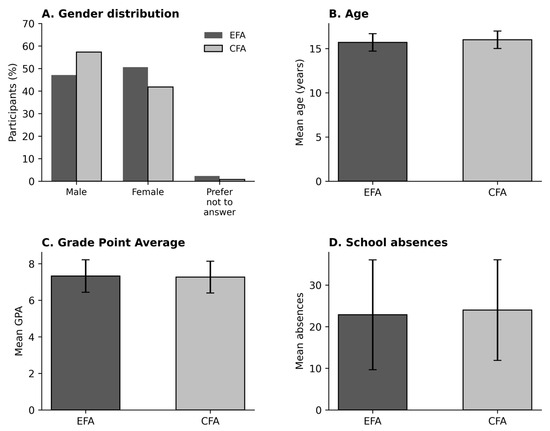
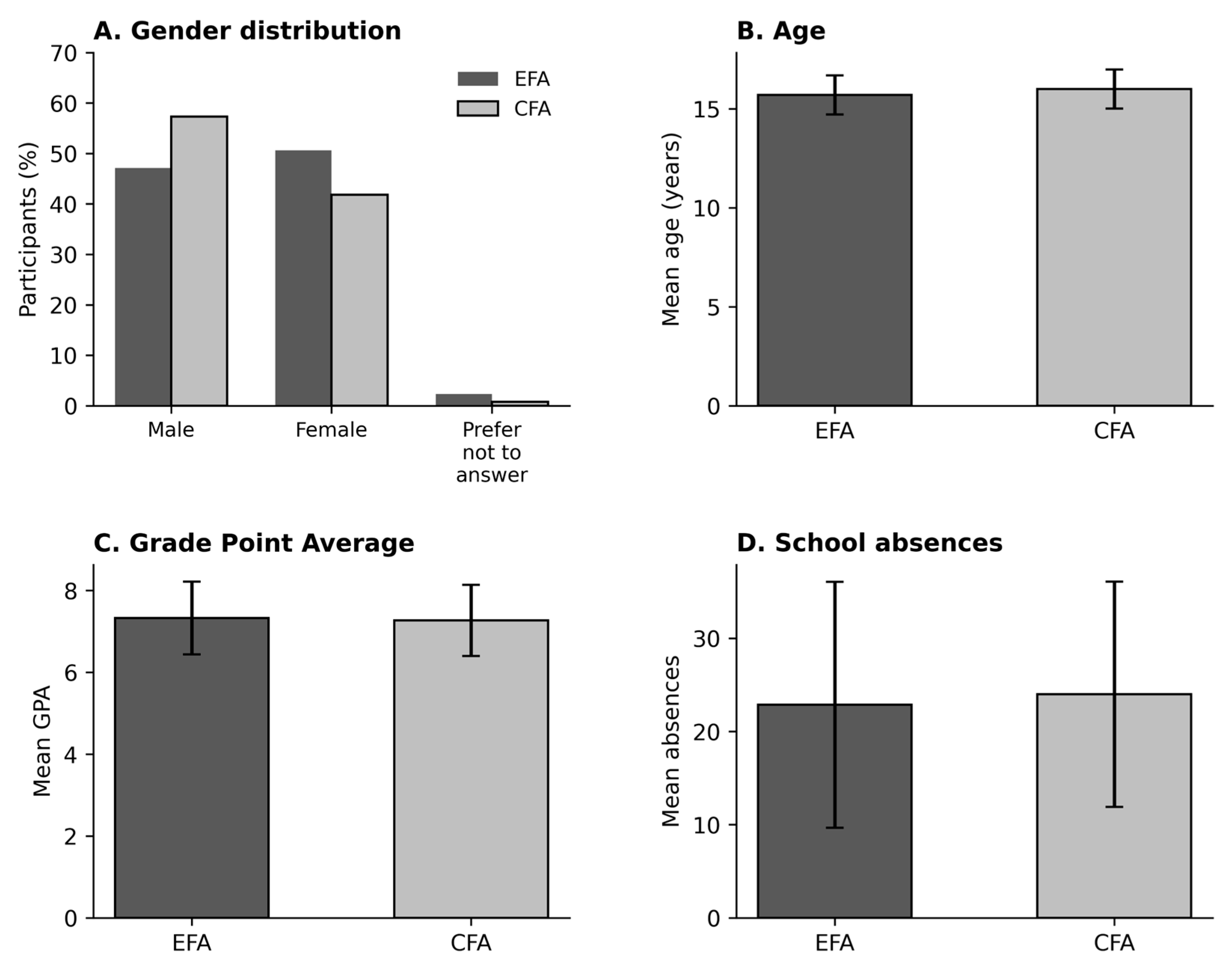
The EFA was conducted on a sample of 391 students enrolled in public upper secondary schools in Southern Italy. The sample included 184 males (47.1%), 198 females (50.6%), and 9 students (2.3%) who preferred not to report their gender. Most participants were Italian nationals (n = 374), while 17 were of foreign nationality; all were fluent Italian speakers. The mean age was 15.70 years (SD = 0.99; range = 14–20). Participants reported a mean grade point average of 7.33 (SD = 0.89; range = 6–10) and an average of 22.87 days of absences during the previous school year (SD = 13.20).
3.1.2. Confirmatory Factor Analysis Sample
The factorial structure identified through the EFA was subsequently tested using confirmatory factor analysis (CFA) on an independent sample. The CFA sample comprised 593 Italian students attending public upper secondary schools in Southern Italy. The sample included 340 males (57.3%), 248 females (41.8%), and 5 students (0.8%) who preferred not to report their gender. The average age was 16 years (SD = 0.99; range = 14–20). Participants reported a mean grade point average of 7.27 (SD = 0.87; range = 6–9.50) and an average of 24 days of absence during the previous school year (SD = 12.1; range = 0–80).
The descriptive characteristics of the exploratory factor analysis (EFA) and confirmatory factor analysis (CFA) samples are presented in Figure 1.
Figure 1.
Descriptive characteristics of the exploratory (EFA) and confirmatory (CFA) factor analysis samples. Note. Panel (A) presents the gender distribution of the two samples. Panels (B–D) compare the mean age, grade point average (GPA), and mean number of school absences.
3.1.3. Procedure
This study was conducted in accordance with the Ethical Code of the Italian Association of Psychology (AIP) and the principles of the Declaration of Helsinki (2013). Ethical approval was granted by the Ethics Committee of the University of Alicante (UA-2023-03-07). Written informed consent was obtained from parents or legal guardians prior to participation. Data collection took place during the regular school year, during school hours, in a single classroom session at the participants’ schools. All students enrolled in the participating classes were invited to complete a battery of self-report questionnaires designed to assess school attendance problems and related psychological characteristics. The assessment was administered in a standardized classroom setting under the supervision of trained researchers, who provided participants with the same instructions and were available to clarify procedural questions without influencing their responses. Participation was voluntary, and students were informed that they could decline to participate or withdraw at any time without any consequences. Questionnaires were completed individually and anonymously, and confidentiality was assured throughout the data collection process. The assessment required approximately 15–20 min to complete.
3.2. Instrument
The Reasons for School Non-Attendance Scale (ARSNA; Havik et al., 2015) is a self-report questionnaire designed to assess the underlying reasons for school non-attendance among adolescents. The ARSNA was selected because it provides a multidimensional assessment of the principal reasons underlying school non-attendance, allowing the distinction between somatic complaints, subjective health complaints, truancy-related reasons, and school refusal-related reasons. Moreover, the ARNSA is particularly suitable for examining differentiated patterns of SAPs among adolescents. In accordance with the ITC Guidelines for the Translation and Adaptation of Tests (International Test Commission, 2017), the ARSNA was translated to ensure that it was culturally and contextually appropriate for an Italian audience. With the support of bilingual experts in the field, a back-translation procedure was employed to ensure semantic equivalence between the original and Italian versions of the instrument. The ARSNA was therefore translated and adapted into Italian using a standard forward–backward translation procedure. The scale comprises 17 items that measure how often students have been absent from school during the previous three months for specific reasons. Each item is introduced by the stem: “How often have you been absent from school in the last three months because…”. The instrument assesses four dimensions: Somatic symptoms (e.g., “…you felt nauseated and vomited?”), Subjective health complaints (e.g., “…you had muscle pain?”), Truancy-related reasons (e.g., “…you went to do more appealing activities outside school?”), and School refusal-related reasons (e.g., “…you were afraid of making a fool of yourself at school?”). Items are rated on a 4-point Likert-type scale ranging from 0 (never) to 3 (quite often), with higher scores indicating a greater frequency of school non-attendance for the specified reason.
3.3. Data Analysis
EFA was conducted to examine the internal structure of the ARSNA. The analysis employed the Minimum Residuals (MINRES) extraction method with Oblimin rotation, allowing factors to correlate in line with the theoretical assumption that different reasons for school non-attendance are interrelated. Sampling adequacy was assessed using the Kaiser–Meyer–Olkin (KMO) index and Bartlett’s test of sphericity (Aithal & Aithal, 2020; Samuels, 2016). Following Kaiser and Rice (1974), KMO values ≥0.80 were considered indicative of very good sampling adequacy. Items with factor loadings below 0.40 were excluded to ensure a clear and interpretable structure. To validate the factorial structure identified in the EFA, a CFA was conducted on an independent sample using Maximum Likelihood (ML) estimation in Jamovi 2.6.26 (The Jamovi Project, 2024) with default settings. Although the ARSNA employs 4-point Likert-type response options, items were treated as approximately continuous, in line with common practice in psychological research. The hypothesized model specified four correlated latent factors, corresponding to the dimensions identified in the exploratory phase. Model fit was evaluated using multiple goodness-of-fit indices: the Comparative Fit Index (CFI), Tucker–Lewis Index (TLI), Root Mean Square Error of Approximation (RMSEA), and Standardized Root Mean Square Residual (SRMR). Consistent with conventional criteria, CFI and TLI values ≥ 0.90 and RMSEA and SRMR values ≤ 0.08 were considered indicative of acceptable fit. To further assess factorial validity in the Italian context, four competing models were tested (Hu & Bentler, 1999). Although the original instrument is based on a four-factor structure, cross-cultural validation guidelines recommend comparing the hypothesized model with alternative specifications to evaluate the stability of the dimensional structure across contexts (Brown, 2015). This approach allows for a more rigorous examination of whether the adapted version adequately reproduces the theoretical framework of the original scale. All analyses were performed using Jamovi (Version 2.5.6.0). Cronbach’s alpha coefficients were computed for each factor. In educational research, alpha values should be interpreted in relation to the number of items and measurement context; values around 0.60 may be considered acceptable for short subscales (Taber, 2018).
3.4. Results
The EFA identified a four-factor structure consistent with the original model, with the removal of one item (item 7) due to a factor loading below 0.40 on Factor 4. Based on these preliminary findings, CFA were conducted to test the factorial structure of the ARSNA and compare alternative models. Table 1 presents the goodness-of-fit indices for the tested models. The 17-item unidimensional model (M1) and the original 17-item four-factor model (M2) did not demonstrate acceptable fit across multiple indices. The 16-item four-factor model (M3), derived from the EFA by excluding Item 7, showed improved model fit. Subsequently, a more parsimonious 13-item four-factor model (M4) was tested, which additional items removed due to insufficient factor loadings in the CFA (Item 17 from Factor 1, Item 2 from Factor 2, and Item 13 from Factor 3). This final 13-item model retained the four original theoretical dimensions of the ARSNA and demonstrated superior fit compared to the competing models, as indicated by improved χ2/df, RMSEA, AIC, BIC, TLI, and CFI values. Overall, these findings support the refined four-factor solution as the most reliable and interpretable structure for the Italian validation of the ARSNA.
Table 1.
Confirmatory factor analyses: goodness-of-fit indices for ARSNA.
As reported in Table 2, all estimated parameters for the retained ARSNA items were statistically significant, with standardized factor loadings exceeding 0.40. These findings support the adequacy of the 13-item four-factor solution (Table 3), obtained after excluding items with insufficient loadings in both the EFA and CFA. Overall, the model showed an acceptable-to-marginal fit with clear improvement over alternative models and appears to represent an appropriate structure for assessing the key dimensions of school non-attendance in the Italian context.
Table 2.
Factor Loadings and Parameter Estimates of the 13-item four-factor structure-(Model4).
Table 3.
Description of the four dimensions assessed by the ARSNA, including their conceptual meaning and representative items.
3.5. Discussion
Comparisons among the tested models (M1, M2, M3, and M4) indicated that the final 13-item, four-factor model—derived through the progressive removal of weak items identified in both the EFA and CFA—provided the best fit to the Italian sample. The EFA supported a four-factor structure consistent with the original theoretical framework and allowed the identification of an initial problematic item. The subsequent CFA confirmed that the refined version of the instrument, following the removal of items with insufficient factor loadings, demonstrated acceptable overall fit with clear improvement over competing models and adequate factor loadings. Overall, the final version of the ARSNA represents a parsimonious and psychometrically sound tool for investigating the primary reasons for school absenteeism among Italian adolescents.
4. Materials, Methods, and Results of Study 2
4.1. Participants and Procedure
The sample comprised 183 Italian students enrolled in public upper secondary schools in Southern Italy, aged between 14 and 19 years (Mage = 16.17, SD = 1.02). Of the participants, 83 were male (45.4%), 96 were female (52.5%), and 4 students (2.2%) preferred not to disclose their gender. Regarding grade level, 63 students attended the second year of high school (34.4%), 56 the third year (30.6%), and 64 the fourth year (35.0%). Participants reported a mean grade point average of 6.61 (SD = 0.42) and a mean number of failed subjects of 0.67 (SD = 0.95). These academic indicators (grade point average and number of failed subjects) were used to operationalize educational vulnerability. Consistent with prior research, academic underachievement and repeated failures are recognized as significant risk markers for school absenteeism (Kearney et al., 2023). All participants were Italian nationals and native Italian speakers, and students with special educational needs were not included in the sample. This decision was taken to ensure greater sample homogeneity and to reduce potential confounding effects related to heterogeneous cognitive, learning, or clinical profiles that might have influenced the associations between perceived competence and school non-attendance. The procedure followed the same protocol described in Study 1.
4.2. Instrument
A self-administered questionnaire was developed to collect participants’ sociodemographic and school-related information for descriptive purposes and as control variables in the subsequent analyses. Academic achievement was assessed by asking students to report their grade point average (GPA). In the Italian educational system, grades range from 1 to 10, with higher scores reflecting better academic performance; a score of 6 represents the minimum passing grade required for promotion to the subsequent school year. Gender was assessed as a categorical variable and coded as 1 = male, 2 = female, and 3 = prefer not to disclose. In addition, students reported the number of failed subjects. In the Italian school context, this term refers to subjects that were not successfully completed at the end of the academic year and therefore require additional assessment or remediation in order for the student to advance to the next grade level.
Students’ self-perceived competence across different life domains was assessed using the Perception of Competence in Life Domains Scale (PCLDS; Losier et al., 1993). The PCLDS is a 16-item self-report instrument designed to assess adolescents’ perceptions of competence across four domains: Perceived general competence (e.g., ‘In many of my life domains, I feel I am not good enough’), Perceived academic competence (e.g., ‘In general, I have difficulty doing my school work well’), Perceived competence in interpersonal relationships (e.g., ‘I find it difficult to make friends’), and Perceived leisure competence (e.g., ‘In my leisure activities, I almost always succeed in attaining the goals I have set for myself’). The instrument was selected because it provides a multidimensional assessment of perceived competence that is consistent with the theoretical framework adopted in the present study and allows the examination of domain-specific associations with different reasons for school non-attendance. Participants responded to each item using a 7-point Likert scale, ranging from 1 (do not agree at all) to 7 (very strongly agree), with higher scores indicating higher perceived competence in the respective domain. In the present study, the subscales showed acceptable internal consistency: perceived general competence (Cronbach’s α = 0.78), perceived academic competence (Cronbach’s α = 0.74), perceived competence in interpersonal relationships (Cronbach’s α = 0.75), and perceived leisure competence (Cronbach’s α = 0.70).
Reasons for school absenteeism were assessed using the Italian version of the Adolescent Reasons for School Non-Attendance Scale (ARSNA; Havik et al., 2015), which was validated in the present study. The ARSNA was selected because it provides a multidimensional assessment of the principal reasons underlying school absenteeism, enabling the distinction between somatic reasons, subjective health complaints, truancy-related reasons, and school refusal-related reasons. As the instrument was specifically developed and validated for adolescents, it is particularly well suited to capturing the motivations underlying school non-attendance during this developmental stage. In the present study, the internal consistency of the subscales was adequate: Somatic symptoms (Cronbach’s α = 0.64), Subjective health complaints (α = 0.67), Truancy-related reasons (α = 0.68), and School refusal-related reasons (α = 0.77).
4.3. Data Analysis
All statistical analyses were conducted using Jamovi (Version 2.5.6.0). Descriptive statistics were computed for all study variables, including means, standard deviations (SD), skewness, kurtosis, and internal consistency coefficients (Cronbach’s α).
To examine the incremental validity of students’ self-perceived competence across different life domains, hierarchical multiple regression analyses (HMRA) was conducted. Four separate regression models were estimated, one for each absenteeism-related outcome: Somatic symptoms, Subjective health complaints, Truancy-related reasons, and School refusal-related reasons. In each model, age, academic achievement, and number of failed subjects were entered in Step 1 as control variables. At Step 2, the four dimensions of perceived competence—perceived general competence, perceived academic competence, perceived competence in interpersonal relationships, and perceived leisure competence—were entered simultaneously. This approach allowed us to examine whether perceived competence accounted for additional variance in absenteeism outcomes above and beyond the effects of demographic and academic control variables. Changes in explained variance (ΔR2) were inspected to examine the incremental contribution of perceived competence dimensions.
4.4. Results
Table 4 presents descriptive statistics. Table 5 reports the Pearson correlation coefficients among the study variables, along with the corresponding Cronbach’s alpha.
Table 4.
Descriptive statistics of the Study Variables.
Table 5.
Pearson Correlations and Cronbach’s Alpha Coefficients.
4.4.1. Hierarchical Multiple Regression Analysis
A series of hierarchical multiple regression analyses was conducted to examine whether students’ perceived competence predicted reasons for school non-attendance beyond gender, age, academic achievement, and failed subjects (see Table 6). Age, GPA, and number of failed subjects were entered in Step 1 as control variables. The four dimensions of self-perceived competence were entered simultaneously in Step 2 to examine their incremental contribution to explaining each reason for school non-attendance.
Table 6.
Hierarchical Multiple Regression Analysis Predicting Reasons for School Non-Attendance.
Somatic Symptoms
At Step 1, control variables explained 3.3% of the variance in somatic symptoms, R2 = 0.033, F (4, 174) = 1.48, p = 0.209. Academic achievement emerged as a significant negative predictor (t = −2.24, β = −0.18, p ≤ 0.05), whereas gender, age, and failed subjects were not significant. The inclusion of perceived competence dimensions at Step 2 did not significantly improve the model, ΔR2 = 0.005, p = 0.937, and the overall model remained non-significant, F (8, 170) = 0.83, p = 0.577. None of the competence dimensions were significant predictors. Academic achievement remained significant (t = −2.25, β = −0.19, p ≤ 0.05).
Subjective Health Complaints
Control variables explained 12.8% of the variance in subjective health complaints R2 = 0.128, F (4, 174) = 6.36, p ≤ 0.001. Gender was a significant positive predictor (t = 4.76, β = 0.34 p < 0.001), indicating higher subjective health complaints among females. The addition of perceived competence dimensions did not result in a significant increase in explained variance, ΔR2 = 0.024, p = 0.30, although the final model was significant, R2 = 0.152, F (8, 170) = 3.81, p ≤ 0.001. Gender remained the only significant predictor (t = 3.83, β = 0.29, p ≤ 0.001).
Truancy-Related Reasons
At Step 1, control variables did not significantly predict truancy-related reasons, R2 = 0.012, F (4, 174) = 0.532, p = 0.712. The addition of perceived competence dimensions significantly increased explained variance, ΔR2 = 0.063, p ≤ 0.05, although the overall model reached only marginal significance, F (8, 170) = 1.72, p = 0.098. Perceived academic competence emerged as a significant negative predictor (t = −2.99, β = −0.27, p ≤ 0.01), indicating that lower perceived academic competence was associated with higher levels of truancy-related absenteeism. No other perceived competence dimensions were significant.
School Refusal-Related Reasons
Control variables explained 11.4% of the variance in school refusal-related reasons, R2 = 0.114, F (4, 170) = 5.61, p < 0.001. Gender was a significant positive predictor (t = 4.59, β = 0.33, p < 0.001). The inclusion of perceived competence dimensions significantly improved the model ΔR2 = 0.142, p < 0.001, with the final model explaining 25.7% of the variance R2 = 0.257, F (8, 170) = 7.34, p < 0.001. Perceived general competence (t = 1.18, β = −0.23, p ≤ 0.01) and perceived academic competence (t = −2.82, β = −0.18, p ≤ 0.05) were significant negative predictors. Gender remained significant (t = 2.75, β = 0.20, p < 0.01).
4.5. Discussion
The present findings support a differentiated understanding of school non-attendance. Perceived competence was not meaningfully associated with somatic symptoms or subjective health complaints. However, lower perceived academic competence was linked to truancy-related reasons. Moreover, lower general and academic competence were associated with school refusal-related reasons. Overall, self-perceived competence appears particularly relevant for school avoidance behaviors rather than health-related complaints.
5. General Discussion and Conclusions
School absenteeism has significant implications for students’ academic success and psychosocial well-being (Kearney et al., 2023). However, understanding this phenomenon requires moving beyond attendance rates to examine the specific motivations underlying non-attendance (Kearney & Gonzálvez, 2022). According to the model proposed by Havik et al. (2015), adolescents’ school absenteeism may reflect heterogeneous reasons. To systematically assess these dimensions, Havik et al. (2015) developed the Reasons for School Non-Attendance Scale (ARSNA), designed to capture the multidimensional nature of school absenteeism. Accordingly, the first study of the present research aimed to adapt and validate this instrument within the Italian context. The resulting 13-item version retained the four theoretical factors of the original model—Somatic Reasons, Subjective Health Complaints, Truancy-Related Reasons, and School Refusal-Related Reasons—thereby supporting a culturally appropriate and psychometrically sound assessment of differentiated absenteeism motivations among Italian adolescents.
Consistent with Havik et al. (2015), school absenteeism in adolescence may assume differentiated forms that vary according to demographic and academic indicators (Liu et al., 2024; Wolf et al., 2016; Sorrenti et al., 2025b). However, beyond these structural factors, adolescence represents a developmental stage characterized by increasing academic demands, intensified self-evaluative processes, and heightened sensitivity to social comparison (Fernández-Sogorb et al., 2023; Gubbels et al., 2019; Enderle et al., 2024; Sorrenti et al., 2025a) as well as to processes of social inclusion and exclusion within the school environment that may shape students’ sense of belonging. Within this context, psychological processes—particularly self-perceived competence—may play a central role in shaping how students respond to school-related challenges (Pérez-Marco et al., 2026; Sorrenti et al., 2024). In line with SDT (Ryan & Deci, 2024) and the multidimensional perspective of self-perceived competence (Losier et al., 1993), feeling capable across academic, interpersonal, and broader life domains may enable students to manage school demands more effectively. Conversely, lower levels of perceived competence may render these demands overwhelming, increasing vulnerability to school non-attendance, particularly when students experience psychological distress linked to perceived exclusion or lack of belonging in the school context. Building on the validation of the ARSNA, Study 2 therefore examined the contribution of demographic and academic variables and perceived competence in the explanation of somatic symptoms, subjective health complaints, truancy-related and school refusal-related reasons.
Through hierarchical regression analysis, it was possible to assess the incremental contribution of psychological variables in addition to the effects of demographic and academic variables. Regarding somatic symptoms, the overall model explained only a small proportion of the variance. Academic variables made a modest contribution, and among them, only academic achievement was significantly associated with somatic reasons. Specifically, students with lower academic achievement tended to report more physical complaints. The inclusion of perceived competence did not significantly increase the explained variance. One possible explanation is that students with poorer grades may report physical symptoms as a legitimate justification for school absence, thereby avoiding the risk of further academic failure (Mugali et al., 2017). This interpretation is consistent with previous literature highlighting that adolescents frequently cite physical illness as a reason for school absences (Janssens et al., 2011). Similarly, for Subjective health complaints, gender emerged as the main predictor, whereas perceived competence did not make a significant additional contribution. The association with gender is consistent with previous research showing that adolescent girls are more likely to miss school due to subjective complaints such as headaches, fatigue, and exhaustion (Havik et al., 2015; Låftman & Modin, 2012). This pattern may also be partly explained by biological factors, such as the onset of menstruation during adolescence, which can be associated with increased physical discomfort.
Overall, these findings suggest that the psychological factors examined in this study may not play a central role in explaining somatic symptoms or subjective health perceptions. Regarding Truancy-related reasons, demographic variables were not significant predictors. In contrast, the inclusion of perceived competences led to a significant increase in explained variance. Specifically, perceived academic competence emerged as a significant negative predictor. This finding suggests that students who perceive themselves as less competent at school are more likely to report voluntary reasons for absence. These results are consistent with theoretical models emphasizing that low self-efficacy and negative academic self-perceptions can promote avoidance behaviors, such as strategic absenteeism, as students may prefer alternative contexts that provide more immediate rewards over environments in which they feel inadequate (Wroblewski et al., 2019). The most relevant findings emerged for School refusal. Although gender was significant in the first step, the inclusion of self-perceived competences led to a substantial increase in explained variance. Both general perceived competence and academic perceived competence were significantly and negatively associated with school refusal. This suggests that students who perceive themselves as less competent, both generally and academically, are more vulnerable to developing school refusal behaviors.
These findings support theoretical perspectives that conceptualize school refusal as closely linked to feelings of inadequacy, low self-efficacy, and difficulties in coping with environmental demands (McKenzie, 2017; Seçer & Ulaş, 2020; Sorrenti et al., 2025a). Overall, self-perceived competences appear to play a more prominent role in school refusal and truancy reasons than in somatic symptoms and health-related complaints. Moreover, the differential role of perceived competence across the various outcomes indicates that different reasons for absenteeism are driven by distinct underlying psychological mechanisms. The present findings have important implications for educational practice and policy. They suggest that the prevention of SAPs should extend beyond a sole focus on academic performance and attendance records by incorporating multidimensional assessments of students’ self-perceived competence into routine educational practice. Monitoring changes in perceived competence may enable the early identification of psychological vulnerabilities associated with different forms of school non-attendance, thereby supporting timely, individualized interventions before absenteeism becomes persistent. These findings are particularly relevant for teachers, school psychologists, school counselors, and multidisciplinary support teams, who may use domain-specific profiles of perceived competence to identify students at risk and tailor interventions to their specific psychological needs. At the school level, integrating psychological indicators with traditional academic and behavioral data may strengthen existing early warning systems and support more comprehensive prevention strategies coordinated by school leaders and educational professionals. More broadly, the present findings underscore the importance of educational policies that promote students’ psychological resources alongside academic achievement. Recognizing self-perceived competence as a modifiable protective factor highlights the need for school-based interventions that foster students’ confidence in their academic, interpersonal, and leisure competencies while cultivating a school climate that supports positive self-development, engagement, and sustained school attendance.
6. Limitations and Future Directions
Some limitations should be acknowledged. Cross-sectional design prevents conclusions about causal or developmental processes, highlighting the need for longitudinal studies. The exclusively Italian sample limits generalizability, and future research should adopt cross-national designs. In particular, as participants were recruited from Southern Italy, regional socio-economic and educational contextual factors may have further influenced patterns of school non-attendance, warranting caution in generalizing the findings to other contexts. Further limitations concern the exclusion of students with special educational needs, which may also restrict generalizability, as these students are often at higher risk for school attendance problems; future research should include these populations to examine whether the observed associations between perceived competence and school non-attendance also apply to more vulnerable groups. In addition, reliance on self-report measures may have introduced shared method variance; multi-informant data (e.g., teachers, parents, administrative records) would strengthen future research. Moreover, a further limitation is the absence of measurement invariance analyses across gender and age groups. To ensure that observed differences in subjective health complaints and school refusal-related reasons reflect true differences rather than measurement bias, future research should examine whether the ARSNA operates equivalently across these groups. Despite these limitations, the study integrates rigorous psychometric validation with theoretically grounded correlations in adolescents at risk for attendance problems. By linking a multidimensional measure of non-attendance to perceived competence and demographic and academic indicators, it offers a more differentiated and developmentally informed understanding of school non-attendance. From an applied perspective, the findings suggest that interventions aimed at enhancing perceived competence—particularly academic competence—may help prevent truancy and school refusal. Crucially, in line with a preventive framework, monitoring fluctuations in students’ self-perceived competence can serve as a vital screening tool to identify at-risk individuals before absenteeism behaviors consolidate. Once these early psychological vulnerabilities are recognized, self-efficacy promotion programs, personalized tutoring, and targeted academic support may represent effective strategies to proactively reduce disengagement and foster school attendance among at-risk adolescents.
In this regard, schools and educational institutions could benefit from implementing monitoring systems to identify such multi-informant indicators early on. Information provided by teachers and parents regarding changes in classroom engagement, self-perceived competence, participation, and emotional withdrawal could further enhance the early detection of these difficulties. Integrating these indicators into routine school monitoring practices could facilitate the timely identification of issues and enable intervention before absenteeism patterns become established or chronic.
Author Contributions
All authors contributed to the study conception and design. Material preparation and data collection were carried out by C.C. and C.F.M. Data analysis was performed by C.F.M. and C.C. The first draft of the manuscript was written by L.S., and all authors commented on previous versions of the manuscript. P.F. supervised the study and contributed to the critical revision of the manuscript. All authors have read and agreed to the published version of the manuscript.
Funding
The research was funded as follows: The author(s) disclosed receipt of the following financial support for the research, authorship, and/or publication of this article: This work was supported by Luana Sorrenti, the administrative contact for the Erasmus Project (2022-1-ES01-KA220-SCH-000088733). The funding information has been checked and confirmed as accurate.
Institutional Review Board Statement
All procedures performed in studies involving human participants were in accordance with the recommendations of the Ethical Code of the Italian Association of Psychology (AIP) and all subjects were given written informed consent in accordance with the Declaration of Helsinki (2013). The study also received ethical approval from the Ethics Committee of the University of Alicante (UA-2023-03-07, with approval granted on 7 March 2023). This article does not contain any studies with animals performed by any of the authors.
Informed Consent Statement
Informed consent was obtained from all participants included in the study.
Data Availability Statement
The datasets generated and/or analyzed during the current study are not publicly available due to privacy and ethical restrictions but are available from the University of Messina (Prof. Luana Sorrenti) upon reasonable request.
Acknowledgments
The authors would like to thank all participants involved in the study.
Conflicts of Interest
The authors declared no potential conflicts of interest with respect to the research, authorship, and/or publication of this article.
References
- Aithal, A., & Aithal, P. S. (2020). Development and validation of survey questionnaire & experimental data: A systematical review-based statistical approach. International Journal of Management, Technology, and Social Sciences, 5(2), 233–251. [Google Scholar] [CrossRef] [Scilit]
- Brown, T. A. (2015). Confirmatory factor analysis for applied research (2nd ed.). The Guilford Press. [Google Scholar]
- Clarke, A. S., Fitzgerald, K. D., & Mufson, L. (2026). Commentary: Framing chronic absenteeism and emotionally based school absenteeism as public health problems. Frontiers in Child and Adolescent Psychiatry, 5, 1771056. [Google Scholar] [CrossRef] [Scilit] [PubMed]
- D’Arcangelo, A., & Giuliani, L. (2022). Strategie nazionali e regionali di contrasto alla dispersione formativa. INAPP. [Google Scholar]
- Enderle, C., Kreitz-Sandberg, S., Backlund, Å., Isaksson, J., Fredriksson, U., & Ricking, H. (2024). Secondary school students’ perspectives on supports for overcoming school attendance problems: A qualitative case study in Germany. Frontiers in Education, 9, 1405395. [Google Scholar] [CrossRef] [Scilit]
- Fernández-Sogorb, A., Gonzálvez, C., & Pino-Juste, M. (2023). Understanding school refusal behavior in adolescence: Risk profiles and attributional style for academic results. Revista de Psicodidáctica, 28(1), 35–43. [Google Scholar] [CrossRef] [Scilit]
- Fremont, W. P. (2003). School refusal in children and adolescents. American Family Physician, 68, 1555–1560. [Google Scholar] [PubMed]
- Fuster, A., Vicent, M., Pérez-Marco, M., & Gonzálvez, C. (2026). Perfectionism and school non-attendance reasons in adolescents: A latent profile analysis. Journal of Adolescence, 1–11. [Google Scholar] [CrossRef] [Scilit] [PubMed]
- Gallé-Tessonneau, M., Johnsen, D. B., & Keppens, G. (2019). The relationship between mental health and school absenteeism in a community sample of French secondary school students: Four profiles derived from cluster analysis. European Journal of Education and Psychology, 12(1), 77–90. [Google Scholar] [CrossRef] [Scilit]
- Gomez-Lopez, M., Viejo, C., Romera, E. M., & Ortega-Ruiz, R. (2022). Psychological well-being and social competence during adolescence: Longitudinal association between the two phenomena. Child Indicators Research, 15(3), 1043–1061. [Google Scholar] [CrossRef] [Scilit]
- Gonzálvez, C., Díaz-Herrero, Á., Vicent, M., Sanmartín, R., Pérez-Sánchez, A. M., & García-Fernández, J. M. (2019). Subtyping of adolescents with school refusal behavior: Exploring differences across profiles in self-concept. International Journal of Environmental Research and Public Health, 16(23), 4780. [Google Scholar] [CrossRef] [Scilit] [PubMed]
- Gonzálvez, C., Sanmartín, R., Vicent, M., & García-Fernández, J. M. (2021). Exploring different types of school refusers through latent profile analysis and school-related stress associations. Science Progress, 104(3), 1–18. [Google Scholar] [CrossRef] [Scilit] [PubMed]
- Gubbels, J., Van der Put, C. E., & Assink, M. (2019). Risk factors for school absenteeism and dropout: A meta-analytic review. Journal of Youth and Adolescence, 48, 1637–1667. [Google Scholar] [CrossRef] [Scilit] [PubMed]
- Havik, T., Bru, E., & Ertesvåg, S. K. (2015). Assessing reasons for school non-attendance. Scandinavian Journal of Educational Research, 59(3), 316–336. [Google Scholar] [CrossRef] [Scilit]
- Hilal, M., Khabbache, H., & Ait Ali, D. (2024). Dropping out of school: A psychosocial approach. Advances in Medicine, Psychology, and Public Health, 1(1), 26–36. [Google Scholar] [CrossRef]
- Hu, L. T., & Bentler, P. M. (1999). Cutoff criteria for fit indexes in covariance structure analysis: Conventional criteria versus new alternatives. Structural Equation Modeling, 6(1), 1–55. [Google Scholar] [CrossRef] [Scilit]
- Inoue, S., Kato, T., & Yorifuji, T. (2018). Life satisfaction, interpersonal relationships, and learning influence withdrawal from school: A study among junior high school students in Japan. International Journal of Environmental Research and Public Health, 15(10), 2309. [Google Scholar] [CrossRef] [Scilit] [PubMed]
- International Test Commission. (2017). The ITC guidelines for translating and adapting tests (2nd ed.). Available online: https://www.intestcom.org/page/16 (accessed on 28 May 2026).
- Janssens, K. A., Oldehinkel, A. J., Dijkstra, J. K., Veenstra, R., & Rosmalen, J. G. (2011). School absenteeism as a perpetuating factor of functional somatic symptoms in adolescents: The TRAILS study. The Journal of Pediatrics, 159(6), 988–993. [Google Scholar] [CrossRef] [Scilit] [PubMed]
- Jeno, L. M., Nylehn, J., Hole, T. N., Raaheim, A., Velle, G., & Vandvik, V. (2023). Motivational determinants of students’ academic functioning: The role of autonomy-support, autonomous motivation, and perceived competence. Scandinavian Journal of Educational Research, 67(2), 194–211. [Google Scholar] [CrossRef] [Scilit]
- Kaiser, H. F., & Rice, J. (1974). Little jiffy, mark IV. Educational and Psychological Measurement, 34(1), 111–117. [Google Scholar] [CrossRef] [Scilit]
- Kearney, C. A., Dupont, R., Fensken, M., & Gonzálvez, C. (2023). School attendance problems and absenteeism as early warning signals: Review and implications for health-based protocols and school-based practices. Frontiers in Education, 8, 1253595. [Google Scholar] [CrossRef] [Scilit]
- Kearney, C. A., & Gonzálvez, C. (2022). Unlearning school attendance and its problems: Moving from historical categories to postmodern dimensions. Frontiers in Education, 7, 977672. [Google Scholar] [CrossRef] [Scilit]
- Kearney, C. A., Heyne, D., & Gonzálvez, C. (2020). School attendance and problematic school absenteeism in youth. Frontiers in Psychology, 11, 602242. [Google Scholar] [CrossRef] [Scilit] [PubMed]
- Låftman, S. B., & Modin, B. (2012). School-performance indicators and subjective health complaints: Are there gender differences? Sociology of Health & Illness, 34(4), 608–625. [Google Scholar]
- Li, A., Guessoum, S. B., Ibrahim, N., Lefèvre, H., Moro, M. R., & Benoit, L. (2021). A systematic review of somatic symptoms in school refusal. Biopsychosocial Science and Medicine, 83(7), 715–723. [Google Scholar] [CrossRef] [Scilit] [PubMed]
- Liu, H., Yang, Y., Zhang, Y., Gao, Q., Zhang, L., Liang, W., & Zhou, Y. (2024). Gender differences in Chinese adolescents’ school refusal: A network analysis to test the contribution of individual, family, and school factors. Children and Youth Services Review, 166, 107949. [Google Scholar] [CrossRef] [Scilit]
- Losier, G. F., Vallerand, R. J., & Blais, M. R. (1993). Construction et validation de l’Échelle des Perceptions de Compétence dans les Domaines de Vie (EPCDV). Science et Comportement, 23(1), 1–16. [Google Scholar]
- McKenzie, S. A. (2017). Exploring the roles of anxiety, sleep and sense of belonging in school attendance and school refusal behaviour [Doctoral dissertation, University of Southampton]. [Google Scholar]
- Meduri, C. F., Sorrenti, L., & Costa, S. (2026). Investigating school refusal in the Italian context: Screen validation and its associations with resilient coping and affect. Psychology in the Schools, 63, 1279–1293. [Google Scholar] [CrossRef] [Scilit]
- MIUR. (2019). La dispersione scolastica nell’anno scolastico 2016/2017 e nel passaggio all’anno scolastico 2017/2018. Ministero dell’Istruzione, dell’Università e della Ricerca. [Google Scholar]
- Mugali, J., Chate, S. S., Patil, N. M., Tekkalaki, B., Patil, S., Pattanashetty, N., & Pattanashetti, M. A. (2017). Study of somatic complaints among children with poor academic performance. International Journal of Indian Psychology, 4(2), 5–10. [Google Scholar] [CrossRef] [Scilit]
- Pandey, A., Hale, D., Das, S., Goddings, A. L., Blakemore, S. J., & Viner, R. M. (2018). Effectiveness of universal self-regulation–based interventions in children and adolescents: A systematic review and meta-analysis. JAMA Pediatrics, 172(6), 566–575. [Google Scholar] [CrossRef] [Scilit] [PubMed]
- Pérez-Marco, M., Melvin, G., Gonzálvez, C., & Vicent, M. (2026). Adolescent school absenteeism profiles and basic psychological needs: A self-determination theory perspective. Social Psychology of Education, 29(1), 76. [Google Scholar] [CrossRef] [Scilit]
- Rahman, M. A., Renzaho, A. M. N., Kundu, S., Awal, M. A., Ashikuzzaman, M., Fan, L., Ahinkorah, B. O., Okyere, J., Kamara, J. K., & Mahumud, R. A. (2023). Prevalence and factors associated with chronic school absenteeism among 207,107 in-school adolescents: Findings from cross-sectional studies in 71 low-middle and high-income countries. PLoS ONE, 18(5), e0283046. [Google Scholar] [CrossRef] [Scilit] [PubMed]
- Ren, Y., Jia, S., Zheng, Q., Liang, S., & He, L. (2025). Latent subtypes of school refusal behavior and their social-ecological correlates among Chinese adolescents. Well-Being Sciences Review, 1(3), 170–179. [Google Scholar] [CrossRef] [Scilit]
- Ryan, R. M., & Deci, E. L. (2024). Self-determination theory. In Encyclopedia of quality of life and well-being research (pp. 6229–6235). Springer International Publishing. [Google Scholar]
- Salatin, A. (2022). La dispersione scolastica in Italia: I risultati di una recente indagine dell’AGIA. Available online: https://www.giovaniecomunitalocali.it/wp-content/uploads/2022/11/21_3_salatin.pdf (accessed on 20 May 2026).
- Samuels, P. (2016). Advice on exploratory factor analysis (pp. 1–13). Centre for Academic Success, Birmingham City University. Available online: https://www.open-access.bcu.ac.uk/6076/ (accessed on 22 May 2026).
- Seçer, İ., & Ulaş, S. (2020). The mediator role of academic resilience in the relationship of anxiety sensitivity, social and adaptive functioning, and school refusal with school attachment in high school students. Frontiers in Psychology, 11, 557. [Google Scholar] [CrossRef] [Scilit] [PubMed]
- Sigmundsson, H., Ingebrigtsen, J. E., & Dybendal, B. H. (2023). Well-being and perceived competence in school children from 1 to 9 class. International Journal of Environmental Research and Public Health, 20(3), 2116. [Google Scholar] [CrossRef] [Scilit] [PubMed]
- Sorrenti, L., Caparello, C., Meduri, C. F., & Filippello, P. (2025a). The mediating role of school refusal in the relationship between students’ perceived school atmosphere and underachievement. European Journal of Investigation in Health, Psychology and Education, 15(1), 1. [Google Scholar] [CrossRef] [Scilit] [PubMed]
- Sorrenti, L., Caparello, C., Meduri, C. F., Fumia, A., & Filippello, P. (2024). School climate and attendance problems: The mediating role of student’s academic and interpersonal competence. Revista INFAD de Psicología. International Journal of Developmental and Educational Psychology, 1(1), 87–96. [Google Scholar] [CrossRef] [Scilit]
- Sorrenti, L., Meduri, C. F., Caparello, C., Fumia, A., & Filippello, P. (2025b). The role of student’s awareness of current experiences on peer and emotional problems and school refusal. Frontiers in Psychology, 16, 1578961. [Google Scholar] [CrossRef] [Scilit]
- Taber, K. S. (2018). The use of Cronbach’s alpha when developing and reporting research instruments in science education. Research in Science Education, 48(6), 1273–1296. [Google Scholar] [CrossRef] [Scilit]
- The Jamovi Project. (2024). jamovi (Version 2.5) [Computer software]. Available online: https://www.jamovi.org (accessed on 1 July 2026).
- Tonge, B. J., & Silverman, W. K. (2019). Reflections on the field of school attendance problems: For the times they are a-changing? Cognitive and Behavioral Practice, 26(1), 119–126. [Google Scholar] [CrossRef] [Scilit]
- Warschburger, P., Gmeiner, M. S., Bondü, R., Klein, A. M., Busching, R., & Elsner, B. (2023). Self-regulation as a resource for coping with developmental challenges during middle childhood and adolescence: The prospective longitudinal PIERYOUTH-study. BMC Psychology, 11(1), 97. [Google Scholar] [CrossRef] [Scilit] [PubMed]
- White, R. W. (1959). Motivation reconsidered: The concept of competence. Psychological Review, 66(5), 297–333. [Google Scholar] [CrossRef] [Scilit] [PubMed]
- Wigfield, A., & Eccles, J. S. (2002). The development of competence beliefs, expectancies for success, and achievement values from childhood through adolescence. In Development of achievement motivation (pp. 91–120). Academic Press. [Google Scholar]
- Wolf, S., McCoy, D. C., & Godfrey, E. B. (2016). Barriers to school attendance and gender inequality: Empirical evidence from a sample of Ghanaian schoolchildren. Research in Comparative and International Education, 11(2), 178–193. [Google Scholar] [CrossRef] [Scilit]
- Wroblewski, A. P., Dowdy, E., Sharkey, J. D., & Kyung Kim, E. (2019). Social-emotional screening to predict truancy severity: Recommendations for educators. Journal of Positive Behavior Interventions, 21(1), 19–29. [Google Scholar] [CrossRef] [Scilit]

Disclaimer/Publisher’s Note: The statements, opinions and data contained in all publications are solely those of the individual author(s) and contributor(s) and not of MDPI and/or the editor(s). MDPI and/or the editor(s) disclaim responsibility for any injury to people or property resulting from any ideas, methods, instructions or products referred to in the content. |
© 2026 by the authors. Licensee MDPI, Basel, Switzerland. This article is an open access article distributed under the terms and conditions of the Creative Commons Attribution (CC BY) license.