1. Introduction
Serial concept mapping is a method in which students create a concept map over a series of stages, resulting in increasing map complexity (
Campbell, 2022). Serial concept mapping is designed to facilitate students’ knowledge growth, which is a crucial aspect of the learning process (
All & Huycke, 2007;
Cañas & Reiska, 2018). Serial concept mapping differs from traditional concept mapping in terms of topic coverage and conceptual connections. While traditional concept maps typically focus on a single topic in isolation, serial concept mapping allows students to work across multiple interconnected topics. This approach encourages students to integrate knowledge from previous and current lessons, thereby facilitating deeper conceptual connections. One of the essential conditions for achieving meaningful learning is an individual’s ability to represent and apply detailed knowledge across successive lessons and diverse topics (
Novak & Cañas, 2008). This principle aligns with the capabilities of the serial concept mapping framework. In contrast, traditional concept mapping generally does not emphasize connections between separate mapping activities.
To implement this framework, the re-composition method is utilized. Re-composition is a concept mapping method that utilizes predefined links and concepts extracted from an expert map (
Hirashima et al., 2015). The expert map provides opportunities for students to develop and refine their knowledge in alignment with the learning objectives set by lecturers and researchers. The utilization of re-composition for serial concept mapping is intended to support close alignment of students’ knowledge with experts’ knowledge during each serial concept mapping activity. Thus, the
N + 1 serial concept mapping activity may have the added benefit of reinforcing the previous activity.
Building on this framework, previous research (
Fitriansyah et al., 2024;
Fitriansyah et al., 2025) suggests that utilizing the re-composition method with expert map sharing effectively allows students to expand their knowledge domains and may support overall learning outcomes. Specifically, the study found that re-composition was more effective than the scratch-building method within a paper-based serial concept mapping context (
Fitriansyah et al., 2024). While scratch-building approaches allow students to independently generate conceptual structures that may reveal diverse conceptual representations and misconceptions, the re-composition method supports students in revising conceptual relationships within shared expert-defined structures. Because the present study focused on how students refined conceptual relationships in alignment with expert-defined structures across instructional sessions, re-composition was considered more appropriate for the instructional objectives of this study.
Previous paper-based implementations also revealed several operational challenges. The manual analysis and monitoring of large numbers of student-generated concept maps required substantial lecturer effort and made it difficult to maintain consistent evaluation and feedback across instructional sessions. In addition, because scratch-building approaches allow unrestricted generation of concepts and structures, large-scale comparison and analysis across students may become more difficult. In contrast, the re-composition approach constrains concept generation through shared predefined components derived from the same expert-defined structure, supporting more consistent comparison, map-gap analysis, and instructional monitoring across multiple instructional sessions and large numbers of concept maps.
To address these limitations, a system-based environment was adopted using the Kit-Build Concept Map (KBCM) system. The KBCM system provides automated scoring, map-gap visualization, and real-time analysis to support more efficient evaluation and feedback processes. Building on this foundation, the present study focused on examining the feasibility, pedagogical utility, and learning gains of implementing serial concept mapping using the KBCM-supported re-composition approach within a classroom setting, rather than conducting a direct comparison with a scratch-building approach. While this design does not allow direct comparison between mapping approaches, it enables investigation of how the KBCM-supported re-composition framework supports instructional monitoring, feedback-supported revision, and refinement of students’ externalized conceptual representations across multiple instructional sessions. A follow-up study may consider reintroducing comparative conditions to investigate the trade-offs more thoroughly.
The current study adopted the same theoretical framework as the previous study, with the primary distinction being the incorporation of systematization. The framework is grounded in serial concept mapping with expert map sharing. Engaging in concept mapping across successive lessons and topics (
Novak & Cañas, 2008) may support the refinement and integration of students’ conceptual representations over time, which is consistent with perspectives of meaningful learning. The expert map sharing process further enables students to refine their understanding and align it with learning objectives (
Hirashima et al., 2015). This framework facilitates continuous learning and expands their learning domain, as suggested in the previous research (
Fitriansyah et al., 2024;
Fitriansyah et al., 2025).
The KBCM system is a framework to build and diagnose students’ concept maps (
Hirashima et al., 2015). The KBCM system utilizes a re-composition framework designed to support structured knowledge construction processes associated with meaningful learning perspectives (
Cañas et al., 2023) while also helping maintain the quality of the concept map (
Pinandito et al., 2023). If the concept map quality is maintained, then the new concept integration into previously represented conceptual structures may be easier. Thus, it may also be suitable to use serial concept mapping with an expert map sharing framework within the KBCM system.
Apart from these theoretical reasons, the KBCM system also supports both students and lecturers in the teaching and learning process. From the student’s point of view, the KBCM system can help identify and address weak points in real time. It can also provide students with feedback when requested. Students can compare their map to the expert map and receive feedback on each proposition that they created. As for the lecturer’s point of view, the KBCM system can quickly identify weak points for assessment purposes, either generally or for specific students. It can also quickly assess the level of understanding of students, using the analyzer feature. These tools can help lecturers give effective and efficient feedback, enhancing the learning process in classroom settings.
In this study, we conceptualize the integration of serial concept mapping and the KBCM system as a continuous learning mechanism grounded in reconstruction-oriented perspectives of learning. Serial concept mapping enables students to externalize their understanding each week and reconstruct new knowledge on top of prior represented conceptual relations, thereby activating relevant prior knowledge and supporting the strengthening of previously represented conceptual relations. The re-composition process further supports structural refinement by guiding students to reorganize conceptual relations using predefined components extracted from expert maps, which align with theoretical perspectives that emphasize learning as the iterative reconstruction of externalized structures.
Immediate feedback provided by the KBCM system is intended to support structural transparency—that is, the visibility of missing, incorrect, or misaligned propositions—by explicitly highlighting discrepancies between students’ maps and expert maps. Such transparency may facilitate students’ metacognitive monitoring and adjustment, although these regulatory processes were not directly measured in this study. Through sessions of externalization, structural comparison, and refinement, students progressively integrate new knowledge with existing structures, which may contribute to improved learning outcomes. This continuous interpretation provides a theoretical basis for examining the feasibility and pedagogical utility of systematizing serial concept mapping with the KBCM system. The subsequent sections of this paper provide detailed descriptions of how the KBCM system operates key components of this continuous process, particularly expert map decomposition, student re-composition, and integrated feedback mechanisms. The research objective is to examine the feasibility and pedagogical utility of using serial concept mapping with the KBCM system. Additionally, this study aims to identify whether the KBCM system can assist in detecting map gaps, specifically by comparing what students have learned with what they still need to learn within the serial concept mapping activity. The research questions are outlined as follows:
- Q1
How useful is the report generated from the students’ concept maps in identifying map gaps derived from the feedback feature in the KBCM system?
- Q2
When serial concept mapping is systematized with the KBCM system in a three-week course, do students show week-by-week improvements in learning outcomes, as reflected in unit post-test scores compared with unit pre-test scores?
- Q3
Can the KBCM system’s feedback and analyzer functions identify individual- and group-level map gaps, and does using these diagnostics to revise the subsequent week’s expert map and re-composition task contribute to reducing those map gaps over time?
2. Literature Review
This section outlines the theoretical framework that forms the foundation of this research. It explores key concepts related to concept mapping theories, including serial concept mapping and the re-composition method. Moreover, it examines the theory of prior knowledge and its significance in the learning process, and it discusses the KBCM system framework and the theory of formative feedback.
2.1. Concept Maps
Concept maps are visual tools that illustrate knowledge structures and display connections among various concepts. These maps use connecting lines between concepts, along with linking words or phrases that specify their relationships (
Novak & Cañas, 2007).
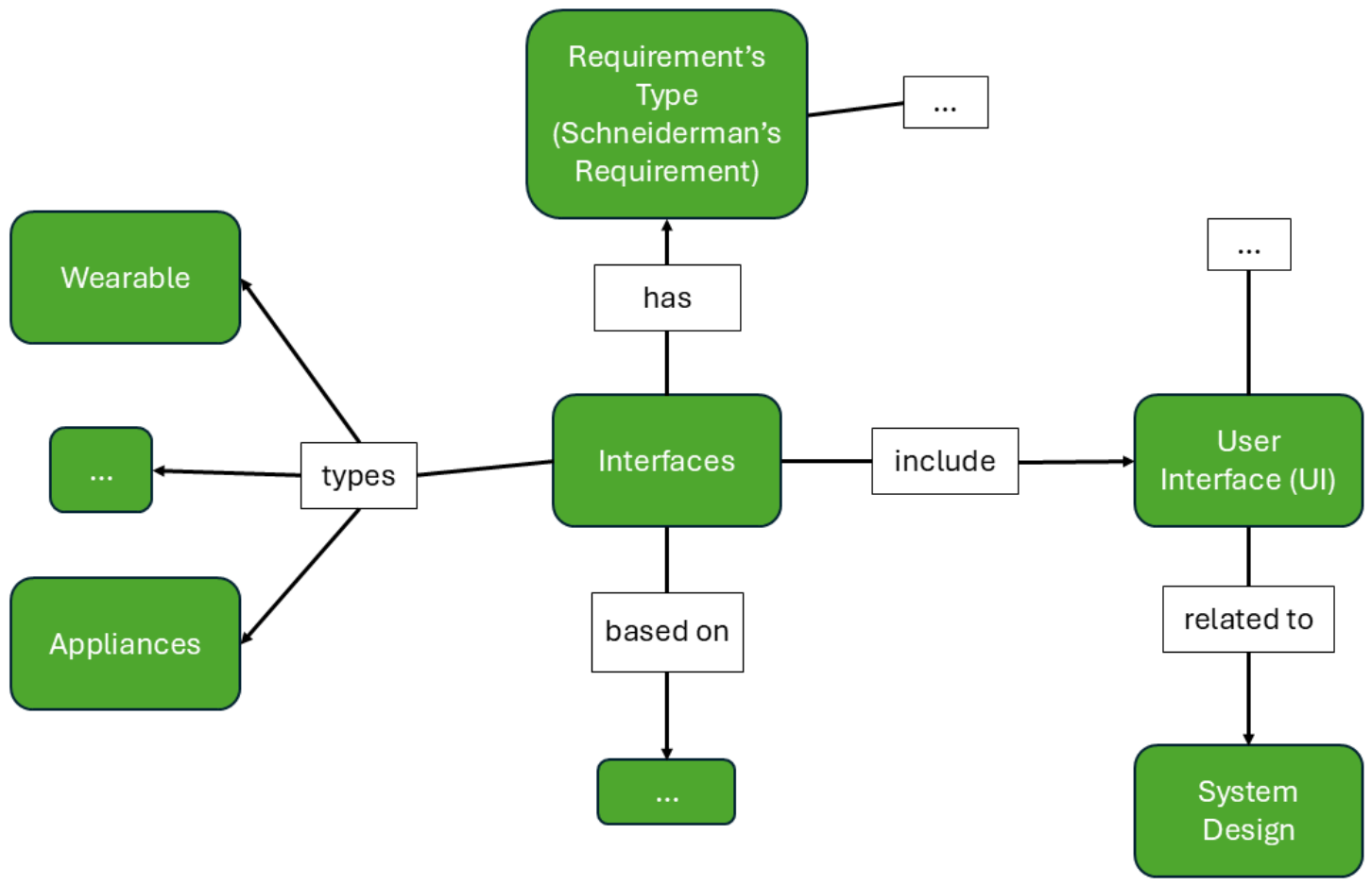
Figure 1 presents an example of a concept map. By visualizing abstract knowledge, concept maps support students’ comprehension of complex ideas, especially in higher education, serving purposes such as assessing prior knowledge, introducing new content, and tracking the development of conceptual relations.
The use of concept maps is strongly grounded in assimilation theory and meaningful learning theory, which conceptualizes learning as the integration of new information with prior knowledge structures (
Ausubel, 1968;
Novak, 2010). According to this perspective, meaningful learning requires students to establish clear relationships between new and existing knowledge rather than relying on rote memorization. Within concept mapping research, concept maps are used as externalized representations of students’ conceptual relations, making conceptual and relational structures more observable. Through this process, concept mapping may support the refinement of conceptual representations over time (
Novak & Cañas, 2008).
In addition to assimilation theory, concept mapping is aligned with constructivist learning theory, which emphasizes that students actively construct knowledge through interaction and reflection (
Bruner, 1990). Furthermore, from a cognitive load perspective, structured visual representations such as concept maps may help reduce cognitive load by organizing information spatially, allowing students to focus on essential relationships among concepts (
Sweller, 2011).
Previous studies have shown that structured visual mapping approaches may improve academic achievement (
Alabdulaziz & Alhammadi, 2021). These findings highlight the potential of visual knowledge structuring tools in supporting meaningful learning across domains. However, unlike thinking maps, concept maps emphasize proposition-based knowledge representation and cross-link identification, which provide opportunities for meaningful learning and conceptual change (
Novak & Cañas, 2008). This distinction makes concept maps particularly suitable for analyzing the depth and structure of students’ conceptual relations in concept-rich domains.
2.1.1. Serial Concept Map
A serial concept map is a dynamic depiction of knowledge that evolves over time (
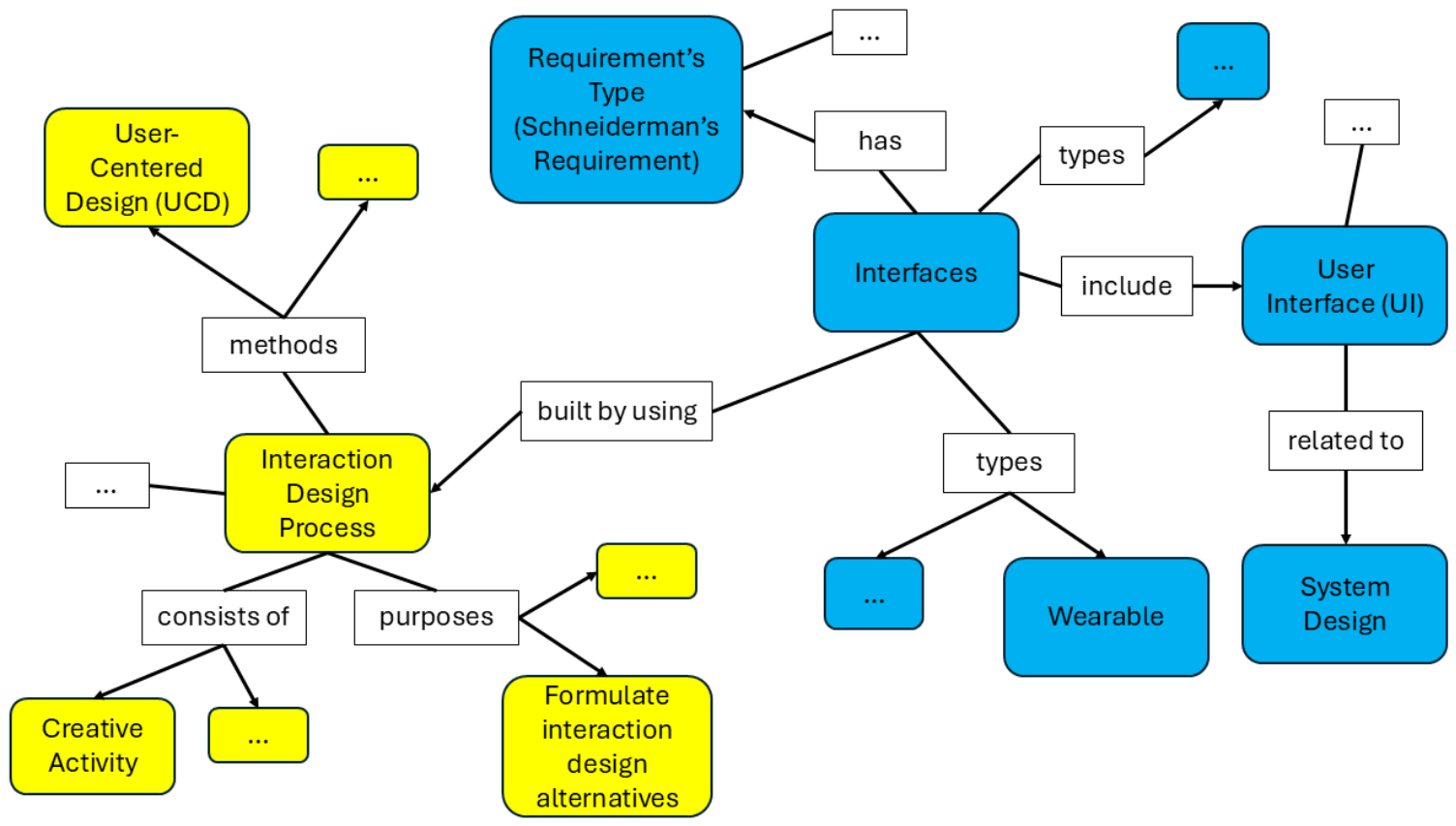
Campbell, 2022). Within the series that develops, each individual map—often called a sub-map—builds upon the previous one, leading to an increasingly complex structure. As shown in
Figure 2, each map in Week
N is composed of the current and prior week’s sub-maps, fostering cumulative learning and conceptual integration. In the example, the cross-link between the Week 1 and Week 2 maps consists of a single, intentionally designed connection. This essential connection was carefully selected by the lecturers and researcher to highlight the core relationship between the two topics, enabling students to focus on key concepts and integrate them meaningfully. This approach also helps reduce the difficulty of constructing maps within the allocated time. Additionally, identifying cross-links can be regarded as one observable indicator related to relational understanding and conceptual integration (
Bloom, 1956;
Novak & Cañas, 2008).
2.1.2. The Re-Composition Method
The re-composition method entails building concept maps from predefined elements—such as concepts and connecting links—sourced from a map created by an expert (
Hirashima et al., 2015). Reconstructing a structure from predefined elements may support processes associated with meaningful learning by encouraging students to move beyond simple memorization toward relational understanding. Unlike basic recall, which typically involves retrieving discrete facts, the re-composition method engages students in actively assembling components into an integrated conceptual model. This process allows students to externalize their internal understanding and supports knowledge restructuring through comparison with expert representations.
Recent studies highlight that structured and guided concept mapping approaches can improve conceptual clarity and reduce misconceptions by emphasizing relational understanding (
Chang et al., 2022;
Schroeder et al., 2017). In addition, guided visual knowledge construction activities have been associated with enhanced conceptual integration in digital learning environments (
Gutiérrez de Ravé et al., 2026). However, unguided and unstructured concept mapping may also help reveal diverse conceptual representations and misconceptions because students independently generate and organize map structures.
In contrast, guided and structured concept mapping approaches provide instructional scaffolding that may help students establish conceptual relationships aligned with intended learning objectives. Continuous reconstruction activities may support the refinement of conceptual representations over time (
Kharatmal & Nagarjuna, 2006). Reconstructing knowledge structures may also help make differences between student-generated and expert-defined representations more visible, thereby bringing clarity to the learning process and enabling targeted instructional support.
The present study focused on supporting students in refining conceptual relationships in alignment with the learning objectives across instructional sessions. Within this context, the re-composition method may provide a balance between learner-generated map structures and instructional guidance by supporting students in re-composing expert-defined map structures while still making differences between student-generated and expert-defined representations observable.
Serial concept mapping using the re-composition method has shown potential for supporting improvements in learning outcomes and maintaining map quality (
Fitriansyah et al., 2024;
Fitriansyah et al., 2025). In the re-composition process, students externalize their conceptual structures by understanding predefined components and establishing relationships among them to reconstruct conceptual structures. Identifying concepts and establishing conceptual relationships involve different representational tasks, each with distinct challenges. Through serial concept mapping with re-composition activities, students continuously refine their externalized conceptual representations, which may support the refinement of student-generated conceptual structures over time rather than simple task repetition.
2.2. Prior Knowledge
Accessing prior knowledge provides a critical foundation for absorbing and integrating new information, supporting more profound understanding (
Diaz, 2017). Studies on recommendation systems within online learning environments show that they commonly rely on students’ input to guide the system in generating personalized suggestions for them, underscoring the importance of prior knowledge (
Brusilovsky & Millán, 2007;
Tang & McCalla, 2005;
Verbert et al., 2012).
In this study, each newly constructed sub-map relied on the prior week’s map as a foundation, underscoring the importance of continuity and the recursive use of prior knowledge in serial concept mapping. Because prior knowledge may influence the quality of subsequent maps, this study incorporated the sharing of an expert map within the system to reinforce students’ prior knowledge and provide a clearer understanding of each week’s material. This approach was theoretically informed by meaningful learning perspectives and was intended to support students in refining conceptual relationships across sessions of serial concept mapping. Through this process, a reduction in map gaps could be observed across sessions.
2.3. The Kit-Build Concept Map (KBCM) System
Kit-Build is an educational concept mapping framework aligned with the re-composition approach (
Hirashima et al., 2015). Lecturers design expert maps representing target knowledge, which are then decomposed into individual components (i.e., concepts and links) and provided to students as a “kit” for reassembly. Students construct their maps within the system, and their work is automatically compared with the expert map to generate real-time feedback.
Recent studies emphasize that technology-enhanced systems integrated with feedback mechanisms may contribute to improved learning outcomes and instructional decision-making (
Ifenthaler & Yau, 2020;
Pan et al., 2022).
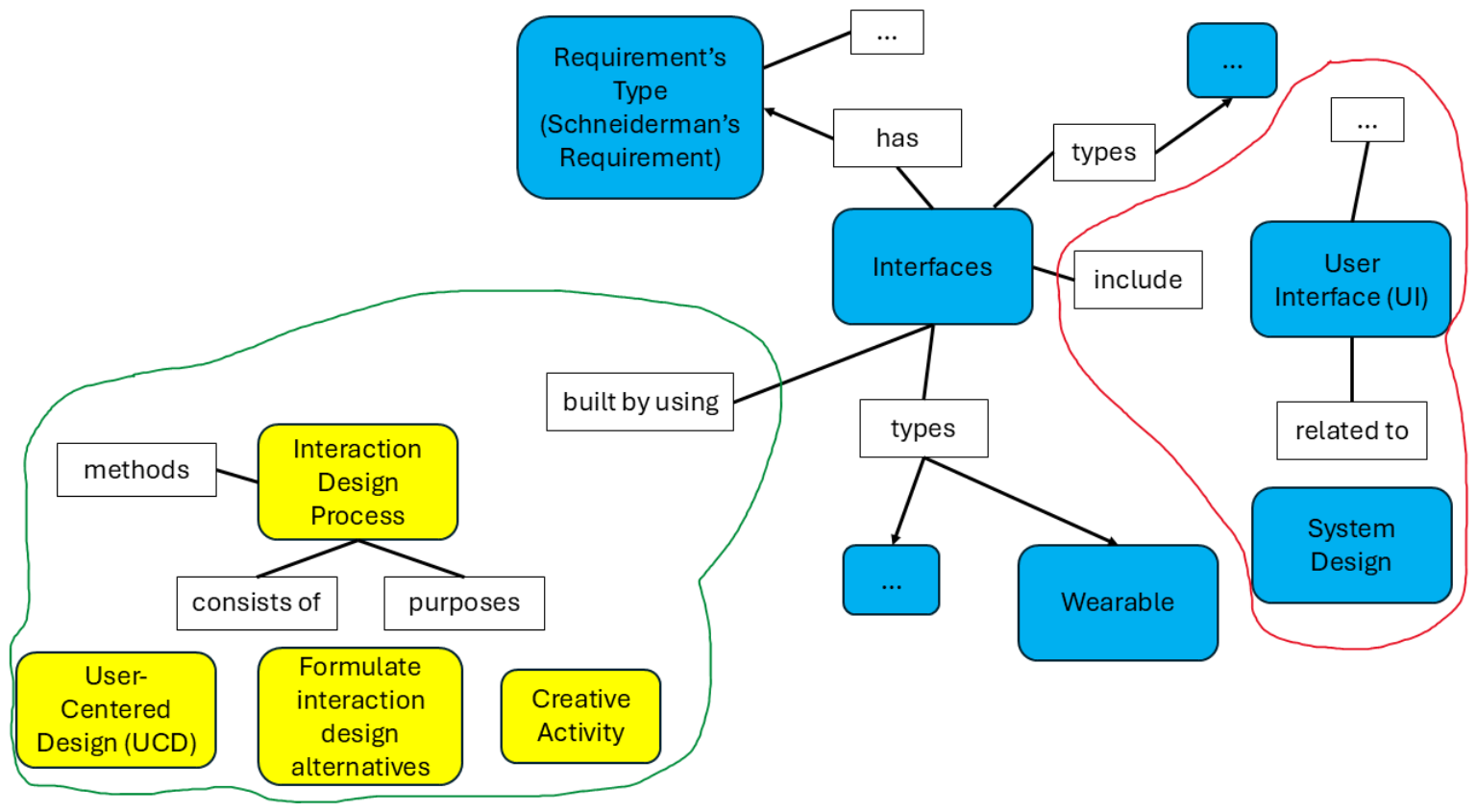
Figure 3 illustrates how the kit functions, showing two sets of components that need to be recomposed: (1) the concepts and links highlighted with a red circle, and (2) those highlighted with a green circle. The first kit represents the weak points identified by the lecturers and researcher from the Week 1 mapping activity, while the second kit introduces the new topic for Week 2. With the first kit, students are required to recompose and then reconnect the identified weak points to the completed Week 1 map (the area of the blue map outside the red circle). With the second kit, they recompose the components of the new topic and integrate them with the existing Week 1 map. This process aligns with the serial concept mapping framework, which emphasizes not only understanding the current topic but also integrating it with previous ones to support their learning.
Kit-Build offers several advantages within a serial concept mapping framework. First, it supports automated evaluation, providing immediate diagnostic feedback by comparing students’ re-compositions with a predefined expert map (
Hirashima et al., 2015). This automated process allows for immediate feedback, helping students quickly recognize and address their weak points. Second, it serves as a formative assessment by comparing students’ understanding to intended learning outcomes. Educators can leverage this information to deliver targeted feedback and adjust teaching strategies to close specific map gaps (
Pailai et al., 2017). Third, research has shown that the Kit-Build method is comparable to traditional manual assessments as a valid and reliable measure of student comprehension (
Wunnasri et al., 2018). This validity supports its use as a reliable assessment tool in educational settings. Another study also showed that automated concept map assessment provides reliable and scalable evaluation comparable to traditional methods (
Tzafilkou et al., 2022). These features make KBCM with a serial concept mapping framework particularly suitable for large, concept-rich learning environments.
2.4. Formative Feedback
Formative feedback is effective only when it supports student improvement—not merely through feedback quality, but through its actionable impact (
Gedye, 2010). According to
Sadler (
1989), meaningful feedback must close the gap between actual and expected levels of understanding. Recent research highlights that effective feedback should be timely and specific (
Panadero & Lipnevich, 2022;
Wisniewski et al., 2020).
In digital learning environments, formative feedback is increasingly supported by learning analytics and automated systems, enabling real-time, data-driven insights (
Ifenthaler & Yau, 2020). Studies show that technology-mediated feedback enhances student engagement, motivation, and learning performance when it is immediate and personalized (
Moreno-Guerrero et al., 2020). Recent findings also suggest that visual feedback based on concept maps may support continuous learning (
Chang et al., 2022;
Schroeder et al., 2017).
Gouli et al. (
2003) suggested that concept maps, when used as an assessment tool, contribute to knowledge improvement by helping students identify and correct misunderstandings and incomplete conceptions. As described by
Nicol and Macfarlane-Dick (
2004), some of the factors that influence feedback effectiveness are the student’s capacity for self-assessment, clarity of learning goals and assessment criteria, and closure of the “feedback loop”. These factors are already integrated within the KBCM serial concept mapping framework and the immediate feedback feature.
2.5. Focus Group Discussion
A focus group discussion (FGD) is described as an informal and guided conversation centered on a specific topic (
De Negri & Thomas, 2003). Due to its qualitative nature, FGD enables researchers to explore topics in depth and address “why” and “how” questions (
De Negri & Thomas, 2003). A key characteristic of FGD is the interaction among participants; this group dynamic often generates richer and more insightful data than individual interviews (
Thomas et al., 1995;
Morgan, 2019).
In educational research, FGDs are widely used to examine lecturers’ experiences and pedagogical practices. A recent study highlights that qualitative approaches such as FGDs have the potential to effectively capture reflective teaching practices and instructional decision-making processes (
Khalil et al., 2020).
In this study, lecturers participated in FGDs to provide insights into the implementation of the KBCM system. Data were analyzed using a deductive approach guided by
Kolb’s (
2015) Experiential Learning Theory, which conceptualizes learning as a cyclical process involving experience, reflection, conceptualization, and experimentation. Recent work continues to support Kolb’s framework in analyzing reflective learning in higher education (
Morris, 2020).
3. Materials and Methods
This section outlines the research materials and methodology, detailing the study duration, participant demographics, preparatory activities, learning activities implemented in each data collection period, the data collection procedures employed to address the research question, and ethical considerations.
3.1. Study Duration and Participant Demographics
This study was carried out over a three-week period across six Human–Computer Interaction (HCI) classes at Universitas Indonesia. The HCI course centers on teaching students to design computer applications with a strong emphasis on user interaction and experience. Universitas Indonesia—recognized as the top-ranked university in Indonesia according to
Quacquarelli Sydmonds Limited (
2026)—attracts some of the nation’s most accomplished students.
A three-week study design was adopted for this research, involving a total of 258 dedicated students across six classes with 4 lecturers. All classes were conducted under consistent conditions, with the only variation being the lecturers’ schedules. Drawing on previous findings (
Fitriansyah et al., 2024;
Fitriansyah et al., 2025), which suggested that serial concept mapping combined with the re-composition method could help to improve learning outcomes, all participants in this study engaged in the same instructional approach. Specifically, they utilized the KBCM system to implement serial concept mapping, enabling timely and effective feedback for both students and lecturers. In addition, the KBCM system designed for lecturers was also used for data analytics and monitoring students’ conceptual structures to support pedagogical utility.
3.2. Preparatory Activities
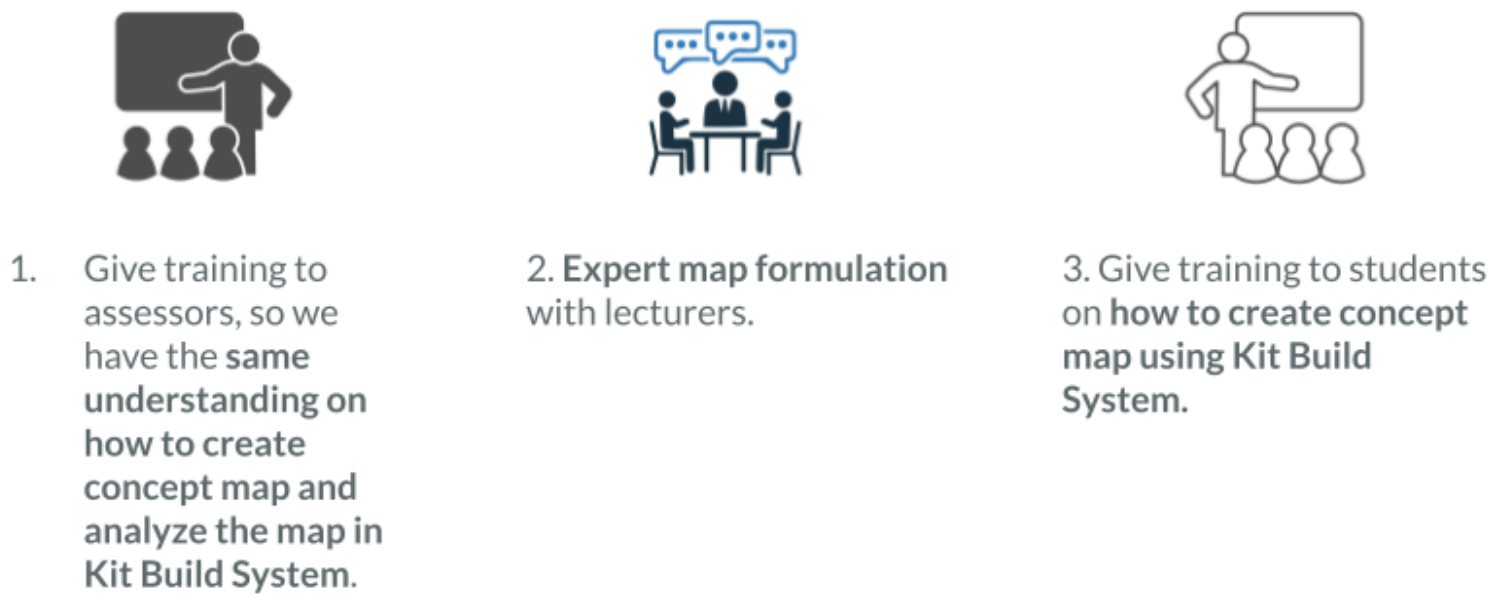
Before initiating the learning activities, the researcher carried out a series of preparatory measures involving students, lecturers, and teaching assistants (assessors) to support a smooth and consistent implementation process. These activities aimed to acquaint all participants with the concept mapping methodology and clarify the objectives of the study. An overview of the preparatory activities is presented in
Figure 4, while the subsequent subsection offers detailed explanations of selected components.
3.2.1. Assessor Training in Constructing and Analyzing Concept Maps Using the Kit-Build Concept Map (KBCM) System
Assessors participated in a training session to become familiar with the KBCM system, including how to construct concept maps and analyze student-generated maps. Their role was to support lecturers in interpreting map results by preparing summary reports. While the system provides automated feedback, such as counts of correct, missing, and excessive propositions, the interpretation of these outputs requires human analysis. Therefore, the training aimed to align the assessors’ perspective with those of the lecturers and researchers to support consistency and reliability in the reporting process.
3.2.2. Expert Map Formulation
The preparation phase included collaborative discussions with lecturers to identify appropriate course materials for integrating the serial concept mapping activity. Based on these discussions, the researcher and lecturers jointly developed an expert map to ensure its alignment with the course objectives and instructional goals. To validate the quality and coherence of the expert map and its components, teaching assistants tested it using the re-composition process within the KBCM system prior to its distribution to students.
The expert map also functioned as a medium for conveying the lecturer’s intended knowledge structure. It was iteratively refined across the three-week period, incorporating insights from previous students’ performance. As illustrated in
Figure 2, expert maps from one week were linked to the next week’s map through one essential proposition (cross-links) that was selected collaboratively by the lecturers and researcher. These minimal links emphasized core relationships between topics while encouraging students to grasp key concepts and integrate them meaningfully. They also reduced the difficulty for students in constructing the map within the allocated time.
3.2.3. Student Training on Concept Mapping Using the Kit-Build Concept Map System
The students were introduced to concept mapping and the KBCM system through a structured training session held prior to the learning activities. The training addressed both the theoretical underpinnings and the practical use of the system. An assessment was administered at the end of the training to check whether students had acquired a basic understanding of how to construct maps using the system and interpret the feedback provided.
3.3. Learning Activities and Data Collection Period
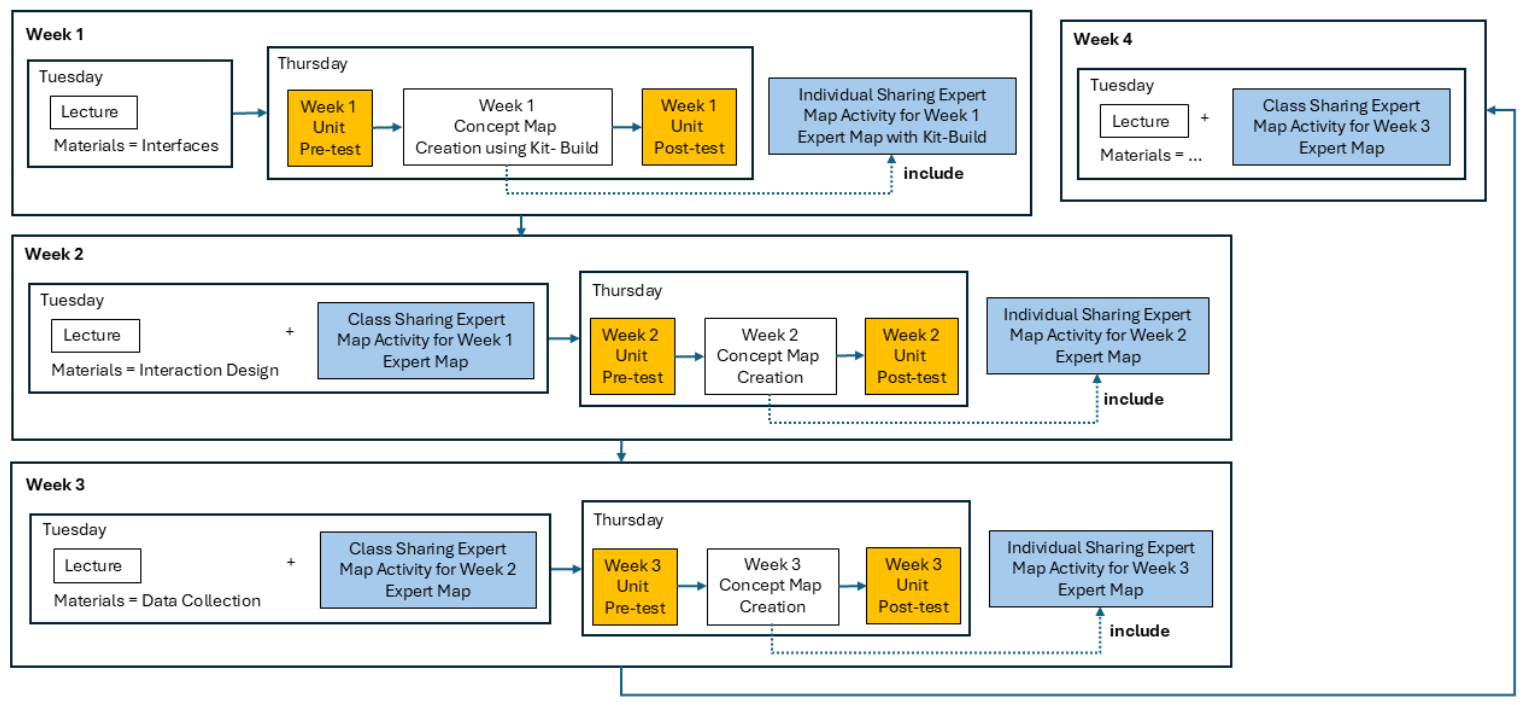
The core learning activities included weekly lectures, concept map creation using the KBCM system, expert map sharing (individual and class-level), and data collection through unit pre- and post-tests, as illustrated in
Figure 5. A key component of the concept mapping process was the integrated feedback mechanism, highlighted by the blue rectangle in the figure. Feedback was activated whenever students compared their maps against the expert map, allowing them to identify discrepancies and revise their concept maps in real time.
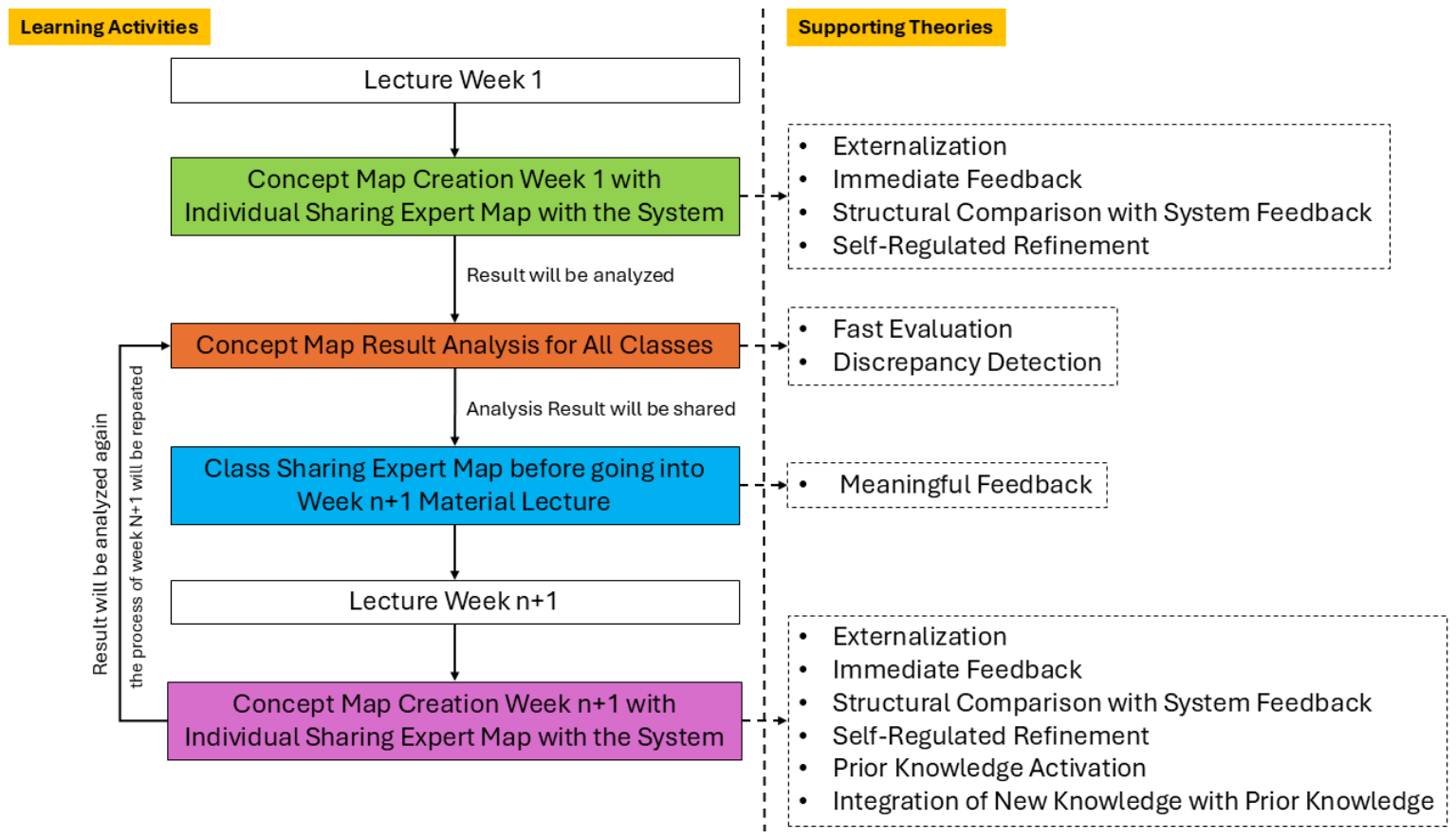
Figure 6 illustrates the learning activities and their corresponding theoretical foundations. During the Week 1 concept map creation and individual expert map sharing activities, the students engaged in knowledge externalization while receiving immediate, system-generated feedback. This process enabled structural comparison between the students’ map and expert map, fostering knowledge refinement.
Next, the classroom concept map analysis allowed for fast evaluation and discrepancy detection, helping lecturers quickly identify individual and class-level map gaps. This analytical automation reduces lecturers’ workload and provides accurate, data-driven feedback. By comparing results across classes, lecturers can also identify variations in learning progress and instructional effectiveness.
The class expert map sharing activity results provide meaningful feedback before the next lecture, ensuring that students receive timely and targeted guidance to improve their externalized concept-map representations. Finally, completing the Week N + 1 concept map creation activity, which applies the serial concept mapping framework, supports prior knowledge activation and the integration of new and existing knowledge, reinforcing conceptual connections.
Overall, each stage of the learning activity is systematically grounded in theory to enhance understanding, improve the quality of feedback, and reduce instructional workload. The data collection period spanned three weeks of learning activities using serial concept mapping, from 26 February 2025, to 12 March 2025. The following subsections detail each activity.
3.3.1. Lectures
Lectures were delivered in-person every Tuesday, with each session lasting 1 h and 40 min—equivalent to 2 academic credits. The HCI course covered interconnected topics suitable for serial concept mapping: interfaces (Week 1), interaction design (Week 2), and data collection (Week 3).
3.3.2. Concept Map Creation with Feedback Mechanism
The students constructed their concept maps based on lecture slides using the KBCM system. These sessions were conducted in-person every Thursday using the following structure:
A short unit pre-test was administered prior to map creation to collect baseline data on student understanding.
- 2.
Map Creation and Individual Expert Map Sharing (40 min)
The students engaged in the concept mapping activity using the KBCM system, which is grounded in the re-composition method (
Hirashima et al., 2015). Through this process, the students externalized their understanding by re-composing the map, thereby actively constructing and reinforcing their knowledge. Throughout the session, they utilized the system’s feedback feature to compare their maps against the expert map, receiving immediate, system-generated feedback. This feedback supports students in closing the gap between their actual and expected levels of understanding, aligning with
Gedye (
2010) and
Sadler’s (
1989) theories of effective formative feedback.
In Week
N + 1, the students re-composed the expert map from that week’s lecture, as well as the expert map from Week
N, focusing only on commonly identified weak points from the general performance (see
Figure 3). This approach may help to support cumulative knowledge integration across weeks while maintaining the structural integrity of previous maps, aligning with the serial concept mapping framework (
Campbell, 2022). Such continuous refinement may support conceptual integration (
Bloom, 1956;
Novak & Cañas, 2008). Moreover, re-composing the commonly identified weak points may generate effective feedback (
Nicol & Macfarlane-Dick, 2004), as it helps students access their prior knowledge and enhance their understanding. It is intended to encourage reflective reconsideration of conceptual relations rather than mere mechanical revision.
- 3.
Unit Post-test (5 min)
A brief unit post-test was administered after the mapping activity to gather data on learning gains.
3.4. Unit Pre- and Post-Test Assessments
Unit pre-tests and post-tests were conducted to measure weekly learning gains. These assessments included a combination of multiple-choice questions (some with multiple correct answers) and matching-type questions, delivered via Moodle. The questions were designed based on Bloom’s taxonomy (
Bloom, 1956) to assess varying levels of cognitive understanding, with a particular emphasis on fostering deeper understanding of the conceptual relationships introduced each week. In Week 1, the unit pre-test followed the lecture and preceded the map activity. In Weeks 2 and 3, the unit pre-test was conducted after expert map sharing and before the mapping activity. Post-tests followed the mapping sessions.
Each test employed different scoring rules based on the number and type of questions, as well as the accuracy of students’ responses. In Week 1 (topic: interfaces), the test consisted of two matching questions, each worth five points, for a total of 10 points. Credit was given for each correct match, with one correct match earning 1.67 points, two correct matches earning 3.33 points, and all correct matches earning the full 5 points per question. In Week 2 (topic: interaction design), there were six questions, each worth 1.67 points, for a total of 10 points. The test included three matching questions and three multiple-choice questions with multiple correct answers. The matching questions had three matches (0.56 points each), four matches (0.42 points each), and five matches (0.33 points each), while the multiple-choice questions included one with three correct answers (0.56 points each) and two with four correct answers (0.42 points each). In Week 3 (topic: data collection), there were four questions, each worth 2.5 points, for a total of 10 points. The test included two matching questions (five matches each, worth 0.5 points per match) and two multiple-choice questions with two correct answers each (1.25 points per correct answer). All questions were collaboratively designed by the researcher and lecturer to help measure the students’ understanding of the weekly material.
3.5. Map Gap Detection
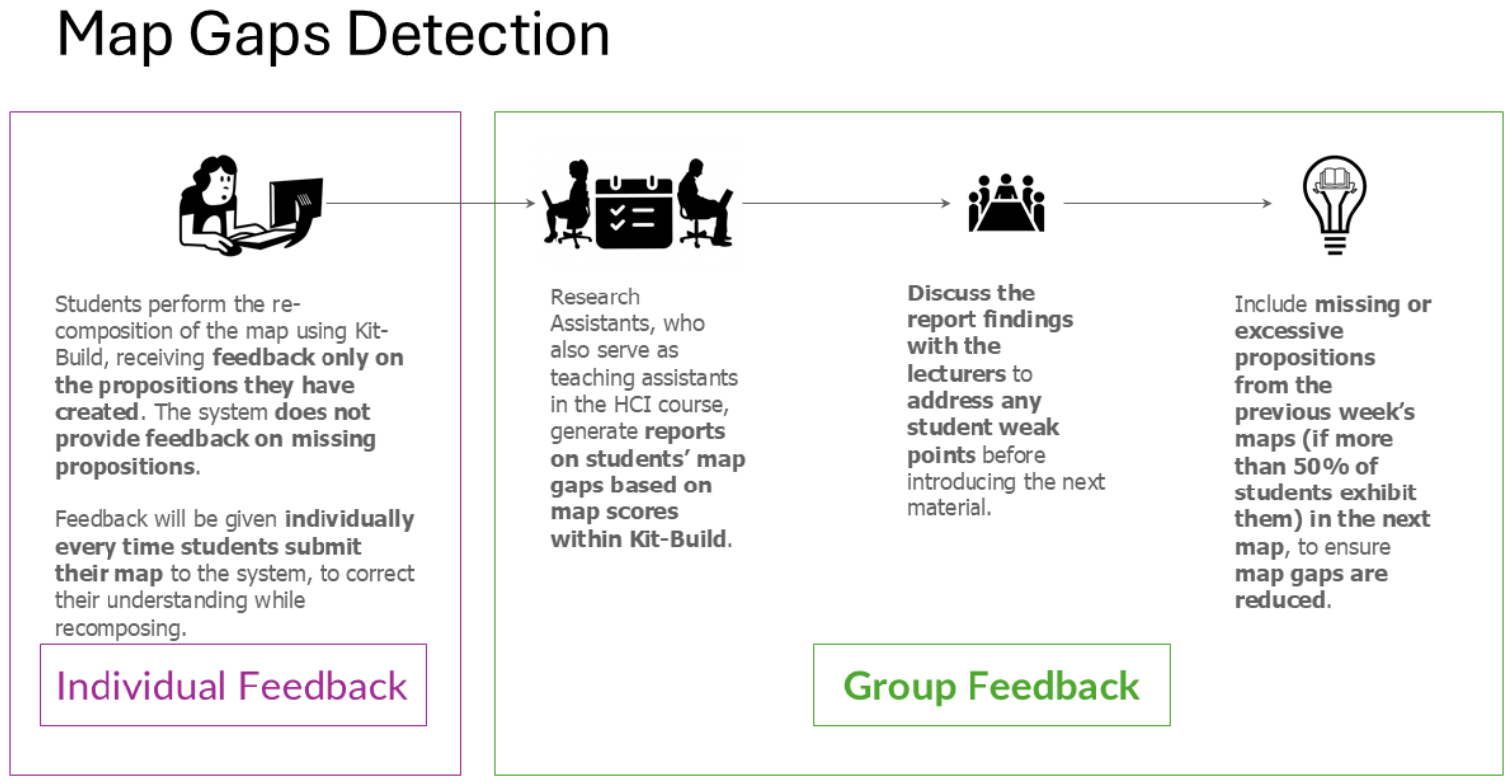
A central focus of the assessment process in this study is the timely and effective detection of map gaps. These gaps were identified across two distinct levels: the individual level and the group level.
Figure 7 illustrates the framework used to categorize and detect map gaps within these two dimensions. A detailed explanation of each category is provided in the following subsections.
3.5.1. Individual Feedback
In the KBCM system, students re-compose concept maps and receive individualized feedback based solely on the propositions they have constructed. The system does not generate feedback on any propositions that students have not yet created. Feedback is provided on-demand—each time a student requests it within the system—allowing for real-time identification and revision of inconsistencies in their constructed conceptual structures.
This feedback design was intended to prevent students from misusing the feedback system to obtain answers immediately, which could hinder genuine understanding. By limiting feedback to student-generated propositions, the system encourages students to independently establish conceptual relationships among the provided components before receiving guidance.
Within concept mapping research, meaningful learning is associated with the process of relating new knowledge to prior conceptual structures rather than relying solely on rote memorization (
Novak & Cañas, 2008). In this context, the serial concept mapping with re-composition approach using the KBCM system was designed to support students in progressively refining their externalized conceptual representations through continuous revision and feedback-supported mapping activities.
As illustrated in
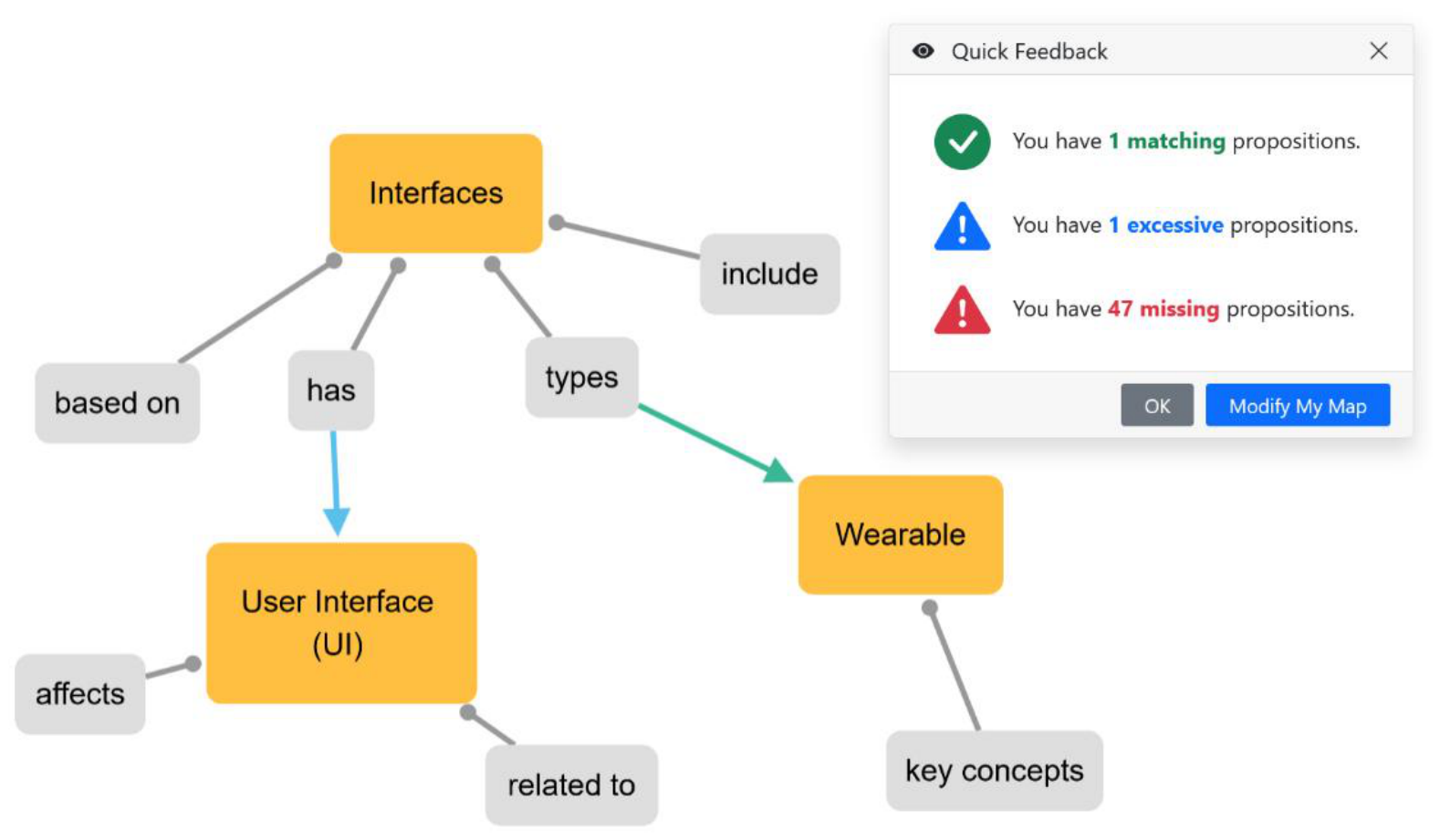
Figure 8, matching propositions (green) indicate correct propositions, excessive propositions (blue) represent incorrect propositions, and missing propositions highlight the number of propositions that have not yet been connected. This immediate, personalized feedback mechanism was designed to support students in actively refining their represented conceptual relations throughout the mapping process.
3.5.2. Group Feedback
Once all classes had completed their concept mapping activities for the week, the assessors analyzed the students’ maps using the KBCM system.
Figure 8,
Figure 9,
Figure 10 and
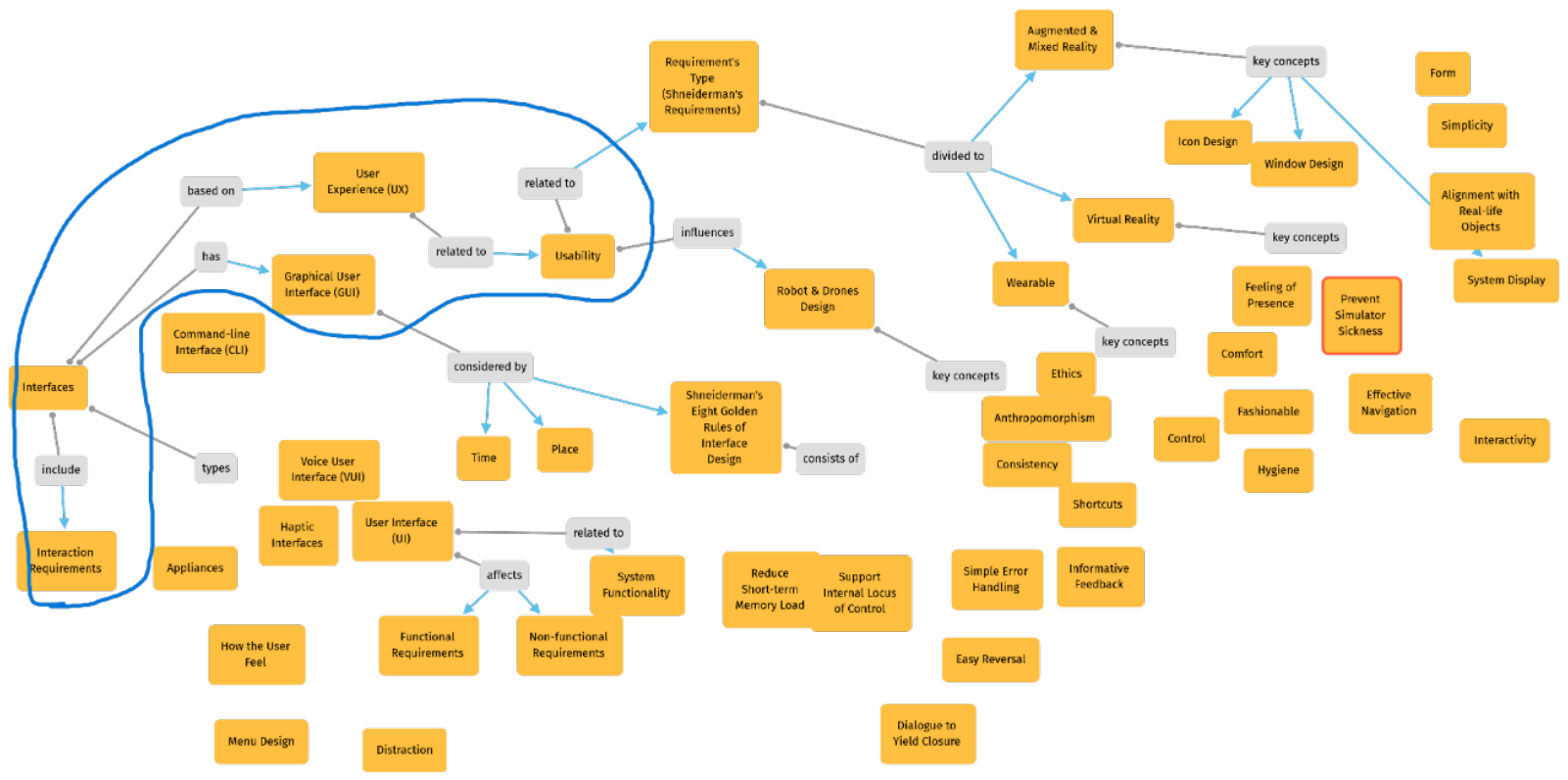
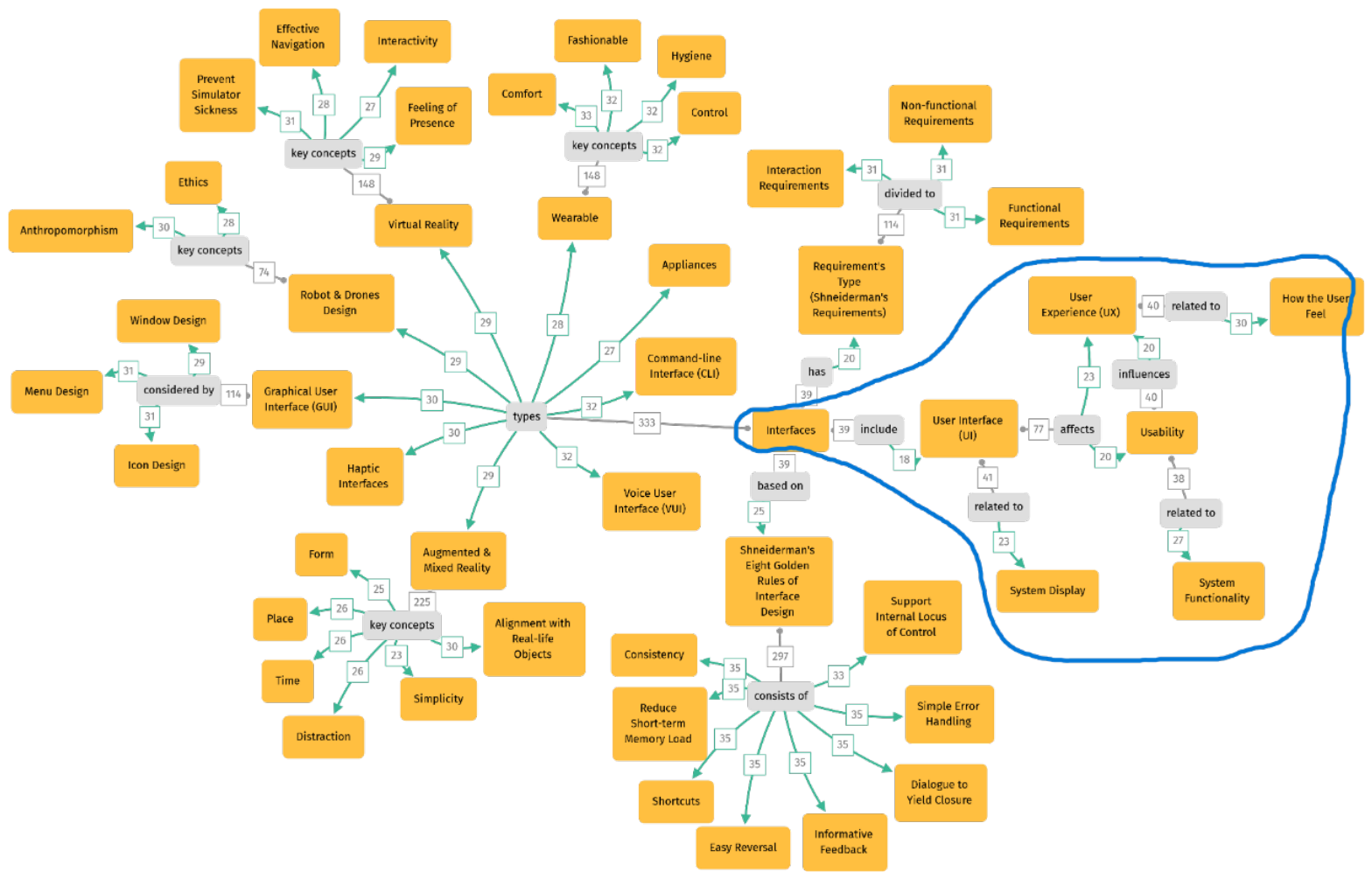
Figure 11 illustrate the KBCM analyzer feature, which visualizes the number of students with excessive (incorrect), missing, and matching (correct) propositions, thereby enabling quick identification of both common and individual map gaps in Week 1 (interfaces) material. For instance,
Figure 8 shows the quick feedback feature, which visualizes overall feedback for the student’s map.
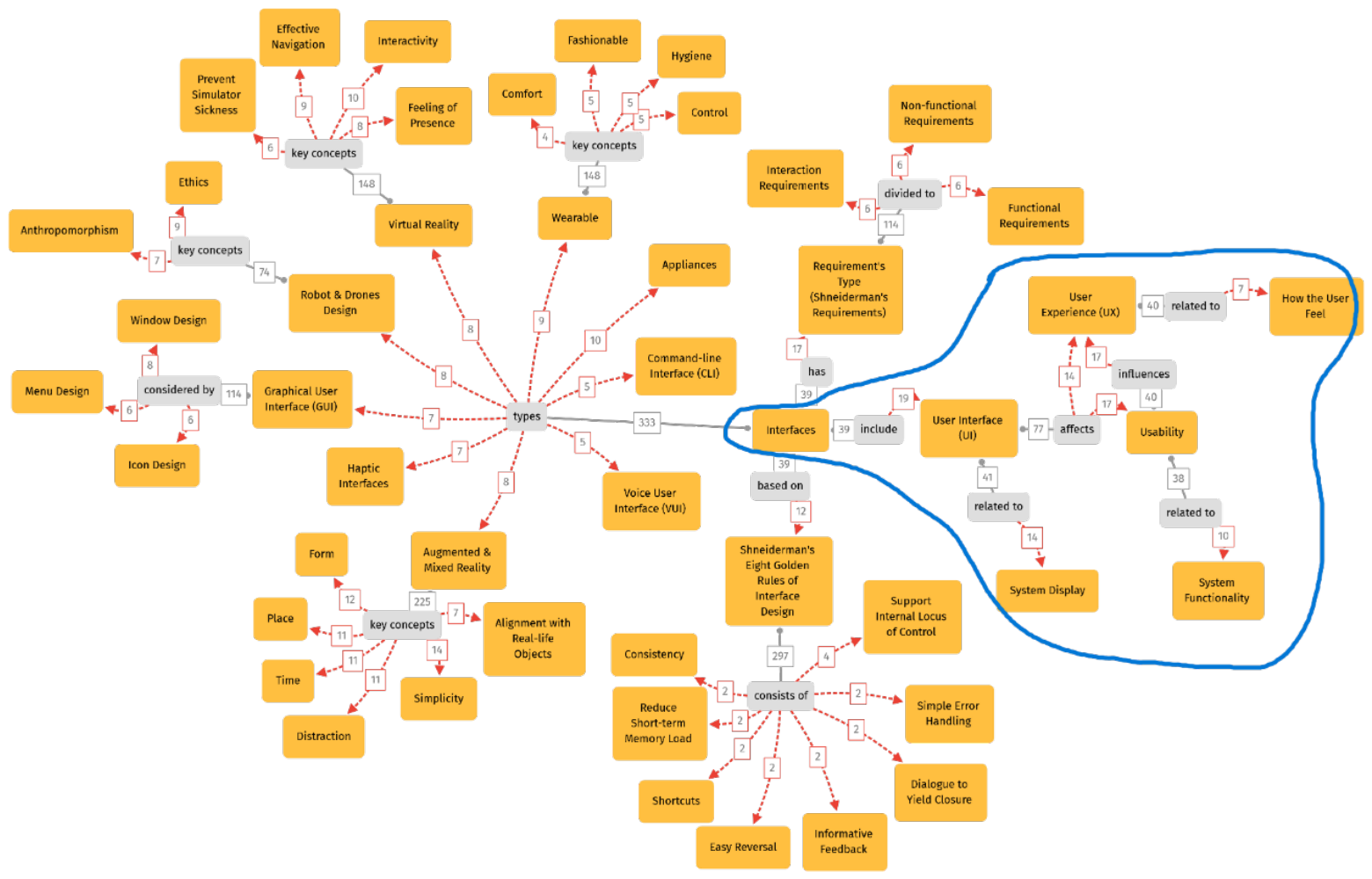
Figure 9 shows that lecturers and teaching assistants identified significant weaknesses in the relationships among the interfaces, user interface, user experience and usability concepts (highlighted within the blue circle).
Similarly,
Figure 10 illustrates misunderstandings about the relationships between the interfaces, user experience, and usability concepts (highlighted within the blue circle).
Lastly,
Figure 11 illustrates that most students had no difficulty mapping the types of interfaces or Shneiderman’s Eight Golden Rules of Interface Design. However, considerably fewer students were able to accurately connect the relationships among the interfaces, user interface, user experience, and usability concepts (highlighted within the blue circle).
Based on these analyses, the expert map for Week 2 was developed by incorporating weak points identified from Week 1 that needed to be re-composed, as illustrated in
Figure 3 (highlighted within the red circle).
In addition, the lecturers and teaching assistants concluded that the students struggled to understand the core relationships among interfaces, user interface, user experience, and usability, while demonstrating a solid grasp of interface types and design principles, particularly Shneiderman’s Eight Golden Rules of Interface Design. The analyzer feature supports lecturers in overcoming pedagogical assessment challenges, enabling them to efficiently identify students’ current understanding and target specific weaknesses by highlighting errors (
Figure 9), clarifying misunderstandings (
Figure 10), and validating correct knowledge (
Figure 11). It also assists lecturers in creating effective feedback that is timely and accurate, supporting students so they can refine their understanding and develop a more comprehensive knowledge base before progressing to the next week’s materials.
To support this process, the expert map for the following week was revised to include key propositions that reflected the previously identified weak points. Students were required to recompose these propositions as part of the next mapping activity, ensuring that group-level map gaps were systematically addressed and reduced over time.
3.6. Focus Group Discussion Flow
An offline focus group discussion (FGD) was conducted after the course had concluded, with four lecturers participating in the session; all were lecturers on the Human–Computer Interaction course. The researcher served as the moderator, guiding the discussion using semi-structured questions that focused on the lecturer’s perspectives on the serial concept mapping activity using the KBCM system. The session lasted approximately 60 min.
The FGD was audio-recorded and transcribed by two individuals. Each transcriber reviewed and validated the portions transcribed by the other to ensure accuracy, after which the researcher verified the final version.
The finalized transcriptions were analyzed using a deductive approach with thematic analysis. This process involved initial open coding, followed by categorization and theme development. The data were coded and organized into themes based on relevant theories by two coders: an industry expert and the researcher. To improve coding consistency, the identified themes and coded segments were iteratively reviewed and discussed by both coders to clarify interpretations and resolve coding discrepancies prior to the final analysis.
Table 1 presents the coding scheme used to categorize the results. Four codes were applied: (1) CE (Concrete Experience), which refers to the lecturers’ personal experiences; (2) RO (Reflective Observation), which represents their observations and reflections on the serial concept mapping activity using the Kit-Build Concept Map (KBCM) System; (3) AC (Abstract Conceptualization), which denotes the insights or understandings the lecturers developed from the experience; and (4) AE (Active Experimentation), which indicates the actions they intend to take or apply following the experience.
3.7. Ethical Considerations
This study was conducted in accordance with institutional ethical standards and adhered to the principles of voluntary participation, informed consent, and confidentiality. Before joining, all participants were informed about the purpose of the study, the nature of the data collected, data usage procedures, anonymity, and their right to withdraw at any time without penalty. Written informed consent was obtained electronically via Google Forms before the participants accessed the research instruments. Participation was entirely voluntary, and all collected data were anonymized and treated confidentially throughout the study.
The serial concept mapping activities were implemented as part of regular classroom learning activities conducted across three course sessions. The students were informed that participation in the activities contributed to normal course participation requirements, while consent for the use of their learning data for research purposes was voluntary. The participants could decline consent or withdraw their data from the study at any time. All collected data were anonymized prior to analysis.
The Ethics Committee of The Research and Community Services Administration Unit of the Faculty of Computer Science, Universitas Indonesia had granted retrospective ethical approval (Approval No: S-1/UN2.F11.D1.5/PPM.00.00/2026). The committee reviewed the study procedures and confirmed that they complied with institutional research ethics standards.
4. Results
This section presents the findings of the study. The first part discusses the results of the lecturer’s perspective on serial concept mapping activity with the Kit-Build Concept Map (KBCM) system. The second part discusses the results related to the unit pre-tests and post-tests, and improvements in accessing prior knowledge. The third part showcases the map gap reduction result.
4.1. Addressing Research Question 1: Lecturer’s Perspective on Serial Concept Mapping Activity with Kit-Build Concept Map (KBCM) System
This section addresses the first research question by exploring the lecturer’s perspective on how serial concept mapping can be utilized with the Kit-Build Concept Map (KBCM) system. The analysis is divided into two parts: (1) validity of the data using Cohen’s Kappa, and (2) focus group discussion (FGD) results.
4.1.1. FGD Data Validity
Initial inter-coder agreement for the FGD analysis showed low Cohen’s Kappa values, indicating inconsistencies in segmentation boundaries and interpretation of coding categories. To address this issue, the coders conducted iterative discussions to clarify segmentation criteria, refine the coding guidelines, and resolve ambiguities in the application of the thematic framework. After revising the segmentation process and conducting additional rounds of coding, inter-coder agreement progressively improved from low agreement in the initial stage (κ = −0.67 to 0.12) to low to moderate agreement following segmentation refinement (κ = −0.19 to 0.37) to moderate agreement after the second coding round (κ = 0.27 to 0.37) and finally to strong agreement in the third coding round (κ = 0.83 to 1.00). These iterative refinements were intended to improve coding consistency and establish a shared interpretation of the coding categories prior to the final analysis.
4.1.2. FGD Data Results
The analysis of the FGD data resulted in two main themes: (1) expectations of the learning activity, and (2) perceptions of the learning activity. Each theme comprises several sub-themes related to the design, outputs and stakeholders involved in the learning activity.
Table 2 presents these themes in relation to
Kolb’s (
2015) Experiential Learning Theory.
Overall, most codes associated with Concrete Experience (CE) were categorized under perceptions. Similarly, Reflective Observation (RO) codes were primarily linked to Perceptions, with some relating to potential challenges. In contrast, codes associated with Abstract Conceptualization (AC) were largely categorized under expectations, while Active Experimentation (AE) codes were mainly associated with expectations concerning future actions.
Table 3 summarizes the key themes and sub-themes derived from the FGD, highlighting lecturers’ expectations and perceptions of the serial concept mapping activity using the Kit-Build Concept Map (KBCM) system. Overall, the lecturers emphasized the importance of not only capturing the students’ final outputs but also understanding their learning processes, particularly in identifying misconceptions and varying levels of conceptual understanding. In terms of expectations, the lecturers highlighted the need for comprehensive and traceable outputs, a well-structured activity design for the whole course, and the involvement of teaching assistants to provide additional qualitative insights. In contrast, the lecturers’ perceptions of the implemented activity suggest that the system is feasible in supporting consistent analysis, cross-class comparisons, and the identification of map gaps through descriptive and comprehensive reports. These findings may reflect a strong alignment between expectations and actual system capabilities, particularly in supporting reflective teaching practices. However, some expectations, such as tracking the evolution of students’ thinking processes, suggest areas for further system enhancement.
4.2. Addressing Research Question 2: Learning Outcomes
This section addresses the second research question, which examines whether students reflect improvement on a weekly basis when participating in serial concept mapping activities using the KBCM system.
4.2.1. Unit Pre- and Post-Test Results
The results of the unit pre-tests and post-tests were used to evaluate the impact of each method on learning outcomes.
Table 4 presents the scores of all students across three weeks of learning. Since the data were not normally distributed, the Wilcoxon signed-rank test was employed to assess statistical significance, using a two-tailed test with paired samples between unit pre-test and unit post-test scores, a significance level of
, a
value for standardization and effect size, and approximate
-values. The weekly unit pre-test and post-test results showed statistically significant improvements in student performance across all three weeks. In Week 1 (interfaces), the difference was significant (
) with a large effect size (
), indicating strong practical gains. In Week 2 (interaction design), the improvement was most substantial (
); similarly, in Week 3 (data collection), the participants showed significant gains (
), reflecting meaningful conceptual relations development. Overall, the consistent increase in both mean and median scores across weeks supports the effectiveness of the serial concept mapping approach using the KBCM system in promoting cumulative learning and conceptual clarity. These results are consistent with previous findings (
Fitriansyah et al., 2025), where serial concept mapping using the re-composition method without a system approach also showed significant improvements in student performance across all three weeks.
4.2.2. Prior Knowledge Improvement Results
Table 5 presents the improvement of knowledge from the previous week after students engaged in the subsequent week’s serial concept mapping activity. During this activity, they were required to re-compose not only the current week’s propositions, but also commonly incorrect propositions identified from the previous week’s mapping exercise. The statistical procedures applied were the same as in the prior analysis. For the interfaces material, the result shows a statistically significant improvement (
) with a large effect size (
), indicating strengthened prior knowledge. Similarly, for the interaction design material, a statistically significant improvement was observed (
) with a large effect size (
). Overall, these findings show statistically significant and may reflect practically meaningful improvements in students’ reinforcement of prior knowledge across weeks.
4.3. Addressing Research Question 3: Map Gap Identifier
This section presents the results addressing the third research question, focusing on how the KBCM system detects and reduces map gaps through weekly serial concept mapping activities.
Map Gap Reduction: Correct Propositions Within the Gaps
This result presents the map gap reduction that was observed within the serial concept mapping activities. As the data were not normally distributed, the Wilcoxon signed-rank test was applied to evaluate statistical significance, using a two-tailed test on paired samples comparing the total number of incorrect propositions after concept map creation in Week 1 and Week 2. The analysis used a significance level of
, a
value for standardization and effect size calculation, and approximate
-values.
Table 6 shows the gap reduction significance from Week 1 to Week 2, based on the decrease in the number of incorrect propositions across weeks. The analysis revealed a statistically significant reduction (
) with a large effect size (
). This result highlights the potential of serial concept mapping with a feedback mechanism in addressing students’ weak points and reinforcing knowledge from the previous week. From Week 2 to Week 3, no further gap reduction was detected, as the average map quality was around 99 points, indicating that most of the students had already achieved nearly perfect map scores. This suggests that the KBCM system could continuously support learning and refinement even though the map gaps had become minimal.
5. Discussion and Limitations
This section presents the discussion of the study in relation to the research questions and findings.
Section 5.1,
Section 5.2,
Section 5.3 and
Section 5.4 address Research Question 1 in detail. Results related to Research Question 2 are presented in
Section 4 and further discussed in
Section 5.5 in terms of learning outcomes and continuous refinement of conceptual relations across instructional sessions.
Section 5.6 addresses Research Question 3. Finally,
Section 5.7,
Section 5.8 and
Section 5.9 discuss the practical implications, theoretical implications, and overall contribution of this study.
5.1. Interpreting Lecturers’ Perspectives Through Experiential Learning
The findings from the lecturers’ perspectives on the serial concept mapping activities using the Kit-Build Concept Map (KBCM) system can be meaningfully interpreted through
Kolb’s (
2015) Experiential Learning Theory and broader learning theories underpinning concept mapping. Lecturers’ perceptions largely reflect the stages of Concrete Experience (CE) and Reflective Observation (RO), as they described their direct experiences with the learning activity and reflected on student engagement, map gaps, and learning processes. In contrast, lecturers’ expectations align with Abstract Conceptualization (AC) and Active Experimentation (AE), as they articulated desired improvements, conceptual insights, and potential future applications of the system.
This alignment suggests that the KBCM-supported activities not only facilitate student learning but also promote experiential and reflective teaching practices, consistent with recent findings on reflective pedagogy in higher education (
Morris, 2020).
5.2. Divergence Between Lecturers’ Expectation and Perception
A notable finding is the divergence between lecturers’ expectations and perceptions. While lecturers perceived the KBCM system as effective in enabling consistent analysis and quick cross-class comparisons, their expectations emphasized deeper insight into students’ cognitive relations development over time.
This divergence reflects a known limitation in learning analytics research, where systems effectively capture observable performance but are less capable of representing underlying cognitive processes (
Ifenthaler & Yau, 2020;
Viberg et al., 2018). From an experiential learning perspective, this suggests that reflective observation (what lecturers perceive) does not always fully translate into abstract conceptualization (what lecturers expect to infer about learning processes) (
Kolb, 2015). Therefore, while KBCM effectively supports surface-level diagnosis, further development is needed to enhance its ability to represent longitudinal conceptual change.
5.3. Emphasis on Learning Processes over Final Outputs
The lecturers consistently highlighted the importance of understanding how students construct knowledge, rather than evaluating only the completed concept maps. This aligns with constructivist learning theory, which views learning as an active process of knowledge construction (
Bruner, 1990).
This process-oriented perspective is also consistent with formative assessment theory, which emphasizes continuous feedback and improvement over summative evaluation (
Black & Wiliam, 2009). In the context of concept mapping, focusing on the construction process allows students to engage in reflection, which has been shown to support the refinement of their represented conceptual relations (
Chang et al., 2022;
Schroeder et al., 2017).
In addition, the serial concept mapping framework was theoretically informed by assimilation theory (
Ausubel, 1968), which conceptualizes learning as the integration of new knowledge with existing conceptual representations. Within this framework, students continuously refined conceptual relations across sessions. Accordingly, the framework was designed to support the progressive refinement of students’ externalized conceptual representations across instructional weeks.
5.4. Role of Teaching Assistants and Hybrid Feedback
The involvement of teaching assistants (TAs) was also identified as an important complementary factor. While the KBCM system provides consistent and scalable analysis, the lecturers emphasized the value of human interpretation in identifying nuanced patterns and providing qualitative insights.
This finding aligns with research on hybrid feedback models, which show that combining automated feedback with human support leads to more effective learning outcomes than relying on either approach alone (
Ifenthaler & Yau, 2020;
Viberg et al., 2018). TAs can play a critical role in bridging the gap between system-generated analytics and pedagogical interpretation by contextualizing feedback and supporting students’ reflection.
Moreover, distributed instructional support has been shown to improve feedback quality and scalability in large classes (
Dawson et al., 2019). The integration of the KBCM feedback feature with human facilitation has the potential to create a more comprehensive and sustainable feedback ecosystem.
5.5. Learning Gains and Conceptual Relations Development
Findings related to the learning outcomes reveal that students who participated in all serial concept mapping activities showed consistently positive academic performance across all three instructional weeks, along with reinforcement of prior knowledge. These results suggest that the maintenance and progressive reinforcement of knowledge, supported by the serial concept mapping activities, may contribute to positive changes in their understanding.
The outcomes align with the theoretical benefits of the re-composition framework, which is designed to support meaningful learning through structured knowledge construction activities (
Hirashima et al., 2015). These results also align with studies showing that continuous and structured concept mapping activities may facilitate the refinement of conceptual relations (
Chang et al., 2022;
Schroeder et al., 2017).
The integration of these features into the learning process through the KBCM system resulted in measurable improvements in assessments, suggesting that this structured and technology-supported approach may support students in refining conceptual relations over time. This finding is also consistent with prior research indicating that guided and constrained concept mapping approaches may help to reduce misconceptions and improve conceptual clarity (
Kharatmal & Nagarjuna, 2006).
5.6. Map Gap Reduction and Feedback Effectiveness
A critical finding is the system’s ability to detect and reduce map gaps, which suggests that students’ externalized concept-map representations became more closely aligned with the expert map. KBCM enabled timely identification of both individual and group-level weak points. This approach allowed for targeted feedback during class-level expert map sharing sessions, ensuring that instructional interventions were aligned with students’ actual needs.
This result aligns with prior work showing the effectiveness of KBCM in supporting formative assessment through automated gap detection (
Hirashima et al., 2015;
Pailai et al., 2017). The observed reduction in map gaps also supports assimilation theory, illustrating progressive alignment between students’ externalized concept-map representations and target knowledge.
The KBCM system’s real-time feedback enabled students to engage in self-monitoring, reflection and adaptive adjustment. By visualizing their progress and receiving instant system feedback, students actively participated in revising their represented conceptual relations, thereby reinforcing their ability to reflect on and refine their conceptual relations. This is consistent with research emphasizing that timely and specific feedback may support learning outcomes (
Wisniewski et al., 2020;
Panadero & Lipnevich, 2022).
The feedback process observed in this study also highlights important dimensions of feedback quality and engagement. While the KBCM system provides immediate, actionable feedback, the effectiveness of this feedback depends on how deeply students engage with it. Some students may use the system feedback primarily for error correction, whereas others may engage more reflectively, restructuring their represented conceptual relations. This finding aligns with
Sadler’s (
1989) and
Gedye’s (
2010) theories that formative feedback becomes meaningful only when it closes the gap between actual and desired target knowledge through reflective revision. Overall, the utilization of the KBCM system for serial concept mapping not only aids in gap detection but also holds potential for supporting the resolution of these map gaps through reflective and scaffolded learning activities. Future studies could further explore how students interpret, internalize, and act upon immediate feedback to foster metacognitive development and deeper learning.
5.7. Pedagogical Implications and Scalability
From a pedagogical standpoint, the KBCM system enhanced instructional efficiency and scalability, contributing to reducing lecturers’ workload by automating parts of the feedback and evaluation process. The transition from paper-based to system-supported serial concept mapping enhanced feasibility, efficiency, and pedagogical alignment.
The KBCM system successfully addressed previous lecturers’ challenges while supporting reflection, assessment, and instructional decision-making. Lecturers perceived the serial concept mapping framework with the KBCM system as a sustainable and scalable approach for future HCI courses. This aligns with research on technology-enhanced assessment, which highlights the role of automation in supporting large-scale formative feedback (
Ifenthaler & Yau, 2020).
However, pedagogical oversight remained essential to ensure that system-generated analytics were meaningfully interpreted. TAs’ judgment in interpreting KBCM analysis results is intended to support a scalable model for balancing automation with instructional judgment. Nonetheless, future research should continue to explore ways to optimize this balance, ensuring that automation enhances, rather than replaces, meaningful pedagogical engagement.
5.8. Theoretical Contributions
This study contributes to theory in several ways.
First, it operationalizes assimilation theory and meaningful learning theories by showing how structured, technology-supported concept mapping operationalizes knowledge integration in a multi-week learning design. The reduction in map gaps provides empirical evidence of progressive knowledge alignment.
Second, it illustrates constructivist learning theory by showing how serial concept mapping supports continuous knowledge construction and refinement. The emphasis on learning processes highlights the importance of externalized concept-map representations that are continuously evolving.
Third, it follows formative feedback theory by showing how real-time, analytics-driven feedback supports ongoing learning when combined with human facilitation.
Finally, the study provides an applied case of learning analytics and cognitive learning theories by illustrating how concept map data can be used not only for assessment but also for understanding and supporting conceptual relations development. This integration provides a foundation for future research on combining cognitive tools with analytics to enhance both learning and teaching practices.
5.9. Overall Contribution
Overall, these findings extend previous work by
Fitriansyah et al. (
2024) and
Fitriansyah et al. (
2025) by illustrating how a technology-enhanced approach to a serial concept mapping framework, supported by the KBCM system, can facilitate continuous map-gap analysis and instructional monitoring within classroom implementation. The findings suggest that the system may support data-informed pedagogical practices and the refinement of students’ externalized conceptual representations across instructional sessions.
The KBCM system addressed practical limitations in manually detecting map gaps and was designed to support more consistent lecturer feedback while encouraging students to engage more actively in revising their conceptual relationships across instructional sessions. The framework was theoretically informed by assimilation theory, constructivist learning principles, and formative feedback frameworks, supporting continuous refinement of students’ externalized conceptual representations through continuous re-composition activities.
6. Limitations
Despite the promising results, this study is subject to several limitations that should be acknowledged.
First, this study employed a single-group, three-week design without a control group, implementing the re-composition method across all classes. The primary aim was not to compare pedagogical methods, but to evaluate how systematizing an already validated framework using the KBCM system supports instructional learning with quick gap detection in a real classroom setting and improves learning outcomes. However, this approach limits the ability to establish causal relationships or compare the effectiveness of serial concept mapping against other instructional methods. While the design restricts direct comparison, the current focus on systematization remains valid and meaningful. Future research could reintroduce comparative conditions to explore potential trade-offs more thoroughly.
Second, the generalizability of the findings is limited to the context of HCI courses at a single institution. Students in other academic disciplines or institutions may produce different outcomes, particularly where student motivation, prior knowledge, or familiarity with concept mapping tools vary.
Third, the role of human assessors in interpreting student performance and supporting feedback processes introduces a degree of subjectivity. While training helped standardize interpretations, variability in judgment may still affect the consistency of gap identification and feedback delivery.
Fourth, this study was conducted over a relatively short three-week instructional period. Although the mapping activities allowed observation of changes across multiple instructional sessions, the study duration may not fully capture long-term conceptual development, knowledge retention, or sustained changes in students’ conceptual representations. Therefore, the findings should be interpreted as reflecting short-term effects within a three-week learning context. Future studies with longer observation periods are needed to examine the long-term development and stability of students’ conceptual representations and learning-related outcomes.
In addition, this study is limited by its focus on a single FGD segment and a small number of participants. The initial inter-coder reliability was also low, suggesting challenges in the segmentation and interpretation of coding categories. Although iterative coding refinement and repeated discussions improved coding consistency in later rounds, the qualitative findings should still be interpreted cautiously due to the interpretive nature of the theory-driven coding process.
Finally, the reduction in map gaps was measured solely by the proportion of correct propositions, which primarily reflects representational accuracy and does not fully capture higher-order cognitive processes. Future studies should incorporate more complex evaluation methods that assess higher-order cognitive processes beyond the proportion of correct propositions. Future research should also investigate how students engage with map-gap feedback and revision processes, including how students interpret, internalize, and apply feedback during serial concept mapping activities. More comprehensive research designs, such as comparative studies, mixed-method approaches, or longer-term implementations, may provide deeper insight into the relationship between concept map revision processes, conceptual representation changes, and pedagogical utility over time.
7. Conclusions
This study explored the feasibility and pedagogical utility of serial concept mapping using the KBCM system within an HCI course. The findings suggest that serial concept mapping supported by the KBCM system may help lecturers identify and monitor map gaps across instructional sessions, provide timely feedback and support students in refining externalized conceptual representations across continuous instructional sessions. In addition to reducing instructional workload, the system provides analytical information that may support instructional monitoring and pedagogical decision-making within technology-supported learning environments. The results further suggest that this instructional framework may support learning-related improvements by helping students refine externalized conceptual representations and engage with complex knowledge structures through structured, feedback-driven learning activities.
For future research, it would be valuable to explore the application of the serial concept mapping approach with the KBCM in other academic domains beyond HCI courses. Furthermore, studies could investigate the impact of increasing the number of conceptual connections between weekly expert maps—such as testing scenarios with more than five inter-topic links—and compare the effectiveness with traditional concept mapping approaches to evaluate whether serial concept mapping enhances learning outcomes more effectively.
Author Contributions
Conceptualization, R.F. and T.H.; Methodology, R.F. and T.H.; Software, R.F. and T.H.; Validation, R.F., H.B.S., L.S., B.A.N.C., S.N. and T.H.; Formal Analysis, R.F.; Investigation, R.F.; Resources, R.F., H.B.S., L.S., B.A.N.C., S.N. and T.H.; Data Curation, R.F.; Writing—Original Draft Preparation, R.F.; Writing—Review and Editing, H.B.S., L.S., B.A.N.C., S.N. and T.H.; Visualization, R.F. and T.H.; Supervision, H.B.S., L.S., B.A.N.C. and T.H.; Project Administration, H.B.S.; Funding Acquisition, H.B.S. All authors have read and agreed to the published version of the manuscript.
Funding
This research is funded by the Indonesian Endowment Fund for Education (LPDP) on behalf of the Indonesian Ministry of Higher Education, Science and Technology and managed under the EQUITY Program (Contract No. 4302/B3/DT.03.08/2025 and 573/PKS/R/UI/2025).
Institutional Review Board Statement
The study was conducted in accordance with the Declaration of Helsinki. Ethical approval was obtained from the Ethics Committee of The Research and Community Services Administration Unit of the Faculty of Computer Science, Universitas Indonesia prior to data collection (26 February 2025). The formal approval was subsequently documented under protocol code S-1/UN2.F11.D1.5/PPM.00.00/2026 and issued on 6 January 2026.
Informed Consent Statement
Informed consent was obtained from all subjects involved in the study.
Data Availability Statement
The raw data supporting the conclusions of this article will be made available by the authors on request.
Acknowledgments
We extend our gratitude to everyone who contributed to the preparation and revision of earlier versions of this document. Special thanks also go to the lecturers and assessors who collaborated with the researcher and allowed data collection in their classrooms. During the preparation of this manuscript/study, the author(s) used OpenAI’s ChatGPT version 5.2 (Scholar GPT, a custom version built by awesomegpts.ai) for the purpose of improving the manuscript’s readability and grammatical clarity. The authors have reviewed and edited the output and take full responsibility for the content of this publication.
Conflicts of Interest
The authors declare no conflicts of interest, and the funders had no role in the design of the study; in the collection, analyses, or interpretation of data; in the writing of the manuscript; or in the decision to publish the results.
Abbreviations
The following abbreviations are used in this manuscript:
| AC | Abstract Conceptualization |
| AE | Active Experimentation |
| CE | Concrete Experience |
| FGD | Focus Group Discussion |
| HCI | Human Computer Interaction |
| KBCM | Kit-Build Concept Map |
| RO | Reflective Observation |
| TA | Teaching Assistant |
References
- Alabdulaziz, M. S., & Alhammadi, A. A. (2021). Effectiveness of using thinking maps through the Ed-modo network to develop achievement and mathematical connections skills among middle school students. Journal of Information Technology Education: Research, 20, 1–34. [Google Scholar] [CrossRef] [PubMed]
- All, A., & Huycke, L. (2007). Serial concept maps: Tools for concept analysis. The Journal of Nursing Education, 46, 217–224. [Google Scholar] [CrossRef] [PubMed]
- Ausubel, D. P. (1968). Educational psychology: A cognitive view. Holt, Rinehart and Winston. [Google Scholar]
- Black, P., & Wiliam, D. (2009). Developing the theory of formative assessment. Educational Assessment, Evaluation and Accountability, 21(1), 5–31. [Google Scholar] [CrossRef]
- Bloom, B. S. (1956). Taxonomy of educational objectives: The classification of educational goals: Handbook I cognitive domain. Longmans. [Google Scholar]
- Bruner, J. (1990). Acts of meaning. Harvard University Press. [Google Scholar]
- Brusilovsky, P., & Millán, E. (2007). User models for adaptive hypermedia and adaptive educational systems. In P. Brusilovsky, A. Kobsa, & W. Nejdl (Eds.), The adaptive web: Methods and strategies of web personalization (pp. 3–53). Springer. [Google Scholar] [CrossRef]
- Campbell, L. O. (2022). Learner development through serial concept mapping. Knowledge Management & E-Learning, 14(2), 170–185. [Google Scholar] [CrossRef]
- Cañas, A. J., & Reiska, P. (2018). What are my students’ learning when they concept map? In Concept mapping: Renewing learning and thinking: Proceedings of the eighth international conference on concept mapping (pp. 289–299). Institute for Human and Machine Cognition. Available online: https://cmc.ihmc.us/cmc2018papers/cmc2018-p111.pdf (accessed on 1 May 2026).
- Cañas, A. J., Reiska, P., & Shvaikovsky, O. (2023). Improving learning and understanding through concept mapping. Knowledge Management & E-Learning, 15(3), 369–380. [Google Scholar] [CrossRef]
- Chang, C. C., Hwang, G. J., & Tu, Y. F. (2022). Concept mapping in technology-supported k-12 education: A systematic review of selected SSCI publications from 2001 to 2020. Journal of Educational Computing Research, 60(7), 1637–1662. [Google Scholar] [CrossRef]
- Dawson, P., Henderson, M., Mahoney, P., Phillips, M., Ryan, T., Boud, D., & Molloy, E. (2019). What makes for effective feedback: Staff and student perspectives. Assessment & Evaluation in Higher Education, 44(1), 25–36. [Google Scholar] [CrossRef]
- De Negri, B., & Thomas, E. (2003). Making sense of focus group findings: A systematic participatory analysis approach. Academy for Educational Development (AED). [Google Scholar]
- Diaz, K. V. L. (2017). Prior knowledge: Its role in learning. College of Public Affairs and Development, University of the Philippines Los Baños. [Google Scholar] [CrossRef]
- Fitriansyah, R., Santoso, H. B., Nancenka, B. A., Sadita, L., Nurhayati, S., Hayashi, Y., & Hirashima, T. (2025). Exploring the learning effect on serial concept mapping with expert map sharing approach. Cogent Education, 12(1), 2563161. [Google Scholar] [CrossRef]
- Fitriansyah, R., Santoso, H. B., Sadita, L., Cenka, B. A. N., Nurhayati, S., Hayashi, Y., & Hirashima, T. (2024, November 25–29). Effect of re-composition concept mapping for sharing reference maps on serial concept mapping: A preliminary study. 32nd International Conference on Computers in Education (Vol. 1, pp. 379–384), Quezon City, Philippines. [Google Scholar] [CrossRef]
- Gedye, S. (2010). Formative assessment and feedback: A review. Planet, 23(1), 40–45. [Google Scholar] [CrossRef]
- Gouli, E., Gogoulou, A., & Grigoriadou, M. (2003). A coherent and integrated framework using concept maps for various educational assessment functions. Journal of Information Technology Education, 2, 215–240. [Google Scholar] [CrossRef] [PubMed]
- Gutiérrez de Ravé, S., Gutiérrez de Ravé, E., & Jiménez-Hornero, F. J. (2026). Structured data visualization instruction in graduate education: An empirical study of conceptual and procedural development. Education Sciences, 16(4), 533. [Google Scholar] [CrossRef]
- Hirashima, T., Yamasaki, K., Fukuda, H., & Funaoi, H. (2015). Framework of kit-build concept map for automatic diagnosis and its preliminary user. Research and Practice Technology Enhanced Learning, 10(1), 17. [Google Scholar] [CrossRef] [PubMed]
- Ifenthaler, D., & Yau, J. Y. K. (2020). Utilising learning analytics to support study success in higher education: A systematic review. Educational Technology Research and Development, 68, 1961–1990. [Google Scholar] [CrossRef]
- Khalil, R., Mansour, A. E., Fadda, W. A., Almisnid, K., Aldamegh, M., Al-Nafeesah, A., Alkhalifah, A., & Al-Wutayd, O. (2020). The sudden transition to synchronized online learning during the COVID-19 pandemic in Saudi Arabia: A qualitative study exploring medical students’ perspectives. BMC Medical Education, 20, 285. [Google Scholar] [CrossRef] [PubMed]
- Kharatmal, M., & Nagarjuna, G. (2006). A proposal to refine concept mapping for effective science learning. In A. J. Canas, & J. D. Novak (Eds.), Concept maps: Theory, methodology, technology: Proceedings of the second international conference on concept mapping. Universidad de Costa Rica (Sección de Impresión del SIEDIN). Available online: https://cmc.ihmc.us/cmc2006papers/cmc2006-p151.pdf (accessed on 1 May 2026).
- Kolb, D. A. (2015). Experiential learning: Experience as the source of learning and development (2nd ed.). Pearson Education. [Google Scholar]
- Moreno-Guerrero, A.-J., Aznar-Díaz, I., Cáceres-Reche, P., & Alonso-García, S. (2020). E-Learning in the teaching of mathematics: An educational experience in adult high school. Mathematics, 8(5), 840. [Google Scholar] [CrossRef]
- Morgan, D. L. (2019). Basic and advanced focus groups. SAGE Publications, Inc. [Google Scholar] [CrossRef]
- Morris, T. H. (2020). Experiential learning—A systematic review and revision of Kolb’s model. Interactive Learning Environments, 28(8), 1064–1077. [Google Scholar] [CrossRef]
- Nicol, D., & Macfarlane-Dick, D. (2004). Rethinking formative assessment in HE: A theoretical model and seven principles of good feedback practice. Higher Education Academy. [Google Scholar]
- Novak, J. D. (2010). Learning, creating, and using knowledge: Concept maps as facilitative tools in schools and corporations. Journal of E-Learning and Knowledge Society, 6, 21–30. [Google Scholar] [CrossRef]
- Novak, J. D., & Cañas, A. (2007). Theoretical origins of concept maps, how to construct them, and uses in education. Reflecting Education, 3, 29–42. [Google Scholar]
- Novak, J. D., & Cañas, A. (2008). The theory underlying concept maps and how to construct and use them. Technical report IHMC cmaptools 2006-01 Rev 01-2008. Florida Institute for Human and Machine Cognition. Available online: http://cmap.ihmc.us/Publications/ResearchPapers/TheoryUnderlyingConceptMaps.pdf (accessed on 1 May 2026).
- Pailai, J., Wunnasri, W., Yoshida, K., Hayashi, Y., & Hirashima, T. (2017). The practical use of kit-build concept map on formative assessment. Research and Practice in Technology Enhanced Learning, 12(1), 20. [Google Scholar] [CrossRef] [PubMed]
- Pan, R., Zhang, L., & Yang, J. (2022). A systematic review of smart learning environments. In J. Yang, D. Liu, Kinshuk, A. Tlili, M. Chang, E. Popescu, D. Burgos, & Z. Altınay (Eds.), Resilience and future of smart learning. Lecture notes in educational technology. Springer. [Google Scholar] [CrossRef]
- Panadero, E., & Lipnevich, A. A. (2022). A review of feedback models and typologies: Towards an integrative model of feedback elements. Educational Research Review, 35, 100416. [Google Scholar] [CrossRef]
- Pinandito, A., Wulandari, C. P., Prasetya, D. D., Hayashi, Y., & Hirashima, T. (2023, November 22–23). Knowledge reconstruction with kit-build concept map: A review from student experience. 7th International Conference on Sustainable Information Engineering and Technology (pp. 263–270), Malang, IN, USA. [Google Scholar] [CrossRef]
- Quacquarelli Sydmonds Limited. (2026). Top universities in Indonesia. Available online: https://www.topuniversities.com/universities/asia/indonesia/computer-science-and-information-systems?region=[4009]&country=[ID]&subjects=[468]&ranking=[101-300]&sorting=[alpha_ztoa]&pagerlimit=[25] (accessed on 1 May 2026).
- Sadler, D. R. (1989). Formative assessment and the design of instructional systems. Instructional Science, 18(2), 119–141. [Google Scholar] [CrossRef]
- Schroeder, N. L., Nesbit, J. C., Angulano, C. J., & Adesope, O. O. (2017). Studying and constructing concept maps: A meta-analysis. Educational Psychology Review, 30(2), 431–455. [Google Scholar] [CrossRef]
- Sweller, J. (2011). Cognitive load theory. In J. P. Mestre, & B. J. Ross (Eds.), The psychology of learning and motivation: Cognition in education (pp. 37–76). Academic Press. [Google Scholar] [CrossRef]
- Tang, T., & McCalla, G. (2005). Smart recommendation for an evolving e-learning system. International Journal on E-Learning, 4(1), 105–129. [Google Scholar]
- Thomas, L., MacMillan, J., McColl, E., Hale, C., & Bond, S. (1995). Comparison of focus group and individual interview methodology in examining patient satisfaction with nursing care. Social Sciences in Health, 1(4), 206–219. [Google Scholar]
- Tzafilkou, K., Perifanou, M., & Economides, A. A. (2022). Development and validation of students’ digital competence scale (SDiCoS). International Journal of Educational Technology in Higher Education, 19, 30. [Google Scholar] [CrossRef] [PubMed]
- Verbert, K., Manouselis, N., Ochoa, X., Wolpers, M., Drachsler, H., Bosnic, I., & Duval, E. (2012). Context-aware recommender systems for learning: A survey and future challenges. IEEE Transactions on Learning Technologies, 5(4), 318–335. [Google Scholar] [CrossRef]
- Viberg, O., Hatakka, M., Bälter, O., & Mavroudi, A. (2018). The current landscape of learning analytics in higher education. Computers in Human Behavior, 89, 98–110. [Google Scholar] [CrossRef]
- Wisniewski, B., Zierer, K., & Hattie, J. (2020). The power of feedback revisited: A meta-analysis of educational feedback research. Frontiers in Psychology, 10, 3087. [Google Scholar] [CrossRef] [PubMed]
- Wunnasri, W., Pailai, J., Hayashi, Y., & Hirashima, T. (2018). Reciprocal kit-build concept map: An approach for encouraging pair discussion to share each other’s understanding. IEICE Transactions on Information and Systems, E101-D, 2356–2367. [Google Scholar] [CrossRef]
| Disclaimer/Publisher’s Note: The statements, opinions and data contained in all publications are solely those of the individual author(s) and contributor(s) and not of MDPI and/or the editor(s). MDPI and/or the editor(s) disclaim responsibility for any injury to people or property resulting from any ideas, methods, instructions or products referred to in the content. |




 ,
,