1. Introduction
Contemporary higher education increasingly recognizes research training as a fundamental academic and professional requirement, particularly in the health sciences, where decision-making must be grounded in scientific evidence. In this context, universities are not only responsible for training competent professionals but also for fostering critical thinking, analytical skills, and scientific understanding of reality, positioning research as a transversal axis of the educational process (
Altunay & Tonbul, 2015;
Mahmood et al., 2025;
Rjoub et al., 2025).
However, the literature indicates that undergraduate participation in research remains limited and uneven due to factors such as insufficient methodological training, lack of mentorship, and limited institutional support (
Hasan et al., 2025;
Kyaw Soe et al., 2018). These challenges are further compounded by structural inequalities in access to early research experiences, particularly among students from vulnerable contexts (
Hu & Borden, 2025).
These limitations are more pronounced during the initial stages of university education, where students typically lack prior research experience, hindering their integration into academic communities and the gradual development of a research culture (
Amelung & Helmke, 2024;
Madu et al., 2025;
Rjoub et al., 2025). In nursing education, this issue is particularly critical, as professional practice requires the integration of knowledge, skills, and attitudes to interpret evidence, analyze health-related problems, and make informed decisions (
Almarwani, 2025). Although undergraduate research has been recognized as essential for strengthening academic and professional competencies (
Altunay & Tonbul, 2015), its effective incorporation from early stages remains limited due to the lack of structured pedagogical strategies (
Bourne et al., 2025).
In response to this situation, several active learning methodologies have been proposed to promote research-based learning, including problem-based learning, project-based learning, and research communities, all of which encourage active participation, critical reflection, and the resolution of real-world problems (
Lee et al., 2024;
Wang et al., 2024;
Zou et al., 2023). Similarly, approaches such as course-based research and early research experiences have demonstrated positive effects on student motivation, academic performance, and the development of research skills (
Bourne et al., 2025;
Brownell & Kloser, 2015;
Coleman & Graham, 2025;
Panpanawan et al., 2025). However, the evidence also shows that many of these approaches present limitations when implemented with first-year university students, who often have limited academic autonomy, insufficient methodological experience, and difficulties in structuring inquiry-based processes (
Walkington & Ommering, 2022). Likewise, most previous studies have focused mainly on disciplinary or attitudinal outcomes, while limited evidence remains regarding structured pedagogical strategies that explicitly integrate problem-solving processes, cognitive scaffolding, and STEM technological resources to progressively strengthen research competencies in novice university students, particularly in rural contexts characterized by limited research and technological experience.
Evidence suggests that research competencies do not develop spontaneously but require progressive and systematic training processes (
Yang et al., 2025). Therefore, there is a need for strategies that do not aim to train expert researchers at early stages but rather to gradually introduce students to a research culture. In this regard, problem-solving emerges as a suitable pedagogical strategy, as it shares essential processes with research, including problem identification, information analysis, planning, execution, and evaluation of results (
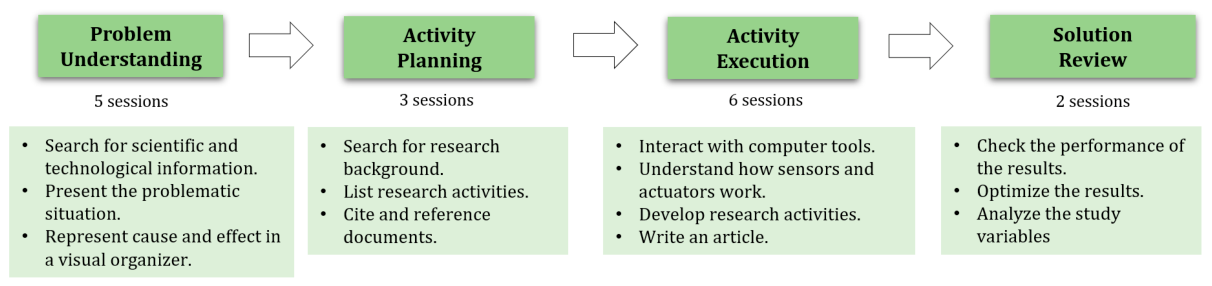
Paucar-Curasma et al., 2025a). In particular, Polya’s method, structured into the phases of understanding, planning, execution, and review, corresponds to fundamental cognitive processes involved in formative research, such as problem identification, information analysis, methodological decision-making, and the critical evaluation of results (
Paucar-Curasma et al., 2025b). Unlike broader inquiry-based learning approaches, Polya’s method provides an explicit sequence of cognitive scaffolding that guides students in engaging with real problems from their own context. This structure may be particularly beneficial for first-year university students with limited research experience, as it facilitates the progressive organization of analytical thinking and the systematic resolution of academic and contextual problems (
Paucar-Curasma et al., 2025a).
Additionally, the integration of educational technological resources enhances active learning by enabling experimentation, simulation of real-world problems, and the connection between theory and practice (
de la Puente et al., 2024;
Liou et al., 2015;
Shen et al., 2025). Nevertheless, gaps in students’ digital competencies persist, reinforcing the need to integrate technology within structured pedagogical approaches.
Within this context, the present study proposes a pedagogical strategy based on Polya’s problem-solving method, integrated with technological resources, including a contextualized STEM educational kit designed to address real health-related problems (
PROCIENCIA-CONCYTEC, 2024).
The Polya’s method serves as a structuring axis of the learning process by providing a sequence of reasoning oriented toward problem understanding and problem solving (
Tangkui, 2023). In parallel, technological resources and the contextualized STEM kit function as environments for experimentation and practical application, enabling students to analyze real situations, interpret information, and formulate evidence-based responses. Therefore, the integration of problem solving, educational technology, and STEM resources is not conceived as an isolated combination of methodological elements, but rather as an articulated pedagogical framework aimed at the progressive strengthening of research competencies through active, contextualized, and reflective learning experiences (
Paucar-Curasma et al., 2025b).
The relevance of this proposal is particularly evident in the Peruvian higher education context, especially in institutions serving students from rural areas with limited research and technological experience, such as the Universidad Nacional Autónoma de Tayacaja Daniel Hernández Morillo. In such settings, promoting contextualized strategies from the early stages of education responds not only to a pedagogical need but also to a commitment to educational equity.
Based on the above, the study seeks to answer the following research question: What associations can be observed between the implementation of a problem-solving approach based on Polya’s method and integrated with STEM technological resources and the variations in the research competencies of first-year nursing students, particularly in the dimensions of problem identification and formulation, research background and objectives, development of research activities, and evaluation of research results?
Accordingly, the objective of the study was to analyze the observed variations in research competencies following the implementation of a pedagogical problem-solving approach based on Polya’s method and integrated with STEM technological resources in first-year nursing students. Specifically, the study examined the dimensions of problem identification and formulation, research background and objectives, development of research activities, and evaluation of research results.
3. Methodology
3.1. Research Design and Participants
This study adopted a pre-experimental one-group pretest–posttest design aimed at analyzing the observed improvements in university students’ research competencies following the implementation of a pedagogical intervention based on Polya’s problem-solving method. Given the absence of a control group and random assignment, the study is framed as an exploratory approach intended to provide preliminary evidence regarding the association between the implemented pedagogical strategy and the development of research competencies in first-year students.
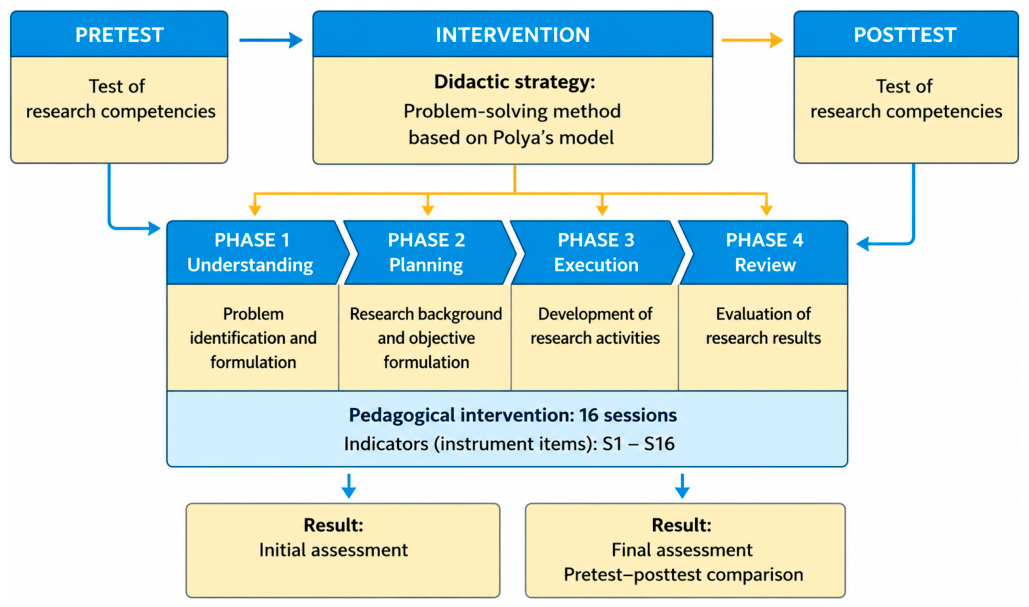
As illustrated in
Figure 3, the methodological process of the study was structured into three phases. In the first phase, a diagnostic assessment (pretest) was administered using a standardized instrument to determine the participants’ initial level of research competencies. In the second phase, the pedagogical intervention was implemented within the course Introduction to the Experimental Method, structured according to the four phases of Polya’s method: problem understanding, planning, execution of research activities, and critical evaluation of results. Finally, in the third phase, a post-intervention assessment (posttest) was conducted using the same instrument in order to measure changes in research competencies after the intervention.
The intervention lasted 16 weeks, with a weekly duration of four academic hours, delivered through face-to-face sessions that combined theoretical and practical activities focused on solving contextualized problems.
Finally, a post-intervention assessment (posttest) was administered using the same instrument applied in the pretest. The comparison of results obtained from both measurements allowed for the estimation of the effect of the pedagogical intervention on the development of research competencies.
It is important to emphasize that the results should be interpreted with caution due to the inherent limitations of the pre-experimental design employed. Factors such as maturation effects, familiarity with the assessment instrument, and the absence of a comparison group may have partially influenced the differences observed between the two measurements. In this context, the results should be considered preliminary evidence of the pedagogical potential of the implemented strategy rather than definitive proof of causal effectiveness.
In addition, possible confounding variables that may have influenced the observed differences between the pretest and posttest are acknowledged. These include students’ initial knowledge of research methodology, prior experience in the use of technological tools, varying levels of participation in group activities, session attendance, academic motivation, and support received outside the classroom. Although these variables were not controlled for in the study, they are recognized to avoid strong causal inferences and to present the findings as preliminary evidence of improvement associated with the intervention.
The sample consisted of 69 first-year nursing students selected through non-probabilistic convenience sampling. All students enrolled in the course Introduction to the Experimental Method during the second academic semester of 2025 were included, in accordance with the institutional curriculum. The majority of participants were under 22 years of age, which corresponds to the typical profile of students entering higher education.
The sample size corresponded to the total enrollment available in the Introduction to the Experimental Method course during the evaluated academic semester; therefore, an intact group of students was used. This criterion is appropriate in applied educational studies with a pre-experimental nature, where interventions are implemented under real classroom conditions rather than controlled laboratory settings. However, due to the use of non-probabilistic convenience sampling and the absence of randomization, the generalizability of the findings should be interpreted with caution. The results are mainly transferable to similar educational contexts, particularly first-year nursing students with limited prior research and technological experience.
3.2. Instrument for Assessing Research Competencies
To assess research competencies, a previously developed instrument was used, which had been validated through an independent psychometric study conducted prior to the implementation of the present research. The instrument was developed through a systematic process that included theoretical review, definition of dimensions, item construction, and expert validation. Based on the operationalization of the construct, four dimensions were defined with their respective items: (1) identification and formulation of the research problem (5 items); (2) research background and objectives (5 items); (3) development of research activities (4 items); and (4) evaluation of research results (6 items). Each item was scored dichotomously, assigning 1 point to correct answers and 0 points to incorrect ones.
The total score obtained by each student was used to determine their level of research competence according to the following scale: initial (0–10), in progress (11–13), expected achievement (14–17), and outstanding achievement (18–20).
The instrument was designed to assess research competencies associated with early nursing education, considering academic situations and contextualized problems that require students to identify problematic situations, review research background, organize investigative activities, and interpret findings. Although the items do not evaluate advanced clinical competencies, they are oriented toward foundational skills necessary for evidence-based practice, such as question formulation, scientific information analysis, activity planning, and the critical evaluation of findings.
Content validity was established through expert judgment by three specialists, who evaluated the items in terms of relevance, clarity, and methodological coherence. The obtained coefficients (0.80–0.92; mean = 0.85) indicate adequate representation of the construct. Additionally, qualitative feedback allowed for the refinement of item wording and relevance in the final version of the instrument.
Subsequently, the structural validity of the instrument was assessed using an independent sample of 195 undergraduate students in the first academic cycles from different academic programs. Confirmatory factor analysis was conducted to test several theoretical models. A second-order factor model was ultimately selected, in which research competencies were conceptualized as a general construct composed of four dimensions. The results showed adequate model fit indices (CFI = 0.996; TLI = 0.995; RMSEA = 0.012; SRMR = 0.011), supporting the correspondence between the proposed theoretical structure and the observed data.
The reliability of the instrument was determined using the Kuder–Richardson 20 coefficient (KR-20), as the instrument consisted of dichotomous items with correct and incorrect responses. The coefficients ranged from 0.72 to 0.75, indicating acceptable levels of internal consistency for the evaluated dimensions. These results suggest that the instrument provides stable and consistent measurements for assessing research competencies in university students.
However, during the validation process, some high factor estimates were identified, including certain parameters greater than 1.00. These results may be associated with issues such as multicollinearity among indicators, partial content redundancy, or the characteristics of complex hierarchical factor models. Although the overall fit indices support the proposed structure, these findings suggest that the psychometric robustness of the instrument should be interpreted with caution and that its factorial stability should continue to be evaluated in future applications with larger and more diverse samples.
It is important to clarify that the sample of 69 students used in the present study was employed exclusively for the pretest and posttest administration, as well as for the analysis of changes observed after the pedagogical intervention. Therefore, this sample was not used to conduct psychometric validation procedures or additional confirmatory factor analyses.
Regarding reliability, Cronbach’s alpha coefficients (α ≥ 0.70) indicated acceptable levels of internal consistency, suggesting that the instrument reliably measures the dimensions of the construct. Regarding the factorial structure, some elevated parameters were identified in certain items, including estimates greater than 1.00. This type of result may be associated with multicollinearity, item redundancy, or issues related to the specification of the factorial model, particularly in relatively small samples and second-order models. Therefore, although the global fit indices showed acceptable values, these findings should be interpreted with caution and suggest the need for future psychometric revisions aimed at improving the stability and parsimony of the instrument through larger samples and additional validation studies.
3.3. Pedagogical Intervention
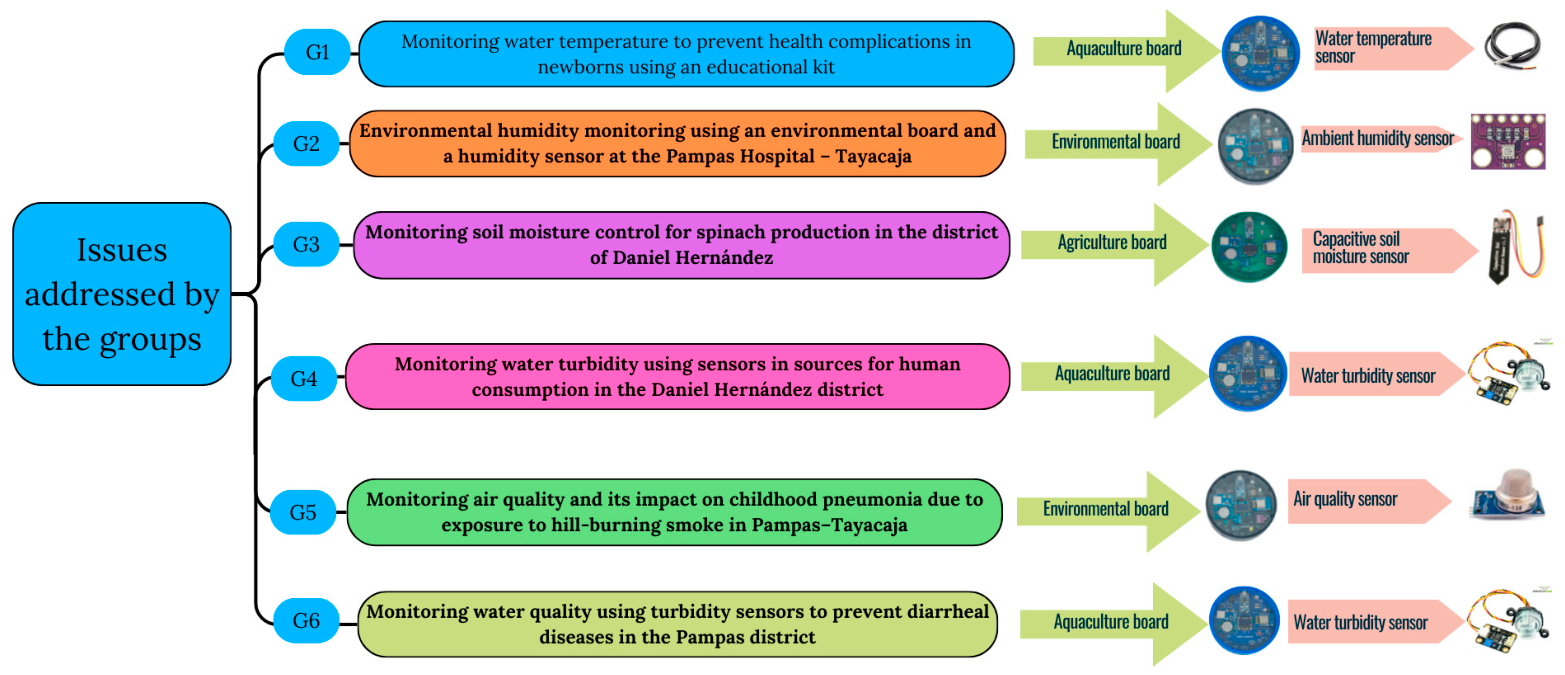
Students were organized into heterogeneous groups of five members to promote equitable participation and diversity of skills. Each group proposed contextualized problems from their community, which were selected with the guidance and feedback of the instructor, based on previously developed examples.
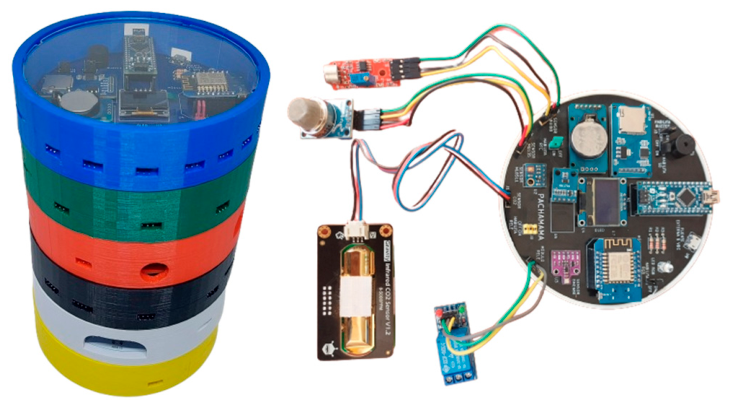
Once the research topic was defined, each group was assigned a STEM educational kit module, a technological resource that enabled the development of research activities through the use of sensors and electronic boards, facilitating experimentation and the practical application of the content.
Given that the students were in their first year and had limited experience in research and the use of applied technology, the activities were organized gradually and guided by the instructor. Initially, contextualized examples and structured guides were used to facilitate problem understanding, information searching, and variable identification. Subsequently, the use of the STEM kit was introduced through demonstrations, step-by-step practices, and instructor support. Visual programming in mBlock was selected due to its intuitive nature, which helped reduce the cognitive load associated with the use of technology and encouraged the participation of students with no prior experience in programming or electronics.
Figure 4 presents the contextualized problems addressed during the intervention by the six study groups (G1–G6). Each group worked on a specific problem related to their context, integrating technological resources such as programmable boards and sensors according to the nature of the problem.
These problems allowed the articulation of the research process with real-world situations, promoting meaningful learning and the development of research competencies through the integration of technology.
3.4. Organization of the Classroom Intervention for Strengthening Research Competencies
The pedagogical intervention was structured based on the problem-solving method proposed by George Pólya, aligning each of its phases with the dimensions of the research competencies evaluated in this study. This method enabled an explicit correspondence between teaching–learning processes and the progressive development of these competencies.
During the implementation, specific activities were defined to guide the teacher’s role, promote active student participation, and integrate educational technological resources.
Table 1 presents the organization of the implemented pedagogical strategy, including the phases of Polya’s method, the dimensions of research competencies, the responsibilities of both teacher and students, and the technological resources used during the intervention.
Throughout each phase of the method, students generated various learning evidences that reflected the development of their research competencies. These included the formulation of the research problem, the collection and analysis of scientific background, the design of technological proposals using the STEM educational kit, the programming and integration of sensors and electronic boards, as well as the interpretation of results and the preparation of a final research report.
Student progress was monitored through formative milestones associated with each phase of Polya’s method. In the problem understanding phase, the main indicators were the clear formulation of the problematic situation and the identification of relevant variables. In the planning phase, progress was assessed through the review of research background, the formulation of objectives, and the organization of investigative activities. In the execution phase, students’ ability to apply procedures, use sensors, program in mBlock, record information, and build a functional prototype was evaluated. Finally, in the review phase, the interpretation of results, prototype improvement, and preparation of the final report were considered. These milestones made it possible to support the progressive development of research competencies throughout the intervention. The following section details the evidence of progress in research competencies based on the activities carried out by one of the student groups.
3.5. Evidence of Classroom Intervention Based on Polya’s Problem-Solving Method
The implementation of the pedagogical strategy based on the problem-solving method proposed by George Pólya was carried out through four phases: problem understanding, planning, execution, and solution review. In each phase, activities were designed to strengthen research competencies through collaborative work and the use of educational technological resources.
The following section describes the main activities developed by students in each phase, along with representative evidence of the learning process. As an illustrative case, the project developed by Group 4, titled “Water Turbidity Monitoring Using Sensors in Consumption Sources in the Province of Daniel Hernández”, is presented to demonstrate the application of the method in a real-world context.
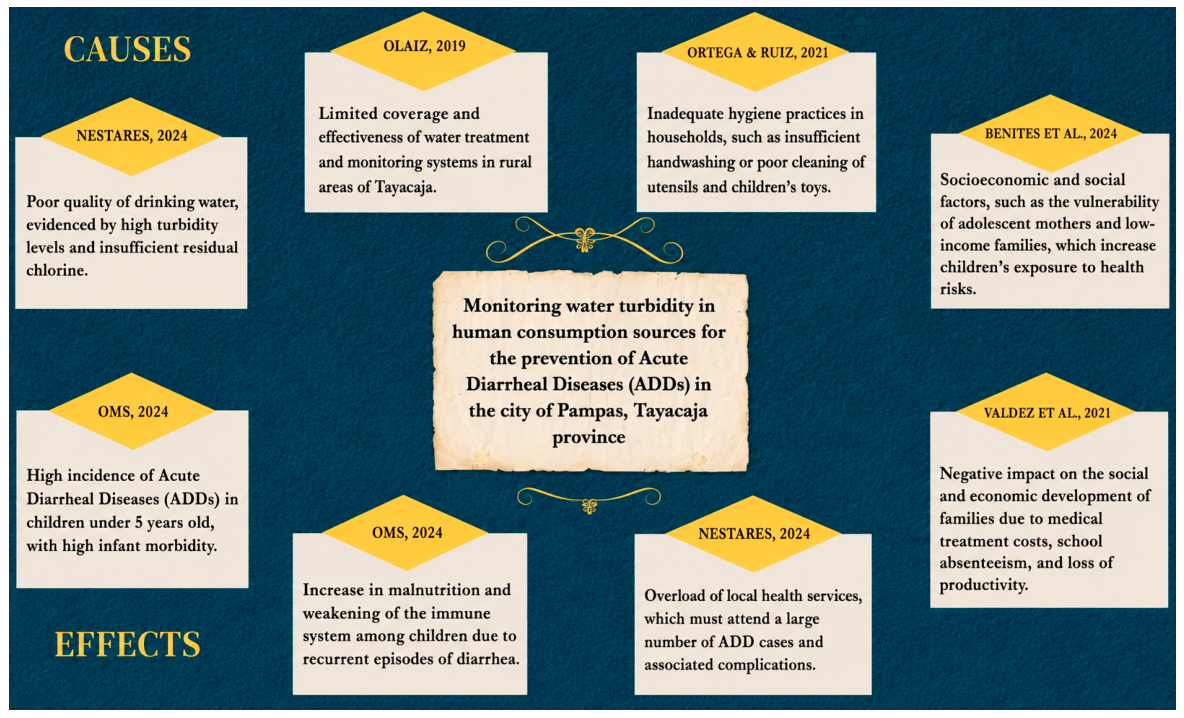
Problem Understanding. In this phase, students searched for information in academic and technological sources related to the selected problem. They also identified the main variable of the study and analyzed the technical parameters associated with the sensor to be used. As part of the analytical process, they developed a cause–effect visual organizer, which allowed them to understand the relationships among the factors influencing the problem. As shown in
Figure 5, the students developed a cause–effect diagram to analyze the selected problem, identifying the factors contributing to its origin and the potential consequences within their community context. This activity contributed to strengthening critical thinking and problem comprehension skills, which are essential in the research process.
Activity Planning. In this phase, students conducted a review of scientific and technological background related to similar projects and sensor-based applications. For this purpose, they used academic sources such as Google Scholar and indexed databases such as Scopus. Based on the analysis of the collected information, they sequentially organized the project activities, aimed at proposing solutions to the identified causes of the problem through the use of technology. They also determined the technological components to be used, defined the programming logic, and designed the structure of the technological system. Finally, they planned the integration of electronic devices, ensuring coherence and functionality in the proposed solution. The main planned activities included:
- -
Identification of critical points in the Atocc water source.
- -
Selection of electronic components (Arduino Uno board, turbidity sensor, Yaku Kawsay board).
- -
Program design using mBlock with block-based coding to display turbidity values.
- -
Construction of a representative prototype method simulating water flow from the source to the community.
- -
Integration of devices into the method, ensuring stable and reliable data readings.
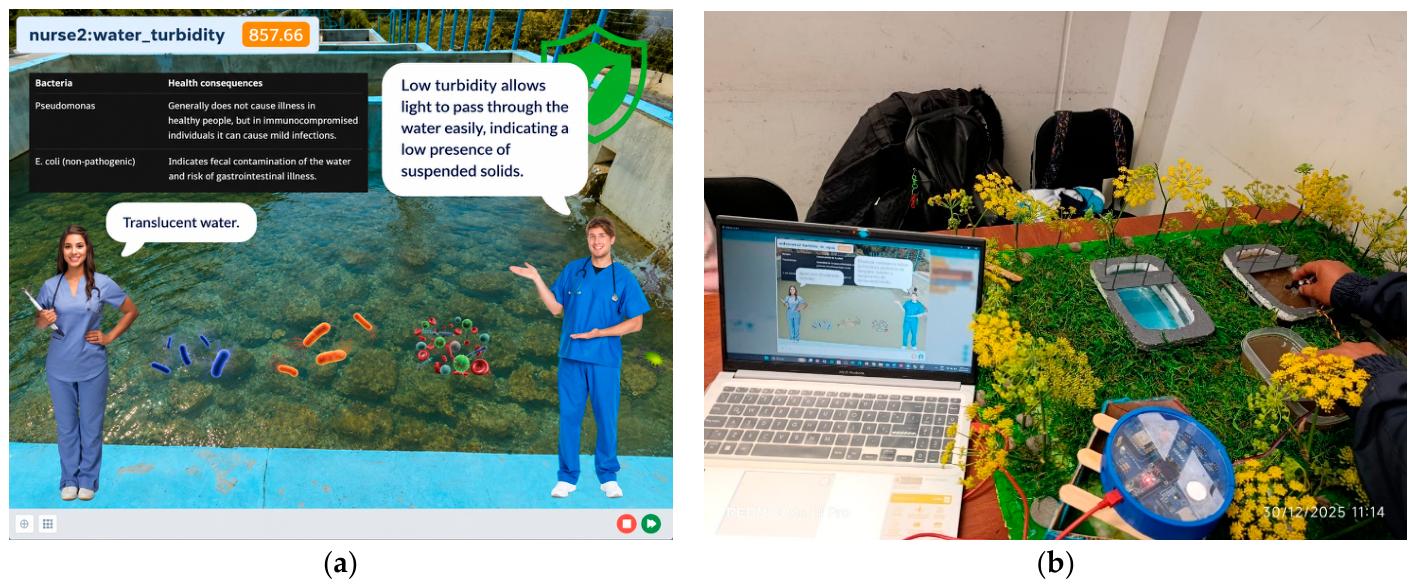
Activity Execution. In this phase, students carried out the planned activities. Initially, they became familiar with the operation of the educational electronic kit (boards, sensors, and actuators) through a laboratory guide provided by the instructor. Subsequently, they connected the devices step by step according to structured instructions and conducted initial tests to verify system functionality. Next, they developed an interface using the visual programming environment mBlock, enabling real-time monitoring of sensor parameters based on the defined problem. In addition, they constructed a prototype model integrating sensors and programming, allowing simulation of the real-world context.
Figure 6a shows the application developed in mBlock for monitoring water turbidity, including visual elements, informational messages, and the display of sensor readings (800–1000 NTU), along with information on its health effects.
Figure 6b presents the constructed prototype, simulating a community water reservoir. The integration of the aquaculture board, turbidity sensor, computer system with the developed application, and containers with varying turbidity levels is observed, allowing validation of the system under simulated conditions.
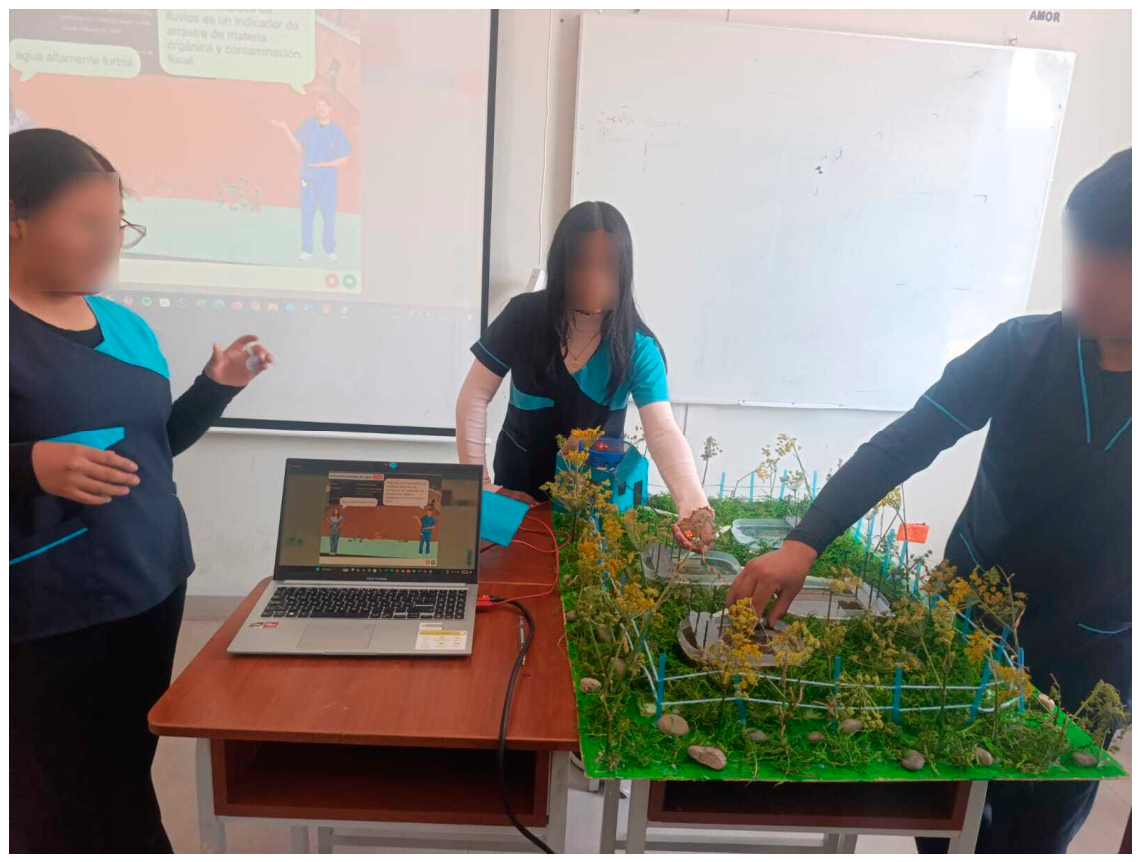
Solution Review. In this phase, student groups verified the results obtained during the implementation of the developed system. They also evaluated the overall performance of the prototype, considering the interaction between programming, sensors, and the constructed method.
Students experimented with the study variables, particularly water turbidity levels and their potential effects on health, which allowed them to assess the consistency and validity of the obtained results. Based on this process, they made adjustments and improvements to the prototype, incorporating feedback provided by the instructor.
Figure 7 presents the demonstration of the developed system for monitoring water turbidity and its impact on human health, highlighting the prototype’s ability to operate under simulated conditions and generate relevant information for decision-making.
These methodological decisions made it possible to describe the intervention under real classroom conditions and to analyze the observed variations in research competencies before and after its implementation. However, due to the pre-experimental design, the limited sample size, and the use of a dichotomous scoring instrument, the results should be interpreted as exploratory evidence. Future studies should incorporate control groups, random assignment, larger samples, and complementary qualitative evidence, such as interviews, reflective journals, or analyses of student-produced artifacts, in order to gain a deeper understanding of the learning processes developed during the intervention.
4. Results
4.1. Analysis of Research Competencies by Achievement Levels
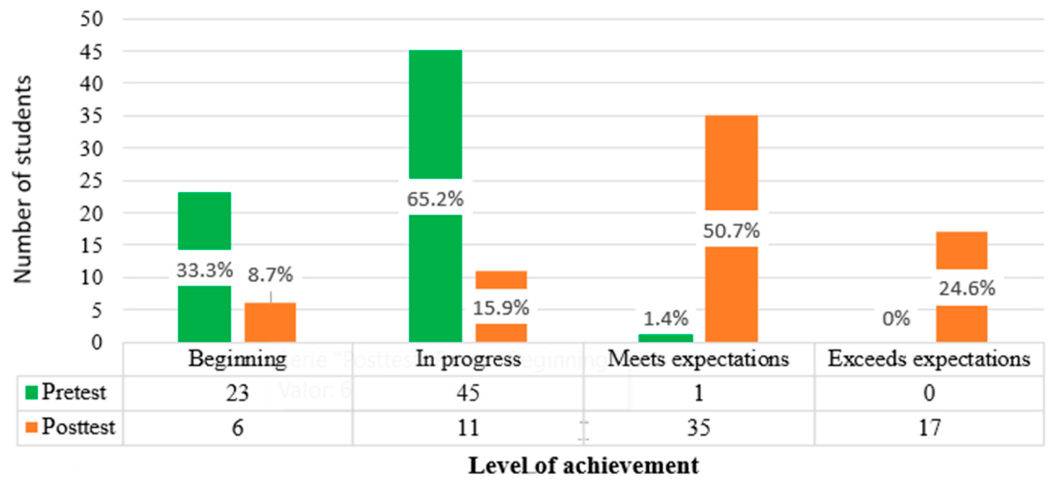
Figure 8 presents the distribution of students according to achievement levels in research competencies before and after the pedagogical intervention. In the pretest, most students were classified at the “In progress” (65.2%) and “Initial” (33.3%) levels, indicating a limited baseline level of research competency development.
Following the implementation of the pedagogical strategy based on the method proposed by George Pólya, a clear shift toward higher levels of achievement was observed. In the posttest, students predominantly reached the “Expected achievement” (50.7%) and “Outstanding achievement” (24.6%) levels.
The descriptive results suggest an overall improvement in students’ performance after the implementation of the pedagogical strategy based on Polya’s method. However, due to the pre-experimental design, this difference should be interpreted as an observed change between measurements rather than as definitive causal evidence of effectiveness.
4.2. Descriptive Evaluation of Research Competencies and Dispersion Analysis
Table 2 presents the mean scores and standard deviations for each dimension of research competencies in the pretest and posttest. The results show an increase in mean scores across all evaluated dimensions following the pedagogical intervention.
In the problem identification and formulation dimension, the mean increased from 2.87 (SD = 1.03) to 3.22 (SD = 1.24), showing a moderate increase accompanied by greater dispersion in the posttest scores, which suggests differences in the pace of competency development among students. In the research background and objectives dimension, the mean rose from 2.03 (SD = 0.92) to 3.42 (SD = 1.23), also indicating greater variability after the intervention, possibly associated with different levels of appropriation of information-searching and analytical skills.
Similarly, in the development of research activities dimension, an increase was observed from 1.72 (SD = 1.34) to 3.09 (SD = 0.86), reflecting not only a descriptive improvement but also a reduction in score dispersion. This suggests greater homogeneity in students’ performance during practical and experimental activities. Finally, the evaluation of research results dimension showed the greatest increase, rising from 3.67 (SD = 1.16) to 5.83 (SD = 0.94), accompanied by a decrease in variability. This may indicate that the execution and review phases of Polya’s method contributed to more consistent learning processes among participants.
Overall, the descriptive findings reveal differences across dimensions, suggesting that some research competencies appear to develop more homogeneously through structured practical activities, whereas others, particularly those related to problem formulation, exhibit more heterogeneous learning trajectories.
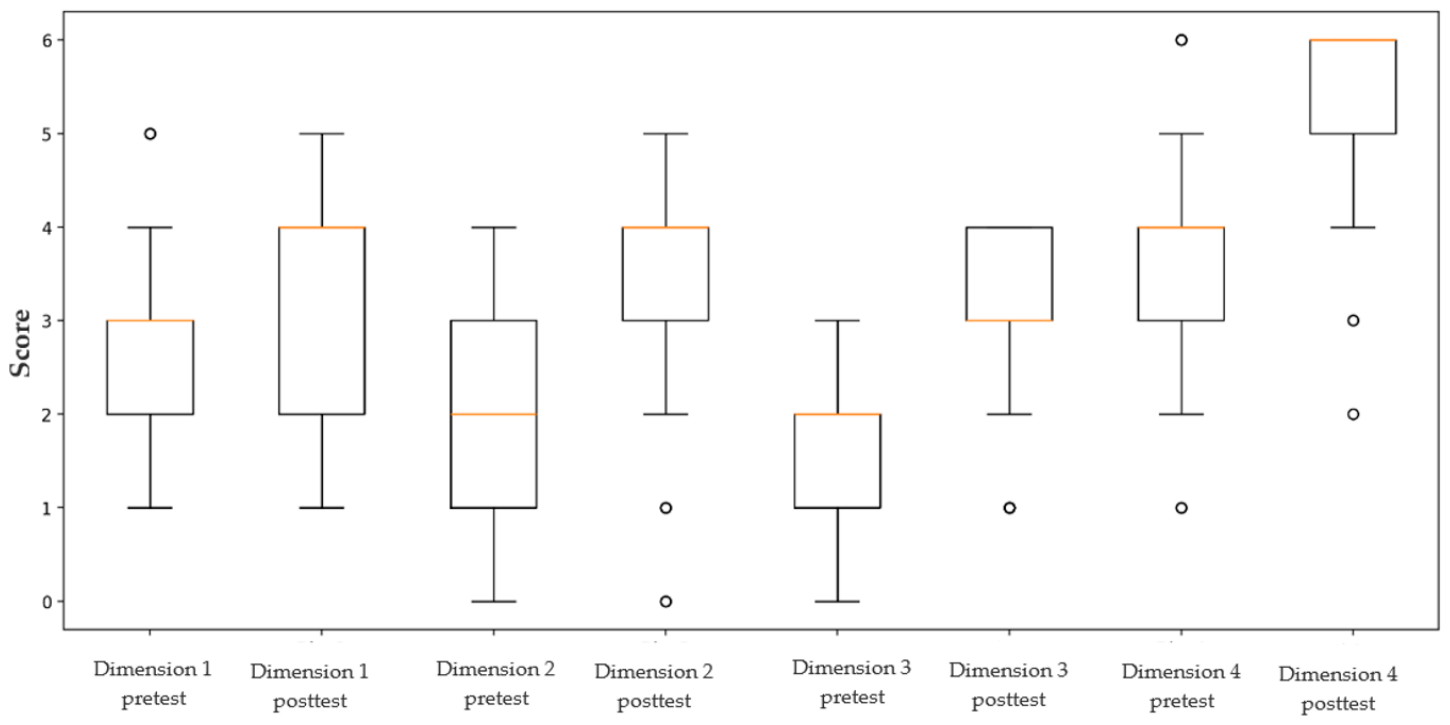
Figure 9 compares the distribution of pretest and posttest scores across the research competency dimensions. Overall, the boxplots show an upward shift in the posttest medians, along with changes in the interquartile ranges. This visual pattern is consistent with a descriptive improvement after the intervention.
However, the interpretation should be differentiated by dimension. While research background and objectives, development of research activities, and evaluation of research results show more pronounced changes, problem identification and formulation present a more moderate variation. Therefore, the graphical analysis should be understood as descriptive support for the inferential results, rather than as independent evidence of causal effectiveness.
4.3. Hypothesis Testing
Table 3 presents the results of the Wilcoxon signed-rank test for related samples, used to compare the overall research competency scores between the pretest and posttest. The results revealed statistically significant differences between both measurements (W = 122,
p < 0.001), with a large effect size (r = 0.896). These findings suggest that, after the pedagogical intervention, the overall research competency scores were significantly higher than those recorded in the initial assessment.
However, although the obtained effect size was very large, its interpretation should be approached with caution. In one-group pretest–posttest studies, the observed changes may be influenced not only by the intervention itself, but also by threats to internal validity, such as maturation, familiarity with the instrument, testing effects, or characteristics inherent to the measurement process. Furthermore, because the instrument employed dichotomous scoring, the magnitude of the effect may have been amplified by the scoring structure and by the sensitivity of the statistical test to cumulative changes across items. Consequently, the results should be presented as preliminary evidence of observed variations following the intervention, rather than as conclusive proof of causal effectiveness.
4.4. Specific Hypothesis Testing by Dimensions
Table 4 presents the results of the specific hypothesis tests, showing statistically significant differences between the pretest and posttest in three of the four evaluated dimensions: research background and objectives (
p < 0.001, r = 0.824), development of research activities (
p < 0.001, r = 0.836), and evaluation of research results (
p < 0.001, r = 0.912). These findings suggest large improvements in the dimensions most closely related to the planning, execution, and review of research activities.
In contrast, the problem identification and formulation dimension did not show statistically significant differences (p = 0.072), and the effect size was small (r = 0.280). Although a descriptive increase in scores was observed, the statistical evidence does not support a significant improvement in this dimension. From a formative perspective, this result may be explained by the cognitive complexity involved in identifying and formulating research problems among first-year students, who are still developing skills related to conceptual delimitation, academic argumentation, and the understanding of scientific literature.
Unlike the more operational and experimental activities developed during the intervention, problem formulation requires abstract processes of analysis, identification of knowledge gaps, and logical articulation between variables and context. During the initial phases of the intervention, several students had difficulties transforming general problems from their environment into specific and methodologically delimited research questions. Likewise, limited prior experience in scientific reading and academic writing may have contributed to the lower consolidation of this competency. These results suggest that the development of problem-formulation skills requires longer formative processes, sustained guidance, and more continuous exposure to guided research experiences.
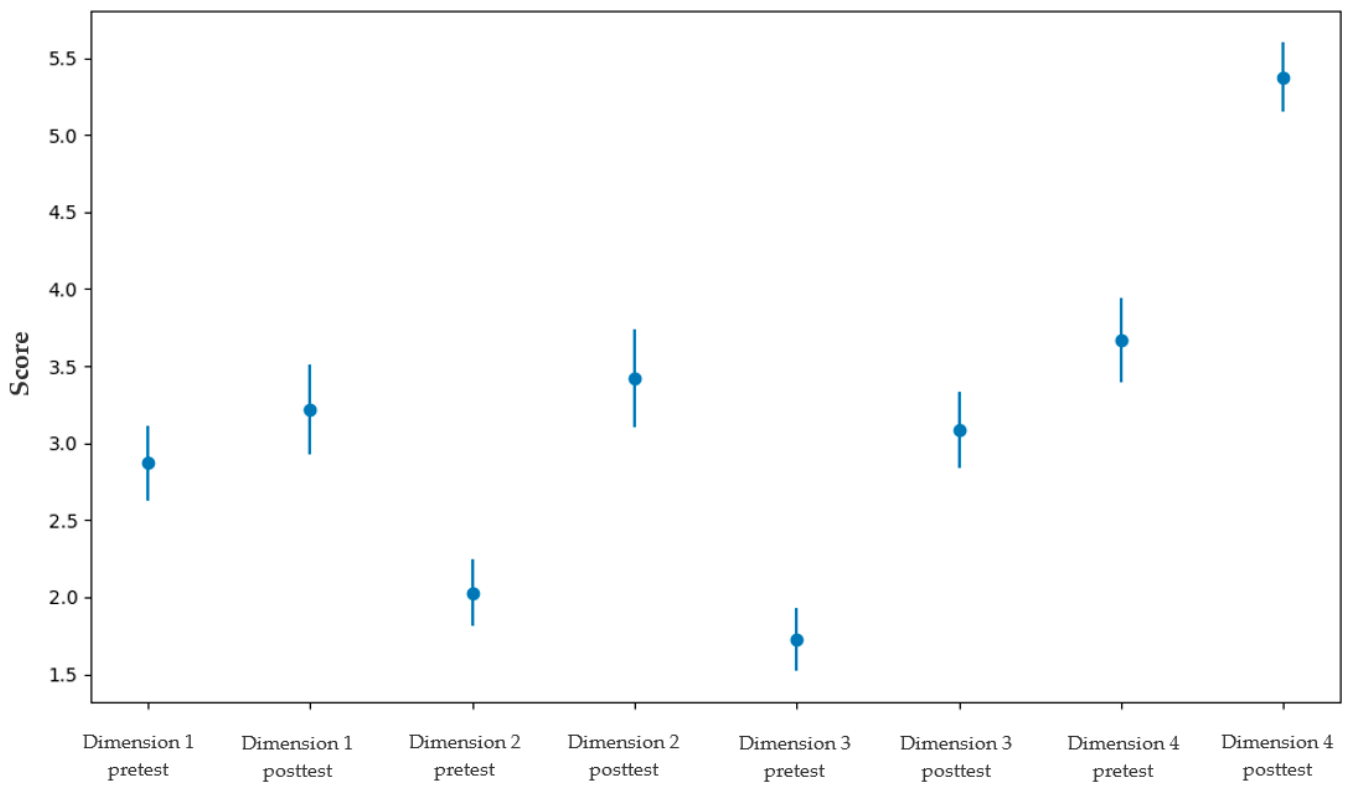
Figure 10 shows the 95% confidence intervals for the mean scores by dimension in the pretest and posttest. The visual analysis of these intervals should be interpreted as complementary to the Wilcoxon signed-rank test. In the dimensions of research background and objectives, development of research activities, and evaluation of research results, a clearer separation between the pretest and posttest estimates can be observed, which is consistent with the statistically significant inferential results.
By contrast, the interpretation of the problem identification and formulation dimension should be cautious, since the inferential test did not reach statistical significance. Therefore, it should not be stated that all dimensions improved significantly. The appropriate conclusion is that three dimensions showed statistically significant improvements, whereas one dimension showed only a descriptive trend toward improvement.
In addition to the quantitative results, qualitative changes were observed in students’ participation and performance throughout the different phases of Polya’s method. Initially, many students had difficulties formulating research problems, organizing background information, and understanding the relationship between variables and methodological procedures. However, as the intervention progressed, greater participation in group discussions, increased autonomy in searching for scientific information, and a progressive ability to relate problems from their local context to contextualized technological proposals were observed.
Similarly, the activities developed using the STEM kit and visual programming in mBlock promoted experimentation and collaborative learning processes, allowing students with limited research or technological experience to participate actively in the design and validation of prototypes. During the execution and review phases, students showed greater confidence in interpreting results, identifying errors, and proposing improvements to their projects.
5. Discussion
The results showed favorable variations in the research competencies of nursing students after the implementation of a pedagogical strategy based on Polya’s problem-solving method and integrated with STEM technological resources. The pretest–posttest comparison revealed statistically significant differences in the overall score, accompanied by a large effect size. However, these findings should be interpreted with caution, since the one-group pre-experimental design does not allow alternative explanations to be ruled out, such as maturation, familiarity with the instrument, or the influence of parallel academic experiences.
From a pedagogical perspective, the results suggest that a structured sequence of understanding, planning, execution, and review may support the progressive development of skills related to the search and analysis of scientific information, the organization of research activities, the interpretation of results, and critical reflection on contextualized problems. Likewise, the intervention appeared to promote analytical reasoning, decision-making, and collaborative learning processes, particularly during the execution and review phases developed through technological resources and STEM prototypes (
Almarwani, 2025;
Mahmood et al., 2025).
However, unlike experimental or quasi-experimental studies, the present study does not allow the observed improvements to be attributed exclusively to the intervention. Rather, it allows the identification of changes observed after the implemented pedagogical experience. In this regard, several studies have highlighted that active methodologies enable students to participate more actively in knowledge construction, fostering meaningful learning processes and the development of research competencies from the early stages of academic training (
Coleman & Graham, 2025;
Madu et al., 2025;
Panpanawan et al., 2025;
Rjoub et al., 2025;
Shi et al., 2025). Likewise, the incorporation of educational technologies within these methodological approaches contributes to strengthening the connection between theory and practice, allowing students to develop solutions to real problems within their educational and social context (
Liou et al., 2015;
Shen et al., 2025;
Stritto et al., 2025).
The dimensional analysis provides a more specific interpretation of the observed results. The problem identification and formulation dimension did not show statistically significant differences, despite a slight descriptive improvement. This finding is consistent with previous research suggesting that skills related to research problem formulation represent a cognitively complex competency that requires more time for practice, scientific reading, conceptual delimitation, and sustained teacher guidance (
Lee et al., 2024;
Yang et al., 2025). In first-cycle students, this dimension may develop more gradually than other procedural skills involved in the research process.
In this sense, problem formulation requires higher-order cognitive processes, including critical reading of scientific literature, identification of knowledge gaps, and logical articulation between variables and context. During the intervention, several students had difficulties transforming general problems from their environment into specific and methodologically delimited research questions. These results suggest that the development of this competency requires longer formative processes, sustained teacher support, and greater exposure to systematic experiences of guided academic inquiry.
In contrast, the dimensions of research background and objectives, development of research activities, and evaluation of results showed statistically significant differences and large effect sizes. These results may be explained by the fact that these dimensions were more closely related to guided activities and procedures developed during the intervention, such as information searching, activity organization, execution of research tasks, and review of results. The sequential structure of Polya’s method may have provided useful scaffolding to organize these actions and facilitate their application in contextualized situations through STEM technological resources. This finding is consistent with studies showing that problem-based learning facilitates the practical application of knowledge and promotes the integration of research skills through experimental activities, data analysis, and reflection on the results obtained (
Paucar-Curasma et al., 2023,
2025a,
2025b).
The magnitude of the overall effect size (r = 0.896) also requires particular caution. Although this value indicates large differences between measurements, in pretest–posttest designs without a control group it may be partially influenced by measurement characteristics, particularly because the instrument used dichotomous scoring, the same instrument was administered twice, and students became progressively familiar with the research activities during the formative process. Therefore, these values should not be interpreted as definitive evidence of effectiveness, but rather as indicators of relevant changes that require confirmation in future studies with more robust designs.
Overall, the results provide preliminary evidence regarding the pedagogical potential of integrating Polya’s method with STEM technological resources to strengthen research competencies in novice university students. The main contribution of this study lies in proposing a structured and contextualized strategy that articulates problem solving, active learning, and educational technology within an introductory research course. Future studies should incorporate comparison groups, random assignment, when possible, longitudinal follow-up, and complementary performance measures to estimate the scope of the intervention more accurately and reduce threats to internal validity.
6. Conclusions
Based on the obtained results, it can be concluded that the implementation of the problem-solving method based on the method proposed by George Pólya is an effective pedagogical strategy for strengthening research competencies in first-year university students. The differences observed between pretest and posttest scores, together with the large effect size, demonstrates that structuring learning into sequential phases—understanding, planning, execution, and review—supports the progressive development of research-oriented thinking, particularly in early-stage higher education contexts.
Furthermore, the findings indicate that the dimensions related to the execution of activities, analysis of research background, and evaluation of results showed the greatest levels of development. This suggests that active methodologies based on problem-solving primarily enhance the applied components of the research process. In contrast, the dimension related to problem formulation showed more limited progress, indicating that this competency requires longer and more structured training processes for its consolidation.
In addition, the integration of technological resources within the problem-solving method significantly strengthens the connection between theory and practice, promoting active, contextualized, and meaningful learning. This aspect is crucial for the development of research competencies, as it enables students to engage with real-world situations and construct evidence-based solutions. However, the results should be interpreted with caution due to the inherent limitations of the pre-experimental design employed, particularly the absence of a control group, the lack of random assignment, and the possible influence of external variables, such as maturation, familiarity with the instrument, or differences in students’ levels of participation. Likewise, the sample size and the non-probabilistic nature of participant selection limit the generalizability of the findings to other educational contexts.
The study contributes to the discussion on pedagogical strategies aimed at the early strengthening of research competencies in higher education, particularly in contexts with limited research and technological experience. Future studies should incorporate experimental designs, comparison groups, mixed method, and longitudinal follow-up in order to gain a deeper understanding of how problem-solving strategies integrated with STEM technology influence the development of research competencies in university students in the health sciences.



 ,
,